Introduction / Hook
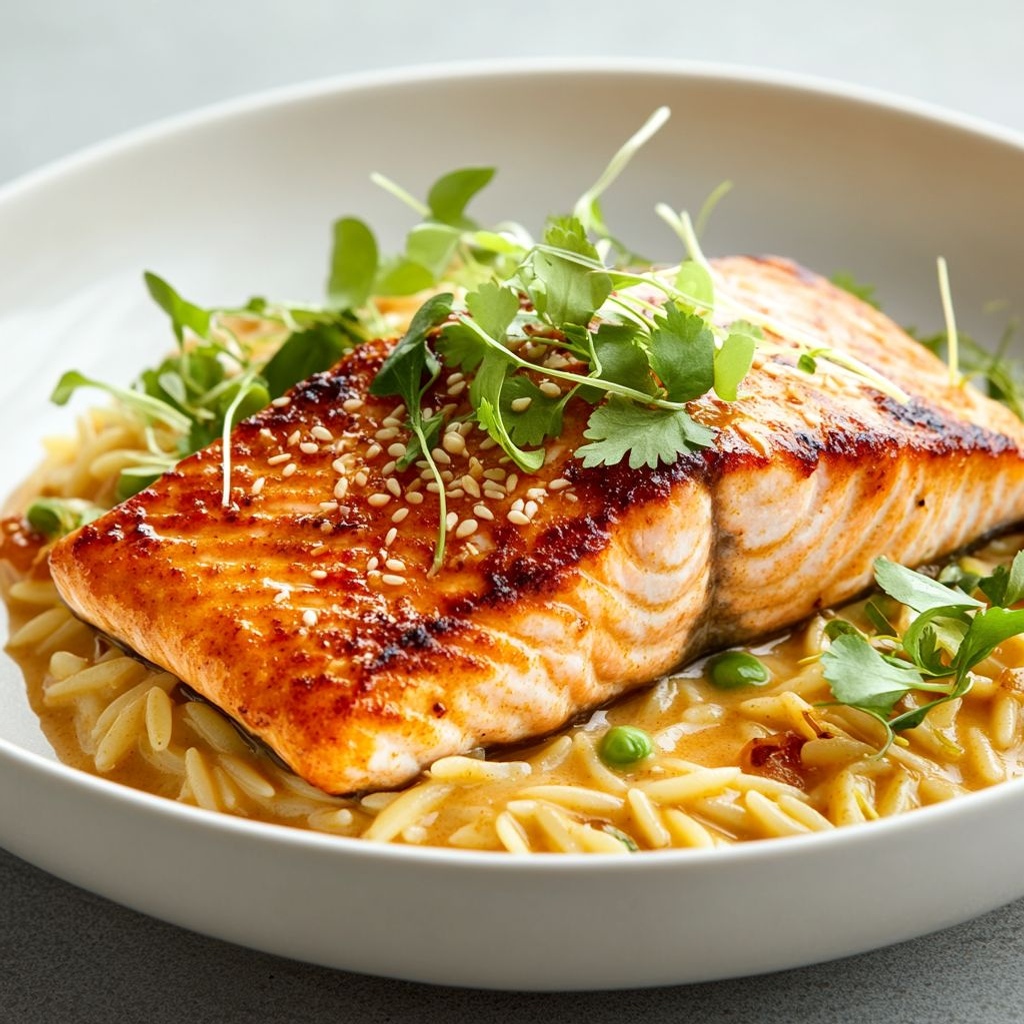
Imagine a plate that feels both comforting and adventurous, where the sea’s richness meets the warm kiss of tropical spice. A glossy, pale-golden velouté—made velvet-smooth with coconut milk and bright curry notes—savors the day’s catch as it coats tender orzo pearls like a kiss of sunshine. Nestled atop this creamy embrace, salmon rests with just-crisp edges and a pink, flaky heart, releasing a delicate ocean perfume that harmonizes with citrus zest, herbs, and a whisper of toasted sesame. This is Salmon and Orzo with Coconut Curry Velouté—a dish that dances between two cuisines, weaving French technique with Southeast Asian aromatics to create something truly contemporary, luxurious, and incredibly moreish. The first bite is a conversation: the velouté glides across the palate, the orzo provides a gentle bite, and the salmon delivers a silky, melt-in-your-mouth finish that lingers with propulsive flavor rather than heaviness. If you crave a weeknight supper that feels like a restaurant dish but tastes like home, this could become your new weeknight signature.
The allure of this dish isn’t merely in its taste—though that taste is a passport to far-off markets and sun-warmed kitchens. It’s in the balance: a velvety, coconut-kissed sauce that never overwhelms the fish, a starch that absorbs the sauce without becoming gluey, and salmon that is crisp at the edges yet tender inside. The aroma is a tapestry: ginger-spiked coconut steam mingling with citrus zest, with hints of garlic, shallot, and a gentle heat that warms the room and invites lingering at the table. It’s the kind of recipe that rewards careful, loving preparation—not with complexity for its own sake, but with a layered simplicity that makes every element feel essential. And because the components are distinct in texture and character, you can watch the plate come to life as you serve, the velouté pooling like a warm, golden lake, the orzo pearls bobbing like tiny boats, and the salmon glistening with a ruby sheen, ready to break apart into juicy, satisfying flakes.
Beyond the plate, this dish tells a story of culinary curiosity—how two culinary lineages can share a moment without losing their identity. It nods to classical technique (the velouté, the careful reduction, the coordination needed to finish the sauce just as the fish is perfectly seared) while embracing modern pantry staples and bold, contemporary flavors. It’s a celebration of texture and aroma: the silken sauce, the al dente bite of orzo, the slightly crisp exterior of the salmon, and a chorus of aromatics—garlic, shallots, ginger, lime or lemon—pulling everything together with a bright, refreshing finish. You deserve a dish that feels special, even when it’s prepared after a long day—this is that dish, finished with a flourish of herbs and a drizzle of citrus to brighten the finish.
The Story Behind the Dish
Food has a way of traveling through kitchens and generations, and this dish traces a path through the classic French love of velouté and the vibrant, sun-kissed flavors of South and Southeast Asian curries. Velouté—one of the five great mother sauces—begins as a simple, soothing backdrop: a light roux whisked with stock until it’s silken. Here, though, we lift that traditional canvas with coconut milk, which adds a tropical roundness and a subtle sweetness that complements seafood without overpowering it. The curry element is a modern addition, drawn from the fragrant curries of coastal markets where coconut and spices mingle with sea breeze and citrus. You’ll notice an almost culinary dialogue: the velouté offers structure and finesse, the coconut and curry bring warmth and glow, and the salmon anchors the plate with purity and protein-forward presence. The orzo is your tiny, tender pasta vessel—its shape catching pockets of sauce and delivering the velvety, creamy goodness in every bite.
Personally, this dish grew from a habit of collecting moments: a Saturday market stroll, a pan heated just so, a splash of coconut milk that reminded me of a tropical market stall, a citrus zest that felt like a sunbeam in winter. The dish was born out of the desire to pair a beloved seafood with a comforting, spoonable sauce that could feel elegant enough for guests yet welcoming enough for a casual weeknight. The result is a recipe that travels well in memory—the sort of meal you’d want to recreate after a vacation by a harbor, or in the glow of a kitchen that smells like distant markets and home cooking. The name itself—Salmon and Orzo with Coconut Curry Velouté—is a promise: seafood, starch, and a velvety, spice-kissed sauce that ties them together in a single, harmonious bite.
For those who love a touch of storytelling at the table, this dish invites a gentle ritual. Searing the salmon to achieve that golden crust is a small theater: the hiss of the pan, the memory of sea spray, the moment when you flip the fillet and the skin releases with a satisfying crackle. Meanwhile, the velouté gathers its strength as the coconut milk coaxes the curry into a fragrant chorus. The orzo, with its tiny pearls, stands by to soak up everything with grace, releasing a nourishing, comforting texture that makes the entire plate feel like a warm embrace. It’s a dish that doesn’t shout; it invites you to lean in, savor the subtleties, and discover new notes in a familiar duet of fish and creaminess.
Why You’ll Love This Recipe
- Elegant yet approachable: This dish looks and tastes sophisticated, but you can pull it together with confidence after a busy day.
- Balanced texture: The crispy-edged salmon, the al dente orzo, and the silky coconut-curry velouté create a trio of textures that keep every bite interesting.
- Customizable heat and brightness: The curry level, coconut depth, and citrus brightness can be tuned to your palate or to what you have on hand.
- One-pot-like ease with a plated finish: The sauce and the starch come together beautifully, while the salmon adds luxury and protein without requiring fussily timed steps.
- Flavor storytelling: A fusion of French technique and tropical curry flavors tells a modern cooking story that feels both comforting and exciting.
- Versatile for occasions: From weeknights to dinner parties, this dish scales beautifully and pairs with a range of sides and beverages.
- Healthy indulgence: Rich in omega-3 from salmon and balanced with coconut fat and a light starch, it satisfies without heaviness.
Flavor Profile & Texture
The flavor profile of Salmon and Orzo with Coconut Curry Velouté is an artful fusion: the velouté acts as a soft, luscious base—its texture akin to a satin ribbon, lightly bound with a kiss of coconut cream and a whisper of curry spices. Coconut provides a creamy, slightly sweet undertone that rounds the richness of the sauce without cloying it, while the curry introduces a warm, gentle heat and a layer of aromatic complexity—cardamom, coriander, and a note of ginger often peeking through. The citrus zest—lemon or lime—brightens the entire dish, giving it lift and balance so that the velouté never feels too heavy or mellow. The orzo, small and tender, carries the sauce well; its starchiness is a perfect vehicle for the velouté, offering a soft bite that contrasts with the crisp edge of the salmon.
The salmon itself is a study in contrast: a crisped exterior that offers a nutty, toasty flavor, with a moist, almost creamy center that flakes away at a suggestion of a fork. When the salmon flakes into the velouté, it releases a clean, briny sweetness that feels natural and unforced. The textural interplay is deliberate: the density of the fish against the silk of the sauce, the slight chew of orzo, and the final brush of herbs on top—parsley, cilantro, or chives—bring a fresh, verdant finish. The dish also offers aromatic layers that unfold as you eat; the shallots or onions in the base contribute sweetness and depth, while garlic brings a note of pungent warmth that sits beneath the surface, never shouting above the main players. If you enjoy contrast, you’ll appreciate how the velouté’s creaminess plays with the crisp salmon skin and the slightly chewy orzo, giving your mouth multiple experiences in a single bite.
In terms of balance, the dish is designed to feel light enough for a summer menu but nourishing enough for cooler evenings. The velouté’s coconut richness is tempered by citrus and a touch of acidity—this prevents the sauce from tipping into heavy territory. The salmon offers a lean, high-quality protein that rounds out the meal, while the orzo provides a subtle starch that ties everything together without competing with the fish’s delicate flavor. The overall palate is bright, slightly tropical, and deeply satisfying—a reminder that comfort food can be sophisticated, and that technique can elevate everyday ingredients into something memorable.
Occasions & Pairings
This dish shines in multiple settings. It’s perfectly suited for intimate weeknight dinners when you want to feel pampered but not stressed, and it scales nicely for a small dinner party where you want to impress with a dish that’s both refined and approachable. Its elegance also makes it suitable for special occasions—an anniversary meal, a celebratory spring or summer feast, or a holiday menu that calls for something a touch different yet comforting.
Pairings can enhance the experience without overwhelming the dish. Consider a crisp, citrusy white wine to echo the brightness of the velouté—think Sauvignon Blanc or a lightly oaked Chardonnay. For a more aromatic match, a slightly chilled Gewürztraminer or Riesling can balance the coconut’s sweetness and the curry’s warmth. If you prefer non-alcoholic options, a sparkling citrus beverage or a lightly spiced iced tea with a hint of ginger would complement the dish nicely. As for sides, soft, charred-green vegetables such as broccolini or asparagus provide color and a contrasting texture. A simple cucumber-tenned salad with herbs can add a refreshing crunch and brightness. For a heartier accompaniment, roasted root vegetables or a lemony green bean salad can round out the plate. A light, fragrant rice or a crusty baguette or naan can help you scoop up every last drop of velouté, ensuring nothing is left behind.
Tips, Variations & Substitutions
Adaptability is one of the hallmarks of this recipe. Here are ideas to tailor it to your pantry, dietary needs, or mood:
- Vegan option: Replace salmon with sautéed king oyster mushrooms or a protein-packed chickpea rosti. Use vegetable stock, coconut milk, and a plant-based butter or neutral oil to enrich the velouté. Ensure the curry paste or powder is vegan if you’re avoiding animal-derived ingredients.
- Gluten-free version: Use gluten-free orzo or substitute with a small pasta made from rice or corn. The velouté sauce will still coat the grain beautifully.
- Low-carb orzo alternative: Swap to cauliflower rice or soba made from just vegetables if you’re aiming for a lighter version without traditional starch.
- Spice levels: Adjust the curry intensity to suit your heat tolerance. Start with a teaspoon of curry paste or powder, then build up if you like more warmth. A pinch of chili flakes at the end can deliver a brighter kick without altering the sauce’s balance.
- Herb variations: Fresh cilantro adds brightness; dill or parsley brings a different forest-y note that pairs well with salmon. Use whichever herb suits your mood or what you have on hand.
- Acidity adjustments: If the citrus seems too sharp, balance with a little sweetness from a touch of honey or maple, or a splash of warm water to mellow the bite.
- Texture play: If you prefer a smoother texture, strain the velouté through a fine-mesh sieve before serving. For more body, whisk in a tiny amount of cold dairy or plant-based cream at the end, depending on your dietary preferences.
- Make-ahead flavor development: The velouté can be prepared ahead and gently reheated with a splash of stock or coconut milk to re-emulsify. Seared salmon is best done fresh, but you can pre-sear the fish lightly and finish it just before serving to maintain crispness.
Storage & Make-Ahead Ideas
Like many velouté-based preparations, this dish benefits from keeping components separate until service. Here are practical strategies to plan ahead:
- Velouté: Prepare the velouté base a day ahead. Store in an airtight container in the refrigerator; reheat gently on the stove, whisking in a splash of stock or coconut milk to restore looseness if needed. A quick whisk will help restore the smooth, glossy texture.
- Orzo: Cook the orzo al dente ahead of time and reserve with a drizzle of olive oil to prevent sticking. Reheat briefly in simmering water or broth to restore its bite before combining with the velouté at serving time.
- Salmon: For best texture, sear the salmon just before serving. If you must prepare ahead, you can pan-sear the fillets with the skin on, refrigerate, and finish in a hot pan to re-crisp the skin just prior to plating.
- Make-ahead assembly: The dish can be assembled with the velouté warmed, orzo reheated, and salmon finished at the last moment. A brief reheat can come together quickly, so you can deliver a plated, restaurant-like experience with minimal stress.
- Storage: Leftovers store well in an airtight container for up to 2 days in the refrigerator. Reheat gently, adding a splash of stock to loosen the sauce if it thickens too much.
- Freezing: It’s best to avoid freezing the salmon, as texture can become compromised. The velouté base can be frozen if prepared without the delicate fish component, but the texture of the finished dish is best fresh or within a day or two of preparation.
Fun Facts & Trivia (Optional)
– Velouté, one of the mother sauces of classical French cuisine, translates to “a stock that has been velvety,” and it serves as a noble foundation for countless modern sauces. In this recipe, the velouté is reimagined with coconut milk to create a creamy, tropical veil over the dish.
– Orzo, whose name means “barley” in Italian, is often mistaken for rice due to its shape. Its small, pasta-like pearls cook quickly and absorb flavors beautifully, making it a favorite for saucy dishes like this one.
– Salmon is not only delicious but also a powerhouse of nutrients, including omega-3 fatty acids, high-quality protein, and essential vitamins. Pairing salmon with a velouté that leverages coconut milk adds healthy fats and depth of flavor without heaviness.
– Coconut milk has a long history in tropical cuisines across Asia, Africa, and the Pacific Islands. It brings creaminess and a gentle sweetness that pairs wonderfully with curry powder’s warmth and lemongrass-like aromatics in many regional variants.
– The citrus component in this dish is more than garnish; it’s a balancing agent that elevates the overall brightness, cutting through the richness of the velouté and the fish’s natural fat. A little zest can transform the perception of flavor, lifting the dish toward a more refined finish.
– This dish is a perfect example of modern culinary storytelling: it honors technique while inviting exploration, a reminder that fusion cooking can be an art form that respects ingredients and culture alike.
As you plate Salmon and Orzo with Coconut Curry Velouté, give yourself a moment to appreciate the layering—the hush of the velouté, the soft pop of orzo, and the confident flake of salmon—all coming together in one harmonious bite. It’s a dish designed to invite conversation at the table, to spark curiosity about flavors from around the world, and to reward anyone who takes the time to cook with intention. Enjoy the journey from the first aroma to the final, lingering finish, and savor how a single plate can tell a story of technique, travel, and home in every mouthful.
Ingredients
- Salmon fillets (skin-on, 4 portions, about 6 oz each)
→ The star of the dish, providing protein and a rich, buttery flavor. Pat the fillets dry, season with salt and pepper, and sear skin-side down in a hot skillet until the skin is crisp and the flesh is just opaque; finish with gentle heat to keep the center moist and flaky. - Orzo pasta (dry) 1 1/2 cups
- Unsalted butter 2 tablespoons
- All-purpose flour 2 tablespoons
→ Forms the roux that thickens the velouté. Cook the flour with the butter for 1–2 minutes to remove the raw taste. For gluten-free versions, substitute with 2 tablespoons gluten-free flour or use a 1 tablespoon cornstarch slurry added at the end. - Coconut milk (full-fat) 1 can (14 oz)
- Fish stock or vegetable stock warm 1 to 2 cups
- Red curry paste 2 tablespoons
→ Infuses the velouté with curry aroma and medium heat. Start with 1 tablespoon, taste, and add more if you want stronger flavor or heat. - Shallot, finely minced 1 small
- Garlic cloves, minced 2
- Fresh ginger, grated 1 tablespoon
- Lime juice, fresh 1 tablespoon
→ Brightens the velouté and balances the coconut richness. Add at the end to taste. - Salt to taste
- Freshly ground black pepper to taste
- Neutral oil (grapeseed, canola, or light olive oil) 1–2 tablespoons
→ Used for searing the salmon and for sautéing aromatics without overpowering flavors. Heat until shimmering, not smoking, before adding aromatics. - Fresh cilantro leaves, chopped (for garnish)
- Lime wedges (for serving)
- Baby spinach (firm leaves), packed 2 cups
→ Adds color, a nutritional boost, and a touch of bitterness that complements the curry velouté. Stir in at the end just until wilted to keep vibrant color. - Mushrooms (sliced) 1 cup
→ Adds earthiness and additional texture. Sauté with the shallot and garlic so they brown nicely and concentrate their flavor. - Cherry tomatoes, halved 1 cup
→ Introduce bright acidity and sweetness. Add during the last few minutes of cooking so they stay plump. - Red pepper flakes 1/4–1/2 teaspoon
→ Builds a gentle heat level. Adjust to taste when you finish the sauce. - Frozen peas, thawed 1 cup
→ Add a pop of color and sweetness. Stir in at the end to retain a pop of green and bite.
Instructions
- Pat the salmon fillets dry with paper towels and season generously with kosher salt and freshly ground black pepper on all sides to enhance flavor and help the skin crisp during searing.
→ Dry surfaces sear evenly and prevent steaming; even seasoning ensures robust taste from the first bite. - Set a large pot of salted water on the stove and bring it to a rolling boil for the orzo so it cooks evenly and remains firm to the bite.
→ Salty water flavors the pasta and a vigorous boil prevents sticking, yielding uniformly cooked grains. - Heat a heavy skillet over medium-high heat and add 1–2 tablespoons neutral oil until shimmering, then place the salmon skin-side down and press gently to prevent curling; cook until the skin is crisp and release of fat slows, about 4–5 minutes, then flip and finish the flesh just to opaque in the center before removing to rest.
→ Crisp skin provides texture, while gentle heat prevents drying the delicate flesh. - Cook the orzo in the boiling salted water until al dente, then drain and reserve about 1/4 cup of the starchy pasta water to adjust the velouté later.
→ Al dente ensures the orzo holds shape and mouthfeel; reserved water helps adjust sauce consistency without diluting flavor. - In a medium saucepan, melt the butter over medium heat and whisk in the all-purpose flour to form a pale roux; cook for 1–2 minutes to remove raw flour taste and set the stage for a smooth velouté.
→ The roux thickens and creates a silky base that carries the coconut and curry flavors without lumps. - Add the finely minced shallot, garlic, and grated fresh ginger to the roux and sauté until the aromatics are translucent and fragrant, about 30–60 seconds, stirring constantly to avoid browning.
→ Aromatics bloom when heated gently, providing a bright, layered foundation for the sauce. - Stir in the red curry paste and cook for 30 seconds to release the essential oils and deepen the curry aroma, ensuring even distribution throughout the sauce.
→ Blooming the curry paste builds a cohesive flavor rather than letting it sit as a raw taste. - Pour in the full-fat coconut milk and whisk until smooth, then gradually incorporate warm stock while whisking to keep the mixture emulsified and free of lumps; bring to a gentle simmer.
→ A smooth, cohesive velouté requires steady whisking and even heating to prevent curdling and to maintain a luscious texture. - Reduce the heat and simmer the velouté for 5–7 minutes, stirring occasionally, until it thickens to nappe consistency; adjust thickness with more stock or a splash of reserved pasta water if needed.
→ A properly reduced sauce clings to the pasta and salmon without being gluey, ensuring balanced coating and mouthfeel. - Season the velouté with salt and freshly ground black pepper to taste, then finish with fresh lime juice added a teaspoon at a time, tasting after each addition to preserve bright acidity without overpowering the coconut.
→ Lime brightness counters the richness and ties the dish together with a clean finish. - If using mushrooms, heat a separate skillet with a splash of oil and sauté sliced mushrooms until deeply browned and caramelized, seasoning lightly; this concentrates their earthiness before adding to the velouté.
→ Browning mushrooms develops savory depth and prevents bland, watery mushrooms from dulling the sauce. - If using baby spinach, cherry tomatoes, or peas, add them at the end of cooking the velouté so they wilt or warm through without losing color or texture.
→ Quick incorporation preserves vibrant color and fresh sweetness, enhancing the dish visually and in flavor. - Toss the hot orzo with a spoonful of velouté to lightly coat the grains, then loosen with a little reserved pasta water if the sauce is too thick; the goal is a glossy, lightly sauced pasta that clings without drowning.
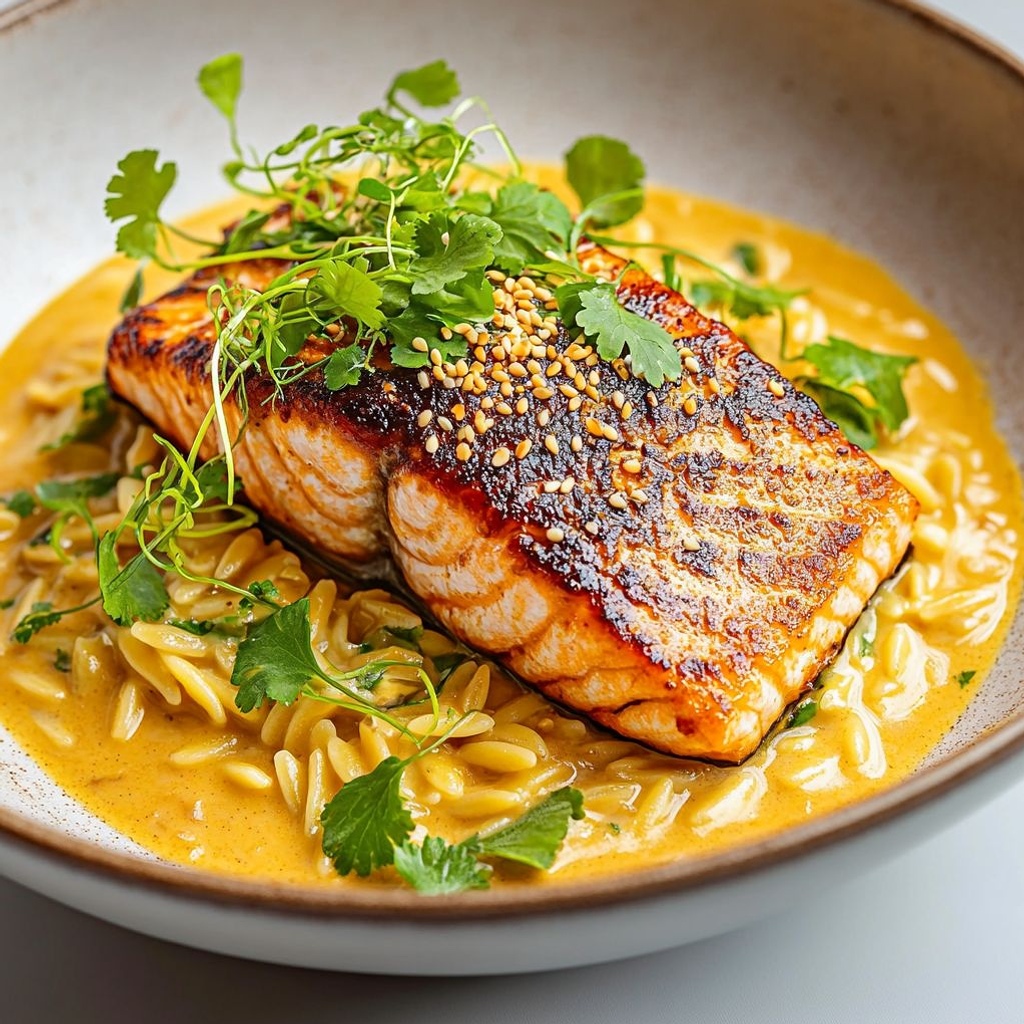
→ Properly coated orzo ensures each bite carries the velouté without heavy pooling on the plate. - Arrange the plated dish by spooning a bed of velouté on each plate, placing the orzo attractively atop or beside the sauce, and resting a salmon fillet (skin-side up for presentation) on top so the crisp skin remains visible.
→ Visual appeal and texture contrast are key for a restaurant-quality presentation and balanced eating experience. - Finish with a handful of chopped fresh cilantro over the salmon and a wedge of lime on the side for bright, aromatic garnish, and serve immediately while the sauce is velvety and the salmon remains moist.
→ Fresh herbs and citrus lift the dish, providing a clean finish that complements the curry coconuts without overshadowing the seafood.
Notes
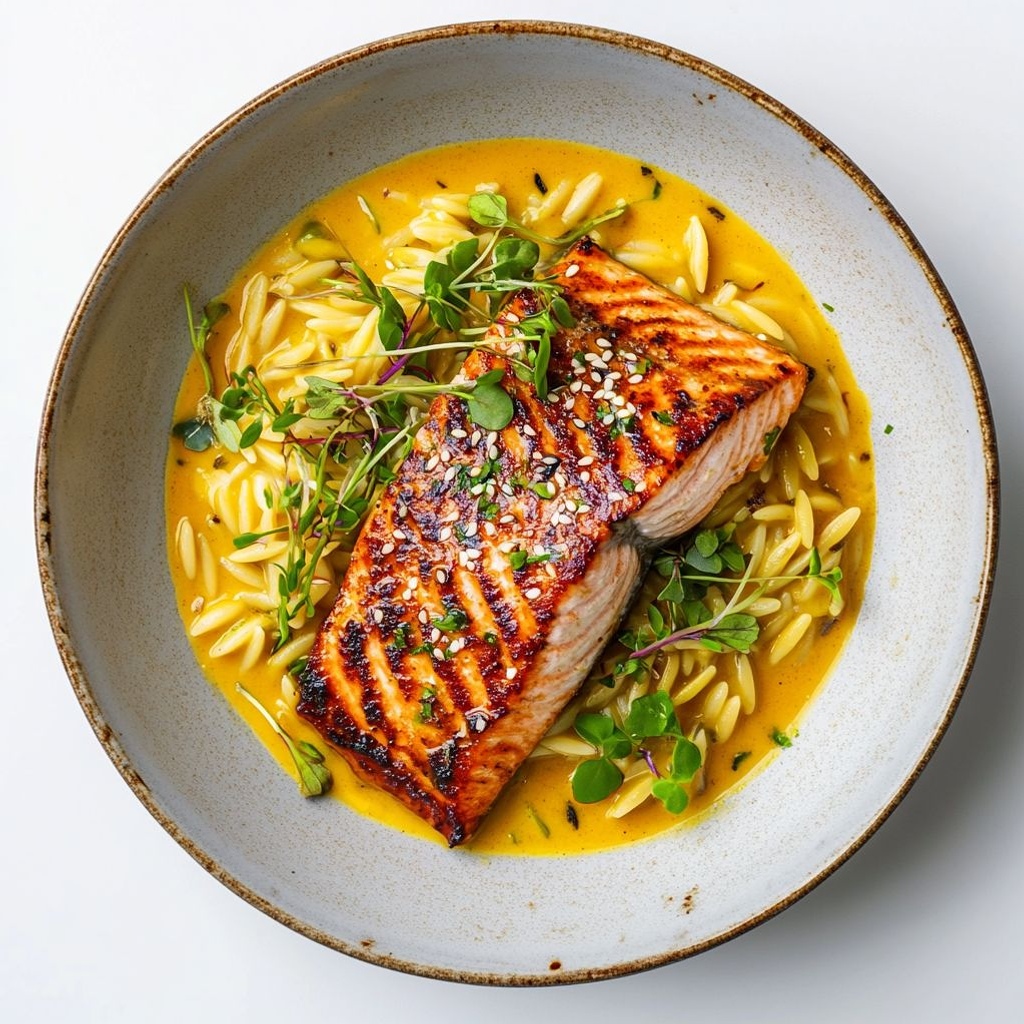
“These salmon and orzo with coconut curry velouté are best prepared by starting with a crisp, skin-on salmon and a silky, coconut-forward velouté. Pat the fillets dry, season with salt and pepper, and sear skin-side down in a hot skillet with neutral oil until the skin is crisp; finish with gentle heat to keep the center moist and flaky. Cook the orzo in salted water until just al dente, then drain and reserve a splash of the cooking water. For the velouté, melt butter and whisk in flour to form a smooth roux, cooking 1–2 minutes to remove the raw taste; gradually whisk in full-fat coconut milk and warm stock to reach a sauce-like consistency, then fold in finely minced shallot, garlic, and grated ginger sautéed in a little oil. Stir in red curry paste and simmer until fragrant, then finish with fresh lime juice added at the end to brighten the richness. If the sauce thickens too much, loosen it with a bit more stock or coconut milk. Optional add-ins can be stirred in at the end: 2 cups packed baby spinach for color and nutrition, 1 cup sliced mushrooms for earthiness, or 1 cup halved cherry tomatoes for brightness; add red pepper flakes to taste for a gentle kick, and fold in 1 cup thawed frozen peas for a pop of green. Season the velouté to taste with salt, pepper, and an extra squeeze of lime if desired. To serve, spoon velouté over the orzo, top with the salmon, and garnish with fresh cilantro and lime wedges. Leftovers keep well in the fridge for 1–2 days; reheat gently on the stove with a splash of stock or coconut milk to restore the sauce’s silkiness. For gluten-free versions, substitute the 2 tablespoons all-purpose flour with 2 tablespoons gluten-free flour or use a 1 tablespoon cornstarch slurry added at the end, and ensure the red curry paste is gluten-free if you have gluten intolerance.”
Tips
Tips for perfect Salmon and Orzo with Coconut Curry Velouté
Salmon tips
- Pat the salmon fillets dry thoroughly with paper towels before cooking to ensure the skin crisps instead of steaming. Season with salt and pepper just before searing to avoid drawing out moisture.
- For ultra-crispy skin, heat a heavy skillet (cast iron or stainless) over medium-high heat with a thin coating of neutral oil. Place the fillets skin-side down and press lightly to keep the skin flat. Cook until the skin is deeply golden and the flesh just begins to opaque, then flip and finish on the other side with gentle heat to keep the center moist.
- If the skin sticks, don’t force it—lift with a spatula and allow the fish to release naturally. A quick splash of warm stock after flipping can help loosen any browned bits for next time.
Velouté and curry tips
- Make the roux by cooking the butter and flour together for 1–2 minutes to remove the raw flavor. For gluten-free, substitute with gluten-free flour or a small cornstarch slurry added at the end (2 tablespoons cold water with 1 tablespoon cornstarch).
- Whisk in warm stock gradually to prevent lumps; start with a small amount and simmer until the sauce thickens before adding more. Keep the sauce at a gentle simmer to avoid breaking the emulsion.
- Stir in red curry paste gradually and taste as you go. If you prefer more heat or a stronger coconut aroma, add a bit more paste in small increments.
- Avoid boiling after adding coconut milk; heat gently and adjust thickness with additional stock or a splash of coconut milk if needed. Finish with lime juice off the heat to preserve brightness.
Orzo and aromatics tips
- Cook orzo in well-salted water until al dente, then drain. Toss with a small amount of butter or olive oil to prevent sticking and to add gloss to the finish if you’re serving it as a separate bed for the salmon.
- Saute shallots, garlic, and ginger gently until fragrant and translucent. Avoid toasting the garlic too darkly, which can introduce bitterness into the velouté flavor.
Optional add-ins and finishing touches
- Spinach should be stirred in at the end and wilted just before serving to keep vibrant color. If using peas, thaw and drain well so their moisture doesn’t dilute the sauce.
- Mushrooms benefit from a quick sear in the same pan to develop color and deepen flavor—add them after the shallots and garlic have softened, then proceed with the velouté.
- Cherry tomatoes should be added in the last few minutes so they stay plump and juicy, contributing brightness without turning to mush.
- Red pepper flakes can be added during sauce simmering; start with 1/4 teaspoon and adjust to taste for a gentle heat.
Plating, timing, and make-ahead
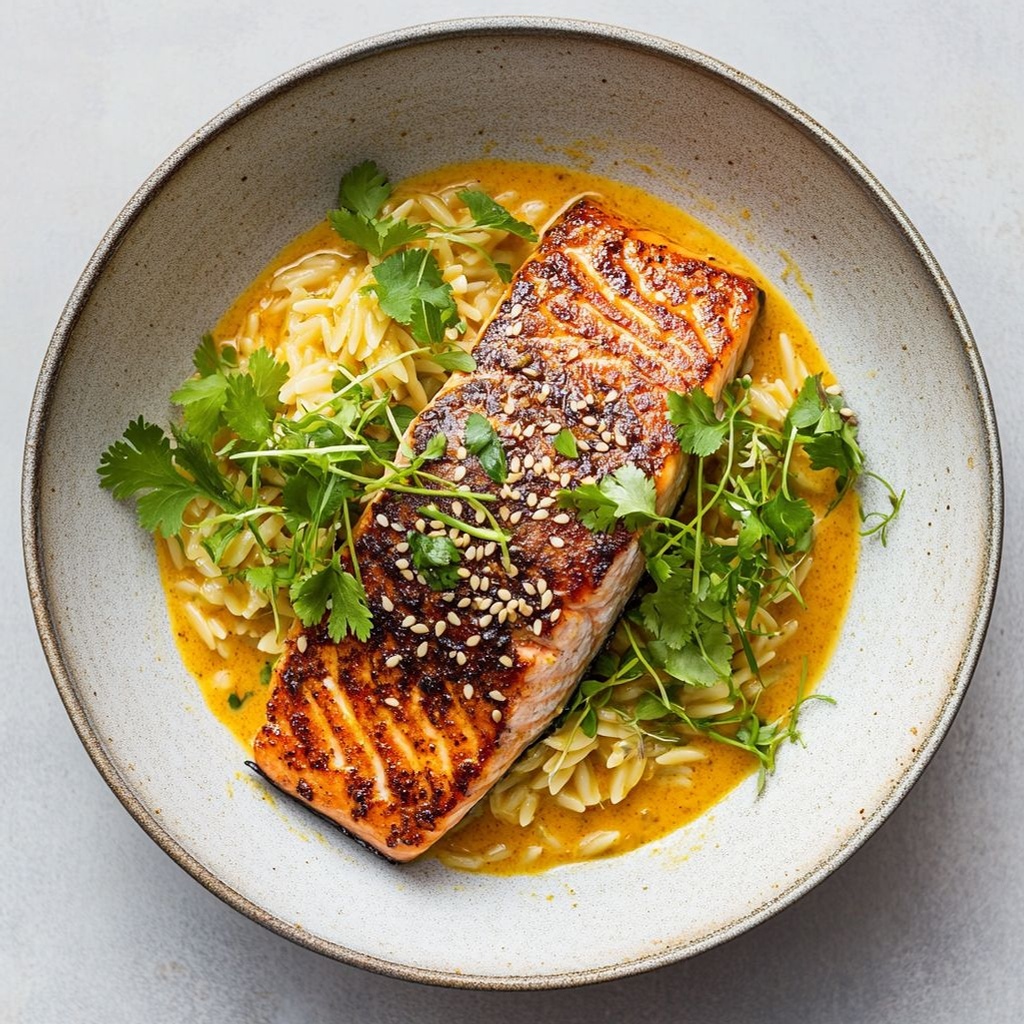
- Keep the salmon warm on a plate while finishing the velouté, then plate the orzo, spoon the velouté around or over, and top with the salmon. Rest the fish briefly under foil to keep it rosy if needed.
- Finish with fresh cilantro and lime wedges for a fresh citrus lift. A light squeeze of lime just before serving brightens the dish dramatically.
- The velouté and orzo can be made ahead; reheat gently and whisk to re-emulsify. Coconut milk may separate slightly when cold—reheat slowly and whisk to restore smoothness.
- Store leftovers separately (sauce, orzo, and salmon) for up to 2–3 days in the refrigerator. Reheat slowly on the stove to avoid breaking the sauce.
FAQ
What is Salmon and Orzo with Coconut Curry Velouté?
An elegant, one-pan style dish featuring tender salmon, small orzo pasta, and a silky coconut curry velouté that coats the pasta and salmon with warm, aromatic flavors.
How do you make the coconut curry velouté?
Sauté aromatics (garlic, onion, and ginger), stir in curry paste, then whisk in coconut milk and light stock. Simmer to reduce and thicken slightly, season with salt, lime juice, and a splash of fish sauce or soy for depth. Optionally whisk in a small amount of cornstarch slurry to reach your desired consistency.
How should the salmon be cooked for this dish?
Season the salmon and sear skin-side down in a hot skillet until the skin is crisp. Finish with a brief bake in a preheated oven or a gentle sauté until the flesh just flakes. Target an internal temperature of about 125–130°F (52–54°C) for medium-rare to medium, then rest briefly before serving.
How do you cook the orzo?
Boil salted water in a separate pot and cook the orzo until al dente, usually about 7–9 minutes depending on the brand. Drain and toss with a touch of olive oil to prevent sticking before adding to the velouté.
Is this dish gluten-free or dairy-free?
It can be made gluten-free by using gluten-free orzo or substituting with rice or quinoa. The velouté base uses coconut milk, which makes it dairy-free; just ensure any stock or seasonings are gluten-free if needed.
Can I use other proteins besides salmon?
Yes. This velouté pairs well with shrimp, chicken, firm tofu, or halloumi. Adjust cooking times accordingly to avoid overcooking the protein.
How do I control the spice level?
The heat comes from the curry paste. Start with a small amount and taste as you go. For more heat, add another small spoonful or switch to a hotter paste. If it’s too spicy, balance with a squeeze of lime juice and a touch of sweetness like honey or maple syrup.
What are flavor balance tips for this dish?
Achieve balance with acidity (lime juice or zest), salt, a touch of sweetness, and fresh herbs. Finish with chopped cilantro or Thai basil, a drizzle of coconut milk, and a sprinkle of toasted coconut for aroma and texture.
How should leftovers be stored and reheated?
Cool leftovers within two hours and refrigerate in airtight containers for up to 2–3 days. Reheat gently on the stove or in a low-power microwave, adding a splash of coconut milk or stock to restore the velouté’s creamy consistency.
Can this dish be meal-prep friendly?
Yes. Cook the orzo and velouté base separately, store them in airtight containers, and keep the cooked salmon portions separately. Reheat together when ready, or flake salmon into the velouté just before serving to maintain texture.