Introduction / Hook
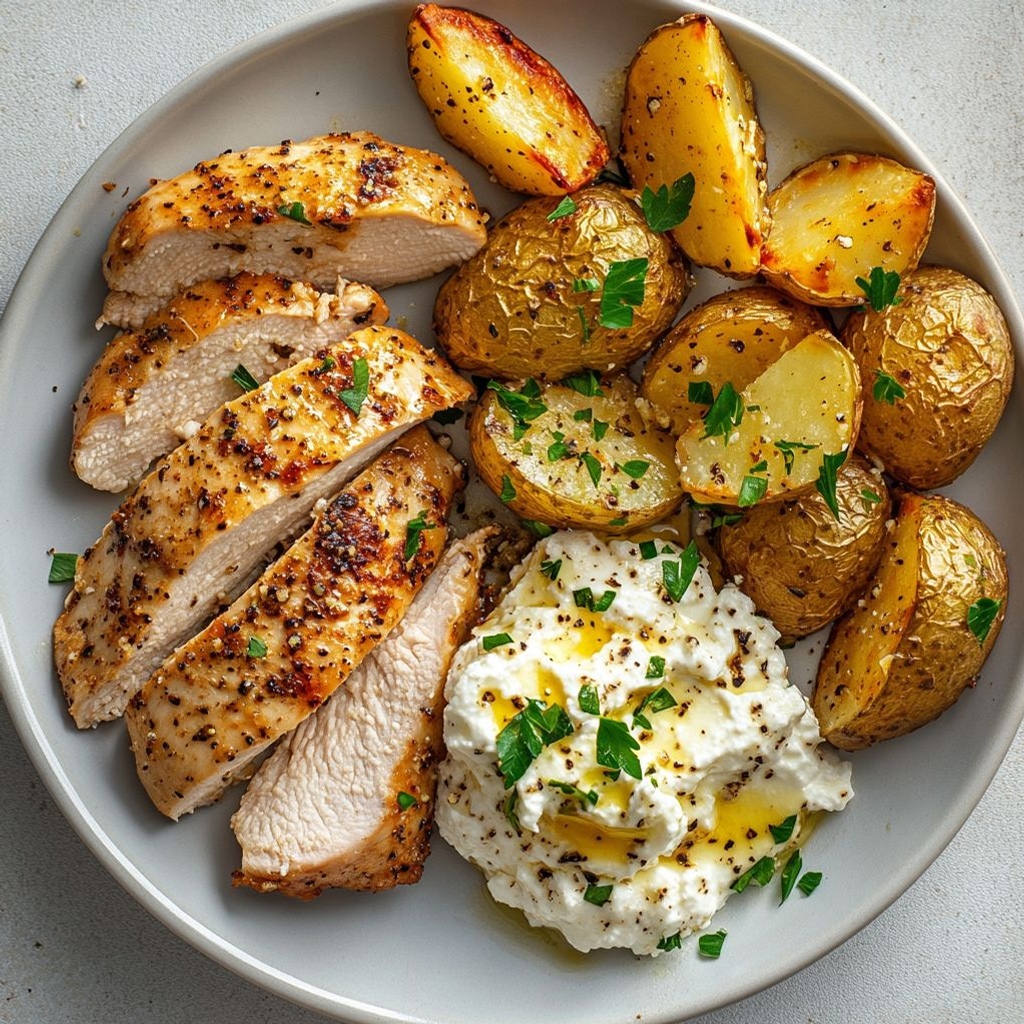
Imagine a kitchen scent that feels like a warm hug on a busy weeknight: garlic blooming in olive oil, potatoes turning a sunlit gold in a blistering oven, and a creamy ribbon of ricotta weaving through tender chicken. This Garlic Chicken Ricotta with Roasted Potatoes is not just a dish; it’s a whisper of comfort that travels from the pan to your plate, carrying with it the memory of sunlight on a farm, the earthiness of roasted roots, and the luxurious glow of a simple, honest supper. It starts with everyday ingredients and transforms them into something that tastes like a celebration—crisp-edged potatoes with a garlicky crust, succulent chicken that remains juicy under a veil of velvety ricotta, and a subtle brightness from herbs and perhaps a squeeze of lemon. The magic lies in the balance: the richness of ricotta parenthesizing the savory depth of garlic and chicken, the starch of the roasted potatoes providing a golden counterpoint, and the way each bite carries a gentle, comforting heat that lingers on the palate. It’s the kind of dish that asks for a gathering—whether you’re feeding a noisy, loving family or sharing a quiet, candlelit dinner with someone special—because it rewards patience and simple, thoughtful technique with flavors that feel both familiar and indulgent.
The Story Behind the Dish
Garlic, ricotta, and roasted potatoes—three ingredients that seem ordinary yet become extraordinary when treated with care. This recipe is a tapestry woven from memories of sunny Italian kitchens and the modern longing for weeknight comfort that still tastes like a special occasion. The ricotta lends a creamy, almost cloudlike texture that lightens the dish without surrendering its heartiness. In many Italian households, ricotta is a gentle bridge between the savory and the indulgent, a dairy-softening agent that carries herbs and garlic through a skillet without clumping. The roasted potato, meanwhile, carries the spirit of farm Sundays and outdoor braises—their skins crackling, exposing fluffy centers that drink in garlic and oil until they become irrepressibly fragrant. The chicken—simple, versatile—meets the heat with a quick sear that locks in juices and creates a flavorful crust, then plays counterpoint to ricotta’s silken, slightly tangy sweetness. The result is a dish that feels both rustic and refined, the kind of meal that travels well from a busy home kitchen to a cozy table with friends or family gathered around it.
Historically, dishes like this represent the cross-pollination of Mediterranean flavors with the practical ingenuity of home cooks who believed that good food could be both comforting and efficient. Garlic has traveled across continents, turning humbler ingredients into something memorable; potatoes brought new life to European tables after their wide adoption in the old world; ricotta, with its dairy-soft texture, has long been a symbol of Italian pantry creativity—cheap to make, endlessly adaptable, and always gentle on the palate. In that spirit, this recipe embodies a philosophy: take everyday pantry staples and treat them with a little attention—high heat for golden edges, a gentle fold of creamy cheese, a bright finish with herbs or citrus—and you have something that tastes like a celebration, even on a Tuesday. It’s a dish that invites conversation, a little kitchen theatre, and the comfort of predictable, delicious results with every bite.
Why You’ll Love This Recipe
- One-pan or one-pan-plus-sheet-pan simplicity: minimal cleanup and maximum flavor, perfect for busy evenings.
- A harmonious balance of textures: crisp roasted potatoes, juicy chicken, and a luxuriously creamy ricotta that ties everything together.
- Rich yet light: the ricotta provides creaminess without heaviness, while garlic and herbs brighten each mouthful.
- Flexibility and accessibility: uses affordable ingredients, but the result feels special enough for entertaining guests.
- Versatile foundation for creativity: swap proteins, experiment with herbs, or introduce a splash of citrus for a brighter finish.
- Naturally crowd-pleasing: appeals to a wide range of tastes, from kids to grown-ups, with comforting familiar flavors.
Flavor Profile & Texture
The plate offers a chorus of comforting contrasts. The chicken brings a savory, slightly caramelized note from the sear, its skin or exterior edges absorbing the fragrant oils and garlic. Inside, the meat stays tender and succulent, a reminder that high-heat cooking, when done with care, can preserve moisture while developing depth. The roasted potatoes form the backbone of the dish—crisp on the outside, fluffy within, their edges kissed by garlic and a hint of olive oil that turns nearly nutty as they bake. The ricotta acts as a velvety partner, draping the chicken with a gentle, cheese-sweet tang that complements the garlic’s bite instead of competing with it. If you choose to add a touch of lemon zest or a fresh herb like parsley or thyme, you’ll invite a bright counterpoint that lightens the dish’s indulgence, lifting the creaminess with a citrusy lift or a peppery-green finish. Texturally, you’ll experience a satisfying contrast: the reassuring chew of potatoes, the tender bite of chicken, and the lush, almost satin-like drift of ricotta that ties everything together in a creamy, herby embrace. The overall flavor is savory, slightly garlicky, and warmly comforting, with a note of dairy-sweetness that feels luxurious without being heavy—a quintessential home-cooked moment that tastes like a hug and a memory at once.
Occasions & Pairings
This dish is a natural choice for weeknight dinners that want to feel special without demanding huge time. It also shines on weekend meals when you’re feeding a crowd or celebrating a small milestone with family. The adaptable nature of the recipe makes it suitable for intimate date nights at home, casual gatherings with friends, or a comforting solo dinner that feels like a treat. For sides, consider a bright, peppery arugula salad tossed with lemon vinaigrette to cut through the richness, or a platter of roasted vegetables—zucchini, bell peppers, and onions—to echo the dish’s roasted elements. A green bean almond sauté or a simple wilted spinach with garlic would also harmonize beautifully. In terms of beverages, a crisp white wine such as Pinot Grigio or Sauvignon Blanc amplifies the freshness and complements the garlic and herbs. For a non-alcoholic pairing, a sparkling citrus lemonade or an iced tea with a sprig of rosemary offers a refreshing contrast that keeps the palate energized between bites.
Tips, Variations & Substitutions
- Protein swaps: use chicken thighs for juicier, more forgiving meat, or try turkey cutlets for a lighter option. For a vegetarian variation, replace the chicken with roasted cauliflower steaks or thick slices of a hearty portobello mushroom, and use a dairy-free ricotta alternative to keep it vegan.
- Ricotta alternatives: if you prefer a richer finish, fold in a spoonful of mascarpone or a small amount of grated parmesan to the ricotta for extra depth; for a lighter touch, drizzle with a touch of extra-virgin olive oil instead.
- Herb and citrus twists: swap parsley for dill, chives, or thyme; finish with a squeeze of lemon or a few lemon zest shavings to brighten the dish.
- Garlic intensity: if you love garlic, add a second wave of minced garlic toward the end of cooking for a more pronounced aroma; if you’re sensitive to garlic, reduce the amount slightly and rely on olive oil and herbs for fragrance.
- Flavor boosters: a pinch of red pepper flakes can introduce a subtle warmth; a handful of chopped olives or capers can lend a briny contrast that heightens the dish’s overall complexity.
- Gluten-free by design: this dish is naturally gluten-free; just ensure your seasonings and any accompanying sauces or broths are certified gluten-free if you’re serving guests with celiac disease or gluten sensitivities.
- Make-ahead tips: you can prep the potatoes and garlic the day before, store refrigerated, and then combine with chicken for a quicker finish. Reheating leftovers gently in the oven helps preserve the crispy edges and creamy continuity.
Storage & Make-Ahead Ideas
Leftovers typically keep well in the refrigerator for up to a couple of days when stored in an airtight container. To reheat while preserving texture, warm slowly in a low oven or on the stovetop, adding a splash of broth or water to moisten the sauce if the ricotta has firmed a bit. If you’re planning ahead, you can roast the potatoes in advance and store them separately; reheat briefly before adding the chicken and ricotta to bring the dish back to its enticing, hot-and-creamy state. For freezing, the texture of ricotta can become grainy after thawing, so best results come from freezing the potatoes and chicken separately, then reassembling with fresh ricotta on reheating. If you’re serving as part of a larger menu, consider making a lemon-herb salad or a quick sautéed green vegetable to brighten the plate as you plate up for guests. Overall, this dish thrives on being prepared with thought, allowing the garlic to perfume the air and the potatoes to crisp up in a hot oven, while the ricotta remains a welcoming, gentle thread through the plate.
Fun Facts & Trivia (Optional)
- The word ricotta literally means “recooked” in Italian, a nod to the way the dairy product is made by recooking whey to extract every last bit of moisture and flavor.
- Garlic has a long culinary history across cultures as a comfort ingredient that helps elevate both everyday and festive dishes; it was believed in ancient times to ward off evil spirits and promote vitality—perhaps why it feels so nourishing in a home kitchen today.
- Potatoes became a staple in European cuisine after their migration from the Americas; their ability to soak up flavors makes them ideal partners for garlicky roasts and creamy fillings, as seen in this dish.
- Italian-American cuisine often embraces simple ingredients elevated with technique and contrasting textures; this recipe is a modern homage to that tradition, balancing a rustic element (roasted potatoes) with a refined touch (creamy ricotta) to create something both familiar and novel.
- Pairing cheese with garlic and roasted vegetables is a classic technique used in many Mediterranean-inspired dishes, offering a comforting mouthfeel with an aromatic finish that lingers pleasantly on the palate.
Ingredients
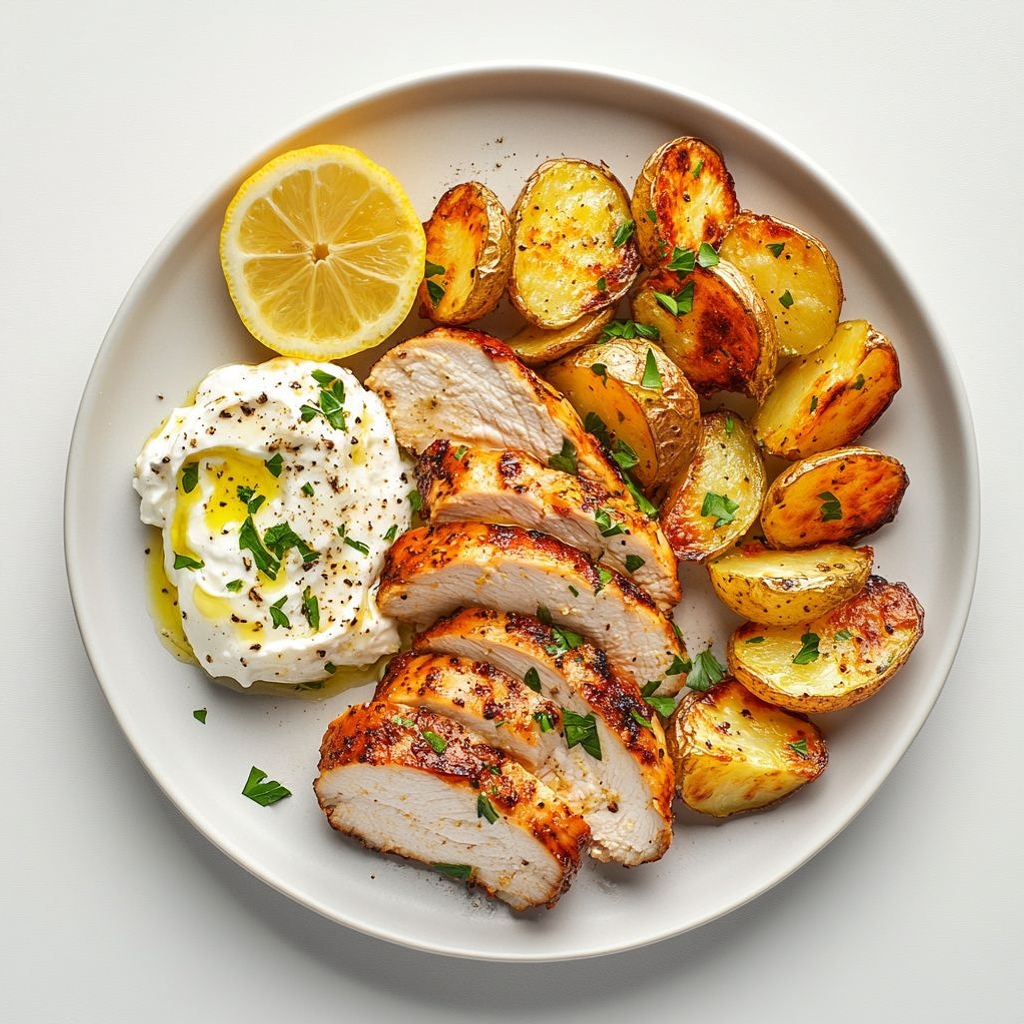
Garlic Chicken Ricotta with Roasted Potatoes
Roasted Potatoes
-
– 2 pounds Yukon Gold potatoes, cut into 1-inch chunks
→ These potatoes roast to a crisp exterior with creamy centers and provide a hearty, starch-based side that complements the garlic chicken ricotta. Yukon Golds hold their shape well and offer a buttery flavor; cut into uniform chunks for even roasting. Adjust size if using baby potatoes to keep cooking even.
– 2 tablespoons extra-virgin olive oil
→ The oil helps the potatoes crisp and promotes even browning in the hot oven. Use a high-quality extra-virgin olive oil for a fruity note that pairs with garlic and herbs. Toss the potatoes thoroughly so every piece is lightly coated.
– 1 teaspoon kosher salt
→ Salt enhances the potatoes’ flavor and helps with browning by drying the surface slightly. If using fine table salt, reduce to about 3/4 teaspoon. Adjust to taste after roasting.
– 1/2 teaspoon freshly ground black pepper
→ Pepper adds subtle heat and depth to the potatoes, complementing the garlic and herbs. Freshly ground pepper has stronger aroma and flavor than pre-ground. Grind just before using for best aroma.
– 1 teaspoon dried thyme or rosemary (optional)
→ Dried herb adds aromatic, earthy notes that pair with roasted potatoes and garlic. If using fresh herbs, use about 1 tablespoon chopped. Toss with potatoes before roasting for even distribution.
Garlic Chicken
-
– 4 boneless, skinless chicken breasts, pounded to an even 1/2-inch thickness
→ Pounding ensures uniform thickness for quick, even cooking and helps the ricotta topping adhere evenly. If you prefer to bake stuffed chicken, you can butterfly the breasts instead, but pounding is the simplest method for this dish. Use a meat mallet or rolling pin between two sheets of parchment to avoid mess.
– 3 cloves garlic, minced
→ Garlic provides a robust savory base for the chicken and the ricotta topping. Mince finely so it distributes evenly and infuses the meat. If you want a milder flavor, sauté the garlic in the pan first to mellow it slightly.
– 1 tablespoon olive oil (for searing)
→ The oil prevents sticking and aids in browning the chicken, delivering a crisp exterior while keeping the meat juicy. Heat the oil in a skillet over medium-high heat until shimmering before adding the chicken. Do not overcrowd the pan to avoid steaming.
– 1/2 teaspoon paprika (optional)
→ Paprika adds a touch of sweetness and color to the chicken. If using smoked paprika, it will impart a subtle smoky flavor that pairs well with garlic and lemon. Adjust according to preference, and consider a light dusting for evenly seasoned surfaces.
– Salt and pepper to taste
→ Essential for flavor balance; add evenly on both sides of chicken. Taste and adjust after searing since the ricotta topping and potatoes also contribute salt. For low-sodium diets, measure with care and use a salt substitute if desired.
Ricotta Filling
-
– 1 cup ricotta cheese (whole-milk)
→ The ricotta provides a creamy, mild, protein-rich layer that anchors the topping on the chicken. For a lighter version, part-skim works, but whole-milk yields a richer texture. If very watery, drain briefly in a fine-mesh sieve and pat dry before mixing.
– 1/2 cup grated Parmesan cheese
→ Parmesan adds sharp, nutty flavor and helps bind the ricotta mixture if you include an egg. Use freshly grated for the most vibrant taste. You can substitute Pecorino Romano for a bolder tang if desired, but Parmesan pairs smoothly with garlic and lemon.
– 1 large egg, lightly beaten
→ The egg binds the ricotta mixture so it holds its shape as a topping during baking. It also helps create a compact, sliceable layer. If you prefer a lighter texture, reduce the egg to half, or omit if using ricotta with higher moisture content, but texture may be looser.
– 2 cloves garlic, minced (for ricotta mixture)
→ Extra garlic in the ricotta intensifies the savory notes and ensures the topping is evenly seasoned. If you want a milder finish, sauté the minced garlic for 30 seconds before mixing to mellow its bite.
– 1 tablespoon lemon zest
→ The lemon zest brightens the richness of the cheese and chicken, providing a refreshing contrast. Use a microplane to zest only the yellow outermost layer; avoid the bitter white pith. Optional: a teaspoon of lemon juice for extra brightness.
– 2 tablespoons chopped fresh parsley
→ Fresh parsley adds color and a clean herbal note that harmonizes with garlic and lemon. Chop finely so it distributes evenly. If you are short on fresh parsley, substitute 1 teaspoon dried parsley, but the flavor will be milder.
– Salt and pepper to taste (for ricotta filling)
→ Season the ricotta mixture to your preference, balancing with Parmesan and lemon. Start with a small pinch, then adjust after mixing to ensure the topping isn’t bland or overly salty. If using salted cheese, reduce additional salt accordingly.
Garnish & Serve
-
– Fresh parsley leaves for garnish
→ A final sprinkle of fresh parsley adds vibrant color and a hint of herbal brightness to the finished dish. Use a few sprigs torn or chopped for visual appeal right before serving. For a more intense herb note, garnish with lemon zested parsley mixture.
– Lemon wedges for serving
→ Lemon wedges provide a bright, acidic counterpoint to the rich chicken and creamy ricotta. Squeeze over the chicken and potatoes to brighten flavors just before eating. Freshly cut wedges will yield the most juice.
– 1 tablespoon extra-virgin olive oil (to drizzle, optional)
→ A light drizzle of olive oil over the finished dish enhances shine and adds a touch of fruity oil flavor. This is optional and can be omitted if you prefer a lighter finish. If using, drizzle just before serving to avoid sogginess.
Instructions
- Preheat your oven to 425°F (220°C) and line a large rimmed baking sheet with parchment paper or lightly grease it to ensure easy release of roasted potatoes and for even browning of the chicken.
→ A hot oven and nonstick surface promote crisp potatoes and prevent sticking when the ricotta topping bakes onto the chicken. - Prepare the potatoes by rinsing them well and cutting Yukon Golds into uniform 1-inch chunks to ensure even cooking and a balanced mix of crisp edges and creamy centers.
→ Uniform pieces roast at the same rate, avoiding undercooked centers or overbrown edges. - Toss the potato chunks with 2 tablespoons extra-virgin olive oil, 1 teaspoon kosher salt, 1/2 teaspoon freshly ground black pepper, and 1 teaspoon dried thyme or rosemary if using, ensuring every piece is lightly coated.
→ The oil promotes browning, salt seasons, pepper adds depth, and the herbs perfume the potatoes as they roast. - Spread the potatoes in a single layer on the prepared baking sheet, giving each piece space for air to circulate and crisp properly.
→ Crowding traps moisture and leads to soggy potatoes rather than a crisp exterior. - Roast the potatoes in the preheated oven on the middle rack for 25 to 35 minutes, turning once or twice during roasting for even browning and to prevent sticking; begin checking at 25 minutes for your preferred level of crispness.
→ Turning ensures all sides brown evenly and avoids uneven texture; the goal is a golden crust with creamy centers. - Meanwhile, place the pounded chicken breasts between two sheets of parchment or plastic wrap and gently pound to an even 1/2-inch thickness using a rolling pin or meat mallet.
→ Uniform thickness guarantees even cooking and helps the ricotta topping adhere evenly across the surface. - Season both sides of the chicken with salt and pepper, and if desired, dust with 1/2 teaspoon paprika for color and subtle warmth; press the seasoning into the surface so it stays on during searing.
→ Proper seasoning builds a flavorful crust that complements the garlicky topping; paprika also enhances visual appeal. - In a small bowl, mix 3 minced garlic cloves (for the chicken) with 1 tablespoon olive oil and set aside to infuse; this will perfume the surface of the chicken as it sears.
→ The oil carries garlic aroma and prevents scorching; letting it sit briefly helps deepen the garlic flavor without burning. - Heat 1 tablespoon olive oil in a heavy skillet over medium-high heat until shimmering, then sear the seasoned chicken on the first side for 2 to 3 minutes until the surface is golden and crust forms.
→ A quick, high-heat sear creates a flavorful crust that locks in juices; avoid moving the chicken too soon to prevent sticking. - Flip the chicken and sear for another 1 to 2 minutes on the opposite side, then transfer the seared breasts to the parchment-lined baking sheet to finish cooking in the oven.
→ A partial sear sets up a strong base for the ricotta topping and ensures the chicken finishes cooking evenly in the oven without drying out. - In a separate bowl, prepare the ricotta filling by combining 1 cup whole-milk ricotta, 1/2 cup grated Parmesan, 1 large egg (lightly beaten), 2 minced garlic cloves, 1 tablespoon lemon zest, 2 tablespoons chopped fresh parsley, and salt and pepper to taste; whisk until just combined and smooth.
→ The egg binds the mixture to hold its shape during baking, while lemon zest and parsley brighten and balance the richness. - Gently fold the mixture with a fork until homogeneous, taking care not to overwork it which can make the filling dense; set aside until ready to top the chicken.
→ Gentle folding preserves a light, creamy texture that bakes to a tender topping rather than a dense mass. - Top each seared chicken breast with an even layer of the ricotta mixture, smoothing the surface with the back of a spoon to ensure complete coverage and uniform baking.
→ A level topping guarantees every bite includes the creamy ricotta and garlic notes without pooling or slumping during bake. - Return the sheet to the oven and bake at 425°F (220°C) for 14 to 18 minutes, or until the chicken reaches 165°F (74°C) internally and the ricotta topping is set with a light golden edge.
→ The internal temperature ensures safety and juiciness; the topping should be firm but not overly browned to maintain a creamy finish. - When the potatoes are crisp and golden, remove them from the oven and let them rest briefly on the sheet to finish from residual heat, then transfer to a warm area or keep in a warm oven if needed.
→ Resting helps the starches set and prevents steam from making them soggy; it also allows flavors to settle for a richer final texture. - Arrange the roasted potatoes and garlic chicken ricotta on a serving platter, drizzle with 1 tablespoon extra-virgin olive oil if desired, and garnish with fresh parsley for color.
→ A final drizzle and fresh herbs enhance shine, aroma, and balance between the richness of the cheese and the bright, rustic potatoes. - Serve with lemon wedges on the side for a bright, acidic finish that cuts through the richness of the ricotta and chicken, encouraging a clean, balanced palate with every bite.
→ A squeeze of lemon brightens the dish and bright herbs elevate the overall aroma and flavor profile at the table.
Notes
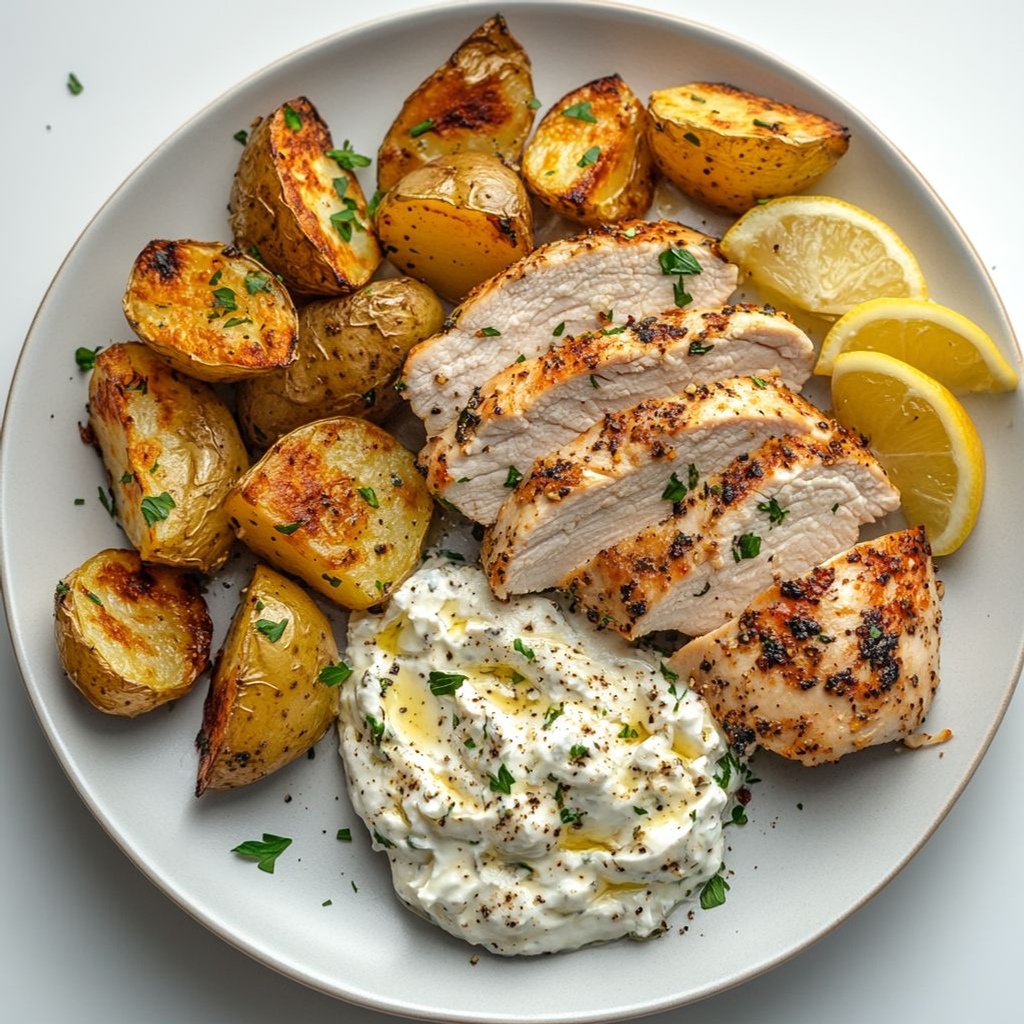
These garlic chicken ricotta with roasted potatoes are naturally gluten-free when prepared with standard ingredients and clean equipment, making them a satisfying, protein-packed main dish. The dish features juicy, seared chicken under a creamy garlic-ricotta topping and crisp, herb-kissed roasted potatoes. You can customize the topping by adding extra garlic, lemon zest, or fresh parsley and thyme to taste. The components reheat well and make great leftovers for lunch. For a lighter version, use part-skim ricotta or reduce the Parmesan slightly, and skip the optional paprika. Always check labels on packaged cheeses for gluten-free status if you have celiac disease or gluten sensitivity.
Tips
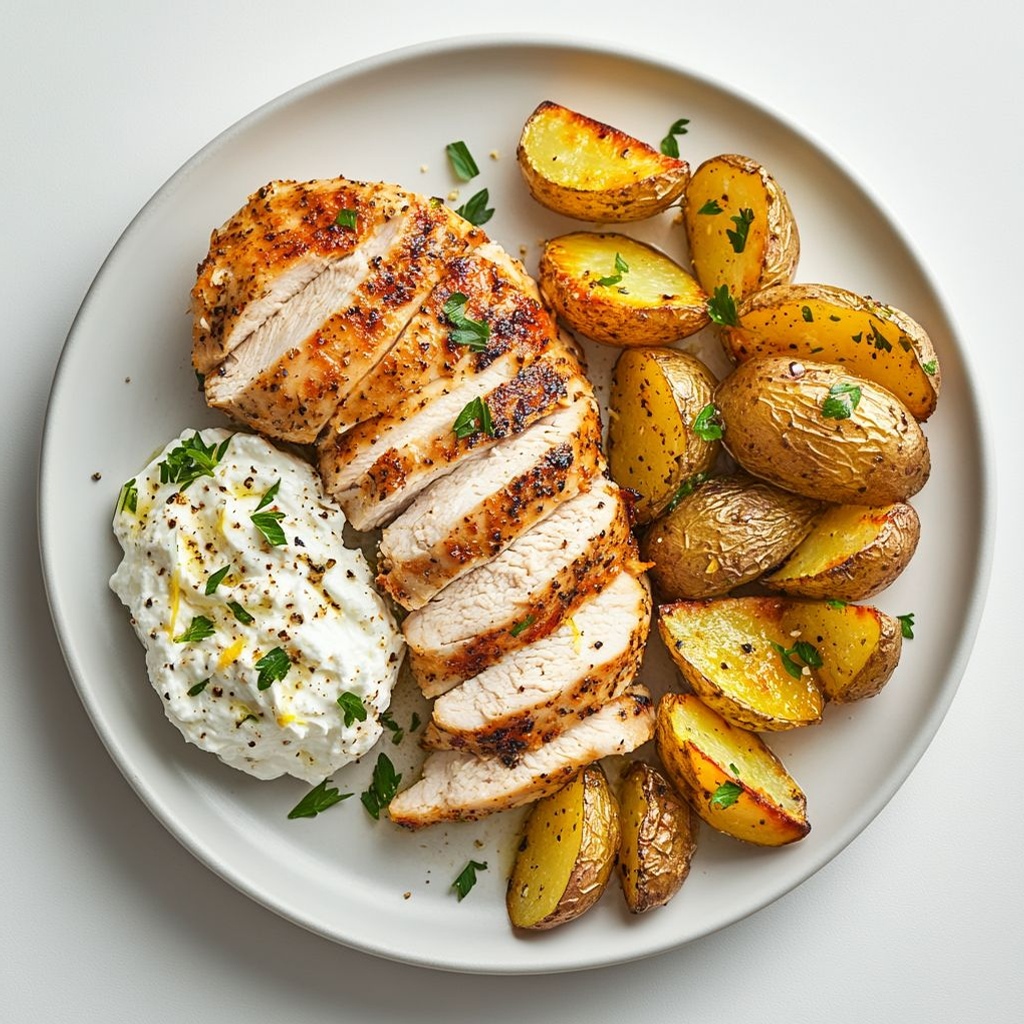
Tips for Garlic Chicken Ricotta with Roasted Potatoes
Roasted Potatoes
- For extra crispness, pat the cut potatoes dry with a clean towel before tossing with olive oil and salt to remove surface moisture.
- Cut potatoes into uniform 1-inch pieces to ensure even roasting; if using baby potatoes, halve or quarter them so they cook at the same rate as larger chunks.
- Spread potatoes in a single layer on the pan with space between pieces; overcrowding can cause steaming instead of browning.
- Preheat the sheet pan in the oven for 5–10 minutes before adding potatoes to jump-start browning on the bottom surfaces.
- Finish under the broiler for 1–2 minutes at the end if you want a deeper golden crust, watching closely to prevent burning.
- If using dried herbs, sprinkle with 1 teaspoon dried thyme or rosemary as called for; for fresh herbs, add about 1 tablespoon chopped after roasting to preserve aroma.
Garlic Chicken
- To ensure even cooking, pound the chicken to an even 1/2-inch thickness; this helps the ricotta topping adhere and prevents overcooking the outside before the inside is done.
- Season generously on both sides, but taste after searing because the ricotta and potatoes will contribute saltiness.
- Maintain a hot pan when searing (medium-high heat) and avoid overcrowding; cook in batches if necessary for a crisp, golden crust.
- Minced garlic can burn quickly; if the pan gets too hot, add garlic after the chicken has started browning or reduce heat slightly to mellow the bite.
- If you prefer milder garlic, sauté the minced garlic for 20–30 seconds before adding to the pan or to the ricotta filling.
Ricotta Filling
- Drain very wet ricotta before mixing to prevent a loose topping; pat dry with a towel or give it a gentle squeeze in a cheesecloth/napkin.
- Freshly grated Parmesan yields the best flavor; if using Pecorino Romano, expect a sharper tang—adjust salt accordingly.
- The egg helps bind the filling so it slices neatly after baking; if you want a looser texture, use only half an egg or omit entirely, understanding the result may be softer.
- Brighten the mixture with lemon zest; zest before juicing the lemon to avoid bitterness; a small amount of lemon juice can be added for extra brightness if desired.
- Chop parsley finely for even distribution; if you must substitute dried parsley, use about 1 teaspoon and expect a milder herbal note.
- Taste the ricotta filling before assembling; adjust salt and pepper in small increments to avoid oversalting once the chicken and potatoes are baked.
Garnish & Serve
- Let the chicken rest for 5 minutes after baking to redistribute juices and improve sliceability.
- Drizzle a light amount of extra-virgin olive oil just before serving to add shine and a fresh fruity note (optional).
- Garnish with fresh parsley for color and aroma; tear leaves by hand for a rustic look and stronger surface oils.
- Serve with lemon wedges on the side; a squeeze over the chicken and potatoes brightens the richness of the ricotta topping.
- If you want to prepare ahead, you can assemble the ricotta topping and refrigerate; bake just before serving to keep the topping creamy and cohesive.
FAQ
What is Garlic Chicken Ricotta with Roasted Potatoes?
A comforting, weeknight-friendly dish featuring juicy garlic-infused chicken paired with crispy roasted potatoes and finished with a creamy ricotta sauce. The ricotta melts into a light, bright sauce with lemon and herbs, creating a satisfying all-in-one-meal vibe.
What ingredients do I need for Garlic Chicken Ricotta with Roasted Potatoes?
Here’s a typical lineup (serves 2-3):
- 2 boneless, skinless chicken breasts
- 1 cup ricotta cheese
- 4 garlic cloves, minced
- 1.5 pounds (about 700 g) potatoes, cubed
- 2–3 tablespoons olive oil
- 1 lemon (zest and a squeeze of juice)
- Fresh herbs (rosemary or thyme)
- Salt and pepper to taste
- Optional: grated Parmesan, parsley for garnish
How do I prepare the garlic chicken?
Steps to cook the chicken:
- Preheat oven to 425°F (220°C).
- Pat chicken dry and season with salt and pepper.
- In an oven-safe skillet, heat 1 tablespoon olive oil over medium-high. Sear chicken 2–3 minutes per side until golden.
- Whisk ricotta with minced garlic, lemon zest, and a splash of chicken stock or water to loosen.
- Return chicken to the skillet, spoon ricotta mixture over, and transfer to the oven. Bake 8–12 minutes until internal temperature reaches 165°F (74°C).
How do I roast the potatoes?
Roasting steps for crispy potatoes:
- Toss cubed potatoes with 2 tablespoons olive oil, minced garlic, chopped rosemary (or thyme), salt, and pepper.
- Spread in a single layer on a parchment-lined baking sheet.
- Roast for 25–30 minutes, flipping halfway, until edges are golden and potatoes are tender inside.
How do I combine ricotta into the dish and finish cooking?
Two options to finish the dish:
- Option A (in skillet): After searing, stir the loosened ricotta into the pan with a little extra hot water or stock to create a creamy sauce, then bake as directed until the chicken is cooked.
- Option B (on top): After searing, place the chicken on a baking dish, top with ricotta mixture, and bake as directed. The ricotta will melt into a creamy coating.
Can I use different cuts of chicken or other proteins?
Yes. You can use chicken thighs (boneless, skinless) for extra juiciness, but they may need another 2–4 minutes of bake time. You can also try turkey cutlets or firm tofu for a vegetarian variation, adjusting cook times accordingly.
Are there dairy-free or lighter options?
Absolutely. For dairy-free, use a dairy-free ricotta alternative and omit any butter. You can also loosen the sauce with dairy-free milk or stock. If you want a lighter version, use less ricotta or substitute part of it with Greek yogurt (full-fat for creaminess) and increase lemon for brightness.
What should I serve this with?
Suggestions to round out the meal:
- A simple green salad with a lemon vinaigrette
- Steamed or sautéed vegetables (spinach, green beans, asparagus)
- A light dusting of Parmesan and chopped parsley for brightness
How long does this recipe take from start to finish?
Total time is roughly 40–50 minutes: about 10–15 minutes of prep, 25–30 minutes of roasting potatoes, and 8–12 minutes of cooking the chicken with the ricotta sauce.
How do I store and reheat leftovers?
Store leftovers in an airtight container in the refrigerator for up to 3 days. To reheat, warm gently in a skillet with a splash of water or stock, or reheat in the microwave in short bursts to avoid drying out the chicken.