Introduction / Hook
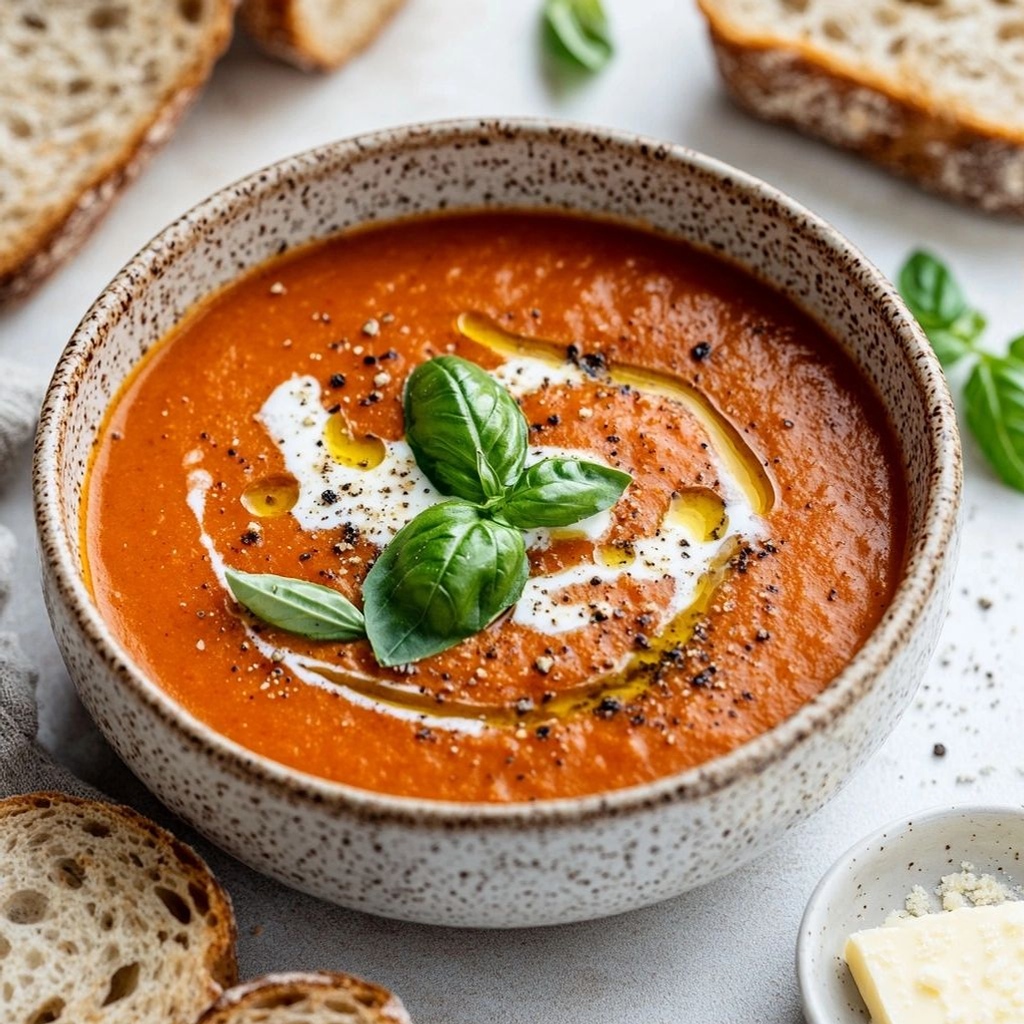
Imagine a warm bowl of soup that tastes like sunshine on a late autumn afternoon—bright, comforting, and just a tad indulgent, yet simple enough to conjure in minutes. This Roasted Tomato Soup is the kind of lunch that turns a busy weekday into a small celebration. The tomatoes blister and caramelize in the oven, releasing a mellow sweetness and a whisper of smokiness, while garlic, onion, and a hint of herbs mingle in a silken, deeply flavorful broth. It’s the ultimate quick and easy lunch: vibrant, nourishing, and incredibly satisfying with barely any effort. In one pot, you transform humble pantry staples into something that feels restaurant-worthy and soul-soothing at the same time. The aroma alone—roasted tomatoes mingling with garlic and olive oil—is enough to coax a smile from even the most hurried afternoon schedule. Welcome to a recipe you’ll reach for again and again when you want something comforting, healthy, and fast without sacrificing depth of flavor.
The Story Behind the Dish
Tomato soup has a long, beloved history in kitchens around the world, where the fruit (yes, botanically speaking, tomatoes are fruits) takes center stage in comforting bowls. The roasted version of this classic owes much of its depth to a simple culinary trick: high heat concentrates sweetness and introduces a gentle smoky edge. In many culinary traditions, roasting is the bridge between bright, fresh flavors and deeper, more complex profiles. The sweetness of ripe tomatoes deepens as they blister in the oven, while onions and garlic caramelize, releasing their own natural sugars. A splash of olive oil, a pinch of salt, and a thyme leaf or two can turn a humble produce item into a dish that feels both rustic and refined. This particular recipe has become a favorite in home kitchens because it embraces accessibility—no fancy equipment or hard-to-find ingredients needed—while delivering a bowl that tastes like it had hours of slow simmering behind it. It’s a modern homage to classic comfort, perfect for a midday break that recharges you for the rest of the day, and it carries with it the comforting notion that good food can be quick, easy, and deeply satisfying all at once.
Origin stories and modern twists
While many cultures have their own tomato-based soups, the roasted variety often finds its roots in simple farm-to-table cooking. The concept is timeless: use what’s ripe, give it a little heat, and let flavors mingle until they tell a story on the palate. In contemporary kitchens, quick roasted tomato soup often comes with a modern twist—creamy textures achieved with a splash of dairy or a plant-based alternative, a whisper of acidity to balance sweetness, and a garnish that adds color and crunch. This recipe leans into those modern twists without losing the essence: a bright, velvety soup that feels both homey and bright enough to brighten a lunch hour. It’s the sort of dish that invites conversation—about the exact roasting time, the balance of flavors, and the toppings that transform a bowl into a personal masterpiece.
Why You’ll Love This Recipe
- Speed and simplicity: From pantry staples to a finished bowl in under 30 minutes, with minimal cleanup.
- Bright, comforting flavors: Roasted tomatoes bring natural sweetness and depth, while garlic and onion add savory warmth.
- Versatile texture: Silky smooth with optional chunky bits, depending on how you blend.
- Healthy and nourishing: Rich in vitamins from tomatoes, fiber from onions and herbs, and a balanced fat component from olive oil.
- Customizable: Easily adaptable for vegan, dairy-free, or gluten-free diets; forgiving for substitutions and variations.
- Perfect lunch or light supper: Sits beautifully on a busy workday, and pairs wonderfully with a crisp salad or toasted bread.
- Crowd-pleasing yet sophisticated: Elegant enough to serve to guests, but approachable enough for family weeknights.
- Budget-friendly: Uses pantry-friendly ingredients with minimal waste and maximum flavor.
Flavor Profile & Texture
This soup is a study in balance. The roasted tomatoes provide a natural sweetness and a roasted, almost caramelized edge that is tempered by a bright acidic note—often from a touch of vinegar or a squeeze of lemon, depending on the version you prefer. Garlic and onion contribute savory depth, while a modest infusion of olive oil creates a velvety mouthfeel. If you add a splash of cream or a dairy-free alternative, you’ll introduce a luxurious, silky texture that coats the palate with subtle richness without feeling heavy. The body of the soup is smooth and spoon-coating when blended, but still light enough to feel refreshing on a lunch break. Fresh herbs—such as basil, thyme, or a hint of oregano—bring a lively brightness that lifts the entire dish, like a little garden breeze in a bowl. The finish is clean, with lingering warmth and a gentle, comforting aftertaste that invites another spoonful.
Texture-wise, you’ll experience:
– A velvety base if you blend thoroughly, or a lightly rustic feel if you prefer a bit of tomato chunkiness.
– Silkiness from the blending method and optional dairy or plant-based milk used to emulsify the soup.
– A soft, lingering sweetness from roasted tomatoes contrasted with a savory backbone from aromatics and olive oil.
– A subtle herbal lift that prevents the sweetness from becoming cloying, keeping the soup balanced and satisfying from first sip to last.
Occasions & Pairings
This is a versatile dish that fits into many culinary moments. Here are some ideas to help you plan:
- Weekday lunches: Quick, nourishing, and perfect for taking to work in a jar or a thermos.
- Casual gatherings: Serve in small bowls with crispy croutons and a drizzle of high-quality olive oil for a refined touch.
- Comfort food nights: Pair with a grilled cheese sandwich or a toasted baguette smeared with garlicky butter for dipping.
- Light dinners: Add a protein boost with a poached egg perched on top or a side of chickpeas for texture and heft.
- Seasonal menus: Embrace tomato harvest season with a garden-fresh twist, or use canned tomatoes for year-round ease.
Suggested pairings:
– Bread options: Crusty sourdough, crostini, or flatbread to scoop and soak up every drop.
– Dairy or dairy-free accents: A swirl of cream, yogurt, or a splash of almond milk can add a luxurious finish; vegan alternatives work beautifully.
– Fresh herbs: Basil, parsley, or chives as a bright finishing touch.
– Accompaniments: A crisp green salad, a light grain like quinoa, or a lemony side of roasted broccoli to balance the meal.
Tips, Variations & Substitutions
Here are practical ideas to tailor the recipe to your pantry, dietary needs, or flavor mood:
- Roasting variations: Try adding a small red pepper or a carrot to the roasting tray for additional sweetness and depth. A pinch of smoked paprika can introduce a subtle smoky dimension.
- Herb boosts: If you like a herbal kick, infuse with thyme, rosemary, or a bay leaf during the simmer, then remove before blending.
- Vegan and dairy-free: Omit any dairy and blend with a splash of unsweetened almond milk or cashew cream for a creamy texture without dairy.
- Creamy options: For a velvety finish, blend in a little coconut milk or a spoonful of Greek yogurt after blending; adjust salt accordingly.
- Gluten-free: This soup is naturally gluten-free; serve with gluten-free bread or crackers if needed.
- Make it heartier: Add a handful of cooked lentils, white beans, or chickpeas for extra protein and texture.
- Herbal finishing oils: Finish with a drizzle of basil oil or a lemon-olive oil blend to brighten the finish.
- Low-sodium version: Use a low-sodium tomato product and adjust salt at the end, tasting as you go.
- Tomato varieties: Use a mix of plum and cherry tomatoes for a layered sweetness and more complex caramelization.
Storage & Make-Ahead Ideas
This soup stores beautifully, making it ideal for meal prep and make-ahead lunches. Here are practical tips to keep flavors fresh and textures appealing:
- Refrigeration: Let the soup cool completely, then store in an airtight container for up to 4 days. Reheat gently on the stove or in the microwave, stirring to restore smoothness.
- Freezing: Freeze in portion-sized containers for up to 3 months. Thaw overnight in the fridge before reheating. If the soup tastes a little thin after thawing, blend in a small amount of tomato paste or a splash of plant-based milk to re-emulsify.
- Make-ahead flavor development: A short rest in the fridge (even up to 24 hours) can help the flavors meld together more deeply. Reheat slowly and adjust seasonings at the end.
- Batch prep: Roast a larger batch of tomatoes and onions, then store them separately from liquid components. When you’re ready to make soup, blend with stock and seasonings for a still-bright, fast lunch.
Fun Facts & Trivia (Optional)
– Tomatoes are technically fruits, and in many culinary traditions, they’re treated with the same admiration given to produce that carries both sweetness and acidity in generous measures.
– Roasting tomatoes not only concentrates flavor but also reduces water content, intensifying sweetness and creating a natural, comforting roasted aroma that fills your kitchen with warmth.
– The balance between sweetness and acidity is a hallmark of this dish; a gentle hint of acid, whether from lemon, vinegar, or a splash of white wine, can lift the flavor and prevent the soup from tasting flat.
– Basil and tomato are a classic pairing in many cuisines, from Italian to Mediterranean-inspired kitchens; a fresh basil garnish can dramatically brighten the final dish and invite summery vibes even on a chilly day.
Personal Touches & Reader Stories
Many home cooks have a version of this soup that reflects their kitchen personality. Some add a pinch of cumin or coriander for a subtle spice note, while others finish with a swirl of cream and a handful of roasted pumpkin seeds for crunch. If you’ve ever flirted with the idea of a soup that feels both comforting and sophisticated, this recipe offers a canvas for your own culinary handwriting. The first time you make it, you’ll likely notice how the roasted tomatoes release a natural sweetness that doesn’t overwhelm, allowing gentle aromatics to sing in harmony. Then, as you tweak salt, acid, and creaminess to suit your taste, you’ll realize how forgiving and adaptable this dish can be. It’s not just a recipe; it’s an invitation to pause, savor, and nourish yourself with something you crafted in a matter of minutes.
Concluding Thoughts
Roasted Tomato Soup is more than a quick lunch option; it’s a study in how simple ingredients can come together to deliver complexity, warmth, and satisfaction. The beauty lies in its versatility: roasted tomatoes do the heavy lifting, while you customize the final texture, finish, and accompaniments to match the moment. Whether you’re feeding a busy family, crafting a meal for a friend, or simply treating yourself to a comforting midday break, this soup stands ready to deliver a bright, comforting experience with minimal fuss. So preheat the oven, gather a few pantry staples, and prepare to sip something that tastes like a hug in a bowl—one that’s both humble and surprisingly elegant at the same time. Your afternoon meal just found its new favorite quick fix: nourishing, flavorful, and utterly satisfying in every spoonful.
Ingredients
-
Roasted Tomato Soup Base
– 2 tablespoons olive oil
→ Olive oil helps to roast the vegetables evenly, adds richness, and forms a flavorful base for sweating aromatics. Use extra-virgin olive oil for best aroma and a slightly fruitier note. Warm the oil before adding garlic and onions to prevent them from steaming.
– 1 medium onion (diced)
→ Onions provide the foundational sweetness and body of the soup. Dice evenly for uniform cooking. Sauté until translucent and lightly browned to deepen flavor.
– 3 cloves garlic (minced)
→ Garlic adds pungent warmth and aroma that complements roasted tomatoes. Mince finely to release maximum flavor; add after the onions start to soften to avoid burning.
– 2 pounds ripe tomatoes (roughly chopped) or 4 cups roasted tomatoes
→ Tomatoes are the star of this soup. If using fresh, chop and roast to concentrate flavor; if using roasted canned, skip roasting and proceed. For best sweetness, select fully ripe tomatoes but avoid overripe with mushy texture.
Liquid & Seasoning
– 2 cups vegetable broth (low-sodium preferred)
→ Provides the primary liquid that defines the soup’s body. Use low-sodium to control salt; adjust later. If making vegan, ensure broth is plant-based. For richer texture, substitute a portion with water plus a splash of white wine.
– 1 teaspoon salt (adjust to taste)
→ Salt enhances tomato sweetness and balances acidity. Add gradually and taste as you go; remember that broth may already contain salt, so adjust accordingly.
– 1/2 teaspoon black pepper (freshly ground)
→ Adds subtle heat and brightness that lifts the tomato flavor. Freshly ground pepper yields a more vibrant aroma than pre-ground.
– 1 teaspoon granulated sugar or 1 tablespoon honey (optional, to balance acidity)
→ Tomatoes can be acidic; a small amount of sugar or honey rounds sharpness and enhances overall balance. Add in small increments and taste before serving.
– 1 teaspoon dried oregano or 1/2 teaspoon dried thyme (optional)
→ Herbage adds depth and a hint of garden freshness. Adjust based on preference; thyme pairs nicely with roasted tomatoes and gives a savory backbone.
Creaminess (optional)
– 1/2 cup heavy cream or coconut cream (for dairy-free)
→ Creaminess gives a luxurious texture and smooth mouthfeel. If dairy-free, coconut cream adds subtle sweetness and richness; whisk in at the end after simmering. Do not let a non-cream version boil vigorously after adding dairy to prevent curdling.
Garnish & Finish (optional)
– 2 tablespoons chopped fresh basil or parsley (for serving)
→ Fresh herbs provide a bright, aromatic finish that contrasts with roasted tomato depth. Tear or chop just before serving to release essential oils.
– Sliced croutons or toasted bread pieces (for serving)
→ Adds a crunchy texture and acts as a comforting, rustic accompaniment. Toast bread with a light brushing of olive oil and a pinch of salt until crisp.
– Grated parmesan or nutritional yeast (optional, for topping)
→ Parmesan adds a savory umami note; nutritional yeast makes the dish vegan-friendly while still delivering depth. Sprinkle just before serving to preserve aroma.
Instructions
- Preheat your oven to 425°F (220°C) and line a large baking sheet with parchment paper to prevent sticking and promote even roasting; this high heat concentrates sweetness and yields blistered edges for deeper flavor in the soup.
→ Using parchment prevents the tomatoes from sticking and makes cleanup easier, while 425°F roasts quickly to caramelize sugars without drying out the flesh. - Toss the chopped ripe tomatoes with 1 tablespoon olive oil, a pinch of salt, and a light crack of black pepper on a bowl; this coats the surface to promote even browning and builds a balanced baseline of acidity and salt.
→ Oil carries heat for uniform browning, salt enhances natural sweetness, and pepper adds gentle heat that boosts overall brightness. - Spread the tomato pieces in a single layer on the prepared sheet without crowding; give space so they blister rather than steam, which concentrates their flavor; roast for 20–25 minutes until the edges are deeply colored and the tomatoes smell fragrant.
→ Even spacing prevents steaming and ensures caramelization, which is essential for a rich roasted tomato base. - While the tomatoes roast, heat the remaining 1 tablespoon olive oil in a heavy pot over medium heat; this oil forms a silky medium to carry aromatics and prevents sticking as you sweat the onion.
→ A properly heated fat coats the pan and aids in even cooking, while avoiding soggy vegetables and bitter notes from slow scorching. - Add the diced onion to the pot and sauté for 5–7 minutes, stirring occasionally, until translucent and lightly browned; this deepens sweetness and builds a rounded body for the soup.
→ Sautéing unlocks sugars and reduces sharpness, creating a velvety base that improves texture and flavor after blending. - Stir in the minced garlic and cook for an additional 30–60 seconds until fragrant but not browned; garlic should bloom quickly to avoid a grassy or bitter note from overcooking.
→ Quick sauté releases essential oils, enriching the aroma and adding backbone to the soup without overpowering the tomatoes. - When the tomatoes finish roasting, remove them from the oven and scrape any syrupy bits from the sheet into the pot with the onions and garlic; this deglazes the pan and captures concentrated flavors.
→ Deglazing lifts caramelized tomato sugars and roast fond, which intensifies the overall depth of the soup. - Pour in 2 cups vegetable broth, then add 1 teaspoon salt and 1/2 teaspoon black pepper; add 1 teaspoon dried oregano or 1/2 teaspoon thyme if using, to layer herbal notes that complement the tomatoes; bring the mixture to a gentle simmer.
→ The broth defines body, while controlled seasoning ensures the acidity is balanced and the herbs provide a savory backbone without overpowering the tomatoes. - Simmer uncovered for 10–15 minutes to meld the flavors and slightly reduce the liquid; this concentrates the soup and helps the aromatics integrate before blending.
→ Gentle simmer keeps textures intact and allows the flavors to harmonize, creating a cohesive base for smooth blending. - Use an immersion blender to purée the soup directly in the pot until smooth, or carefully blend in batches in a countertop blender; this should be done in intervals to avoid hot liquid splatter and to achieve a silky consistency.
→ Blending emulsifies the tomato fibers and onions for a uniform texture, while partial blending can retain a pleasant light body if desired. - Stir in 1/2 cup heavy cream or coconut cream if you prefer a creamy finish, warming gently but never boiling after addition to prevent curdling or separation; adjust salt and pepper after adding the dairy.
→ Cream adds luxurious mouthfeel and rounds acidity; dairy can be substituted with coconut cream for a dairy-free version, but gentle handling preserves smoothness. - Taste the soup and balance with a small pinch of sugar or honey (start with 1/2 teaspoon and adjust) to round any remaining acidity; this small sweetness brightens the roasted flavor and keeps the soup from tasting flat.
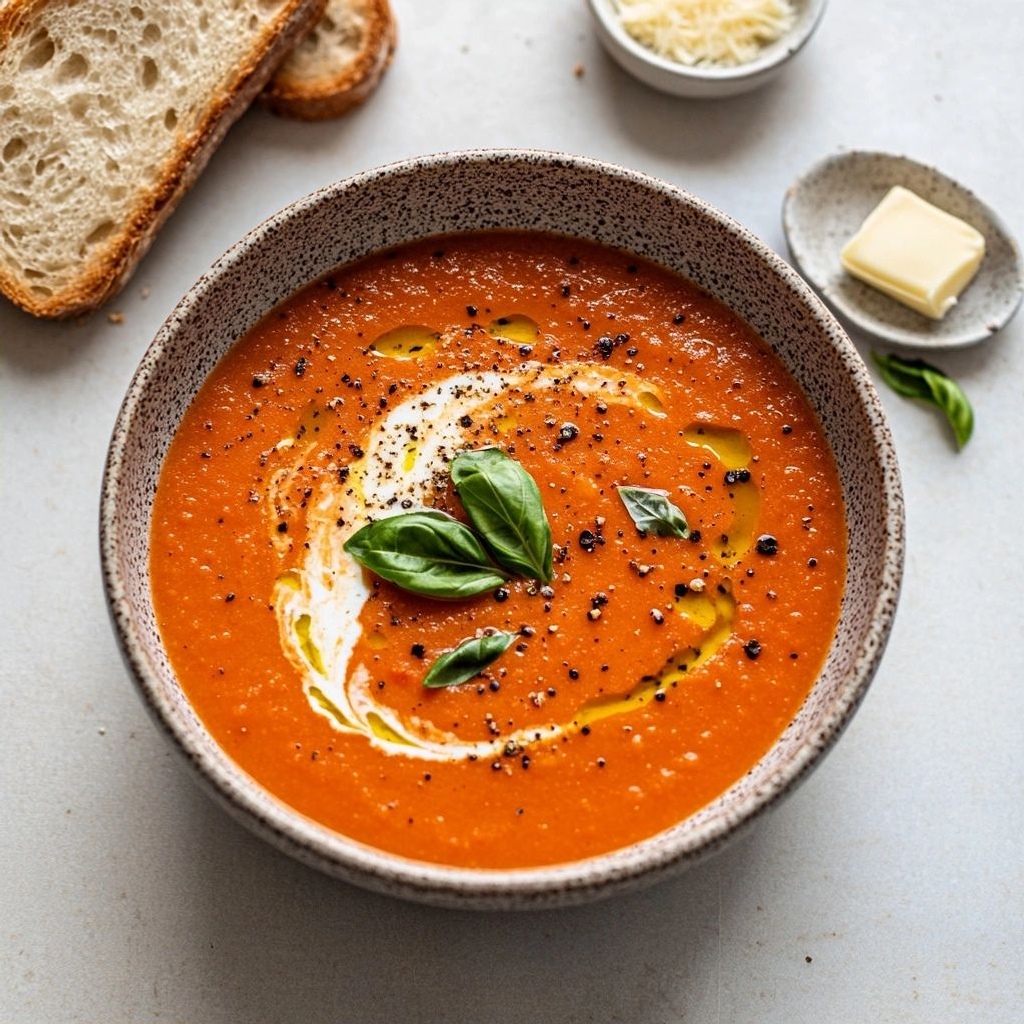
→ Tomatoes vary in sweetness; a touch of sugar or honey harmonizes the brightness with the natural acidity for a well-rounded finish. - Serve hot with a garnish of 2 tablespoons chopped fresh basil or parsley, plus toasted croutons and grated parmesan or nutritional yeast as desired; fresh herbs brighten the final presentation and add aromatic contrast.
→ Finishing with herbs and a crunchy topping elevates texture and aroma, making the soup feel refined and comforting in a quick lunch scenario.
Notes
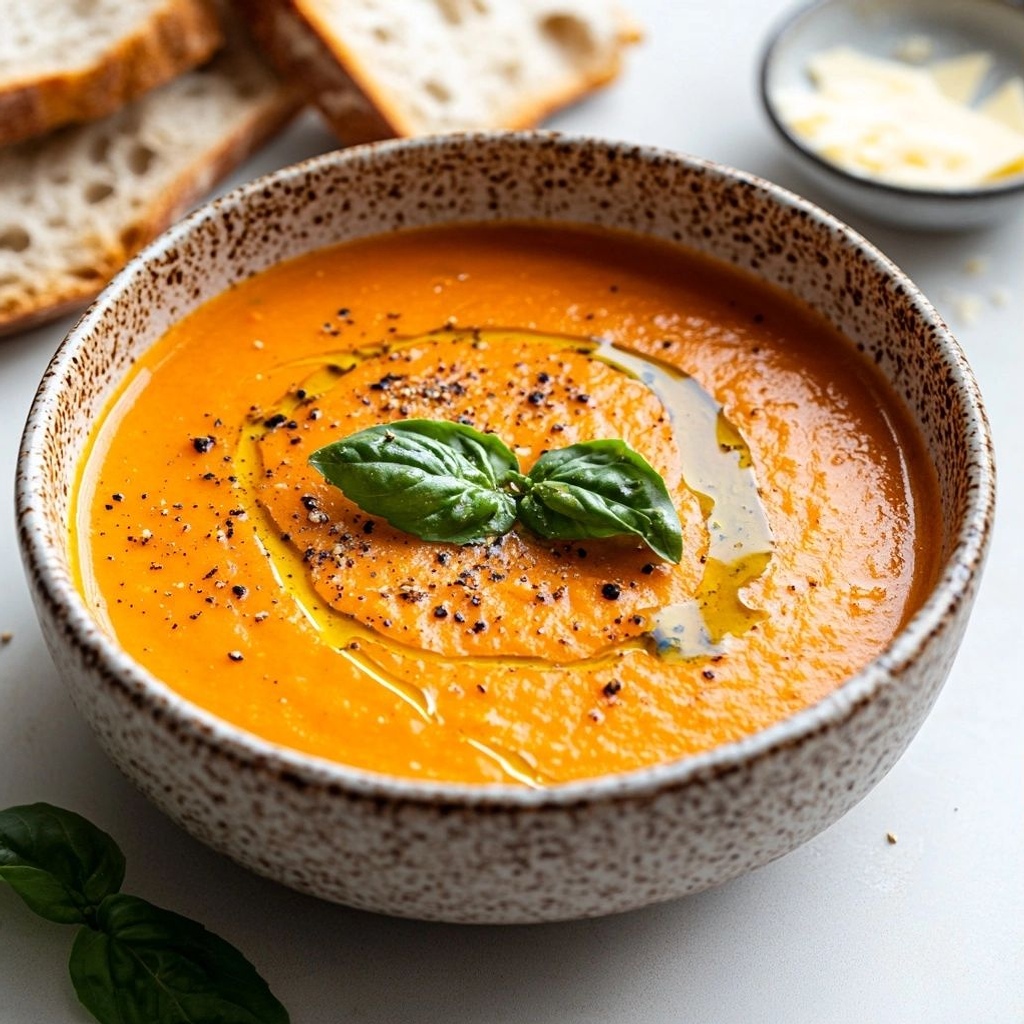
These roasted tomato soup is a quick, comforting lunch option built on a base of deeply roasted tomatoes, sautéed onions, garlic, and olive oil for natural richness. You can customize it by choosing your preferred herbs (oregano or thyme), balancing acidity with a little sugar or honey, and finishing with a swirl of cream or coconut cream for extra silkiness. For a topping, add fresh basil or parsley, gluten-free croutons or toasted gluten-free bread, and a touch of parmesan or nutritional yeast if you’re not dairy-free. The soup stores well in the fridge for 3–4 days and freezes beautifully in airtight containers for make-ahead meals; reheat gently and adjust the seasoning as needed. If you want a vegan version, skip dairy and use vegetable broth throughout, and consider a splash of white wine for extra depth. To ensure the best flavor, roast the tomatoes until deeply caramelized, season gradually with salt (remembering that broth may already contain salt), and finish with fresh herbs just before serving for a bright, aromatic finish. Always use gluten-free bread or croutons if serving with a crunchy accompaniment to keep it gluten-free.
Tips
- Roast tomatoes deeply: If using fresh tomatoes, roast them until their skins blister and darken slightly to intensify sweetness. Roast at 425°F (220°C) for 20–25 minutes, turning once for even color. This caramelization anchors the soup’s flavor.
- Even aromatics matter: Sweat the onions in olive oil over medium heat until translucent and lightly golden. This builds a sweet, mellow base that complements the roasted tomatoes without tasting raw.
- Watch the garlic: Add minced garlic after the onions have started to soften to prevent burning. Garlic burns quickly and can introduce a bitter note; a quick 30–60 seconds is usually enough to release aroma.
- Season in layers: Start with a smaller amount of salt and pepper, then taste and adjust after adding broth and tomatoes. Broth varies in saltiness, so incremental tasting yields a well-balanced soup.
- Acidity balance: If your tomatoes are particularly acidic, incorporate a small amount of sugar or honey in small increments, tasting between additions. This helps prevent an overly tangy soup without losing brightness.
- Herbs on the side: Dried oregano or thyme add depth, but they can overwhelm the soup if used in excess. Start with 1 teaspoon oregano or 1/2 teaspoon thyme and adjust to taste near the end of simmering.
- Creamy texture options: For dairy-free creaminess, coconut cream works well and imparts a subtle sweetness. If using dairy cream, add it after simmering and avoid bringing the soup to a vigorous boil to prevent separation.
- Temperature control for cream: If you add cream, temper it by whisking a small amount into a warm ladleful of soup first, then stir back into the pot. This reduces the risk of curdling.
- Pureeing method: For a silky texture, blend the soup in batches using a blender or immersion blender until completely smooth. If you prefer a lighter texture, blend less to leave gentle tomato fibers intact.
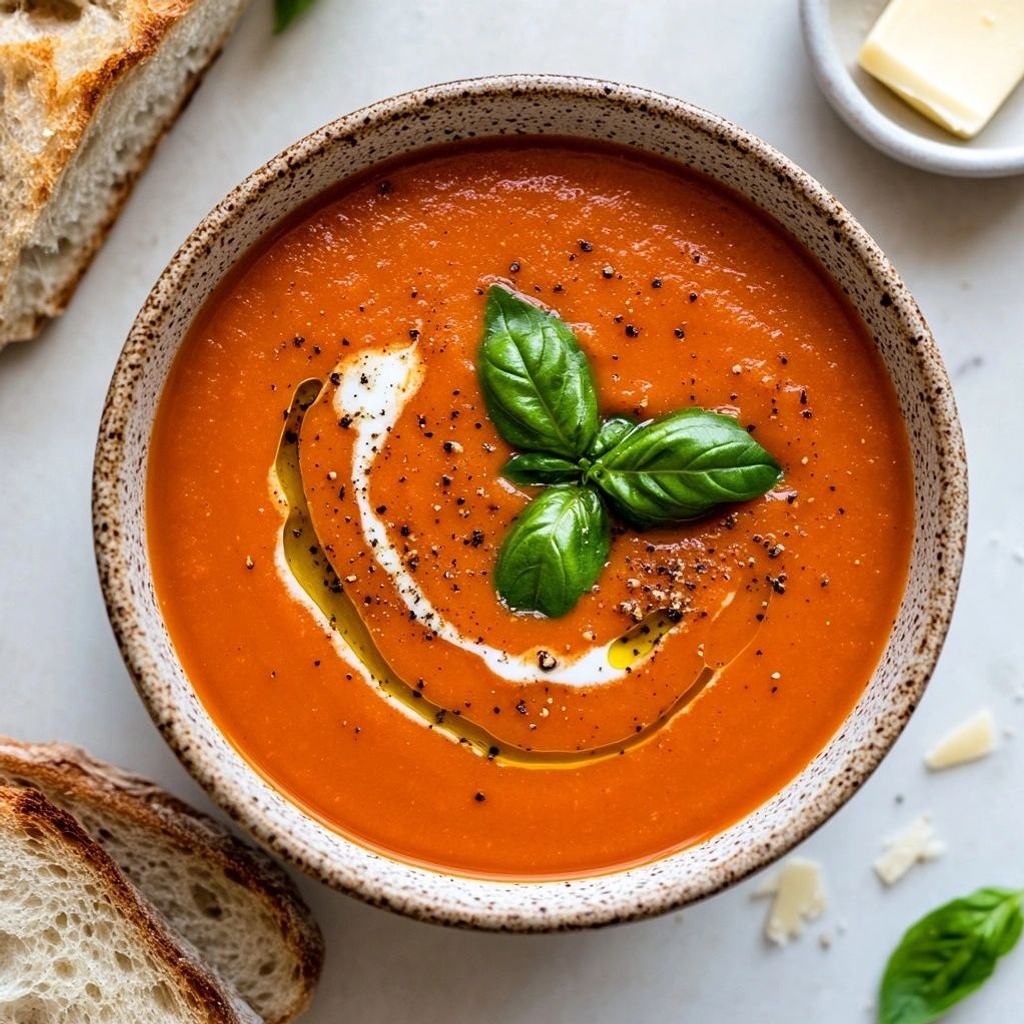
- Texture contrast: Serve with toasted croutons for crunch or a swirl of olive oil for shine. Toast bread with a touch of olive oil and a pinch of salt until crisp for best crunch.
- Herb finish: Finely chop fresh basil or parsley and sprinkle just before serving to preserve bright aroma and color. Tear large leaves to release more essential oils.
- Storage and reheat: This soup stores well in the fridge for 3–4 days or freezes up to 3 months. Reheat gently over medium-low and simmer to restore body; add a splash of broth if it tightens.
- Make-ahead tip: For quicker lunches, prepare the roasted tomato base in advance and refrigerate. Reheat the base, then finish with broth and optional cream when ready to serve.
FAQ
What makes this Roasted Tomato Soup a quick and easy lunch?
The recipe uses simple ingredients, a short roasting time, and a quick blend to deliver a comforting soup in under 30 minutes.
What ingredients do I need for Roasted Tomato Soup?
Ripe tomatoes, onions, garlic, olive oil, vegetable or chicken stock, salt, pepper, and optional cream or coconut milk for richness. Fresh basil or parsley for garnish.
Can I use canned tomatoes instead of fresh?
Yes. Use whole peeled or crushed canned tomatoes. Adjust roasting time to keep flavor bright, and add a bit more stock if the mixture is too thick.
How do I roast the tomatoes for the best flavor?
Toss halved tomatoes with olive oil, sliced onions, and minced garlic. Roast at 425°F (220°C) for 20–25 minutes until they blister and caramelize a bit for depth of flavor.
Is this soup suitable for dairy-free or vegan diets?
Yes. Skip the cream or use a non-dairy alternative like coconut cream. Use vegetable stock to keep it vegan. Garnish with herbs instead of dairy toppings.
How can I turn this into a heartier lunch?
Serve with crusty bread or grilled cheese, or add cooked chickpeas, white beans, or shredded chicken to the soup before blending for extra protein.
Can I freeze leftovers?
Yes. Cool completely, portion into airtight containers, and freeze for up to 3 months. Thaw and reheat gently, adding a splash of stock if needed.
What is the best way to reheat the soup?
Reheat on the stovetop over medium heat, stirring occasionally, until hot. You can also microwave in 1–2 minute intervals, stirring between.
How can I customize the flavor profile?
Add a splash of balsamic vinegar or a pinch of cumin for warmth. Finish with fresh basil, a drizzle of olive oil, or a swirl of cream for extra richness.