Introduction / Hook
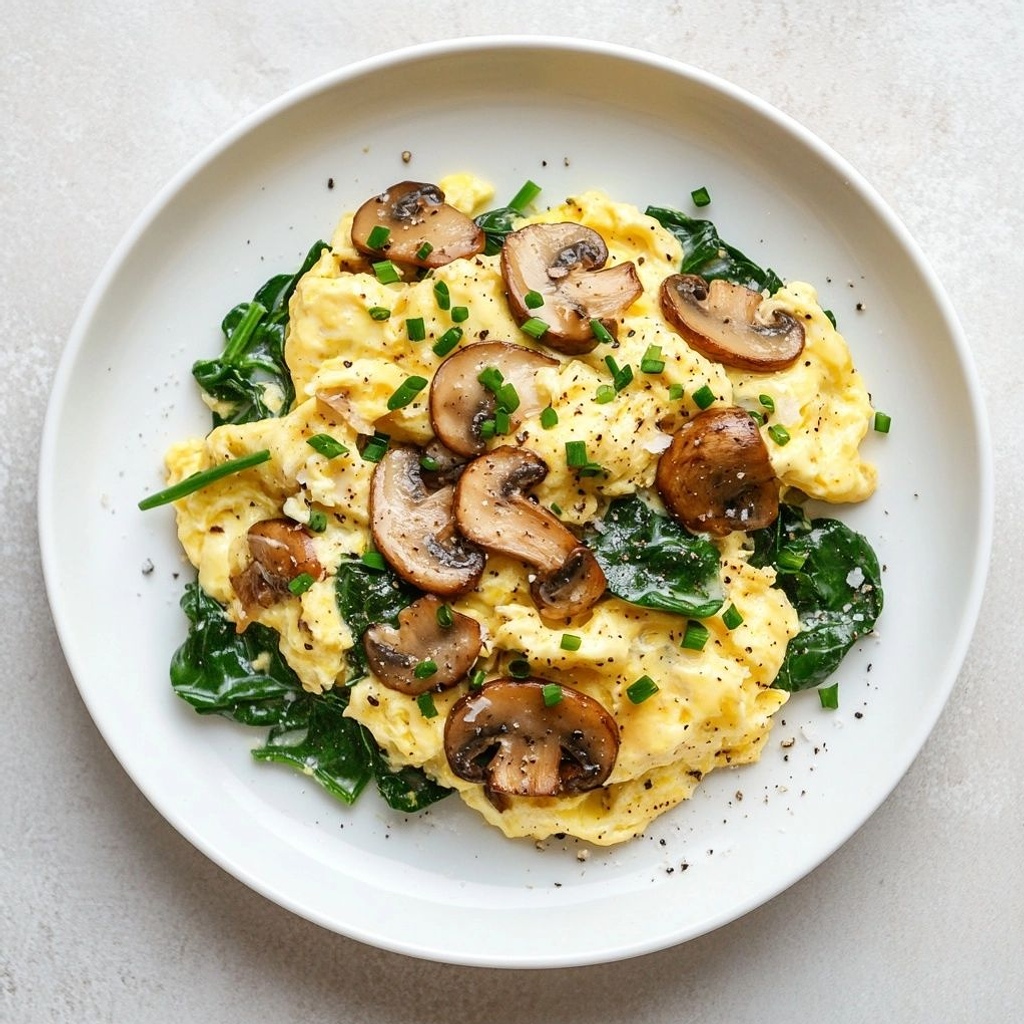
Imagine a plate that greets you with the warmth of a cozy kitchen and the earthy promise of forest mornings. Hearty Mushroom Spinach Scrambled Eggs is more than a quick weekday breakfast or a weekend brunch winner—it’s a comforting ritual that eases you into the day with a hug of savory aroma and a glow of bright greens. The moment the pan warms, mushrooms sizzle and release their deep, umami notes, while spinach folds in, bringing a whisper of freshness that keeps every bite from tipping into heaviness. The eggs, tender and luscious, wrap this medley in a silky embrace, creating a dish that feels indulgent yet genuinely satisfying. This is the kind of breakfast that lingers in your memory: a savory, satisfying start that could convert even the most skeptical morning person into a devoted fan. With each forkful, you’ll taste the contrast of meaty mushrooms, the softness of scrambled eggs, and the verdant lift of spinach—combined with a hint of salt, a touch of pepper, and perhaps a pinch of herbs that you reach for without thinking. Welcome to a breakfast that doesn’t just fill you up; it nourishes you from the first bite.
The Story Behind the Dish
Scrambled eggs have long stood as a canvas for culinary improvisation across countless cultures, and mushrooms have earned a place as one of the most beloved earthy accents in kitchens worldwide. The pairing with spinach is almost culinary folklore in motion: two greens that thrive in the same pan, both quick to wilt and both capable of carrying the savor of the eggs without overpowering them. This particular combination—mushrooms for depth, spinach for brightness, eggs for protein and silkiness—feels like a conversation between autumn and early spring in a single skillet. The dish invites you to consider the humble mushroom as not just a garnish but a main-hearted partner, with its meaty texture and umami punch adding dimension to the eggs rather than competing with them. The spinach, meanwhile, acts as the bright, green chorus that elevates the dish with structure and color, reminding us that a little greens can go a long way in transforming a simple breakfast into something memorable. In many households, this combination has quietly evolved into a go-to comfort meal: quick to prepare, deeply satisfying, and versatile enough to adapt to whatever pantry staples you have on hand. It’s a quintessential example of how everyday ingredients can collaborate to create something greater than the sum of their parts.
Why You’ll Love This Recipe
- Quick and easy: A nourishing breakfast that comes together in under 20 minutes, perfect for busy mornings or lazy weekend brunches.
- One-pan simplicity: Minimal cleanup—everything cooks in a single skillet for maximum flavor and convenience.
- Comforting yet light: The eggs deliver rich creaminess while spinach and mushrooms add earthy, fresh notes that never feel heavy.
- Versatile and forgiving: Suitable for beginners and seasoned cooks alike; adaptable to a range of diets and flavor preferences.
- Protein-rich start: Balanced with eggs and mushrooms to provide sustained energy through the morning hours.
- Customizable heat and seasoning: A gentle foundation with room for a smoky edge, a citrus lift, or a herbaceous finish depending on your mood.
Flavor Profile & Texture
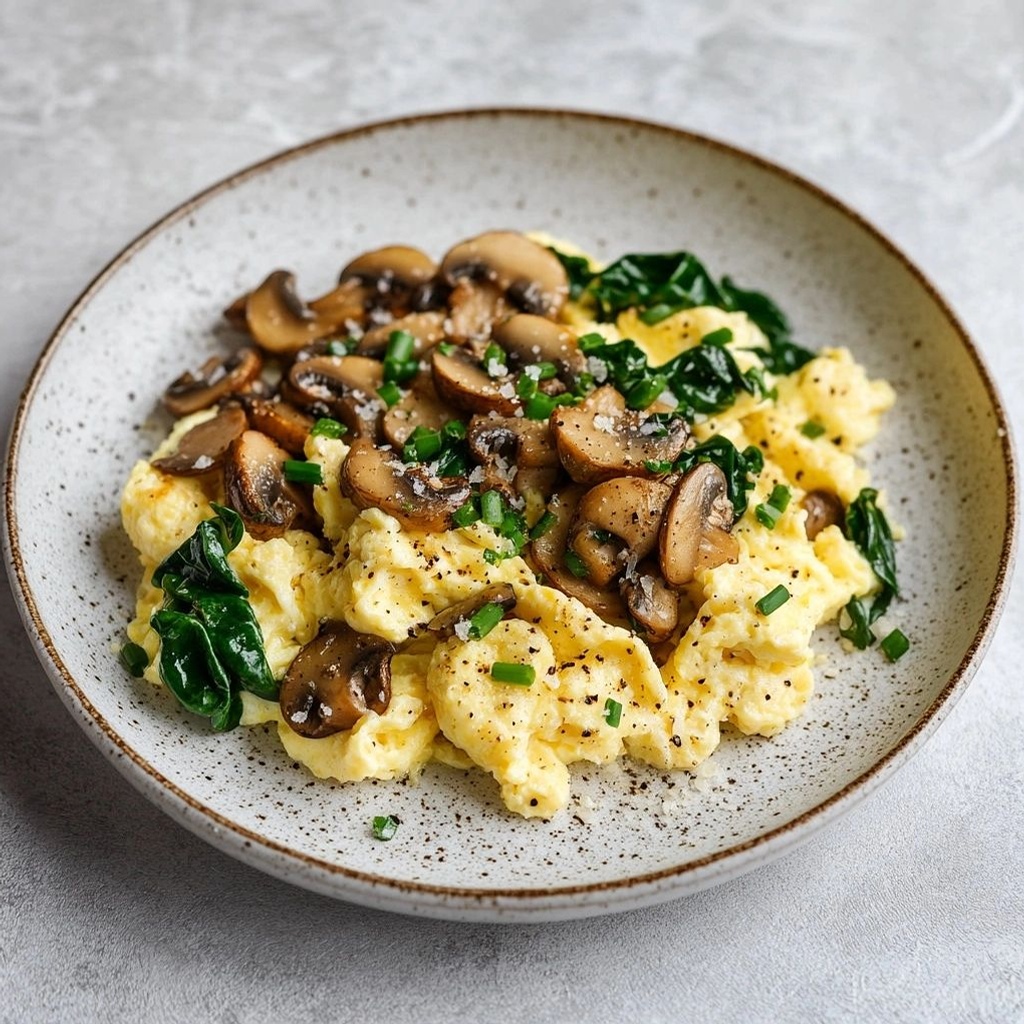
The dish presents a harmonious trio of textures and flavors. The mushrooms begin with a satisfying, almost meaty bite as they release their savory juices and brown at the edges, creating little pockets of roasted depth. Their aroma—nutty, with a hint of something forest-floor fragrant—invites you to lean in. Spinach contributes a crisp-fresh note that brightens the plate, releasing a subtle sweetness as it wilts into the warm eggs. The scrambled eggs themselves are soft and custardy, coated with a delicate silkiness that envelopes the mushrooms and spinach without clumping or becoming rubbery. Salt and pepper mingle with any optional seasonings to pull out the umami of the mushrooms, while any optional herbs—such as chives, parsley, or a whisper of thyme—add aromatic lift. The result is a comforting yet balanced dish where the earthiness of the mushrooms meets the green vitality of spinach, all wrapped in tender, creamy eggs. It’s a breakfast that feels substantial enough to satisfy a hungry morning appetite, yet refined enough to serve as a star on a brunch table. The mouthfeel is a winning blend of soft, airy eggs with pleasantly chewy mushroom pieces and the slight bite of greens—an interplay that makes every bite feel new and inviting.
Occasions & Pairings
This versatile dish shines in a variety of settings. It’s ideal for a weeknight celebration when you want something satisfying yet uncomplicated, and it’s equally welcome at weekend brunch alongside a glass of sparkling water with citrus, a mimosa, or a light white wine such as a Sauvignon Blanc. For a comforting family breakfast, pair it with rustic toast, a dollop of ricotta or crème fraîche, or a spoonful of garlicky beans for extra heartiness. If you’re entertaining, present it with a bright plate of sliced tomatoes, roasted peppers, or avocado slices to add color and fresh acidity. It also serves as an excellent base for creative toppings or mix-ins: a touch of chili crisp for heat, a sprinkle of grated hard cheese such as Parmesan, or a handful of sautéed leeks for sweetness. This dish pairs beautifully with sides that echo its texture and energy—crusty sourdough or a crusty sourdough toast to soak up the creamy eggs, a light salad with lemon vinaigrette to provide contrast, or roasted mushrooms on the side for a second mushroom-forward course. For drinks, a light sparkling beverage or a citrus-forward juice can accentuate the freshness, while a warm cup of tea (earl grey or green tea) can balance the mushrooms’ earthiness on cooler days. The meal’s flexibility makes it a reliable go-to for breakfast-in-bed scenarios, family brunch, or a cozy date night at home when you want something comforting but not heavy.
Tips, Variations & Substitutions
- Make it vegetarian-friendly: This dish is naturally vegetarian, but if you want a richer texture, you can add a small splash of cream or crème fraîche to the eggs just before they finish cooking. For strict vegan options, substitute scrambled silken tofu with mushrooms and spinach and season to taste with nutritional yeast and plant-based butter.
- Gluten-free and dairy-friendly: The recipe is naturally gluten-free. If you use dairy products, opt for a splash of milk or cream to enrich the eggs; for dairy-free versions, use a plant-based milk and a dairy-free butter substitute.
- Herb-forward variation: Add chopped chives, flat-leaf parsley, or tarragon toward the end of cooking for a fresh lift. Dill also pairs nicely with spinach for a bright, slightly anise-like note.
- Cheesy twist: Stir in a handful of grated sharp cheese (Parmesan, Gruyère, or aged cheddar) off the heat to melt into the eggs for a richer, more indulgent flavor.
- Spice it up: A pinch of smoked paprika or a few red pepper flakes adds warmth without overpowering the delicate flavors.
- Healthy swap: Use a blend of baby spinach and kale for extra greens and a deeper color; swap mushrooms for cremini or portobello medallions for a heartier bite.
- Meal-prep friendly: You can cook the mushroom and spinach mixture ahead of time and reheat gently with a new batch of eggs, or whisk the eggs in advance and fold in greens right before serving for a quick morning routine.
- Texture play: If you prefer a more scrambled, almost omelet-like texture, cook the eggs for a fraction longer to achieve a slightly firmer set, then fold through the greens and mushrooms at the end off the heat.
Storage & Make-Ahead Ideas
While this dish is best served fresh for the peak of its texture and aroma, you can still make it work for meal-prep or a busy morning. For best results, store components separately: keep the sautéed mushrooms and spinach in an airtight container in the refrigerator for up to 2 days. Reheat gently in a skillet with a small amount of oil or butter, then add whisked eggs to scramble just before serving. If you prefer to cook all at once, you can scramble the eggs, mushrooms, and spinach together, but you may lose some of the distinct textures. For make-ahead, you can prepare the mushrooms and spinach the night before and fry them quickly in the morning, then pour beaten eggs into the hot pan and finish cooking. Freezing is not recommended for scrambled eggs, as the texture can become watery or crumbly upon thawing. If you anticipate leftovers, consider doubling the recipe and transforming the leftovers into a frittata or an egg bake the next day, which can be a hearty alternative to a standard scramble.
Fun Facts & Trivia (Optional)
Mushrooms are among the few non-animal foods that offer a comparable depth of umami to meat, thanks to naturally occurring glutamates. Spinach, often referred to as the “green gold” of the culinary world, was popularized in Western cooking in the 19th century and has since become a staple for adding nutrition and color to quick meals. Eggs, of course, have a long and storied history in breakfast cuisine around the world, celebrated for their versatility as a protein anchor. The combination of mushrooms and spinach in eggs is not merely a trendy pairing; it reflects a long-standing tradition in many cuisines of balancing earthy flavors with leafy greens to create a well-rounded, nourishing meal. The beauty of this dish lies in its simplicity: a handful of humble ingredients, treated with respect in a hot pan, can yield a plate brimming with comfort, texture, and taste. If you’re curious about regional twists, you’ll find versions of mushroom-egg-spinach dishes in various cultures—each adding its own spin, whether through spices, herbs, or a touch of acidity—proof that food can be both universal and wonderfully local at the same time.
Closing Thoughts
Hearty Mushroom Spinach Scrambled Eggs embodies the best of quick-cook cooking: approachable ingredients, a method that respects their natural character, and a final plate that feels both nourishing and uplifting. Its appeal doesn’t rely on fancy techniques or extravagant components; it relies on thoughtful preparation, careful handling, and a willingness to let the flavors speak for themselves. The mushrooms bring depth, the spinach brings lightness, and the eggs bind everything with a velvet finish. Whether you’re starting the day with a gentle, mindful breakfast or crafting a comforting weekend brunch, this dish offers a certain promise: that you can make something delicious, wholesome, and deeply satisfying in the time it takes to brew your coffee. So heat up a skillet, gather a few simple ingredients, and let the sizzle and steam guide you toward a breakfast that tastes like a small celebration of the everyday.
Ingredients
-
– 6 large eggs
→ The core binding and protein source for the scramble. Use eggs at room temperature to help them whisk smoothly and cook evenly. For a fluffier texture, whisk thoroughly until the mixture is faintly foamy; for creamier eggs, add a splash of milk or water and whisk a bit longer.
– 1/4 cup milk or cream (optional)
→ Adds moisture and tenderness to the scrambled eggs, creating a softer, custardy texture. Use dairy or a plant-based alternative. If using cream, reduce other fats slightly to keep the scramble lighter. For a fuller flavor, 2 tablespoons of cream yields a silkier result.
– 1 tablespoon butter or 1 teaspoon olive oil
→ Fat helps prevent sticking and adds rich flavor. Butter delivers a creamy mouthfeel; olive oil adds brightness and keeps the eggs from overcooking too quickly. If using oil, heat until shimmering before adding eggs to avoid watery texture.
-
– 1 cup mushrooms, sliced
→ Mushrooms provide umami and substance. Sauté them first to release moisture and deepen flavor; browning them slightly will add a savory depth that complements the eggs. If using cremini or button mushrooms, slice evenly for uniform cooking.
– 2 cups fresh spinach, roughly chopped
→ Spinach adds color, vitamins, and a tender bite. Add towards the end of cooking to wilt without overcooking. If using baby spinach, you can add whole leaves, as they will wilt quickly.
– 1/4 cup onion, finely chopped (optional)
→ Onions give a sweet baseline and aromatic start to the scramble. Sauté in the fat before mushrooms to build flavor. For a milder taste, rinse and dry quickly after chopping to reduce sharpness.
– 1 clove garlic, minced (optional)
→ Garlic introduces a quick, savory kick. Sauté briefly with the onions until fragrant, then add mushrooms to prevent burning. If you’re sensitive to garlic, add at the end as a finishing note.
-
– 1/4 teaspoon salt
→ Enhances overall flavor and helps draw moisture from vegetables, aiding in caramelization. Add gradually and taste as you cook to avoid oversalting. For a low-sodium version, adjust with potassium-rich herbs instead.
– 1/4 teaspoon ground black pepper
→ Provides subtle heat and depth. Freshly ground pepper offers more aroma and brightness than pre-ground. Adjust to taste; a pinch of white pepper can be used if you prefer a milder appearance.
– Pinch of chili flakes or paprika (optional)
→ Adds a gentle kick for a breakfast with a bit of heat. Start with a small pinch and increase if you enjoy spicier dishes. This also helps brighten the dish’s flavor profile.
-
– 1/4 cup grated cheddar, mozzarella, or Parmesan (optional)
→ Cheese melts into the eggs, adding creaminess and savory saltiness. Choose a cheese that melts smoothly. For a sharper bite, Parmesan works well; for a gooier texture, cheddar or mozzarella is preferable. Add toward the end to prevent overcooking.
– 2 tablespoons fresh parsley or chives, chopped (optional)
→ Fresh herbs brighten the dish and add a fresh, green note. Add just before serving to preserve their aroma. If using dried herbs, reduce to 1 teaspoon and crush between fingers to release essential oils.
-
– 1 teaspoon lemon zest or a squeeze of lemon juice (optional)
→ A touch of acidity brightens the whole dish and balances the richness of the eggs and cheese. Add at the very end after removing from heat to preserve the citrus aroma.
– Salt-to-taste after cooking (optional)
→ Salt should be adjusted post-cooking since cheeses and seasoned vegetables may already contribute saltiness. Taste and add a small amount if needed to finish the dish.
Instructions
- Preheat your skillet over medium heat and measure out your ingredients to be within arm’s reach; this ensures even cooking and prevents delays that can toughen the eggs.
→ A preheated pan reduces sticking and allows the vegetables to sauté properly without soaking up excess fat, giving you better texture in the final scramble. - Whisk the eggs with the optional milk or cream in a bowl until thoroughly combined and faintly foamy; this creates a uniform custard-like base for a fluffy scramble.
→ Whisking introduces air and brings the proteins into suspension, which helps the eggs cook evenly and stay tender rather than rubbery. - Season the egg mixture with the 1/4 teaspoon salt and 1/4 teaspoon black pepper, whisking once more to distribute the seasoning evenly; even distribution prevents concentrated salt pockets.
→ Salt at this stage enhances flavor by breaking down proteins slightly and improving moisture retention in the final texture. - Melt 1 tablespoon butter or heat 1 teaspoon olive oil in the skillet; allow the fat to coat the surface evenly and shimmer or melt completely before adding vegetables.
→ Fat acts as a barrier to sticking, carries fat-soluble flavors, and helps create a glossy, creamy scramble as the eggs set. - Add the finely chopped onion to the pan and sauté until translucent and lightly browned, about 2–3 minutes; stir frequently to prevent scorching and extract sweetness.
→ Caramelized onion depth builds flavor foundations for the scramble and softens the bite of the onion for a balanced dish. - Introduce the sliced mushrooms to the pan and cook until they release moisture and brown in spots, about 4–5 minutes; avoid crowding the pan to promote even browning.
→ Sautéing evaporates moisture from mushrooms, concentrating umami and preventing a watery scramble. - Add minced garlic (if using) and sauté briefly for 20–30 seconds until fragrant, then remove or push vegetables to the edge to prevent garlic from burning.
→ Garlic adds aroma and quick savory punch; burning it can impart bitterness, so short, high-heat warming is essential. - Stir in the roughly chopped spinach and cook just until wilted, 1–2 minutes, so the greens remain vibrant and retain nutrients.
→ Spinach wilts quickly and contributes color and freshness without overpowering the dish if added at the right moment. - Pour the seasoned eggs over the vegetables, tilting the pan to distribute evenly; let the edges begin to set before gently folding them toward the center with a spatula.
→ Gentle, slow folding creates soft curds and prevents overcooking; the eggs should flow like a loose custard rather than a dense mass. - When the eggs are mostly set but still slightly runny in the center, sprinkle the optional cheese over the top and fold it in gently; remove from heat to avoid curdling the dairy.
→ Residual heat will melt the cheese and finish cooking the eggs with a creamy texture, while preserving the melt-in flavor and avoiding a dry scramble. - Fold in the chopped fresh parsley or chives and, if desired, finish with a pinch of chili flakes or paprika for a subtle kick; stir just until herbs are distributed.
→ Fresh herbs brighten the dish and the optional spice layer adds balance without overpowering the delicate egg flavor. - Finish with optional lemon zest or a squeeze of lemon juice; add at the very end and briefly toss to brighten the richness of the eggs and greens.
→ A citrus finish lifts the dish, cutting through fat and tying together mushroom, spinach, and egg components. - Taste and adjust salt, adding more sparingly if needed after herbs and cheese have melted; serve immediately while warm and tender.
→ Tasting before serving ensures proper seasoning, as cheeses and vegetables can alter the seasoning profile during cooking.
Notes
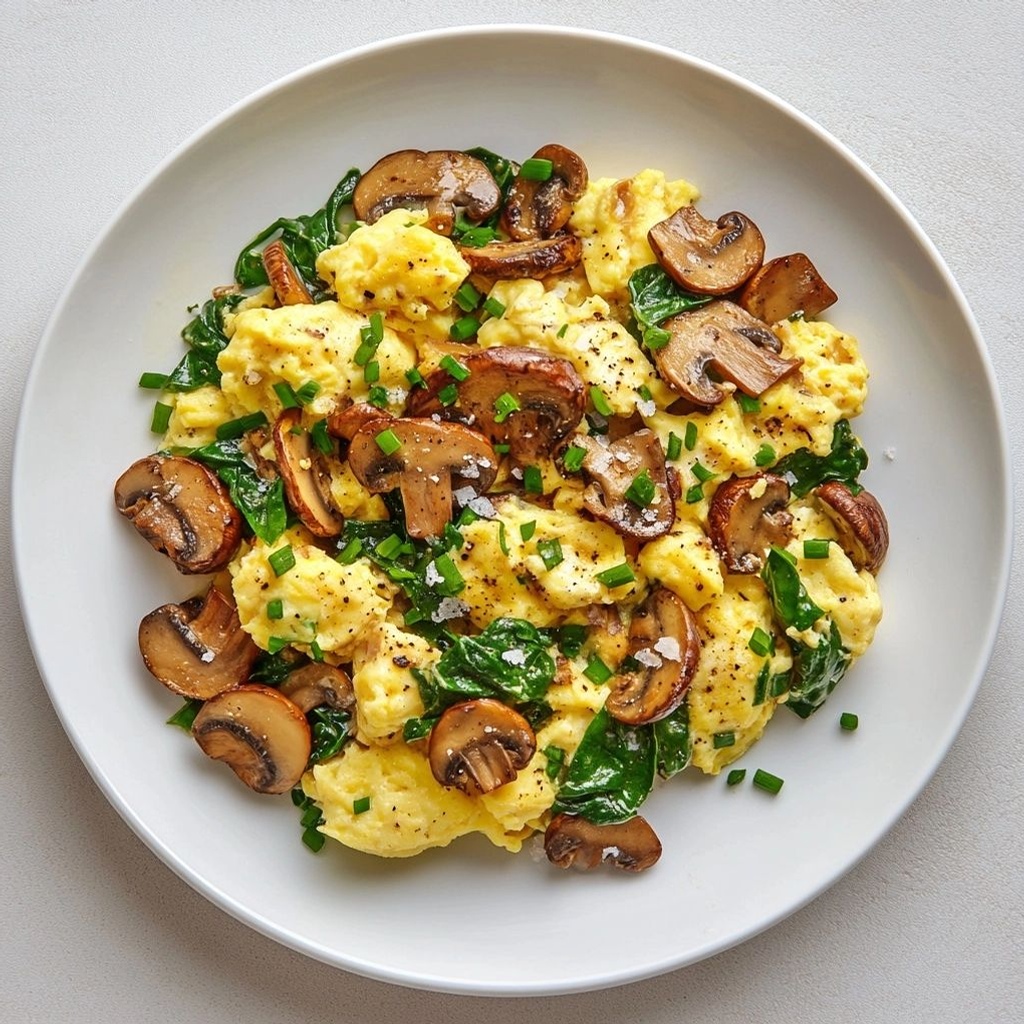
These hearty mushroom spinach scrambled eggs are a protein-packed, comforting breakfast option that comes together quickly with simple pantry ingredients. You can customize them by swapping in your favorite greens, such as kale or arugula, or trying different cheeses for varying melt and flavor. For extra creaminess, whisk the eggs with a splash of milk or cream and cook slowly over medium-low heat, stirring gently to keep them fluffy. Sauté the mushrooms first to release their sweetness and deepen their flavor, then add onions and garlic if using to build a fragrant base. To prevent rubbery eggs, remove from heat when they’re just set and finish with a light residual cook time. These are naturally gluten-free, but if you’re using packaged cheese or seasonings, check labels to ensure they’re gluten-free. Leftovers refrigerate well for up to 2 days and can be reheated gently in a skillet or microwave, though they’re best fresh. For a brighter finish, stir in fresh parsley or chives right before serving, and a pinch of chili flakes or paprika can add a subtle kick if you like a little heat. Always taste and adjust salt and pepper at the end, since cheese and vegetables can alter the dish’s salinity.
Tips
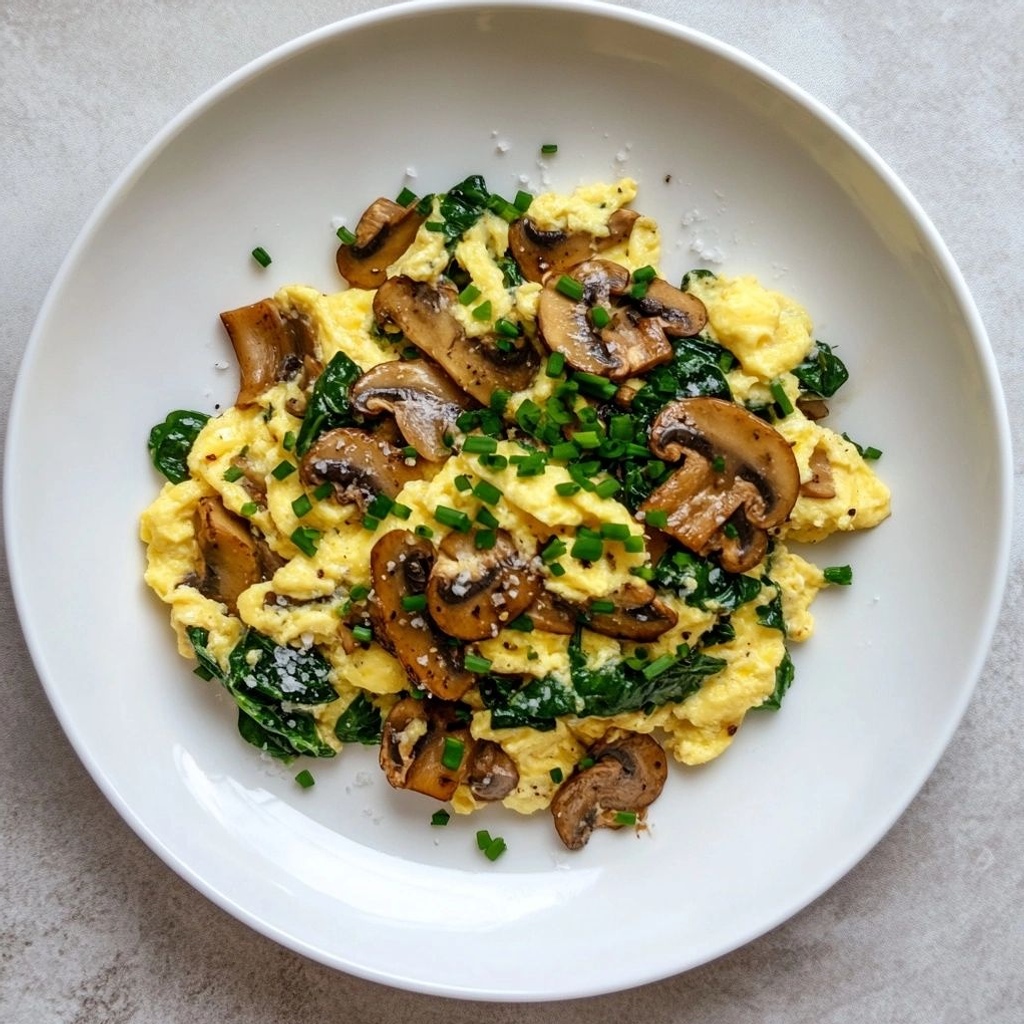
Tips for Perfect Hearty Mushroom Spinach Scrambled Eggs
- Eggs and texture: Use eggs at room temperature to help whisking and even cooking. For fluffier eggs, whisk until the mixture is pale and foamy; for creamier eggs, add a splash of milk or cream and whisk a bit longer. If you skip dairy, whisk vigorously to incorporate air and achieve a light texture.
- Whisking strategy: Whisk thoroughly but gently to avoid overworking the proteins. A few light folds at the end can yield tender curds without breaking them into mush.
- Pan and fat choice: Use a nonstick or well-seasoned skillet. Heat the butter or olive oil over medium heat until shimmering (or butter foams). If using oil, avoid overtly hot oil that can cause the eggs to steam instead of fry.
- Mushrooms first: Sauté mushrooms first to release moisture and deepen their flavor. If they release a lot of liquid, cook them a bit longer to reduce it and achieve a nice brown color, which adds umami to the scramble.
- Building the base: If using onions, sauté them in the fat first to build sweetness, then add garlic briefly before mushrooms to avoid burning. Layering aromatics builds a richer backbone for the eggs.
- Spinach timing: Add spinach toward the end of cooking; it wilts quickly. If using baby spinach, you can toss in whole leaves and allow them to soften with the residual heat.
- Cooking temperature: Keep the heat at medium to medium-low. Scrambled eggs cook fast and can seize up or become rubbery if cooked too hot. Gentle heat yields creamy curds and even cooking throughout.
- Stirring technique: Stir gently and intermittently rather than constant vigorous agitation. This helps form soft curds rather than fine grains.
- Cheese timing: If adding cheese, stir it in toward the end of cooking so it melts without overcooking the eggs. Shredded cheese melts more evenly than block cheese.
- Herbs and brightness: Fresh parsley or chives should be added at the end to preserve aroma. If using dried herbs, crumble between fingers to release oils and reduce to a pinch per recipe.
- Optional citrus: A little lemon zest or juice at the very end brightens the dish. Don’t add citrus while cooking, as heat can dull the aroma and flavor of citrus oils.
- Seasoning: Add salt gradually and taste as you go. Cheese and vegetables contribute salt, so you may need less than you expect. Consider finishing with a light taste test after cooking.
- Texture tips: If you prefer softer, custard-like eggs, add a touch more milk or cream. For firmer, fluffier eggs, cook a bit longer over lower heat with more gentle folding.
- Make-ahead and reheating: Scrambled eggs don’t reheat well; serve fresh. If needed, reheat gently in a skillet with a splash of milk and a quick fold to refresh texture.
FAQ
What makes Hearty Mushroom Spinach Scrambled Eggs special?
This recipe combines sautéed mushrooms for earthiness, wilted spinach for color and nutrition, and fluffy scrambled eggs for a satisfying, protein-packed breakfast or light dinner. A touch of cream or cheese adds richness without heaviness.
What ingredients do I need?
Eggs, mushrooms (cremini or button work well), fresh spinach, onions or scallions, garlic, milk or cream (optional for creaminess), butter or oil, salt, pepper, and optional grated cheese (like parmesan or cheddar). For flexibility, you can add herbs or hot sauce to taste.
Can I make this recipe vegetarian or vegan?
Yes. It’s naturally vegetarian. For vegan, replace eggs with a firm tofu scramble seasoned to taste (or use scrambled chickpea flour). Use olive oil or plant-based butter and omit dairy. You can also add nutritional yeast for a cheesy flavor.
How do I prepare the mushrooms and spinach?
Sauté sliced mushrooms in a hot pan with a little butter or oil until they release their juices and start to brown. Remove them, then sauté onions/garlic briefly, add spinach until wilted, and return mushrooms to the pan before adding eggs.
What is the best way to cook the eggs so they’re fluffy?
Whisk eggs with a splash of milk or cream and a pinch of salt. Cook on medium-low heat, stirring gently with a spatula as curds form. Remove from heat when slightly underdone, as they will continue to cook from residual heat.
Can I add cheese or dairy to the eggs?
Yes. Stir in grated cheese toward the end of cooking for extra creaminess. A splash of cream or a small dollop of cream cheese can also enrich the texture. For a lighter version, skip dairy.
What seasonings work well with this dish?
Salt and pepper are essential. Add a pinch of paprika, a dash of hot sauce, or a sprinkle of dried thyme or oregano. Fresh herbs like chives, parsley, or tarragon brighten the dish at the end.
How long does it take to make?
From start to finish, about 15 to 20 minutes. Sauté mushrooms and spinach first (8–10 minutes), whisk eggs (2 minutes), then scramble them (3–5 minutes) until just set.
What are some serving suggestions?
Serve with crusty bread or toast, a side of avocado, or a light salad. It also pairs nicely with roasted potatoes, a warm grain like quinoa or farro, or a fresh fruit garnish for balance.
How should I store leftovers?
Store cooled leftovers in an airtight container in the refrigerator for up to 2 days. Reheat gently in a skillet with a splash of milk or water to restore moisture. Eggs reheated more than once can become rubbery, so only reheat what you’ll eat.