
Introduction / Hook
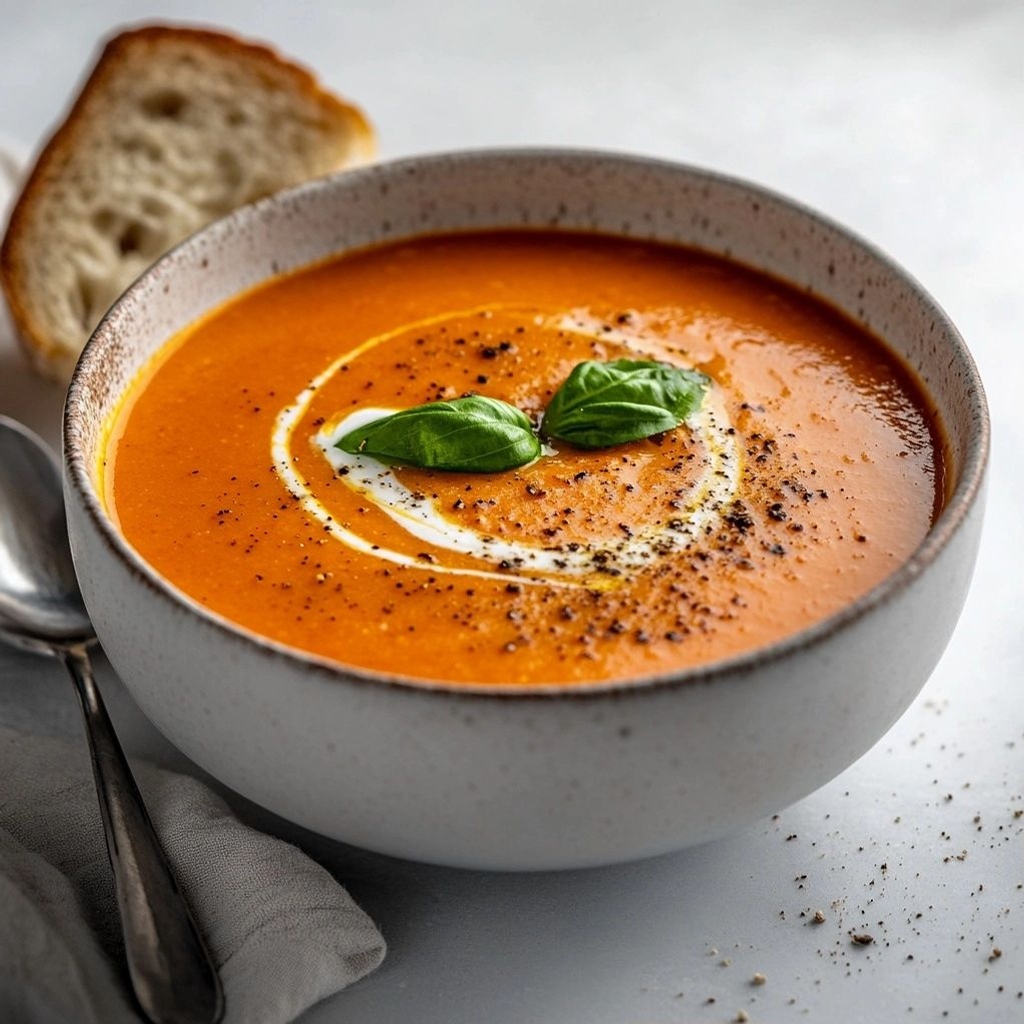
Imagine a bowl of soup that tastes like sunshine captured in a velvet-whisper of cream. This Creamy Roasted Tomato Soup is that comforting fantasy made real: bright, luscious, and deeply satisfying with every spoonful. The magic happens in a simple roasting step that transforms everyday pantry tomatoes into jars of roasted sweetness, caramelized edges, and a whisper of smoke. When blended with a touch of cream or a dairy-free counterpart, the result is a silken, spoon-friendly soup that coats the tongue with a gentle richness while staying light enough to sip with a crusty piece of bread. The aroma alone—ripe tomatoes caramelizing, garlic softening, a kiss of herbs—invites you into the kitchen, as if inviting you to slow down, savor, and reconnect with the simple pleasure of nourishing yourself and those you love. This is the kind of dish that feels like a warm hug on a chilly day, yet it’s elegant enough to serve as a refined starter for a dinner party. It’s creamy without being heavy, comforting without being indulgent, and weeknight-friendly enough to become a treasured weeknight staple in your home menu.
The Story Behind the Dish
Tomato soup has long been a canvas for home cooks to improvise with what’s in the pantry, but roasting tomatoes first imbues this version with a story all its own. The technique has roots in kitchens that learned to coax maximum flavor from modest ingredients by letting heat do the work—turning the natural sweetness of tomatoes into a depth that doesn’t need loud seasonings to shout. In many cultures, tomato soups were born out of necessity and evolved into comfort classics as families shared bowls of warmth during harvest seasons and blustery days.
Legend has it that the first roasted-tomato soups emerged in rustic kitchens where firewood crackled and tomatoes were abundant at peak season. The concept traveled through generations and across continents, morphing with each cook’s touch: a swirl of cream here, a splash of stock there, a whisper of smoky paprika or a hint of garlic. The modern Creamy Roasted Tomato Soup you’re about to discover is a harmonious mashup of that history—a dish that respects its humble origins while embracing the modern palate with a creamy, cohesive texture. It’s the kind of recipe that invites you to pause, breathe in the scent of roasted tomatoes as they caramelize, and remember that great meals often begin with simple ingredients treated with attention and care.
Why You’ll Love This Recipe
- Effortless yet sophisticated: The roasting step seems indulgent but is incredibly straightforward, requiring minimal hands-on time.
- Balanced creaminess: The soup achieves a luxuriously smooth texture without losing brightness or a vivid tomato personality.
- Versatile and adaptable: Suitable for dairy-free or vegan diets with a few simple substitutions, while still delivering a rich mouthfeel.
- Seasonal and pantry-friendly: Uses pantry staples and ripe tomatoes when available, making it a dependable choice year-round.
- Perfect starter or main (with a side): Hearty enough to feel like a meal on its own when served with crusty bread or grilled cheese.
- Comforting aroma, memorable taste: The roasted edges create a nuance that tastes like home—nostalgic, inviting, and deeply satisfying.
Flavor Profile & Texture
This soup is a study in contrast and balance. The roasting process amps up the natural sweetness of the tomatoes, giving a deep, almost jammy backbone without tipping into undue sweetness. Garlic caramelizes gently, releasing a mellow, comforting warmth. Depending on your choice of dairy or dairy-free alternatives, the finish ranges from satin-smooth to luxuriously velvety, with a label of creaminess that lingers on the palate just enough to leave you craving another spoonful.
The aroma is immediately welcoming: a roasty-sweet perfume with hints of thyme, olive oil, and a faint whisper of char from the edges of the roasting tray. On the palate, you’ll notice a gentle brightness—often from a splash of stock or a squeeze of lemon—that keeps the soup from feeling too heavy while allowing the tomato flavor to sing. The texture is silky and spoon-cozy, with enough body to cling to a slice of toasted bread. When you swirl in cream, you’ll experience a luxurious, cloud-like silkiness that coats the tongue. If you opt for a dairy-free route, the texture remains remarkably creamy thanks to well-emulsified plant-based milk or a carefully whisked coconut or almond cream, offering a different but equally comforting mouthfeel.
Occasions & Pairings
This Creamy Roasted Tomato Soup shines across a spectrum of moments:
- Weeknight comfort: A quick, nourishing bowl after a long day, especially when paired with grilled cheese or a warm, buttered baguette.
- Lunch-worthy starter: Serve in petite cups at a luncheon or as the first course of a multi-course dinner.
- Seasonal gatherings: A crowd-pleasing option for autumn and winter menus, adaptable to many dietary needs.
- Romantic dinners: The cozy, luxurious texture makes it feel special without requiring a lot of effort.
Pairings to consider:
- Crusty bread, garlic butter, or a simple grilled cheese sandwich for dipping.
- A dollop of yogurt, crème fraîche, or a plant-based alternative to add tang and creaminess.
- Drizzles of extra-virgin olive oil or a swirl of basil oil for an herbaceous finish.
- Herby croutons or roasted tomato-speckled croutons for added texture and color.
- Light, crisp white wines like Sauvignon Blanc or a sparkling option to brighten the palate.
Tips, Variations & Substitutions
Here are practical ideas to tailor this recipe to your pantry, dietary preferences, or mood:
- Vegan/vegetarian: Use dairy-free milk or cream alternatives such as almond, coconut, or oat milk. A small amount of cashew cream can add richness without overpowering the tomato flavor.
- Silky finish: For an extra-smooth texture, strain the soup through a fine-mesh sieve after blending, then whisk in your chosen cream substitute until you reach the desired consistency.
- Herb variations: Fresh thyme or a bay leaf during roasting adds aromatic depth; finish with a scattering of chopped chives or parsley for brightness.
- Smoky notes: A pinch of smoked paprika or a drop of liquid smoke can introduce a subtle smoky nuance that pairs beautifully with roasted tomato.
- Cheesy finish: A small handful of grated parmesan or a dairy-free parmesan alternative whisked in at the end adds a savory finish.
- Chunky texture option: For a rustic version, reserve a portion of roasted tomatoes and garlic to blend separately for a chunky contrast before stirring back in.
- Low-acid twist: If your tomatoes are particularly acidic, a touch of sugar or a carrot’s natural sweetness during roasting can balance the flavor.
- Make it gluten-free: The recipe naturally is gluten-free; just ensure any bread served with it is gluten-free if needed.
Storage & Make-Ahead Ideas
Tomato soup stores beautifully, making it an excellent candidate for meal-prep and batch cooking:
- Refrigeration: Store in an airtight container for up to 4 days. Reheat gently on the stove, whisking to restore creaminess.
- Freezing: Freeze for up to 3 months. Thaw in the refrigerator overnight, then rewarm and whisk in a splash of milk or stock to loosen if needed.
- Make-ahead roasting: You can roast the tomatoes and garlic a day in advance; refrigerate them, then blend with stock and heat when ready to serve for a quick yet flavorful soup.
- Make-ahead serving: If serving as a starter at a party, keep the soup warm in a slow cooker on low, giving it a gentle stir before ladling into bowls.
Fun Facts & Trivia (Optional)
Tomatoes have a storied history in European and American kitchens. Once regarded with suspicion by some as a poisonous plant by Section La, tomatoes gradually earned their place in everyday meals. In the late 19th and early 20th centuries, they began to appear in more refined dishes, moving from the garden to the table in ways that showcased their versatility. Roasting tomatoes to deepen flavor is a technique used by cooks around the world—from Mediterranean kitchens that pair them with olive oil and garlic to New World kitchens that turn them into comforting soups and sauces. The creamy finish of this soup is a modern homage to a timeless idea: transform humble ingredients through heat, patience, and a little indulgence to create something memorable and uplifting for the senses.
Serving Suggestions & Presentation
Beyond the delicious flavors, presentation can elevate this dish into a memorable dining experience. Consider these ideas:
- Serve in warmed bowls to maintain a cozy temperature from first sip to last drop.
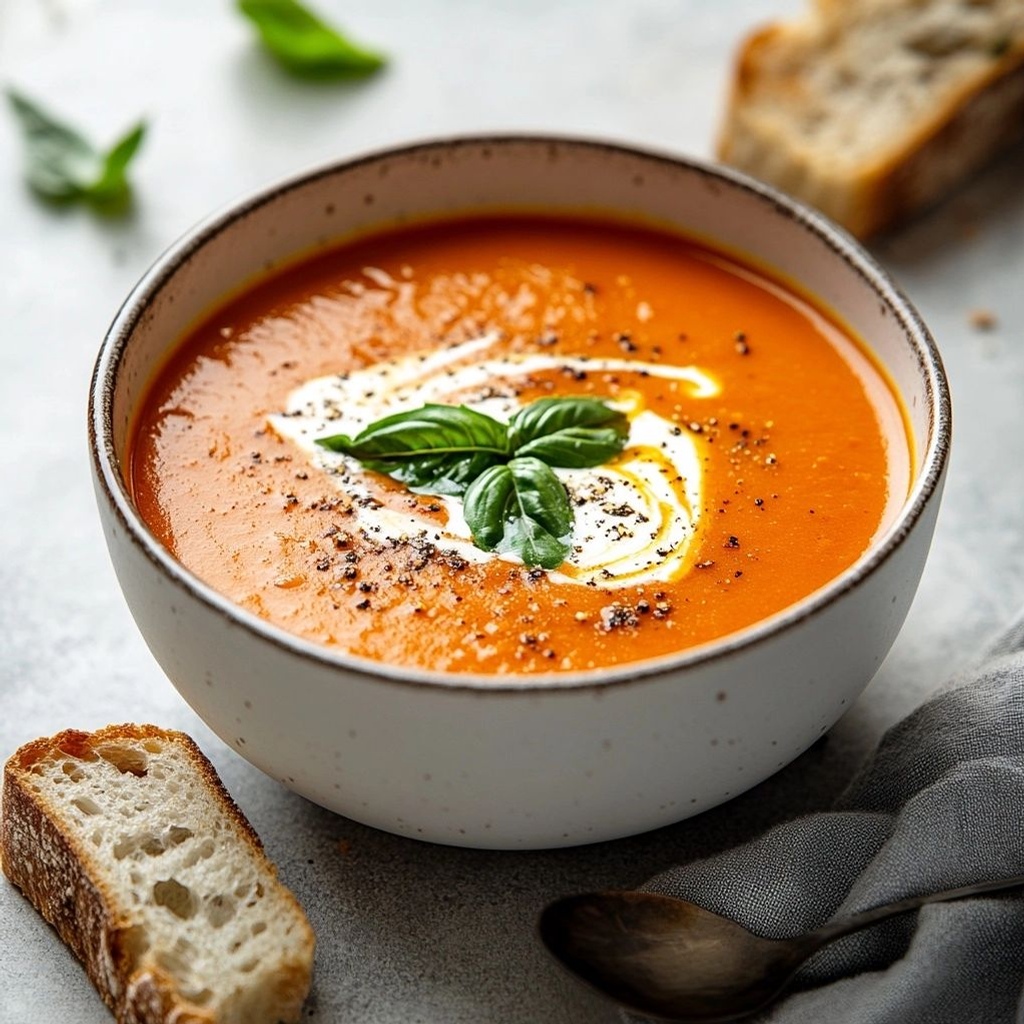
- Swirl with a dollop of cream or a plant-based alternative, then garnish with a drizzle of olive oil and a sprinkle of herbs for a visually appealing contrast.
- Top with a spoonful of roasted tomatoes or a few crisp croutons for added texture and color.
- Offer a small side of grilled cheese bites, bruschetta, or a simple cheese toast to accompany the soup and amplify the comfort factor.
Final Thoughts
This Creamy Roasted Tomato Soup is more than a simple starter or lunch option—it’s a warm invitation to slow down and savor. It leverages the natural sweetness of roasted tomatoes to create a rich, comforting base that can be dressed up or pared down according to the occasion. Whether you’re cooking for yourself, your family, or guests, this recipe offers a forgiving yet luxurious canvas that pairs beautifully with a range of flavors and textures. It’s the kind of dish that tastes like home, travels well in memory, and awakens the senses with every spoonful. So, preheat the oven, crush a few cloves of garlic, and let the tomatoes do the talking. The result will be a bowl that feels like a hug—creamy, bright, and utterly comforting, no matter the season.
Ingredients
- 2 pounds ripe tomatoes (halved)
→ These form the soup’s base; roasting concentrates their sweetness and reduces acidity for a smooth, rich flavor. Halve the tomatoes so they roast evenly and develop a deep, caramelized edge that enhances body and depth in the final soup. - 2 tablespoons extra-virgin olive oil
→ Used to roast the tomatoes and sweat the aromatics; it adds richness and helps carry the tomato flavor. Use a good-quality olive oil for a cleaner, fruitier finish. If you roast at a high temperature, drizzle evenly to prevent sticking. - 1 medium onion, peeled and chopped
→ Provides savory sweetness and a gentle backbone to the soup. Sauté in the oil until translucent and lightly golden to maximize flavor; avoid browning too deeply to keep the soup bright. - 3 cloves garlic, minced
→ Adds aromatic bite and depth; roasting the tomatoes will mellow garlic, while a quick sauté with onions enhances its sweetness. If you love garlic, you can increase to 4 cloves, but balance to avoid overpowering the tomatoes. - 1 cup roasted red peppers, peeled and chopped (optional)
→ Adds a smoky sweetness and vibrant color; if using, roast peppers until blistered to deepen flavor, then peel and chop finely to distribute evenly in the soup. - 2 cups vegetable broth (or chicken broth for non-vegetarian)
→ Liquid to deglaze and bring the roasted tomatoes to a pourable, soup-ready consistency. Use low-sodium broth and adjust salt at the end to control saltiness; broth also helps create a silky texture when blended. - 1/2 cup heavy cream (or full-fat coconut cream for dairy-free)
→ Adds velvety richness and a smooth mouthfeel; stir in toward the end to avoid curdling. For a lighter soup, use 2–3 tablespoons cream and replace the rest with milk or broth. - 1/2 cup milk (dairy or non-dairy)
→ To thin the soup to a creamy but pourable consistency and balance richness from the cream. Use unsweetened dairy-free milk if avoiding dairy; adjust amount for your desired thickness. - 1 teaspoon kosher salt (adjust to taste)
→ Essential for flavor development; sprinkle gradually and taste as you go, since tomatoes and broth contribute salt. Start with less and add more after simmering. - 1/2 teaspoon ground black pepper
→ Provides a subtle peppery kick to counter the sweetness of roasted tomatoes. Freshly ground is preferable for aroma; adjust to taste near the end of cooking. - 1 teaspoon sugar (optional, to balance acidity)
→ A touch of sugar can mellow sharp tomato acidity and round the overall flavor. Add gradually, tasting after each addition to avoid oversweetening. - 1/4 cup fresh basil leaves, torn (or 1 teaspoon dried basil)
→ Adds bright, herbaceous notes that lift the soup. Fresh basil is best added after blending for vibrant aromatics; dried can be stirred in during simmering for more integrated flavor. - Optional toppings: croutons, a drizzle of olive oil, and extra fresh basil
→ Provide textural contrast and a final aroma boost. If using croutons, toast them lightly before serving to keep them crisp; drizzle olive oil just before serving to avoid sogginess.
Instructions
- Preheat your oven to 425°F (220°C) and line a large sheet pan with parchment or a silicone mat to ensure even roasting and easy cleanup.
→ A hot oven accelerates caramelization of the tomato surfaces, concentrating sweetness and developing deep, roasted flavors without burning the edges. - Spread the halved ripe tomatoes in a single layer on the prepared sheet pan and drizzle with 2 tablespoons extra-virgin olive oil, then season lightly with salt.
→ Coating each cut surface promotes uniform browning, and salt enhances the natural tomato sweetness as they roast. - Roast the tomatoes for 20–25 minutes until the flesh is blistered and slightly collapsed, turning the pan halfway for even color.
→ Roasting concentrates sugars and reduces acidity, creating a silky base for the soup with a rich, roasted aroma. - If using optional roasted red peppers, place whole peppers on the sheet with the tomatoes, roast for about 15–20 minutes until the skins blister, then transfer to a bowl covered with a towel to steam for easy peeling.
→ Steaming loosens the skins, ensuring a smooth texture without peppery skins in the final soup. - Remove the peppers, peel off their skins, remove seeds, and chop the flesh finely; set aside with the roasted tomatoes.
→ Finely chopped peppers distribute evenly, adding smoky sweetness and vibrant color without chunks that interrupt the texture of the soup. - Meanwhile, heat a large heavy-bottomed pot over medium heat and add the remaining 0 tablespoons oil if needed, then add the chopped onion and a pinch of salt, cooking until translucent and just starting to turn golden, about 5–7 minutes.
→ Sweating the onions softens their sugars, builds depth, and prevents bitterness; avoid browning too deep to keep the final soup bright. - Add the minced garlic to the onions and cook for 1–2 minutes until fragrant, stirring frequently to prevent scorching.
→ Garlic releases its aroma when heated gently, but excessive heat can cause bitterness; keep it moving in the pan. - Pour in 2 cups vegetable or chicken broth to deglaze the pan, scraping up any browned bits from the bottom with a wooden spoon to enrich the soup’s foundation.
→ Deglazing lifts flavor-laden fond into the liquid, building a deeper, more cohesive soup base. - Add the roasted tomatoes, chopped roasted peppers (if using), and 1 cup of broth to the pot; bring to a gentle simmer and let simmer for 10–15 minutes to meld flavors.
→ Simmering softens any remaining tomato skins, blends caramelized notes, and integrates all aromatics into a cohesive base. - Using an immersion blender, blend the soup directly in the pot until silky smooth; alternatively, transfer to a counter Blender in batches and blend until velvety, then return to the pot.
→ Achieving a uniform, creamy texture is essential for a comforting, restaurant-quality soup; ensure no hot splashes by covering blender vent if using a blender. - Stir in 1/2 cup heavy cream (or full-fat coconut cream) and 1/2 cup milk, adjusting the thickness to your preference, and heat through on low just until warm to prevent curdling.
→ The dairy adds a lush, velvety mouthfeel; warming gradually prevents separation and preserves a glossy finish. - Season with 1 teaspoon kosher salt and 1/2 teaspoon ground black pepper, tasting and adjusting; if the soup tastes bright, add up to 1 teaspoon sugar to balance acidity.
→ Proper salting builds flavor depth; sugar counters sharpness from tomatoes, achieving a well-rounded balance. - Stir in 1/4 cup fresh torn basil leaves just before serving, reserving a few for garnish, or use 1 teaspoon dried basil simmered in with the aromatics.
→ Fresh basil brightens the soup with herbal top notes; adding at the end preserves its aromatic oils and vibrant color. - Ladle the soup into bowls and top with croutons and a light drizzle of olive oil, finishing with a sprinkle of fresh basil for aroma and crisp texture.
→ Textural contrast and a final aroma boost elevate the dish; toasting croutons keeps them crisp and avoids sogginess in the bowl.
Notes
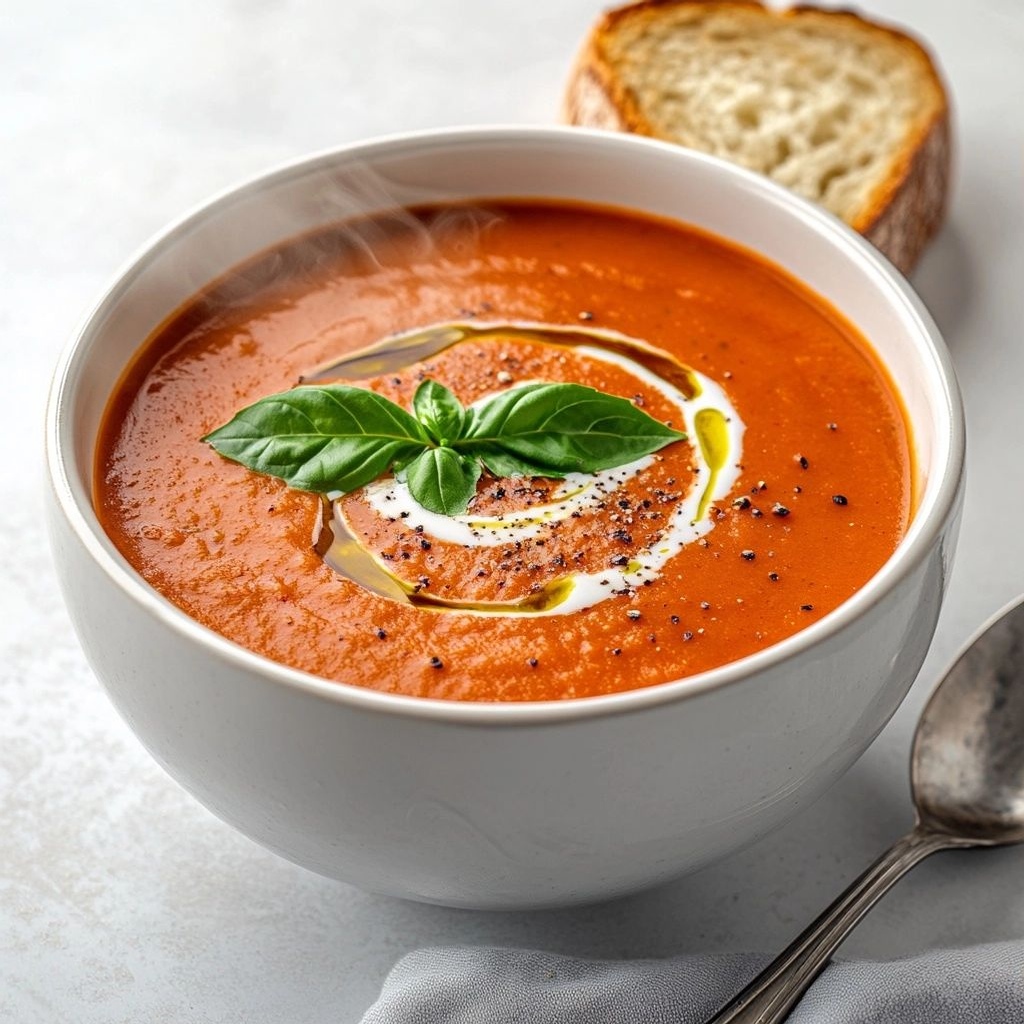
“This creamy roasted tomato soup is naturally velvety from roasted tomatoes and a touch of cream, with a bright herbal finish from fresh basil. You can customize it by swapping in coconut cream for dairy-free richness or using roasted red peppers to deepen the sweetness. For a lighter version, hold the cream and milk and blend with a splash of broth until silky. It stores well in the fridge for 3-4 days and freezes beautifully in airtight containers for up to 3 months. Serve with crusty bread, a drizzle of olive oil, and more fresh basil for a fragrant finishing touch. Always taste and adjust salt and acidity at the end, since tomatoes can vary in sweetness.”
Tips
Tips for Perfect Creamy Roasted Tomato Soup
- Roasting tips: If your oven tends to run hot, roast the tomatoes at 400°F (200°C) instead of 425°F to prevent excessive caramelization and keep the soup balanced. Turn the pan once halfway through to ensure even browning.
- Pat the tomatoes dry: Before halving, pat the tomatoes dry with a towel. Removing surface moisture helps them caramelize rather than steam, deepening flavor and improving body.
- Season in layers: Season the onions and garlic lightly as they sauté, then adjust salt again after the tomatoes simmer. This builds a more rounded overall seasoning and prevents under-seasoning or oversalting.
- Oil handling: If you’re watching calories, you can reduce oil to 1 tablespoon, but keep enough to prevent sticking and to aid browning. Use a light spray for even coverage.
- Garlic guidance: For a milder garlic note, add the minced garlic after the onions have softened, then sauté just 30–45 seconds until fragrant to avoid bitterness.
- Optional roasted peppers: If using roasted red peppers, pat them dry to remove excess moisture and stock a bit of their sweetness. Chop finely so they blend smoothly into the soup.
- Broth choice: Low-sodium broth is best to allow you to control the final salt level. If using chicken broth, consider using a lighter stock to prevent the soup from becoming too rich.
- Blending technique: For a ultra-smooth texture, blend in batches using a high-powered blender or an immersion blender with a splash of broth to start. Pass through a fine mesh sieve if you desire extra silkiness.
- Dairy balance: If avoiding dairy, replace the heavy cream with full-fat coconut cream or a thick cashew cream. Start with 2–3 tablespoons of coconut cream and add more to reach desired richness.
- Thick vs. pourable: If the soup is too thick after blending, whisk in additional warm broth or milk a little at a time until you reach your desired consistency. If too thin, simmer a bit longer to reduce.
- Acidity control: If tomatoes are very acidic, a touch more sugar can help, but you can also balance with a splash of cream or a pinch of baking soda (tiny amount) to neutralize acidity—taste as you go.
- Herb timing: Add fresh basil at the very end of cooking or as a bright garnish to preserve aroma. If using dried basil, add early in simmering for integrated flavor.
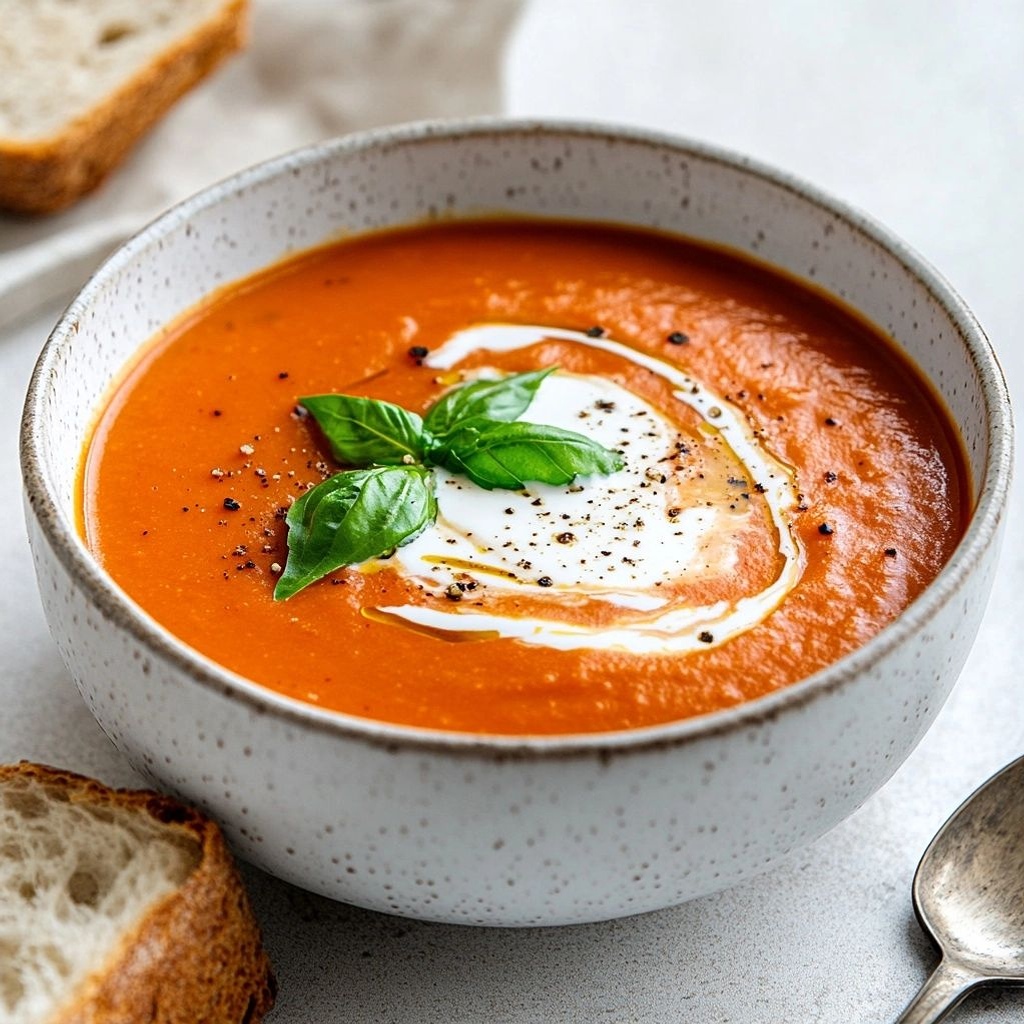
- Serving ideas: Finish with a swirl of cream or coconut cream, a drizzle of olive oil, and a few torn basil leaves for a restaurant-style presentation. Serve with crusty bread or croutons for texture.
- Make-ahead note: The soup stores well in the refrigerator for 3–4 days and freezes beautifully for up to 3 months. Reheat gently and adjust thickness with a little broth or milk as needed.
FAQ
What is Creamy Roasted Tomato Soup?
A silky soup made from roasted tomatoes, onions, garlic, and herbs, blended until smooth with a touch of cream or dairy-free alternative for a comforting, rich flavor.
What ingredients are needed?
Main: ripe tomatoes, onions, garlic, olive oil, salt, pepper, herbs (basil or thyme). For creaminess: heavy cream or a dairy-free alternative like coconut milk, almond milk, or cashew cream. Optional vegetable broth for thinning. Optional toppings: croutons, cream drizzle, or fresh herbs.
Can I make this dairy-free or vegan?
Yes. Use a dairy-free milk or cashew cream in place of heavy cream and check that any stock or broth is vegan. The soup remains creamy from the roasted vegetables and optional dairy-free thickeners.
How do I roast the vegetables?
Preheat oven to 400–425°F (200–220°C). Chop tomatoes, onions, and garlic; toss with olive oil, salt, and pepper. Roast on a sheet pan for 25–35 minutes until caramelized and tender. You can halve cherry tomatoes or use a mix of ripe plum tomatoes for depth of flavor.
Can I use fresh tomatoes only, or should I use canned?
Both work. Fresh roasted tomatoes deliver bright, vibrant flavor, especially in tomato season. Canned whole tomatoes are convenient and can be roasted as well for a concentrated taste.
How do I achieve the creaminess?
Blend the roasted vegetables with broth or water until smooth, then stir in cream or a dairy-free alternative. For extra silkiness, you can pass the soup through a fine-mesh sieve after blending or use an immersion blender to fully emulsify.
How spicy or herby should it be?
Start mild. If you like heat, add a pinch of red pepper flakes. For herbs, fresh basil or thyme complements tomatoes beautifully—add toward the end of cooking to preserve brightness.
How do I store leftovers?
Cool completely and refrigerate in an airtight container for up to 3–4 days. Reheat gently on the stove or in the microwave, stirring in a little extra broth or milk to loosen if needed.
Can I freeze the soup?
Yes. Freeze in labeled, airtight containers for up to 3 months. Thaw in the fridge overnight and reheat, thinning with broth or water as needed. Stir in a splash of cream or dairy-free milk after reheating for creaminess.
What are good serving options?
Serve hot with a swirl of cream or dairy-free alternative, a drizzle of olive oil, roasted garlic, and fresh basil. Pair with crusty bread, grilled cheese, or croutons for a comforting meal.