Introduction / Hook
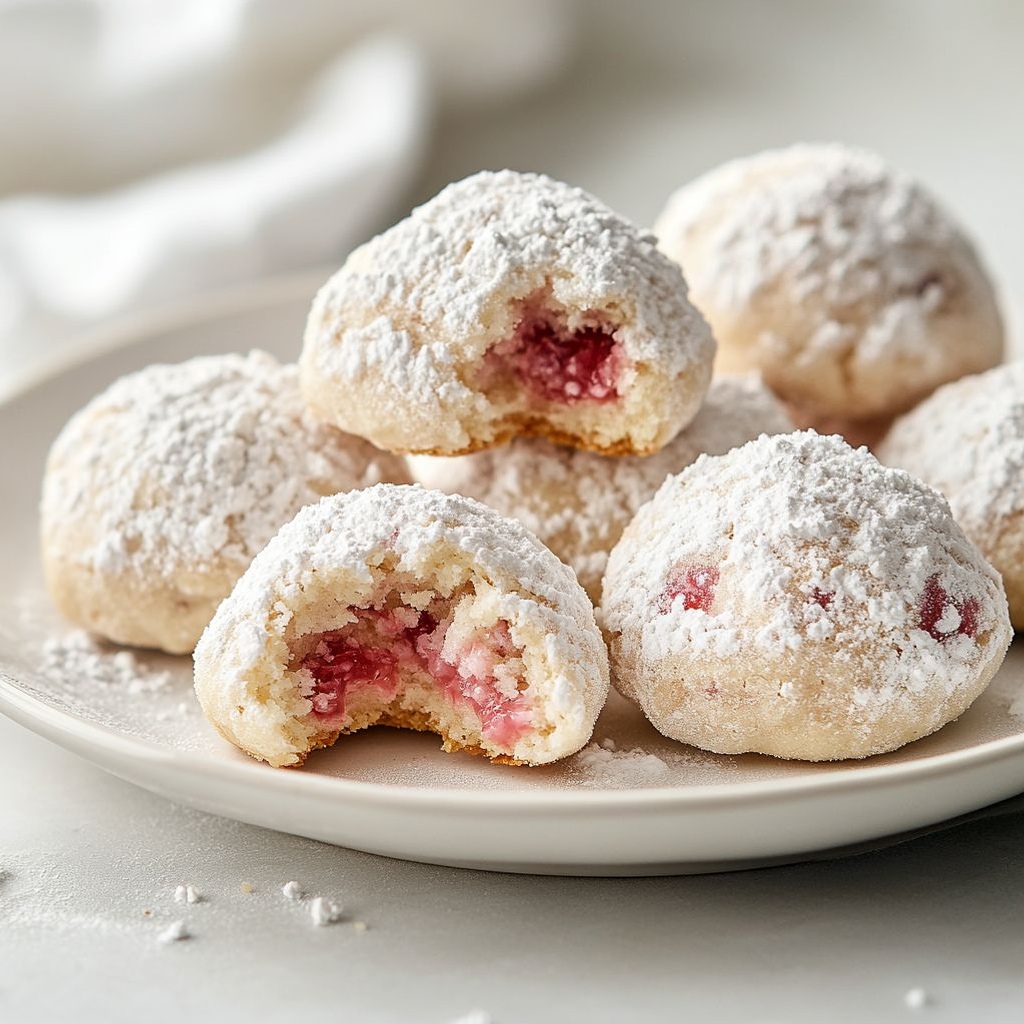
Imagine a tray of delicate, snow-white spheres glinting like tiny winter treasures, their surfaces dusted with a veil of powdered sugar that melts away at the first touch. Inside, a soft, crumbly center unfurls with a surprising, sun-kissed note of strawberry—bright, fruity, and just a whisper tart. Strawberry Snowball Cookies are that charming paradox: elegant in appearance, playful in flavor, and utterly comforting with every bite. They evoke memory and celebration in one graceful bite, the kind of cookie you reach for when you want something that feels festive enough for a holiday platter and effortless enough for a casual afternoon tea. The scent alone—cream, butter, and a kiss of strawberry—has a way of pulling people to the kitchen, drawing smiles as they anticipate that first powder-sugared bite. If you’re seeking a cookie that feels both timeless and fresh, traditional yet with a modern twist, this is your new go-to. The name itself conjures a scene: snow on pine, berries kissed by sunlight, a cozy kitchen where laughter lingers and the oven hums softly in the background. Get ready to fall in love with a treat that tastes like a little celebration in every mouthful.
The Story Behind the Dish
Snowball cookies, often called Russian tea cakes or snowball confections, have long had a place at gatherings that celebrate warmth, generosity, and togetherness. They’re the kind of cookies that family members pass from one hand to another with a whispered “these are your favorites!”—a small ritual that turns baking into memory-making. The strawberry variation of these beloved cookies tells a more modern, sunlit story: it’s the fusion of classic European-inspired butter cookies with the bright, summer-invoking flavor of ripe strawberries. Many households in search of a “showpiece” cookie for holiday trays or summer bake sales have found that folding in strawberry elements—whether through puree, dried fruit, or powdered strawberry flavor—transforms the familiar silhouette into something both nostalgic and river-clear in its taste.
In this narrative, the strawberry element channels the spirit of local markets and farmers’ stands—the moment when you stumble upon a crate of jewel-bright berries, their scent filling the air, and you’re struck with the idea that a simple cookie could carry that memory forward. It’s a dish that travels well between seasons: in winter, the cookies feel like a snow-dusted treat that brings a touch of sun; in spring and summer, they echo strawberry fields and picnics in the shade. The elegance of their exterior—perfect little spheres rolled in sugar—belies the ease with which they come together, a testament to the joy of simple ingredients transformed by technique and a bit of patience. The dish’s history is less about a single origin and more about a continuum: the traditional butter-based snowball cookie, reimagined with the bright, fruit-forward charm of strawberries to suit contemporary palates and seasonal sensibilities.
Origin and Cultural Touchpoints
Snowball cookies have roots and variations across many cultures, often tied to festive occasions, weddings, or holiday windowsills. The common thread is a buttery dough that yields to a tender crumb and collapses softly under the pressure of a bite, releasing a fragrance that blends vanilla, almond, and toasted nuts with sugar. The strawberry adaptation nods to ongoing culinary conversations about how tradition can evolve to reflect local ingredients, dietary choices, and global palates. It’s a reminder that recipes are not static artifacts but living conversations that travel, adapt, and joyfully surprise us along the way.
Why You’ll Love This Recipe
Strawberry Snowball Cookies offer a constellation of appealing qualities that make them a favorite for bakers and guests alike:
- Elegant yet approachable: They look professional enough for a cookie tray, yet are simple enough for a weekend bake with family.
- Low-effort, high-impact: A few pantry staples, a gentle mixing routine, and a quick bake yield results that feel special without requiring advanced technique.
- Bright, balanced flavor: The sweetness of butter and powdered sugar is brightened by fresh or dried strawberries, delivering a fruity nuance without overpowering the delicate crumb.
- Soft texture with a crisp edge: The classic snowball exterior provides a crisp bite that dissolves into a tender, crumbly center as you chew.
- Versatile for many diets and occasions: With smart swaps, these cookies can be made vegan, gluten-free, or sugar-conscious, expanding their appeal across dietary needs.
- Great for gifting: Their petite size, charming appearance, and joyful flavor make them ideal for sharing with friends, neighbors, teachers, and coworkers.
- Seasonally flexible: While they shine during holiday trays, they also pair beautifully with spring picnics, bridal showers, and summer tea gatherings.
Flavor Profile & Texture
The most captivating thing about these cookies is how the flavor unfolds in layers. The initial impression is a mild, buttery richness that comes from a classic shortbread-style dough. It’s immediately followed by a fruity brightness—the strawberry element lends a sunlit tang without tipping into tartness, creating a harmonious balance that lingers on the palate. The strawberry notes can come from fresh puree, freeze-dried berries ground to a powder, or a gentle infusion of dried fruit, depending on what you have on hand. This strategy ensures that you get a vivid pink hue and a pronounced berry aroma without turning the dough overly moist or heavy.
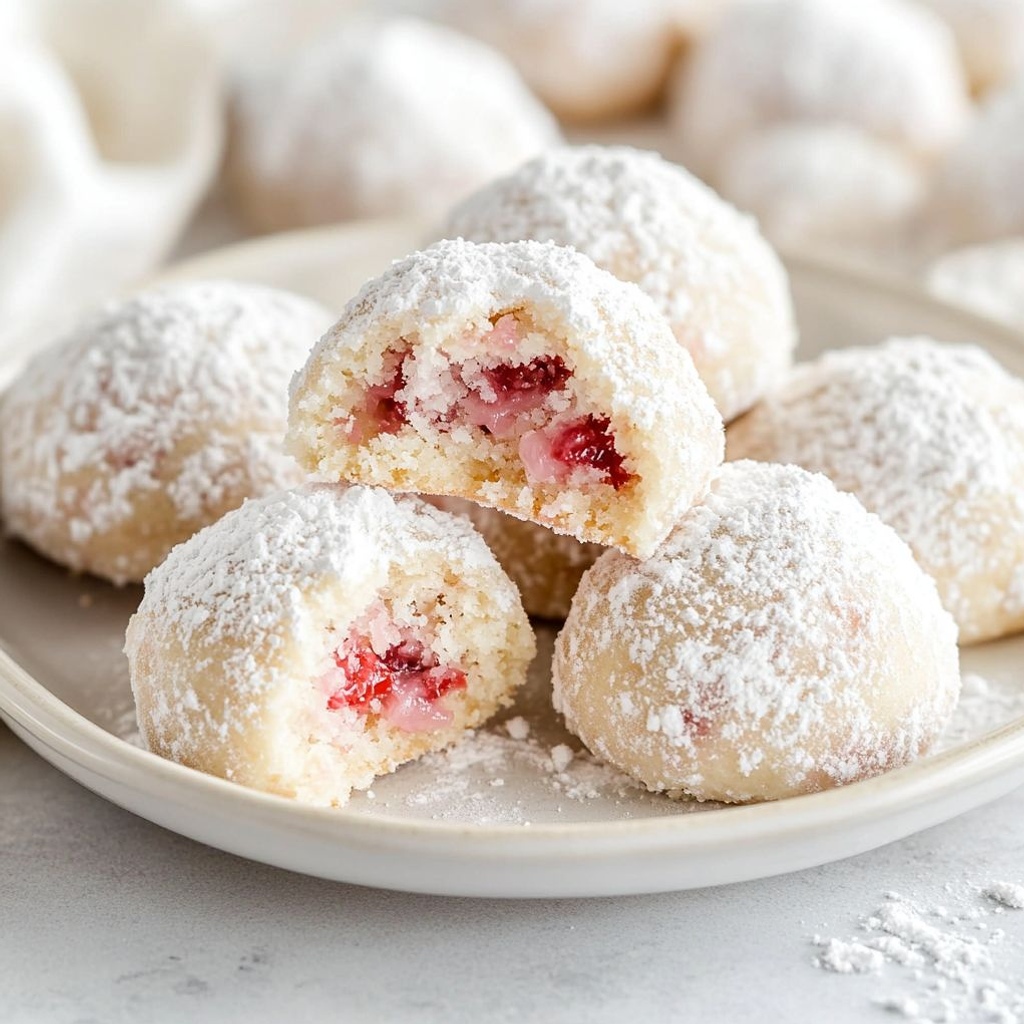
Texture-wise, you’ll experience a light, crumbly bite that almost dissolves on the tongue. The exterior is a chalky-feel sugar crust—powdered sugar dusted to the point of “snowy” sheen—that cracks slightly as you press into the cookie, releasing a soft, tender crumb inside. The contrast between the exterior and interior is part of the magic, making every mouthful feel like a little celebration. Some bakers like to incorporate finely chopped nuts for a faint toasty crunch; others prefer a purely smooth crumb for that quintessential melt-in-your-mouth sensation. Either way, the balance between buttery richness, fruity brightness, and a hint of vanilla or almond in the background creates a dessert that’s at once comforting and refreshing.
Aromatic notes often emerge beyond the obvious strawberry. A whisper of vanilla bean or almond extract deepens the cookie’s character, while a touch of citrus zest can illuminate the berry flavor and lift the overall taste. If you prefer a more pronounced nutty profile, toasted pecans or almonds can be folded into the dough, adding texture and a gentle earthiness that complements the fruit’s sweetness without overpowering it.
Occasions & Pairings
These cookies are the kind that travel well and suit many settings. Here are some ideas to make the most of their versatility:
Their snow-white exterior mirrors the season’s aesthetics and pairs beautifully with other classic cookies, fruit tarts, and spiced treats. - Afternoon tea or coffee gatherings: The cookies’ refined shape and delicate flavor are a natural match for scones, light finger sandwiches, and a pot of tea.
- Bridal showers or baby showers: Their pretty appearance and gentle sweetness make them a crowd-pleasing option that fits with soft color palettes and floral décor.
- Summer picnics and garden parties: The freshness of strawberry feels seasonally appropriate and bright in warm weather.
- Gift-giving: Pack them in decorative tins or boxes for a cozy, homey present that stays fresh and visually appealing.
Pairing suggestions to complement the cookies:
- Light sparkling beverages like a brut champagne or a dry rosé to mirror the cookie’s fruit-forward brightness.
- Aloe- or vanilla-infused tea for a comforting, aromatic pairing that doesn’t compete with the fruit flavors.
- Plain or vanilla yogurt, or a dollop of lightly sweetened whipped cream for a contrasting texture in a dessert platter.
- A simple berry compote on the side for dipping, which can intensify the strawberry notes if you’re serving them as part of a larger dessert spread.
Tips, Variations & Substitutions
One of the joys of a cookie like Strawberry Snowball Cookies is how forgiving and adaptable it is. Here are ideas and ideas to customize without losing the essence of the treat:
- Vegan version: Use dairy-free butter and a plant-based milk if your dough requires moisture adjustments. Most shortbread-like doughs rely on fat and a touch of liquid, so you may need to adjust with aquafaba or a splash of plant milk. Skip eggs entirely, as these cookies typically don’t rely on eggs for structure.
- Gluten-free option: Swap all-purpose flour for a gluten-free blend that includes a binder (like xanthan gum) if your blend lacks it. Almond flour can substitute partially for a tender crumb, but you may need to adjust fat slightly to maintain the dough’s cohesiveness.
- Less sweet: Reduce powdered sugar by a small amount or use a granulated sugar that you pulse into a finer texture to avoid an overly sweet finish while preserving the snowball effect.
- Strawberry-forward flavor alternatives: Ground freeze-dried strawberries provide a robust flavor and color; fresh strawberry puree yields a delicate hue and aroma. For a deeper berry note, use a small amount of strawberry jam in the dough with care to maintain the right dough consistency.
- Texture twists: Add finely chopped freeze-dried strawberries or white chocolate chips for subtle crunch and color variation. Toasted almond slivers introduce a toasty aroma and a more pronounced nutty contrast.
- Regional twists: A pinch of cardamom or a small splash of kirsch or orange liqueur can bring a surprising but harmonious note that pairs well with strawberry.
- Dairy-free snowball exterior: The dusting sugar is essential for the signature look, but you can use a dusting of coconut sugar for a hint of caramel and a slightly different color and texture.
Storage & Make-Ahead Ideas
Cookies with a delicate crumb and powdered sugar exterior are best kept in a cool, dry place, but the exact approach varies slightly depending on how you’ve prepared them:
- Storage of baked cookies: Place cooled cookies in an airtight container, layering with parchment to prevent sticking. They typically stay fresh for about 3–5 days at room temperature. For longer storage, freeze baked cookies for up to 1–2 months; thaw at room temperature when ready to serve.
- Make-ahead dough: You can prepare the dough in advance, refrigerate for up to 2–3 days, then portion and bake as needed. This is especially handy for holiday cookie production or quick entertaining prep.
- Make-ahead assembly: If you prefer the dough to be stiff enough to roll into neat spheres, chill it for 30–60 minutes before rolling. This helps maintain uniform shapes and prevents flattening during baking.
- Reheating tips: If cookies have softened after storage, a brief warm-up in a low oven (around 300°F / 150°C for 5-7 minutes) or a short time in a microwave (not recommended for long) can refresh them, returning a touch of the melt-in-your-mouth feel.
Fun Facts & Trivia (Optional)
Delightful details that add flavor to your baking knowledge:
- Snowball cookies are a staple in many holiday dessert assortments around the world, with various name variations like snowballs, butterballs, and meltaways. They share a common technique: a soft, buttery dough that is rolled into spheres and generously dusted with sugar while warm.
- The visual appeal of snowball cookies makes them a favorite for gift-giving and themed cookie exchanges. Their pristine white exterior often evokes a winter wonderland vibe that pairs naturally with red and green holiday colors, especially when a strawberry hue is introduced.
- Using freeze-dried strawberries is a practical way to intensify flavor and color. The powder blends seamlessly into the dough, resulting in vivid specks and a robust aroma while preserving the crumbly texture.
- Strawberry is one of the most universally loved fruit flavors in desserts, thanks to its balance of sweetness and acidity. When incorporated into a shortbread-style cookie, it helps achieve a bright, fresh finish that contrasts with the richness of butter and sugar without overwhelming it.
Ingredients
Strawberry Snowball Cookie Dough
- 1 cup unsalted butter, softened to room temperature
→ The butter provides tender moisture and rich flavor; it’s creamed with the sugar to create a light, airy base and helps the dough come together without becoming greasy. Softened butter (not melted) ensures even creaming; if it’s too warm the dough may spread during baking, and if too cold it may resist blending. Cream until pale and fluffy before adding other ingredients to build a delicate crumb. - 1/2 cup powdered sugar
→ Powdered sugar sweetens the dough and contributes to a melt-in-your-mouth texture; it also helps the fat and dry ingredients bind smoothly. Sift the powder before measuring to avoid lumps, and add gradually so the mixture stays smooth and light. This sugar is incorporated into the dough rather than just for coating, so accuracy helps perfect texture. - 2 cups all-purpose flour
→ Provides the structural framework for the cookies. Measure carefully and whisk with the cornstarch and salt to ensure even distribution before adding to the butter-sugar mixture. Do not over mix once the flour is added; minimal mixing yields a tender, crumbly cookie typical of snowball cookies. - 1/4 cup cornstarch
→ Tenderizes the dough by limiting gluten formation, creating the delicate, crumbly texture characteristic of snowball cookies. Sift with the flour for even distribution. If you prefer a slightly firmer bite, you can reduce to 2 tablespoons, but keep the balance with flour intact to avoid crumbly dough. - 1/2 cup freeze-dried strawberry powder or finely ground freeze-dried strawberries
→ Infuses the dough with bright strawberry flavor and color without adding moisture. If you only have whole freeze-dried berries, blitz them in a processor or spice grinder into a fine powder before measuring. Powder yields uniform flavor; avoid using hydrated or fresh fruit that would alter dough consistency. If you want stronger strawberry notes, adjust slightly up to 2/3 cup powder while balancing with a touch more flour if needed. - 1 teaspoon vanilla extract
→ Enhances the berry aroma and rounds sweetness. Use pure vanilla extract for best flavor; if you only have imitation vanilla, the cookies will still taste good but less rich. Add with the other dry ingredients to ensure even flavor distribution. - 1/4 teaspoon fine sea salt
→ Balances the sweetness and intensifies the strawberry flavor; salt also helps highlight aroma and prevent the cookie from tasting flat. Use fine salt to ensure even distribution throughout the dough.
Strawberry Snowball Cookie Add-ins
- 2 tablespoons finely chopped almonds or pistachios (optional)
→ Adds a subtle crunch and nutty contrast to the tender crumb. Chop very small so pieces distribute evenly and don’t weigh the dough down. If toasting, do it briefly (about 5 minutes at 350°F) to boost aroma; omit if making a nut-free version. - 1/3 cup mini white chocolate chips (optional)
→ Provides creamy sweetness that pairs nicely with strawberry. Fold in gently to prevent melting into a clump; keep dough cool if your kitchen is warm to maintain distinct chip pockets.
Strawberry Snowball Cookie Coating
- 1 1/2 cups powdered sugar, for rolling
→ The classic snowball exterior is achieved by rolling warm cookies in powdered sugar, creating a soft, snowy coating. Use freshly sifted sugar to avoid lumps; roll the cookies while they’re still warm to help the coating adhere evenly. - Extra 2 tablespoons powdered sugar for finishing dusting (optional)
→ For a more pronounced snowy finish, dust cooled cookies with additional powdered sugar. This adds sweetness and a pretty appearance, but use sparingly if you prefer a lighter coating or a less sugary finish.
Instructions
- Preheat your oven to 325°F (165°C) and line two baking sheets with parchment paper or silicone mats to prevent sticking and promote even browning.
→ This ensures the cookies bake evenly and release cleanly, preventing breakage when handling while still hot. - Whisk together 2 cups all-purpose flour, 1/4 cup cornstarch, and 1/4 teaspoon fine sea salt in a medium bowl until the mixture is uniform and any clumps are broken up.
→ Even distribution of dry ingredients avoids concentrated pockets of flour or salt, producing a tender, uniform crumb. - In a large mixing bowl, cream 1 cup unsalted butter, softened to room temperature, with 1/2 cup powdered sugar on medium-high speed until the mixture is pale, fluffy, and light enough to hold a soft peak.
→ Proper creaming creates an emulsion that traps air for tenderness; under-creaming results in a dense cookie, while over-creaming can cause greasiness. - Beat in 1 teaspoon vanilla extract until fully incorporated, scraping the bowl as needed to ensure even flavor distribution.
→ Vanilla brightens strawberry flavor and rounds sweetness; scraping ensures no hidden pockets of butter remain unflavored. - With the mixer on low, gradually add the dry ingredient mixture to the butter-sugar base in 3 additions, mixing until a soft dough forms and then stopping immediately to avoid overworking the gluten.
→ Gentle incorporation prevents toughness; a just-combined dough yields the delicate, crumbly texture characteristic of snowball cookies. - Fold in 1/2 cup freeze-dried strawberry powder or finely ground freeze-dried strawberries, and if using, 2 tablespoons finely chopped almonds or pistachios and 1/3 cup mini white chocolate chips with a spatula until evenly distributed.
→ The strawberry powder imparts concentrated berry flavor and color without moisture; distribute add-ins evenly so every bite has a balanced mix. - Chill the dough, wrapped tightly, for 30 to 60 minutes until firm enough to handle for shaping.
→ Chilling reduces spread during baking and makes it easier to roll evenly into balls for a uniform snowball silhouette. - Line a third sheet with parchment and set up the coating by measuring 1 1/2 cups powdered sugar in a shallow bowl; sift if possible to remove lumps for a smooth finish.
→ A smooth, evenly adherent coating yields a pristine sparkling exterior typical of snowball cookies. - Scoop small portions of dough, about 1 tablespoon each, and roll between your palms to form smooth, compact balls roughly 3/4 inch in diameter.
→ Uniform balls ensure even baking and consistent coating coverage; rolling helps seal any cracks and creates a polished surface. - Place the dough balls on the prepared sheets about 1 inch apart and bake for 12 to 14 minutes, rotating the sheets halfway for even browning; the cookies should be set along the edges but still pale in the centers.
→ Pale centers indicate fully baked interior with a delicate crumb; overbaking will dry the cookies and ruin the snowy texture. - Remove from the oven and allow the cookies to cool on the sheet for 5 to 7 minutes; this brief rest firmens the crust just enough to handle without cracking the coating.
→ Cooling on the sheet helps set the shape while remaining warm enough to accept the coating evenly. - Roll each warm cookie in the prepared powdered sugar, turning to coat evenly on all sides, then transfer to a rack to cool completely and set the coating.
→ Coating while still warm adheres best; a gentle turn ensures a uniform snow-like layer that dries to a soft crust. - If you desire a deeper snowy finish, dust the cooled cookies with an additional 2 tablespoons of powdered sugar just before serving.
→ A light extra dusting enhances appearance and sweetness without making the cookie overly sugary. - Store the cookies in an airtight container at room temperature for up to 4 to 5 days, placing parchment between layers to prevent sticking; for longer storage, freeze them for up to 1 month.
→ Proper storage maintains the delicate texture and coating, preventing moisture buildup and keeping the cookies fresh.
Notes
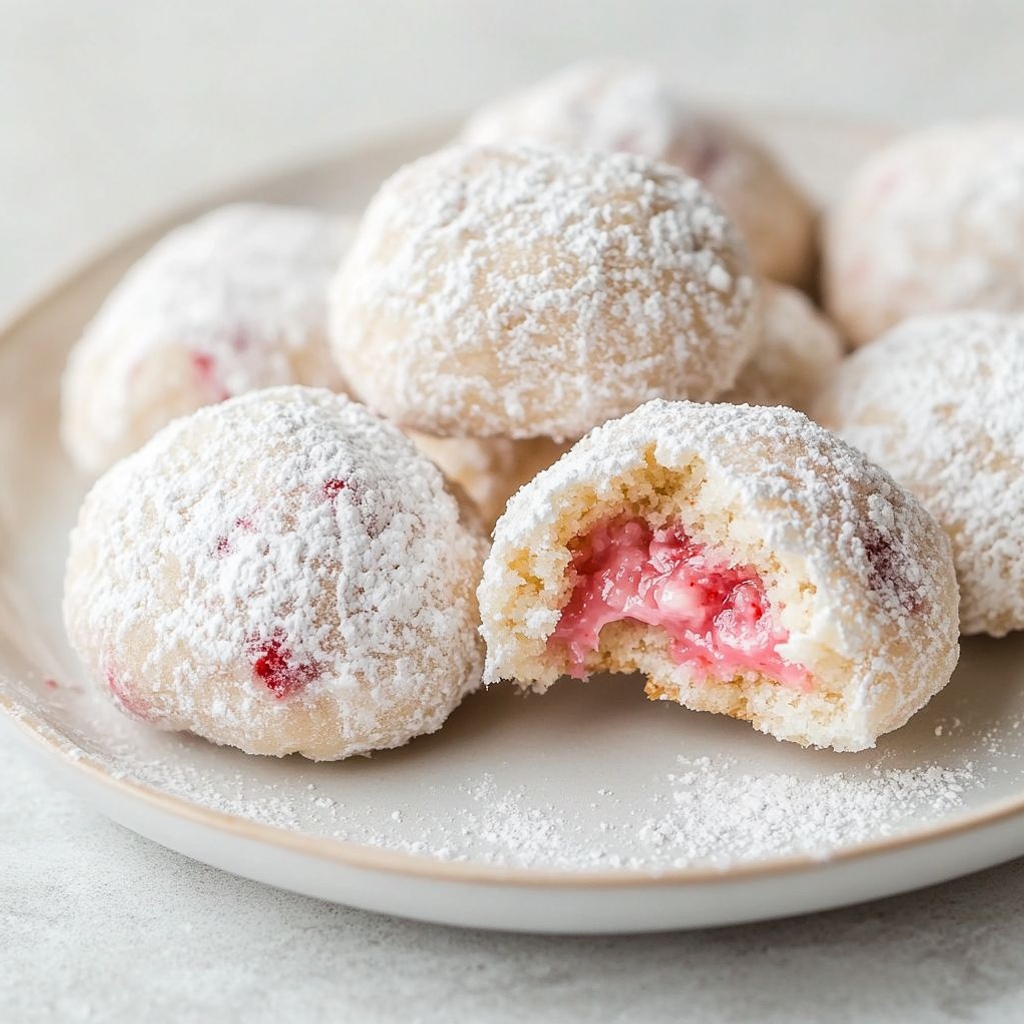
These strawberry snowball cookies are delicate, crumbly treats that melt in your mouth with a bright strawberry aroma from the freeze-dried strawberry powder and a tender crumb created by cornstarch and softened butter. The dough comes together with powdered sugar and vanilla, and the subtle salt balances sweetness for a classic snowball bite.
You can customize them by folding in two tablespoons of finely chopped almonds or pistachios for a nutty crunch, and/or 1/3 cup mini white chocolate chips for creamy sweetness. If you prefer a dairy-free option, substitute with a neutral-tavored dairy-free butter and a plant-based chocolate add-in if desired.
Rolling and coating: Roll warm cookies in 1 1/2 cups powdered sugar for a soft, snowy exterior, and dust with an extra tablespoon or two if you want a bolder finish. Sift the sugar first to avoid lumps and ensure an even coat.
Storage and make-ahead: Bake cookies until just set and allow to cool completely, then store in an airtight container at room temperature for several days; for longer freshness, freeze baked cookies or freeze the unbaked dough shaped into rounds. If freezing dough, freeze on a parchment-lined tray until solid, then transfer to a bag and bake from frozen, adding a minute or two to the bake time.
Gluten-free note: If you need a gluten-free version, substitute a certified gluten-free all-purpose flour blend (and ensure the cornstarch is gluten-free); follow the same steps—the cookies will still be tender and snowy when rolled in sugar.
Tips
FAQ
What are Strawberry Snowball Cookies?
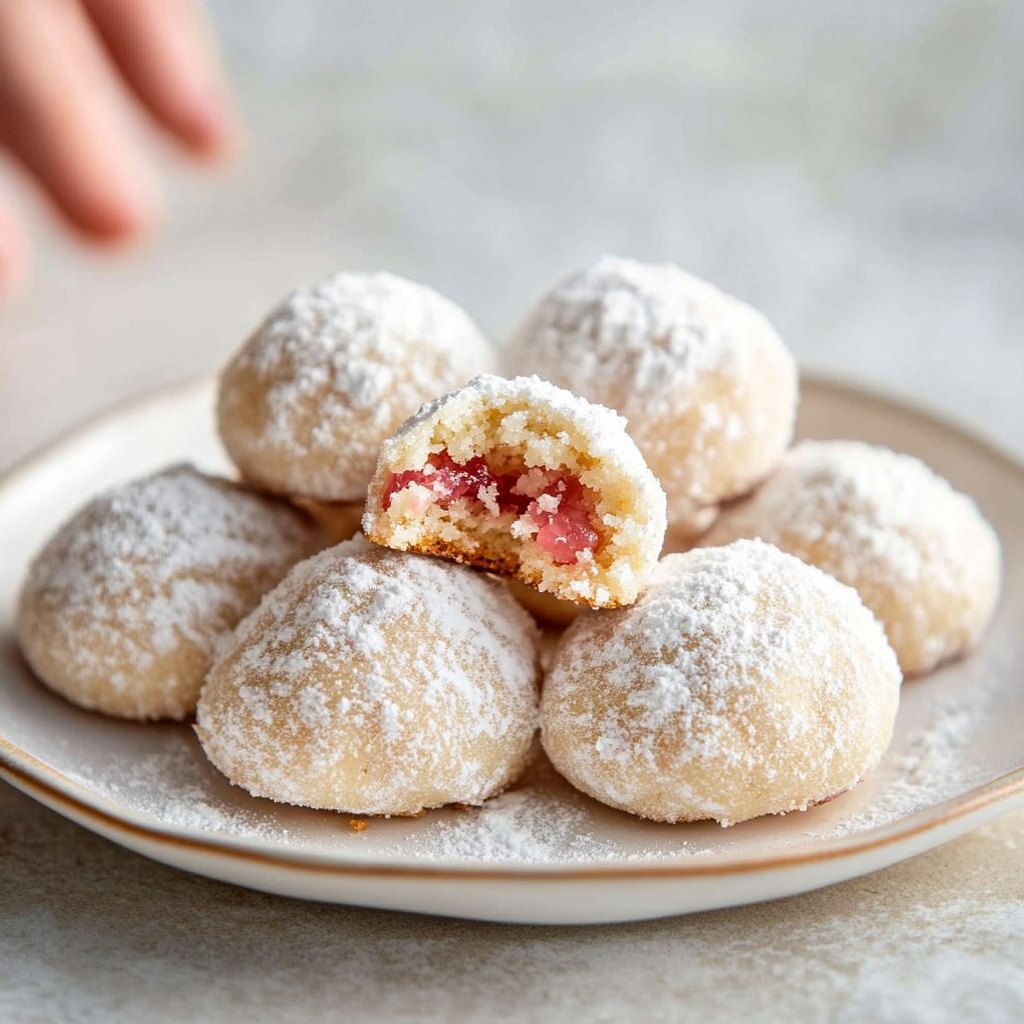
Strawberry Snowball Cookies are delicate, shortbread-like cookies flavored with strawberry and coated in a snowy layer of powdered sugar. The dough is typically made with butter, flour, powdered sugar, a pinch of salt, vanilla, and strawberry flavor from freeze-dried strawberries or strawberry powder. After baking, they’re rolled in more powdered sugar to create the signature snowball look.
What ingredients do I need?
Common ingredients include:
- All-purpose flour (or gluten-free flour blend)
- Unsalted butter, softened
- Powdered sugar (plus extra for coating)
- Freeze-dried strawberries or strawberry powder
- Vanilla extract
- Salt
- Optional: white chocolate chips or chopped nuts
Can I make these gluten-free?
Yes. Use a gluten-free all-purpose flour blend (one that’s cup-for-cup) and a little xanthan gum if your blend doesn’t already include it. Check that other ingredients (like vanilla extract) are gluten-free, and avoid cross-contamination by using clean utensils and bowls.
Can I make them dairy-free or vegan?
Yes, with substitutes. Use a plant-based butter or dairy-free margarine 1:1 in place of the butter. Some powdered sugars are processed with bone char, so choose a vegan-certified powdered sugar if needed. Note that using dairy-free butter can slightly affect texture, so chill the dough a bit longer if it seems too soft.
How should I flavor them with strawberry?
Flavor comes from freeze-dried strawberries or strawberry powder. Use finely ground freeze-dried strawberries (about ¼ to ½ cup, finely ground) or 2–4 tablespoons of strawberry powder. You can adjust to taste, but avoid using fresh fruit, which adds moisture and can make the dough sticky.
Should I chill the dough before shaping?
Yes. Chilling for at least 1 hour (or up to overnight) helps cookie dough firm up, making it easier to roll into balls and reducing spreading during baking. You can also freeze portions for longer storage.
How do I bake them to avoid cracking or sinking?
Bake at a steady, accurate temperature (usually around 350°F / 177°C). Bake until the edges are barely set and just beginning to color, but the centers remain pale. Let the cookies cool slightly, then roll in powdered sugar while they’re still warm to help the coating adhere. If they crack, they may have spread too much or been chilled too long—try adjusting chilling time or dough temperature next time.
How should I store Strawberry Snowball Cookies?
Store at room temperature in an airtight container for up to a week. Layer with parchment to prevent sticking. For longer storage, freeze the baked cookies (uncoated or coated) for up to 2–3 months; thaw at room temperature and dust with fresh powdered sugar before serving.
Can I freeze the dough or baked cookies?
Both work well. To freeze dough, portion into balls, freeze on a tray, then transfer to a bag; bake directly from frozen, adding 2–4 minutes to the bake time. To freeze baked cookies, cool completely, then wrap well or freeze in an airtight container. Reheat briefly in a low oven to refresh texture and coating.
What equipment will make this easier?
Helpful tools include:
- Mixing bowl and spatula or a hand mixer
- Measuring cups and spoons
- Baking sheet lined with parchment
- Cooling rack
- Small cookie scoop or tablespoon for even portions
- Fine-mesh sieve for powdered sugar coating
Can I reduce sugar or use alternatives?
Powdered sugar is used both in the dough and for coating; reducing it will change texture and the snow-like coating. If you must reduce sugar, do so gradually and expect a denser texture. Some bakers try sugar substitutes that are good for baking, but results can vary; test in small batches. If you replace with a liquid sweetener, moisture balance will be affected, so you may need to adjust flour or chill time accordingly.