Introduction / Hook
The moment the wok hits the flame, a gust of garlic, shallots, and caramel-scented sweetness rises like a warm hug around the kitchen. Nasi Goreng Indonesian Chicken is not just a dish; it’s a vibrant ceremony of flavor and texture that invites you to slow down, savor, and smile. Imagine ruby-orange flecks of fried rice glistening with kecap manis, the faint heat of chiles dancing with smoky wok hei, and tender chicken mingling with little crisp-edged grains that crackle with every bite. It’s comfort food with character—the kind of meal that tastes like a memory in the making. When you bring this plate to the table, you’re serving more than nourishment; you’re sharing a story of Indonesian street corners, of bustling markets, of families gathered around a steaming skillet, and of a world where simple ingredients become something that feels special, even celebratory. Welcome to a dish that makes weeknights feel like a festival, and leftovers feel like a new beginning.
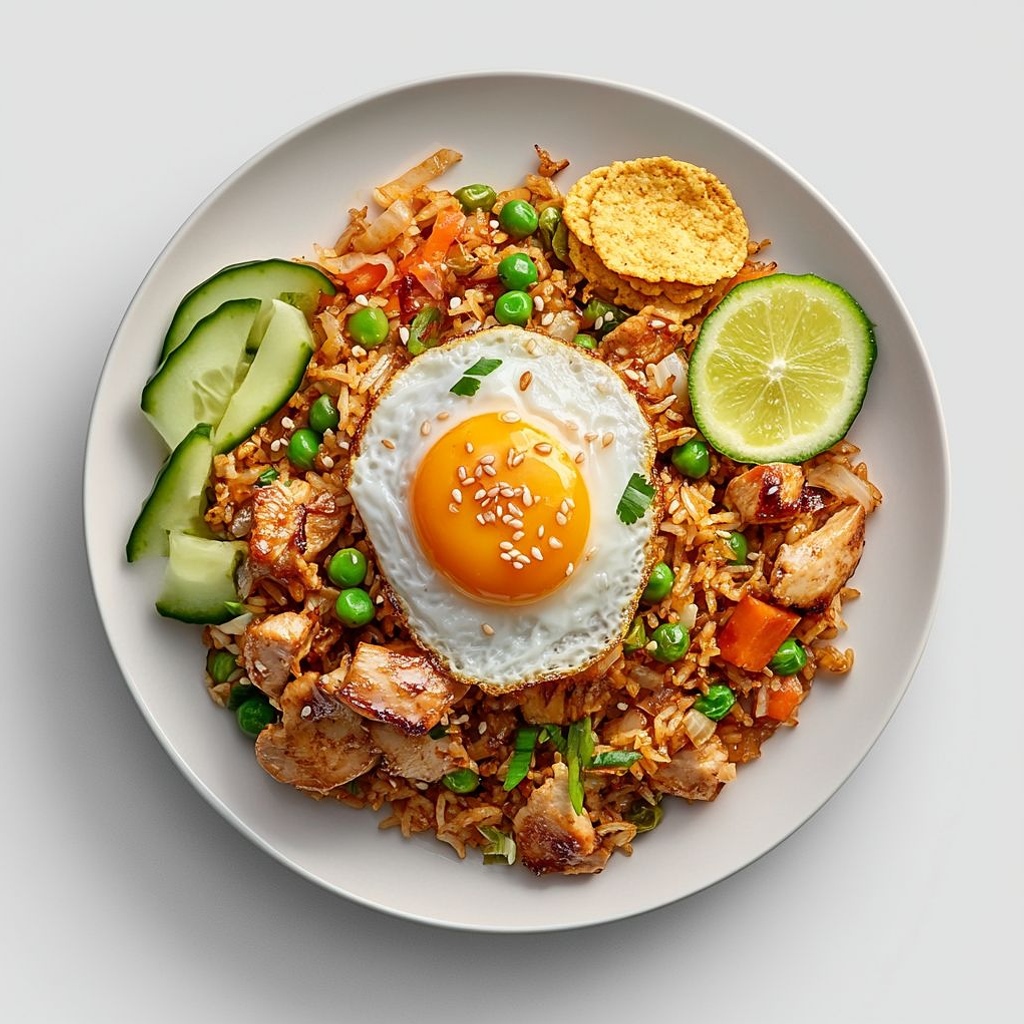
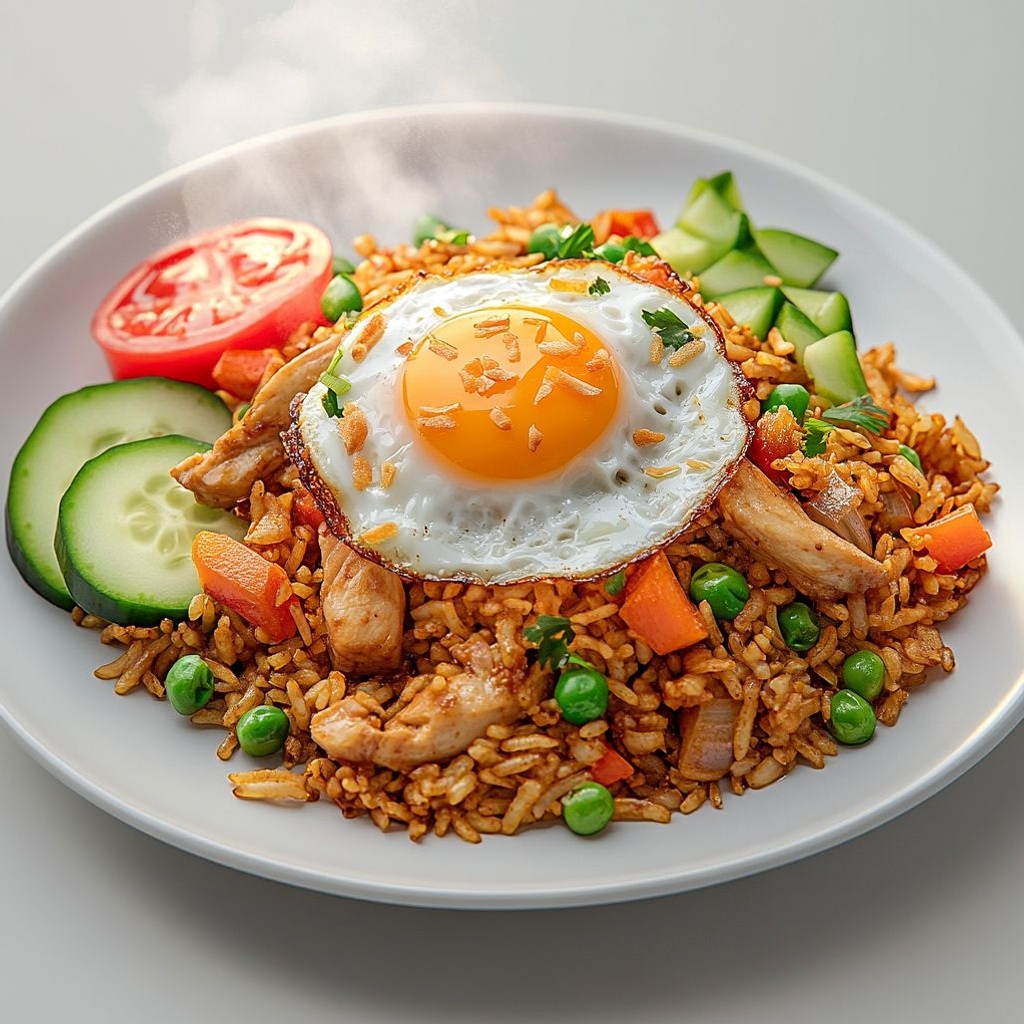
In its essence, nasi goreng is a culinary postcard from Indonesia—where the rice is fried to a golden, fragrant finish, where sweet soy glaze coats every grain, and where a sunnyside-up egg crowns the hill of rice like a sunrise over a busy, joyful street. The chicken adds a comforting heartiness, lending protein and a savory depth that balances the kiss of heat and the sweetness of the soy. The result is a colorful, satisfying one-dish meal that satisfies both quick-weeknight hunger and the deeper cravings for flavor exploration. This is more than food; it’s a passport stamp you can savor in your own kitchen.
The Story Behind the Dish
Nasi goreng translates simply to fried rice in Indonesian, but its origins tell a richer, more layered tale. It is a dish born from the necessity and ingenuity of home cooks and street vendors alike—rice, a faithful staple, meeting the day’s leftovers, a handful of aromatics, and a splash of something distinctly Southeast Asian: soy sauce with a touch of sweetness, say the beloved kecap manis. Over time, nasi goreng became a symbol of Indonesian comfort cooking, a dish that could adapt to whatever was on hand while still delivering a big, satisfying flavor punch.
Historical notes weave a tapestry of cultural exchange. Indonesian nasi goreng bears the imprint of vast trade routes, Chinese culinary influence, and local Indonesian pantry staples. The result is a fusion in spirit if not in name: a beloved street-food staple that feels both familiar and exotic. The version with chicken is a classic for family dinners and casual gatherings—protein, color, and a balance of savory, smoky, and slightly sweet sensations that feel universal in appeal yet distinctly Indonesian in personality.
Traditionally, nasi goreng is served with an assortment of accompaniments that elevate the plate into a complete meal. Think crisp cucumber or acar (pickled vegetables), a bright wedge of lime, a fried egg perched atop the rice, and a handful of crackers like kerupuk for an extra pop of texture. In many households, it’s a dish that stretches across generations: a way to repurpose leftover rice into something exciting, a way to welcome friends for a quick meal that feels special without requiring a lot of fuss. If you’ve ever wondered how to transform simple staples into something that tastes both nostalgic and contemporary, nasi goreng with chicken is a perfect ambassador for that culinary magic.
Beyond the plate, this dish carries the energy of markets where garlicky aromas mingle with smoky air, where a wok’s sizzle writes its own poetry, and where families gather to share stories as the clock ticks toward dinnertime. The Indonesian kitchen teaches you to respect balance: the chorus of sweet, salty, savory, and a whisper of heat; the textural contrast of fluffy, caramelized grains with crisp edges; and the way a single fried egg—golden, glossy, and unbroken—can crown the entire creation like a small sun. That is the spirit you bring to your own kitchen when you make nasi goreng chicken: a dish that honors tradition while inviting your own personal touch.
Why You’ll Love This Recipe
- Fast and forgiving: a one-pan wonder that comes together quickly, using pantry staples and leftovers you likely already have.
- Comforting yet exciting: the sweetness of kecap manis, the warmth of garlic and shallots, and a gentle kick from chiles—an inviting balance that satisfies both cozy nights in and crowd-pleasing meals.
- Versatile and adaptable: swap chicken for shrimp, tofu, or mushrooms; adjust heat; experiment with different vegetables; make it gluten-free or vegan with simple substitutions.
- Texturally satisfying: each grain is coated with a glossy glaze, with pockets of crisped edges that deliver a pleasant crunch alongside tender morsels of chicken.
- Naturally crowd-pleasing: a colorful, nourishing one-dish meal that works for weeknights, lazy Sundays, or casual entertaining.
- Leftover-friendly: a great way to reinvent leftover rice and protein into something that feels new and exciting.
- Globally inspired, locally prepared: a taste of Indonesia that can be made authentically in your own kitchen with accessible ingredients.
Flavor Profile & Texture
At first inhale, nasi goreng greets you with a savory, slightly sweet aroma. The kecap manis—an Indonesian sweet soy sauce—drapes the rice in a deep caramel color that’s both glossy and inviting. The sweetness is restrained enough to allow the natural fragrance of garlic and shallots to shine through, while a touch of chili contributes warmth without overpowering the palate. The chicken, once kissed by heat, becomes beautifully browned and juicy, developing a gentle crust that adds a toasty savor to every bite. The fried rice itself offers a textural journey: each grain is distinct, yet some grains adopt a light, almost caramelized edge where the pan’s heat bites gently, creating little bits of crispiness that crackle when you scoop them up with your fork.
A fried egg, when included, introduces a creamy, sunny counterpoint. The runny yolk, when broken, mingles with the rice, turning it into a silken sauce that coats each grain and softens the bite. If you add accompaniments like cucumber slices or acar (pickled vegetables), you introduce citrusy brightness and a crisp bite that cuts through the richness. The overall flavor is a harmonious chorus: salty-sweet depth from the soy, aromatic sweetness from caramelized onions and garlic, a subtle heat that lingers on the tongue, and a smoky hint from the high-heat wok that whispers of street-food stalls and cooks expertly managing the flame.
Texture-wise, the dish plays with contrasts in a delightful way. The tender chicken pieces meet the tender, fluffy rice, while the occasional seared grain provides a light crunch. The egg adds a runny, luxurious layer that binds with the rice as you take a mouthful. If you include crisp crackers or fresh vegetables, you amplify the variety of textures—soft, chewy, crisp, and velvety all in a single, satisfying forkful. The balance among sweet, salty, and savory notes means the dish remains approachable for a broad range of palates, while still offering the kind of depth that invites you to savor a second helping and perhaps even a third.
Occasions & Pairings
Nasi goreng chicken is incredibly versatile, making it a fantastic choice for a number of occasions:
- Weeknight dinners: a speedy, comforting option that still feels like a treat.
- Casual gatherings: easy to scale up for a small crowd, as it’s just as satisfying for a group as it is for one.
- Weekend brunch or late-night suppers: the richness pairs wonderfully with a light, refreshing drink to balance the flavors.
- Celebrations and potlucks: a crowd-pleasing dish that travels well when kept warm in a covered skillet.
Pairing ideas to elevate the experience include:
- Cool counterpoints: cucumber slices, sliced tomatoes, or tangy acar (pickled vegetables) add brightness and crunch.
- Accompaniments: a simple lime wedge to brighten the dish; prawn crackers or krupuk for an extra texture pop; a light, crisp salad to contrast the richness.
- Drinks: a chilled jasmine tea or a lime-ginger cooler to cleanse the palate; a light lager or pilsner also works nicely with the savory-sweet notes.
- Desert options: a fresh fruit platter with tropical notes (mango, pineapple) or a light coconut milk-based dessert to echo the dish’s tropical undertones.
Tips, Variations & Substitutions
Here are practical ideas to tailor nasi goreng chicken to your kitchen, dietary needs, or mood for the day:
- Rice considerations: use day-old cooked rice for the best texture. Freshly cooked rice tends to be softer and clumpier; if you must use fresh rice, spread it out to cool and dry slightly before frying.
- Protein options: chicken is classic, but you can experiment with shrimp, thinly sliced beef, tofu, tempeh, or mushrooms for a vegetarian or pescatarian version. If substituting tofu or tempeh, consider a quick sear or pan-fry to add texture.
- Vegetable variations: bell peppers, peas, shredded carrots, or bean sprouts can be stirred in for color and freshness. Keep vegetables cut to a similar bite size for even cooking.
- Vegan & gluten-free options: swap regular soy sauce with tamari or gluten-free soy sauce; use a vegan-friendly kecap manis if available or a homemade blend of tamari with a touch of maple syrup or palm sugar.
- Heat level: adjust the amount of fresh chilies or chili sauce to suit your spice tolerance. For a milder version, remove seeds and membranes from chiles; for a bolder kick, leave them in or add a small amount of sambal oelek.
- Depth of flavor: a small splash of sesame oil at the end can add a toasty finish; a pinch of ground white pepper can brighten the aroma.
- Smoke and wok hei: for a more authentic char, use a hot, well-seasoned wok or skillet and avoid overcrowding the pan. Fry in batches if needed to maintain a high heat flow and the signature smoky aroma.
- Egg preparation: a sunny-side-up egg on top is traditional, but you can scramble the eggs into the rice if you prefer a different texture or if you’re cooking for a crowd where a single egg per serving isn’t desired.
- Flavor boosters: a tiny dot of palm sugar or brown sugar can deepen sweetness if your kecap manis is lighter; balancing with a squeeze of lime juice after plating adds a bright finish.
- Regional twists: add a touch of terasi (shrimp paste) for a more pronounced Indonesian profile, if you enjoy deeper umami notes. Alternatively, use a chili-garlic paste for a modern, punchy take.
Storage & Make-Ahead Ideas
Like many fried-rice dishes, nasi goreng is well-suited to make-ahead cooking and efficient leftovers. Here are practical storage tips to keep flavors vibrant and textures appealing:
- Storage: refrigerate leftovers in an airtight container for up to 3 days. Reheat gently in a hot pan, stirring frequently to revive the grains and prevent sogginess. A splash of water or a tiny drizzle of oil can help restore moisture as needed.
- Freezing: fried rice generally freezes well if kept in a freezer-safe container. Thaw overnight in the refrigerator before reheating, and re-fry on medium-high to regain some of the original texture.
- Make-ahead strategy: cook the rice and chicken separately ahead of time, then assemble and finish the dish quickly when you’re ready to eat. This approach is ideal for busy weeknights or meal-prep Sundays.
- Batch cooking tips: if you enjoy variety, you can prepare a base of seasoned fried rice and portion it into bowls with different toppings (egg, extra vegetables, or greens) so each meal feels distinct.
Fun Facts & Trivia (Optional)
– Nasi goreng is often celebrated as a national Indonesian dish by many locals, though Indonesia does not officially declare a single national dish. The dish’s versatility and presence across countless households make it a true cultural touchstone.
– The name itself, nasi goreng, literally means “fried rice” in Indonesian, with “nasi” meaning rice and “goreng” meaning fried. It’s a simple phrase that belies the complexity of flavors you can achieve with one skillet and a well-balanced pantry.
– A key hallmark of a great nasi goreng is “wok hei” — the smoky aroma and slightly charred flavor that comes from cooking quickly over very high heat. Achieving this in a home kitchen requires a hot pan and proper rice texture, but the result is well worth the effort.
– Sweet soy sauce, kecap manis, is a pantry staple in Indonesian cooking. Its caramel-like sweetness is what gives nasi goreng its characteristic glossy, amber hue and a distinctively indulgent finish that pairs beautifully with savory chicken and crisp-edged rice.
– Serving rituals matter: many households finish nasi goreng with a fried egg, a wedge of lime, cucumber slices, and a handful of crunchy crackers. These accompaniments aren’t afterthoughts—they’re carefully chosen for a mix of brightness, crunch, and balance that elevates the dish to a complete experience.
Closing Thoughts
With nasi goreng Indonesian Chicken, you’re inviting a world of flavor to your table without complicated steps or rare ingredients. It’s a dish that respects tradition while encouraging personal expression—the kind of recipe that becomes a favorite because it’s such a confident, comforting, and adaptable one-pan meal. Whether you’re cooking for a weeknight family dinner, a casual dinner with friends, or a quiet moment of culinary exploration, this fried rice with chicken offers warmth, aroma, and satisfaction in every bite. Let the kitchen fill with the scent of garlic and caramel, watch the rice glisten with a glossy sheen, and savor the sense of connection that comes from cooking something soulful and universally enjoyable. This is more than food; it’s an invitation to share a story of flavors, cultures, and memories around your own table.
Ingredients
- Nasi Goreng Base
- – 3 cups cooked jasmine rice (preferably day-old and cooled)
→ The base grain for fried rice. Day-old jasmine rice is ideal because it is drier and each grain stays separate when fried, giving a light, fluffy texture. If you only have freshly cooked rice, spread it on a tray to cool completely and refrigerate for at least 30 minutes to dry out excess moisture. Before frying, break up any clumps with a fork or spatula to ensure the grains separate. - – 1 tablespoon neutral oil (vegetable or canola)
→ Oil creates the initial sear for aromatics and helps fry the rice without sticking. Use a neutral oil so it doesn’t compete with the dish’s flavors. If you like a toasty note, you can add a small drizzle of sesame oil at the end, but keep the initial heat high enough to crisp the rice. - – 1 small onion, finely chopped
→ Onion provides sweetness and depth to the base. Finely chopping ensures quick, even cooking so the onion melds into the dish rather than remaining in visible chunks. Sauté until translucent and just starting to caramelize for added complexity. - – 2 cloves garlic, minced
→ Garlic adds pungent aroma and depth. Mince finely or crush to release oils, and add after the onions begin to soften to prevent burning. Avoid overcooking garlic as burned garlic can impart a bitter flavor. - – 1 teaspoon fresh ginger, grated (optional)
→ Ginger introduces a warm, bright note typical of Indonesian flavors. Grate finely so it distributes evenly. If you don’t have fresh ginger, you can omit it or substitute with a pinch of ground ginger, keeping in mind it won’t be as sharp. - – 200 g chicken thighs, cut into bite-sized pieces
→ Chicken provides protein and savory flavor. Thighs stay moist and tender when stir-fried; cut into uniform pieces (about 1 inch) for even cooking. You can marinate briefly with a pinch of salt and pepper or a splash of soy sauce if you like extra depth; if using chicken breast, monitor cooking time to avoid dryness. - – 2 large eggs, lightly whisked
→ Eggs create ribbons of protein-rich texture that bind with the rice. Scramble them quickly in the hot wok with the rice, or push them aside to set and then fold the rice through to form little egg-strands within the fried grains. - – 1/2 cup peas and carrots (frozen or fresh)
→ Color, texture, and subtle sweetness. Add toward the middle of cooking so they heat through but stay crisp. If using frozen, thaw briefly or rinse under cold water to remove frost and ensure even cooking. - – Salt, to taste
→ Essential for balancing soy sauces and natural flavors. Since sauces contribute salt, start with a light pinch and taste as you go to avoid over-salting the dish. - – Freshly ground black pepper, to taste
→ Adds a touch of mild heat and depth. Pepper is best adjusted at the end after the other flavors have mingled. Grind just before serving for maximum aroma.
- Sauce & Flavorings
- – 2 tablespoons kecap manis (sweet soy sauce)
→ This thick, syrupy soy sauce provides caramel color and a fruity-sweet note that defines nasi goreng. Use as a primary seasoning alongside salt; if you prefer less sweetness, start with 1 tablespoon and adjust to taste. Stir in during frying so the grains become evenly coated. - – 1 tablespoon light soy sauce
→ Adds salt and umami without darkening the dish too much. Pair with kecap manis to achieve a balanced, savory glaze on the rice. Start with 1 tablespoon and add more only if needed after tasting. - – 1 teaspoon fish sauce (optional)
→ A boost of deep umami reminiscent of Southeast Asian street foods. Use sparingly, as it is potent; if avoiding fish sauce, substitute with a touch more soy sauce or a pinch of mushroom seasoning to maintain depth. - – 1-2 teaspoons sambal oelek (to taste)
→ Provides heat and bright chili flavor. Add gradually and taste as you go; if you like more kick, increase the amount, or whisk in fresh chopped chilies for extra texture. - – 1/2 teaspoon sugar (optional)
→ A small amount helps balance the heat and acidity from the sambal and enhances caramelization from the soy sauces. Use only if you want a touch more sweetness; otherwise, skip. - – 1/2 teaspoon sesame oil (optional)
→ Finishing oil that adds a toasty aroma. Drizzle a few drops at the very end after removing the pan from heat to preserve its fragrance. Avoid cooking with sesame oil at high heat as it can become bitter.
- Optional Add-ins
- – 1/2 cup fried shallots or crispy onions
→ Adds a satisfyingly crunchy onion note with extra savor. Fry shallots slowly in oil until golden and crisp, or use store-bought crispy onions. Scatter on top just before serving so they stay crisp. - – 1/2 cucumber, thinly sliced
→ Provides refreshing crunch and light contrast to the saucy rice. Serve on the side or fold in lightly at the end for a fresh bite. Keep chilled until serving to retain crispness. - – 1 medium tomato, cut into wedges
→ Adds brightness and a slight acidity that complements the savory rice. Choose ripe but firm fruit; add as a fresh garnish on the side or mix in lightly for color and juiciness. - – 1/2 cup prawn crackers (krupuk)
→ Classic crispy topping that stays crunchy when served with nasi goreng. Deep-fry just before serving or bake according to package directions. Serve on the side to maintain crispness. - – 2 tablespoons chopped cilantro or scallions (green onions)
→ Fresh herbs provide a bright finish and aromatic lift. Chop just before serving and sprinkle over the dish to preserve their fragrance. - – Lime wedges, for serving
→ A squeeze of lime adds a fresh acidity that brightens the dish and balances the sweetness of kecap manis. Serve on the side and encourage guests to customize their tanginess. - – 2 tablespoons chopped roasted peanuts (optional)
→ Adds a nutty crunch and extra texture. Lightly toast peanuts in a dry pan to deepen flavor, then scatter over the top right before serving. - – 1-2 red chilies, sliced (optional)
→ For extra heat and color. Remove seeds for milder heat, or leave seeds for a stronger bite. Add to finish to preserve vibrant color and crunch.
Instructions
- Prepare the rice base by ensuring you have 3 cups cooked jasmine rice that is preferably day-old and cooled; if you only have freshly cooked rice, spread it on a tray to cool completely and refrigerate for at least 30 minutes, then break up any clumps with a fork or spatula before frying.
→ The base grain for fried rice. Day-old jasmine rice is ideal because it is drier and each grain stays separate when fried, giving a light, fluffy texture. Breaking up clumps ensures even coating and prevents sticky clumps in the wok. - Set up your mise en place and prepare the sauce components by measuring 2 tablespoons kecap manis, 1 tablespoon light soy sauce, optional 1 teaspoon fish sauce, 1-2 teaspoons sambal oelek, and 1/2 teaspoon sugar in a small bowl; whisk briefly so the flavors are ready to bloom during frying.
→ Having sauces measured and ready ensures a smooth stir-fry where the rice is evenly glazed instead of chasing sauces mid-cook. - Preheat a large wok or heavy skillet over high heat until it begins to shimmer, then add 1 tablespoon neutral oil and swirl to coat the surface; maintaining high heat is crucial to achieve a crisp sear on aromatics without steaming the rice.
→ A hot pan drives rapid browning and prevents sticking, forming the aromatic foundation for the dish. - Add the finely chopped onion to the hot oil and sauté, stirring frequently, until the onion is translucent and just starting to caramelize, about 2-3 minutes; this builds sweetness and depth into the base.
→ Proper browning of the onion adds natural sweetness and enhances the overall savoury profile without overpowering other flavors. - Add the minced garlic and grated fresh ginger (if using) to the onions; cook briefly for 30 seconds to 1 minute, stirring constantly to release their fragrance without letting them burn, which would impart bitterness.
→ Garlic and ginger provide the foundational aromatics; adding after the onions soften prevents scorching and bitterness. - Increase heat if needed and add the chicken thighs cut into bite-sized pieces; spread them in a single layer and sear until browned on edges and cooked through, about 4-6 minutes, turning pieces to ensure even contact with the hot surface.
→ Searing adds depth of flavour and ensures the chicken remains juicy; uniform pieces ensure even cooking. - Push the chicken and aromatics to one side of the wok and pour in the beaten eggs on the cleared area; stir or scramble until they are just-set, then fold them through the chicken and onion mixture so you form delicate ribbons of egg within the fried rice.
→ Scrambled eggs distribute protein and create textural contrast, while folding prevents overcooking and helps bind the mixture. - Add the peas and carrots, allowing them to cook for 2-3 minutes until heated through but still vibrant and crisp; if using frozen, thaw or rinse briefly to promote even cooking.
→ Quick cooking preserves color and bite, providing contrast to the soft rice and tender chicken. - Add the cooled jasmine rice to the wok; break up any remaining clumps with a spatula and toss vigorously to separate the grains while you toast them slightly to develop some crisp edges.
→ The goal is separate grains that fry evenly; pressing and tossing helps achieve the characteristic airy texture of nasi goreng. - Stir the contents to combine evenly, using fast, continuous motion across the wok’s surface to avoid scorching; keep the pan hot to promote quick searing of the rice and vegetables.
→ Consistent motion prevents sticking and evenly distributes heat for uniform fried rice. - Pour the prepared sauce mixture over the rice (kecap manis, light soy, optional fish sauce, sambal oelek, and sugar) and toss or stir-fry until the grains are evenly coated with a glossy, caramelized glaze; adjust with salt if necessary.
→ The sauce provides sweetness, salt, and umami while giving the characteristic deep color and lacquered finish to nasi goreng. - Taste and season with a light pinch of salt and freshly ground black pepper; adjust the balance if the dish tastes flat or overly sweet, remembering that the sauces contribute salt and umami.
→ Finishing seasoning ensures the dish shines; pepper should be added at the end for maximum aroma. - Remove the wok from heat and drizzle 1/2 teaspoon sesame oil over the nasi goreng; toss once or twice to distribute aroma without breaking the grains, then serve promptly to preserve the fragrance.
→ Sesame oil adds a toasty note and aroma; adding off heat avoids burning and bitterness while maintaining fragrance. - Finish with optional add-ins by scattering the optional fried shallots or crispy onions over the hot nasi goreng just before serving to retain their crunch and savor; this adds texture and a deep oniony note.
→ Crispy shallots provide a contrasting crunch and richness that elevates the dish’s final bite. - Serve alongside thin cucumber slices and tomato wedges to provide refreshing contrast; keep cucumber cool and crisp until serving to preserve texture.
→ Fresh vegetables balance the rich fried rice and give a pleasant, bright bite with each scoop. - Offer prawn crackers on the side and fry or bake them according to package directions, serving them separately to stay crisp rather than soggy in the heat of the rice.
→ Prawn crackers deliver a classic, light crunch that complements the dish without overwhelming the flavors. - Sprinkle chopped cilantro or scallions over the dish just before serving to add a fresh herbal lift and aroma; slice scallions thinly for best presentation and even distribution.
→ Fresh herbs brighten the dish and provide a pop of color and fragrance that contrasts with the warm rice. - Place lime wedges on the side so guests can squeeze fresh citrus to their taste, brightening the dish with acidity that balances the sweetness of kecap manis; offer an optional squeeze at the table.
→ A touch of lime elevates the flavors and helps cut through richness. - If desired, scatter chopped roasted peanuts over the top for a nutty crunch; lightly toast the peanuts in a dry skillet to deepen their flavor before scattering.
→ Roasted peanuts add texture and a subtle toasty note that complements the dish’s savoriness. - If you like extra heat and color, garnish with sliced red chilies, added at the end to preserve their vibrant color and crunch; adjust quantity to taste.
→ Fresh chilies deliver contrasting heat and color that livens the plate without softening the rice.
Notes
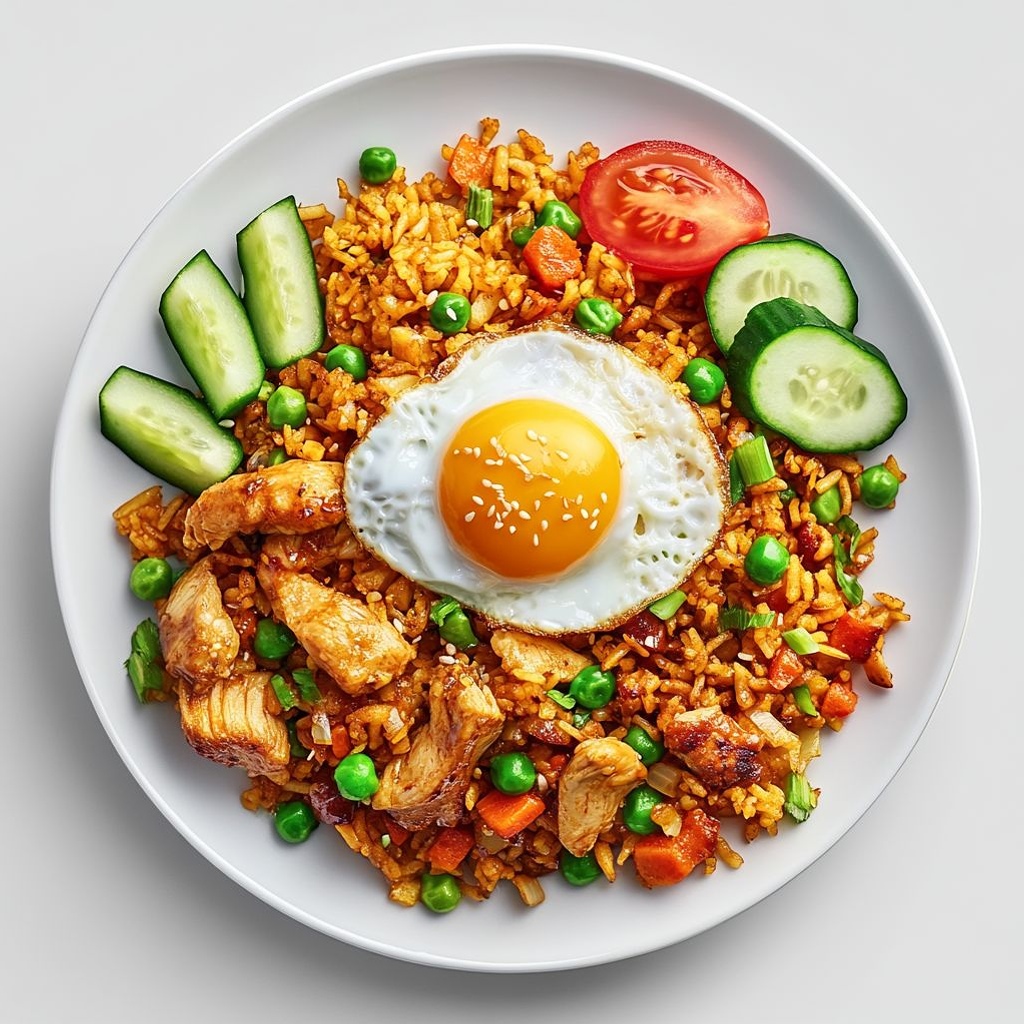
“These Nasi Goreng Indonesian Chicken notes explain how to achieve restaurant-quality fried rice at home. Start with day-old jasmine rice that is cooled and dry, as it fries to separate grains rather than clumping. Sauté onion, garlic, and optional ginger in neutral oil until fragrant, then sear the chicken thighs until browned and cooked through. Push the mixture aside and scramble the eggs in the pan, then combine with the rice. Stir in kecap manis and light soy sauce for color and depth, with fish sauce if using, and fold in peas and carrots until heated through. Finish with a drizzle of sesame oil and taste for salt, adjusting with a pinch of salt or more soy as needed. Top with fried shallots, cucumber, tomato, cilantro or scallions, lime wedges, roasted peanuts, prawn crackers, and sliced chilies as desired. Leftovers keep in the fridge for up to 2 days and reheat in a hot wok or skillet, adding a splash of water or soy to refresh the grains. To make a vegetarian version, omit chicken and increase vegetables or use tofu and mushroom sauce; adjust sambal for heat.”
Tips
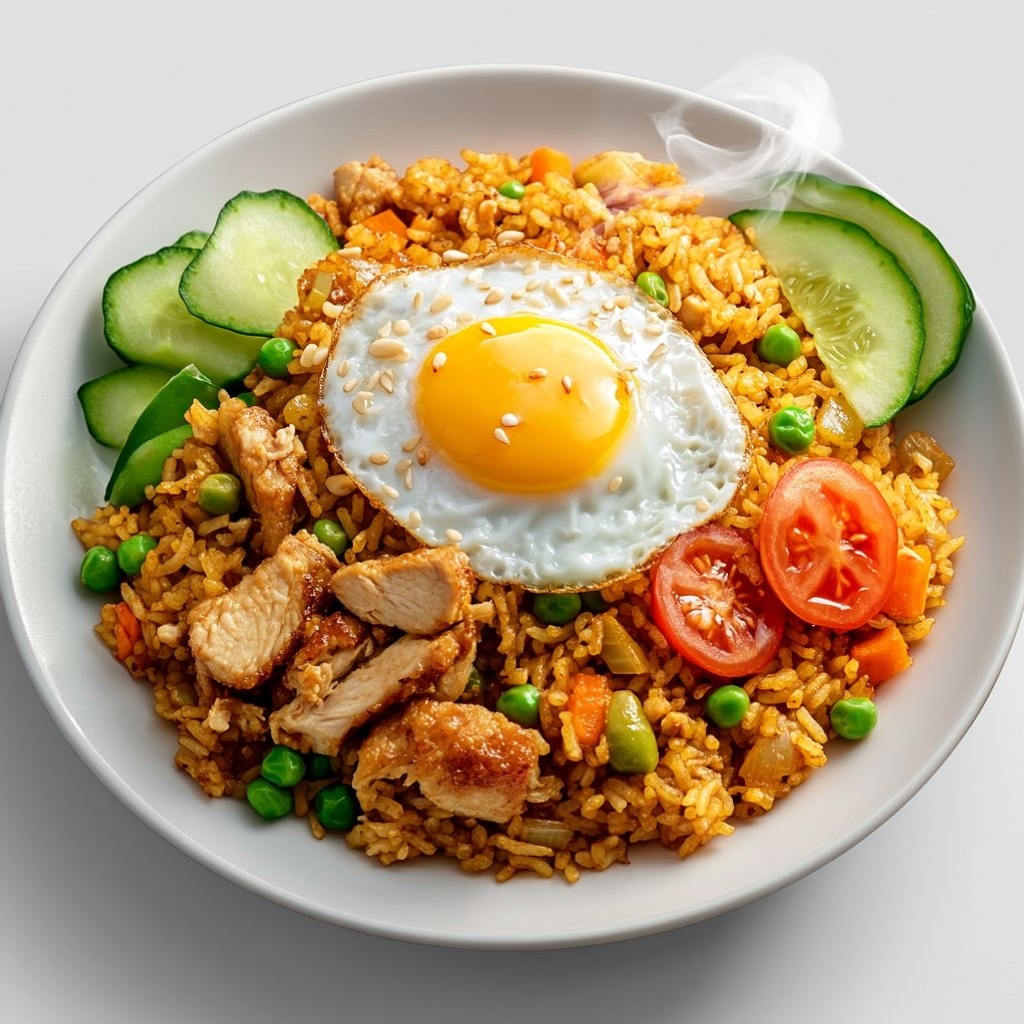
Tips for Perfect Nasi Goreng Indonesian Chicken
- Use day-old jasmine rice when possible. It’s drier and grains stay separate better during frying. If you only have fresh rice, spread it on a tray to cool completely and refrigerate for at least 30 minutes to remove excess moisture, then break up any clumps before cooking.
- Preheat your wok or skillet until it’s hot and slightly smoking. A hot pan helps sear aromatics and fry the rice without sticking, giving a fluffy texture with nicely caramelized edges.
- Keep the aromatics moving. Start with onion, then add garlic after the onion begins to soften to prevent burning. Stir-frying quickly at high heat enhances aroma without turning them bitter.
- Cook the chicken in a single layer for even browning. Cut thighs into uniform pieces (about 1 inch) and don’t overcrowd the pan. Sear quickly to develop color and keep the meat juicy; finish cooking after the rice is added if needed.
- Scramble the eggs separately or push them aside in the pan to set before folding into the rice. This prevents overcooking and creates delicate egg ribbons that bind with the grains.
- Add the peas and carrots midway through cooking so they heat through but stay crisp. If using frozen, thaw briefly or rinse to remove frost for even cooking.
- Taste and balance when adding sauces. Start with the recommended amounts of kecap manis and light soy sauce, then adjust saltiness with salt and, if desired, fish sauce. Remember that kecap manis adds sweetness and color, so taste as you go.
- Season gradually. Since sauces contribute salt, avoid over-salting early. You can always add a touch more soy or salt toward the end after tasting the dish.
- Consider optional aromatics and finishing touches. A small drizzle of sesame oil at the end adds a toasty aroma, while a pinch of sugar can help balance heat and enhance caramelization if you like a touch more sweetness.
- Control the heat level of the dish. Sambal oelek provides heat and brightness; add 1–2 teaspoons to taste, then increase slowly if you want more kick. Remove seeds for milder heat or keep them for stronger bite.
- Maintain texture with proper timing. Don’t overcook the rice; stir-fry until the grains are heated through and slightly crisp on the edges for that classic nasi goreng texture.
- Texture-forward add-ins elevate the dish. Crispy fried shallots, cucumber slices, tomato wedges, and prawn crackers should be added just before serving to preserve crunch and color.
- Herbs and freshness matter. Scatter chopped cilantro or green onions over the finished dish for a bright finish and aromatic lift right before serving.
- Fresh acidity brightens the flavors. Serve with lime wedges on the side and invite guests to squeeze to taste, balancing the sweetness of kecap manis with a citrusy zing.
- Plating and serving. Nasi goreng is best served immediately after cooking to keep the rice fluffy and toppings crisp. Keep toppings separate if you’re serving to a crowd and assemble at the table.
- Make-ahead and variations. You can marinate the chicken briefly, or prep toppings like cucumber, tomato, and shallots ahead of time. For a lighter version, substitute tempeh or extra vegetables and use a gluten-free kecap manis or tamari if needed.
- Food safety and leftovers. Refrigerate leftovers promptly within two hours of cooking and reheat in a hot wok or skillet to restore texture. Discard any rice that has been left out at room temperature for too long.
FAQ
Nasi Goreng Indonesian Chicken
What is Nasi Goreng?
Nasi Goreng is a classic Indonesian fried rice dish. It typically uses day-old rice stir-fried in a hot wok with aromatics (garlic and shallots), kecap manis (sweet soy sauce), and protein such as chicken. It is often finished with a fried egg on top and served with cucumber, tomato, and krupuk (crackers).
What ingredients do I need to make Nasi Goreng with chicken?
- Cooked rice (preferably day-old, 1–2 cups per serving)
- Chicken breast or thigh, thinly sliced
- Garlic (minced) and shallots (finely chopped)
- Fresh chili or red chili, optional for heat
- Kecap Manis (sweet soy sauce)
- Soy sauce (light)
- Eggs
- Vegetable oil or peanut oil
- Vegetables of choice (peas, carrots, scallions, green beans)
- Salt and pepper to taste
- Optional toppings: fried shallots, sliced cucumber and tomato, krupuk (prawn crackers)
Can I use leftovers or day-old rice?
Yes. Day-old rice is ideal because it is drier and separates easily, giving the best texture. If you only have fresh rice, spread it on a tray to cool and dry a bit, or use less sauce to prevent sogginess.
How do I cook Nasi Goreng with chicken?
- Prep all ingredients: cook rice ahead, slice chicken, mince garlic and shallots, chop vegetables.
- Heat a wok or large skillet over high heat and add oil.
- Sauté garlic, shallots, and chilies until fragrant (about 30–60 seconds).
- Add chicken; cook until browned and cooked through.
- Push chicken to the side, pour in beaten eggs and scramble until just set.
- Add rice and toss to combine with aromatics and chicken.
- Stir in kecap manis and light soy sauce; adjust sweetness and saltiness to taste.
- Fold in vegetables and cook until heated through but still crisp.
- Remove from heat; garnish with green onions, fried shallots, and serve with cucumber, tomato, and crackers if desired.
What makes Nasi Goreng authentic?
Authenticity comes from key flavor components: kecap manis for sweetness and depth, garlic and shallots for aroma, and often a touch of shrimp paste (terasi) for a savory kick. A hot wok and day-old rice are also hallmarks. Finishing with a fried egg on top is a common traditional touch.
Can I make Nasi Goreng spicy?
Yes. Add more fresh chilies, sambal oelek, or chili paste for heat. For milder spice, reduce or omit the chilies and sambal; you can also serve extra chili sauce on the side.
Can I customize with other proteins or make it vegetarian?
Yes. You can use shrimp, beef, or tofu for protein. For a vegetarian version, omit the chicken and use mushrooms or tofu, and replace chicken stock with water or vegetable stock if your recipe calls for it. Aromatics and kecap manis will still provide the familiar flavor.
What should I serve with Nasi Goreng?
Common accompaniments include sliced cucumber and tomato, fried shallots, and krupuk (prawn crackers). A side of sambal on the side is popular for those who want extra heat. A fried egg on top is a classic finish.
How should I store leftovers?
Cool the fried rice, then store it in an airtight container in the refrigerator. It will keep for 2–3 days. Reheat in a skillet over medium heat or in the microwave, stirring until steaming hot. Do not reheat more than once.
Common mistakes to avoid?
- Using freshly cooked rice, which clumps and becomes mushy.
- Overloading with soy sauce, making the dish overly salty or sweet.
- Not drying the rice or using a pan that’s not hot enough, resulting in soggy texture.
- Overcooking the eggs or scrambling them too early.
- Not achieving a good sear on the chicken due to pan temperature.