
Introduction / Hook
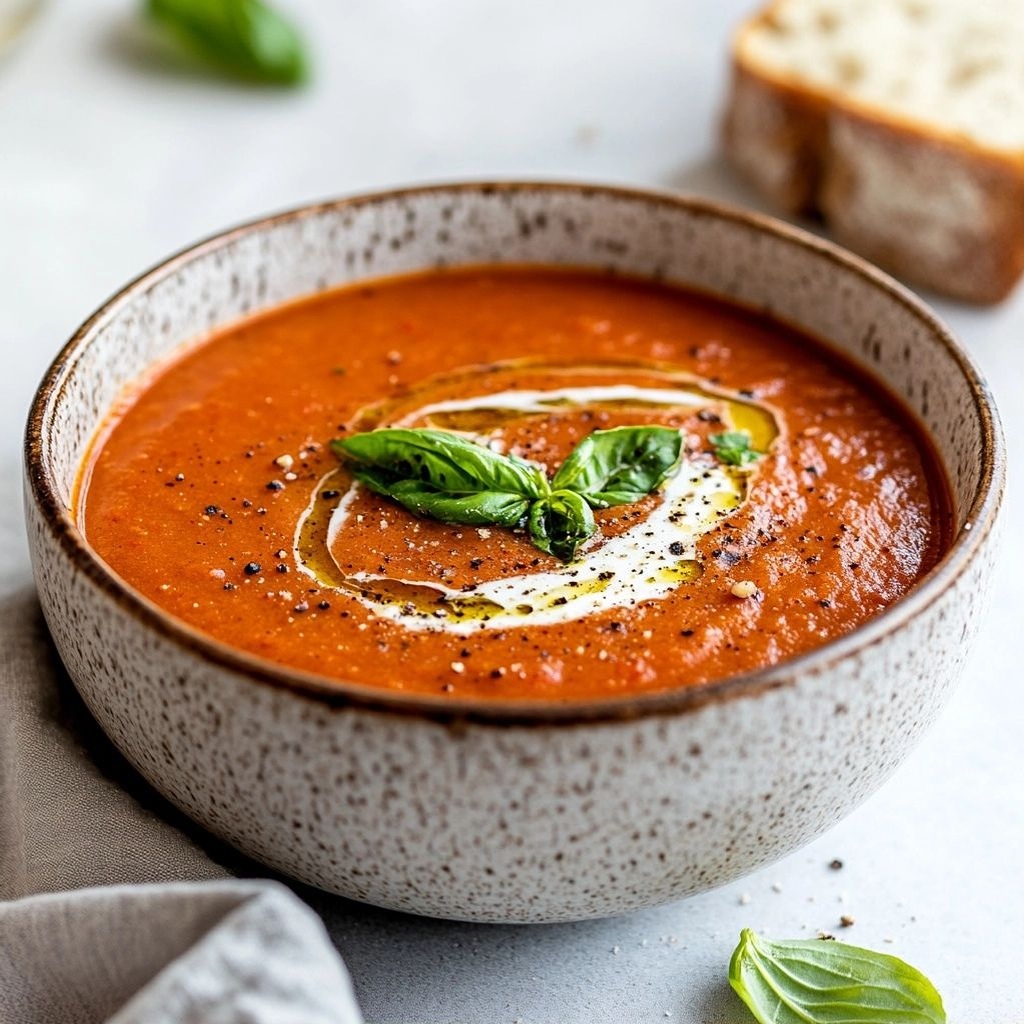
Imagine a bowl of soup that tastes like summer—warm, bright, and deeply comforting all at once. The Easiest Ever Roasted Tomato Soup is not just a recipe; it’s a little ritual that turns simple pantry staples into a velvety, moreish experience. The moment you lift the spoon to your lips, you’ll be greeted by a gentle sweetness from roasted tomatoes, a whisper of caramelized onion, and a kiss of garlic that lingers pleasantly on the tongue. It’s the kind of soup that makes weeknights feel like a cozy Sunday, a lazy weekend lunch feel indulgent, and a dinner party feel effortlessly impressive. The aroma alone is a magnet—roasted tomatoes releasing their natural sugars, mingling with olive oil, thyme, and a hint of creaminess that makes your kitchen smell like a comforting kitchen dream. This recipe promises depth without complexity: a handful of ingredients, robust flavor, and a texture that’s smooth enough to sip but substantial enough to feel substantial. It’s the kind of dish you can pull together in under 30 minutes, yet it tastes like you spent hours coaxing layers of flavor from simple produce. If you’ve ever wished for a perfect, no-fuss tomato soup that tastes like it came from a slow simmer, you’ve just found your new go-to. Let’s discover how a few humble elements come together to create something truly special—an everyday favorite with a touch of restaurant-worthy charm.
The Story Behind the Dish
Tomato soup has long held a special place in many kitchens around the world. In many homes, a pot of soup is the first line of defense against chilly evenings, a quick lunch that feels like a hug, or a comforting starter that sets the tone for a cozy dinner. The roasted tomato soup variation brings depth and caramelization to a dish that is often treated as a weeknight staple. Roasting tomatoes concentrates their sweetness and adds a gentle, rustic char that enhances natural acidity rather than masking it. The idea behind this recipe is as simple as it is satisfying: take ordinary ingredients—ripe tomatoes, onions, garlic, olive oil, stock—and transform them with heat, a touch of cream, and a splash of herbs into something that feels celebratory without requiring culinary wizardry.
Throughout culinary history, tomato soups have traveled across cultures, adapting to local palates and available ingredients. In some traditions, a swirl of cream or a drizzle of olive oil signifies comfort and nourishment; in others, a pinch of chili or smoky paprika adds a playful kick. The beauty of this roasted tomato soup is its universality. It nods respectfully to classic purées and bisques, while remaining approachable enough for busy weeknights. The roasting step is the heart of the dish: it unlocks a deeper sweetness, rounds out acidity, and provides a natural depth that no long simmer could match when you’re cooking with limited time. This dish is a modern comfort food—uncomplicated, flavorful, and designed to please a crowd or a family at the table, with a sense of homey nostalgia that makes it instantly inviting.
Why You’ll Love This Recipe
- Simple ingredients, big flavor: Ripe tomatoes, onions, garlic, olive oil, and a few pantry staples create a soup that tastes luxurious without complications.
- Weeknight friendly: The roasting technique concentrates flavor in its own time, but the actual hands-on prep is quick and forgiving.
- Versatile texture: Smooth and silky, or with a hint of body if blended less. It’s easy to tailor to your preferred consistency.
- Comforting yet bright: The warmth of roasted tomatoes pairs beautifully with a touch of cream and fresh herbs for a balanced finish.
- Budget-friendly: Uses affordable, accessible ingredients that shine when prepared with care.
- Perfect for pairing: Works beautifully as a starter for a casual meal or as a cozy main when served with crusty bread or grilled cheese.
Flavor Profile & Texture
The roasted tomato soup delivers a symphony of flavors that feel both bright and comforting. The tomatoes, after resting in the oven, develop a natural sweetness and a gentle, smoky caramelization that provides depth and a touch of savoriness. The onion contributes a mellow sweetness and subtle earthiness, while garlic lends a soft, aromatic bite that doesn’t overwhelm. A light splash of stock loosens the mixture into a spoonable liquid that’s creamy in texture, not heavy—especially when finished with a touch of cream or a swirl of yogurt. If you crave a more robust personality, a pinch of smoked paprika or a whisper of black pepper can amplify the warmth without stealing the tomato’s natural character. The result is a harmonious balance of tangy acidity, sunny sweetness, velvety body, and a whisper of herbs that linger on the palate. The aroma—roasted tomato with rosemary or thyme, garlic softening into sweetness, and a hint of olive oil—invites you to slow down, breathe in deeply, and prepare for a comforting culinary moment. Each spoonful delivers a soft, luxurious mouthfeel with a smooth finish that makes this soup incredibly satisfying. It’s the kind of dish that invites dipping and dunking: crusty bread to kiss the bowl, a drizzle of olive oil, perhaps a scatter of flaky sea salt, and a touch of cream that turns everyday ingredients into something memorable.
Occasions & Pairings
This roasted tomato soup is versatile enough to shine in multiple settings. It’s ideal for weeknight dinners when you want something nourishing with minimal fuss. It’s also a crowd-pleasing starter for casual gatherings or dinner parties where you want something comforting yet refined. For holiday meals, it can be served as a warm, inviting starter that eases guests into the main course with a bright and satisfying bite. Pair it with:
- Crusty bread, garlic croutons, or a grilled cheese sandwich for a classic comfort-food experience.
- A light salad with peppery greens to balance the richness of the soup.
- Herbed yogurt or a swirl of cream for extra creaminess and tang.
- Fresh basil or thyme as a fragrant finishing note.
- A glass of chilled dry white wine or a sparkling water with lemon for a refreshing counterpoint.
Seasonal and Thematic Occasions
In autumn and winter, this soup feels particularly at home—an easy way to celebrate the harvest of tomatoes in late summer and early fall or to warm a chilly kitchen on a frosty evening. It also fits well with vegetarian or meat-free menus, offering comforting satisfaction without relying on dairy cream for body if you prefer a dairy-free version. For a summer twist, you can pair it with a crisp cucumber salad and a light drizzle of olive oil for a bright, refreshing lunch that still feels indulgent.
Tips, Variations & Substitutions
- Make it vegan: Use vegetable stock and omit the cream, or swap in a plant-based milk such as coconut milk or almond cream for a silky texture.
- Gluten-free: The soup is naturally gluten-free, provided you use gluten-free stock and check any additions like croutons.
- Herb variations: Fresh thyme or basil brighten the soup; rosemary adds a piney note that complements roasted tomatoes beautifully.
- Heat level: If you like a gentle kick, add a pinch of crushed red pepper flakes or a dash of smoked paprika.
- Texture tweaks: Roast the tomatoes with skin on for a chunkier texture or peel them for a smoother finish. You can also blend part of the soup and leave the rest chunky for a two-texture experience.
- Extra richness: A splash of cream or a dollop of yogurt on top can elevate the soup, but it’s delicious without dairy as well.
- Roasting variations: Add a hint of balsamic vinegar or a teaspoon of molasses to the roasting pan for a deeper, slightly tangy sweetness.
- Boost of umami: A teaspoon of tomato paste added during the sauté stage intensifies tomato flavor without adding heaviness.
Storage & Make-Ahead Ideas
This soup stores well in the fridge and freezes beautifully, making it an excellent candidate for make-ahead meals. Here are practical tips to maximize convenience and flavor:
- Fridge: Store in an airtight container for up to 4 days. Reheat gently on the stove or in the microwave, adding a splash of stock or water if it thickens too much.
- Freezer: Allow the soup to cool completely, then transfer to freezer-safe containers or heavy-duty freezer bags. It will keep for up to 3 months. Thaw overnight in the fridge before reheating.
- Make-ahead strategies: Roast the tomatoes and onions in advance and store them separately or together. When ready to serve, reheat, blend to desired texture, and finish with cream or herbs. This can shave 10–15 minutes off your total cooking time on busy days.
- Reheating tip: Reheat gently, stirring to maintain a smooth texture. If the soup seems too thick after refrigeration, whisk in a little stock or water to reach your preferred consistency.
Fun Facts & Trivia (Optional)
Tomato soup, with its unassuming roots, has traveled far from its origins as a rustic dish. Tomatoes themselves were once believed to be poisonous by some European cooks in the 18th century, leading to a certain caution around their use in soups and sauces. Today, tomatoes are celebrated for their bright acidity and natural sweetness, and roasted preparations are a beloved technique in kitchens worldwide. The simplicity of this soup highlights a broader culinary truth: sometimes the easiest ideas yield the most satisfying results. The roasting step is an ancient technique, used by cooks to coax flavor from humble ingredients long before processed foods and convenience items existed. It’s a reminder that good taste often begins with patience, a hot oven, and the willingness to let ingredients do the talking. In many households, tomato soup is a nostalgic favorite—an easy comfort that can evoke memories of family dinners, simple lunches on a rainy day, or that unmistakable aroma of a kitchen in the early evening. The dish’s enduring appeal lies in its adaptability: it can be dressed up with fancy garnishes for a dinner party or kept minimal for a cozy weeknight, proving that versatility and warmth can go hand in hand.
Final Thoughts
When you crave something that feels both uncomplicated and deeply satisfying, the Easiest Ever Roasted Tomato Soup checks all the boxes. It invites you to slow down, savor the sensory pleasures of roasted flavors, and enjoy a bowl that’s comforting without being heavy. It’s the kind of recipe you’ll reach for again and again—not because it’s flashy, but because it’s honest, comforting, and reliably delicious. Whether you’re cooking for yourself, for a family, or for friends, this soup offers a welcoming, nourishing experience that leaves everyone around the table feeling a little happier. So, preheat the oven, gather a few pantry staples, and prepare to welcome a soup that tastes like a warm embrace in a bowl—simple, soulful, and utterly satisfying.
Ingredients
-
– 2 pounds ripe tomatoes, trimmed and halved or cut into wedges
→ Tomatoes are the star of this soup. Roasting concentrates their sweetness and natural acidity, giving a rich base flavor. If you use larger tomatoes, cut them into even pieces to ensure uniform caramelization. Remove most seeds if they’re very juicy to avoid an overly watery soup.
– 6 cloves garlic, peeled
→ Garlic adds warmth and depth; roasting mellows its bite into a sweet, toasty note. Leave the skins on during roasting if you prefer, then squeeze the soft garlic out of the skins once cooled for easier incorporation.
– 1 large onion, peeled and chopped
→ Onion provides foundational sweetness and body to the soup. Chop evenly so it roasts at the same rate as the tomatoes. If you want a smoother texture, you can sauté it in a little oil before roasting, then blend with roasted tomatoes.
– 3 tablespoons olive oil
→ Used to toss the tomatoes and onions for roasting, and to finish the soup with silky richness. Quality extra-virgin olive oil adds fruity brightness; avoid overheating to prevent bitterness. Save a splash to swirl in at the end for aroma.
– 1 teaspoon kosher salt, plus more to taste
→ Salt is essential for balancing sweetness and acidity. Use in moderation at first and adjust after roasting and blending. Kosher salt is preferred for even seasoning.
– 1/2 teaspoon ground black pepper
→ Adds subtle heat and depth. Freshly grind just before using for the best aroma, and adjust after tasting the finished soup.
– 1 cup vegetable broth (or chicken broth for richer flavor)
→ Broth provides body and helps achieve a scoopable, soup-like consistency without forcing you to add dairy. If you prefer a creamier texture, use less broth and add more cream later, or blend with a bit of coconut milk for dairy-free richness.
– 1/2 cup heavy cream or coconut cream (optional)
→ Adds lush creaminess and a velvety mouthfeel. Use dairy cream for a classic, silky finish; coconut cream works well for dairy-free diets. Add gradually and blend until smooth to avoid curdling if the soup is very hot.
– 1 tablespoon balsamic vinegar or 1 teaspoon sugar (optional, for depth)
→ A small amount of acidity or sweetness can balance roasted tomato sweetness. Balsamic adds a nuanced, jammy lift; sugar can help if your tomatoes are particularly tart. Taste and adjust at the end.
– 1/4 teaspoon chili flakes or pinch of cayenne (optional)
→ A gentle kick that brightens the finish without overwhelming the tomato flavor. Start with a small amount and increase to taste after blending.
– 1/4 cup fresh basil leaves, torn (plus extra for serving)
→ Fresh basil adds a bright, herbaceous contrast to roasted tomatoes. Add most of the leaves after blending to preserve their aroma, reserving a few for garnish. If you don’t have fresh basil, you can substitute fresh parsley for a lighter note.
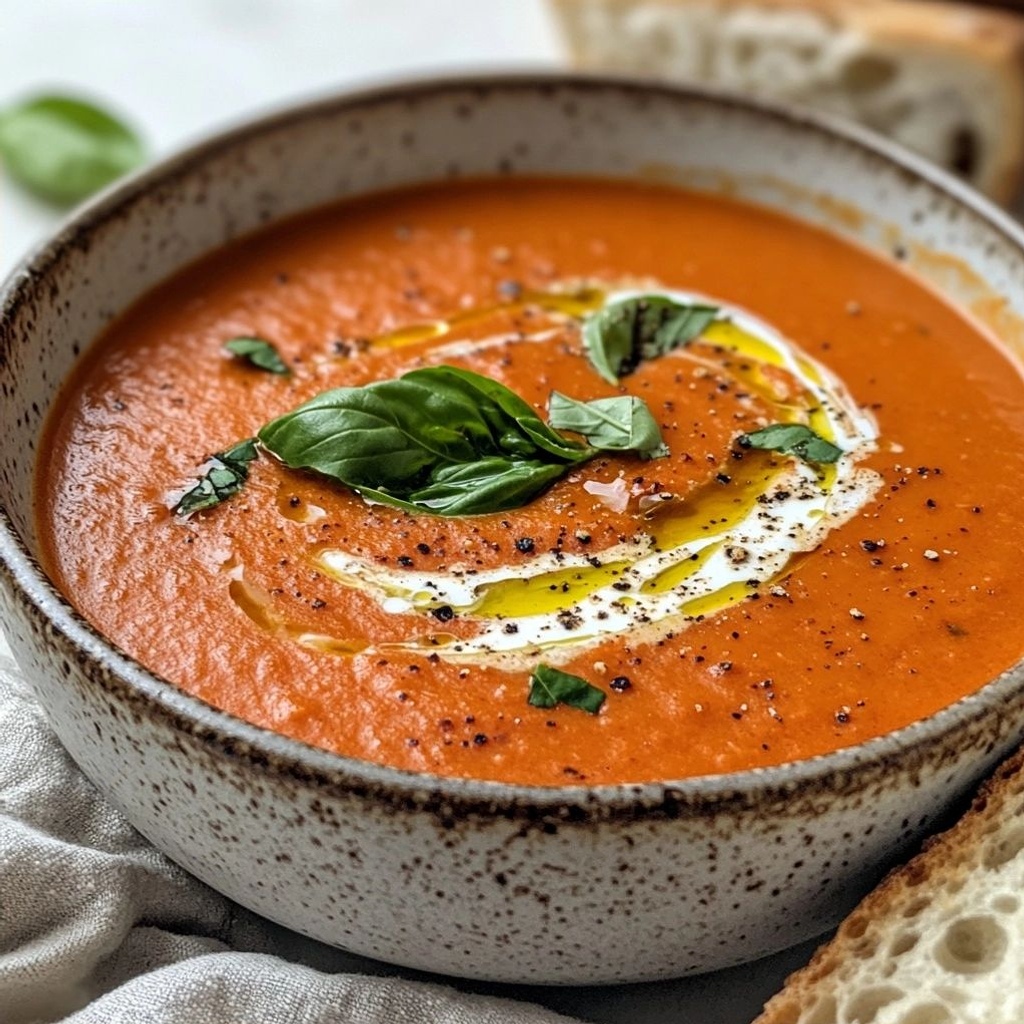
– Optional garnish: a swirl of cream, a drizzle of olive oil, and a few torn basil leaves
→ Finishing touches elevate the presentation and aroma. A small cream swirl adds visual appeal and richness; a light olive oil drizzle enhances aroma when served hot.
Instructions
- Preheat your oven to 425°F (220°C) and line two large sheet pans with parchment or grease lightly to prevent sticking, then arrange the halved or wedged tomatoes and the chopped onion in a single layer to promote even caramelization.
→ A hot oven promotes rapid, deep-roasted sweetness, while spacing prevents steaming and uneven browning. - Toss the tomatoes, onion, and peeled garlic with 3 tablespoons of olive oil, ensuring every piece is lightly coated, then sprinkle with 1 teaspoon kosher salt and 1/2 teaspoon ground black pepper before spreading in a single layer on the pans.
→ Uniform oil and seasoning help browning occur evenly and prevent scorching; salt at this stage begins flavor development as vegetables roast. - Roast in the oven for 25–30 minutes, turning the tomato pieces once halfway through, until all edges are deeply caramelized and the onion is translucent and slightly charred for maximum sweetness and depth.
→ Caramelization concentrates natural sugars and creates a richer base flavor; flipping ensures even browning on all sides. - If the tomatoes release a lot of juice, tilt the pans to baste once or twice and allow excess liquid to evaporate for a more concentrated soup, then remove the pans from the oven and let the vegetables rest 5 minutes.
→ Reducing liquid prevents a watery soup and concentrates acidity, giving a bolder final texture after blending. - Transfer the roasted tomatoes, onion, and garlic to a heavy-bottomed pot, along with any accumulated juices, and add 1 cup vegetable broth to deglaze the pan, scraping up browned bits with a wooden spoon for extra flavor.
→ Deglazing unlocks fond and introduces roasted, savory complexity into the soup base; a heavy pot helps maintain steady heat during blending later. - Simmer the mixture over medium heat for 5–8 minutes to marry the flavors, then use an immersion blender to puree the vegetables until smooth, or transfer in batches to a blender and blend until velvety, taking care to vent steam.
→ Blending creates a smooth, cohesive texture; venting steam prevents dangerous pressure buildup and ensures a silky finish. - Stir in 1 cup broth gradually to achieve a cohesive soup that coats the back of a spoon, adjusting with additional broth if you prefer a thinner consistency, and season with the remaining 1 teaspoon kosher salt and 1/2 teaspoon black pepper to taste.
→ Incremental liquid addition lets you control body without thinning too much; correct salinity at this stage after roasting intensifies flavors. - If using, whisk in 1/2 cup heavy cream or coconut cream until fully incorporated and the soup appears glossy, then continue to simmer for 3–5 minutes to warm through and meld the fats with the tomato base.
→ Cream or coconut cream adds a lush mouthfeel and helps balance acidity; simmering ensures a cohesive emulsion and prevents separation. - Stir in 1 tablespoon balsamic vinegar or 1 teaspoon sugar to balance sweetness and acidity, tasting as you go and adding more pinch by pinch until the flavor is harmonious, then simmer 2 minutes for the taste to bloom.
→ A touch of acid or sweetness brightens the roasted tomato profile and rounds out sharp notes from the tomatoes. - Add the 1/4 teaspoon chili flakes or pinch of cayenne if you want a gentle kick, then simmer for another minute to distribute heat evenly without overpowering the tomatoes.
→ A small amount of heat lifts the overall flavor and contrasts the richness of the base; adjust to your spice tolerance. - Roughly tear the 1/4 cup fresh basil leaves and fold into the soup along with 1/4 cup of torn basil reserved for garnish, then simmer 1–2 minutes so the basil aroma infuses without losing brightness.
→ Fresh basil adds a herbaceous lift that complements roasted tomatoes; tearing releases essential oils for stronger fragrance. - Taste the finished soup and adjust with extra salt, pepper, or a splash more broth if needed, then ladle into bowls and garnish with a swirl of cream, a drizzle of olive oil, and a few torn basil leaves for a polished presentation.
→ Finishing touches enhance aroma and visual appeal, and a final taste ensures seasoning is perfectly balanced before serving.
Notes
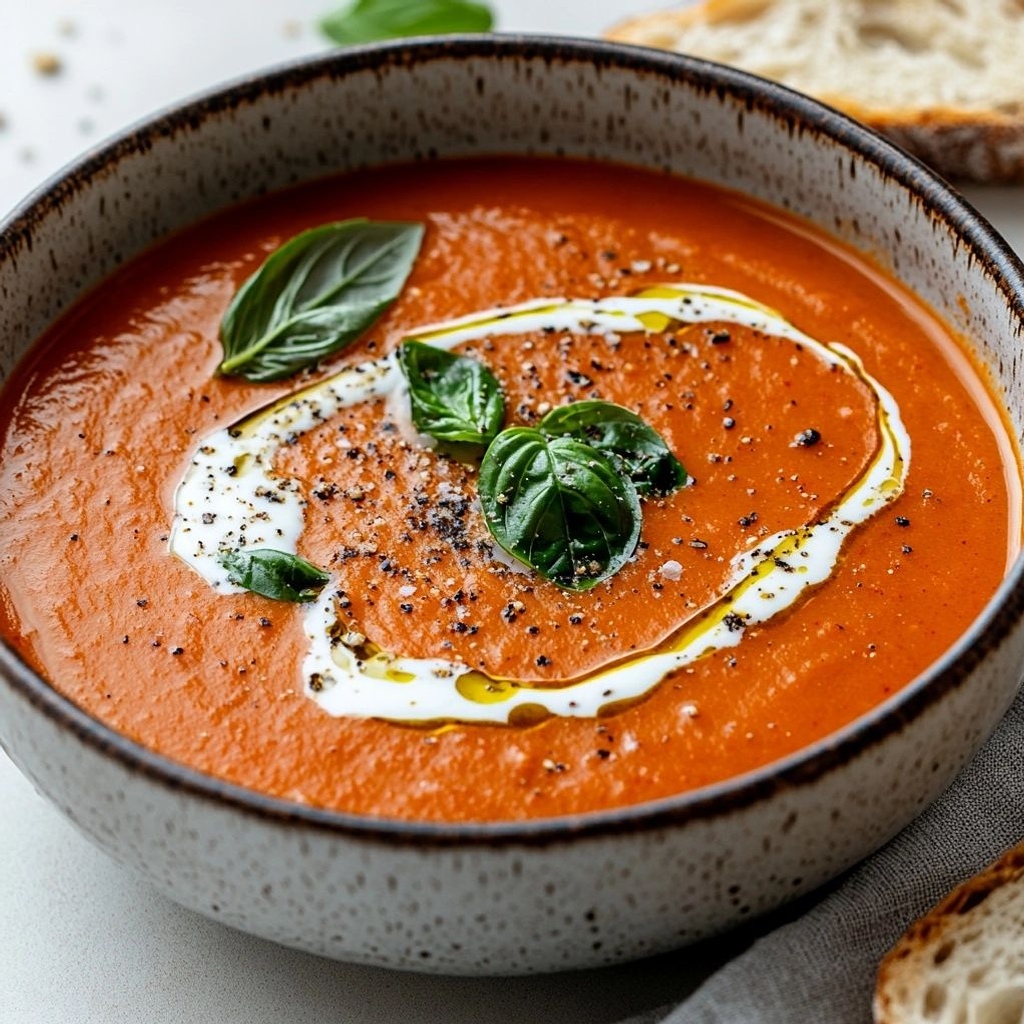
These easy roasted tomato soup notes help you craft a cozy, deeply flavorful bowl from roasted tomatoes and garlic. You can customize by adding extra chili for heat, a splash of balsamic for sweetness, or swap in coconut cream for dairy-free richness. It freezes well in airtight containers and reheats beautifully on the stove or in the microwave; adjust thickness with more broth or a touch of cream. For a brighter finish, add most of the fresh basil after blending and reserve a few leaves to tear over the top. If your tomatoes are very sweet, skip the optional sugar; if they’re tart, a small splash of balsamic can balance them. To keep it light, use vegetable broth and skip the cream; for a silkier texture, swirl in cream at the end or blend in a bit of coconut cream. Always taste and adjust salt and pepper after blending, as roasting concentrates flavors.
Tips
Roasting and preparation tips
- Spread the tomatoes and onion in a single layer on the baking sheet to ensure even caramelization. If your pan is crowded, roast in batches or use two pans.
- Cut tomatoes into uniform pieces so they roast at the same rate. For very juicy varieties, consider trimming or removing some seeds to reduce excess liquid.
- Keep garlic in its skins during roasting if you like it mellower; squeeze the soft cloves out later for easy incorporation.
- Roast with just enough space between pieces to allow air to circulate; this helps deepen flavor instead of steaming.
Seasoning and balance
- Season with salt in stages: sprinkle a little before roasting and taste after blending. Roasting concentrates flavors, so you may need less salt than you expect.
- Freshly ground black pepper should be added at the end for a brighter aroma; consider a light grind on each portion of the soup when serving.
- Balsamic vinegar or sugar: start with a small amount and adjust after blending. A touch of acidity or sweetness can brighten or round the tomato sweetness.
Broth, texture, and dairy options
- Choose broth based on desired body: more broth for a lighter soup, or less for a thicker, scoopable texture. Dairy or dairy-free options can be blended in to add richness.
- If you want a creamier soup without dairy, coconut cream is a great dairy-free alternative that blends smoothly with roasted tomatoes.
- Add cream gradually and blend until smooth to avoid separation or curdling, especially if the soup is very hot.
Finishing and presentation
- Stir in most of the torn basil after blending to preserve its bright aroma; reserve a few leaves for garnish.
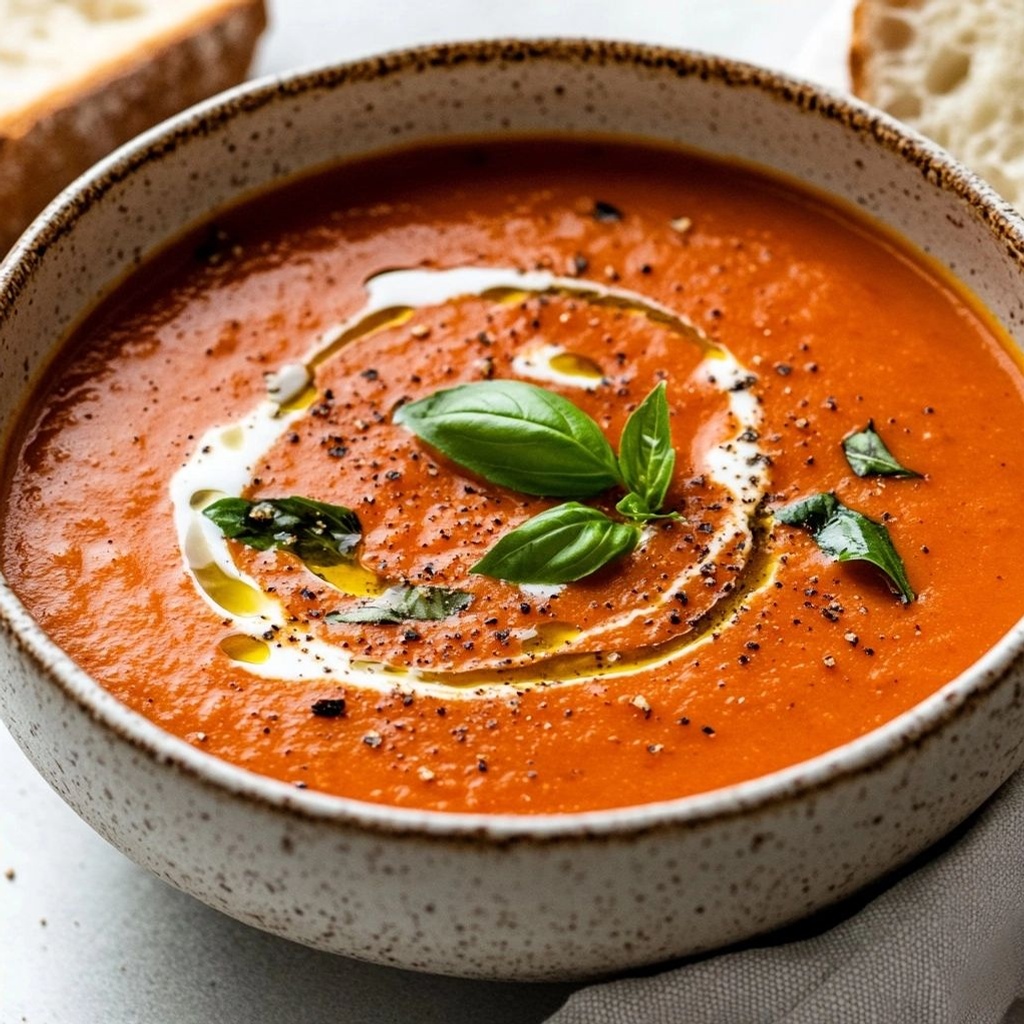
- A swirl of cream or a drizzle of high-quality olive oil at the finish adds visual appeal and luxurious aroma.
- For a vibrant finish, drizzle a tiny amount of olive oil and scatter fresh basil just before serving, while the soup is hot.
Make-ahead and storage tips
- Roast the vegetables ahead of time and refrigerate; rewarm gently on the stove, adding broth to reach your desired consistency.
- Leftover soup can be stored in an airtight container for up to 3 days. Reheat gently and adjust thickness with additional broth or water if needed.
Variations and substitutions
- For a lighter tomato flavor, roast tomatoes with a little extra garlic and onion but reduce oil to avoid greasiness.
- If you don’t have fresh basil, substitute parsley for a milder herbal note, or finish with a splash of olive oil and roasted tomato seeds for texture.
FAQ
What ingredients do I need for Easiest Ever Roasted Tomato Soup?
Ripe tomatoes, onion, garlic, olive oil, vegetable or chicken broth, salt, black pepper, and a pinch of sugar (optional). A splash of cream or a drizzle of olive oil can be added for richness.
Do I really need to roast the tomatoes?
Roasting enhances natural sweetness and depth of flavor. It’s the key step that gives the soup its rich, roasty taste with minimal effort.
How long does the roasting and cooking take?
Roasting tomatoes and onion typically takes about 25–30 minutes at a high temperature, plus 15–20 minutes of simmering on the stove to blend flavors. Overall about 40–60 minutes from start to finish.
Is this soup suitable for vegetarians or vegans?
Yes. Use vegetable broth and omit any dairy. If you want creaminess, substitute with coconut milk or unsweetened dairy-free cream.
Can I make this soup ahead of time?
Absolutely. It reheats well. Let it cool, store in an airtight container in the fridge for up to 4–5 days, or freeze for up to 3 months.
How should I store leftovers?
Transfer cooled soup to an airtight container. Refrigerate for up to 4–5 days. Reheat on the stove over low heat, stirring occasionally. Add a splash of broth if it thickens.
Can I freeze this soup?
Yes. Freeze in portions in a freezer-safe container for up to 3 months. Thaw in the fridge overnight, then reheat gently on the stove, adding broth or water as needed.
What can I serve with it?
Serve with crusty bread or grilled cheese, a dollop of cream or yogurt, fresh herbs, or a drizzle of olive oil. A splash of hot sauce or roasted pepper strips also works well.
How can I adjust the soup for extra flavor?
Roast with a few garlic cloves, then add a pinch of smoked paprika or chili flakes for warmth. A splash of balsamic vinegar near the end also brightens the flavor. For deeper sweetness, let the tomatoes roast a bit longer.
What if I have an immersion blender?
Perfect. After cooking, blend directly in the pot using the immersion blender until silky smooth. If you prefer a chunkier texture, blend partially or mash with a potato masher.