
Introduction / Hook
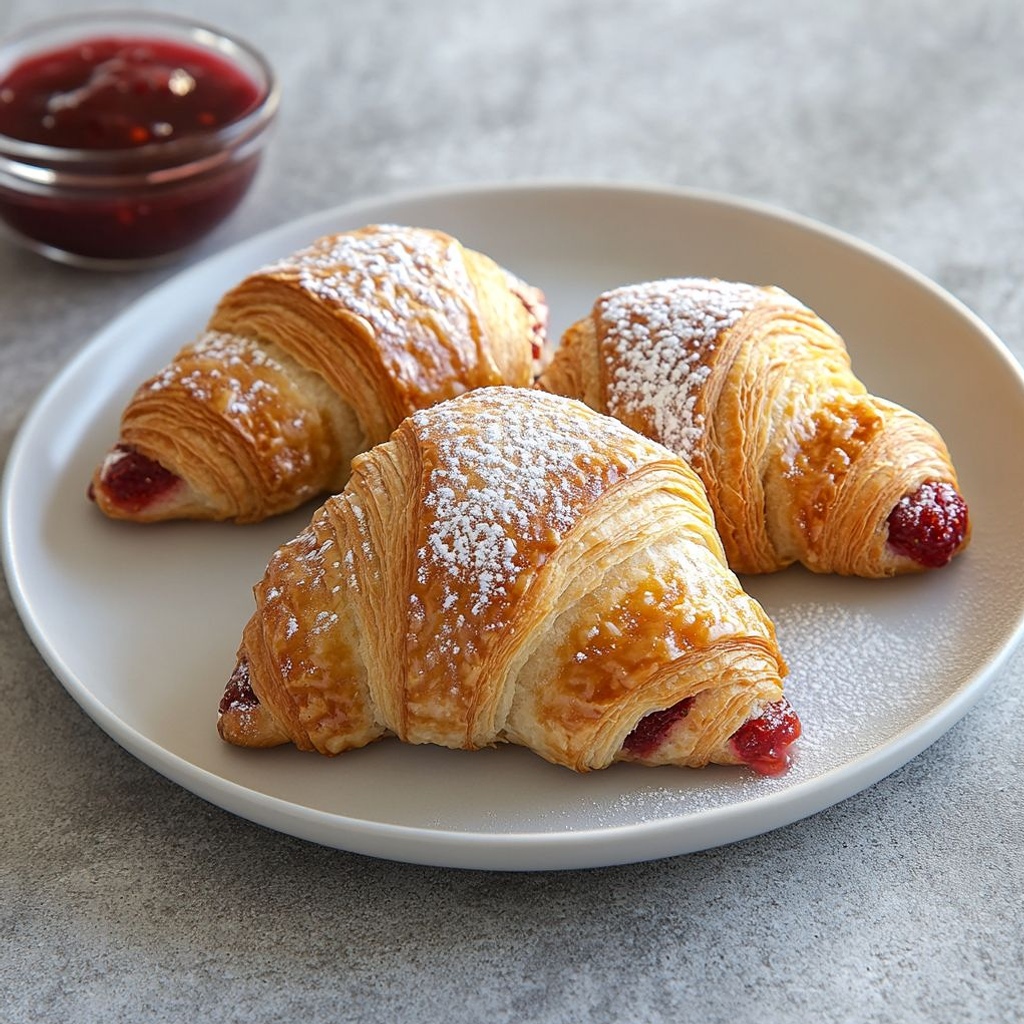
Picture a sunlit morning where the air carries a whisper of butter and warm pastry. A tray of croissants rests on the counter, their delicate layers gleaming with a satin sheen, hinting at the treasure inside. You bite through a crisp edge and find a burst of bright, ruby-red strawberry goodness oozing into the soft, pillowy interior. The experience is creamy, tart, and slightly floral—the kind of bite that makes you pause, smile, and reach for a second piece. Strawberry-filled croissants are not just a pastry; they are a rite of passage for weekend mornings, a charming invitation to slow down, and a celebration of simple ingredients that come together with impossible ease. This description invites you to a culinary moment where pastry technique and summer fruit collide in a tender, memorable harmony. It’s indulgent without being heavy, elegant without being fussy, and versatile enough to turn a routine breakfast into a mini-festivity or a casual brunch into a memorable occasion.
In the kitchen, the fragrance is part performance and part memory—the scent of flaky dough, the sweet perfume of ripe strawberries, a hint of vanilla or almond, and the comforting warmth of the oven. The strawberry-filled croissant carries a promise: a bite that feels both familiar and exciting, a nod to classic pastry traditions while inviting playful twists. It’s a dish that travels across seasons and occasions, equally at home as a weekend treat, a celebratory brunch centerpiece, or a dessert option that feels special yet approachable. The pleasure lies not just in the taste, but in the texture—the way the fruit’s juice glints through the layers, the way the pastry parts into delicate sheets that melt on the palate, and the way the entire bite finishes with a whisper of sweetness that lingers like a fond memory from a sunlit kitchen.
The Story Behind the Dish
Origins and Inspirations
The croissant—though strongly associated with French pastry culture—hints at a broader European lineage. Its signature flaky, laminated layers owe their existence to techniques developed in thriving pastry traditions across Central Europe and, in particular, the celebrated buttery doughs that conquered breakfast tables everywhere. The name itself, derived from the French word for “crescent,” evokes the shape that has become iconic in bakeries around the world. While the exact historical path to the croissant’s modern form is a tapestry of myths, there is no denying the cross-pollination of influences that contributed to what we now know as a croissant: a light, crisp exterior, a tender interior, and a capability to cradle all sorts of delightful fillings.
Strawberries, by contrast, offer a taste of seasonal American and European summers—their fragrance a hallmark of late spring and early summer markets. The pairing of strawberries with a buttery, flaky pastry is a natural storytelling of warm days, sunlit gardens, and the comforting rituals of sharing dessert or a sweet breakfast with loved ones. The combination is a modern homage to the transformative magic of fruit inside a pastry, a simple idea that, in practice, yields a dish that feels both timeless and current.
A personal anecdote often associated with this flavor pairing centers on quiet weekend mornings in a sunlit kitchen. There’s something almost ceremonial about slicing ripe berries, letting their juices bloom, and watching them nestle into the crevices of pastry as if the two were always meant to be together. The aroma of strawberry and butter—two of the most evocative scents in the kitchen—create a sensory memory that makes the first bite feel like a small celebration of everyday life. This dish is therefore not just a recipe; it’s a narrative of how travel, tradition, and pantry staples converge to create something comforting and bright at once.
Tradition Meets Modern Brilliance
In modern kitchens, the strawberry-filled croissant is a canvas. It invites creative interpretation: some people prefer a simple jam-like center that’s gently sweet, others enjoy a more lush, jammy pocket that tastes almost like a fruit curd without becoming heavy. Some opt for a perfectly balanced contrast between the pastry’s buttery richness and the fruit’s tang, while others lean into dessert-like indulgence with a touch of creaminess from a cheese filling or a whisper of vanilla. The beauty of this dish lies in its adaptability—your kitchen, your memories, your rules. It honors the past while looking toward contemporary preferences for freshness, lightness, and bright fruit flavor.
Why You’ll Love This Recipe
- Effortless elegance: You can achieve bakery-worthy flair with minimal fuss, especially when you pair store-bought croissants with a vibrant strawberry filling, or you can let a laminated dough shine if you’re in the mood for a weekend project.
- Bright, balanced flavors: The sweetness of ripe strawberries meets the buttery, toasty notes of croissant layers, creating a taste profile that is at once comforting and refreshing.
- Textural harmony: The pastry’s crisp, flaky exterior gives way to a soft, airy interior, while the juicy strawberry center provides a juicy contrast that sings on the palate.
- Versatile for occasions: This dish transcends breakfast, brunch, and dessert. It can anchor a relaxed weekend table, impress guests at a brunch gathering, or become a delightful finish to a summer dinner party.
- Customizable and approachable: Whether you’re crafting a quick morning treat or a more indulgent showpiece, you can tailor sweetness, creaminess, and fruit intensity to your preferences and dietary needs.
- Seasonal celebration: Strawberries, when at peak, bring peak flavor and aroma to the dish, turning ordinary mornings into something a little more festive and seasonal.
Flavor Profile & Texture
The flavor story begins with the croissant itself: a layered, nutty, lightly toasty note from the butter-rich dough, with a whisper of yeasty aroma that evokes morning rituals and comforting familiarity. When the strawberry filling makes its entrance, you’re greeted by a bright and slightly tart fruit flavor that cuts through the pastry’s richness, offering a clean, refreshing counterpoint. Depending on the preparation or filling choice, this fruit note can take on a jammy sweetness with a hint of vanilla, or remain crisp and fresh, brightening each bite with a sun-kissed treble to the pastry’s deeper, toasty alto.
The texture journey is equally delightful. The exterior croissant layers provide a delicate crunch that breaks into a tender, pillow-like crumb, while the interior offers a moist, juicy core that carries the fruit beautifully. If the filling contains a small amount of creaminess or a light cheese-like element, you can anticipate a gentle contrast—silky, almost velvety against the flaky, crisp pastry. The overall mouthfeel is one of layered pleasure: first the crackle of the pastry’s edge, then the soft tenderness of the interior, with the strawberry’s juice seeping through in a balanced, not overpowering way. There is a whisper of fragrance—vanilla, almond, or lemon zest depending on the version—that lingers after each bite, inviting the next taste and turning a simple pastry into a small, fragrant ritual.
In terms of balance, the dish thrives on contrast. The fruit’s brightness counters the pastry’s fat, the juice flows into the creases of the layers, and the final note arrives as a gentle sweetness that does not overwhelm. It’s a recipe that rewards careful fermentation of flavors—time allowing for the fruit’s aroma to become a vibrant partner to butter and flour, rather than merely a sweet accent. The result is a dish that feels refined but approachable, sophisticated enough for company yet friendly enough to enjoy as a casual weekend indulgence.
Occasions & Pairings
Strawberry-filled croissants shine across a spectrum of occasions. They’re ideal for weekend breakfasts when you want something a touch more special than toast, for late-morning brunches that aim to charm guests without requiring complex cooking, or for light-dessert moments when you want something that feels celebratory but not overly heavy. Their versatility makes them a go-to choice for seasonal menus and casual gatherings alike. Below are some ideas to frame when you might serve them and what to pair them with for a complete, satisfying experience.
Center a spread of assorted pastries with strawberry-filled croissants as a bright, crowd-pleasing option. Slice alongside seasonal fruit and a dollop of whipped cream or a yogurt parfait for contrast and color. Serve as a lighter dessert option after a simple dinner—especially with a side of vanilla yogurt, mascarpone, or a citrusy sorbet to cleanse the palate between bites. A refined bite to accompany a cup of tea, coffee, or cappuccino, offering a sweet lift without becoming overpowering. In strawberry season, these pastries celebrate peak fruit and can be part of a fruit-forward dessert bar or a relaxed celebratory menu.
Pairings to consider, without getting into recipe steps, focus on complementary flavors and textures. A light, crisp sparkling beverage or a chilled glass of rosé can elevate the experience on warmer days. A dollop of lightly sweetened cream or a spoonful of ricotta or mascarpone on the side can add a creamy contrast for those who love extra richness. Fresh fruit on the side—think strawberries, blueberries, or slices of melon—adds color and brightness that complements the pastry. For a savory counterpoint, a small herbaceous cream cheese spread or a lightly salted crème fraîche can offer a delightful balance for those who enjoy a more complex bite.
Tips, Variations & Substitutions
- Dough and base: The pastry can be traditional laminated croissant dough, which yields the classic flaky texture, or you can use pre-made croissant dough from a reputable bakery or supermarket for a quicker version that still delivers the same mouthfeel.
- Fruit variations: Strawberries are classic, but this concept adapts beautifully to other berries or stone fruits. Raspberries, blueberries, cherries, or sliced peaches offer a different flavor profile while maintaining the dish’s charm. For a tart twist, consider a small amount of lemon zest in the filling to brighten the overall bite.
- Creamy offsets: A light layer of mascarpone, cream cheese, or a ricotta cream can add luxurious creaminess if you want an extra contrast to the fruit’s brightness. Keep the filling light to preserve the pastry’s delicate structure.
- Vegan and dairy-free options: Use dairy-free croissants and a plant-based cream cheese substitute, or opt for a dairy-free fruit compote with a hint of vanilla. The result should still show the interplay of flaky texture and juicy fruit.
- Gluten-free twists: For gluten-free eaters, explore high-quality gluten-free puff pastry or laminated dough alternatives. The goal remains the same: a crisp exterior, tender interior, and a flavorful fruit center.
- Flavor boosters: A touch of almond extract or vanilla bean paste in the filling can deepen the pastry’s aroma, while a light citrus zest can give the dish a refreshing lift that’s especially enjoyable in spring and summer.
- Make-ahead ideas: Assemble the croissants filled with fruit the day you plan to bake them. If you’re using store-bought croissants, you can prepare the fruit filling ahead and tuck it into the pastry just before serving, allowing you to serve warm, pastry-forward treats with minimal effort.
Storage & Make-Ahead Ideas
Leftovers, if there are any, are best stored in a cool, dry place in a container or wrapped to preserve the pastry’s integrity. If you’re preparing in advance, you can assemble the croissants with the fruit filling a short time before serving and then bake or warm when you’re ready to enjoy. For longer storage, refrigerate unfilled croissants for up to a couple of days; the filling itself is best prepared fresh to preserve the fruit’s brightness. If you prefer to freeze, consider freezing the croissants unfilled and assembled, then thaw and fill and bake when you crave that fresh-baked appeal. Reheating should be gentle to retain flakiness and prevent the pastry from becoming soggy—an oven or toaster-oven at a moderate warmth can revive the layers without compromising texture.
Make-ahead strategies can look like this: plan a brunch or a weekend morning where you’ll have time to bake, and prepare a batch of fruit filling in advance. When you’re ready, open the pastry and nestle the fruit in a way that preserves the croissant’s delicate layers. This approach keeps your kitchen nearly effortless—your guests will feel the magic of a well-thought-out menu without requiring you to stand over the stove for hours.
Fun Facts & Trivia
- Despite their association with French cuisine, croissants trace a longer European lineage that points to early laminated dough techniques developed across Austria and neighboring regions.
- The name “croissant” refers to the crescent shape, a subtle nod to a symbol that has appeared in various cultures and eras—an emblem of dawn, growth, and renewal.
- Strawberries are not technically berries, botanically speaking, but they’re among the most beloved garden fruits, celebrated for their fragrance, color, and complexity of flavor—an ideal partner for the dairy richness of pastries.
- The concept of filling pastries with fruit isn’t limited to croissants; many cultures embrace fruit-filled doughs, tarts, and pastries that showcase seasonal produce in a portable, shareable format.
- Strawberries release their aroma and juice most readily when they’re at peak ripeness, which is why choosing fruit with a bright fragrance and a gentle give can elevate the overall sensorial experience of this dish.
- In pastry culture, the balance between butter-rich dough and fruit filling has an almost iconic status: a simple, elegant concept that encourages home cooks to embrace technique, patience, and taste without getting overwhelmed by complexity.
In exploring strawberry-filled croissants, you are invited to celebrate the best of both worlds: the old-world craft of laminated pastry and the bright, modern appeal of seasonal fruit. It’s about savoring a moment—an indulgence that feels special yet effortless, a dish that can be dressed up for guests or enjoyed as a comforting personal treat. Whether you’re baking for a crowd or simply for yourself, this pastry offers warmth, brightness, and a texture that captivates with every bite. Let your kitchen be your stage, your ingredients be your instruments, and strawberry-filled croissants your melody—one that crescendos into a delicious, memorable experience that lingers long after the plate is empty. Enjoy the journey of aroma, texture, and taste as you share this delightful pastry with loved ones, and allow it to become a cherished ritual in your own culinary story.
Ingredients
-
Croissant Dough
- 4 cups bread flour (or all-purpose)
→ Provides the main structure and gluten network for laminated pastry. Bread flour yields stronger gluten development, which helps create the characteristic flaky layers of croissants. If using all-purpose, you may get slightly lighter layers; measure accurately and consider a touch more hydration if needed. - 1/2 cup warm water
→ Water activates the yeast and hydrates the dough. Use warm (not hot) water around 110°F/43°C to wake the yeast without killing it. If you choose instant yeast, you can reduce this amount and simply incorporate it with the dry ingredients. - 1/2 cup cold whole milk
→ Milk enriches the dough, adding tenderness and flavor. Keeping the milk cold helps maintain the integrity of the laminated butter during rolling. Substitute with a non-dairy milk if needed, but pick a full-fat option for best texture. - 2 tablespoons granulated sugar
→ Sugar feeds the yeast a little and contributes to browning and flavor. Keep it modest to preserve classic croissant sweetness. If you prefer sweeter pastries, you can increase slightly, but avoid overloading the dough with sugar as it can affect lamination. - 2 teaspoons salt
→ Salt enhances aroma, flavor, and strengthens gluten formation, improving overall dough structure. Dissolve it in the flour to ensure even distribution; it also helps balance the pastry’s flavors during baking. - 2 1/4 teaspoons active dry yeast (or 1 packet)
→ The primary leavening that lifts the dough. Proof the yeast in the warm water with a pinch of sugar for 5–10 minutes until foamy if using active dry yeast; if using instant yeast, add directly with the dry ingredients to save time. Fresh, active yeast yields the best rise and a lighter crumb. - 1/4 cup unsalted butter, melted
→ Adds richness to the dough and contributes to tenderness. Let the melted butter cool slightly before mixing to avoid cooking the dough; incorporate evenly for uniform texture. If the dough overheats, the butter may separate and weaken lamination. - 1 1/2 cups unsalted butter, for lamination, kept cold and pliable
→ The laminated fat that creates the signature croissant layers. Shape into a square, keep well-chilled, and handle with minimal warmth. If the butter starts to soften too much, chill it again before continuing the rolling-and-folding process to maintain distinct layers. - 1 large egg, for egg wash (optional)
→ Adds a glossy, golden finish and a bit of color to the baked croissants. Beat with a tablespoon of water or milk to create a smooth wash; brush lightly just before baking to avoid pooling or soggy spots. - 1 tablespoon water, for egg wash (optional)
→ Dilutes the egg wash to achieve the desired consistency for a thin, even coating. Use sparingly; too much water can make the wash too runny, while too little can result in a dull finish.
-
Strawberry Filling
- 2 cups fresh strawberries, hulled and finely chopped or sliced (for filling)
→ Provides bright, fruity sweetness and moisture within the croissant. For best texture and color, use ripe berries and chop into uniform pieces so the filling distributes evenly. Pat berries dry if they are very juicy to prevent soggy pastry. - 2 tablespoons granulated sugar
→ Macerates the strawberries, drawing out juices and enhancing sweetness. Adjust to the natural sweetness of the berries; the macerated juices can contribute to a glossy, saucy filling when heated inside the oven. - 1 teaspoon lemon juice
→ Brightens the fruit flavor and helps balance sweetness. Use freshly squeezed lemon juice for the best aroma; avoid bottled juice which can taste dull. If berries are very tart, you can increase by a pinch. - 1 teaspoon cornstarch (optional, for thickening)
→ Helps thicken the strawberry juices during baking, keeping the filling cohesive rather than runny. Mix the cornstarch with a little cold water to make a slurry before adding to the berries; you don’t need to cook it separately since the bake will set it. - Pinch of salt (optional)
→ Enhances fruit sweetness and overall flavor. Add sparingly to avoid muting the strawberry brightness; taste the filling after maceration and adjust if needed. - 1/2 teaspoon vanilla extract (optional)
→ Adds warmth and depth to the strawberry filling. If using vanilla, add after maceration to preserve its aroma; omit if you prefer a pure strawberry flavor.
-
Finish and Glaze
- 1/2 cup powdered sugar
→ Creates a smooth, delicate glaze that complements the strawberry filling. Sift to remove lumps and whisk with a small amount of liquid to desired consistency. For a tangy note, substitute part of the liquid with a splash of lemon juice. - 1–2 tablespoons milk or water (for glaze)
→ Liquid used to thin the glaze to the right consistency. Milk gives a richer shine; water keeps it lighter. Add gradually until you reach a coating that glazes without pooling on the surface. - 1 teaspoon lemon zest (optional)
→ Adds a fresh citrus aroma that pairs beautifully with strawberry. Zest after zesting to capture the most essential oils; fold into the glaze or sprinkle on top for a bright finish.
Instructions
- Proof the yeast in warm water with a pinch of sugar for 5–10 minutes until foamy, then whisk to dissolve any lumps.
→ This confirms the yeast is alive and active; if using instant yeast, you can skip proofing and add it directly with the dry ingredients to save time. - Whisk together bread flour, granulated sugar, and salt until evenly distributed, ensuring no clumps remain in the corners of the bowl.
→ Even distribution of salt and sugar promotes consistent fermentation and gluten development, giving you a stable dough foundation for lamination. - Whisk warm water, cold whole milk, and the melted butter together until just combined, then reserve for eventual incorporation with the dry ingredients.
→ Using warm liquid wakes the yeast without overheating; cold milk keeps the dough tender and protects the laminated butter during mixing. - Combine the foamy yeast mixture with the wet ingredients and whisk briefly, then add the dry mixture and mix to form a shaggy dough.
→ Gentle initial mixing prevents tearing the dough and helps hydrate flour evenly for smooth gluten development without overworking. - Knead the dough on a lightly floured surface or with a stand mixer on low speed until the dough is cohesive and smooth, about 6–8 minutes by hand or 4–6 minutes with a mixer.
→ Proper gluten development creates elasticity that supports lamination while maintaining a tender crumb in the final croissants. - Shape the dough into a flat disk, place it in a lightly oiled bowl, cover, and bulk ferment at room temperature until doubled, about 60–90 minutes.
→ A measured rise builds flavor and structure; avoid over-proofing which can weaken gluten and hinder lamination. - While the dough proofs, prepare the cold butter block by placing the unsalted butter for lamination between two sheets of parchment and pounding it into a 7×7 inch square about 1/2 inch thick, then refrigerate until firm but pliable.
→ A properly tempered butter block will marry with the dough during rolling, creating distinct flaky layers when folded; if it becomes too warm, chill briefly to restore manageability. - Chill the dough until cold, then unwrap and roll it on a lightly floured surface into a rectangle roughly 10×16 inches, maintaining even thickness to prevent butter from leaking during lamination.
→ Keeping the dough and surface cold minimizes butter leakage and preserves clean lamination lines for crisp layers. - Place the cold butter block on the right half of the dough rectangle, leaving a margin around the edges, then fold the left half over the butter to enclose it completely and seal the edges with gentle pressure.
→ Enclosing the butter creates a solid, uniform fat layer that laminates with the dough during folds and prevents butter from seeping out. - Roll the dough out to a long rectangle about 1/4 inch thick and give it a 90-degree turn, then roll again to about 1/4 inch thick, aligning the seams and keeping the butter well distributed.
→ The turn reorients the fat, building multiple lamination layers; maintaining a consistent thickness avoids overly thick or thin spots that can tear or burst during baking. - Chill the dough for 20–30 minutes until firm, then perform a second 1/4-turn and roll again to approximately 1/4 inch thickness.
→ Chilling between turns sets the fat, preserving distinct layers and preventing butter from softening and blending into the dough prematurely. - Chill the dough for another 20–30 minutes, then perform a final 1/4-turn, roll to about a 1/4 inch thickness, and relax the dough by resting it for 15 minutes to reduce resistance during cutting.
→ A final rest helps you achieve clean cuts and uniform croissant shapes; it also ensures the dough can hold layers without springing back. - Roll the laminated dough into a large rectangle approximately 16×24 inches and trim the edges to create a clean, square boundary, then slice it into long triangles with a base of about 5–6 inches and a height of 7–8 inches.
→ Cutting triangles gives traditional croissant shapes; uniform bases ensure even filling and consistent bake throughout the batch. - Prepare the strawberry filling by combining hulled and finely chopped strawberries with 2 tablespoons granulated sugar and 1 teaspoon lemon juice in a bowl, letting them macerate for 10–15 minutes to release juices.
→ Maceration concentrates strawberry sweetness, juices the filling for moisture, and brightens flavor with the lemon; stirring occasionally prevents uneven syrup formation. - Optionally whisk in 1 teaspoon cornstarch mixed with a few drops of cold water to a smooth slurry and fold into the macerated berries, allowing the mixture to rest briefly so the starch can begin to thicken the juices.
→ The slurry helps set the filling during baking, reducing runny juices that could make the pastry soggy and unlevel inside the croissant. - Add a pinch of salt and, if desired, 1/2 teaspoon vanilla extract to the strawberry mixture after maceration to deepen flavor and balance sweetness.
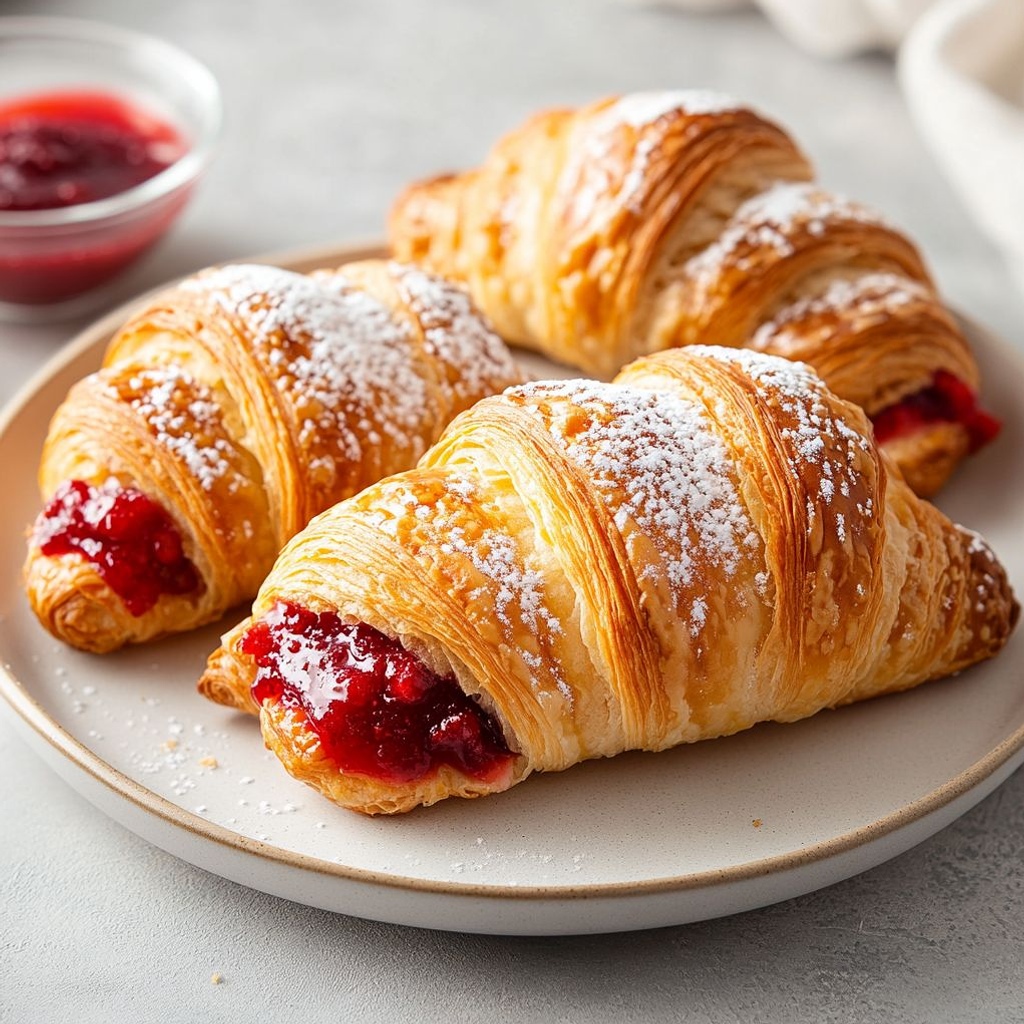
→ Salt enhances the fruit’s brightness, while vanilla adds warmth; omit if you prefer a pure strawberry profile. - Spoon a line of strawberry filling along the base of each dough triangle, keeping filling away from the tip to prevent leakage and ensure a tight roll, then gently roll from base to tip to form a crescent shape and place seam-side down on parchment-lined baking sheets.
→ Spreading at the base concentrates flavor in every bite; rolling tightly prevents split seams and gives a classic croissant silhouette. - Brush each formed croissant lightly with egg wash (beat 1 large egg with 1 tablespoon water) or skip for a dairy-free option, taking care not to let the wash pool; place an even sheen on the surface for a uniform golden color.
→ The egg wash enhances color and gloss; applying lightly helps avoid thick, gummy spots on the surface. - Preheat the oven to 375°F (190°C) and position racks in the middle, then let the shaped croissants proof on the sheets until they are puffy and nearly doubled, about 45–75 minutes depending on room temperature.
→ Proper proofing ensures a light, airy interior and visible lamination; under-proofed dough will be dense, while over-proofed dough may flatten during baking. - Bake the croissants on the middle rack until deeply golden and deeply caramelized at the edges, about 15–20 minutes, rotating the pans halfway through to ensure even browning.
→ The precise bake time and rotation promote uniform color, crisp exterior, and tender, fibrous interior with visible laminated layers. - Transfer baked croissants to a wire rack and cool for 10–15 minutes before glazing, allowing the interior to set and the steam to escape for a crisp crust.
→ Cooling prevents the filling from shifting and helps the pastry maintain structure while the sugar glaze sets smoothly. - Prepare a glaze by whisking 1/2 cup powdered sugar with 1–2 tablespoons milk or water until smooth and pourable, adding 1 teaspoon lemon zest if desired for brightness, and sifted if clumps remain.
→ A silky glaze provides a confectioners’-sugar sheen that complements the strawberry filling; lemon zest adds aromatic brightness that pairs with fruit flavor. - Lightly drizzle or brush the glaze over the cooled croissants, allowing it to set for a few minutes before serving to achieve a glossy finish without pooling.
→ Glazing accents the fruit filling and adds a touch of sweetness that enhances the overall balance of textures and flavors.
Notes
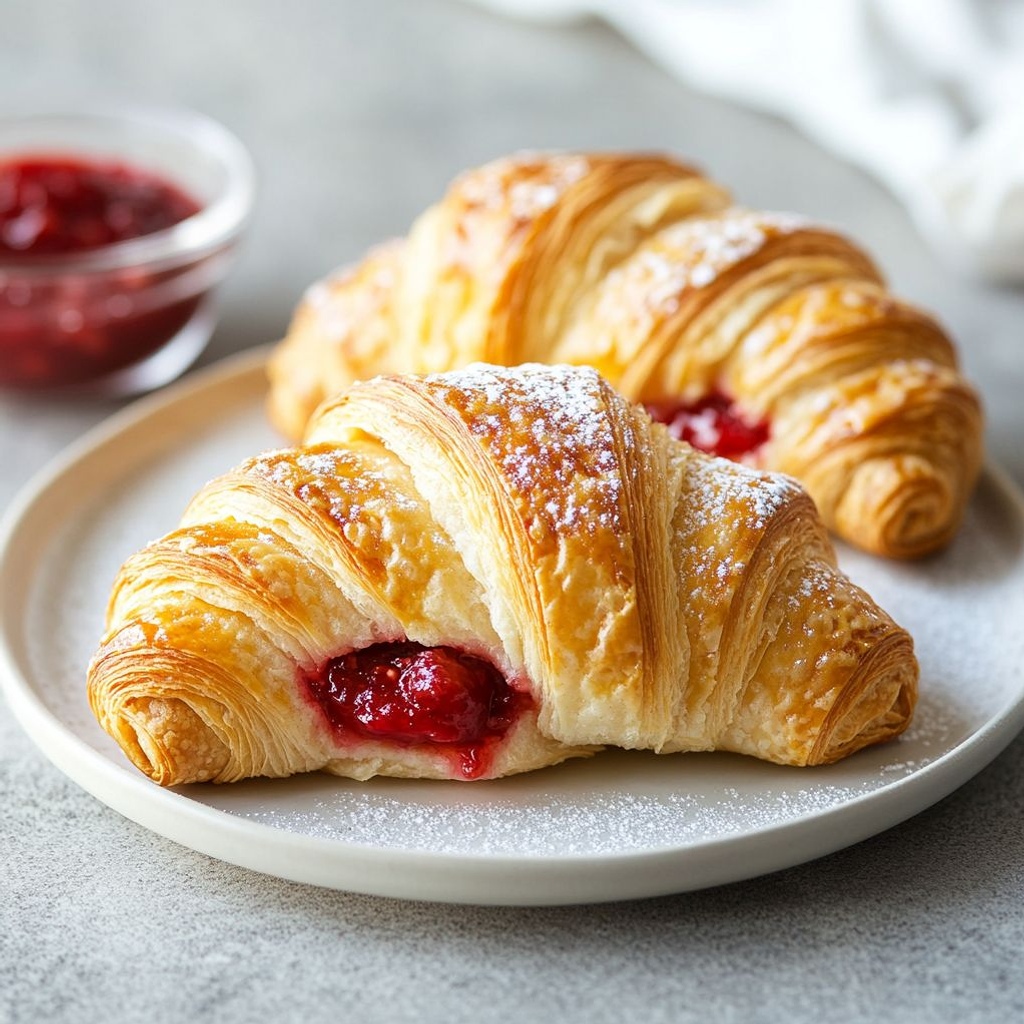
These strawberry-filled croissants are a classic laminated pastry featuring flaky, buttery layers and a bright strawberry filling. To achieve authentic lamination, keep everything cold, handle the dough as little as possible, and bake until deeply golden.
- Maintain cold temperatures: Keep the dough and the 1 1/2 cups unsalted butter for lamination well-chilled. If the butter starts to soften, rest the dough in the fridge to re-solidify before continuing.
- Work quickly and with minimal flour: Dust the surface lightly to prevent sticking, and avoid overworking the dough, which can smear butter and compromise layers.
- Control rolling thickness: Roll to roughly 1/8 inch (3 mm) for the butter block to stay enclosed and create distinct lamination.
- Rest between folds: Chill the dough after each fold (typically 30–60 minutes) to relax gluten and keep the layers defined.
Filling notes: The filling relies on fresh strawberries macerated with sugar and a touch of lemon juice. For a thicker filling, add a slurry of cornstarch with a small amount of cold water and rely on the oven’s heat to set the juices.
- Macerate berries with 2 tablespoons sugar and 1 teaspoon lemon juice; let sit 20–30 minutes until juicy.
- If juices appear too loose, whisk in 1/2 teaspoon cornstarch dissolved in 1 teaspoon water toward the end of resting.
- Pat strawberries dry lightly if very juicy to prevent soggy dough.
Baking and finishing: Brush with an egg wash for a glossy, golden finish. Bake in a preheated oven at 375–400°F (190–200°C) until deeply golden and crisp, about 20–25 minutes depending on size and oven tuning.
- Egg wash: Beat 1 large egg with 1 tablespoon water; brush lightly just before baking to avoid pooling.
- Steam: Place a shallow pan of water in the oven to create steam for a crisper crust, if your oven supports it.
Make-ahead and storage: Croissants can be assembled and frozen before baking. Freeze on a tray, then bag tightly. Bake from frozen, adding 5–7 minutes to the time. Freshly baked croissants are best enjoyed the day they’re baked; store cooled leftovers in an airtight container for up to 2 days and re-crisp in a 350°F oven for 5–7 minutes.
- Freezing: Freeze unbaked formed croissants up to 1 month; bake from frozen, adding time as needed.
- Reheat: Rewarm in a 350°F oven until heated through and the surface feels crisp.
Variations and substitutions: For alternative fillings, swap in almond paste or chocolate; fruit compote also works well. To adapt for dairy-free, use a plant-based laminated fat in place of butter and dairy-free milk, understanding lamination may vary.
Always ensure your butter, flour, and other ingredients are fresh and kept cold to maintain the flaky lamination and rich flavor.

Tips
- Keep everything cold for lamination: chill the dough, the butter block, and the working surface. If the butter starts to soften, pause, chill 10–15 minutes, then continue to prevent butter from melting into the dough.
- Perfect butter temperature matters: the cold butter should be pliable but not squishy. If it’s too soft, it will smear into the dough and ruin the flaky layers. Slice into a square and chill before each turn if needed.
- Rolling technique for even layers: roll the dough into a neat rectangle, rotate 90 degrees between folds, and keep the thickness as uniform as possible. This ensures consistent lamination and even puffing.
- Rest between folds is essential: 20–30 minutes of chilling between turns helps relax the gluten and re-chill the butter, which preserves distinct, separate layers after baking.
- Temperature and humidity awareness: a warm kitchen can soften butter quickly. If you notice sweating or stickiness, refrigerate the dough for 15–20 minutes before continuing.
- Flour choice and hydration: bread flour provides stronger gluten and crisper laminations; if using all-purpose, be mindful of slightly different texture. Measure accurately and adjust hydration by small increments if the dough feels too stiff or too sticky.
- Yeast handling: proof active dry yeast in warm water with a pinch of sugar until foamy (5–10 minutes). If using instant yeast, add with the dry ingredients and skip proofing to save time.
- Strawberry filling moisture control: pat berries dry if very juicy before filling to prevent soggy croissants. Macerate with sugar, then drain juices to keep the pastry crisp.
- Thickening the filling: if using cornstarch, whisk it into the berry mixture as a slurry and let it set with heat from the bake. Too much cornstarch can make the filling gummy, so use sparingly.
- Flavor balance in filling: lemon juice brightens fruit flavor; vanilla adds depth. If you omit vanilla, ensure the berries still taste vibrant on their own.
- Shaping technique: for croissants, seal the seam and tuck the tip under to prevent unrolling during proofing and baking. A tight roll yields cleaner layers and better rise.
- Egg wash guidance: whisk the egg with a little water or milk for a smooth, thin wash. Apply lightly to avoid pooling or soggy spots which can hinder browning.
- Steam helps early rise: create a bit of steam in the first minutes of baking (place a tray of hot water in the oven or spritz with water) to encourage oven spring and a crisper crust.
- Baking temperature and time: bake croissants at a hot, steady temperature (roughly 190–210°C / 375–410°F) until deep golden brown. If using convection, you may reduce the temperature slightly.
- Storage and make-ahead: shaped, unbaked croissants can be frozen on a tray, then wrapped and stored. Bake from frozen, adding a few minutes to the bake time. Baked croissants keep best for 1–2 days at room temperature in an airtight container.
- Fresh glaze application: glaze once croissants have cooled just enough to handle, not while piping hot. For a glossy finish, add lemon zest to the glaze for a bright aroma.
- Croissant temperature control post-bake: let baked croissants cool on a rack to stop steaming and retain crisp edges. Reheat gently in a 160–170°C / 325–350°F oven for a few minutes if needed.
- Creative twists: you can add a thin layer of cream cheese or a light spread under the strawberry filling for extra richness, but ensure it doesn’t overwhelm the delicate lamination.
FAQ
What are strawberry-filled croissants?
Strawberry-filled croissants are flaky pastry pockets filled with a sweet strawberry mixture. The filling is usually made from fresh strawberries, sugar, lemon juice, and a bit of thickener (like cornstarch), then tucked into light, buttery croissants and baked until golden.
What ingredients do I need?
Filling:
- 2 cups fresh strawberries, hulled and chopped
- 2–3 tablespoons granulated sugar (adjust to sweetness)
- 1 teaspoon lemon juice (fresh)
- 1 teaspoon cornstarch (optional, for thicker filling)
Pastry:
- 4–6 store-bought croissants or 4 homemade croissants
- 2–3 tablespoons unsalted butter (melted) or egg wash for sealing
- 1 egg, lightly beaten (for egg wash)
Optional toppings: powdered sugar for dusting, vanilla, or a light glaze.
Can I use store-bought croissants?
Yes. Use plain, lightly sweetened croissants. Slice them open or create a pocket, fill with strawberry mixture, and seal before baking. They’ll bake more quickly than from-scratch dough, so keep an eye on them.
How do I make the strawberry filling?
1) In a small saucepan, combine chopped strawberries, sugar, and lemon juice. 2) Let sit 5–10 minutes to macerate. 3) If you want a thicker filling, whisk cornstarch with 1–2 tablespoons water to make a slurry and stir it into the fruit. 4) Cook over medium heat until the mixture thickens and becomes glossy, about 2–4 minutes. 5) Let cool completely before filling the croissants.
How do I assemble the croissants with filling?
1) If using store-bought croissants, gently split or cut a pocket in each croissant. 2) Spoon or pipe the cooled strawberry filling into the pocket. 3) Seal the opening by pinching the dough closed or using a little melted butter/egg wash to help seal. 4) Place seam-side down on a lined baking sheet and brush lightly with egg wash for shine.
How long and at what temperature should I bake them?
Preheat oven to 350°F (175°C). Bake croissants for 12–15 minutes, or until the pastry is golden and crisp and the filling is warmed through. If using larger or thicker pockets, bake a couple of extra minutes, watching closely to avoid burning.
How do I prevent leaking and soggy croissants?
Tips: keep the filling relatively thick (not runny), let the filling cool fully, seal the edges well, and place the filled croissants seam-side down on the baking sheet. Use a light egg wash to promote a crisp exterior, and avoid overfilling the pockets.
How should I store and reheat leftovers?
Store baked croissants in an airtight container at room temperature for up to 2 days. For longer storage, refrigerate for up to 3 days. Reheat in a 300–325°F (150–165°C) oven for 5–7 minutes, or until warm and crisp. They can also be briefly warmed in a toaster oven.
Can I freeze unbaked or baked strawberry-filled croissants?
Yes. For unbaked: assemble croissants, freeze on a baking sheet, then transfer to a freezer bag. Bake from frozen, adding 2–3 minutes to the bake time. For baked: let cool completely, then freeze in an airtight container. Reheat in the oven at 350°F (175°C) for 8–10 minutes until warmed through.
What are some variations or add-ins I can try?
Variations:
- Swap strawberries for raspberries, blueberries, or diced peaches.
- Add cream cheese to the filling for a creamy contrast.
- Use almond paste or frangipane for a different tonal flavor.
- Finish with a light vanilla glaze or lemon glaze.
- Dust with powdered sugar or top with a thin drizzle of strawberry jam.
Is there a dairy-free or vegan version?
Yes. Use dairy-free croissants (or pastry), use a plant-based egg substitute for the wash if needed, and make a strawberry filling without dairy. If you want a richer filling, combine strawberries with a dairy-free cream cheese or coconut cream alternative, and thicken with cornstarch as needed.