Introduction / Hook
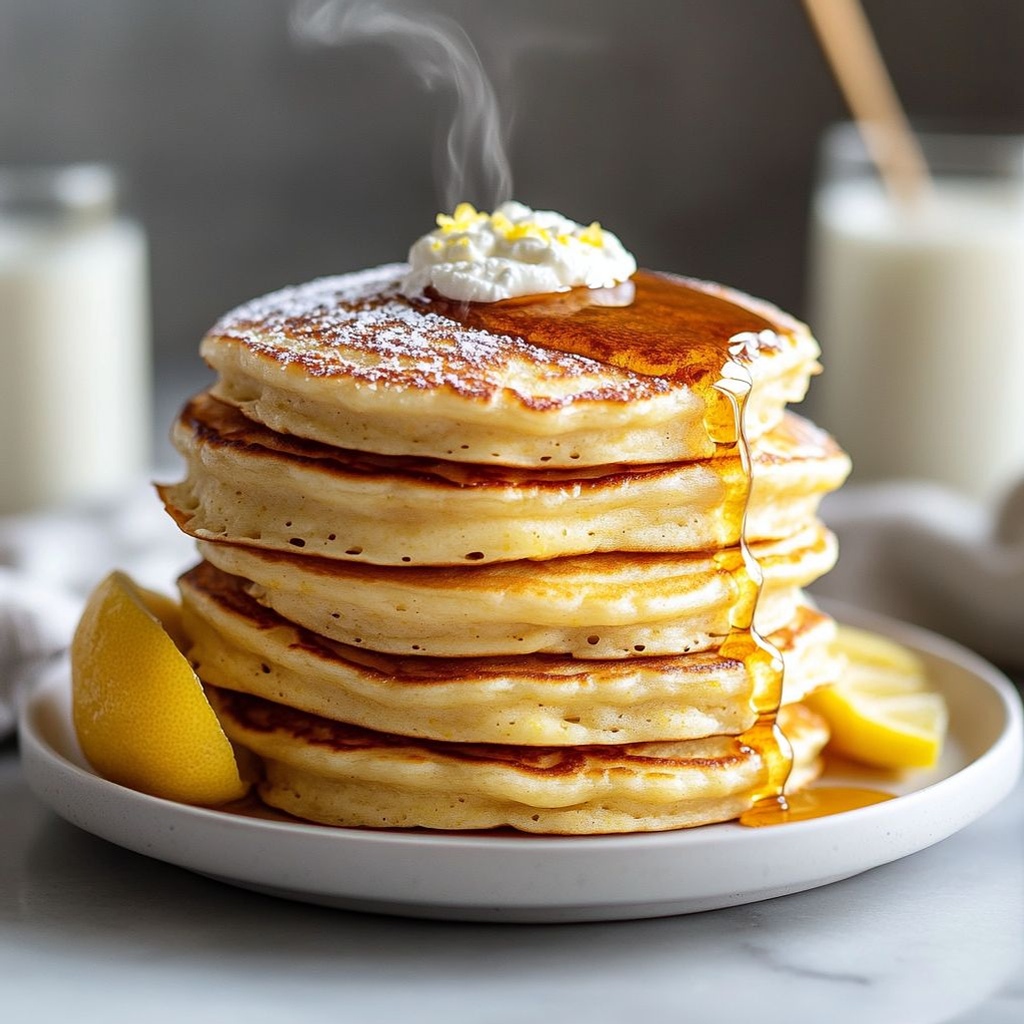
Picture a plate of sunshine: light, cloud-soft pancakes with a delicate tang of citrus, a creamy whisper of ricotta, and a kiss of vanilla that lingers on your tongue. Lemon ricotta pancakes are not merely breakfast; they are a bright invitation to linger over a morning, to watch steam curl from the stack, to inhale a burst of lemon brightness that makes ordinary weekend mornings feel like a mini celebration. The batter—airy yet rich, lemony yet comforting—seems almost magical in its balance: a gentle lift from the leavening, the luxurious creaminess of ricotta, and the sunlit zing of lemon zest that turns a simple pancake into something memorable. It’s the kind of dish that wakes the senses before you even reach for a fork, a ritual that whispers, “Today is special,” even if you’re cooking for one or for a small, cozy crowd.
As the first bite arrives, you’ll notice something extraordinary: a tenderness that dissolves into the bite, the way a cloud would yield under a kiss. The lemon notes aren’t aggressive; they’re aromatic and clean, like a breeze through a lemon grove. The ricotta lends a subtle sweetness and a silkiness that makes each pancake feel indulgent without tipping into heaviness. It’s the kind of breakfast that feels like a treat, yet invites you to enjoy a relaxed tempo—syrup optional, but a dusting of powdered sugar or a dollop of yogurt can elevate it to a refined brunch experience.
What makes this dish truly special is the way it bridges comforting familiarity with a fresh, bright twist. It’s a reminder that breakfast can be both cozy and exciting, a ritual that accommodates a quiet morning at home or a small, joyful breakfast get-together with friends or family. The scent that wafts from the kitchen—zest, warm butter, and creamy cheese mingling with vanilla—becomes the soundtrack for a morning that feels both intimate and celebratory. Lemon ricotta pancakes are not just food; they’re a memory-in-the-making—the kind of dish that tastes like warm sunshine and promises of a delicious day ahead.
The Story Behind the Dish
Pancakes have traveled across continents and centuries, evolving with each culture’s pantry and palate. In many places, the humble pancake is a symbol of comfort, a weekend ritual, and a canvas for seasonality. The addition of ricotta to pancakes is a nod to Italian-inspired home cooking, where ricotta’s creamy, milk-forward character shines brightest. In Italian households, ricotta is celebrated for its versatility—soft and smooth in desserts like cannoli and cheese-filled pastries, and mellow enough to lend richness to savory dishes. When you marry lemon with ricotta in pancake form, you’re weaving two traditions: the French-inspired cottage breakfast sensibility of a light, tender pancake, and the Italian technique of enriching batter with fresh cheese to achieve an almost soufflé-like tenderness.
The lemon-ricotta combination also resonates with the seasonal rhythm of late winter into spring. When citrus comes into peak aroma, it’s natural to pair it with something comforting and homey. A stack of these pancakes can be the centerpiece of a leisurely brunch that nods to sunshine after a string of gray mornings. The story behind this dish is really about balance: a batter that feels light and airy but carries the depth of ricotta; a lemon brightness that enlivens without overpowering; a texture that’s soft enough to melt in the mouth yet resilient enough to hold together as you cut a bite. This harmony is what makes lemon ricotta pancakes a beloved staple in many households, a dish that travels well—from family kitchens to weekend brunch spots—while retaining its signature charm and warmth.
There’s another layer of narrative here, too. The preparation of a pancake batter, especially one enriched with ricotta, is a small ceremony: you whisk, fold, and coax air into the mixture; you set a pan on the stove and listen for that gentle sizzle; you watch the edges dry and the center bubble ever so slightly before you flip. Each step mirrors the careful patience that Sunday mornings deserve, a ritual that invites you to slow down, breathe in the lemony sweetness, and savor the moment. In many cultures, a bright, citrus-kissed breakfast is a way to celebrate spring’s arrival or to lift spirits during a dreary period. Lemon ricotta pancakes carry that spirit forward with every flip, every drizzle, every bite.
Why You’ll Love This Recipe
- Fluffy yet creamy texture: The ricotta adds moisture and a tender crumb that’s reminiscent of a light soufflé, so every pancake feels special.
- Bright, balanced lemon flavor: Zest and a whisper of juice bring sunny aroma and zing without turning the batter sour.
- Versatile sweetness: Pair them with maple syrup for classic vibes, or add yogurt, honey, or a fruit compote for a more nuanced dessert-like breakfast.
- Fast and forgiving: A brisk whisk, gentle folding, and quick pan cooking make these ideal for lazy Sunday mornings or a spontaneous brunch with friends.
- Family-friendly indulgence: They’re luxurious enough for a celebratory occasion and approachable enough for kids and adults alike.
- Make-ahead friendly: The batter’s components can be prepared in stages, and leftovers reheat beautifully for quick weekday breakfasts.
Flavor Profile & Texture
The core of these pancakes is a delicate interplay of dairy richness, citrus lift, and a hint of vanilla sweetness. The ricotta contributes a creamy gravity that anchors the batter, providing a moist, pillowy crumb that remains tender even after cooling slightly. The lemon zest releases an aromatic essential oil with every bite, brightening the palate and cutting through the richness to keep the flavor profile crisp and vibrant. Vanilla adds a soft, comforting sweetness that rounds the edges, making the pancake feel plush and inviting rather than heavy.
Texture-wise, you’re aiming for a pancake that’s tender on the inside with a gentle golden edge on the outside. The interior should feel almost creamy, like a soft pillow that yields to the fork without collapsing into a dense mass. Each bite should whisper sweet citrus—the lemon’s brightness harmonizing with the creamy cheese and a hint of salt from the batter—so that it feels indulgent without being cloying. When you drizzle maple syrup or a fruit compote, you introduce a glaze of warmth and acidity that mirrors the pancake’s own balance, creating a symphony of textures: soft crumb, slight crust, silky dairy, and a glossy glaze of fruit or syrup.
Occasions & Pairings
Occasions
These pancakes shine in a number of settings:
- Weekend brunch with friends or family, when the table is shared and the conversation lingers.
- A celebratory birthday breakfast, where a lemon-bright edge makes the morning feel festive.
- Valentine’s or a special morning for someone you love, offering a comforting yet elegant start to the day.
- Spring brunches and Easter morning gatherings, where citrus and fresh dairy feel seasonally appropriate.
- Bright weekday breakfasts when you want a comforting, quick-to-assemble treat that still feels special.
Pairings
- Fruit companions: fresh berries (strawberries, blueberries, raspberries), sliced nectarines, or a dollop of citrus segments for extra brightness.
- Sweet additions: a drizzle of real maple syrup, honey, or a light dusting of powdered sugar; a dollop of thick yogurt or crème fraîche complements the tanginess nicely.
- Savory accents (for a twist): a thin layer of ricotta or lemon whipped cream, or a whisper of almond butter to enrich the mouthfeel.
- Beverages: a pale sparkling wine for a brunch, or a bright citrusy tea (like lemon verbena) to echo the lemon notes; coffee lovers might enjoy a crema-topped latte that mirrors the pancake’s creaminess.
Tips, Variations & Substitutions
Here are ideas to tailor lemon ricotta pancakes to your dietary needs, pantry, or mood:
- Vegan version: Replace ricotta with a thick coconut or almond milk yogurt alternative, use a plant-based milk, and add a flax egg or chia egg to mimic the binding; ensure lemons and vanilla remain to keep brightness and aromatics.
- Gluten-free option: Use a gluten-free all-purpose flour blend with a touch more xanthan gum if needed; the ricotta helps maintain moisture, so you won’t miss the gluten’s texture.
- Low-carb approach: Use almond flour or a blend designed for low-carb pancakes, but keep the lemon zest and a touch of ricotta to preserve tenderness and flavor; you may need to adjust liquid slightly to achieve the right batter consistency.
- Flavor twists: Try lime zest for a slightly different citrus angle, or add a teaspoon of poppy seeds for a pleasant crunch and visual appeal; a pinch of cardamom can add warmth without overpowering the lemon.
- Other citrus options: If lemons feel too sharp, a balance with orange or a mix of lemon and vanilla bean can create a mellower, creamy profile.
- Fruit fillings: Serve with a warm berry compote or roasted stone fruits to complement the lemon’s brightness and the ricotta’s creaminess without overwhelming the dish.
Storage & Make-Ahead Ideas
These pancakes can be a reliable breakfast ally when you plan ahead. Consider these strategies to keep mornings smooth and satisfying:
- Make-ahead batter: Prepare the batter and refrigerate overnight; the flavors will meld, and the batter may thicken slightly, so give it a gentle stir and a splash of milk to loosen it before cooking the next day.
- Leftovers: Store cooled pancakes in an airtight container in the fridge for up to 2 days. Reheat gently in a skillet over low heat or in a warm oven to revive some of the softness and moisture.
- Freezing: Freeze cooked pancakes in a single layer on a tray, then transfer to a freezer bag. Reheat in a toaster or skillet; a quick brush of lemon zest on top before serving can refresh brightness.
- Make-ahead toppings: Prepare a quick lemon syrup or fruit compote that can be spooned over pancakes as you plate them, making the whole morning feel ready-made yet fresh.
Fun Facts & Trivia (Optional)
Delight your guests with a few bite-sized curiosities about lemon, ricotta, and pancakes in general:
- Ricotta means “twice-cooked” in Italian, referencing the way it’s traditionally strained to achieve its soft, creamy texture.
- Lemon zest contains essential oils that are far more potent than the juice, so a small amount goes a long way in flavoring batter and baked goods.
- Pancakes are one of the oldest forms of cooking grains; variations exist across cultures, with styles ranging from the airy American pancake to the crepe of France and the dosai of India, each with its own approach to texture and flavor.
- The combination of citrus and dairy in a breakfast dish is a classic pairing in many cuisines, because citrus provides brightness while dairy delivers a cozy mouthfeel, creating a contrast that delights the palate.
Ingredients
Lemon Ricotta Pancakes
Batter Base
- 1 cup all-purpose flour (or 1 cup gluten-free all-purpose flour as a 1:1 substitute)
→ Provides the foundation and structure of the pancake crumb. All-purpose flour yields a light, slightly chewy bite when balanced with ricotta; if you’re using gluten-free flour, sift well and consider adding an extra tablespoon of milk if the batter seems very thick to pour. - 2 tablespoons granulated sugar
→ Adds gentle sweetness and helps with browning. You can reduce to 1 tablespoon if you prefer a less sweet pancake, or substitute with an equal amount of honey or maple in the wet ingredients for a different flavor profile. - 2 teaspoons baking powder
→ The primary leavening agent that makes the pancakes rise and stay fluffy. Ensure it’s evenly distributed by whisking with the dry ingredients; avoid overmixing to preserve tenderness. - 1/2 teaspoon baking soda
→ Provides extra lift and tenderness by reacting with the lemon juice and ricotta. Allow the batter to sit briefly after mixing so the baking soda can activate before cooking. - 1/4 teaspoon fine sea salt
→ Enhances flavor and balances sweetness. If using salted butter, you can reduce the salt slightly to avoid an overly salty finish. - 1 cup whole-milk ricotta cheese
→ Imparts rich moisture, a creamy crumb, and a gentle tang that complements lemon beautifully. Whisk the ricotta until smooth before adding to the wet ingredients; small lumps are fine and will melt into the batter as the pancakes cook. - 2 large eggs
→ Bind the batter and contribute structure as the pancakes set on the pan. Whisk the eggs thoroughly with the wet ingredients to ensure an even, cohesive batter. - 3/4 cup milk
→ Provides the necessary liquidity for the batter; adjust as needed to achieve a thick but pourable consistency. If you use a thicker ricotta, you may need a touch more milk to loosen the batter. - 1 teaspoon vanilla extract
→ Adds warmth and depth that pairs nicely with lemon. For best aroma, use high-quality vanilla and avoid overmixing to preserve the delicate flavor; a quick stir is enough to incorporate. - Zest of 1 lemon (about 1 tablespoon)
→ Delivers fresh citrus aroma without extra liquid. Use a microplane to grate the zest finely, avoiding the white pith which can be bitter. Distribute zest evenly through the batter for balanced lemon flavor in every bite. - 1 tablespoon fresh lemon juice
→ Brightens the batter and enhances lemon flavor. Add fresh lemon juice gradually and taste the batter if possible to avoid excessive acidity; strain to remove any seeds if present. - 2 tablespoons unsalted butter, melted and cooled (or 1 tablespoon neutral oil)
→ Enriches flavor and helps create a tender crumb. Add the cooled melted butter to the wet ingredients to help emulsify the batter; if you prefer a lighter texture, use a neutral oil instead and rely on the ricotta for moisture. - Butter or oil for the pan (as needed)
→ Necessary to prevent sticking and to promote even browning. Use about 1 teaspoon per pancake on a nonstick skillet; re-grease between batches to maintain consistent results. If using butter, cook over medium heat to avoid scorching.
Optional Add-ins
- 1/2 cup fresh blueberries (optional)
→ Blueberries provide bursts of juicy sweetness that pair wonderfully with lemon. Toss them in a tablespoon of flour before folding into the batter to help distribute them evenly and prevent sinking to the bottom. - 1 tablespoon poppy seeds (optional)
→ Subtle crunch and visual appeal; add a gentle nutty note that complements the lemon. Fold in gently to avoid breaking up the berries if using alongside fruit.
Toppings
- Maple syrup for serving
→ Classic pairing that balances the bright lemon with caramelized sweetness. Warm the syrup for easy pouring and glossy coating on the stacks. - Powdered sugar for dusting (optional)
→ A light dusting adds a touch of sweetness and a polished finish. Sift just before serving to prevent clumps. - Extra ricotta dollop on top (optional)
→ Adds creamy richness and a luscious, indulgent contrast to the warm pancake. Spoon a small amount onto each pancake while still hot so it slightly melts into the stack. - Fresh lemon zest or lemon wedges for serving (optional)
→ Extra zest amplifies aroma; a wedge lets diners adjust brightness to taste. Grate a fine layer of zest over the finished pancakes for a fragrant finish. - Fresh berries for garnish (optional)
→ Adds color, freshness, and textural contrast. Use a mix of blueberries, raspberries, and strawberries if available for a vibrant plate.
Instructions
- Preheat a nonstick skillet or flat griddle over medium heat and lightly grease with butter or neutral oil to prevent sticking and ensure even browning.
→ This creates a slick cooking surface that releases the delicate lemon ricotta pancakes easily and promotes a uniformly golden crust; if the pan starts to stick, reduce heat slightly and re-grease. - Whisk together the dry ingredients: 1 cup all-purpose flour, 2 tablespoons granulated sugar, 2 teaspoons baking powder, 1/2 teaspoon baking soda, and 1/4 teaspoon fine sea salt in a large bowl until the mixture is uniform.
→ Sifting or whisking ensures even distribution of leaveners and salt, prevents clumps, and yields a lighter crumb in the final pancake. - Whisk the ricotta in a separate bowl until smooth, breaking up any small lumps to help integration with the wet ingredients.
→ A smooth ricotta base prevents uneven texture and ensures the batter pockets melt into the pancake for a creamy crumb. - Whisk 2 large eggs, 3/4 cup milk, 1 teaspoon vanilla extract, zest of 1 lemon, and 1 tablespoon fresh lemon juice into the smooth ricotta until the mixture is fully integrated and evenly emulsified.
→ The lemon zest and juice provide bright aroma and acidity that awaken the flavors; whisk thoroughly to avoid streaks and ensure a cohesive batter. - Whisk in 2 tablespoons melted and cooled unsalted butter (or 1 tablespoon neutral oil) into the wet mixture until glossy and well emulsified.
→ Fat from the butter or oil tenderizes the crumb and helps the batter coat the pan for a delicate texture; cooling the butter prevents curdling the eggs. - Pour the wet ingredients into the bowl with the dry ingredients and whisk gently just until combined, stopping as soon as no large pockets of flour remain and the batter shows a few small lumps.
→ Overmixing develops gluten and makes pancakes tough; a few lumps keep the pancakes tender and moist with a delicate crumb. - Let the batter rest for 5 to 10 minutes at room temperature to hydrate the flour and allow the baking soda to react with the lemon juice, which helps lift the pancakes during cooking.
→ Resting also relaxes the batter so it cooks evenly and yields a softer crumb; you’ll notice the batter lightens slightly as it hydrates. - If using optional add-ins, fold in 1/2 cup fresh blueberries (tossed with 1 tablespoon flour to prevent sinking) or 1 tablespoon poppy seeds toward the end of the resting period and distribute evenly with a few gentle folds.
→ The flour-coated berries stay suspended rather than sinking to the bottom; gentle folding preserves the integrity of fruit and seeds. - When the pan is ready, add a teaspoon of butter or oil and swirl to coat; maintain a steady medium heat to avoid scorching while ensuring the pancakes cook evenly.
→ Controlled heat creates a consistent crust and prevents centers from remaining underdone; adjust heat as needed between batches. - Pour about 1/4 cup of batter onto the hot pan for each pancake, keeping them spaced about 2 inches apart; hold the cup close to the surface and pour in a gentle, steady stream to form round cakes.
→ A measured pour yields evenly sized pancakes that stack neatly; spacing ensures even heat distribution and prevents merging. - Cook the first side until bubbles appear on the surface and the edges look set and slightly dry, about 2 to 3 minutes; resist the urge to peek, as premature flipping can cause sticking.
→ Bubbles indicate the interior is cooking and the bottom has formed a crust; flipping when ready preserves tenderness and prevents tearing. - Flip each pancake gently with a thin spatula and cook the second side for 1 to 2 minutes until it is golden brown and the center is just set; adjust the heat if the color is too rapid or pale.
→ Proper flipping prevents breakage and ensures both sides cook evenly for a uniform stack. - Transfer the finished pancakes to a warm plate and cover loosely or place in a low oven (about 200°F/90°C) to keep warm while you cook the remaining batter; avoid stacking too tightly to prevent steaming.
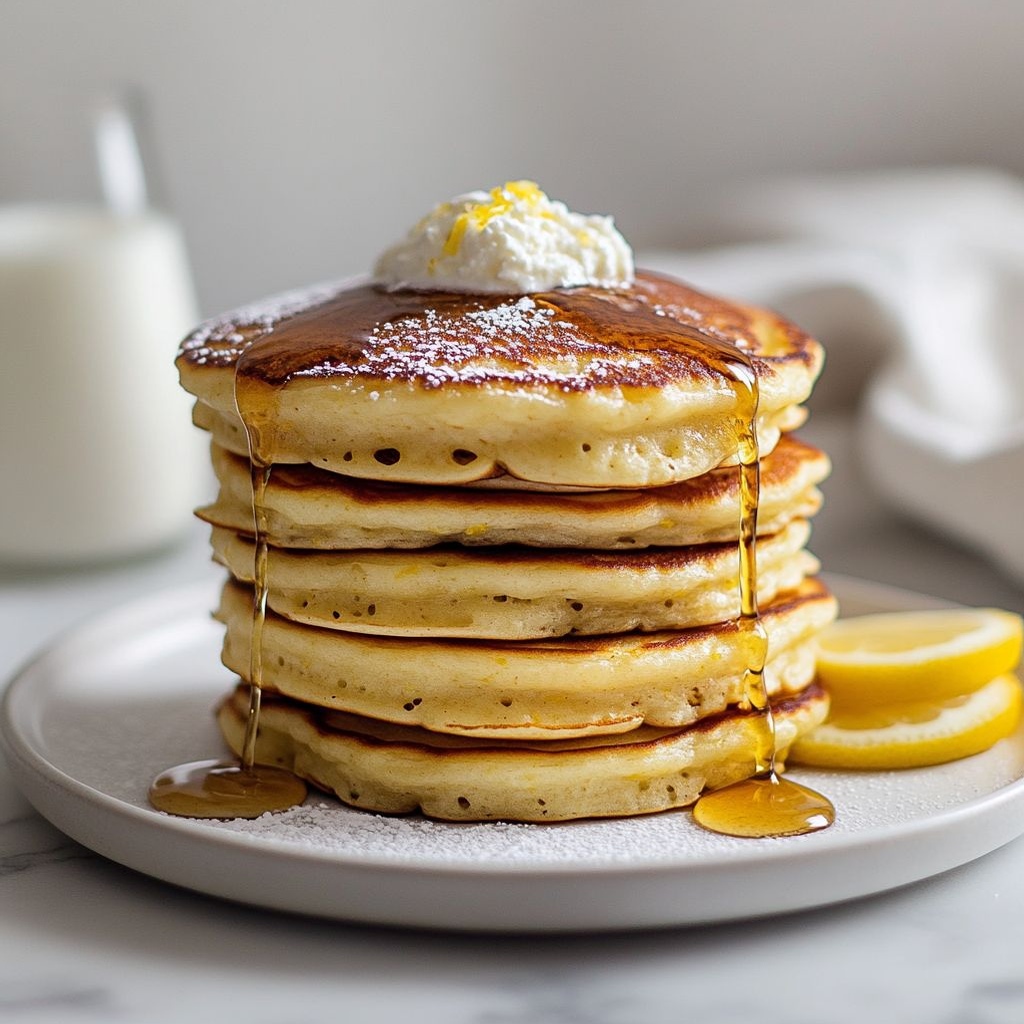
→ Keeping pancakes warm maintains texture and prevents chilling; light covering prevents drying out. - Serve the lemon ricotta pancakes warm with maple syrup, a dusting of powdered sugar if desired, and optional toppings such as extra ricotta, fresh lemon zest, and fresh berries to brighten the plate.
→ Warm syrup coats the cakes and the lemon aroma from zest and juice is enhanced; toppings provide creamy contrast and color for a polished presentation.
Notes
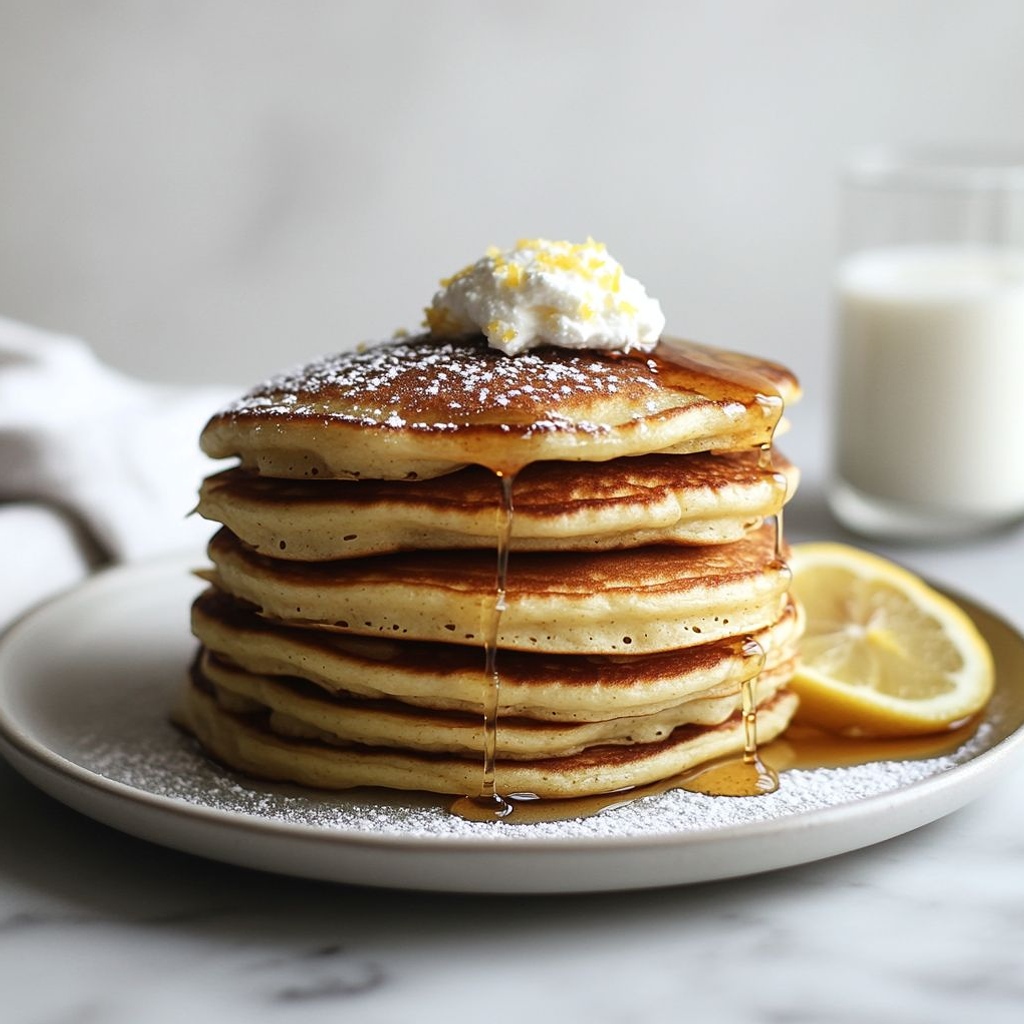
These lemon ricotta pancakes are light, fluffy, and bright with lemon zest and vanilla, thanks to the creamy ricotta that keeps the crumb tender. You can customize them by folding in fresh blueberries or a tablespoon of poppy seeds for texture, or swapping in a touch more lemon zest for a stronger citrus punch. They’re delicious with maple syrup, a dollop of extra ricotta, a dusting of powdered sugar, and a squeeze of lemon or a few fresh berries for garnish. For best results, whisk the ricotta until smooth, whisk the eggs with the wet ingredients, then fold the wet into the dry just until combined; let the batter rest 5–10 minutes so the leaveners activate and the batter thickens slightly. Cook on a lightly greased nonstick skillet over medium heat, using about 1 tablespoon butter per pancake (or a little neutral oil) and flipping when bubbles form and the edges look set. If you want gluten-free pancakes, use certified gluten-free all-purpose flour and ensure your baking powder is gluten-free; you may need to add a tablespoon more milk if the batter seems thick. They reheat well: freeze leftovers flat, then rewarm in a skillet or warm oven. For dairy-free options, substitute the ricotta with dairy-free ricotta or yogurt and use a dairy-free milk and gentle oil instead of butter. A final squeeze of lemon and extra zest just before serving boosts aroma and brightness.
Tips
Tips for Lemon Ricotta Pancakes
- Rest and activate: After mixing, let the batter sit for 5–10 minutes. This brief rest allows the baking soda to react with the lemon juice and ricotta, helping the pancakes rise for a lighter crumb. If using gluten-free flour, a short rest aids hydration as well.
- Keep dry and wet separate: Whisk the dry ingredients together, then whisk the wet ingredients (ricotta, eggs, milk, lemon juice, zest, vanilla) before combining to prevent clumps and ensure even leavening.
- Avoid overmixing: Stir until just combined. A few small lumps are fine—overworking the batter can make the pancakes dense and tougher.
- Ricotta prep: Whisk the ricotta until smooth. If it’s very thick, loosen with a tablespoon or two of milk. If it’s watery, drain a bit of whey for a smoother batter.
- Distribute lemon evenly: Zest and lemon juice should be evenly dispersed. Add zest gradually if you’re unsure of intensity, and taste a small bit of batter (if possible) to gauge brightness without bitterness.
- Flour substitutions: If using gluten-free flour, sift well and consider adding an extra tablespoon of milk if the batter seems very thick to pour.
- Consistency check: The batter should be thick but pourable. If it’s too thick, whisk in a splash more milk; if too loose, whisk in a teaspoon at a time of flour.
- Pan temperature: Preheat a nonstick skillet over medium heat. A drop of water should dance on the surface. If the pan is too hot, the pancakes will brown too quickly on the outside while remaining undercooked inside.
- Fat in the batter vs pan: Add the cooled melted butter to the wet ingredients to enrich flavor and help emulsify. If you prefer a lighter crumb, use a neutral oil for the fat and rely on ricotta for moisture.
- Size and portioning: Use about 1/4 cup of batter per pancake for evenly sized rounds that cook through evenly.
- When to flip: Look for bubbles across the surface and edges that look set. Flip once the underside is golden and the edges appear dry; avoid flipping too early to prevent tearing.
- Add-ins: If folding in blueberries or poppy seeds, toss blueberries in 1 tablespoon flour to keep them suspended and prevent sinking. Fold in gently to avoid breaking seeds or berries.
- Blueberry tips: If using frozen blueberries, thaw and pat dry to prevent extra moisture and color bleed into the batter.
- Flavor boosts: A pinch more lemon zest or a light drizzle of lemon honey can enhance brightness without thinning the batter. Finish with additional zest for aroma.
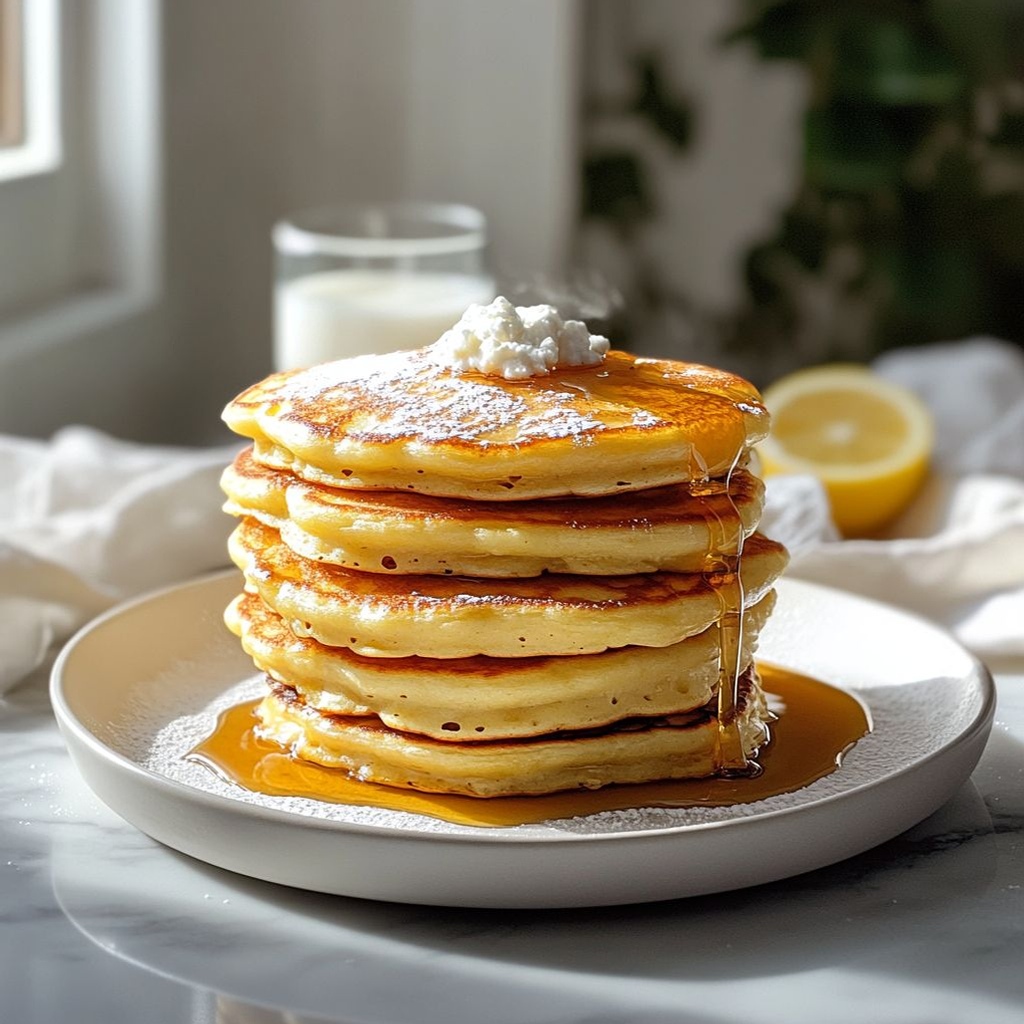
- Serving ideas: Warm maple syrup pairs beautifully. A dusting of powdered sugar, an extra dollop of ricotta, or fresh berries adds contrast and indulgence.
- Storing and reheating: Refrigerate leftovers in an airtight container for up to 2 days. Rewarm in a lightly oiled skillet over low heat, adding a splash of milk if they look dry.
- Make-ahead note: Batter can be made a few hours ahead and kept refrigerated, but for best texture, cook shortly after mixing. If refrigerating, stir gently before cooking as separation may occur.
FAQ
What are lemon ricotta pancakes?
Lemon ricotta pancakes are light, fluffy pancakes enriched with ricotta cheese for extra tenderness and a bright lemon flavor from zest and juice. The ricotta adds richness without heaviness, giving a moist, tender crumb.
What ingredients do I need to make them?
Basic ingredients you’ll need:
- All-purpose flour (or a gluten-free blend)
- Baking powder and a pinch of salt
- Sugar (adjust to taste)
- Ricotta cheese (whole or part-skim works)
- Eggs
- Milk (dairy or non-dairy)
- Lemon zest and fresh lemon juice
- Vanilla extract and a little melted butter or oil
Can I make the batter ahead of time?
Yes. You can mix the dry ingredients and the wet ingredients separately, then combine just before cooking. If you’d like, refrigerate the batter for 30–60 minutes to help it relax and thicken slightly. Avoid storing for too long, as pancakes are best fresh.
How do I prevent the ricotta from clumping in the batter?
Tips to avoid clumps:
- Whisk the ricotta with the eggs until smooth before adding the other liquids.
- Drain very wet ricotta or let it sit in a sieve for a few minutes if it’s particularly watery.
- Gradually whisk in the wet ingredients to maintain a smooth batter.
How do I get them fluffy?
For extra lift:
- Use fresh baking powder and don’t overmix the batter; mix until just combined.
- Let the batter rest 5–10 minutes before cooking.
- Optionally fold in softly beaten egg whites for extra lightness.
Can I adapt this recipe to be gluten-free or dairy-free?
Yes:
- Gluten-free: Use a 1:1 gluten-free flour blend and ensure it contains xanthan gum or add a pinch if not.
- Dairy-free: Substitute with a dairy-free ricotta (or use a silken tofu or dairy-free yogurt mix mashed until creamy) and dairy-free milk. You may need to adjust the batter with a touch more non-dairy milk.
How should I cook and flip the pancakes?
Cooking steps:
- Preheat a nonstick skillet or griddle over medium heat and lightly grease.
- Pour about 1/4 cup of batter per pancake, spreading to a circle.
- Cook 2–3 minutes until bubbles form on the surface and the edges look set.
- Flip gently and cook another 1–2 minutes until golden and cooked through.
How should I store or reheat leftovers?
Storage and reheating tips:
- refrigerate leftovers in an airtight container for up to 2 days.
- Reheat in a toaster or in a warm skillet, or briefly in the oven at 350°F (175°C) until warmed through.
- For longer storage, freeze individual pancakes and reheat directly from frozen.
What toppings pair best with lemon ricotta pancakes?
Great toppings include:
- Fresh berries (strawberries, blueberries, raspberries)
- Maple syrup or honey
- A dollop of yogurt or whipped cream
- Extra lemon zest or a light lemon curd drizzle
How can I adjust the lemon flavor or sweetness?
Adjust to taste:
- Increase lemon zest for more citrus brightness.
- Add a little more lemon juice for tartness, balancing with a touch more sugar if needed.
- Drizzle honey or maple syrup to introduce sweetness if you prefer a milder lemon note.