
Introduction / Hook
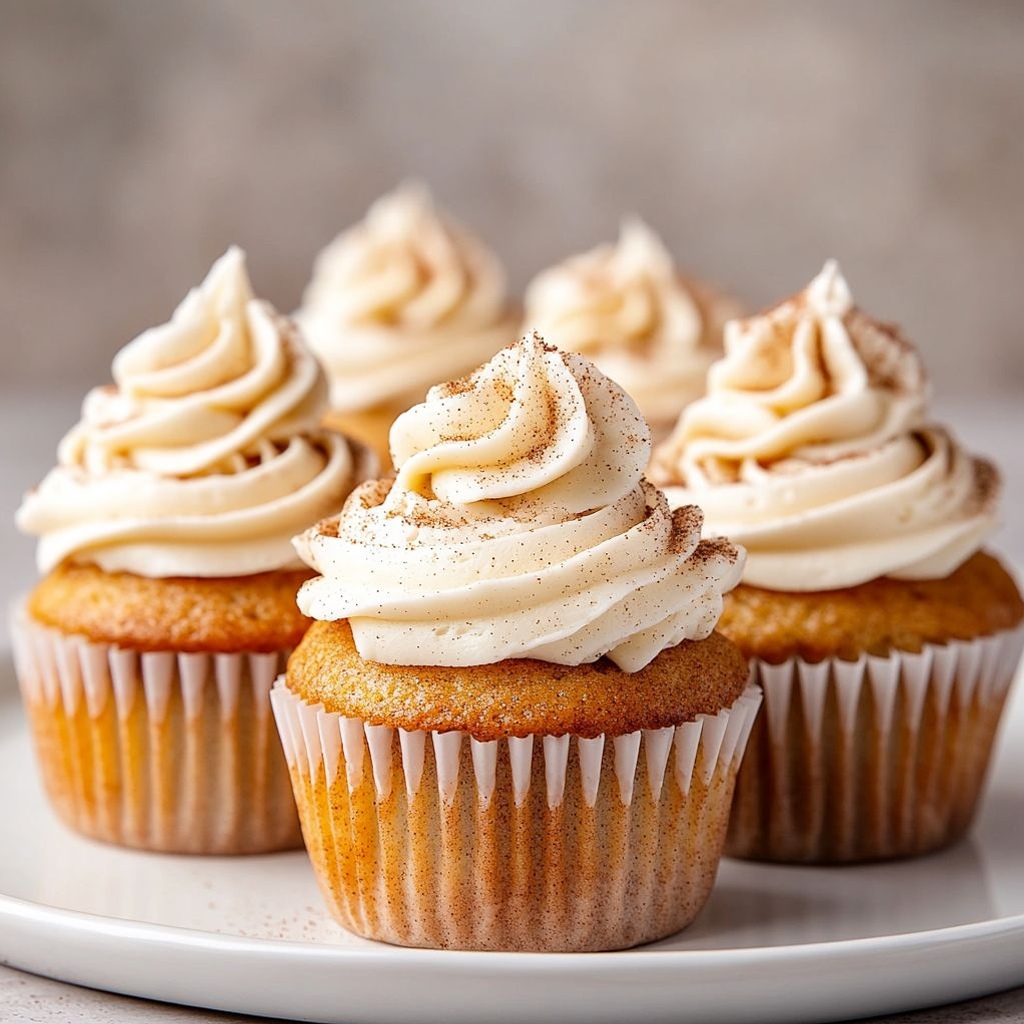
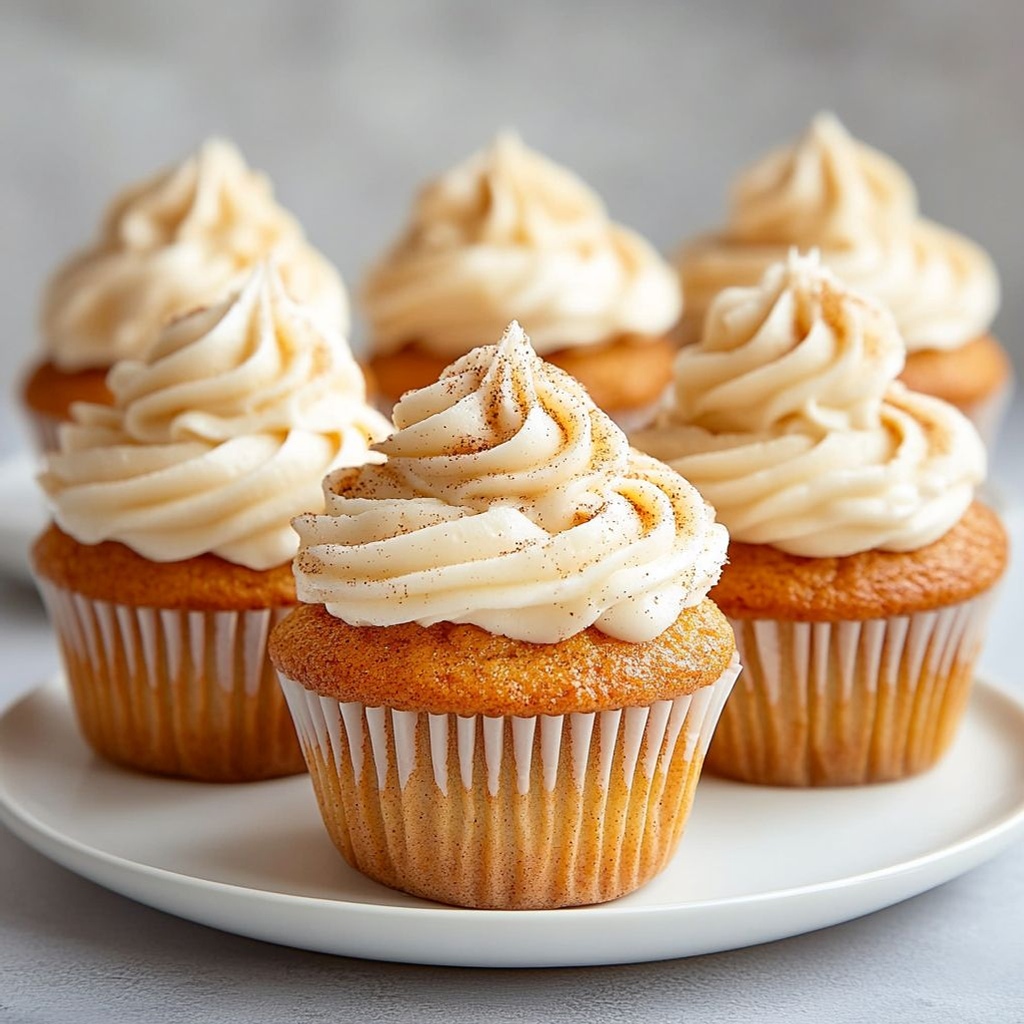
There’s something irresistibly comforting about the scent of cinnamon—a warm, toasty sweetness that seems to melt the day away. Now imagine that same comforting aroma wrapped into a cupcake, where every bite gives you a tender crumb, a whisper of spice, and a creamy, dreamy frosting that feels like a cozy hug. Cinnamon Roll Cupcakes are the charming mash-up you didn’t know you needed: the swirl of classic cinnamon rolls, reimagined as individual, portable treats that bake up light and fluffy, with the same caramel-kissed filling you love, and a frosting that elevates them to dessert status without losing their breakfast-heart. Picture a golden dome with a soft, cinnamon-gold interior, a delicate crack revealing a ribbon of cinnamon swirl, and a glossy cream cheese finish that hints at mornings spent at the kitchen counter, sleeves rolled up, making enough for the whole family—plus a few neighbors who wander by just in time for the sweet aroma to guide them straight to the cooling rack. The experience is multi-sensory: the first inhale of warm sugar and butter as they emerge from the oven; the gentle crack as you break into a cupcake to reveal its cinnamon spiral; the tangy-sweet glow of a rich frosting that clings to the crumb without overpowering it. And the flavor? Comforting, nostalgic, and totally irresistible—like a cinnamon roll and a cupcake had a delicious, flour-dusted conversation and decided to stay together forever.
The Story Behind the Dish
Cinnamon rolls themselves have a storied history that threads through European kitchens and American bakeries alike. The exact origins are a bit hazy, with cinnamon-sugar-softened dough appearing in various forms across Scandinavia, Central Europe, and beyond. In many families, cinnamon rolls became a weekend ritual—an opportunity to gather, mix, braid, and decorate as the house filled with the scent of butter and spice. Fast-forward to modern pastry culture, where bakers love to reinvent familiar favorites into approachable formats. Enter the Cinnamon Roll Cupcakes—a playful evolution that preserves the essence of the beloved pastry while translating it into a format that’s perfectly suited for celebrations, potlucks, or a Sunday brunch spread. The cupcakes offer the same delightful spiral of cinnamon-swirl through a tender crumb, but they present a neat, handheld alternative that’s easier to share and easier to portion. It’s a celebration of tradition with a wink of modern convenience, a nod to the nostalgia of home-baked cinnamon goodness, and a demonstration of how timeless flavors can be reimagined for today’s kitchen, without sacrificing warmth or depth. The idea is simple: take the comforting, iconic flavor profile of a cinnamon roll and embrace the cupcake as a vehicle for texture, sweetness, and visual appeal. The result is a dessert that feels familiar enough to comfort, yet fresh enough to feel special for a weekend brunch, a holiday morning, or a casual get-together with friends who appreciate a little whimsy with their sweetness.
Why You’ll Love This Recipe
- Comforting flavor that bridges breakfast and dessert: warm cinnamon, brown butter notes, and a tangy-sweet cream cheese frosting.
- Portable, shareable, and crowd-pleasing—perfect for parties, brunches, and potlucks where you want a treat that looks as good as it tastes.
- Approachable technique with big wow-factor visuals: the swirl inside each cupcake mimics the classic cinnamon roll ribbon in a neat, bite-sized package.
- Versatile foundation for customization: switch up spices, add a citrus zest, fold in chopped pecans or apples, or keep it classic for purists.
- Make-ahead-friendly: bake ahead of time and assemble frosting on the day of serving, or bake and frost in advance for an events-ready dessert.
- Kid-friendly yet sophisticated enough for adults: the flavor is universally appealing, with enough aroma and texture to impress.
- Option to adapt for dietary needs: with mindful substitutions, you can create vegan, gluten-free, or dairy-free versions that still deliver the signature Cinnamon Roll experience.
Flavor-Driven Highlights
The hallmark of these cupcakes is the balance between the sweet, molten warmth of cinnamon-sugar and the tangy cream cheese glaze. You get a soft crumb that’s sturdy enough to hold its shape while remaining melt-in-your-mouth tender. The cinnamon-to-butter ratio should feel generous but never overpowering, allowing the subtle caramel notes from brown sugar to shine through. A touch of vanilla or almond extract can round out the depth of flavor, giving the frosting and the cake a cohesive, comforting aroma. The result is a dessert that tastes like a cross between Sunday morning breakfast and a festive celebration—comforting, nostalgic, yet fresh enough to feel special in any season.
Flavor Profile & Texture
Texturally, Cinnamon Roll Cupcakes aim for three harmonious layers. First, the cupcake crumb itself—soft, airy, and lightly crumbly with a gentle spring when pressed. It’s a delicate base that carries the spice without becoming dry. Second, the cinnamon swirl, which you’ll imagine as a delicate ribbon of warm caramel-brown sugar and butter tucked within the cake. The swirl should be noticeable but not overwhelming, creating a contrast between the tender crumb and a slightly richer, sweeter interior. Finally, the frosting—cream cheese with a hint of vanilla, lightly sweetened to balance the cinnamon’s warmth, and perhaps a light glaze that adds a glossy finish. The frosting acts as a silk road between the light cake and the deeper flavors inside, providing tang to cut through the sugar and a creamy texture that complements the crumb. When you bite into one, you should experience a gentle providence of sweetness—enough to satisfy a dessert craving, yet mellow enough to pair with a mid-morning cup of coffee or a festive brunch punch. If you’re partial to more texture, you might add a sprinkle of chopped pecans or a touch of flaky salt on top for a playful contrast that wakes up the palate with a moment of crunch and a mineral brightness that heightens the cinnamon’s spice. In short, the flavor profile is cozy, balanced, and indulgent, designed to evoke fond memories while delivering a technically appealing bake that looks as delightful as it tastes.
Occasions & Pairings
These cupcakes are at home in a wide range of settings. They shine on weekend brunch tables when you want something a touch more impressive than standard pastries, yet not as fussy as a multi-layer cake. They’re perfect for holiday breakfasts, baby showers, birthday mornings, and office celebrations where a dessert that’s both charming and comforting goes a long way. Their handheld nature makes them ideal for potlucks and parties, where guests can easily grab one with a hot cup of coffee or tea. For pairing, think creamy, dairy-forward beverages that echo the frosting’s tang, such as a lightly brewed coffee, a latte, or chai. If you want something lighter, a sparkling citrus beverage or a berry-forward iced tea can cut through the richness while maintaining the cozy theme. Sides can be as simple as fresh fruit or a light yogurt-tinged dip, but you’ll find the cupcakes don’t require heavy pairings to feel complete; they stand on their own and still feel festive when plated with a few seasonal berries or a dusting of cinnamon sugar. For holiday spreads, consider presenting them on a tiered minimalist stand or a rustic wooden board, interspersed with small sprigs of rosemary and cinnamon sticks to keep the aromatic moment alive even as guests reach for seconds.
Tips, Variations & Substitutions
Here are ideas to tailor Cinnamon Roll Cupcakes to your tastes, dietary needs, or available ingredients. Each variation keeps the spirit of the classic cinnamon roll while offering a slightly different texture, flavor emphasis, or dietary alignment.
- Vegan version: use plant-based milk, dairy-free butter substitutes, and a vegan cream cheese for the frosting. You may need a touch more sugar or a pinch of lemon juice to balance tanginess, but the result will still feel indulgent and properly cinnamon-forward.
- Gluten-free option: select a gluten-free flour blend designed for baking that preserves tenderness. You might add a little extra liquid to maintain moisture, as some GF flours can yield a drier crumb.
- Nutty twist: fold in finely chopped toasted pecans or walnuts into the batter just before baking for added texture and a toasty flavor note that pairs beautifully with cinnamon.
- Citrus lift: add a small amount of finely grated orange or lemon zest to the batter or frosting to brighten the spice with a fresh, uplifting note.
- Brown butter enhancement: use browned butter in the batter for a deeper, nutty aroma that intensifies the caramelized edges of the cinnamon swirl.
- Buttery glaze: finish with a light glaze made from powdered sugar and a splash of milk or lemon juice for a glossy sheen and extra sweetness that mirrors the glaze on a traditional cinnamon roll.
- Spice variations: swap in cardamom, allspice, or a pinch of nutmeg to shift the aroma profile while staying within the cinnamon-forward family. Start with modest amounts and adjust to taste.
- Special occasion vibes: color the frosting with a small amount of natural coloring (like beet juice for pink or matcha for green) and top with decorative sprinkles shaped like cinnamon sticks or stars for holidays and celebrations.
- Smaller bite-size version: bake in mini muffin tins for bite-sized treats that are even easier to share and perfect for a tasting party or a festive brunch buffet.
- Make-ahead frosting: keep the frosting refrigerated and frost cupcakes just before serving to maintain peak texture and color; or frost ahead and refrigerate, bringing to room temperature before serving for a softer frosting.
Storage & Make-Ahead Ideas
To keep Cinnamon Roll Cupcakes at their best, consider these storage and make-ahead strategies. Proper handling preserves moisture, texture, and flavor without compromising the frosting’s tang or the crumb’s tenderness. If you plan to bake ahead, you can store the unfrosted cupcakes in an airtight container at room temperature for up to 2 days. For longer storage, they freeze well—cool completely, wrap individually, and place in a freezer-safe container or bag for up to 1 month. When you’re ready to serve, thaw at room temperature and frost just before presenting. If you prefer to bake and frost in advance, you can prepare the cupcakes and frost them, then cover and refrigerate for up to 24 hours. Bring them back to room temperature for about 30 minutes before serving to re-soften the crumb and let the frosting set to its best texture. For guests with dietary needs, make separate batches using your chosen substitutions and keep them clearly labeled to prevent cross-contamination. Lastly, keep the frosting in a cool, airtight container to prevent it from spreading too thin or absorbing odors from the fridge; bring it to a comfortable spreading consistency before using.
Fun Facts & Trivia (Optional)
The cinnamon roll’s association with warmth and hospitality stretches across cultures. Cinnamon itself has a history that reaches back to ancient trade routes, prized not only for flavor but for its aroma, which was believed to ward off stagnation and bring good luck in many traditions. In some European households, the ritual of baking cinnamon rolls on Sundays became a family tradition, a way to gather, chat, and start the week with a shared sweetness. The idea of translating that comforting pastry into a cupcake form is a reminder that great flavors don’t have to remain fixed in one shape. Also, the cinnamon roll’s classic pairing with cream cheese frosting is a testament to how two simple components—spice and tang—can create a dynamic, memorable dessert. Finally, the visual appeal of a cinnamon swirl silhouetted against a tender crumb resonates with bakers who love to see the artistry of swirling patterns—each cupcake a tiny work of edible art that captures the essence of family breakfasts, cozy mornings, and celebratory events alike.
Final Thoughts & Serving Ideas
Whether you’re baking for a crowd or treating yourself to a sweet luxury, Cinnamon Roll Cupcakes strike a perfect balance of nostalgia and novelty. They invite lingering conversations around the table, paired with a pot of coffee or a glass of cold milk. The aroma alone can turn a kitchen into a warm, inviting space, sparking conversations about favorite memories of weekend mornings and holiday breakfasts. When plated, these cupcakes offer a visually appealing centerpiece that feels both familiar and festive—an ideal choice for any occasion that calls for a little extra comfort and a lot of smiles. Enjoy experimenting with the variations and substitutions, and tailor the cupcakes to reflect your own kitchen’s personality. After all, the best recipes are the ones that travel with you, adapting to your tastes, your pantry, and the people you’re feeding. And if you find yourself sharing these Cinnamon Roll Cupcakes with friends and family, you’re not just serving dessert—you’re delivering a warm, edible reminder of home, hospitality, and the timeless joy of a treat that tastes like a hug in a sweet, spiced bite.
Ingredients
Cinnamon Roll Cupcakes
CUPCAKE BASE
- 2 1/2 cups all-purpose flour (or 2 1/2 cups gluten-free 1:1 baking flour)
→ Role: Provides the structure and body of the cupcakes. The flour type affects crumb and rise; if using a gluten-free blend, make sure it includes xanthan gum or add 1/4 to 1/2 teaspoon per cup of flour to mimic gluten. Preparation: sift with baking powder and salt to distribute evenly, then measure by spooning into the cup and leveling for accuracy. Tip: avoid overmixing once dry ingredients are added to keep the crumb tender. - 1 1/2 cups granulated sugar
→ Role: Sweetness, browning, and moisture through creaminess when creamed with butter. Preparation: cream with softened butter until light and fluffy to incorporate air for a light crumb; if you prefer a less sweet cupcake, you can reduce by a small amount. Tip: creaming time and temperature affect volume more than you might expect. - 1/2 cup unsalted butter, softened
→ Role: Tenderizes the crumb and adds rich flavor. Preparation: allow butter to come to room temperature and beat with sugar until pale and fluffy to trap air for a delicate texture. Tip: if butter is too soft, chill slightly and continue to beat; if too hard, it won’t emulsify properly. - 2 large eggs, room temperature
→ Role: Bind and structure, contributing to a stable crumb and tender rise. Preparation: let eggs warm to room temperature to promote even emulsification; add one at a time to prevent curdling. Tip: room temperature ingredients mix more evenly with cold batters, yielding smoother batter. - 1 cup whole milk, room temperature
→ Role: Moisture and tenderness; Preparation: ensure milk is at room temperature to prevent shocking the batter when combined with butter; Dairy-free alternatives can be used (e.g., almond or soy milk) with good results, though flavor will differ slightly. Tip: if using skim milk, the batter may be slightly lighter but less moist; consider adding an extra tablespoon of melted butter if needed. - 2 tsp baking powder
→ Role: Primary leavening for cupcakes. Preparation: sift with dry ingredients and ensure freshness for proper rise; Tip: old baking powder loses potency, so replace if it’s past its date. For extra lift, you can add 1/4 tsp baking soda if using a tangy element later. - 1/2 tsp baking soda
→ Role: Additional leavening and tenderizing; Preparation: balances acidity and helps browning; Tip: works best when paired with yogurt/sour cream or milk with a touch of acid in the batter. - 1/2 tsp salt
→ Role: Enhances flavor and balances sweetness; Preparation: whisk with the dry ingredients to ensure even distribution; Tip: blunting sweetness with salt can improve perceived depth of flavor. - 2 tsp vanilla extract
→ Role: Flavor base that rounds the sweetness of the batter. Preparation: use pure vanilla for a richer aroma; addition at the creaming stage ensures it’s evenly dispersed. Tip: if using vanilla beans, scrape the seeds for extra depth. - 1/2 cup plain yogurt or sour cream, optional
→ Role: Adds moisture, tenderness, and a slight tang that echoes cinnamon rolls. Preparation: whisk into the wet ingredients; if using yogurt, you can reduce the milk by 2 tablespoons to keep batter the right consistency. Tip: full-fat yogurt or sour cream yields a richer crumb; skip if dairy-free is required, or use dairy-free yogurt with similar fat content.
CINNAMON SWIRL
- 1/4 cup unsalted butter, melted
→ Role: Acts as a carrier for the cinnamon-sugar filling and gives moisture to the swirl. Preparation: let cool slightly before mixing with sugar and cinnamon to avoid cooking the eggs in the batter. Tip: using cooled butter helps the swirl stay where you place it rather than sinking to the bottom. - 1/3 cup packed light brown sugar
→ Role: Provides sweetness along with a caramel-like depth that complements cinnamon. Preparation: pack the sugar firmly for accurate measurement; whisk with cinnamon and a pinch of salt to distribute evenly. Tip: if you prefer a sweeter flavor, increase to 1/2 cup, but balance with extra cinnamon. - 2 tsp ground cinnamon
→ Role: Primary flavor for the cinnamon roll effect. Preparation: use freshly ground cinnamon if possible for a stronger aroma; sift to remove any clumps, then whisk with the brown sugar. Tip: for a more pronounced swirl, use 2 1/2 to 3 tsp; for a subtler swirl, keep at 2 tsp. - Pinch of salt
→ Role: Balances the sweetness and enhances spice aroma. Preparation: add to the cinnamon-sugar mixture to keep flavors well-rounded. Tip: omit if using salted butter, or adjust other salt accordingly.
CREAM CHEESE FROSTING
- 8 oz cream cheese, softened
→ Role: Tangy, creamy base that contrasts the sweetness of the cupcakes. Preparation: soften to room temperature and beat with a portion of the butter to create a smooth base; refrigerate briefly if too soft. Tip: avoid overheating the mixture to prevent grease separation; if it looks loose, chill and rebeat briefly. - 1/4 cup unsalted butter, softened
→ Role: Lightens the tangy cream cheese, helping with spreadability and piping control. Preparation: beat until completely smooth with the cream cheese; ensure there are no lumps. Tip: use softened butter to prevent graininess in the frosting. - 2 cups confectioners’ (powdered) sugar
→ Role: Sweetens and thickens frosting for piping. Preparation: sift to remove lumps, then beat gradually into the cream cheese mixture until smooth. Tip: adjust thickness by adding more sugar for stiffer piping or a splash of milk for a looser glaze—measure gradually to avoid over-thinning. - 1 tsp vanilla extract
→ Role: Flavor depth that rounds the tang of the cream cheese. Preparation: beat in with the sugar until evenly incorporated. Tip: use pure vanilla for best aroma; add a touch of salt if frosting tastes flat. - Pinch of salt
→ Role: Enhances sweetness and boundary flavors. Preparation: whisk into frosting to balance flavors; tip: skip if using salted butter.
OPTIONAL TOPPINGS
- 1/2 cup chopped walnuts or pecans, toasted (optional)
→ Role: Add crunch and a toasty contrast to creamy frosting. Preparation: toast nuts in a dry skillet over medium heat for 3–5 minutes or in a 350°F (175°C) oven for 6–8 minutes until fragrant; cool and chop finely for even distribution. Tip: toast enhances aroma; store leftovers airtight to maintain crunch. - Ground cinnamon for dusting
→ Role: Finish with aroma and visual appeal. Preparation: dust a light layer over the frosting just before serving to preserve scent; tip: a fine sieve provides a delicate, even coating. - Caramel sauce or maple glaze for drizzling (optional)
→ Role: Additional sweetness and a glossy finish. Preparation: drizzle after frosting has set to avoid sliding; store leftovers in the fridge and rewarm slightly before serving. Tip: use a thin drizzle to avoid overwhelming the cupcake structure.
Instructions
- Preheat your oven to 350°F (175°C) and line a 12-cup muffin tin with paper liners or grease it well.
→ This ensures the muffins do not stick to the tin and makes them easier to remove after baking, while liners help maintain a tidy crumb and clean edges on each cupcake. - Whisk together the dry ingredients: 2 1/2 cups all-purpose flour (or gluten-free 1:1 baking flour) with 2 tsp baking powder, 1/2 tsp baking soda, and 1/2 tsp salt until evenly distributed.
→ Proper distribution of leavening and salt prevents uneven rise and ensures a balanced flavor; sifting breaks up lumps for a tender crumb and accurate measurement. - Cream the 1/2 cup unsalted butter with 1 1/2 cups granulated sugar in a large bowl on medium speed until pale and fluffy, about 3–4 minutes.
→ Creaming traps air, which expands during baking to yield a light, tender crumb; scrape the bowl midway to ensure even incorporation. - Add 2 large eggs, one at a time, beating well after each addition until the mixture looks smooth and glossy.
→ Room-temperature eggs emulsify more evenly with butter, preventing curdling and creating a stable, homogeneous batter. - Beat in 2 teaspoons vanilla extract until fully incorporated.
→ Vanilla provides depth and aroma; distributing it early ensures an even fragrance throughout the batter rather than streaks. - In a separate bowl, whisk 1 cup whole milk with 1/2 cup plain yogurt or sour cream (if using) until smooth.
→ Yogurt or sour cream adds tenderness and a gentle tang that echoes cinnamon rolls; warming dairy to room temperature helps maintain a smooth emulsion when folded into the batter. - With the mixer on low, alternately add the dry ingredient mixture and the milk mixture to the butter-sugar-egg base, starting and ending with dry, mixing until just combined after each addition.
→ Alternating dry and wet ingredients prevents overdeveloping gluten (or its gluten-free equivalent) and yields a uniform, tender crumb; stop as soon as there are no visible dry streaks. - Prepare the cinnamon swirl by whisking together 1/4 cup melted unsalted butter, 1/3 cup packed light brown sugar, 2 tsp ground cinnamon, and a pinch of salt until smooth.
→ A cohesive swirl distributes cinnamon evenly without clumping; cooled melted butter helps the swirl stay suspended in the batter rather than sinking or cooking the eggs. - Divide the batter evenly among the prepared muffin cups to about one-third full, then spoon a teaspoon of the cinnamon swirl onto the center of each cup; use a toothpick or small skewer to gently swirl the filling into the batter, then cover with the remaining batter.
→ Layering with a swirl creates the signature cinnamon-roll ribbon; swirling too aggressively can push the filling to the surface or bottom, so aim for a gentle marble pattern. - Bake the cupcakes in the preheated oven at 350°F (175°C) for 18–22 minutes, or until a toothpick inserted into the center comes out with a few moist crumbs; rotate the pan halfway through to promote even browning.
→ The toothpick test confirms doneness without overbaking; rotation ensures uniform color and rise across all cups by mitigating oven hot spots. - Meanwhile, prepare the cream cheese frosting by beating 8 oz cream cheese and 1/4 cup unsalted butter in a medium bowl until smooth and creamy; gradually beat in 2 cups confectioners’ sugar, then beat in 1 tsp vanilla extract and a pinch of salt.
→ A smooth, cohesive frosting provides a glossy, scoopable finish that pipes cleanly; adding sugar gradually prevents graining and ensures stable texture. - Transfer the frosting to the refrigerator and chill for 10–15 minutes to firm slightly for easier piping.
→ A firmer frosting holds its shape when piped on top of cooled cupcakes and resists sliding off the curved surfaces. - Allow the cupcakes to cool completely on a wire rack before frosting to prevent the frosting from melting or sliding off.
→ Fully cooled crumbs provide a stable base for frosting, ensuring clean presentation and better flavor perception. - Pipe or spread the cream cheese frosting onto the cooled cupcakes in a smooth swirl or rosette, holding the bag at a 45-degree angle and applying even pressure to achieve a neat, uniform layer.
→ Proper piping technique yields an attractive finish and consistent frosting thickness; practice a steady wrist motion and stop before the tip touches the surface to avoid dragging frosting. - Optional toppings: sprinkle 1/2 cup chopped walnuts or pecans, toasted, and dust lightly with ground cinnamon; drizzle with caramel sauce or maple glaze after frosting has set.
→ Toasted nuts add crunch and aroma, while a cinnamon dust enhances aroma and visuals; a light glaze provides a glossy finish without compromising the frosting’s grip. - Store the finished cupcakes refrigerated in an airtight container for up to 3 days, and briefly rewarm before serving if desired.
→ Refrigeration slows spoilage and helps the frosting set; slight warming revives aroma and softens the crumb for a closer-to-fresh-baked experience.
Notes
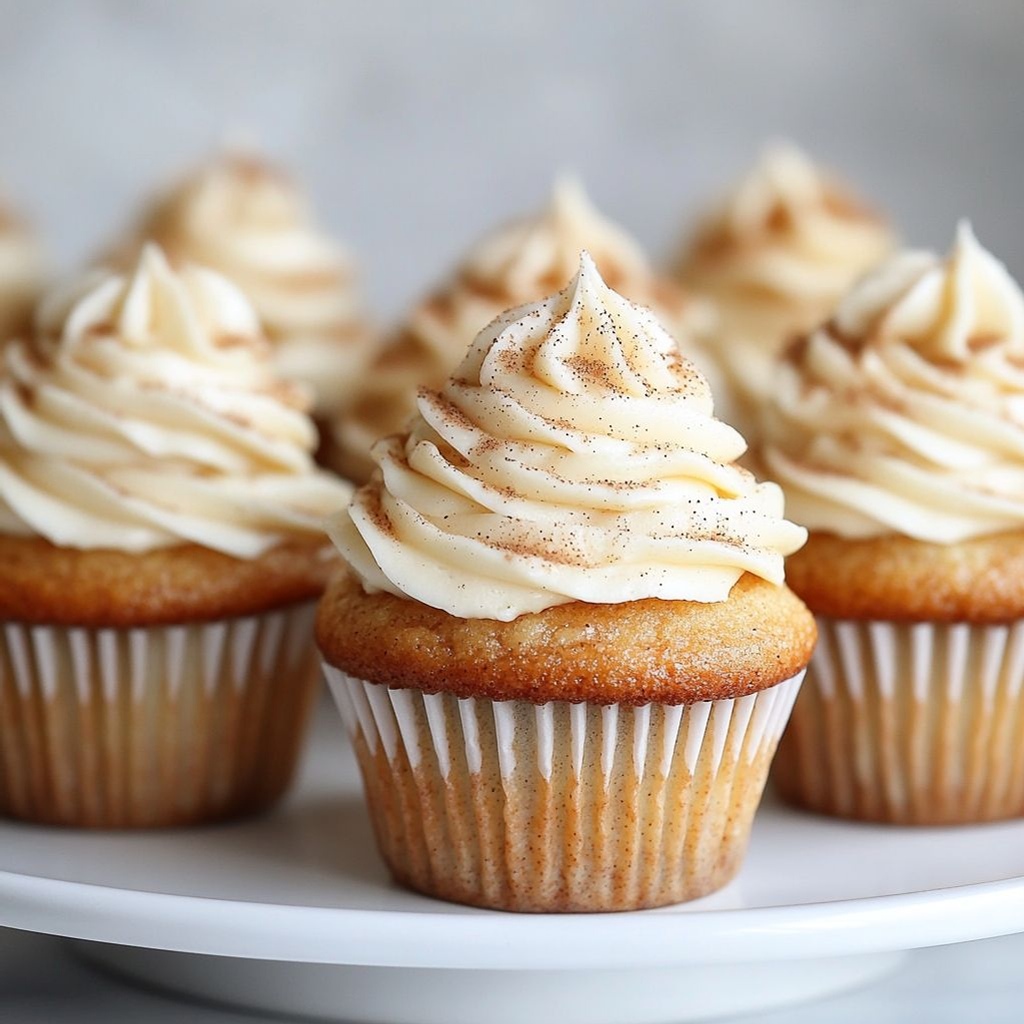
These cinnamon roll cupcakes are a cozy treat that captures the warm spice of cinnamon rolls in cupcake form. The tender vanilla cake and the swirled cinnamon-sugar filling with tangy cream cheese frosting pair beautifully for a celebratory breakfast or indulgent dessert. You can customize them by adjusting the amount of cinnamon in the swirl, stirring in chopped nuts for crunch, or adding a drizzle of caramel for extra sweetness. They freeze well when baked and cooled; freeze unfrosted to keep the crumb intact, then frost after thawing for best texture. For dairy-free versions, use plant-based cream cheese and butter substitutes and a dairy-free yogurt in the batter if desired. If you’re using gluten-free flour, make sure the blend includes xanthan gum or add 1/4 to 1/2 teaspoon per cup of flour to mimic gluten and keep the crumb tender. Use room-temperature ingredients to help emulsification and rise; avoid overmixing once the dry ingredients are added to maintain a light, open crumb. For frosting, soften the cream cheese and butter, beat until smooth, then gradually beat in powdered sugar and vanilla; chill briefly if it becomes too loose. Finish with a light dusting of cinnamon or a caramel drizzle just before serving. Store leftovers refrigerated for up to 4–5 days and rewarm slightly for best texture.
Tips
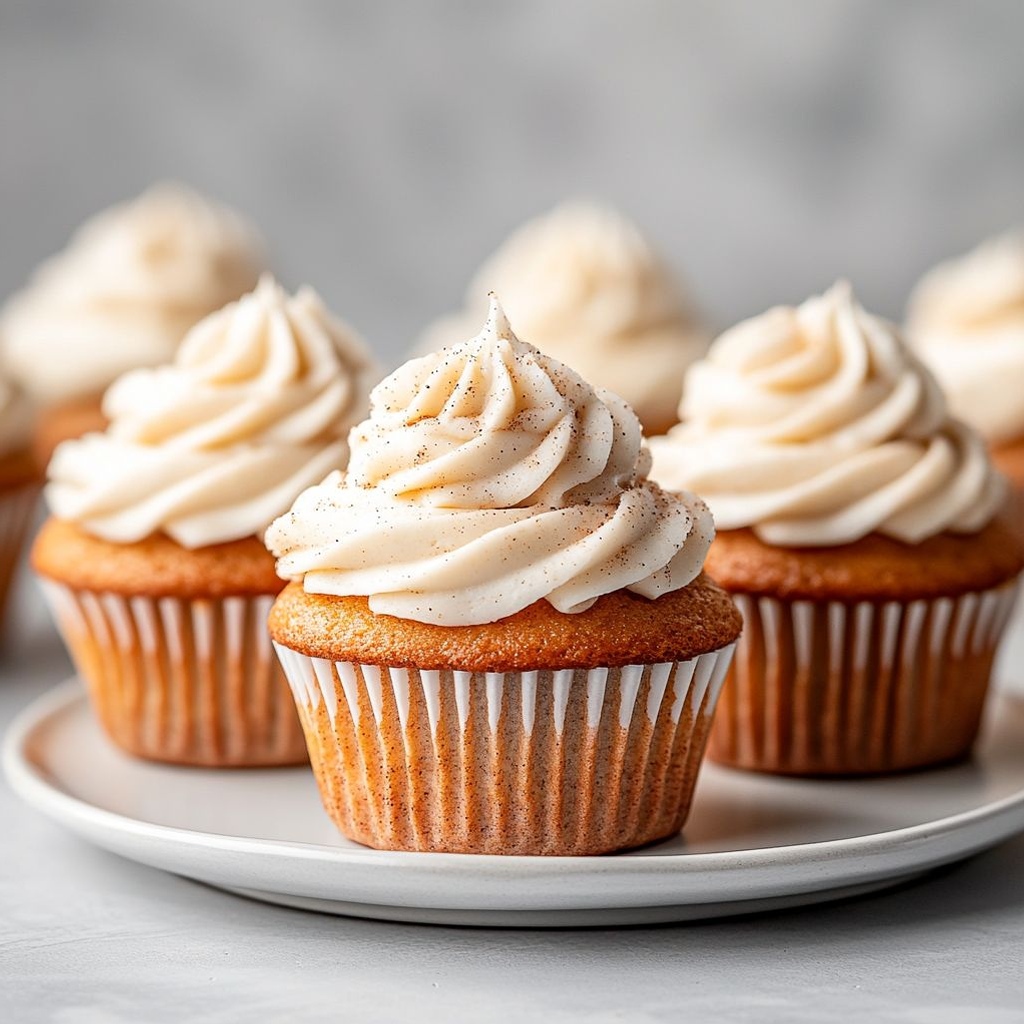
Tips and Tricks for Cinnamon Roll Cupcakes
- Room-temperature ingredients: Keep butter, eggs, and milk at room temperature before mixing to improve emulsification and a tender crumb. If short on time, place eggs in warm water for 5–10 minutes and measure milk warm rather than hot.
- Fresh leavening is key: Use freshly opened baking powder and baking soda for optimal rise. If your powder is older than 6 months, replace. For extra lift, you can add 1/4 tsp baking soda if you’re using a tangy dairy (yogurt) in the batter.
- Creaming matters: Cream the butter and sugar until pale and fluffy to trap air. This aeration helps light, fluffy cupcakes; under-creaming leads to denser texture.
- Flour guidance (gluten-free): If using gluten-free 1:1 blend, ensure it contains xanthan gum or add 1/4–1/2 tsp per cup of flour to mimic gluten. Sift with baking powder and salt to distribute evenly; avoid overmixing once dry ingredients are introduced.
- Texture control with mix-ins: Do not overmix after adding dry ingredients; mix until JUST combined to maintain a tender crumb.
- Cinnamon swirl technique: To prevent the swirl from sinking, cool melted butter slightly before mixing with brown sugar and cinnamon, and layer batter and swirl in two steps: 1) fill cups halfway with batter, 2) spoon cinnamon swirl and lightly swirl with a toothpick, then top with remaining batter. This creates distinct cinnamon ribbons.
- Even lift and dome control: Fill cupcake tins 2/3 full to prevent doming; rotate trays halfway through baking for even browning.
- Temperature and doneness: Bake at 350°F (175°C) and start checking around 18–20 minutes for doneness with a toothpick (a few moist crumbs are okay). If tops brown too fast, tent with foil briefly.
- Cream cheese frosting stability: Soften cream cheese and butter to room temp, then beat until completely smooth before adding sugar. Add powdered sugar gradually and fold in to maintain gloss. If frosting looks loose, refrigerate 15–20 minutes to firm up before piping; if too stiff, whisk in a teaspoon of milk or cream until smooth.
- Flavor balancing: A pinch of salt in the frosting enhances sweetness; a touch of vanilla adds depth; consider a tiny pinch of cinnamon in the frosting for a cohesive cinnamon-forward dessert.
- Make-ahead and storage: Frosted cupcakes are best the same day; you can refrigerate unfrosted cupcakes up to 2 days and frost before serving. Unfrosted cupcakes freeze well for up to 2–3 months; thaw at room temperature and frost fresh for best texture. Frosting can be made a day ahead and stored refrigerated; bring to room temperature and rebeat before piping.
- Toasting nuts and toppings: If using toasted walnuts or pecans, cool completely before topping to keep crunch; dust with a little extra cinnamon for aroma before serving. For drizzle, apply caramel or maple glaze after frosting has set to avoid sliding.
- Allergen-friendly option: For dairy-free, use dairy-free yogurt or sour cream, dairy-free butter substitutes, and a plant-based cream cheese; note flavor and texture may vary slightly.
FAQ
What are cinnamon roll cupcakes?
They are vanilla cupcakes that are swirled with a cinnamon-sugar filling and topped with a tangy cream cheese frosting, designed to capture the flavors of a cinnamon roll in a convenient cupcake form.
What ingredients do I need for the batter, filling, and frosting?
For about 12 cupcakes:
Batter: 1 1/2 cups all-purpose flour, 1/2 cup granulated sugar, 1 1/2 tsp baking powder, 1/4 tsp salt, 1/2 cup milk (dairy or non-dairy), 1/4 cup unsalted butter (melted), 1 large egg, 1 tsp vanilla extract.
Cinnamon swirl filling: 1/4 cup unsalted butter (melted), 1/3 cup light brown sugar, 2 tsp ground cinnamon.
Cream cheese frosting: 4 oz cream cheese (softened), 3 tbsp unsalted butter (softened), 1 cup powdered sugar, 1/2 tsp vanilla extract, 1–2 tbsp milk (as needed).
Optional glaze: a few teaspoons milk with powdered sugar to reach desired pourable consistency.
Notes: For dairy-free versions, use plant-based milk and dairy-free cream cheese/butter; for gluten-free, use a 1:1 gluten-free flour blend that contains xanthan gum if your mix requires it.
What equipment do I need?
Muffin tin with paper liners, mixing bowls, whisk or electric mixer, spatula, small spoon or cookie scoop, toothpicks for swirling, cooling rack, and measuring cups/spoons.
How do I prepare the cinnamon swirl filling?
Combine the melted butter, brown sugar, and cinnamon in a small bowl until smooth. This mixture should be thick enough to hold its shape when dolloped into the batter. Set aside until ready to use.
What temperature and how long do the cupcakes bake?
Preheat to 350°F (175°C). Fill lined muffin cups about 2/3 full with batter, add a small dollop of the cinnamon filling, then cover with a bit more batter. Bake 18–22 minutes, or until a toothpick inserted into the center comes out with a few moist crumbs. Rotate the pan halfway through for even baking.
How do you make the cream cheese frosting?
Beat the cream cheese and butter together until smooth and creamy. Gradually add powdered sugar, then vanilla. If the frosting is too thick, add a little milk a teaspoon at a time until it reaches a spreadable consistency. Chill 10–15 minutes before piping if you want it firmer.
How should I assemble and bake the cupcakes?
Line a muffin tin and pre-portion batter into each liner (about 2/3 full). Spoon or dollop a portion of the cinnamon swirl filling onto the batter in each cup, then cover with a little more batter. Use a toothpick or skewer to gently swirl the filling into the batter for a marbled effect. Bake as directed, cool completely, then frost with the cream cheese frosting. Optional: drizzle with a light glaze.
How should I store leftovers and how long do they keep?
Store cupcakes in an airtight container in the refrigerator for 3–4 days. Bring to room temperature before serving for best texture. You can freeze unfrosted cupcakes for up to 2 months; thaw in the refrigerator and re-frost before serving. Frosted cupcakes can also be frozen, but the frosting may become a bit softer after thawing.
Can I make these ahead or freeze them?
Yes. You can mix the batter and swirl filling, then refrigerate the batter for up to 12 hours before baking. For freezing, freeze baked (unfrosted) cupcakes in airtight containers; thaw and then frost. Freezing the batter or unbaked batter in the pan is more delicate, so freeze baked or unfrosted cupcakes instead for best results.
Can I adapt this recipe for gluten-free, dairy-free, or vegan diets?
Yes. For gluten-free, use a 1:1 gluten-free flour blend that contains xanthan gum. For dairy-free, substitute with plant-based milk and dairy-free cream cheese and butter for the frosting. For vegan, you can replace the egg with a flax egg (1 tablespoon ground flaxseed + 3 tablespoons water, per egg) and use a vegan cream cheese and vegan butter for the frosting; ensure any glaze uses a vegan milk. Keep in mind that texture may vary slightly with substitutions, especially for gluten-free or vegan versions.