Introduction / Hook
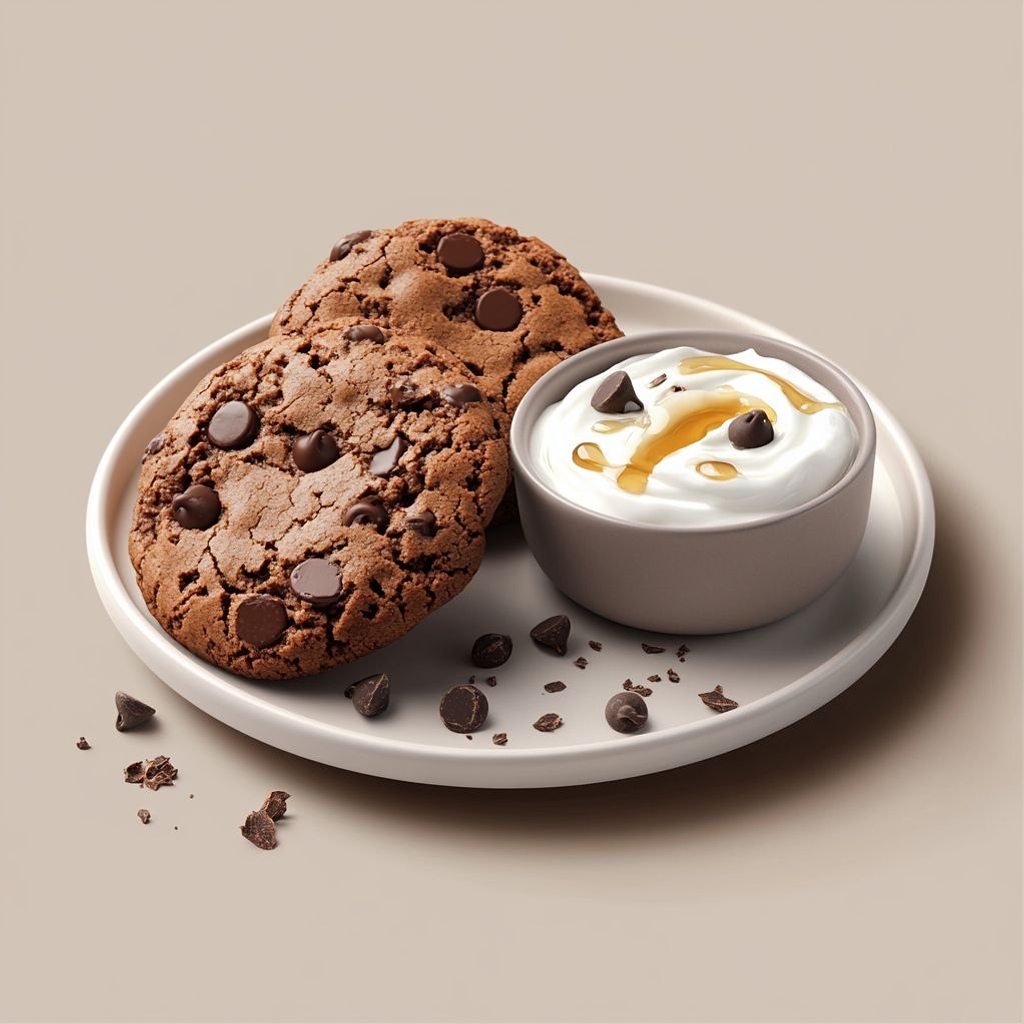
There’s something irresistibly comforting about a cookie that feels both familiar and a touch unexpected. Greek yogurt in a chocolate cookie might sound unconventional at first, but take a bite and you’ll discover a symphony of textures and flavors that feels destined to become a weekday ritual and a weekend treat all at once. Imagine a tender, almost fudgy center that clings to the palate, offset by a delicate lift from the yogurt’s tang—like a secret you uncover in the very first bite. The aroma wafts through the kitchen as chocolate metropolitans—the deep, glossy scent of cocoa—mingles with a subtle dairy brightness that hints at cozy breakfasts and late-night indulgences alike. These cookies are the kind that disappear quickly from a plate, leaving behind a sense of soft nostalgia and a promise that tomorrow you’ll bake them again, just to chase that first magical bite once more.
What makes them especially inviting is not just their flavor, but their texture and the story they tell. They’re not the dry, crumbly kind you might expect from a classic chocolate cookie; they’re moody, moist, and marvelously chewy, with a crisp edge that provides the perfect contrast. The Greek yogurt acts as a culinary bridge—adding moisture without heaviness, a whisper of tang that brightens the chocolate, and a tenderness that stays with you long after the last crumb has vanished. It’s a dessert that knows how to keep a secret: you’ll savor the first bite, then discover new notes with every subsequent nibble, as if the cookie is revealing its personality layer by layer.
The Story Behind the Dish
Greek yogurt has traveled a long, delicious path from the table of Mediterranean households to the modern pantry, where it has earned a reputation for velvet creaminess and a bright, tangy bite. Its rise is intertwined with the history of yogurt itself—an ancient technique of fermenting milk that civilizations refined across continents. What makes Greek yogurt distinct is straining away much of the whey, leaving a thicker, richer product that behaves differently in baked goods. Bakers discovered that this creaminess could replace heavier fats or enrich texture without making cookies feel heavy or greasy. The result? Cookies that offer a dance of moisture and structure, with a crumb that stays soft even after cooling, rather than drying out as some traditional cookies do.
In many kitchens—Greek, Mediterranean, and beyond—yogurt has long been a partner to dark chocolate, balancing bitterness with a touch of lactic sweetness. The idea of pairing yogurt with chocolate isn’t new in dessert theory, but translating it into a cookie format invites playful experimentation: you get the best of both worlds—a pillowy interior from the yogurt and a glossy chocolate exterior that crackles slightly when warm. This particular riff on chocolate cookies honors that heritage while offering a modern twist. It’s a nod to the way traditional ingredients can be repurposed to create something that feels both nostalgic and contemporary—perfect for sharing with family and friends who crave comfort without compromising on nuance.
For many cooks, yogurt in baking is a reminder of improvised breakfasts that turn into a sweet afternoon snack. It’s the magic of using what you have in the pantry to create something you’ll be proud to present to guests or to enjoy with a mug of tea after a long day. The cookies embody that ethos: simple, honest ingredients transformed through intention and care into something greater than the sum of its parts. They’re a testament to the idea that comfort foods can surprise us with subtle sophistication, and that texture—soft center, delicate crumb, slightly crisp edges—can elevate a humble chocolate recipe into something worthy of a special moment.
Why You’ll Love This Recipe
- Moist, chewy interior thanks to the Greek yogurt, which keeps the cookies tender without making them sappy or heavy.
- Bright chocolate flavor tempered by a tangy undertone that lingers pleasantly on the palate.
- Simple pantry ingredients come together quickly, making these cookies ideal for spur-of-the-moment baking sessions.
- Versatile texture with a satisfying bite—crisp edges that give way to a soft center—perfect for dunking in milk or coffee.
- Family-friendly and crowd-pleasing—they strike a balance between indulgence and approachability, suitable for gatherings, school lunches, or a cozy night in.
- Adaptable for diets with smart substitutions (gluten-free flours, dairy-free yogurt options) that keep the spirit of the recipe intact.
- Great make-ahead potential—dough can rest in the fridge to deepen flavor, or be frozen for future baking emergencies when the cookie craving strikes.
Notes on Accessibility and Flavor Layers
One of the delights of this recipe is how you can tailor it to your taste without sacrificing the magic of yogurt’s role. If you’re a purist who loves deep chocolate, you can use a high-percentage cacao or add a pinch of espresso powder to intensify the chocolate notes. If you prefer a lighter sweetness, you can adjust sugar levels or opt for a small amount of coconut sugar for a hint of caramel. The yogurt offers not just moisture but a gentle acidity that makes the chocolate pop, and you can scale that brightness up or down by choosing a yogurt with a stronger or milder tang. The result is a cookie that feels custom-made for your kitchen and your mood, whether you’re baking for a cozy family night or for gifting to friends who adore chocolate with a sophisticated edge.
Flavor Profile & Texture
At first glance, these cookies present a glossy, inviting surface that hints at the softness inside. When you bite in, you’ll notice a multi-layered flavor experience: a rich, cocoa-forward profile with a subtle, almost vanilla-like sweetness that’s tempered by the yogurt’s tang. The tang is not sharp; it’s a gentle luminosity that lifts the chocolate, making the chocolate notes seem more vibrant rather than cloying. The texture is where the magic truly reveals itself. The exterior catches a slight crisp, providing a delicate snap as you bite, but the interior remains remarkably soft and tender—like a cross between a classic chewy cookie and a brownie’s fudgy heart. The yogurt keeps the crumb cohesive, preventing the dough from drying out while still allowing the cookies to hold their shape after cooling. It’s a balance of moisture and structure that makes you want to reach for another, and another, until the plate is nearly empty.
The balance of flavors can be described as a quiet, luxurious dance. The chocolate brings depth and comfort—the kind of familiarity that makes your senses feel grounded. The yogurt introduces a fresh, bright note that cuts through the richness, ensuring the sweetness never overwhelms. If you ever wonder how to achieve that perfect cookie texture—soft, not cakey, moist but not gummy—this approach offers a reliable blueprint: yogurt as the quiet collaborator that elevates both taste and texture, without stealing the spotlight from chocolate’s charisma.
Occasions & Pairings
These cookies are versatile enough to shine in a variety of settings, from everyday snacking to special occasions. Here are some ideas for serving and pairing:
- Weeknight indulgence: bake a small batch for a comforting finish to dinner or a late-night treat with a glass of milk or a cup of tea.
- Afternoon tea or coffee breaks: the cookies’ chew and chocolatey aroma pair beautifully with hot beverages, especially dark roast coffee or a cappuccino with a light dusting of cocoa.
- Cookie exchanges and gifting: package cookies in decorative tins or bags for thoughtful, homemade gifts that travel well when kept in airtight containers.
- Family celebrations: a tray of these cookies can stand in for richer desserts at casual gatherings, offering adult-friendly sophistication with kid-friendly familiarity.
- School lunches and picnics: they hold up well in lunchboxes and can be enjoyed at room temperature, making them practical for on-the-go cravings.
Suggested pairings include a tall glass of a creamy beverage, such as a latte or a frothy milkshake, as well as delicate accompaniments like vanilla bean ice cream, a dollop of whipped cream, or a scattering of flaky sea salt to heighten the chocolate’s edge. For a more indulgent dessert course, serve with a small dish of berry compote or chocolate sauce to create a dual texture experience—soft cookies meeting a glossy, slightly tart fruit note.
Tips, Variations & Substitutions
Happy experimentation is the heart of baking, and this recipe is a friendly canvas for customization. Here are practical ideas to tailor the cookies to your preferences, dietary needs, or pantry inventory:
- Yogurt variations: use full-fat Greek yogurt for a richer mouthfeel, or Greek-style yogurt with 2% fat for a lighter result. For dairy-free options, swap in a high-quality plain dairy-free yogurt (almond, coconut, or cashew) that contributes creaminess without overpowering other flavors.
- Flour adaptations: the base is forgiving. If you need gluten-free, try a 1:1 GF flour blend that behaves similarly to all-purpose flour. For a nuttier profile, substitute a portion of the flour with finely ground almond flour, but adjust the hydration as needed to maintain the dough’s cohesion.
- Sweetness control: you can adjust the sugar to suit your taste. If you prefer less sweetness, reduce granulated sugar by a few tablespoons and add a touch of maple syrup or honey for a gentle caramel note. If you crave extra richness, a tablespoon of brown sugar can deepen the flavor and enhance moisture.
- Chocolate variations: swap in semisweet or dark chocolate chunks, or fold in a mix of chips—dark for intensity and milk chocolate for a mellower finish. A pinch of espresso powder enhances chocolate aroma without turning it into a coffee-flavored cookie.
- Add-ins: a handful of toasted nuts (walnuts, hazelnuts) adds crunch; a scattering of flaky sea salt on top just before baking elevates the chocolate’s presence. Dried cherries or orange zest can introduce bright, fruity notes that play off the yogurt tang.
- Texture tweaks: for a chewier center, chill the dough briefly before portioning and flatten the cookies slightly for uniform thickness. For thicker cookies with a more pronounced center, use less spreading dough and keep them spaced further apart on the baking sheet.
- Flavor twists: fold in a teaspoon of vanilla bean paste or a hint of almond extract to enhance the nutty sweetness of the yogurt. A pinch of smoked paprika can surprise with a subtle, savory edge for a unique dessert experience.
- Vegan option: use a dairy-free yogurt and a plant-based butter substitute that operates well in cookies, keeping in mind that texture may vary slightly due to the water content in non-dairy yogurts.
Storage & Make-Ahead Ideas
One of the practical joys of cookies is how well they adapt to advance planning. Here are reliable strategies to maximize flavor and texture while keeping kitchen time efficient:
- Make-ahead dough: you can refrigerate the dough for up to 3 days before baking. Chilling helps deepen flavors and controls spread, resulting in cookies with a more uniform shape and a more pronounced center chew.
- Freezing dough: portion the dough into balls and freeze on a sheet tray, then transfer to a freezer bag. Frozen dough balls bake directly from the freezer with a few extra minutes of bake time. This is ideal for spontaneous cookie cravings or stocking the freezer for gatherings.
- Leftover baked cookies: store in an airtight container at room temperature for up to 3 days. For longer storage, freeze baked cookies in a single layer, then transfer to a bag; they’ll stay good for up to 2 months. Reheat gently in a low oven or a quick 15-second microwave interval to refresh their softness.
- Texture maintenance: to maintain chewiness, avoid leaving cookies exposed to air for extended periods. A quick reheat can restore and refresh texture, but best results are achieved when they’re kept sealed and consumed within a few days.
Fun Facts & Trivia (Optional)
Did you know that yogurt itself is a byproduct of fermentation—an ancient technique that has been used to preserve and transform dairy into something both nourishing and delicious? The tang in yogurt comes from lactic acid produced by beneficial bacteria during fermentation, a process that not only adds brightness to desserts but can also aid in digestion for some people. The term yogurt originates from Turkish and Persian roots, reflecting a long history of dairy culture that thrived in climates where fresh milk could be transformed into a tangy, spoonable delight with remarkable staying power. When yogurt is incorporated into baking, it often replaces some fat or adds moisture, but what makes it special is how it interacts with gluten or flour to influence crumb structure. In cookies, the yogurt particles can help create a more tender crumb, reducing the risk of a dry bite while still allowing the cookie to hold its shape and showcase a glossy exterior that hints at its fudgy interior.
Beyond the science, there’s a cultural layer to Greek yogurt that resonates with many home cooks. It evokes images of sunlit breakfasts, bowls of creamy yogurt crowned with honey, walnuts, and fresh fruit, and the Mediterranean kitchen’s balance of bright acidity, rich dairy, and stone-ground chocolate decadence. Bringing that balance into a chocolate cookie is a nod to shared plates, late-night conversations, and the joy of turning pantry staples into something that feels special. It’s a reminder that cookies aren’t just desserts; they’re a way to tell a story with flavors that echo memories, travels, and the comfort of home.
Ingredients
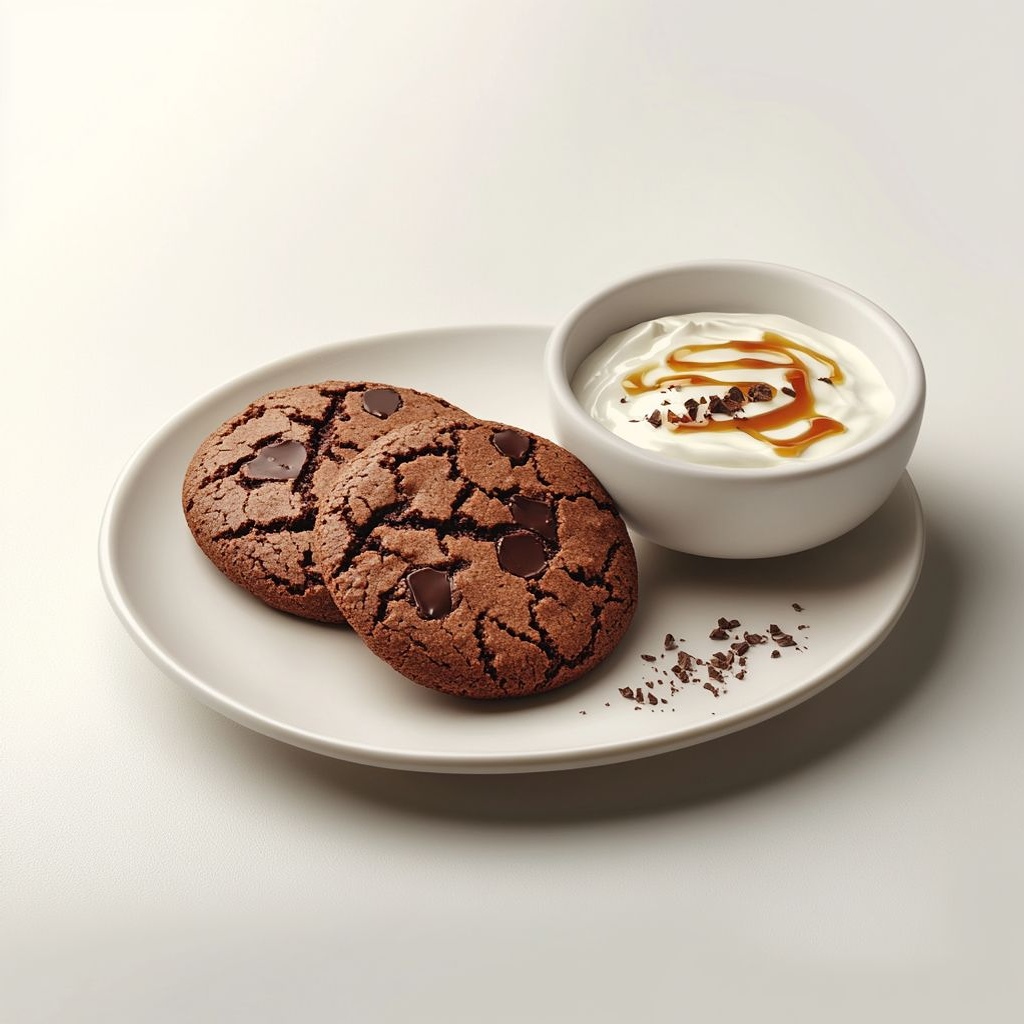
- 1 3/4 cups all-purpose flour
→ All-purpose flour provides the structure for the cookies. It forms the gluten network that gives the cookies their chew and body, while still allowing the dough to spread into a classic round shape as it bakes. Measure by gently spooning flour into the cup and leveling off to avoid packing. If you need a gluten-free version, substitute with a 1:1 gluten-free all-purpose flour blend for a similar texture. - 1/2 teaspoon baking soda
→ Baking soda acts as a leavening agent and also contributes to browning and spread. It reacts with the acidity from the Greek yogurt to produce a gentle lift, helping cookies stay tender rather than dry. Ensure even distribution by whisking with the dry ingredients. - 1/4 teaspoon baking powder
→ Baking powder provides a secondary lift and a lighter crumb. It helps cookies puff slightly in the center while the edges set, resulting in a balanced texture. Always sift or whisk into the flour to avoid uneven pockets of leavening. - 1/4 teaspoon fine salt
→ Salt enhances overall flavor and helps balance the sweetness. If you use salted butter, reduce this amount by half. Dissolve in the dry mixture for even distribution. - 1/2 cup unsalted butter, melted and cooled
→ Melted butter creates a chewy, rich cookie with a glossy crumb. The fat coats flour to limit gluten development, yielding a tender texture. Allow the butter to cool slightly to prevent cooking the egg or yogurt when added. For deeper flavor, browned butter can be used, but cool before mixing. - 3/4 cup granulated sugar
→ White sugar provides sweetness and helps with browning and crisp edges. It also contributes to spread as the cookies bake. Keep at this amount to avoid overly dry crumbs; you can adjust slightly for softer cookies. - 1/2 cup light brown sugar, packed
→ Brown sugar adds moisture and chewiness due to its molasses content, giving a softer center and richer flavor. Pack the sugar to ensure consistent moisture. If your brown sugar is very dry, warm the bag briefly or add a teaspoon of water to refresh. - 1 large egg
→ Egg acts as a binder and helps set the structure. At room temperature, eggs emulsify more easily with butter, yogurt, and sugar, resulting in an even texture. If eggs are cold, they’ll chill the dough momentarily, but will smooth with mixing. - 1/2 cup plain Greek yogurt
→ Greek yogurt adds moisture and tenderness with a tangy note, while also boosting protein for a softer crumb. Use full-fat yogurt for best flavor and structure; whisk until smooth to avoid lumps. If very thick, whisk in a teaspoon of water to loosen slightly. - 1 teaspoon pure vanilla extract
→ Vanilla enhances overall flavor, harmonizing with the yogurt’s tang and the chocolate sweetness. Use pure vanilla extract for a richer aroma; avoid imitation vanilla for the best depth of flavor. - 1 cup semisweet chocolate chips or chopped chocolate
→ The star of the cookies, chocolate provides sweetness and melty pockets of goodness. Chips distribute easily; if using chopped chocolate, cut into ~1/2 inch chunks for noticeable bites. Fold in gently to avoid overwork; chilling the dough briefly can improve distribution.
- 1/2 cup chopped walnuts or pecans, toasted (optional)
→ Adds a satisfying crunch and nutty contrast to the soft cookie. Toasting brings out the nutty oils and aroma; cool completely before folding into dough. Chop into roughly 1/4 inch pieces for even distribution. - 1/2 cup extra semisweet chocolate chips or chunks (optional)
→ For a more chocolate-forward cookie, add an additional batch of chips or chunks. Fold in after combining the dry ingredients to keep chips evenly dispersed without sinking. - 1/4 cup sweetened shredded coconut (optional)
→ Light coconut texture and a hint of tropical flavor. If using, gently toast the coconut to heighten aroma before stirring into the dough. Use in small amounts to avoid overpowering the chocolate and yogurt. - Pinch flaky sea salt, for finishing (optional)
→ Finishing salt enhances chocolate flavor and balances sweetness. Sprinkle a small pinch over warm cookies right after baking to help the salt adhere and intensify the chocolate notes.
Instructions
- Preheat your oven to 350°F (175°C) and line a baking sheet with parchment paper or a silicone baking mat to prevent sticking and promote even spreading.
→ This ensures the cookies release cleanly after baking and that they spread evenly, avoiding sticking and uneven browning. - Whisk together 1 3/4 cups all-purpose flour, 1/2 teaspoon baking soda, 1/4 teaspoon baking powder, and 1/4 teaspoon fine salt in a medium bowl until evenly distributed.
→ Even distribution of leaveners and salt ensures uniform lift and balanced flavor in every cookie. - In a large mixing bowl, whisk 1/2 cup melted and cooled unsalted butter with 3/4 cup granulated sugar and 1/2 cup tightly packed light brown sugar until the mixture is smooth and glossy.
→ Whipping in the melted butter creates a tender, chewy crumb by limiting gluten development; the sugars also help aerate and promote browning. - Beat in 1 large egg, 1/2 cup plain Greek yogurt, and 1 teaspoon pure vanilla extract until the batter is smooth and homogeneous.
→ Room-temperature egg emulsifies better with the fats and yogurt, yielding an even crumb and preventing curdling. - Fold the dry ingredients into the wet mixture in two or three additions, mixing just until the flour streaks disappear and no large patches remain.
→ Do not overmix; overworking develops gluten, leading to tougher cookies; a few creamy lumps are acceptable. - Gently fold in 1 cup semisweet chocolate chips or chopped chocolate until evenly distributed without mashing the chips.
→ Even distribution ensures every bite has chocolate and that the chips don’t sink or clump; use a light hand to keep chips intact. - If you are using toasted walnuts or pecans, toast 1/2 cup chopped pieces in a dry skillet over medium heat for 3 to 4 minutes until fragrant, then cool completely before folding into the dough.
→ Toasting unlocks nut oils and intensifies aroma, adding a toasty contrast to the soft cookie; cooling prevents heat from melting the chocolate when folded. - If you are adding an extra 1/2 cup of semisweet chocolate chips or chunks, fold them in after the dough has come together to keep chips from sinking.
→ Additional chips heighten chocolate flavor and texture, but adding them too early can cause them to melt and smear. - If you want to include 1/4 cup sweetened shredded coconut, toast the coconut lightly until just golden and fragrant, then fold it into the dough with the chips.
→ Toasting heightens sweetness and aroma; use sparingly so coconut does not overpower the chocolate yogurt profile. - Chill the dough for 20 to 30 minutes on the baking sheet or in a chilled bowl to firm the fats and control spreading during baking.
→ Chilled dough holds its shape better and yields cookies with smoother, rounder centers rather than thin, ragged edges. - Scoop rounded tablespoon-sized portions (or use a cookie scoop) and space them about 2 inches apart on the prepared baking sheet to allow for even spreading.
→ Adequate spacing prevents cookies from merging into one another as they bake, ensuring individual round shapes. - Bake in the preheated oven at 350°F (175°C) for 9 to 12 minutes, rotating the sheet halfway through for even browning; remove when the edges are set and the centers look slightly underdone.
→ The cookies will continue to set as they cool; this timing yields chewy centers with lightly crisp edges. - Let the cookies rest on the baking sheet for 3 to 5 minutes before transferring to a wire rack to cool completely; this helps them finish setting and makes removal easier.
→ Resting allows internal moisture to redistribute and prevents breakage when transferring to the rack. - Finish with a light pinch of flaky sea salt on warm cookies if desired to enhance chocolate flavor and balance sweetness; sprinkle as soon as they come out of the oven so the salt adheres to the surface.
→ Finishing salt heightens chocolate notes and provides a contrast that brightens flavors. - Store cooled cookies in an airtight container at room temperature for up to 5 days; keep them in a single layer to avoid sticking when still warm, which can cause loss of shape.
→ Proper storage maintains softness and keeps cookies from drying out or absorbing fridge odors. - Serve the cookies at room temperature or slightly warm for the best texture, allowing the chocolate to remain melty and the yogurt-driven crumb to show its tenderness.
→ The contrast between a chewy center and a gently crisp edge is most enjoyable when the cookies are fresh and not cold.
Notes
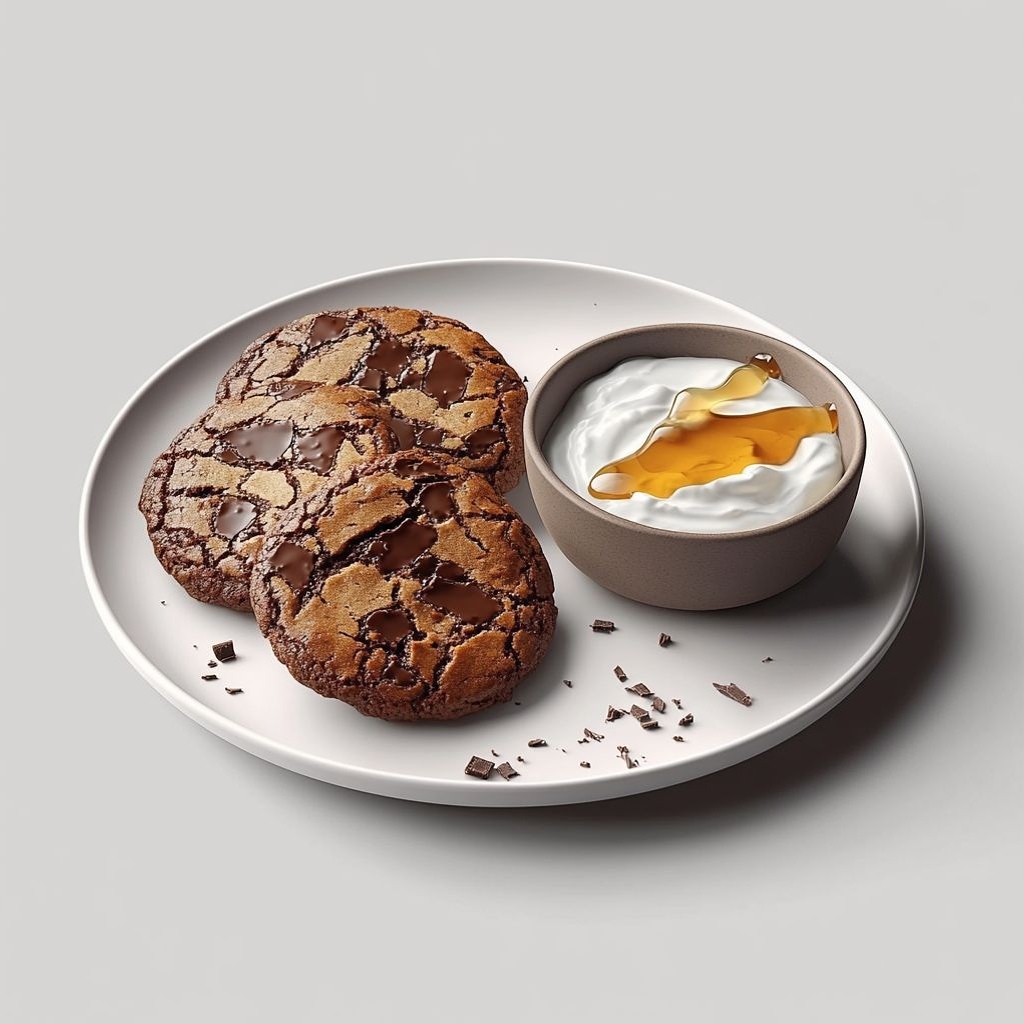
These Greek yogurt and chocolate cookies are soft, chewy, and deliciously balanced with a tangy yogurt note and pockets of melted chocolate. For best texture, use full-fat Greek yogurt and a room-temperature egg, and be sure to whisk the yogurt smooth before mixing. You can customize them by folding in 1/2 cup chopped walnuts or pecans, adding an extra 1/2 cup semisweet chocolate chips, or stirring in 1/4 cup shredded coconut for a subtle tropical touch. They freeze well: scoop the dough, freeze on a tray, then transfer to a bag so you can bake a few at a time. Finish with a pinch of flaky sea salt while cookies are warm to heighten the chocolate. If you need a gluten-free version, substitute a 1:1 gluten-free all-purpose flour blend for the all-purpose flour and ensure the yogurt is plain and unsweetened; always check that your blend contains xanthan gum or add a 1/4 teaspoon for better structure.
Tips
General dough handling tips
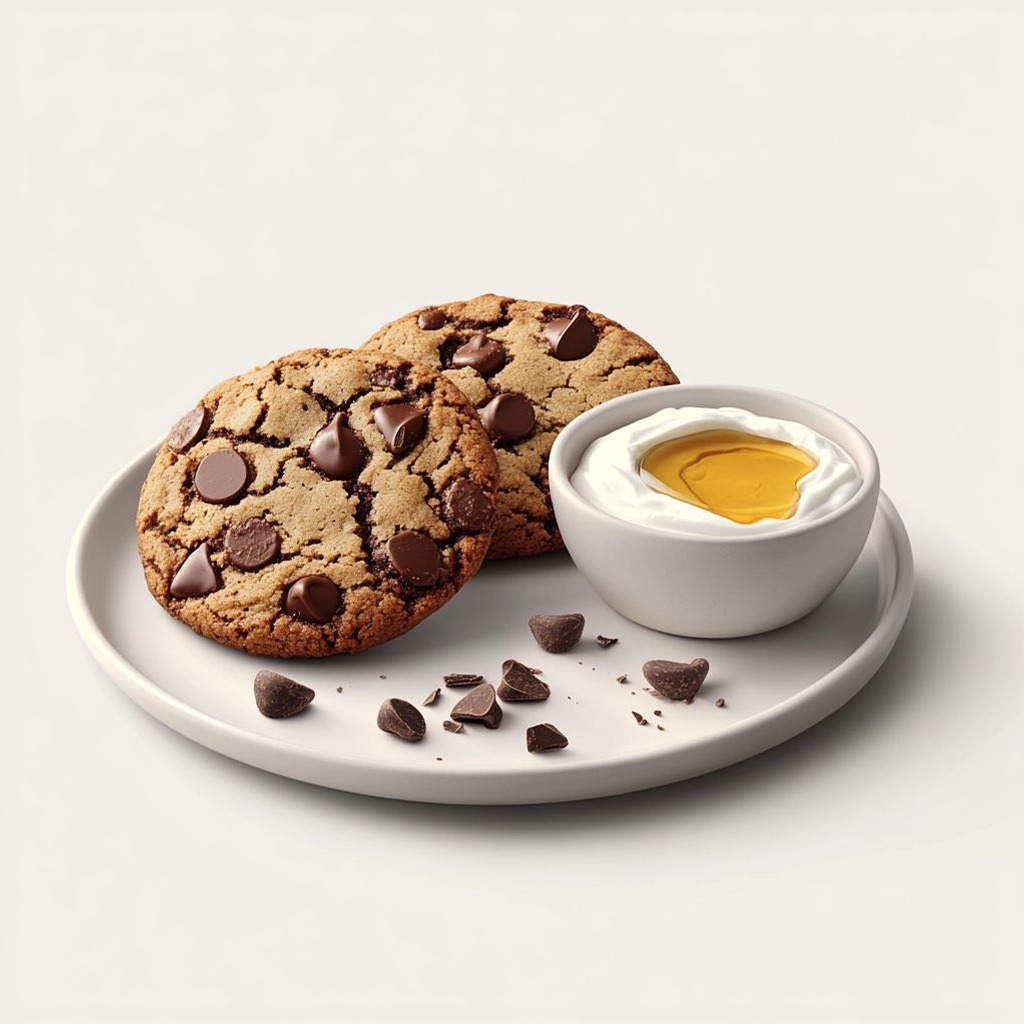
- To keep cookies tender and chewy, melt the butter and allow it to cool slightly before mixing. Hot or warm butter can cook the egg or yogurt and affect texture.
- Whisk the dry ingredients (flour, baking soda, baking powder, salt) together first. This ensures even distribution of leaveners and salt, which promotes uniform rise and flavor.
- Measure flour correctly by spooning it into the cup and leveling off. Packing flour leads to dense cookies. If you’re gluten-free, use a 1:1 gluten-free all-purpose flour blend and expect a similar texture.
Tips for yogurt, eggs, and flavor
- Use full-fat plain Greek yogurt for moisture and tenderness. Whisk until smooth; if very thick, whisk in 1–2 teaspoons of water to loosen slightly.
- Eggs at room temperature emulsify better, yielding a smoother dough. If needed, warm a cold egg in warm water for a few minutes before adding.
- Pure vanilla extract enriches the tangy yogurt. Avoid imitation vanilla for the deepest aroma.
Texture and dough consistency
- Because the dough relies on melted butter, it will be quite soft. If it’s too loose to scoop, refrigerate 30–60 minutes to help it firm up and prevent excessive spreading.
- A gentle fold is best when adding chocolate chips. Overmixing after adding the dry ingredients can develop gluten too much and make the cookies tougher.
- Chilling the dough also helps with even distribution of chocolate chips and makes it easier to form uniform cookies.
Chocolate and add-ins
- Fold in 1 cup chips or chopped chocolate gently; if you want a more chocolate-forward cookie, add extra chips after combining dry ingredients as described in the recipe.
- To amp up crunch or nuttiness, toast nuts (walnuts or pecans) beforehand and cool completely before folding in. Chop to about 1/4 inch for even distribution.
- For a tropical note, lightly toast the shredded coconut before adding; use sparingly to avoid overpowering the chocolate and yogurt.
Baking, cooling, and texture targets
- Line your baking sheets with parchment or a silicone mat to prevent sticking and promote even browning.
- Bake at about 350°F (175°C) until the edges are lightly golden and centers look slightly underdone for a chewy center, typically 9–12 minutes depending on your oven. Do not overbake to keep them soft.
- Let cookies rest on the baking sheet for 2–5 minutes before transferring to a rack. This helps them-set and prevents breakage.
Storage, make-ahead, and substitutions
- Store baked cookies in an airtight container at room temperature for 3–5 days. For longer life, freeze baked cookies for up to 3 months.
- To freeze dough, portion into balls on a parchment-lined tray and freeze; transfer to a freezer bag. Bake from frozen, adding 1–2 minutes to the bake time.
- For a gluten-free version, use a 1:1 gluten-free flour blend and expect similar texture; you may need a touch more yogurt if the dough feels dry depending on the blend.
- Finishing touch: a pinch of flaky sea salt sprinkled on warm cookies enhances chocolate flavor and balances sweetness.
FAQ
What are the key ingredients in Greek yogurt and chocolate cookies?
Typical ingredients include all-purpose flour, baking soda (or baking powder), salt, butter (or a neutral oil), brown sugar, granulated sugar, Greek yogurt, eggs (or an egg substitute), and vanilla extract. For chocolate flavor, use chocolate chips or chunks, and you can add cocoa powder for a deeper chocolate taste. Optional: a pinch of espresso powder, and a small amount of cornstarch for tender cookies.
How does Greek yogurt affect the texture of the cookies?
Greek yogurt adds moisture and tenderness, helping the cookies stay soft and chewy with a slight tang. It can also replace some fat, giving a lighter crumb without drying out the cookies.
Can I substitute Greek yogurt with sour cream or regular yogurt?
Yes. Sour cream can be used and will add richness; regular yogurt can work as well but may be thinner. Use the same amount as yogurt. If your yogurt is very thin, consider draining briefly or using a slightly smaller amount to maintain the right dough consistency.
Are these cookies gluten-free?
The standard version uses all-purpose flour. To make a gluten-free version, substitute with a 1:1 gluten-free flour blend (preferably one that contains xanthan gum). You may need a touch more or less flour to achieve the right dough consistency. None of the ingredients are inherently gluten-free unless you choose certified gluten-free options.
What is the best baking time and temperature?
Bake at about 350°F (175°C) for 9–12 minutes, depending on your oven and cookie size. The edges should be set and the centers still look slightly soft. Let them rest on the baking sheet for a couple of minutes before transferring to a rack to cool.
How can I prevent the cookies from spreading too much?
Chill the dough for at least 30 minutes (or longer) before baking. Use uniform scoop sizes, don’t overwork the dough, and avoid overcrowding trays. If your dough is very soft, a brief chill helps control spread.
How should I store these cookies to keep them fresh?
Store cooled cookies in an airtight container at room temperature for up to 3–5 days. For longer freshness, layer with parchment and freeze, or place in a sealed container and refrigerate for up to a week. Freeze baked cookies for 2–3 months; thaw at room temperature.
Can I freeze the dough or baked cookies?
Yes. You can freeze dough portions on a parchment-lined tray until firm, then transfer to a freezer bag. Bake from frozen, adding 1–2 minutes to the bake time. You can also freeze baked cookies, well-wrapped, for 2–3 months.
How can I customize flavors or add-ins?
Mix in chocolate chips of your preferred variety (dark, milk, or white). Add chopped nuts (walnuts, pecans) for crunch, or try a swirl of peanut butter. For a mocha twist, add a pinch of espresso powder with the cocoa. You can also fold in dried fruit for a different texture.
Are there vegan or egg-free options?
Yes. Use a flax or chia “egg” (1 tablespoon ground flaxseed or chia seeds + 3 tablespoons water per egg). Substitute Greek yogurt with a dairy-free yogurt (unsweetened, plain) and use dairy-free butter or oil. Ensure your chocolate is dairy-free if needed. You may need to adjust moisture slightly to get the right dough consistency.
Any tips for achieving chewy vs. cakey cookies?
For chewier cookies, increase brown sugar slightly, use a bit less white sugar, and opt for more yogurt. Use melted butter or a higherfat fat source for chewiness. For cakier cookies, use more white sugar, a touch more flour, and chill the dough less—though they’ll still benefit from chilling. Don’t overmix the dough to keep a tender crumb.