Introduction / Hook
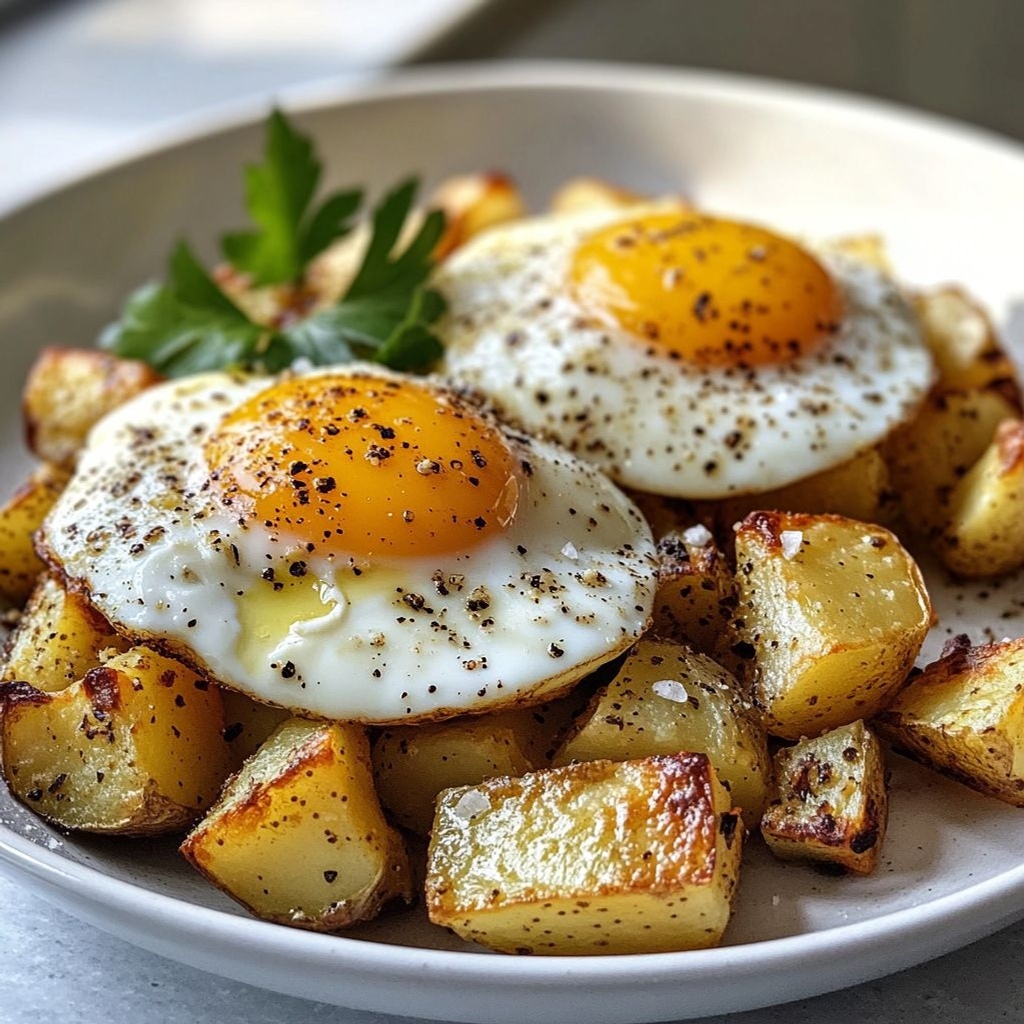
There’s something irresistibly cozy about a dish that feels both rustic and wonderfully indulgent, a plate that looks like it came straight from a sunlit farmhouse kitchen and tastes like a warm hug from a weekend morning. Baked Eggs and Potatoes is that kind of dish: humble potatoes kissed with olive oil and herbs, edges turning a delicate bronze, a chorus of simmering steam lifting as eggs slip into the pan and set into creamy, glossy yolks. It’s the promise of breakfast that sticks with you all day—comfort without fuss, hearty enough to feed a crowd, and simple enough to become a Sunday ritual in your own home. Imagine the scent of potatoes roasting until their skins crackle and perfume the room with a toasty, almost nutty fragrance; then garlic, onions, or peppers joining the scene, followed by eggs that poach themselves in the warmth, their whites firming and yolks glistening like golden suns. This is the dish that makes brunch feel ceremonial and weeknight dinners feel special, all at once. It’s a canvas for your favorite flavors, a stage for a few pantry heroes, and a surefire way to bring a little bit of bakery-scented, comfort-food wonder to your table.
The Story Behind the Dish
Every culture has a humble, bedrock dish that turns ordinary ingredients into something that feels festive. Baked Eggs and Potatoes sits at the crossroads of comfort and practicality—potatoes, the sturdy staple; eggs, the quick, nourishing protein; and a handful of aromatics and cheese that turn the whole thing into a one-pan triumph. The concept echoes a long row of “baked”-style breakfasts that have simmered in ovens and skillets for generations. In many European kitchens, a skillet or shallow baking dish becomes the stage where leftovers and pantry staples are transformed into a meal that feels like a celebration, even on a Monday.
In its most resonant form, this dish nods to the tradition of farmers’ breakfasts—hearty, filling, made to sustain long days of labor and still taste comforting after a hard morning. Think of a cast‑iron pan sizzling with potatoes that have caramelized at the edges, the air swirling with garlic and onion, and eggs that magically set to a custardy center as the dish bakes. The procedure is as old as the hills: chop, toss with oil and seasoning, spread in a shallow dish, and let the oven do the heavy lifting while you set the table or pour the coffee. There’s a warmth to that ritual—the mouthwatering aroma that greets you before you even glimpse the dish, the way family members drift into the kitchen, drawn by the promise of something nourishing and familiar.
Over the years, cooks have personalized this dish with regional twists: a pinch of smoked paprika for a paprika-kissed Spanish vibe; a handful of fresh herbs like parsley or dill for brightness; or crumbled bacon or pancetta for a savory, smoky depth. Whether you’re cooking it for a crowd, feeding a sleepy weekend brunch, or simply craving something satisfying after a long day, Baked Eggs and Potatoes offers a thread of continuity—an edible reminder that good food doesn’t have to be fussy to be memorable.
Why You’ll Love This Recipe
- One-pan ease: A single baking dish does most of the work, minimizing cleanup and maximizing flavor.
- Versatile and forgiving: The dish adapts to what you have—different potatoes, cheeses, or aromatics all shine.
- Comforting but bright: The combination of roasted potatoes, savory seasonings, and custardy eggs hits every comforting note while staying fresh with herbs and citrus accents.
- Family-friendly: Great for breakfast, brunch, or a cozy weeknight dinner; kids and grown-ups alike will scoop, drizzle, and savor.
- Make-ahead friendly: You can prepare components in advance and finish in the oven when guests arrive or when you’re ready to serve.
- Customizable for diets: Dairy-free, vegan, or gluten-free variations are easy to adapt with simple swaps.
- Budget-conscious: Potatoes are affordable, and eggs provide substantial protein, making this a satisfying meal without breaking the bank.
Flavor Profile & Texture
Sturdy potatoes, roasted to a caramelized edge, bring a toasty depth that forms the backbone of the dish. TheirMaison-like crustiness yields to a soft, fluffy interior that offers a comforting bite, especially when the heat is gentle enough to coax them to release a whisper of starch-sweetness. The eggs, once baked, transform into a silky, custardy layer—golden yolks that run slightly when cut and whites that are set but tender. When cheese is present, it often melts into a molten, slightly browned crust on top, adding a lick of savory richness that binds the dish together. Aromatics such as garlic, onions, and bell peppers (or chiles for a gentle kick) release their fragrant oils into the oil, creating a perfume that’s almost irresistible. Fresh herbs—parsley, chives, dill, or thyme—offer a bright, peppery lift that cuts through the richness and lightens the overall feel of the dish.
The texture interplay is what makes this dish sing: the crisp edges of the potatoes contrast with the creamy center of the eggs, while the cheese forms a warm, slightly chewy top layer that adds dimension. A light drizzle of olive oil at the end can gild the surface with a satin sheen, and a dash of pepper or chili flakes can deliver a gentle spark. The result is a multi-sensory experience: eyes first, drawn to the golden crust; nose second, tasting the mingled scents of roasted potatoes, garlic, and herbs; and finally, the palate—the soft, luxurious egg with its yolk’s rich runniness, the starchy potato undertone, and the savory, slightly smoky finish from cheese and seasonings. It is a balanced, comforting dish that can feel both homey and celebratory depending on how you dress it up.
Occasions & Pairings
This dish shines in a variety of settings, from quiet family breakfasts to lively weekend brunches. It’s robust enough to stand on its own as a main course, yet flexible enough to pair with lighter sides for a more balanced spread. Consider serving Baked Eggs and Potatoes for:
- Brunch gatherings with friends or family, when you want something that looks impressive but is simple enough to assemble in advance.
- Weeknight dinners that feel special without requiring intensive labor or time.
- Holiday mornings where you want to feed a crowd with minimal fuss but maximum flavor.
- Comfort-food dinners after a chilly day, when you crave something hearty and satisfying.
Pair it with a bright, crisp salad—think crunchy greens with a lemon vinaigrette—or with a simple tomato salad to bring a burst of freshness. Crusty bread or warm baguette slices are perfect for sopping up the egg and cheese-y richness. For beverages, a sparkling beverage (like champagne or prosecco) or a light white wine can elevate a weekend brunch, while a sturdy coffee or a glass of orange juice complements the dish’s comforting profile. If you’re serving a larger crowd, offer a couple of add-ons on the side, such as sautéed mushrooms, sautéed spinach with garlic, or a dollop of herb-infused yogurt to provide brightness and intensity that balance the dish’s depth. In essence, this recipe is a blank canvas for your culinary mood: rustic and hearty or bright and brunchy, depending on how you mold it to the occasion.
Tips, Variations & Substitutions
Small tweaks can dramatically shift the character of the dish without complicating the process. Here are a range of ideas to tailor Baked Eggs and Potatoes to your kitchen, dietary needs, or cravings:
- Herb and spice variations:
- Classic: garlic, onion, parsley, salt, and pepper with a pinch of paprika for color.
- Herby brightness: dill and chives with lemon zest for a fresh finish.
- Smoky note: smoked paprika or a touch of chipotle chili powder for a warm kick.
- Herb-forward: thyme and rosemary if you’re using potatoes with a more earthy, rustic flavor.
- Cheese options:
- Traditional: a sharp cheddar or a nutty Gruyère for a melty, golden top.
- More indulgent: mozzarella or fontina for extra stretch and creaminess.
- Dairy-free: use a plant-based cheese that melts well, or omit cheese altogether for a lighter version.
- Potato variations:
- Waxy potatoes (like Yukon Gold) yield a creamier interior; starchy potatoes (russets) will be crisper.
- Sweet potatoes can be used for a sweeter, earthier note; pair with cumin, coriander, and a touch of lime zest.
- Protein and vegetables:
- Add cooked bacon, pancetta, or sausage for a hearty, savory depth.
- Vegetarian options: include sautéed mushrooms, spinach, bell peppers, or squash for color and sweetness.
- Make it vegan or dairy-free:
- Use olive oil or a vegan butter base; substitute vegan cheese or skip cheese entirely.
- Replace eggs with a chickpea flour-based “egg” substitute for a plant-based alternative, though texture will differ.
- Gluten-free notes:
-
The dish is naturally gluten-free as written, but ensure any toppings or add-ons (like sauces or croutons) are certified gluten-free if needed.
- Par-cook the potatoes (halve-cook) a day ahead, refrigerate, then finish baking with eggs when ready to serve.
- Chop aromatics in advance and refrigerate to speed up serving time on busy mornings.
Storage & Make-Ahead Ideas
Leftovers are wonderfully reimagined in a future breakfast or even a simple lunch. Here are practical tips to maximize freshness and flavor:
- Refrigeration: Store cooled portions in an airtight container in the fridge for up to 3-4 days. Reheat gently in the oven at a low temperature to preserve the texture, or in a covered skillet on the stovetop to keep the eggs from overcooking.
- Freezing: Freezing baked eggs and potatoes is possible but not ideal; the texture of eggs can become rubbery when frozen and reheated. If you plan to freeze, freeze the potatoes separately and add fresh eggs when reheating to improve texture.
- Make-ahead strategy: Parboil or par-roast potatoes up to 24 hours ahead, refrigerate, then assemble with eggs and finish baking when ready to serve. This approach yields a faster service while preserving the crispness of the potatoes.
- Storing toppings: If you’re using fresh herbs or delicate greens, add them just before serving to maintain color and brightness rather than letting them sit long after reheating.
Fun Facts & Trivia (Optional)
Did you know that the concept of baking eggs with potatoes echoes a broader tradition of one-pan morning meals that emerged in rural kitchens across Europe? The combination of starchy potatoes with protein-rich eggs is a practical response to a day of labor, providing both energy and satisfaction. In some regions, similar dishes have inherited local names and tweaks—for example, a version laden with onions and bacon echoes the German Bauernfröhstück (Farmer’s Breakfast), while other variations embrace peppers, chorizo, or paprika for a Spanish-inspired profile. The beauty of this dish lies in its adaptability: no matter where you’re from, there’s room to fold in local flavors, regional cheeses, and seasonal produce. A simple, honest dish becoming a canvas for cultural expression is a reminder that good food often travels best when it travels lightly—through shared techniques, familiar aromas, and a welcoming plate that invites conversation as much as it invites appetite.
Ingredients
Base Potatoes
-
– 4 medium russet potatoes, peeled and cut into 1-inch cubes (about 4 cups)
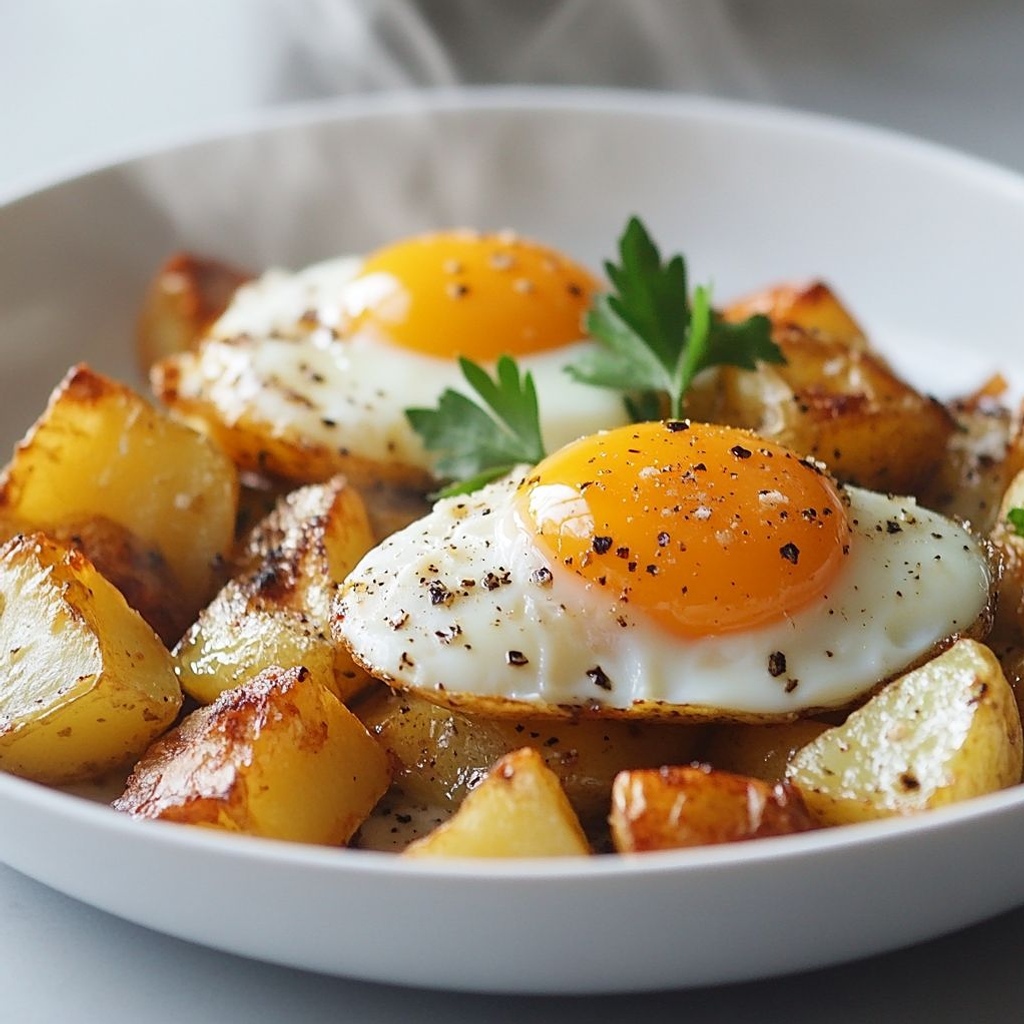
→ The potatoes form the hearty base of the dish. Uniform 1-inch cubes ensure even roasting with a tender interior and crisp edges. For quicker cooking, you can parboil the cubes for 3–5 minutes, then drain thoroughly and pat dry before roasting. Dry potatoes roast better and brown more evenly when not wet.
– 2 tablespoons olive oil
→ Oil helps potatoes crisp and brown evenly. Toss the cubes thoroughly in the oil to create a light, even coating that promotes browning rather than steaming. Use extra-virgin olive oil for flavor, or a neutral oil if you prefer a milder taste. Avoid overcrowding the pan as it can prevent crisp edges.
– 1 teaspoon kosher salt
→ Salt enhances the natural potato sweetness and helps draw out moisture for a crisper texture when roasted. Taste and adjust later if you’re using salty cheeses or bacon in the dish. If you’re seasoning beforehand, salt lightly and finish with a final sprinkle after baking.
– 1/2 teaspoon black pepper
→ Adds a subtle kick and depth to the potatoes, balancing the richness of the cheese and eggs. Freshly ground pepper provides a stronger aroma; grind just before using for the best flavor.
– 1/2 teaspoon smoked paprika (optional)
→ Provides a gentle smoky note that pairs beautifully with any optional bacon or robust cheese. Use mild paprika if you’re sensitive to heat; it also gives a pleasing color to the potatoes as they roast.
Aromatics and Vegetables
-
– 1 medium onion, diced
→ Onions add sweetness and depth to the dish as they caramelize during roasting. Dice evenly so all pieces cook at a similar rate; if you prefer milder onion flavor, sauté the onion briefly in a splash of oil until translucent before roasting with the potatoes.
– 1 bell pepper, diced (any color)
→ Adds vibrant color and a gentle sweetness. Dice to roughly the same size as the potato cubes to ensure even cooking. If you’re short on time, you can skip or substitute with a handful of cherry tomatoes for a different note.
– 2 cloves garlic, minced
→ Garlic provides a warm, aromatic foundation. Mince finely to distribute its flavor evenly; add it with the vegetables so it doesn’t burn and turn bitter during roasting. If you prefer milder garlic, grate it finely for quicker distribution.
– 1 teaspoon dried thyme (or oregano)
→ Herbs deliver a savory aroma that complements roasted potatoes and eggs. Dried thyme is convenient and potent; if using fresh, use about 1 tablespoon and add toward the end of cooking for brighter flavor.
– 1/4 teaspoon red pepper flakes (optional)
→ A touch of heat for those who like a little spice. Add sparingly and adjust to taste; you can omit if serving to a milder palate.
Eggs, Dairy, and Cheese
-
– 4 large eggs
→ The eggs are the primary binder and contribute to the dish’s set, custardy texture as they bake with the potatoes. For easiest incorporation, bring the eggs to room temperature before cracking. Whisk lightly with a pinch of salt and pepper just to combine, then pour over the potato mixture evenly.
– 1/2 cup milk or cream
→ Adds creaminess and helps create a gentle custard around the potatoes. Whole milk yields a lighter result, while cream or half-and-half makes it richer. If you’re aiming for a lighter dish, you can reduce this to 1/4 cup.
– 1 cup shredded cheese (cheddar, Gruyère, mozzarella, or a combination)
→ Cheese provides melted richness and a savory crust on top. Choose a mix that melts well; for a sharper flavor, blend cheddar with Gruyère. Reserve a portion to sprinkle on top during the last 5–10 minutes of bake for a golden finish.
– 1 tablespoon butter, for greasing the dish (optional)
→ Butter prevents sticking and contributes a touch of richness to the edges that contact the pan. If you prefer a lighter approach, you can substitute with a light spray of oil.
– 1/4 cup grated Parmesan (optional)
→ Adds a sharp, nutty top note and extra crust when sprinkled over the cheese. Use sparingly to avoid overpowering the potato flavor; sprinkle in the final stage of baking for best results.
Garnish and Finish
-
– Fresh parsley or chives, chopped (for garnish)
→ Brightens the dish with color and a fresh, herbal note. Sprinkle after baking to preserve vibrant green color. If you don’t have fresh herbs, a pinch of dried parsley works in a pinch, but fresh is preferred for appearance and aroma.
Optional Add-ins
-
– 4 slices bacon, cooked crisp and crumbled (optional)
→ Bacon adds a smoky crunch that pairs wonderfully with potatoes and eggs. Cook until very crisp, drain well, and crumble; fold into the potato mixture before adding the eggs for even distribution, or sprinkle on top for a finishing crunch. If baked with the bacon, reduce additional salt to avoid oversalting.
– 1/2 cup button mushrooms, sliced (optional)
→ Mushrooms contribute umami and moisture. Sauté in a small pan with a splash of oil until deeply browned to concentrate flavor, then mix with the potato mixture before baking for a rich, earthy note.
– 1 cup fresh spinach leaves, roughly chopped (optional)
→ Adds color and a pop of greens. Wilt the spinach quickly in a pan with a small amount of oil or butter to remove excess moisture, then fold into the potatoes before adding the eggs to avoid sogginess. Spinach should be added in a thin layer to keep a consistent texture.
Instructions
- Preheat your oven to 375°F (190°C) and grease a 9×13-inch baking dish with butter or oil, ensuring every surface is coated to prevent sticking and to promote a light crust on the potatoes.
→ Proper preheating and greasing create a stable hot surface that starts browning the potatoes immediately and prevents the custard from sticking to the pan. - If you plan to parboil for quicker cooking, bring a pot of salted water to a boil and boil the 1-inch potato cubes for 3–5 minutes, then drain thoroughly and pat them dry before roasting.
→ Parboiling softens the interior and reduces bake time, while drying removes surface moisture that would steam rather than roast. - In a large bowl, toss the potato cubes with 2 tablespoons olive oil, 1 teaspoon kosher salt, 1/2 teaspoon black pepper, and 1/2 teaspoon smoked paprika (optional) until every surface is glossed and lightly seasoned.
→ The oil coats the starch granules to promote even browning, while salt and pepper season from the inside out during roasting. - Spread the seasoned potatoes in a single, even layer on a rimmed baking sheet or directly in the greased dish, ensuring there is space between pieces for air to circulate.
→ Spacing prevents crowding, which would cause steaming rather than crisping and result in softer edges rather than the desired roast. - Scatter the diced onion, bell pepper, and minced garlic over the potatoes, then sprinkle with 1 teaspoon dried thyme and, if using, 1/4 teaspoon red pepper flakes; drizzle with a touch more oil if the vegetables look dry.
→ Uniformly distributed aromatics infuse the roasting potatoes with sweetness, savory perfume, and a gentle kick, while the thyme anchors the dish’s savory profile. - Roast the potato mixture in a hot oven at 425°F (220°C) for 25–30 minutes, stirring once halfway through to promote even browning and prevent scorching.
→ High heat encourages crisp edges and a tender center; stirring halfway ensures all pieces brown uniformly rather than piling up in hot spots. - If using bacon, cook until crisp, crumble, and set aside; this step renders fat and adds smoky crunch that distributes nicely when folded into the potatoes.
→ Crisp bacon provides texture and depth; crumbling allows even distribution without overloading any single bite. - If using mushrooms, sauté sliced mushrooms in a small amount of oil until deeply browned, then set aside to avoid adding excess moisture to the dish.
→ Browning mushrooms concentrates flavor and reduces moisture that could dilute the egg custard. - If using spinach, quickly wilt rough-chopped leaves in a skillet with a small amount of oil, then drain and chop; this removes moisture that could soggy the bake.
→ Wilted spinach adds color and a fresh note without introducing excess water that could run into the custard. - In a separate bowl, whisk 4 large eggs with 1/2 cup milk or cream until just combined and the yolk and white are fully incorporated; season with a light pinch of salt and pepper.
→ Whisking creates a cohesive custard that coats the potatoes evenly; room-temperature eggs incorporate better and prevent curdling during baking. - Once the potatoes have begun to color, transfer them to the greased dish in an even layer and pour the egg mixture over them, ensuring the liquid reaches all areas for uniform setting.
→ Submerging the potatoes in the custard ensures every bite has a cohesive texture and a balanced potato-to-egg ratio. - If you prepared optional add-ins, fold the crisp bacon, browned mushrooms, and wilted spinach (as applicable) into the potato mixture now for even distribution before the eggs set.
→ Even distribution prevents pockets of over- or undercooked bits and ensures the flavors meld in every slice. - Sprinkle 1 cup shredded cheese evenly over the top of the dish and reserve a portion to sprinkle again during the final minutes of baking for a golden, bubbly crust.
→ Cheese provides melt and a savory crust; reserving some for the end creates an appealing final browning and texture. - Bake uncovered in the oven at 375°F (190°C) for 25–30 minutes, or until the eggs are set around the edges and the center just quivers when gently shaken. Then sprinkle the remaining cheese and optional Parmesan over the top and bake 5–10 minutes more until the top is golden and the custard is fully set.
→ The first window ensures the edges set while the center remains slightly tender; the final 5–10 minutes melt and bronzy the top for a cohesive finished surface. - Remove from the oven and let rest 5–10 minutes before slicing; this rest allows the custard to finish setting and makes serving neater.
→ Resting helps the moisture redistribute, resulting in cleaner wedges and preventing the eggs from runny on cutting. - Garnish with freshly chopped parsley or chives and serve; the herbs provide brightness and color that contrast with the rich, cheesy potatoes.
→ Fresh herbs add a vibrant aroma and a clean finish to balance the richness of the eggs and cheese.
Notes
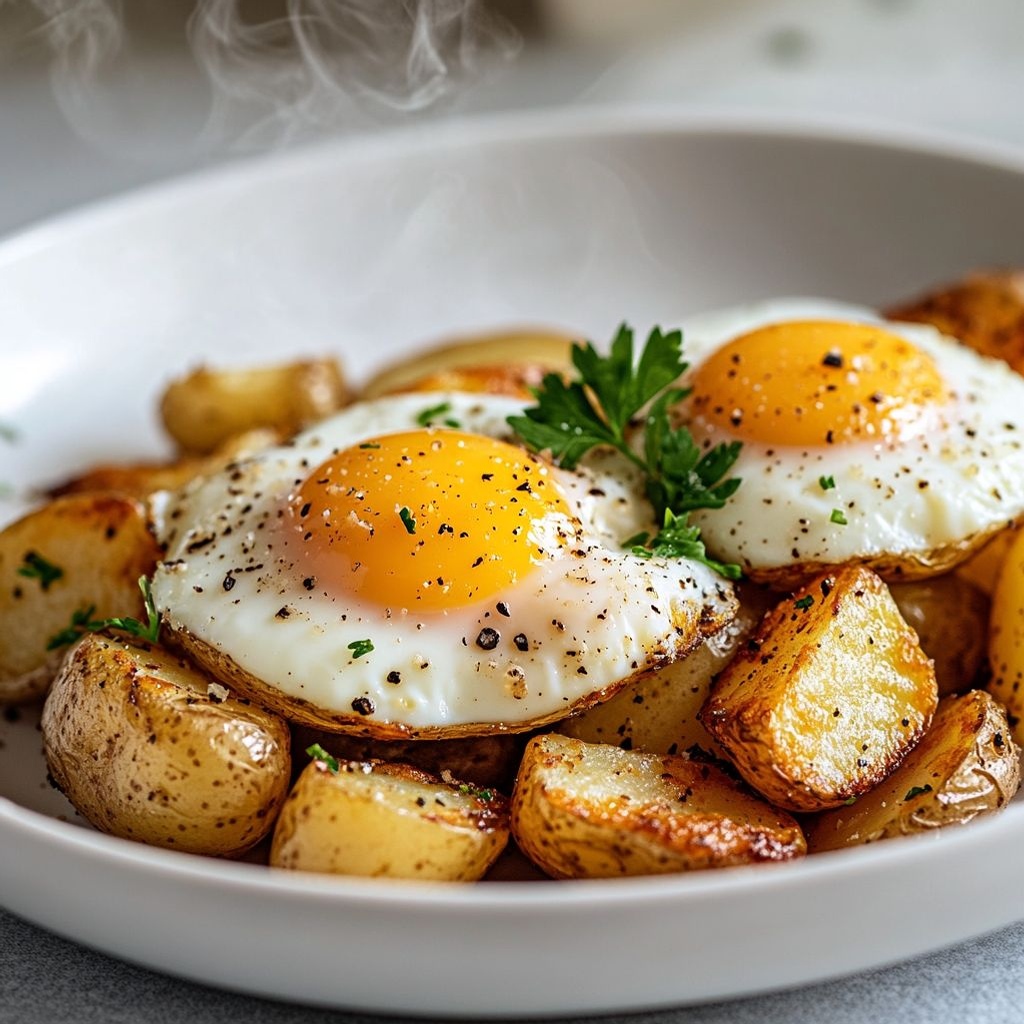
These baked eggs and potatoes are a hearty brunch or cozy weeknight dinner that roasts potato cubes until they are crisp at the edges and tender in the center, then bakes them with eggs, cheese, and aromatics for a comforting, custardy finish. The dish comes together with simple ingredients like onion, bell pepper, garlic, and thyme, and you can tailor it with optional add-ins such as crispy bacon, mushrooms, or spinach for extra depth and color.
For best results, keep the following in mind: cut the potatoes into uniform 1-inch cubes for even roasting, and pat them dry after any parboiling to promote browning rather than steaming. Toss the potatoes with olive oil, salt, pepper, and a pinch of smoked paprika if you like a subtle smoky note, then spread in a single layer on a rimmed sheet pan to avoid overcrowding. Preheat the oven to about 425°F (220°C) and roast the potatoes until the edges are golden and crisp, about 20–25 minutes. Add diced onion and bell pepper, plus minced garlic and dried thyme, and continue roasting until the vegetables are softened and fragrant, about 8–10 minutes more.
Meanwhile, whisk 4 large eggs with 1/2 cup milk or cream and a pinch of salt and pepper. When the potatoes and vegetables are ready, scatter 1 cup of shredded cheese over them (choose a melt-friendly mix such as cheddar and Gruyère), then spoon or pour the egg mixture evenly over the dish. Return to the oven and bake until the eggs are set and the cheese is melted and lightly golden, about 8–12 minutes. For a sharper top note, finish with 1/4 cup grated Parmesan during the last few minutes of baking. If using bacon, cook until crisp, crumble, and fold into the potato mixture before adding the eggs, or sprinkle on top as a finishing crunch; adjust salt if you’re adding salty bacon.
Variations and tips: you can substitute whole milk for a lighter custard or use half-and-half for a richer texture. For a vegetarian variation, keep to the vegetables and spinach; wilt the spinach briefly in a pan and drain well before folding in to prevent sogginess. If you prefer a milder garlic flavor, grate the garlic finely or add it later in the roasting step to reduce browning. Fresh thyme works best, but you can use oregano or a mix of herbs if you prefer a different aroma profile. Finish with chopped parsley or chives for a fresh, bright touch and color.
Storage and reheating: leftovers reheat well in the oven or toaster oven at 350°F (175°C) until warmed through and the cheese re-melts. Store in an airtight container in the refrigerator for up to 3 days. For even easier weekday meals, portion the dish into individual servings before baking and reheat as needed.
Tips
Smart Tips for Baked Eggs and Potatoes
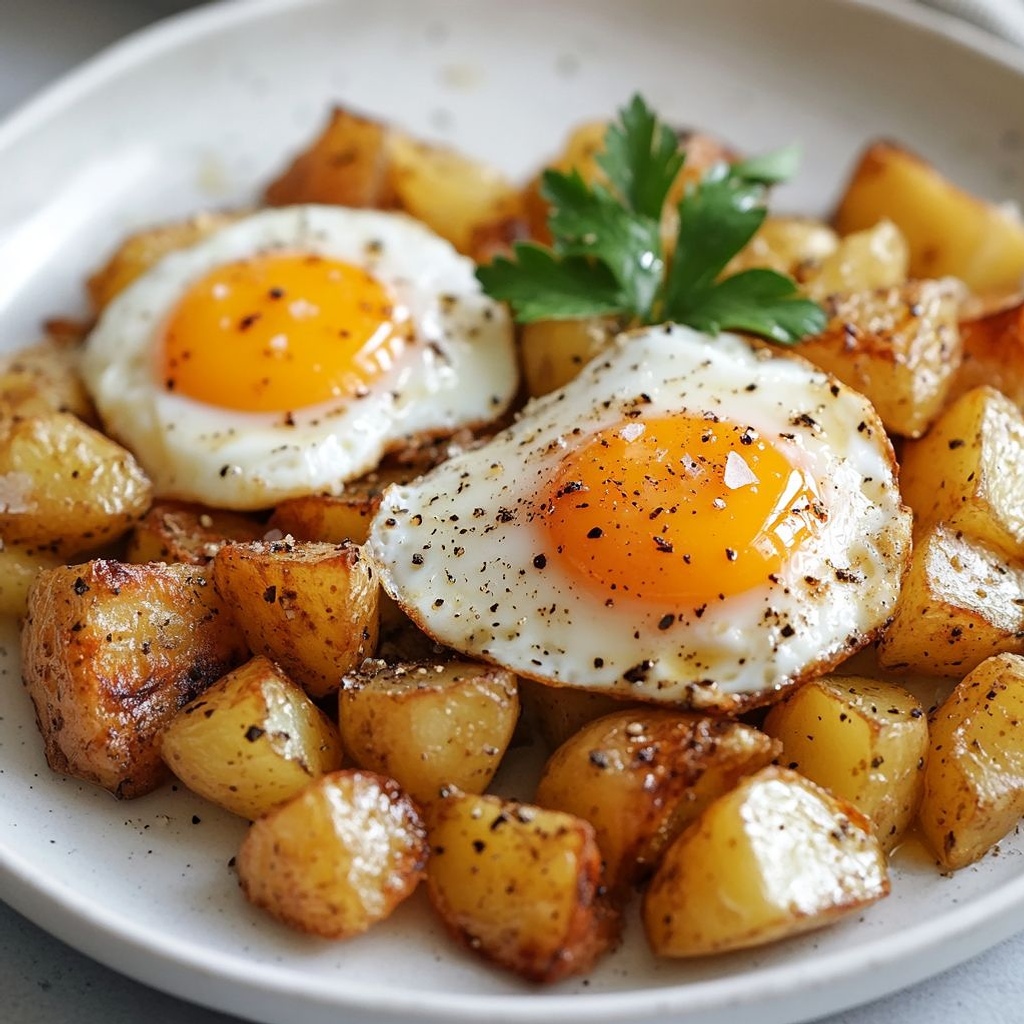
These tips complement the recipe and help you achieve crisp potatoes, creamy eggs, and a golden cheese topping.
Potatoes: crisp, even, and flavorful
- Parboil potatoes (3–5 minutes) before roasting to cut roasting time and create a tender interior with crisp edges. Thoroughly dry them after draining to avoid steaming.
- Spread the potatoes in a single layer on the pan and avoid crowding. Overcrowding steams the potatoes instead of browning; use two pans if needed.
- Toss with olive oil until every surface is lightly coated. Extra-virgin olive oil adds flavor; a neutral oil yields a milder finish.
- Roast at 375–400°F (190–200°C). If you skip parboiling, plan for 35–40 minutes; otherwise you’ll be closer to 25–30 minutes. Flip once halfway through for even browning.
- Season with salt early, but be mindful of salty add-ins (bacon or cheese); adjust final seasoning after baking.
- Optional smoked paprika adds color and a light smoky note; if you don’t like heat, omit.
Aromatics and Vegetables: balance and flavor
- Uniform dice ensures even cooking; for a milder onion flavor, sauté onions in a bit of oil until translucent before roasting.
- Garlic is best minced finely and added with the vegetables so it won’t burn and turn bitter. If you prefer a milder garlic flavor, grate it and mix with oil for quick distribution.
- Herbs: dried thyme or oregano is convenient; if using fresh, use about 1 tablespoon chopped and add later or with the cheese to preserve brightness.
- Red pepper flakes are optional; start with a pinch and taste. You can omit for a milder dish.
Eggs and Dairy: creamy binding without curds
- Bring eggs to room temperature for easier mixing and a creamier texture. Lightly whisk with a pinch of salt and pepper before pouring over the potato mixture.
- Milk vs cream: more cream equals richer custard; reduce to 1/4 cup if you want a lighter result.
- To prevent curdling if the vegs are hot, pour the egg mixture over when the vegetables are still warm but not steaming, or slightly cool them first.
- When adding cheese, reserve a handful for the final topping to create a molten center and a golden crust on top.
Cheese and finishing: golden top and luscious melt
- Use a mix that melts well; cheddar+Gruyère gives flavor and a nice melt. Sprinkle remaining cheese on top during last 5–10 minutes for a bubbly, golden crust.
- For extra color and texture, finish under a hot broiler for 1–2 minutes, watching closely to avoid burning.
Garnish and optional add-ins
- Fresh parsley or chives added after baking brighten color and aroma. Dry herbs will not look as vibrant.
- Bacon: pre-cook until crisp and crumble; if included, fold into the potato mixture before adding eggs or scatter on top. Reduce added salt if using salty bacon or cheese.
- Mushrooms: sauté until deeply browned to concentrate umami; add to the mixture before baking for earthy depth.
- Spinach: wilt quickly in a pan with a touch of oil and squeeze out excess moisture; fold in to keep texture bright and prevent sogginess.
Make-ahead, storage, and serving tips
- Assemble with potatoes, aromatics, and egg mixture up to 1 day ahead; cover and refrigerate. Bake longer by 5–10 minutes if cold.
- Leftovers keep 3–4 days in the fridge; reheat gently in the oven or microwave. Reheat in 350°F (175°C) for 10–15 minutes in the oven to preserve texture.
- Let the dish rest 5–10 minutes before slicing and serving to let the custard set slightly and make serving easier.
FAQ
What is Baked Eggs and Potatoes?
A cozy one-pan brunch or dinner featuring potatoes roasted with aromatics, topped with eggs and often cheese and herbs. The eggs bake right into the potato mixture, creating a hearty, satisfying dish that’s great for weekend mornings or carefree weeknights.
What ingredients do I need?
- 1–1.5 pounds potatoes (Russet, Yukon Gold, or red potatoes work well)
- 1 medium onion, sliced
- 2 cloves garlic, minced
- 2–3 tablespoons olive oil (or melted butter)
- 4–6 eggs
- 1 cup shredded cheese (cheddar, mozzarella, or a mix; or feta for a tang)
- Salt and pepper to taste
- Fresh herbs (like thyme or parsley), optional
- Optional add-ins: bell peppers, mushrooms, cooked bacon or sausage
How do I prepare the potatoes?
Preheat oven to 375–400°F (190–200°C). Peel (optional) and dice potatoes into 1/2-inch cubes. Toss with olive oil, salt, and pepper. Spread in an even layer in a greased baking dish and bake for 15–20 minutes, until they start to soften and brown at the edges. Add sliced onion and minced garlic, toss lightly, and bake for another 5–10 minutes until potatoes are tender.
Can I assemble ahead of time?
Yes. You can prepare the potatoes and onions up to a day in advance and store them in the fridge. When ready to bake, spread the potato mixture in a dish, crack the eggs over top, sprinkle with cheese and herbs, and bake. If you assemble completely ahead, bake time may increase by a few minutes. If you’re short on time, you can par-cook the potatoes, refrigerate, then finish with eggs and cheese in the oven.
What temperature and how long should I bake it?
Bake at 375°F (190°C) for about 25–35 minutes, until the potatoes are tender and the eggs are set to your liking. For runny yolks, aim closer to 25 minutes; for fully set yolks, 30–35 minutes. If you’re adding cheese, sprinkle it on the top during the last 5–7 minutes to melt nicely.
How can I customize with cheese and herbs?
Use your favorite cheese combinations like cheddar + mozzarella, or feta for a tangy bite. Finish with chopped fresh herbs such as parsley, chives, thyme, or dill. A pinch of smoked paprika or red pepper flakes adds a nice kick. For a creamy touch, whisk a splash of milk or cream into the eggs before pouring them over the dish.
Can I add meat, like bacon or sausage?
Yes. If using meat, precook until crisp and drain excess fat. Scatter the cooked meat over the potato mixture before adding the eggs and cheese. This ensures the meat is flavorful and the dish cooks evenly.
What potatoes work best for this dish?
Yukon Gold or red potatoes give a creamy interior with gentle texture and browning. Russet potatoes give a crispier edge. Cut potatoes into uniform 1/2-inch cubes to ensure even cooking.
How do I store leftovers and reheat?
Let the dish cool, then refrigerate leftovers in an airtight container for up to 3–4 days. Reheat in the oven or toaster oven at 350°F (175°C) for 10–15 minutes until warmed through, or microwave in 1–2 minute intervals until hot. You can scatter a little extra cheese on top before reheating for melty texture.
Is this dish suitable for dairy-free or vegan diets?
Classic Baked Eggs and Potatoes contains dairy (and eggs). For a dairy-free version, use olive oil and dairy-free cheese, and consider topping with fresh herbs. For a vegan alternative, replace the eggs with firm tofu or chickpeas seasoned and baked until heated through, and use dairy-free cheese if desired. Note that the texture and flavor will differ from the traditional egg-based dish.