Introduction / Hook
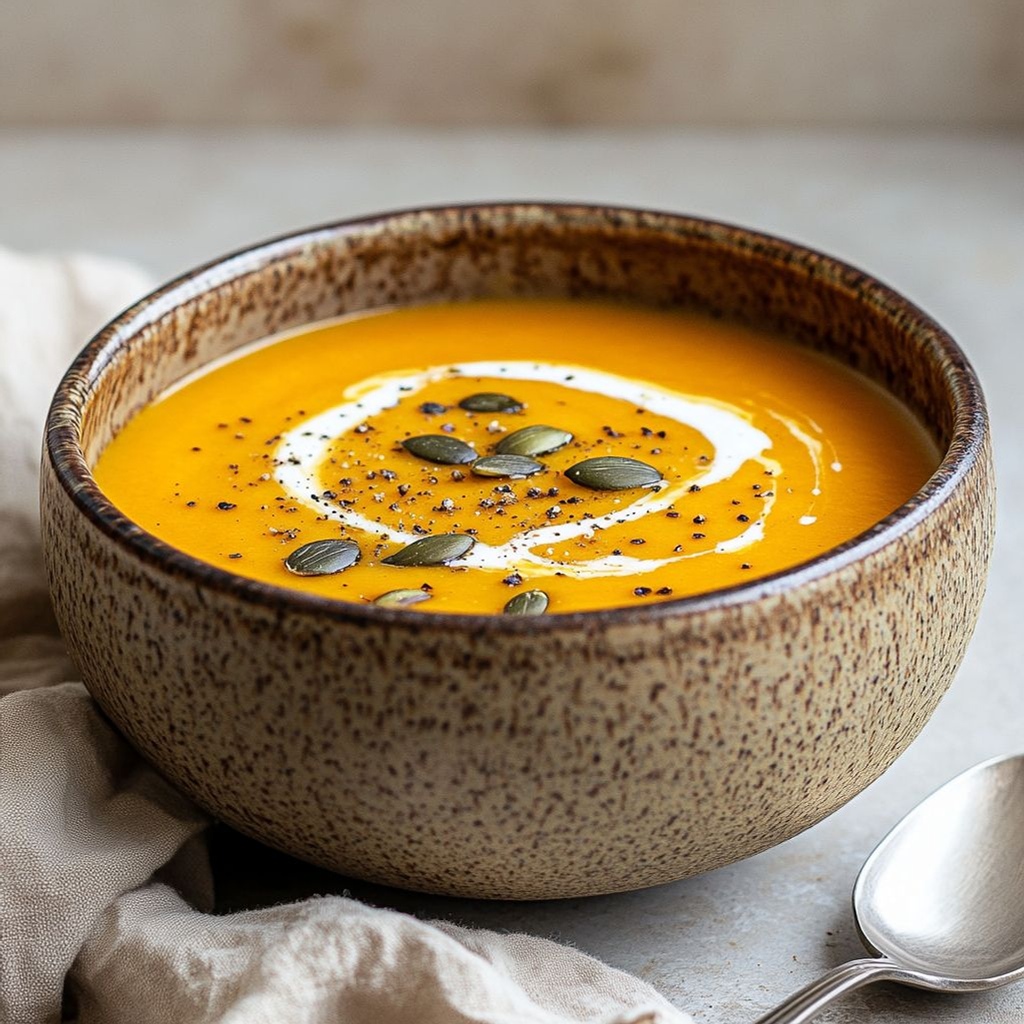
Imagine a bowl that glows like a sunset, its surface smooth and inviting, steam curling into the cool air as you lift a spoon toward your lips. This is roasted pumpkin soup—a humble, comforting bowl that feels like a warm welcome on a chilly day. From the moment you slide a tray of pumpkin cubes into a hot oven, the kitchen fills with a chorus of caramelized sweetness and toasty depth, a scent that seems to whisper of harvest markets and long conversations by the stove. The first sip should carry you on a soft, velvety wave: creamy without being heavy, sweet without tipping into dessert, and gently spiced enough to feel like a hug that lasts a little longer than a regular meal. It’s the kind of soup that makes a weeknight feel like a cozy celebration and a Sunday afternoon feel like a pause button you never want to press again. In this bowl you’ll discover how roasting transforms the humble pumpkin into a luminous, soulful ingredient, how creamy texture can emerge from simple balance rather than heavy cream, and how a few strategic seasonings can elevate a straightforward soup into something memorable, comforting, and a touch elegant.
Roasted pumpkin soup is more than nourishment; it’s an invitation—an invitation to slow down, savor the process, and savor the result. The act of roasting intensifies flavor, the swirl of notes invites curiosity, and the final spoonful delivers a warm, lingering finish that makes you smile even before the bowl is empty. Whether you’re curling up with a good book, feeding a crowd on a weekend, or preparing a quiet supper for one, this dish offers a generous sense of hospitality in every mouthful. Its glow is not flashy; it’s confident and timeless, a true autumn classic that somehow feels fresh every season.
The Story Behind the Dish
The idea of roasting squash or pumpkin to make soup travels through many kitchens around the world, each adding its own memory and heartbeat to the pot. In North American autumns, pumpkins are everywhere—at farmers’ markets, carved into friendly faces for the season’s celebrations, and tucked into cozy meals as the sun dips earlier each day. Roasting concentrates their natural sweetness and deepens their earthy flavor, transforming pretty, pale flesh into something richer, almost nutty, with a whisper of caramel. The technique is simple, almost alchemical: heat the pieces until the edges brown slightly, the sugars melt a little, and the interior becomes irresistibly creamy. The result, when blended with a liquid and a few seasonings, is a soup that tastes like autumn itself—sunlit, comforting, and a little luxurious in its simplicity.
In many families, soup is a storyteller’s canvas. A grandmother might drift in with a pinch of smoke from a well-loved skillet, a friend might add a suggestion that evokes a memory of a market stall or a festival. I’ve learned that the best roasted pumpkin soup, regardless of exact ingredients, is the kind that carries a sense of place—where you are, who you’re with, and what you’re hoping to feel as you eat. It’s a dish that welcomes a range of personal touches: a swirl of cream for luxury, a drizzle of olive oil for brightness, a scatter of seeds for crunch, or a hint of ginger for a warm twist that sparks curiosity. The dish becomes your own story, told in taste and texture as much as in memory.
Historically, soups built on roasted gourds appear in kitchens from Europe to the Middle East, each culture adding a signature twist—savory herbs, a touch of chili, a whisper of coconut milk, or a dusting of spice. This lineage isn’t about strict rules; it’s about sharing, improvisation, and the comforting ritual of spoon to mouth as daylight fades. The modern interpretation, which you’ll find in this description, honors that tradition while embracing contemporary preferences: velvety texture, clean sweetness, and a balance of warmth and brightness that makes it equally suited to a weeknight family dinner or a refined, leisurely weekend meal.
One small anecdote you might enjoy: during a harvest retreat, a group of cooks roasted pumpkins together after a long day spent gathering, cleaning, and prepping vegetables. The kitchen hummed with quiet laughter and the soft clink of bowls. When the soup finally hit the pot, the room filled with a fragrance that felt like a compass pointing home. We shared bowls around a wooden table, sides of crusty bread waiting to be torn, and a sense of gratitude settled over us—the kind of moment that makes you believe a simple soup can be enough to remind you why cooking matters.
Why You’ll Love This Recipe
- Warm, comforting flavors that feel polished yet approachable—perfect for weeknights and special occasions alike.
- A creamy, velvety texture achieved with roasting and blending, without requiring heavy amounts of dairy (though you can add a touch for richness if you like).
- Deep caramelized notes from roasted squash and a subtle warmth from gentle spices, providing balance without overpowering the pumpkin’s natural sweetness.
- Versatile so you can tailor it to your dietary preferences or what you have on hand—dairy-free, gluten-free, or extra creamy with a splash of a plant-based milk.
- Built-in opportunities for texture contrast: a drizzle of olive oil or coconut milk, a sprinkle of seeds, or a crisp herb finish all add dimension to every spoonful.
- Excellent as a starter for a holiday menu or as a starring bowl on a cozy family dinner—satisfying without being heavy, and elegant without feeling fussy.
- Make-ahead friendly: you can roast the pumpkin in advance, store the puree, and reheat with minimal effort for a quick, weeknight supper.
- Great for gatherings—satisfying to a crowd yet simple enough to serve family with children who appreciate gentle flavors.
Flavor Profile & Texture
This soup embodies a balance of sweetness and savoriness, with a silky, spoon-friendly mouthfeel that glides across the palate. The roasted pumpkin provides a natural, mellow sweetness that is offset by a light, earthy depth—a reminder of the earth’s harvest and the warmth of a home kitchen. The texture is smooth and luxurious, achieved by blending the roasted flesh to a uniform, creamy consistency. It’s not thin or wispy; it has enough body to cling to the spoon and stay on the lips for a moment, inviting the next mouthful with a little sigh of satisfaction.
Beyond the pumpkin, the conversation of flavors is where the dish truly shines. Subtle aromatics—garlic’s whisper, a hint of onion’s sweetness, and a gentle kiss of salt—emerge in the blend, enhancing the pumpkin without masking it. If you choose to finish with a swirl of cream or a touch of coconut milk, the soup becomes even more luxurious, with a delicate ribbon that brightens the surface and adds a silky mouthfeel. A final drizzle of olive oil can introduce fruity notes and a gloss that catches the eye as well as the tongue. The spice profile remains modest but memorable: a warming backdrop that could be a slight peppery zing, a whisper of ginger or cinnamon, or a touch of nutmeg that nods to classic autumn desserts—all of which lift the pumpkin’s natural aroma rather than masking it.
Texture-wise, the soup sits in a comforting middle ground: not too thin, not overly thick. It can be spooned in generous portions without feeling heavy, yet it coats the tongue enough to leave a lasting impression. When served with a crisp garnish—roasted seeds, a light drizzle of olive oil, a shower of chopped herbs—the dish becomes an ensemble, where each bite sings in harmony with the others. The balance between sweetness and savory depth is the secret to its appeal: a familiar, family-friendly flavor that still feels refined enough to serve to guests who appreciate thoughtful cooking.
Occasions & Pairings
Roasted pumpkin soup shines across a spectrum of occasions, from ordinary weeknights to festive gatherings. It is a dependable starter for a holiday menu because it sets a warm tone without stealing the spotlight from main courses. It also makes a great first course for a dinner party, offering a comforting yet sophisticated taste that invites conversation without overwhelm. For a casual family dinner, it pairs beautifully with crusty bread or a simple side salad, letting the pumpkin’s sweetness carry the meal from starter to dessert with ease.
Pairings to consider (without committing to a fixed menu):
- Crusty baguette, sourdough, or flatbreads for dipping and scooping.
- A bright green herb garnish—parsley, chives, or cilantro—to add a pop of color and fresh aroma.
- Toasted seeds or nuts sprinkled on top for crunch and a toasty note (think pumpkin seeds, pepitas, or almonds).
- A light swirl of cream, yogurt, or coconut milk to enhance richness and add a decorative swirl on the surface.
- Cold-pressed olive oil or a light chili oil for a gentle finish with a touch of brightness or warmth.
Seasonal occasions—like autumnal dinners, Halloween gatherings, or Thanksgiving pre-feasts—are ideal contexts for this soup. It’s also a charming centerpiece for a “comfort but chic” weekend lunch or a cozy midweek supper when you want to feel pampered without spending hours in the kitchen. If you’re pairing it with a drink, consider a dry white wine with good acidity, a light sparkling beverage, or a spiced cider that echoes the soup’s warm spices. The pairing should feel like a natural extension of the flavors, not a contrast; aim for harmony and comfort in every course.
Tips, Variations & Substitutions
While this roasted pumpkin soup is wonderfully adaptable in its base form, there are numerous ways to tailor it to your preferences, dietary needs, or what you have on hand. Here are practical ideas to customize while keeping the soul of the dish intact:
Skip dairy or coconut milk for a lighter version. Instead, use a splash of plant-based milk (almond, oat, or cashew) or simmer in a little finely grated white onion for additional body, then blend until smooth. A generous drizzle of olive oil at the end can add richness without dairy. Stir in a small amount of cream, half-and-half, or coconut cream just before serving for a luxurious, velvety finish. If you want to keep it dairy-free, a silky swirl of pureed white beans or a spoonful of cashew cream can achieve a similar effect. If you enjoy warmer spice notes, incorporate a light pinch of cinnamon, nutmeg, or a hint of smoked paprika. For a brighter profile, a squeeze of lemon juice or a splash of white wine can brighten the finish. Fresh thyme, sage, or a bay leaf during blending can impart a subtle herbal lift. Remove the bay leaf before serving. A touch of ginger can add a gentle zing for those who like a little heat. For a heartier texture, blend in a small amount of cooked white rice or barley. For a silky-smooth texture, pass the soup through a fine-mesh sieve after blending once or twice to ensure an extra-velvety finish. In some regions, a splash of coconut milk and a hint of curry powder transform the soup into a creamy, curry-tinged pumpkin soup, while in others, a sprinkling of miso or tamari provides a subtle umami depth without overpowering the pumpkin’s sweetness. Roast the pumpkin and purée it a day ahead. Reheat gently and finish with a splash of milk or cream at serving time for maximum ease. The flavors often deepen after a short rest.
Storage & Make-Ahead Ideas
This soup stores nicely in the refrigerator for up to 3–4 days, and it freezes well for longer-term use. Here are practical tips to keep it flavorful and bright when you’re ready to enjoy it again:
- Cool completely before transferring to airtight containers. Leave a bit of headroom for expansion in the freezer.
- Reheat gently over low heat, stirring regularly to prevent scorching. If you find it too thick after chilling, whisk in a little stock, water, or plant-based milk to reach the desired consistency.
- Stir in any dairy or coconut milk at the end of reheating to preserve the smooth texture. A quick re-blend can restore the soup’s silkiness if separation occurs.
- Roast pumpkin in advance and freeze purée in portions. When you’re ready to use it, reheat and blend with a little stock or water to loosen as needed.
- For make-ahead entertaining, consider finishing touches: a drizzle of oil, a splash of cream, toasted seeds, or fresh herbs can be added just before serving to keep the dish vibrant.
Fun Facts & Trivia (Optional)
- Pumpkins are a symbol of harvest and abundance in many cultures, and roasting them heightens their natural sweetness by concentrating sugars in the flesh.
- In some culinary traditions, pumpkin soup is served as a first course to showcase seasonal produce and set a cozy tone for the meal.
- The name “soup” comes from the Latin word sopitum, meaning “soaked” or “soaked broth,” reflecting its ancient lineage as a comforting, nourishing dish designed to sustain travelers and families alike.
- Classic autumn ingredients like pumpkin, cinnamon, and nutmeg have deep historical roots in many cuisines, where spices traveled along trade routes and became beloved additions to both sweet and savory dishes.
Ingredients
Roasted Pumpkin Base
- – 2-3 pounds pumpkin flesh (peeled, seeded, and cubed)
→ This is the star of the soup. Roasting concentrates the pumpkin’s natural sugars and deepens its flavor, which helps create a rich, velvety puree when blended. Use fresh pumpkin flesh for the best texture and sweetness; if using canned puree, you’ll still get a delicious soup, but roasting fresh yields a more complex result. Roast at about 400°F (200°C) with a light coat of olive oil and a pinch of salt until tender and caramelized at the edges, then scoop and puree until smooth. For an ultra-smooth finish, press the puree through a fine sieve or blend with an immersion blender.
Aromatics
- – 1 large onion, chopped
→ Onions provide natural sweetness and body as the flavor foundation. Sauté the onion in olive oil until translucent and lightly golden to release sugars and deepen flavor; the longer, gentle cooking helps build a rich base without bitterness. Use white or yellow onion for balanced sweetness. - – 2 cloves garlic, minced
→ Garlic adds aromatic depth. Add after onions have softened to avoid burning; mince finely so its flavor distributes evenly. Sauté briefly (about 1–2 minutes) until fragrant before adding liquids.
Soup Base & Liquids
- – 4 cups vegetable broth (low-sodium)
→ Forms the main liquid of the soup and helps achieve the desired consistency. Low-sodium broth lets you control salt levels; if you use chicken broth, adjust salt accordingly and note it will add different flavor notes.
Creaminess
- – 1/2 cup heavy cream
→ Adds luxurious, silky richness and a smoother mouthfeel. Stir into the soup after blending for a glossy finish. If you prefer a dairy-free version, substitute with 1/2 cup unsweetened coconut milk or a dairy-free cream alternative. Shake coconut milk well before measuring to avoid separation.
Seasonings
- – 1 teaspoon salt
→ Essential for balancing sweetness and enhancing overall flavor. Start with this amount, then taste and adjust after the soup is blended. - – 1/2 teaspoon black pepper
→ Adds gentle heat and complexity. Freshly ground pepper is best for aroma and brightness; adjust to your preference. - – 1/2 teaspoon ground cumin
→ Introduces a warm, earthy note that complements the pumpkin. If you’re not a fan, you can reduce it or omit, but it helps build depth in the soup. - – 1/4 teaspoon smoked paprika
→ Imparts a subtle smoky undertone that pairs nicely with roasted pumpkin. Optional, increase slightly if you want more smoke. - – 1/4 teaspoon ground cinnamon
→ Classic pairing with pumpkin that lends warmth and perfume. Use sparingly; adjust to taste so it doesn’t overpower the pumpkin’s sweetness.
Optional Add-ins
- – 1 tablespoon maple syrup (optional)
→ Adds a gentle sweetness to balance pumpkin’s earthiness, especially if your squash isn’t very sweet. Stir in after blending and taste, then adjust with a pinch more salt if needed. - – 1/4 teaspoon red pepper flakes (optional)
→ Introduces a subtle heat for contrast. Add to taste; start with a pinch and increase gradually if you like a bit of warmth. - – 1 teaspoon fresh thyme, chopped (optional)
→ Provides an herbaceous note that complements roasting flavors. Add to the roasting stage with pumpkin or simmer softly in the soup for a few minutes to release the herb’s aroma.
Toppings
- – 2 tablespoons toasted pumpkin seeds (pepitas)
→ For crunch and nutty flavor. Toast seeds in a dry skillet over medium heat until fragrant and lightly browned, then sprinkle on top for contrast in texture. Lightly salt if desired. - – 1 tablespoon chopped fresh parsley or chives (optional)
→ Fresh greens add color and a bright finish. Scatter just before serving for a fresh contrast to the creamy soup. - – Drizzle of extra virgin olive oil or a swirl of cream for finishing (optional)
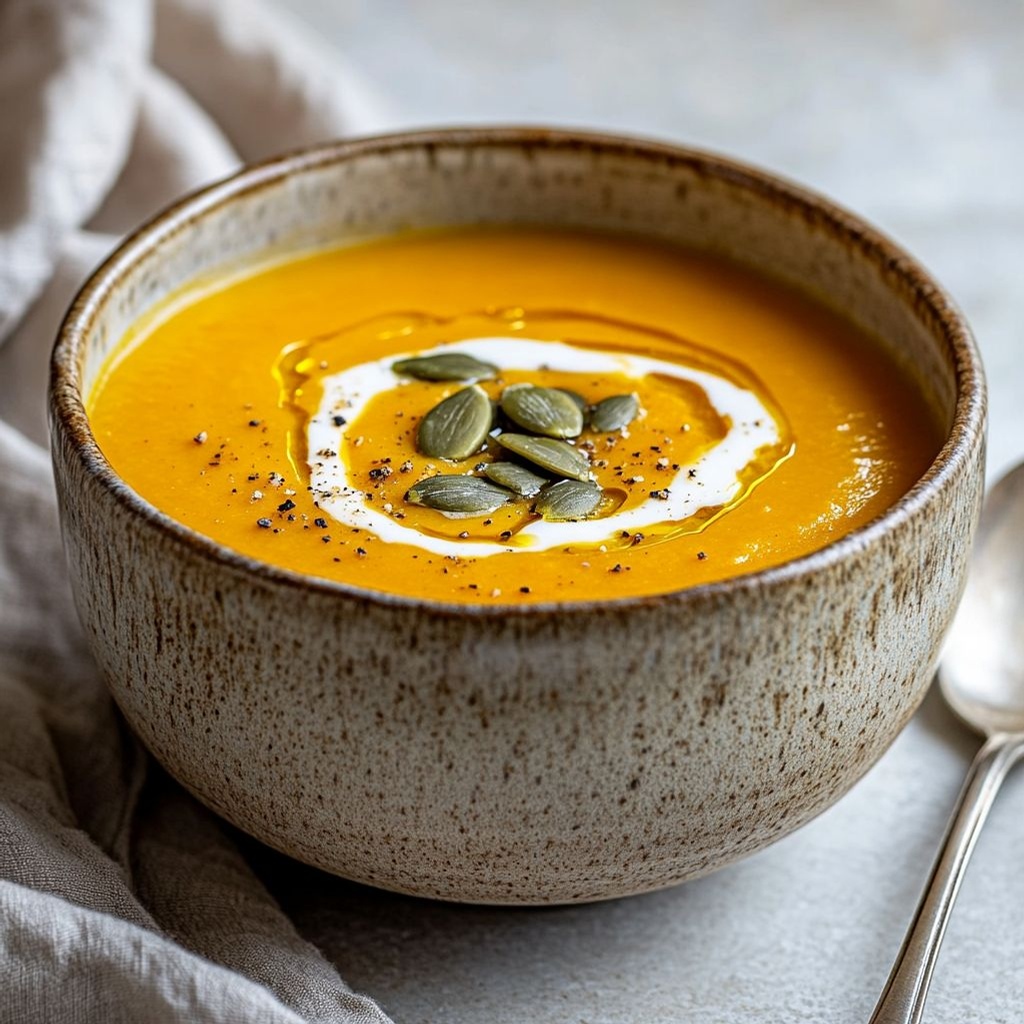
→ Adds a silky sheen and extra depth. A small drizzle of olive oil at the end can enhance mouthfeel without adding heaviness; or swirl a little cream for a richer presentation.
Instructions
- Preheat your oven to 400°F (200°C) and line a large baking sheet with parchment paper. Toss 2–3 pounds pumpkin flesh (peeled, seeded, and cubed) with 1–2 tablespoons olive oil and a pinch of salt, then spread in a single layer. Roast until tender and edges caramelize, about 25–40 minutes, turning once halfway.
→ Roasting concentrates the squash’s sugars and develops a deep, velvety sweetness; the caramelized edges create depth in the final purée. - Meanwhile, heat 1–2 tablespoons olive oil in a large heavy pot over medium heat and add the chopped onion. Sauté until translucent and lightly golden, 6–8 minutes, stirring occasionally to prevent sticking.
→ Slow browning of onions builds a sweet, savory foundation without bitterness and helps extract flavor into the broth. - Add the minced garlic to the onions and cook for 1–2 minutes, stirring constantly, until the garlic is fragrant but not browned.
→ Garlic releases its aroma when heated gently; overheating can make it sharp or bitter, so keep to a brief sauté. - Deglaze the pot by pouring in 1/4 cup vegetable broth and scraping up the brown bits with a wooden spoon. Simmer for 1 minute to dissolve the fond, then continue with the aromatics.
→ The fond adds depth and prevents wasted flavor from sticking to the pan. - Transfer the roasted pumpkin to a blender or directly into the pot with a portion of the hot broth and puree until smooth. If using a blender, blend in batches and vent the lid to avoid steam buildup. For an ultra-smooth finish, press the purée through a fine sieve after blending.
→ A smooth purée is essential for a velvety soup; emulsifying the pumpkin with a little broth gives body without heaviness. - Return the pumpkin purée to the pot (if you used a blender) and whisk in 4 cups vegetable broth until fully combined; set the heat to medium and bring to a gentle simmer.
→ The broth provides the soup’s body and helps create an even texture; simmering blends flavors together. - Simmer the mixture gently for 10–15 minutes, stirring occasionally to prevent scorching and to allow the pumpkin’s sweetness to meld with aromatics.
→ Gentle simmering relaxes the flavors and slightly thickens the soup without reducing the pumpkin’s aroma. - Stir in 1/2 cup heavy cream and continue to simmer on low heat just until warmed through; avoid boiling after adding cream to prevent separation and a greasy texture.
→ Cream adds luxurious mouthfeel and a glossy finish; adding off heat preserves emulsification. - Season the soup with 1 teaspoon salt, 1/2 teaspoon black pepper, 1/2 teaspoon ground cumin, 1/4 teaspoon smoked paprika, and 1/4 teaspoon ground cinnamon; taste and adjust seasonings to balance sweetness and spice.
→ Salt, pepper, and spices heighten pumpkin sweetness and create warmth; adjust after blending for precise control. - If using maple syrup, whisk in 1 tablespoon and taste, adding more salt or a touch of spice as needed to balance sweetness.
→ Maple syrup rounds the squash’s earthiness; add gradually to avoid oversweetening. - If you want a touch of heat, sprinkle in 1/4 teaspoon red pepper flakes during simmer and taste, increasing gradually if you desire more warmth.
→ A little heat contrasts the sweetness and brightens the finish; adjust to your preferred heat level. - If using fresh thyme, add 1 teaspoon chopped thyme to the soup during the final minutes of simmering to release herbal aroma without overpowering the pumpkin.
→ Fresh thyme brightens roasted flavors and complements pumpkin; prolonged cooking can mute its brightness. - While the soup finishes, toast 2 tablespoons pumpkin seeds in a dry skillet over medium heat until fragrant and lightly browned, about 3–4 minutes; cool slightly and season with a pinch of salt if desired.
→ Toasting enhances nutty flavor and provides a pleasing crunch as a topping. - To serve, ladle the hot soup into bowls and finish with a drizzle of extra virgin olive oil or a swirl of cream, plus a scattering of chopped parsley or chives for color and a fresh note.
→ Finishing with oil or cream adds sheen and a final flavor layer; fresh herbs provide contrast to the creamy pumpkin base.
Notes
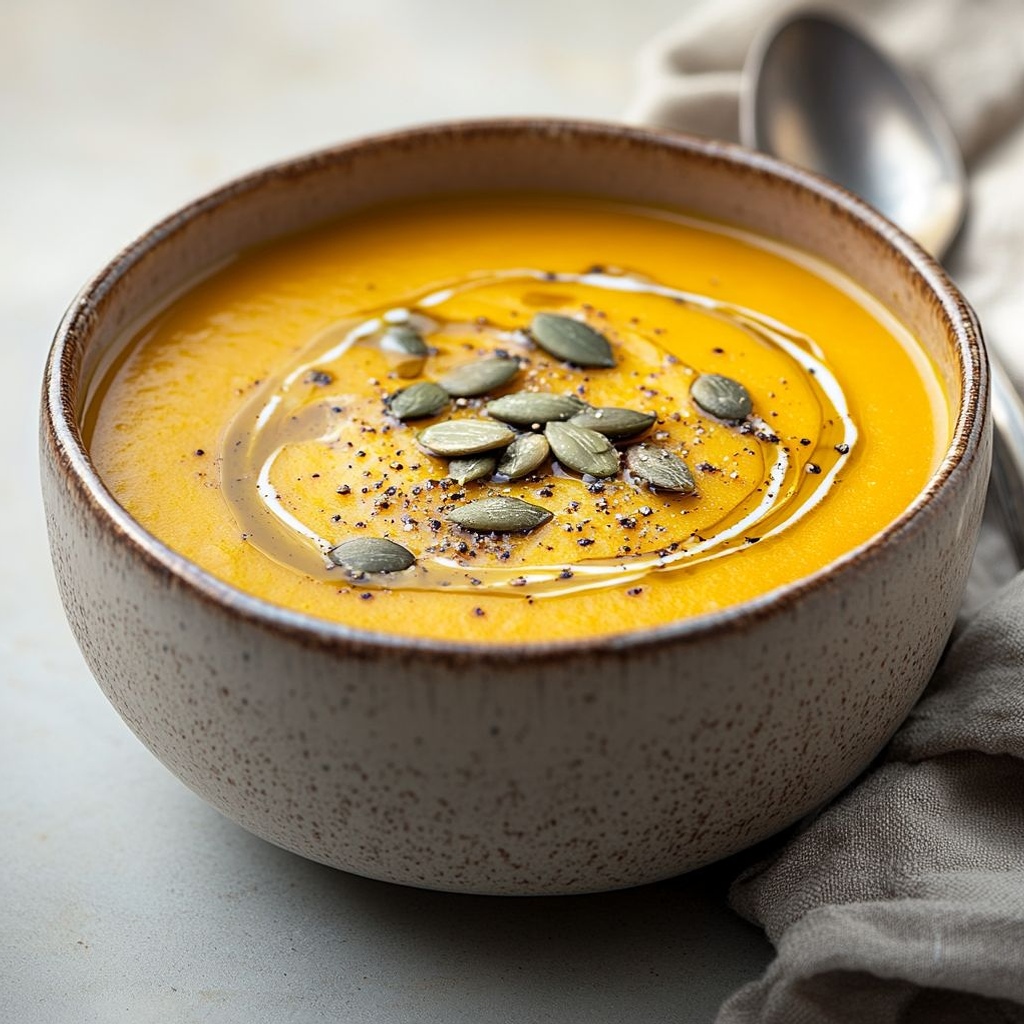
These gluten-free roasted pumpkin soup is naturally velvety from roasted pumpkin flesh and caramelized aromatics, creating a comforting, nourishing bowl. You can customize it by replacing the heavy cream with 1/2 cup unsweetened coconut milk for a dairy-free version, or swirl in a spoon of yogurt for brightness. It freezes well and reheats beautifully, making it ideal for meal prep and busy weeknights. For serving, finish with a drizzle of extra virgin olive oil or a swirl of cream, sprinkle with toasted pumpkin seeds, and scatter chopped parsley or chives for color. To keep it gluten-free and safe for sensitive diets, always check that your stock, spices, and any add-ins are certified gluten-free.
Tips
Tips for Roasted Pumpkin Soup
- Roast for maximum flavor: Use evenly cut pumpkin cubes and spread them in a single layer on a parchment-lined tray. Roast until tender and caramelized at the edges to concentrate sweetness and deepen the savory notes.
- Enhance sweetness without overdoing it: Roasting brings natural sugars forward. If you need a touch more sweetness after blending, consider a small amount of maple syrup or a pinch of brown sugar, then adjust with salt.
- Build flavor with aromatics: Sauté onions slowly in olive oil until translucent and golden. Add garlic toward the end of sautéing to avoid biting the garlic and to keep its aroma bright.
- Deglaze to capture fond: After sautéing aromatics, splash the pan with a little vegetable broth and scrape up the browned bits to add depth to your base.
- Blend for silkiness: For a velvety texture, blend until ultra-smooth using a high-powered blender or an immersion blender. If you want a finish as silky as velvet, press the puree through a fine sieve.
- Adjust thickness with care: Start with 4 cups broth and adjust with more broth or a splash of water after blending to reach your desired consistency. Add dairy or dairy-free cream gradually to avoid thinning the flavor.
- Creaminess options: Heavy cream yields richness, but dairy-free options like coconut milk or almond cream work beautifully. If using coconut milk, shake well and use the solid white portion for best texture.
- Season gradually and taste: Salt is essential for balancing sweetness. Start with 1 teaspoon, taste after blending, then adjust with small increments to avoid oversalting.
- Spice it thoughtfully: Ground cumin adds warmth; smoked paprika lends a subtle smoky note; cinnamon provides classic pumpkin warmth. Start with small amounts and adjust to taste to prevent overpowering the pumpkin.
- Heat level on demand: If you like a gentle kick, add red pepper flakes or a pinch of cayenne. Add in small increments and taste as you go.
- Make it ahead: The roasted pumpkin and aromatics can be prepared a day ahead. Reheat gently, then finish with broth and cream just before serving.
- Non-dairy adjustments: If avoiding dairy, use a thick coconut milk or cashew cream. Whisk in at the end and warm through to combine smoothly.
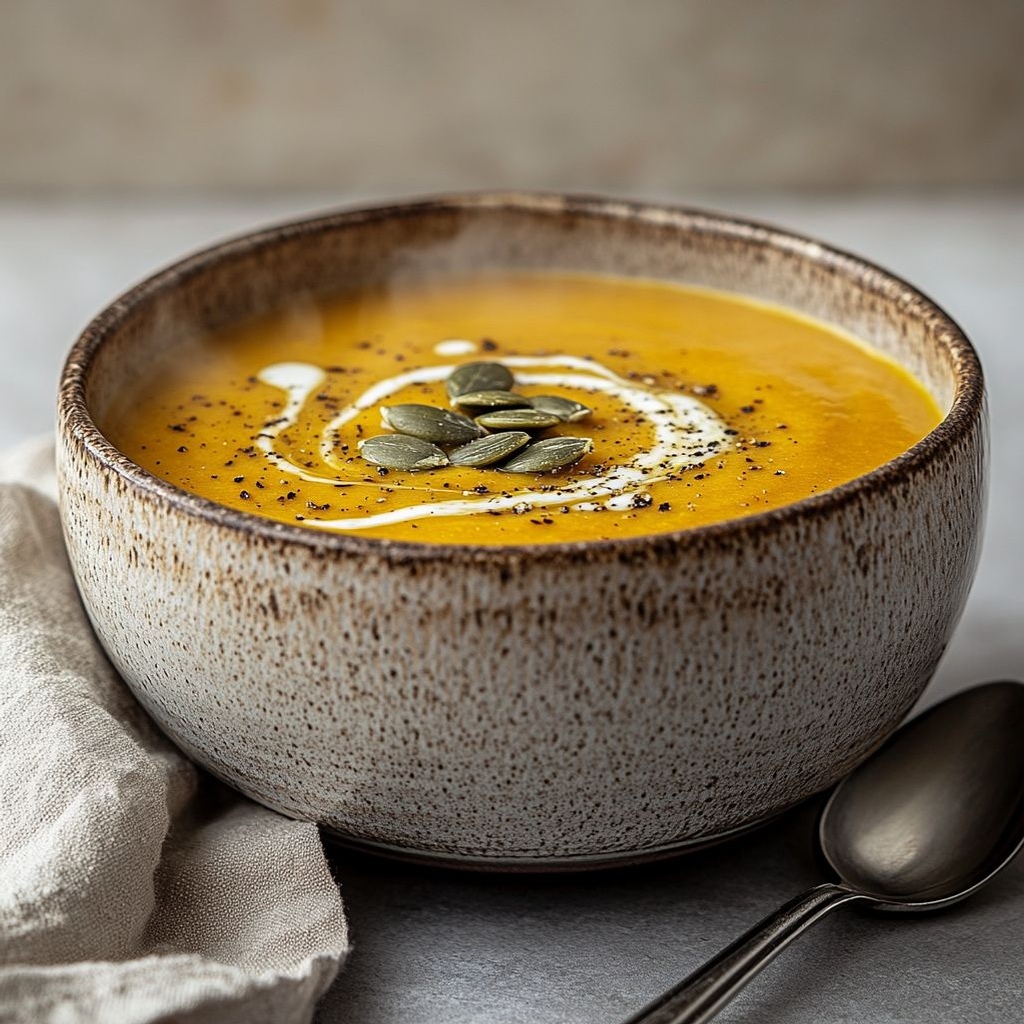
- Garnish for contrast: Toasted pumpkin seeds (pepitas), a drizzle of extra virgin olive oil, a swirl of cream, or a sprinkle of chopped herbs add color and texture.
- Chunky vs. silky: If you love a little bite, reserve a portion of roasted pumpkin to fold back into the soup after blending for a chunky texture.
- Brighten with acidity: A small splash of lemon or lime juice at the end brightens the flavors and balances sweetness.
- Perfect pairing: Serve with crusty bread, rustic croutons, or a crisp herb topping like fried sage for an aromatic finish.
- Storage and reheating: Refrigerate leftovers for up to 3–4 days or freeze for up to 2–3 months. Reheat gently over low heat, stirring, and avoid boiling to prevent separation.
- Allergen awareness: If using stock, choose low-sodium and check ingredients for additives. Nut-free and dairy-free options are available—plan substitutes in advance if you have allergies.
FAQ
Roasted Pumpkin Soup – FAQ
What is Roasted Pumpkin Soup?
A velvety soup made from roasted pumpkin flesh, onions and garlic, simmered in vegetable or chicken stock, and blended until smooth. It’s often finished with cream or coconut milk and flavored with warming spices like nutmeg, cinnamon, or ginger. Makes about 4–6 servings.
How do I roast the pumpkin?
Preheat your oven to 200°C (400°F). Cut the pumpkin into wedges or chunks, scoop out the seeds, toss the flesh with olive oil and a pinch of salt, then roast on a baking sheet for 25–35 minutes until tender and lightly browned. Let cool enough to handle, then scoop out the flesh.
Can I make this vegan or dairy-free?
Yes. Use vegetable stock and replace dairy with coconut milk, almond milk, or cashew cream. For extra richness without dairy, whisk in a little olive oil or a splash of tahini at the end.
Which pumpkins are best for roasting?
Sweet, dense varieties like sugar pumpkins (pie pumpkins) or kabocha and butternut squash work well. They have smooth textures and sweet flesh that blends nicely into soup. Avoid pumpkins that are very watery or fibrous.
Should I peel the pumpkin before roasting?
For the easiest route to a smooth soup, peel the pumpkin before roasting or scoop the flesh away from the skin after roasting. Some small pumpkins have tender skin that can be left on, but peeling yields the smoothest final texture.
How can I adjust the soup’s thickness and creaminess?
Start with about 4 cups of stock and adjust after blending. If too thick, add more stock or water. For extra creaminess, stir in cream, coconut milk, or cashew cream. You can also add a small boiled potato to help thicken naturally.
What flavor tweaks can I try?
Add a grated apple for sweetness, a pinch of nutmeg or cinnamon, and a touch of ginger or curry powder for warmth. Finish with a drizzle of cream or olive oil and a squeeze of lemon to brighten the flavors. Garnish with toasted pumpkin seeds for crunch.
How long does the soup keep and how should I store leftovers?
Let the soup cool completely, then store in an airtight container in the refrigerator for 3–4 days. Reheat gently on the stove over low heat or in the microwave, stirring until hot.
Can I freeze the soup?
Yes. Freeze in freezer-safe containers or bags for up to 3 months. Thaw overnight in the fridge, then gently reheat on the stove, stirring. You may need to whisk in a little water or stock to restore the texture after thawing.
What toppings or accompaniments go well with Roasted Pumpkin Soup?
Popular toppings include toasted pumpkin seeds, a swirl of cream or coconut milk, a drizzle of olive oil or chili oil, croutons, chopped chives, or a small dollop of yogurt (if not dairy-free). Serve with crusty bread or a systems-friendly side salad for a complete meal.