Introduction / Hook
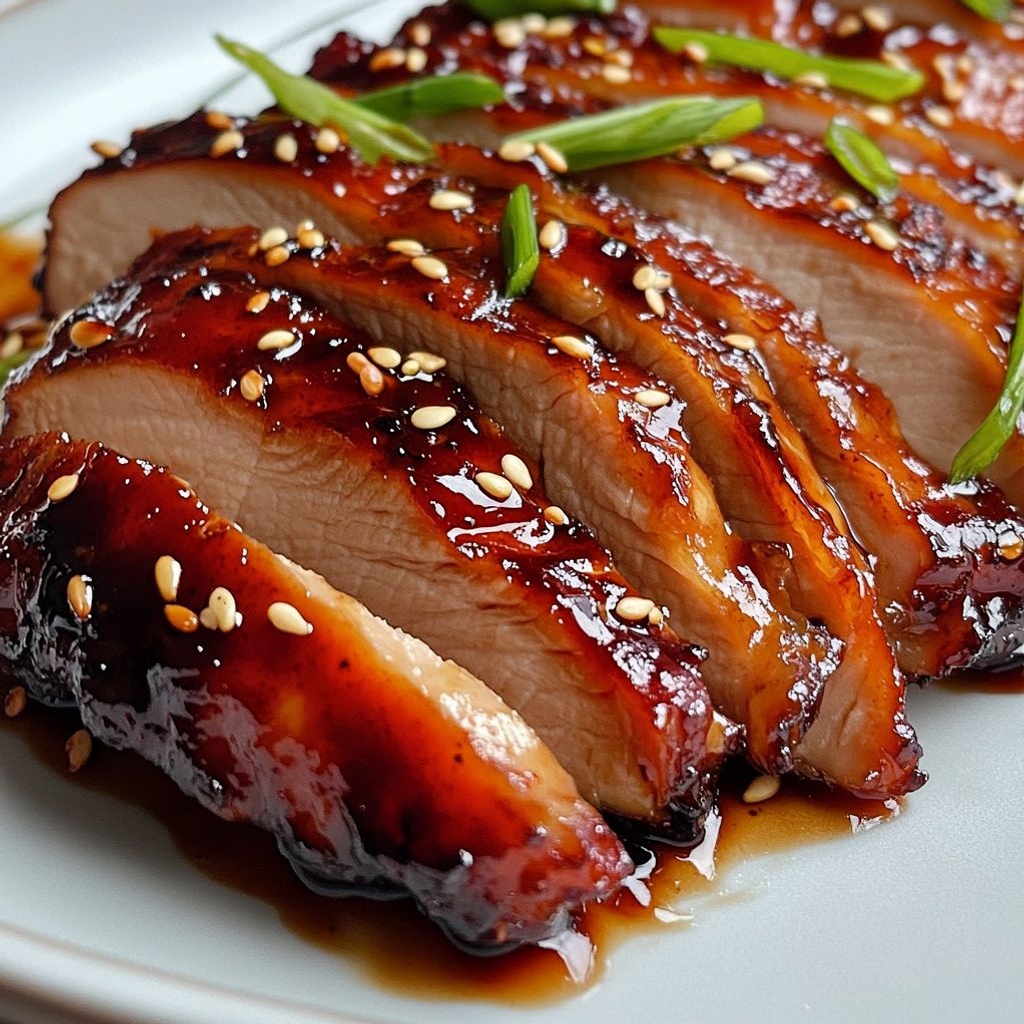
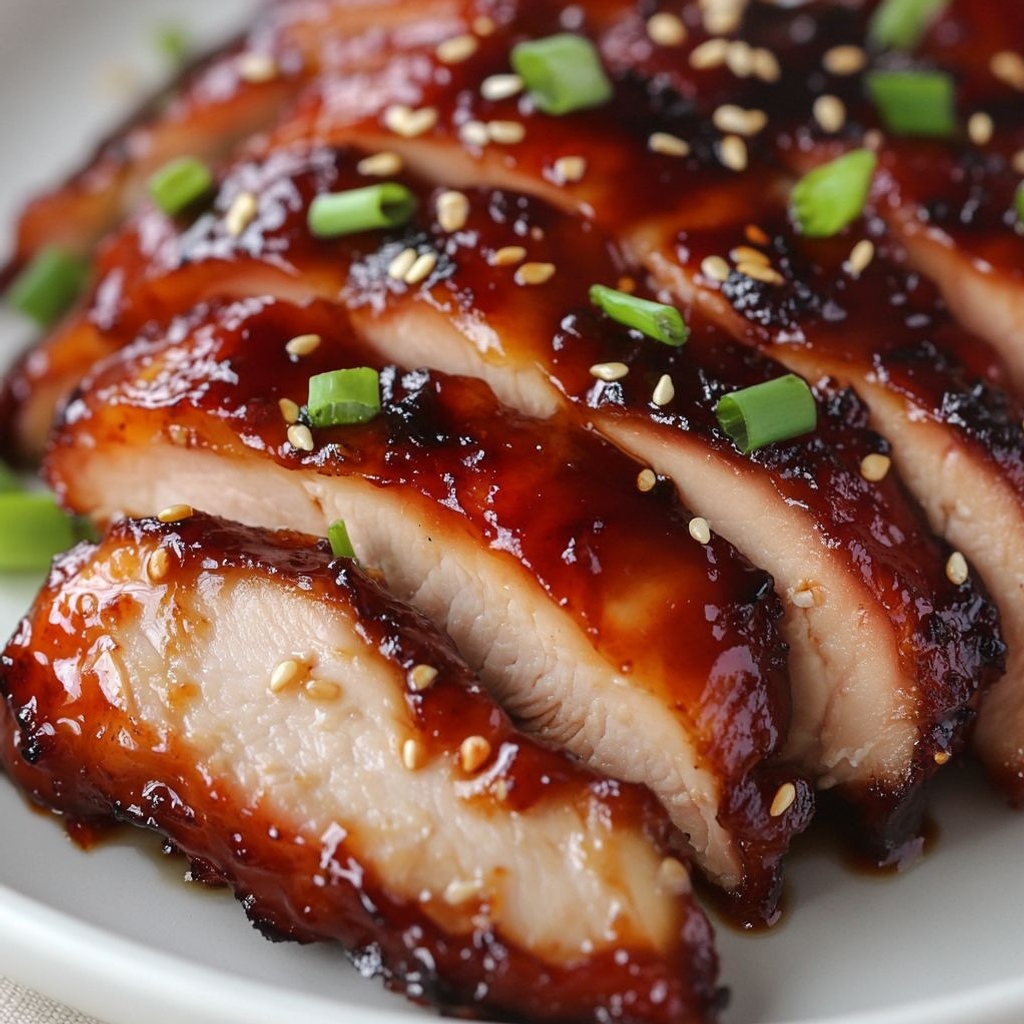
Imagine a plate bright with lacquered amber sheen, the surface kissed by a glaze that mingles sticky sweetness with a whisper of savory depth. The aroma climbs from the pan in a lilting, almost hypnotic steam—honeyed molasses meeting soy and five-spice, with a hint of char that sings of open flames and evening markets. This is Chicken Char Siu, a home kitchen reimagining of a Cantonese barbecue classic that invites you to savor the drama of restaurant flavor without stepping outside your front door. The chicken, lean and tender, drinks in a marinade that feels both familiar and exuberant—salty, sweet, smoky, and rich with a pantry’s worth of soul. The glaze clings like a kiss, giving each bite a glossy, caramelized finish that crackles gently as you bite in, releasing a chorus of flavors that feel both comforting and exotic. Even the name—char siu—evokes long-standing traditions: a cooking method born of skillful roasting, precise heat control, and the magical moment when the glaze hardens into a lacquer that preserves juiciness inside. When you serve it, you won’t just present a dish—you’ll offer an invitation to journey through time and across oceans, from a bustling Cantonese street market to your own cozy dining room.
What makes this version especially inviting is its balance: the chicken stays juicy and approachable, while the glaze provides depth that can stand up to rice, noodles, or a bright, crisp salad. It’s a dish you can prepare on a weeknight with a little planning, yet it feels special enough to serve to guests. The cooking method—roasting or baking—gives you the same smoky, lacquered finish you’d expect from a dedicated charcoal pit, but with the convenience of your oven. You’ll notice how the glaze tightens around the surface, forming a glossy crust that crackles softly as you cut through, revealing succulent meat within. The flavors are not loud for loudness’s sake; they’re layered and nuanced: a kiss of sweetness, a robust umami, a touch of fruitiness from Shaoxing wine or rice wine, and a whisper of five-spice that ties the whole harmony together. It’s the kind of dish that invites you to halve the portions and brood over the leftovers the next day, because the flavors only deepen with time.
In the pages that follow, you’ll discover not only how this dish tastes and feels, but also how it fits into a wider culinary conversation: how traditional Cantonese barbecue techniques can be adapted for a modern home cook, how the dish travels across cultures, and how it can evolve with your pantry, your dietary needs, and your personal tastes. It’s a celebration of pantry staples, of patience, and of the small joys that happen when a glaze caramelizes to a perfect sheen and a kitchen fills with the scent of roasting meat and toasted spices. Welcome to a recipe that’s more than the sum of its parts—a dish that invites you to savor, share, and put a personal stamp on a beloved classic.
The Story Behind the Dish
Char siu translates roughly to “fork roasted” in Cantonese, a nod to the traditional technique of skewering strips of meat on long forks or skewers and roasting them over an open flame or in a dedicated charcoal oven. The technique developed alongside the bustling teahouses and barbecue shops of southern China, where cooks mastered the balance of heat, glaze, and basting to produce a glossy, ruby-red finish and a deeply layered flavor. Pork is the most familiar champion of char siu—slices of pork shoulder or pork loin lacquered with a thick, fragrant glaze and roasted until the fat renders and the surface caramelizes. Yet the marrow of this dish is universal: a love for a red, lacquered exterior that glistens under warm kitchen light and a tender interior that carries a kiss of smoke, a touch of sweetness, and a profound savory core.
The chicken version is a natural evolution—an adaptation that makes the signature technique accessible to home cooks who prefer white meat or need a faster cooking time. Chicken char siu preserves the dish’s essential dynamic: a thick, glossy glaze that clings to the meat and a roast that infuses the surface with caramelized edges and a moist interior. In many households, this adaptation is a bridge between tradition and practicality, allowing families to enjoy a culturally resonant favorite without the long marinating times or specialized equipment sometimes associated with pork char siu. The result is a dish that still carries the hallmarks of its heritage—the fragrant, umami-rich glaze; the light, tender bite of chicken; and the pleasing contrast between crisp-edged surfaces and juicy centers—but now with a personal touch that can reflect regional flavors, household pantry staples, or dietary preferences.
Historically, Cantonese barbecue traditions traveled through trade routes and migration, landing in kitchens far from Guangzhou and Hong Kong. In diaspora communities, char siu became a symbol of home, a way to recreate the familiar scents of family dinners and weekend takeout that felt both comforting and adventurous. The dish also became a canvas for experimentation: cooks would adjust the balance of sweetness, salt, and spice, or swap ingredients according to what was available. Today, chicken char siu stands as a vivid example of culinary adaptation—the harmony of technique and creativity that turns a storied tradition into an everyday joy. When you prepare it, you’re participating in a lineage of cooks who have perfected a moment of glaze, a moment of heat, and a moment of pause before the first bite—to appreciate how heat, sugar, salt, and umami combine to create something memorable.
If you’ve ever watched a professional roaster lift a pan of char siu and glimpse the glaze’s shine as it heaves smoke and steam, you know the drama of the dish. In your own kitchen, you can recreate that drama with a simple oven technique and a glaze that tastes like a story you’ve heard a dozen times—familiar, comforting, and wonderfully vivid in your own voice. Chicken char siu invites you to revisit tradition while making it your own, to honor the centuries of Cantonese smoke and sugar that have preceded you, and to welcome new flavors that reflect your current pantry and your family’s tastes. It’s a recipe that doesn’t demand perfection; it invites curiosity, experimentation, and the quiet pride that comes from turning simple ingredients into something deliciously memorable.
Why You’ll Love This Recipe
- Quick to prepare once the marinade is mixed, offering a restaurant-worthy flavor without hours of waiting.
- Juicy, tender chicken with a lacquered glaze that provides both sweetness and depth of umami.
- Versatile pairing options: serve over steamed rice, fried rice, or noodles; pair with quick pickles or a bright vegetable side.
- Whole-family friendly—gluten considerations can be met with simple substitutions; easily adjusted for spice tolerance.
- Make-ahead friendly: you can marinate in advance and roast when you’re ready, or use leftovers for a quick topping on bowls or sandwiches.
- Impressive enough for guests, yet approachable enough for a weeknight dinner with minimal fuss.
- Wonderful canvas for substitutions and variations to suit different dietary needs or regional twists.
Flavor Profile & Texture
The character of chicken char siu rests on a deliberate balance of elements. The marinade—rich with savory soy, tangy notes from vinegar or Shaoxing wine, a touch of sweetness from honey or sugar, and the warmth of five-spice powder—creates a fragrant, multi-layered base. When roasted, the exterior caramelizes, forming a glossy, ruby-tinged crust that crackles softly as you cut into it. That lacquer is more than visual appeal; it’s a tiny seam of concentrated flavor that holds the glaze tight to the meat while the interior remains luminous and juicy.
Texture-wise, you’re aiming for a contrast that makes each slice interesting. The outer surface offers a delicate crust with a slight chew from the glaze, while the inside stays moist and tender—the hallmark of a well-roasted chicken. The glaze itself provides a near-syrupy finish that clings to each bite, releasing a balanced chorus of flavors: a savory backbone from soy, a toasty warmth from five-spice, a gentle fruitiness from any wine or rice wine used, and a hint of sweetness that keeps the glaze from feeling flat. If you’re someone who loves a touch of char, you’ll appreciate the subtle, smoky edge that forms along the surface, a result of the glaze’s sugar content meeting the heat just long enough to form a gentle caramelization without drying out the meat.
In the mouth, you should experience: a first impression of glossy sweetness, followed by a savory umami punch, and then a soft spice note that lingers. The aroma—roasted chicken with a honeyed, soy-scented glaze—should be irresistible enough to invite seconds. And because the marinade infuses the meat rather than just coating the surface, the flavor deepens with each bite rather than fading after the first taste. This is the kind of dish that makes you appreciate the quiet alchemy of heat, glaze, and time—the moment when a simple chicken breast reveals a depth of flavor you didn’t know it could hold.
Occasions & Pairings
Chicken char siu shines in a variety of settings, from weeknight family dinners to more festive gatherings. Its bright glaze and satisfying texture make it a crowd-pleaser, especially when you want something that feels special without requiring a lot of finesse in the kitchen. Here are some ideal occasions and pairing ideas:
- Family weeknights: pair with steamed jasmine rice or garlic-flecked fried rice and a green vegetable like blurred garlic spinach or garlic bok choy.
- Casual weekend meals: serve alongside noodles tossed with sesame oil, scallions, and a splash of soy, or atop a crisp Asian slaw for contrast.
- Hungry guests or potlucks: slice and fan onto a platter with pickled vegetables, roasted peppers, and a small bowl of hoisin or a bright chili sauce for dipping.
- Holiday or special-occasion dinners: frame the dish with complementary sides such as steamed snow peas, shiitake mushrooms, or a citrusy cucumber salad to balance the glaze’s sweetness.
- Lunch-friendly options: use the sliced chicken as a topping for banh mi-inspired sandwiches or rice bowls with soft-cried eggs and chile crisp for a modern twist.
Pairing concepts to consider:
- Rice: steamed white rice, jasmine rice, or turmeric-inflected pilaf.
- Noodles: soba, egg noodles, or thin rice vermicelli tossed lightly with sesame oil and green onions.
- Vegetables: quick-sautéed greens, roasted fennel, or pickled vegetables to cut through the sweetness.
- Drinks: a crisp green tea, a light lager, or a slightly chilled white wine such as Riesling that mirrors the glaze’s brightness.
Tips, Variations & Substitutions
General tips
– Use skin-on chicken thighs or breast with a bit of fat for juiciness; bones aren’t required for this dish, but they can be used for extra flavor if you prefer.
– Pat the chicken dry before roasting to help the glaze adhere and caramelize properly.
– Monitor the glaze during roasting; a consistent heat helps prevent burning the sugars while still achieving the lacquered finish.
– If you’re short on time, you can whisk together a quick glaze and brush it on the chicken a few times during roasting to build a glossy, flavorful coating.
Vegan, vegetarian, and dietary substitutions
- To make a plant-based version, substitute tofu or king oyster mushrooms for the chicken. Bake or roast until the outside is lacquered and crisp, applying glaze in layers as you would with chicken.
- Gluten-free: choose tamari or a gluten-free soy sauce instead of regular soy sauce; ensure the glaze ingredients are gluten-free as well.
- Low-sugar or lower-sodium: reduce the sweet component by half and compensate with extra aromatics (garlic, ginger, sesame) to keep depth without excess sweetness.
- Spice level: add a touch of chili paste or crushed red pepper to the glaze if you like a gentle kick.
Regional twists
- For a more Cantonese feel, include a drop of mirin or Shaoxing wine in the glaze to deepen the umami and lend a slightly fruity note.
- Incorporate five-spice blend variations (more star anise for a floral note or a pinch of Sichuan pepper for a tingly finish) to tailor the glaze to your palate.
- Be non-traditional and add a splash of hoisin and a drizzle of honey with a touch of black sugar for a deeper, more caramel-forward glaze.
Make-ahead ideas and storage
Marinades for this dish can be prepared ahead of time and stored in the refrigerator in an airtight container for up to 24 hours. If you’re planning to meal-prep, you can marinate the chicken, refrigerate, and roast it the next day. The glaze can also be prepared ahead and warmed gently before brushing on the chicken during roasting. Leftovers refrigerate well for up to 3 days and can be sliced to top rice bowls, wrapped in lettuce leaves for lettuce wraps, or tucked into a sandwich or baguette for a quick lunch.
Storage & Make-Ahead Ideas
The beauty of chicken char siu lies in its flexibility with timing. If you want to plan ahead, here are practical options to maximize flavor and minimize effort:
- Marinate ahead: mix your glaze base (without meat) and refrigerate along with a portion of the chicken. When ready, combine and roast or bake, applying the glaze in layers for maximum lacquer.
- Make-ahead glaze: prepare the glaze up to the point of heating; keep in a sealed container and rewarm gently in a small saucepan before brushing onto the chicken mid-roast, achieving an even, glossy finish.
- Leftovers: cold or reheated chicken char siu slices are excellent in fried rice, atop a crisp salad, or in a quick noodle bowl; the glaze tightens with time, intensifying its flavor on subsequent reheats.
- Storage: refrigerate cooked chicken in an airtight container for up to 3 days; freeze slices for longer storage, though the texture may shift slightly after freezing.
Fun Facts & Trivia (Optional)
- The distinctive red lacquer associated with traditional char siu stories often comes from food coloring or fermented red bean curd; modern versions may rely more on natural browning and the glaze’s sugar to achieve the same ruby glow.
- Char siu translates to “fork roasted,” a nod to the long skewers historically used to hold meat over a flame and baste it as it roasted, a practice that required precision and steady hands from skilled cooks.
- While pork remains the classic meat of char siu, chicken has long been a beloved alternative in many households, offering quicker cooking times and a lighter texture while preserving the iconic glaze and technique.
- In many Cantonese households, this dish is a celebratory Sunday option or a special weeknight treat; its aroma has a habit of drawing family members to the kitchen with the promise of something delicious and comforting.
- Char siu’s influence extends beyond traditional Chinese cuisine, inspiring variations in fusion menus around the world, where chefs experiment with different glazes, proteins, and regional ingredients to create new takes on a timeless method.
Ingredients
Chicken Char Siu
- 2 pounds boneless skinless chicken thighs (or breasts)
→ This is the main protein of the dish. For best juiciness and glaze adhesion, use boneless skinless thighs if possible. Trim any excess fat and pat dry to help marinade cling and ensure even browning. Marinate in the fridge for at least 2 hours, or overnight for maximum flavor; bring to room temperature 20–30 minutes before cooking to promote even cooking. - 3 tablespoons hoisin sauce
→ A sweet‑savory base that gives depth and helps the glaze cling to the chicken, adding caramelized notes. Mix with the soy sauces and aromatics to form the glaze. If you prefer a milder sweetness, reduce to 2 tablespoons; for a richer glaze, increase to 4 tablespoons but watch the salt level. - 2 tablespoons light soy sauce
→ Provides salinity and color without overpowering. Use light soy so the glaze doesn’t become too dark or salty; gluten-free if needed. If using gluten-containing soy sauce, consider a gluten-free variant. This also helps moisten marinade and balance sweetness. - 1 tablespoon dark soy sauce
→ Deepens color and adds a nuanced, slightly molasses-like savor. It contributes to the char siu’s characteristic reddish‑brown glaze. If you don’t have dark soy, substitute with an extra tablespoon light soy and a few drops of red coloring (optional). - 2 tablespoons Shaoxing wine (or dry sherry)
→ Adds aroma and helps tenderize the meat, carrying the marinade’s flavors into the fibers. If you prefer not to use alcohol, substitute with unsweetened apple juice or chicken broth, though you may lose some complexity. Let marinade rest with wine for at least 15 minutes to bloom flavors before adding the chicken. - 1 tablespoon honey
→ Primary sweetener and helps create a sticky, glossy glaze that caramelizes under high heat. Use honey or substitute maple syrup for a different flavor; adjust if you prefer a less sweet glaze. Brush on the surface during cooking for extra gloss in the final minutes. - 1 tablespoon brown sugar
→ Deepens color and adds a subtle molasses note that complements the honey. It also contributes to caramelization on the surface. If using honey alone, you can omit this, but the combination yields a richer glaze. Dissolve in the marinade to prevent crystallization. - 1 tablespoon Chinese five-spice powder
→ Classic flavor foundation for char siu, offering notes of star anise, cloves, cinnamon, Sichuan pepper, and fennel. Start with 1 tablespoon; adjust to taste in future batches. If you’re sensitive to spice, reduce to 1/2 teaspoon. - 2 garlic cloves, minced
→ Aromatics that build the base flavor of the marinade. Mince finely or press through a garlic press so the flavor distributes evenly. If you prefer a milder hit, use garlic paste and reduce by half. - 1 tablespoon grated fresh ginger
→ Adds bright, warm spice that cuts through the richness. Use fresh ginger; grate or finely mince to maximize surface area. Avoid large fibrous pieces that won’t emulsify into the marinade. - 1 teaspoon sesame oil
→ Imparts a nutty aroma and rounds out the glaze. This is optional but recommended for depth; stir into the marinade or brush onto the chicken before roasting to enhance fragrance. Don’t use if you’re sensitive to sesame. - 1/2 teaspoon red food coloring paste or powder (optional)
→ Traditional char siu color; gives the distinctive red hue. If you prefer a natural option, use beet juice or omit entirely and rely on Maillard browning. Start with 1/4 teaspoon and adjust to your preferred shade. - 1 tablespoon rice vinegar (optional)
→ A touch of acidity to balance sweetness and help tenderize. If you omit, consider a squeeze of lemon at the end to brighten the glaze. Add to marinade only if you like a more tangy profile. - Salt to taste
→ Soy sauces contribute salt, so add gradually after tasting the marinade. You can always add more at the end, but you cannot remove salt once mixed in. If using low-sodium soy, you may want a touch more salt, but taste first. - Freshly ground black pepper to taste
→ Adds a subtle background heat and rounds the profile. Use sparingly; you can adjust after cooking by sprinkling or serving with pepper at the table. White pepper can be used for a milder flavor.
Finish & Serve
- Cooked white rice or jasmine rice, to serve
→ Char siu is traditionally served over a bed of steamed rice so the glossy glaze can be spooned over and absorbed. Prepare rice according to package directions and keep warm; you can also substitute with cauliflower rice for a low-carb option. - Toasted sesame seeds, for garnish
→ Adds a subtle nutty crunch and visual appeal. Toast sesame seeds in a dry skillet over medium heat until fragrant and lightly browned, then scatter over the finished dish for texture and aroma. - Green onions (scallions), sliced, for garnish
→ Fresh, crisp green onions provide a bright contrast to the rich glaze. Slice thinly on the bias and sprinkle over the top just before serving for color and freshness.
Instructions
- Whisk together 3 tablespoons hoisin sauce, 2 tablespoons light soy sauce, 1 tablespoon dark soy sauce, 2 tablespoons Shaoxing wine (or dry sherry), 1 tablespoon honey, 1 tablespoon brown sugar, 1 tablespoon Chinese five-spice powder, 2 garlic cloves (minced), 1 tablespoon grated fresh ginger, 1 teaspoon sesame oil, 1/2 teaspoon red food coloring paste (optional), 1 tablespoon rice vinegar (optional), and a pinch of salt and freshly ground black pepper in a medium bowl until the mixture is smooth and cohesive; measure out 1/2 cup of this mixture to use later as a glaze and refrigerate it in a separate small bowl. This yields a concentrated glaze while the remaining marinade flavors the chicken deeply.
→ Separating the glaze from the marinade lets you baste with a heat-stable, fully flavored lacquer during roasting and keeps raw-poultry contact strictly to the marinating portion. - Pat dry 2 pounds boneless skinless chicken thighs (or breasts) with paper towels and trim any excess fat or connective tissue; this moisture removal helps the marinade cling and encourages even browning during roasting.
→ A dry surface reduces steam and promotes a crisp, caramelized outer layer while the interior remains juicy. - Toss the chicken pieces in the remaining marinade until each piece is thoroughly coated, then transfer to a covered dish or zip-top bag; seal and refrigerate for at least 2 hours or overnight for maximum flavor, turning once if possible to promote even coating. Bring the chicken to room temperature for 20–30 minutes before cooking to promote even heat distribution.
→ Longer marination infuses the meat with spice and sweetness; resting at room temperature before roasting minimizes dramatic temperature differences that would otherwise delay browning. - Preheat your oven to 425°F (220°C) and line a rimmed baking sheet with parchment or foil; position a rack over the sheet to elevate the chicken, allowing air to circulate for even browning and glossy glaze formation.
→ High heat accelerates caramelization; the rack prevents the meat from sitting in its own juices, which would dull the glaze and soften the crust. - Remove the chicken from the marinade and carefully shake off excess; arrange the pieces on the rack in a single, evenly spaced layer, leaving space between each piece for air to circulate.
→ A light coating is enough for glaze formation without pooling; spacing ensures uniform browning and color across all surfaces. - Roast the chicken for 15–20 minutes, then brush the reserved glaze over the top and sides with a silicone brush, turning the pieces to coat all surfaces evenly; continue roasting for another 15–20 minutes, reapplying glaze halfway through.
→ Early glazing sets the color and begins flavor development; turning and re-glazing builds a lacquered, shiny surface typical of char siu. - Continue roasting until an instant-read thermometer inserted into the thickest part registers 165°F (74°C) and the glaze is deeply glossy and slightly charred in spots; if needed, rotate the pan for even browning and apply a final coat of glaze.
→ Safe internal temperature ensures juicy, fully cooked chicken while the glaze develops its characteristic sweetness and bite. - Optional: for a deeper lacquer, switch your oven to broil on high for 2–3 minutes, watching closely to prevent burning; the surface should blister and caramelize without scorching.
→ A brief blast under high heat intensifies color and glaze retention, mimicking traditional charred edges from open-fire cooking. - Transfer the chicken to a clean cutting board and let it rest for 5–10 minutes to allow the juices to redistribute, which keeps the slices moist and flavorful.
→ Resting prevents immediate juice loss on slicing and lets the glaze set further for a polished finish. - Meanwhile, cook your rice according to package directions (white or jasmine), then keep it warm; for a lower-carbohydrate option, substitute with cauliflower rice, if desired.
→ A neutral starch base provides a clean, absorbent bed for the glossy char siu glaze and ensures balanced textures on the plate. - Lightly toast 1–2 tablespoons sesame seeds in a dry skillet over medium heat until fragrant and just golden, then remove from heat and cool slightly for garnish; this adds a nutty aroma and crunch to the finished dish.
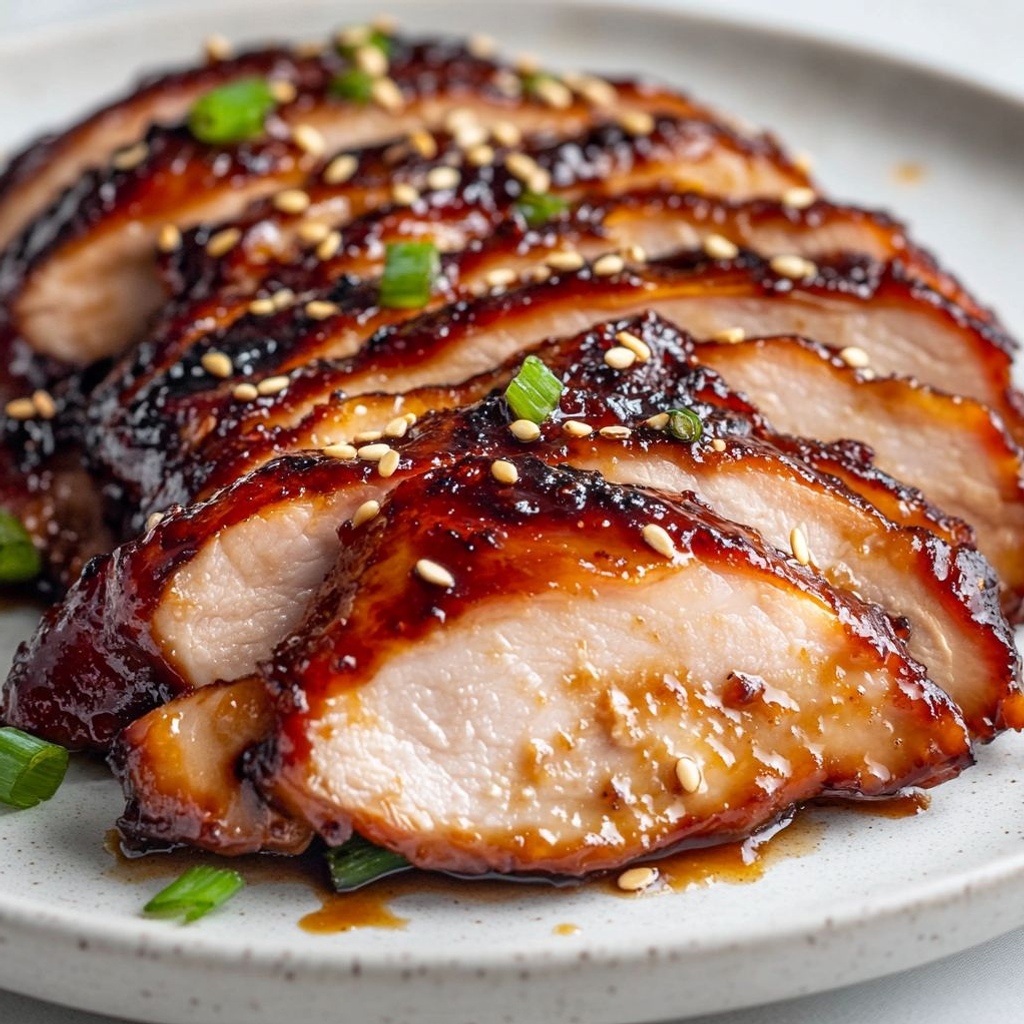
→ Dry heat enhances the sesame oils and gives a pleasant toasted aroma that complements the glaze’s sweetness. - Thinly slice the rested char siu against the grain and arrange over the bed of rice; sprinkle the toasted sesame seeds and sliced green onions (scallions) on top for color, brightness, and contrast.
→ Cutting against the grain yields more tender bites, while the garnishes add fresh aroma and visual appeal to finish the dish. - Serve the sliced chicken with a spoonful of glaze from the roasting pan over the rice, and present additional scallions and sesame on the side for dipping and extra crunch.
→ The extra glaze ties the dish together and allows each diner to control intensity with each bite.
Notes
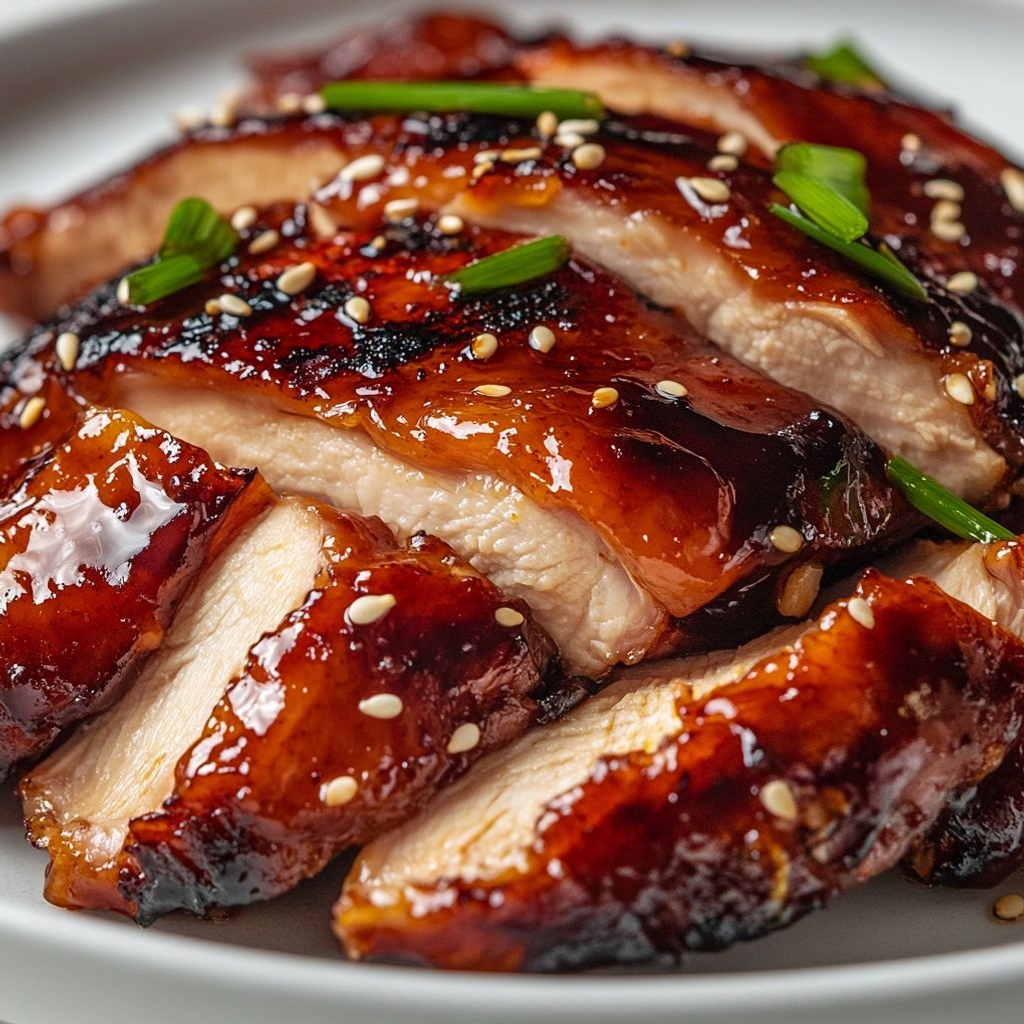
These chicken char siu are a lacquered, juicy roast with a glossy, caramelized glaze inspired by a balance of hoisin, soy sauces, Shaoxing wine, honey and brown sugar, enriched with garlic, ginger and Chinese five-spice. For best results, use boneless skinless chicken thighs, trim excess fat, pat dry, and marinate for at least 2 hours or overnight, then bring to room temperature before cooking to promote even browning. To deepen the glaze, reserve a portion of the marinade to brush on during the final minutes. Cook by roasting at high heat on a rack set over a lined tray, basting with glaze every 8–10 minutes until the surface is lacquered and the internal temp reaches about 165°F (74°C); you can finish with a brief under‑the‑broiler moment to intensify color, watching closely to prevent burning. If you prefer grilled flavor, cook over medium‑high heat, turning and basting to create a charred, glossy crust. Customize by adjusting sweetness (more honey or maple for a leafier glaze, or less sugar for a lighter finish), increasing garlic/ginger for depth, or adding chili for heat; if you want the red hue without artificial coloring, omit the coloring or use natural beet juice. For gluten‑free options, ensure your hoisin and soy sauces are certified gluten‑free or substitute tamari or coconut aminos, and taste as you go since soy sauces contribute salt. Let the meat rest 5–10 minutes before slicing thinly to retain juiciness; serve over steamed rice (white or jasmine) and finish with a sprinkling of toasted sesame seeds and sliced green onions. Leftover char siu keeps refrigerated for 3–4 days or can be frozen in portions; reheat gently and brush with a little glaze to refresh the lacquer.
Tips
Tips for Perfect Chicken Char Siu
- Marinate thoroughly: For maximum flavor and glaze adhesion, marinate the chicken in the fridge for at least 2 hours, or overnight. Pat the surface dry before cooking to help the glaze stick and the meat brown evenly. Let the meat come to room temperature for 20–30 minutes before cooking to promote even cooking.
- Handle marinade safely: If you plan to reuse marinade as a glaze, set aside a portion before adding the raw chicken. Boil that reserved portion for at least 5–10 minutes to kill any bacteria before brushing on the cooked chicken. Do not reuse the raw-marinade that touched the meat.
- Pat and score for better absorption: Lightly pat-dry and, if desired, lightly score the thicker parts of thighs to encourage marinade penetration without cutting into the meat too deeply.
- Balance the sweetness and salt: The glaze includes honey and brown sugar for sweetness; taste the marinade and adjust salt gradually. If using low-sodium soy, you may need a touch more salt, but add gradually and taste.
- Make a glossy glaze: About 1/3 of the marinade can be simmered to create a thick glaze. If the mixture is too thick, add a splash of water or stock to reach a brushable consistency. Brush on while cooking and again in the final minutes for a shiny lacquer.
- Caramelization and color: High heat helps caramelize sugars and develop the charred lacquer. Roast at 425–450°F (220–230°C), turning and basting every 8–12 minutes. For extra char, finish under the broiler for 1–2 minutes, watching carefully to prevent burning.
- Choose your cooking method: Oven roasting on a rack, grilling, or broiling all work. A rack elevates the meat so glaze can baste and brown evenly. If grilling, maintain medium-high heat and move to a cooler zone if the glaze darkens too quickly.
- Color options: The red hue is traditional. If you want a deeper red, you can use a small amount of red food coloring paste or beet juice; otherwise rely on Maillard browning and glaze color. If avoiding color additives, skip completely and enjoy the glaze’s depth from caramelization.
- Five-spice and aromatics: Start with 1 tablespoon five-spice and adjust to taste in future batches. Garlic and ginger should be finely minced or paste-like to distribute evenly; avoid large chunks that don’t emulsify into the marinade.
- Sesame oil and garnish: Sesame oil adds aroma and rounds out the glaze; it’s optional but recommended. Toasted sesame seeds and sliced green onions finish the dish with aroma and color; add them just before serving.
- Sauce and salt after cooking: Taste the finished dish and adjust salt if needed by lightly brushing with additional glaze or a pinch of salt at the table. Soy-based salt can be potent, so err on the side of under-salting initially.
- Slice and serve: Let the meat rest 5–10 minutes after cooking, then slice against the grain for tender bites. Serve over steamed white or jasmine rice and spoon the glaze over the slices for gloss and flavor.
- Storage and make-ahead: Refrigerate leftovers in an airtight container for up to 3–4 days. Reheat gently to preserve moisture. Cooked char siu can be frozen in portions for longer storage.
FAQ
What is chicken char siu?
Chicken char siu is a Cantonese-style roasted chicken that’s marinated in a sweet‑savory glaze and then caramelized during cooking. It’s inspired by traditional pork char siu but uses chicken (typically thighs) for juicier texture and a crisp, lacquered exterior.
What cut of chicken is best for char siu?
Boneless skinless chicken thighs are ideal for char siu because they stay juicy, stay tender after roasting, and hold onto the glaze well. Chicken breast can be used but may dry out if overcooked; if you use breast, monitor internal temperature closely.
What ingredients are in a traditional chicken char siu marinade?
A typical marinade includes soy sauce, hoisin sauce, Shaoxing wine (or dry sherry), Chinese five-spice powder, garlic, ginger, and a sweetener like honey, brown sugar, or maltose. Some versions add oyster sauce for depth. Optional red coloring is sometimes used to mimic the classic roast appearance.
Can I use a pork char siu recipe for chicken? Differences?
You can adapt a pork char siu recipe for chicken by swapping the protein but adjust the timing and simmering if you’re reducing fat. Chicken benefits from slightly less sugar and a shorter marination time to avoid overpowering the meat. The glaze should still cling and caramelize, but avoid overcooking to keep the chicken juicy.
How should I marinate chicken for char siu?
Whisk together the marinade ingredients, add the chicken, and coat evenly. Marinate in the refrigerator for 4–12 hours for best flavor; even 30 minutes is better than nothing if you’re pressed for time. If using chicken thighs with skin on, you can remove the skin before roasting to reduce excess fat.
What cooking methods can I use to make chicken char siu?
You can roast in an oven at 375–425°F (190–220°C) until the internal temperature reaches 165°F (74°C). Grilling over medium heat or using an air fryer at about 380°F (193°C) works well too. Baste with glaze during cooking and finish under high heat or a quick broil to achieve a lacquered surface.
Do I need red dye in char siu? Is it authentic or optional?
Red coloring is traditional in some regional versions of char siu, giving the distinctive red lacquer. It is optional and not essential for flavor. If you prefer a natural look, omit the coloring and rely on the glaze’s caramelization for color; you can use a small amount of beet juice or annatto for a natural hue if desired.
How do I make the char siu glaze/sauce?
Combine soy sauce, hoisin, a bit of oyster sauce (optional), Shaoxing wine, garlic, ginger, five-spice, and a sweetener (honey or sugar). Simmer briefly to meld flavors, then reduce to a glossy glaze. Brush on the chicken as you cook and again at the end for a shiny lacquer.
How do I tell when the chicken is done?
The chicken should reach an internal temperature of 165°F (74°C). Let it rest for 5 minutes after cooking; the juices should run clear, and the glaze should be caramelized and sticky but not burnt.
How should I store leftovers and reheat?
Store cooled, sliced char siu in an airtight container in the refrigerator for 3–4 days. For longer storage, freeze in portions for up to 2–3 months. Reheat in a 325–350°F (165–175°C) oven for 8–12 minutes or until heated through, or briefly in an air fryer. Re-glaze lightly during reheating if you have extra sauce.
How can I serve chicken char siu?
Slice thinly and serve over steamed rice or fried rice, in noodle bowls, or with stir-fried vegetables. It also makes a great filling for bao buns or wraps. A little extra glaze drizzled over the top enhances the flavor and color.
Tips for getting a lacquered glaze and crispy edges?
Baste frequently with the glaze and finish with a high-heat sear or brief broil to caramelize the sugars. If using a grill, indirect heat helps prevent burning while still enabling caramelization. Avoid overcrowding the pan or grill to prevent steaming; proper space helps the glaze reduce and cling.