Introduction / Hook
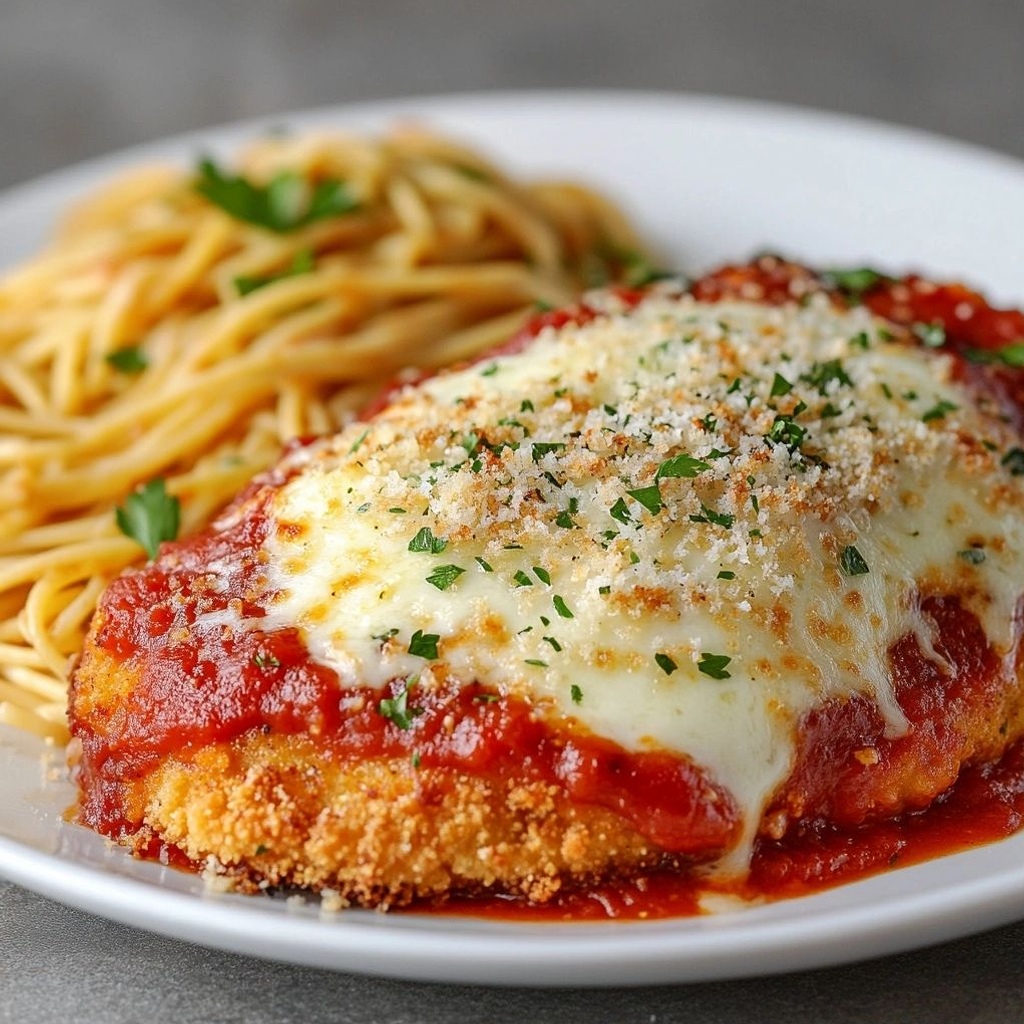
Imagine a dish that wraps a golden, crusted chicken cutlet in a velvety blanket of melted cheese, all crowned with a rich, ruby-red tomato sauce that carries whispers of garlic, oregano, and sunshine. Chicken Parmesan is not merely a meal; it’s an invitation to a warm kitchen, a symphony of textures and memories that feels both comforting and celebratory. The first bite delivers a satisfying crunch that gives way to juicy, herb-kissed chicken, softened by tangy marinara and gooey layers of mozzarella and Parmesan that melt into a glossy, irresistible finish. It’s the kind of dish that fills the house with aroma and brings people to the table with a smile. Whether you’re cooking for a weeknight family dinner or a weekend feast, Chicken Parmesan has a way of making every bite feel like a small triumph—crispy on the outside, tender on the inside, and wonderfully indulgent without being overly fussy. The aroma alone can transport you: the sizzle of breading meeting hot oil, the simmer of tomatoes that cling to basil, and the comforting scent of bubbling cheese browning just enough on top. This is a dish that sings with contrasts—crisp and soft, bright and savory, rustic and elegant all at once.
The Story Behind the Dish
Chicken Parmesan, known in Italian as “pollo alla parmigiana,” is a dish that embodies the fusion of Italian cucina with American adaptations that turned it into a staple in households across the United States. Its roots trace back to the broader family of “melanzane alla Parmigiana” (eggplant Parmesan), which originated in Southern Italy and gained popularity in the 19th and early 20th centuries. The idea spread, and cooks began translating the concept to other proteins, with chicken becoming a beloved vehicle for this comforting, cheese-laden preparation.
In the United States, Chicken Parmesan took on a life of its own as Italian-American communities embraced the dish, weaving it into the fabric of weeknight dinners, family gatherings, and casual restaurant menus. The result is a dish that feels both rustic and approachable: breaded chicken cutlets pan-fried to a crisp, then finished in a sauce that’s hearty enough to stand up to generous cheese. Over time, variations proliferated—from using thinly sliced prosciutto tucked under the crust to layering the cheese more heavily or finishing with a quick broil to achieve a blistered, golden top. The essence remains the same: a celebration of textures and flavors that feels indulgent without being pretentious—a tribute to home cooking, to shared meals, and to the simple joy of a comforting plate of food that tastes like it was made with care.
For many families, Chicken Parmesan is a dish that creates memories: the aroma drifting from the kitchen as the sauce simmers, the first sight of bubbling cheese, the thrill of noodles swirled with sauce on the plate, and the satisfaction of a meal that feels special even on a busy weeknight. It’s a dish that invites conversation, a chance to tell stories about childhood kitchens or travels to Italian-inspired shores. The history behind it is not just about origins; it’s about how a recipe travels, evolves, and finds a permanent home in homes across the world, adapting to local ingredients and tastes while preserving the comforting core that makes it so beloved.
Why You’ll Love This Recipe
- Long-standing comfort with a refined touch: it feels indulgent and restaurant-worthy, yet it’s approachable enough for a home cook with routine pantry staples.
- Versatile and crowd-pleasing: the familiar combination of crispy chicken, savory tomato sauce, and melty cheese appeals to all ages and can be dressed up or down.
- Fresh and vibrant flavors: the tomato sauce carries bright basil and garlic, balancing the richness of the cheese with a lively, peppery finish.
- Texture play at its best: a golden, crisp crust surrounding tender chicken, with a smooth, slightly tangy sauce and a bubbling, bronzed cheese topping.
- Make-ahead friendly: you can prep components in advance and finish assembly later, making it easier to serve a large crowd or a busy weekday dinner.
- Great leftovers: the flavors meld wonderfully as it rests, and it reheats well with minimal loss of texture when gently warmed.
- Pairs beautifully with a variety of sides: from simple spaghetti to a crisp green salad, or a crusty loaf to soak up every last bit of sauce.
Flavor Profile & Texture
The flavor profile of Chicken Parmesan is a masterclass in balance. The chicken itself remains juicy and savory, a canvas that carries the breading’s crisp crust and the savory kiss of cheese. The crust, usually a light, airy breadcrumb coating seasoned with garlic, parsley, salt, and pepper, delivers a satisfying crack when you bite into it, followed by a tender, almost meaty interior. The sauce provides brightness and warmth—ripe tomatoes, olive oil, garlic, and a hint of oregano or basil creating a nostalgic, Italian-American flavor. The cheese layers—often a blanket of mozzarella with a shower of Parmesan or Pecorino—melt into a silkiness that binds the dish while adding a savory depth and a slight nuttiness from the aged cheese.
In terms of texture, you’ll experience a delightful contrast: the initial snap of the crust gives way to a soft, juicy interior; the sauce is smooth and slightly thick, clinging to the chicken while letting the cheese stretch and pull in satisfying strands. The cheese forms a glossy, bronzed finish that is lightly browned in spots, inviting a gentle chew and a velvety mouthfeel. Each bite offers a little drama—the crunch of the crust, the tenderness of the chicken, the tang of the tomato sauce, and the mellow, creamy finish of the cheese. The dish can carry a whisper of basil, a kiss of oregano, and a hint of garlic that lingers without overpowering the primary flavors. For many tasters, the harmony between the crisp shell and the soft, saucy center is what makes Chicken Parmesan irresistibly rewarding.
When prepared with quality ingredients—bone-in, skin-on chicken breasts or trimmed cutlets, good crushed tomatoes or passata, fresh mozzarella, and a spectrum of real cheeses—the flavor becomes even more pronounced. The sauce’s acidity is tempered by a touch of sweetness, and the cheese adds that savory, umami-rich layer that elevates the dish from simple to deeply satisfying. The aroma is equally enticing: toasty breadcrumbs releasing garlicky steam, tomatoes simmering into a luscious sauce, and cheese browning into a fragrant crust. The overall effect is comforting and satisfying, a dish that feels substantial but balanced, celebratory yet homely, and always ready to be shared.
Occasions & Pairings
Chicken Parmesan is versatile enough to shine in multiple settings. Here are some ideal occasions and thoughtful pairings to elevate the experience:
- Weeknight family dinners: simple, satisfying, and scalable for a crowd. Pair with a green salad and a side of spaghetti or linguine tossed with olive oil and garlic.
- Casual gatherings and potlucks: bake in a large dish or individual portions, with a bright herb salad and crusty bread for dipping.
- Sunday comfort meals: serve alongside roasted vegetables or a creamy polenta to soak up every last bit of sauce.
- Romantic dinners: pair with a light white wine such as Pinot Grigio or a medium-bodied red like Chianti, and finish with a fresh lemony dessert to cleanse the palate.
- Holiday table centerpiece: a well-made Chicken Parmesan can be the star of a meat-focused spread, complemented by a simple bruschetta or roasted peppers as sides.
Suggested pairings:
- Side dishes: spaghetti with olive oil and garlic, sautéed spinach, roasted vegetables, polenta, or a simple arugula salad with lemon.
- Desserts: lemon panna cotta, almond biscotti, or a light tiramisu to echo the Italian theme without overpowering the main course.
- Drinks: a glass of Chianti, Sangiovese, or a crisp white like Verdicchio; sparkling water with a splash of lemon also works beautifully for a lighter pairing.
Tips, Variations & Substitutions
Here are practical ideas to tailor Chicken Parmesan to your preferences, dietary needs, or what you have on hand:
- Protein options: use boneless, skinless chicken breasts, pounded to even thickness for uniform cooking. For a leaner version, try turkey cutlets or even a portobello mushroom for a vegetarian alternative, following a similar breading and sauce approach.
- Breading variations: blend breadcrumbs with grated Parmesan for extra savoriness, or add a pinch of smoked paprika for a subtle smoky note. For a crispier crust, double-dredge the chicken (seasoned flour, egg wash, breadcrumb coating) and let the crust rest briefly before frying.
- Cheese choices: mozzarella is classic for meltiness; consider provolone for a sharper bite, fontina for a creamier richness, or a sprinkle of grated pecorino Romano for a more pronounced tang. A final broil or convection finish yields a deeply bronzed cheese tops.
- Sauce options: a homemade tomato sauce with crushed tomatoes, garlic, onion, olive oil, and basil is ideal; if you’re short on time, a high-quality store-bought marinara or a simple tomato passata works well—just season well and simmer briefly to intensify flavor.
- Dairy-free or vegan variations: use dairy-free mozzarella and Parmesan substitutes, or make a rich tomato sauce and a topping of almond or cashew-based “cheese” to maintain creaminess without dairy. Nutritional yeast can provide a cheesy note if desired.
- Gluten-free approach: use gluten-free breadcrumbs or crushed gluten-free crackers for the crust. Ensure your sauce and cheese are gluten-free as well.
- Make-ahead tips: bread the chicken cutlets and refrigerate for up to 24 hours before frying. Sauce can be made a day ahead and refrigerated; reheat gently before combining with the cooked chicken and cheese.
- Make-ahead assembly: you can assemble the dish in a baking dish with sauce and cheese layered over the fried cutlets, then refrigerate or freeze. Reheat covered, then finish under the broiler to re-brown the top.
Storage & Make-Ahead Ideas
Leftovers can be a treasure in disguise. For best results, store Chicken Parmesan properly and reheat with care to maintain texture and flavor:
- Storage: refrigerate leftovers in an airtight container for up to 3 to 4 days. If you’ve assembled the dish with sauce and cheese, ensure it is cooled to room temperature before refrigerating.
- Freezing: portions of fully cooked Chicken Parmesan can be frozen for up to 2 to 3 months. For best texture, freeze after assembling with sauce and cheese, but before final baking. Thaw in the refrigerator and reheat gently covered to preserve moisture, finishing with a brief broil or bake to re-crisp the crust.
- Reheating tips: reheat in a moderate oven (around 350°F / 175°C) until the internal temperature reaches 165°F (74°C) and the cheese is melted and bubbling. Avoid microwaving in most cases, as it can soften the crust and make it soggy; if you must, use short intervals and finish under a hot broiler for a few seconds to re-crisp.
- Make-ahead strategies: prepare and bread the chicken ahead of time, refrigerate for up to 24 hours, then fry and assemble when ready. Alternatively, make the sauce in advance and refrigerate; combine with fried chicken and cheese just before baking for a quick weeknight solution.
Fun Facts & Trivia (Optional)
Did you know that while Chicken Parmesan is deeply rooted in Italian-American cuisine, the dish has regional variations across Italy and the United States? In some parts of Italy, similar dishes feature a lighter breadcrumb crust and less cheese, allowing the tomato sauce to play a more dominant role. In the United States, the dish often leans into a more generous cheese layer and a more assertive tomato sauce, reflecting the American palate for bold, comforting flavors. The use of mozzarella on top is a nod to the cheese’s excellent melt and mild flavor, which harmonizes with the acidity of the tomato sauce and the savoriness of the breaded crust. The dish’s evolution—from a simple adaptation of eggplant Parmesan to a chicken-centered staple—mirrors how immigrant cuisines blend with local ingredients to create new traditions, eventually becoming beloved classics in homes and restaurants alike.
Historically, Parmesan cheese itself has a long-standing reputation in Italian cooking, often used grated over pasta, rice, and vegetables to finish and brighten flavors. The combination of Parmigiano-Reggiano with mozzarella creates a balanced cheese profile that is both sharp and creamy, a contrast that is particularly pleasing when melted over hot, crisp crusts. The technique of breading and shallow-frying the protein before finishing with sauce and cheese echoes other classic dishes where a crust helps seal in juices and adds a distinct texture, making Chicken Parmesan an enduring favorite in many culinary repertoires.
Ultimately, Chicken Parmesan is more than a recipe; it’s an invitation to gather, share, and savor. It captures a moment of connection—the scent of garlic and herbs wafting through the kitchen, the clink of forks on plates, and the satisfaction of a dish enjoyed together. Whether you’re cooking for a family meal or a celebration, this dish offers a comforting sense of tradition with a touch of indulgence that makes every bite feel like a small, flavorful memory in the making.
Ingredients
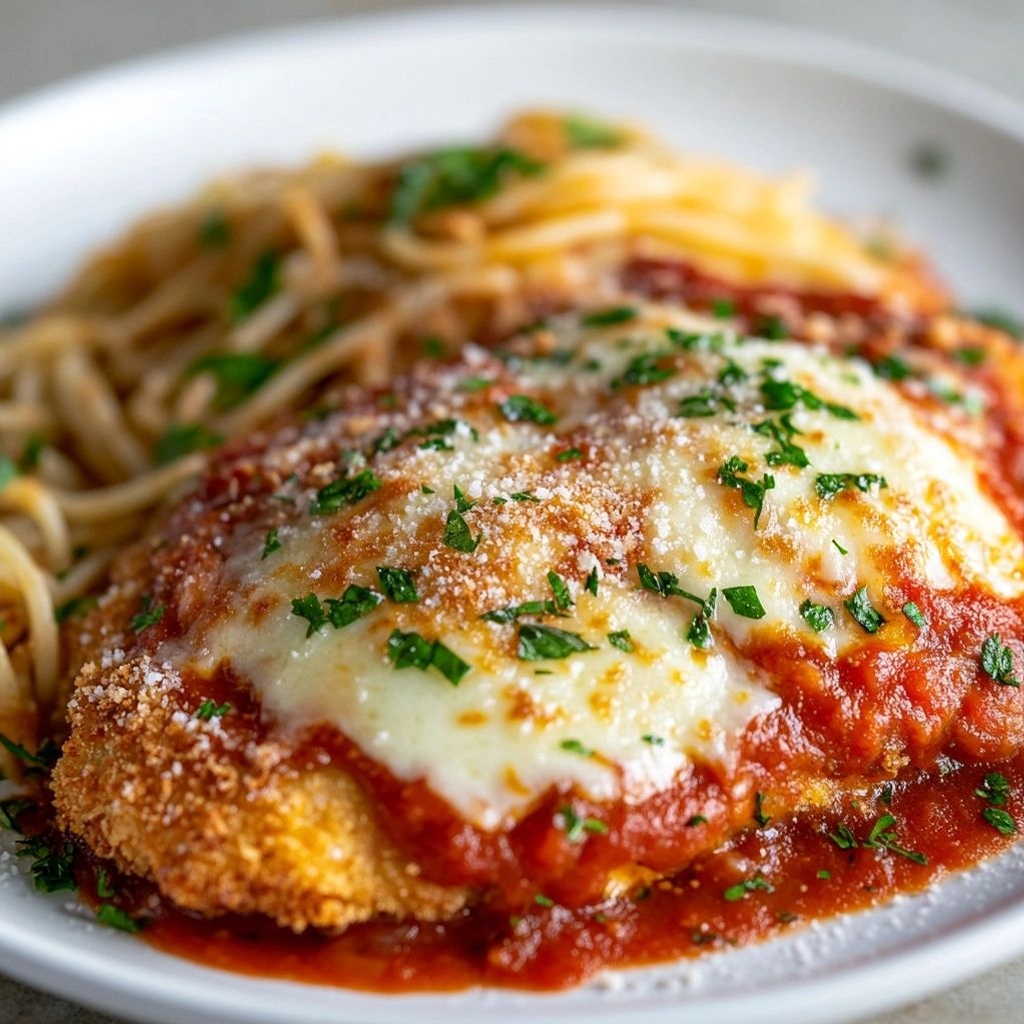
- Chicken Parmesan – Chicken cutlets (boneless, skinless)
→ The main protein of the dish; the chicken provides the hearty, comforting base. For best results, lightly pound the cutlets to an even thickness (about 1/2 inch) so they cook uniformly. Use fresh, high-quality chicken; pat dry before breading to help the coating adhere. If you prefer, you can use thick-sliced chicken breast or boneless chicken thighs for extra juiciness. - All-purpose flour
→ Used as the first dusting layer in the dredging process to help the egg wash adhere and to create a light crust. Sift to remove lumps and ensure an even coating. For gluten-free versions, substitute with a 1:1 gluten-free flour mix or almond flour for a lighter crust. - Eggs
→ Act as the binding agent that bonds the breading to the chicken through the dredging and breading steps. Beat until smooth to ensure even coating. For richer flavor and binding, you can whisk in a tablespoon of water or milk per two eggs. Room temperature eggs will help the coating adhere better. - Breadcrumbs (Italian-seasoned or plain with added Italian seasoning)
→ Provide the crispy, golden crust the dish is known for. If you’re using plain breadcrumbs, mix in dried oregano, basil, garlic powder, and a pinch of grated parmesan for an authentic Italian flavor. For extra crunch, use half panko and half regular breadcrumbs. - Grated Parmesan cheese (Parmigiano-Reggiano or equivalent)
→ Adds a sharp, salty depth to the breading and helps form a flavorful crust. Combine some grated parmesan with the breadcrumbs for a more robust coating. Shred fresh parmesan just before use for the best aroma and meltability. - Olive oil (extra-virgin)
→ Used for pan-searing the breaded chicken to develop a Golden crust and for finishing the dish by lightly drizzling over before serving. Use medium-high heat to avoid burning the breading; keep the oil at a steady temperature to prevent soggy crust. If you prefer a lighter option, you can bake the coated chicken instead. - Marinara sauce
→ The tomato-based sauce provides moisture, acidity, and tang to balance the richness of the cheese. For best flavor, simmer a simple sauce with crushed tomatoes, garlic, onions, olive oil, salt, pepper, and a pinch of sugar if needed. If using store-bought, choose a sauce with minimal added sugars and thick consistency. - Mozzarella cheese (fresh or whole-milk, sliced or shredded)
→ Melts into a creamy, gooey layer that binds with the sauce and creates the classic, bubbly topping. For best results, use whole-milk mozzarella or a combination of mozzarella and a small amount of provolone. If using fresh mozzarella, drain excess liquid and tear into pieces to ensure even melting. - Fresh basil leaves
→ Adds aromatic brightness that complements the rich cheese and tomato sauce. Tear or chiffonade the leaves just before service to preserve vibrant flavor and color. If fresh basil is unavailable, a pinch of dried basil can be used, but the flavor will be milder. - Salt
→ Enhances overall flavor and helps balance the acidity of the tomato sauce. Sprinkle evenly during the dredging and seasoning steps. Taste the sauce and adjust salt at the end to avoid oversalting, especially if using salted cheese or sauce. - Black pepper
→ Adds subtle heat and depth to the breading and seasoning mix. Freshly ground pepper provides the best aroma and bite. Adjust to taste, keeping in mind that the cheese and sauce may already contribute saltiness. - Optional garnish:
→ A light drizzle of olive oil or a sprinkle of red pepper flakes can add a touch of heat and shine. Freshly grated extra parmesan on top just before serving intensifies the cheesy crust and aroma.
Instructions
- Preheat your oven to 375°F (190°C) and line a baking sheet with parchment paper or a lightly oiled rack to ensure the breaded chicken can crisp evenly without sticking.
→ This provides a hot, even surface for final baking and prevents sticking or soggy bottoms, helping the crust stay crisp. - Pound the chicken cutlets to an even thickness of about 1/2 inch (1.25 cm) using a meat mallet or the flat of a heavy skillet, then pat them dry with paper towels.
→ An even thickness ensures uniform cooking and prevents thinner edges from drying out while thicker areas remain undercooked; drying the surface helps the dredge adhere better. - Season the chicken lightly with salt and black pepper on both sides, then set up a dredging station with three shallow bowls containing flour, beaten eggs, and seasoned breadcrumbs mixed with grated parmesan.
→ Proper seasoning at this stage builds flavor into every bite and setting up the dredge in order ensures a consistent, adhesive crust that browns beautifully. - Dredge each cutlet in flour, tapping off excess to create a dry surface that will grip the egg wash, then dip into the beaten eggs until fully coated, allowing any excess to drip back into the bowl.
→ The flour creates a rough surface for the egg wash to cling to, while the eggs act as the binding glue that holds the breadcrumbs to the chicken. - Coat the egg-washed cutlets in the breadcrumb-parmesan mixture, pressing gently to form a cohesive, even breading with no bare spots, and set the coated cutlets on a wire rack for a few minutes to help the crust set.
→ This builds a uniform, crunchy crust that browns evenly during frying and baking, and resting prevents the coating from sliding off when transferring to the pan. - Heat a thin layer of extra-virgin olive oil in a large skillet over medium-high heat until shimmering, then add the breaded cutlets without crowding the pan and sear for 1.5 to 2 minutes per side until the crust is golden and the chicken is just set, rotating as needed for even color.
→ Searing develops depth of flavor and creates a shield that protects the breading from becoming soggy during sauce baking; avoid moving the chicken too soon or the crust will tear. - Transfer the seared cutlets to the prepared baking sheet, spoon a modest amount of marinara sauce over each piece, and sprinkle with shredded mozzarella to create a cheese-tent that will melt into the sauce surface.
→ Light sauce placement prevents a soggy crust and ensures the cheese melts evenly without pooling, while mozzarella provides the characteristic gooey texture. - Bake the assembled cutlets in the preheated oven for 12 to 15 minutes, then switch to a broil for 2 to 3 minutes at the end to achieve bubbly, lightly browned cheese; watch closely to prevent burning.
→ The bake cooks the chicken through while the broil finish gives a glossy, blistered cheese top, enhancing both flavor and appearance. - Remove from the oven, scatter torn fresh basil leaves over the hot pan and drizzle a touch more marinara around the edges if desired, allowing the basil’s aroma to bloom in the steam.
→ Fresh basil adds bright contrast to the richness of the cheese and tomato, and the heat releases essential oils for vibrant aroma. - Let the Chicken Parmesan rest for 5 minutes, then portion onto plates and finish with a light grating of extra parmesan before serving to heighten the savory crust and aroma.
→ Resting allows the juices to redistribute and the cheese to set slightly, making each bite cohesive and easier to cut, while finishing with parmesan heightens umami.
Notes
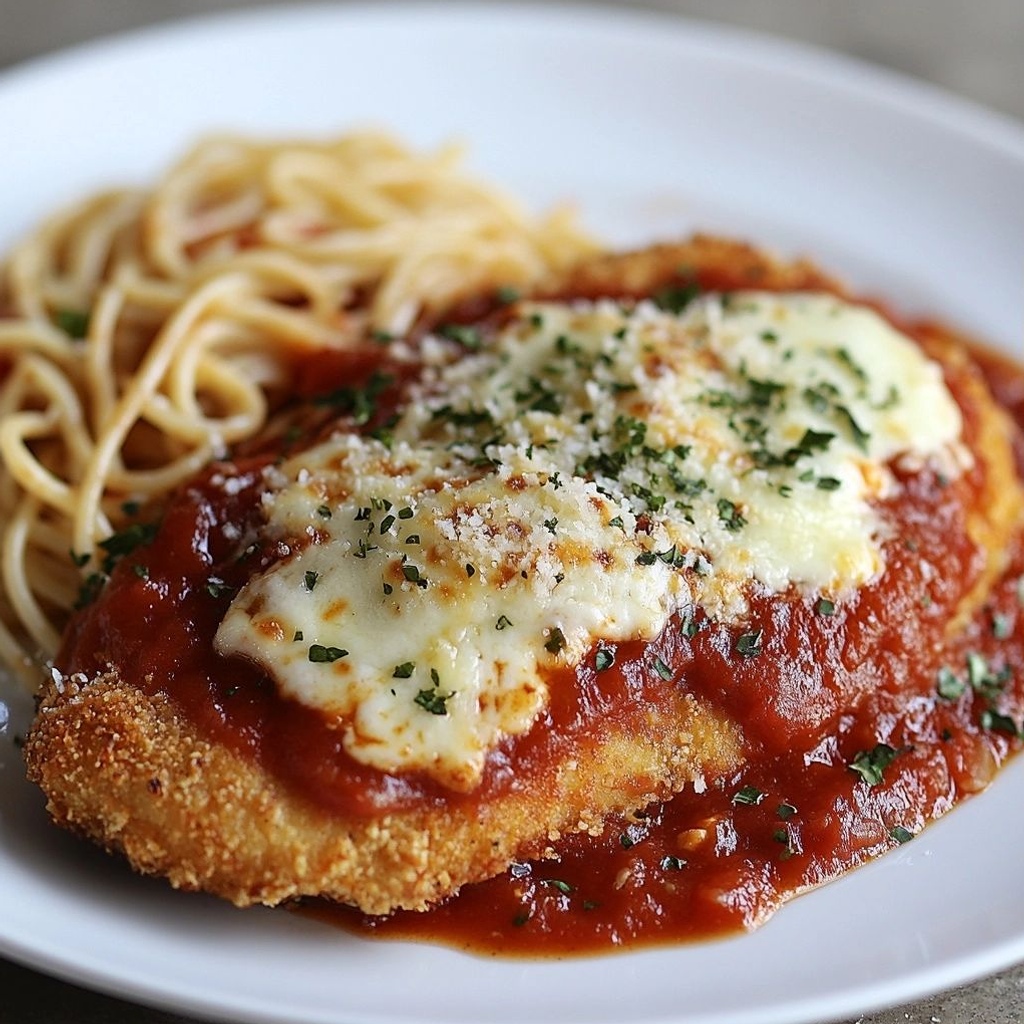
These Chicken Parmesan are a comforting, crowd-pleasing dish with crispy breaded chicken, melty cheese, and bright tomato sauce. For best results, lightly pound the chicken cutlets to an even thickness (about 1/2 inch) so they cook uniformly, and pat dry before breading to help the coating adhere. Line up a clean dredging station: seasoned flour for initial coating, beaten eggs for binding, and breadcrumbs mixed with grated Parmesan for a golden, crispy crust.
To ensure a flavorful crust, mix in dried oregano, basil, garlic powder, and a pinch of grated Parmesan with the breadcrumbs; for extra crunch, use a 50/50 mix of panko and regular breadcrumbs. Shred fresh Parmesan just before use for maximum aroma and melt. When pan-searing, use extra-virgin olive oil over medium-high heat and monitor the heat to avoid burning the coating; the chicken should take on a rich golden crust before finishing in sauce. If you prefer a lighter option, you can bake the breaded chicken until cooked through before topping with sauce and cheese.
Simmer a simple marinara with crushed tomatoes, garlic, onions, olive oil, salt, pepper, and a small pinch of sugar if needed to balance acidity. Layer the sauce with the fried chicken, top with mozzarella and a little extra Parmesan, then finish under the broiler or in a hot oven until bubbly and lightly browned. Tear fresh basil to scatter over just before serving for bright, aromatic notes.
Storage: leftovers refrigerate for up to 3–4 days or freeze breaded, uncooked portions for a future meal. Reheat gently in the oven to preserve crust integrity, or warm in a skillet with a splash of water and a lid to keep moisture. For gluten-free versions, substitute 1:1 gluten-free flour and gluten-free breadcrumbs (or almond flour for a lighter crust), and verify that the marinara and cheese are gluten-free if needed.
Serving ideas: serve over spaghetti or on its own with a side of orzo, a simple green salad, and a light drizzle of olive oil. For extra indulgence, add a drizzle of extra virgin olive oil and a few torn basil leaves right before serving.
Tips
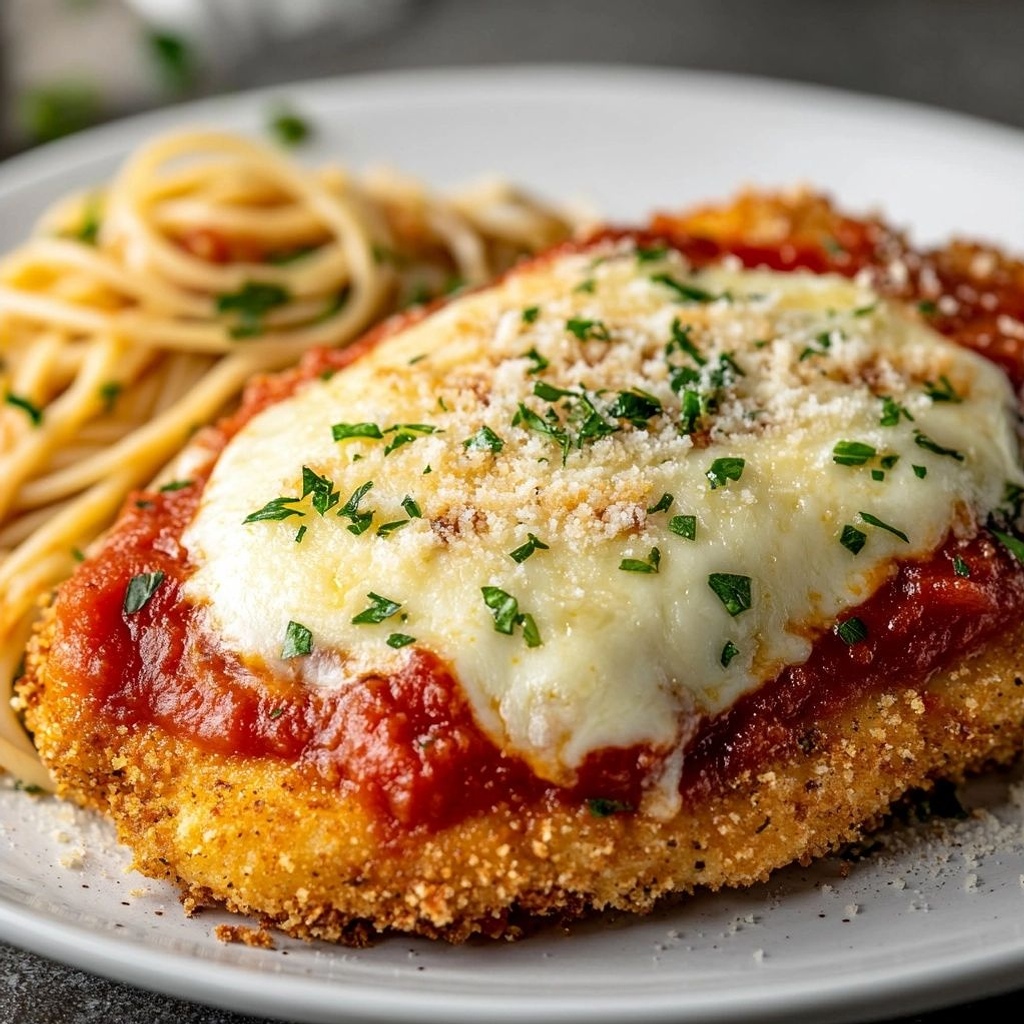
- Ensure even coating by letting the dredged chicken rest on a rack for 5 minutes before frying; this helps the breading adhere and reduces clumping.
- Lightly pound chicken to an even thickness (about 1/2 inch) for uniform cooking; use a meat mallet between two sheets of plastic wrap to avoid tearing the meat.
- Season each coating layer lightly with salt and pepper to build flavor; taste the sauce separately and adjust salt after simmering to avoid oversalting.
- Maintain oil temperature around 325–350°F (163–177°C) when frying; if the temperature climbs too high, the crust will brown too quickly and the chicken may remain undercooked inside.
- For a lighter crust, bake the breaded chicken at 425°F (220°C) on a parchment-lined sheet for about 15–20 minutes, then finish under the broiler to melt the cheese.
- Combine some grated Parmesan with the breadcrumbs for a deeper crust; fresh Parmesan has stronger aroma when used in the coating versus pre-grated varieties.
- Drain fried chicken briefly on a rack or paper towels after frying to keep the crust crisp and not soggy from excess oil.
- Simmer the marinara gently to develop flavor; a long, low simmer with crushed tomatoes and a touch of garlic yields a richer sauce that clings better to the chicken.
- When assembling, spoon sauce over the chicken in the baking dish before adding mozzarella to prevent the cheese from sliding off during baking.
- Use fresh mozzarella for a luscious melt; if using fresh mozzarella, pat dry well to reduce moisture that can water down the sauce and crust.
- Let the finished dish rest for 5 minutes after removing from the oven to let the cheese set slightly and slice cleanly.
- Garnish with torn fresh basil just before serving to preserve color and bright aroma; if basil is unavailable, a pinch of dried basil can substitute but won’t be as vibrant.
FAQ
What is Chicken Parmesan?
Chicken Parmesan, also known as Chicken Parmigiana, is a breaded and fried chicken cutlet topped with marinara sauce and melted cheese, typically served over pasta or with a side of vegetables.
What ingredients do I need for Chicken Parmesan?
Common ingredients include boneless, skinless chicken breasts, breadcrumbs, grated Parmesan cheese, eggs, flour, marinara sauce, mozzarella cheese, and olive oil. Optional: garlic, dried oregano or basil, and fresh parsley for garnish.
What is the standard method to prepare Chicken Parmesan?
Generally, the chicken is pounded to an even thickness, breaded, and pan-fried until golden. It is then simmered briefly in marinara sauce, topped with cheese, and baked until bubbly and cooked through. Serve with pasta or a side salad.
How long does it take to cook Chicken Parmesan?
Plan about 45-60 minutes total: 10-15 minutes for prep, 10-15 minutes for frying, and 15-20 minutes in the oven after saucing with marinara and cheese. Cooking times may vary based on thickness of the chicken.
Can I make Chicken Parmesan ahead of time?
Yes. You can bread and partially fry the cutlets in advance, store them chilled for up to 1 day, then finish by baking with sauce and cheese. You can also assemble fully and refrigerate for up to 1 day before baking.
Is Chicken Parmesan gluten-free or dairy-free?
Traditional Chicken Parmesan uses breadcrumbs (gluten) and cheese (dairy). To make it gluten-free, use gluten-free breadcrumbs or almond flour crust. For dairy-free, use dairy-free cheese and a dairy-free mozzarella substitute, and ensure the marinara is dairy-free.
How do I make the crust extra crispy?
Pat the chicken dry, dredge in seasoned flour, then dip in egg and coat with a mixture of breadcrumbs and grated Parmesan. For extra crunch, pan-fry in hot oil until golden brown before finishing in the oven, or bake on a lightly oiled rack to allow air circulation.
What sauces pair well with Chicken Parmesan?
A classic marinara sauce is traditional, but you can also use a rich pomodoro, roasted garlic tomato sauce, or a cream-based tomato sauce if preferred. Fresh herbs like basil or parsley brighten the dish.
What sides go well with Chicken Parmesan?
Popular options include spaghetti or another pasta with sauce, garlic bread, a simple green salad, roasted vegetables, or sautéed spinach. A light caprese salad can complement the dish nicely.
How should I store and reheat leftovers?
Store leftovers in an airtight container in the refrigerator for up to 3-4 days. Reheat in a 350°F (175°C) oven until warmed through, or microwave in short intervals, covered, to avoid drying out. For best texture, re-top with a bit of extra cheese and sauce before reheating.