Introduction / Hook
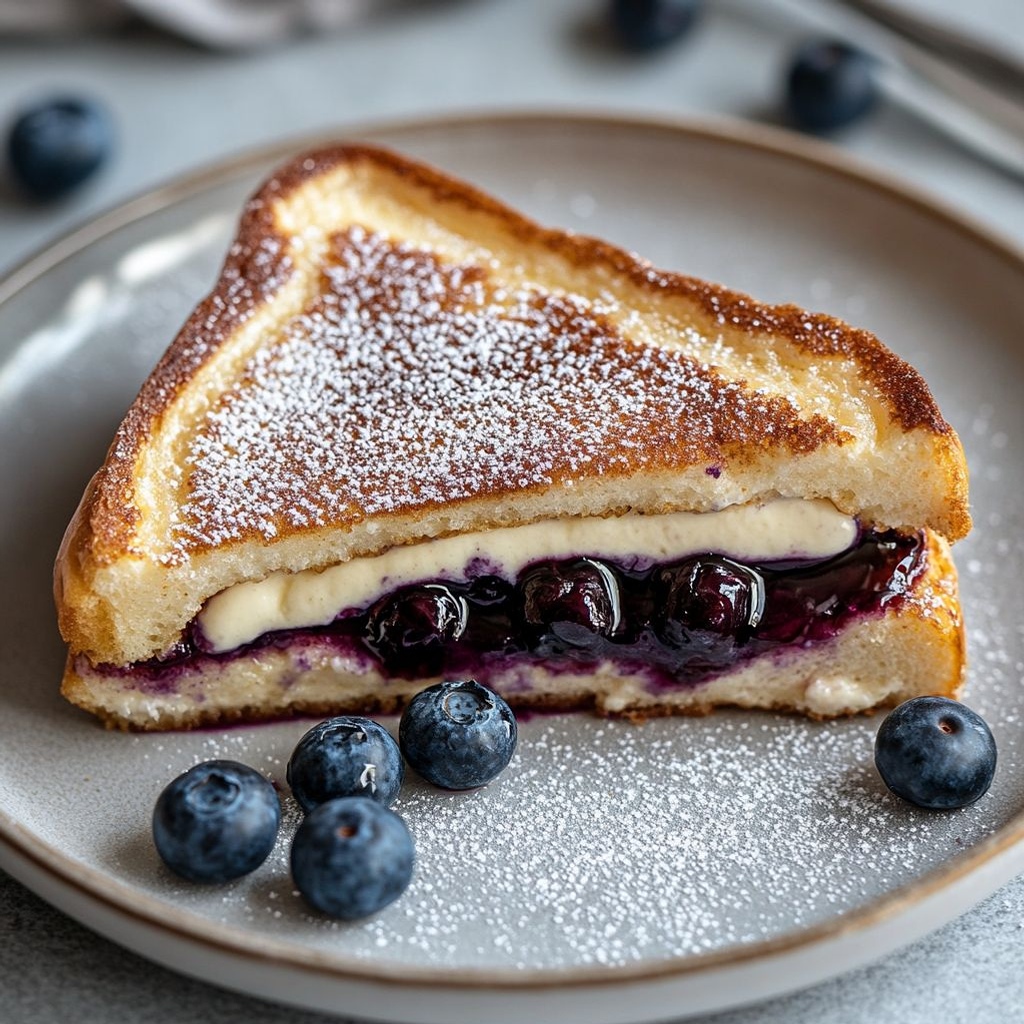
Imagine waking up to a morning that tastes like a fancy weekend brunch, yet is incredibly simple to make. A slice of soft, cloud-like French toast, its interior luxuriously swirled with a creamy cheesecake filling, all crowned with vibrant blueberries that pop with every bite. The first bite delivers a delicate tang from the cream cheese, a hint of lemon zest, and the warm kiss of cinnamon softly embracing the bread, while the blueberries release their juiciness in a gentle, jammy sweetness. This Blueberry Cheesecake Stuffed French Toast is not just breakfast—it’s an invitation to linger at the table, to savor the little luxuries of a leisurely morning, and to share a moment of indulgence with family or friends. It’s the kind of dish that makes ordinary Sundays feel like celebrations, turning a familiar breakfast into a memory you’ll revisit with every forkful.
What makes this dish especially captivating is its dual nature: the outer layer delivers a comforting, toasty crust that gives way to a creamy, cheesecake-centered center, all balanced by the bright, tart-sweet burst of blueberries. The smell alone is a promise: vanilla-laden custard, warm bread, and the coastal-scent of melted cream cheese mingling with sugar and citrus. It’s a dish that feels both homey and indulgent at once, a tribute to the way breakfast can be the most comforting, unhurried meal of the day.
Whether you’re planning a weekend brunch with friends, a celebratory birthday breakfast, or a cozy, no-fuss family morning, this recipe rises to the occasion. It’s as delightful for a crowd as it is satisfying for a solo morning with a generous leftover slice waiting in the fridge. The technique is approachable, the ingredients familiar, and the result striking enough to feel special without demanding a top-tier kitchen setup. If you’ve ever wished you could elevate a stack of French toast into something that feels like a dessert-for-breakfast, you’ve just found your new go-to recipe.
The Story Behind the Dish
French toast has long held a beloved place at the table as a practical, cozy dish—the sort of recipe born from humble ingredients and a desire to stretch a loaf beyond its prime. Its history stretches across continents and centuries, with variations that reveal how different cultures have made this simple concept their own. The idea of stuffing something into bread, however, adds a delicious twist that modern brunch lovers have embraced: a handheld, shareable treat that remains comforting and familiar while delivering a new flavor profile.
Enter the cheesecake, a quintessential symbol of indulgent dessert culture. Creamy, tangy, and luscious, cheesecake represents the art of balancing richness with brightness. When you combine that essence with French toast, you’re marrying two universal cravings—the warmth of a toasty morning staple and the dreamlike creaminess of a cheesecake—into one unified dish. The result is a symphony of textures and flavors: a custardy bread exterior that crackles ever so slightly, a creamy center that melts somewhere between cheesecake and enriched ricotta, and a blueberry symphony that provides a counterpoint of tartness and sweetness.
The idea for Blueberry Cheesecake Stuffed French Toast often came from a weekend brunch tradition: a made-ahead dish that could be assembled the night before and baked to golden perfection in the morning. It’s the kind of recipe that invites conversation, the clink of forks on plates, and the soft sigh of contentment when a bite reveals layers of flavor you didn’t expect from a simple slice of bread. In some homes, the feast is tied to harvest season when blueberries are at their peak, their juicy bursts echoing the sunshine and warmth of late-summer mornings. In others, it’s an affectionate nod to childhood pancakes and the way adults secretly crave those comforting, cake-like flavors that still feel appropriate to start the day. Either way, the dish is a bridge between the familiar and the indulgently new—a story told in a bite, with a blueberry twist as the signature line.
Why You’ll Love This Recipe
- Indulgent yet approachable: Rich cheesecake tucked into soft French toast creates a luxurious breakfast that feels special without requiring professional culinary skills.
- Make-ahead friendly: Assemble the stuffed slices ahead of time, refrigerate, and bake when ready for a hands-off brunch success.
- Flavor balance for all palates: The tartness of the cream cheese and blueberries is tempered by vanilla, lemon zest, and a hint of cinnamon, creating a well-rounded, crowd-pleasing profile.
- Texture variety: The outside yields a lightly crisp, browned crust, while the interior stays creamy and custardy—plus juicy blueberry pockets in every bite.
- Versatile for occasions: Perfect for Easter, Christmas morning, Mother’s Day, or a casual weekend gathering—elevated enough for special occasions, comforting enough for everyday use.
- Make it your own: Easily adaptable with gluten-free bread, dairy-free cream cheese alternatives, or different fruit compotes to suit dietary needs and preferences.
Flavor Profile & Texture
The first encounter with Blueberry Cheesecake Stuffed French Toast is a sensory invitation: the surface is lightly crisped, bearing the sweetness of caramelized sugars and the warmth of cinnamon. As you cut into it, a sigh of steam escapes, and the interior reveals a rich, velvety cheesecake mixture that’s softly set within the bread. The contrast is deliberate and delightful: the exterior provides a gentle resistance, a crisp-tender bite that yields to an interior that is plush and creamy, almost cloud-like. The cheese filling brings a smooth, mildly tangy note—think classic cheesecake without overpowering sweetness—creating a luscious center that tastes indulgent but balanced.
The blueberries contribute both color and flavor in several ways. Their sweetness intensifies as they mingle with the warm custard and the creamy filling, while their natural tartness cuts through the richness, ensuring the dish doesn’t feel cloying. When heated, blueberries release a gentle syrup that soaks into the surrounding bread, turning into mini pockets of jammy fruit that provide bright pops of fruitiness. The lemon zest adds a zippy brightness that lifts the entire dish, preventing the cream cheese from feeling heavy and adding a clean citrus note that lingers pleasantly after each bite. A whisper of vanilla ties the components together, while a dash of cinnamon evokes cozy mornings and bakeshop aromas, rounding out the flavor profile so the dish feels comforting yet sophisticated.
Texture-wise, you’ll experience a wonderful trio: the crusty exterior, the airy, custard-like center, and the soft, creamy cheesecake filling that holds the blueberries within reach. The berries’ burst alongside the cheese’s melt-in-the-mouth creaminess creates a dynamic mouthfeel—creamy, fruity, and a little velvety all at once. It’s the kind of dish that stays with you, not just as a momentary sweetness, but as a lingering sense of warmth and satisfaction that makes you want another slice, then another, until the plate is clean and you’re already thinking about the next brunch opportunity.
Occasions & Pairings
This dish shines in a variety of settings, from intimate mornings to festive gatherings. It’s ideal for slower weekends when you have time to savor the process, yet it also scales up gracefully for a crowd when you have extra loaf and a few extra berries on hand. Consider these occasions:
- Weekend brunch with friends or family: a shareable, eye-catching centerpiece that starts conversation and smiles around the table.
- Holiday mornings: a special treat that feels both celebratory and comforting, balancing indulgence with familiarity.
- Birthday breakfasts or anniversaries: an elevated yet approachable dish that doubles as dessert-for-breakfast.
- Brunch potlucks: a crowd-pleasing option that travels well if you bake it in disposable pans or arrival-ready containers.
Pairings to enhance the experience:
- Drinks: a glass of sparkling rosé, a light mimosas duo (orange juice with a splash of cranberry), or a hot batch of vanilla-laced coffee or cappuccino. For a non-alcoholic option, a lemon-ginger herbal tea or orange blossom water beverage complements the citrus notes beautifully.
- Accompaniments: a dollop of vanilla yogurt or a spoonful of whipped cream to add richness; a light dusting of powdered sugar for a delicate touch; a sprig of mint or a few lemon zest shavings for fresh aroma.
- Side dishes: a bright fruit salad with melon, berries, and kiwi to echo the blueberries; a crisp side of bacon or a savory sausage option if you want a more robust contrast; a simple green salad with a citrus vinaigrette to awaken the palate.
- Dessert-like enhancements: a drizzle of blueberry sauce or a blueberry compote around the plate to intensify the berry presence; a light lemon curd on the side for extra brightness.
Tips, Variations & Substitutions
Stock up on ideas and be ready to customize this recipe to fit your pantry, dietary needs, or mood. Here are practical variations and substitutions that preserve the essence of the dish while offering flexibility:
- Bread choices: Use thick-sliced brioche for a rich, tender crumb, or challah for a slightly denser, sweeter bite. For a gluten-free version, choose gluten-free brioche-style loaves or thick-cut gluten-free bread that can soak up the custard without falling apart.
- Cheese filling alternatives: If cream cheese isn’t available, a mascarpone-based mixture or a ricotta-cream cheese blend can yield a similarly luscious interior. For a lighter version, mix in a portion of Greek yogurt to approximate tang while keeping creaminess.
- Make-ahead variations: Assemble the stuffed slices on a parchment-lined tray, cover tightly, and refrigerate overnight. In the morning, bake as directed with a few extra minutes if the filling is cold from the fridge.
- Fruit options: Swap blueberries for raspberries, blackberries, or a mixed berry medley. For a lighter flavor, incorporate stone fruits like peaches or nectarines during their peak season, or add citrus zest (orange or lemon) to complement the berry sweetness.
- Dietary adaptations: For a dairy-free version, use a plant-based cream cheese alternative and a non-dairy butter substitute. If you want to avoid eggs, you can experiment with aquafaba or a flaxseed egg substitute, though the texture will be somewhat different and you may need to adjust soak times.
- Flavor boosters: A touch of almond extract can deepen the nutty, cheesecake-like aroma; a pinch of sea salt can intensify all the flavors for a more pronounced finish; a light sprinkle of lemon zest after baking adds a bright, aromatic finish.
Storage & Make-Ahead Ideas
One of the most appealing aspects of this dish is its flexibility around timing. If you want to maximize your free time on a busy morning, consider these storage and make-ahead strategies:
- Make-ahead: Prepare the cheesecake filling and the custard mixture a day ahead. Slice the bread, assemble the stuffed pockets, and refrigerate overnight. In the morning, simply bake according to the recipe, and you’ll have a fragrant, hot dish ready to serve in minutes.
- Storing leftovers: Leftover slices can be stored in an airtight container in the refrigerator for up to 2 days. Reheat in a 350°F (175°C) oven or toaster oven for about 5–7 minutes, or until warmed through and the outer crust regains its gentle crisp.
- Freezing: Freeze unbaked stuffed slices on a parchment-lined tray, then wrap individually in plastic wrap and place in a freezer bag. Bake from frozen, adding extra minutes to the bake time until the center is fully heated and the exterior is evenly golden. This works well for a future brunch surprise.
- Reheating tips: If the cheesecake filling seems slightly loose after refrigeration, a gentle reheat will bring it back to a luxuriously creamy texture. Don’t overheat, as the cream cheese can seize or become overly dense.
Fun Facts & Trivia (Optional)
- The concept of stuffing bread with creamy fillings has roots in many culinary traditions, from stuffed French toast in various European breakfast interpretations to sweet-stuffed breads in Latin American brunch plates. The idea of combining bread, cheese, and fruit is a playful nod to the era when cooks pressed together breakfast and dessert.
- Blueberries are known for their natural pectin, which helps them thicken slightly when heated. This makes a blueberry component in a dish like this naturally velvety and subtly syrupy, enhancing both flavor and texture without artificial thickeners.
- Cream cheese became widely popular in the United States in the 19th century, especially in cheesecakes and frostings. Its pairing with vanilla and light citrus notes mirrors a classic flavor profile that resonates across many brunch-friendly recipes.
- Love for “stuffed” variations of classic dishes has surged in recent years due to the appeal of “one-dish” meals that feel indulgent yet practical for gatherings. This Blueberry Cheesecake Stuffed French Toast is a celebration of that trend—comfort, elegance, and convenience all in one.
- There’s a science to the texture here: the outer custard needs to be thick enough to form a gentle crust but not so thick that it prevents steam from thinning the interior. The balance between soaking time and bake time is what makes the difference between a soggy center and a perfectly airy interior with a cheesecake heart.
Ingredients
Blueberry Cheesecake Stuffed French Toast
French Toast Base
- 6 slices thick-cut brioche or challah bread, 3/4–1 inch thick, slightly stale
→ This sturdy bread serves as the foundation for the stuffed toast. Slightly stale slices absorb the custard without becoming soggy and hold up to the cheesecake filling. Brioche or challah adds a rich, buttery crumb that complements the creamy center. If your bread is very fresh, dry it in a 300°F (150°C) oven for 5–7 minutes before assembling. - 3 large eggs
→ The egg component forms the custard that coats each slice and helps seal the stuffing inside. Beat until well combined with the other liquids. For best texture, use eggs at room temperature and avoid overmixing to keep the custard light. - 3/4 cup whole milk or heavy cream
→ Provides moisture and richness to the custard, allowing the bread to soak through and the center to stay creamy. Use whole milk for a lighter version or heavy cream for a silkier texture. If the bread is very dry, add a splash more milk. - 1 teaspoon pure vanilla extract
→ Adds aromatic depth to the custard. Use high-quality vanilla for best flavor; this also echoes the vanilla in the cheesecake filling for a cohesive taste. - 1/2 teaspoon ground cinnamon
→ Introduces warmth that pairs beautifully with blueberries. Integrate into the custard so every bite carries a hint of spice. If you love more spice, raise to 3/4 teaspoon. - Pinch of salt
→ Enhances sweetness and helps balance flavors in the custard. A small pinch is enough; adjust if you’re using salted butter in the pan. - 2 tablespoons granulated sugar (optional)
→ Adds a touch of sweetness to the custard and helps create a light caramelization when fried. Omit if you prefer a less sweet profile or if your bread is already sweetened. - Butter, unsalted, for frying (about 1–2 tablespoons per batch)
→ Fat is needed to fry the stuffed slices to a golden crust without sticking. Use enough to lightly coat the pan; wipe or add more between batches as needed. For a lighter option, you can use neutral oil.
Cheesecake Filling
- Cream cheese, softened, 8 oz (226 g)
→ The creamy center of the stuffed toast. Soften to room temperature for easy mixing and a smooth filling. Beat with the sugar until completely smooth and lump-free; chilling briefly can help the filling hold its shape when inside the bread. - Granulated sugar, 1/4 cup (50 g)
→ Sweetens the cream cheese to a balanced level without overpowering the vanilla. Beat into the cream cheese until creamy and uniform. Taste and adjust if your cream cheese is particularly tangy. - Pure vanilla extract, 1/2 teaspoon
→ Enhances the cheesecake flavor and blends with the lemon zest (if used) for a cohesive filling. Use real vanilla for best aroma; avoid artificial substitutes if possible. - Lemon zest, 1 teaspoon (optional)
→ Adds a bright citrus note that lifts the richness of the cream cheese and complements the blueberries. Use finely grated zest from a fresh lemon; avoid the white pith.
Blueberry Filling
- Fresh blueberries, 1 cup (150 g)
→ Provides juicy bursts of fruity sweetness to contrast with the creamy filling. Rinse gently and pat dry; choose berries that are firm and lightly tart for best flavor. If using frozen berries, thaw and drain well to avoid a soggy filling. - Lemon juice, 1 teaspoon
→ Brightens the berry flavor and helps keep the blueberries vibrant. Fresh juice is best; adjust to taste depending on the sweetness of your berries. - Granulated sugar, 1 tablespoon
→ Sweetens the berries and helps create a gentle glaze as they cook slightly inside the toast. Adjust to your preferred sweetness or the sweetness of the fruit. - Cornstarch, 1 teaspoon (optional)
→ Thickens the blueberry filling so it stays contained within the sandwich. Mix with a little cold water to make a slurry before adding to the berries, then heat gently until it thickens. If you prefer a looser filling, skip this step.
Toppings
- Powdered sugar, for dusting
→ Finishing touch that adds a delicate sweetness and a pretty appearance. Sift just before serving to prevent clumping and to maintain a clean presentation. - Pure maple syrup, for serving
→ Classic companion that adds warm sweetness and moisture to each bite. Serve warm for easy drizzle; you can also offer a blueberry syrup as an alternative for extra fruit flavor. - Fresh blueberries, for garnish (optional)
→ Adds color and a burst of fresh fruit on top. Rinse, pat dry, and scatter around the plate for an appealing presentation and extra texture.
Instructions
- If your bread is very fresh, dry the brioche or challah slices in a 300°F (150°C) oven for 5–7 minutes, turning once, until the crust is dry to the touch but the interior remains soft.
→ This pre-drying reduces excess moisture that would prevent the custard from absorbing evenly and helps the stuffed toast hold its shape during frying. - Soften the cream cheese to room temperature for easy mixing, then beat with granulated sugar and pure vanilla extract until completely smooth and lump-free; fold in lemon zest if using.
→ Softened cream cheese blends with sugar and vanilla evenly, creating a glossy filling that pockets will hold without oozing; room-temperature cheese emulsifies better for a uniform texture. - Prepare the blueberry filling by combining fresh blueberries, lemon juice, and granulated sugar in a small saucepan; cook over medium heat, stirring gently until the juices release and the mixture becomes glossy. If using cornstarch, whisk 1 teaspoon cornstarch with 1 teaspoon cold water to make a slurry, then whisk into the berries and simmer 1–2 minutes until thickened.
→ Heating activates natural pectin and sugars to create a cohesive filling; the slurry thickens so the berries stay contained inside the sandwich during cooking. - Whisk eggs, whole milk or heavy cream, vanilla extract, ground cinnamon, and a pinch of salt in a wide, shallow dish until the mixture is evenly combined and the color is uniform; add the optional sugar if you prefer a sweeter custard.
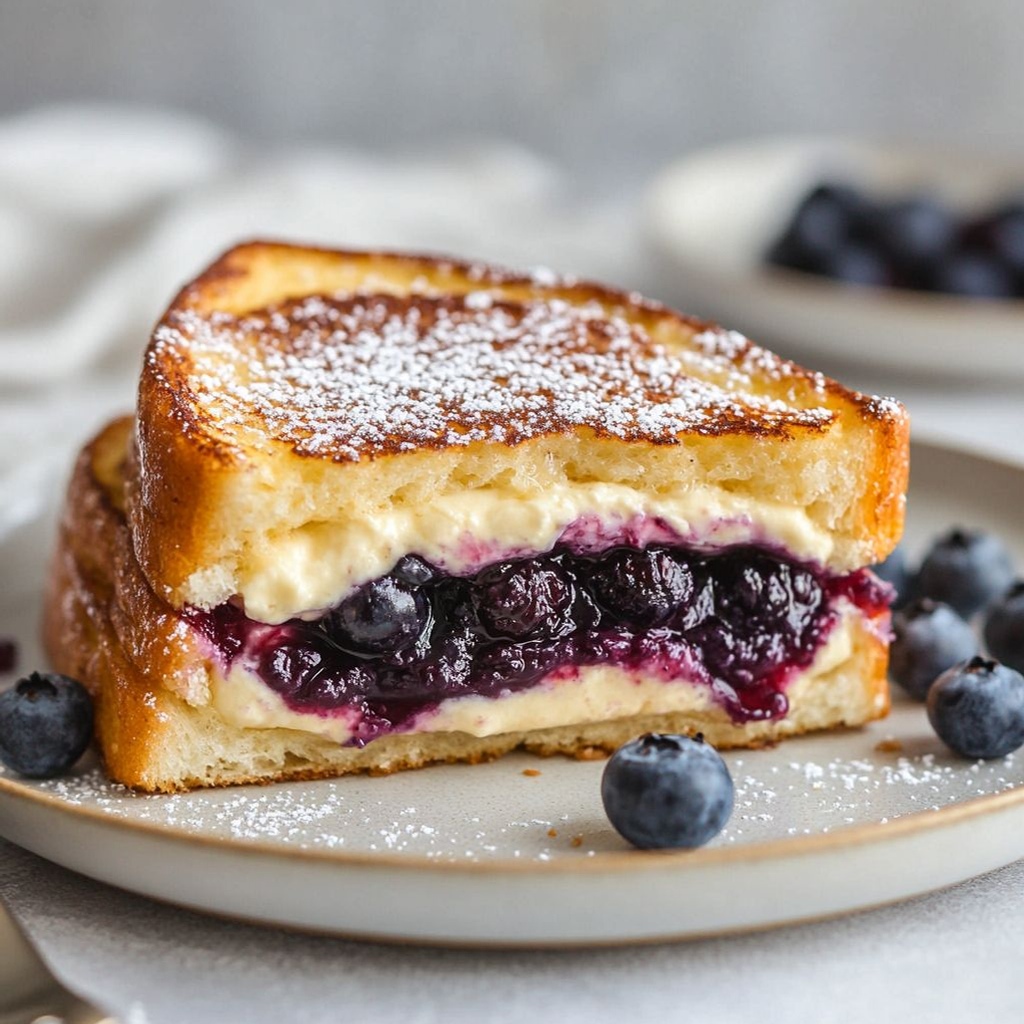
→ A well-emulsified custard ensures even soaking without separation; proper whisking aerates the mixture for a light, custardy texture in the finished toast. - Pair the bread slices into three sandwiches by spreading a generous tablespoon of cheesecake filling on the underside of each bottom slice, adding a spoonful of blueberry filling, and then topping with the matching slice; press gently to seal and distribute the fillings evenly.
→ Creating a stable pocket or sandwich ensures the fillings stay inside during soaking and frying, while gentle pressure helps edges seal and prevents leaks. - Dip each assembled sandwich into the custard, allowing it to soak about 20–40 seconds per side and turning once to ensure even absorption; lift and let any excess custard drain back into the dish.
→ Proper soaking yields a creamy interior with a custard-coated exterior; too long soaking can make the bread fall apart, too short yields a dry center. - Heat a nonstick skillet or cast-iron pan over medium heat and add 1–2 tablespoons unsalted butter, swirling to coat the surface; when the butter foams and just begins to brown, add the soaked sandwiches and cook 3–4 minutes per side until deeply golden and crisp.
→ The butter provides flavor and a crisp, caramelized exterior; maintaining medium heat prevents burning while allowing the interior to heat through evenly. - Optional: If the center seems underheated or you prefer a firmer set of fillings, transfer the fried sandwiches to a preheated 350°F (175°C) oven on a parchment-lined tray and bake 5–7 minutes; remove and rest briefly before serving.
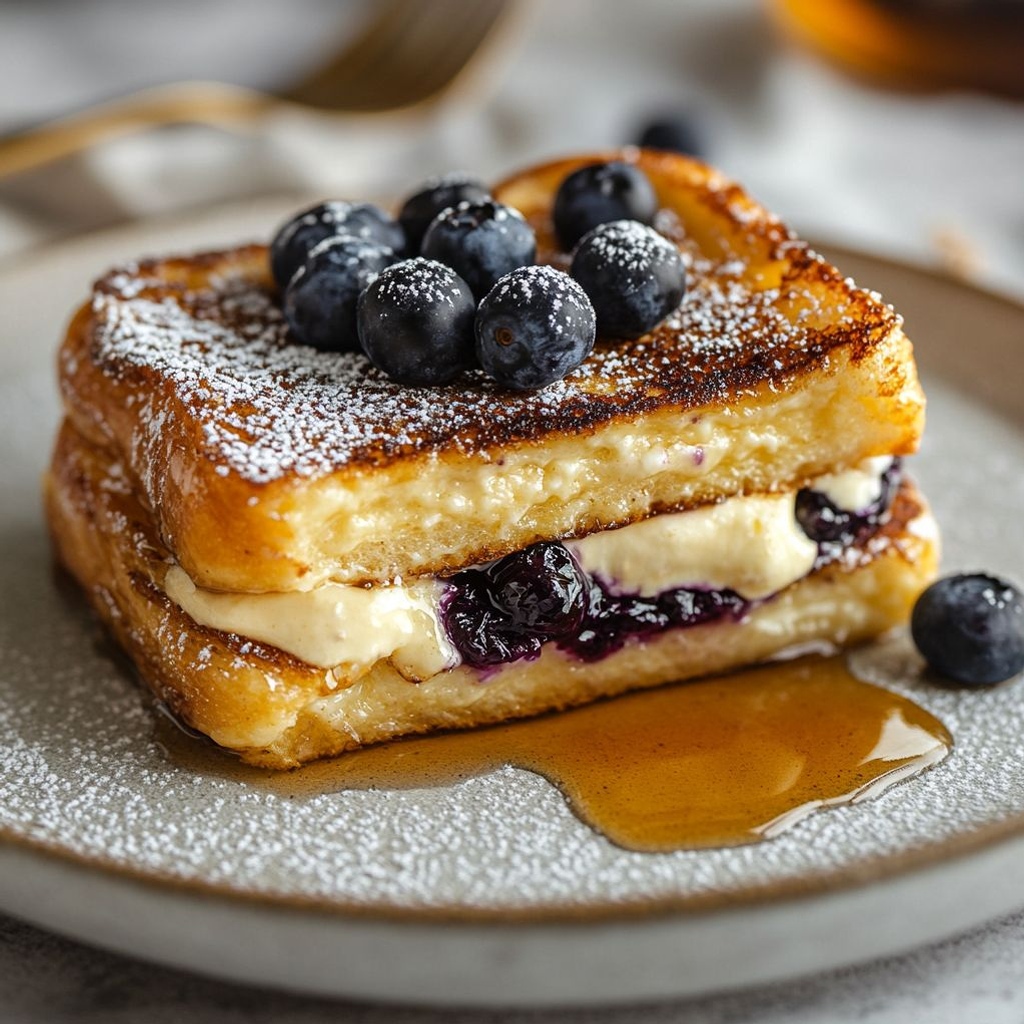
→ Finishing in the oven ensures the interior is warm through without over-browning the exterior, especially when the filling is cool from refrigeration. - Plate the stuffed French toast, dust with powdered sugar, and drizzle with pure maple syrup; garnish with fresh blueberries if desired for color and extra texture.
→ The powdered sugar adds a delicate sweetness and visual appeal, while maple syrup provides moist, rich sweetness; fresh berries offer a bright, tart contrast and color.
Notes
This blueberry cheesecake stuffed French toast is a decadent brunch treat that marries a creamy cheesecake center with a bright blueberry filling tucked inside custardy, cinnamon-kissed French toast.
Choose slightly stale brioche or challah for the best soak; if your bread is very fresh, dry it in a 300°F (150°C) oven for 5–7 minutes before assembling to help it hold its shape and absorb the custard without getting soggy.
To create the cheesecake filling, beat softened cream cheese with granulated sugar and vanilla until smooth and glossy; chilling briefly helps it hold its shape inside the bread as it cooks.
For the blueberry filling, simmer fresh blueberries with lemon juice and a touch of sugar until they release their juices; whisk in a small cornstarch slurry if you want a thicker glaze that stays put inside the stuffed slices.
Whisk the custard until smooth but don’t overmix; it should be light and silky to yield a tender, custardy soak without dragging the filling.
Fry the stuffed slices in a generously buttered pan over medium heat, turning once, until the exterior is golden and the filling is warm and creamy; if needed, you can finish in a 350°F (175°C) oven for 5–8 minutes to ensure the center is set.
Serve with a light dusting of powdered sugar and warm maple syrup; garnish with fresh blueberries for color and a burst of fruitiness, and consider a dollop of vanilla yogurt or whipped cream for extra richness.
Leftovers refrigerate well for 2–3 days and reheat best in a skillet or toaster oven; you can assemble the stuffed slices a day ahead and refrigerate overnight, then cook when ready to serve.
For gluten-free options, substitute with certified gluten-free bread and check that any add-ins (like vanilla extract) are gluten-free; you can also experiment with different berry fillings or citrus zest to tailor the brightness to your taste.
Tips
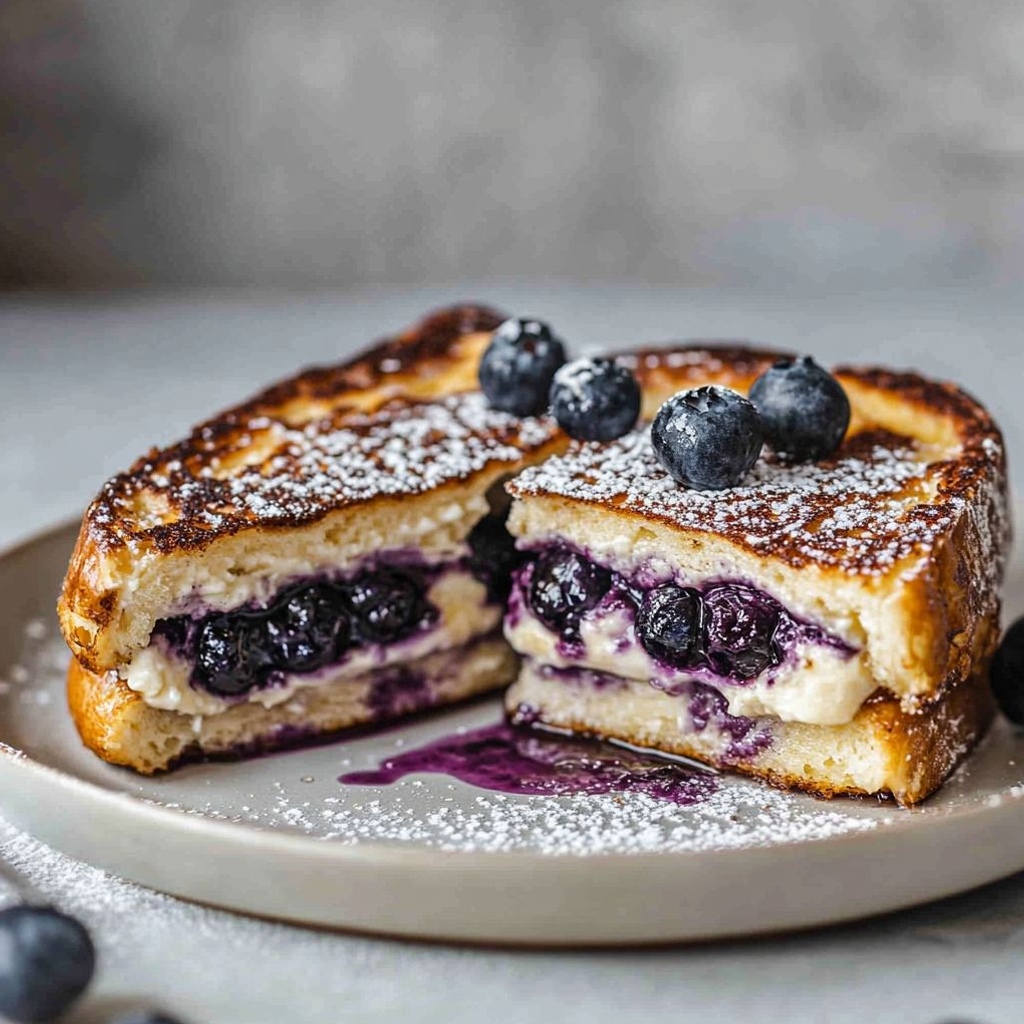
Tips for Blueberry Cheesecake Stuffed French Toast
- Bread selection and prep: Use thick-cut brioche or challah (3/4–1 inch thick). Slightly stale slices soak up custard without falling apart. If bread is very fresh, dry slices in a 300°F (150°C) oven for 5–7 minutes before assembling. For an even crisper crust, pat the slices dry with a towel before dipping.
- Custard tips: Use eggs at room temperature and whisk until just combined with the milk or cream, vanilla, cinnamon, and salt to avoid a curdled texture. Don’t overmix to keep the custard light. If your bread is very dry, add a splash more milk or cream.
- Soaking technique: Dip each bread slice briefly in the custard so it’s evenly coated but not soggy. Let it absorb for 2–3 minutes per side if you’re not stuffing, or longer if you want a richer texture. For stuffed French toast, gently create a pocket or spread the cheesecake filling inside so the center remains creamy.
- Cheesecake filling: Soften cream cheese to room temperature for a smooth filling. Beat with sugar until completely smooth and lump-free, then mix in vanilla and, if using, lemon zest. Chill briefly to help the filling hold its shape when inside the bread.
- Flavor balance: Lemon zest adds brightness to the filling; lemon juice in the blueberry filling enhances vibrancy. Use high-quality vanilla for best aroma and depth.
- Blueberry filling tips: Use fresh blueberries or well-thawed, drained frozen berries. Add lemon juice to brighten the berries and help them pop. If you want a thicker filling, whisk in 1 teaspoon cornstarch dissolved in a bit of cold water and cook gently until thickened; skip the cornstarch for a looser filling.
- Assembling tip: If you fill pockets, seal the edges with a light amount of custard to reduce leakage during frying. If you’re not making pockets, you can lightly swirl some filling into the center as you plate for a marbled effect.
- Cooking method: Fry in unsalted butter over medium heat until the underside is golden; flip carefully and cook the other side until browned and the center feels set. Adjust heat as needed to prevent burning the sugars in the filling.
- Batch management: Keep completed slices warm in a low oven (about 200°F/95°C) while finishing the rest, so the crust stays crisp and the centers stay warm.
- Serving ideas: Dust with powdered sugar just before serving and drizzle warm maple syrup. Offer a blueberry syrup or extra fresh blueberries as a bright garnish.
- Make-ahead and storage: Assemble stuffed slices and refrigerate up to 2 hours before cooking, or cook and refrigerate leftovers. Reheat in a skillet with a little butter to refresh the crust; store leftovers in the fridge for 1–2 days.
- Variations and tweaks: For a lighter version, substitute part of the heavy cream with whole milk. To intensify blueberry flavor, fold a small amount of blueberry jam into the cheesecake filling or serve with extra fresh berries on top.
FAQ
What is Blueberry Cheesecake Stuffed French Toast?
A decadent breakfast treat where thick slices of bread are stuffed with a creamy cheesecake and blueberry filling, then dipped in a custard and cooked until golden. It’s like a cheesecake-inspired French toast with bursting blueberry flavor.
What ingredients are in the filling?
The classic filling combines softened cream cheese with a little sugar, vanilla, and a handful of blueberries. For extra flavor, you can whisk in a splash of lemon zest and a dash of cinnamon.
What bread works best for stuffing?
Thick-sliced bread such as brioche, challah, or Texas toast yields the best texture. Day-old bread or lightly stale slices soak up the custard without falling apart.
Can I use fresh blueberries or frozen blueberries?
Both work well. Fresh blueberries give bright pops of color and flavor. Frozen berries can be used, but thaw and drain them to avoid extra moisture in the filling.
Can I make this ahead or refrigerate before cooking?
Yes. Assemble the stuffed French toast and refrigerate covered for up to 8 hours before cooking. You can also prepare the filling and assemble the sandwiches a day ahead for quick morning cooking.
How do you cook it—oven, skillet, or bake?
You have two good options:
- Skillet: Cook stuffed slices in a buttered skillet over medium heat until golden on both sides, then finish in the oven if needed.
- Oven: Assemble the stuffed slices, dip in custard, then bake on a parchment-lined sheet at 350°F (175°C) until set and golden, about 25–35 minutes.
How do you prevent the filling from leaking or the toast from being soggy?
Use a generous but not overfull amount of filling, seal the edges well when stuffing, and let the stuffed slices chill for a bit before dipping in custard. Use a custard mixture that’s not too thin, and cook on medium heat to avoid sogginess.
How long and at what temperature should I bake or cook it?
For the oven method: bake at 350°F (175°C) for about 25–35 minutes, or until the center is set and the exterior is golden. For skillet: cook each side 3–5 minutes over medium heat, then finish in the oven if needed.
What toppings or accompaniments go well?
Top with warm blueberry compote, a dusting of powdered sugar, maple syrup, whipped cream, or a hint of lemon zest for brightness. Fresh blueberries on top add a nice touch.
Can I make this dairy-free or gluten-free?
Yes. For dairy-free: use dairy-free cream cheese and plant-based milk. For gluten-free: use gluten-free bread. Check other ingredients (custard mix) to ensure they are gluten-free as well.