
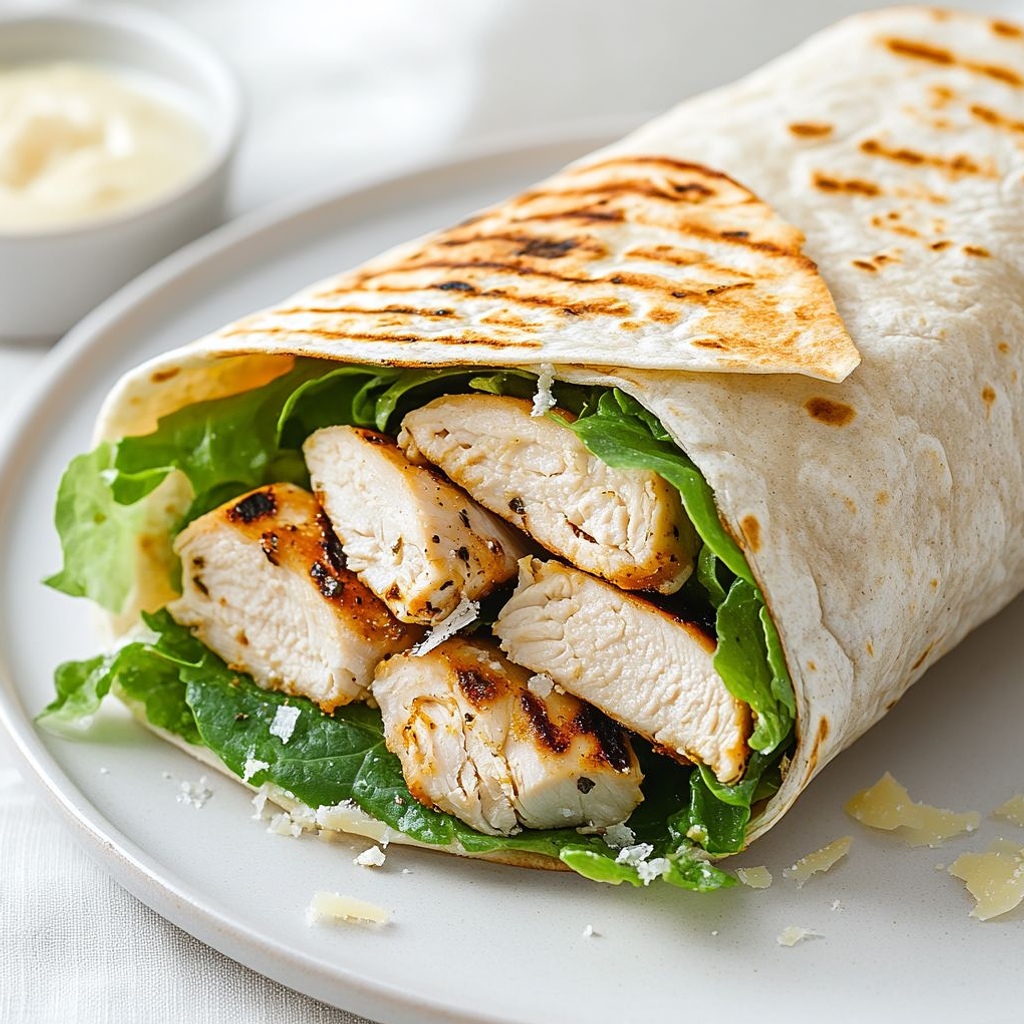
Introduction / Hook
Imagine a lunch that tastes like a sunlit picnic on a breezy afternoon, portable enough to fit in a lunchbox, and satisfying enough to become your weeknight comfort food. Chicken Caesar Wraps blend the familiar, beloved notes of a classic Caesar salad with the easy, handheld charm of a tortilla roll, so you get the best of both worlds: the crisp bite of romaine, the silky, umami-rich tang of Caesar dressing, and succulent slices of chicken all tucked into a soft, flexible wrap. The first bite delivers a chorus of textures and flavors: the freshness of leafy greens, the creamy haze of dressing coating every leaf, the salty kiss of parmesan, and a subtle garlicky warmth that lingers on the palate. It’s a meal that feels indulgent without being heavy, chic enough for a date-night picnic and simple enough for a busy weekday lunch. You’ll notice how the wrap holds everything together—no mess, no fuss—so you can savor each mouthful as the flavors unfold. In a world of quick fixes, this dish offers a small celebration: a balanced, satisfying bite that tastes like it took more effort than it actually did.
The Story Behind the Dish
The chicken Caesar wrap is a modern fabrication born at the intersection of two timeless inspirations: the Caesar salad and the idea of a portable, hand-held meal. The Caesar salad itself is a storied creation with a dash of mystery and a lot of romance. Legend points to Caesar Cardini, an Italian immigrant who ran a bustling restaurant in Tijuana, Mexico, in the 1920s. According to lore (and a healthy dose of restaurant folklore), a rushed afternoon, a few pantry improvisations, and a sprightly sense of improvisation produced a luminous salad that would become an icon: romaine leaves bathed in a tangy, garlicky dressing, crowned with parmesan, and punctuated by crispy croutons. What you taste in a classic Caesar—bright lemon, sharp parmesan, the creamy, egg-and-oil emulsion, and a whisper of anchovy umami—came to symbolize elegance in simplicity. Over the decades, cooks around the world reimagined it in countless ways: with different proteins, with assorted greens, with toasted seeds or nuts, and with dressings both faithful to the original and whimsically modern.
The leap to a wrap is a natural evolution. A tortilla offers a canvas for the salad’s flavors while transforming the dish into something you can hold, travel with, and enjoy anywhere—from a park bench to a cramped office desk. Chicken brings substance and protein, turning a plate-sized salad into a filling meal that resonates with busy people who still crave comfort and care in their food. The chicken Caesar wrap also marks a culinary moment that embraces flexibility. You can cook the chicken in a skillet, on the grill, or even use leftover roast chicken. You can swap greens, introduce crunchy add-ins, or mellow the dressing with yogurt or avocado. The wrap is a celebration of contrast: the cool, crisp leaves against the warm, savory chicken; the velvety dressing binding everything together and then giving way to a bright lemony finish as you bite through the final layer. It’s not merely a recipe—it’s an idea: that a classic can travel, adapt, and still feel intimately familiar. As you read on, you’ll discover how this approachable dish honors the Caesar’s spirit while embracing the modern appetite for convenience and versatility.
Why You’ll Love This Recipe
- Quick and practical: Cooks can have dinner on the table in under 30 minutes, using pantry staples and leftovers.
- Perfect for meal-prep: Assemble components ahead of time, then roll up when you’re ready to eat.
- Balanced, satisfying protein: Tender chicken provides a nourishing foundation that will keep you full, without weighing you down.
- Make-ahead and adaptable: The dressing, greens, and chicken can be prepared separately and combined later, which preserves texture and flavor.
- Kid-friendly yet sophisticated: The familiar flavors appeal to younger palates while offering depth that adults appreciate.
- Customizable for dietary needs: Gluten-free wraps, dairy-free dressings, or lighter versions with yogurt still deliver the iconic Caesar profile.
- Travel-friendly: A wrap travels well, making it ideal for picnics, office lunches, school lunches, or weekend adventures.
Flavor Profile & Texture
The Chicken Caesar Wrap is a symphony of textures and flavors designed to deliver immediate appeal and linger pleasantly after the bite. The chicken, pan-seared or grilled, bears a gentle char that adds a touch of smokiness and a satisfying chew. When sliced, its juices mingle with the dressing’s fat, creating a nuanced richness that coats every leaf. The Romaine lettuce offers crisp, almost lacquered freshness—the kind of crunch that crackles a little before giving way to a tender bite. The dressing—classic Caesar in spirit—brings a creamy, slightly tangy, garlicky heartbeat to the wrap. Anchovy undertones provide depth and a savory backbeat that anchors the dish; if you’re wary of anchovies, you can use a high-quality vegetarian anchovy substitute or a robust, umami-rich plain yogurt to mimic the silkiness while dialing down intensity. Parmesan shavings add a gentle, salty bite and a mineral brightness that echoes the sharpness of the dressing, creating a bridge between salty tang and dairy creaminess.
Texture-wise, you’ll notice the harmony of soft ribbons of chicken with the crisp greens, punctuated by the occasional crunch from crouton bits, if you choose to include them. The wrap itself offers a pliable, forgiving shell that holds the salad together without turning soggy, letting the flavors stay vibrant from first bite to last. The finish is bright and clean: lemon zest or juice lifts the richness, cutting through the richness and delivering a memory of a crisp, fresh salad even as you savor the warm, comforting warmth of a well-seasoned chicken filling. In every bite, the dish reveals a careful balance: the tang of parmesan and dressing, the mellow sweetness of roasted garlic, the lemon’s sunlit acidity, and the chicken’s savory warmth. It’s not merely a combination; it’s a refined everyday meal designed to feel like a little celebration every time you wrap it up.
Occasions & Pairings
This dish is remarkably versatile and shines under a variety of circumstances, from casual weeknight dinners to weekend gatherings. The wrap’s portability makes it ideal for brown-bag lunches, picnics, or a relaxed brunch with friends. It also adapts beautifully for more formal occasions when you want something elegant yet unfussy: serve as part of a rustic, salad-forward menu where guests can assemble their own wraps at the table. The comforting familiarity of Caesar-inspired flavors invites pairing with bright, refreshing beverages and simple sides that don’t overwhelm the palate.
When to Serve
- Weeknights when you want a satisfying, fast dinner without sacrificing flavor.
- Lunches for picnics, beach days, or office lunches that don’t require reheating.
- Casual entertaining, such as a family gathering or a relaxed potluck.
- Outdoor grilling days when you want a crowd-pleaser that travels well.
Suggested Pairings
- Side dishes: a light citrus salad, tomato and cucumber salad, or roasted vegetables to echo the Caesar dressing’s brightness.
- Drinks: sparkling water with lemon, a chilled Pinot Grigio, or a crisp Sauvignon Blanc; for non-alcoholic options, iced tea with a squeeze of lemon or a citrusy mocktail.
- Desserts: a light berry shortcake, lemon sorbet, or yogurt-based parfaits to keep the meal feeling fresh and balanced.
- Additional textures: a handful of toasted croutons or crispy chickpeas sprinkled inside the wrap add a delightful crunch that complements the greens.
Tips, Variations & Substitutions
Here are practical ideas to tailor Chicken Caesar Wraps to your pantry, your dietary needs, or your mood. Each variation preserves the core Caesar essence while inviting creativity.
Classic and Quick Variations
- Extra creamy: Use a dressing made with a higher ratio of yogurt to mayo to intensify creaminess while lightening the heaviness.
- Crunchy twist: Add homemade or store-bought croutons or roasted chickpeas for an extra crisp bite.
- Herb lift: Mix in chopped fresh herbs like parsley, chives, or dill to brighten the dressing and add color.
Dietary-Friendly Options
- Gluten-free: Use gluten-free wraps or large lettuce leaves for a wrap-without-flour option.
- Dairy-free or lighter: Swap the dressing for a dairy-free version based on olive oil and lemon with a touch of tahini, or Greek yogurt as the base for silkiness without heavy fat.
- Vegan or vegetarian: Replace chicken with marinated chickpeas or roasted mushrooms that mimic a meaty bite, keeping the Caesar-like dressing robust with capers or miso for depth.
Regional Twists
- Southwest Cali: Add avocado slices, a sprinkle of chili-lime seasoning, and a corn or black bean variation of the salad, wrapped in a whole-grain tortilla.
- Mediterranean influence: Incorporate roasted red peppers and a sprinkle of feta instead of parmesan for a tangy, sunny Mediterranean vibe.
- Smoked poultry: Use smoked chicken or turkey to amplify the depth of the dish, especially when paired with a slightly smoky dressing.
Make-Ahead & Assembly Tips
- Storing components separately: Keep chicken, dressing, greens, and wraps separate for maximum texture. Assemble just before serving to maintain crunch and freshness.
- Flavor development: If you have a bit more time, marinate the chicken briefly in a lemon-garlic mixture before cooking to deepen the citrus and garlic notes.
- Wrap integrity: If you fear sogginess, line the wrap with a thin layer of greens or a light smear of dressing on the outside to create a moisture barrier and extend the wrap’s life for travel.
Storage & Make-Ahead Ideas
The beauty of Chicken Caesar Wraps lies in their adaptability for batch cooking and meal prep. You can prepare several components in advance, then assemble when you’re ready to eat. Here are practical guidelines to keep everything fresh and flavorful.
- Chicken: Store cooked chicken in an airtight container in the refrigerator for up to 4 days. For longer storage, dice and freeze in small portions, then thaw before use.
- Dressing: Caesar-inspired dressings can be made 2–3 days ahead and kept refrigerated in a sealed container. If freezing, note that dairy-based emulsions may separate; whisk vigorously after thawing to re-emulsify.
- Greens: Wash, dry thoroughly, and refrigerate romaine or other greens in a vented bag or container. Dry greens resist wilting longer, ensuring a crisp bite at serving time.
- Wraps: If you’re making several wraps ahead for a party, consider keeping the tortilla shells separate and warming them briefly before assembly to maintain flexibility and prevent tearing.
- Make-ahead assembly: For a quick meal, toss the greens with a small amount of dressing to lightly coat them, slice the chicken, and keep everything in separate containers. When ready, lay the greens on the wrap, add chicken, finish with a drizzle of dressing, and roll.
Fun Facts & Trivia (Optional)
Delighting in little-known tidbits can deepen your appreciation for a dish. Here are a few that relate to the flavors and history behind Chicken Caesar Wraps:
- The original Caesar salad is believed to have used raw eggs in its dressing to achieve a creamy texture, a characteristic that has inspired many modern dressings, including lighter yogurt-based versions for today’s health-conscious kitchens.
- Anchovies, often cited as the “secret” umami in Caesar dressing, supply a deep savoriness without overpowering other flavors. If you’re new to anchovies, you’re not alone—there are many ways to achieve that dense, savory backbone with substitutes or milder ingredients.
- Wraps as a concept gained enormous popularity in the late 20th century, offering a portable, adaptable format that could be filled with nearly anything—from breakfast fillings to plant-based mains—while remaining easy to eat on the go.
- Parmesan cheese, a hallmark of Caesar flavor, carries a distinct protein-rich, nutty saltiness that is both aromatic and versatile, pairing well with citrus and garlic in a way that brightens the overall dish.
- Flavor layering—the technique of building a dish from ingredients that carry contrasting but complementary notes (creamy dressing, crisp greens, savory chicken, bright lemon)—is a hallmark of many classic American adaptations of European-inspired dishes.
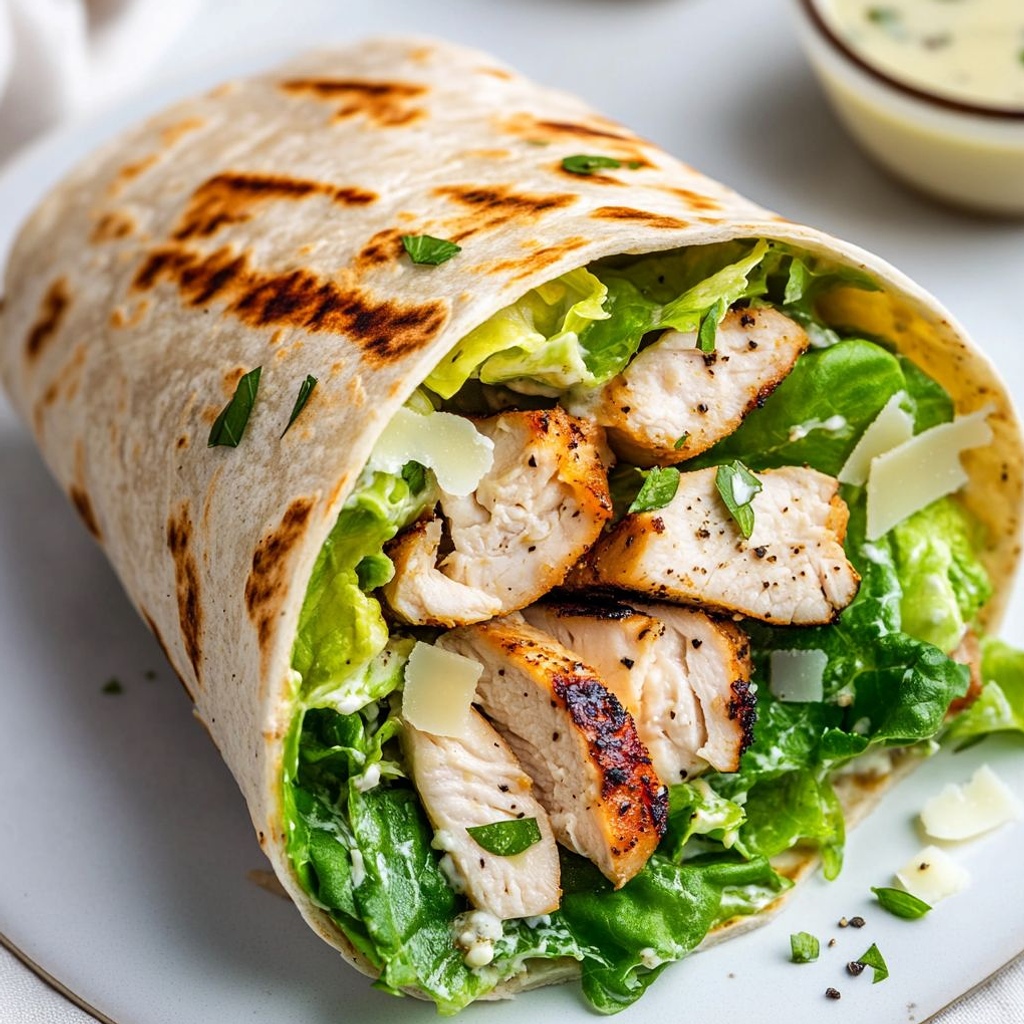
Ingredients
Chicken Caesar Wraps
Wraps
- 4 large flour tortillas (10-12 inches)
→ The wrap shells hold all the fillings together and determine portion size. Use large burrito-sized tortillas for easy folding. Warm them briefly in a dry skillet or microwave to make them pliable, which prevents tearing when wrapping. If using gluten-free wraps, heat slightly longer and handle gently to prevent cracking.
Chicken Filling
- 2 cups cooked chicken breast, shredded or diced
→ The primary protein and bulk of the filling. Shredded or finely diced chicken distributes evenly and makes each bite cohesive. Use cooked chicken that has cooled to room temperature to avoid extra heat spoiling the balance with the dressing. If you’re using leftovers or rotisserie chicken, pull the meat into small pieces and pat away any excess moisture before mixing with dressing to prevent soggy wraps.
Greens
- 3 cups chopped romaine lettuce, rinsed and thoroughly dried
→ Adds crisp, refreshing contrast to the creamy Caesar dressing. Dry greens well to prevent soggy wraps; pat dry with a clean towel or use a salad spinner. Chop into bite-sized pieces so each wrap gets a balanced amount of greens with every bite.
Caesar Dressing
- 1/2 cup mayonnaise
→ Creamy base that binds the chicken and greens together while carrying the tang from lemon and garlic. For a lighter option, substitute half with Greek yogurt, but full-fat mayo yields a richer texture. Whisk until smooth to avoid lumps and ensure an even coating on the filling. - 1 tablespoon fresh lemon juice
→ Brightens the dressing and cuts through richness. Use freshly squeezed juice for maximum brightness; adjust to taste. If the lemon is very tart, dilute with a touch of water or a bit more mayo to balance. - 1 clove garlic, minced
→ Delivers the characteristic Caesar bite. Freshly minced garlic distributes evenly and avoids a raw, chunky texture. For a milder profile, use half a clove or rub the minced garlic into the bowl before adding other ingredients. - 1 teaspoon Dijon mustard
→ Adds subtle tang and helps emulsify the dressing for a smooth, cohesive coat on the salad. Whisk in early to ensure it blends evenly with the mayo and lemon before adding cheese. - 1 teaspoon Worcestershire sauce
→ Contributes depth and a touch of sweetness that complements garlic and lemon. Use sparingly to avoid overpowering the dressing; omit if you prefer a purer, simpler Caesar flavor. - 1-2 anchovy fillets minced (optional)
→ Traditional Caesar flavor brings umami without a fishy aftertaste when emulsified. Omit for a vegetarian option. If using, mince finely or mash to a paste to distribute evenly throughout the dressing. - 1/4 cup finely grated Parmesan cheese
→ Provides the signature sharp, nutty Caesar character and helps thicken the dressing slightly. Freshly grate for best flavor and smooth texture. Reserve a small amount to sprinkle on the wraps just before serving for extra aroma. - Salt and black pepper to taste
→ Essential for balancing the dressing’s acidity and the cheese’s saltiness. Add gradually, tasting as you go because Parmesan, anchovies, and mustard push the seasoning. Finish with a final adjustments after all components are combined. - 1-2 teaspoons water to thin to desired consistency
→ Dressing should lightly coat the greens, not be oily puddles. If too thick, whisk in water a little at a time until you reach a smooth, pourable texture. If it becomes too thin, whisk in a touch more mayo or cheese to regain body.
Crunch and Toppings
- 3/4 cup garlic croutons, roughly crushed (optional)
→ Adds a satisfying crunch and toasty flavor that contrasts with the creamy dressing. Choose sturdy, crisp croutons; crush lightly so pieces distribute evenly without tearing the tortilla. If making croutons at home, toss bread cubes with olive oil, minced garlic, and a pinch of salt, then toast until golden and crunchy.
Finishers (Optional)
- Extra shaved Parmesan cheese for finishing (optional)
→ Finishes with a fragrant, salty note that echoes the dressing. Use very thin shavings with a microplane for delicate texture; a light dusting just before serving elevates the overall Caesar theme without adding bulk. - Freshly ground black pepper to taste (optional)
→ Adds a final aromatic kick to the wrap. Grind right before serving to preserve aroma and brightness. A few twists are usually enough; taste and adjust as needed. - Cherry tomatoes halved (optional)
→ Optional brightness and juiciness to contrast the creamy filling. Halve and pat dry to remove excess moisture that could soggy the wrap. Use small, firm tomatoes to maintain bite without over-sauce.
Instructions
- Warm the flour tortillas until pliable by briefly heating each in a dry skillet for 10-15 seconds per side or microwaving for 15-20 seconds wrapped in a damp paper towel.
→ Making the tortillas pliable prevents tearing and helps them roll tightly without cracking, ensuring an even, easy wrap. - Pat the romaine thoroughly dry after washing, using a salad spinner or by patting with a clean towel.
→ Removing excess moisture keeps the wrap from becoming soggy and maintains a crisp, refreshing bite in every bite. - In a medium bowl, whisk together mayonnaise, lemon juice, minced garlic, Dijon mustard, and Worcestershire sauce until the mixture is smooth and emulsified.
→ Emulsification creates a cohesive dressing that clings to the chicken and greens rather than separating, giving you even flavor distribution. - If using anchovy fillets, stir in the finely minced anchovies or mash to paste to distribute umami; then fold in the finely grated Parmesan and season with salt and pepper.
→ Anchovies add depth and a classic Caesar tang; Parmesan enriches the dressing and helps with texture, while salt and pepper balance acidity. - Stir in 1-2 teaspoons water, added a little at a time, to achieve a light, coat-the-salad consistency without pooling.
→ A thinner dressing coats the fillings evenly without making them soggy, while too much thickness can clump and overwhelm flavors. - In a large mixing bowl, combine the cooked chicken with just enough dressing to lightly coat the pieces; reserve any remaining dressing for finishing or optional extra sauce.
→ This prevents the filling from becoming oily while ensuring every bite carries sufficient Caesar flavor. - Add the chopped romaine to the dressed chicken and toss gently to distribute evenly, aiming to coat greens lightly while preserving their crisp texture.
→ Thorough but gentle tossing keeps the greens vibrant and prevents them from turning mushy under heavy dressing. - If using garlic croutons, crush them into coarse crumbs and fold into the filling just before assembling the wraps to retain their crunch.
→ Crouton crunch provides a satisfying contrast to the creamy dressing and soft chicken, elevating texture in the wrap. - Prepare optional finishers by shaving extra Parmesan, finishing with freshly ground black pepper, and halving cherry tomatoes; have them ready to add as a bright garnish.
→ Parmesan shavings and pepper enhance aroma and savory notes, while tomatoes add acidity and freshness that cut through richness. - Lay a tortilla on a clean surface, spread a thin line of dressing in the center (not reaching the edges), and spoon a generous mound of the chicken–romaine mixture onto the tortilla.
→ A restrained dressing layer prevents soggy edges and gives you a clean seam when rolling; the filling should look compact, not overflowing. - Fold the bottom edge up over the filling, tuck in the sides, and roll the tortilla tightly from bottom to top to form a secure wrap.
→ Rolling tightly keeps the filling contained and reduces leakage; if the tortilla resists, warm it slightly again for flexibility. - Slice each wrap in half on a sharp diagonal, wipe the blade between cuts to maintain clean edges, and arrange on plates with optional finishing touches like Parmesan shavings or tomato halves.
→ A diagonal cut showcases the colorful filling, while a clean blade prevents smear; finishing touches heighten presentation and aroma. - Serve immediately for best texture, or refrigerate assembled wraps (wrapped in parchment or plastic) for up to 2 hours; bring to room temperature briefly before serving if chilled.
→ Freshly prepared wraps taste best, but they can be made ahead with proper wrapping to maintain moisture balance and prevent drying.
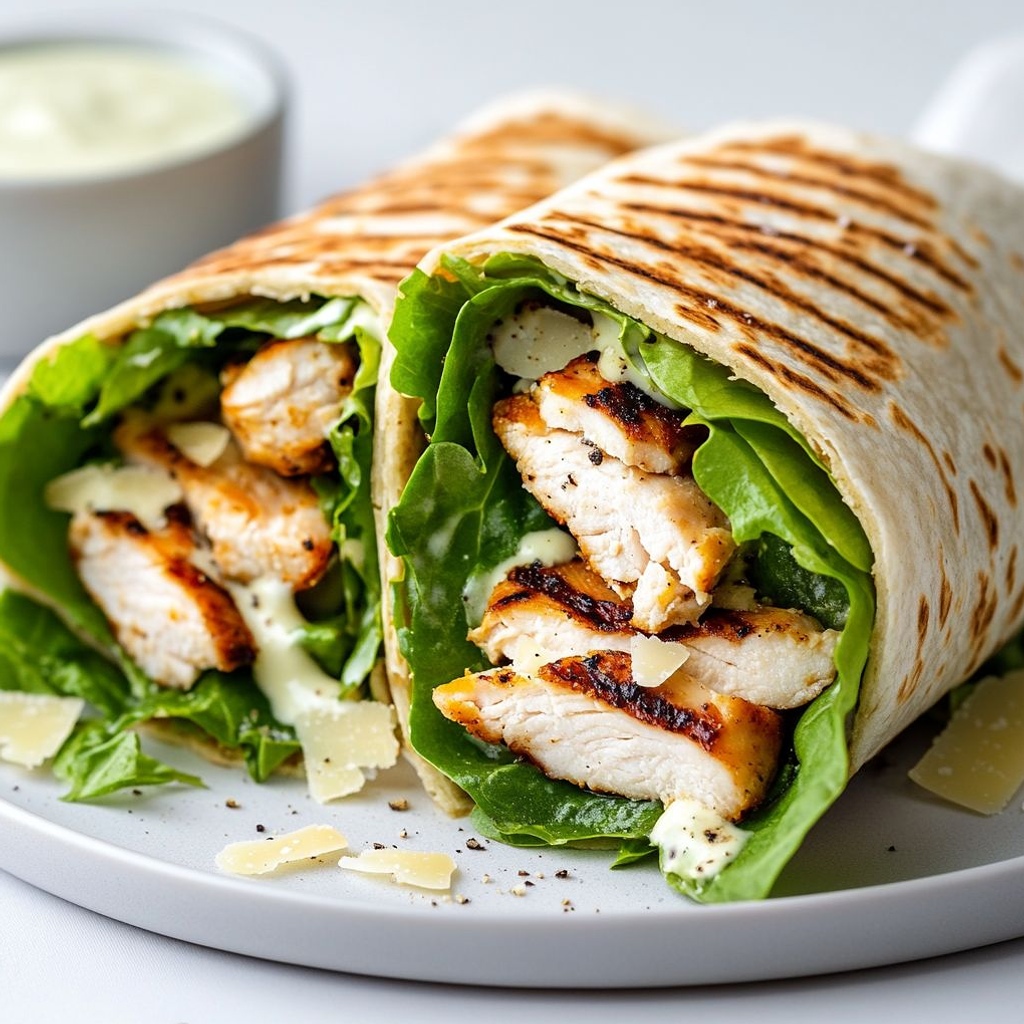
Notes
These Chicken Caesar Wraps are a satisfying handheld meal that pair tender seasoned chicken, crisp romaine, and a creamy Caesar dressing wrapped in warm tortillas. For best results, warm the wraps briefly to make them pliable; this helps them roll without tearing, especially if you are using gluten-free wraps which can crack if handled cold.
Dry greens well after washing and use bite-sized pieces so every bite gets a balance of greens and filling. If you are using leftovers, shred the chicken and pat away any excess moisture to prevent soggy wraps when you add the dressing.
The dressing is a creamy emulsion built from mayonnaise, lemon juice, garlic, Dijon mustard, Worcestershire, and Parmesan. If you prefer a lighter version, substitute half the mayo with Greek yogurt; whisk in the rest until smooth and adjust salt, pepper, and water to reach a light coating that clings to the filling without pooling.
Anchor the dressing with a touch of anchovy (optional) for authentic Caesar depth; mince finely so the flavor disperses through the mixture rather than clustering in a bite.
Crunch is optional but delicious: add crushed garlic croutons or omit for a softer texture; if making croutons at home, toast sturdy bread cubes with olive oil and garlic until golden and crunchy. Finish with extra shaved Parmesan and freshly ground pepper to taste.
Make-ahead and storage tips: you can prepare the chicken, greens, and dressing separately and assemble the wraps just before serving to maintain texture. Refrigerate components in sealed containers; assembled wraps are best eaten the same day but can be kept for up to 24 hours if kept cold and wrapped tightly. If you anticipate sogginess, hold back some dressing to drizzle lightly on the tortilla after wrapping.
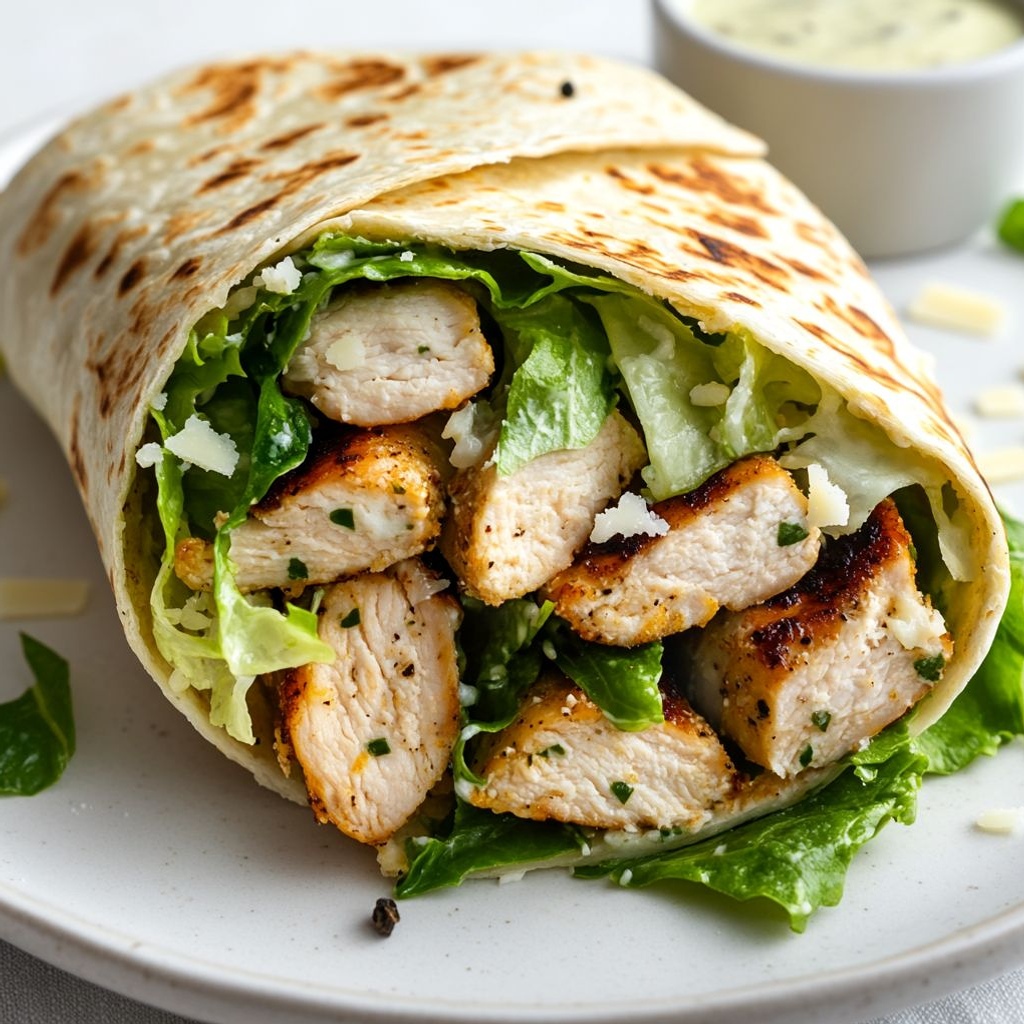
Tips
Best tortilla prep for sturdy wraps
- Warm the tortillas until they are pliable to prevent tearing during folding. A quick 15–20 second warm in a dry skillet per side works well; if using a microwave, cover with a damp paper towel to keep them soft and prevent cracking.
- For gluten-free wraps, heat a bit longer and handle them gently to avoid cracking. If a wrap cracks, transfer the filling to a new wrap and finish rolling quickly to minimize breakage.
Chicken filling: moisture, texture, and even distribution
- Use cooled cooked chicken to avoid extra heat breaking the dressing’s emulsion. Fork or shred the meat into even pieces so every bite has consistent texture.
- If using leftovers or rotisserie chicken, pat away any excess surface moisture with a clean towel before mixing with dressing to prevent soggy wraps.
Greens: crunch without sogginess
- Dry romaine thoroughly after washing; moisture is the enemy of a clean wrap. Use a salad spinner or pat dry with towels.
- Chop into bite-sized pieces to ensure each wrap distributes greens evenly and every bite has a balanced crunch and freshness.
Caesar dressing: emulsification and balance
- Whisk mayo with lemon juice, garlic, Dijon mustard, and Worcestershire first to build a cohesive base. This helps the dressing emulsify and coat the filling smoothly.
- If using anchovies, mince finely or mash to a paste so the umami is evenly distributed and not perceived as chunks.
- Stir in finely grated Parmesan gradually; it thickens the dressing and adds the signature bite. Reserve a little for finishing.
- Season gradually with salt and pepper. The Parmesan and anchovies add saltiness, so taste as you go and adjust at the end.
- Thin the dressing to the right consistency with 1–2 teaspoons of water if it’s too thick, aiming for a light coat rather than pools at the bottom of the wrap.
Cheese, umami, and texture boosters
- Use freshly grated Parmesan for the sharp, nutty flavor and smoother texture. Pre-grated cheese can be dry and less flavorful.
- Consider finishing with a small amount of extra shaved Parmesan just before serving for aroma and a delicate snowy finish.
Crunch and toppings: balancing textures
- Croutons add a pleasant crunch, but crush them lightly so they distribute without tearing the tortilla. For best results, use sturdy, crisp croutons or homemade ones that are well toasted.
Finishers: aroma and brightness
- Freshly ground black pepper brightens the final bite; grind just before serving.
- Cherry tomatoes add brightness and juiciness; halve and pat dry to prevent extra moisture from soggying the wrap.
Assembly and rolling technique
- Spread a light, even layer of dressing on the tortilla. Too much dressing can make the wrap soggy; a thin coat that reaches the edges is ideal.
- Layer greens first, then chicken, and finish with a pinch of croutons and any optional toppings. This order helps fill the wrap evenly and keeps the interior cohesive.
- Fold the sides in, then roll tightly from one end to the other. If the tortilla seems prone to unrolling, you can wrap it in parchment or foil to hold its shape until eaten.
Make-ahead, storage, and serving tips
- Dress the greens and chicken ahead of time if you’re meal-prepping, but keep the dressing refrigerated separately until you’re ready to assemble to avoid soggy wraps.
- Assembled wraps are best enjoyed same day. If needed, wrap individually in parchment and refrigerate up to 1 day. Let them come to room temperature for a few minutes before serving for better flavor and texture.
- Keep greens completely dry and pat out any moisture from tomatoes or other toppings to minimize sogginess.
Variations and optional tweaks
- For a lighter version, substitute half of the mayonnaise with Greek yogurt. The texture will be slightly lighter while preserving tang.
- Use lettuce blends or baby romaine for varied texture and color.
- Feel free to add avocado slices or a little extra lemon zest for brightness if desired.
FAQ
What are Chicken Caesar Wraps?
Chicken Caesar Wraps are a handheld meal that combines seasoned cooked chicken, crisp romaine lettuce, creamy Caesar dressing, grated Parmesan, and crunchy croutons all rolled up in a tortilla. They’re perfect for lunch on the go or a quick dinner.
What ingredients do I need?
Typical ingredients include:
- Cooked chicken (grilled, roasted, or rotisserie), shredded or sliced
- Romaine lettuce, chopped
- Caesar dressing
- Grated Parmesan cheese
- Croutons
- Large flour tortillas or wraps
Optional additions: cherry tomatoes, avocado slices, crispy bacon, lemon wedges, or black pepper.
Can I use chicken leftovers or rotisserie chicken?
Yes. Both work great. Shred or chop the chicken and pat it dry to prevent sogginess in the wrap.
How do I make Caesar dressing from scratch?
To make a simple Caesar dressing: whisk together 1/2 cup mayonnaise, 1/4 cup grated Parmesan, 1–2 minced garlic cloves, juice of 1 lemon, 1 teaspoon Dijon mustard, 1 teaspoon Worcestershire sauce, and optional anchovy paste to taste. Season with salt and pepper. For a lighter version, substitute part or all of the mayo with plain yogurt.
How should I assemble the wraps so they don’t get soggy?
Lightly spread the dressing on the tortilla, layer chicken and romaine, and add cheese and croutons. If you want extra crunch, add croutons just before serving. Roll tightly and wrap in parchment or foil to keep moisture out.
What tortillas or wraps work best?
Use large flour tortillas or burrito wraps for easy folding. Spinach or whole-wheat wraps also work well. For gluten-free dishes, pick certified gluten-free wraps.
How can I make a lighter version?
Use less dressing or mix the dressing with plain yogurt or light mayo. Add more crunchy veggies (like cucumbers or bell peppers) and lean chicken to keep it filling without extra heaviness.
How should I store leftovers and how long do they keep?
Store assembled wraps or their components in an airtight container in the refrigerator. For best quality, eat within 1–2 days. If possible, keep dressing separate and assemble just before eating to avoid sogginess.
Can I customize with extra veggies or add-ins?
Absolutely. Try adding cherry tomatoes, cucumber, red onion, avocado, or even crispy bacon. You can also swap in arugula or add a squeeze of lemon for brightness.
Can I freeze wraps or make them ahead?
Fresh wraps are best enjoyed soon after assembly. You can prep the chicken and vegetables ahead of time, then assemble right before serving. Freezing assembled wraps is not recommended as texture and moisture can suffer; you can freeze cooked chicken separately for later use.