Introduction / Hook
Picture a sunlit kitchen where the air tastes faintly of vanilla and summer fruit. On the counter, a bowl glistens with bright red strawberries, each berry a tiny ruby bursting with juice. Beside it sits a light, tender shortcake that seems almost to sigh with crumbly charm. When you take a bite, the biscuit cracks softly, releasing a whisper of butter and a hint of almond, while the fruit—sweet, tangy, and glistening—releases a chorus of summer into your mouth. A cloud of whipped cream crowns the top, cool and silky, catching the light as it wraps around the berries with a gentle, velvety kiss. This is strawberry shortcake in its purest, simplest form: a celebration of fruit, cream, and a cake that has the friendly warmth of a home-baked hug.
But strawberry shortcake is more than a dessert; it’s a ritual. It’s the kind of dish that gathers people in a kitchen or on a sun-soaked patio, inviting stories to bloom as readily as the berries. It’s a dish that travels through time—from rustic country kitchens where trial-and-error bakers learned how to coax tenderness from flour and fat, to modern tables where a few perfectly ripe berries can conjure nostalgia faster than a memory can speak. And while the ingredients are straightforward, the experience is layered: there’s the initial sweetness of the berries, the soft crumb of the shortcake, the lush coolness of the whipped cream, and the way all three elements balance, contrast, and commune in every bite. If you’ve ever wanted to taste summer in a single dessert, this strawberry shortcake invites you to do just that—without fuss, with plenty of charm, and with the confidence that a timeless classic can still feel fresh and exciting.
This description isn’t merely about eating a dessert; it’s about crafting a moment. It’s about choosing ripeness over speed, about letting flavors mingle and mellow, about the satisfaction of a dish that is both familiar and surprising. It’s about the way a crowd gathers around a plate and, in that shared act of tasting, becomes a little more connected. And it’s about the textures—the way light, air, and cream can meet the bright fruit to create something that feels simultaneously simple and indulgent. If you’re reading this, you’re on the path to re-creating that moment in your own home: a plate of strawberry shortcake that tastes like a memory you’re making fresh.
The Story Behind the Dish
Strawberry shortcake has a lineage that winds through European roots and into American kitchens, gathering a lineage of tweaks, regional twists, and cherished memories along the way. The term “shortcake” itself is a nod to the method by which the dough is treated—mixing fat into flour to create a crumb that shortens the gluten, yielding a tender, crumbly texture that’s perfect for soaking up the juice of strawberries. In the United States, the dessert found a home in homes, churches, and fairs, where cooks experimented with local ingredients and temperaments. Early versions often used a biscuit-like dough, sometimes lightly sweetened, sometimes more savory in its simplicity. Over time, as sweet cream or whipped cream joined the stage, strawberry shortcake became a symbol of summertime abundance: ripe berries picked at the peak of flavor, ready to be turned into generous slices of cake and cloud-like toppings.
The cultural tapestry of strawberry shortcake is rich. In some regions, the shortcake is more biscuit-like, with a golden crust that cracks under the spoon, revealing a tender interior. In others, the cake is lighter, almost cake-like, with a delicate crumb that holds up to a shower of whipped cream. The strawberries themselves carry stories: field-grown varieties that arrive in markets at their best, sometimes macerated with a touch of sugar to draw out their juice, sometimes served whole to offer a contrast of texture against the softness of the cake. In memory and in plate, strawberry shortcake is a celebration of simplicity—few ingredients assembled with care—yet it invites creativity: a citrus zest to wake the berries, a splash of liqueur for depth, or a non-dairy whipped topping for a modern twist.
In popular culture, strawberry shortcake has endured as a symbol of comfort that can be both rustic and refined. The dish invites a gentle ritual: slice the shortcake, lay down a gleaming layer of red fruit, crown it with a cloud of cream, and perhaps finish with a final berry or a dusting of powdered sugar. It’s a dessert that respects its origins while welcoming new interpretations—gluten-free versions that rely on almond or corn-based flours, vegan variations that swap dairy for luscious plant-based creams, or strawberry mix-ins that incorporate other seasonal fruits for a dynamic profile. The story of this dish is not just about what’s on the plate; it’s about the generosity of sharing something timeless with people you love.
Why You’ll Love This Recipe
- Classic comfort with a bright, modern twist: The familiar shortcake, fluffy and lightly sweet, pairs with juicy strawberries and velvet whipped cream for an irresistible balance of flavors and textures.
- Versatile and forgiving: The components can be prepared ahead and assembled just before serving, making it ideal for family dinners, weekend gatherings, or a show-stopping dessert for birthdays and holidays.
- Seasonal celebration: Strawberries are at their best in late spring and early summer, but this dessert invites different fruit flavors as the seasons turn—rhubarb, peaches, or blueberries for a refreshing adaptation.
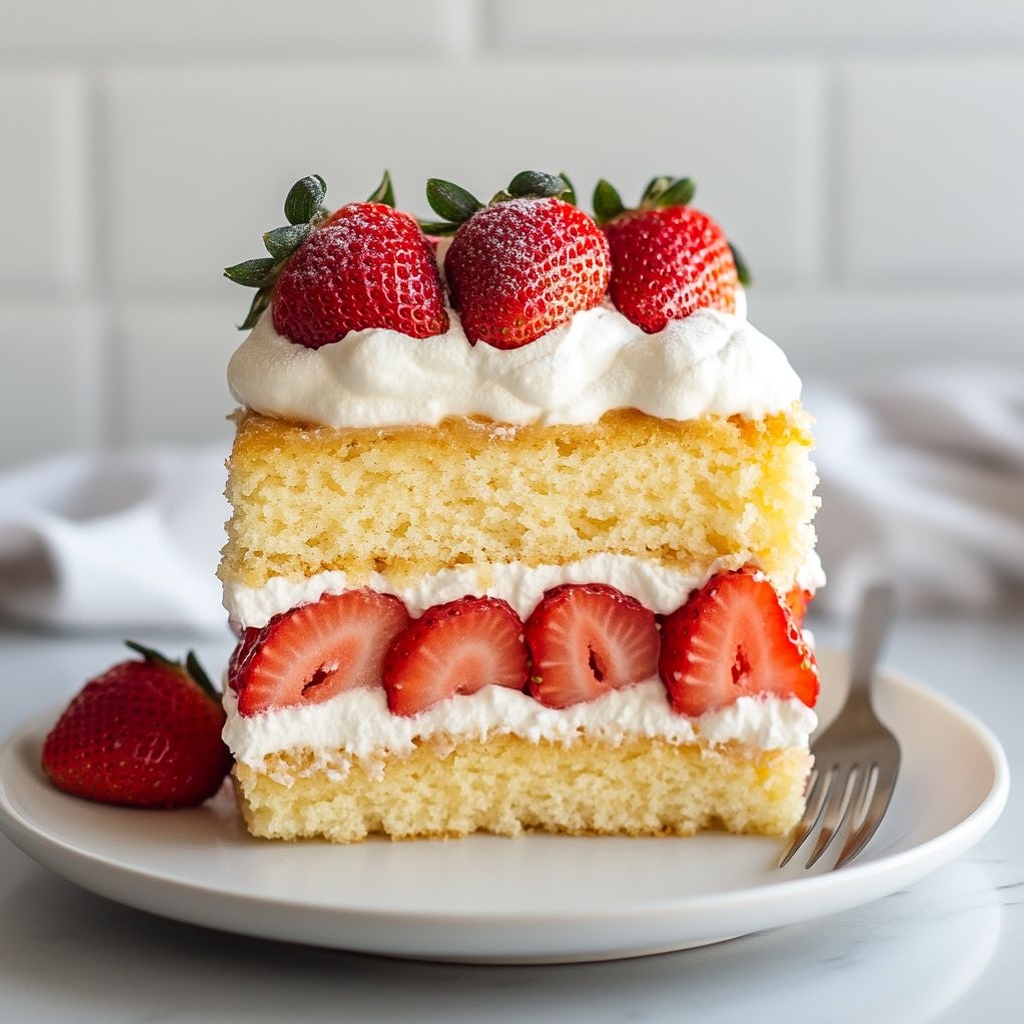
- Eat with your eyes and your imagination: The vibrant red of the strawberries against the pale, pillowy shortcake and the snowy peaks of whipped cream create a visually stunning dessert that rewards plating as much as taste.
- Comforting, shareable joy: It’s a dessert designed to be passed around a table, with moments of laughter, stories, and a sense of home that lingers long after the last bite.
- Family-friendly and crowd-pleasing: Mild flavors, gentle sweetness, and familiar textures make it accessible to both kids and adults, while still offering a touch of indulgence.
Flavor Profile & Texture
Strawberry shortcake is a study in contrasts that come together in a single, satisfying bite. The shortcake itself offers a delicate crumb—a tender, slightly crumbly base that yields softly under pressure, with a butter-kissed aroma that makes you lean in. It’s not too sweet, which allows the fruit to shine. The strawberries, when fresh and ripe, provide a bright, sun-warmed sweetness with a hint of tartness. They release their own juice as they rest in the bowl or on the plate, creating a natural syrup that lightly soaks into the crumb. This juiciness is essential: it prevents the dessert from feeling dry and adds a refreshing counterpoint to the richness of the shortcake.
The whipped cream is the luxurious bridge between the cake and the fruit. It’s cool and airy, with a clean dairy sweetness and a faint vanilla note that ties the other flavors together without overpowering them. The cream forms soft peaks that cling to the fruit and the cake, adding a creamy, cloud-like cushion that makes every slice feel indulgent. When you bite through, you experience a gentle trio: the crumb, the juice of the strawberries, and the melt-in-your-mouth cream. The textures complement each other—crumb that gives way, berries that pop with freshness, and cream that glides and lightly coats the palate. The scent profile is equally inviting: butter and vanilla rising from the shortcake, strawberries contributing a bright, almost orchard-like aroma, and cream offering a subtle dairy fragrance that completes the sensory loop.
In all its simplicity, the flavor profile carries depth. The shortcake’s warmth anchors the dish, the berries contribute a tangy brightness, and the whipped cream introduces a creamy coolness that makes the entire combination feel balanced rather than sweet-only. The fruit’s acidity keeps the dessert lively, ensuring that each bite remains interesting from the first forkful to the last. When you add a hint of citrus zest, a splash of fragrant liqueur, or a pinch of salt to the cream, you can coax new layers of flavor without losing the essence of the dish. The magic lies in keeping the structure intact while allowing for small, thoughtful enhancements that suit your mood or season.
Occasions & Pairings
Strawberry shortcake shines in a variety of settings, from casual weeknights to festive celebrations. Its versatility makes it a natural fit for warm-weather gatherings, picnics, barbecues, and potlucks, where a bright, comforting dessert is often the crowd-pleaser that everyone looks forward to. It also pairs beautifully with a range of beverages and side dishes, helping to craft a cohesive menu around a summer theme or a simpler, all-occasion dinner.
When it comes to pairings, consider:
- Refreshing beverages: A glass of sparkling rosé, cold-brew coffee, or a lightly sweetened iced tea can complement the fruit’s brightness and the cream’s richness without overwhelming the dessert.
- Light sides for a complete menu: A fresh citrus salad, a minty botanical drink, or a delicate fruit platter can echo the strawberry’s tang and the shortcake’s softness on either side of dessert course.
- Complementary desserts: A small plate of citrus gelée or a simple yogurt-based parfait can act as a palate cleanser or a gentle tangent to the strawberry theme.
- Seasonal accents: A drizzle of berry coulis, a dusting of microgreens as a playful garnish, or a handful of crushed pistachios for a subtle crunch can add texture and color.
For holidays and larger celebrations, strawberry shortcake becomes a centerpiece that’s approachable yet special. It’s easy to scale up for a crowd, and its clean flavor profile makes it compatible with many other dishes on a seasonal menu. In more formal settings, you can elevate the presentation with neatly sliced shortcake layers, precise strawberry arrangements, and carefully piped whipped cream rosettes. For a rustic charm, keep the composition simple: a generous, imperfect stack, a tumble of berries on top, and a light snowfall of sugar or zest for that home-baked look that invites guests to dig in with enthusiasm.
Tips, Variations & Substitutions
One of the joys of strawberry shortcake is its adaptability. The core concept remains the same, but there are countless ways to tailor it to dietary needs, preferences, and available ingredients. Here are ideas to inspire your version:
- Vegan & dairy-free: Use dairy-free whipped topping or coconut cream whipped with a touch of vanilla. Replace butter in the shortcake with a plant-based fat, such as refined coconut oil or a neutral-flavored vegan butter substitute. The strawberries remain the star—no compromise there.
- Gluten-free: Use a gluten-free flour blend that performs well for tender baking, or consider an almond-flour-based shortcake for a nutty depth. A biscuit-like gluten-free mix can also yield a beautiful, crumbly texture if balanced with fat and a touch of agitation in the dough.
- Low-sugar or fruit-forward: Choose particularly ripe berries for natural sweetness and reduce added sugar in the shortcake. Alternatively, add a small amount of natural sweetener like honey or maple syrup to the berries only, letting the shortcake itself remain comparatively restrained.
- Fruit variations: Try peaches (summer), blueberries (a classic twist), or rhubarb-strawberry combinations for a tangy glow. Each fruit brings its own aroma and texture that can reshape the dessert’s profile while preserving the overall structure.
- Herbal or floral notes: A hint of fresh basil, mint, or a touch of lavender in the whipped cream can transform the dessert into something unexpectedly refreshing for warmer days. Use sparingly to avoid overpowering the strawberry brightness.
- Personality twists: Layer components for a more dramatic presentation, or serve in individual parfait-style glasses for a modern take that still feels intimate and homemade.
Beyond substitutions, technique matters. Handling the shortcake dough gently to keep it tender is key. Overworking the flour develops gluten and can lead to a tougher crumb. Shortening or cutting fat into the flour until the mixture resembles coarse crumbs creates the delicate base that so well carries the berries and cream. The berries should be prepared with care—hulled and washed, then sliced or halved as needed, with some kept whole for texture contrast. If you macerate them, do so briefly to release their juices without turning the fruit into a syrupy mush. Whipped cream should be soft to medium peaks; overbeating leads to butter, while underbeating yields a flimsy topping that won’t hold its shape. The final balance—dough tenderness, fruit brightness, and cream’s luxuriousness—defines the success of your strawberry shortcake.
Storage & Make-Ahead Ideas
Make-ahead planning can dramatically simplify serving logistics, especially for gatherings. Here are practical approaches to store, reassemble, and enjoy strawberry shortcake at its best.
- Shortcake ahead: Bake and cool the shortcake layers the day before serving. Store them in an airtight container at room temperature or refrigerate if your kitchen is warm. If you’re baking biscuits, you can freeze them after cooling and rewarm gently before serving.
- Fruits ready: Rinse and prepare the strawberries the day before. Toss with a touch of sugar if you like, and refrigerate in a covered container. This intensifies their sweetness and juiciness for a more luscious topping.
- Whipped cream prep: Whipped cream can be prepared ahead and kept in the refrigerator for a few hours, though it’s best assembled close to service to preserve volume. For longer storage, you can whip cream with stabilizers or use a dairy-free alternative that holds its shape better over time.
- Make-ahead assembly: If you’re feeding a crowd, you can assemble shortcake slices on a tray, cover, and refrigerate. Just before serving, top with fresh strawberries and dollops of whipped cream to maintain a fresh, airy appearance.
If you’re entertaining, consider a station-style setup where guests can build their own shortcakes. This not only looks appealing but also adds an interactive element that guests often find delightful. A tray of elegantly sliced shortcake rounds, a bowl of bright strawberries, and a quenelle of whipped cream invites everyone to craft their perfect bite. The table becomes a canvas of red, cream, and pale golden crumb—a simple, joyful tableau that celebrates togetherness.
Fun Facts & Trivia (Optional)
– The term “shortcake” has long been connected to the idea of shortening gluten in the dough, which yields a crumb that’s tender and crumbly rather than chewy. This technique is a core reason why shortcake feels light and delicate, making it the perfect vessel for juicy fruit and whipped cream.
– In some parts of the world, strawberry shortcake is not a cake at all but a biscuit-like base that’s more akin to a scone or biscuit with a rich, buttery crumb. In others, the base leans more cake-like, with a tender, almost cake-textured interior. This diversity mirrors regional tastes and locally available ingredients, yet the essence remains the same: a celebration of berries, dairy, and a comforting baked good.
– The dessert has inspired countless adaptations across cuisines and dietary needs, proving that a timeless recipe can be both steadfast in its core and wonderfully malleable in practice. From gluten-free to vegan versions, strawberry shortcake continues to evolve while preserving the sensory promise of bright berries, soft cake, and whipped cream.
Ingredients
- Shortcake Base
- 2 cups all-purpose flour (unbleached)
→ All-purpose flour provides the structural foundation for the shortcake biscuits. Use cold, unbleached flour to keep flavors clean and yield a tender crumb. Sift it with the leavening and salt to ensure even distribution, then handle the dough as little as possible to avoid developing gluten and making the biscuits tough. - 1 tablespoon baking powder
→ Baking powder is the primary leavening agent that helps the shortcake rise and become light and fluffy. Use fresh, good-quality powder for maximum lift. Whisk it evenly into the flour to ensure uniform puffiness in every biscuit. - 1/4 teaspoon salt
→ Salt enhances flavor and slightly tightens gluten, which helps create a balanced, not overly sweet, biscuit. Add with the dry ingredients for even distribution. - 6 tablespoons cold unsalted butter, cut into cubes
→ Cold butter creates steam pockets as it bakes, yielding a flaky, tender shortcake crumb. Cut the butter into small cubes and “cut in” to the flour until the mixture resembles coarse crumbs with pea-sized pieces. Keep the butter cold and avoid overworking the dough to prevent dense results. - 3/4 to 1 cup cold milk or heavy cream
→ The liquid binds the dough and determines the final texture—cream yields richer, softer biscuits, while milk gives a lighter crumb. Start with 3/4 cup and add more only as needed to form a rough dough; use minimal stirring to preserve tenderness. - 1 large egg (optional)
→ An egg adds richness and helps the biscuits hold together. If using, whisk the egg with the milk before adding to the dough. Omit for a lighter, dairy-free version; for vegan, substitute with a flax or chia “egg” and extra dairy-free milk if desired. - 1 teaspoon vanilla extract (optional)
→ Vanilla provides a gentle sweetness and aroma that complements the strawberry topping. Use pure vanilla for best flavor; omit if you prefer a plain biscuit. - Fruit and Syrup
- 1 pound fresh strawberries, hulled and sliced
→ Strawberries are the star filling and topping. Hull and slice evenly so they macerate uniformly and release juice that coats the biscuits. If berries are very ripe, slice just before serving to preserve texture; refrigerate until ready to assemble. - 2–3 tablespoons granulated sugar (for macerating)
→ Sugar draws out juices from the strawberries, creating a glossy syrup that sweetens and brightens the fruit. Adjust the amount to match the berries’ sweetness and macerate for 15–30 minutes, stirring once or twice to distribute sugar evenly. - 1 tablespoon lemon juice
→ Lemon juice adds brightness and acidity to balance the sweetness, helping to enhance the strawberries’ natural flavor and prevent the fruit from tasting flat. Adjust to taste if your berries are particularly tart or sweet. - Cream Topping
- 1 cup heavy whipping cream, cold
→ The whipped cream forms the light, airy crown on the shortcake. Ensure the cream is very cold; whip to stiff peaks for stability. Avoid overbeating, which can turn it into butter. For a non-dairy version, chill coconut cream and whip the solid layer after refrigeration. - 2–3 tablespoons powdered sugar
→ Powdered sugar sweetens smoothly without graininess and dissolves quickly into the cream. Start with 2 tablespoons and adjust to taste; sift if clumps form. - 1 teaspoon vanilla extract
→ Vanilla adds depth and aroma to the whipped cream. Use pure vanilla extract for best flavor; you can substitute with vanilla paste or seeds for a stronger, more intense vanilla note. - Optional Toppings
- Powdered sugar for dusting
→ A delicate dusting of powdered sugar enhances presentation and adds a final touch of sweetness. Use a fine mesh sieve for an even, light application just before serving. - Fresh mint leaves for garnish
→ Mint provides a pop of color and a fresh aroma that pairs nicely with strawberries. Use a small sprig or a few torn leaves per serving to avoid overpowering the dessert.
Instructions
- Preheat your oven to 425°F (220°C) and line a baking sheet with parchment paper or lightly grease it.
→ Proper preheating ensures the shortcakes rise quickly and bake evenly, while parchment prevents sticking so the biscuits release cleanly. - Sift the dry ingredients together: in a large mixing bowl, sift 2 cups all-purpose flour, 1 tablespoon baking powder, and 1/4 teaspoon salt to ensure even distribution and to prevent lumps in the crumb.
→ Sifting aerates the flour, distributes leavening uniformly, and helps create a light, tender shortcake crumb. - Cut in the cold butter until the mixture resembles coarse crumbs with pea-sized pieces: add 6 tablespoons cold unsalted butter, cut into cubes, and, using a pastry blender, two forks, or your fingertips, blend the butter into the dry ingredients until you see small bits of butter still visible.
→ Cold butter creates steam pockets during baking, yielding a flaky, tender shortcake; handling the dough minimally preserves those pockets. - Whisk the liquids together in a separate bowl: 3/4 to 1 cup cold milk or heavy cream with the optional 1 large egg and 1 teaspoon vanilla extract if using; whisk until smooth and well combined.
→ A well-emulsified liquid distributes evenly through the dough and adds richness if using cream and egg; keep it cold to protect the butter’s structure. - Make a well in the center of the dry ingredients and pour in the liquid mixture; with a fork or your hand, stir gently just until the dough begins to come together and there are no large pockets of flour remaining.
→ Minimal mixing prevents gluten development that would toughen the biscuits while still forming a cohesive dough. - Turn the dough onto a lightly floured surface and pat or gently press it into a rough rectangle about 1 inch (2.5 cm) thick.
→ Handling the dough gently preserves the buttery layers; a uniform thickness promotes even baking and consistent crumb. - Cut out the shortcakes: using a 2 1/2 to 3-inch round cutter, press straight down without twisting to avoid sealing the edges, and lift away; transfer to the prepared baking sheet, spacing rounds about 1 inch apart; gather scraps, press together gently, and reroll once to form additional rounds.
→ Straight cuts promote even rising; re-rolling scraps once minimizes overworking the dough and helps maintain a tender crumb. - Optionally brush the tops with a light wash of milk for a golden crust: lightly brush each round with a small amount of milk before baking.
→ A thin wash encourages even browning and a polished appearance without sogginess. - Bake the shortcakes until golden and risen: about 12 to 15 minutes, rotating the pan halfway through for even browning; check that the edges are golden and a toothpick inserted in the center comes out clean.
→ Proper bake time ensures a tender interior with a delicate crust, and turning the pan promotes uniform color across all biscuits. - Remove the shortcakes to a wire rack and cool briefly for about 10 minutes before assembling: this rest allows the structure to set so the halves don’t crumble when split.
→ Cooling stabilizes the crumb and prevents the berries or cream from making the biscuit soggy at once. - Prepare the macerated strawberries: in a bowl, combine hulled and sliced strawberries with 2–3 tablespoons granulated sugar and 1 tablespoon lemon juice; toss to coat evenly.
→ Macerating draws out juices and creates a glossy syrup that brightens the berries and balances sweetness with acidity. - Let the strawberries macerate: allow 15–30 minutes at room temperature (or refrigerate if assembling later), stirring once or twice to distribute sugar and juice.
→ Time enables sugar to dissolve and juices to collect, creating a cohesive berry topping that coats the shortcake beautifully. - Whip the cream to soft peaks, then to stiff peaks: in a very cold bowl, whip 1 cup heavy cream with 2–3 tablespoons powdered sugar and 1 teaspoon vanilla extract until stiff peaks form; stop whipping as soon as the cream holds its shape to avoid turning to butter.
→ Proper whipping builds structure that supports the berries and stays stable atop the shortcake without weeping. - Assemble the strawberry shortcakes: split each cooled shortcake horizontally with a serrated knife; spoon a generous portion of macerated strawberries (and some of their syrup) onto the bottom half, then top with a generous dollop of whipped cream.
→ Layering ensures the berry syrup and cream mingle with the crumbly biscuit for balanced sweetness and lush texture. - Finish and garnish: crown with the top half of the shortcake, add extra whipped cream on top if desired, dust with powdered sugar, and garnish with a fresh mint leaf.
→ The final presentation enhances aroma, color, and contrast, while mint adds a refreshing finish that complements the berries. - Serve immediately for best texture and flavor: present on plates with a napkin, ensuring the shortcake remains crisp and the cream light; enjoy promptly to experience the contrast between tender biscuit, juicy berries, and airy whipped cream.
→ Shortcake is at its peak when served right away, as the components stay distinct and texture remains ideal.
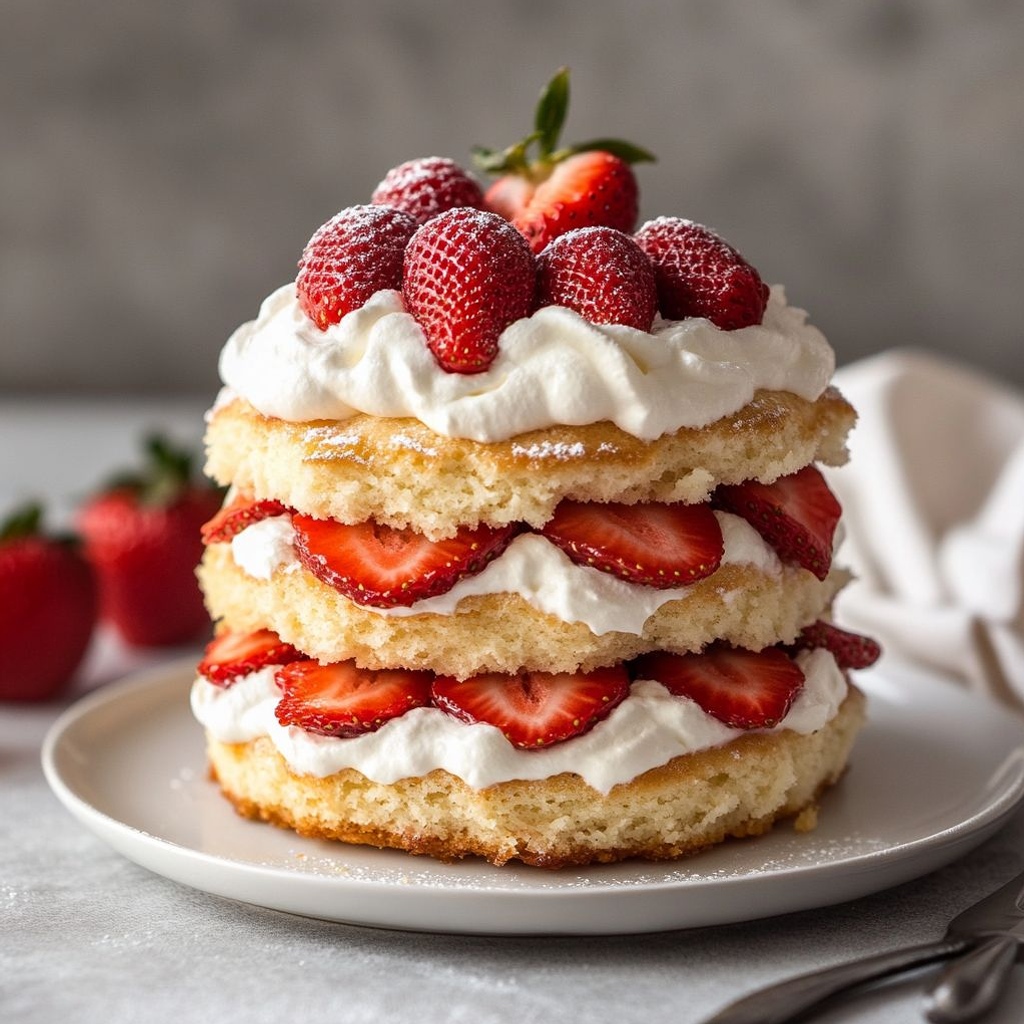
Notes
These classic strawberry shortcakes are a celebration of simple, comforting flavors: tender shortcake biscuits with macerated strawberries and whipped cream. For the lightest crumb, keep the butter cold and mix until the mixture resembles coarse crumbs with tiny pea-sized lumps, then add just enough milk or cream to bring the dough together. Handle the dough as little as possible to avoid developing gluten and to keep the biscuits fluffy; if using a food processor, pulse briefly to avoid overworking.
To maximize strawberry flavor, macerate sliced berries with granulated sugar and a splash of lemon juice for 15–30 minutes, stirring occasionally to release juices that become a glossy syrup coating. Reserve a handful of sliced berries for layering and texture when assembling. The lemon brightness balances the sweetness and helps the berries taste vibrant.
Whipped cream should be cold and fluffy: whip the heavy cream with powdered sugar and vanilla until stiff peaks form, being careful not to overbeat. For a dairy-free option, whip chilled coconut cream and sweeten lightly with a touch of vanilla.
Assembly and serving tips: slice the shortcakes in half, spoon a generous amount of strawberries onto the bottom halves, crown with whipped cream, and top with the biscuit halves. Finish with more berries, a dusting of powdered sugar, and a hint of fresh mint if desired. Shortcakes are best served the day they’re baked; store baked biscuits in an airtight container and assemble just before serving. If making ahead, keep components separately and chill until ready to assemble.
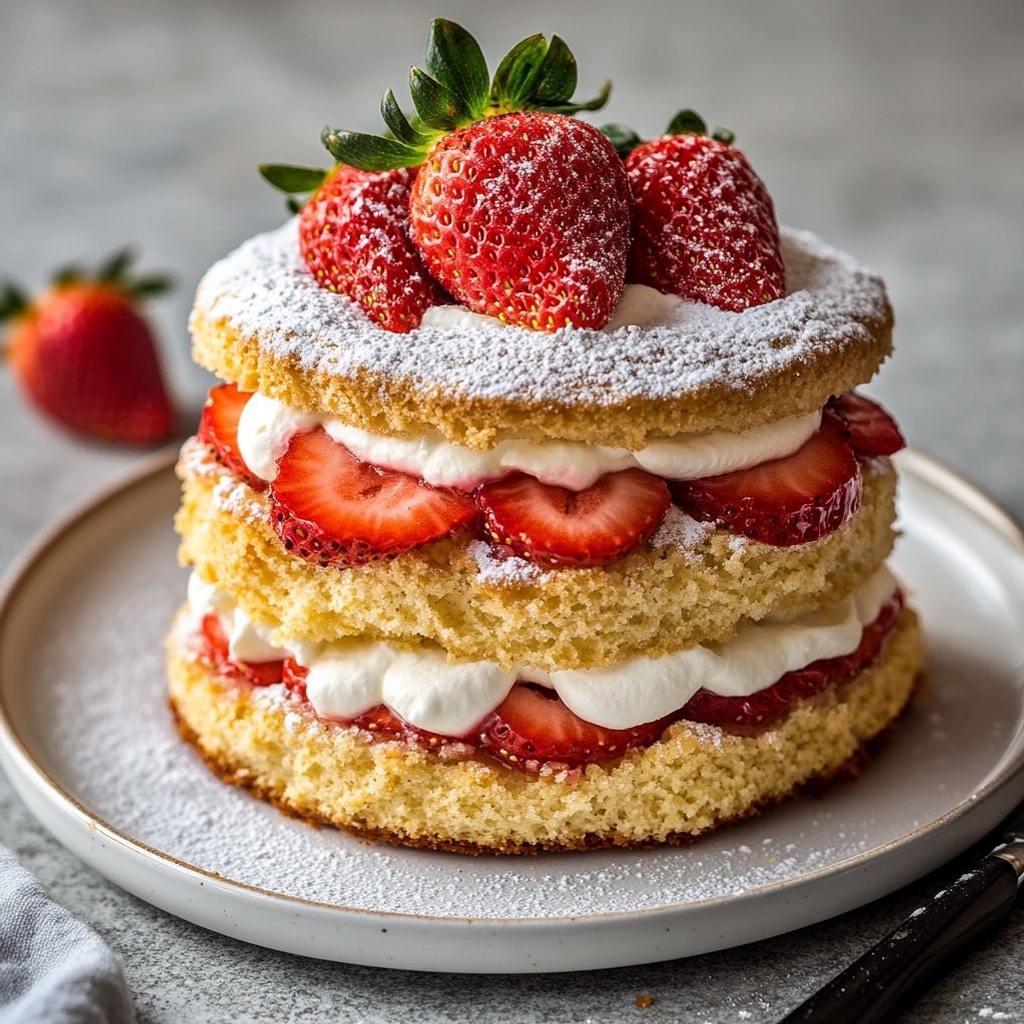
Tips
Tips for Strawberry Shortcake
- Keep the butter cold and cut in until the mixture resembles coarse crumbs. Use a pastry blender or two forks to cut the 6 tablespoons of cold butter into the flour until pieces are the size of peas. The cold butter creates steam pockets during baking, giving you a flaky, tender shortcake crumb. Avoid overworking the dough to prevent a dense texture.
- Use fresh leavening and sift for even puff. Double-check your baking powder is fresh and sift it with the flour to ensure even distribution. This helps the biscuits rise uniformly for a lighter texture.
- Measure liquids thoughtfully and mix gently. Start with 3/4 cup of milk or heavy cream and add only as needed to form a rough dough. Overmixing activates gluten, which can make the biscuits tough. Destination texture should be tender and crumbly.
- Eggs are optional but beneficial for structure. If you choose to use the egg, whisk it with the milk before adding to the dough. Omit for a lighter, dairy-free version; for vegan, substitute with a flax or chia “egg” plus extra dairy-free milk.
- Enhance vanilla flavor wisely. A teaspoon of vanilla extract adds gentle sweetness and aroma. Use pure vanilla for best flavor; it pairs beautifully with the strawberries. If you prefer a plain biscuit, omit it.
- Chill the dough or formed rounds for tenderness. After mixing, gently pat the dough into a cohesive disk, wrap, and chill for 15–30 minutes if time allows. Chilling solidifies the fat and makes the dough easier to handle, yielding a more tender crumb.
- Roll and cut with care for uniform biscuits. Use a round cutter or the rim of a glass to keep shapes uniform. Press straight down without twisting the cutter to maintain even rise around the edges.
- Thickness and spacing matter on the bake sheet. Aim for biscuits about 3/4 to 1 inch thick. Space them evenly and avoid crowding so they can rise and bake evenly. Bake on a parchment-lined sheet for easy lifting and cleanup.
- Oven temperature and rotation for even coloring. Bake at a moderate to hot temperature (around 425–450°F) until golden brown. If your oven runs cool, rotate the sheet halfway through to promote even browning.
- Macerate strawberries for a bright, glossy filling. Slice 1 pound of strawberries evenly and toss with 2–3 tablespoons granulated sugar and 1 tablespoon lemon juice. Let sit 15–30 minutes to draw out juice. Stir occasionally to distribute syrup and prevent soggy bottoms.
- Balance sweetness and acidity. Taste the macerated berries and adjust sugar to match their sweetness. The lemon juice brightens the flavor and prevents the berries from tasting flat as they release juice.
- Whip cream properly for stability and sweetness. Chill the heavy whipping cream, bowl, and beaters before whipping. Whip to stiff peaks, then fold in 2–3 tablespoons powdered sugar and 1 teaspoon vanilla. Avoid overbeating; stop when the cream holds its shape and looks glossy.
- Non-dairy options that still feel indulgent. For a dairy-free version, whip chilled coconut cream (the solid portion) and sweeten with powdered sugar and vanilla. If using dairy-free milk in the base, ensure the mixture still comes together without becoming crumbly.
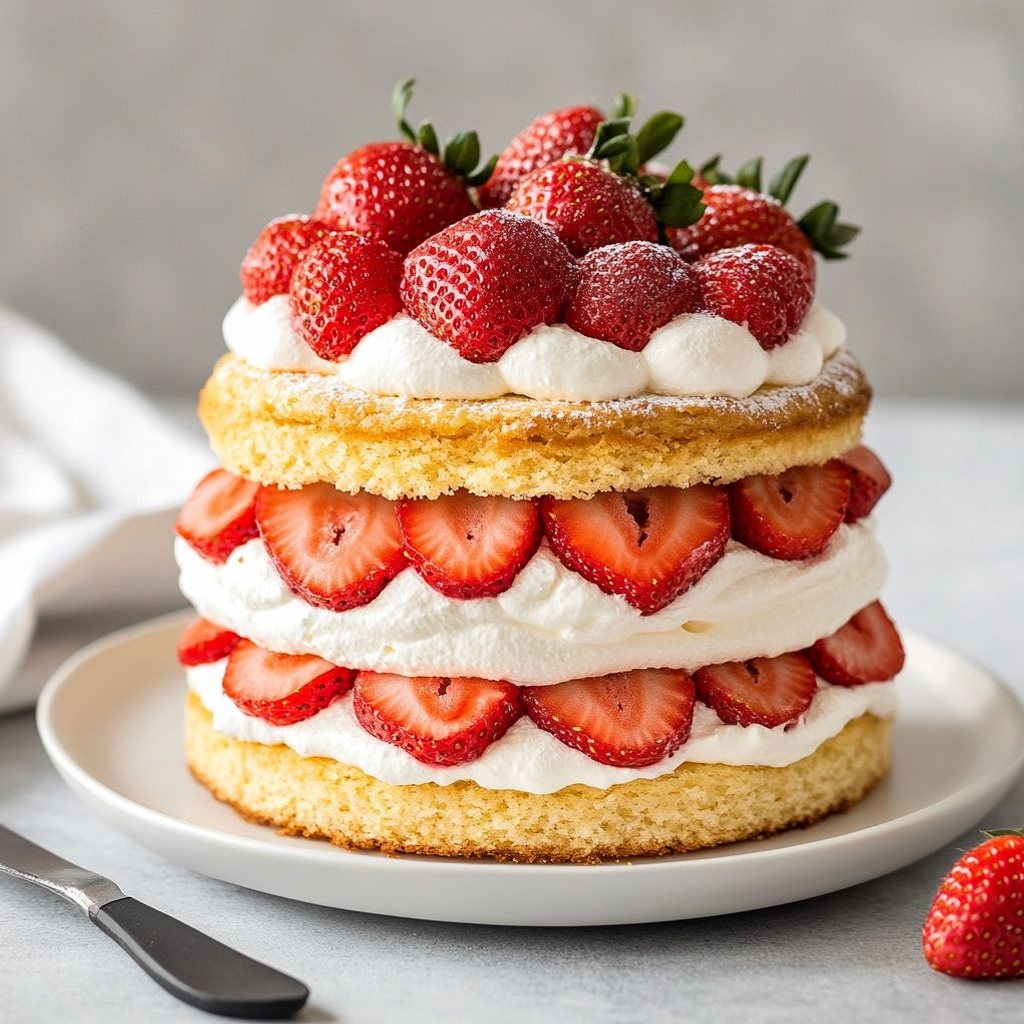
- Assemble with care for contrasting textures. Slice the slightly cooled shortcake and layer with a generous spoonful of macerated berries, a dollop of whipped cream, and a top biscuit. Repeat for a taller dessert, then finish with more whipped cream, berries, and a light dusting of powdered sugar.
- Presentation and storage tips. Serve soon after assembling for best texture. If making ahead, keep biscuits and whipped cream separate until serving to maintain tenderness. Refrigerate assembled components separately if needed, and reassemble just before serving. Garnish with fresh mint leaves for a pop of color.
FAQ
What is strawberry shortcake?
Strawberry shortcake is a classic dessert featuring tender biscuits or sponge cake layered with sweetened strawberries and whipped cream. The strawberries release their juice to flavor the cream and cake, creating a juicy, creamy treat.
What ingredients do I need for classic strawberry shortcake?
Here’s a simple, from-scratch version. Adjust quantities for more servings.
- For the shortcake biscuits:
- 2 cups all-purpose flour
- 1/4 cup granulated sugar
- 1 tablespoon baking powder
- 1/2 teaspoon salt
- 5 tablespoons cold unsalted butter, cut into pieces
- 2/3 cup milk (or cream) plus 1 teaspoon vanilla (optional)
- For the macerated strawberries:
- 1 pound fresh strawberries, hulled and sliced
- 2–3 tablespoons granulated sugar
- 1 teaspoon lemon juice (optional, enhances brightness)
- For the whipped cream:
- 1 cup heavy cream, chilled
- 2–3 tablespoons powdered sugar
- 1 teaspoon vanilla extract
Can I make strawberry shortcake ahead of time?
Yes, you can prepare components in advance:
- Macerated strawberries: refrigerate up to 4 hours (or longer if you don’t sweeten too early).
- Biscuits: bake and cool, then store in an airtight container at room temperature for up to 1 day or freeze for longer storage.
- Whipped cream: whip just before serving for best texture.
Assemble close to serving time for the best texture and presentation.
How do I make soft shortcake biscuits?
Steps for tender biscuits:
- Whisk together flour, sugar, baking powder, and salt.
- Cut in cold butter until the mixture resembles coarse crumbs with pea-sized pieces.
- Stir in milk (and vanilla, if using) just until a shaggy dough forms; do not overmix.
- Knead lightly on a floured surface, pat to about 1 inch thick, and cut with a 2-inch cutter.
- Place on a baking sheet and bake in a preheated 425°F (220°C) oven for 12–15 minutes until lightly golden.
- Cool slightly before slicing to serve; they’re best when freshly baked.
How should I prepare the strawberries?
Prepare the fruit for maximum flavor:
- Trim and slice the strawberries.
- Toss with granulated sugar and lemon juice (optional).
- Let sit for 15–30 minutes to macerate and release juice. Stir occasionally.
Can I use store-bought biscuits?
Yes. Store-bought biscuits work well and save time. If you use them:
- Warm them slightly in a low oven or microwave before assembling.
- Split and layer with strawberries and whipped cream just before serving.
How do I assemble strawberry shortcake?
Classic assembly method:
- Slice the warm biscuit in half crosswise.
- spoon a generous amount of macerated strawberries with juice on the bottom half.
- Top with a dollop of whipped cream.
- Place the top half of the biscuit over the cream, then spoon more strawberries and extra whipped cream on top.
How long does strawberry shortcake keep in the fridge?
Best enjoyed the same day. If made ahead:
- Keep components separately: biscuits (cool), strawberries (refrigerated), whipped cream (refrigerated).
- Assembled shortcakes are best eaten within 24 hours; the biscuits may soften as they absorb moisture.
Can I freeze strawberry shortcake or its components?
Best practices:
- Biscuits: baked and cooled, then freeze in airtight containers. Reheat wrapped in foil at 350°F (175°C) for 10–15 minutes.
- Whipped cream: do not freeze well; whip fresh when ready to serve.
- Macerated strawberries: freeze them if needed, but liquid may separate after thawing.
What are some common variations I can try?
Explore these tasty twists:
- Replace biscuits with slices of sponge cake or angel food cake for a lighter texture.
- Flavor the whipped cream with vanilla, almond, or a pinch of citrus zest.
- Add a layer of jam or lemon curd for extra brightness.
- Top with mint leaves or a drizzle of balsamic reduction for a grown-up touch.