
Introduction / Hook
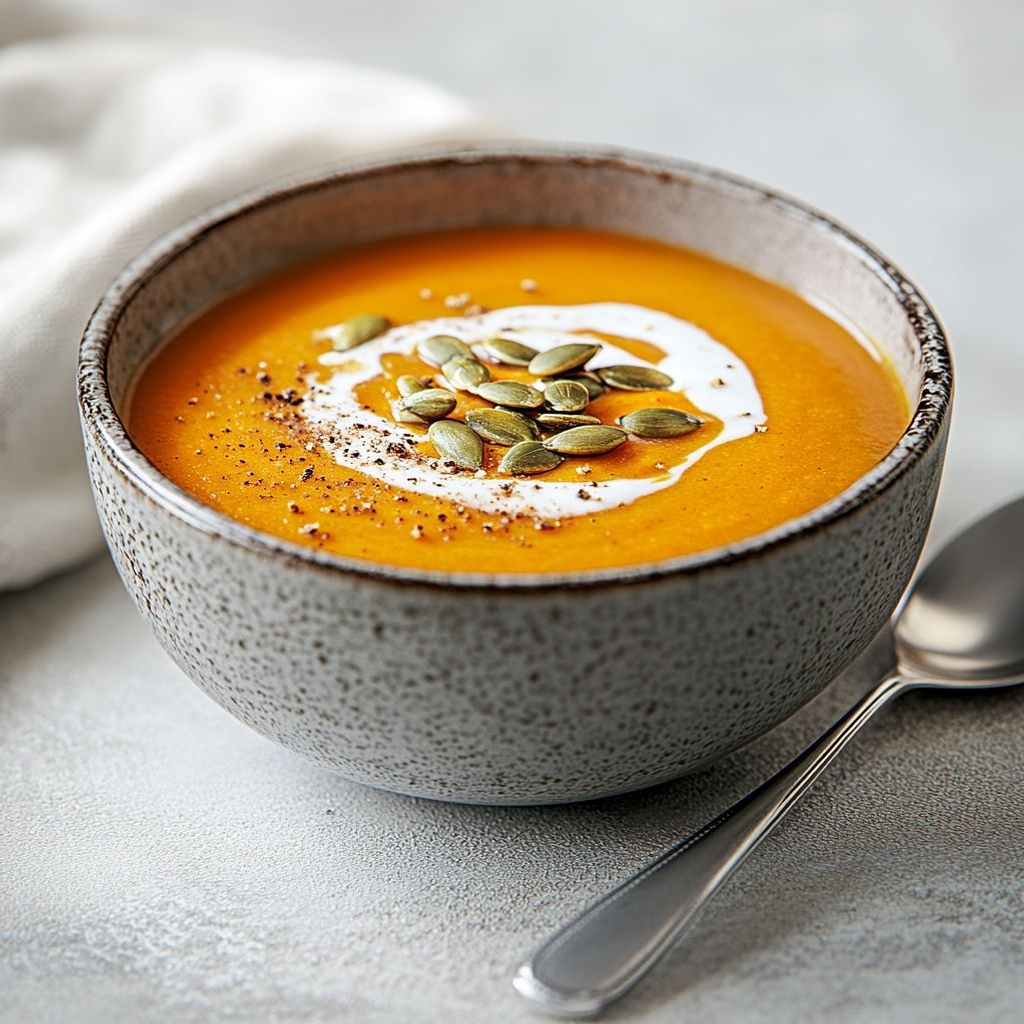
Picture a warm kitchen on a crisp autumn afternoon: the air is scented with sweet roasted pumpkins, a hint of ginger bites the nostrils with cheerful brightness, and a spoon glides through a velvety, amber-hued soup that seems to glow from within. This Pumpkin Ginger Soup is the kind of dish that invites you to slow down, take a deep breath, and savor every comforting sensation at once. The first spoonful is a gentle invitation—silky, creamy, and lush—while the next reveals a playful spark of ginger that keeps your palate awake and delighted. It’s the kind of soup that makes the room feel cozier, the conversation warmer, and a simple weeknight supper feel like a small, celebratory ritual. The aroma alone has the power to summon memories of seasonal markets, warm kitchens, and grandma’s stovetop rhythms—yet the recipe is straightforward enough to welcome even novice cooks into a world of depth and sophistication. This is not merely a bowl of soup; it’s a fragrant invitation to linger at the table, to share, to dream a little, and to appreciate the quintessential comfort of fall harvest flavors made luminous by a bright streak of ginger.
Beyond its immediate charm, this soup offers a nuanced balance: the natural sweetness and earthiness of pumpkin meet the lively zing of ginger, a whisper of warmth from subtle spices, and a creamy texture that feels luxurious without being heavy. It’s a dish that can anchor a weeknight dinner or serve as a glossy starter for a festive meal. The beauty lies in its simplicity—few ingredients, careful technique, and a result that tastes like a hug in a bowl. The color alone—sunset-orange, almost amber—promises nourishment, joy, and a touch of seasonal magic. In every sip, you’ll taste the softness of cream or coconut milk (depending on how you prepare it), the mellow richness of roasted pumpkin, and the bright, awakening snap of ginger’s peppery heat. It’s the kind of soup that makes a kitchen feel like a sanctuary, a place where you can slow down, breathe, and let your senses guide you toward a nourishing, satisfying bite.
The Story Behind the Dish
Pumpkin has long been a symbol of harvest and abundance across many cultures. In North American autumns, pumpkins are the radiant centerpiece of tables, fields, and patchwork sweaters, a food that embodies year-end gratitude and communal gatherings. Ginger, meanwhile, travels the world in both culinary and medicinal roles. Its sharp, sunny bite is a reminder of distant shores—where markets hum with spice, citrus, and bright herbs—and it lends a tone of brightness that can cut through the mellow sweetness of squash. When these two ingredients meet in a pot, they tell a story of cross-cultural comfort: a traditional, homey ingredient (pumpkin) paired with another that feels almost brisk and modern (ginger). The result is a soup that bridges memory and modern pantry creativity, inviting cooks to honor seasonal produce while infusing the dish with lively aromatics.
In many kitchens, pumpkin soups were born out of necessity and abundance—families turning harvests into nourishing bowls that could sustain a long day of work or a long evening of gathering. Ginger, with its potent aroma, often arrived as a bright accent in holiday fare and everyday cooking alike, its presence enough to lift a dish from simple to memorable. The pairing is a nod to the way food evolves: ingredients travel, seasons shift, and traditional recipes transform through the hands of cooks who want something comforting yet exciting. This Pumpkin Ginger Soup captures that evolution beautifully. It respects the quiet sweetness of pumpkin while giving it a clever, modern twist through ginger’s warmth and a whisper of spice. It’s a dish that invites storytelling as much as it invites slurping, because every spoonful carries a trace of history—the tradition of fall markets, the whisper of a grandmother’s stove, and the adventurous spirit of cooks who crave a soup that is both soft and bright, classic and a little bit daring.
Why You’ll Love This Recipe
- Quick to come together: you can transform simple kitchen staples into a luxurious bowl in under an hour, with minimal hands-on time.
- Comforting with a bright edge: the pumpkin provides mellow sweetness and body, while ginger injects a lively, refreshing warmth that avoids heaviness.
- Versatile for dietary needs: adaptable for dairy-free or vegan versions when you opt for coconut milk or a dairy-free cream alternative.
- Elegant enough for entertaining: this soup has the visual appeal of a refined starter, with a smooth, glossy texture and a color that invites admiration.
- Make-ahead-friendly: flavors deepen with a little rest, and it freezes beautifully for future weeknights or cozy gatherings.
- Customizable: you can adjust sweetness, spice level, and thickness to suit your taste and pantry—no two batches need to be the same.
- Perfect starter or light main: pair with crusty bread, a drizzle of cream or coconut milk, and a scattering of toasted seeds for texture and crunch.
Flavor Profile & Texture
The flavor profile of Pumpkin Ginger Soup is a delicate dance between sweet, earthy, and bright. The pumpkin contributes a natural, caramel-like sweetness and a creamy, almost buttery mouthfeel when blended smooth. Ginger introduces a peppery, sunlit heat that awakens the palate without overpowering the fruitiness of the squash. Depending on the balance you aim for, you can intensify the warmth with a touch of cinnamon, nutmeg, or allspice to evoke autumn spiced treats, or keep it clean and streamlined to let the pumpkin’s character shine through. Subtle aromatics—garlic, onion, or a whisper of shallot—also contribute depth, rounding the soup into a well-rounded, comforting bowl.
Texture-wise, the goal is silken and soothing. A well-pureed base yields a creamy body that feels luxurious yet light in the mouth, with a gentle gloss that makes the surface gleam. If you prefer a little more heft, a small amount of cream, yogurt, or coconut milk can be stirred in at the end for richness, or you can finish with a swirl of dairy-free cream for vegan versions. For texture contrast, think roasted pumpkin seeds, toasted breadcrumbs, or a drizzle of nutty oil on top—but the soup itself should offer a smooth, velvety experience that coats the tongue without heaviness. The warmth of ginger leaves a lingering, comforting glow, a reminder that the dish is nourishing in the truest sense—satisfying, seasonal, and restorative after a day spent outside in cooler weather.
Occasions & Pairings
This soup is wonderfully versatile. It shines as a starter for a holiday menu, a cozy first course for a dinner party, or a weeknight supper that feels like a special treat. Its vibrant color and fragrance make it a terrific centerpiece when you want to set a mood at the table, whether for an intimate date night, a family gathering, or a small brunch with friends.
Pairing ideas to complement Pumpkin Ginger Soup:
- Crusty bread or warm dinner rolls for dipping and scooping, especially with a crunchy crust and soft interior.
- A dollop of cream, sour cream, yogurt, or coconut milk to add depth and a luxurious sheen.
- Toasted pumpkin seeds or spiced pepitas sprinkled on top for crunch and a hint of nutty flavor.
- A drizzle of nut oil (such as pumpkin seed oil, hazelnut oil, or walnut oil) for a fragrant finish.
- Herbs like chives, thyme, or a light dusting of fresh cracked pepper to brighten the bowl.
- A light lattice of crème fraîche or a whisper of crème fraîche alternative to introduce tang and balance.
- For a heartier option, serve with a small bowl of quinoa, wild rice, or roasted vegetables on the side to turn it into a more substantial meal.
- Pairings for drinks: a crisp apple cider, a dry white wine with gentle acidity, or a spiced herbal tea if you’re avoiding alcohol.
- Seasonal desserts that echo the flavors: apple galette, pear tart, or a light vanilla custard can echo the soup’s warmth without competing with it.
Tips, Variations & Substitutions
- Make it vegan or dairy-free by using coconut milk, almond milk, or cashew cream instead of dairy cream. The soup will stay creamy and still have a rich mouthfeel.
- Adjust sweetness by choosing a sweeter or more neutral variety of pumpkin puree, and balance with a splash of lemon juice or a pinch of salt to brighten the flavors.
- Control the heat: start with a smaller amount of ginger and taste as you go. Ginger can vary in intensity from fresh root to root with a milder bite; add more if you crave a spicier profile.
- Spice it up with optional additions: a pinch of cinnamon, nutmeg, allspice, or a subtle cumin to introduce a warmer, earthy undertone that pairs well with pumpkin.
- Texture play: for a chunkier version, blend only half of the soup and return it to the pot with the rest left chunky, then finish with a smooth blend for the base texture.
- Herbaceous lift: finish with a handful of chopped fresh cilantro or parsley for color and brightness if you’re serving as a starter.
- Gluten-free option: ensure any croutons or toppings you serve alongside are gluten-free if needed, or skip them for a smooth, unbroken texture.
- Regional twists: add a splash of coconut milk and a dash of curry powder for a gentle Southeast Asian-inspired version, or fold in a spoonful of miso for an umami accent (balance with a touch of sweetness).
- Make-ahead tip: soups often taste even better the next day as flavors meld. Refrigerate up to 3–4 days; reheat gently to preserve creaminess.
Storage & Make-Ahead Ideas
Pumpkin Ginger Soup stores beautifully, making it ideal for meal-prepping or a make-ahead dinner. When stored in an airtight container, it will typically keep in the refrigerator for up to 3–4 days. If you intend to freeze it, divide into portions and freeze for up to 2–3 months. Thaw overnight in the refrigerator and reheat gently on the stove, stirring often to maintain a silky texture. If the soup thickens after storage, whisk in a little stock, water, or dairy-free milk to restore the original consistency. When reheating, avoid bringing it to a vigorous boil, which can cause the cream to separate; instead, heat slowly over medium-low heat, whisking to maintain a smooth, even texture. A quick freshen-up can come from a squeeze of lemon or a dash of salt to reawaken the flavors after storage.
For a dramatic make-ahead approach, you can roast the pumpkin (or use pre-roasted pumpkin purée) and gently simmer everything with ginger, onions, and broth. Once blended, cool and refrigerate. In the days ahead, you’ll reap the benefits of intensified flavor without any last-minute rush. If you’re serving a crowd, you can batch the soup and reheat portions in individual bowls, adding a finishing touch of cream and a sprinkle of seeds right before serving to keep the texture lively and appealing.
Fun Facts & Trivia (Optional)
Did you know that pumpkin originated in the Americas and has world-wide cultural significance in many cuisines? From pumpkin pies in North America to savory pumpkin soups found in European and Asian-inspired kitchens, pumpkins have long been celebrated for their versatility, color, and nourishing sweetness. Ginger, native to Southeast Asia, has traveled across continents for centuries, crossing oceans with traders and travelers who used its zingy warmth to balance and enliven dishes. The combination of pumpkin and ginger is a testament to how global flavors can converge in a single comforting bowl. In folklore and harvest celebrations, pumpkins symbolize prosperity and abundance, often carved into lanterns for autumn nights. The humble root of ginger has been cherished for its medicinal properties for ages, with a reputation for aiding digestion and warming the body during cooler months. When you bring these two ingredients together in a soup, you’re not just making a delicious dish—you’re crafting a small piece of seasonal storytelling, a reminder that food links memory, place, and the senses in the most satisfying ways.
Chef’s Notes
While the recipe lives here as a concept, the joy of Pumpkin Ginger Soup is in how you adapt it to your kitchen and your mood. Don’t be afraid to experiment with toppings, dairy options, or spice levels to suit your preference. The soup’s elegance lies in its simplicity, so keep the core balance of pumpkin’s sweetness and ginger’s brightness at the heart of your adjustments. If you’re cooking for little ones or guests who are sensitive to heat, reduce or omit the ginger at first, then offer it as a side finish for those who want an extra kick. This approach preserves the dish’s universal appeal while allowing room for personal flair. The result is a warm, inviting bowl that feels both nourishing and sophisticated—a modern comfort that honors autumn’s bounty and the joy of sharing a well-made bowl with people you care about.
Ingredients
-
– 4 cups pumpkin purée (canned unsweetened or roasted from fresh pumpkin)
→ Pumpkin purée forms the creamy backbone of the soup. If using canned, choose 100% pumpkin with no added sugars or spices. If roasting fresh pumpkin, peel after roasting and blend until completely smooth to avoid graininess. This base gives rich color and natural sweetness that pairs with the ginger and spices.
-
– 1 tablespoon olive oil (extra virgin)
→ Used to sauté onions, garlic, and ginger, building the foundational flavor and helping to soften aromatics. Heat the oil until just shimmering; avoid smoking to prevent burnt notes. This step unlocks sweetness and depth from the vegetables.
– 1 medium yellow onion, finely chopped (about 1 cup)
→ Onion provides savory sweetness and body to the soup. Finely chopping ensures even sautéing and a smooth texture in the final blend. If you prefer a milder flavor, use a milder onion variety or caramelize a bit longer for extra depth.
– 2 cloves garlic, minced
→ Garlic adds bright, aromatic depth that becomes mellow and fragrant during simmering. Mincing ensures even distribution; grate it if you want a stronger, more uniform garlic presence. Avoid burning by adding after the onion has softened.
– 1 tablespoon fresh ginger, grated or finely minced (about 1 inch)
→ Ginger provides warm, zingy warmth that complements pumpkin’s sweetness. Grating yields a smoother texture and more consistent flavor; minced ginger works well if you prefer visible specks of spice.
-
– 1/2 teaspoon ground cinnamon
→ Cinnamon brings comforting warmth that enhances pumpkin’s natural sweetness. Use freshly ground if possible for a more vibrant aroma. Too much can overpower the soup, so measure carefully.
– 1/4 teaspoon ground nutmeg
→ Nutmeg adds a subtle, nutty note that rounds out the spice blend. Freshly grate if possible; a small amount goes a long way. Balance with other spices to avoid a cloying sweetness.
– 1/4 teaspoon ground cumin (optional)
→ Cumin adds a mild earthy depth that can emphasize the savory side of the soup, especially when using smoky stock or roasting vegetables. Omit if you prefer a purer, sweeter pumpkin profile.
– Pinch of cayenne pepper or red pepper flakes (optional)
→ A tiny heat kick can balance sweetness and add dimension. Start with a pinch, then taste and adjust after simmering. It should be a whisper, not a flame.
– 1 teaspoon kosher salt (adjust to taste)
→ Salt enhances all flavors; add gradually and taste as you go. If using low-sodium stock, you may need a bit more salt at the end.
– 1 tablespoon maple syrup or light brown sugar (optional)
→ A touch of sweetness can balance acidity and spice, especially if you’re using a sharp stock or if the pumpkin isn’t particularly sweet. Start small and adjust to taste.
-
– 3 cups vegetable stock (low-sodium)
→ Provides the liquid for simmering and helps achieve the right soup consistency. Low-sodium stock lets you control the final salt level. If you prefer a creamier texture, you can add more stock and then adjust with coconut milk.
– 1 cup coconut milk (full-fat) or 1 cup heavy cream (for dairy)
→ Adds richness and creaminess; coconut milk also gives a slight sweetness and a luscious mouthfeel. Shake the can well before measuring to ensure a smooth emulsion. Use dairy-free option if you’re keeping the soup vegan.
-
– 1 tablespoon fresh lemon juice (or lime juice)
→ Brightens the soup and balances sweetness with acidity. Add at the end, then taste and adjust salt and spice. A little citrus can elevate the pumpkin flavor dramatically.
-
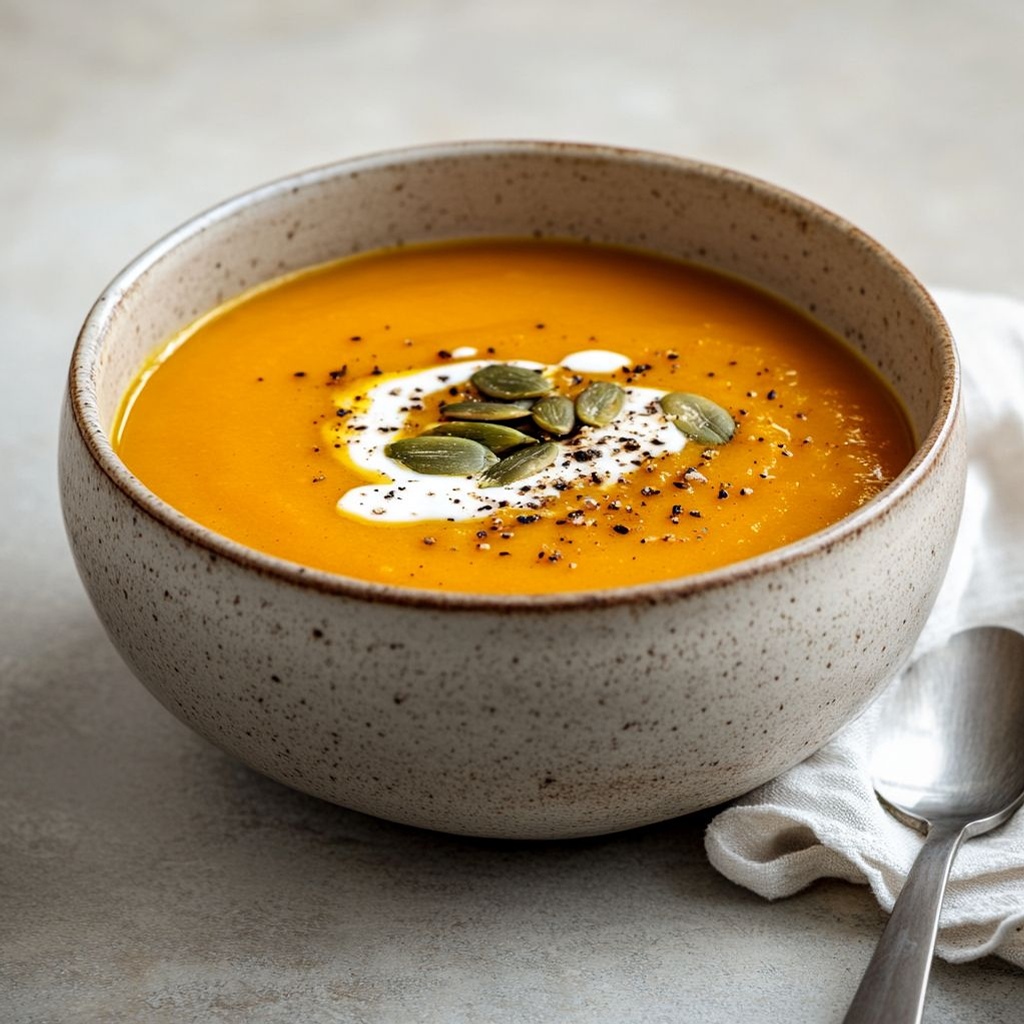
– 1/4 cup roasted pumpkin seeds (pepitas), lightly salted and toasted (optional)
→ Provides a delightful crunch and a toasty, nutty flavor that contrasts with the smooth soup. Toast seeds in a dry skillet until they pop and become fragrant; store leftovers airtight for future use.
– Drizzle of coconut cream or plain yogurt (optional)
→ Adds a luxurious swirl on top and extra richness. Use dairy-free yogurt or coconut cream for a vegan version; the creaminess is especially nice when served hot.
– Fresh herbs such as chopped cilantro or parsley (optional)
→ Finishing herbs add a fresh, bright note that pairs well with pumpkin. Chop just before serving to preserve color and aroma; a squeeze of lemon with herbs enhances the result.
Instructions
- Heat a large heavy-bottomed pot over medium heat and swirl in olive oil until it shimmers; this creates a smooth surface for aromatics and prevents sticking.
→ Heating oil to shimmer ensures quick, even cooking of onions without burning; the moment it shimmers is when the fat begins to release flavor from the oil. - Add finely chopped yellow onion and sauté, stirring frequently, until translucent and just turning pale golden, about 3-5 minutes.
→ Sweat the onion to release natural sweetness and create a flavorful base; avoid browning to keep the soup gentle and balanced. - Add minced garlic and grated ginger; cook 1-2 minutes, stirring constantly until the fragrance blooms but garlic has not started to brown.
→ Garlic and ginger unlock aromatics that form the backbone of the soup; quick cooking prevents bitterness and preserves brightness. - Add the ground cinnamon, nutmeg, optional cumin, optional cayenne, and salt; cook 30 seconds, stirring to bloom spices in the fat.
→ Blooming spices releases essential oils, intensifying warmth and aroma; grinding spices fresh if possible maximizes flavor release. - Stir in pumpkin purée, scraping any residual bits from the can or roasting pan, and combine with the aromatics until even.
→ The pumpkin provides body and sweetness; combining evenly prevents uneven texture and flavor pockets. - Pour in 3 cups vegetable stock; bring to a gentle simmer, adjusting heat to maintain small bubbles without vigorous boiling.
→ Simmering slowly allows flavors to meld and thickens the soup gradually; too aggressive heat can scald the base or cause separation from dairy. - Simmer 15-20 minutes, tasting halfway and adjusting salt if needed; this rest lets flavors harmonize and pumpkin textures soften.
→ Extended gentle simmer allows spices to permeate the pumpkin and deepen the overall flavor; salt helps balance sweetness and acidity. - Stir in 1 cup coconut milk (or 1 cup heavy cream) and continue to simmer 5-7 minutes to integrate richness; avoid boiling vigorously after dairy is added.
→ Dairy-free option adds luxurious mouthfeel; overheating can cause separation or curdling, so keep the temperature gentle. - Blend the soup until smooth using an immersion blender directly in the pot or in batches in a countertop blender, then return to heat and check for texture; adjust with more stock if needed.
→ A velvety, uniform texture is characteristic of pumpkin soup; blending ensures silkiness and prevents graininess from any remaining pumpkin fibers. - Finish with fresh lemon juice and a final tasting to adjust brightness, salt, and spice; add more lemon to brighten if necessary.
→ Citrus heightens pumpkin’s flavor, brightening the finish and balancing sweetness and spice. - If the soup is too thick, thin with additional stock; if too thin, simmer uncovered a few minutes to reduce; aim for a gentle, creamy pourable consistency.
→ Consistency affects the mouthfeel and presentation; a silky yet spoonable texture is ideal. - Serve with optional garnishes: toasted pumpkin seeds, a drizzle of coconut cream or yogurt, and chopped fresh herbs to add texture, richness, and brightness.
→ Garnishes provide contrast and aroma; seeds add crunch, while the dairy or dairy-free swirl enhances richness and appearance.
Notes
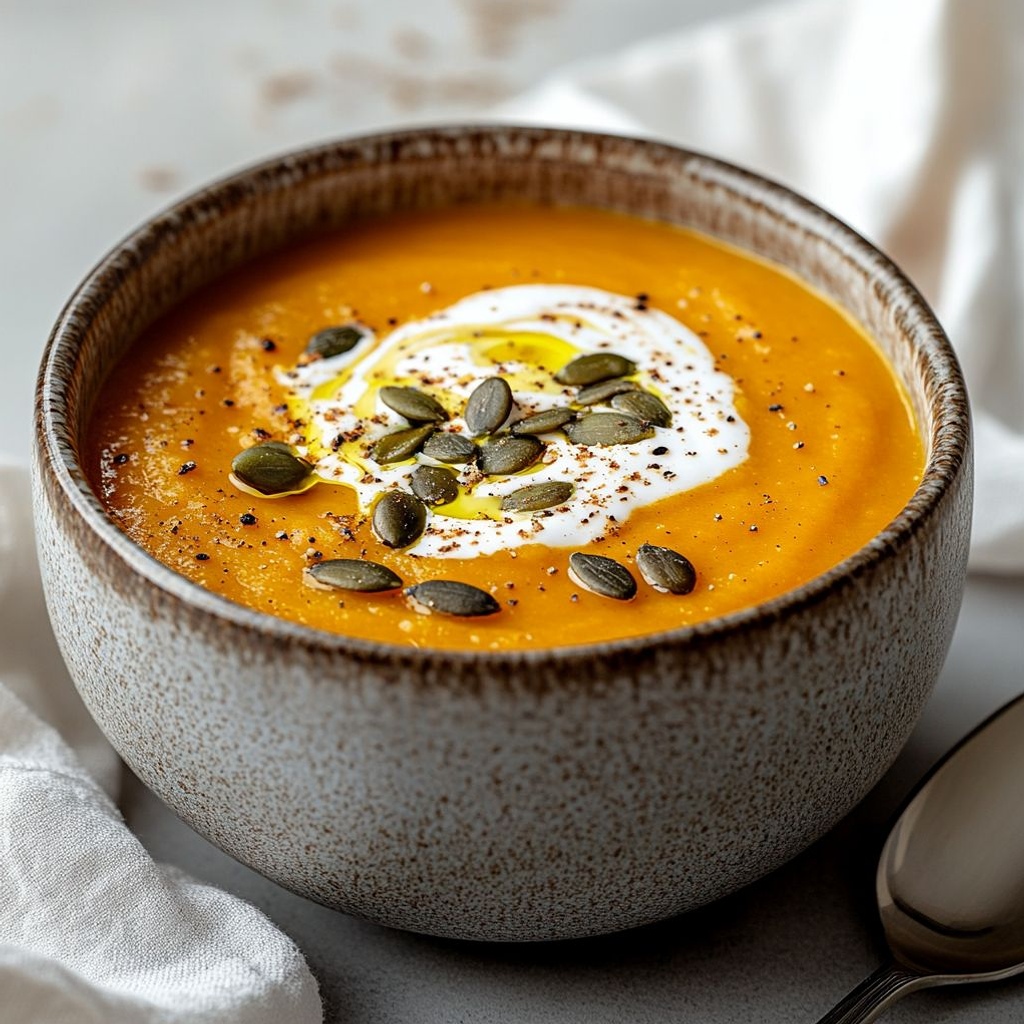
This gluten-free pumpkin ginger soup is naturally creamy from pumpkin purée and coconut milk, with warming ginger and spices that balance sweetness and brightness. You can customize it by adjusting the level of heat with cayenne, adding a swirl of yogurt or extra coconut cream for richness, or stirring in a touch of maple syrup to taste. It freezes well and makes a great make-ahead starter or comforting weeknight meal; reheat gently on the stove and whisk to restore a silky texture. For serving, finish with a squeeze of lemon or lime and a handful of toasted pumpkin seeds, chopped cilantro or parsley, and a drizzle of coconut cream if desired. Always ensure your stock and coconut products are certified gluten-free if you have gluten intolerance.
Tips
- Make the pumpkin base ultra-smooth: If using fresh pumpkin, roast until tender, scoop out the flesh, and blend until completely silky. For canned purée, whisk or blend briefly to remove any lumps before heating. For an extra-smooth texture, press the blended soup through a fine-mine strainer after blending.
- Maximize flavor from aromatics: Sauté the onion in olive oil on medium heat until translucent and just starting to caramelize, then add garlic and ginger. This bloom time deepens sweetness and aroma. If your pan is crowded, sauté in batches to prevent steaming and soggy onions.
- Salt in stages: Season gradually—add a portion of salt while simmering and adjust at the end after tasting with acidity and sweetness. This helps prevent under- or oversalting, especially when using low-sodium stock.
- Balance the spices: Start with the cinnamon and nutmeg, then taste and adjust. If you prefer more warmth, add a pinch of cayenne or red pepper flakes. For a savory edge, include the optional cumin but taste to ensure the pumpkin flavor isn’t overwhelmed.
- Choose your creaminess: For dairy-free richness, coconut milk offers a luscious mouthfeel with a hint of sweetness; for a dairy version, use heavy cream. If you want a lighter soup, increase stock and add just a splash of coconut milk or cream at service.
- Finish with brightness at the end: Stir in the lemon or lime juice after the soup has simmered and been adjusted for salt. A touch of citrus lifts the pumpkin flavor and counteracts richness.
- Layer sweetness thoughtfully: If your stock is sharp or the pumpkin isn’t very sweet, a small amount of maple syrup or light brown sugar can balance acidity and spice. Taste as you go to avoid over-sweetening.
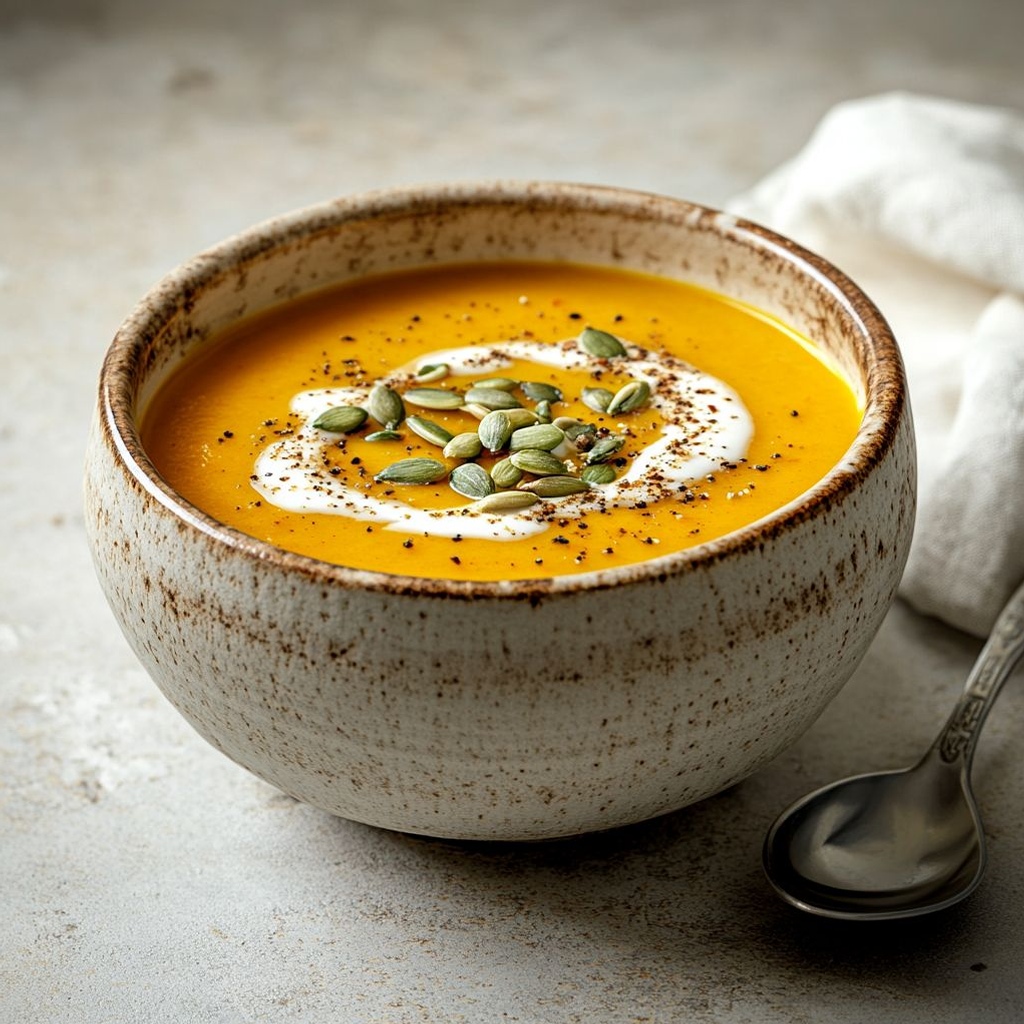
- Texture variation with garnishes: Toasted pepitas add crunch and a nutty note, while a swirl of coconut cream or yogurt adds luxury and a visual contrast. Fresh herbs finish the dish with color and aroma—add just before serving.
- Make-ahead and storage tips: The soup holds well in the fridge for 1–2 days and freezes nicely in portions. Reheat gently on the stove, whisking to restore silkiness; coconut milk may separate—stir vigorously to re-emulsify.
- Technique for a perfectly silky soup: Use an immersion blender directly in the pot and blend in short bursts until smooth. If you prefer a rustic texture, blend only part of the soup or leave a few pumpkin chunks intact. For an ultra-smooth finish, pass the blended soup through a fine sieve.
- Hot safety and blending: When blending hot liquids, vent the blender lid or blend in batches with the cap ajar to let steam escape. Start on a low speed and gradually increase to avoid splatters and burns.
FAQ
What ingredients do I need to make Pumpkin Ginger Soup?
- 2 tablespoons olive oil or vegetable oil
- 1 medium onion, chopped
- 2 cloves garlic, minced
- 1–2 tablespoons fresh ginger, grated
- 3 cups pumpkin puree (or 1–1.5 cups roasted pumpkin, plus extra stock)
- 3 cups vegetable stock (or chicken stock for non-vegetarian)
- ½ cup coconut milk or heavy cream
- Salt and pepper to taste
- Pinch of nutmeg or cinnamon (optional)
- Optional garnishes: toasted pumpkin seeds, a swirl of coconut milk or cream, fresh herbs
Is Pumpkin Ginger Soup vegan or dairy-free?
Yes. Use oil for sautéing, opt for coconut milk (not dairy) for creaminess, and use vegetable stock. Ensure any garnishes are plant-based if you want it fully vegan.
Can I use fresh pumpkin instead of canned puree?
Yes. Peel, cube, and roast the pumpkin until tender, then blend or mash into a puree before adding to the soup. You may need a bit more stock if using raw pumpkin since fresh pumpkin contains more water.
How do I adjust the spice level?
Ginger gives the heat and brightness. Start with 1 tablespoon grated ginger and taste; increase to 2 tablespoons for a stronger bite. Add a pinch of chili flakes or ground pepper for additional warmth. If it’s too spicy, balance with a splash of coconut milk and a touch of sweetness from a little maple syrup.
What should I do if the soup is too thick or too thin?
Too thick: thin with a bit more vegetable stock, water, or coconut milk. Too thin: simmer uncovered to reduce and thicken, or blend in more pumpkin puree. You can also adjust by adding a small amount of starch (like a teaspoon of cornstarch dissolved in cold water) if needed, then simmer to thicken.
How long does it take to cook Pumpkin Ginger Soup?
Prep takes about 10 minutes. Sauté aromatics for 5–8 minutes, simmer the soup 15–20 minutes, then blend until smooth. Total time is roughly 30–40 minutes.
What equipment do I need?
- Large pot or Dutch oven
- Knife and cutting board
- Immersion blender or regular blender
- Wooden spoon for sautéing
- Measuring cups and spoons
Can I make this in an Instant Pot or other electric pressure cooker?
Yes. Use the Sauté function to cook onion, garlic, and ginger. Add pumpkin puree, stock, and coconut milk. Pressure cook on high for 5–7 minutes, then quick-release. Blend to smooth and season to taste.
How should I serve Pumpkin Ginger Soup?
Serve hot with a drizzle of coconut milk or cream, a pinch of nutmeg, and toppings like toasted pumpkin seeds, chopped parsley, or a swirl of olive oil. A slice of crusty bread or a dollop of yogurt works well too.
How should I store leftovers?
Cool completely, then refrigerate in an airtight container for up to 4–5 days. For longer storage, freeze in portions for up to 2–3 months. Reheat gently on the stove or in the microwave, adding a splash of stock or coconut milk if it thickens.
Is this soup gluten-free?
Yes, as long as you use gluten-free stock and avoid processed ingredients with gluten. It’s naturally gluten-free.