Introduction / Hook
Picture a summer afternoon in the shade of a lilac tree, sunlight shimmering on a napkin-wrapped slice that gleams like a midnight jewel. Blueberry cheesecake is a kiss of creaminess and brightness, a dessert that feels both indulgent and approachable—like a memory you can hold in your hands. The crust gives way to a cloud of velvety, cheesecake-scented goodness, while the topping—ripe blueberries bursting with juice—provides a tangy counterpoint that makes every bite sparkle. This is not merely a cheesecake; it’s a celebration in a forkful, a harmonized chorus of dairy richness, lemony brightness, and the quiet sweetness of sun-warmed berries. As the first bite lands on your tongue, you’ll notice the subtle balance of vanilla, cream cheese, and a whisper of citrus, all encased in a crust that yields to a gentle press. And because blueberries are at their peak in their own season, this cheesecake feels freshly inspired, as if you’ve captured a nugget of summer and braided it into a dessert that can be shared with family, friends, or a quiet moment alone that deserves something special.
The beauty of blueberry cheesecake lies in its dual personality: it’s both comforting and bright, familiar and surprising. The creamy filling carries the reassuring tang of cream cheese and a hint of vanilla, while the lemon zest or juice heightens the fruit’s natural acidity, making the blueberries taste more vivid rather than overwhelmed. The crust—often a dance of crushed cookies or biscuits mixed with butter—offers a sturdy, sweet foundation that contrasts with the silken filling. When you bite into this dessert, you’ll sense textures that range from crumbly to creamy to juicy, all in a balanced rhythm that feels carefully crafted yet effortless. It’s the kind of dessert you can prepare ahead, slice into neat portions, and present with a flourish, or bring to a picnic and watch it disappear as people ask for seconds, thirds, and the recipe before you’ve even finished your own first slice.
But blueberry cheesecake is more than a crowd-pleaser. It’s a canvas for memory-making: the family gatherings that end with a chorus of “one more slice,” the summer reunions where a jar of fresh blueberries sits within reach, and the quiet evenings when you want something that feels luxurious without demanding your entire evening. It invites customization, too. You can swirl in extra lemon zest for a bright citrus note, fold in a handful of oats for a rustic texture, or switch the crust to a butterier graham base for a classic New York vibe. You can lighten it with part-skim cheese and a lighter crust, or go indulgent with full-fat cream cheese and a biscuit crumble that crackles under a fork. Each variation still carries the same heart: a creamy, luscious filling that sings with blueberry brightness, nestled in a crumbly crust that brings everything home.
In this introduction, you’ll discover why blueberry cheesecake endures as a beloved dessert across generations and cuisines. It’s more than the sum of its parts; it’s an experience—cooling the palate on a hot day, then warming it with the gentle, comforting flavors of dairy and vanilla. It’s a dessert you can tailor to season, occasion, and dietary needs without losing its character. Whether you’re preparing it for a special dinner, a casual Sunday treat, or a holiday table that needs a centerpiece with universal appeal, this blueberry cheesecake has a way of making the moment feel a little more magical. So, settle in, pour a glass of something you love, and imagine slicing into a slice that tastes like sunshine and cream—an easy, elegant dessert that carries a sense of celebration in every bite.
The Story Behind the Dish
Cheesecake has a storied past that stretches across centuries and continents, and blueberry cheesecake sits comfortably within that heritage, gathering influences from ancient traditions and modern American culinary craft. The earliest known cheesecakes appeared in ancient Greece, where they were served at celebrations and athletic gatherings as a mix of soft cheese, flour, and honey pressed into a cake form. The ancients often claimed that these cakes could be offered to the gods themselves, a testament to their soft texture and comforting sweetness. As civilizations evolved, so did the concept of the cheesecake. By the time bakers reached Rome, the dish began to assume its more recognizable form, with a crust sometimes made from ground grains and a filling enriched by cheese—an early predecessor to the dense, satisfying textures we treasure today.
Fast forward to the culinary renaissance of the 19th and 20th centuries, particularly in the United States, where regional styles blossomed. New York-style cheesecake, for instance, is famed for its thick, plane-compact filling that relies on cream cheese for a rich, creamy body. Its crust is typically a buttery graham cracker base or a similar crumbly crust that provides a satisfying counterpoint to the smooth filling. The beauty of blueberry cheesecake—and many fruit-topped cheesecakes in general—lies in the way seasonal fruit plays with texture and sweetness. Blueberries, with their deep indigo skins and jewel-like flesh, are a natural partner for cream cheese: their tartness cuts through richness, their juice creates a glossy, inviting sheen, and their color adds visual drama to the plate. In certain regions, bakers learned to swirl blueberry compotes into the filling or top the cake with a bright, glistening layer of berries, echoing the fruit’s natural beauty while preserving the dessert’s classic silhouette.
On a personal note, many families have their own blueberry cheesecake rituals. It might be the way a grandmother dusts the finished cake with a whisper of powdered sugar and a few extra blueberries for luck, or how a neighbor’s recipe calls for a splash of lemon juice to heighten the fruit’s tang. The shared practice—baking slowly to set the filling, chilling to achieve a clean slice, and presenting a sculpted, glossy surface—speaks to a universal truth: blueberry cheesecake is a dessert that demands patience and rewards it with a luxurious bite. It is a dish that travels well from kitchen to table, from simple weeknights to festive celebrations, carrying with it both tradition and a gentle, modern elegance that makes it feel timeless and fresh at once.
Why You’ll Love This Recipe
- High-contrast flavors: The silky, mildly tangy filling pairs beautifully with the bright sweetness and tang of blueberries, producing a balance that’s both comforting and sophisticated.
- Versatility in texture and crust: You can opt for a classic graham cracker crust, a buttery shortbread crumble, or a gluten-free base, all of which provide a sturdy foundation for the luxurious filling.
- Make-ahead friendly: Cheesecake benefits from chilling, which not only improves texture but also makes serving easier for gatherings. It’s a dessert you can assemble ahead of time and finish just before serving.
- Show-stopping yet approachable: The visual appeal of a glossy blueberry topping and the clean, vertical slices make this a showpiece dessert, without requiring complicated decorating skills.
- Customizable for dietary preferences: The filling and crust can be adapted to be vegan, gluten-free, or lower in sugar, without losing the dish’s essential character.
- Seasonal storytelling: Blueberries provide a seasonal narrative—bright, juicy, and slightly tart—that elevates the dessert beyond everyday sweetness.
Flavor Profile & Texture
The essence of blueberry cheesecake rests on a trifecta of elements: the crust, the filling, and the fruit topping. Each plays a distinct role, and when they come together, they create a symphony of textures and flavors that feels both indulgent and balanced. The crust acts as a reliable anchor—the crumbly, buttery base has a gentle sweetness and a hint of salt that sets off the richness of the filling. It offers a slight crunch and a satisfying bite, which is crucial because a cheesecake that’s too soft or too mousse-like can lose the sense of structure that makes it feel luxurious yet accessible.
The filling is where the magic happens. Cream cheese provides a creamy, velvety mouthfeel with a subtle tang that keeps the sweetness in check. A touch of sugar sweetens the batter without dulling the tang, and a hint of vanilla creates a warm backdrop. Depending on the recipe, a splash of lemon juice or zest lifts the flavor, brightening the cheesecake and helping the blueberries shine. The texture should be ultra-smooth and custardy, with just enough density to hold its shape when sliced, yet soft enough to melt on the palate. When properly chilled, the filling takes on a refined, almost ganache-like gloss that invites the knife to glide through it in clean, confident lines.
The star topping—blueberries—brings a lively contrast. Fresh blueberries burst with a tart sweetness and juiciness that punctuate every bite. If you opt for a compote or glaze, the result is a glossy, deeply colored crown that tastes like a summer morning: fruity, bright, and gently sweet. The berry topping can be as simple as a handful of fresh blueberries arranged in a cluster or as sophisticated as a glaze with a whisper of citrus, a touch of sugar, and a hint of vanilla bean to intensify the fruit’s natural aroma. The combination of creamy filling, crumbly crust, and fruit topping creates a sensory experience that lingers: the smoothness of the cheese, the subtle crumb of the crust, and the pop of blueberry juice all in one harmonious bite.
Occasions & Pairings
Blueberry cheesecake is a versatile dessert that fits a wide range of occasions. It’s elegant enough for a dinner party finale, yet simple enough for a casual weeknight celebration. Here are some ideas for serving and pairing to maximize its impact.
Occasions to consider:
- Holiday desserts: Christmas, Thanksgiving, or New Year’s gatherings where a showpiece dessert is welcome but not overly fussy.
- Weekend specials: A Sunday family dinner, a brunch finale, or a birthday meal where a gluten-free or lighter version might be appreciated.
- Summer picnics and barbecues: Bake ahead, slice neatly, and transport carefully—this dessert travels well and can be served chilled from a cooler.
- Romantic dinners: A single elegant slice with a glass of dessert wine or a berry-infused cocktail makes a refined ending to a meal.
- Bridal showers and gatherings: The classic appeal and customizable options make it a crowd-pleasing choice that photographs beautifully.
Pairings to consider:
- Drinks: Prosecco, Moscato, late-harvest Riesling, or a light coffee liqueur can complement the creamy richness without overpowering it.
- Side dishes: A lighter lemon-scented fruit salad, a mint-herb granita, or a dollop of lightly whipped cream can enhance the dessert without competing with it.
- Desserts: A small almond biscotti, a crisp lemon shortbread, or a tart wine reduction can add a contrasting bite or a complementary note.
- Seasonal twists: Fresh blueberries with a whisper of lavender, rosemary, or thyme can bring a surprising herbaceous edge that harmonizes with the fruit.
Tips, Variations & Substitutions
The beauty of blueberry cheesecake is that you can tailor it to your pantry, your guests, and your dietary needs without losing its core appeal. Here are a host of ideas to spark creativity and ensure success every time.
No-bake vs. baked
You can enjoy a lighter, no-bake version that relies on whipped cream or whipped cream cheese to achieve a fluffy, airy texture. No-bake cheesecakes require setting time in the refrigerator, often with a gelatine or agar-agar component to help them hold shape. Baked versions tend to be richer and denser, with a thawed, deeply satisfying mouthfeel. The method you choose will influence the texture and the timing, but both deliver that signature blueberry-bright finish.
Crust variations
Classic crust options include crushed graham crackers or digestive biscuits bound with melted butter. For a gluten-free approach, try almond flour or digestive biscuits labeled gluten-free, with an extra pinch of sugar and a touch of coconut oil to bind. For a more indulgent, cookie-forward crust, substitute shortbread or biscotti crumbs. If you want a tangier crust to contrast the filling, a thin layer of crushed pretzels can provide a salty balance that enhances the berry topping.
Filling variations
Beyond the standard cream cheese base, you can experiment with one or more of these ideas:
- Reduce the sugar slightly and rely on a citrus zest to brighten the filling; the natural acidity of lemon or lime can add a lively counterpoint to the sweetness of the berries.
- Use part sour cream or Greek yogurt for a lighter tang and extra creaminess. This also helps stabilize the filling and keep it moist.
- Make it vegan by using cashew cream or blended silken tofu as the base, combined with coconut cream to mimic the richness of dairy.
- Enhance color and flavor with a small amount of blueberry puree whisked into the filling before baking; it creates a gentle blueberry ripple that’s visually appealing.
- Swirl in a blueberry compote layer into the center for a dramatic marbled effect; you’ll still have slices with a berry-streaked interior.
Dairy considerations
For a lighter option, use part-skim cream cheese and a reduced-fat crust. For a dairy-free approach, substitute with plant-based cream cheese and coconut oil in the crust. The overall texture will shift slightly, but with careful chilling and balance of stabilizers, you can achieve a dessert that remains luxurious and satisfying.
Seasonal twists
While blueberries are quintessential here, you can adapt the concept to other fruits with equal success. Strawberries, raspberries, blackberries, or a mixed berry medley all behave beautifully, especially when lightly macerated to release their juices. A citrus glaze or a hint of vanilla can unify the fruit’s brightness with the creamy base.
Storage & Make-Ahead Ideas
One of the most appealing aspects of blueberry cheesecake is how well it holds up when you plan ahead. Properly stored, it can improve in flavor as the filling firms and the flavors meld during chilling.
Storing leftovers: Place slices in an airtight container and refrigerate for up to four days. If you prefer to freeze, wrap individual slices tightly in plastic wrap or parchment, then seal in an airtight freezer bag. Frozen cheesecake slices can maintain quality for up to two to three months. Thaw overnight in the refrigerator for best texture, then bring to room temperature for a few minutes before serving to recapture the silky mouthfeel.
Make-ahead strategies:
- Crust and filling can be prepared separately and assembled the day of serving. You can bake the crust, chill it, then prepare and refrigerate the filling, combining only when you’re ready to assemble.
- The blueberry topping can be prepared in advance and stored in the fridge; reheat gently or serve cold over the cake for a glossy finish. A quick toss with lemon juice and a touch of sugar can refresh flavors if they’ve settled during storage.
- For a streamlined serving experience, bake the cake one day before the event, chill overnight, and slice just before serving. The chill time helps the filling set perfectly, ensuring clean slices and a cohesive presentation.
Fun Facts & Trivia
- Blueberries are native to North America and have long been celebrated for their vivid color, sweet-tart flavor, and antioxidant-rich profile. They’re a natural companion to dairy due to their acidity and brightness that balance creamy textures.
- Cheesecake’s name derives from the combination of cheese and cake, a concept that spans ancient and modern cuisines. The dessert has morphed through centuries but remains a symbol of comfort and celebration globally.
- In some culinary traditions, cheesecake is not just about the filling but also about the technique: the gentle baking method with a water bath (bain-marie) helps prevent cracking and yields an ultra-smooth surface that’s perfect for a glossy berry topping.
- The visual appeal of a blueberry topping—deep blue-purple hues and a glossy finish—stems from natural pigments in the fruit, which become more pronounced when heat is applied during cooking or when a glaze concentrates the berry juices.
- Perfect slices are achieved with a warm knife wipe between cuts. A knife warmed under hot water, then dried, helps the slices separate cleanly from the pan, showcasing the cake’s clean, elegant layers.
Ingredients
- Crust
- 1 1/2 cups graham cracker crumbs (fine)
→ The crust forms the sturdy base for the cheesecake, providing crunch and flavor. Use finely ground crumbs for an even texture; if you prefer a richer crust, substitute with digestive biscuits or gluten-free crackers. Combine with 2 tablespoons granulated sugar and 1/4 teaspoon fine salt, then mix in 5 tablespoons melted unsalted butter until the mixture resembles wet sand. Press firmly into a 9-inch (23 cm) springform pan, covering the bottom and about 1/2 inch (1 cm) up the sides. Chill at least 15 minutes before filling to help set and prevent crumbling. - 2 tablespoons granulated sugar
→ Slightly sweetens the crust to balance the tartness of the filling. Distributes evenly when mixed with the crumbs; if your crackers are already sweet, reduce or omit. Ensure the sugar is evenly incorporated with the crumbs and butter before pressing into the pan to create a cohesive, compact crust. - 1/4 teaspoon fine salt (optional)
→ Enhances the crust flavor by balancing sweetness and bringing out toasty notes from the crackers. If you used salted butter, you may omit. Salt helps bind the mixture together when pressed, improving the crust’s structure during baking and chilling. - 5 tablespoons unsalted butter, melted
→ Binds the crust crumb together to form a cohesive shell and adds richness. Let the butter cool slightly before mixing with crumbs to avoid making the crust too soft. Use a flat tool to press the mixture evenly across the pan bottom and slightly up the sides for a clean edge. Chill before filling to prevent sliding or gaps.
- 1 1/2 cups graham cracker crumbs (fine)
- Filling
- 4 x 8-ounce (225 g) blocks cream cheese, softened to room temperature
→ The creamy, rich backbone of the cheesecake; achieves a smooth, velvety texture when well softened. Beat on medium speed until completely smooth with no lumps, scraping the bowl as needed. Avoid overmixing after eggs are added to prevent air pockets that can cause cracks. If lumps persist, warm slightly or whisk by hand until smooth. - 1 1/2 cups granulated sugar
→ Provides the essential sweetness and helps with a creamy, glossy batter as it dissolves into the cheese. Ensure the sugar is fully incorporated by beating thoroughly with the cream cheese and liquids. If your cheese is chilly or lumpy, beat longer and use low speed to minimize air incorporation that could lead to cracks. - 1/2 cup sour cream
→ Adds tang and moisture, balancing the richness of the cheese and contributing to a creamy mouthfeel. Use full-fat sour cream at room temperature to blend smoothly; this also helps prevent cracking. If you’re dairy-free, substitute with an unsweetened coconut yogurt, though flavor and texture will differ. - 1/4 cup heavy cream (optional)
→ Lightens the batter and increases silkiness; use at room temperature to avoid curdling. If you skip the heavy cream, you can substitute with an additional 1/4 cup sour cream to maintain moisture and body. Add gradually to keep the batter thick but pourable. - 4 large eggs, at room temperature
→ Structure the cheesecake; add eggs one at a time, mixing just until each is combined. Do not overbeat after the eggs are added, or the batter may incorporate too much air and crack while baking. Pour gently into the crust to minimize air bubbles. - 2 teaspoons vanilla extract
→ Deepens the flavor and enhances the overall aroma of the cheesecake. Use pure vanilla for the best flavor; if you have vanilla bean, add seeds from one bean and the extract for a stronger vanilla note. Do not substitute heavily with artificial flavors if a rich taste is desired. - 1 teaspoon lemon zest (optional)
→ Brightens the filling with a subtle citrus note that complements the blueberry topping. Use finely grated zest from one lemon, avoiding the white pith. If you prefer, you can replace zest with 1–2 teaspoons fresh lemon juice for a lighter citrus touch without altering texture.
- 4 x 8-ounce (225 g) blocks cream cheese, softened to room temperature
- Topping (Blueberry topping, optional)
- Fresh blueberries (2 cups)
→ Adds vibrant color and a juicy, tart-sweet contrast to the creamy filling. Rinse gently and pat dry; if using frozen berries, thaw completely and drain well to minimize extra moisture. Scatter over the top before serving or spoon a warm sauce over slices for a glossy finish. - Granulated sugar (2 tablespoons)
→ Helps macerate the berries and release their juices into a light syrup. Sprinkle evenly over the berries and toss gently to avoid crushing. Adjust to taste based on berry sweetness; less sugar for sweeter fruit is often ideal. - Lemon juice (1 tablespoon)
→ Adds brightness and enhances berry flavor, helping to balance richness. Use fresh lemon juice for the best sharpness; adjust to taste if you prefer a less tangy topping. This also helps prevent color dulling during cooking. - Water (1–2 tablespoons)
→ Adjusts the consistency of the topping; start with 1 tablespoon and add more only if needed to reach the desired drizzle or glaze thickness. Use warm water if you want the sauce to loosen more quickly. - Cornstarch (1 teaspoon)
→ Thickens the topping into a glossy sauce that coats the cheesecake slices nicely. Mix with an equal amount of cold water to form a slurry before adding to the berries, then simmer briefly until thickened. Cool before serving to allow it to set slightly. - Pure vanilla extract (optional, 1/4 teaspoon)
→ Adds a rounded sweetness and aroma to the blueberry sauce. If used, stir in after thickening and remove from heat to prevent overcooking the vanilla flavor. Omit if you prefer a pure berry topping with no additional flavors.
- Fresh blueberries (2 cups)
Instructions
- Preheat your oven to 350°F (175°C) and position a rack in the center; ensure you have a 9-inch (23 cm) springform pan ready to receive the crust and filling.
→ A steady oven temperature and properly positioned rack promote even baking and prevent hot spots that could warp the cheesecake’s texture. - Prepare the crust by mixing 1 1/2 cups graham cracker crumbs with 2 tablespoons granulated sugar and 1/4 teaspoon fine salt; add 5 tablespoons melted unsalted butter and stir until the mixture resembles wet sand; press firmly into the bottom and about 1/2 inch (1 cm) up the sides of the pan using the flat bottom of a glass or measuring cup to create an even, compact layer; chill for 15 minutes to set.
→ Chilling helps the crust hold its shape during filling and baking, and using a flat-surfaced tool ensures an even thickness with clean edges. - Bake the prepared crust for 8–10 minutes at 350°F (175°C) until it is set and lightly fragrant, then remove from the oven and let cool on a rack while you prepare the filling.
→ A partially baked crust forms a firm barrier against moisture from the filling, reducing sogginess and contributing to a crisp edge. - In a large mixing bowl, place 4 x 8-ounce blocks of cream cheese that are softened to room temperature and beat on medium speed until completely smooth with no lumps, scraping the bowl as needed.
→ Uniformly softened cream cheese blends more smoothly, avoiding grainy pockets and ensuring a silky final texture. Do not overbeat after eggs are added to prevent air pockets that can cause cracks. - With the mixer running on medium, add 1 1/2 cups granulated sugar in a slow, steady stream until the mixture is pale and fluffy, promoting a creamy batter and helping it set evenly.
→ Proper sugar incorporation aids in texture and creaminess; avoid overbeating after eggs are added to prevent air pockets that could crack the cheesecake. - Beat in 1/2 cup sour cream until fully integrated to introduce tang and moisture that balance the richness, scraping the bowl again to ensure even distribution.
→ Sour cream improves moisture and gives a smoother finish; room temperature helps prevent curdling and streaking. - Beat in 1/4 cup heavy cream, if using, until the batter looks glossy and homogeneous, adding gradually to maintain a thick, pourable texture; skip if you prefer a denser cheesecake.
→ Heavy cream lightens the texture without thinning excessively; omit if you want a firmer set. - With the mixer on low, add 4 large eggs one at a time, mixing just until each is incorporated before adding the next; stop as soon as the last egg is blended.
→ Adding eggs gradually minimizes air incorporation, which can cause cracks; overmixing after eggs are added creates a dense or airy texture. - Beat in 2 teaspoons vanilla extract and, if desired, 1 teaspoon lemon zest until evenly distributed to deepen flavor and brighten the filling; avoid overmixing once zest is added to prevent bitterness from the zest’s pith.
→ Fresh vanilla and citrus notes elevate the cheesecake’s aroma and complexity. - Pour the filling into the cooled crust, smoothing the top with a spatula and giving the pan a gentle tap to release any trapped air bubbles.
→ A smooth surface helps the cheesecake bake evenly; tapping helps dissipate air pockets that can create cracks. - Wrap the outside of the springform pan tightly with two layers of heavy-duty aluminum foil and place the pan into a larger roasting pan to prepare a water bath.
→ The water bath stabilizes heat around the cheesecake, reducing cracking and producing a creamy, even set. - Carefully pour hot water into the roasting pan until it comes about halfway up the sides of the springform pan; ensure the foil remains intact to prevent leaks.
→ The gentle steam from the bath provides uniform heat and supports a smooth, crack-free center during long baking. - Bake in the 325°F (165–175°C) oven for 50–60 minutes, or until the edges are set and the center wobbles slightly when the pan is gently shook; turn off the oven and leave the door slightly ajar, letting the cheesecake rest inside for 1 hour to further prevent cracking.
→ Slow cooling within the oven minimizes abrupt temperature changes that cause surface cracks and ensures a creamy center. - Remove the cheesecake from the water bath, lift the pan from the roasting pan, and let it cool completely on a rack before refrigerating for at least 4 hours or overnight for thorough chilling.
→ Proper chilling firms the filling, enhances flavor, and makes slicing clean and neat without crumbling. - Prepare the blueberry topping by combining 2 cups fresh blueberries, 2 tablespoons granulated sugar, and 1 tablespoon lemon juice in a small saucepan; bring to a gentle simmer and cook until the berries release juice and the mixture thickens slightly.
→ Macerating the berries with sugar and lemon juice concentrates their flavor and yields a natural syrupy contrast to the creamy cheesecake. - Make a slurry with 1 teaspoon cornstarch and 1 tablespoon cold water, then whisk it into the berry mixture and simmer briefly until the sauce becomes glossy and thick enough to coat a spoon; cool to room temperature before serving.
→ The cornstarch thickens the topping for a stable, coat-friendly sauce; cooling prevents a runny glaze that could water down the slices. - If using, stir in 1/4 teaspoon pure vanilla extract into the cooled blueberry sauce after thickening and remove from heat to preserve the vanilla aroma; otherwise, serve the topping as a pure berry glaze.
→ Vanilla adds warmth and depth to the fruit sauce, complementing the cheesecake’s vanilla notes. - To serve, loosen the cheesecake from the pan by running a hot knife around the inner edge, remove the springform ring, slice with a clean, warm blade, and spoon a generous portion of blueberry topping over each slice; garnish with extra blueberries or zest if desired.
→ A clean cut reveals a smooth interior, and the vibrant topping provides color, acidity, and contrast in texture.
Notes
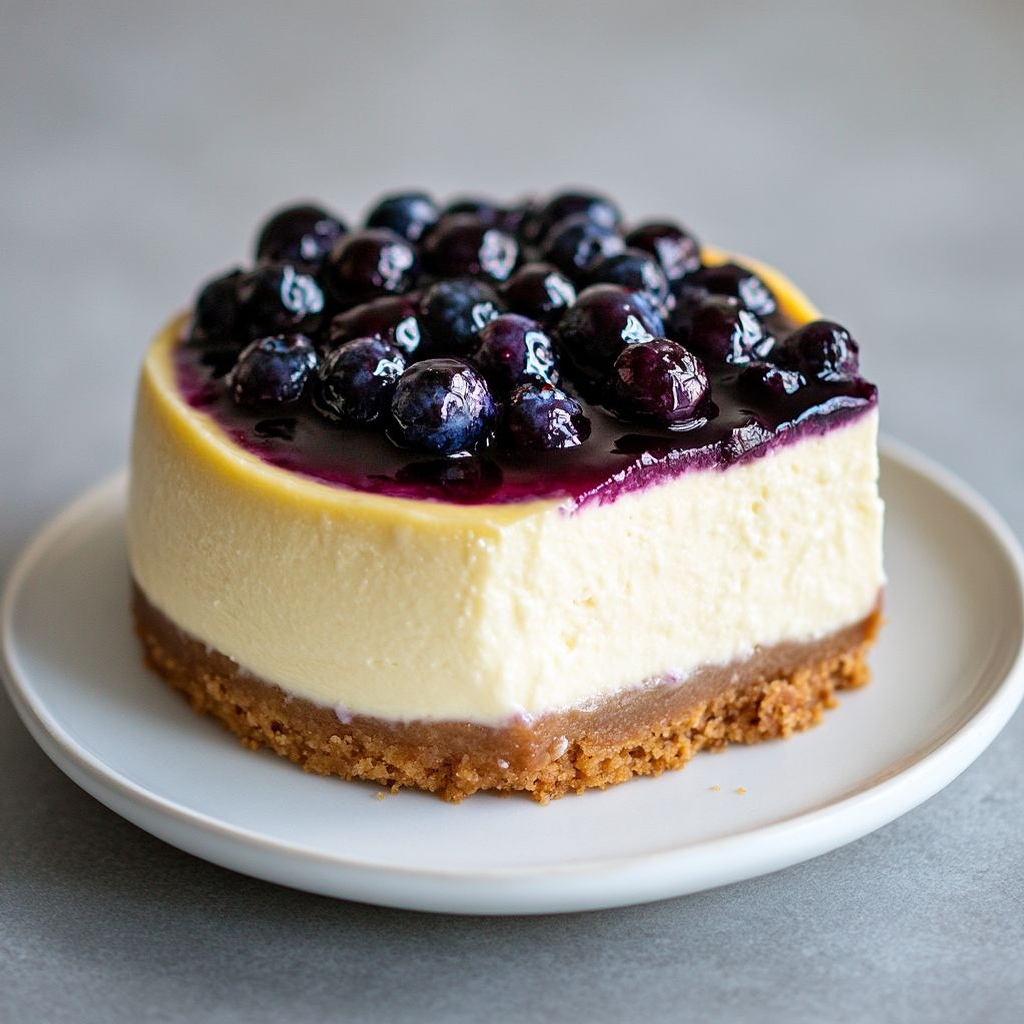
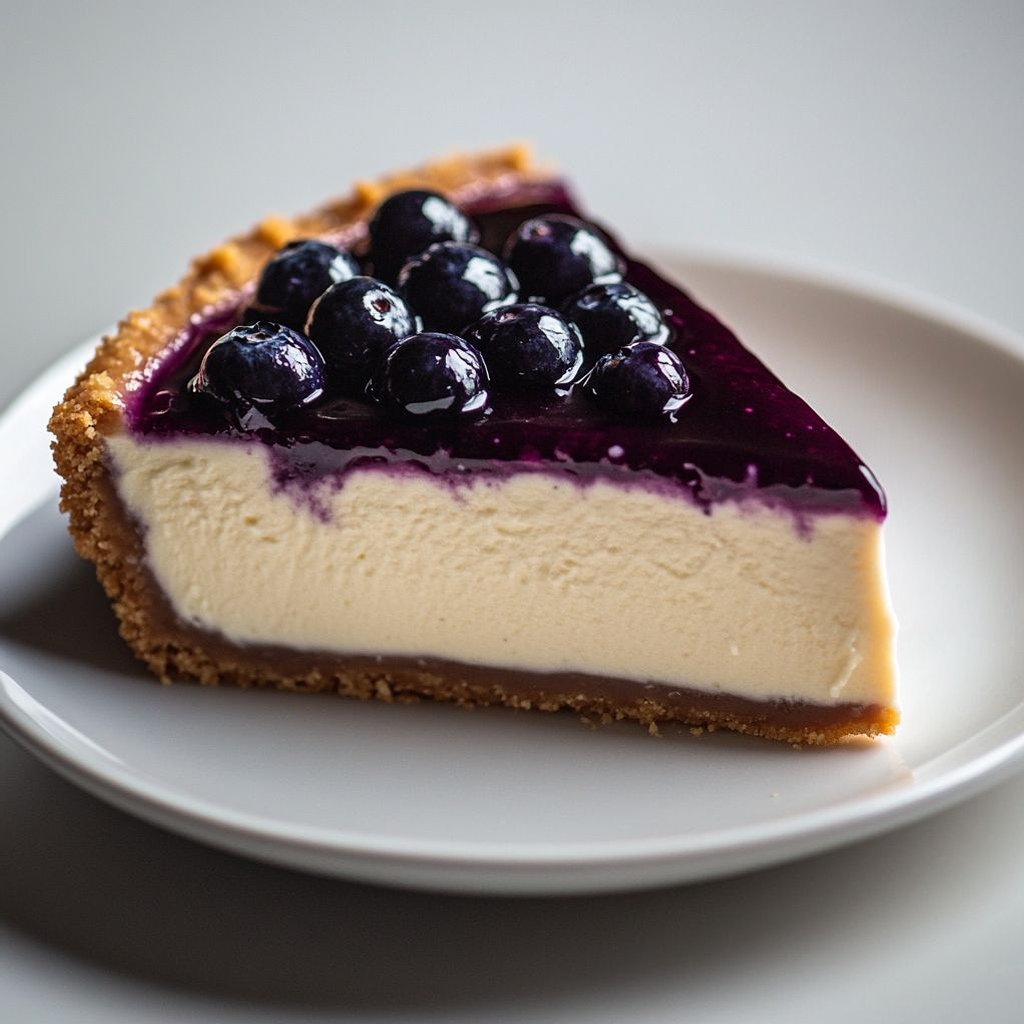
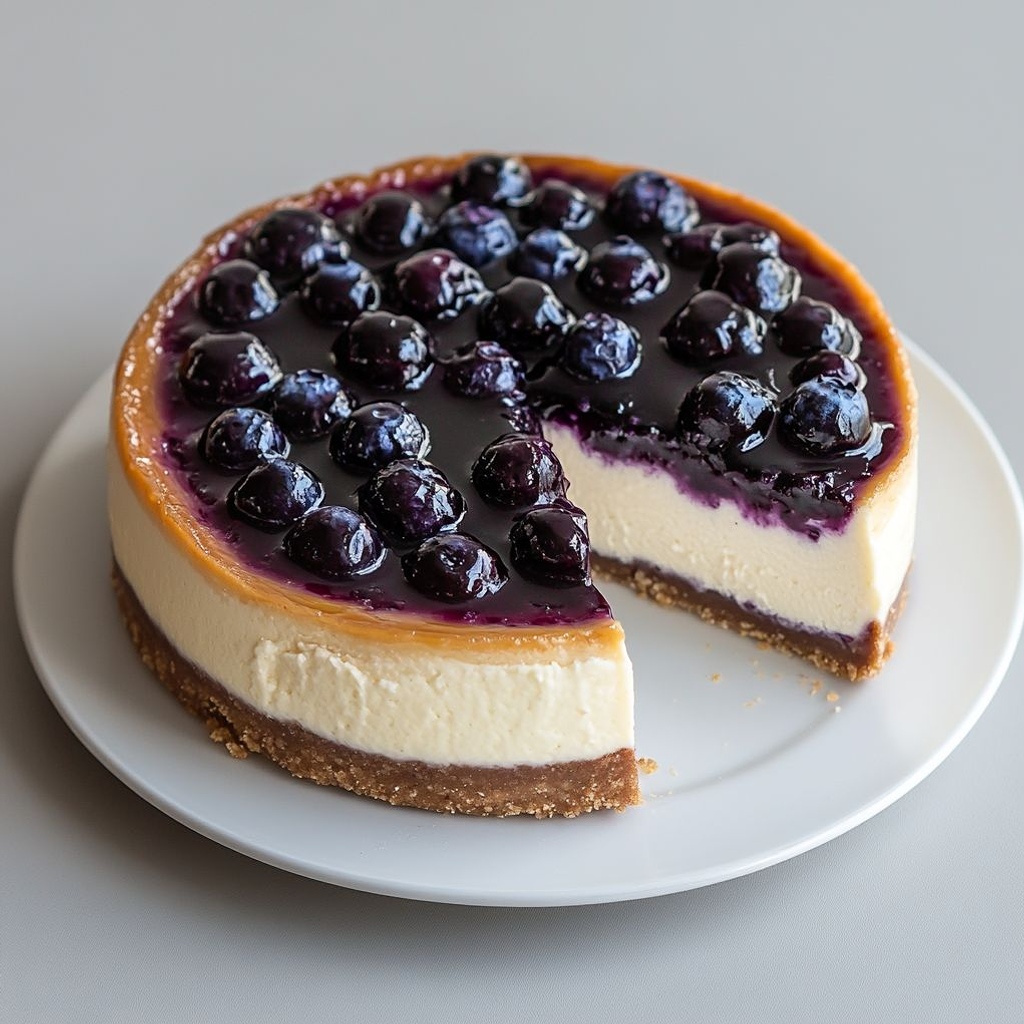
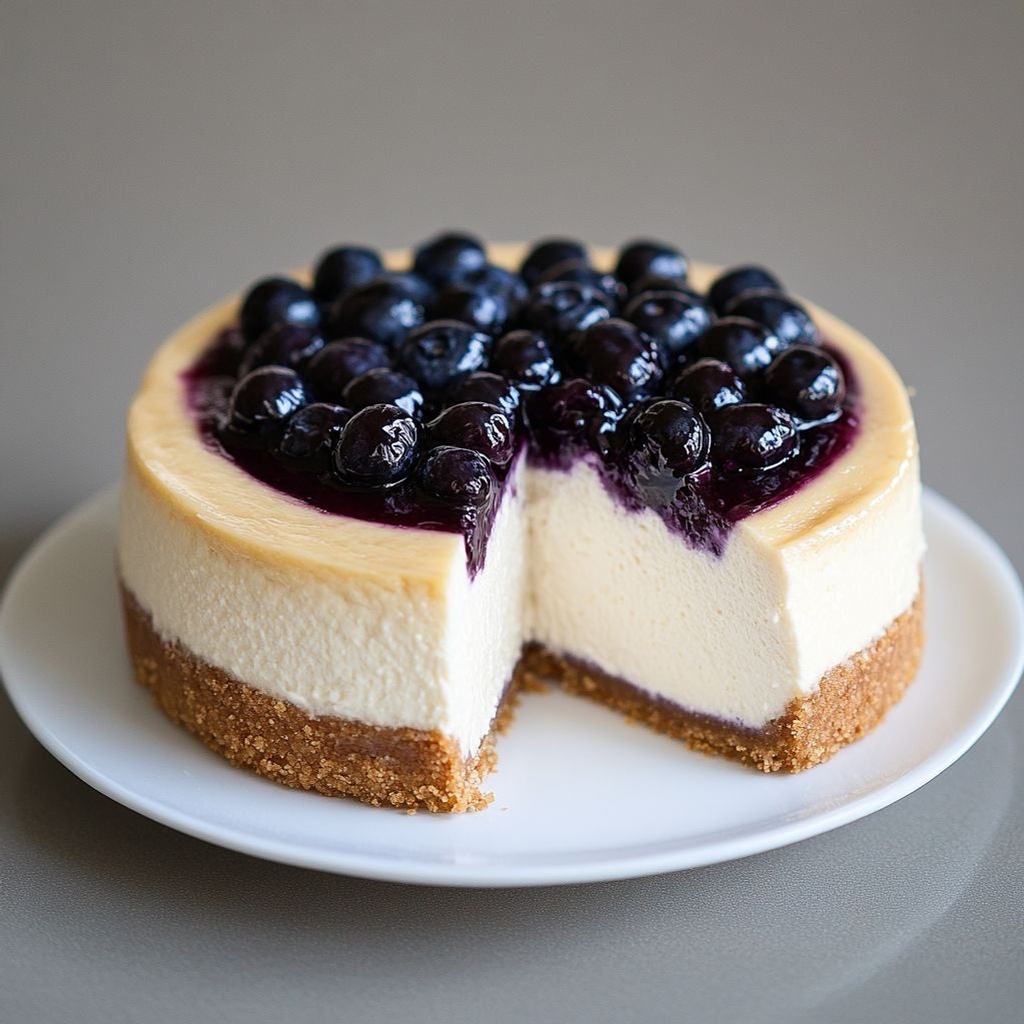
These blueberry cheesecake slices feature a crisp graham cracker crust, a creamy filling, and a glossy blueberry topping.
For best results, ensure all filling ingredients are at room temperature before mixing to guarantee a smooth, lump-free batter.
Prevent cracks by baking the cheesecake in a water bath and avoiding overmixing after eggs are added; crack prevention and gradual cooling are key.
Chill the cheesecake thoroughly, ideally overnight, to allow flavors to meld and the texture to set fully. Use a serrated knife to slice cleanly for neat portions.
For variations, swap lemon zest for orange zest, or add a splash of vanilla bean; you can also fold in an extra cup of fresh or frozen blueberries into the filling for bursts of fruit.
If you prefer a lighter topping, serve with warm blueberry sauce or additional fresh berries; leftovers keep in the fridge for up to 4-5 days or freeze slices for longer storage.
Tips
Tips for the Crust
- Use extra-fine graham cracker crumbs. If you only have regular crumbs, pulse a bit longer to achieve a sandy texture; you can also substitute with digestive biscuits or gluten-free crackers for a different flavor profile.
- Combine crumbs with sugar and salt evenly before adding melted butter. Press the mixture into a 9-inch (23 cm) springform pan using the flat bottom of a glass or measuring cup to create a smooth, compact base. Chill at least 15 minutes before filling to help set and prevent crumbling.
- For easy release and clean edges, line the pan bottom with parchment paper and press the crust up the sides about 1/2 inch (1 cm). This also helps keep the filling from seeping into the crust during baking.
Tips for the Filling
- Let cream cheese soften fully to room temperature; beat on medium speed until completely smooth with no lumps, scraping the bowl as needed. Cold cream cheese or lumps can lead to a grainy texture.
- Beat the sugar with the cream cheese and liquids until fully incorporated. If the cheese is cold, give it extra time and keep the mixer at low speed to minimize air pockets that can cause cracks.
- Use full-fat sour cream at room temperature to achieve a balanced tang and creamy mouthfeel. If dairy-free, substitute with a thick coconut yogurt, understanding the flavor and texture will differ slightly.
- Optionally whisk in heavy cream to lighten the batter; add gradually and keep the mixture thick but pourable. If you skip the heavy cream, you can replace it with an additional 1/4 cup sour cream.
- Add eggs one at a time at room temperature, mixing just until each is incorporated. Do not overmix after eggs are added to minimize air bubbles that can cause cracks. Pour filling gently into the crust to prevent creating air pockets.
- Enhance depth of flavor with vanilla extract (and lemon zest if using). Use pure vanilla; if you have vanilla bean, scrape the seeds for a stronger vanilla note. If using lemon zest, grate finely and fold in gently; zest brightens the filling without adding moisture.
Tips for the Blueberry Topping
- Rinse fresh blueberries and pat dry; if using frozen berries, thaw completely and drain well to avoid extra moisture diluting the topping.
- Macerate berries with sugar and lemon juice to draw out juices and create a light syrup. Taste and adjust sugar based on the sweetness of the berries.
- To thicken into a glossy sauce, whisk a cornstarch slurry (1 teaspoon cornstarch + 1 teaspoon cold water) into the berries and simmer briefly until thickened. Cool slightly before serving to let the sauce set a bit on the slice.
- Stir in optional vanilla extract after thickening to preserve aroma; avoid overcooking to prevent an overpowering vanilla flavor.
Baking, Cooling and Storage Tips
- To reduce cracking, bake the cheesecake in a water bath: wrap the pan securely in heavy-duty foil and place it in a larger pan filled with hot water halfway up the sides of the springform pan.
- Aim for a center that is just set with a slight jiggle; the filling will firm as it cools. Avoid overbaking, which leads to cracks.
- Cool gradually in the oven with the door ajar for about an hour, then transfer to a rack to finish cooling. Refrigerate for at least 4 hours or overnight for best slicing results.
- For clean slices, wipe your knife with warm water between cuts or briefly dip in hot water and wipe dry before each slice.
- Store leftovers in the refrigerator, covered, for up to 4 days. You can also freeze individual slices for longer storage; wrap tightly to prevent freezer burn.
FAQ
Blueberry Cheesecake FAQ
What is blueberry cheesecake?
A blueberry cheesecake is a creamy, tangy dessert made with a rich cream cheese filling on a crust (usually graham cracker or biscuit-based). It’s often topped with a blueberry sauce or fresh blueberries. It can be baked for a classic texture or made as a no-bake version for a lighter finish.
What ingredients are needed for a basic blueberry cheesecake?
Here’s a simple, reliable version you can start with:
- Crust: 1 1/2 cups graham cracker crumbs, 1/4 cup melted butter, 2 tablespoons sugar (optional)
- Filling: 4 packs (8 oz each) cream cheese, softened; 1 cup granulated sugar; 1/2 cup sour cream; 2 teaspoons vanilla extract; 4 large eggs (room temperature)
- Blueberry topping: 1 cup blueberries (fresh or frozen); 2–3 tablespoons sugar; 1 tablespoon lemon juice; optional cornstarch slurry to thicken
Can I use a store-bought crust?
Yes. A premade graham cracker crust works well. Follow the crust package instructions (usually press into the pan and bake briefly) or bake it blind if the recipe calls for it. If you use a no-bake cheesecake, you can still use a store-bought crust as a base.
Is this cheesecake baked or no-bake?
You can make either. A baked cheesecake is common and yields a dense, custardy texture; a no-bake version uses whipped cream or gelatin to set and is lighter. Bake time and temperature will vary; no-bake versions require chilling until firm.
How do I prevent the cheesecake from cracking?
Tips to avoid cracks include:
- Bake in a water bath (bain-marie) to maintain moisture and gentle heat.
- Use room-temperature cream cheese and eggs; avoid overmixing the filling.
- Bake at a moderate temperature (usually around 325°F / 165°C) until the center slightly jiggles.
- Turn off the oven and let the cheesecake cool gradually with the door slightly ajar, then refrigerate overnight.
How do I make blueberry sauce or topping?
To make a quick blueberry topping: simmer 1 cup blueberries with 2–3 tablespoons sugar and 1 tablespoon lemon juice in a small saucepan until the berries release juice and the mixture thickens slightly. For a glossy sauce, stir in a slurry of 1 teaspoon cornstarch and 1 tablespoon water and simmer until thickened. Cool before serving.
How do I know when the cheesecake is done baking?
For baked cheesecakes, the center should still have a slight jiggle. The edges will be set but not browned. If the center looks very liquid, return to the oven and bake a bit longer. A clean knife near the center should come out mostly clean after cooling.
How long should I chill the cheesecake, and how should I store leftovers?
Chill for at least 4–6 hours, preferably overnight, to set fully. Store refrigerated, covered, for up to 4–5 days. For longer storage, you can freeze slices (wrapped well) for up to 2–3 months; thaw in the fridge overnight before serving.
Can I make variations like lemon swirl or gluten-free crust?
Yes. For a lemon swirl, add 1–2 tablespoons of lemon zest to the filling and spoon a lemon curd swirl through the batter before baking. For a gluten-free crust, use crushed gluten-free cookies or almonds with butter. If dairy-free is needed, use dairy-free cream cheese and yogurt alternatives, noting that texture may differ slightly.
Do you have tips for making this ahead for a party?
Prepare the crust and filling in advance, assemble, and refrigerate the assembled cheesecake overnight. If you prefer, bake the cheesecake a day ahead and chill it well; add the blueberry topping just before serving to keep the fruit bright and fresh.
What are common mistakes to avoid?
Avoid overmixing the filling, which can trap air and cause cracking. Don’t overbake—the center should be slightly wobbly. Using cold ingredients can lead to a lumpy filling. Also, ensure thorough chilling to help the cheesecake set properly.