Introduction / Hook
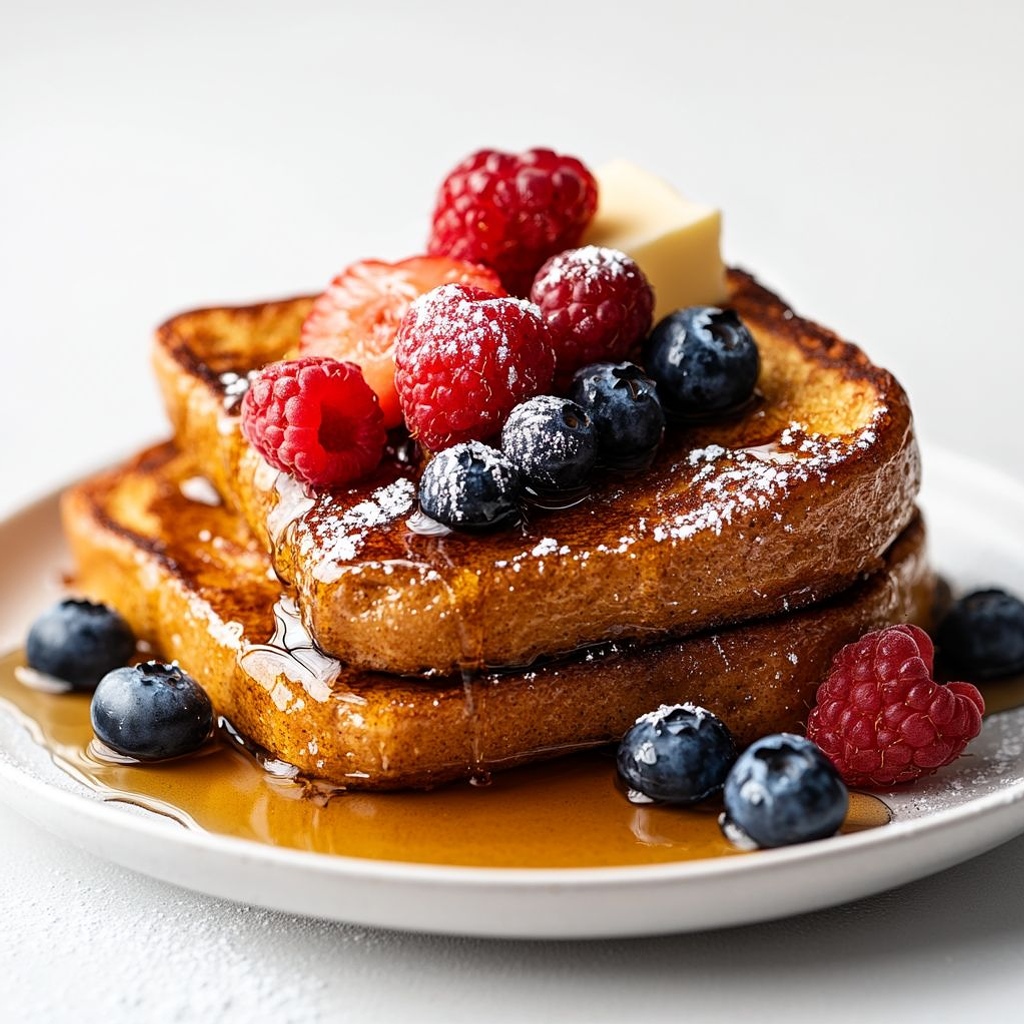
Morning light spills across the kitchen as the first scent of cinnamon and vanilla fills the air. Berry French toast isn’t just breakfast—it’s a celebration of comfort and brightness in one plate. Picture thick slices of brioche turning a glorious amber on the skillet, the interior soft and custardy, while a jewel-toned berry compote glistens on top like a sunrise captured in a jar. The aroma of toasted bread mingles with vanilla, a hint of citrus zest, and a whisper of warm spices, waking your senses before you even bite. This dish takes the everyday ritual of French toast and elevates it into a brunch moment that feels indulgent without being fussy, simple enough for a cozy weekend, and impressive enough to anchor a festive table. Each mouthful is a dialogue of textures and flavors: the crisp edge yields to a tender center, the berries burst with tart-sweet brightness, and the creamy glaze or whipped topping adds a luscious counterpoint. Berry French toast invites you to slow down, savor every nuance, and share something truly comforting with the people you love. It’s the kind of dish that makes a quiet morning feel like a celebration and a busy weekday morning feel like a little vacation in the kitchen.
The Story Behind the Dish
French toast has a long and storied history that travels across kitchens and continents. Known in many places as pain perdu—“lost bread” in French—the dish emerged as a clever, thrifty way to rescue stale bread and transform it into something worthy of breakfast or brunch. The principle is simple and universally appealing: stale bread, milk, eggs, a touch of sweetness, and heat turn humble leftovers into something comforting that tastes distinctly special. Berry French toast builds on that tradition by adding a bright, fruit-forward component that speaks to seasonal produce and brighter mornings. The idea is not to mask the bread’s character but to pair it with a companion that enhances it. The berries bring acidity and vibrancy, the vanilla and spice round out the sweetness, and the slight lemon or orange zest lifts the dish so it never feels heavy. In many cultures, fruit-topped breakfast dishes are a celebration of abundance—berries, citrus, and stone fruits—echoing the joy of harvests and gatherings. When you plate Berry French toast, you’re weaving that universal mood into a modern, approachable breakfast that carries the memory of old-world technique with a contemporary, fresh twist.
Why You’ll Love This Recipe
- Quick to prepare for a weekend brunch or a spontaneous weekday treat. The components come together with minimal hands-on time, yet the result feels indulgent.
- Kid-friendly and adult-approved in equal measure. The berry topping adds natural sweetness and brightness, while the brioche provides a soft, comforting base.
- Highly adaptable to your pantry and dietary needs. Use dairy-free milks, gluten-free bread, or a vegan twist without sacrificing flavor.
- Vibrant presentation. The berry compote or fresh berries create a rainbow-like, glossy topper that makes the dish look as good as it tastes.
- Perfect balance of textures and flavors. Crispy edges, creamy interior, juicy berries, and a hint of vanilla and citrus create a symphony in every bite.
- A forgiving, forgiving dish. If your bread is a touch older, it will soak up the batter beautifully and yield a rich, custardy texture.
Flavor Profile & Texture
The flavor profile of Berry French toast is a celebration of balance. The base bread—often brioche or challah—provides a rich, eggy sweetness that becomes deeply toasted at the edges. The custardy interior is like a soft, comforting cloud, holding onto the lingering warmth of eggs, cream, and vanilla. The berry component introduces brightness and tang, with a natural tartness from berries like strawberries, raspberries, blueberries, or a mix of seasonal varieties. A touch of citrus zest—lemon or orange—brightens the dish, making the sweetness feel lively rather than heavy. Cinnamon or nutmeg whispers in the background, lending depth without overpowering the berries’ freshness. When you bite through, you first encounter the crisp, caramelized exterior that yields to a tender, almost soufflé-like interior. The berry sauce or compote delivers juicy bursts, releasing a syrupy sweetness that is tempered by berry acidity. A light dusting of powdered sugar, a dollop of whipped cream, or a spoonful of plain yogurt can introduce a creamy counterpoint that rounds the whole experience. The end result is a harmonious blend of textures and flavors: warm, comforting, and bright, with a playful fruit-forward finish that lingers pleasantly on the palate.
Occasions & Pairings
Berry French toast shines in a variety of settings and occasions, from casual Sunday mornings to festive gatherings. Here are some ideas to guide when and how to serve it and what to pair it with for a complete meal.
- Weekend brunch centerpiece. Pair with a platter of crisp bacon or smoky sausages for savory contrasts, and serve alongside a bright citrusy beverage like sparkling lemonade or a light mimosa.
- Holiday mornings. Elevate with a dollop of lightly sweetened whipped cream and a drizzle of real maple syrup. A side of roasted citrus wedges can add a festive note.
- Family breakfasts on special occasions. Invite guests to customize their toppings—more berries, a spoonful of yogurt, a sprinkle of granola for crunch, or a drizzle of orange blossom honey.
- Brunch for celebrations. Complement with a fennel- and herb-scented salad, a light savory casserole, or a cheese board to create a well-rounded spread.
Pairings to consider:
- Drinks: Freshly squeezed orange juice, a sparkling wine option for adults, or a warm cup of cinnamon-spiked coffee for colder mornings.
- Side dishes: A simple yogurt parfait with granola and a drizzle of honey, citrus segments to echo the zest in the dish, or a small green salad to counterbalance the sweetness.
- Dessert-style finish: A light dollop of whipped cream, a splash of vanilla bean–infused yogurt, or a mint-touched berry compote on the side.
Tips, Variations & Substitutions
Tips for best results
To achieve a perfect Berry French toast, keep these tips in mind. Use sturdy bread with a bit of weight—brioche, challah, or even thick-cut Texas toast works beautifully. Allow the bread to soak briefly in a mixture that includes eggs, milk (or dairy-free alternatives), and a touch of vanilla; this ensures a custardy interior without turning mushy. Cook the slices over medium heat to give the exterior enough time to caramelize while the centers finish cooking. If you’re using berries that release a lot of juice, consider cooking the compote separately so it thickens to your preferred consistency and doesn’t sog up the toast. A handful of lemon or orange zest can brighten the whole dish, and a pinch of cinnamon or cardamom adds warmth without dulling the berry brightness.
Variations
- Berry medley: Use a mix of strawberries, blueberries, raspberries, and blackberries for a dynamic color and flavor range.
- Vegan option: Replace eggs with a flax egg or aquafaba, and use plant-based milk (almond, soy, or oat) with a touch of dairy-free butter or oil for frying.
- Gluten-free version: Choose a sturdy gluten-free bread and ensure the batter uses a gluten-free milk option; many glazes and toppings remain naturally gluten-free.
- Citrus note: Add a dash of orange blossom water or lemon zest to brighten the toast; finish with a citrus-poppy seed drizzle for extra texture.
- Nutty crunch: Top with toasted almonds, pecans, or hazelnuts for a delightful contrast in texture and flavor.
Substitutions
Feel free to tailor to your pantry and dietary needs. For a lighter version, use half-and-half or a mix of milk and water with an extra splash of vanilla. For dairy-free households, coconut milk, almond milk, or oat milk work well, especially when paired with a small amount of dairy-free butter or oil to achieve crisp edges. If you don’t have brioche, thick-cut sourdough or loaf bread with a sturdy crumb can substitute nicely, though you may lose some of the iconic rich interior. For extra berry intensity, fold a spoonful of berry compote into the batter before dipping the bread; this infuses the toast with a concentrated fruit flavor from within.
Storage & Make-Ahead Ideas
Berry French toast is surprisingly forgiving when it comes to storage and make-ahead planning. Here are practical ideas to keep your brunch or breakfast efficient without sacrificing flavor.
- Make-ahead soaking: Assemble the dipping mixture the night before and chill it. Slice the bread ahead of time and keep it wrapped in the refrigerator. In the morning, dip the slices and cook as usual. The bread may soak a little longer, so adjust soaking time accordingly.
- Berry topping prep: Prepare a berry compote or sauce in advance and refrigerate. Reheat gently before serving or serve it cool as a vibrant contrast to warm toast.
- Storage of leftovers: Keep cooked French toast slices in a loosely covered container in the refrigerator for up to 2 days. Reheat in a skillet or oven to restore crisp edges. For longer storage, you can freeze individual slices and reheat in a toaster oven or skillet.
- Freezing and reheating tips: Freeze cooled French toast slices in a single layer on a tray, then transfer to a bag. Reheat directly from frozen in a toaster oven or oven at a moderate temperature to regain crispiness; top with warmed berry sauce to refresh flavors.
- Meal-prep variant: If you want to avoid cooking multiple slices at once, pre-slice the bread and layer with a light coating of butter or oil; store tightly wrapped and cook in batches when ready to serve.
Fun Facts & Trivia (Optional)
Delightful tidbits to enrich your knowledge and conversation at the table:
- Pain perdu translates to “lost bread” in French, a nod to the saving grace of turning stale bread into a beloved dish.
- French toast has many regional variations around the world, often reflecting local ingredients, sweetness levels, and bread types—yet the core concept remains the same: transforming simple bread into a comforting, crave-worthy meal.
- National French Toast Day is observed in several countries on different dates, reflecting the dish’s cross-cultural appeal and enduring popularity for breakfast and brunch moments.
- Berry toppings echo the seasonal bounty of orchards and markets, making this dish a wonderful canvas for fruit-forward flavors and fresh produce.
Ingredients
- French Toast Base
- 6 thick-cut bread slices (brioche or challah; day-old)
→ The bread is the canvas for the custard; thick-cut brioche or challah holds up to soaking without becoming soggy. Day-old bread absorbs the custard evenly, creating a creamy interior with a crisp exterior once fried. If you only have fresh bread, toast slices lightly to dry them out a bit. - 4 large eggs
→ Eggs form the base custard, binding the mixture together while providing structure so the French toast holds its shape as it cooks. Use eggs at room temperature for a smoother mixture; whisk until completely blended. For extra richness, add a pinch of salt to the custard to balance sweetness. - 1 cup milk (whole or 2%)
→ Milk adds moisture and tenderness to the custard. Whole milk yields a richer, creamier texture, while 2% is a lighter option. For dairy-free versions, use a fortified plant milk (like almond or oat) and adjust with a splash of cream substitute if you want more body. - 2 tablespoons heavy cream (optional)
→ Heavy cream deepens richness and helps the custard set with a velvety mouthfeel. If using dairy-free, substitute with an equal amount of full-fat coconut milk or a splash of additional plant milk plus a teaspoon of oil to mimic richness. - 1 teaspoon vanilla extract
→ Vanilla enhances sweetness and aroma in the custard. Use pure vanilla extract for best flavor; for a more intense aroma, scrape in the seeds from a vanilla bean or use a split bean in the mixture. - 1 tablespoon granulated sugar (optional)
→ Adds a touch of sweetness and helps with browning during cooking. Omit if berries are very sweet or if you prefer a less sweet French toast. - 1/2 teaspoon ground cinnamon (optional)
→ Provides warm spice that pairs beautifully with berries. Adjust to taste or omit if you prefer a simpler, eggy custard flavor. - 1/4 teaspoon salt
→ Enhances overall flavor and helps balance the sweetness. Dissolve into the custard for even seasoning. - Berry Layer
- 2 cups mixed berries (strawberries, blueberries, raspberries; fresh or frozen)
→ Berries add brightness, tartness, and natural sweetness. If using frozen berries, thaw completely and pat dry to avoid extra moisture; chop larger berries for even distribution. - Zest of 1/2 lemon (optional)
→ Lemon zest brightens the berry flavor and adds a hint of acidity that cuts richness. Grate finely and avoid the white pith for clean aroma. - Frying and Assembly
- 2 tablespoons unsalted butter (for frying)
→ Butter provides rich flavor and helps achieve a crisp, golden crust. Cook on medium heat to prevent burning; you can blend with a small amount of neutral oil if needed for higher heat tolerance. - Serving and Toppings
- Maple syrup for serving
→ Classic pairing that adds sweetness and moisture. Use real maple syrup for depth of flavor; drizzle generously just before serving. - Powdered sugar (optional)
→ Lightly dusts the finished toast for a pretty presentation and a touch more sweetness without overpowering the fruit flavors. - Extra berries for serving (optional)
→ Additional berries provide color, texture, and fresh contrast when plated. Slice larger berries as needed for even portions.
Instructions
- Whisk together the custard base: whisk the 4 large eggs, 1 cup milk, 2 tablespoons heavy cream (if using), 1 teaspoon vanilla extract, 1 tablespoon granulated sugar, 1/2 teaspoon ground cinnamon, and 1/4 teaspoon salt in a wide, shallow dish until completely blended and smooth.
→ Room-temperature eggs blend more evenly and whisking until smooth prevents uneven custard that pools and leaves streaks on the bread. - Prepare the bread: choose 6 thick-cut bread slices (brioche or challah) and if the slices are day-old, use as-is; if bread is fresh, toast lightly on both sides until just dry and firm but not browned.
→ Sturdy, slightly dried bread absorbs custard evenly without becoming mushy, and toasting prevents soggy interiors. - Prepare berry layer: rinse and pat dry 2 cups mixed berries (strawberries, blueberries, raspberries), trim larger berries and cut into bite-size pieces, and zest 1/2 lemon if using; toss the berries with the zest (if used) and set aside.
→ Fresh berries release bright juices that pair with the custard, while zest adds aromatic fragrance and a touch of acidity to balance richness. - Assemble berry-layered sandwiches: pair three slices with their matches to create three stuffed sandwiches; spread a thin layer of the prepared berry mixture on the inner surfaces, top with the remaining bread slice, and press gently to seal and minimize filling leakage during soaking.
→ A compact seal keeps berry filling inside the bread during soaking and frying, ensuring even distribution of fruit sweetness in every bite. - Dip the assembled sandwiches in the custard: submerge each stuffed sandwich into the custard, allowing 30–60 seconds per side, then lift and let excess custard drip back into the dish; the bread should be thoroughly moistened but not falling apart.
→ Proper soaking ensures a custardy interior without slumping, while preventing a soggy exterior that won’t crisp properly. - Fry the French toast: set a large skillet over medium heat and add 2 tablespoons unsalted butter; swirl the pan until the butter foams and begins to brown lightly, taking care not to burn it.
→ Fat provides flavor, helps develop a crisp crust, and prevents sticking; medium heat avoids scorching the sugar in the custard. - Cook the stuffed toast: place the soaked sandwiches in the skillet and cook for 3–4 minutes per side, pressing gently with a spatula to ensure even contact and a uniform, golden crust; flip when the underside is deep amber and the center begins to set.
→ Even browning creates texture and helps the custard set inside, while gentle pressing ensures a cohesive sandwich rather than a soggy join. - Continue frying remaining sandwiches: repeat the cooking process for the remaining pieces, adding more butter to the pan as needed; keep finished portions warm on a rack in a low oven (about 200°F/95°C) if desired to prevent cooling and sogginess.
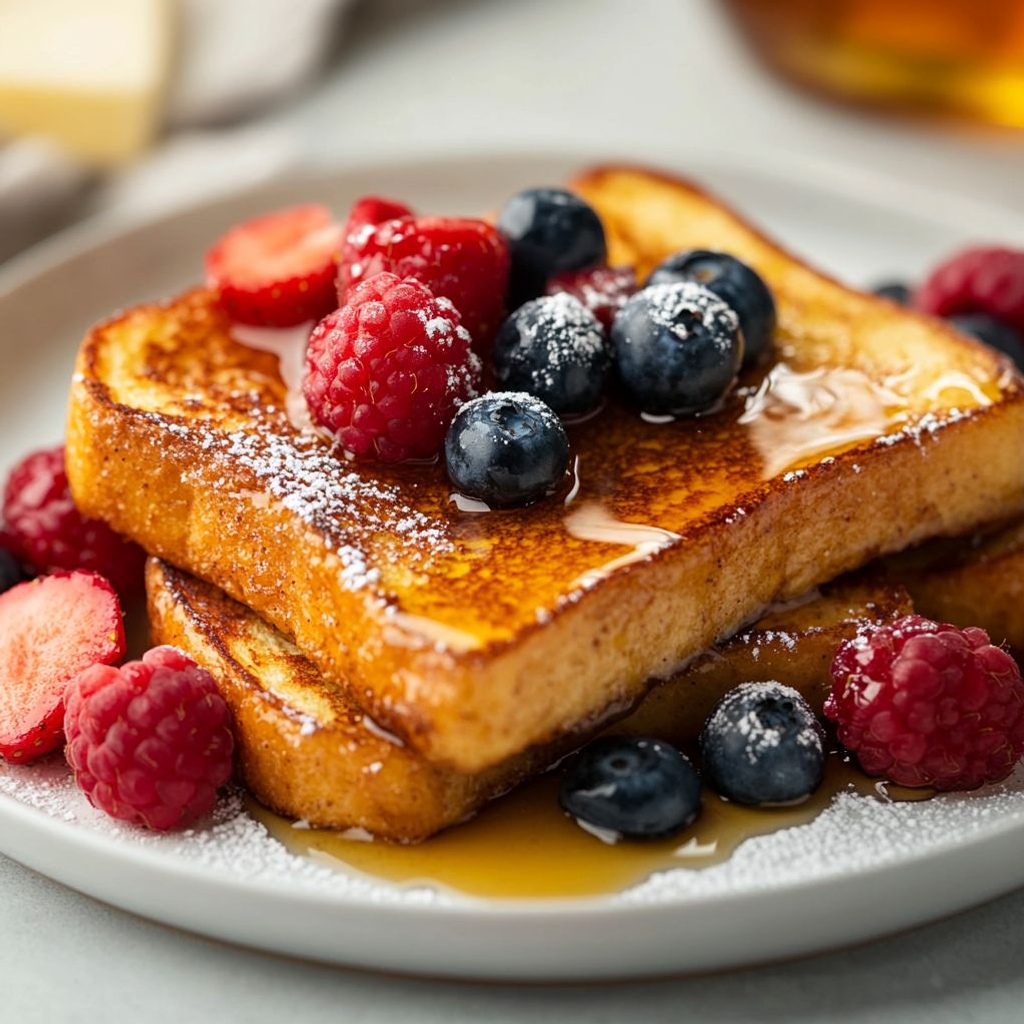
→ A gentle warm environment preserves crust crispness and ensures all pieces are served together at optimal temperature. - Finish and serve: transfer the hot berry French toast to plates, dust with powdered sugar if desired, drizzle maple syrup generously over the top, and arrange extra berries around the toast for color and contrast; serve immediately.
→ Powdered sugar adds a delicate sweetness and visual appeal; maple syrup provides moisture and a classic complement to the custard and berries, while extra berries add fresh brightness.
Notes
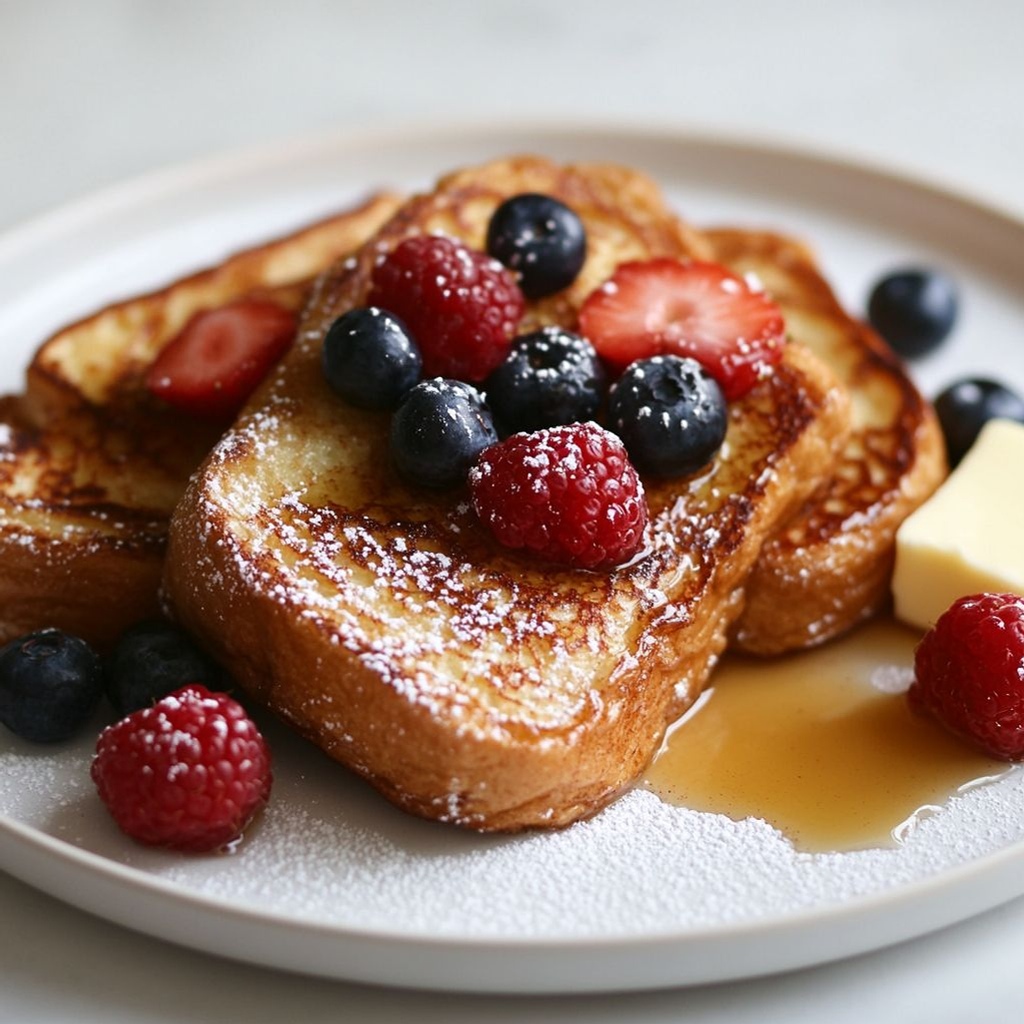
These Berry French toast slices are a luscious, brunch-worthy dish featuring a creamy vanilla custard threaded with lemon zest and a bright berry layer. Use thick-cut brioche or challah (preferably day-old) so the slices soak without falling apart, and if you only have fresh bread, toast slices lightly to dry them out. Whisk 4 eggs with 1 cup milk, 2 tablespoons heavy cream, 1 teaspoon vanilla, 1 tablespoon sugar (optional), 1/2 teaspoon ground cinnamon (optional), and 1/4 teaspoon salt until completely blended. Dip each bread slice for 20-30 seconds per side to saturate without becoming soggy, then spread a layer of berries and a little zest between slices or fold berries into the custard if you like. Fry in 2 tablespoons unsalted butter over medium heat until golden and crisp on both sides, flipping carefully and adjusting heat to prevent scorching. For dairy-free versions, substitute fortified plant milk and full-fat coconut milk or a splash of oil to replace the cream, and cook in a light coat of neutral oil instead of butter; you can add a small amount of dairy-free butter substitute at serving if desired. Serve with real maple syrup, extra berries, and a light dusting of powdered sugar if you prefer. Extra tips: thaw frozen berries completely and pat dry before using, grate a little lemon zest over the finished toast to boost brightness, and use day-old bread for the best texture. Leftovers refrigerate well for a day or two and reheat in a skillet or toaster oven to restore crispness.
Tips
Tips for Berry French Toast
- Choose thick-cut brioche or challah for the best texture. Day-old bread soaks up the custard evenly and stays sturdy when fried; if you only have fresh bread, toast slices lightly to dry them out a bit before soaking.
- Whisk the custard thoroughly: eggs, milk, optional cream, vanilla, sugar, cinnamon, and salt should be completely integrated. Let the mixture rest for 5 minutes to allow the flavors to meld before soaking the bread.
- Soak timing matters: for thick slices, 30–60 seconds per side is typically enough. If your bread is very dense, you can extend soaking to about 2 minutes per side, but avoid oversoaking which can make the toast fall apart.
- Berry layer prep: macerate berries with a touch of lemon zest and a pinch of sugar for 5–10 minutes. This draws out juices and creates a bright, natural syrup that enhances the filling and the top.
- Frozen berries: fully thaw and pat dry to prevent extra moisture from making the custard watery. Chop larger berries for even distribution within the toast.
- Pan setup: use medium heat and a combination of butter with a small amount of neutral oil if you’re worried about the butter scorching. This gives a rich flavor with a crisp, even crust.
- Avoid crowding the pan: fry in batches so each slice has space. Crowded pan traps steam and softens the crust rather than browning it.
- Flavor boosters: add a pinch of orange or lemon zest to the custard for extra brightness. A pinch of ground cardamom also pairs nicely with berries if you want a more aromatic profile.
- Layering technique: distribute berries between slices or on top after frying for more pronounced berry bites. Lightly folding some berries into the custard bath can also infuse every bite with berry flavor.
- Keeping warm: once cooked, keep toast warm in a low oven (about 200°F/90°C) while finishing the rest. This prevents serving cold portions and maintains crisp edges.
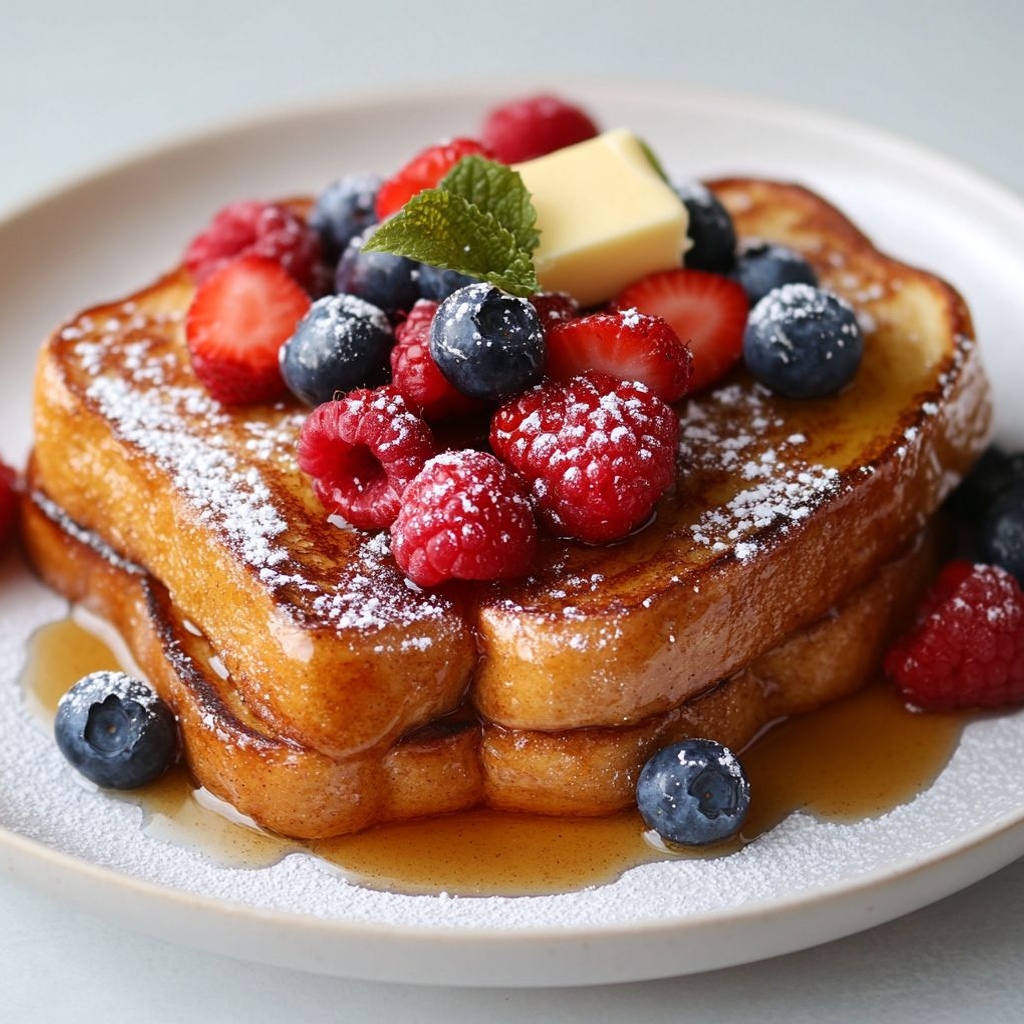
- Serving notes: finish with real maple syrup and a dusting of powdered sugar for a classic look and a touch more sweetness. Extra berries on top add color, texture, and freshness.
- Dietary tweaks: for dairy-free versions, use fortified plant milk and omit heavy cream or substitute with full-fat coconut milk. If you want more richness, add a splash of oil to the dairy-free custard.
FAQ
What ingredients do I need for Berry French Toast?
Core ingredients to gather:
- 6 slices thick-cut bread (brioche or challah recommended)
- 4 eggs
- 1 cup milk (any kind, dairy or dairy-free)
- 1 teaspoon vanilla extract
- 1/2 teaspoon ground cinnamon
- Pinch of salt
- 1–2 tablespoons sugar (optional, adjust to taste)
- 1 cup mixed berries (fresh or frozen, e.g., strawberries, blueberries, raspberries)
- Butter or oil for cooking
- Maple syrup or powdered sugar for serving
Can I make Berry French Toast ahead of time?
Yes. You can mix the batter up to 24 hours in advance and chill it in the fridge. For best texture, store the bread separately and dip it in the batter just before cooking to avoid sogginess.
What type of bread works best?
Use day-old or well-staled thick-cut bread like brioche, challah, Texas toast, or sturdy loaf slices. Softer sandwich bread can fall apart; gluten-free options can work but may be a bit denser.
How do I prepare the berry topping?
Option 1 (stovetop berry compote): Sauté berries with a tablespoon of sugar and a splash of lemon juice over medium heat until gently bubbling and saucy, 5–7 minutes. Option 2: toss berries raw on top just before serving. For frozen berries, thaw and drain before using.
Can I make this dairy-free or egg-free?
Yes. For dairy-free, use a plant-based milk and a dairy-free butter or oil for cooking. For an egg-free option, use an egg substitute or flax eggs (1 tablespoon ground flaxseed + 3 tablespoons water per egg, mixed and rested 5 minutes). Note that texture may be slightly different without eggs.
How do I cook it to avoid soggy centers?
Dip each bread slice briefly in the batter (about 10–15 seconds per side) and let excess drip off. Cook on a preheated skillet over medium heat with a little butter or oil. Cook 2–3 minutes per side until the outside is golden and the center is set. Work in batches to maintain even heat.
How do I reheat leftovers?
Rewarm in a skillet over low–medium heat with a touch of butter until warmed through and lightly crisp. Alternatively, reheat in a 350°F (175°C) oven for about 8–10 minutes. Avoid soggy microwaving if possible for best texture.
Can I freeze Berry French Toast or its components?
Freezing whole cooked slices works best when done after cooking and cooling, then reheated in the oven. To prep ahead, you can freeze the batter (in a tightly sealed container) for up to 1 month, but batter texture may change slightly. Thaw completely before dipping bread.
Are there good substitutions or ways to reduce sugar?
Yes. To reduce sugar, use only 1 tablespoon to 1 teaspoon, or omit entirely and rely on the berry sweetness and maple syrup. You can add a pinch of nutmeg or orange zest for extra flavor without extra sugar. If you prefer a lighter version, fewer eggs or a lower-fat milk can be used, but expect a lighter texture.
Serving ideas and toppings
Serve warm with maple syrup and extra berries. Add a dollop of yogurt or whipped cream for richness. A dusting of powdered sugar, a drizzle of berry compote, or a squeeze of lemon juice can brighten the dish.