Introduction / Hook
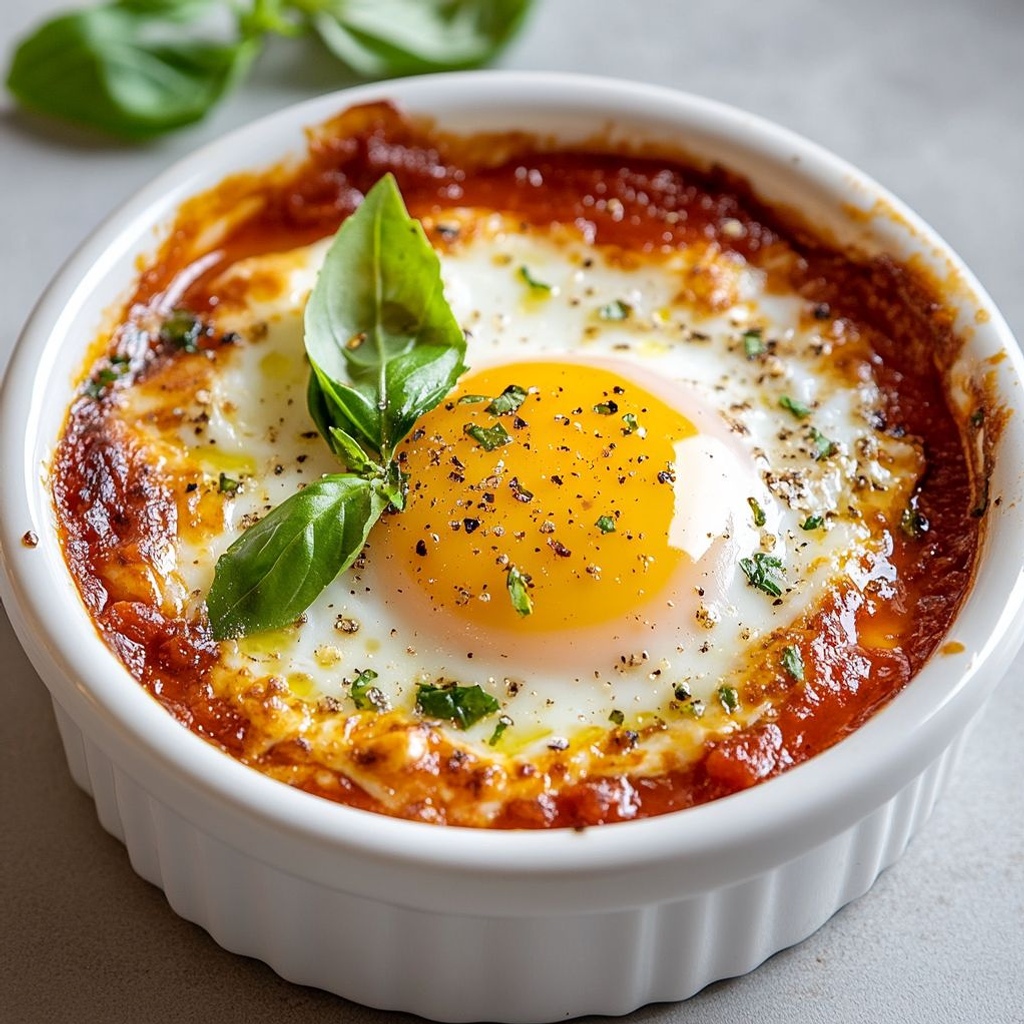
Imagine a sunny kitchen in Naples, the scent of ripe tomatoes warming the air, and a skillet that holds a simple, beautiful promise: eggs that gleam like little suns, nestled in a pool of glossy red sauce. Uova napoletane al forno are not just a dish; they are a comforting ritual, a breakfast thoughtfulness that travels well beyond the morning hour, and a family-friendly crowd-pleaser that can morph from a humble weeknight supper into a festive centerpiece. The beauty of this recipe lies in its balance—tomatoes bright with sunshine and a whisper of garlic, melted cheese that tucks the eggs into a velvet embrace, and a crackling edge of crusty edges where the sauce and cheese caramelize into something deeply soulful. Every bite offers a chorus of textures: the soft, just-set yolk that oozes into the tomato bath, the tender egg white that has learned patience in the oven, and the cheese that brings a gentle, creamy tang. If you crave comfort food with character, this dish rewards slow anticipation and quick service alike, a rare combination that makes it perfect for both intimate dinners and lively gatherings.
The Story Behind the Dish
Uova napoletane al forno are rooted in the culinary heartbeat of Naples, a city that knows how to coax maximum flavor from simple ingredients. Naples has long celebrated the tomato as a star player, turning garden-fresh harvests into sauces that sing with brightness, depth, and a touch of sweetness. The technique of baking eggs in a tomato-scented sauce likely grew out of necessity and ingenuity—home cooks wanting to stretch a single pot of sauce into a nourishing, all-in-one meal. In Neapolitan kitchens, the oven is a trusted ally, transforming the surface of the dish into a sun-kissed crust while the interior remains luxuriously tender. The dish embodies a culinary philosophy that values harmony over hype: each component supports the others, never outshouting, always collaborating to deliver a comforting and satisfying bite. Over time, regional tweaks and family secrets—whether a pinch of oregano here, a splash of white wine there, or a final shower of pecorino—have layered this dish with personal memory and cultural nostalgic. Today, it stands proudly as a bridge between rustic street food and homey Sunday suppers, inviting you to write your own chapter in a long, delicious lineage.
Why You’ll Love This Recipe
- One-pot comfort: A single pan delivers a complete meal with protein, vegetables, and dairy, minimizing cleanup and maximizing flavor.
- Family-friendly versatility: Gentle enough for kids, yet flavorful enough to satisfy adults, making it ideal for mixed age groups.
- Breakfast to dinner: Works beautifully for brunch, lunch, or a cozy dinner, adapting to your schedule and appetite.
- Make-ahead potential: The sauce can be prepared ahead of time, and eggs can be added just before baking for a quick weeknight meal.
- Wine-friendly and crowd-pleasing: The acidity of tomatoes and the creamy cheese balance well with a light white wine or a glass of something simple and refreshing.
- Vegetarian-friendly by design: A comforting plant-forward option that can be easily adapted to include optional meat additions if desired.
Flavor Profile & Texture
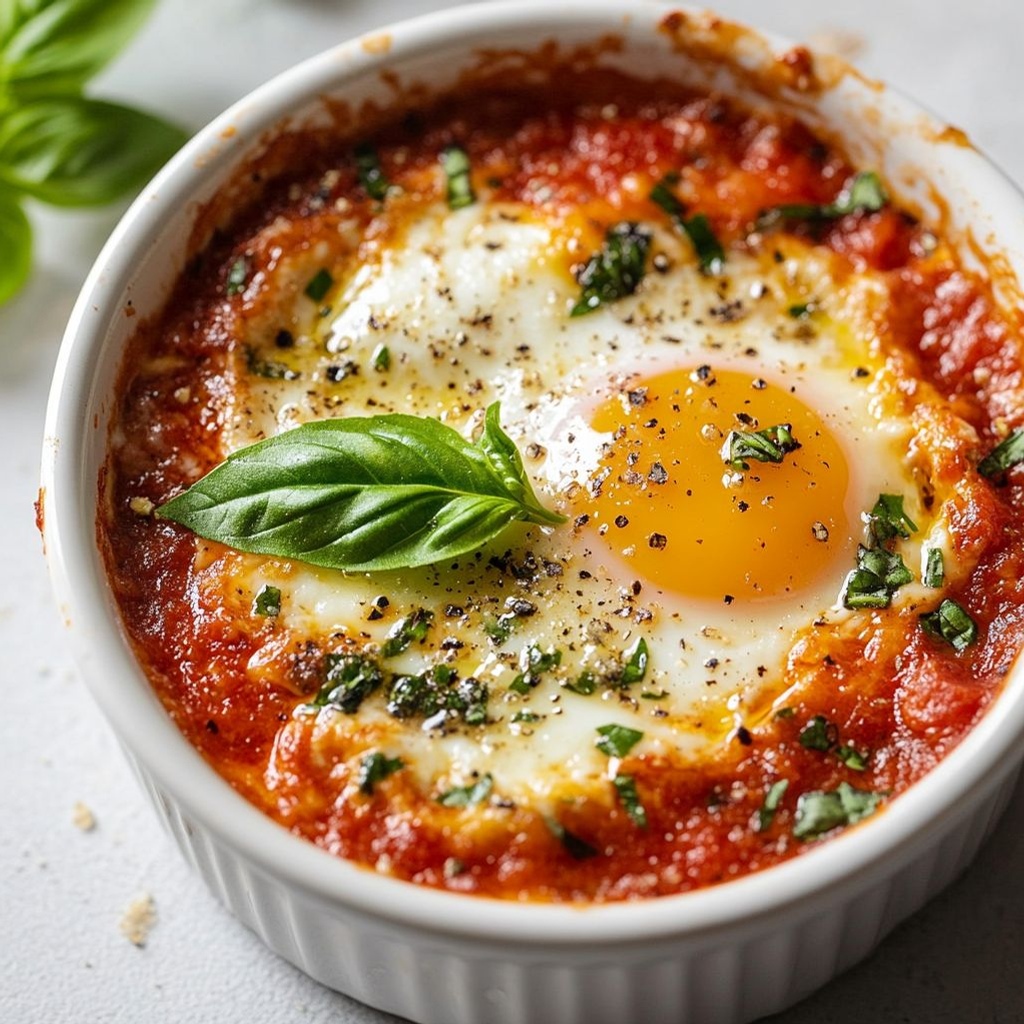
The essence of Uova napoletane al forno lies in the tango between tomato brightness and the mellow richness of dairy, punctuated by a hint of herbaceous lift. The tomato sauce is typically tomato-forward—simmered until it glows with a natural sweetness and a whisper of garlic, onion, and olive oil. There’s a gentle tang that comes from ripe fruit tomatoes, balanced by a soft sweetness that intensifies as the sauce thickens. When the eggs are nestled into this warm bath and the dish bakes, the whites become tender, the yolks remain luxuriously runny or softly set depending on timing, and the cheese on top creates a sunlit crust that is at once silky and slightly chewy. The result is a multi-layered mouthfeel: the initial scoop offers a creamy, rich interior with a bright, almost entrancing tomato bite; the edges introduce a faint caramelization and a touch of savoriness from the cheese and olive oil. Fresh herbs—basil or parsley—offer a green, peppery finish that lingers on the palate, like a final, fragrant whisper that invites another bite.
Texture-wise, the dish balances creamily smooth elements with contrasting textures: the egg whites provide a soft, yielding bite; the yolk, depending on cooking time, can run like molten gold or be perfectly custardy; the sauce stays thick and spoonable without being heavy; the cheese forms a delicate, lightly crisped crust that adds a gratifying chew. The overall sensation is comforting and sunny, a reminder of home and of meals shared around a table where every guest feels both welcomed and pampered.
Occasions & Pairings
This dish shines in a variety of settings. It’s ideal for a make-ahead weekend brunch that gracefully converts into a weeknight dinner, a cheerful lunch in a sunlit kitchen, or a relaxed supper for guests who appreciate a dish with soul and simplicity. It also makes a fantastic centerpiece for casual gatherings, where the family-style presentation invites conversation as much as appetite.
Pairing suggestions to elevate the experience:
- Side dishes: A simple crusty loaf or garlic bread to scoop up every last drop of sauce; a light arugula or fennel salad to provide a crisp, peppery contrast; steamed green vegetables like broccolini or green beans for color and crunch.
- Drinks: A dry white such as Soave, Verdicchio, or a crisp Pinot Grigio; a sparkling water with a twist of lemon for brightness; or a light red like a Chianti for those who prefer red with tomato-based dishes.
- Desserts: A delicate citrus dessert, such as lemon panna cotta or orange-blossom–infused panacotta, to finish on a fresh, bright note that complements the dish without overwhelming it.
Tips, Variations & Substitutions
- Herb variations: While basil is classic and aromatic, you can experiment with oregano, thyme, or a mix of Italian herbs to tailor the aroma to your taste. A pinch of crushed red pepper can introduce a welcome warmth if you like a touch of heat.
- Cheese options: Traditional Neapolitan preparations often use mozzarella, sometimes mixed with a sharper cheese like pecorino or a sprinkling of Parmigiano-Reggiano. If you’re dairy-free, opt for a high-quality almond or cashew cheese that melts well, or skip the cheese altogether and finish with a drizzle of extra virgin olive oil and a squeeze of lemon.
- Vegetarian and vegan twists: Keep the dish vegetarian by avoiding any meat additions; for a vegan version, use plant-based cheese that melts smoothly and base the sauce on high-quality canned tomatoes or fresh tomatoes simmered with olive oil, garlic, and onion.
- Protein add-ins: Some cooks like to add crumbled sausage, pancetta, or chorizo into the sauce for a heartier bite. If you choose to add meat, ensure it is cooked through before the eggs are added to the dish.
- Tomato texture: For a rustic finish, chop tomatoes by hand and let them simmer down, or use crushed tomatoes for a smoother, more uniform sauce. Fresh tomatoes can be used in peak season, but canned tomatoes often provide a richer depth of flavor in year-round cooking.
- Egg doneness: If you prefer a completely set yolk, bake the dish a few minutes longer; for a runnier center, remove when the whites are just firm and the yolks still gleaming with liquid gold.
- Herb finish: Finish with a handful of fresh basil leaves torn over the top just before serving to preserve bright, aromatic oils and color.
Storage & Make-Ahead Ideas
One of the practical joys of this dish is its adaptability for planning ahead. The tomato sauce often tastes even better the next day as flavors meld. You can prepare the sauce in advance and refrigerate it for up to 2 days. When ready to serve, reheat gently and add fresh eggs to bake. If you prefer to bake everything in one go, you can assemble the sauce and portion it into individual ramekins or a baking dish, then refrigerate. When you’re ready to eat, crack the eggs into the warmed sauce and bake as directed. Leftovers can be stored in the refrigerator for up to 2 days. Reheat gently in the oven or on the stove, and add a splash of water or broth if the sauce thickens too much. Freeze is an option for the sauce alone, up to 3 months; thaw in the refrigerator overnight and reheat before proceeding with the eggs when you’re ready to cook.
Make-ahead strategies to simplify weeknights:
- Prep the base sauce in big batches: onions, garlic, tomatoes, and olive oil can be simmered and cooled, then stored. When you’re ready to bake, reheat the sauce, portion into dishes, crack in eggs, and bake.
- Set up a “meal kit” station: keep eggs, cheese, and herbs on hand, ready to be added to reheated sauce for a last-minute, cozy meal.
- Meal customization: consider adding vegetables like spinach, roasted peppers, or artichoke hearts during the sauce preparation for extra color and nutrients.
Fun Facts & Trivia (Optional)
Neapolitan cuisine is deeply regional, and many dishes reflect the city’s history as a bustling port where ingredients from the sea, land, and markets converge. The humble tomato, once considered a exotic novelty in Europe, became a cornerstone of Southern Italian cooking in the 18th and 19th centuries, fueling dishes that celebrate vibrant color and robust flavor. In Naples, the oven has always been a magical equalizer, turning simple pantry staples into comforting, soul-satisfying meals. A small dish like Uova napoletane al forno embodies the spirit of Italian home cooking: straightforward, soulful, and designed to bring people together around a shared meal. Fun fact: in some households, a pinch of fennel pollen or a drizzle of black pepper on top is believed to evoke the scent of a seaside breeze, reminding diners of the region’s coastlines even when they’re far from the sea.
As you explore this recipe, you may discover your own regional or familial twists—an opportunity to keep a timeless tradition alive while making it uniquely yours. The sauce’s versatility means you can adapt the dish to reflect what you have in your pantry, your dietary preferences, or the season’s freshest produce. The result is not merely a plate of baked eggs; it’s a story you tell with color, aroma, and texture, a small celebration of life, warmth, and everyday joy.
Ingredients
Uova Napoletane al Forno
- 2 tablespoons extra-virgin olive oil
→ Use good-quality olive oil as the flavor base for the sauce. Warm it over medium heat until shimmering, then sauté aromatics to develop a rich foundation for the baked eggs. Avoid overheating to prevent burning the oil. - 1 small onion, finely chopped
→ The onion provides natural sweetness and body to the tomato sauce. Finely chop so it moshes into the sauce rather than remaining chunky, and sauté until translucent and soft for a smooth texture. - 2 garlic cloves, minced
→ Garlic adds aromatic depth to the sauce. Mince finely and add after the onion begins to soften to prevent scorching; you want a gentle aroma rather than a bitter, burnt note. - 1 can crushed tomatoes (28 oz / 796 g)
→ This forms the sauce base that absorbs the eggs’ flavors. Choose high-quality crushed tomatoes for a balanced, slightly sweet-tresh tomato flavor. If you only have whole tomatoes, crush them by hand or with a spoon before simmering. - 1 tablespoon tomato paste
→ Intensifies tomato flavor and helps the sauce cling to the eggs. Stir it in with the onion and garlic so it blooms and thickens the sauce slightly. - 1/2 teaspoon fine sea salt
→ Essential for balancing and enhancing all other flavors. Start with this amount and adjust to taste after simmering the sauce; remember that cheeses will add salt too. - 1/4 teaspoon freshly ground black pepper
→ Adds a subtle warmth and depth. Freshly ground pepper is preferred for a brighter, more pronounced flavor. - Pinch red pepper flakes (optional)
→ If you enjoy a gentle kick, this will add subtle heat without overpowering the tomato base. Adjust to your preferred heat level. - 1 teaspoon granulated sugar (optional)
→ Helps balance the natural acidity of the tomatoes. Add gradually and taste; omit if your tomatoes are naturally sweet or if you prefer a more tart sauce. - 6 fresh basil leaves, torn
→ Fresh basil brightens the sauce with herbal notes. Tear the leaves to release essential oils and fold into the sauce toward the end of simmering for aroma, or reserve a few whole leaves for garnish.
Eggs and Cheese
- 4 large eggs
→ The star of the dish. Crack each egg gently on top of the simmering sauce in a baking dish so the whites set around the yolks. Bake until the whites are just set and the yolks reach your preferred doneness (usually soft to medium for Neapolitan style). - 1/2 cup shredded mozzarella cheese (or 150 g fresh mozzarella, torn)
→ Provides a creamy, melty layer over the eggs. If using fresh mozzarella, tear into uneven chunks so it distributes and melts more evenly; shredded low-moisture mozzarella yields a more uniform melt. - 1/4 cup grated Parmesan cheese
→ Adds a sharp, salty finish and helps develop a slightly crusty top. Mix a portion into the sauce for deeper flavor and reserve a little to sprinkle over the eggs before baking for a tasty finish. - 1/4 cup grated Pecorino Romano (optional)
→ An optional tangier, saltier cheese that complements the sweetness of the tomatoes. If used, reduce the salt in the sauce slightly to avoid oversalting.
Optional Add-ins
- 1/4 cup pitted black olives, sliced
→ Briny bits add depth and a Mediterranean contrast to the creamy cheese and tomato base. Slice evenly so they distribute nicely in each bite. - 1 tablespoon capers, drained
→ Capers bring a sharp, lemony brininess that brightens the sauce. Rinse and pat dry to remove excess salt before adding. - 4-6 fresh basil leaves, torn (for garnish)
→ Additional fresh basil on top provides a vibrant aroma and a final basil lift just before serving. - Pinch chili flakes (additional heat)
→ If you crave more heat, a small pinch of chili flakes can be sprinkled over the finished dish or stirred into the sauce before baking.
Instructions
- Preheat your oven to 350°F (175°C) and lightly grease a shallow baking dish or arrange six 6-ounce ramekins; this ensures even heat distribution and prevents the eggs from sticking to the surface.
→ Greasing or lining creates a smooth surface for the sauce and eggs, and makes unmolding the finished dish effortless. - Warm the extra-virgin olive oil in a medium skillet over medium heat until it shimmers, then add the finely chopped onion and sauté until translucent and soft, about 5 to 7 minutes; this builds a sweet, savory base that carries the tomato and cheese.
→ Sautéing the onion melts its sugars and reduces raw sharpness, creating a silkier sauce. - Add the minced garlic and cook for 30 to 60 seconds, stirring constantly, until fragrant but not browned; this preserves delicate garlic aroma and avoids bitter notes.
→ Garlic burns quickly; cooking briefly with the onions ensures a gentle aroma and integrated flavor. - Stir in the tomato paste and cook for 1 minute to bloom its flavor and help the sauce cling to the eggs, then mix it evenly with the onions and garlic.
→ Blooming tomato paste concentrates its sweetness and deepens the overall sauce, preventing a flat tomato taste. - Pour in the crushed tomatoes and season with fine sea salt, freshly ground black pepper, and optional sugar; bring the mixture to a gentle simmer over medium-low heat, then reduce to a simmer to thicken slightly without scorching.
→ A gentle simmer prevents scorching and helps the tomato flavor concentrate for a richer sauce base. - Simmer the sauce for 15 to 20 minutes, stirring occasionally, then tear in the fresh basil leaves toward the end and adjust seasoning; this concentrates the tomato sweetness and infuses herbal brightness.
→ Fresh basil released at the end provides vibrant aroma without cooking out its delicate oils. - If using optional add-ins, fold in sliced black olives and drained capers during the last 4 to 5 minutes of simmering; this preserves their texture and integrates their briny notes without overpowering the sauce.
→ Evenly distributed add-ins create little bursts of flavor in every bite rather than salty hotspots. - Spread the sauce evenly in the prepared baking dish and, with the back of a spoon, create four shallow wells across the surface to cradle the eggs; this ensures each egg cooks evenly and sits nicely above the sauce.
→ The wells guide the eggs into uniform positions so they bake consistently and present well. - Crack four large eggs, one into each well, being careful not to break the yolks; if using ramekins, crack an egg into each dish after spooning sauce into each portion; this keeps the whites from spreading too much and ensures yolks stay centered.
→ Gentle hands prevent yolk rupture, which would leak whites and affect cooking time. - Sprinkle shredded mozzarella evenly over the eggs and sauce, or scatter torn fresh mozzarella, followed by grated Parmesan and Pecorino Romano if using, distributing in a thin layer to promote melt and create a slightly bubbly top.
→ Cheese distributes heat, melts into the sauce, and forms a delicious cheesy crust that locks in moisture. - Bake in the preheated oven until the egg whites are just set and the yolks reach your preferred doneness, typically 10 to 15 minutes in a shallow dish; start checking at 10 minutes to prevent overcooking the yolks; the surface should be gently bubbling and the cheese should be lightly golden.
→ Timing depends on dish depth and yolk firmness; watching early prevents overcooking and preserves runny yolks. - Remove the dish from the oven with oven mitts and let rest 2 to 3 minutes before serving; this resting allows carryover cooking to finish the eggs and gives the sauce a chance to thicken slightly for easy spooning.
→ A short rest prevents scorching the tongue and helps the sauce cling to the eggs for a cohesive bite. - Garnish with torn additional fresh basil leaves and, if desired, a pinch of extra chili flakes; serve immediately with crusty bread or toasted crostini to soak up the sauce.
→ Fresh herbs at the end lift the aroma and the bread provides textural contrast to the silky eggs and sauce.
Notes
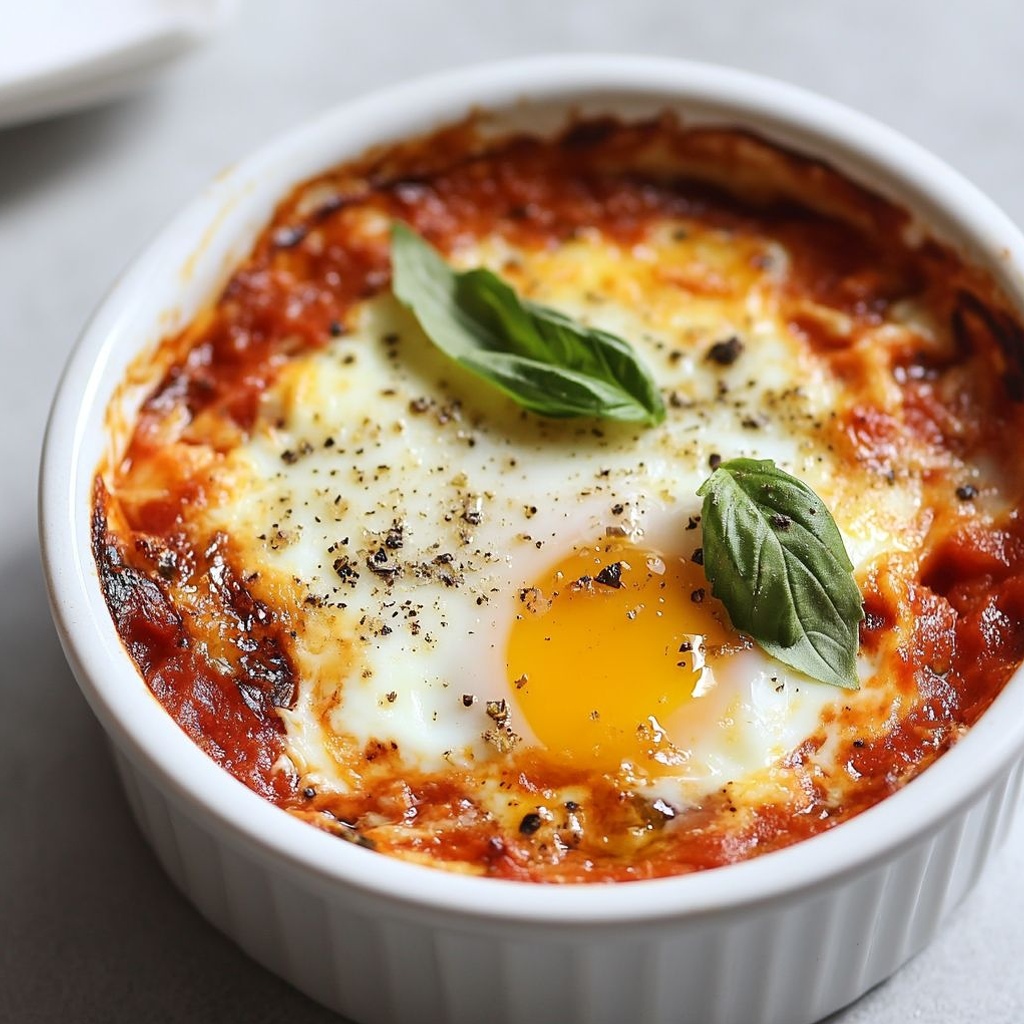
These Neapolitan baked eggs are naturally gluten-free and feature a rich tomato-based sauce enriched with onion, garlic, and fresh basil, then crowned with mozzarella and Parmesan for a creamy, bubbly finish. You can customize them by stirring in or topping with olives, capers, extra torn basil, and, if you like a gentle kick, a pinch of red pepper flakes. Bake in a shallow, wide dish so the eggs nestle into the sauce and whites set around the yolks while the tops stay silky; bake time is about 8–12 minutes, depending on how runny you like the yolks. For a sharper edge, fold a little Pecorino Romano into the sauce and reserve some to scatter over the eggs before baking. They reheat well for leftovers—cover and warm gently in a moderate oven. Serve with warm gluten-free bread or a crisp green salad; a drizzle of extra-virgin olive oil just before serving can brighten the flavors. Always ensure canned tomatoes and cheeses are gluten-free if you have gluten intolerance.
Tips
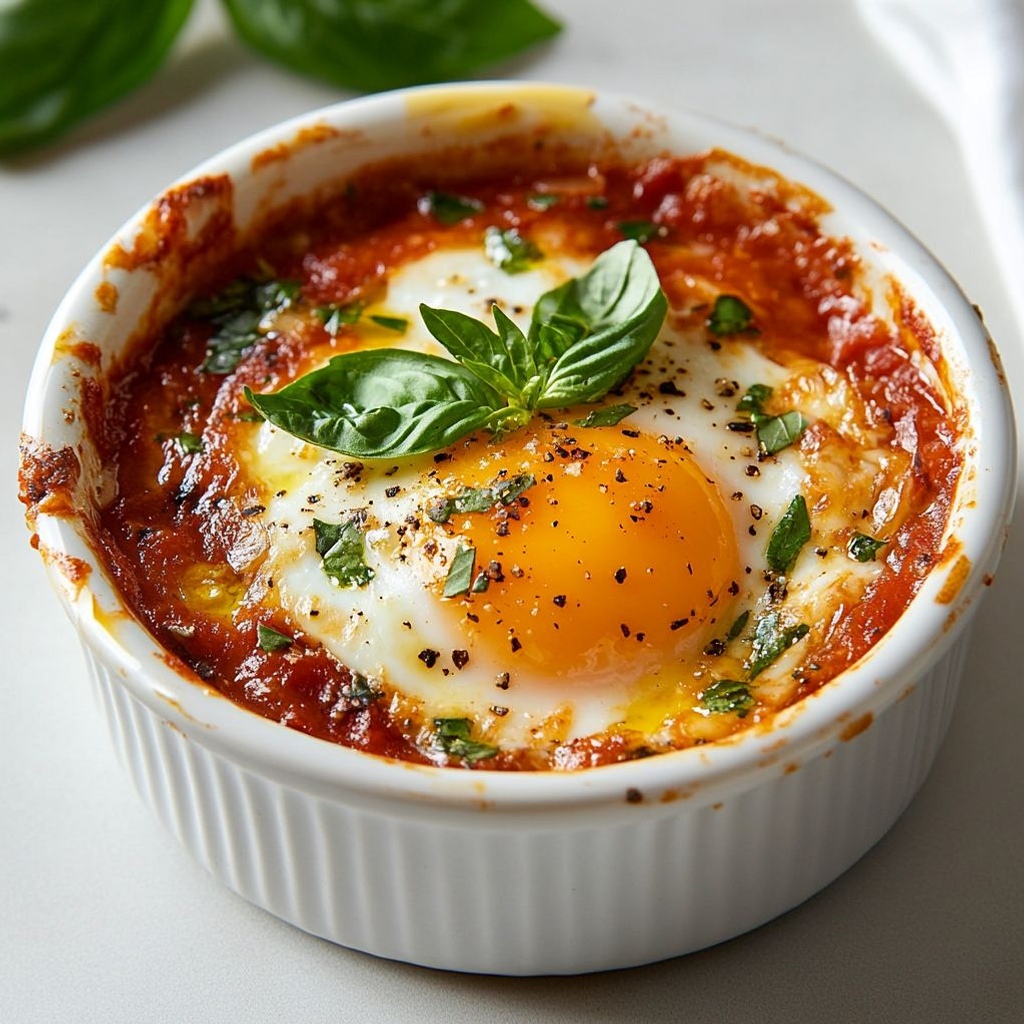
Tips pratici per Uova napoletane al forno
- Scegli olio extra-vergine di buona qualità: scalda l’olio a fuoco medio finché scintilla, poi aggiungi gli aromi. Evita di fumare l’olio per non rischiare sapori amari.
- Per una base di salsa soffice e dolce, lascia stufare la cipolla finché non è trasparente e morbida prima di aggiungere l’aglio. L’aglio va inserito dopo che la cipolla inizia ad ammorbidire per evitare che bruci.
- Usa pomodori schiacciati di buona qualità e, se usi pomodori interi, spezzali con il cucchiaio prima della cottura. Il sapore deve restare equilibrato, non troppo acido.
- Incorporated il concentrato di pomodoro: aggiungilo con la cipolla e l’aglio per farlo sbianchire e addensare leggermente la salsa, così le uova si mantengono ben legate al sugo durante la cottura.
- Regola il sale gradualmente: in genere 1/2 cucchiaino è un buon punto di partenza, ma ricordati che i formaggi aggiungeranno sale. Aggiusta solo verso fine cottura.
- Il pepe fresco aggiunge profondità: macinalo al momento per un aroma più brillante.
- Se desideri un tocco di piccantezza, aggiungi una punta di peperoncino in fiocchi nella salsa o come finishing touch.
- La dolcezza bilancia l’acidità: lo zucchero è opzionale; aggiungilo poco per volta e assaggia. Omettilo se i pomodori sono già dolci o preferisci una salsa più acida.
- Freschezza del basilico: spezzetta le foglie di basilico all’ultimo momento e incorporale verso la fine della cottura per mantenere l’aroma intenso. Riserva alcune foglie per guarnire.
- Metti le uova direttamente sulla salsa già sobbollente: rompi ogni uovo con delicatezza per evitare di rompere i tuorli. L’albume si rapprende attorno al tuorlo senza renderlo troppo cotto.
- Formaggio in strati: mescola una parte di parmigiano nella salsa per una nota sapida e crea uno strato superiore con mozzarella (se possibile, spezzetta la mozzarella fresca in pezzi irregolari per una melting uniforme) o usa mozzarella a basso contenuto di umidità per un topo di fusione.
- Cuoci al forno a temperatura moderata: preriscalda il forno a circa 180°C (350°F). Cuoci finché gli albumi sono setti e i tuorli restano morbidi (tipicamente 12–15 minuti). Se preferisci tuorli più cotti, prolungare leggermente la cottura.
- Controllo durante la cottura: se vuoi verificare la cottura, muovi leggermente la teglia: i tuorli dovrebbero muoversi solo leggermente se vuoi un centro morbido.
- Forme e contenitore: usa una teglia o una pirofila resistente al forno ben imburrata o oliata per evitare che il sugo si attacchi e per facilitare la pulizia.
- Guarnizioni e presentazione: termina con un filo d’olio extravergine a crudo e basilico fresco. Servi con pane casereccio croccante per fare la scarpetta nel sugo.
- Preparazione anticipata: puoi preparare la salsa in anticipo e conservarla in frigorifero. Quando è ora di cuocere, aggiungi le uova sopra la salsa fredda e poi inforna. Le uova si cuoceranno in modo uniforme grazie al calore già presente nel piatto.
- Varianti e sostituzioni: se vuoi una versione più leggera, riduci la quantità di formaggio o sostituisci la mozzarella con una mozzarella light, mantenendo però la cremosità con un tocco di crema o ricotta salata a piccole dosi.
FAQ
Che cosa sono le Uova napoletane al forno?
Un piatto della cucina napoletana in cui le uova vengono cotte al forno su uno strato di salsa di pomodoro speziata, spesso arricchite con formaggi fusi e una nota croccante data dal pangrattato. Viene servito caldo come piatto unico o accompagnamento.
Quali ingredienti servono per 4 porzioni?
Base: 4 uova, 400 g di passata o pomodori pelati schiacciati, 2 cucchiai di olio extravergine d’oliva, 1 spicchio d’aglio, cipolla facoltativa, peperoncino a piacere, sale, pepe, basilico fresco. Per la gratinatura: 150 g circa di mozzarella o scamorza tagliata a cubetti e 40–60 g di parmigiano o pecorino grattugiato. Opzionale: pangrattato per una crosticina extra.
Come si prepara la salsa di pomodoro per la base?
Soffriggi leggermente aglio (e cipolla, se vuoi) in olio d’oliva. Aggiungi la passata o i pomodori pelati schiacciati, sale, pepe e peperoncino. Lascia sobbollire 8–12 minuti finché la salsa si addensa e i sapori si amalgamano. Aggiungi basilico spezzettato alla fine.
Qual è la procedura passo-passo?
1) Preriscalda il forno a 180–200°C. 2) Ungi leggermente una teglia o una pirofila. 3) Stendi uno strato sottile di salsa di pomodoro sul fondo. 4) Rompi delicatamente le uova sulla salsa, mantenendo spazio tra loro. 5) Copri con pepe, sale, formaggio grattugiato e cubetti di mozzarella/scamorza. 6) Se desideri, spolvera pangrattato per una crosticina croccante. 7) Inforna 10–15 minuti finché le uova raggiungono la cottura desiderata (tuorli morbidi o più sodi). 8) Guarnisci con basilico fresco prima di servire.
Qual è la temperatura e il tempo di cottura indicativi?
Cuoci in forno preriscaldato a 180–200°C per circa 10–15 minuti. Se vuoi tuorli molto morbidi, riduci leggermente i tempi; per tuorli più sodi prosegui per altri 2–3 minuti. Controlla visivamente.
È possibile prepararle in anticipo?
È consigliabile preparare la salsa in anticipo e assemblare le uova poco prima di infornarle. Puoi preparare la salsa e conservarla in frigo fino a 1–2 giorni. L’assemblaggio con uova va fatto poco prima della cottura per evitare che l’albume si cuocia troppo.
Posso personalizzare con formaggi o ingredienti extra?
Sì. Prova mozzarella, scamorza o fiordilatte per una fusione cremosa. Puoi aggiungere olive nere, capperi, acciughe leggermente tritate, o una spolverata di pepe di Cayenna per una versione piccante. Per una versione leggera, limita i formaggi o usa parmigiano al posto di mozzarella.
Come si serve e quali accompagnamenti abbinare?
Servile calde, magari accompagnate da fette di pane casereccio o bruschette. Un contorno di rucola o insalata fresca si abbina bene. Un filo di olio extravergine d’oliva a crudo e una spolverata di basilico donano freschezza al piatto.
Quali sono i consigli per una cottura perfetta?
Non cuocere troppo le uova altrimenti diventano dure. Distribuisci bene la salsa sul fondo per evitare punti troppo liquidi, usa una teglia non troppo grande per mantenere le uova vicine e cuocere in modo uniforme. Se vuoi una crosticina, aggiungi pangrattato e un po’ di formaggio in superficie.
Quali sono gli errori comuni e come evitarli?
Uova cotte troppo a lungo: riduci il tempo di forno. Salsa troppo liquida: lascia sobbollire più a lungo o aggiungi un po’ di concentrato di pomodoro. Uova che si rompono al momento di romperle: rompi le uova con una leggera pressione in modo da non creare schizzi, oppure aggiungi prima la salsa e poi versa delicatamente l’uovo vicino al bordo.
È possibile utilizzare alternative per diete specifiche?
Si: per una versione vegetariana, evita carne o prosciutto e preferisci formaggi magri. Per una versione a basso contenuto calorico, usa meno olio e meno formaggio, e aggiungi solo un tuorlo per porzione o opta per albume extra. Puoi sostituire la mozzarella con formaggio a basso contenuto di grassi o con una piccola quantità di ricotta salata per aggiungere cremosità.