Introduction / Hook
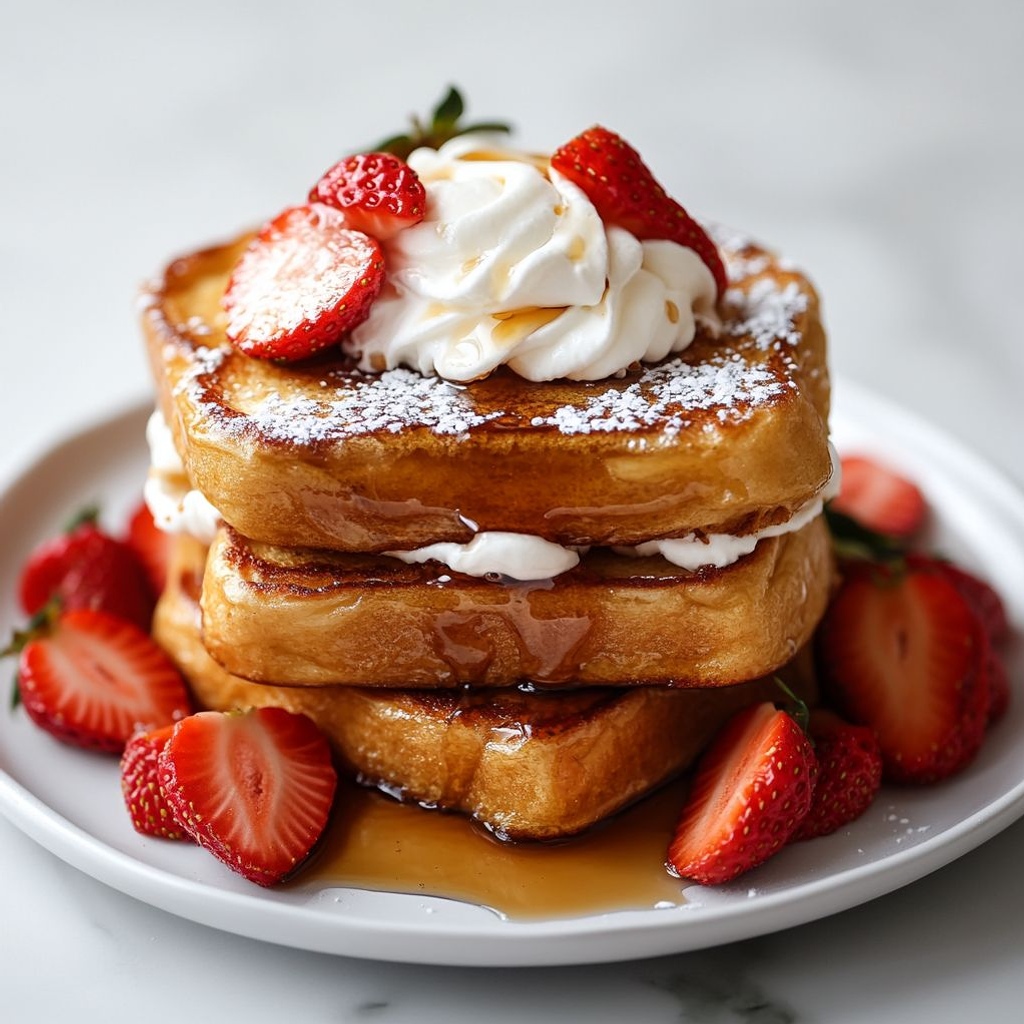
Imagine a bright kitchen at dawn, the air perfumed with vanilla and warm fruit. A stack of bread sits invitingly on the griddle, edges turning a gentle bronze while the center stays soft and custardy, like a sunrise you can taste. A ribbon of cream glides over the top, catching the light as if it were a silky veil, and ripe strawberries glisten with the promise of summer. This is French toast elevated into a moment you want to linger over—a breakfast that feels like a celebration, a scratch-made luxury that turns a simple morning into a cherished ritual. The combination of creamy richness and the bright sweetness of strawberries creates a harmony that’s both comforting and exciting, familiar enough to feel like home and elegant enough to serve for a leisurely brunch with friends or family. It’s the kind of dish that makes you pause, inhale deeply, and savor not just the flavors but the whole experience—the aah of the first bite, the soft crackle of the crust as the fork meets the surface, and the way the strawberry juice stains the cream with a blush of pink. In every bite you’ll taste a story: of Sunday kitchens, of late-night cooks who woke early just to see the sun hit the stovetop, of fruit picked at the peak of sweetness, of bread that carries a touch of sweetness and a tender crumb that holds a gentle custard dream. This is more than breakfast; it’s a moment of indulgence that fits inside a busy weekend and still leaves room for laughter, conversation, and long, lingering meals.
The Story Behind the Dish
French toast, or pain perdu in some traditions, is a tale told in kitchens across the world. Its origin is practical and poetic at once: a way to rescue day-old bread by transforming it into something mellow, comforting, and wonderfully satisfying. The dish has traveled far beyond its pragmatic roots, gathering variations as diverse as the cultures that embraced it. From the herb-scented mornings in a French countryside home to a bright, berry-studded brunch in a sunlit American kitchen, the concept remains the same—a slice of bread, dipped in a gentle custard of eggs and dairy, cooked to a delicate balance between tenderness and a light, caramelized crust. When you pair this timeless creation with cream and strawberries, you’re marrying the nostalgic warmth of a classic with the modern quick-fix glamour of fresh fruit and a luxurious topping. The strawberries bring a whisper of tartness and a pop of color that balances the sweetness, while the cream adds an unctuous, velvety dimension that feels indulgent without tipping over into heaviness. It’s a dish that invites conversation and slows time, a brunch staple that can be dressed up for a celebration or kept simple for a quiet weekend morning.
The lineage of this dish also nods to the practice of making the most of what you have. It’s about turning leftovers into something marvelous, transforming everyday ingredients into something memorable. In many households, the ritual isn’t just about feeding the body; it’s about feeding the spirit—the shared plates, the clinking of coffee cups, the easy laughter that follows a debate over whether the strawberries should be sliced or quartered, and the quiet joy of cleaning the kitchen together after a long week. When you serve French toast with cream and strawberries, you offer a little theater of breakfast—the sizzling sound behind the scenes, the scent of warm bread and vanilla drifting into the dining room, the moment of assembly as the fruit meets the cream, and the final reveal on a plate that looks almost too pretty to dig into. It’s comfort with a touch of luxury, a nod to home and a wink to refined brunch culture, a dish that respects both the heart and the palate.
Why You’ll Love This Recipe
- Instant brunch appeal: It looks as festive as a party plate but tastes like a Sunday morning at home.
- Luxuriously simple: The combination of cream and fresh strawberries adds elegance without requiring complex techniques.
- Versatile and forgiving: Works with many bread types, from hearty sourdough to brioche, and can be adapted to vegan or gluten-free preferences with straightforward substitutions.
- Family-friendly comfort: A dish that kids and adults alike adore, offering familiar flavors with a touch of indulgence.
- Make-ahead momentum: Can be prepared in stages, letting you turn a sleepy weekend into a seamless meal without stress.
- Seasonal brightness: Strawberries provide a vibrant, fragrant note that celebrates fresh produce and the joys of spring and early summer.
- Texture contrast galore: A crisp, caramelized exterior that yields to a soft, custardy interior balanced by the silky cream and juicy fruit on top.
- Perfect for celebrations: Elevates a birthday breakfast, Mother’s Day brunch, or a holiday morning with minimal effort and maximum impact.
Flavor Profile & Texture
Think of a dance between warm comfort and bright refreshment. The bread, when properly prepared, carries a gentle caramel crust—a honeyed crunch that gives way to a tender, almost soufflé-like interior. The custard beneath, if you close your eyes and imagine it, offers a whisper of vanilla, a soft warmth, and a subtle richness that lingers on the tongue. The cream adds a luxurious stream across the surface, cooling the sweetness with its cool, velvety texture and smoothing the contrast between the heat of the toast and the cool fruit. The strawberries contribute a lively acidity and aromatic brightness that lightens the dish, their natural fragrance and juiciness exploding with every bite. When you combine all three elements—bread with a crackly rim, satin-like cream, and jewel-like berries—the result is a symphony where each component plays its own part yet blends harmoniously with the others. The aroma alone is irresistible: toasted bread, vanilla, a whisper of cinnamon or nutmeg if you like, and the clean, fruity aroma of strawberries. On the palate, you experience a balance of textures—crisp edges giving way to plush centers, the smoothness of cream contrasting with the slight bite of the fruit, and a gentle sweetness that never overwhelms the strawberry’s natural tanginess. It’s a sensory experience that lingers, inviting a second helping and a moment to reflect on the simple pleasures of a well-made breakfast.
Occasions & Pairings
This dish shines in a variety of settings, from intimate mornings to lively gatherings. It’s ideal for weekend brunches when friends drop by, for a celebratory birthday breakfast, or as a comforting treat on a cozy Valentine’s Day morning. Its bright, fresh profile makes it a natural fit for spring and summer menus, but the comforting, universal appeal means it works beautifully all year round. When it comes to pairings, consider items that complement and elevate the flavors without competing with them:
- Drinks: A light sparkling wine or dry champagne for a festive brunch; a softly brewed coffee with cream on the side; or a fragrant green tea to echo the fruit’s acidity.
- Side dishes: A small green salad with a citrus vinaigrette to balance richness, or a platter of shaved citrus and mint for a refreshing contrast.
- Sweet accompaniments: A drizzle of maple syrup, a few extra strawberries, or a dollop of additional cream for those who crave more indulgence.
- Dessert-like finish: A light, zesty lemon curd spooned sparingly on the side can amplify brightness if you’re serving this as a late-morning dessert option.
Tips, Variations & Substitutions
Here are ideas to customize and adapt this dish to different diets and occasions, while preserving the essence of its appeal:
- Bread choices: Use sturdier bread to hold up to a gentle soak and a crispy exterior. Brioche delivers a rich, buttery flavor, challah offers a soft crumb with sweetness, and sturdy whole-grain loaves provide a nutty, hearty counterpoint.
- Cream alternatives: For a lighter version, opt for a dollop of yogurt or a splash of half-and-half. Dairy-free friends can enjoy a coconut cream or almond cream that still delivers a lush feel without dairy.
- Fruit variations: While strawberries are glorious here, blueberries, raspberries, sliced peaches, or a mixed berry medley can be wonderful substitutes. A drizzle of orange or lemon zest can add a bright citrus note that lifts the dish.
- Flavor boosters: A pinch of cinnamon, nutmeg, or cardamom in the cream or on the toast can add warmth and complexity. A splash of vanilla extract or orange blossom water can intensify aroma for a more luxurious feel.
- Texture tweaks: If you like extra contrast, finish with a light dusting of powdered sugar or a fine praline crumble on top to introduce a subtle crunch.
- Diet-friendly versions: For gluten-free diets, use a sturdy gluten-free bread that holds up to soaking. For vegan versions, use plant-based milk and eggs substitutes like flax or chia eggs, and replace dairy cream with a thick coconut or almond cream.
- Make-ahead approach: Prepare the bread and fruit the night before, assemble the necessary components, and in the morning, gently warm through before serving. This keeps you from rushing and preserves the texture and freshness of the fruit.
Storage & Make-Ahead Ideas
Leftovers aren’t a problem here if you plan ahead. The beauty of this dish lies in its ability to be prepared in stages and enjoyed over several days with minimal loss of quality. If you have extra slices or a batch of ready-to-serve portions, here are practical tips to keep texture and flavor at their best:
- Storage: Refrigerate any leftovers in an airtight container. Aim to enjoy them within 2–3 days for the best texture and freshness. Keep any fruit separate if possible to prevent sogginess from fruit juices.
- Reheating: Reheat gently to preserve crust and interior moisture. A low oven (around 300°F / 150°C) or a warm skillet can help re-crisp the exterior, while a brief re-warming preserves tenderness inside.
- Freezing: If you plan to freeze, consider freezing prepared slices before cooking or after cooking—note that fruit toppings may release more moisture upon thawing, which can slightly alter texture. Reheat with a light drizzle of cream or a touch of fresh fruit to refresh.
- Make-ahead strategies: Slice bread in advance, and keep the slices ready for soaking in a prepared custard mixture (if you’re comfortable). Prepare the cream and wash the strawberries ahead of time so that assembly and plating are quick and fuss-free on serving day.
Fun Facts & Trivia (Optional)
French toast has a history that reads like a culinary love letter to clever home cooks and inventive breakfasts. Here are a few tidbits you might enjoy:
- The term “French toast” is a common name in the United States, but many cultures have their own version with different names and methods. In some places, it’s called “Pain perdu,” literally translating to “lost bread,” a nod to saving stale bread from waste by turning it into a delicious dish.
- French toast recipes are often among the oldest written culinary traditions, appearing in various forms across centuries. The core idea—soaked bread turned into a comforting, shareable meal—has proven enduringly popular.
- Strawberries, with their juicy sweetness and vibrant color, are among the most beloved fruits for breakfast, instantly signaling freshness and a touch of celebration to diners.
Ingredients
French Toast Base
- 6 thick-sliced brioche or challah bread slices, slightly stale
→ Purpose: Acts as the canvas for the custard; a sturdy, enriched bread yields a creamy interior with a crisp exterior once fried. Stale bread absorbs the custard more evenly, reducing sogginess. Preparation/handling: slice bread about 1.5 cm thick and lay out to dry for 30–60 minutes, or toast lightly to remove excess moisture if very fresh. Tips: Brioche or challah is ideal for buttery richness; if unavailable, use a sturdy sandwich bread, but avoid very dense loaves; drying the bread helps achieve a better texture after soaking. - 4 large eggs
→ Purpose: Form the custard that binds and thickens the toast, providing structure, moisture, and a creamy texture. Preparation/handling: crack into a bowl and whisk until uniform; whisk in the milk, cream, sugar, vanilla, cinnamon, and salt. Tips: Do not overbeat after adding bread to prevent air pockets; allow the custard to rest briefly so the bread can begin absorbing before cooking. - 1 cup whole milk
→ Purpose: Provides moisture and body to the custard; whole milk yields a richer texture than skim milk. Preparation/handling: measure at room temperature and whisk into the egg mixture. Tips: For a lighter version, you can substitute 2% milk; for dairy-free options, use a fortified plant milk and adjust sweetness accordingly. - 1/2 cup heavy cream
→ Purpose: Adds extra richness and tenderness to the custard, helping the finished toast stay moist and luscious. Preparation/handling: whisk into the egg-milk mixture; tips: if you prefer a lighter result, substitute with additional milk; keep cream cold until measuring to maintain smoothness. - 2 tablespoons granulated sugar
→ Purpose: Sweetens the custard and aids a subtle caramelization on the surface for a warmer crust. Preparation/handling: whisk into the custard with the liquids. Tips: Adjust to taste; a pinch of salt can help balance sweetness; for deeper caramelization, you can use a mix of white and light brown sugar. - 1 teaspoon pure vanilla extract
→ Purpose: Adds warm, aromatic sweetness that complements the strawberries and cream. Preparation/handling: whisk into the custard with the other liquids. Tips: Use high-quality vanilla; if you have a vanilla bean, scrape seeds into the custard for more intense flavor; avoid imitation vanilla if possible. - 1/2 teaspoon ground cinnamon (optional)
→ Purpose: Provides a comforting spice note that pairs beautifully with berries and dairy. Preparation/handling: whisk into the custard or gently infuse the milk with a cinnamon stick for a stronger aroma. Tips: Start with less and adjust to taste; if using whole spices, strain before soaking bread to avoid specks in the finished dish. - 1/4 teaspoon fine salt
→ Purpose: Enhances overall flavor and balances sweetness; also helps the custard set nicely. Preparation/handling: whisk into the custard. Tips: If you are using salted butter for frying, adjust salt accordingly to prevent oversalting. - 2 tablespoons unsalted butter (for frying)
→ Purpose: Provides flavor and a nonstick surface; enables a crisp, golden exterior. Preparation/handling: melt in a skillet over medium heat and swirl to coat; add bread slices in batches to maintain even cooking. Tips: Use a heavy skillet or cast iron for best browning; if butter starts to brown, reduce heat slightly or alternate with a small amount of neutral oil to prevent burning.
Strawberries and Serving
- 1 cup fresh strawberries, hulled and sliced
→ Purpose: Provide bright acidity and natural sweetness to balance the rich custard. Preparation/handling: hull and slice just before assembly to preserve color and flavor. Tips: Choose ripe, fragrant berries; for an extra berry boost, macerate a portion with a pinch of sugar and a splash of lemon juice for 10–15 minutes to intensify juices. - 1–2 tablespoons powdered sugar
→ Purpose: Light finishing sweetness and visual appeal; helps conceal minor browning on the edges. Preparation/handling: sift lightly over the plated toast just before serving. Tips: Use a fine-mesh sieve for an even, delicate dust; can also dust the strawberries lightly to unify presentation with the fruit. - Pure maple syrup, for serving
→ Purpose: Adds a natural, nuanced sweetness and moisture that complements the custard and berries. Preparation/handling: warm slightly to ease drizzling; drizzle in a thin stream to avoid soggy toast. Tips: Real maple syrup has richer depth than corn syrup; choose Grade A amber for balanced sweetness or Grade A dark for deeper flavor; pair with a touch of lemon zest if you like a brighter finish. - Fresh mint leaves (optional)
→ Purpose: Garnish that provides aroma, color contrast, and a refreshing finish. Preparation/handling: rinse and pat dry; tear into small pieces or leave whole as garnish. Tips: Add just before serving to preserve fragrance; skip if you prefer a minimalist presentation.
Optional Add-ins
- 1/4 cup sliced almonds, toasted (optional)
→ Purpose: Adds a crunchy, nutty contrast to the soft toast and berries. Preparation/handling: toast in a dry skillet over medium heat until fragrant and lightly browned (3–6 minutes); cool and coarsely chop if desired. Tips: Use unsalted almonds and monitor closely to avoid burning; store leftovers airtight to maintain crunch. - 1/4 cup mini chocolate chips (optional)
→ Purpose: Introduces pockets of melted chocolate for a chocolatey twist. Preparation/handling: sprinkle into the batter just after soaking or scatter on top while cooking. Tips: Use mini chips for even distribution; balance with berries so chocolate doesn’t overpower the fruit. - 1 teaspoon orange zest (optional)
→ Purpose: Bright citrus aroma that lifts the vanilla and berries. Preparation/handling: grate only the outer colored layer, avoiding the bitter white pith; fold zest into the custard or sprinkle over after cooking. Tips: Fresh zest yields the best aroma; if using zest, consider cutting back cinnamon to prevent flavor clash.
Instructions
- Whisk the 4 large eggs in a large mixing bowl until the yolks and whites are fully combined, then whisk in 1 cup whole milk, 1/2 cup heavy cream, 2 tablespoons granulated sugar, 1 teaspoon pure vanilla extract, optional 1/2 teaspoon ground cinnamon, and 1/4 teaspoon fine salt until the custard is smooth and homogeneous.
→ This creates a silky, cohesive custard that will soak into the bread evenly; whisk thoroughly to dissolve the sugar and incorporate the spices, then let the mixture rest 5–10 minutes so flavors meld. - Arrange 6 thick-sliced brioche or challah slices on a cutting board or tray, ensuring each slice is about 1.5 cm thick and slightly stale; if the bread is very fresh, dry it for 30–60 minutes or toast lightly to improve soaking and prevent soggy centers.
→ Slightly stale bread absorbs custard better without falling apart; drying concentrates the crumb for a tender yet structured interior after frying. - Pour the custard into a wide, shallow dish and dip each bread slice, turning to soak both sides for 15–25 seconds; lift, let excess drip back into the dish, and set the slice aside briefly to begin absorbing.
→ A brief soak saturates without oversaturation; too long will make the bread fall apart while too short yields a pale, under-flavored interior. - Heat a heavy skillet or cast-iron pan over medium heat and melt 2 tablespoons unsalted butter, swirling to coat the surface evenly; maintain a steady sizzle but avoid browning the butter too quickly.
→ The butter provides flavor and forms a crisp, protective nonstick layer; a properly heated pan prevents sticking and promotes uniform browning. - Place the soaked bread slices in batches in the skillet, cooking until the underside is golden brown and crisp, about 2–3 minutes; flip carefully with a wide spatula and cook the other side for another 2–3 minutes until deeply golden and cooked through.
→ Proper browning yields texture contrast: a crisp exterior with a custardy interior; adjust heat as needed to avoid burning the butter while achieving even color. - Transfer fried French toast to a warm oven set to 200°F (95°C) or to a resting rack while you finish the remaining slices; avoid stacking to prevent steaming and sogginess.
→ Holding warm slices ensures consistent service temperature and preserves crispness rather than letting them soften from steam. - Rinse, hull, and thinly slice 1 cup fresh strawberries just before serving; arrange on a plate or around the toast for vibrant color and fresh aroma.
→ Fresh strawberries provide bright acidity that balances the rich custard; slicing evenly ensures uniform presentation and texture. - If desired, macerate a portion of the sliced berries by tossing 1/4 to 1/2 cup with a pinch of sugar and a splash of lemon juice for 10 minutes to release juice and intensify flavor.
→ Maceration creates a glossy berry sauce that complements the custard and adds a lively tang; lemon juice brightens the fruit without overwhelming the dish. - To plate, arrange 2–3 slices of French toast on each plate, top with the sliced strawberries, and spoon any released juice over the top to create a natural glaze.
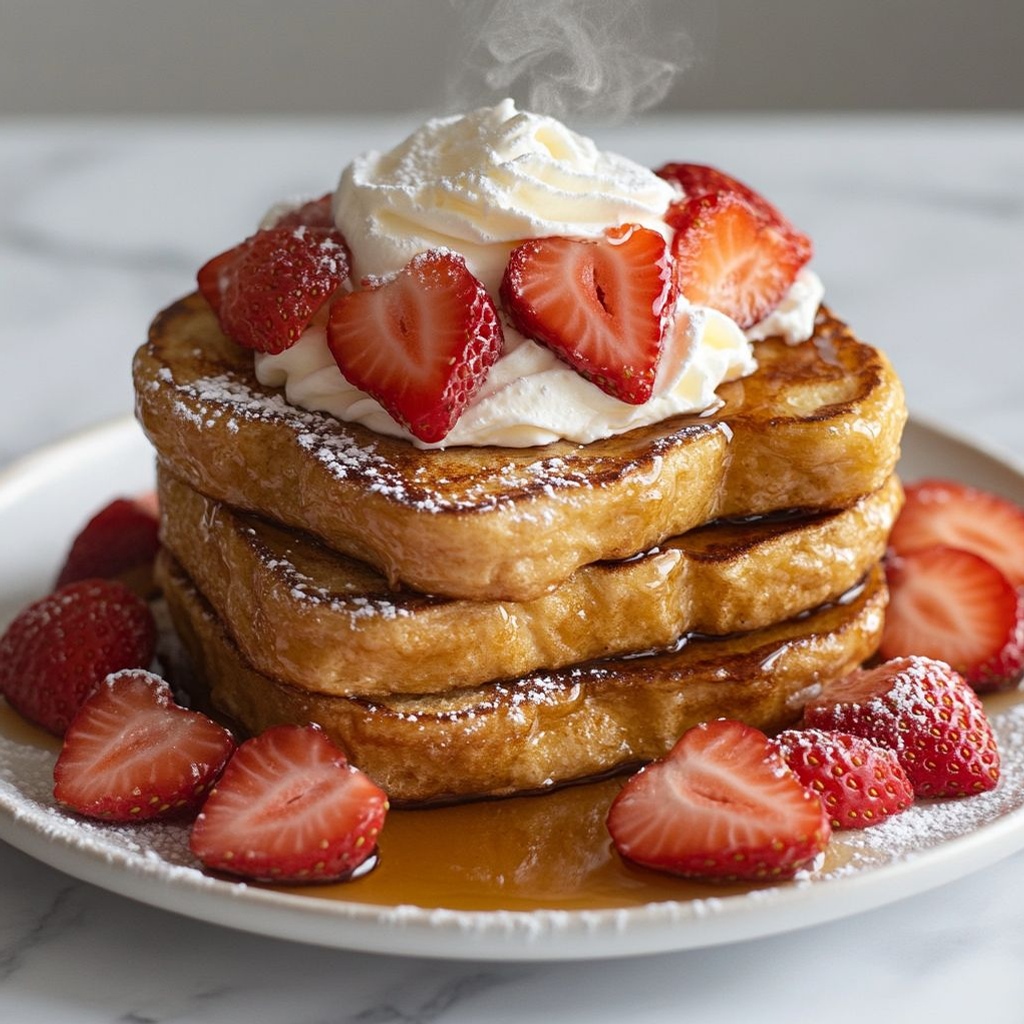
→ This layering showcases the contrasts of texture and color while distributing berry juice for a cohesive finish. - Sift 1–2 tablespoons powdered sugar lightly over the plated toast to add a delicate sweetness and to camouflage minor browning; use a fine-mesh sieve for an even dusting.
→ Powdered sugar enhances appearance and provides a subtle sweet note that pairs with berries and maple syrup. - Warm pure maple syrup briefly until condiment-thin and drizzle in a thin stream over the toast and berries just before serving to keep the crust crisp and prevent sogginess.
→ Warming syrup reduces thickness for easier drizzling and maintains a clean, glossy finish without pooling heavy syrup on the bread. - Garnish with fresh mint leaves if desired by rinsing, patting dry, tearing into small pieces, and placing sparingly on top to add aroma, color, and a refreshing finish.
→ Mint provides a fragrant contrast and elevated presentation; add just before serving to preserve essential oils. - Optional add-in: Toast 1/4 cup sliced almonds in a dry skillet over medium heat until fragrant and lightly browned, about 3–6 minutes; cool and scatter over the toast for a crunchy, nutty contrast.
→ Toasting concentrates flavor and adds texture; monitor closely to prevent burning and cool before sprinkling to retain crunch at serving temperature. - Optional add-in: Sprinkle 1/4 cup mini chocolate chips over the toast while it is still warm or fold into the soaking custard before dipping to distribute pockets of melted chocolate through the toast.
→ Chocolate chips create small molten pockets that contrast with the custard and berries; distribute evenly to avoid large chocolate clumps. - Optional add-in: Fold 1 teaspoon orange zest into the custard base before soaking the bread or sprinkle the zest over the finished dish to impart a bright citrus note that complements vanilla and berries.
→ Orange zest releases essential oils for a vibrant aroma; avoid the white pith to prevent bitterness; if using zest, consider dialing back cinnamon to prevent flavor clash.
Notes
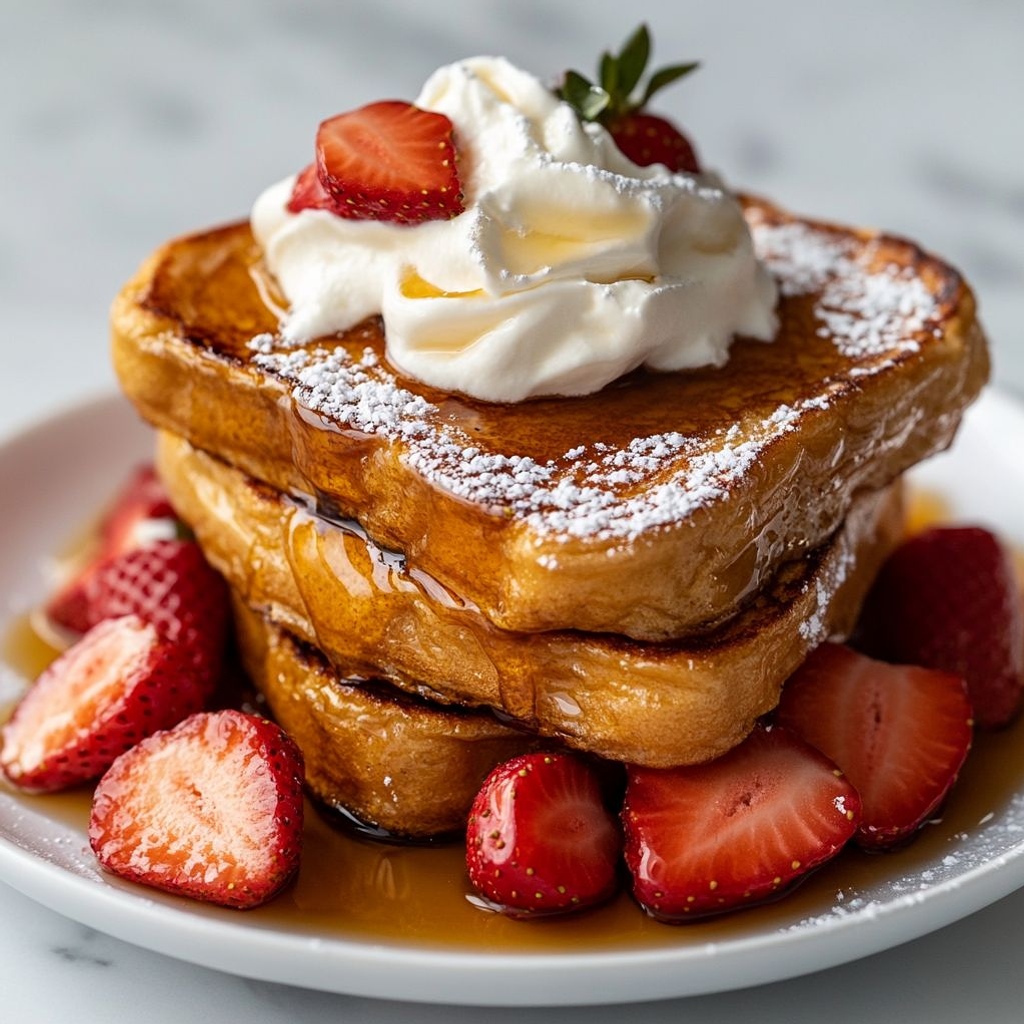
These French toast with cream and strawberries are a rich, comforting brunch option featuring a custardy brioche or challah base and a bright strawberry topping. For best texture, use slightly stale bread and soak the slices just long enough to absorb the custard without becoming soggy. You can customize them by adding orange zest, chopped almonds for crunch, or mini chocolate chips for pockets of sweetness. They reheat well in a skillet or oven and can be prepared ahead: soak the bread and refrigerate the custard for up to 2 hours before frying, or fry in batches and keep warm in a low oven. This dish can be adapted for dairy-free or lighter diets by using a plant-based milk with a splash of coconut cream and reducing or omitting the sugar. Serve with warm maple syrup, extra strawberries or a dollop of whipped cream or yogurt, and a few fresh mint leaves for garnish. A squeeze of lemon juice over the berries can brighten the finish. Ensure you grease the pan well and cook over medium heat to get a crisp exterior and tender interior; if the butter starts to brown, lower the heat or switch to a little neutral oil to prevent burning.
Tips
Tips for Perfect French Toast with Cream and Strawberries
- Choose bread wisely: brioche or challah yields the creamiest interior and a crisp exterior. If your bread is very fresh, toast slices lightly to dry them before soaking.
- Slice thickness matters: aim for about 1.5 cm (about 3/5 inch) so the toast can soak evenly without becoming mushy in the center.
- Soaking strategy: set up a shallow dish for the custard and soak each slice for about 10–20 minutes total. Do not oversoak the bread; too long can make the toast fall apart during frying.
- Custard temperature: keep eggs, milk, and cream at room temperature for smoother mixing. If the custard thickens, whisk in a splash of milk to loosen it.
- Balance your liquids: if you need to adjust richness, slightly reduce the cream or milk and compensate with a bit more egg. If making dairy-free, use a fortified plant milk plus a little coconut or almond cream, and adjust sugar accordingly.
- Flavor layering: a pinch more vanilla or a splash of orange zest can brighten the custard; if using orange zest, add it to the custard before soaking.
- Spice considerations: cinnamon adds warmth, but start with a conservative amount and adjust to taste to avoid clashing with strawberries.
- Frying setup: use a heavy skillet or cast iron and preheat over medium. Add a thin coating of unsalted butter and a tiny amount of neutral oil to prevent butter from burning.
- Cooking technique: fry slices in batches without crowding the pan. Cook about 2–3 minutes per side, until deep golden and crisp around the edges.
- Temperature control: if the butter browns too quickly, reduce heat slightly or switch to a light oil to avoid burnt notes while the centers finish cooking.
- Drain and rest: after frying, let the toast rest on a rack for 1–2 minutes to set the crust and release excess steam, which keeps the crust crisp.
- Strawberry prep: hull and slice berries just before serving for best color and flavor. For deeper juice, macerate a portion with a pinch of sugar and a squeeze of lemon juice for 10–15 minutes.
- Serving temperature: keep finished toasts warm in a low oven (about 200°F/90°C) while finishing the rest to maintain contrast between warm toast and fresh toppings.
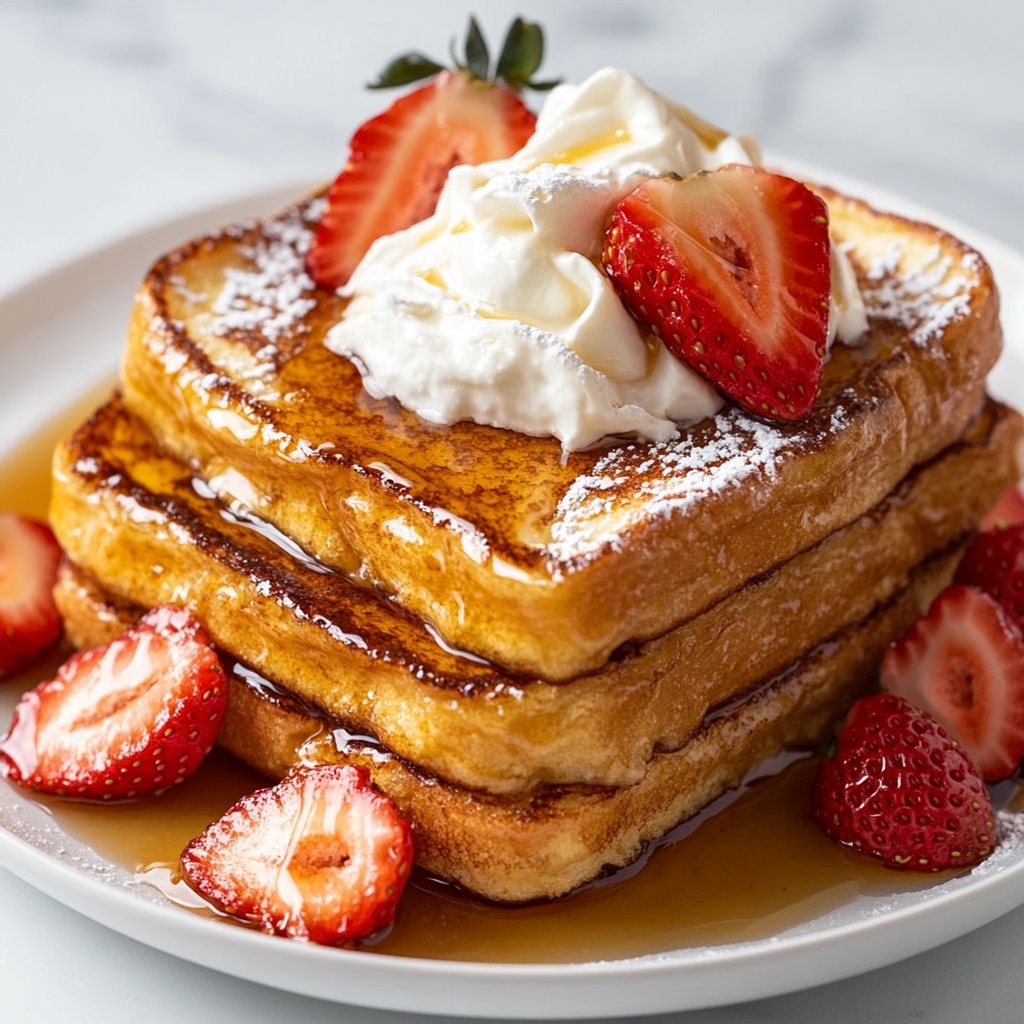
- Finishing touches: dust with powdered sugar just before serving, drizzle warm maple syrup in a thin stream, and add fresh mint leaves for brightness and aroma.
- Optional add-ins: toasted sliced almonds add crunch; mini chocolate chips provide pockets of sweetness; orange zest gives a citrus lift. Fold add-ins into the custard or sprinkle on top as you cook.
- Storage and reheating: refrigerate leftovers and reheat in a 350°F (175°C) oven for 5–8 minutes or toast in a toaster oven to regain crispness. Reheating in the microwave can make the toast soggy.
- Safety note: do not leave the custard or soaked bread at room temperature for more than 2 hours. If any component has been left out too long, discard for safety.
FAQ
What is French toast with cream and strawberries?
A comforting breakfast or brunch dish where slices of bread are soaked in an egg–milk custard, pan-fried until golden, and topped with whipped cream and fresh strawberries for a rich, fruity finish.
What ingredients do I need?
Common ingredients (serves 4):
- 6 slices of sturdy bread (brioche or challah recommended; day-old bread works best)
- 4 large eggs
- 1 cup milk (dairy or non-dairy)
- 2 tablespoons sugar
- 1 teaspoon vanilla extract
- Pinch of salt
- 1/2 teaspoon ground cinnamon (optional)
- Butter or oil for frying
- Fresh strawberries and whipped cream or mascarpone for topping
Can I use stale bread or should it be fresh?
Stale or day-old bread is best for French toast because it soaks up the custard without becoming soggy. If you only have fresh bread, toast or air-dry the slices a bit to firm them up before dipping.
How do I prepare the cream topping or whipped cream?
Options:
- Whipped cream: whip 1 cup heavy cream with 1–2 tablespoons sugar and a dash of vanilla until soft peaks form.
- Mascarpone topping: blend 1/2 cup mascarpone with a splash of milk and a teaspoon of sugar until spreadable.
How do I cook the toast for best texture?
1) Preheat a skillet over medium heat and add a small amount of butter. 2) Dip each bread slice briefly in the custard—about 20–30 seconds per side—allowing it to soak but not become soggy. 3) Cook 2–3 minutes per side until golden brown and slightly crisp. 4) Keep finished slices warm in a low oven (200°F/93°C) while cooking the rest.
Can I make this recipe vegan?
Yes. Use plant-based milk (almond, soy, or oat) and a flax or chia egg (1 tablespoon ground flaxseed or chia seeds mixed with 3 tablespoons water per egg). Fry with a neutral oil or vegan butter, and use coconut whipped cream or a dairy-free topping.
Can I make this gluten-free?
Absolutely. Use a thick, sturdy gluten-free bread and ensure all ingredients (including any toppings) are gluten-free. The custard itself is naturally gluten-free.
How should I assemble and serve it?
Stack the warm French toast slices on plates, top with sliced fresh strawberries, add a dollop of whipped cream or mascarpone, and finish with a drizzle of maple syrup or honey. A light dusting of cinnamon can add extra aroma.
How do I store and reheat leftovers?
Store any cooled leftovers in the refrigerator for up to 2 days in an airtight container. Reheat gently in a skillet with a small amount of butter until warmed and crisp on the edges, or reheat in a low oven. Toppings should be added fresh to avoid sogginess.