Introduzione / Gancio
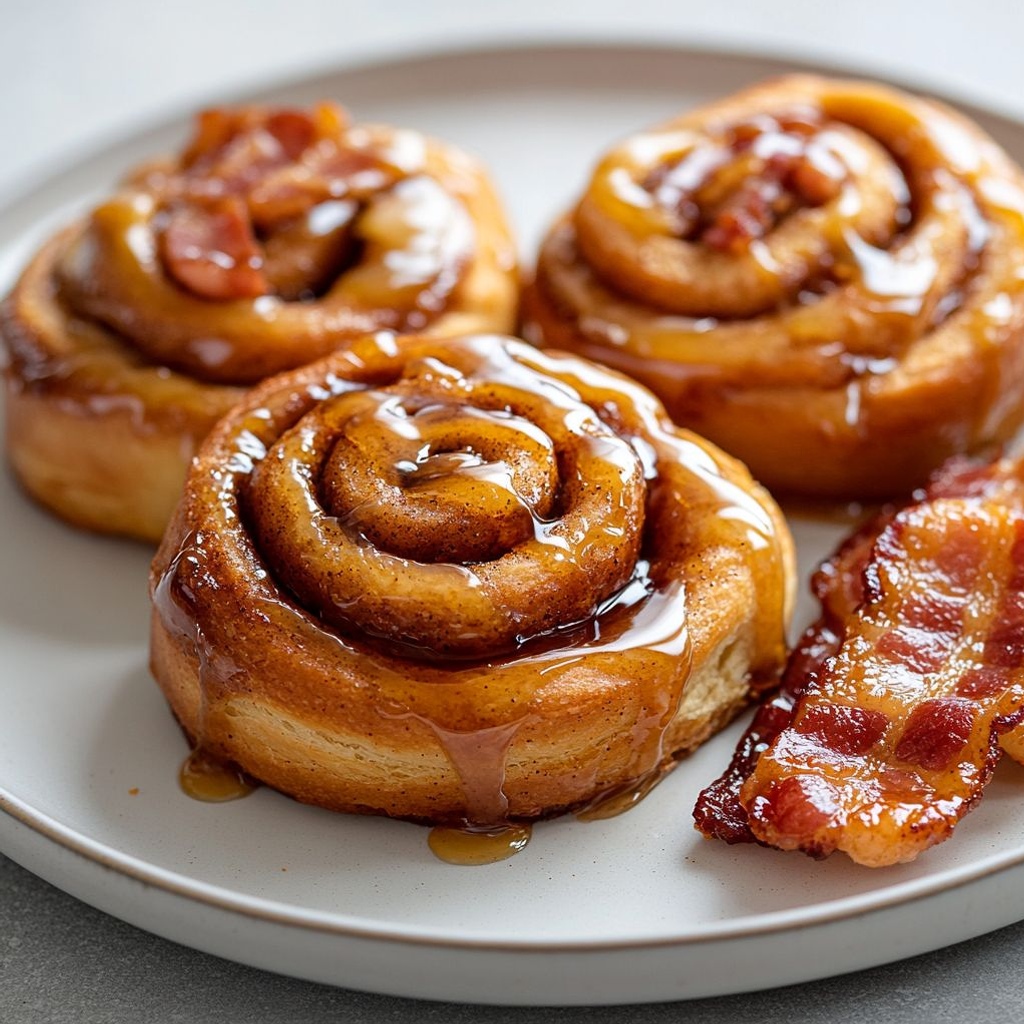
Immagina un lievitato soffice, profumato di cannella che avvolge l’intera stanza, con un sottile strato di sciroppo d’acero che scintilla tra gli strati. A questa delicatezza dolce si aggiunge un contrafforte aromatico e gustoso: bacon croccante che rilascia una nota affumicata e salata in perfetta armonia. Questi rotoli, rolls cannella acero e bacon, non sono solo una ricetta: sono una dichiarazione di gusto, una chiamata irresistibile per chi ama l’equilibrio tra dolcezza avvolgente e sapidità decisa. L’idea nasce dall’amore per i contrasti che trasformano una semplice colazione o brunch in un momento memorabile: una carezza al palato al mattino, un comfort food capace di sorprendere sia la famiglia che gli amici. Il profumo che invade la cucina mentre si avvicinano le prime luci dell’alba è già una promessa: ogni morso avrà una profondità di gusto, una morbidezza che si scioglie quasi al centro, e una nota di fumo che mette in risalto la dolcezza dello sciroppo d’acero. Se sei qui, è perché vuoi qualcosa di diverso senza rinunciare al calore di casa. Questa versione di rotoli è una celebrazione della convivialità: si presta a un brunch domenicale, a una colazione festaiola o a una merenda coccolosa che trasforma qualsiasi momento in un piccolo rito di piacere.
La storia dietro il piatto
La combinazione dolce-salato racconta una storia antica di scambi culinari, dove spezie e dolciumi attraversavano oceani e culture per trovarsi in una singola ricetta. La cannella, una spezia antica amata in molte tradizioni, porta calore e profondità aromatica a pasticceria e pane dolce. Lo sciroppo d’acero, simbolo della tavola nordamericana, aggiunge una dolcezza vellutata e una leggera nota floreale che si sposa magnificamente con i profumi del ristretto pane lievitato. Il bacon, con la sua croccantezza e il suo gusto affumicato, introduce una nota salata che taglia la dolcezza senza mai sovrastarla: è quel dettaglio che rende il piatto provocante e memorabile. L’idea di un rotolo che unisce questi elementi nasce spesso nelle cucine di fine settimana, dove si cerca di creare qualcosa di speciale con pochi ingredienti quotidiani, ma con una presentazione che faccia sentire gli ospiti al centro dell’attenzione. In molte culture gastronomiche, il contrasto tra dolce e salato è un ponte tra tradizioni diverse: americane, scandinave e italiane hanno tutte una certa familiarità con rotoli o dolci al forno che ricompensano chi gusta con un raise di sapore intrigante. Oggi, questa versione si propone come reinterpretazione contemporanea: niente è troppo audace se bilanciato con cura, niente è proibito se accompagnato da una tazza di caffè fumante o da una spremuta di agrumi fresca. È una storia di modernità e comfort, di gusto che vuole essere condiviso, di un brunch che diventa un piccolo evento da celebrare insieme.
Perché amerai questa ricetta
- Confortevole e di grande impatto: un mix di dolcezza, salinità e affumicatura che stimola diverse coccole sensoriali in un solo morso.
- Versatile per occasioni speciali: perfetto per brunch domenicali, anniversari a sorpresa o colazioni di festa con amici e familiari.
- Equilibrio tra sapori: cannella profumata, sciroppo d’acero ricco, bacon croccante e una base morbida che si uniscono senza competere tra loro.
- Visuale invitante: i rotoli dorati, lucidi dal tocco dello sciroppo e con pezzetti di bacon che spuntano tra gli strati, sono irresistibili da vedere e da gustare.
- Facilità di adattamento: si presta a varianti semplici per esigenze alimentari diverse, pur mantenendo l’essenza golosa della ricetta.
- Profondità di gusto: ogni strato racconta una storia diversa di profumi e consistenze, regalando un’esplosione di soddisfazione al palato.
Profilo di sapore e consistenza
Il profumo di cannella accende subito l’ambiente: caldo, avvolgente, quasi tentante. La cannella si unisce a una dolcezza ricca ma non stucchevole, proveniente dallo sciroppo d’acero che si insinua tra gli strati. Il dolce si scioglie in morbidezza, grazie all’impasto soffice dei rotoli, che rimane umido al punto giusto e si presta a una masticazione lenta, quasi carezzevole. In contrasto, il bacon introduce una nota salata, affumicata e croccante, che spezza la dolcezza in modo elegante, offrendo una textura diversa in ogni morso: croccantezza iniziale, seguito da una vellutata morbidezza. L’equilibrio tra saporito e dolce crea un’esperienza multisensoriale, dove la morbidezza della pasta si fonde con l’intenso carattere del bacon e con la lucentezza leggermente sciropposa della glassa o del rivestimento. A seconda della quantità di sciroppo presente tra gli strati, si ottiene una leggera caramellizzazione che aggiunge una nota di tostato, quasi di pane al forno, che rende ogni boccone una piccola celebrazione di texture: una dolcezza accogliente, una salinità confortante e una croccantezza seducente. La sinergia di questi elementi fa sì che il piatto non sia solo un dessert, né soltanto una colazione sostanziosa: è un inno al gusto bilanciato, capace di soddisfare tanto chi cerca un’esperienza golosa quanto chi desidera una colazione nutriente e memorabile.
Occasioni & Abbinamenti
Questi rotoli sono particolarmente indicati per momenti conviviali e festosi, ma si adattano anche alle mattine tranquille quando si desidera un tocco speciale. Ecco alcune idee su quando assaporarli e cosa accompagnarli:
- Brunch domenicale: il centro della tavola, accanto a frutta fresca, yogurt e una tazza di caffè o latte caldo.
- Colazioni di festa: compleanni, anniversari o celebrazioni familiari che meritano un tocco di gioia mattutina.
- Snack pomeridiano: una versione meno dolce per una merenda dinamica, accompagnata da una tisana o un caffè freddo.
- Abbinamenti consigliati: formaggi cremosi o morbidi (come un brie leggero), insieme a frutta secca o una composta di pere; bevande calde come caffè lungo, cappuccino o tè speziato; per chi preferisce una nota frizzante, un bicchiere di sidro di mele o una spremuta agrumata completa l’esperienza.
- Occasione internazionale: un tocco di nostalgia per chi ha viaggiato tra Americhe e scandinavi, offrendo una versione fusion che richiama ricordi di colazioni di strada e banchetti festivi.
Consigli, Varianti & Sostituzioni
Varianti creative
La ricetta si presta a diverse varianti che possono esaltare o modulare l’equilibrio tra dolcezza e sapidità. Puoi esplorare:
- Una versione ancora più coccolosa aggiungendo noci tostate o nocciole in piccoli pezzi tra gli strati per una croccantezza extra e una nota di frutta secca.
- Un profilo agrumato: una grattugiata di scorza d’arancia o limone sull’impasto o una leggera glassa a base di sciroppo d’acero arricchita con scorza di agrumi.
- Un tocco di vaniglia: l’aggiunta di una punta di estratto di vaniglia per una loro profondità extra aromatiche.
- Versione senza panna: per una versione meno ricca, utilizzare un impasto a base di latte vegetale e una glassa leggera di sciroppo d’acero ridotto.
Sostituzioni per diete speciali
- Vegana: sostituire il bacon con pancetta vegetale affumicata o strisce di seitan affumicato, mantenendo la dolcezza dell’acero e la cannella come carattere principale.
- Gluten-free: utilizzare una miscela di farine senza glutine adatta per lievitati e magari un addensante specifico per garantire struttura e morbidezza.
- Ridotto contenuto di zuccheri: utilizzare una quantità variabile di sciroppo d’acero, oppure sostituire parte dello sciroppo con purè di mele per una dolcezza naturale e più moderata.
- Low-carb: optare per un impasto a base di farine alternative a basso contenuto di carboidrati, e ridurre la quantità di zuccheri; il sapore rimane intenso grazie all’aroma della cannella e al bacon.
Note sul bilanciamento
Per mantenere l’equilibrio dolce-salato senza sovraccaricare il palato, è utile bilanciare la quantità di sciroppo d’acero con una nota di sale delicata e, se possibile, una leggera acidità fornita da un tocco di agrumi o da una composta di frutta non molto dolce. L’obiettivo è una progressione di sapori che guidi il palato dall’inizio fino al finale, senza che nessun elemento predomini sugli altri.
Conservazione & Idee per preparare in anticipo
Questo tipo di rotoli si presta bene a preparazioni anticipate, con diverse strategie a seconda di quando si desidera gustarli. Ecco alcune linee guida generali per conservazione e make-ahead:
- Conservazione a temperatura ambiente: i rotoli freschi si mantengono morbidi e fragranti per 1-2 giorni se conservati in un contenitore chiuso, lontano da fonti di calore che potrebbero asciugarli.
- Conservazione in frigorifero: è possibile conservare gli eventuali rotoli avanzati in frigorifero per 2-3 giorni; riscaldati delicatamente restituiscono buona morbidezza e profumo. Evita di conservare a lungo in frigo per evitare che perdano lucentezza.
- Congelamento: è possibile congelare rotoli non cotti una volta farciti; una volta scongelati, saranno pronti per la cottura senza perdere sapore. Per i rotoli già cotti, la congelazione è possibile ma potrebbe influire leggermente sulla consistenza della glassa o della superficie lucida.
- Riscaldamento: preferisci un riscaldamento delicato, in forno o in un tostapane di dimensioni adeguate, per ripristinare morbidezza e profumo senza seccare la superficie.
- Preparazione in anticipo: se vuoi ridurre i tempi al momento di servire, puoi predisporre gli ingredienti secchi, la pasta pronta o l’impasto lievitato (a seconda della tua ricetta di base) e assemblare i rotoli poco prima di volerli cuocere.
Fatti divertenti & curiosità
Curiosità che arricchiscono l’esperienza di questa ricetta: la cannella è una delle spezie più amate al mondo e ha viaggiato lungo rotte commerciali storiche, diventando simbolo di ospitalità e calore in molte cucine. Lo sciroppo d’acero è una vera icona del Nord America: la sua dolcezza vellutata viene dal cuore degli alberi di acero e racchiude una tradizione di coltivazione e raccolta radicata in decenni di metodi artigianali. Il bacon, invece, è un ingrediente cacio-saporito che ha subito una lunga evoluzione, diventando parte integrante di molte ricette oltre i confini tradizionali, grazie alla sua capacità di aggiungere una nota ricca e affumicata. In alcune culture scandinave, rotoli dolci al forno con spezie e sciroppo hanno una lunga tradizione di colazione conviviale; qui, la versione con bacon è una fusione molto contemporanea che celebra la spontaneità creativa della cucina domestica. Un dettaglio storico interessante: i rotoli di cannella hanno radici nelle tradizioni di lievitati dolciari europei, ma l’aggiunta di sciroppo d’acero e bacon riflette un dialogo tra continenti e gusti moderni, dove non c’è bisogno di scegliere tra dolce o salato quando si può godere di entrambi in un solo morso.
In conclusione, i rotoli cannella, acero e bacon sono una proposta audace ma accogliente, capace di stimolare i sensi con un equilibrio di profumi, sapori e consistenze. Sono una celebrazione della convivialità e della cucina che osa innovare, pur rimanendo radicata in un comfort che fa sentire chiunque a casa. Se stai pensando a una ricetta per stupire senza complicarti la vita, questa è una scelta perfetta: una presentazione invitante, un gusto memorabile e una sensazione di calore che rimane con te a lungo dopo l’ultimo morso.
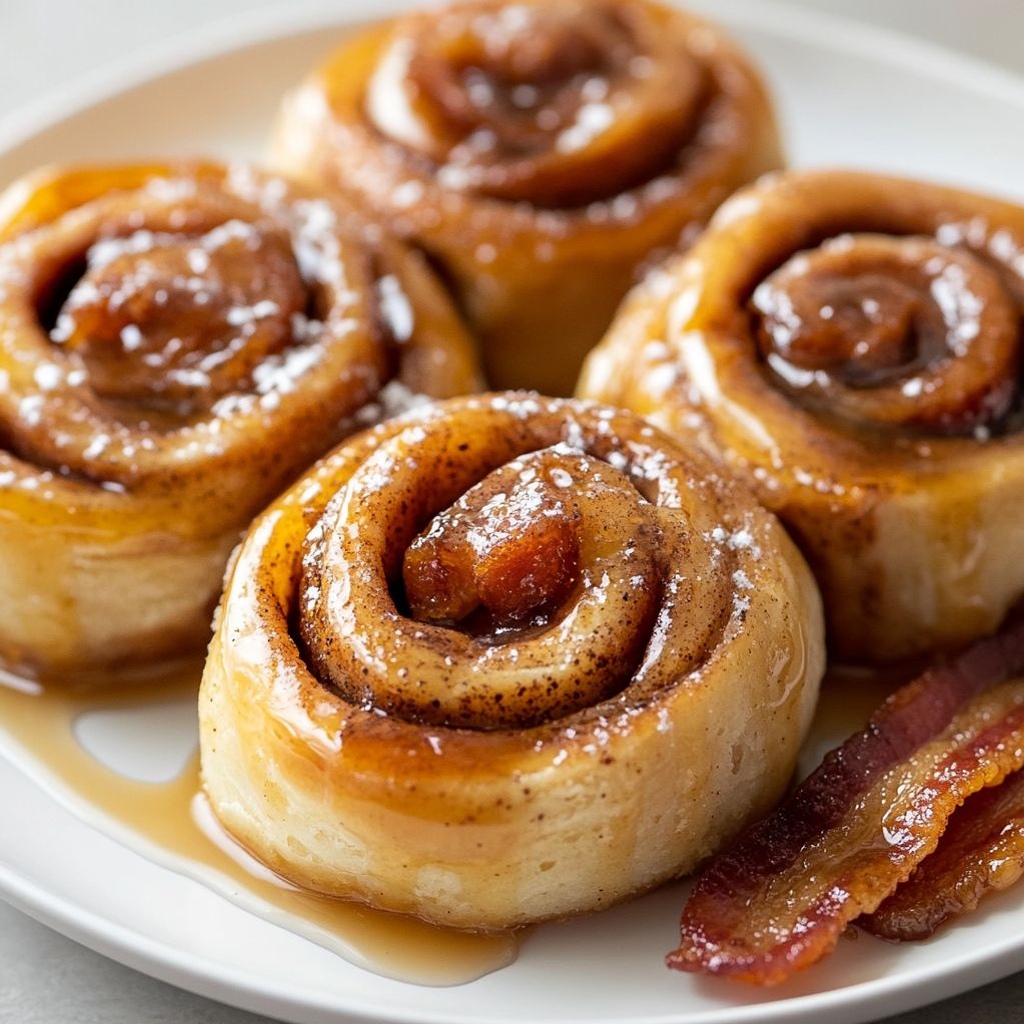
Ingredients
Rolls cannella acero e bacon
Dough
- 3 1/2 cups all-purpose flour (or bread flour)
→ Provides the framework and gluten development to trap gas as the dough rises, yielding soft, springy rolls that hold their shape. Sift or whisk the flour with the dry ingredients to ensure even distribution, and measure by weight if possible for accuracy. If using bread flour, expect chewier crumb; all-purpose yields a softer, tender bite. - 2 1/4 tsp active dry yeast (about 1 packet)
→ The leavening agent that makes the dough rise and create that signature cinnamon roll texture. If using instant yeast, you can mix it with the dry ingredients and reduce rising time; for traditional active dry yeast, proof it in the warm milk with a pinch of sugar to confirm it’s active before mixing. - 1/4 cup granulated sugar
→ Feeds the yeast during fermentation and adds a gentle sweetness to the dough. Balance flavor, as too much sugar can slow rise. If you prefer a less sweet dough, reduce slightly; if you want richer flavor, substitute part of this with brown sugar. - 1/2 tsp fine salt
→ Enhances flavor, tightens the gluten network a touch for better structure, and controls yeast fermentation. Sprinkle evenly into the flour and whisk to distribute before adding liquids; if using salted butter, you can cut this to 1/4 tsp. - 3/4 cup warm milk (about 110°F/43°C)
→ Hydrates the dough and activates the yeast; keep temperature in the range to avoid killing the yeast. If dairy-free, use a fortified plant milk; you may need to adjust by 1-2 tablespoons to achieve a soft, slightly sticky dough consistency. - 1/3 cup unsalted butter, melted and cooled
→ Adds richness, moisture, and tenderness; help the dough stay soft after baking. Add only when melted and cooled to below 120°F (49°C) to avoid overheating the yeast. For dairy-free, substitute with a light-tasting margarine or coconut oil that solidifies when cool. - 1 large egg
→ Contributes structure, tenderness, and helps with browning. Bring the egg to room temperature before mixing so it blends smoothly into the dough. If a vegan option is desired, use an equivalent weight of applesauce or flax egg, noting it will slightly alter texture. - 1 tsp vanilla extract (optional)
→ Subtle aromatic note that enhances the dough and pairs well with cinnamon; add to the wet ingredients for even distribution or mix with the milk before combining with flour. If omitted, dough remains straightforward cinnamon roll without extra perfume.
Filling
- 1/2 cup light brown sugar
→ Creates a moist, caramelized swirl that bakes into the roll; brown sugar provides deeper flavor than white sugar. Combine with cinnamon before spreading onto the dough so the mixture distributes evenly. If you like a stronger caramel flavor, you can mix in a teaspoon of molasses per tablespoon of sugar. - 2 1/2 tbsp ground cinnamon
→ The hallmark spice for cinnamon rolls, providing warmth and aroma. Use fresh ground cinnamon if possible for maximum intensity; whisk with brown sugar to ensure even coverage within the dough. Adjust to taste but avoid over-saturating the surface to prevent gumminess. - 4 tbsp unsalted butter, melted
→ Creates a moist, buttery layer that helps the cinnamon-sugar to stick and spread evenly when rolling. Let the butter cool briefly so it doesn’t melt the sugar too soon, which keeps a defined swirl. Use dairy-free butter if needed for dietary restrictions. - Pinch of salt (optional)
→ Heightens flavor and counterbalances sweetness in the filling; optional but recommended if using unsalted butter in the dough. Sprinkle evenly over the cinnamon-sugar mixture to help balance flavors.
Bacon
- 6-8 slices bacon, cooked until crisp and crumbled
→ Adds smoky, savory contrast to the sweet rolls. Cooking to crispness ensures the bacon bits hold shape inside the roll and don’t render excess fat. Drain on paper towels, cool completely, and crumble finely so they distribute evenly or sprinkle on top before baking depending on preference.
Maple glaze
- 1 cup powdered sugar (confectioners sugar)
→ Provides the base for a glossy, easy-drizzle glaze. Sift to remove lumps for a smooth finish; adjust thickness by adding more sugar or a splash of milk as needed. - 2-3 tbsp pure maple syrup
→ Delivers authentic maple flavor that pairs beautifully with cinnamon and bacon; choose real maple syrup for depth. Warm slightly if too thick to mix with sugar; adjust sweetness to taste by adding more sugar if needed. - 2-4 tbsp milk or cream
→ Adjusts glaze consistency from thick to pourable; dairy yields a smoother glaze. Add gradually to reach desired drizzle; for non-dairy, use almond or soy milk. A warmer glaze flows better on warm rolls.
Optional Toppings
- 4 oz cream cheese, softened
→ If you prefer a tangy, creamy frosting to complement the maple, this forms the base for a maple-cream cheese frosting. Beat with butter until smooth, then blend in powdered sugar and maple syrup; refrigerate briefly to set, then serve with the rolls. - 2 tbsp unsalted butter, softened
→ Adds richness and helps the frosting spread smoothly with the cream cheese; ensure butter is fully softened to avoid lumps. - 1 cup powdered sugar
→ Sweetens and thickens the frosting; sift to remove lumps and achieve a creamy texture; adjust amount for the desired consistency. - 2-3 tbsp maple syrup
→ Infuses maple flavor into the frosting; add gradually to reach your preferred sweetness and consistency. Too much syrup can thin the frosting, so balance with powdered sugar. - 1/2 tsp vanilla extract
→ Adds aroma to the frosting; blend with the other ingredients for a cohesive flavor. If using vanilla, adjust to taste to avoid overpowering maple and bacon notes.
Instructions
- Preheat your oven to 350°F (175°C) and grease a 9×13-inch baking pan or line it with parchment; this ensures even baking and easy removal of the rolls after baking.
→ A hot, prepared pan prevents sticking and promotes uniform browning across the bottoms and edges of the rolls. - Proof the yeast by warming 1/4 cup of the milk to about 105-110°F (40-43°C) and sprinkling the yeast with a pinch of sugar, then let it sit 5-10 minutes until foamy.
→ This confirms the yeast is active; foaming indicates good leavening strength for a light, airy dough. - Whisk the 3 1/2 cups flour, the remaining 1 1/4 cups sugar, and 1/2 teaspoon fine salt in a large bowl until uniformly distributed; this builds an even gluten network and prevents dense pockets.
→ Even distribution of dry ingredients ensures consistent texture and rising throughout the dough. - Whisk the 3/4 cup warm milk (105-110°F) with the 1 large egg, the cooled melted butter (below 120°F/49°C), and the optional vanilla, creating a smooth, cohesive wet mixture.
→ Ensures the fats and proteins hydrate evenly, contributing to a tender crumb and reliable emulsification for the dough. - Stir the proofed yeast and its foamy liquid into the wet mixture, then pour all of the wet ingredients into the well of the dry ingredients and mix with a wooden spoon until a shaggy dough forms.
→ Incorporating liquid gradually prevents overhydration and helps sustain an even gluten development from the start. - Turn the shaggy dough onto a lightly floured surface and knead for 8-10 minutes until it becomes smooth, elastic, and only slightly tacky; this strengthens the gluten network for a soft yet sturdy roll.
→ Proper kneading develops structure, which traps gas during rising and yields a tender, springy crumb after baking. - Lightly oil a clean bowl, place the dough inside, turn to coat all sides, cover with plastic wrap or a damp towel, and let rise in a warm, draft-free spot until doubled, about 1 to 1 1/2 hours.
→ A controlled rise builds flavor and airy volume without overproofing, which can collapse during baking. - Meanwhile, combine 1/2 cup light brown sugar, 2 1/2 tablespoons ground cinnamon, and a pinch of salt in a small bowl and whisk to break any clumps; this creates an even cinnamon-sugar layer.
→ Even distribution of cinnamon and sugar ensures a consistent swirl and flavor from edge to center of each roll. - Pour 4 tablespoons melted butter into the cinnamon-sugar mixture and stir until fully integrated, then allow it to cool slightly so it does not melt the sugar too quickly and blur the layers.
→ A slightly cooled fat prevents the filling from sliding into a loose paste and helps it adhere to the dough for a clean swirl. - Cook the bacon until crisp, drain on paper towels, and crumble finely; this yields crunchy bits that distribute evenly without releasing excess fat during baking.
→ Crisp bacon holds shape inside the rolls and provides a distinct smoky contrast to the sweet filling; crumbled bits mix evenly rather than sinking to the pan. - Once the dough has risen, punch it down and turn it onto a lightly floured surface; roll it out into a rectangle approximately 12×18 inches and about 1/4 inch thick.
→ A uniform thickness ensures equal baking and a consistent spiral when rolled, preventing undercooked centers. - Brush the surface with a thin layer of the cooled melted butter, leaving a small margin at the far edge, then sprinkle the cinnamon-sugar mixture over the entire surface and sprinkle the crumbled bacon evenly on top.
→ The butter acts as a sticky carrier for the filling, the sugar-cinnamon layer creates the signature swirl, and bacon distribution ensures every bite has flavor. - Starting with the long edge, tightly roll the dough into a log, pinch the seam to seal, and tuck the ends under to create a neat cylinder for uniform slices.
→ A tight roll prevents the filling from oozing out and yields clean, defined spirals when sliced. - Slice the log into 12 equal pieces using a sharp knife or dental floss for clean cuts; place the rolls cut-side up in the prepared pan with even spacing to allow room for expansion.
→ Equal portions promote uniform browning and ensure each roll bakes thoroughly without crowding. - Cover the pan loosely and let the rolls rise again in a warm spot until puffy, about 25-40 minutes; this final rise enhances height and softens the crumb.
→ A second rise ensures a tall, airy roll with a tender interior after baking. - Bake in the preheated oven at 350°F (175°C) for 22-28 minutes, rotating the pan halfway through for even browning; bake until the tops are golden and the centers are set.
→ Even heat distribution yields uniform color and a fully baked interior; internal temperature should reach about 190°F (88°C) if checked with a thermometer. - While the rolls bake, whisk 1 cup powdered sugar with 2-3 tablespoons pure maple syrup and 2-4 tablespoons milk (adjust to achieve a pourable but thick glaze); warm slightly if too thick for easier pouring.
→ A glossy maple glaze blends sweetness with the rolls’ cinnamon aroma and gives a smooth, firm finish as it sets. - If using the optional maple cream cheese frosting, beat 4 oz cream cheese with 2 tbsp softened butter until smooth, then beat in 1 cup powdered sugar, 2-3 tbsp maple syrup, and 1/2 tsp vanilla extract; refrigerate briefly to set for a creamy, tangy contrast.
→ Cream cheese frosting provides a luscious, tangy counterpoint to the sweet maple and smoky bacon, with a stable texture that holds up well on warm rolls. - Remove the baked rolls from the oven and allow them to rest for 5-10 minutes so the structure sets slightly, then drizzle the maple glaze over while still warm to maximize absorption and shine.
→ Glazing while warm helps the sugars melt into the crust, creating a cohesive, glossy finish that clings to every side. - If using the optional frosting, spread or pipe a thin layer over the rolls once the glaze has set, or serve frosting on the side for dipping; this adds a rich, creamy texture that complements the maple and bacon notes.
→ The frosting adds a decadent option for plate presentation and a contrast in texture that many guests enjoy with cinnamon rolls. - Serve the cinnamon-maple-bacon rolls warm, and store any leftovers covered at room temperature for up to 2 days or freeze individually wrapped portions for longer storage; rewarm gently to preserve tenderness.
→ Gentle reheating revives the soft crumb and melts any glaze slightly for a more luscious bite, while proper storage maintains moisture and flavor.
Notes
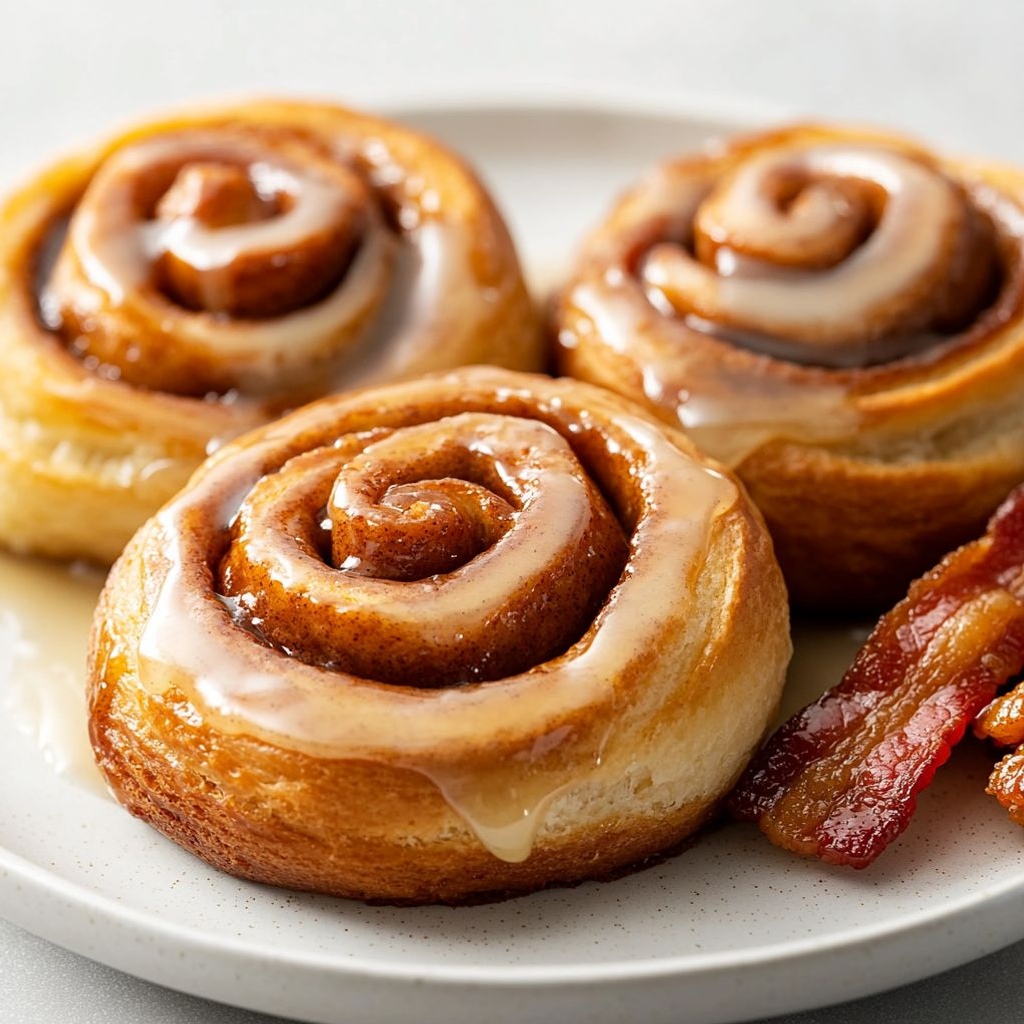
These cinnamon rolls with maple and bacon are richly layered with a cinnamon-sugar filling swirled through soft dough and studded with crispy crumbled bacon, finished with a glossy maple glaze. You can customize them by adjusting the amount of cinnamon in the filling, adding chopped nuts, or using a cream cheese maple frosting for a tangy contrast. They freeze well and reheat beautifully in a 350°F oven for about 10-12 minutes to restore softness. For an extra indulgent touch, serve warm with additional maple glaze or a smear of maple cream cheese frosting. If you have gluten intolerance, make sure to use a gluten-free flour blend and certified yeast and other ingredients to ensure the rolls rise properly.
Tips
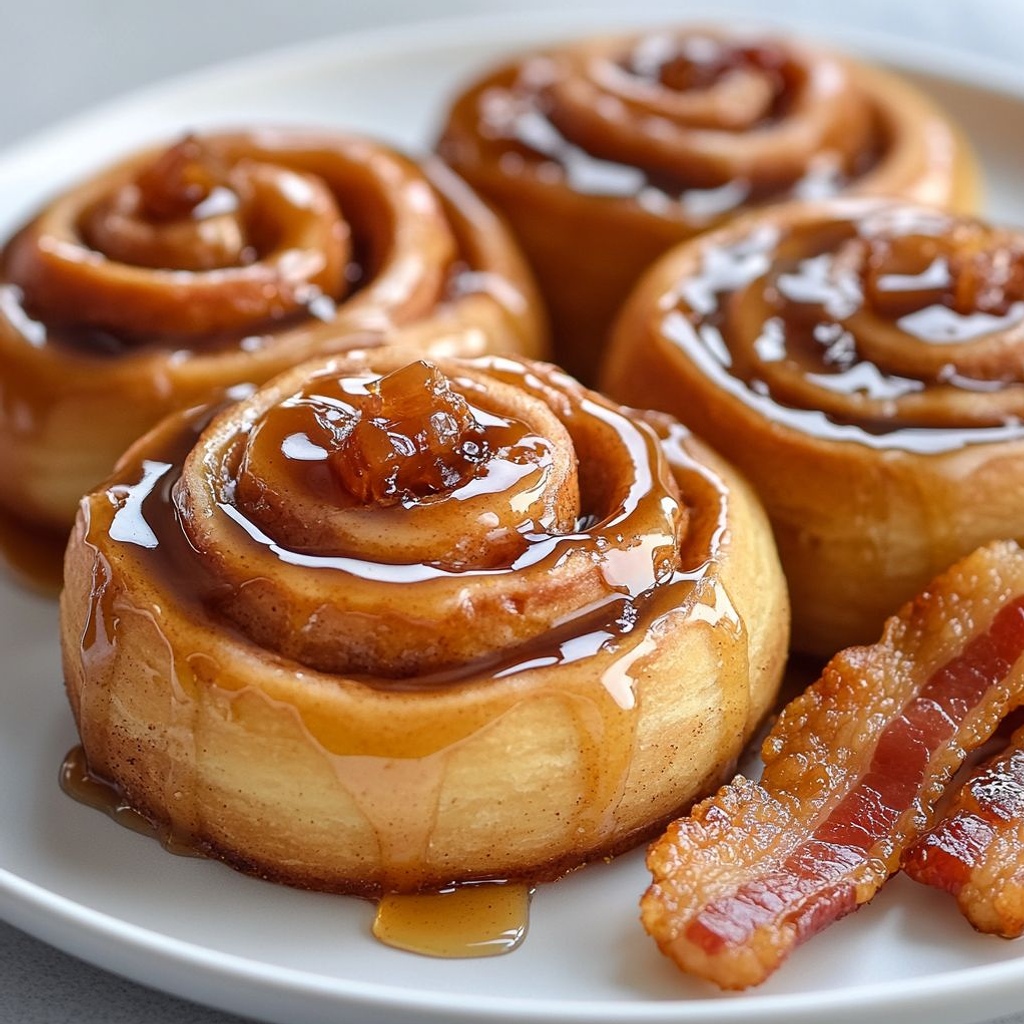
Tips for Rolls cannella acero e bacon
Dough tips
- Proofing temperature matters: keep dough in a warm spot around 75–80°F (24–27°C). If your kitchen is cool, place the bowl in an off oven with the light on or set it near a warm bowl of water to encourage rising.
- Gluten development: knead until the dough is smooth and elastic; perform a windowpane test to confirm you’ve developed enough gluten before shaping.
- Hydration and texture: if the dough feels sticky, oil your hands and the work surface lightly rather than adding excess flour, which can toughen the crumb.
- Rising options: you can refrigerate the shaped rolls for an overnight rise, which develops flavor and makes slicing easier; bake directly from the fridge with a longer bake time.
- Dry yeast notes: if using instant yeast, mix with dry ingredients. If using active dry yeast, proof it in warm milk with a pinch of sugar to confirm activity before mixing.
- Temperature of fats and eggs: use melted, cooled butter (below 120°F/49°C) and room-temperature egg for a smoother dough.
- Substitutions: for dairy-free options, use plant milk and a neutral oil or dairy-free butter; for vegan, use flax egg or applesauce in place of the egg and a plant-based butter.
Filling tips
- Even cinnamon-sugar distribution: mix brown sugar with cinnamon well before spreading; a pinch of salt helps balance sweetness.
- Butter handling: let melted butter cool slightly to prevent it from dissolving the sugar too soon, which helps maintain distinct swirls.
- Roll-out technique: pat the dough into a rectangle with the long edge facing you; spread filling evenly, leaving a small bare edge to seal.
- Swirl control: don’t overload the filling; too much can cause a soggy center and uneven rolls.
Bacon tips
- Cook to crispness: crisp bacon holds its shape and provides a savory contrast; crumble finely for even distribution.
- Cool and drain: drain on paper towels and let cool completely before using so it doesn’t melt into the filling.
- Placement choice: decide whether to fold the bacon into the rolls or sprinkle on top before baking for different textures.
Maple glaze tips
- Glaze consistency: start with 1 cup powdered sugar and 2 tbsp milk; whisk until smooth, then add maple syrup to taste. Adjust with more sugar or a splash of milk to reach desired drizzly thickness.
- Warm vs cold glaze: a slightly warm glaze flows best over warm rolls for a glossy finish and good adhesion.
- Flavor balance: taste as you go; if the glaze is too sweet, add a touch more milk or a pinch of salt to mellow sweetness.
Optional toppings
- Cream cheese frosting option: beat 4 oz softened cream cheese with 2 tbsp softened butter, then whisk in 1 cup powdered sugar and 1–2 tbsp maple syrup; refrigerate briefly to set before serving.
- Alternative frosting: for a lighter finish, dust with powdered sugar or drizzle with maple glaze only.
- Flavor harmony: adjust maple in the frosting to taste; too much maple can overshadow bacon, so balance with the other components.
FAQ
Cos’è questa ricetta Rolls cannella acero e bacon?
Una versione dolce-salata di cinnamon rolls che unisce l’aroma della cannella, la dolcezza dello sciroppo d’acero e la croccantezza del bacon. L’impasto è soffice, il ripieno è cannella e zucchero, e la glassa all’acero completa il profilo di sapori.
Quali sono gli ingredienti principali?
Ingredienti principali (per circa 12 rotoli):
- 500 g farina 00 o Manitoba
- 7 g lievito di birra secco (o 25 g lievito fresco)
- 250 ml latte tiepido
- 60 g burro morbido
- 80 g zucchero
- 1 pizzico di sale
- 2 cucchiaini cannella in polvere
- 120 g bacon cotto e tagliuzzato
- 120 ml sciroppo d’acero (più extra per glassa)
- 150 g zucchero di canna (per il ripieno insieme a cannella)
- Per la glassa: 150 g zucchero a velo, 2-3 cucchiai sciroppo d’acero e latte q.b.
È possibile rendere questa ricetta vegetariana o vegana?
Sí. Per una versione vegetariana/vegana:
- Sostituisci bacon con pancetta veg o con noci tostate o mais croccante a piacere, oppure ometti il bacon
- Usa burro vegetale o olio di cocco al posto del burro
- Utilizza latte vegetale e una glassa senza burro se preferisci
Come si prepara l’impasto della pasta lievitata?
Procedimento base:
- Sciogli il lievito nel latte tiepido con un cucchiaino di zucchero e lascia attivare 5-10 minuti.
- In una ciotola grande, mescola farina, zucchero, cannella e sale. Aggiungi burro morbido e il lievito attivato.
- Impasta fino a ottenere una massa liscia ed elastica. Copri e lascia lievitare finché raddoppia di volume (circa 1-2 ore).
Come si prepara il ripieno di cannella e bacon?
Preparazione del ripieno:
- Mescola zucchero di canna e cannella in una ciotola.
- Cuoci il bacon finché è croccante, poi sbriciolalo.
- Stendi l’impasto in un rettangolo, spalma una leggera dose di burro fuso, quindi cospargi con la miscela di cannella e zucchero e distribuisci il bacon.
Come si prepara la glassa all’acero?
Glassare i rotoli con:
- 150 g zucchero a velo
- 2-3 cucchiai sciroppo d’acero
- Un po’ di latte per raggiungere la consistenza desiderata
Mescola fino a ottenere una glassa liscia e fluida, da spennellare sui rotoli appena sfornati.
Come si cuociono e a che temperatura?
Cuoci in forno preriscaldato a 180°C per 20-25 minuti, o finché i rotoli sono dorati e la glassa si è addensata. Se vuoi, spennella con altra glassa ancora calda per un finish lucido.
Posso preparare in anticipo o congelare?
Sì. Puoi preparare l’impasto in anticipo e lasciarlo lievitare in frigorifero una notte. Dopo aver arrotolato e tagliato i rotoli, puoi congelarli crudi o già tagliati; scongelali in frigorifero e lasciali lievitare prima di cuocere. La glassa va preparata separatamente e aggiunta al momento del servizio.
Quali varianti suggerite?
Varianti consigliate:
- Aggiungere gocce di cioccolato fondente al ripieno
- Sostituire parte del bacon con noci pecan o pistacchi
- Aggiungere cubetti di mela o pere per un tocco fruttato
- Usare una glassa al formaggio cremoso al posto della glassa all’acero
- Ridurre la cannella per una versione meno pungente