Introduction / Hook
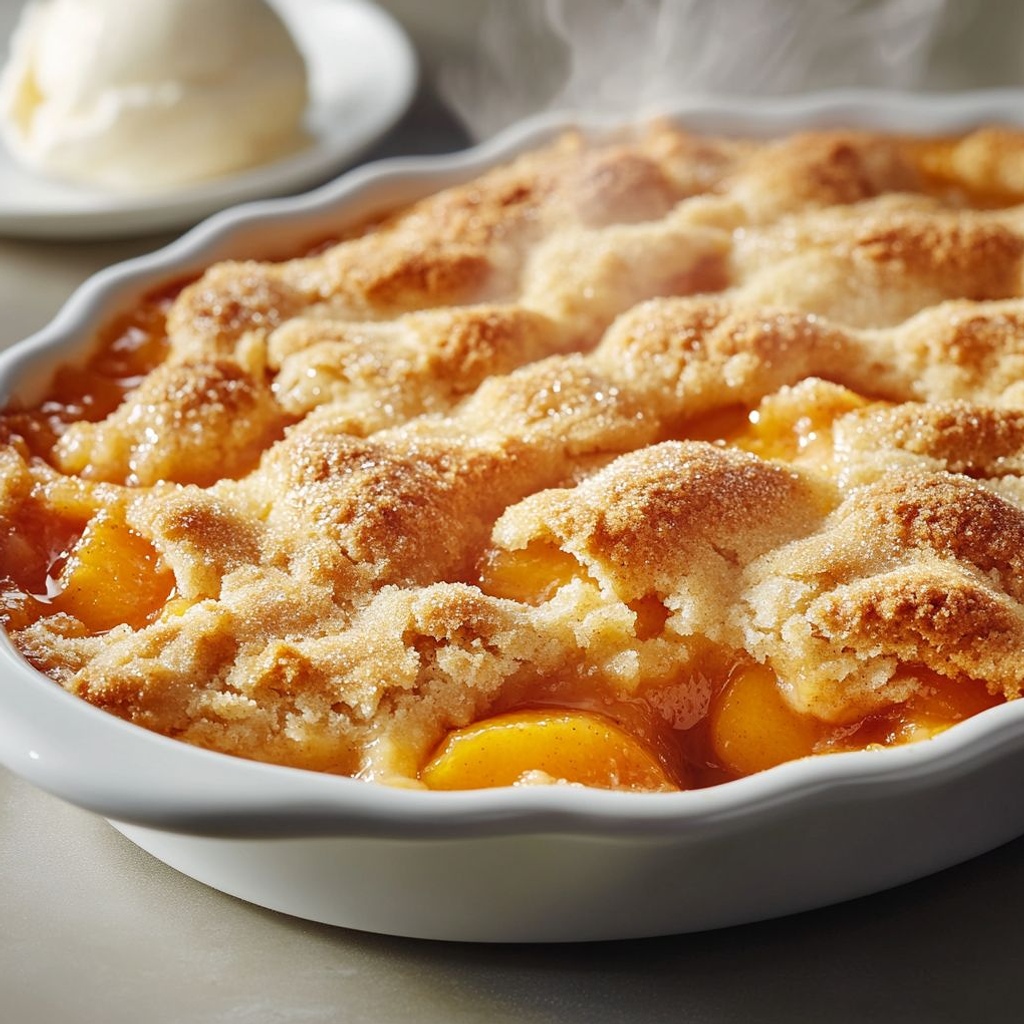
Imagine a warm dish bubbling at the edge of a wooden table, the kitchen lit by the soft glow of late-afternoon sun. The scent is immediate and irresistible: sun-ripened peaches releasing their honeyed sweetness, mingling with a light, buttery warmth that perfumes the room. A crust—golden, slightly craggy, a little breezy around the edges—presents itself like a gentle invitation to indulge. When you break into the cobbler, a fragrant steam rises, carrying notes that feel both nostalgic and fresh, as if summer decided to linger a little longer. This is Peaches Cobbler Classico—a timeless, true-to-its-roots dessert that bridges generations with every scoop, bite, and sigh of contentment. It’s the kind of dish that gathers people, not just plates, around one table, turning a simple night into a memory you’ll revisit long after the summer peaches have faded from the trees. The magic lies in its balance: a fruit filling that sings with bright, sun-warmed fruit, and a topping that is at once tender and slightly toothsome, offering a comforting contrast that makes every mouthful feel like a hug from the kitchen itself. This is more than dessert; it’s a ritual—one that says you care enough to make something that tastes like sunshine, even when the weather outside isn’t cooperative. Let this classic peach cobbler become a go-to, a reassuring favorite that never goes out of style, and a gentle reminder that the best flavors are often the simplest ones, crafted with patience, a touch of curiosity, and a whole lot of heart.
The Story Behind the Dish
The peach cobbler has roots that wander across continents and settle, almost inevitably, in the warm kitchens of the American South. Its story is one of adaptation—of making do with what’s on hand and turning it into something comforting and celebratory. The term “cobbler” itself hints at a rustic, improvised dessert: a dish with a “cobbly” top, not a precise, refined crust, baked until the edges crack and the fruit beneath sighs with juice. Some culinary historians trace the cobbler’s lineage to British puddings, where fruit was baked under a blanket of dough or batter. As it crossed the ocean, the dish evolved, absorbing local influences and pantry possibilities. In many Southern homes, peaches—bold, fragrant, and deeply summery—took center stage. Juicy fruit simmered to release its gold-tinged syrup, while a simple topping browned to a tender, crackly finish. The result is a dessert that feels both rustic and intimate, the kind of dish that seems to have always existed, like a familiar song you hear as you walk into a familiar kitchen. Throughout the decades, the peach cobbler has traveled with families from harvest fairs to community dinners, from formal occasions to spontaneous weekend gatherings, always presenting a sense of welcome. Its essence is not about grandeur but about making something lovely with what you have, about sharing sweetness in good company, and about letting a single, soulful bite transport you to a sunlit orchard or a grandmother’s cozy, well-loved stove.
In many places, people breathed life into the dish by adding a splash of vanilla, a pinch of spice, or a crumble of oats for texture. Others settled for a more biscuit-like topping—light, fluffy, and sliced with a knife—while still others embraced a denser, crumbly top. The versatility is part of the charm: the core remains the same—seasonal fruit crowned with a comforting top—yet every family, every region, and every cook offers a personal twist. “Classico” in the name isn’t about rigidity; it’s a nod to a tradition that honors time-tested methods while inviting gentle personal touches. The beauty of this dish lies in its memory-making power: the moment you lift the first spoonful, you’re not only tasting peaches but also the lasting impression of shared stories, of hands that have peeled, cut, and stirred with patience, and of a kitchen that welcomes all who enter with the promise of something good, something warm, something that feels like home.
Why You’ll Love This Recipe
- Comfort in every bite: a harmonious balance between a juicy, fragrant fruit filling and a soft, inviting topping that yields to the spoon with ease.
- Versatility at its best: adaptable to many seasons and occasions, from weeknight desserts to holiday gatherings, and flexible for dietary preferences with thoughtful substitutions.
- Effort that feels effortless: you’ll experience the satisfaction of a dessert that comes together with simple steps and minimal fuss, yet delivers maximum appeal.
- Deep sensory appeal: the aroma of ripe fruit, warm spices, and toasty crust creates an irresistible mood that lingers long after the last bite.
- Classic repertoire with a personal touch: a beloved dish that invites you to weave in your own memories, flavors, and traditions while honoring a timeless method.
Flavor Profile & Texture
The dish starts with the fruit’s natural sweetness, which is amplified by gentle heat and a hint of aromatic undertones. The peaches release a sunny, sun-kissed juice that glistens as it caramelizes ever so slightly at the edges, giving a subtle kiss of depth without overwhelming the fruit’s intrinsic brightness. This filling carries a soft tang—a reminder of orchard freshness—balanced by a whisper of sweetness that feels balanced rather than sweet-to-a-fault. The topping offers a counterpoint of texture: when a spoon glides through, you’ll encounter a gentle resistance that resolves into a tender, almost melt-in-your-mouth crumb. The crust-to-fruit ratio is designed to deliver a satisfying bite that stays crisp around the perimeters while remaining pleasantly soft at the center. The topping’s color, a warm, inviting gold with faint toffee-tinted edges, signals the presence of toasty notes and a touch of caramelization that brings depth without heaviness. In aroma, expect a comforting bouquet: the fruit’s perfume, the veil of baked dough, and the subtle, comforting warmth that only a well-made cobbler can present. The overall sensation is one of balance—fruit brightness and earthy sweetness, soft crumble and crisp edges, a dessert that is both exuberant and soothing, suitable for sharing with friends and family or savoring as a personal moment of indulgence.
Occasions & Pairings
This classic is at its best during moments that call for warmth and togetherness. Serve it after a meal as a comforting finale, or present it as a centerpiece at casual gatherings where conversation flows as freely as the laughter. It shines in late-summer celebrations when peaches are at their peak, yet its appeal carries through the year when you crave a reminder of sunshine and casual decadence. Pairing ideas enhance its charm without stealing focus from the star: a simple swirl of light, airy dairy or a scoop of a creamy, neutral ice cream adds cool contrast to the warm, fruit-filled dish. A dollop of whipped cream brings a delicate richness, while a dusting of a complementary spice can nudge the aroma into a new, inviting direction. For beverages, consider a brisk iced tea or a sparkling, lightly fruit-forward drink that mirrors the cobbler’s brightness, or a softly effervescent wine that complements the dessert’s elegance without overpowering its fruit-forward character. This dessert also makes a worthy finish for family-style dinners, potlucks, or weekend gatherings where the shared space is about unhurried enjoyment and connection as much as flavor.
Tips, Variations & Substitutions
Because the essence of this dish is simple ingredients transformed with care, there are plenty of ways to personalize it while keeping the familiar, comforting core. Here are ideas to tailor the cobbler to your preferences or dietary needs:
- Vegan-friendly approach: swap in plant-based fats and dairy-free toppings to maintain a luscious texture without animal products, while preserving the comforting mouthfeel and aromatic depth.
- Gluten-free option: use a gluten-free batter or topping mix that delivers a similar crumb and tenderness, preserving the delicate balance between fruit and crust.
- Fruit variations: while peaches are the traditional star, you can fold in complementary stone fruits like nectarines or apricots, or blend berries for a berry-peach hybrid with a vibrant hue and lively acidity.
- Texture twists: for a crisper top, bake a little longer at a moderate temperature to encourage browning and a satisfying snap; for a softer, biscuit-like topping, aim for a gentler bake with a shorter duration.
- Flavor depth without a recipe: add subtle enhancements such as citrus zest to lift the fruit’s brightness, or a touch of spice to evoke warm memories without overpowering the fruit’s natural aroma.
- Make-ahead options: you can assemble the filling and topping separately or assemble the entire dessert and refrigerate briefly before baking to fit into a busy schedule; the flavors often become more pronounced after resting.
- Small-batch approach: scale down the proportions for a modest dessert that still delivers a satisfying experience, perfect for intimate dinners or quiet nights in.
Storage & Make-Ahead Ideas
Leftovers, if any, can be treated with the same tenderness you’d extend to the original crust and fruit. Once completely cooled, transfer the cobbler to a covered container and refrigerate for several days. Reheating is best done gently to preserve the texture of both the topping and the fruit; a brief warm-up in a moderate oven or a few minutes in a toaster oven can revive that just-baked warmth and aroma. If you prefer to freeze, consider freezing the fully baked cobbler; wrap well to prevent freezer burn and reheat slowly to avoid drying out the topping. For make-ahead options, you can prepare the fruit filling in advance and refrigerate until ready to bake, then top with a fresh, light-dusting of topping before the final bake to retain that rustic, cobbled texture. When planning ahead for gatherings, assembling a large cobbler the day before and baking it just before serving can yield a fragrance-filled moment that fills the room the moment the dessert emerges from the oven. The key is to maintain a balance between the fruit’s juiciness and the topping’s crispness, ensuring neither component dominates the other and that every serving remains as inviting as the first.
Fun Facts & Trivia (Optional)
Peach cobbler carries a playful sense of culinary history that invites curiosity. Here are a few tidbits that add flavor to the lore:
- The term “cobbler” is thought to derive from the irregular, “cobbly” surface of the topping, which resembles a cobblestone street. The imperfect, rustic top is part of the charm and a badge of tradition rather than a flaw.
- In the American South, cobblers have long been a symbol of hospitality, a dessert that welcomes guests with warmth and generosity after a long day of work in the fields or in the kitchen.
- While peaches are iconic, many regions embraced regional fruit varieties that reflected local harvests, which contributed to a diverse family of cobblers—from apple and berry combinations to stone-fruit medleys—each with its own character and memory attached.
- Some cooks prefer to bake cobblers in a cast-iron skillet, a vessel that conducts even heat and adds a subtle, nostalgic sear to the topping, reminiscent of campfire storytelling and late-night chats around a shared table.
Ingredients
Peach Cobbler Classico
Peach Filling
- 6 cups peeled and sliced fresh peaches (about 4-5 medium peaches)
→ The peaches are the star of the cobbler. Slicing ensures even cooking and juicy pockets; use ripe-but-firm peaches for best balance of sweetness and texture. If using canned peaches, drain well and pat dry to remove excess syrup and prevent a watery filling. - 3/4 cup granulated sugar
→ Adds sweetness to balance the natural tartness of peaches. The amount depends on peach ripeness and sweetness; adjust accordingly. If peaches are very ripe, you can reduce to 1/2 cup. For a more pronounced peach flavor, you can add a pinch of salt to help balance the sweetness. - 2 tablespoons cornstarch
→ Thickens the peach juices as the cobbler bakes so the filling becomes a cohesive sauce rather than runny juice. If you don’t have cornstarch, you can use 3 tablespoons all-purpose flour instead; whisk well to avoid lumps. - 1 tablespoon fresh lemon juice
→ Brightens the peach flavor and helps balance sweetness; use fresh lemon juice for best aroma. If you only have bottled juice, reduce to 1 teaspoon to avoid overpowering citrus. - 1/4 teaspoon fine salt
→ Enhances peach sweetness and helps the flavors come together; do not skip, especially if fruit is unsweetened or if using canned peaches with added syrup. - 1/2 teaspoon vanilla extract (optional)
→ Subtly enhances fruit flavor and adds warmth; add to peaches as they macerate with sugar to evenly distribute vanilla.
Cobbler Topping
- 1 cup all-purpose flour
→ Provides the structure for the biscuit-like topping; gluten forms the framework that holds the topping together as it bakes. For a gluten-free version, substitute with 1 cup gluten-free all-purpose blend plus 1/4 teaspoon xanthan gum if your blend doesn’t include it. - 1/3 cup granulated sugar
→ Sweetens the topping and aids browning; you can adjust to taste; if you prefer a less sweet crust, reduce to 2 tablespoons or omit entirely and let peaches carry sweetness. - 1 tablespoon baking powder
→ Leavening that gives the topping a light, airy texture; ensure baking powder is fresh for proper rise; sift with dry ingredients to prevent lumps. - 1/2 teaspoon fine salt
→ Depth of flavor and helps balance sweetness; essential even in sweet recipes; if using salted butter, you may reduce slightly. - 1/2 cup cold unsalted butter, diced
→ In cold, small pieces, the butter is cut into the dry ingredients to create a flaky, crumbly topping as it bakes. Do not overwork; you want pea-sized butter pockets that melt into steam during baking. - 3/4 cup milk (or 1/2 cup milk + 2 tablespoons heavy cream)
→ Hydrates the dough to form a tender biscuit batter; using cold milk helps keep the fat cold for flakier results. For dairy-free, use a fortified almond or soy milk with a splash of lemon juice to mimic tang. - 1 teaspoon vanilla extract (optional)
→ Adds aroma and depth to the topping; optional but recommended if you’re not including vanilla in the filling. - 1 tablespoon melted butter, optional for brushing on top before baking
→ Gives a glossy finish and extra richness; brushing the surface with melted butter or a light sprinkle of sugar before baking yields a crisper, more golden crust.
Optional Add-ins
- 1/2 teaspoon ground cinnamon (optional)
→ Adds warm spice that pairs beautifully with peaches. Mix into filling or dust over topping to taste; use sparingly if you prefer the pure peach flavor. - 1/4 cup chopped pecans or almonds (optional)
→ Adds crunchy texture and nutty flavor; toast the nuts lightly to deepen flavor before adding; chop coarsely for even distribution. - Zest of 1/2 lemon or orange (optional)
→ Brightens the dish with citrus notes; zest before juicing the fruit to avoid bitterness; distribute through filling for aroma. - 1/4 cup dried fruit (raisins or chopped dates) (optional)
→ Provides chewy pockets of sweetness; soak in warm water for 10 minutes to plump before mixing to ensure even distribution and prevent dryness. - Powdered sugar or cinnamon sugar, for finishing (optional)
→ A light dusting adds visual appeal and subtle sweetness when serving; add just before serving to preserve texture.
Instructions
- Preheat your oven to 350°F (175°C) and lightly grease a 9×13-inch baking dish or a similar 2-quart casserole dish with unsalted butter or nonstick spray.
→ Starting with a hot, properly prepared pan prevents sticking and makes portioning easier after baking; a 9×13 dish provides ample space for the peach filling and a generous layer of topping. - Peel and slice 6 cups peaches (about 4–5 medium peaches) into uniform pieces about 1/4 to 1/2 inch thick, ensuring you measure accurately so the filling cooks evenly. If you prefer skin on, you may leave the skin on, but peeling yields a smoother filling.
→ Uniform slices bake evenly, release consistent juices, and blend smoothly with the thickening agents; if peaches are very ripe, adjust by reducing sugar slightly to avoid oversweetness. - In a large bowl, whisk together 3/4 cup granulated sugar, 2 tablespoons cornstarch, 1 tablespoon fresh lemon juice, 1/4 teaspoon fine salt, and 1/2 teaspoon vanilla extract (optional); add the sliced peaches and toss gently to coat completely, then let macerate for 10–15 minutes.
→ This coats the fruit evenly, begins the thickening process, and brightens the peach flavor with lemon while vanilla adds warmth. - Spread the peach mixture in the prepared dish in an even layer, scraping in any accumulated juices to form a uniform base for the topping.
→ An even base ensures consistent baking and prevents dry pockets where filling wouldn’t thicken properly. - In a separate bowl, whisk 1 cup all-purpose flour, 1/3 cup granulated sugar, 1 tablespoon baking powder, and 1/2 teaspoon fine salt; add 1/2 cup cold unsalted butter, cut into cubes, and use a pastry blender or two forks to cut the butter into the dry ingredients until the mixture resembles coarse crumbs with pea-sized pieces.
→ The cold butter creates the characteristic flaky, biscuit-like topping as it melts during baking; handle minimally to keep the butter pockets intact. - Stir in 3/4 cup milk (or 1/2 cup milk plus 2 tablespoons heavy cream) and 1 teaspoon vanilla extract (optional) just until a thick, shaggy batter forms; do not overmix, as a few lumps will yield a tender topping.
→ Cold milk helps keep fat cold for a flakier crust; mixing only until combined prevents gluten overdevelopment which would make the topping tough. - Spoon or dollop the topping over the peach filling in large irregular chunks, spacing them to allow some peach surface to show through; avoid spreading into a single sheet to maintain a rustic texture.
→ The rustic topping yields tender pockets of biscuit with crisp edges when baked, and the gaps let juices bubble up naturally. - Optional: If you want extra browning and richness, brush the exposed topping with 1–2 tablespoons melted butter or lightly sprinkle with a tablespoon of sugar; this front-loads fat and sugar for a glossier, crisper finish.
→ Butter brushing helps achieve a golden crust and adds a hint of richness that complements the fruit filling. - Optional add-ins: If using ground cinnamon, whisk 1/2 teaspoon into the peach filling before macerating to add warmth; if using citrus zest, fold zest of 1/2 lemon or orange into the peaches for aroma; if using dried fruit, soak 1/4 cup in warm water 10 minutes, drain, and fold in with peaches; if using nuts, toast 1/4 cup chopped pecans or almonds and sprinkle over the topping.
→ These additions enhance depth and texture; adjust quantities to taste so the fruit remains the star. - Bake the assembled cobbler in the preheated oven for 40–45 minutes, or until the peaches are bubbling around the edges and the topping is golden brown; if the topping browns too quickly, tent loosely with foil for the remaining bake time.
→ Bubbling indicates thickening of juices, while golden topping signals proper Maillard browning and flavor development; rotating the pan halfway promotes even browning. - Remove from the oven and allow the cobbler to rest for 15–20 minutes before serving; this rest time helps the filling thicken slightly and makes portions easier to scoop.
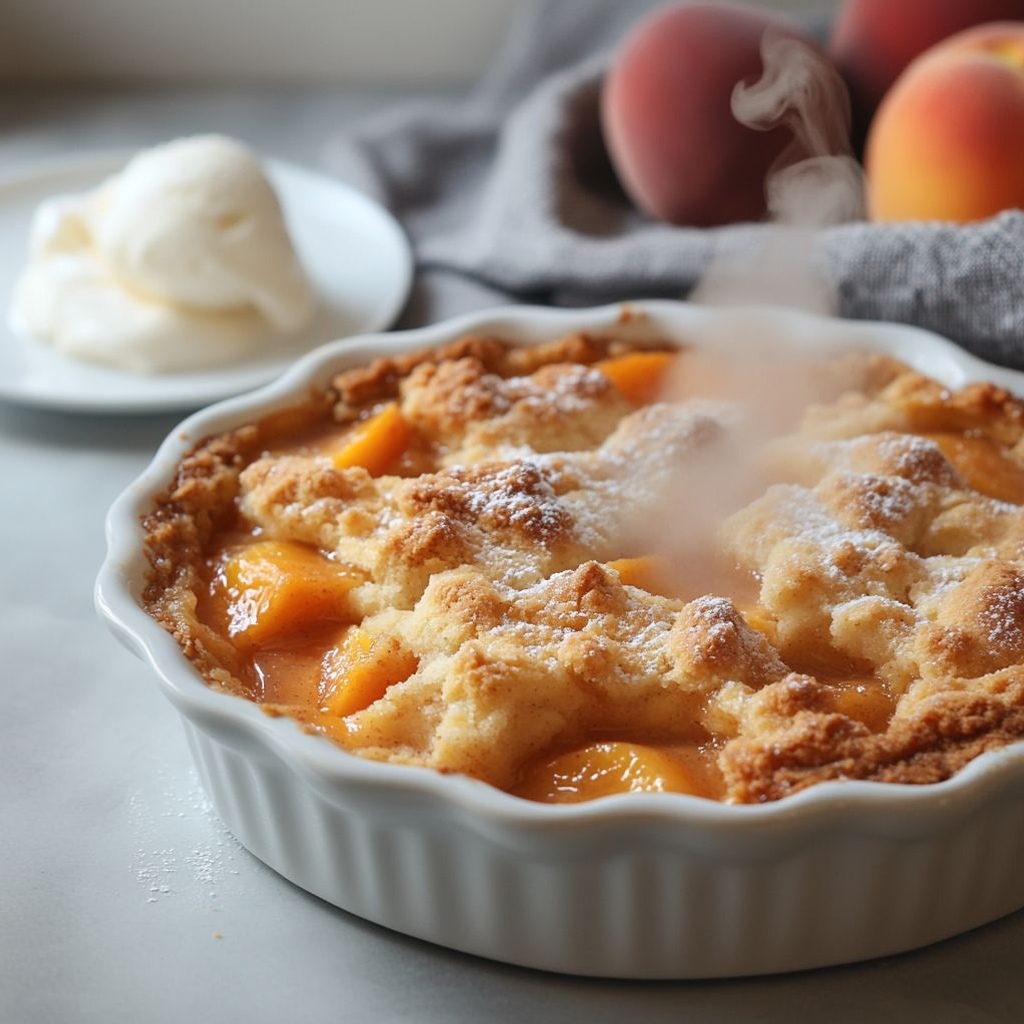
→ Resting prevents a hot, runny filling and improves flavor concentration; serve warm with vanilla ice cream or whipped cream for a classic contrast. - Optional finishing: just before serving, dust with powdered sugar or cinnamon sugar for a final touch of sweetness and visual appeal; this should be done after resting to preserve topping texture.
→ A light finish adds elegance and a subtle sweetness that enhances the peach aroma.
Notes
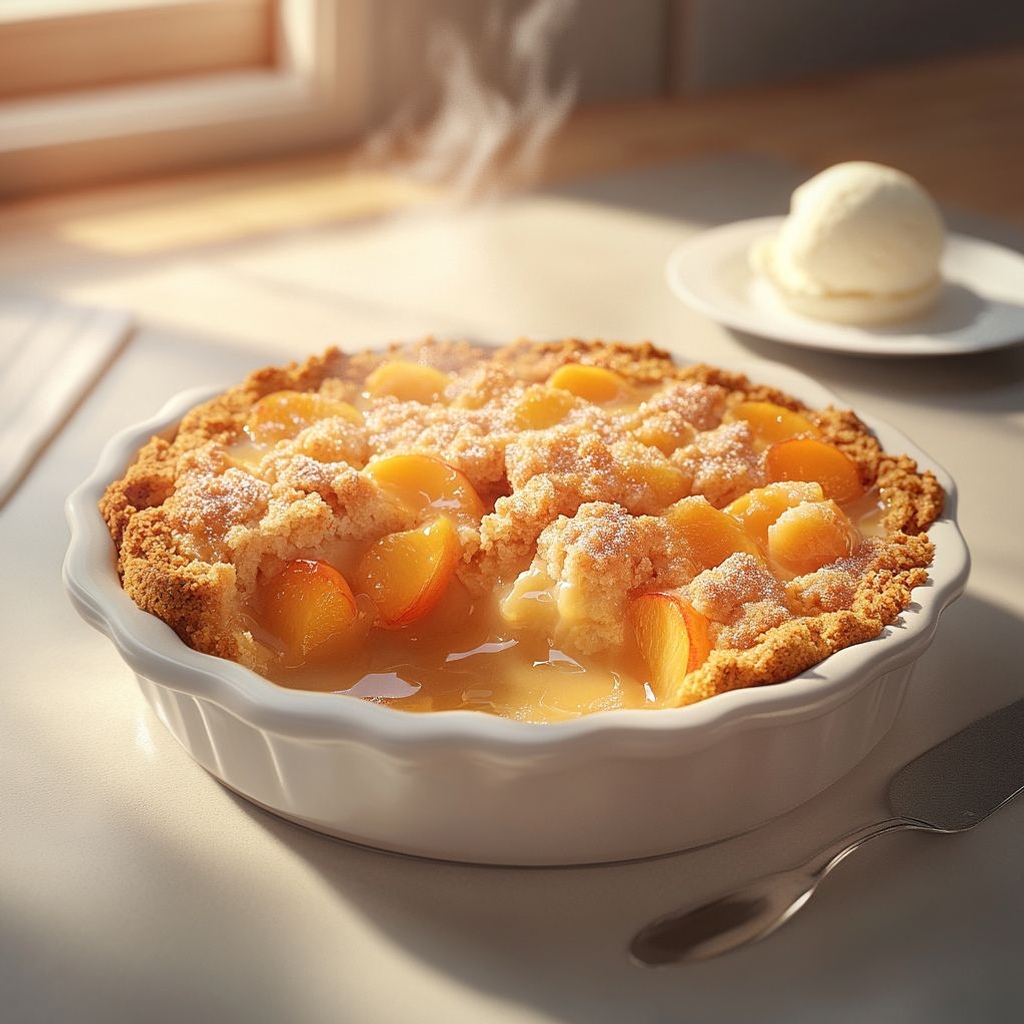
These Peach Cobbler Classico notes guide you to a comforting, fruit-forward dessert featuring a juicy peach filling and a flaky biscuit topping. You can customize it by adjusting the peach filling sweetness, adding 1/2 teaspoon ground cinnamon and/or citrus zest, or folding in chopped nuts for texture. It is best served warm with vanilla ice cream or whipped cream, and leftovers reheat well for quick desserts. For make-ahead prep, you can prepare the peach filling in advance and chill, then bake the topping separately or together when ready. For gluten-free or dairy-free versions, substitute a gluten-free all-purpose flour blend (with xanthan gum if your blend lacks it) and certified gluten-free baking powder, and use plant-based milk and cold dairy-free butter or coconut oil in the topping. Always choose ripe-but-firm peaches, whisk the cornstarch thoroughly into the filling to avoid lumps, and measure ingredients accurately to ensure the topping bakes up light and tender.
Tips
Tips for Peach Cobbler Classico
- Choosing peaches: Look for peaches with a fragrant aroma and a little give when pressed. They should be ripe but still firm enough to hold their shape when sliced. If using canned peaches, drain well and pat dry to remove excess syrup; for frozen peaches, thaw completely and drain the excess moisture.
- Peach preparation: Peel if you prefer a smoother filling, using a quick blanch (30–60 seconds in boiling water) or a peeler. Slice evenly (about ¼–½ inch) so the filling cooks uniformly.
Filling flavor and thickening
- Maceration and balance: Toss peaches with sugar, lemon juice, salt, and vanilla. Let sit 15–20 minutes to draw out juices and start dissolving sugar. If peaches are very ripe and sweet, you can reduce sugar by 1–4 tablespoons.
- Thickening the filling: Dissolve cornstarch in a small amount of cold water before adding to the peaches to avoid lumps. If you don’t have cornstarch, you can substitute with 3 tablespoons all-purpose flour and whisk well to avoid specks.
- Bright juice, not overpowering: Fresh lemon juice brightens the peach flavor; don’t overdo it. If using bottled juice, reduce to 1 teaspoon to keep citrus from dominating.
- Salt and vanilla: The pinch of salt enhances sweetness; vanilla in the filling deepens aroma. If you’re using vanilla only in the topping, you can omit it from the filling.
Topping technique
- Butter and dough texture: Keep the butter very cold and cut it into small pieces. In the dry ingredient mix, the cold butter should form pea-sized pockets that melt into steam as the cobbler bakes, creating a flaky, biscuit-like topping. Avoid overworking the dough.
- Dry ingredients preparation: Sift the flour, sugar, baking powder, and salt together to ensure even distribution and to prevent lumps.
- Dairy choice: Cold milk is recommended to keep fat cold for flakier results. For a richer crust, use 1/2 cup milk plus 2 tablespoons heavy cream. For dairy-free, use fortified plant milk with a splash of lemon juice to mimic tang.
- Vanilla and optional finishes: Vanilla in the topping adds aroma; if you already have vanilla in the filling, you can skip it in the topping. Brushing melted butter on top or a light sprinkle of sugar near the end will yield a glossy, crisper crust.
Flavor boosters and add-ins
- Cinnamon and spice: 1/2 teaspoon ground cinnamon is an optional warm note. Add to filling or dust over the topping to taste; use sparingly if you want the pure peach flavor to shine.
- Nuts and zest: Toast 1/4 cup chopped pecans or almonds for texture and depth; add to the filling or sprinkle on top. Zest of 1/2 lemon or orange adds a bright citrus scent; distribute through the filling for aroma.
- Dried fruit: 1/4 cup raisins or chopped dates give chewy pockets of sweetness; soak briefly to plump before mixing to prevent dryness.
- Finish options: A light dusting of powdered sugar or cinnamon sugar right before serving adds visual appeal and a touch more sweetness.
Baking, serving, and storage
- Bake moment: Preheat to 350–375°F (175–190°C). Bake until the top is golden and the filling is bubbling, typically 35–45 minutes. If the topping browns too quickly, tent with foil.
- Rest time: Let the cobbler rest 10–15 minutes after baking to thicken the filling and make serving easier.
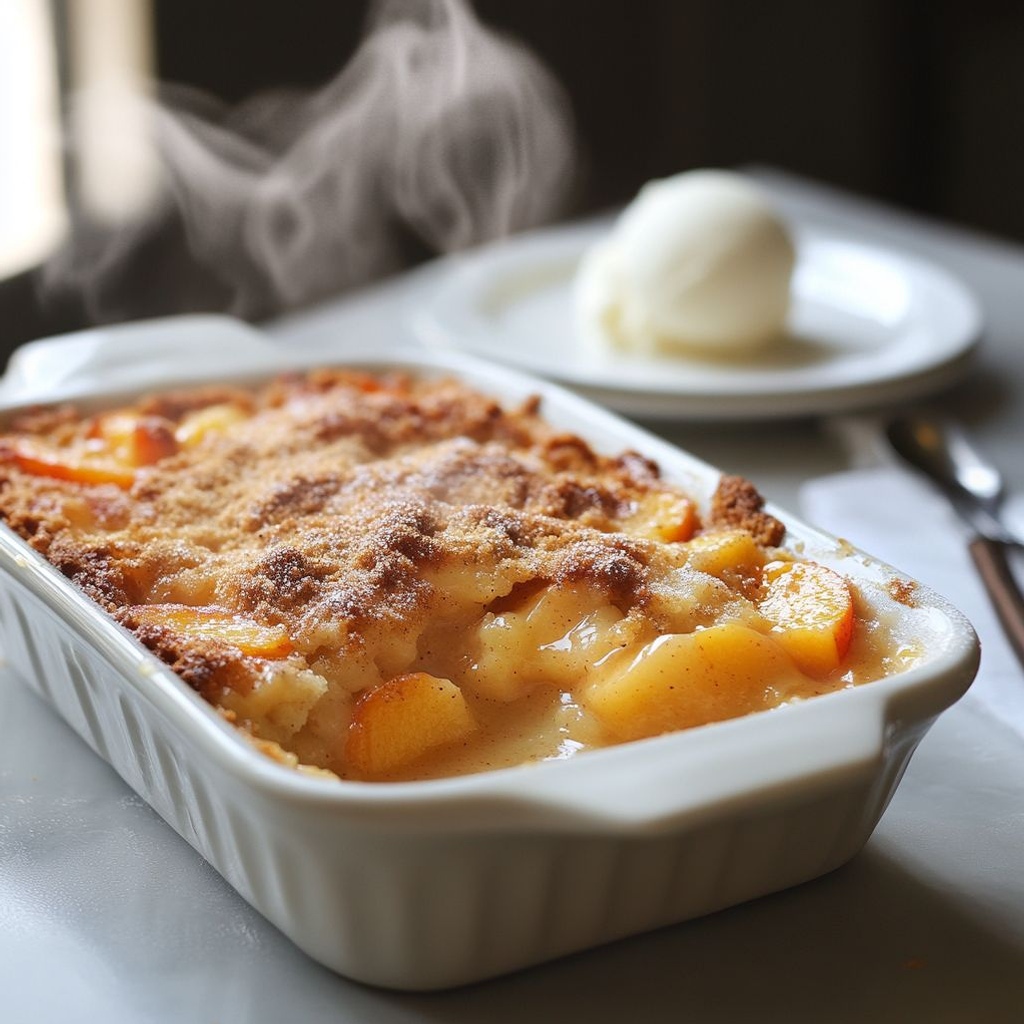
- Serving ideas: Serve warm with vanilla ice cream or whipped cream for contrast with the hot filling. A dollop of fresh whipped cream also works well.
- Make-ahead and storage: Filling can be prepared in advance and refrigerated for up to 24 hours. Assemble and bake just before serving. Refrigerate leftovers up to 3 days; reheat gently in the oven or in a covered dish in the microwave. Baked cobbler can be frozen for up to 2 months; thaw and reheat before serving.
FAQ
Peach cobbler classico
What makes a Peach Cobbler Classico?
A classic peach cobbler features juicy peaches baked under a light, biscuit-like topping. It’s simple to make, relies on pantry ingredients, and highlights summer peaches with warm spices and a touch of vanilla.
What ingredients do I need for the peach filling?
- 6 cups sliced ripe peaches (about 4–5 large peaches)
- 1/2 cup granulated sugar (adjust to sweetness of peaches)
- 1 tablespoon lemon juice
- 1 tablespoon cornstarch (or arrowroot) to thicken
- 1/2 teaspoon ground cinnamon
- Pinch of salt
What ingredients are used for the cobbler topping?
- 1 cup all-purpose flour (or gluten-free blend)
- 1/3 cup granulated sugar
- 1 teaspoon baking powder
- 1/4 teaspoon salt
- 1/2 cup cold unsalted butter, cut into cubes (or dairy-free butter)
- 2/3 cup milk (dairy or plant-based)
- 1 teaspoon vanilla extract (optional)
Can I use fresh, frozen, or canned peaches?
Use fresh peaches when available for the best flavor. Frozen peaches (thawed and drained) work well, and canned peaches can be used if drained and patted dry. Avoid overly wet fruit, which can make the filling runny.
Should I peel the peaches?
Peaches can be peeled or unpeeled. Peeling yields a smoother filling, while leaving the skins on adds color and texture. If you want a silky filling, peel; if you like a rustic look, leave skins on.
Do I need to pre-cook the filling or bake it with the topping?
There’s no pre-cooking required. Toss the sliced peaches with sugar, lemon juice, and cornstarch, then spread in a baking dish and top with the batter. The filling cooks and thickens as the cobbler bakes.
What oven temperature and bake time should I use?
Preheat to 350°F (175°C). Bake for about 40–45 minutes, until the filling is bubbling at the edges and the topping is golden brown.
How do I know when the cobbler is done?
The edges should be bubbling and the topping should be a golden-brown, tender crust. A toothpick inserted into the topping should come out clean or with a few crumbs.
How should I store leftovers?
Let the cobbler cool completely, then cover and refrigerate. It will keep for 3–4 days. To reheat, warm in a 325–350°F (165–175°C) oven for 10–15 minutes, or briefly in the microwave.
Can I make this dairy-free or gluten-free?
Yes. For dairy-free, substitute dairy-free butter and plant-based milk. For gluten-free, use a gluten-free flour blend in place of all-purpose flour. Ensure your baking powder is gluten-free if needed.
Can I freeze peach cobbler?
Yes. You can freeze assembled unbaked cobbler for up to 2 months, or freeze baked cobbler (cool first) and reheat in a 350°F oven. Wrap tightly to prevent freezer burn for unbaked versions.
What should I serve with peach cobbler?
Classic pairings include vanilla ice cream or a dollop of whipped cream. A drizzle of caramel or a sprinkle of cinnamon sugar also works well.