Introduction / Hook
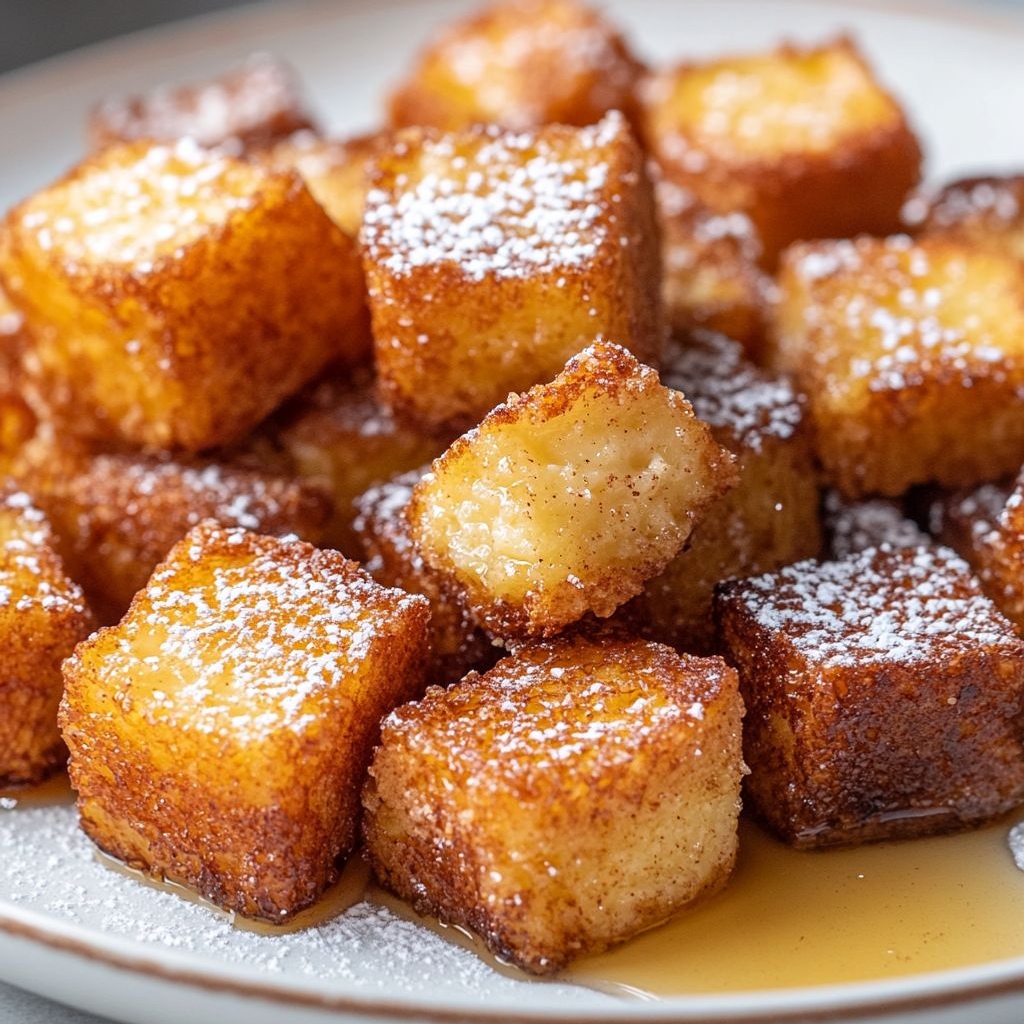
Imagine a tray of bite-sized morning jewels, each one a golden morsel that crackles softly as you bite into it. The air is perfumed with the warm, comforting aroma of cinnamon—a scent that instantly hugs the room and signals that a cozy, joyful breakfast moment is about to unfold. French toast bites alla cannella are not just a dish; they are an invitation to linger at the table a little longer, to dip into conversation, to savor the sweet-to-savoury contrast that makes mornings feel brighter. They’re the kind of food that turns ordinary weekends into small celebrations, turning a simple idea—toast cut into charming little cubes—into a lavish, crowd-pleasing experience. And because they’re in bite-sized form, they’re perfect for sharing, for playful brunches, for kids’ parties, and for those mornings when you want something refined yet approachable. The cinnamon kiss on the crust, the tender interior, the way each piece glows with a hint of vanilla and warm spice, all combine to create a sensation that’s familiar and new at the same time. These bites don’t demand a grand kitchen; they invite you to create something memorable with a few simple ingredients, a little patience, and a lot of heart.
The Story Behind the Dish
French toast is one of those timeless breakfast classics with a story that travels across borders and centuries. Its lineage can be traced back to kitchens in ancient civilizations where stale bread was revived with milk or eggs to rescue it from the realm of the day-old. In France, the dish is known as pain perdu, literally “lost bread,” a name that nods to its humble origins and its purpose: to rescue bread that would otherwise be wasted. The genius of this humble concept is in its simplicity and its transformative power—when bread is given a brief soak and heat, it becomes tender, custard-like on the inside with a caramelized, crisp exterior that delivers a satisfying bite every time.
As the dish traveled across Europe and into other culinary scenes, cooks began to experiment with spices, sweeteners, and textures. Cinnamon emerged as a natural partner, a fragrant spice that has traveled with traders and travelers for millennia. It’s a spice that instantly evokes warmth, comfort, and a touch of festive charm. The version you’re seeing here—the “alla cannella” homage—speaks to both Italian culinary sensibilities and the global love for cinnamon-laced treats. The idea of turning these once-humble slices into delightful little bites is a modern twist, a playful presentation that appeals to gatherings both intimate and lively. It’s a reminder that tradition can meet creativity in delicious harmony, and that a simple tweak—a change in shape—can reframe a familiar dish into something fresh, shareable, and unmistakably comforting.
Why You’ll Love This Recipe
- Shareable and kid-friendly: Bite-sized portions make these perfect for family brunches, birthday mornings, or a casual party spread where guests can pick up a piece and go.
- Instant brunch elevate: The aroma alone elevates your kitchen into a cozy cafe—no flash in the pan required, just a little mindful cooking and a lot of warmth.
- Customizable and approachable: The concept invites adaptations—swap textures, adjust sweetness, or layer in seasonal twists without needing a full culinary overhaul.
- Comforting, with a spark of spice: Cinnamon brings a familiar, comforting note, while the bite-sized format keeps the experience light, playful, and easy to share.
- A crowd pleaser for any occasion: From weekdays to weekends, holiday mornings to weekend brunches, it fits in with almost any menu and mood.
Flavor Profile & Texture
These bites are a study in contrast and balance. The exterior carries a delicate caramelization—the kind of toasty crust that gives a soft resistance when you press your fork into it. That crisp-edged surface gives way to a tender, almost custard-like interior that stays moist and fluffy, a texture that remains inviting from the first bite to the last. The cinnamon note is fragrant and pervasive, not dull or overbearing; it’s a gentle warmth that mingles with a whisper of sweetness and a hint of vanilla or dairy richness, depending on how you imagine the fold. The flavor profile dances between breakfast-cheer and dessert-siren, delivering comfort with a playful twist.
In aroma terms, you’ll notice an enveloping spice perfume that fills the room—an invitation to slow down, sip something warm, and savor the moment. The bites are versatile in flavor pairing: the natural sweetness carries well with a glossy syrup, a dollop of whipped cream, or a simple dusting of extra cinnamon for a more intense aromatic punch. In texture, think of each piece as a tiny, tender pillow that delivers a soft, yielding center you can enjoy without crumbly mess. The crust offers that satisfying bite, a satisfying counterpoint to the softness within, creating a memory of texture you’ll be chasing with every other bite you take.
Occasions & Pairings
Where do these cinnamon-kissed bites shine? Everywhere you want a little celebration around breakfast or a mid-moments snack that feels special. They’re ideal for:
- Weekend brunches with friends and family, when you want a shareable centerpiece that still feels cozy and approachable.
- Holiday mornings, where the aroma of cinnamon can evoke memories of festive gatherings without demanding heavy preparation.
- Brunch-to-desk days at the office, where coworkers can grab a bite and move on with their morning, only lightly delaying the rush of the day.
- Kids’ parties or school events, because their bite-sized form is perfect for little hands and big smiles.
Pairing ideas to complement the bites without overshadowing them include simple, timeless options: a hot beverage selection with varied sweetness (dark roast coffee, a creamy latte, or a comforting cocoa), fresh fruit slices to cut through the richness, and a drizzle of maple or a lightly sweet fruit compote to add a bright, fruity contrast. If you’re after a more indulgent pairing, consider a dollop of whipped cream or a light yogurt-based cream to add tang and richness in balance with the cinnamon notes. For a festive touch, a handful of toasted nuts or a subtle citrus zest can introduce a new layer of aroma and texture without overpowering the cinnamon-forward flavor.
Tips, Variations & Substitutions
Here are some ideas to adapt and enrich the concept of French toast bites alla cannella while keeping the spirit intact. Each option is designed to be friendly to cooks of all levels and to accommodate different dietary preferences without compromising the essence of the dish.
Variations
- Seasonal twists: Introduce seasonal elements such as pumpkin, apple, or cranberry to complement the cinnamon’s warmth. The effect is cozy and autumnal, perfect for fall gatherings.
- Flavor accents: A subtle hint of citrus zest, such as orange or lemon, can brighten the profile and add a refreshing counterpoint to the spice.
- Texture plays: Try coating the bites with a light crumb topping for extra crunch or finish with a delicate dusting of powdered sugar for a soft, snowy look.
- Nutty notes: Add a light crunch with toasted seeds or finely chopped nuts to bring in a toasty, nutty nuance that complements the cinnamon.
- Chocolate whisper: A drizzle of melted chocolate on the plate or a tiny chocolate shard tucked beneath a bite can create a pleasing dessert-like contrast for chocolate lovers.
Substitutions
- Allergen-friendly: For dairy-free or vegan adaptations, imagine a non-dairy, plant-based milk alternative and a suitable binder to maintain tenderness, while preserving the cinnamon aroma. The concept remains the same: a gentle soak that yields a soft interior and a crisp exterior.
- Gluten considerations: If gluten-free needs arise, explore gluten-free bread options that still offer a satisfying texture when warmed and lightly toasted.
Regional Twists
- Inspiration from Sicilian or Tyrolean traditions can guide you to pair cinnamon with hints of almond or vanilla for a nutty, fragrant profile that nods to regional sweets.
- Latin American influences can bring a touch of dulce de leche-style richness or a citrus-laden glaze that accentuates the spice beautifully.
Storage & Make-Ahead Ideas
The beauty of these bites is their flexibility when it comes to planning. They can be prepared ahead in several practical ways, then finished with a quick heat to revive their fragrance and texture just before serving.
- Make-ahead: Assemble the bread pieces a day ahead and refrigerate them in a covered container. When ready to serve, complete the cooking process so they come out crisp and warm. This approach is ideal for brunch gatherings where timing can be tricky.
- Storage: If you have leftovers, store cooled bites in an airtight container in the refrigerator for up to 2–3 days. Reheat gently in a low oven or toaster oven to restore the crisp edge without losing the tender interior.
- Freezing: For longer-term make-ahead, freeze the completed bites in a single layer on a parchment-lined tray, then transfer to a freezer bag. Reheat in a moderate oven until heated through and the exterior regains some crispness.
Tips for reheating without losing tenderness include using moderate heat and giving the pieces a bit of time to re-crisp—rushing the process can render them dry or dense. If you’re topping with any glaze, syrup, or sauce, apply just before serving to preserve the ideal texture and mouthfeel.
Fun Facts & Trivia
Delving into the lighter, curious side of this dish brings a few delightful tidbits to the surface. French toast, in its many forms, has been a breakfast staple around the world for centuries, proof that a clever rescue of stale bread can be a universal joy. The term pain perdu (lost bread) evokes a practical memory of how households historically saved ingredients, turning potential waste into nourishment. Cinnamon, the star spice in this rendition, has a long and storied history that crosses continents—ancient trade routes, caravans, and kitchens that welcomed its sweet, woody warmth. In some cultures, cinnamon is paired with citrus and vanilla as a celebration of aroma and balance, showing how this spice can harmonize flavors in sweet and comforting dishes alike.
Anecdotally, the idea of serving bite-sized versions of classic dishes is a modern culinary trend that aligns with the social dining movement—easier sharing, more approachable plating, and the delight of sampling multiple flavors in one sitting. The bite format invites a sense of play and discovery: guests can pick several pieces, compare textures, and choose their preferred dippers or syrups. In essence, these bites carry the romance of a classic French technique reimagined for contemporary gatherings, where tradition and whimsy meet at the table.
Ingredients
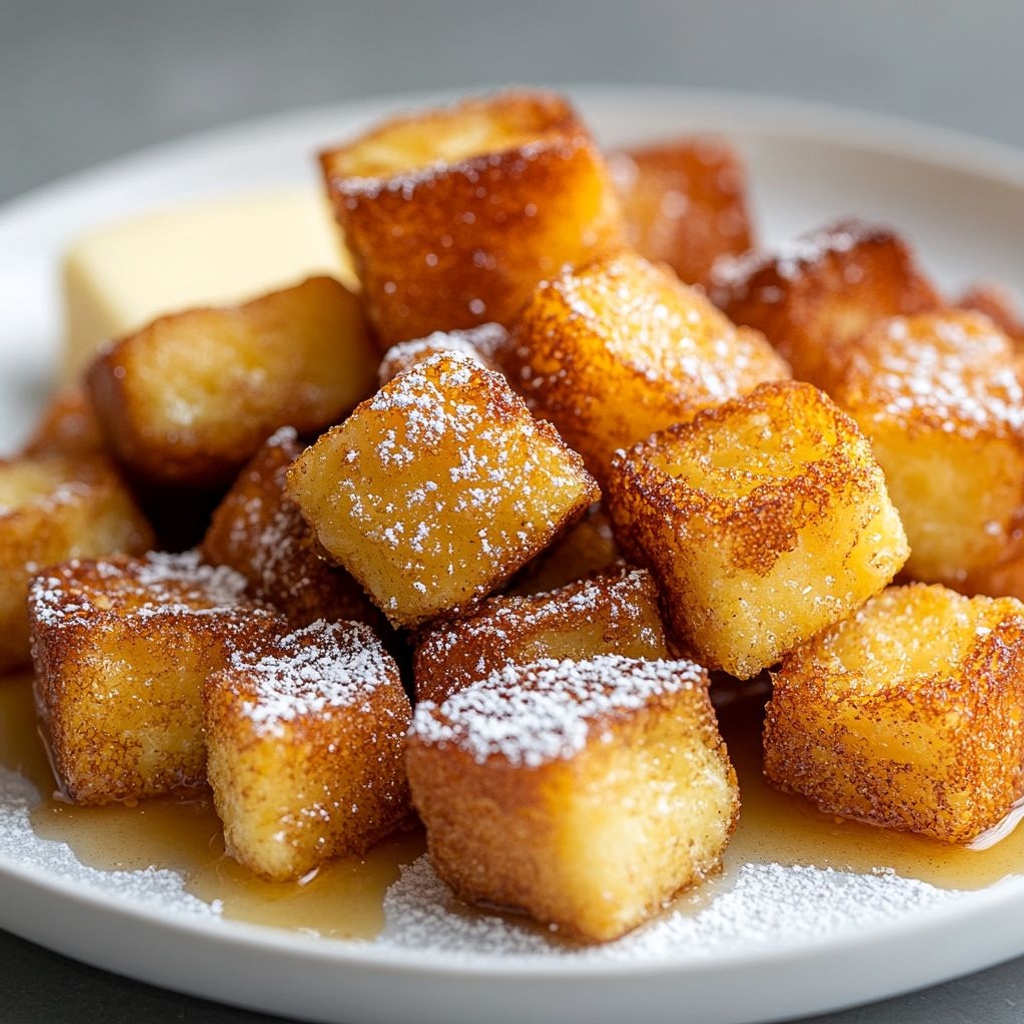
French toast bites alla cannella
Bread & Batter
- 6 cups cubed day-old brioche or challah bread, cut into 1-inch cubes
→ The bread forms the base of the bites. Day-old brioche or challah soaks up the custard without turning mushy; uniform 1-inch cubes ensure even soaking and a consistent fry for a balanced texture of soft interior and crisp exterior. - 4 large eggs
→ Eggs provide the custard that binds and sets the bites during frying, giving structure and richness. Whisk until completely smooth to avoid streaks and ensure even coating on every cube. - 1 cup whole milk
→ Milk adds moisture and creaminess to the custard; whole milk yields a silky texture, while dairy-free options can work with unsweetened plant milk plus a splash of cream or coconut milk for body. Adjust the ratio if using non-dairy milk to maintain custard consistency. - 1 teaspoon ground cinnamon
→ Cinnamon is the signature warmth of this dish, blending into the custard for flavor throughout each bite. If you love spice, you can add a pinch of nutmeg or cardamom for extra depth. - 2 tablespoons granulated sugar
→ Sugar sweetens the custard lightly and assists with browning during frying. You can reduce to 1 tablespoon for a less sweet version or substitute with brown sugar for a deeper caramel note. - 1 teaspoon pure vanilla extract
→ Vanilla enhances the overall sweetness and aroma, enriching the custard’s flavor. Use high-quality pure vanilla for best fragrance; avoid imitations for a cleaner taste. - 1/4 teaspoon fine sea salt
→ A small amount of salt balances sweetness, sharpens flavors, and helps the cinnamon come alive. If you use salted butter, reduce the salt slightly. - 2 tablespoons unsalted butter, for frying
→ Butter adds flavor and helps create a golden crust while keeping the interior tender. Use a nonstick skillet or well-seasoned pan and cook over medium heat to prevent burning; add more butter as needed between batches for even browning.
Cinnamon-Sugar Coating
- 1/2 cup granulated sugar
→ After frying, toss the warm bites in this coating to form a light, sweet crust that echoes the cinnamon flavor. Use a shallow dish to roll the pieces gently so they remain intact and evenly coated. - 2 teaspoons ground cinnamon
→ Combine with the sugar to create a fragrant coating that enhances the exterior. Mix thoroughly so every bite gets cinnamon contact; you can increase to 1 tablespoon total if you want a stronger crust.
Optional Add-ins
- 1/2 cup mini chocolate chips (optional)
→ Chocolate chips introduce pockets of melt-in-the-mouth richness. Fold them into the bread cubes before soaking or sprinkle a few into the pan after a partial fry, ensuring even distribution and preventing clumps. Use mini chips to avoid sinking to the bottom. - 1/2 cup raisins or chopped dates (optional)
→ Adds chew and natural sweetness. If very dry, rinse or soak in warm water for 5–10 minutes to plump, then drain and mix with the bread before soaking to integrate evenly.
Serving & Toppings
- Powdered sugar (confectioners’ sugar) for dusting
→ A light dusting at serving adds a delicate sweetness and a pretty finish. Sift just before plating to avoid clumps and ensure an even veil over the bites. - Pure maple syrup, for serving
→ Classic pairing with cinnamon; warm the syrup slightly for a smoother pour and to intensify maple notes that complement the cinnamon. Taste and adjust quantity to your preference. - Fresh berries or sliced fruit, for serving
→ Fresh fruit provides brightness and acidity to balance the richness. Choose seasonal berries or fruits like strawberries, blueberries, or bananas; add a squeeze of lemon juice if desired to heighten freshness.
Instructions
- Prepare the cinnamon-sugar coating by combining 1/2 cup granulated sugar with 2 teaspoons ground cinnamon in a shallow dish and whisk until evenly blended.
→ This ensures the coating adheres evenly to the warm bites and provides a balanced cinnamon flavor in every piece. - Whisk the custard mixture thoroughly in a large bowl: 4 large eggs, 1 cup whole milk, 1 teaspoon pure vanilla extract, 1/4 teaspoon fine sea salt, 1/4 teaspoon ground cinnamon, and 2 tablespoons granulated sugar until completely smooth and homogenous.
→ Whisking until there are no streaks guarantees uniform texture and prevents uneven flavor distribution on the bread. - If using optional add-ins, fold in 1/2 cup mini chocolate chips or 1/2 cup raisins or chopped dates into the cubed bread now, distributing them gently to avoid tearing the bread.
→ Even distribution prevents clumps that could cause uneven cooking or hot pockets and preserves the integrity of each cube. - Spread 6 cups cubed day-old brioche or challah on a baking sheet in a single layer and let them dry out slightly for 10–15 minutes if they feel very soft, to prevent mushy coating during soaking.
→ Day-old or lightly dried bread soaks up custard without collapsing, yielding a soft interior with a crisp exterior after frying. - Transfer the bread cubes to a large shallow dish or rimmed tray, pour the prepared custard over them, and use a wide spatula to gently flip and stir so every surface is coated; let the cubes soak for 5–10 minutes, turning halfway for even absorption.
→ Soaking time allows the bread to absorb custard without disintegrating, creating a cohesive bite with internal softness. - Preheat a large nonstick skillet or cast-iron pan over medium heat and melt 2 tablespoons unsalted butter, swirling to coat the surface; wait until the butter foams and just begins to color for a nutty aroma.
→ Medium heat yields a golden crust without burning, and butter adds flavor and browning since it aids even browning and prevents sticking. - Fry the soaked bread cubes in batches: lift each piece with tongs to allow excess custard to drip back, place in the hot pan in a single layer without crowding, and cook 2–3 minutes per side until deeply golden and crisp on the exterior and fully set inside; adjust heat as needed to avoid scorching.
→ Proper browning signals Maillard reaction for rich flavor; avoiding overcrowding ensures even heat transfer and uniform texture. - Keep finished bites warm on a rack over a sheet pan or in a 200°F (90°C) oven while you fry remaining batches to maintain crispness and prevent soggy results.
→ Warming between batches keeps the exterior crisp and prevents the first batch from cooling and softening before coating. - While bites are still warm, roll or toss them in the prepared cinnamon-sugar coating: place the warm pieces in a shallow dish of the mixture and rotate gently to coat all sides; the warmth helps sugar adhere and forms a fragrant crust.
→ Coating while warm ensures immediate adhesion and a balanced cinnamon-sugar crust that enhances texture and aroma. - Serve immediately with a light dusting of powdered sugar, warm pure maple syrup, and a side of fresh berries or sliced fruit; if desired, warm the maple syrup slightly to improve pourability and intensify maple notes.
→ Fresh fruit provides brightness to offset richness, while warm syrup and a delicate sugar veil tie together the cinnamon profile for a classic finish.
Notes
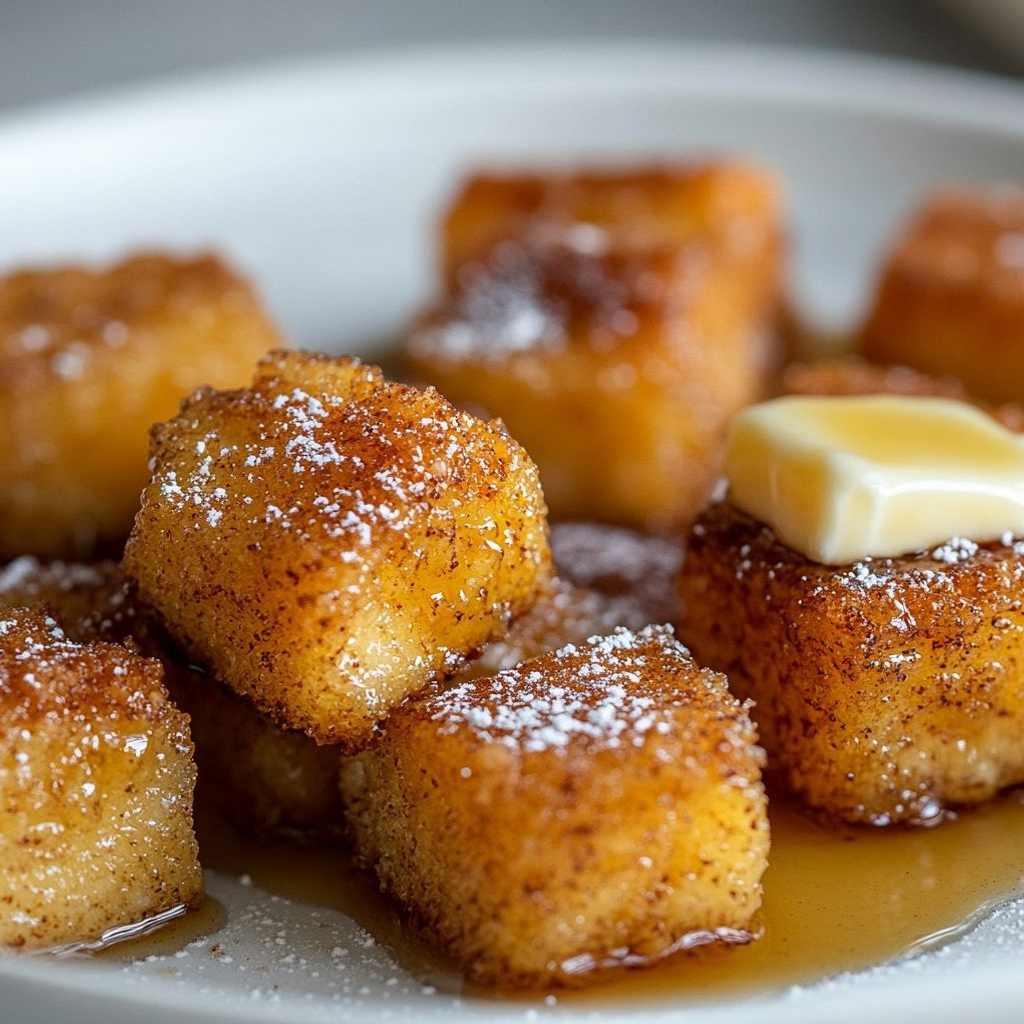
These cinnamon French toast bites are a cozy, crowd-pleasing breakfast or brunch treat, made with day-old brioche or challah soaked in a fragrant cinnamon-vanilla custard and fried to a golden, crisp exterior. You can customize them by adding chopped nuts (pecans or walnuts), seeds, or dried fruits (raisins, cranberries) to the mixture or on top. They freeze well and reheat beautifully in a 350°F (175°C) oven for 8–12 minutes or in a toaster oven for a quick serve. For an extra boost, serve with warm maple syrup, a dollop of yogurt or a light cream-cheese glaze, and fresh berries if desired. Always ensure your bread and any add-ins are gluten-free if you have gluten intolerance.
Tips
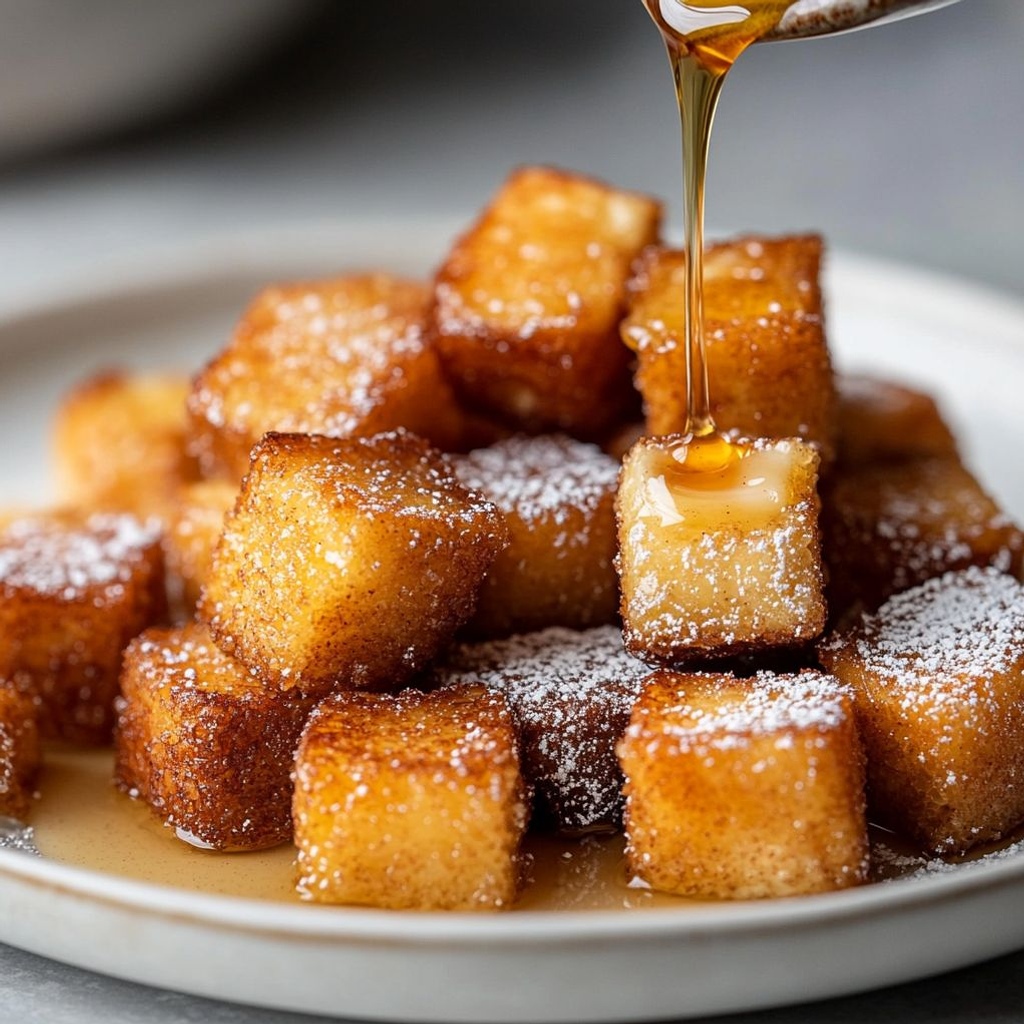
Tips for Perfect French Toast Bites alla Cannella
Bread prep and soaking readiness
- Use day-old brioche or challah; their sturdy crumb soaks up the custard without becoming overly soft. If you only have fresh bread, dry slices in a 300°F (150°C) oven for 5–7 minutes to mimic day-old texture.
- Cut bread into uniform 1-inch cubes to ensure even soaking and consistent fry time. If some pieces are smaller, adjust frying time accordingly.
- Toast or air-dry bread slightly if it feels very fresh or crumb-heavy; this helps the cubes hold their shape when fried.
Custard preparation
- Whisk 4 large eggs until completely smooth to avoid streaks; this ensures a uniform custard coating on every cube.
- Warm 1 cup of whole milk to about 100–110°F (38–43°C), then whisk in 1 teaspoon pure vanilla extract, 1/4 teaspoon fine sea salt, 1/4–1/2 teaspoon ground cinnamon, and 2 tablespoons granulated sugar. This creates a fragrant custard that browns evenly.
- Dip bread cubes briefly—about 20–40 seconds per batch—allowing them to absorb without becoming soggy. If the custard seems too thin, let it rest a few minutes and whisk again; you can dissolve a pinch of cornstarch in a little milk to help set during frying (optional).
- For dairy-free options, use unsweetened plant milk with a splash of coconut cream or light oil to maintain richness; keep the total liquid similar to the recipe so the crust browns properly.
Frying technique
- Heat a heavy skillet or cast-iron pan over medium heat and add 1–2 tablespoons unsalted butter. When sizzling gently, add the coated bread cubes in a single layer—do not crowd the pan (work in batches).
- Cook until the underside is deep golden brown and crisp, about 2–3 minutes per side. Flip carefully with a spatula; if the butter starts to burn, reduce the heat slightly.
- Keep finished bites warm on a rack in a low oven (about 200°F / 93°C) while finishing the rest to preserve crisp exterior rather than stacking on paper towels that trap steam.
Cinnamon-sugar coating
- Immediately toss hot bites with a coating of 1/2 cup granulated sugar and 2 teaspoons ground cinnamon in a shallow dish. Roll gently so the coating adheres without breaking the bites.
- For a stronger crust, increase cinnamon to 1 tablespoon total (sugar remains 1/2 cup). Re-coat while still warm to maximize adhesion.
- To keep the coating from clumping, whisk the mixture well and swirl the warm bites in the sugar-cinnamon mix rather than dipping; a light toss is enough to coat.
Add-ins and texture
- If using optional mini chocolate chips, fold them into the bread cubes before soaking or scatter through the pan after partial fry to prevent sinking and clumping. Use mini chips to distribute evenly.
- Raisins or chopped dates add chew; soak them in warm water for 5–10 minutes to plump, then drain well and mix with the bread before soaking to distribute sweetness and texture.
Serving and presentation
- Dust with powdered sugar just before serving for a delicate finish. Sift in small batches to avoid clumps.
- Warm pure maple syrup slightly to create a smooth pour and amplify maple notes that pair with cinnamon. Serve with fresh berries or sliced fruit for brightness; a squeeze of lemon on the fruit adds zing that balances richness.
- For an extra-crispy finish, re-crisp leftovers in a 350°F (175°C) oven for 5–8 minutes before serving.
Make-ahead and storage
- Custard can be prepared a few hours ahead; keep refrigerated until ready to soak. Bread cubes can be pre-cut and stored in a bag at room temperature for a few hours, then soaked and fried as you go.
- Leftovers can be frozen after frying—freeze on a sheet pan, then transfer to a bag. Reheat in a 350°F (175°C) oven for 8–10 minutes or until heated through and crisp.
FAQ
Che cosa sono i French toast bites alla cannella?
Sono cubetti di pane raffermo immersi in una pastella profumata alla cannella, fritti o cotti al forno fino a doratura. Sono una versione mini della French toast, perfetti come snack o colazione dolce.
Quali ingredienti servono per preparare i French toast bites alla cannella?
Per circa 4 porzioni:
- Pane raffermo tagliato a cubetti di circa 2 cm (6-8 fette)
- 2-3 uova
- 120-150 ml di latte (latte intero o latte vegetale)
- 1-2 cucchiai di zucchero
- 1-2 cucchiaini di cannella in polvere
- 1/2 cucchiaino di estratto di vaniglia
- Un pizzico di sale
- Burro o olio per la padella
- Opzionali: zucchero a velo, sciroppo d’acero, frutta fresca
Posso prepararla senza latticini o senza uova?
Sì. Puoi rendere la ricetta adatta a chi evita latticini o uova:
- Usa latte vegetale (mandorla, soia, avena) al posto del latte normale
- Usa burro veg o olio al posto del burro tradizionale
- Se vuoi evitare le uova, puoi usare una miscela a base di latte vegetale + una piccola quantità di amido di mais o lievito per preparazioni dessert, oppure un egg replacer commerciale
Come tagliare il pane per ottenere cubetti uniformi?
Utilizza pane raffermo e taglialo in cubetti di circa 2 cm. Pane troppo fresco assorbe poco la pastella, mentre pane secco eccessivamente duro potrebbe sbriciolarsi; i cubetti di media consistenza funzionano meglio.
Come preparo la pastella per i French toast bites?
In una ciotola sbatti le uova con latte, zucchero, cannella, vaniglia e un pizzico di sale fino a ottenere un composto omogeneo. Se vuoi una pastella più corposa, aggiungi un cucchiaio in più di latte.
Come si cuociono i cubetti dopo averli immersi nella pastella?
Scalda una padella antiaderente a fuoco medio e sciogli una noce di burro (o usa olio). Immergi i cubetti nella pastella per circa 10-20 secondi per lato, poi cuocili 2-3 minuti per lato finché sono dorati e croccanti esternamente e morbidi all’interno.
È possibile cuocerli al forno invece di friggerli?
Sì. Preriscalda il forno a 200°C. Immergi i cubetti nella pastella, scolali leggermente e disponili su una teglia foderata con carta da forno. Spennella con un po’ di burro fuso e cospargi di cannella. Cuoci per 10-12 minuti, poi gira e cuoci altri 5-7 minuti finché dorati.
Come si servono questi French toast bites?
Servili caldi con sciroppo d’acero, zucchero a velo, miele o yogurt. Aggiungi frutta fresca come mirtilli o banane a fette per una presentazione completa. Una spolverata extra di cannella è sempre gradita.
Come si conservano e si riscaldano gli avanzi?
Conserva gli avanzi in frigorifero in un contenitore ermetico per 2-3 giorni. Per riutilizzarli, riscaldali in padella a fuoco medio con una noce di burro o in forno a 180°C per 5-7 minuti fino a farli tornare croccanti.
Quali varianti o trucchi utili per personalizzarli?
Prova queste varianti:
- Aggiungi scorza di limone o arancia per una nota agrumata
- Usa pane brioche o pan carrè per una versione più ricca
- Intensifica la dolcezza con sciroppo di agave o miele al posto dello zucchero
- Inserisci una punta di noce moscata o cardamomo per un aroma diverso
- Rendi gluten-free utilizzando pane senza glutine