
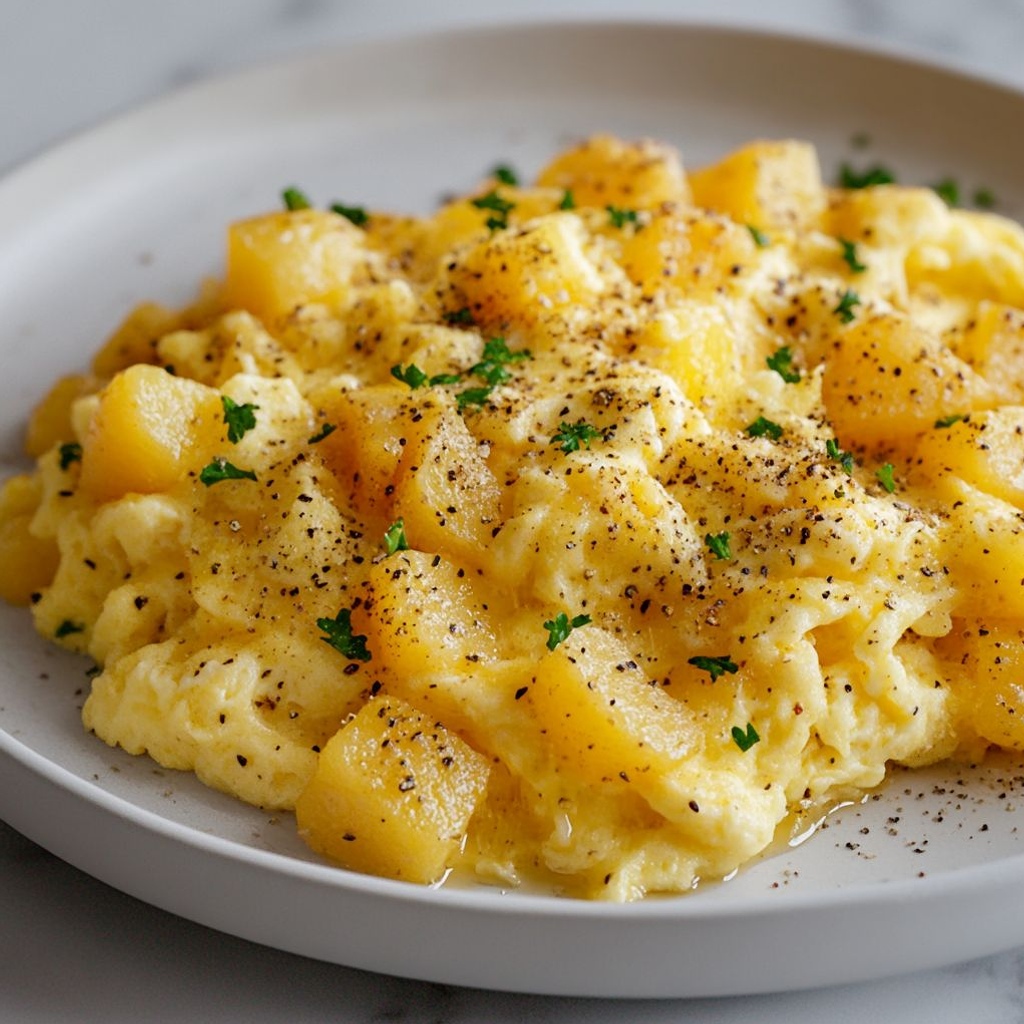
Introduction / Hook
There’s something magical about a skillet that sizzles with potato crisp and eggs that puff into cloud-soft ribbons. Scrambled Eggs with Potatoes and Cheese is the kind of dish that makes a morning feel like a warm, welcoming hug. Picture thin slices of potato kissed by heat until their edges bronze to a gentle caramel, releasing a whisper of starch that turns creamy as the eggs slide in. The cheese—gooey, melty, and just a touch nutty— binds everything together in a silky, irresistible bite. It’s the aroma that greets you first: butter and charred potato, a hint of onion if you choose to include it, and the comforting, bright scent of scrambled eggs waking up the pan. This dish is not flashy; it’s the kind of homey, everyday favorite that feels indulgent without being fussy. It’s breakfast, lunch, or dinner, done in a single skillet, and it tastes like a memory you didn’t know you were missing until you tasted it anew.
What makes this recipe especially appealing is its balance of textures and flavors. The potatoes bring a hearty bite and a satisfying starch, the eggs provide light, fluffy contrast, and the cheese adds a luscious, savory depth that binds it all together. It is both comforting and nourishing, a dish that chronicles the quiet pleasures of a well-loved kitchen. Whether you’re feeding a busy weekday morning crowd or settling in for a lazy weekend brunch, Scrambled Eggs with Potatoes and Cheese delivers warmth, ease, and a sense of culinary accomplishment without requiring a long list of ingredients or hours of cooking. And because it’s forgiving by design, you can tailor it to your pantry, your dietary needs, and your taste for spice or simplicity. In short, it’s breakfast made memorable—crispy-edged potatoes meeting soft, savory eggs in a cheese-kissed embrace—and it’s ready to become a staple in your home repertoire.
The Story Behind the Dish
Many of us grew up with a version of this skillet staple, a dish born from the practical magic of turning leftovers into something wondrous the next day. Potatoes are the ubiquitous backbone of many cuisines—sturdy, accessible, and capable of transforming a meal with a single sear. Eggs, meanwhile, are the universal comfort food: quick to prepare, endlessly adaptable, and capable of carrying a wide range of flavors. Put them together in a hot pan, fold in cheese, and you have a dish that feels both rustic and refined at once. It’s the kind of recipe that travels well—across continents and kitchens—yet remains rooted in the intimate, hands-on experience of cooking with what you have on hand.
In the American pantry tradition, skillet breakfasts often emerged from humble beginnings: a day-old potato leftover, a few eggs whisked with a pinch of salt and pepper, a strand of cheese pulled from the block, and butter or oil that happily sizzles away. The result is a dish that is at once sturdy and soulful, a wake-up ritual that can be as simple as a family’s routine or as celebratory as a weekend brunch. The potatoes, when given their moment in the heat, develop a crust that’s almost party-ready—an audible crackle as you bite through to the creamy center. The eggs, beaten to a mellow lightness, accept the heat without turning tough, creating ribbons of pale gold that catch and hold the melted cheese. The cheese itself—whether cheddar for punch, Gruyère for nap-worthy melt, or Monterey Jack for a creamy finish—adds a final, indulgent touch that makes the skillet feel like a tiny, delicious celebration.
Cultural cross-pollination also flavors this dish. In some kitchens, you’ll find the addition of peppers, onions, and herbs that bring a bright, almost confetti-like freshness to the plate. In others, a hint of paprika or hot sauce carries a little heat that wakes up the senses. The core concept—the union of browned potatoes, scrambled eggs, and cheese—transcends borders while inviting personal expression. It is a dish that respects tradition but rewards experimentation, a culinary conversation you can have with your own taste preferences. The story of this dish is really the story of the home cook: a person who looks at leftover potatoes and sees not yesterday’s scraps, but tomorrow’s comforting, satisfying plate. That mindset—resourceful, warm, and unpretentious—gives Scrambled Eggs with Potatoes and Cheese its enduring charm.
Why You’ll Love This Recipe
- Fast and forgiving: everything comes together in one skillet in under 30 minutes, making it ideal for busy mornings or casual weekend brunches.
- Budget-friendly: using pantry staples like potatoes, eggs, and cheese, you get a hearty meal without breaking the bank.
- Customizable texture: you can aim for ultra-crispy potatoes on the bottom, soft, cloud-like eggs on top, or a balanced texture throughout—your choice.
- Versatile for dietary tweaks: accommodates variations such as vegan cheese, dairy-free butter, or gluten-free seasonings without losing the comforting feel.
- Comes together with minimal cleanup: a single skillet, a few tools, and a satisfying, complete dish at the end.
- Perfect for family meals: friendly flavors that appeal to both kids and adults, with room for add-ins like herbs, peppers, or salsa.
- Great as a base for toppings: sour cream, hot sauce, green onions, or a dollop of salsa can elevate the dish in a single flourish.
Flavor Profile & Texture
The flavor profile of Scrambled Eggs with Potatoes and Cheese is a study in balance. The potatoes offer a toasty, slightly nutty note with a crisp edge that yields to a tender, almost creamy interior. When the pan is hot and the potato slices or small cubes meet the fat, they release a caramelized sweetness that provides a subtle, satisfying depth. The eggs contribute a soft, airy richness that lightens the dish, but they don’t overpower the potato’s starchy heart. Their mild, comforting flavor acts as a canvas for the other ingredients, allowing the cheese to shine through with a gentle, irresistible melt. The cheese ties everything together with a gentle, savory kiss—oily enough to glaze the potatoes and eggs, but not so heavy that it hides the dish’s inherent brightness. Depending on the cheese you choose, you can nudge the flavor toward sharp, salty, nutty, or creamy. A touch of salt and pepper is all that’s required to coax the best from the ingredients, though a pinch of paprika, garlic powder, or dried herbs can move the dish into a new aromatic territory without overwhelming the core components.
Texturally, you’ll experience crisp-edged potatoes offering a satisfying bite, followed by the soft, pillowy scramble that folds around the cheese. The cheese melts into ribbons, creating creamy pockets that punctuate the eggs and potatoes with a gentle, indulgent melt. The contrast between the crisp exterior and the tender interior is what makes this dish so addictive: each bite reveals a different dimension—the crackle of the potato, the tenderness of the eggs, and the melty, cozy strings of cheese pulling together the whole plate. The overall mouthfeel is comforting and substantial, yet not heavy, making it suitable for any time of day when you crave something satisfying but uncomplicated. The balance of toasty, savory, and a whisper of tang from the cheese keeps the palate engaged, inviting you back for that last, irresistible mouthful.
Occasions & Pairings
This dish shines in a variety of moments, from quiet weekday mornings to lively weekend gatherings. It’s equally at home as a nourishing weekday breakfast before work or a relaxed Sunday brunch when you want something that feels special without demanding a long kitchen shift. Here are some ideas for occasions and pairings to make the most of Scrambled Eggs with Potatoes and Cheese:
- Brunch gatherings: serve with citrusy mimosas or a sparkling water with a twist of lemon; add a light green salad to balance the richness.
- Weekday breakfasts: pair with a quick fruit salad or sliced avocado for extra texture and color.
- Family-friendly dinners: serve alongside sautéed greens (spinach or kale) and a wedge of crusty bread to soak up every last bite.
- Versatile sides: consider a dollop of sour cream, a spoonful of salsa, or a drizzle of hot sauce for those who enjoy a little heat.
- Potluck-friendly option: make in a large skillet and keep warm on a hot plate; offer toppings so guests customize their plate.
Tips, Variations & Substitutions
Tips for Perfect Scrambled Eggs with Potatoes and Cheese
- Pre-cook the potatoes until they are tender with a slight crisp on the edges. A quick par-cook or a quick fry in a hot pan with a little oil helps achieve that desirable crust.
- Keep the heat moderate when you add the eggs to avoid tough, overcooked scramble. Stir gently and consistently to fold the eggs into soft curds as they set.
- Choose a cheese that melts well and complements your flavor profile. A sharp cheddar adds bite, while Gruyère or fontina offers a creamy, luxurious melt.
- Add onions or peppers if you like. Sauté them with the potatoes for extra sweetness and color, then fold in the eggs and cheese.
- Season gradually. Potatoes soak up salt, so taste as you go and adjust with a light hand to keep the dish balanced.
Variations & Substitutions
- Vegan version: use finely crumbled tofu or chickpea scramble in place of eggs, and a plant-based cheese that melts well. You can also use olive oil or vegan butter for the cooking fat.
- Cheese variations: experiment with a splash of feta for tang, mozzarella for extra stretch, or a blend of shredded cheeses for depth and melt.
- Vegetable boosters: incorporate diced bell peppers, scallions, spinach, or mushrooms for added color, nutrition, and complexity.
- Herb-forward twist: add chopped fresh herbs like parsley, chives, or dill at the end for brightness and aroma.
- Smoked flavor: a touch of smoked paprika, chipotle powder, or a few drops of liquid smoke can add a subtle, savory smokiness.
- Low-carb option: skip starchy potatoes and substitute with cauliflower, shredded cabbage, or turnips to retain the comforting vibe with fewer carbs.
- Regional twists: fold in a small amount of chorizo or pancetta for a meaty, North or Spanish-inspired take; or go Italian with a sprinkle of Parmesan and fresh basil.
Storage & Make-Ahead Ideas
This dish is best enjoyed fresh from the skillet, when the potatoes are at their crispiest and the eggs are still fluffy. However, you can store and reheat to reclaim some of that comforting, ready-to-eat magic.
- Storage: refrigerate any leftovers in an airtight container for up to 2–3 days. Reheating is best done gently on the stove over low heat or in a low oven to avoid drying out the eggs.
- Make-ahead: you can par-cook the potatoes and keep them ready in the fridge, then reheat in a skillet, add the eggs and cheese, and finish cooking for a quicker morning meal.
- Freezing: this dish is not ideal for long-term freezing due to the texture changes in eggs and potatoes. If you do freeze, prepare without cheese or with a cheese that freezes well, and reheat thoroughly, understanding the texture may differ slightly.
- Reheating tips: add a splash of milk or a small amount of water to loosen the eggs if they seem dry, and cover the skillet to create a bit of steam that revives the dish without overcooking.
Fun Facts & Trivia (Optional)
Did you know that potatoes were introduced to Europe from the Americas in the 16th century and swiftly became a global staple? Their adaptability and starchiness made them a natural partner for eggs, bread, and cheese across countless breakfast and brunch dishes. Eggs, of course, have a long culinary history, used in everything from custards to omelets to hearty scrambles, prized for their ability to take on a wide range of flavors and textures. The combination of potatoes and eggs appears in various regional cuisines under many names—testament to the universal appeal of a warm, comforting skillet meal that feels both homey and satisfying. Cheese has the power to transform a simple scramble into something indulgent, as it melts into every crevice and binds the components into one harmonious bite. The dish’s enduring popularity lies in its simplicity and versatility: a few pantry staples can yield a dinner that feels special without demanding precision or a long list of ingredients. And perhaps most charmingly, this recipe embodies the spirit of home cooking—imperfectly perfect, deeply flavorful, and wonderfully forgiving of your personal twists.
Final Notes
Scrambled Eggs with Potatoes and Cheese invites you into a cozy kitchen where good ingredients and patient cooking transform into something more than the sum of its parts. It’s a dish that rewards you with a comforting aroma, a satisfying texture, and a flavor profile that sits comfortably on the palate long after the last bite. Whether you’re cooking for one or feeding a crowd, this skillet-friendly recipe adapts to your needs, making it a reliable, delicious choice for any schedule. Gather your ingredients, heat your pan, and let the simple magic unfold: a Golden crust, tender eggs, and a blanket of melty cheese that makes breakfast feel like a celebration and a well-loved ritual all at once.
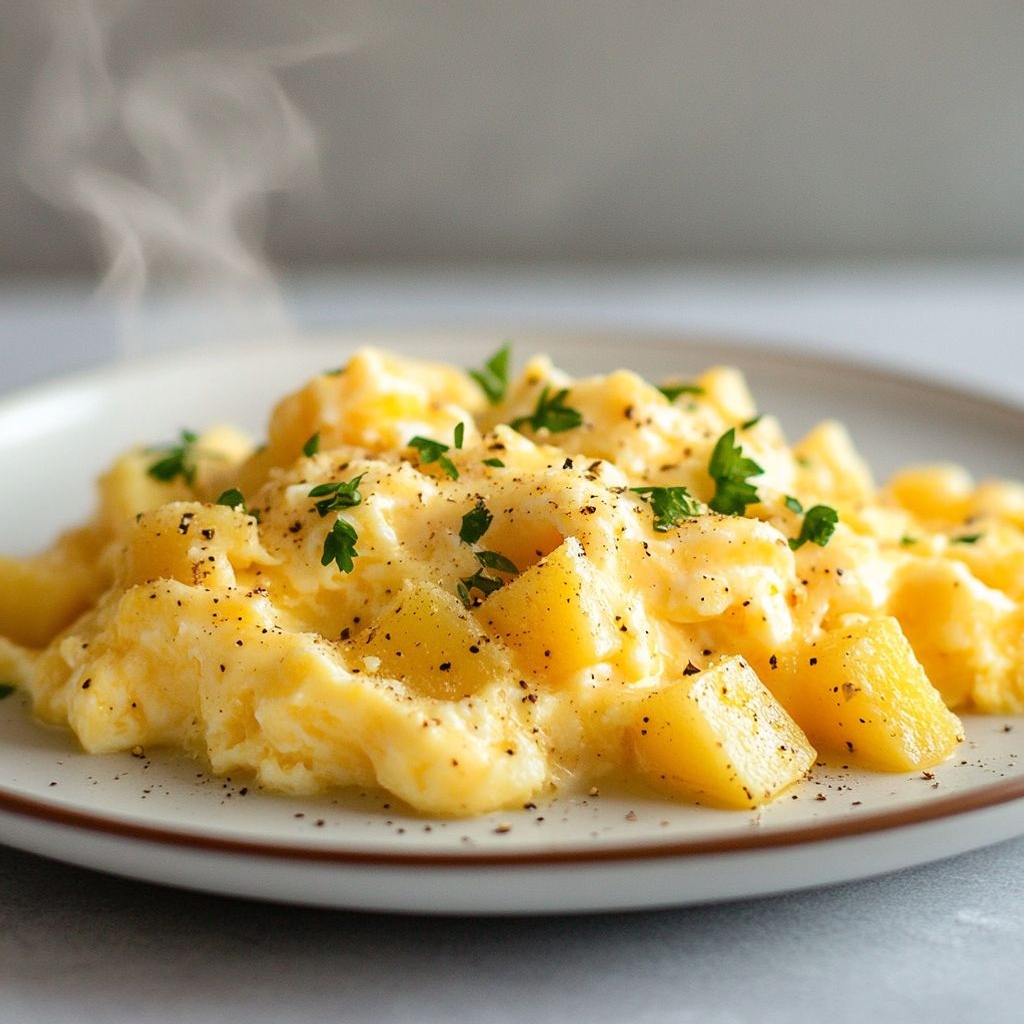
Ingredients
-
– Potato Base
– 2 medium russet potatoes, peeled and diced into 1/4-inch cubes
→ These potatoes create the hearty base of the scramble. Dice evenly to ensure uniform cooking; soak the cubes in cold water for 5–10 minutes to remove surface starch for crisper edges, then pat completely dry. Toss with a pinch of salt and 1 tablespoon oil before cooking. Par-cooking or browning in a hot skillet until pale golden and tender adds texture and prevents the eggs from turning mushy.
– 2 tablespoons olive oil (or unsalted butter) for potatoes
→ Fat helps the potatoes crisp and brown. If using butter, mix with a little oil to raise the smoke point. Heat until shimmering, then add potatoes in a single layer; avoid overcrowding. Stir occasionally until evenly browned and tender, about 8–10 minutes.
– Egg Mixture
– 6 large eggs, beaten with a pinch of salt
→ Eggs are the protein backbone of this dish. Beat thoroughly until the yolks and whites are fully blended and a bit frothy. This creates a smoother scramble and even coagulation when folded with the potatoes.
– 2 tablespoons milk or cream (optional)
→ Adds creaminess and helps keep the eggs tender. Use whole milk or light cream for best texture. Whisk into the eggs or fold in right before cooking. If you prefer very fluffy eggs, whip longer and let the mixture rest briefly before cooking.
– Cheese
– 1 cup shredded cheddar cheese (or 1/2 cup cheddar + 1/2 cup mozzarella)
→ Cheese provides melty richness and sharp flavor. Shred from a block just before adding for better melt and distribution. Reserve a portion to sprinkle on top for a melty finish; stir most of it in when the eggs are nearly set.
– Aromatics
– 1 small onion, finely chopped
→ Onion adds sweetness and depth to the scramble. Finely mince to maximize surface area so it cooks quickly and blends with the potatoes. Sauté with the potatoes until translucent and lightly caramelized.
– 1 clove garlic, minced (optional)
→ Garlic provides aromatic warmth. Add after the onions start to soften to avoid burning; cook just until fragrant, about 30–60 seconds, then proceed with the rest of the dish.
– Seasonings
– 1/2 teaspoon fine salt (adjust to taste)
→ Salt levels sharpen flavors and help the eggs set well. Add sparingly at first, then taste and adjust at the end. If your potatoes were salted earlier, start with less.
– 1/4 teaspoon freshly ground black pepper
→ Black pepper adds gentle heat and aroma. Grind fresh for best flavor, and adjust to your heat tolerance. Add in stages to avoid over-seasoning.
– 1/4 teaspoon smoked paprika (optional)
→ Smoked paprika brings a subtle smoky note that pairs nicely with potatoes and eggs. If you don’t have it, a pinch of regular paprika or a few dashes of hot sauce works as a substitute.
– Optional Add-ins
– 4 slices bacon, diced, cooked until crisp and drained (optional)
→ Bacon adds smoky, savory depth. Cook in a skillet until crisp, remove to drain on paper towels, then crumble and fold into the eggs with the potatoes or serve on top. Rendered fat can be used to cook the potatoes for extra flavor.
– 1/2 cup bell peppers, diced (optional)
→ Color, sweetness, and crunch. Sauté the peppers with the onions until soft and lightly caramelized for added texture and vibrancy.
– 2 tablespoons chopped fresh parsley or chives (optional)
→ Fresh herbs brighten the scramble and add a burst of color. Stir in at the end off the heat or scatter on top as a finishing touch.
– Garnish
– Fresh parsley or chives for serving (optional)
→ A final fresh touch enhances presentation and aroma. Use chopped parsley or chives to sprinkle over the dish just before serving.
Instructions
- Prepare the potatoes by rinsing the diced cubes and then soaking them in cold water for 5–10 minutes to remove surface starch and promote crisper edges; drain thoroughly and pat completely dry with clean towels before proceeding.
- Toss the drained potatoes with a pinch of fine salt and 1 tablespoon olive oil until all surfaces are lightly coated; set them in a loose, single layer ready for pan cooking.
- Heat a large skillet over medium-high heat and add the potatoes in a single layer; avoid overcrowding the pan to ensure contact with the surface and even browning.
- Cook the potatoes until pale golden and tender, about 8–10 minutes, turning occasionally with a spatula so all sides brown evenly; adjust the heat as needed to prevent scorching.
- If using bacon, cook the diced bacon in a separate skillet over medium heat until crisp, then transfer to paper towels to drain; reserve the rendered fat if you intend to use it for flavoring the potatoes or onions.
- Push the potatoes to the side of the skillet (or transfer to a warm plate) and add 1 tablespoon olive oil (or reserve bacon fat) plus the onion; sauté over medium heat until translucent and lightly caramelized, about 5–7 minutes.
- Add the diced bell peppers (if using) with the onions and continue to sauté until the peppers are softened and lightly browned, about 3–5 minutes; season lightly with a pinch of salt to draw out moisture and intensify flavor.
- Stir in the minced garlic (if using) and cook for 30–60 seconds until fragrant, being careful not to burn so it remains sweet and aromatic.
- Scatter the cooked bacon (if using) back into the potatoes and aromatics, or reserve for folding in later; ensure seasoning is balanced before adding the eggs.
- Beat the eggs with a pinch of salt until completely blended and slightly frothy; whisk in the milk or cream (if using) to add richness and tenderness to the final scramble.
- Pour the egg mixture into the skillet with the potatoes and aromatics; reduce the heat to medium-low and gently scramble, lifting and folding the set edges toward the center to allow uncooked egg to flow to the bottom.
- When the eggs are about halfway set, sprinkle 3/4 of the shredded cheese over the surface and fold it in gently to distribute and begin melting.
- Continue cooking until the eggs are softly set and creamy; remove from heat while a few pockets of runny eggs remain to finish with residual heat, then fold in the remaining cheese so it finishes melting.
- Fold in the crumbled bacon (if using) and adjust seasoning with additional salt and pepper to taste; then scatter chopped fresh parsley or chives over the top for brightness just before serving.
- Serve immediately in warm plates with extra herbs on top, allowing the dish to maintain its creamy texture and crisp edges while the cheese sets into inviting cheese strands.
→ Soaking reduces surface starch to promote browning; drying thoroughly prevents steam from making the potatoes soggy and ensures even crisping in the pan.
→ A light oil coating promotes uniform browning and helps the salt distribute evenly for balanced seasoning as they cook.
→ Crowded potatoes steam rather than brown; a single layer creates browned, crisp edges that contrast with the softer interior and enhance texture in the scramble.
→ Uniform browning develops a nutty depth and maintaining tenderness ensures the potatoes finish cooking with the eggs without becoming hard.
→ Rendered bacon fat adds smoky richness to the scramble, and crisp bacon provides textural contrast; draining prevents the dish from becoming greasy.
→ Caramelized onions deepen sweetness and aroma; cooking them with the potatoes in the same pan blends flavors and creates harmony in the scramble.
→ Peppers add color, crunch, and sweetness; sautéing ensures they release their sugars and integrate into the dish.
→ Garlic quickly releases its aroma when heated; burning it can impart bitterness, so brief cooking keeps the flavor pleasant.
→ Including the bacon at this stage allows its smoky flavor to meld with the vegetables and potatoes; if already crisp, crumbled bacon distributes evenly in the scramble.
→ Thorough beating creates a cohesive mixture that coagulates evenly, yielding a smoother, creamier scramble; dairy helps keep the eggs soft and moist.
→ Gentle folding slows coagulation for a custardy texture and prevents overcooking; even heat distribution ensures uniform doneness throughout the scramble.
→ Adding most of the cheese at this stage builds melty pockets throughout the scramble and intensifies the cheesy flavor as it blends with the eggs.
→ Residual heat finishes cooking without drying the eggs; this yields a velvety texture and a glossy appearance with fully melted cheese.
→ Finishing herbs add freshness and color, balancing the richness of potatoes, eggs, and cheese; salt adjustments ensure the final dish tastes cohesive and well-seasoned.
→ Serving hot preserves the moisture of the eggs and the gooey melt of the cheese, enhancing aroma and mouthfeel for the best eating experience.
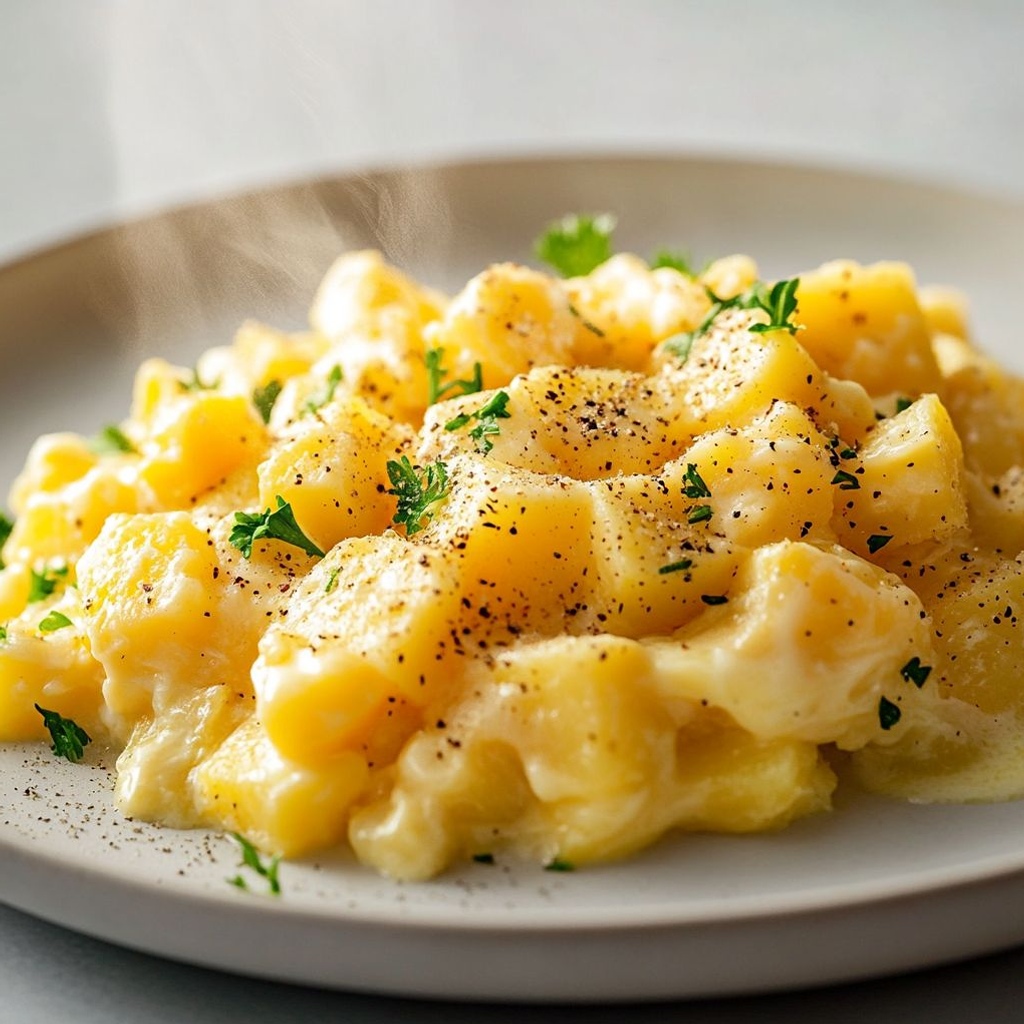
Notes
These scrambled eggs with potatoes and cheese are a hearty, comforting breakfast that comes together in minutes and feeds a crowd. For the best texture, dice the potatoes evenly, soak to remove surface starch, pat dry, and par-cook or brown in a hot skillet with a little oil until pale golden and tender, then set aside. When you’re ready to finish, whisk the eggs with a pinch of salt and, if you like extra creaminess, a splash of milk or cream; pour over the warm potatoes and cook gently, folding until just set, then stir most of the cheese in so it melts through the scramble and reserve a little to sprinkle on top. Sauté the onion (and garlic if using) with the potatoes until they’re translucent and lightly caramelized; add optional bell peppers or crisp bacon for extra depth and color. Finish with fresh parsley or chives, adjust seasoning, and serve immediately. These eggs are naturally gluten-free, but ensure any add-ins (bacon, sausage, or sauces) are gluten-free if you have celiac disease or gluten intolerance. Leftovers store well in the fridge and reheat gently in a skillet or microwave, though reheating may soften the potatoes slightly. For variation, swap cheddar for Gruyère or mozzarella, or add chopped herbs and a pinch of smoked paprika for a different finish.
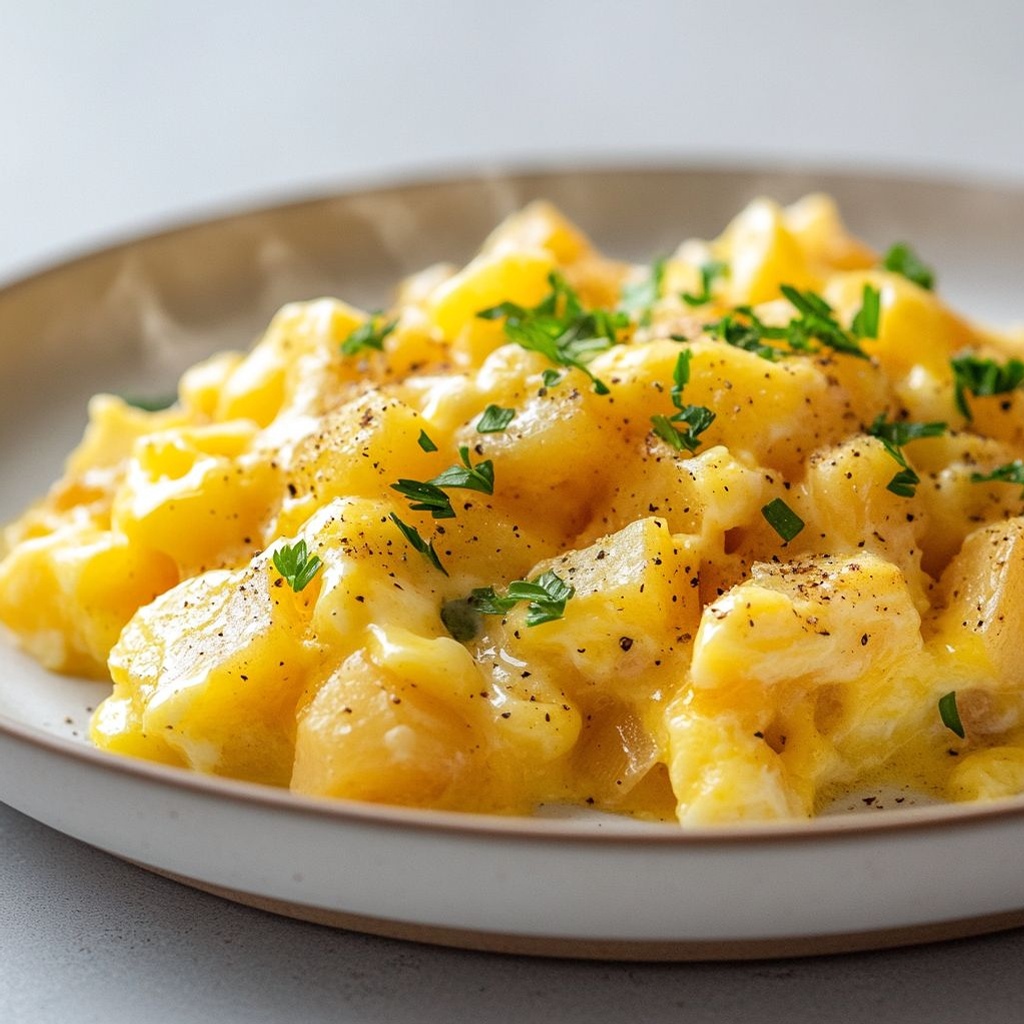
Tips
Tips for Scrambled Eggs with Potatoes and Cheese
- Potato base: Soak diced potatoes in cold water for 5–10 minutes to remove surface starch, then pat completely dry. This helps achieve crisper edges when browning.
- Pan preparation: Use a wide, heavy skillet (cast iron or stainless) and heat oil until shimmering. Cook potatoes in a single layer without crowding; this promotes even browning and prevents soggy edges.
- Par-cooking and browning: Par-cook or brown the potato cubes until pale golden and tender before adding eggs. This builds texture and prevents the eggs from turning mushy.
- Oil and fat balance: If using butter, mix with a little oil to raise the smoke point and prevent burning. This keeps the potatoes crisp and flavorful.
- Egg mixture: Beat eggs thoroughly until yolks and whites are fully combined and a bit frothy. This creates a smoother scramble and more even coagulation.
- Optional dairy: If using milk or cream, whisk it into the eggs or fold in right before cooking. For fluffier results, whisk longer and let the mixture rest briefly before cooking.
- Cheese timing: Shred cheese from a block just before use for better melt. Reserve a portion to sprinkle on top and stir most of it in when the eggs are nearly set for a creamy, melty finish.
- Aromatics: Sauté finely chopped onion until translucent and lightly caramelized; add minced garlic after the onions start to soften to avoid burning, cooking just until fragrant.
- Seasoning strategy: Add salt sparingly at first—the potatoes may be salted already. Pepper should be added in stages and tasted as you go to avoid over-seasoning. If you like, a pinch of smoked paprika adds a subtle smoky nuance.
- Add-ins and variations: If using bacon, cook until crisp and render the fat to flavor the potatoes. Sauté bell peppers with onions for color and sweetness. Fold in chopped fresh parsley or chives at the end for brightness.
- Finish and serving: Remove from heat when the eggs are just shy of fully set; they will continue cooking with residual heat. Let rest briefly, then garnish with fresh parsley or chives and serve immediately.
FAQ
What is Scrambled Eggs with Potatoes and Cheese?
- A hearty, comforting dish featuring fluffy scrambled eggs folded with sautéed potatoes and melted cheese.
- Perfect for breakfast, brunch, or a satisfying skillet meal any time of day.
What ingredients do I need?
- 3 medium potatoes, peeled and diced into 1/2-inch pieces
- 4 large eggs, beaten
- 1/2 cup shredded cheese (cheddar, Monterey Jack, Gruyère, or a blend)
- 1 small onion, diced (optional)
- 2–3 tablespoons olive oil or butter
- Salt and pepper to taste
- Optional add-ins: diced bell peppers, crispy bacon or ham, fresh herbs
How do I prepare the potatoes for even cooking?
- Rinse and dice the potatoes to about 1/2 inch for uniform cooking.
- Soak in cold water for 5–10 minutes to remove excess starch (optional but helps with browning).
- Pat dry thoroughly with a clean towel to prevent steaming and promote browning.
- Par-cook if you like: microwave in a covered dish for 4–6 minutes or boil for 3–4 minutes until just tender, then drain and pat dry.
How do I cook it from start to finish?
- Heat 2 tablespoons oil or butter in a large skillet over medium heat. Add potatoes (and onions if using) and season with salt. Cook, stirring occasionally, until potatoes are golden and tender (about 8–12 minutes).
- If using peppers or other veggies, add them halfway through and sauté until softened.
- Beat eggs with a pinch of salt. Push potatoes to the side, or create a well, and pour in the eggs. Let them set briefly, then gently scramble, folding potatoes in as they cook.
- When eggs are mostly set but still a touch glossy, sprinkle cheese over the top and fold until melted. Remove from heat and let rest for 1–2 minutes before serving.
What cheese works best?
- Cheddar is classic for a melty, savory flavor.
- Monterey Jack or Gruyère add great melt and depth.
- You can mix cheeses for more complexity (e.g., cheddar with Gruyère or mozzarella for extra stretch).
- Grate the cheese finely so it melts quickly into the hot eggs.
Tips to avoid soggy potatoes or rubbery eggs
- Cook potatoes until golden and crispy on the outside before adding eggs.
- Dry potatoes well after par-cooking to prevent steaming in the pan.
- Use medium heat; too high can burn eggs while leaving potatoes undercooked.
- Don’t over-stir the eggs; gentle folding yields fluffier curds.
How should I store and reheat leftovers?
- Cool leftovers and store in an airtight container in the refrigerator for up to 3 days.
- Reheat in a skillet over low–medium heat, adding a splash of milk or water to loosen, until hot and the cheese is melted. You can also reheat in short bursts in the microwave, stirring between intervals.
- Freshen with chopped herbs or a squeeze of lemon juice to brighten flavors.
Can I make this ahead or customize it?
- Yes. Pre-cook the potatoes and onions and refrigerate. Reheat in a skillet and finish with the eggs and cheese just before serving.
- Variations: add diced bell peppers, mushrooms, chives, or herbs. For a meat option, include crispy bacon or diced ham; cook with the potatoes.
- For a lighter version, reduce oil and cheese; or use a lighter cheese blend.
How many servings does this make and what are the approximate nutrition numbers?
- Typically serves 2–4, depending on portion size.
- Approximate per-serving nutrition (without optional add-ins): 350–450 calories, 20–25 g protein, 20–25 g fat, 20–35 g carbs (varies with potato size and cheese).
- For lighter options, reduce cheese or oil; for more protein, add an extra egg or two.
Serving ideas and accompaniments
- Serve with crusty bread, toast, or warm tortillas.
- Pair with a simple green salad or sliced avocado for a balanced meal.