Introduction / Hook
Imagine a bowl that feels both comforting and adventurous at once—a vibrant mosaic of colors, textures, and aromas that greet you like a well-turnished kitchen in a busy week. A Protein bowl is not just a meal; it’s a versatile, nourishing ritual that can power a workout, fuel a busy afternoon, or become a cozy, Sunday-night staple. The beauty of a protein bowl lies in its simplicity and its capacity to honor your hunger and your cravings at the same time. One forkful might deliver a smoky bite from grilled chicken or charred tofu, a creamy whisper from avocado or tahini, a zing of citrusy brightness from lime juice, and a satisfying crunch from seeds, vegetables, and beans. It’s a culinary canvas where you choose the palette: a base of fluffy quinoa, a bed of crisp greens, or a bed of fiber-rich brown rice; a protein that suits your preference; and a chorus of toppings and dressings that bring the whole composition into harmony.
What makes this protein bowl special is how effortlessly it adapts to your life. You can assemble it in minutes for a quick lunch, stretch it into a week’s worth of meals when you meal-prep, or turn it into a festive, plated dish for guests with a few flourishes. It’s a dish that respects dietary needs—gluten-free, dairy-free, vegetarian, vegan, low-carb, or high-protein—without demanding a complicated shopping list or a long, precise set of steps. The concept is simple: layers of nourishing ingredients, each contributing its own character, interacting in a symphony of flavors and textures that keep your palate engaged and your appetite satisfied.
Beyond sustenance, a Protein bowl is a celebration of balance. It’s about macro-conscious eating that doesn’t feel like a compromise. It’s about the pleasure of texture—the silkiness of a well-blended sauce against the crisp bite of vegetables, the toasty aroma of roasted seeds, and the satisfying heft of a well-seasoned protein. It’s about color—the emerald greens, the sunny yellows, the ruby reds that come from roasted peppers, tomatoes, or pomegranate jewels—each color signaling nutrition and a little extra joy. And it’s about memory—the way a familiar flavor note can transport you to a favorite market stall, a sunny Mediterranean coastline, or a comforting home kitchen.
The Story Behind the Dish
Bowls as a culinary concept have traveled across continents and cultures, gathering stories as they go. The modern protein bowl sits at the crossroads of health-focused meal trends and traditional one-dish meals that emphasize fresh ingredients and thoughtful pairing. The idea of building a complete meal in a single bowl emerged from bustling street markets and seaside cafés, where diners could customize bowls with proteins, grains, legumes, vegetables, and bright sauces. The term “bowl” evokes a sense of generosity: a vessel meant to hold plenty, to share, and to be enjoyed without fuss.
Historically, many cultures embraced the philosophy behind the bowl long before the modern wellness movement gave it a new name. Think of Japanese donburi with a bed of rice and a protein topping, Korean bibimbap with an array of vegetables and a gochujang kiss, or Middle Eastern bowls layered with hummus, grains, roasted vegetables, and tahini. Each tradition contributes a thread to the tapestry: a contrast of textures, a harmony of tang and sweetness, and a practical approach to nourishment that fits into a fast-paced life. The protein bowl, in its contemporary form, is a tribute to that timeless wisdom—celebrating variety, balance, and the joy of assembling a meal that is as nourishing as it is flavorful.
In many ways, this dish is a mirror of our modern kitchen: a place where leftovers become inspiration, where pantry staples become stars, and where the simplest combination can feel like a little celebration. The recipe name—Protein bowl—hints at a universal logic rather than a rigid formula. It invites you to experiment with what you have, to listen to your taste buds, and to savor the process of crafting a meal that aligns with your day’s energy, your dietary preferences, and your mood.
Why You’ll Love This Recipe
- Quick and flexible: Put together in minutes with a few staple ingredients, or batch-cook components for the week.
- Balanced nutrition: A harmony of protein, complex carbs, healthy fats, fiber, and micronutrients that fuels you without heaviness.
- Flavor-forward without being fussy: A chorus of textures—from crunchy vegetables to silky sauces—keeps every bite interesting.
- Highly customizable: Swap proteins (chicken, tofu, tempeh, chickpeas), bases (quinoa, rice, greens), and toppings to suit dietary needs and preferences.
- Great for meal prep: Assemble once and portion into bowls for lunches or quick dinners; sauces keep well in the fridge.
- Kid-friendly options: Gentle flavors and colorful toppings make this approachable for young eaters while still exciting for adults.
- Perfect for various occasions: Weeknights, post-workout meals, picnic-friendly lunches, or casual dinner parties.
Flavor Profile & Texture
A well-composed protein bowl is a study in contrast and balance. The foundation—whether it’s fluffy quinoa, nutty brown rice, or crisp greens—provides a sturdy, satisfying base that invites a forkful of everything above. Proteins offer savoriness and substance, delivering a protein-rich punch without weighing you down. If you opt for animal proteins, you might enjoy a smoky-charred surface with juicy interior; plant-based proteins give a warm, earthier note and a pleasing bite. Sauces and dressings weave everything together, with tangy citrus brightening the greens, nutty tahini or sesame adding depth, and a peppery, aromatic kick from ginger, garlic, or chilies. A squeeze of lime, a kiss of salt, and a dash of pepper can transform the entire profile in seconds.
Texturally, you’ll experience a dynamic range: the crispness of raw vegetables and fresh herbs, the tenderness of well-cooked grains, the creaminess of avocado or yogurt-based toppings, and the satisfying chew of roasted chickpeas, seeds, or grilled proteins. The warmth of roasted vegetables can contrast with cool, creamy elements for a satisfying sensory shift with every bite. The interplay of savory, citrusy, nutty, and occasionally sweet notes keeps the palate engaged, encouraging you to come back for another forkful rather than a single mouthful.
In terms of seasoning, think bright, fresh, and balanced. A drizzle of olive oil or sesame oil provides smoothness and fat to carry flavors; acidic notes from lemon or lime or a splash of vinegar brighten every component; aromatic elements such as garlic, cumin, chili flakes, or fresh herbs lift the dish to another plane. The result is a bowl that feels both familiar and adventurous, a satisfying everyday meal that can also stand up to a special-occasion vibe with a few thoughtful additions.
Occasions & Pairings
This Protein bowl is a versatile companion for many moments. It shines as a quick weeknight solution when you want something wholesome and tasty without spending hours at the stove. It also works beautifully as a meal-prep hero: you can assemble a few bases and proteins in advance, then mix and match toppings day by day to keep things interesting. It’s equally at home as a light lunch on the go or a nourishing dinner after a late workout when you crave something comforting yet clean.
Pairings can elevate the experience further. Consider these ideas:
- Fresh herbs and citrus zest scattered over the top add a bright, aromatic finish.
- A side of crisp kimchi, pickled vegetables, or a quick cucumber salad introduces tangy contrasts that wake the palate.
- Light soups or broths in a small cup can set a comforting prelude on colder days.
- Accompaniments like a simple green salad, roasted seaweed sheets, or a small portion of fruit can balance the meal’s nutrients and flavors.
- Drinks: cold sparkling water with citrus, a light green smoothie, or a glass of herbal tea can complement the freshness of the bowl.
Tips, Variations & Substitutions
One of the joys of a protein bowl is its adaptability. Below are ideas to tailor the dish to your pantry, preferences, or dietary needs. Pick and mix in any combination that speaks to you.
- Base variations: Use quinoa for a protein boost and a nutty bite, brown rice for heartiness, cauliflower rice for low-carb or grain-free days, or a big bed of greens (spinach, kale, or mixed lettuces) as a refreshing, low-starch option.
- Protein options: Grilled chicken, lean turkey, salmon, shrimp, tofu, tempeh, chickpeas, lentils, or edamame. For a vegetarian or vegan bowl, go with marinated tofu or tempeh, roasted chickpeas, or spiced lentils.
- Flavor boosters: Experiment with different sauces and dressings—tahini lemon, garlicky yogurt, miso-ginger, peanut-sesame, cilantro-lime, or a smoky chimichurri. A touch of miso or soy adds umami; citrus notes brighten the dish; a hint of heat can wake the palate.
- Vegetable mix-ins: Raw crunch (cucumbers, radishes, shredded cabbage), roasted vegetables (bell peppers, zucchini, sweet potato), and pickled elements (onion, carrots) introduce range and acidity.
- Healthy fats: Avocado slices, olives, roasted nuts or seeds (pumpkin, sunflower, sesame) add texture and satisfaction. A spoonful of olive oil or tahini drizzled on top links components together.
- Spice routes: For a Mediterranean vibe, use oregano, sumac, lemon, and olive oil. For a Middle Eastern twist, add cumin, coriander, and pomegranate molasses. For a Southeast Asian flavor, go with lime, cilantro, chili, and a touch of peanut butter in the dressing.
- Make-ahead strategies: Cook grains in advance and refrigerate in portion-sized containers. Grill or bake proteins in bulk and slice them as needed. Keep toppings and sauces in separate containers to preserve texture until serving.
- Dietary accommodations: Gluten-free? Use quinoa or brown rice as the base and check sauces for gluten. Dairy-free? Use dairy-free yogurt or tahini-based sauces. Low-carb or Keto-friendly? Collapse the grains and lean into greens and protein with a creamy avocado or nut-based dressing.
- Regional twists: A Mexican-inspired bowl with black beans, corn, pico de gallo, avocado, and a lime-cilantro dressing; a Greek-inspired bowl with grilled chicken, cucumber-teta, tomatoes, olives, feta (or vegan feta), and a lemon-oregano dressing; a Mediterranean bowl with falafel, quinoa, cucumber, tomato, hummus, and tahini-lemon sauce.
If you’re new to building bowls, start with a simple framework: a base, a protein, a handful of vegetables, a flavor-forward sauce, and a finishing touch. As you gain confidence, you’ll begin to notice how certain combinations resonate with your taste preferences and nourishment goals. The beauty of this approach is that you can adapt it to supply you with energy for a long day, to recover after a workout, or to offer satisfyingly wholesome leftovers for the next day.
For those who like to plan ahead, consider a weekly rhythm: choose one base, two proteins, two sets of vegetables, and two sauces. Rotate through them over the week for variety without the guesswork. The more you practice, the quicker this dish comes together, and the more you’ll notice how incredibly satisfying a well-built bowl can be—no heavy sauces hiding in the background, just clean, purposeful flavors that sing together.
Storage & Make-Ahead Ideas
A protein bowl lends itself beautifully to make-ahead meals and smart refrigerated storage. The key is to keep components separate until serving to preserve texture and freshness. Cooked grains and proteins can be stored in airtight containers for up to four days in the fridge. Vegetables—especially leafy greens—may wilt over time, so consider keeping delicate greens for the day you plan to assemble rather than pre-mixing everything together. Dressings and sauces store even longer, typically up to a week in the fridge, allowing you to batch-make flavor boosters that dramatically accelerate daily meal assembly.
If you want to freeze components, focus on proteins and grains that freeze well: cooked chicken, turkey, or beef can be frozen in portioned bags; cooked beans and lentils freeze nicely; grains like quinoa and brown rice can be frozen in freezer-safe containers. Vegetables that are roasted or blanched tend to reheat well, though some crunchy elements may lose their crispness after freezing and reheating. For best texture, assemble bowls fresh, or reheat proteins and grains separately and add fresh vegetables, herbs, and sauces just before serving.
When you’re ready to serve from the fridge, reheat proteins and grains gently to preserve moisture, then assemble the bowl with cold or room-temperature vegetables and a fresh drizzle of sauce. If you’re freezing sauces, defrost them safely overnight in the fridge and give them a quick whisk before use to restore emulsification. A quick “brighten” with lemon juice or zest right before serving can help recapture vibrancy after storage.
Fun Facts & Trivia (Optional)
- The term “bowl” in contemporary cuisine often nods to a sense of communal eating—the idea that a single, shareable vessel can hold a spectrum of flavors and textures for many mouths to enjoy.
- Some people associate the term “Buddha bowl” with bowls that are richly vegetarian, balanced with grains and vegetables, and presented with a sense of abundance—though the name has varied origins across cultures and isn’t tied to a single tradition.
- Where you start with a protein bowl can reflect local ingredients: coastal regions might lean into seafood and citrus; Mediterranean areas favor olives, yogurt, and herbs; Asian-inspired bowls might include sesame, soy, rice, and pickled vegetables.
- From a nutrition perspective, bowls can help streamline macro tracking for many people who want consistent protein, carbohydrate, and fat ratios in every meal, without the rigidity of separate plates.
- In the era of meal-prep, bowls became a practical solution for busy households, turning leftovers into creative new meals with minimal waste and maximal flavor.
Ingredients
Base
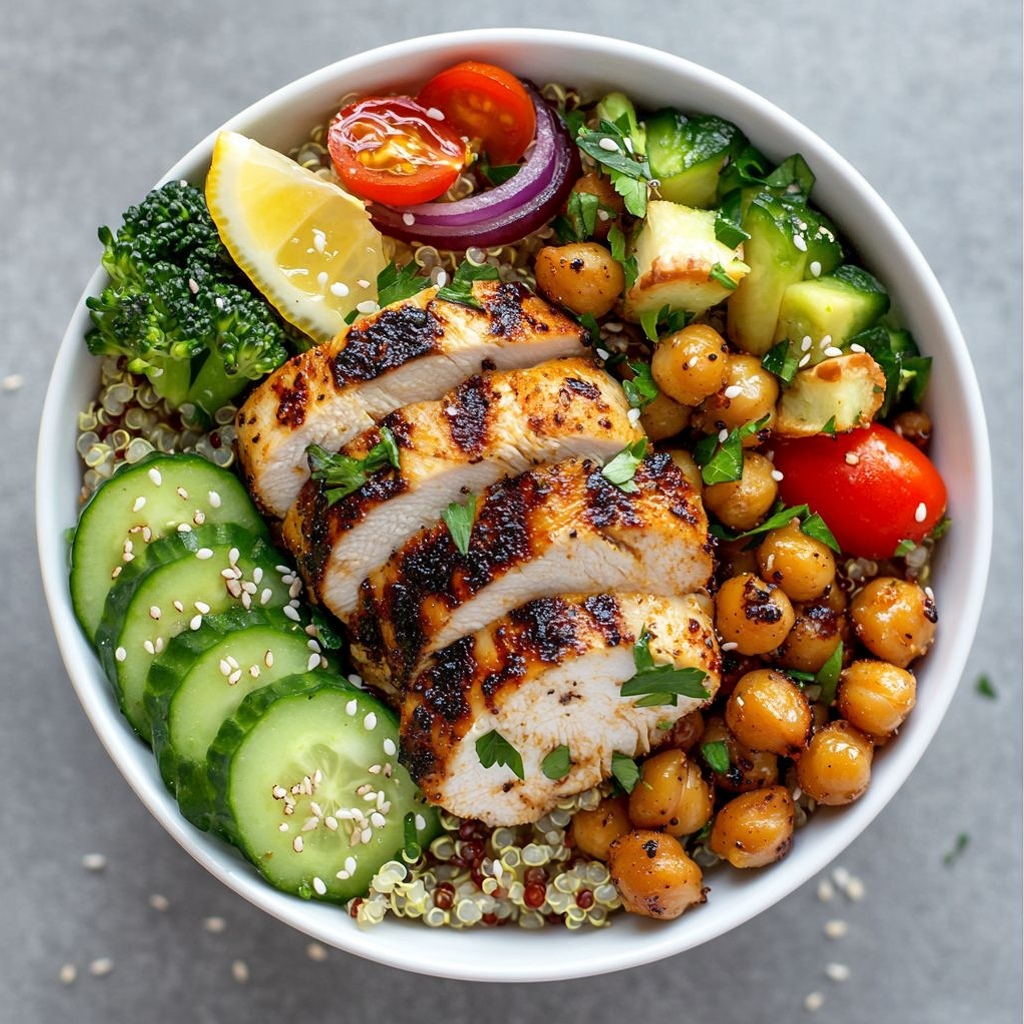
- 1 cup dry quinoa, rinsed
→ Rinse quinoa under cold water in a fine-mesh sieve to remove the natural bitter coating (saponins). This step prevents a bitter aftertaste and yields fluffier grains once cooked. Cook with 2 cups water or vegetable broth until the liquid is absorbed and the quinoa is tender, about 15 minutes. Fluff with a fork and let cool slightly before assembling the bowl for a nice texture contrast with the greens. - 2 cups water or vegetable broth
→ Liquid for cooking the quinoa. Using broth adds subtle savory depth; if you use broth, you may want to reduce added salt elsewhere in the recipe. Keep it at a gentle simmer until quinoa is tender and all liquid is absorbed. - 4 cups baby spinach leaves (loosely packed)
→ Forms a fresh, leafy bed that adds iron, color, and volume. Wash well and pat dry. Layer a bed of spinach on the bowl before adding warm quinoa or toss the greens with the quinoa while still warm to slightly wilt them for a integrated texture.
Protein
- 8 oz boneless, skinless chicken breast
→ The primary protein for the bowl. Grill, pan-sear, or bake until just cooked through (internal temperature 165°F/74°C). Rest for 5 minutes, then slice. For extra flavor, marinate briefly (10–20 minutes) in 1 tablespoon olive oil, 1 tablespoon lemon juice, 1 clove minced garlic, and 1/2 teaspoon smoked paprika before cooking. - 1 tablespoon olive oil
→ Used to brush the chicken or coat the pan when cooking to prevent sticking and promote even browning. If you’re using a well-seasoned skillet or grill, you can reduce or omit this, but a light coating helps achieve a nicer crust. - 1/2 teaspoon smoked paprika
→ Adds a gentle smokiness that complements the brightness of the lemon-tahini dressing. Rub onto the chicken with a pinch of salt before cooking for even flavor. - 1/2 teaspoon garlic powder
→ Provides subtle garlicky depth without the intensity of fresh garlic; you can substitute with 1 small clove minced if you prefer a stronger garlic note. - Salt and black pepper to taste
→ Essential seasonings to bring out all components. Taste after cooking the chicken and adjust as needed, especially since dressing and toppings add additional flavors.
Vegetables & Toppings
- 1 cup cherry tomatoes, halved
→ Contribute bright sweetness and tangy acidity. Halving the tomatoes increases surface area for flavor distribution. Keep them refrigerated and add just before serving to maintain their juiciness and color. - 1 cup cucumber, diced
→ Provides crispness and refreshing hydrating bite. Dice evenly so every forkful delivers consistent texture. If using a thick-skinned variety, you can peel lightly or leave as is based on preference. - 1/2 avocado, sliced
→ Adds creamy richness and healthy fats that help balance the bowl. Slice just before serving to prevent browning; if prepping ahead, toss with a little lemon juice to slow oxidation. - 2 tablespoons red onion, thinly sliced (optional)
→ Adds a mild sharpness and color. If you’re sensitive to raw onion, soak the slices in ice water for 10 minutes to mellow the bite, then pat dry before adding.
Dressing
- 3 tablespoons tahini
→ The creamy, nutty base of the dressing that provides healthy fats and protein. Whisk with lemon juice and water to form a smooth emulsion. If tahini is too thick, warm it slightly to help with emulsification. For a dairy-free variation, this is already dairy-free; for a lighter option, halve the tahini and compensate with more water or a splash of olive oil. - 2 tablespoons fresh lemon juice
→ Bright acidity to cut through the richness of the tahini and chicken. Use freshly squeezed juice for the cleanest flavor. Adjust to taste after mixing with the other dressing components. - 1 tablespoon olive oil
→ Adds silkiness and helps achieve a glossy dressing. Omit if you want a lighter, lower-fat version; you can replace with an extra tablespoon of water or a splash of cold-pressed oil alternative. - 2-3 tablespoons water
→ To reach your preferred dressing consistency. Start with 2 tablespoons and add more as needed to achieve a pourable emulsion. Warm water can help tahini blend more smoothly. - 1 garlic clove, minced
→ Provides a gentle aromatic kiss that brightens the dressing. If you’re sensitive to raw garlic, reduce to half a clove or crush into a paste and whisk first with lemon juice to mellow the bite. - 1/4 teaspoon salt
→ Seasoning to bring all elements together. Remember that feta or other toppings may add saltiness, so adjust accordingly. Taste the dressing after emulsifying before serving. - Freshly ground black pepper to taste
→ Finishes the dressing with a subtle kick. Add a small pinch at a time and taste as you go to avoid over-seasoning.
Optional Add-ins
- 2 tablespoons pumpkin seeds, roasted
→ Adds a satisfying crunch and a boost of minerals. Toast seeds lightly in a dry skillet until fragrant to maximize flavor. Store leftovers in a sealed container to maintain crunchiness. - 2 tablespoons chopped fresh parsley
→ Brightens the bowl with a fresh, grassy note and helps tie together the greens and dressing. Chop finely and sprinkle over the top just before serving for best aroma. - 1/4 cup feta cheese crumbles (optional)
→ Adds a creamy, salty tang that contrasts nicely with the tahini dressing. If dairy-free, substitute with crumbled vegan feta or omit entirely.
Instructions
- Rinse the quinoa under cold water in a fine-mesh sieve until the water runs clear to remove the bitter saponins; this prevents a soapy aftertaste and helps the grains cook fluffy and separate.
→ Rinsing removes saponins that can impart bitterness; use cold water and rub the grains gently with your fingers while rinsing, then drain well. - Combine the rinsed quinoa with 2 cups water or vegetable broth in a medium saucepan and bring to a gentle boil over high heat; once boiling, reduce to a simmer, cover, and cook until the liquid is absorbed and the quinoa is tender, about 15 minutes, then remove from heat and rest covered for 5 minutes before fluffing with a fork.
→ Using broth adds savory depth; resting traps residual steam for even tenderness, and fluffing prevents clumps for a light texture in the bowl. - If you choose to marinate for extra flavor, whisk together 1 tablespoon olive oil, 1 tablespoon lemon juice, 1 clove minced garlic, and 1/2 teaspoon smoked paprika in a small bowl, pat the 8 oz chicken breast dry, season with a pinch of salt, and coat with the marinade; allow 10–20 minutes to rest so the flavors penetrate the meat.
→ Brief marination enhances color and depth without overwhelming the dish; even a quick coat helps spices adhere during cooking. - Pat the chicken dry, then heat a skillet or grill pan over medium-high heat and brush with 1 tablespoon olive oil; place the chicken in the hot pan, season with 1/2 teaspoon smoked paprika, 1/2 teaspoon garlic powder, and a pinch of salt, and cook until browned and the internal temperature reaches 165°F (74°C), about 5–7 minutes per side depending on thickness.
→ Proper browning builds flavor through the Maillard reaction, while reaching 165°F ensures safe, juicy chicken; do not overcook to avoid dryness. - Transfer the cooked chicken to a cutting board and let rest for 5 minutes, then slice into 1/4-inch thick medallions to maximize surface area and distribute protein evenly through the bowls.
→ Resting prevents juices from running out when sliced, keeping the meat moist; even slices ensure consistent bites in every serving. - Rinse the baby spinach leaves, pat them dry thoroughly, and divide roughly 4 cups into each serving bowl to form a bright, leafy bed that supports the warm quinoa and adds volume and iron.
→ Dry greens stay crisp and prevent excess water from diluting the dressing; a proper bed also creates visual contrast. - Halve the cherry tomatoes lengthwise and arrange them on top of the spinach in each bowl to contribute bright sweetness and acidity; halving increases surface area for flavorful juices to mingle with the dressing.
→ Fresh tomatoes add color and a juicy bite; keep them refrigerated until assembly to preserve texture and brightness. - Dice the cucumber into uniform 1/2-inch pieces and scatter over the bowls for crisp, hydrating bite and even distribution of texture with each forkful.
→ Evenly sized dice ensure consistent chewing and dressing adhesion across the bowl. - Slice the avocado into 1/4-inch wedges just before assembling to preserve color and creaminess, placing them on top of the other components for luxurious richness in every bite; if prepping ahead, toss with a little lemon juice to slow browning.
→ Lemon juice slows oxidation and maintains appealing green color; sliced avocado should be added close to serving for best texture. - If you’re using red onion, thinly slice 2 tablespoons and optionally soak in ice water for 10 minutes to mellow the bite, then drain well before adding to the bowls.
→ Soaking reduces sharp raw onion heat while preserving color and crunch. - Whisk together 3 tablespoons tahini and 2 tablespoons fresh lemon juice in a small bowl until smooth; whisk in 1 tablespoon olive oil and 2–3 tablespoons water gradually to form a pourable emulsion, adding more water as needed to reach your preferred consistency, then stir in 1 minced garlic clove and 1/4 teaspoon salt, finishing with freshly ground black pepper to taste; if tahini is very thick, warm it briefly to ease emulsification.
→ A smooth tahini-based dressing clings to the bowl components and balances the greens, grains, and protein with brightness and creaminess. - Drizzle the dressing over the assembled bowls or serve it on the side for each diner, then optionally top with 2 tablespoons roasted pumpkin seeds and 2 tablespoons chopped fresh parsley for crunch and color, and scatter 1/4 cup feta crumbles if using for a salty tang.
→ Seeds add texture and nutty flavor, parsley lifts aroma and freshness, and feta introduces a creamy, salty note that contrasts with the tahini. - To finish, if using, sprinkle the feta and seeds over the bowls, then serve immediately while the quinoa is warm or at room temperature to maintain the contrast of textures and the brightness of the dressing; store any leftovers assembled separately to keep greens crisp.
→ Serving promptly preserves texture and flavor balance; cooling and storage notes help with meal-prep planning without compromising quality. - When ready to serve, spoon warm quinoa into each bowl to form a solid base above the spinach, top with sliced chicken, avocado, tomatoes, cucumber, and onion, drizzle the tahini dressing evenly, and present with a clean knife and fork for easy portioning and clean plating.
→ A thoughtful assembly ensures every bite contains all components and well-distributed dressing for consistent flavor.
Notes
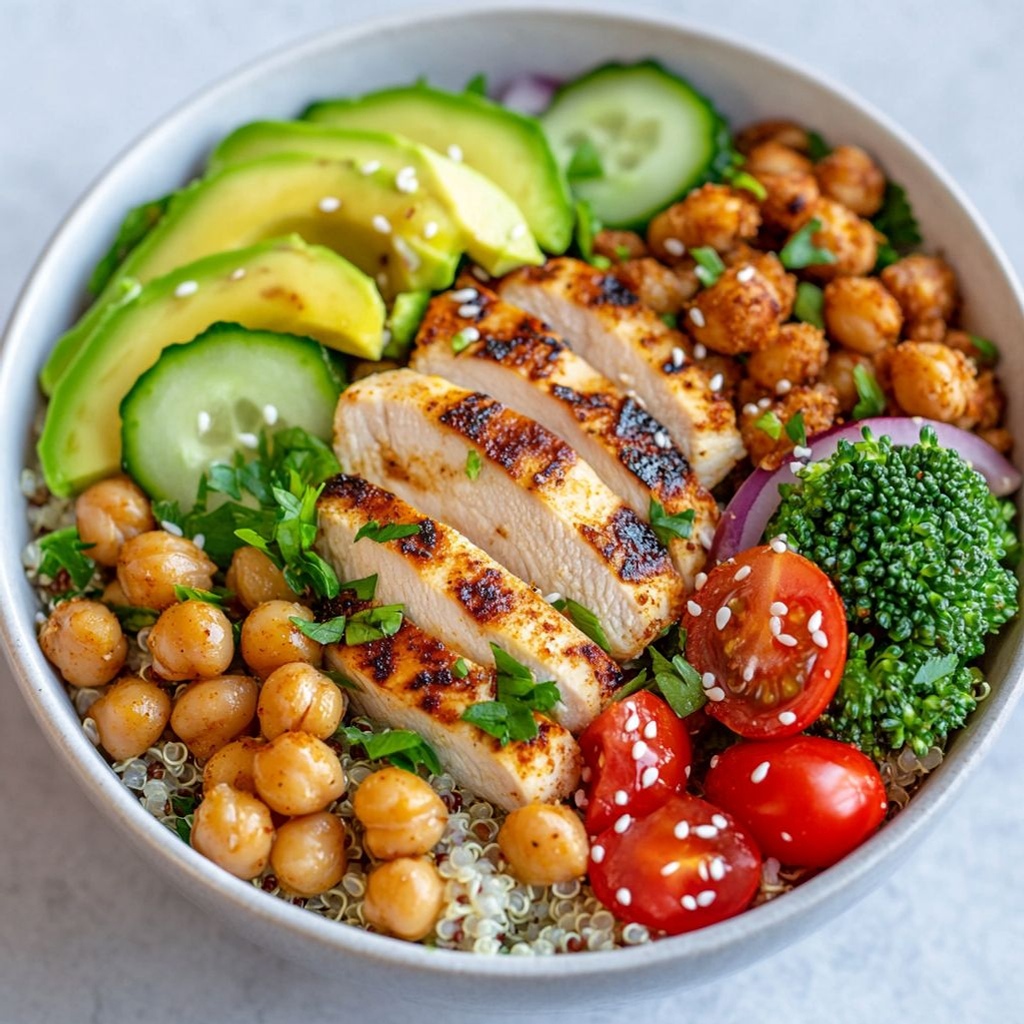
These protein bowls are balanced, nourishing meals built on a fluffy quinoa base paired with lean chicken, crisp vegetables, and a creamy lemon-tahini dressing. They’re naturally gluten-free when prepared with certified gluten-free quinoa and broth, and you can keep them GF by using gluten-free dressings and toppings. You can customize them by swapping in tofu, chickpeas, salmon, or tempeh, and by adding your favorite nuts, seeds, or chopped herbs for extra texture and flavor. For make-ahead meals, cook the quinoa and chicken in advance and refrigerate; keep the greens, avocado, and tomatoes separate and assemble just before serving to maintain freshness. The components store well for 2–3 days; avoid freezing avocado and cut vegetables to preserve texture. For an extra boost, drizzle with extra lemon juice, a little olive oil, or a spoonful of yogurt or skyr on top. Always taste and adjust seasoning after assembling, since the dressing and toppings can change the balance of salt and acidity.
Tips
Quinoa and base tips
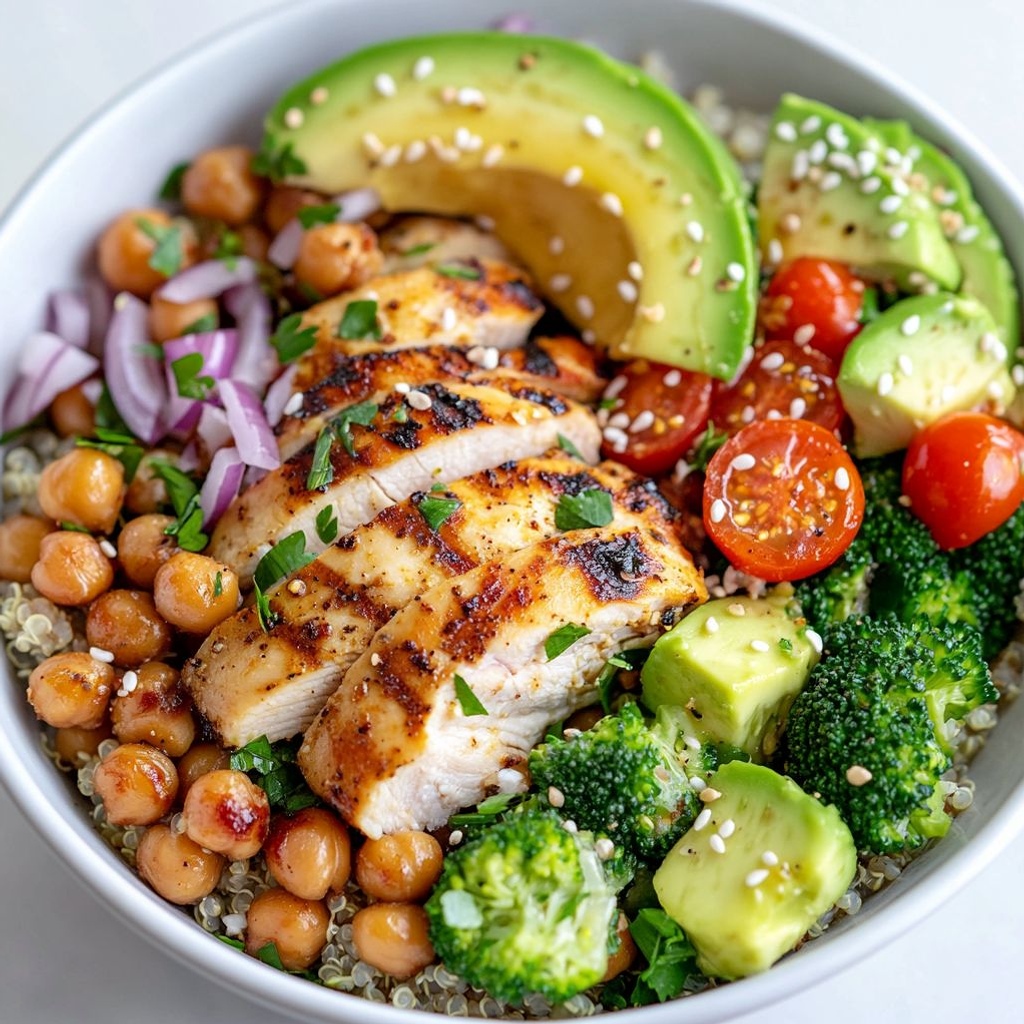
- Rinse quinoa thoroughly in a fine-mesh sieve to remove the bitter saponins. This prevents a soapy aftertaste and helps the quinoa stay fluffy.
- Cook quinoa in a gentle simmer until the liquid is fully absorbed. Let it rest off the heat for 5 minutes, then fluff with a fork to create light, separate grains.
- Toast quinoa briefly in a dry pan for extra nuttiness before cooking, then cook with broth instead of water for a deeper flavor.
- Cool the quinoa slightly before assembling the bowls to create a pleasant texture contrast with the greens.
Protein (chicken) tips
- Marinate briefly (10–20 minutes) to boost flavor without drying the meat. A simple mix of olive oil, lemon, garlic, and smoked paprika works well.
- Cook chicken just to 165°F (74°C) for juicy results. Rest for 5 minutes and slice against the grain for tenderness.
- If you’re cooking in a skillet, brush the chicken lightly with olive oil to promote even browning. In a grill, oil is less critical but can help with sticking.
- Alternative proteins: use tempeh, tofu, salmon, or chickpeas for a vegetarian version without sacrificing protein.
Vegetables and toppings tips
- Halved cherry tomatoes retain juiciness longer if added just before serving; store separately if prepping ahead.
- Cucumber should be diced evenly for uniform texture; lightly salt and pat dry if you want extra crunch or to reduce watery leakage.
- Avoid avocado browning: slice just before serving or toss with a little lemon juice. For prep ahead, store cut avocado with the pit and lemon juice in an airtight container.
- Optional red onion can add brightness; if sensitive to raw onion, quick-soak slices in ice water (about 10 minutes) to mellow the bite, then pat dry.
Dressing tips
- To emulsify tahini smoothly, whisk in lemon juice first, then gradually add water and olive oil. Warm tahini slightly if it’s very thick.
- Adjust thickness by controlling water: start with 2 tablespoons and add more to reach a pourable emulsion. Refrigeration will thicken the dressing; whisk again before using.
- Fresh garlic gives a bright lift; if you prefer milder flavor, mince and mash garlic with a pinch of salt and lemon juice to mellow before whisking into the dressing.
- Season gradually. Dress the greens lightly and taste; remember feta or other toppings can add saltiness, so adjust salt in the dressing accordingly.
Optional add-ins and texture
- Toast pumpkin seeds until fragrant for a crunchy, mineral-rich topping. Store leftovers in a sealed container to maintain crunch.
- Fresh parsley adds brightness; chop finely and sprinkle over the bowl just before serving.
- Feta adds a creamy, salty contrast. For dairy-free, use vegan feta or omit. Nuts like almonds or pistachios also work well for crunch.
Make-ahead and meal-prep tips
- Cook quinoa in advance and refrigerate in a covered container. Assemble bowls within 2–3 days for best texture.
- Keep dressing separate until serving to prevent greens from wilting. Transport components in airtight containers if taking the bowl on-the-go.
- Pre-chop vegetables and store in airtight containers; add avocado only at assembly to prevent browning.
FAQ
What is a protein bowl?
A protein bowl is a balanced, customizable meal built around a protein source, a base (like grains or greens), plenty of vegetables, a healthy fat, and a flavorful dressing or sauce. It’s designed to be filling, nutrient-dense, and easy to customize for different tastes or dietary needs.
What protein options work best for a protein bowl?
Great options include grilled chicken, turkey, salmon, tuna, eggs, tofu, tempeh, edamame, chickpeas, black beans, lentils, or Greek yogurt. Choose a protein you enjoy and pair it with a complementary base and veggies. For variety, alternate between animal and plant-based proteins week to week.
What base should I choose for a protein bowl?
You can use grains like quinoa, brown rice, barley, or farro; leafy greens as a base for a lighter bowl; or a mix of greens and grains. The base adds texture and fiber; aim for about 1 cup cooked grains or a couple of cups of greens as a starting point.
How do I balance macros in a protein bowl?
A balanced bowl typically includes: a palm-sized portion of lean protein (20–40 g protein depending on needs), a base (1 cup cooked grains or 2–3 cups greens), colorful vegetables for fiber and micronutrients, a healthy fat (1–2 tablespoons), and a flavorful dressing. Adjust portions to meet your daily goals and activity level.
Can I meal-prep a protein bowl?
Yes. For best results, keep components separate until serving to prevent sogginess. Cook proteins in advance, portion into containers, and store grains and vegetables separately. Dressings can be stored in a small container or jar. Most bowls stay fresh for 3–4 days in the fridge; some components (like greens) may lose crunch over time.
What toppings and flavors work well in a protein bowl?
Try a mix of crunchy and creamy textures: roasted vegetables, avocado, cucumber, cherry tomatoes, shredded carrots, corn, or pickled onions. Add seeds or nuts (sunflower, pumpkin, almonds), feta or cotija, herbs (cilantro, parsley), and a tangy or spicy dressing (lemon-tahini, yogurt-garlic, or a lemon-dijon vinaigrette) to brighten flavors without overdoing calories.
How should I store leftovers or meal-prepped bowls?
Store components separately if possible. Refrigerate bowls within 2 hours of serving. Use airtight containers and label dates. Most bowls keep well for 3–4 days in the fridge. Freezing is best for proteins like chicken or beans; grains can freeze well, but greens may wilt after thawing. Reheat gently to avoid texture loss.
Are protein bowls suitable for vegetarians or vegans?
Absolutely. Use plant-based proteins such as beans, lentils, chickpeas, tofu, tempeh, edamame, or quinoa as a protein base. Combine with veggies, grains, and a vegan dressing (for example, lemon-tahini or avocado-cilantro dressing) to ensure you get all essential amino acids and stay satisfied.
How can I make a kid-friendly protein bowl?
Keep flavors mild and textures familiar: grilled chicken or beans, rice or quinoa, raw or lightly steamed vegetables, cheese or yogurt-based dressings, and a little fruit for sweetness. Allow kids to help assemble components, which increases engagement. Offer a dip or sauce on the side to encourage dipping and exploration of flavors.
What should I do if I have allergies or dietary restrictions?
Choose components that avoid your allergens. For gluten-free bowls, use gluten-free grains like quinoa or brown rice and check dressing labels. For dairy-free meals, skip cheese and use olive oil, tahini, or dairy-free yogurt dressings. For nut allergies, substitute seeds (sunflower, pumpkin) in place of nuts and use seed-based dressings. Always read ingredient labels and, when eating out, ask about hidden ingredients.