Introduction / Hook
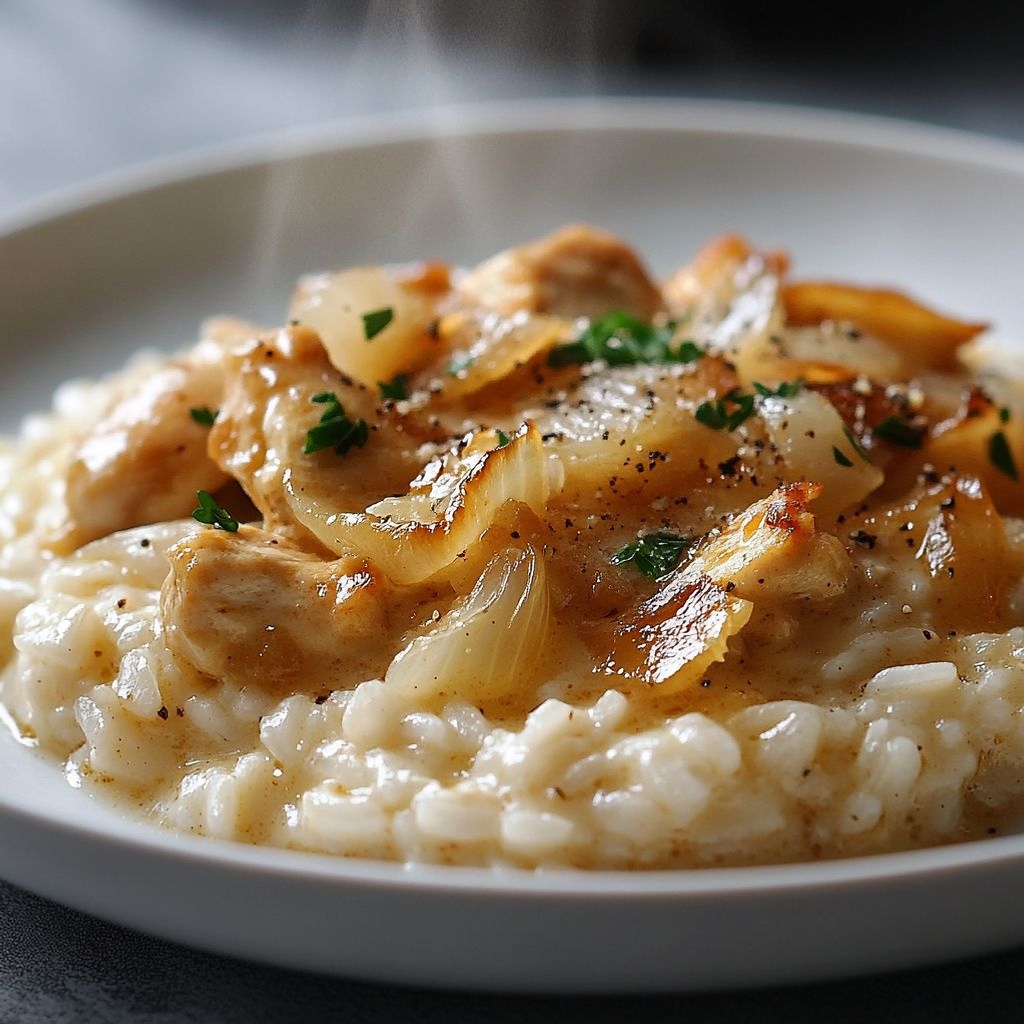
Imagine a skillet waking to a gentle sizzle, the air filling with a warm, savory embrace. A pale rain of rice begins to shimmer as it meets a touch of butter and the soft sweetness of slowly caramelized onions. In the center, morsels of tender meat brown to a sun-kissed glaze, their juices seeping into the grains and releasing a bouquet that feels both rustic and refined. This is Riso pollo e cipolla alla francese—a dish that marries the comforting heartiness of Italian home cooking with the graceful, restrained elegance of French technique. It’s not just a meal; it’s a sensorial journey: the way the first forkful tastes like a memory in the making, the way the steam sweeps across the table like a whispered invitation, the way every grain carries a little piece of countryside and a hint of Parisian bistro charm. Whether you’re feeding a hungry weeknight crew or hosting a small, lingering dinner, this dish delivers warmth, familiarity, and a touch of culinary poetry in every bite.
From the first inhale of simmering onion and toasty rice, you feel the kitchen becoming a stage for a quiet celebration: a close-knit circle around the stove, a story unfolding with each stirring motion, and the anticipation of a perfectly cohesive finish. The French influence isn’t loud or ostentatious; it’s a whisper of technique—gentle deglazing here, careful toasting there, a final moment of rest that lets the flavors settle into harmony. Yet at its core, the dish remains unmistakably Italian: homey, generous, and designed to bring people together around a single, shared plate. In that balance—between French refinement and Italian warmth—lie the magic of this recipe.
As you read through, you’ll sense the symphony of textures and aromas: the slight chew of the rice, the yielding succulence of the chicken, the sweet-savory kiss of caramelized onions, and a delicate depth that comes from thoughtful seasoning and careful simmering. This is comfort food with a purpose—food that nourishes the body and steadies the mind, inviting conversation and slowing time at the table. It’s the sort of dish you reach for on a busy weeknight and then reach for again on a lazy Sunday, when you want something both satisfying and a little special without demanding every ounce of your attention. Welcome to a recipe that honors two culinary traditions while crafting a flavor that feels entirely yours.
The Story Behind the Dish
Food travels through kitchens, gathering memories the way a traveler collects postcards. Riso pollo e cipolla alla francese is a dish born from that spirit of exchange—the Italian appetite for comforting, nourishing meals meeting the French knack for technique, balance, and a certain culinary polish. In many Italian households, rice is a canvas—plain or embellished—capable of absorbing the pantry’s most humble treasures. Onions, with their layered sweetness, are a beloved ally, capable of transforming a simple pan into a memory-larping aroma that lingers long after the dish is gone. The “alla francese” designation nods to a style that favors restraint, clarity of flavor, and refined execution: a nod to the French culinary tradition of building flavor in stages, using aromatics to perfume the dish, and letting each component find its moment in the spotlight before uniting them in a final, cohesive chorus.
Long ago, generations of cooks found themselves at a crossroads of cultures—neighbors sharing markets, grandmothers swapping tips over steaming pots, and zucchini, onions, poultry, and grains taking on personalities that reflected the kitchens they entered. This dish embodies that cross-pollination. It’s the kind of plate your grandmother would recognize—nonchalant, generous, and deeply satisfying—yet with a touch of French technique that turns everyday ingredients into something a touch more elegant. It’s not about grand gestures; it’s about the quiet confidence that comes from knowing you can coax flavor from simple things with patience, careful browning, and a respectful simmer. The dish tells a story of home, of shared meals, and of a kitchen that smiles when two culinary languages speak the same language of flavor.
In many families, a recipe like this travels through whispered tweaks: a splash of wine for depth, a handful of herbs for brightness, a pause so the rice can drink in the sauce. The beauty of this dish is its adaptability—it invites you to make it your own while staying faithful to its core identity: rice that glows with savory richness, onions that melt into a velvet sweetness, and a protein that remains juicy and comforting. It’s a story told at the stove, finished at the table, and remembered in the quiet cheer of a dinner shared well past sunset.
Why You’ll Love This Recipe
- One-pan practicality: a complete, satisfying meal built in one pot or pan, minimizing cleanup and maximizing flavor concentration.
- Balanced comfort: the earthiness of rice and onions provides a foundation that complements a tender, flavorful protein, all finished with a touch of refinement characteristic of French-inspired technique.
- Versatile and forgiving: friendly to weeknights, elegant enough for weekend gatherings, and adaptable to what’s in your pantry or fridge.
- Feel-good factor: a dish that evokes home-cooked meals, hearth-kissed aromas, and the rewarding experience of watching flavors bloom as they simmer together.
- Texture harmony: a satisfying bite with the gentle bite of al dente rice, the melt-in-your-mouth tenderness of the chicken, and the satin-soft sweetness of caramelized onions—an orchestra of textures in every mouthful.
- Accessible technique: you’ll gain confidence in building layers of flavor through toasting, gentle browning, and measured simmering—hallmarks of French-inspired culinary thinking—without complicated steps.
Flavor Profile & Texture
The dish thrives on a thoughtful balance of flavors that unfold with each spoonful. At first encounter, you’re greeted by the familiar warmth of caramelized onions, their sugars coaxed into a soft, honeyed sweetness that amplifies the savory depth of the rice. The rice itself carries a toasty undertone, a result of light toasting that enhances its natural nuttiness and helps it stand up to the saucy finish. The chicken—tender, juicy, and browned to a gentle, bronzed edge—offers a comforting protein base that anchors the plate and invites you to savor its naturally savory, almost buttery notes.
Every component talks to its neighbor: the onions release a subtle sweetness that temperates the savory richness of the meat, while the rice drinks up the released juices, swelling and becoming plush with each simmer. Depending on your pantry, you may notice a whisper of wine or a hint of herb that lingers in the background, offering a quiet elegance rather than a loud statement. The overall aroma is warm and inviting—comforting, yet with a poised sophistication that hints at the French sensibility of restraint and refinement. The texture is a dance: the rice offers a gentle bite, the chicken yields slightly under a fork, and the onion ribbons become silky, tying the dish together into a cohesive, mouth-coating finish.
In terms of seasoning, think about a balanced approach: salt and a touch of acid to brighten, with a fat that glides across the palate and helps unify the grains and protein. The result is a plate that feels both grounded and refined, a reminder that comfort and elegance can share the same plate without ever clashing. It’s not a flashy dish; it’s a soulful one—an everyday celebration of two culinary traditions learning from one another and producing something that feels timelessly satisfying.
Occasions & Pairings
This dish shines in many settings, from weeknight family suppers to more leisurely weekend dinners with friends. Its warmth makes it especially comforting in cooler months, but the balance of brightness from onions and the gentle lift from savory stock offers enough freshness to keep it appealing year-round. Consider the following occasions and pairing ideas to elevate the experience:
- Weeknight comfort with a glass of white wine—something dry and light-bodied that won’t overwhelm the dish but will echo its refined side.
- Casual dinner parties where guests linger at the table; serve with a crisp green salad dressed with a simple vinaigrette to cutting through the richness.
- Sunday family meals that invite conversation; this dish pairs nicely with a loaf of crusty bread for mopping up the flavorful sauce.
- Holiday or festive gatherings where you want a main course that feels special yet approachable.
- Pairings: a bright herb finish (parsley, chives), a squeeze of lemon to wake the palate, and roasted vegetables or a light, tangy pickled onion to add a zippy contrast.
For drinks, a well-chosen white wine with a touch of mineral character can complement the dish’s silky texture and onion sweetness. If you prefer non-alcoholic options, a sparkling apple cider or a tart iced tea with lemon can provide a refreshing balance to the richness.
Tips, Variations & Substitutions
- Flavor-building basics: give the aromatics a moment to release their fragrance in a hot pan, then toast the rice briefly to coax out its nutty notes before moisture is introduced.
- Protein flexibility: while the dish centers on a chicken-driven profile, you can adapt it to other proteins or even a mushroom-forward vegetarian version, using a robust mushroom broth and a mix of hearty mushrooms to mimic the savoriness of poultry.
- Onion variations: use a combination of onions (yellow for sweetness, red for a touch of sharpness) to play with sweetness and depth. Caramelizing a portion longer will intensify the overall flavor without overpowering the dish.
- Stock and deglazing: a light splash of wine or a gentle deglazing with stock helps lift the fond from the pan, enriching the sauce and adding a subtle acidity that keeps the dish from feeling heavy.
- Grain alternatives: if you’d like a different texture or dietary adjustment, consider barley or a small pearl couscous for a different bite while maintaining the comforting, French-influenced technique. For a low-gluten option, explore gluten-free rice varieties or a quinoa base that still allows the onions to shine.
- Herb finish: a handful of fresh chopped parsley or tarragon at the end adds color and a bright herbal note that lifts the dish without overpowering the core flavors.
- Spice accents: a pinch of freshly ground black pepper or a hint of thyme can introduce a subtle aromatic complexity that echoes classic French seasoning.
Storage & Make-Ahead Ideas
This dish stores well and often tastes even more developed after a short rest, making it a good candidate for make-ahead meals. Consider these tips to keep it delicious and convenient:
- Cool and refrigerate: allow the dish to cool to room temperature, then store in an airtight container in the fridge for up to 3–4 days. Reheat gently on the stove with a splash of water or stock to loosen the grains and restore moisture.
- Freezing: while rice-heavy dishes can sometimes experience textural changes after freezing, you can freeze in individual portions for convenient reheating. Thaw overnight in the fridge before reheating.
- Make-ahead strategy: prepare components in advance (caramelized onions and browned chicken, separately) and combine with rice and finishing liquid just before serving to preserve the ideal texture and moisture.
- Reheating tips: rewarm on low heat, stirring occasionally to prevent sticking and to ensure even moisture distribution. A light drizzle of stock or water can help restore the dish’s glossy texture.
Fun Facts & Trivia
Did you know that onions are one of the oldest cultivated crops in human history, with archeological evidence dating back thousands of years? They’ve traveled across cultures and cuisines, often serving as the humble backbone of dishes that require little more than patience and heat to transform. The French approach to “mirepoix” and controlled deglazing is all about coaxing maximum flavor from simple ingredients, a philosophy that resonates with many Italian kitchen traditions as well—where few ingredients are wasted and every browning moment is considered essential. The blend of Italian heartiness and French technique in this dish is a nod to centuries of culinary dialogue between regions, markets, and families who cooked with what they had while imagining what could be earned with a little skill and care. It’s a reminder that great flavor often arises not from extravagance, but from balance, timing, and love at the stove.
In the broader story of European home cooking, onion-centric dishes hold a special place precisely because they teach patience. The simplest elements—onions, a modest grain, a humble piece of meat—can become something comforting, sophisticated, and deeply satisfying when treated with respect. This dish stands as a tribute to that tradition: a modern echo of the pantry-to-table philosophy, designed to bring warmth to your table while inviting you to savor the journey as much as the destination.

Ingredients
Riso Base
- 1 1/2 cups Arborio rice (risotto rice)
→ The rice is the main structure for this creamy French-style rice dish. Arborio rice releases starch as it cooks, creating a velvety texture; do not rinse if you want maximum creaminess, and toast briefly in butter/oil before gradually adding stock to start the process. - 4 cups warm chicken stock or broth (low-sodium)
→ Used to gradually hydrate and flavor the rice; keep stock warm so that the cooking temperature stays steady and the grains cook evenly. For deeper flavor, simmer stock with a carrot, onion, and celery to make a quick mise en place stock. - 1/2 cup dry white wine (optional)
→ Used to deglaze the pan after browning the aromatics, adding acidity and brightness that balance the onion sweetness; allow it to reduce by about half before adding stock. If avoiding alcohol, substitute with extra stock or a splash of lemon juice near the end. - 2 tablespoons unsalted butter (divided)
→ Adds richness and helps create a creamy emulsified texture as starch releases; melt one tablespoon with the onions at the start and reserve the other to finish the dish, enabling a glossy finish. - 1 tablespoon extra-virgin olive oil
→ Provides a higher smoke point fat to sauté aromatics and prevents butter from burning; adds a touch of fruitiness; you can use clarified butter if you prefer.
Pollo e Cipolla
- 1 1/2 cups diced chicken thighs, boneless and skinless (about 8 oz / 225 g)
→ Chicken is the protein backbone; thighs stay juicy during simmering due to higher fat, while breasts are leaner. Cut into bite-sized pieces so they cook evenly and quickly. Season lightly with salt and pepper prior to searing to help develop a crust. - 2 medium onions, thinly sliced
→ Onions are the base of the “alla française” flavor; thin slices caramelize evenly, releasing sweetness that complements the chicken. For quicker caramelization, cook onions slowly over medium heat with some salt until deep golden, about 15-20 minutes. - 2 cloves garlic, minced
→ Garlic adds depth to the sauce; mince finely and add after onions have softened to avoid burning, which can produce bitterness. If you love more aroma, you can crush cloves and remove before finishing. - 1 teaspoon fresh thyme leaves (or 1/2 teaspoon dried)
→ Thyme gives a classic French herbal note; add early in the onion sauté to release essential oils. If using dried thyme, crush between palms to awaken aroma. - 1 bay leaf (optional)
→ Bay leaf provides gentle herbal fragrance during simmering; remove before serving as it is not eaten. - Salt to taste; freshly ground black pepper to taste
→ Season progressively; start with a small pinch on the chicken and onions, then adjust after the stock is absorbed. Salt content will depend on your stock; taste as you go. - 1 tablespoon unsalted butter (for finishing or browning)
→ Adds richness and helps brown chicken for color; swirl into the pan near the end to enrich the sauce and create a smoother mouthfeel.
Salsa e Rifinitura
- 1/2 cup heavy cream or crème fraîche (optional)
→ Adds luxurious creaminess and helps emulsify the sauce with the rice; add at the end after removing from heat to prevent curdling; use sparingly to keep the dish balanced. - 1/4 cup grated Parmesan cheese (optional)
→ Provides a sharp, savory finish and helps thicken the sauce slightly when melted into the hot mixture; add just before serving and stir until melted. - 1 tablespoon chopped fresh parsley (for garnish)
→ Fresh herbs add color and a bright note to the final plate; chop finely and sprinkle on top just before serving to preserve aroma and texture. - Salt and white pepper to taste
→ Final season adjustments after the rice has absorbed liquid; white pepper keeps the appearance clean and elegant, especially in a light sauce.
Instructions
- Warm the chicken stock in a medium saucepan over low heat until just shimmering; keep it at a gentle simmer while you cook the risotto to ensure liquid is always hot and ready to hydrate the rice.
→ Using hot stock prevents a temperature drop that would stall the rice’s cooking and helps maintain a creamy texture. - Season the diced chicken thighs lightly with salt and pepper to promote flavorful browning and a better crust during searing; this initial seasoning also helps build depth in the final sauce.
→ A quick dry seasoning encourages Maillard browning and yields richer pan fond for the sauce. - Heat a wide, heavy skillet or sauté pan over medium heat and melt 1 tablespoon unsalted butter with 1 tablespoon olive oil; wait until the fat glistens and just begins to shimmer before adding ingredients to prevent scorching.
→ The oil raises the butter’s smoke point and carries delicate flavors without burning the butter, which would impart bitterness. - Sear the seasoned chicken in a single layer until well browned on all sides, about 2–3 minutes per side, then transfer to a plate and reserve; avoid crowded pan space to ensure a crisp crust rather than steaming.
→ Browning develops complex flavor through the Maillard reaction, which enriches the sauce when the pan fond is later incorporated. - Add the remaining 1 tablespoon butter to the pan and stir in the thinly sliced onions with a pinch of salt; cook over medium-low heat, stirring often, until the onions are deeply caramelized and golden, about 15–20 minutes.
→ Slow caramelization releases natural sugars, creating the sweet-savory backbone of the dish and a rich French onion profile. - Stir in the minced garlic and fresh thyme leaves, cooking for 30–60 seconds until fragrant but not browned; this builds aromatics without risking bitterness from burnt garlic.
→ Garlic quickly shifts from fragrant to bitter when overheated; keeping heat moderate preserves sweetness and depth. - Deglaze the pan with 1/2 cup dry white wine, scraping up all browned bits from the bottom with a wooden spoon, and simmer until the wine reduces by about half to concentrate its acidity and brightness.
→ The reduced wine lifts the fond and balances fat with a lively edge, enhancing overall harmony. - Return the chicken to the pan, letting it rewarm in the aromatics for 1–2 minutes; add the Arborio rice and stir to coat the grains with fat, then toast for 1–2 minutes until the edges become translucent.
→ Toasting the rice lightly seals the starch granules, which helps create a creamy texture as stock is gradually incorporated. - Pour in a ladle of hot stock and simmer, stirring constantly, until the liquid is almost fully absorbed and the rice begins to release a creamy core; continue adding stock gradually as the rice absorbs, maintaining a gentle simmer.
→ Constant stirring and gradual liquid addition draw starch from the rice, yielding the characteristic risotto silkiness without overcooking the grains. - Continue adding stock in small ladles and stirring for about 18–20 minutes, tasting for al dente texture with a creamy surface; adjust heat to keep a steady simmer and prevent boiling that would break the grains.
→ Proper al dente texture ensures the dish is tender yet structured, with creamy coherence from released starch. - When the rice is tender and the chicken is cooked through, remove the pan from the heat and, if used, take out the bay leaf; this stops further softening of the grains and allows for controlled finishing.
→ Eliminates an inedible flavor while preserving the final texture and balance of the dish. - Finish the dish by folding in the optional heavy cream or crème fraîche and the grated Parmesan, stirring until the sauce becomes glossy and emulsified; add Parmesan last to avoid stringiness.
→ The cream adds luxurious richness and helps emulsify the starch, while Parmesan provides a sharp, savory finish; adding off the heat prevents curdling. - Season to taste with salt and white pepper, then scatter the chopped fresh parsley over the dish just before serving for a bright finish and vibrant color.
→ Fresh herbs brighten the dish’s aroma and appearance; white pepper preserves the sauce’s pale, elegant appearance.
Notes
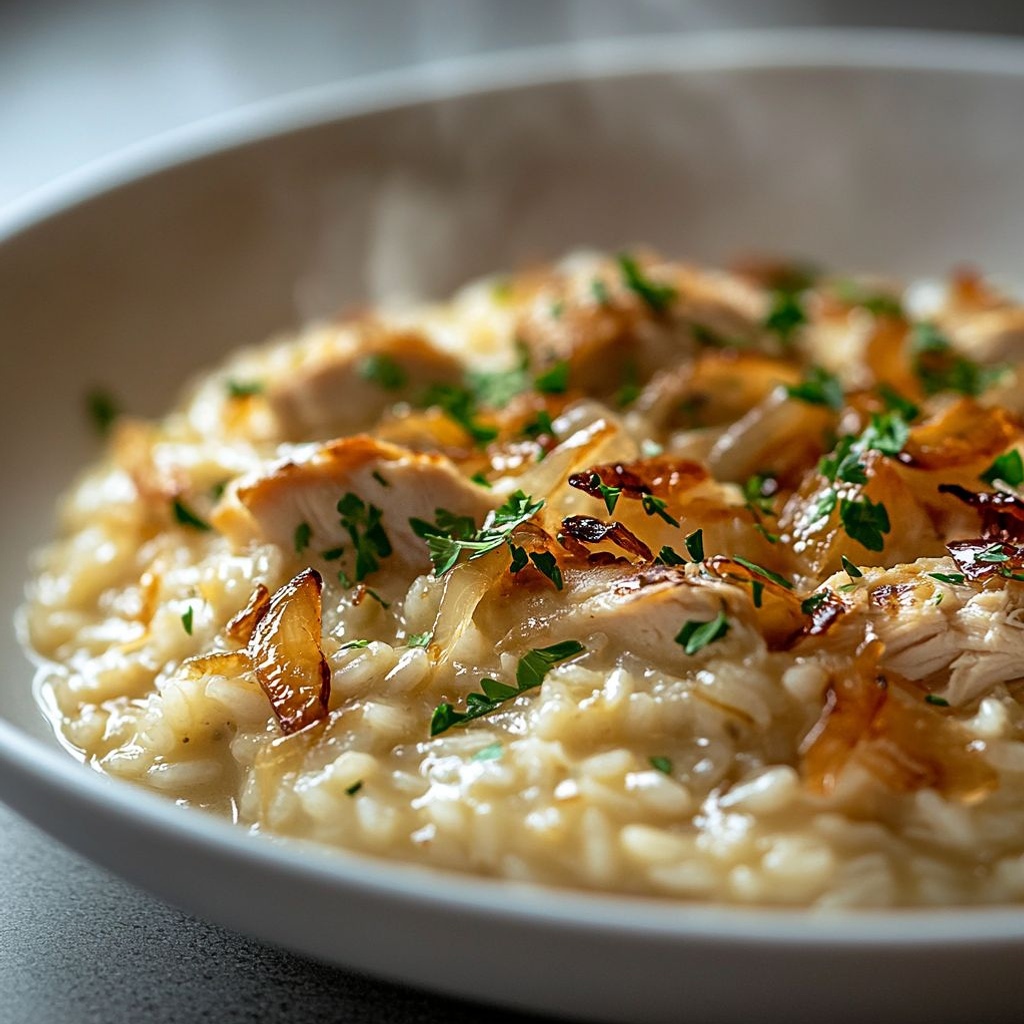
“These French-style risotto notes provide practical steps to achieve a creamy, balanced Riso pollo e cipolla alla francese: toast Arborio rice in 1 tablespoon of butter with a splash of olive oil for flavor and to start the starch release, do not rinse if you want maximum creaminess, then add warm stock gradually, stirring frequently to coax starch and achieve velvet texture. Keep stock warm and add it in small ladles, waiting for the rice to almost absorb before adding more. If using wine, deglaze after browning the aromatics and let it reduce by about half before adding stock to keep the dish bright. Brown the chicken in batches to develop color and moisture, seasoning lightly with salt and pepper before searing; remove and set aside to avoid overcrowding the pan. Caramelize onions slowly with a pinch of salt until deep golden for natural sweetness that balances the savoriness of the chicken, then add minced garlic and thyme; add the bay leaf during simmering and remove before serving. Finish the dish with a tablespoon of butter for sheen and a silky mouthfeel, and, if you like extra richness, whisk in a splash of heavy cream or crème fraîche and grated Parmesan just before serving; garnish with chopped parsley for color and freshness. Taste and adjust salt and pepper at the end, mindful that stock contributes salt. For a lighter version, skip the cream and rely on proper stock and consistent stirring; the dish can be enriched with vegetables like peas or mushrooms for additional texture and color. Let rest for a minute off the heat before serving to let the flavors meld.”
Tips
Consigli utili per la preparazione
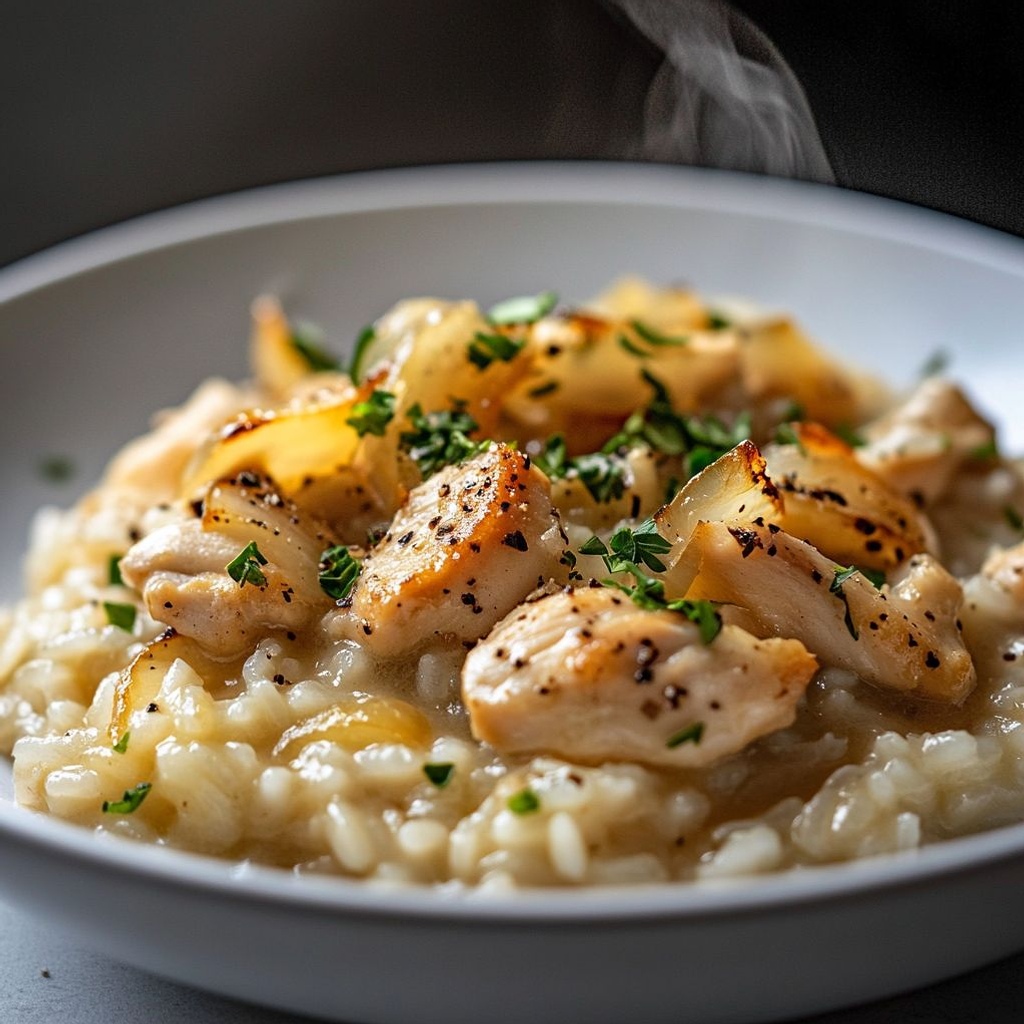
- Riso Base: per una crema extra vellutata non risciacquate l’Arborio. Tostatelo brevemente nel burro e nell’olio prima di aggiungere il brodo: l’amido si rilascia durante la tostatura e aiuta a ottenere una texture morbida e legante.
- Usate brodo caldo: mantenere il brodo a temperatura costante evita bruschi cali di cottura e mantiene i chicchi ben cotti in modo uniforme. Se avete tempo, fate un mise en place di brodo aromatizzato (carota, cipolla, sedano) per un sapore più profondo.
- Deglassare con vino (opzionale): il vino bianco aggiunge acidità e brillantezza. Fate evaporare fino a metà prima di aggiungere il brodo; se non usate alcol, sostituite con un po’ di succo di limone o con più brodo.
- Burro in due tempi: sciogliete un cucchiaio di burro all’inizio con la cipolla per una base lucida; aggiungete l’altro burro a fine cottura per una finitura liscia e brillante.
- Olio extra vergine: l’olio aiuta a sorvegliare il punto di fumo e aggiunge una nota fruttata. Se preferite, potete usare burro chiarificato per una base più neutra e alta temperatura.
- Trattamento della cipolla: affettate sottilmente le cipolle per una doratura uniforme. Cuocetele a fuoco medio-basso con un pizzico di sale finché diventano molto morbide e dorate ( circa 15–20 minuti).
- Aglio: aggiungete l’aglio minutissimo solo dopo che le cipolle si sono ammorbidite per evitare bruciature che possono impartire amarezza.
- Erbe aromatiche: thyme fresco va aggiunto presto per liberare gli oli essenziali; se usate timo essiccato, pestatelo tra le mani prima di aggiungerlo per risvegliare l’aroma. Se gradite, il/la bay leaf può restare in cottura durante la fase del brodo e rimuoverlo prima di servire.
- Cuocere polpette di pollo: asciugate bene i pezzi di pollo prima di rosolarli per ottenere una crosticina. Tagliate in pezzi di dimensione uniforme per una cottura omogenea; saltate leggermente con sale e pepe prima di aggiungere al risotto.
- Rifinitura cremosa: a fuoco spento, mescolate panna o crème fraîche con una parte del riso per mantenere l’emulsione. Aggiungete parmigiano grattugiato poco prima di servire per una nota sapida che lega il tutto.
- Regolazioni finali: assaggiate e aggiustate di sale e pepe bianco solo quando il riso ha assorbito parte del liquido. Il pepe bianco mantiene l’aspetto pulito del piatto.
Suggerimenti per varianti e sostituzioni
- Versione leggera: sostituite la panna con una piccola quantità di latte scremato o elimina la panna del tutto, aumentando la quantità di brodo e un cucchiaio di parmigiano a fine cottura.
- Versione non alcolica: aumentate leggermente il brodo e aggiungete un cucchiaio di succo di limone al finale per mantenere la brillantezza senza l’acidità del vino.
- Contorno e presentazione: finite con prezzemolo fresco tritato e una grattugiata di scorza di limone per un tocco aromatico luminoso.
- Attrezzatura e tecnica: una casseruola a fondo spesso e larga aiuta a distribuire il calore in modo uniforme; mescolate frequentemente durante la prima fase di cottura del riso per rilasciare amido senza rompere i chicchi.
- Conservazione: se avanzano porzioni, fate raffreddare rapidamente e riponete in frigorifero entro 2 ore. Riscaldate con un po’ di brodo per mantenere la cremosità; se si addensa troppo, allungate con un filo d’acqua o brodo caldo.
FAQ
FAQ – Riso pollo e cipolla alla francese
Che cosa è esattamente questa ricetta?
È una preparazione di ispirazione francese che combina riso, pollo e cipolle dorate, cotta in una salsa profumata di vino bianco e brodo, quindi mantecata con burro e formaggio per una consistenza cremosa. Può ricordare un risotto, ma può essere realizzata anche con riso non da risotto per una versione più rapida.
Quali sono gli ingredienti principali?
Ingredienti tipici includono:
- riso (preferibilmente Carnaroli o Arborio per cremosità, oppure un riso a chicchi singoli se preferisci una versione più asciutta)
- pollo tagliato a pezzi
- cipolle, affettate sottili
- burro e olio d’oliva
- vino bianco secco
- brodo di pollo o vegetale
- parmigiano o grana grattugiato
- sale, pepe e erbe aromatiche (timo, alloro)
Quale tipo di riso è meglio utilizzare?
Per una crema simile al risotto, usa riso per risotti come Carnaroli o Arborio. Se vuoi una versione meno cremosa ma più leggera, puoi usare un riso a chicchi singoli. Ricorda che il tempo di cottura varierà a seconda del tipo di riso scelto.
Come si prepara la ricetta passo passo in breve?
Procedimento semplificato:
- Rosola le cipolle in una pentola con una noce di burro e olio fino a doratura.
- Aggiungi i pezzi di pollo e rosolali su tutti i lati.
- Unisci il riso e tostalo per un minuto.
- Sfumalo con vino bianco e lascia evaporare l’alcol.
- Aggiungi brodo caldo poco per volta, mescolando. Cuoci finché il riso è al dente e la cremina si sviluppa.
- Manteca con burro freddo e parmigiano. Aggiusta di sale e pepe e aggiungi erbe a piacere.
Posso rendere la salsa cremosa senza panna?
Sì. Opzioni:
- Mantacca con burro freddo e formaggio grattugiato (parmigiano o fontina) subito fuori dal fuoco.
- Aggiungi una piccola quantità di besciamella leggera.
- Usa una riduzione di brodo ben concentrata con un cucchiaino di amido di mais sciolto in acqua fredda, se necessario, per addensare.
È possibile prepararla in versione vegetariana?
Sì. Sostituisci il pollo con funghi tagliati (champignon o pleurotus) o con ceci. Usa brodo vegetale al posto del brodo di pollo e mantieni le cipolle e il riso senza modifiche. Puoi aggiungere erbe come timo e prezzemolo per un tocco aromatico.
Posso prepararla in anticipo o congelarla?
Puoi prepararla in anticipo e conservarla in frigorifero per 1–2 giorni. Riscaldala a fuoco moderato con aggiunta di brodo o acqua calda per recuperare la cremosità. Congelare è meno consigliato per la consistenza del riso e la texture del pollo; se devi farlo, congela prima della mantecare e manteca al momento del riscaldamento.
Come correggere una consistenza troppo secca o troppo liquida?
– Se è troppo secca: aggiungi brodo caldo poco per volta, mescolando, finché raggiungi la cremosità desiderata.
– Se è troppo liquida: continua la cottura a fuoco medio-basso per far evaporare l’eccesso di liquido oppure aggiungi un po’ di riso in più cotto separatamente e mescola per assorbire l’umidità.
Quali abbinamenti di vino e presentazione consigliate?
Vino bianco secco è ideale. Proposte: Sauvignon Blanc, un Chardonnay non troppo barricato o uno Ribolla/Giulia doc. Per una versione più leggera, scegli un vino bianco fresco e vivace. Presenta il piatto con una spolverata di prezzemolo o timo fresco e una fetta di limone al lato.
Quali varianti o arricchimenti posso provare?
Varianti comuni includono:
- Aggiungere funghi trifolati o piselli per più colore e sapore.
- Incorporare una piccola quantità di panna o besciamella per una crema più ricca.
- Usare zafferano o spice delicate per un aroma francese più marcato.