Introduction / Hook
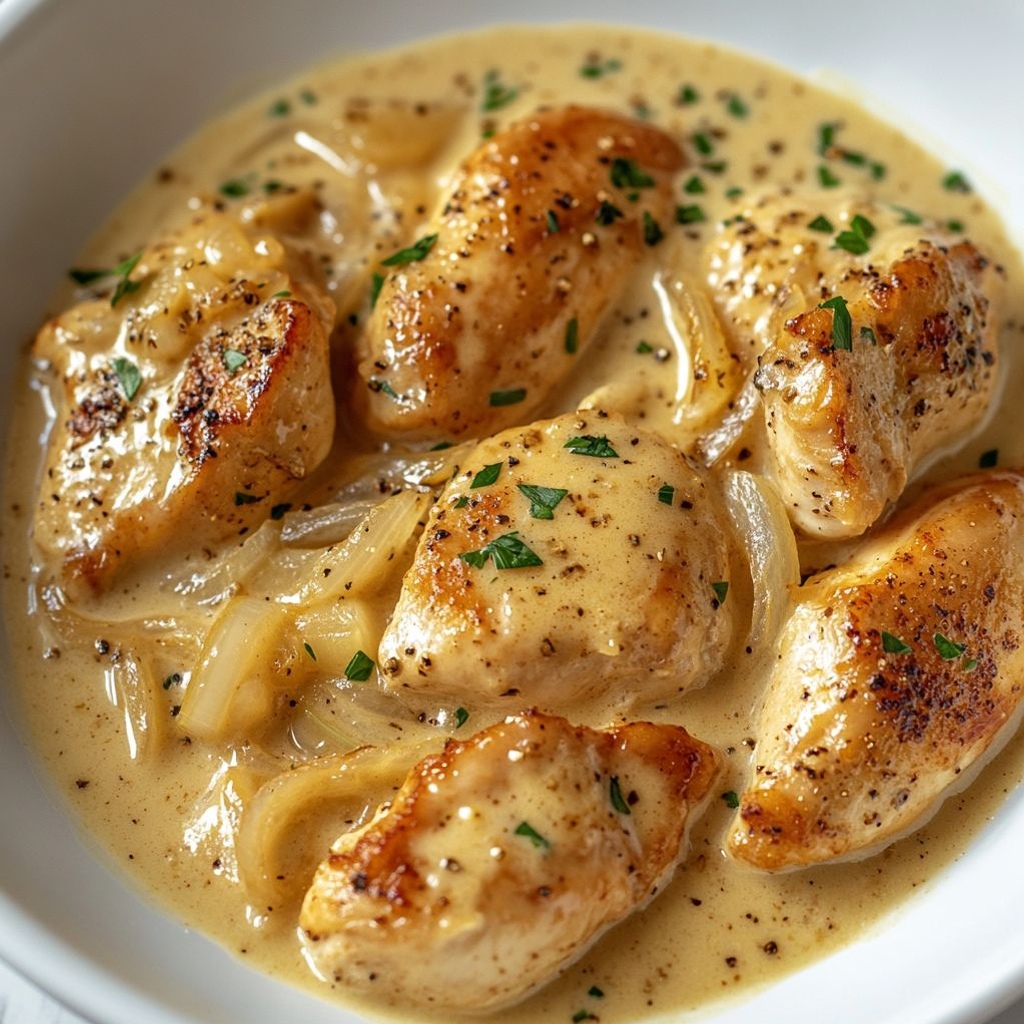
Picture a skillet waking up the senses: the pan sighs as butter melts, onions surrender their crisp bite and soften into a glossy, caramel-honey color, and a chicken breast or thigh glows with a sunlit, bronzed crust. Then, a luxurious bloom of cream swirls in, turning the entire dish into a velvet-soft embrace that coats every bite. Pollo cremoso alla cipolla isn’t just a meal; it’s a warm invitation to gather around the table, to share stories between bites, and to savor the simple magic of few ingredients transformed with patient technique. The aroma alone—green olive oil, garlic softly sautéing, onions caramelizing into sweetness—will coax even the most hectic day into a pause, a smile, and a plate that feels like a hug from a fond memory. This is the kind of dish that makes weeknights feel special and Sundays feel timeless, a testament to how comfort food can be elevated with a few thoughtful steps and a generous handful of heart.
In the kitchen where comfort meets elegance, this creamy onion chicken delivers a symphony of contrasts: the tenderness of succulent meat, the lush thickness of a silky sauce, and the bright lift of aromatics that stay with you long after the last spoonful. It isn’t about chasing trends or chasing perfection; it’s about honoring warmth, patience, and the joy of a dish that makes even ordinary evenings feel worthy of celebration. Each bite holds a whisper of Italian sunshine and rustic farmstead cooking—simple, honest flavors that come together with a confident, almost indulgent creaminess. If you crave something that feels luxurious without fuss, this is your go-to. And if you’re cooking for loved ones, you’ll see it in their eyes—the instant comfort, the satisfied sigh, the lingering smile as the sauce coats the plate like a satin ribbon.
The Story Behind the Dish
Onions have long held a revered place in Italian cooking, anchoring sauces, braises, and pan sauces with their natural sweetness and depth. The term pollo alla cipolla appears in family kitchens across the peninsula, evolving from a humble skillet supper to a dish that can feel both rustic and refined depending on how it’s treated. The beauty of this dish lies in its balance: onions are coaxed to release their sugars without burning, then softened with garlic and a touch of aromatics; chicken is seared to develop a respectful crust, locking in juices. Finally, the cream—the gentle, enveloping stage—binds everything into a single, glossy tapestry. It’s a modern echo of regional preparations that favored braises and pan sauces, a nod to peasant roots that proves simplicity can become something sublime with care and technique. In many Italian homes, onions are a canvas for memory: the way a grandmother’s pan would hiss when the onions hit the heat, the way a sauce thickens with a golden sheen, the way a family gathers at the table long after the plates are cleared. This dish channels that spirit—the everyday transformed by patience, the ordinary elevated by a whisper of cream and a kiss of wine—into a comforting, crowd-pleasing centerpiece.
Beyond its lineage, Pollo cremoso alla cipolla speaks to a universal truth about cooking: the most beloved meals often arise from modest starting points. A few onions, a piece of chicken, a splash of cream and herbaceous warmth can become a dish that tastes like a story you’re telling at the table—one about home, about sharing, about the gentle art of letting flavors shine without shouting. This is a dish that respects tradition while inviting modern cooks to adapt it to their pantry and their people—whether you’re cooking for a weeknight family dinner, a date night at home, or a small gathering that wants to feel special without stepping into something fancy or intimidating.
Why You’ll Love This Recipe
- Rich and comforting without being heavy, thanks to creamy texture that develops from a gentle reduction and a touch of cream rather than heavy sauces alone.
- Simple, accessible ingredients that come together with straightforward techniques—perfect for cooks who want soufflé-light sophistication with everyday pantry staples.
- Versatile and forgiving: use bone-in thighs for extra juiciness, swap dairy for dairy-free options, or switch up aromatics to suit your mood or dietary needs.
- Adaptable to various occasions—from weeknight dinners to relaxed gatherings—while still feeling indulgent enough for a small celebratory meal.
- Balances sweet caramelized onions with savory chicken and a silky sauce that clings to each morsel, ensuring every bite is intensely flavorful.
- Low fuss, high reward: a single pan can deliver a complete, deeply satisfying dish with minimal cleanup—more time for conversation, less for washing up.
Flavor Profile & Texture
The flavor profile of Pollo cremoso alla cipolla is a careful marriage of sweetness, savoriness, and richness. The onions are coaxed slowly, their natural sugars unlocking a gentle caramel that provides a natural sweetness that plays against the savory chicken. Garlic adds a subtle peppery warmth, while a splash of white wine or stock introduces a bright, aromatic acidity that brightens the dish and helps deglaze the fond left in the pan. The cream, when introduced, is not merely a filler; it’s a binder that transforms the pan juices into a silken sauce, lending a luxurious mouthfeel without overwhelming the chicken’s juiciness. The chicken itself—whether you opt for breasts or thighs—develops a savory crust from a quick sear, creating a textural contrast: the outside is lightly crisped and deeply flavored, while the inside remains tender and succulent, soaking up the creamy onion sauce with every bite.
Texture-wise, imagine a velvety, spoonable sauce that clings to each piece of chicken, the onions melted into ribbons that still hold their shape enough to provide a slight bite. The overall mouthfeel is luxe and comforting—think satin and warmth, with a gentle chew from the chicken and a lingering sweetness from the onions. The aroma is equally compelling: the scent of caramelized onions filling the room, the butter lending a toasty note, the cream softening the intensity into a smooth, inviting perfume that makes everyone pause, inhale, and smile before the first bite lands on the tongue.
Occasions & Pairings
This dish shines in a variety of settings, from weeknights to special occasions, because it feels substantial enough to satisfy yet refined enough to serve to guests without fuss.
- Weeknights: A weeknight hero that pairs beautifully with a simple side like mashed potatoes, soft polenta, or buttered egg noodles soaks up every drop of the creamy sauce.
- Dates and gatherings: Serve with a bright arugula or cucumber salad to balance the richness and add a refreshing counterpoint.
- Holidays and casual celebrations: Scale up with extra onions and a touch of fresh herbs to create a pot of comforting joy that feels both homey and earned.
Pairings to consider (drinks, sides, and desserts) include:
- Wine: A glass of Pinot Grigio, Verdicchio, or a lightly oaked Chardonnay can complement the creamy sauce and onion sweetness nicely.
- Sides: Creamy mashed potatoes, soft polenta, or a bed of fluffy rice to soak up the sauce; steamed or roasted vegetables like green beans, asparagus, or sautéed spinach add color and balance.
- Desserts: A light, citrus-forward dessert like a lemon sorbet or an almond-fruit tart cleanses the palate after the richness of the chicken.
Tips, Variations & Substitutions
Here are ideas to tailor Pollo cremoso alla cipolla to your pantry, dietary needs, and taste preferences. These suggestions preserve the essence of the dish while offering creative twists.
Chicken options
- Boneless, skinless chicken thighs: Juicier and more forgiving in a creamy sauce; they hold moisture beautifully and develop a deeper flavor when seared well.
- Chicken breasts: A leaner option; consider pounding to even thickness to ensure uniform cooking and avoid dryness.
- Bone-in cuts: If you prefer the extra flavor from the bone, you can start with bone-in thighs or breasts and finish by shredding or slicing the meat to rest in the sauce.
Dairy and dairy-free variations
- Use heavy cream or half-and-half for extra richness; for a lighter version, swap in low-fat milk and a small amount of cream cheese to emulsify.
- Dairy-free option: Replace cream with coconut milk or cashew cream. A small amount of olive oil or dairy-free butter will mimic the silkiness; a touch of cornstarch slurry can help thicken the sauce if needed.
Flavor twists
- Add fresh herbs: a scattering of chopped thyme, parsley, or tarragon at the end brightens the dish.
- Spice it up: a pinch of red pepper flakes or paprika can provide a gentle kick without overpowering the onion sweetness.
- Herbaceous finish: finish with a squeeze of lemon juice to sharpen the rich creaminess and lift the flavors.
Gluten-free and other dietary considerations
The dish is naturally gluten-free if you’re using dairy and stock without gluten-containing additives. If you’re thickening the sauce with flour, substitute with cornstarch or a gluten-free flour blend; ensure all seasonings and broths are gluten-free if you’re cooking for someone with celiac disease or gluten sensitivity.
Regional twists
- Southern Italian influence: use a splash of white wine and capers for a piquant brightness; finish with a handful of chopped olives for a briny contrast.
- Northern Italian influence: swap in a touch of Marsala or a dry white wine, and finish with fresh sage to evoke a rustic Alpine pantry memory.
- Herby countryside version: incorporate rosemary or bay leaf during the simmering phase, then discard before serving for an aromatic, grounded note.
Storage & Make-Ahead Ideas
Like many creamy sauces, Pollo cremoso alla cipolla stores well and often benefits from resting a bit, allowing flavors to meld and the sauce to thicken slightly as it cools. Here are practical tips for planning ahead and keeping leftovers delicious.
- Storage: Refrigerate leftovers in a covered container for up to 3–4 days. The sauce may look a little separated when cold, but a gentle reheating and a brisk whisk will bring it back to a silky consistency.
- Make-ahead for gatherings: Prepare the onion base and chicken separately up to the point of finishing the sauce. Reheat the chicken gently, then swirl in the cream and onions to finish just before serving.
- Freezing: Freezing cooked chicken in a creamy sauce is possible but can alter texture slightly. For best results, freeze chicken and onions separately from the sauce, then combine and reheat with a splash of extra cream or stock to restore silkiness.
- Reheating tips: Warm slowly over low heat, stirring often to prevent scorching. If the sauce thickens too much, whisk in a little warm stock or water to reach the desired consistency.
Fun Facts & Trivia (Optional)
- Onions have been cultivated for thousands of years and appear in Italian kitchens in countless forms—caramelized, roasted, sautéed, or raw as a bright contrast to richer elements.
- The word cipolla comes from Latin cipollus, reflecting a long tradition of onion-centric cooking that spans regions and seasonal harvests.
- Creamy pan sauces are a hallmark of Italian comfort meals that transform simple proteins into something celebratory without complex techniques, showcasing the elegance of restraint and timing in the kitchen.
- Wine and onion pairings in Italian cooking often rely on fresh acidity and aromatics to balance creaminess, a principle this dish embraces with a gentle splash of wine or stock to deglaze and brighten the sauce.
Ingredients
- Pollo Base
- 4 boneless, skinless chicken breasts (about 1.5 pounds / 680 g)
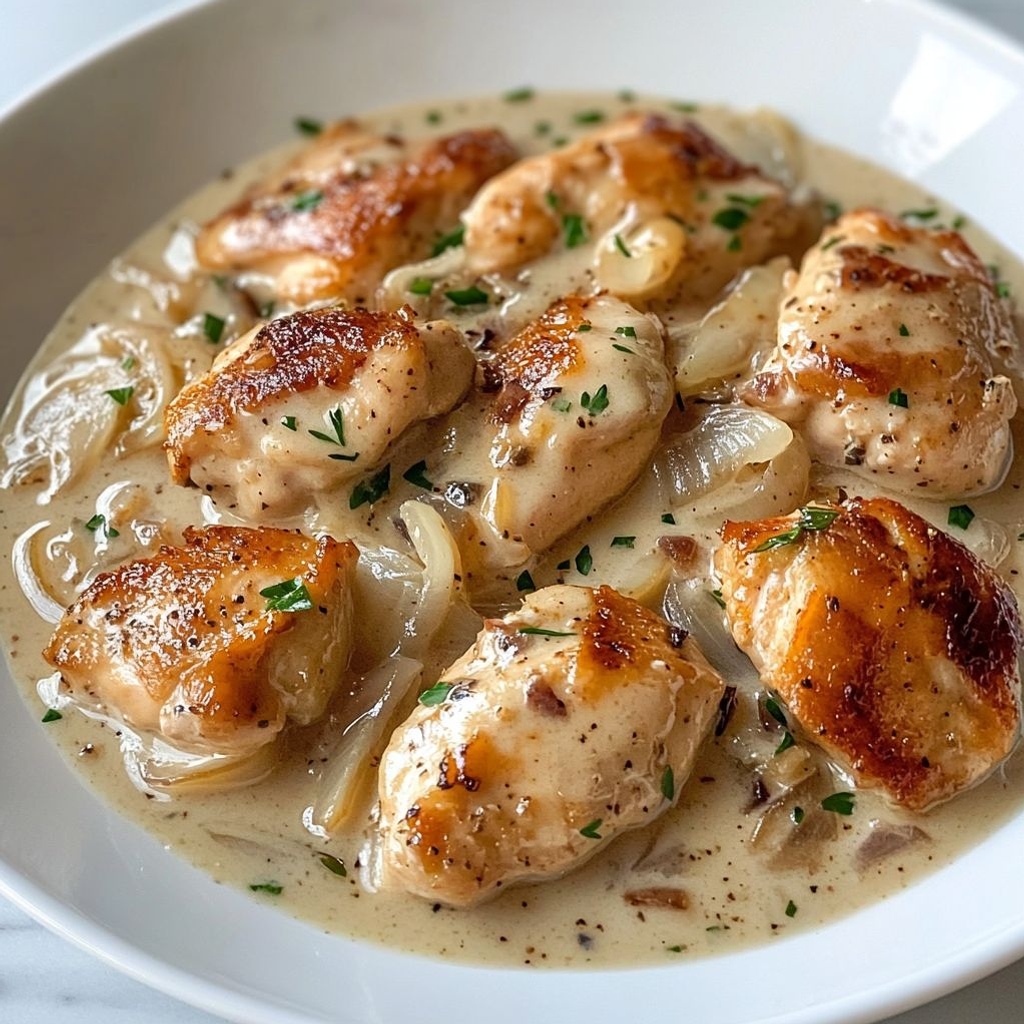
→ Role: the main protein of the dish; Preparation: if the chicken is very thick, gently pound to an even thickness (about 1/2 inch / 1.25 cm) for uniform searing; Handling: pat dry before cooking to promote a golden crust and prevent extra moisture from stewing the meat. Tip: letting the chicken rest briefly after pounding helps retain juiciness. - 2 tablespoons olive oil
→ Role: browning and searing the chicken; Preparation: heat in a heavy skillet over medium-high heat until shimmering before adding chicken; Handling: avoid overcrowding the pan to ensure proper browning rather than steaming. Tip: you can substitute with clarified butter for extra richness, but olive oil keeps the flavor bright. - 1/2 teaspoon kosher salt
→ Role: seasoning for the chicken and sauce base; Preparation: sprinkle evenly on all sides; Handling: adjust to taste after the sauce has reduced, as the cream and Parmesan will add saltiness. Tip: season in layers—salt the chicken, then taste the finished sauce and adjust. - 1/2 teaspoon freshly ground black pepper
→ Role: seasoning and a touch of heat to balance richness; Preparation: grind fresh over the chicken just before cooking; Handling: pepper intensity can be adjusted after searing. Tip: pepper also helps lift the onion and cream flavors. - Cipolla e Salsa Crema
- 2 large yellow onions, thinly sliced
→ Role: provide natural sweetness, body, and depth to the sauce; Preparation: slice evenly to ensure uniform browning; Handling: cook slowly over medium heat to caramelize without burning; Tip: yellow onions give the best balance of sweetness and savoriness. - 3 cloves garlic, minced
→ Role: aromatics that deepen the sauce; Preparation: mince finely to maximize flavor release; Handling: add after onions have softened to prevent rapid browning of garlic; Tip: crush then mince for a quicker, more intense garlic flavor. - 2 tablespoons butter
→ Role: base for the sauté and to enrich the sauce; Preparation: melt with a splash of olive oil to prevent butter burning; Handling: let the butter foam and then brown slightly for extra nutty notes; Tip: browned butter adds a luxurious, toasty dimension to the sauce. - 1 tablespoon olive oil
→ Role: additional fat to help sauté onions and deglaze; Preparation: use in combination with butter to manage heat; Handling: keep heat moderate to avoid scorching the onions. Tip: this helps prevent the butter from browning too quickly. - 1/2 cup dry white wine (or 1/2 cup chicken stock)
→ Role: deglazes the pan, adds acidity and complexity; Preparation: add after onions have softened and scrape up the browned bits; Handling: allow wine to reduce by about half to concentrate flavors; If omitting wine, use more stock and a splash of lemon juice for brightness. Tip: a crisp, dry wine like Sauvignon Blanc or Pinot Grigio works well, or use a high-quality stock for a non-alcohol option. - 1 cup heavy cream
→ Role: main creamy component of the sauce; Preparation: stir in after wine reduces; Handling: simmer gently to prevent the cream from curdling or separating; Tip: for a lighter version, substitute with half-and-half or a blend of milk with a little more stock, but expect a thinner sauce. - 1/4 cup grated Parmesan cheese (optional)
→ Role: adds salty, umami depth and helps emulsify the sauce; Preparation: finely grate and whisk in toward the end; Handling: keep heat low to prevent cheese from clumping; Tip: skip if dairy-free is required; you can use nutritional yeast as an alternative for a cheesy note. - 1 teaspoon dried thyme (or 2 teaspoons fresh thyme leaves)
→ Role: herbaceous brightness that complements onion and cream; Preparation: if using fresh thyme, strip leaves off stems and finely chop; Handling: add early in the sauce to allow the aroma to infuse; Tip: thyme pairs beautifully with chicken and onions; adjust to taste. - 1 tablespoon all-purpose flour (or 1 tablespoon cornstarch) for thickening
→ Role: thickens the sauce and helps it cling to the chicken; Preparation: if using flour, whisk into a small amount of cold liquid to form a slurry before adding; if using cornstarch, dissolve in cold water to make a slurry; Handling: cook flour for a minute with the onions to remove raw taste; Tip: stir in gradually and simmer to reach your desired sauce consistency. - Finish & Garnish
- 2 tablespoons chopped fresh parsley
→ Role: provides a bright, fresh contrast and color; Preparation: chop finely; Handling: sprinkle over the finished dish just before serving to preserve color and freshness; Tip: basil or chives can be used as alternatives for different flavor profiles. - Salt and pepper to taste
→ Role: final seasoning to balance flavors after reduction; Preparation: taste the sauce after it has simmered and adjusted with cheese and wine/stock; Handling: adjust gradually, since the sauce will concentrate as it cooks; Tip: season in small increments and re-taste. - Optional: 1/4 teaspoon red pepper flakes
→ Role: adds a gentle heat to cut through richness; Preparation: sprinkle into the sauce during simmering to meld with the flavors; Handling: start small and increase if you like more heat; Tip: red pepper flakes pair nicely with a touch of lemon zest for a bright finish.
Instructions
- Pound the chicken breasts to an even thickness of about 1/2 inch (1.25 cm) between two sheets of plastic wrap using a flat meat mallet or the bottom of a heavy pan, then pat dry on all sides with paper towels to remove surface moisture that would inhibit browning.
→ Why: even thickness ensures uniform searing and prevents thinner edges from overcooking before the centers are done; patting dry promotes a crisp, golden crust rather than steaming in moisture. - Season the chicken evenly on all sides with 1/2 teaspoon kosher salt and 1/2 teaspoon freshly ground black pepper before cooking.
→ Why: layering salt and pepper builds flavor into the meat itself; dryness before seasoning helps the seasoning adhere and promotes better crust formation during searing. - Heat 2 tablespoons olive oil in a large heavy skillet over medium-high heat until shimmering, then add the chicken in batches, avoiding overcrowding the pan.
→ Why: a hot, uncluttered pan creates a rapid crust that locks in juices; overcrowding lowers the pan temperature and leads to steaming rather than browning, which dulls flavor. - Sear the chicken for 3–4 minutes per side until deeply golden and the internal temperature reaches 165°F (74°C), then transfer to a plate and tent loosely with foil to rest.
→ Why: proper searing develops caramelized surface flavor; resting helps redistribute juices so the meat stays moist when you finish the sauce. - Reduce the heat to medium and add 2 tablespoons butter with 1 tablespoon olive oil to the same pan, allowing the butter to foam and brown slightly for a nutty note.
→ Why: browning the butter adds depth and aroma to the base of the sauce; the accompanying oil helps control butter’s temperature to prevent burning. - Add the 2 large yellow onions, thinly sliced, and a pinch of kosher salt; cook slowly, stirring every few minutes, until the onions are deeply caramelized (about 20–25 minutes).
→ Why: slow caramelization builds natural sweetness and savory depth; if onions threaten to scorch, reduce heat or splash in a small amount of water to lift browned bits. - Stir in the 3 cloves garlic, minced, and cook for 30–60 seconds until fragrant, taking care not to burn the garlic.
→ Why: minced garlic releases its aroma quickly, but burns easily; this brief cook time preserves sweetness and vivid garlic flavor in the sauce. - Whisk in 1 tablespoon all-purpose flour (or prepare 1 tablespoon cornstarch in a cold slurry) to form a light roux and cook for 1–2 minutes to remove raw taste; this helps thicken the sauce.
→ Why: flour thickens with a gentle heat, while cornstarch slurry thickens faster; cooking the roux slightly prevents a raw, starchy taste that would dull the sauce. - Deglaze with 1/2 cup dry white wine (or 1/2 cup chicken stock) by pouring it in and scraping up the browned bits from the pan; simmer until reduced by about half.
→ Why: deglazing lifts flavorful fond from the pan and concentrates it; reducing concentrates acidity and sweetness to form a balanced base for the sauce. - Stir in 1 cup heavy cream and bring the mixture to a gentle simmer over low heat, cooking until the sauce thickens to a satin coating consistency without boiling.
→ Why: cream provides the luxurious body of the sauce; simmering gently prevents curdling and separation, preserving a smooth texture. - Whisk in 1/4 cup grated Parmesan cheese (optional) toward the end of the simmer over low heat until melted and emulsion forms, then taste and adjust salt as needed.
→ Why: Parmesan adds umami and helps emulsify the sauce for a cohesive, glossy finish; heat must stay low to prevent clumping. - Stir in 1 teaspoon dried thyme (or 2 teaspoons fresh thyme leaves) to brighten the sauce; allow 1–2 minutes for the herbs to release aroma without becoming bitter.
→ Why: thyme complements onion and cream with a fresh herbal note; adding it early lets the flavor infuse the sauce. - Return the seared chicken to the pan, nestling it into the sauce and cooking for another 2–3 minutes to rewarm and coat the chicken with the creamy onion sauce; check that the chicken remains juicy and reaches 165°F (74°C) internally.
→ Why: finishing in the sauce allows the chicken to absorb flavor while the sauce thickens further and adheres to the meat for a cohesive dish. - Finish with 2 tablespoons chopped fresh parsley, then taste and adjust salt and pepper as needed; optionally add 1/4 teaspoon red pepper flakes for a gentle heat.
→ Why: parsley provides color and a fresh contrast to the richness; seasoning adjustments ensure the final dish is balanced and vibrant, with heat adjusted to preference. - Plate the creamy onion chicken and spoon extra sauce over each piece; serve with cooked pasta, steamed rice, or crusty bread to soak up the sauce.
→ Why: a complementary starch or breadbase highlights the sauce and provides a satisfying, complete meal; the sauce should cling to the protein and spread pleasantly across the plate.
Notes
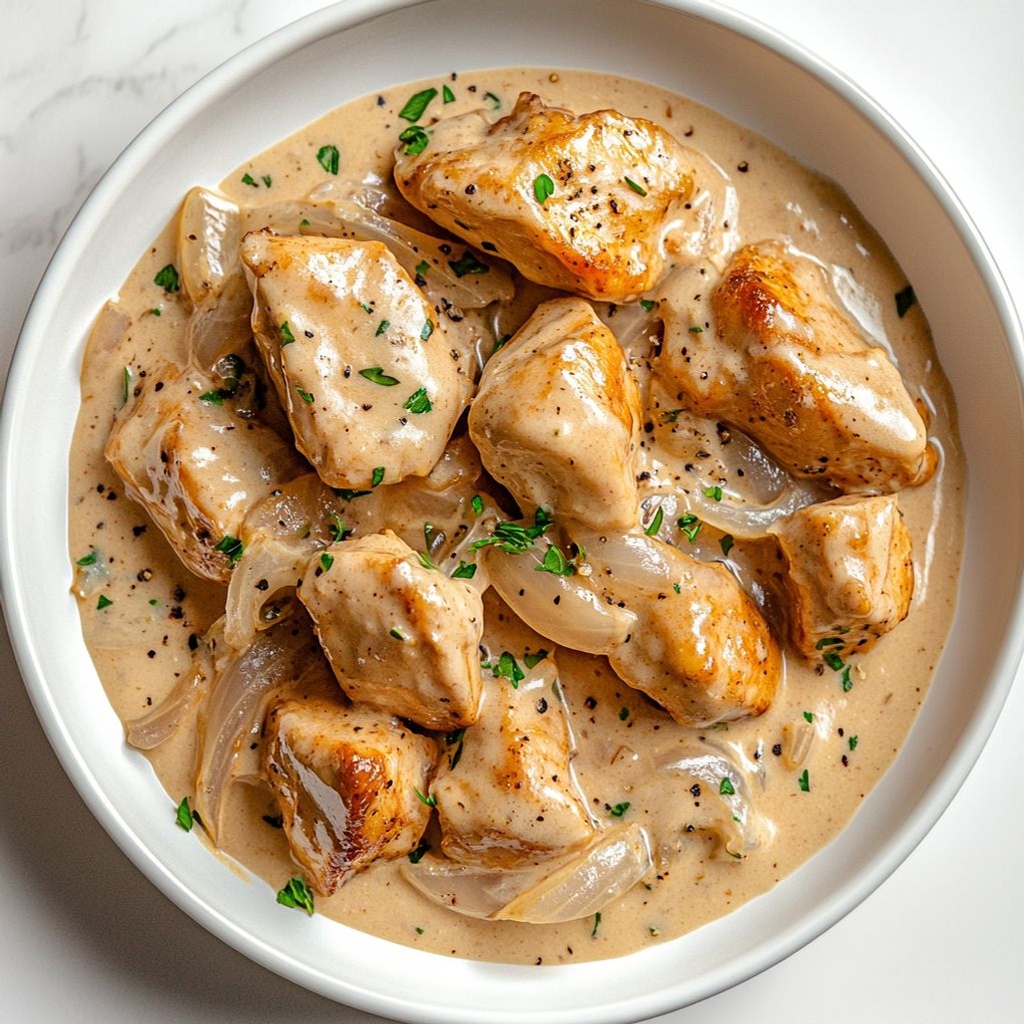
These Pollo cremoso alla cipolla notes are crafted to guide you through creating a rich, comforting chicken dish finished with a velvety onion cream sauce. Start with 4 boneless, skinless chicken breasts that are pounded to an even thickness, patted dry, and seared in olive oil until deeply golden. The key is to brown the chicken in batches to develop flavor rather than crowding the pan, which can lead to steaming.
The sauce builds from caramelized onions, minced garlic, butter, and a splash of dry white wine (or chicken stock). Let the wine reduce by about half to concentrate the flavors, then add heavy cream and grated Parmesan if desired. A touch of thyme brings herb brightness, while the flour (or cornstarch) helps the sauce cling to the chicken. To prevent curdling, simmer gently and avoid boiling once the cream is added. Brown butter adds a nutty, luxurious dimension—you can substitute with clarified butter if you prefer.
You can customize this dish by sautéing mushrooms or peppers with the onions, finishing with lemon zest for a bright contrast, or finishing with fresh herbs like parsley, chives, or basil instead of thyme. For a dairy-free or lighter version, substitute the cream with half-and-half or a milk-and-stock blend and thicken with a cornstarch slurry in place of flour. If you need a gluten-free version, omit the all-purpose flour and use 1 teaspoon cornstarch dissolved in 1 tablespoon cold water (adjust to desired thickness); ensure wine and stock are gluten-free as well.
Finish with chopped parsley and adjust salt and pepper to taste after the sauce has reduced. This dish pairs beautifully with pasta, rice, or a crusty bread to soak up the sauce. Leftovers refrigerate well for 2–3 days; reheat gently on the stove with a splash of stock if the sauce thickens. The sauce can separate as it cools and reheats, but a gentle whisk will re-emulsify it. For a make-ahead option, you can prep the onion-garlic base in advance and finish with chicken and cream when ready to serve.
Tips
- Prep for an even sear: Gently pound the chicken to about 1/2 inch (1.25 cm) thick and pat dry thoroughly. Let the meat rest a few minutes after pounding to reabsorb juices, which helps it stay juicy inside and brown evenly on the outside.
- Use the right pan and space: A large, heavy skillet (preferably cast iron or thick-bottomed stainless) gives a superior crust. Do not overcrowd the pan—cook in batches if needed—so the surface stays hot enough to sear rather than steam the chicken.
- Season in layers: Salt the chicken lightly before cooking, then taste and adjust the final sauce before serving. Cheese and wine can intensify saltiness, so add salt gradually and adjust at the end.
- Respect the aromatics timing: For best onion sweetness, cook the onions slowly over medium heat until they are deeply caramelized. Add garlic only after the onions soften to prevent rapid browning or bitterness.
- Balance fats for the base: Use a combination of butter and olive oil. The oil raises the smoking point while the butter adds flavor; if the butter starts to brown too quickly, lower the heat slightly to keep onions from scorching.
- Deglaze to capture flavor: After onions have softened, deglaze with white wine or stock and scrape up all the browned bits. Let the liquid reduce by about half to concentrate the savory notes before adding cream.
- Alcohol substitutions: If you’re skipping wine, use extra stock and a squeeze of lemon juice for brightness. The reduction step remains key to concentrating flavors.
- Cream handling tips: Add the heavy cream after the wine has reduced. Simmer gently and avoid a vigorous boil to prevent curdling; if your sauce seems too thick, loosen with a splash of stock or water.
- Cheese decisions: If using Parmesan, whisk it in toward the end over low heat to emulsify the sauce. Keep the heat low to prevent clumping; if dairy-free, skip the cheese and consider nutritional yeast for a cheesy note.
- Thickening the sauce: Use the flour or cornstarch slurry as directed, adding gradually and simmering enough to cook off the raw starch taste. If you prefer a lighter sauce, reduce the thickeners slightly and let the sauce reduce longer.
- Herb timing and choice: Add thyme early to let its aroma infuse, but taste and adjust as the sauce thickens. Fresh thyme offers a bright note; dried thyme can work but is more potent—start with a smaller amount and adjust to taste.
- Finish with brightness: A final sprinkle of chopped parsley (or basil/chives as alternatives) adds color and freshness. A light squeeze of lemon zest at the end can lift the richness nicely.
- Season carefully at the end: Since the sauce concentrates as it reduces, re-taste after simmering and adjust salt and pepper in small increments. Remember the Parmesan will add saltiness.
- Textural balance: If you prefer a thinner sauce, add extra stock or a splash of water at the end; for a silkier finish, whisk in a little more cream or a pat of butter off the heat.
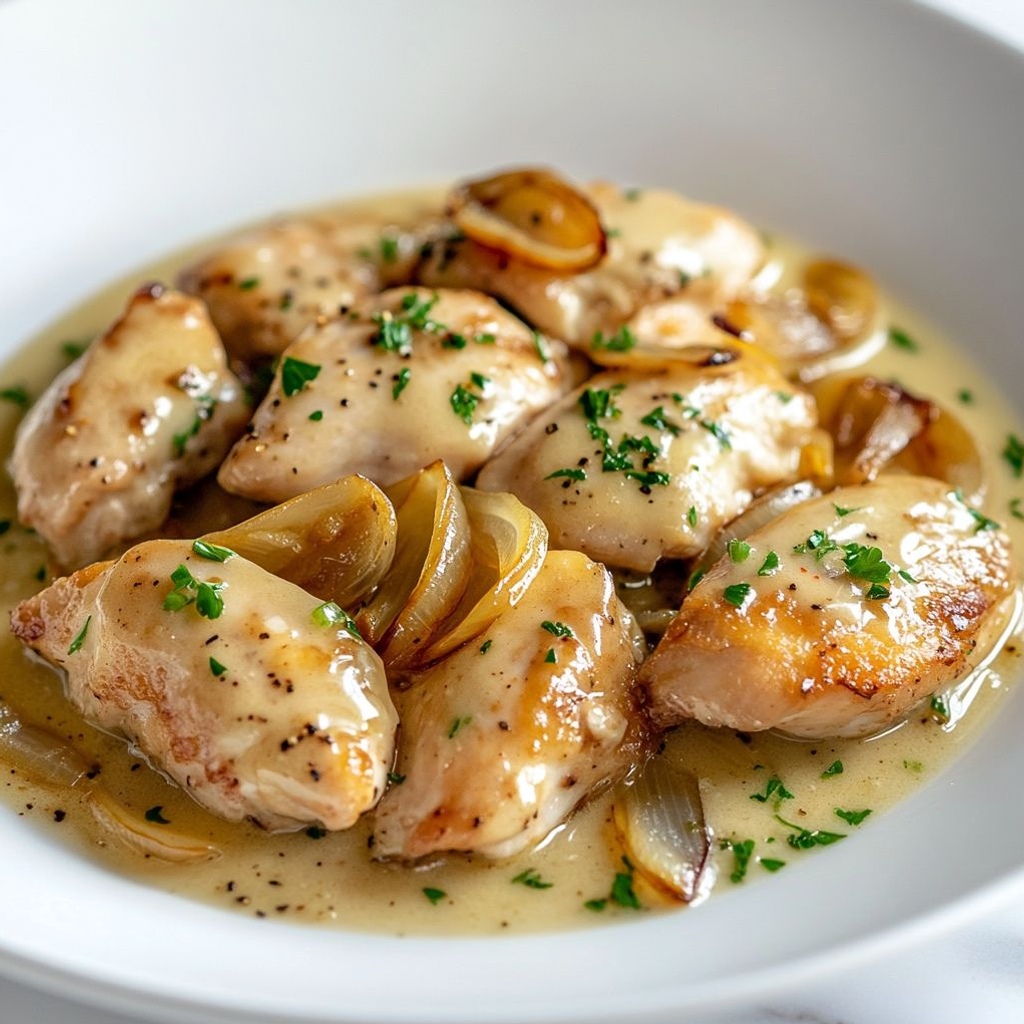
- Finishing touches: Rest the chicken briefly before slicing to keep juices distributed; spoon extra sauce over the meat for serving and pair with pasta, rice, or crusty bread to soak up the creamy sauce.
FAQ
FAQ – Pollo cremoso alla cipolla
Cos’è Pollo cremoso alla cipolla?
È una ricetta confortante italiana in cui pezzi di pollo sono cotti in una salsa cremosa a base di cipolle dolci, panna o besciamella e brodo, con aromi semplici come olio, burro e erbe. Il risultato è un piatto ricco e morbido, ideale per una cena di famiglia.
Quali sono gli ingredienti principali?
Ingredienti tipici: pollo (petto o cosce disossate), cipolle (affettate a julienne), aglio, olio extravergine d’oliva, burro, brodo di pollo, panna da cucina o besciamella, sale, pepe, timo o prezzemolo, vino bianco opzionale e parmigiano grattugiato per mantecare.
Come si preparano le cipolle per la crema?
Affetta le cipolle a julienne. In una padella larga, scald a fuoco medio-basso burro e un filo d’olio, aggiungi le cipolle con un pizzico di sale e cuocile lentamente 20–25 minuti finché diventano morbide, dorate e leggermente caramellate. A fine cottura, sfuma con vino bianco se vuoi.
Quale taglio di pollo è consigliato?
Il petto di pollo è facile da gestire e cuoce rapidamente. Le cosce disossate risultano più saporite e tenere, ma richiedono un tempo di cottura leggermente più lungo. Taglia il pollo a pezzi di dimensione uniforme per una cottura omogenea.
Procedura passo-passo per la ricetta?
1) Rosola il pollo in una padella con olio finché dorato, poi togli e metti da parte. 2) In la stessa padella, cuoci le cipolle fino a dorarle. Aggiungi aglio per 1 minuto. 3) Rimetti il pollo, aggiungi vino bianco (opzionale) e brodo. 4) Aggiungi panna o besciamella e lascia sobbollire fino a quando il pollo è cotto e la salsa si addensa. 5) Controlla di sale e pepe, manteca con un cucchiaio di parmigiano e servi con erbe fresche.
Quanto tempo richiede in totale?
Tempo totale approssimativo: 45–60 minuti. Preparazione e taglio degli ingredienti 10–15 minuti, cottura del pollo 15–25 minuti emere la salsa 5–10 minuti.
Come si conserva e si riscalda gli avanzi?
Conserva gli avanzi in un contenitore chiuso in frigorifero per 2–3 giorni. Per riscaldarlo, fallo piano sul fornello a fiamma bassa o nel microonde a intervalli brevi mescolando spesso. La salsa potrebbe separarsi leggermente al riscaldo; una piccola emulsione con un po’ di latte o panna può aiutare a ristabilirla.
Quali varianti sono consigliate?
Varianti comuni: aggiungere funghi champignon o gambi di funghi misti, pancetta o guanciale per un sapore più ricco, un pizzico di paprika o curry per una nota speziata, o spremuta di limone per una leggera freschezza. Puoi anche prepararlo senza vino sostituendolo con ulteriore brodo.
Spiagazioni per versioni particolari (senza lattosio o vegetariana)
Per una versione senza lattosio sostituisci panna/besciamella con latte di mandorle o latte di soia non zuccherato e utilizza olio al posto del burro. Per una versione vegetariana, sostituisci il pollo con funghi saltati o ceci, e usa una crema vegetale (es. panna di soia) per ottenere la cremosità. Aggiungi aromi come timo e aglio per mantenere il carattere del piatto.