Introduction / Hook
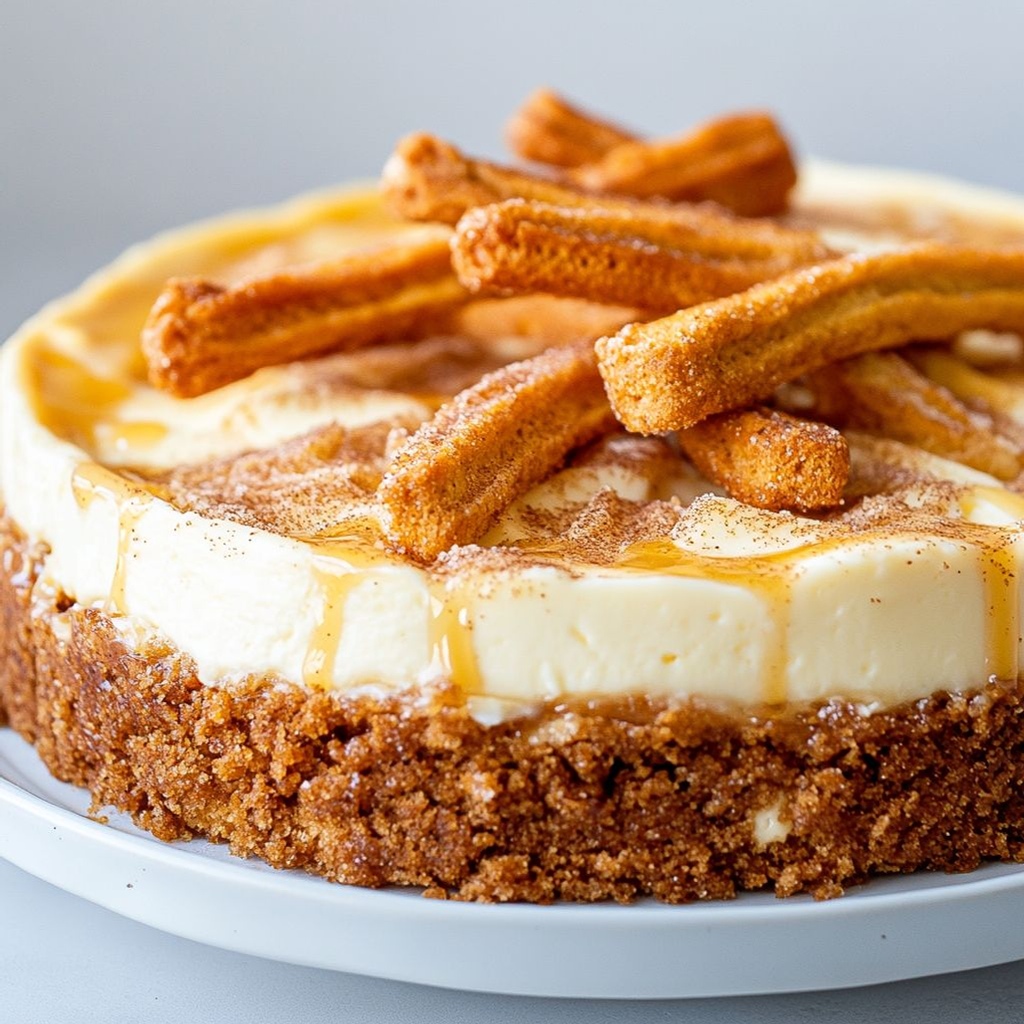
Imagine a dessert that invites you to dip into a story with every bite. The crust carries the warm crunch of biscotti, the core shines with the silky tang of cheesecake, and the surface wears a cinnamon-sugar glow reminiscent of a street-side churro. This Biscotti Churro Cheesecake is not merely a treat; it’s an edible collage of memories—Italian afternoon coffee rituals, Spanish-inspired fritter stalls, and the timeless comfort of a classic cheesecake. As you slice through the first forkful, you’ll hear a quiet crack that yields to a cloud-soft center, a tapestry of textures and aromas that feel both familiar and thrillingly new. There’s a whisper of almond from the biscotti, a kiss of vanilla, a gentle wink of coffee, and a cinnamon heat that lingers like a warm hug. It’s indulgent without being overwhelming, celebratory without shouting, and approachable enough to become a weekend ritual.
This dessert is designed to surprise and delight at once. The biscotti crumb crust brings a toasty, nutty bite that stands up to the rich, creamy filling, while a churro-inspired swirl or topping introduces a cinnamon-sugar note that perfectly echoes the dessert’s Spanish-inspired charm. The result is a cheesecake that feels both elegant and comforting, suitable for a party centerpiece or a special weeknight celebration. Every forkful delivers a layered experience: first crunch, then a velvety melt, followed by a warm spice finish that lingers long after the plate is cleared. If you’ve ever wished your favorite biscotti and churros could share a dessert with cheesecake as the connective tissue, you’ve struck gold with this creation.
The Story Behind the Dish
The idea for Biscotti Churro Cheesecake grew in a sun-dappled kitchen where recipes from different corners of the world began to mingle. It started with a beloved family biscotti recipe—thin, crisp, and studded with almonds—that carried the scent of coffee and a touch of vanilla. A few blocks away, a churro cart set up near a bustling market would swirl cinnamon and sugar into the air, inviting everyone to pause and savor a moment of simple joy. I imagined what would happen if those two worlds—an Italian biscotti’s crunch and a churro’s warm spice—found a creamy center in the most indulgent form: cheesecake.
As the idea matured, I thought of cheesecake as a canvas—a smooth, velvety base that could cradle any number of personalities. The biscotti crust adds texture and a nutty depth, while the churro-inspired flavors bring a radiant warmth that complements the tang of the cheesecake like a long-lost conversation reignited. This dish is a tribute to travel and tradition: a recipe born from the impulse to fuse familiar comforts into something new, to honor the past while embracing playful experimentation.
In truth, the dish also holds a personal memory: late-night baking sessions with a friend who could never resist a spice-infused bite, and the ritual of grinding biscotti into crumbs, watching them cling to the butter like tiny, shimmering memories. It’s a reminder that food carries stories, and when we blend these stories with a canvas as versatile as cheesecake, we create something that invites storytelling of its own.
Why You’ll Love This Recipe
- Textural harmony: a crisp biscotti crust gives way to a luxuriously creamy center, finished with a subtle, cinnamon-kissed topping that echoes the churro essence.
- Versatile flavor profile: the dish balances nutty, vanilla, and coffee notes with warm spice, making it crowd-pleasing for both coffee lovers and dessert enthusiasts.
- Make-ahead friendly: cheesecake can be prepared partly ahead of time, allowing flavors to meld while you attend to other festivities.
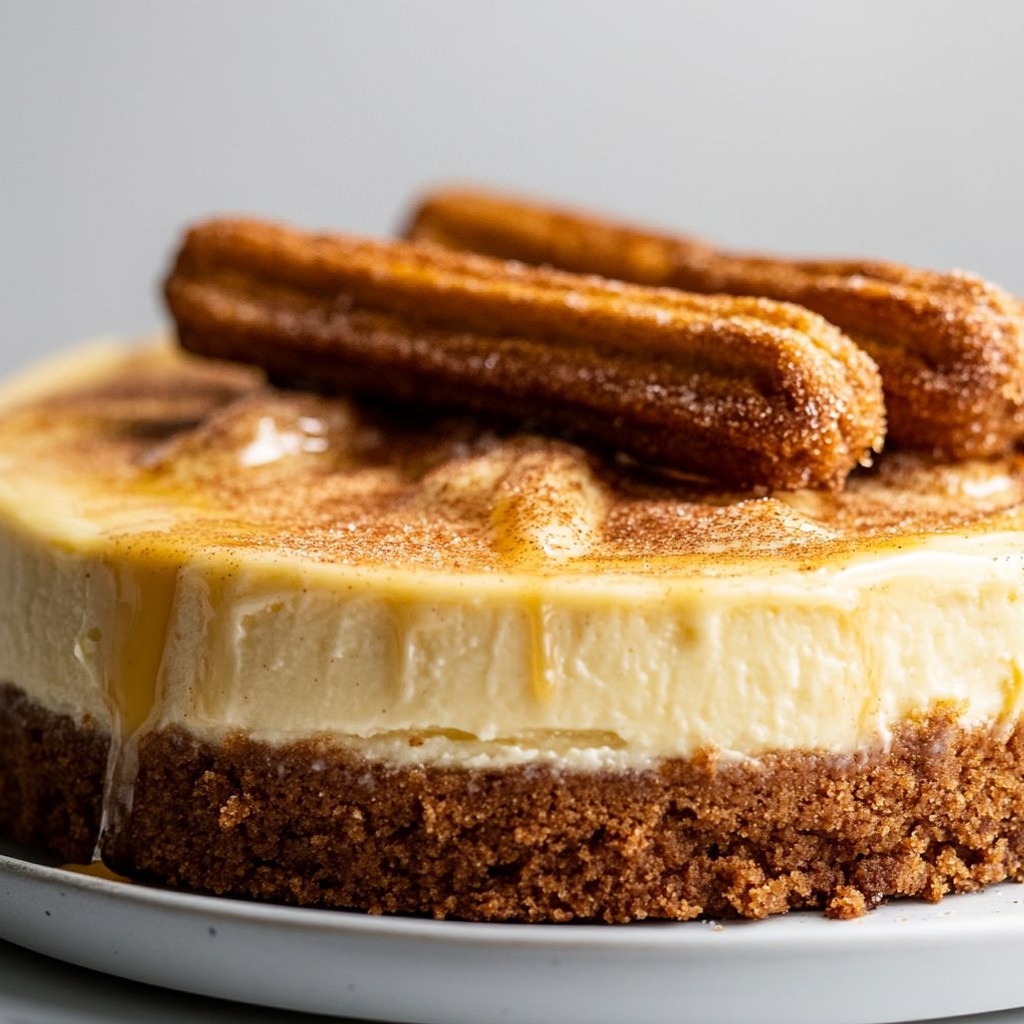
- Elegant presentation: visually striking with a light dusting of cinnamon sugar and a pronounced cross-section that reveals the marbled swirl of flavors.
- Adaptable to dietary needs: you can tailor the crust and filling to gluten-free or dairy-free preferences without sacrificing character or depth.
- All ages and occasions: sophisticated enough for a dinner party, comforting for a family Sunday, and fun for holiday gatherings.
Flavor Profile & Texture
This dessert is a deliberate mosaic of contrasts that come together in a single, memorable bite. The crust—biscotti crumbs bound with butter—offers a toasty, slightly nutty foundation with little pockets of crunch. It’s not crumbly in a dry way; it holds together, offering a satisfying resistance as you press your fork through it. The cheesecake filling rests atop that foundation with a satin-smooth, whipped-cream-like texture that glides across the palate. It’s gently tangy, thanks to the natural tang of cream cheese, which provides a balanced backdrop for the sweeter elements.
Flavor-wise, you’ll notice a trio of influences:
– Cinnamon and warm spice: a churro-inspired note that appears as a gentle heat and a sweet, aromatic perfume that lingers after the bite.
– Vanilla and almond: the vanilla in the cream cheese and a hint of almond from the biscotti give a nutty, almost floral depth.
– Coffee nuance: a subtle coffee whisper—enough to remind you of a café latte without overpowering the dessert—adds a modern, comforting edge.
Texture-wise, there’s a deliberate interplay: a crisp edge from the crust, a creamy, airy center, and a glossy, lightly caramelized top that crackles slightly as it sets. If you pause mid-slice, you’ll notice the crackle of the crust giving way to the melt-in-your-mouth interior, followed by a lingering warmth from cinnamon that isn’t spicy but dulcet and inviting. It’s dessert as a conversation between textures—crunch, cream, spice, and a touch of the familiar coffee-chic.
Occasions & Pairings
This cheesecake shines in moments when you want to elevate a gathering without demanding hours in the kitchen. It’s perfect for:
– Holiday dessert tables, where its distinctive crust and warm flavors stand out among more common sweets.
– Weekend celebrations with family and friends, offering a wow-factor that’s surprisingly approachable.
– Brunches with a sweet finish, pairing surprisingly well with a strong coffee or a dessert wine.
– Special-occasion dinners where you want a dessert that feels luxurious but approachable.
Pair it with:
– Beverages: a robust espresso, a vanilla latte, or a glass of tawny port or late-harvest dessert wine to echo the cinnamon-sugar notes.
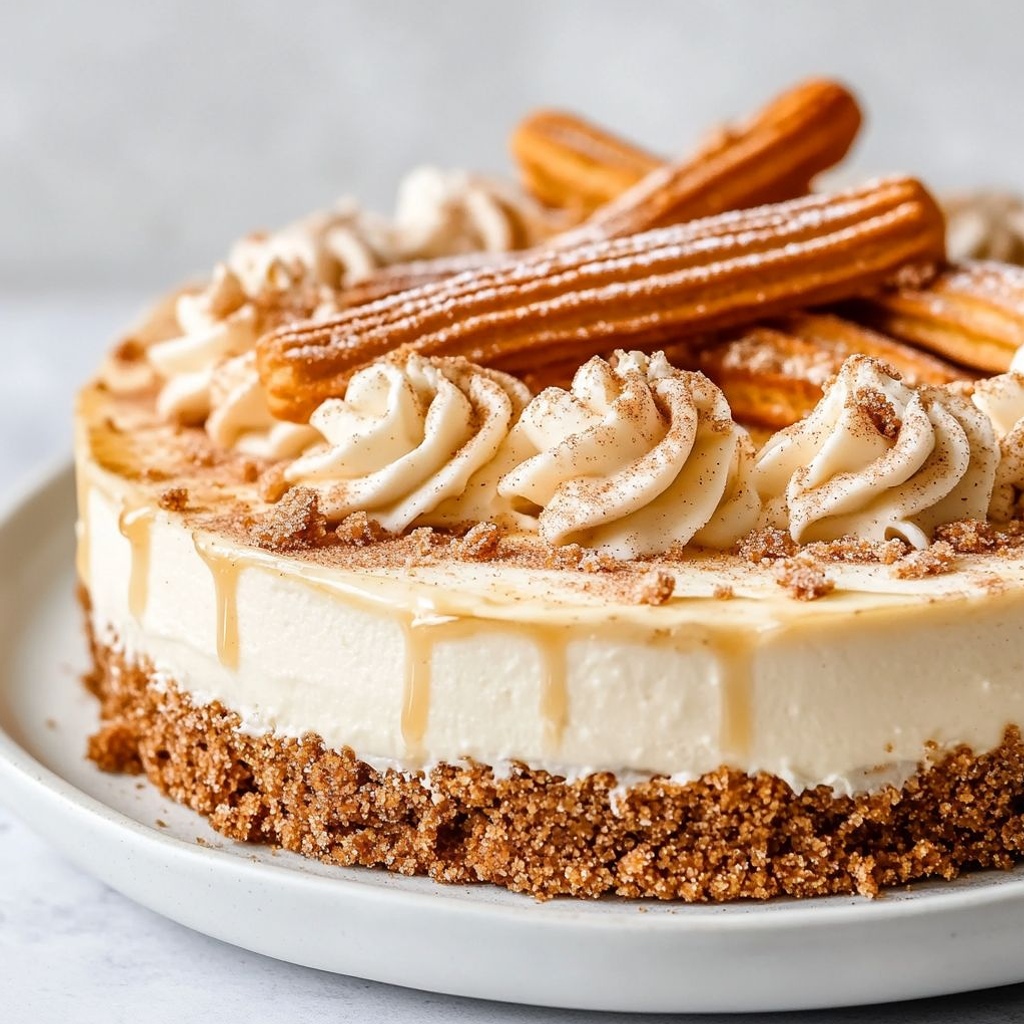
– Sides and toppings: fresh sliced strawberries, a dollop of softly whipped cream, or a drizzle of chocolate or dulce de leche for an extra layer of richness.
– Other courses: a light fruit compote on the side can brighten the palate between bites; a small square of dark chocolate can provide a contrasting finish.
Tips, Variations & Substitutions
Whether you’re testing dietary needs, chasing regional twists, or simply playing with flavors, there are plenty of ways to adapt this Biscotti Churro Cheesecake:
- Gluten-free crust: swap the biscotti for gluten-free almond biscotti or gluten-free cookies ground to a crumb, blended with melted butter as the binder.
- Dairy-free version: use a plant-based cream cheese alternative and a coconut or almond-based butter for the crust. The flavor profile stays warm and inviting with careful balancing of the spices.
- Vegan option: combine cashew-based cheesecake filling with coconut cream to mimic the creaminess; use vegan biscotti or gluten-free cookies for the crust.
- Churro topping variation: create a cinnamon-sugar swirl inside the filling by lightly marbling a mixture of cinnamon, sugar, and a touch of melted butter into the batter before baking, or finish with a cinnamon-sugar dusting and a drizzle of chocolate for contrast.
- Nutty twists: add finely chopped toasted pistachios or pecans to the crust for added texture and a different nutty tone.
- Flavor heighteners: a shot of espresso in the filling (if dairy allows) or a teaspoon of almond extract can accentuate the biscotti’s almond notes.
- Regional twists: swap a portion of the crust with cinnamon-dusted graham cracker crumbs for a more traditional cheesecake vibe, then add a light orange zest to brighten the profile.
Storage & Make-Ahead Ideas
This cheesecake is particularly forgiving when you’re preparing for a crowd. Here are practical tips to get the most out of your bake:
- Refrigeration: once fully cooled, cover tightly and refrigerate. It will slice cleanly for up to 4–5 days, maintaining its creamy center and crisp crust.
- Make-ahead: the filling can be prepared a day in advance and kept chilled; you can assemble the cheesecake on the day of serving to ensure the crust stays crisp.
- Freezing: portions freeze well. Wrap individual slices tightly in plastic wrap and place in an airtight container. Freeze up to 2–3 months. Thaw in the refrigerator overnight for best texture. The crust may soften a little upon thawing, but the flavor remains luxurious.
- Reheating: if you’d like the filling to regain some of its “just-baked” creaminess, reheat gently in short bursts in a microwave, or better yet, let it come to room temperature and refresh with a light temperature-controlled bake to re-establish the surface gloss.
Fun Facts & Trivia (Optional)
– Biscotti, meaning “twice-baked” in Italian, originated as a practical form of shelf-stability—perfect for dipping into coffee or sweet wines. The crunch is an intentional contrast to many soft, creamy desserts, and it acts as a flavor carrier, soaking up the cheesecake’s creamy center.
– Churros are believed to have originated in ancient Spain and Portugal, with various legends about shepherds or explorers introducing the fried dough treat across the Iberian Peninsula. The cinnamon-sugar coating is as much a signature as the fried dough itself, offering a fragrant, caramelized bite that pairs beautifully with dairy-based desserts.
– Cheesecake itself is one of the oldest desserts in existence, with roots tracing back to ancient Greece. The idea of a dense, creamy cake with a tart edge has evolved over centuries, gathering influences from different cuisines. This Biscotti Churro Cheesecake nods to that long lineage while presenting a contemporary fusion that’s both nostalgic and modern.
– If you’re curious about the science of texture, the crisp crust acts as a mechanical barrier that slows moisture migration into the center, helping the cheesecake stay firm yet delicate. The filling, enriched with cream cheese, maintains a smooth emulsion that resists separation, even as the surface bakes to a faint gloss.
Ingredients
Biscotti Crust
- – 2 cups biscotti crumbs (almond biscotti recommended, finely ground)
→ Crust base. Use fine crumbs for a compact, even crust that can hold the cheesecake without crumbling. If you can’t find biscotti, substitute with graham crackers. Pulse them in a processor until very fine; you may add 1 tablespoon light brown sugar to enhance flavor. Mix with the melted butter until the crumb resembles wet sand, then press firmly into the pan bottom and a little up the sides. Chill briefly to set before filling. - – 6 tablespoons unsalted butter, melted
→ Bound crust. Melt butter completely and whisk into the biscotti crumbs until evenly moistened. Cooling the butter briefly prevents the crust from becoming greasy when pressed. If your crust seems dry, add a teaspoon of water or extra melted butter. Press firmly into the pan; sides should be at least 1 inch up to create a stable base. - – 1 tablespoon light brown sugar (optional)
→ Adds a touch of caramel sweetness to the crust, balancing the richness of the cheesecake and complementing the biscotti flavor. If using, mix with the biscotti crumbs before adding butter; ensure sugar is evenly distributed; omit if you prefer a less sweet crust.
Cheesecake Filling
- – 4 (8-ounce) blocks cream cheese, softened to room temperature
→ Primary structure and creamy body of the cheesecake. Softened cream cheese blends smoothly with sugar to avoid lumps; cut into chunks for easier mixing. Do not melt completely; keep soft to avoid lumps. For best results, use full-fat cream cheese and gently beat until smooth and lump-free. - – 3/4 cup granulated sugar
→ Sweetens the filling and influences texture. Beat with the cream cheese until well combined and light in color. If you start with cold cream cheese, allow it to come to room temperature to prevent graininess. For a lighter texture, you can reduce sugar by a few tablespoons, but this will affect sweetness and set. - – 3 large eggs
→ Provide structure and help the cheesecake set. Add eggs one at a time on low speed to minimize air incorporation; too much beating can introduce air that causes cracking. After adding eggs, stop mixing as soon as incorporated to maintain a dense, creamy texture. - – 1 cup sour cream
→ Adds tanginess, moisture, and a velvety mouthfeel. Use full-fat sour cream for richness; whisk to smooth before folding into batter. If you want an even silkier texture, you can substitute with an equal amount of heavy cream or Greek yogurt, though that changes tang and consistency. - – 2 tablespoons all-purpose flour
→ Stabilizes the filling to prevent cracking and helps it set evenly. Lightly whisk the flour into the sugar before adding to the cream cheese mixture to avoid lumps. If avoiding gluten, substitute with 1 tablespoon cornstarch mixed with 1 tablespoon water to create a slurry and whisk in at the end. - – 1 teaspoon pure vanilla extract
→ Classic vanilla aroma that enhances overall flavor without overpowering the cheesecake. Use high-quality vanilla extract; for more depth, you can use vanilla bean paste or scrape seeds from half a vanilla bean. Add with other wet ingredients for even distribution. - – 1/2 teaspoon almond extract (optional)
→ Adds a subtle almond character that complements biscotti flavors. Use sparingly, since almond extract is potent; about 1/4 to 1/2 teaspoon goes a long way. Omit if you prefer a pure vanilla profile. - – 1/4 teaspoon ground cinnamon
→ Echoes churro flavor and pairs nicely with the cinnamon-sugar topping. In the batter, it gives a warm spice note without being overpowering. If you are sensitive to cinnamon, reduce to 1/8 teaspoon or omit entirely. - – 2 tablespoons heavy cream
→ Adds extra creaminess and helps loosen the batter to pour smoothly. If you use full-fat cream cheese, you may not need additional liquid; add gradually to reach a thick yet pourable consistency. This keeps the center lush and guards against a too-dense texture.
Churro Crumble Topping
- – 1/2 cup all-purpose flour
→ Part of the crumb topping that creates a crisp, cinnamon-kissed crusty layer on top. Keeps the topping from being too crumbly and ensures it bakes into a golden crust. If you want a gluten-free version, substitute with almond flour and a gluten-free flour blend; adjust with a bit of water to moisten if needed. - – 1/4 cup granulated sugar
→ Provides sweetness and helps the crumble become crisp when baked; this also helps the butter emulsify. If you prefer a less sweet topping, reduce sugar to 2 tablespoons. - – 1/4 cup unsalted butter, cold, diced
→ Creates the crumble by forming fatty pockets that melt during baking to give a flaky, crunchy texture. Keep the butter cold to ensure a crumbly texture rather than a greasy paste; use a fork or pastry cutter to cut into the flour until the mixture resembles coarse crumbs. For a stronger crumble, pulse briefly in a processor, but avoid overworking. - – 1 teaspoon ground cinnamon
→ Infuses the crumble with churro flavor; cinnamon will deepen as it bakes. If you prefer milder cinnamon, start with 3/4 teaspoon and adjust next time.
Cinnamon Sugar Dusting
- – 1/4 cup granulated sugar
→ A light finish that adds sparkle and sweetness when dusted on the warm crust and around the cheesecake edge. Mix with cinnamon or use as-is; best applied while the cake is slightly warm so the sugar adheres. - – 1 teaspoon ground cinnamon
→ Creates a churro-like finish. The sugar-cinnamon dusting complements the top crumble and adds a final fragrant note. If you want a stronger aroma, add a pinch of nutmeg or cardamom to the dusting as an optional variation.
Optional Add-ins
- – 1/2 cup mini chocolate chips
→ Adds pockets of chocolate that contrast with the creamy filling. Fold into the batter after you have it smooth, but before pouring into the crust; ensure chips are dry so they don’t clump or sink. Omit if you prefer a plain cheesecake. - – Zest of 1 orange (optional)
→ Bright citrus note to balance richness; grate finely and whisk into batter with the dry ingredients. Use zest only, avoiding the white pith which is bitter. Omit if you prefer a purely vanilla-churro profile. - – 1/2 cup crushed biscotti extra (optional)
→ For extra biscotti crunch and flavor in the cheesecake itself; fold in gently so you preserve some texture. If swirling, do so after pouring into the crust to maintain texture rather than blending in completely.
Instructions
- Preheat your oven to 325°F (165°C) and prepare a 9-inch (23 cm) springform pan by greasing the sides with butter and lining the bottom with parchment if desired to help release the cheesecake later.
→ A proper pan setup prevents sticking and ensures clean slices. - Grind biscotti into very fine crumbs using a processor or by placing them in a sealed bag and pounding with a rolling pin, yielding 2 cups of crumbs for the crust.
→ Fine crumbs form a compact crust that holds together under the soft filling rather than crumbling apart. - Melt 6 tablespoons unsalted butter until fully liquid and smooth; allow it to cool slightly so it does not fry the crumbs when mixed. Whisk the melted butter into the biscotti crumbs (and optional 1 tablespoon light brown sugar) until the mixture resembles wet sand and is evenly moistened.
→ The butter binds the crumbs into a cohesive crust and the slight cooling prevents greases from seeping into the filling. - Press the crust mixture firmly into the bottom and about 1 inch up the sides of the pan using the flat bottom of a measuring cup or a small glass to create an even, compact layer; chill briefly (5–15 minutes) to set before filling.
→ A cold, pressed crust stays flat and prevents sliding when the batter is added, producing neat slices. - In a clean bowl, beat 4 (8-ounce) blocks cream cheese, softened to room temperature, with 3/4 cup granulated sugar on medium-low speed until the mixture is smooth, creamy, and no lumps remain.
→ Properly softened cream cheese blends smoothly with sugar and avoids gritty texture; scraping the bowl helps achieve even mixing. - Add 3 large eggs one at a time on low speed, beating just until each egg is incorporated before adding the next; stop mixing as soon as all eggs are blended.
→ Adding eggs one by one and mixing gently reduces the incorporation of air, which can cause cracks or a domed top. - Stir in 1 cup sour cream, 2 tablespoons heavy cream, 2 tablespoons all-purpose flour (pre-d whisked with a pinch of salt into the batter or whisked separately), 1 teaspoon pure vanilla extract, 1/2 teaspoon almond extract (optional), and 1/4 teaspoon ground cinnamon; mix just until combined.
→ Sour cream adds moisture and tang; flour stabilizes the batter to prevent cracking; vanilla and cinnamon define the churro cheesecake flavor profile. Do not overmix to preserve a creamy texture. - If using optional add-ins, fold in mini chocolate chips after the batter is smooth, or whisk in orange zest with the wet ingredients, or fold in 1/2 cup crushed biscotti for extra texture, doing so gently to maintain small flecks in the filling.
→ Chocolate chips or citrus zest enhance contrast and aroma; folding preserves texture rather than fully blending into the batter. - Pour the cheesecake filling into the prepared crust, smoothing the top with a spatula so the surface is even and fills to the sides; this helps the center bake evenly.
→ A level surface ensures uniform heat distribution and a balanced texture across slices. - Prepare the churro crumble topping by combining 1/2 cup all-purpose flour, 1/4 cup granulated sugar, 1/4 cup cold unsalted butter (diced), and 1 teaspoon ground cinnamon in a bowl; cut the butter into the dry ingredients with a pastry cutter or two forks until the mixture resembles coarse crumbs.
→ Cold butter creates tender, flaky pockets that melt during baking, forming a crisp, churro-like crust on top. - Evenly sprinkle the crumble topping over the filled cheesecake, pressing lightly so it adheres to the surface without sliding off during baking.
→ A even layer bakes into a golden, crackly top that contrasts nicely with the creamy filling. - Bake in the preheated oven at 325°F (165°C) until the center is just slightly wobbly and the crumble is golden, about 55–70 minutes; if the edges seem set and the center is still a bit loose, the residual heat will continue to set as it cools.
→ The gentle jiggle indicates a properly set cheesecake; avoid overbaking to prevent a dry texture. - Turn off the oven and crack the door; let the cheesecake cool in the oven for about 60 minutes to prevent cracking from a sudden temperature change. Then transfer to a rack and let cool completely at room temperature before refrigerating.
→ Gradual cooling minimizes surface cracking and ensures a creamy, uniform interior. - Refrigerate the cheesecake for at least 4 hours, preferably overnight, to finish setting the center and intensify flavor.
→ Chilling firms the texture, makes slicing cleaner, and melds flavors. - Just before serving, prepare the cinnamon sugar dusting by combining 1/4 cup granulated sugar with 1 teaspoon ground cinnamon; dust lightly over the top and around the edges of the cheesecake while it is still slightly warm so the sugar adheres and creates a churro-like aroma.
→ The dusting provides a fragrant finish that echoes the churro theme and adds a final sweet bite.

Notes
These biscotti churro cheesecake notes guide you to a crisp almond biscotti crust, a silky cinnamon-spiked filling, and a churro-inspired crumble topping, delivering a decadent, crowd-pleasing dessert. For best results, prepare the crust first, chill it until set, then bake the filling in a water bath to minimize cracking. You can customize the finish with optional add-ins like orange zest or chocolate chips, and you can make ahead by refrigerating or freezing portions for easy entertaining. Always use room-temperature ingredients for a smoother batter and careful mixing to preserve the cheesecake’s dense, creamy texture.
- Crust assembly: to achieve a compact crust that holds its shape, grind biscotti until very fine, whisk in the melted butter (and optional 1 tablespoon light brown sugar), press firmly into a 9-inch springform pan with sides at least 1 inch high, and chill briefly to set before filling. If you can’t find biscotti, graham crackers work as a substitute.
- Filling preparation: beat softened cream cheese with sugar until smooth and light in color, add eggs one at a time on low speed to minimize air incorporation, then fold in sour cream. Whisk flour with sugar and add a light amount of vanilla and optional almond extract; add 2 tablespoons heavy cream to loosen the batter to a pourable though thick consistency. Do not overmix after the eggs are added to avoid cracks.
- Gluten-free option: for a gluten-free version, substitute the crust with almond flour or a gluten-free crumb blend, and replace the all-purpose flour in the filling with a cornstarch slurry (1 tablespoon cornstarch mixed with 1 tablespoon water) added at the end.
- Churro crumble topping: combine all-purpose flour, granulated sugar, cold diced butter, and ground cinnamon until the mixture resembles coarse crumbs. Keep the butter cold to create flaky pockets that melt during baking for a crisp topping. If you prefer a stronger crumble, pulse briefly in a processor but avoid overworking.
- Baking and finishing: bake the cheesecake in a water bath as directed by your recipe to reduce cracking, then top with the churro crumble. Dust with a cinnamon-sugar mixture (cold sugar clinging to the warm crust enhances aroma and visual appeal) and let the cake cool completely before chilling for at least 4 hours (preferably overnight) for clean slicing.
- Make-ahead and storage: refrigerate slices up to 5 days or freeze individual portions for longer storage. Bring to room temperature for 15-20 minutes before serving for the best texture and flavor.
- Flavor and serving variations: fold in 1/2 cup mini chocolate chips after the batter is smooth for pockets of chocolate, or add zest of 1 orange to brighten the filling. If you prefer a purer vanilla-churro profile, omit the almond extract and orange zest.
Tips
Tips for Biscotti Churro Cheesecake
Crust tips
- Use very fine biscotti crumbs; pulse longer if needed to achieve a powdery consistency. Fine crumbs help the crust stay compact and hold the cheesecake without crumbling.
- Let melted butter cool slightly before mixing with the crumbs to prevent a greasy crust. If the crust seems dry, whisk in a teaspoon of water or a touch more melted butter.
- Press the crust firmly into the pan bottom and slightly up the sides (at least 1 inch) to create a stable base. A flat-bottomed glass or measuring cup helps level the crust evenly.
- Chill the crust briefly before filling to set it and prevent shifting when you pour the batter.
- If biscotti aren’t available, substitute graham crackers. You can add 1 tablespoon light brown sugar to boost flavor if you like.
- Optional: add the 1 tablespoon light brown sugar with the crumbs for a touch of caramel sweetness; omit if you prefer a less sweet crust.
Filling tips
- Use cream cheese at room temperature; soften but do not melt. Cut blocks into chunks for easier, even mixing and a smoother batter.
- Beat the cream cheese with the sugar until light and lump-free. If the cheese is still cold, let it sit at room temperature a bit longer or nudge with a gentle whisk.
- Add eggs one at a time on low speed to minimize air incorporation; mix only until incorporated to avoid cracks.
- Whisk sour cream until smooth before folding into the batter for a velvety texture. Full-fat sour cream adds richness.
- Stir in flour to help stabilize the filling and prevent cracking; if avoiding gluten, use a cornstarch slurry (1 tablespoon cornstarch + 1 tablespoon water) whisked in at the end.
- Use pure vanilla extract for a classic aroma; high-quality vanilla or vanilla bean paste provides more depth. Add with other wet ingredients for even distribution.
- If you choose almond extract, keep it subtle (about 1/4–1/2 teaspoon) to complement the biscotti; omit if you want a pure vanilla profile.
- Ground cinnamon in the batter adds a warm note that echoes churro flavors. If you’re cinnamon-sensitive, start with 1/8 teaspoon or omit.
- Beat in 2 tablespoons heavy cream gradually to keep the batter pourable and to maintain a lush, moist center. Adjust based on the batter’s thickness.
- Consider baking the cheesecake in a water bath to reduce cracking and keep the center creamy. Place the pan in a larger roasting pan and add hot water halfway up the sides before baking.
Topping tips (Churro Crumble)
- Keep butter cold and cut into the flour with a pastry cutter or two forks until the mixture resembles coarse crumbs; this yields a crisp, crumbly topping rather than a greasy layer.
- For extra aroma, lightly toast the crumble topping in the oven for a few minutes before applying to the cheesecake if time allows.
- Adjust the cinnamon in the crumble to taste; start with 3/4 teaspoon and increase next time if you want a stronger churro vibe.
- Do not overwork the crumble; process briefly or cut in with a pastry cutter to maintain a crumbly texture that bakes into a crisp top.
Cinnamon sugar dusting tips
- Dust the cheesecake while it’s still warm so the sugar adheres better to the surface and edges.
- Mix the granulated sugar with the cinnamon evenly, using a sieve for a fine, uniform coating. A pinch of nutmeg or cardamom can be added for extra warmth.
Optional add-ins tips
- Mini chocolate chips: fold in after the batter is smooth but before pouring into the crust; keep chips dry to prevent clumping or sinking.
- Orange zest: grate only the zest (avoid the white pith) and whisk into the batter with the dry ingredients for a bright citrus accent.
- Extra crushed biscotti: fold in gently for more texture or swirl in after pouring to preserve some crunch rather than fully mixing in.
Make-ahead and serving tips
- Chill the crust and batter before baking; this helps maintain structure and flavor alignment between layers.
- Allow the cheesecake to cool gradually in the oven with the door slightly ajar to minimize cracking; finish cooling on a rack and then refrigerate fully before slicing.
- For clean slices, dip the knife in hot water and wipe between cuts; this helps slice through the dense filling smoothly.
- Store leftovers covered in the refrigerator up to 4–5 days. The cheesecake can be frozen sliced for up to 1 month.
FAQ
What is Biscotti churro cheesecake?
A decadent dessert that combines a crunchy biscotti crust with a creamy cheesecake base infused with cinnamon-sugar churro flavors. It’s often swirled with a churro-style cinnamon ribbon and finished with optional toppings like whipped cream or cinnamon sugar.
What ingredients do I need?
Basic components:
- Crust: biscotti, melted butter, a pinch of salt (and optional sugar).
- Filling: cream cheese, sugar, eggs, sour cream or heavy cream, vanilla, ground cinnamon.
- Churro swirl (optional): extra cinnamon and granulated sugar to mix and swirl into the filling.
Can I make the crust in advance?
Yes. You can crush the biscotti, mix with butter, press into the pan, and chill or bake the crust ahead of time. Store wrapped in the fridge for up to 2–3 days or freeze for longer.
How do I make the biscotti crust?
Pulse biscotti into fine crumbs, mix with melted butter and a pinch of salt (and sugar if desired), then press firmly into the bottom and slightly up the sides of the pan. Bake short time to set, then cool before filling.
How do I achieve the churro flavor in the filling?
Add ground cinnamon to the filling and swirl a portion of cinnamon-sugar mixture into the batter after half the filling is poured. You can also mix a small amount of cinnamon directly into the cream cheese filling for even distribution.
What are typical baking times and temperatures?
Bake at 325–350°F (165–175°C) for about 50–70 minutes, until the edges are set and the center gives a slight wobble. Avoid overbaking to prevent cracks. If the top browns too quickly, tent with foil.
Should I chill the cheesecake before serving?
Yes. Refrigerate for at least 4 hours, preferably overnight, to ensure the cheesecake holds its shape and the flavors meld.
How can I tell if it’s done without overbaking?
The edges should be set while the center remains slightly jiggly. A gentle shake shouldn’t cause it to slosh excessively. A toothpick inserted near the center should come out with a few moist crumbs, not raw batter.
Can I make this gluten-free or dairy-free?
Yes, with substitutions:
- Gluten-free: use gluten-free biscotti and ensure other ingredients are gluten-free.
- Dairy-free: use dairy-free cream cheese, dairy-free sour cream or yogurt, and dairy-free butter; note texture may vary slightly.
How should I store leftovers?
Store refrigerated, well covered, for up to 5–7 days. For longer storage, wrap tightly and freeze for up to 2–3 months. Thaw overnight in the fridge before serving.
Can I freeze the whole cheesecake or just slices?
Both work. Wrap the whole cheesecake tightly in plastic wrap and foil, then freeze. For slices, wrap individual portions and store in an airtight container. Thaw in the fridge before serving.
What toppings or variations work well?
Suggestions:
- Dust with a cinnamon-sugar blend just before serving.
- Whipped cream and a drizzle of caramel or chocolate sauce.
- Chopped biscotti crumbs for extra crunch.
- Swirls of dulce de leche or chocolate hazelnut spread.
Common troubleshooting tips
If the crust is too soft, bake a few minutes longer to set. If the filling cracks, run a thin knife along the edge after baking to release from the pan, or cover and chill to allow it to settle. If the center sinks, avoid overmixing the filling and ensure gradual cooling in the oven with the door slightly ajar during the first hour of cooling.