
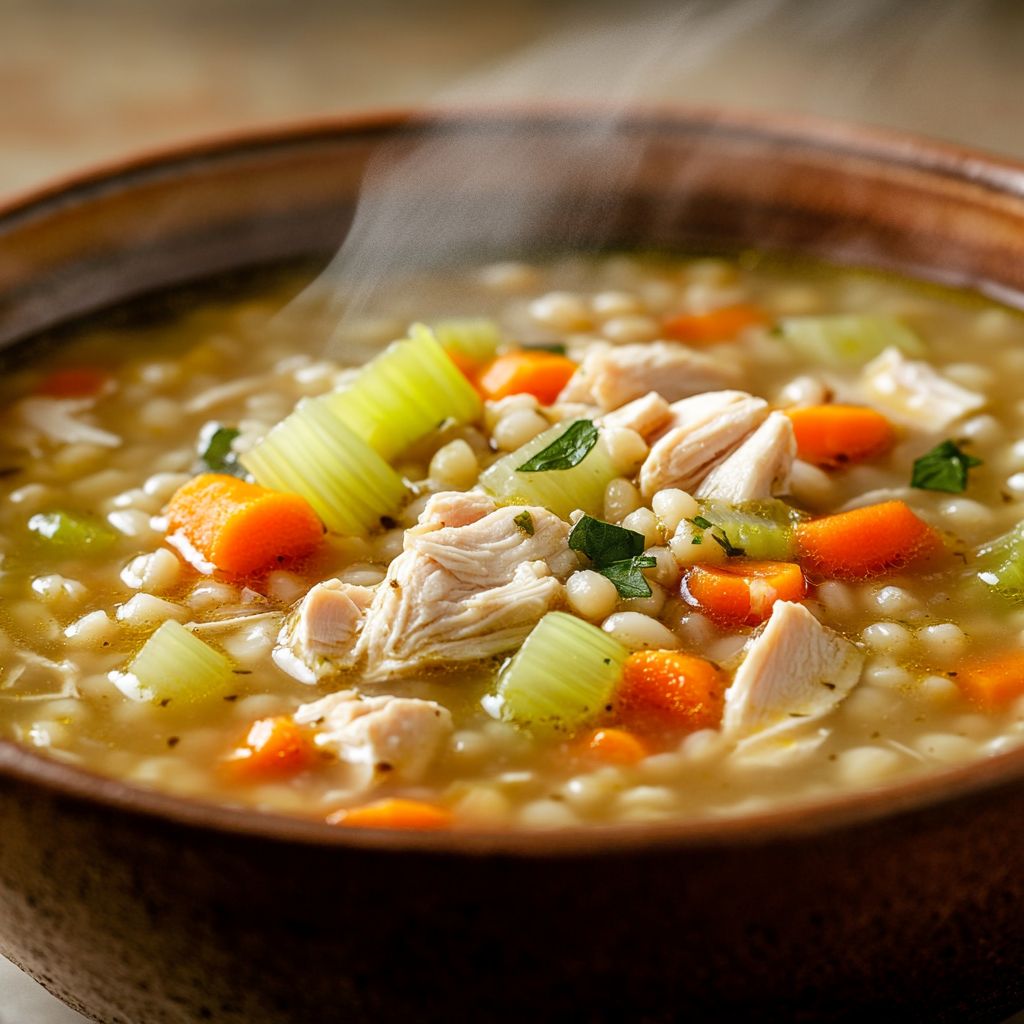
Introduction: A Bowl of Comfort
Imagine coming home on a brisk, chilly evening, the scent of warm, inviting soup filling the air. Your senses are immediately captivated by the earthy, savory aromas wafting through the room. This is Slow-Simmered Chicken & Barley Soup, a comforting staple that wraps you in warmth and ease with each spoonful. Its rich, hearty flavors beckon you to sit back and indulge in a culinary embrace that only a classic, meticulously prepared soup can offer. Crafted with love and patience, this dish is uniquely special, simultaneously soothing and satisfying to the body and soul.
What sets this soup apart is the depth of flavor achieved through the slow-simmering process, ensuring every ingredient has mingled perfectly, creating a harmony of taste that’s both complex and refreshing. Whether you’re a seasoned home cook or a budding kitchen enthusiast, this dish promises to bring a smile to your face and warmth to your heart. Read on, and discover why this soup is more than just a meal; it’s an experience.
The Story Behind the Dish
The history of chicken and barley soup is as rich and layered as the flavors within the dish itself. Barley, one of the oldest cultivated grains, has played a significant role in culinary traditions across civilizations, from ancient Mesopotamia to the hearty cuisines of Eastern Europe. Known for its nutty flavor and chewy texture, barley was a staple in the diets of many cultures and served the dual purpose of nutrition and energy sustenance. Paired with chicken, which gained popularity due to its accessible and adaptable nature, the combination quickly became favored for its balance of proteins, carbs, and flavors.
In many families, this soup has been a testament to tradition, a recipe passed down through generations with each family adding its own unique touch. Some might add a pinch of regional spices, while others focus on local vegetables to enrich the broth. Regardless of the nuances, each version tells a story of comfort, nourishment, and the communal act of sharing a lovingly prepared meal.
Why You’ll Love This Recipe
- Hearty and Satisfying: The perfect balance of tender chicken, wholesome barley, and fresh vegetables creates a soup that’s both filling and nourishing.
- Flavorful Broth: Slow simmering brings out the profound flavors in the broth, delivering a rich and satisfying experience with every spoonful.
- Nutritious: Packed with protein and fiber, this soup is a healthy choice that doesn’t sacrifice taste for nutrition.
- Easy to Make: With simple, straightforward steps, this recipe is accessible to cooks of all skill levels.
- Adaptable: Enjoy the freedom to tweak the recipe to fit your dietary needs or flavor preferences.
- Perfect for Meal Prep: Make a large batch, and enjoy it throughout the week; it tastes even better the next day!
Flavor Profile & Texture
The magic of this slow-simmered soup lies in its depth of flavor and varied textures, satisfying a broad range of palates. Each mouthful offers a burst of complex flavors, beautifully orchestrated through the interplay of earthy barley, tender chicken, and a medley of fresh vegetables. The slow cooking process allows the flavors to meld together, creating a broth that’s both velvety and rich, with subtle notes of herbs and spices enhancing the overall experience.
Texture-wise, the barley offers a delightful chewiness that perfectly complements the softness of the cooked vegetables and the succulent pieces of chicken. The contrast in textures enhances each bite, making the soup feel substantial and well-rounded.
Occasions & Pairings
This soup is the epitome of versatility, making it suitable for various occasions and pairable with a range of dishes. It’s perfect for a cozy night in, complementing the serene ambiance with its warmth. Serving this as a starter at a small dinner party or during a family gathering is sure to impress guests while also offering comfort.
Consider pairing it with:
- Crusty Bread: A thick slice of rustic bread, ideal for dipping, complements the soup’s flavors and adds to the enjoyment.
- Light Salads: A crisp, refreshing side salad with a light vinaigrette can balance the warmth and richness of the soup.
- Wine: A light, dry white wine like Sauvignon Blanc enhances the soup’s savory notes, while a medium red like Pinot Noir amplifies its heartiness.
Tips, Variations & Substitutions
One of the joys of homemade soup is its adaptability. Here are some tips and variations to tailor this recipe to your liking:
- Vegetarian Variation: Swap the chicken for chickpeas or tofu, and use vegetable broth to make a delicious vegetarian version.
- Spice it Up: Add a pinch of cayenne pepper or red chili flakes for a subtle, warming kick.
- Herbal Twist: Experiment with different herbs such as dill, thyme, or rosemary to infuse new flavors into the broth.
- Lower Carb Option: Substitute barley with cauliflower rice for those who are carb-conscious or gluten-free.
Storage & Make-Ahead Ideas
This soup not only improves in flavor over time but also stores exceptionally well, making it a fantastic choice for meal planning.
- Refrigeration: Store in an airtight container for up to four days. Reheat gently on the stove, stirring occasionally, to ensure even warming.
- Freezing: This soup is highly freezer-friendly. Allow the soup to cool completely before portioning it into freezer-safe containers or bags. It can be stored for up to three months. Thaw overnight in the refrigerator before reheating.
- Make-Ahead: Prepare the soup ahead of time for a hassle-free meal. Simply reheat and serve, ensuring a quick and delicious dinner at a moment’s notice.
Fun Facts & Trivia
Did you know that barley, one of the key ingredients in this soup, was a key component in the diets of Roman gladiators? It was considered food for strength and almost sacred in its symbolic connection to stamina and resilience. Similarly, chicken, one of the world’s most popular proteins, has a history dating back thousands of years; it was even domesticated back to Southeast Asia around 7,000-10,000 years ago!
Savor each moment with this Slow-Simmered Chicken & Barley Soup, and you’ll be partaking in a tradition that nourishes both the body and soul, one spoonful at a time. Dive into the experience, and let every flavorful drop remind you of the blessings of food and warmth. Enjoy the process of crafting this delightful dish, and share the love of good food and good company. Bon appétit!
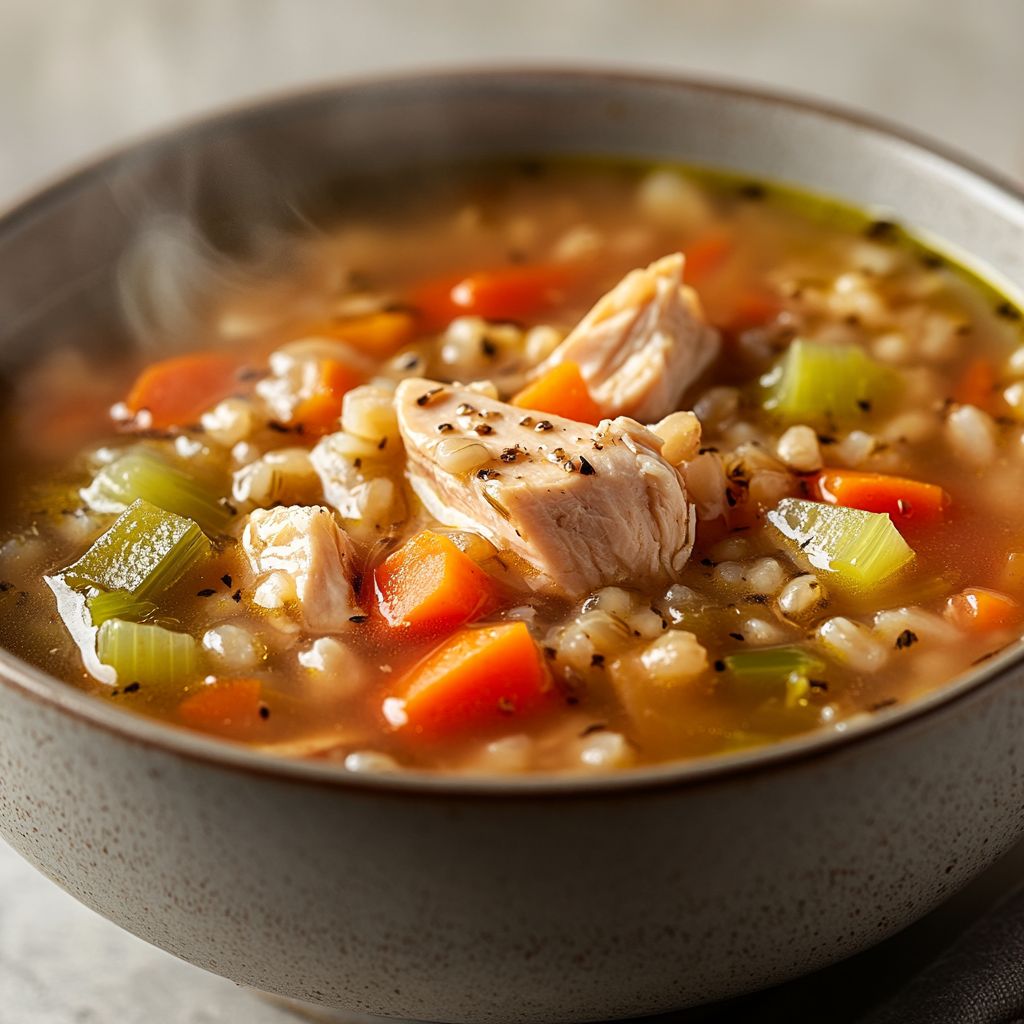
Ingredients
- Chicken
→ Boneless, skinless chicken thighs or breasts are preferred for this recipe as they remain tender during the long simmering process. Cut the chicken into bite-sized pieces to ensure even cooking. If using whole pieces of chicken, be mindful to remove the skin and bones before serving for a smoother texture in the soup. Aim for high-quality, fresh chicken for the best flavor and texture. - Barley
→ Pearled barley works best in this soup as it cooks faster and adds a unique, nutty flavor to the broth. Rinse the barley under cold water before adding it to the soup to remove any dust and to help with the cooking process. Using a ratio of about 1/2 cup of barley per 4 cups of broth will yield a hearty texture. - Vegetables
→ A mix of diced onions, carrots, and celery is essential for the flavor base of the soup, commonly known as mirepoix. Chop the vegetables into uniform, small pieces for even cooking. Sauté them first to bring out their natural sweetness and deepen the overall flavor of the soup. - Garlic
→ Fresh garlic cloves, minced or chopped, add aromatic flavor to the soup. Use 2-3 cloves depending on your preference for garlic. For the best results, add the garlic towards the end of the sautéing process to prevent it from burning, which can result in a bitter taste. - Chicken Broth
→ Use low-sodium chicken broth to control the salt levels in the dish. Homemade broth is ideal if available; otherwise, choose a high-quality store-bought option. The broth serves as the main liquid, infusing the soup with rich chicken flavor and helping to tenderize the barley as it cooks. - Herbs
→ Fresh thyme and parsley enhance the flavor profile of the soup. Use a few sprigs of fresh thyme and a handful of chopped parsley for garnish before serving. Fresh herbs should be added towards the end of cooking for their bright flavor, while dried herbs can be added earlier in the cooking process for a more mellow taste. - Salt and Pepper
→ These basic seasonings are crucial for enhancing the overall flavor of the soup. Add salt gradually, tasting as you go to avoid over-seasoning, and freshly ground black pepper for a hint of spice. Always season to taste just before serving to ensure the flavors are balanced. - Lemon Juice (optional)
→ A splash of fresh lemon juice brightens the dish and enhances the flavors of the other ingredients. Squeeze in juice from half a lemon just before serving for a refreshing lift. Use fresh lemons for the best taste, as bottled lemon juice can lack in flavor.
Instructions
- Begin by preparing the chicken by cutting it into bite-sized pieces.
→ This helps ensure that the chicken cooks evenly throughout the soup and allows for easier bites. Use a sharp knife for clean cuts, and remember to wash your hands and the cutting board thoroughly after handling raw chicken to prevent cross-contamination. - Rinse the pearled barley under cold water in a fine mesh strainer.
→ This step removes any dust and helps the barley cook more evenly. Make sure to swish the barley around gently to ensure a thorough rinse, and drain it well before adding it to the soup. - Dice the onions, carrots, and celery into uniform, small pieces.
→ This is known as mirepoix, which forms the flavor base of the soup. Aim for a consistent size—about 1/4 inch—so that all the vegetables cook at the same rate, adding a harmonious texture to the finished soup. - Heat a large stockpot over medium heat and add a couple of tablespoons of olive oil.
→ Heating the oil before adding the vegetables allows for even sautéing and helps to prevent sticking. Once the oil shimmers, it’s ready for the vegetables. - Add the diced onions, carrots, and celery to the heated oil and sauté for about 5-7 minutes.
→ Stir the mixture occasionally until the vegetables become tender and the onions turn translucent. This process caramelizes the natural sugars, enhancing the overall flavor of the soup. - Mince 2-3 garlic cloves and add them to the pot in the last minute of sautéing.
→ Adding garlic towards the end prevents it from burning, which can impart a bitter flavor. Stir constantly for around 1 minute until fragrant, which indicates that it is ready to bloom and release its essential oils. - After the garlic is fragrant, add the chicken pieces to the pot and season with salt and pepper.
→ This will help to season the chicken as it cooks. Sauté for about 5 minutes until the chicken is no longer pink, stirring occasionally to cook all sides evenly. - Pour in 4 cups of low-sodium chicken broth.
→ This broth serves as the main liquid for the soup and provides essential flavor. Be sure to scrape any browned bits off the bottom of the pot, as they add depth to the soup. - Add the rinsed barley to the pot and bring the mixture to a gentle boil.
→ Stir the barley into the broth to incorporate it well. A gentle boil ensures that the soup starts the cooking process properly, activating the barley to release its starches for a thicker consistency. - Once boiling, reduce the heat to low, cover the pot, and let the soup simmer for 30-40 minutes.
→ Simmering allows the flavors to meld together and the barley to cook through. Stir occasionally, and keep an eye on the consistency; add more broth or water if it becomes too thick. - During the last 5 minutes of cooking, add fresh thyme and parsley to the pot.
→ Fresh herbs added at the end of the cooking time retain their vibrant flavor and increase the freshness of the soup. Stir gently to combine them throughout the soup. - Before serving, taste the soup and adjust the seasoning with additional salt and freshly cracked black pepper as needed.
→ Balancing the seasoning at this stage ensures a well-flavored dish. Remember that flavors can evolve as they sit, so taste again if you need to. - If desired, squeeze in the juice of half a fresh lemon just before serving.
→ This adds a bright, refreshing note that enhances all the flavors within the soup. Always opt for fresh lemon juice for a superior taste. - Serve the soup hot in bowls and garnish with additional chopped parsley, if desired.
→ Serving the soup immediately ensures that it is enjoyed at its best temperature and freshness. This final touch not only adds flavor but also enhances the presentation.
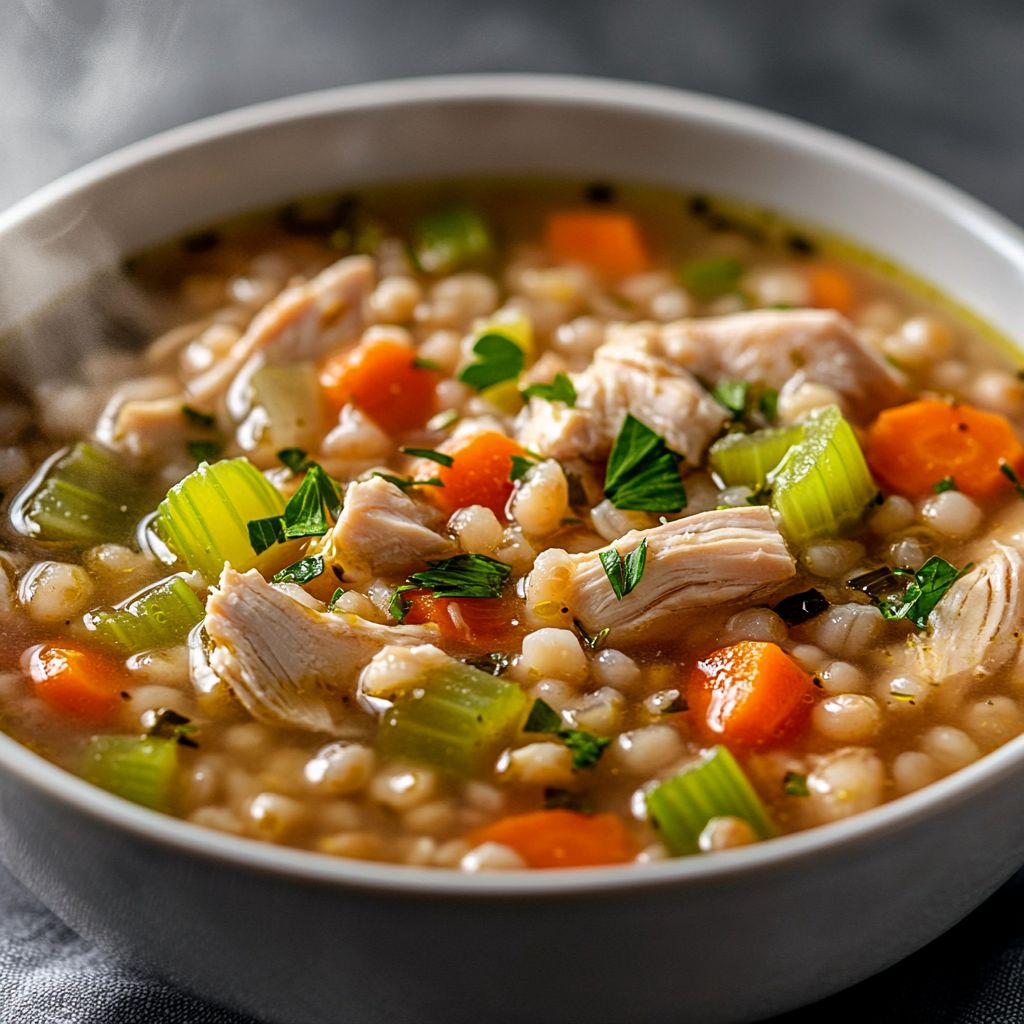
Notes
- Slow-simmered chicken and barley soup is a comforting and nutritious dish that can be enjoyed year-round. The long cooking time allows the flavors to meld beautifully while making the chicken tender and the barley delightfully chewy.
- This soup is versatile; feel free to incorporate seasonal vegetables such as peas or spinach for added color and nutrition. If you’re looking to add some heat, consider including a pinch of red pepper flakes during cooking.
- If you prefer a thicker soup, reduce the amount of broth used or allow it to simmer longer, uncovered, to let some of the liquid evaporate. Conversely, if you like a brothier soup, simply add more chicken broth or water until the desired consistency is reached.
- This recipe is perfect for meal prep, as the soup keeps well in the refrigerator for several days. It can also be frozen for longer storage, making it an ideal dish to prepare in batches. Just be sure to leave some room in your container, as soups expand when frozen.
- Serving suggestions include crusty bread or a side salad to balance the meal. For an elegant touch, top each bowl with a sprinkle of fresh herbs and a dash of freshly ground black pepper just before serving.
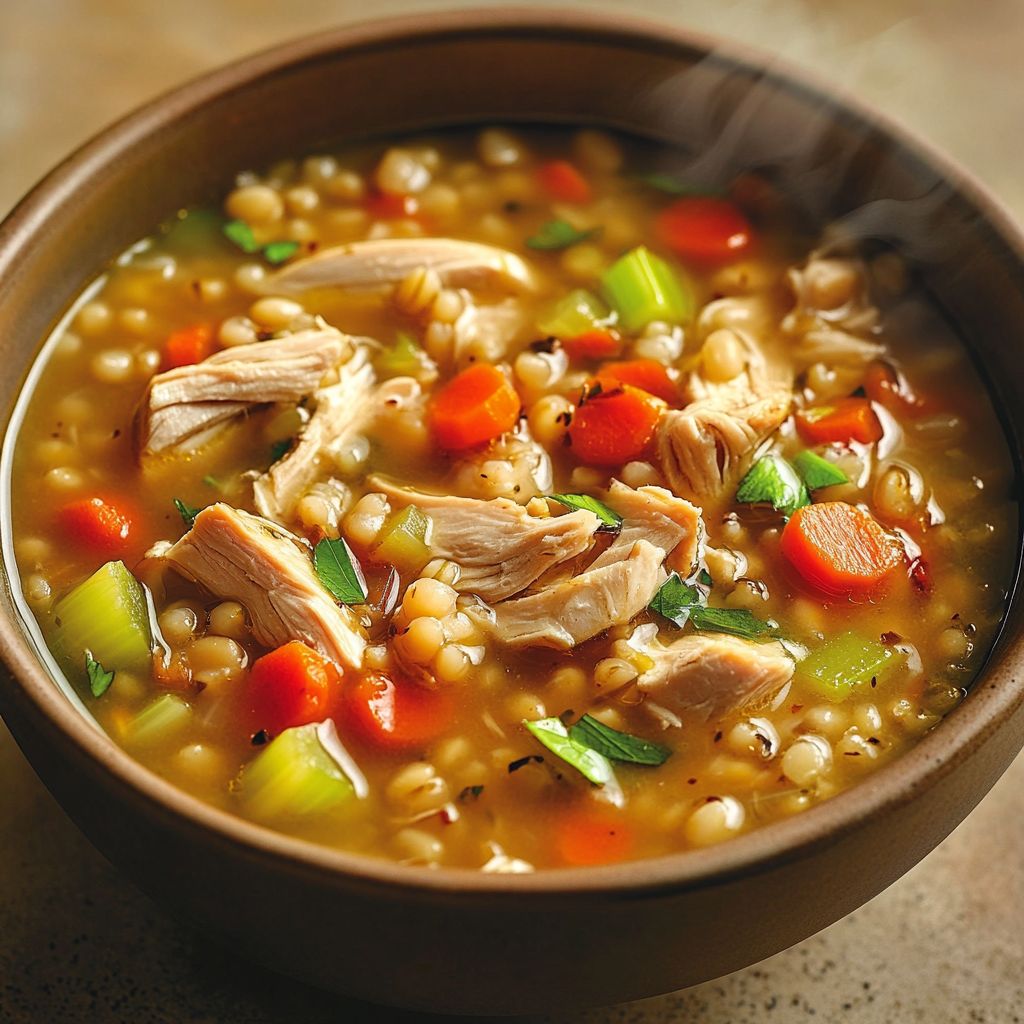
Tips
Cooking Tips for Slow-Simmered Chicken & Barley Soup
- Perfecting the Chicken: When cutting the chicken into bite-sized pieces, try to keep them uniform to ensure they cook evenly. If you prefer a richer flavor, consider browning the chicken pieces in the pot before adding the vegetables. This will provide a deeper flavor to your soup.
- Handling Barley: Rinse the pearled barley under cold water thoroughly to get rid of any excess starch, which can make the soup cloudy. It also helps the barley cook more evenly. If you’re short on time, you can soak the barley in water for a couple of hours before adding it to the soup to speed up the cooking process.
- Vegetable Sauté: Sauté the mirepoix (onions, carrots, and celery) in olive oil on medium heat until they start to soften, about 5-7 minutes. This step builds an aromatic base for your soup. Consider adding a pinch of salt during sautéing to draw out moisture from the vegetables, enhancing their flavor.
- Aromatic Garlic: To ensure the garlic maintains its fresh flavor, add it to the pot just 1-2 minutes before you add the broth and other ingredients. Stir it frequently to prevent burning. If you enjoy a stronger garlic flavor, feel free to toss in extra minced garlic, adjusting it to your taste.
- Choosing Your Broth: If you’re making homemade broth, consider simmering it longer with herbs and spices for a deeper flavor. When using store-bought, taste it first and adjust seasoning as needed since some broths can be saltier than others. Always remember that the quality of your broth greatly influences the overall dish.
- Herb Timing: Fresh herbs should be added at the end of cooking to retain their vibrant flavors and nutrients. If you do want to use dried herbs, add them during the simmering phase to allow their flavors to infuse into the broth. Consider tying thyme sprigs with kitchen twine for easy removal after cooking.
- Seasoning Gradually: It’s better to add salt in small amounts throughout the cooking process rather than all at once. This allows you to fine-tune the seasoning. Be cautious with the last addition of salt, especially if using salty broth or salted ingredients.
- Enhancing with Lemon: While optional, the addition of lemon juice at the end really brightens the flavors. If you prefer a more pronounced zing, you can also zest the lemon before juicing it, adding a layer of citrus fragrance to your soup.
- Storage Tips: If you have leftovers, store the soup in an airtight container in the refrigerator. The barley will absorb some broth as it sits, so you may need to add a little water or broth when reheating to loosen the soup. This preparation freezes well, but for optimal texture, consider freezing it without the barley and adding it during reheating.
FAQ
What ingredients do I need for Slow-Simmered Chicken & Barley Soup?
The main ingredients include chicken (breast or thighs), pearl barley, carrots, celery, onion, garlic, chicken broth, herbs (such as thyme and bay leaf), and salt and pepper. You can also add vegetables like peas or corn if desired.
How long does it take to prepare Slow-Simmered Chicken & Barley Soup?
The preparation time is approximately 15-20 minutes, and the soup simmers for about 1.5 to 2 hours to ensure the flavors meld beautifully.
Can I use leftover chicken in this recipe?
Yes, leftover cooked chicken is a great option! Just add it in during the last 30 minutes of simmering to heat through.
Is this soup gluten-free?
No, traditional pearl barley contains gluten. However, you can substitute it with gluten-free grains like quinoa or rice if needed.
Can I make Slow-Simmered Chicken & Barley Soup in a slow cooker?
Absolutely! To make it in a slow cooker, combine all the ingredients and cook on low for 6-8 hours or on high for 3-4 hours until the chicken and barley are tender.
What can I serve with this soup?
This soup pairs well with crusty bread, crackers, or a light salad for a well-rounded meal.
How do I store leftovers of the soup?
Cool the soup completely, then store it in an airtight container in the refrigerator for up to 4 days. You can also freeze it for up to 3 months. Reheat before serving.
Can I adjust the seasonings to my taste?
Yes! Feel free to adjust the herbs and spices according to your preference. Adding a dash of lemon juice or some hot sauce can also enhance the flavor.