
Introduction / Hook
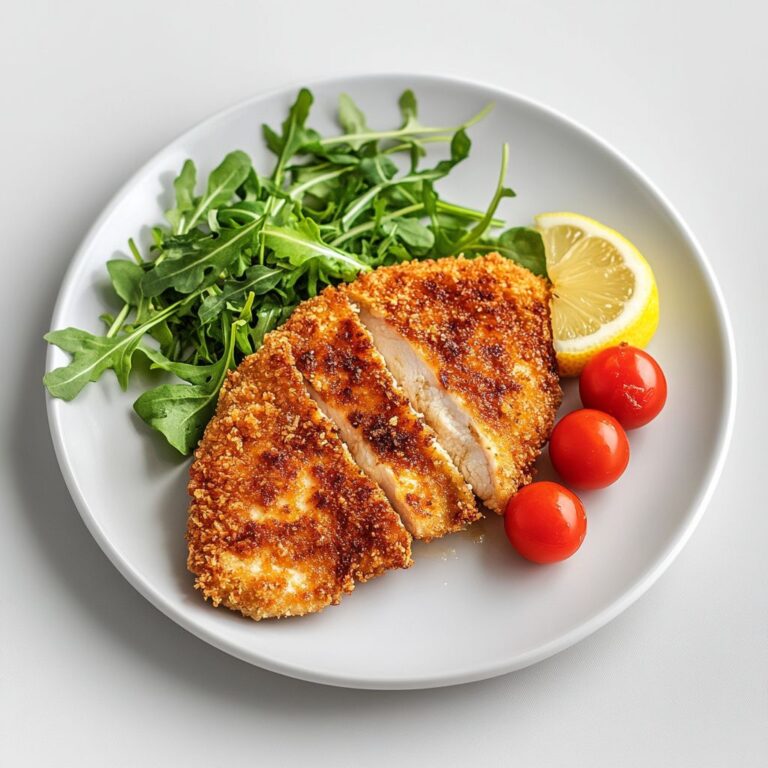
Imagine a plate that instantly conjures the sunlit streets of Milan: a thin, tender chicken cutlet cloaked in a crackling, golden crust, brightened by a sharpened whisper of lemon and a kiss of parmesan. Italian Chicken Milanese is the kind of dish that makes a weeknight feel like a celebration and a Sunday supper feel like a memory you’ll return to with a satisfied sigh. The aroma alone—warm butter slipping into sizzling olive oil, bread crumbs turning to a toasty bronze, faint notes of garlic and herbs drifting through the kitchen—is enough to make you pause, slow down, and savor. This is comfort food with a sophisticated edge: rustic in its simplicity, elegant in its finish, and wonderfully adaptable to whatever you have in the pantry.
At its heart, Italian Chicken Milanese is about balance: a crisp, savory crust that gives way to juicy, delicate chicken, with acidity and brightness cutting through the richness. It’s a dish that knows how to make a statement without shouting. The crust carries the savory perfume of cheese and herbs, while the inside stays moist and tender, almost scoffingly easy to love. It’s the kind of dish that invites conversation—pair it with a bright salad, a splash of white wine, and a slice of lemon—so the table becomes a place where flavors mingle as gracefully as friends.
Beyond the plate, this dish carries a sense of tradition. It’s a modern iteration of cotoletta alla milanese, a classic from Lombardy that has traveled across kitchens and continents, finding its own voice in chicken form. The result is not just a meal, but a small ceremony: a bite that crackles, followed by the gentle yield of the chicken, finished with a citrusy finish that lingers just long enough to invite another bite.
The Story Behind the Dish
Cotoletta alla milanese, historically made with veal, is a storied emblem of Milanese cooking. In the heart of Lombardy, cooks learned to honor the simple two- or three-ingredient crust—breadcrumbs, cheese, and a hint of herbs—while keeping the meat tender and juicy. The concept traveled, adapted, and evolved. Chicken, being more widely accessible and versatile in many modern kitchens, became a popular stand-in that still carries the soul of the original: a crisp exterior that seals in moisture, and a bright, lemon-touched finish that cleanses the palate.
The tale of this dish is also a story of shared tables. In Italy, meals are not just sustenance; they are daily rituals, opportunities to gather, reflect, and celebrate. Milanese cooks would often serve cotoletta with simple accompaniments that honor the dish itself—perhaps a wedge of lemon, a handful of fresh greens, and a drizzle of olive oil. As families migrated and cuisines blended, chicken versionals emerged in homes and restaurants around the world, keeping the essence intact while inviting new interpretations: a whisper of garlic here, a hint of parsley there, or a citrusy sparkle from a squeeze of lemon.
Historically, the technique mirrors the practical cooking cultures of Europe: a sequence of dabs and dredges that protects the meat, followed by a quick, high-heat sear that creates that unmistakable crust. This is not a heavy, bread-drowned fry; it’s a deft, almost artisanal crust that delivers texture without masking the chicken’s tenderness. The result is a dish that feels timeless, yet versatile enough to adapt to dietary preferences and seasonal ingredients—proof that classic traditions can sing in a modern kitchen.
Why You’ll Love This Recipe
- Fast and adaptable: a weeknight hero that delivers restaurant-worthy texture in a home kitchen.
- Bright and comforting: the crisp crust paired with juicy chicken and a citrus finish is simultaneously satisfying and refreshing.
- Versatile sides: pairs beautifully with a peppery arugula salad, roasted vegetables, or a silky potato purée.
- Family-friendly: approachable flavors that appeal to both kids and adults, with room for customization.
- Impressive for guests: despite its elegant presentation, it’s surprisingly simple to prepare, making you look like a seasoned host.
- Make-ahead friendly: components can be prepped in stages, giving you flexibility during busy days.
- Gluten- and dairy-friendly options possible: with mindful substitutions, you can maintain the crisp crust while accommodating dietary needs.
Flavor Profile & Texture
The flavor of Italian Chicken Milanese comes from a harmonious trio: the savory, cheesy crust; the delicate chicken; and the lemony brightness that punctuates every bite. The crust, often a blend of breadcrumbs with grated parmesan or pecorino, delivers a toasty, slightly nutty note that lingers in the mouth. If you enjoy a hint of garlic or fresh herbs in the crust, these flavors offer a subtle perfume rather than a dominant punch, ensuring the chicken stays the star.
Texture plays a starring role. The exterior is crisp and crackly, a tactile contrast to the moist, tender interior. When you bite through, you experience a satisfying crunch that yields to the soft, succulent meat within. The cheese in the crust adds a mild savoriness, while lemon brings a bright citrus lift that cuts through the richness. There’s a whisper of butter or olive oil from the pan finish that rounds out the crust’s edge. If you accompany the dish with a fresh salad, the acidity from tomatoes or a lemon vinaigrette can echo the lemon’s tang, creating a balanced and lively dining experience.
Occasions & Pairings
This dish shines in many settings. It’s equally at home on a casual weeknight table as it is on a shared Sunday family meal. Its elegance makes it a natural choice for intimate dinners, date nights, or dinner parties where you want to impress without overcomplicating the process. The citrus kiss keeps it bright enough for spring and summer menus, yet comforting enough for cooler evenings when you crave something familiar and satisfying.
Pair it with a crisp white wine that mirrors the dish’s brightness—think Pinot Grigio, Soave, or a young Verdicchio. For non-wine enthusiasts, a sparkling water with a splash of lemon or a light, lemony soda can be a refreshing accompaniment. On the plate, consider a simple arugula salad with cherry tomatoes and shaved parmesan, a roasted vegetable medley, or a creamy potato purée to anchor the meal. For a more rustic approach, a side of sautéed greens or a lemon-infused risotto provides a complementary taste and texture narrative.
Tips, Variations & Substitutions
Tips for an ultra-crisp crust
Choose a crumby breadcrumb mixture with a little cheese for extra savoriness. Let the crust rest on the meat for a moment after dredging in a light layer of flour or cornmeal to help it adhere evenly, then let the coated cutlets come to a brief room-temperature rest before cooking. This rest improves crust adhesion and ensures even browning. When you cook, maintain a steady, moderate heat so the crust becomes deeply golden without burning. A touch of butter toward the end of cooking can enrich the crust’s color and flavor, but add it gradually to prevent scorching.
Variations: proteins, coatings, and flavors
Traditional cotoletta alla milanese uses veal, but chicken is the beloved modern adaptation. You can also explore variations such as pork cutlets or turkey cutlets for a lighter alternative. For a gluten-free version, swap regular breadcrumbs for toasted gluten-free breadcrumbs or finely crushed almonds or cornmeal. If you like a stronger cheese presence, fold finely grated parmesan or pecorino into the crumb mix. For a herb-forward crust, mix in finely chopped parsley, thyme, or oregano.
Flavor twists are easy to implement. A squeeze of lemon right before serving enhances the dish’s citrus footprint. A touch of capers, a few olives, or a light herb garden salad on the side can transform the palate without overpowering the core flavors. If you prefer a richer finish, finish the dish with a drizzle of high-quality extra-virgin olive oil or a tiny dollop of garlicky aioli on the side for dipping.
Dietary-friendly twists
Gluten-free: use a gluten-free breadcrumb or crushed almonds for texture. Dairy-free: omit cheese in the crust or substitute with a dairy-free cheese option, while maintaining the crisp crust with an extra pinch of salt and lemon zest. Low-carb: use an almond meal-based crust; skip breading altogether and finish with a lemon–garlic pan sauce for moisture and flavor. Vegan: substitute chicken with cauliflower or king oyster mushrooms in the same breading and cooking process, adjusting the crust to be oven-crisp instead of pan-fried if needed.
Regional twists & inspiration
Add a touch of regional Italian flavor by swapping in pecorino for parmesan, using fennel pollen for a fragrant finish, or finishing the dish with a quick parsley-lemon gremolata for brightness. In coastal regions, a light squeeze of lemon paired with a drizzle of olive oil echoes the sea breeze. In the mountains, a crisp herb crust with thyme and rosemary can evoke rustic, hearty dinners. The beauty of Milanese-style cooking lies in its adaptability: the technique remains the same, while the flavor accents reflect your pantry and preferences.
Make-ahead ideas
Pre-bread the crusted cutlets and refrigerate them on a parchment-lined tray for up to a day before cooking. This can save time on a busy evening. You can also prepare the salad or greens ahead of time and dress just before serving to preserve crispness. If making a larger batch for a gathering, keep the cooked cutlets warm in a low oven on a wire rack to maintain the crust’s crunch as you finish the rest of the dish.
Storage & Make-Ahead Ideas
Leftover Milanese will stay fresh in an airtight container in the refrigerator for a couple of days. Reheat gently to maintain crispness: the best approach is a quick re-crisp in a hot skillet with a tiny bit of oil, or in a hot oven for a few minutes until the crust regains its crunch. Avoid microwaving if you want to preserve texture; the crust can become soggy in the microwave. For longer storage, you can freeze the breaded, uncooked cutlets (before frying). When ready to use, thaw them completely and cook as you would fresh cutlets, ensuring the crust has enough time to crisp.
If you’re hosting a larger dinner, consider preparing a big batch of the crusted coating and keeping the coated chicken ready in the fridge. When you’re ready to cook, the process becomes nearly hands-off: heat oil, fry until golden, rest briefly, and serve with your favorite lemony accents and greens. This approach keeps the dish approachable while allowing you to scale up for gatherings without sacrificing texture or flavor.
Fun Facts & Trivia (Optional)
– The term “alla milanese” translates to “in the Milanese style,” a designation that has spread across Italian and international menus to denote breaded and fried meat with a crisp crust. The milk-white, buttery butter sauce of some traditional versions is a nod to the old-fashioned finishing touches that elevated everyday meals into special occasions.
– While cotoletta alla milanese is often associated with veal, chicken, pork, and even mushrooms have found homes in this culinary niche, proving that the technique and spirit can be adapted to many ingredients without losing its essence.
– The lemon wedge on the plate isn’t just for garnish; the citrus acidity brightens the crust’s richness, balances the savory cheese, and complements the tenderness of the meat. It’s a tiny flourish with a huge impact.
– In some culinary circles, the crust’s cheese-to-breadcrumb ratio is seen as a signature: more cheese yields a richer, nuttier crust, while a lighter approach emphasizes crunch and the chicken’s natural flavors.
Ingredients
Chicken Prep
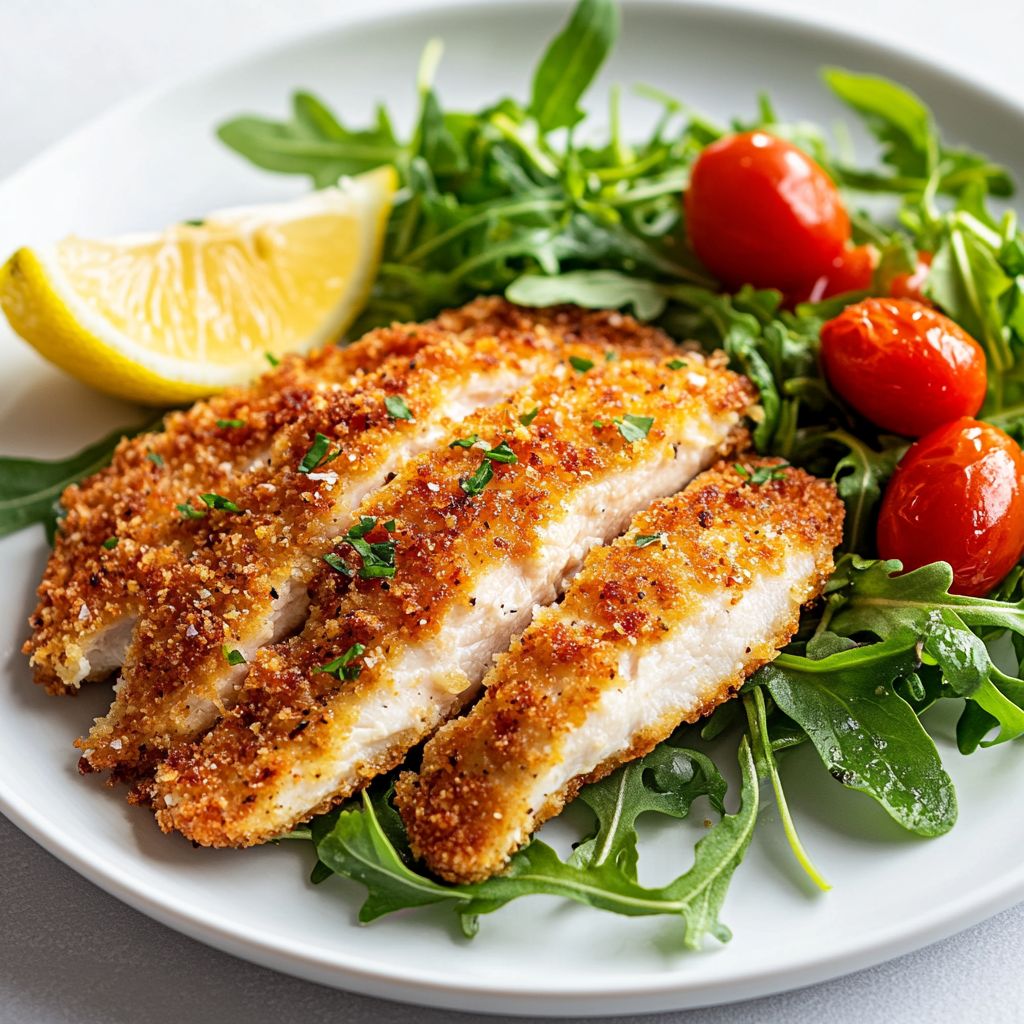
- 4 boneless, skinless chicken breasts (pounded to 1/4 inch thickness)
→ This is the protein base for Italian Chicken Milanese. Pounding to about 1/4 inch thickness ensures quick, even cooking and a tender bite beneath the crisp crust. Place the breasts between sheets of plastic wrap and gently flatten with a meat mallet or rolling pin to uniform thickness. If fillets are particularly thick, butterfly or halve them before pounding. Rest the flattened cuts briefly to redistribute moisture, which helps the crust adhere better.
Dredging & Breading
- 1/2 cup gluten-free all-purpose flour
→ The flour provides the first dry layer that the egg wash will cling to and begins creating the crust. For gluten-free cooks, this keeps the dish accessible. Lightly season the flour with a pinch of salt and pepper to add a subtle base flavor; for extra crispness, consider whisking in 1 teaspoon cornstarch or using a blend of GF flour and fine rice flour. - 2 large eggs, lightly whisked with 1 tablespoon water or milk
→ The eggs act as the binding mechanism that holds the breadcrumbs to the chicken and forms a cohesive crust as it fries. Use room-temperature eggs for better emulsification; for richer flavor, you can add a teaspoon of Dijon mustard or a splash of cream to the egg wash. After coating, let the coated chicken rest a few minutes so the crust adheres firmly. - 1 cup gluten-free breadcrumbs
→ The main crispy shell of the Milanese. Gluten-free breadcrumbs (or gluten-free panko) provide crunch and texture; when mixed with Parmesan they yield a savory, browned crust. For extra color and aroma, toast the crumbs lightly in a dry skillet for 2–3 minutes before coating to deepen flavor. - 1/2 cup finely grated Parmesan cheese (Parmigiano-Reggiano)
→ Adds sharp, nutty umami to the crust and helps it brown nicely. Use freshly grated Parmigiano for maximum aroma and flavor; mix evenly with breadcrumbs so every bite has balanced cheese, and press gently to help the crust cling. - 1 teaspoon dried oregano
→ Provides a classic Italian herb note that complements the lemon and parsley later. If you prefer, you can substitute with 1 tablespoon finely chopped fresh parsley in the coating to brighten the crust, but be mindful that fresh herbs can burn more readily during frying. Adjust to taste. - 1/2 teaspoon garlic powder
→ Offers savory depth without risking raw garlic burning during frying. Garlic powder distributes evenly in the crust; if you prefer fresh garlic, you can finely mince one small clove and mix it into the egg wash, but keep the amount modest to avoid overpowering the chicken. - 1/2 teaspoon kosher salt
→ Essential to season the crust and the chicken interior; Parmesan will contribute salt, so taste as you go. Lightly salt the flour or the breadcrumbs to ensure a balanced flavor; you can adjust after frying if needed. - 1/4 teaspoon freshly ground black pepper
→ Adds a gentle kick and depth, ensuring flavor is distributed through every bite. Pepper complements the lemon and parsley; distribute evenly in the crumb mixture for consistent seasoning.
Frying
- 1/3 to 1/2 cup extra-virgin olive oil
→ The fat used to fry the chicken and achieve a crisp, golden crust. Maintain medium-high heat (about 350°F/175°C); avoid overcrowding the pan to ensure even browning. Fry the coated cutlets 2–3 minutes per side until golden and the chicken registers 165°F (74°C). Transfer to a rack or paper towels to drain; strain and reuse the oil if desired and not degraded by previous cooking.
Finish & Serve
- 1 lemon, cut into wedges
→ A bright finishing touch that cuts through the richness of the fried crust. Squeeze some lemon over the hot chicken just before serving to brighten flavors; serve wedges on the side for individual adjustment and consider a light zest finish for added aroma. - 1 tablespoon finely chopped fresh flat-leaf parsley
→ Adds color and a fresh herbal note to balance richness. Sprinkle over the hot chicken immediately after frying so the parsley stays vibrant; if you prefer, you can omit, but it does elevate the dish with a visually appealing finish.
Instructions
- Flatten each chicken breast to 1/4 inch thickness by placing it between two sheets of plastic wrap and gently pounding with a meat mallet or rolling pin until uniform.
→ This uniform thickness ensures quick, even cooking and a tender bite beneath the crust. If a fillet is particularly thick, butterfly or halve it before pounding, then let the pieces rest briefly on a rack to redistribute moisture and help the crust adhere. - Arrange three shallow pans in a line to create a dredging station: one with gluten-free all-purpose flour lightly seasoned with a pinch of salt and pepper, one with eggs lightly whisked with 1 tablespoon water or milk, and one with gluten-free breadcrumbs blended with 1/2 cup finely grated Parmigiano-Reggiano, 1 teaspoon dried oregano, 1/2 teaspoon garlic powder, 1/2 teaspoon kosher salt, and 1/4 teaspoon freshly ground black pepper.
→ The dry flour provides the first coating for the egg wash, the eggs act as the binding bridge, and the breadcrumb-cheese mixture creates the crisp, savory crust. Toasting the crumbs lightly in a dry skillet for 2–3 minutes before coating deepens flavor and color; cool before use. - Dredge each pounded chicken breast first in the seasoned flour, coating completely and tapping off excess; then dip into the egg wash, allowing excess to drip off; finally press into the Parmesan–breadcrumb mixture, turning to coat all surfaces and pressing gently so the crust adheres firmly.
→ The flour helps the egg wash cling and begins the crust; the egg wash helps the crumbs bind; pressing ensures thick, even crust coverage that won’t slid off during frying. Let coated pieces rest 5–10 minutes to set the crust. - Heat 1/3 to 1/2 cup extra-virgin olive oil in a wide skillet over medium-high heat until shimmering and reaching about 350°F (175°C).
→ This precise temperature creates an immediate sear that crisps the crust without absorbing excessive oil, while cooking the chicken through. If you don’t have a thermometer, test with a crumb; it should sizzle briskly. Maintain temperature and avoid overcrowding the pan. - Fry the breaded chicken in batches, cooking 2–3 minutes on the first side until the crust is deeply golden, then flip and cook 2–3 minutes on the other side until the crust is browned and the internal temperature reaches 165°F (74°C).
→ A steady, hot pan yields an even, crisp crust and juicy interior. Use tongs to turn gently to avoid crust loss; if the oil begins to deplete in temperature, briefly lift the pan and adjust the heat to recover the crust. - Transfer fried cutlets to a rack set over a baking sheet or to paper towels to drain the excess oil and let them rest 1–2 minutes to set the crust.
→ Draining prevents sogginess and resting helps the crust re-crisp slightly as the surface heat dissipates. - Repeat the dredging and frying steps for any remaining chicken pieces, maintaining oil temperature and frying in batches to preserve crispness; refresh or strain oil if it becomes dark or foamy.
→ Consistent batches ensure uniform browning and texture across all cutlets, and prevent flavor contamination from degraded oil. - Finish the dish by immediately squeezing a wedge of lemon over each hot chicken Milanese, then sprinkle with 1 tablespoon finely chopped fresh flat-leaf parsley and, if desired, a touch of lemon zest; serve with additional lemon wedges on the side.
→ The citrus brightens the rich, fried crust and the parsley adds color and a fresh aroma; serve promptly to enjoy the crust while it stays crisp. - If planning to reuse the frying oil, allow it to cool completely, strain through a fine-mesh sieve to remove crust bits, and store in a sealed container for future frying if the oil still smells clean and is not excessively dark or degraded.
→ Reusing clean oil is economical and reduces waste, but discard oil that shows signs of rancidity or heavy darkening to avoid off flavors.
Notes
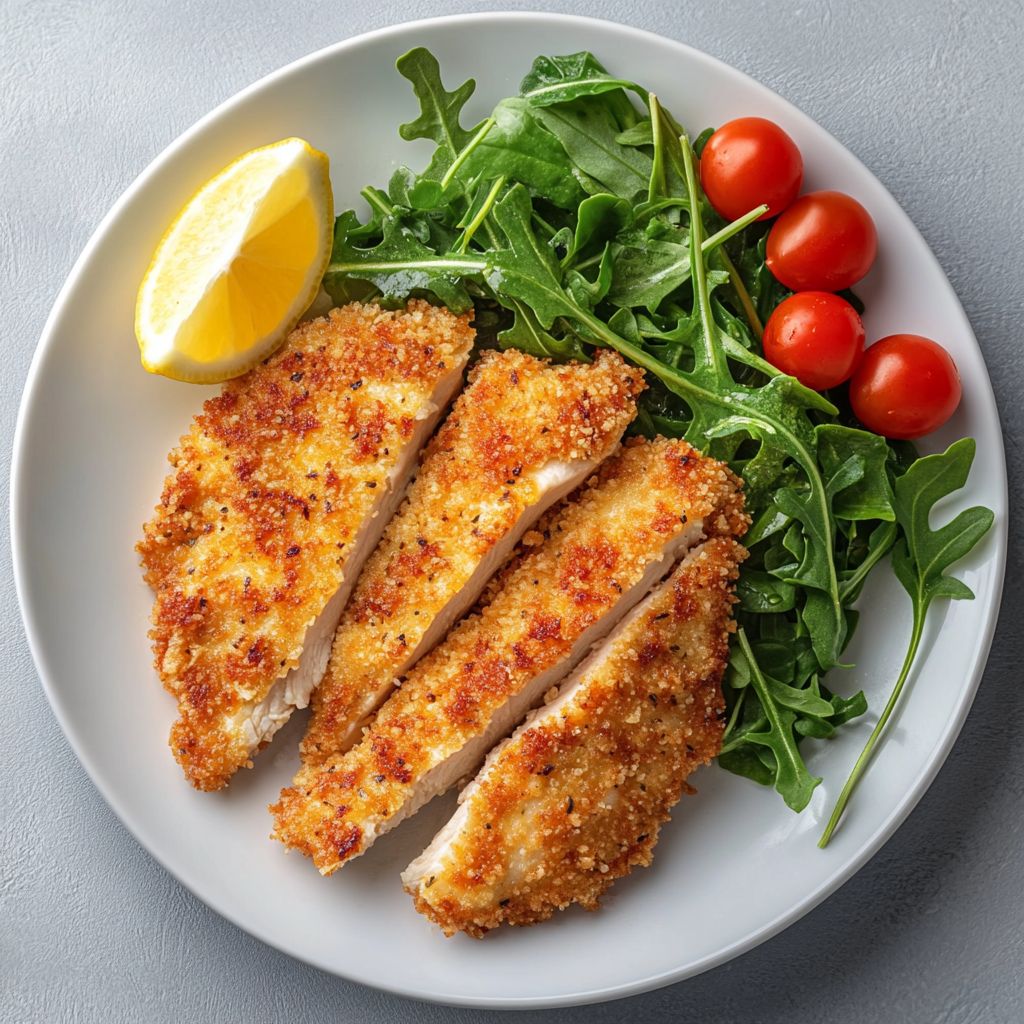
These gluten-free Italian Chicken Milanese are crispy, lemon-bright, and satisfying with a crust built from gluten-free flour and breadcrumbs. To ensure a tender bite and quick, even cooking, pound the chicken to about 1/4 inch thickness and let the flattened cuts rest briefly before breading. Use certified gluten-free flour and gluten-free breadcrumbs (or gluten-free panko) and toast the crumbs lightly in a dry skillet for 2–3 minutes to deepen flavor and promote browning. The eggs act as the binding around the crust, so keep the eggs at room temperature and let the coated chicken rest a minute or two before frying so the crust adheres well. Fry in about 1/3 to 1/2 cup extra-virgin olive oil at medium-high heat (around 350°F/175°C) until golden and the chicken reaches 165°F (74°C). Drain well on a rack or paper towels. Finish with lemon wedges and a sprinkle of finely chopped fresh flat-leaf parsley to lift the flavors and add color. These notes also apply if you want to remake the dish: reheat gently in a hot skillet to recrisp the crust. For variation, add a pinch of garlic powder to the breading or substitute fresh parsley for oregano in the crust to taste, but avoid overpowering the citrus finish.
Tips
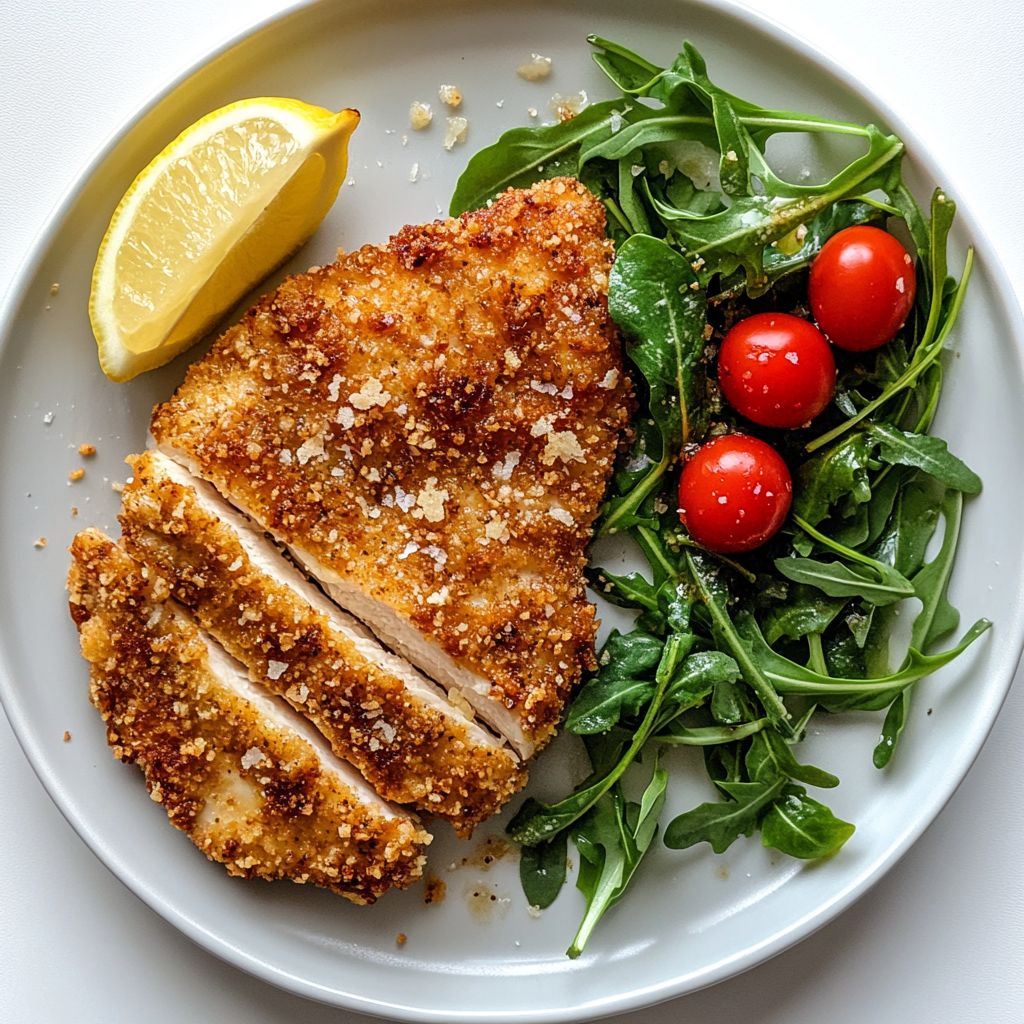
Chef’s Tips for Italian Chicken Milanese
- Let the pounded chicken sit about 10 minutes after flattening to redistribute moisture. Pat dry with paper towels if any moisture remains; a dry surface helps the crust cling and stay crispy.
- To maximize crust adhesion, lightly season the chicken itself with a pinch of salt before dredging, then season the flour and breadcrumbs as a separate step so the crust tastes balanced in every bite.
- For extra crispness, mix a small amount of cornstarch or rice flour into the gluten-free breadcrumbs. Toasting the breading mixture in a dry skillet for 2–3 minutes before coating adds aroma and color without burning.
- Use room-temperature eggs for the egg wash to improve emulsification and binding. A teaspoon of Dijon mustard or a splash of cream in the wash can add depth, but keep it subtle so the crust remains crisp.
- When using gluten-free breadcrumbs, consider adding a tablespoon of grated Parmesan or a touch of finely grated lemon zest to the crust for extra savoriness and brightness.
- Opt for freshly grated Parmigiano-Reggiano rather than pre-grated cheese. It melts more evenly and provides a richer nutty flavor that browns nicely with the breadcrumbs.
- Herbs in the crust matter: dried oregano is classic, but you can swap in finely chopped fresh parsley (about 1 tablespoon) for a fresh lift. Be mindful that fresh herbs can burn easily; add them to the finishing lemon zest instead if desired.
- Keep the coating uniform by dredging first in gluten-free flour, then egg wash, then breadcrumb mixture. Let the coated chicken rest 5–10 minutes before frying to help the crust set.
- Maintain a steady frying temperature around 350°F (175°C). If the oil is too hot, the crust will burn before the chicken cooks; if too cool, you’ll end up with a soggy crust. Use a thermometer for accuracy.
- Do not overcrowd the pan. Fry in batches if needed; crowded pan lowers oil temperature and leads to uneven browning. Transfer finished pieces to a rack set over a sheet pan instead of paper towels for crisper results.
- After frying, drain briefly and keep the crust crisp by finishing in a warm oven (about 200°F/95°C) for a few minutes if you’re not serving immediately.
- Finish with lemon: squeeze fresh lemon over hot chicken to brighten the richness, and serve lemon wedges on the side. A touch of lemon zest over the crust just before serving adds a fragrant finish.
- Parsley adds color and freshness; sprinkle the chopped parsley immediately after frying so it stays vibrant. If you prefer a milder look, omit or add a pinch of zest instead.
- Make-ahead option: bread the chicken and refrigerate the coated cutlets up to 2 hours before frying. You can also freeze breaded, uncooked cutlets for up to 1 month; bake or fry directly from frozen, adding a minute or two to the cook time.
- For a lighter approach, you can bake the breaded cutlets on a parchment-lined sheet at 425°F (220°C) until golden and cooked through, then finish with a quick broil to brown the crust.
FAQ
What is Italian Chicken Milanese?
Italian Chicken Milanese is a classic Milanese dish featuring thin, breaded chicken cutlets that are pan-fried in olive oil or butter until golden and crisp. It’s typically served with a squeeze of lemon and a simple salad or arugula on the side.
What cut of chicken is best?
Use boneless, skinless chicken breasts. For even cooking, lightly pound them to about 1/4 inch (6 mm) thickness, then trim to an even size.
What ingredients do I need?
Basic setup:
- Chicken breasts (pounded thin)
- All-purpose flour (or gluten-free flour)
- Eggs (beaten)
- Breadcrumbs (panko for extra crunch, or seasoned breadcrumbs)
- Grated Parmesan cheese
- Salt and pepper
- Optional herbs: parsley, oregano
- Olive oil or neutral oil for frying
- Lemon wedges for serving
How do I bread and prep the chicken?
Steps:
- Season the chicken lightly with salt and pepper.
- Dredge in flour, tapping off excess.
- Dip in beaten eggs to coat.
- Coat with a mixture of breadcrumbs and grated Parmesan (and herbs, if using). Press gently to adhere.
- Set on a rack or plate for a few minutes to help the crust set before cooking.
How do I fry it to get a crispy crust?
Heat about 1/4 inch of oil in a skillet over medium heat until shimmering (around 350–360°F / 175–180°C). Fry the cutlets 2–3 minutes per side, until golden and cooked through (internal temperature 165°F / 74°C). Let excess oil drain on paper towels.
Can I bake it instead of frying?
Yes. Preheat the oven to 425°F (220°C). Place breaded cutlets on a baking sheet lined with parchment or on a wire rack. Lightly spray or brush with oil. Bake 20–25 minutes, flipping halfway, until the crust is golden and chicken reaches 165°F (74°C).
How long does it take to cook?
Pan-fried: about 4–6 minutes total (2–3 minutes per side) depending on thickness. Baked: about 20–25 minutes at 425°F (220°C), flipping once.
What should I serve it with?
Common pairings include a simple arugula or green salad with lemon, roasted or boiled potatoes, risotto, or a light pasta with lemon and olive oil. A lemon wedge on the side brightens the dish.
How should I store leftovers?
Store cooked Milanese in an airtight container in the fridge for up to 3 days. Reheat in a hot skillet or oven to restore crispiness; avoid microwave reheating if you want crunch. You can also freeze cooked or breaded uncooked portions for longer storage.
Are there gluten-free or dairy-free variations?
Yes:
- Gluten-free: use gluten-free breadcrumbs and flour.
- Dairy-free: omit Parmesan or use a dairy-free Parmesan alternative; use dairy-free breadcrumbs if needed.
- Oil choice: olive oil or other neutral oils work well for frying; you can also use clarified butter for a richer crust.
Tips to avoid a soggy crust and common mistakes
Tips:
- Pat the chicken dry before breading to help the crust adhere.
- Keep oil hot enough and avoid overcrowding the pan to prevent steaming.
- Rest the breaded chicken for a few minutes before cooking to help the crust set.
- Mix breadcrumbs with Parmesan for extra flavor and crunch.
- If baking, place on a rack so air can circulate and the crust stays crisp.
Can I make ahead or freeze?
You can bread the chicken and refrigerate for up to 24 hours before cooking. You can also freeze raw breaded cutlets for up to 1 month; thaw before cooking. Do not freeze after cooking as texture may be affected.