Introduction / Hook
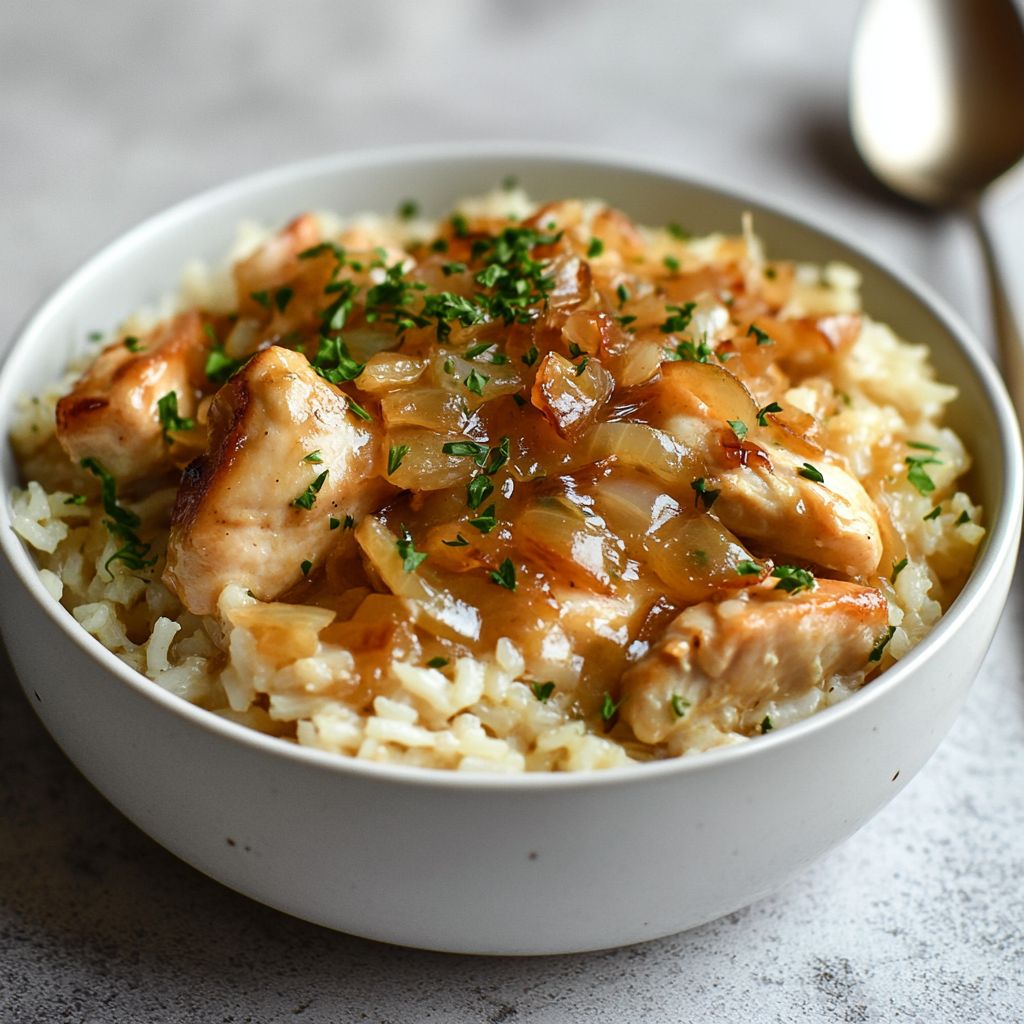
Imagine a cozy skillet of caramelized onions turning a deep amber, their sweetness blooming as they soften into a glossy, almost jammy ribbon that coats every bite. Picture tender, succulent chicken that browns to a savory kiss on the outside, releasing its juices to mingle with a bed of fluffy rice that drinks up every drop of flavorful broth. Now add a gentle kiss of herbs, a whisper of garlic, and a finish of melted cheese that blankets the top in a luxurious, bubbly crust. All of this happens in one pot, with minimal stirring and almost no cleanup, delivering a comforting, crowd-pleasing meal that tastes like a Sunday feast even on a weekday. Welcome to One Pot French Onion Chicken Rice—an irresistible fusion of classic French onion flavors and practical, weeknight-friendly cooking. This dish captures the rustic charm of caramelized onions, the hearty satisfaction of chicken, and the comforting heartiness of rice, all simmered together until the flavors fuse into something extraordinary. The aroma alone is enough to draw people to the kitchen in anticipation, and the satisfaction of serving a complete, nourishing plate straight from a single pot makes it a favorite in busy homes and cozy gatherings alike.
The Story Behind the Dish
The soul of French onion flavors runs deep in kitchens across the world. French onion soup, with its languid ribbons of caramelized onions, is a testament to the simple magic of turning everyday ingredients into something lush and memorable. Onions, when coaxed over steady heat, release their sugars, transforming into a velvet sweetness that dances with the savory depth of broth and wine. This transformative process has been a cornerstone of home cooking for generations, a reminder that patience at the stove yields extraordinary results. The idea of pairing that quintessential onion sweetness with a more substantial, one-pot meal is a natural evolution of culinary ingenuity—taking a beloved comfort flavor and marrying it with a nourishing protein and starch to create a complete dish in a single pot.
The inspiration behind One Pot French Onion Chicken Rice is to honor that heritage while embracing practical modern cooking. It takes the iconic caramelized onion profile and folds in chicken for protein, rice for starch, and a few pantry-friendly seasonings to create a dish that feels luxurious yet approachable. The result is a dish that feels like a memory—like a kitchen where the air is perfumed with the scent of browned onions, garlic, and herbs, where the pot does all the heavy lifting, and where clean-up is a mere afterthought. This recipe captures the essence of family dinners, Sunday suppers, and weeknight comfort, offering a bridge between traditional French technique and everyday cooking needs. It’s a celebration of how a handful of well-chosen flavors can come together in harmony, turning simple ingredients into something worth savoring and sharing.
Why You’ll Love This Recipe
- One-pot wonder: All the components—onions, chicken, rice, herbs, and broth—develop together in a single pot, making both cooking and cleaning up incredibly efficient.
- Deep, mellow flavor: Caramelized onions provide a natural sweetness that counterbalances the savory chicken and a gentle twist of thyme, garlic, and broth for a well-rounded, comforting profile.
- Versatile and forgiving: The technique works with chicken thighs or breasts, with white or brown rice, and can be adjusted for different spice levels or dietary needs without losing its soul.
- Budget-friendly and family-friendly: Simple pantry staples come together to create a satisfying meal that both adults and kids will enjoy, with leftovers that still taste fantastic the next day.
- Rich texture with comforting contrast: Tender chunks of chicken, spoonable, fluffy rice, and the glossy onion sauce create a multi-sensory experience in every bite.
- Cozy, restaurant-worthy feel at home: The dish offers a touch of elegance—think caramelized edges, a gentle fragrant aroma, and a glossy surface—that makes weeknights feel special.
- Minimal waste, maximum flavor: The method emphasizes the development of flavor in stages—browning, deglazing, simmering—ensuring every part of the pot contributes to the final harmony.
Flavor Profile & Texture
This dish is a masterclass in balance. The onion presents itself first, slowly releasing its sugars as it caramelizes, yielding a deep, honeyed sweetness that coats the palate. It’s not cloying; it’s nuanced, with a whisper of savory savoriness that arises from the gentle browning of the onions and the slight deglazing with broth or wine. The chicken contributes a comforting, savory backbone, its juices mingling with the onion sweetness to form a robust sauce that clings to every grain of rice. The rice itself acts as both vehicle and amplifier: each grain absorbs the flavorful liquid, swelling into a tender, barley-soft bite that isn’t mushy but luxuriously cohesive.
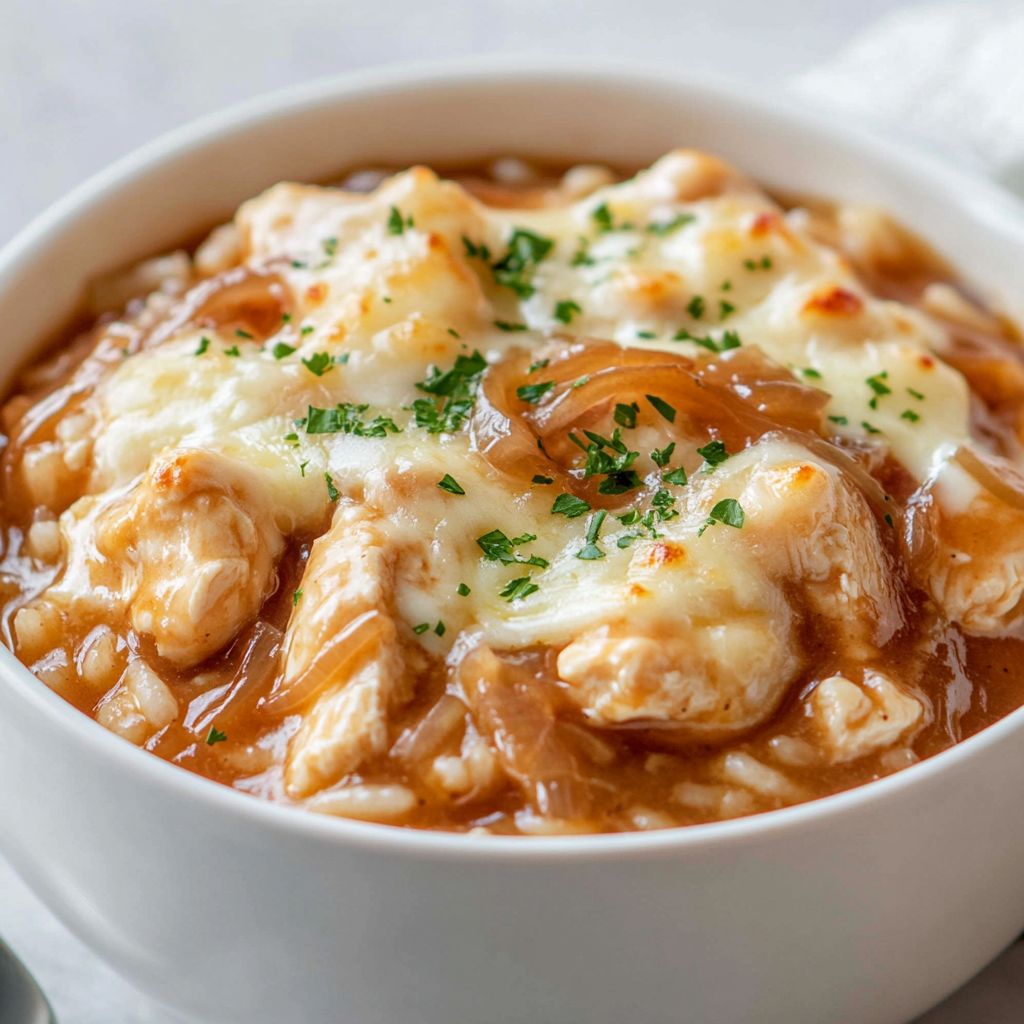
Herbs and aromatics—often thyme and garlic in this style—add an herbal brightness that lifts the dish without overpowering the onion-forward sweetness. The finish can be as simple as a pinch of fresh parsley for color and a final squeeze of lemon to brighten, or as indulgent as a light shower of grated cheese that melts into the surface and creates a velvety, almost risotto-like finish. The overall texture is a pleasing contrast: the slightly crisp edges of any browning on the chicken, the soft, pillowy rice, and the glossy, almost lacquered onion sauce that binds everything together. It’s a harmony of savory, sweet, and aromatic notes that feels both rustic and refined in equal measure.
Key Taste Notes
- Caramelized onion sweetness with a savory depth
- Juicy, well-seasoned chicken that stays tender
- Herbaceous brightness from thyme and garlic
- Richer, glossy sauce that coats rice and chicken evenly
- Optional cheese finish for a creamy, melty top layer
Occasions & Pairings
This dish shines in a variety of settings. It’s ideal for weeknights when you want something comforting yet uncomplicated, a Sunday family dinner that feels special without demanding hours in the kitchen, or a casual gathering where guests will appreciate a one-pot marvel that can feed a crowd with minimal effort. Its versatility makes it a natural for meal prep too; the flavors deepen after a night in the fridge, making it a terrific next-day lunch option that still feels satisfyingly fresh.
Pair it with sides that complement its onion-forward profile:
- A crisp green salad tossed with a tangy vinaigrette to cut through the richness
- Roasted vegetables such as Brussels sprouts, carrots, or green beans for color and texture
- Crusty crust bread or a baguette to scoop up the savory sauce
- A light white wine, like a Sauvignon Blanc or a dry Chardonnay, to echo the dish’s herbaceous and onion notes
- For non-alcoholic pairings, a sparkling apple cider or a citrusy sparkling water
Tips, Variations & Substitutions
Every home cook has a preferred pantry setup, and this recipe is designed with that flexibility in mind. Here are ideas to tailor it to your kitchen, dietary needs, or flavor mood:
- Protein swaps: Use bone-in, skin-on chicken thighs for richer flavor and moisture, or swap in turkey cutlets for a lighter option. For a vegetarian version, substitute a hearty mushroom mix (cremini, portobello) and use a vegetable-based stock, plus a grain like quinoa or barley in place of rice.
- Rice options: Long-grain white rice is traditional, but you can use brown rice for a nuttier, chewier texture, or short-grain rice for more of a risotto-like creaminess. If using brown rice, you may need a touch more liquid and a longer simmer time.
- Cheese finish: A light blanket of Gruyère, cheddar, or parmesan on top as it finishes melting elevates the dish and adds a luxurious, creamy layer. If avoiding dairy, skip the cheese and finish with a squeeze of lemon and fresh herbs.
- Herb variations: Thyme is classic, but you can experiment with a pinch of rosemary, marjoram, or a bay leaf for a different aromatic profile. Fresh parsley or chives sprinkled on top add a fresh, green note.
- Gluten-friendly note: Ensure your stock is certified gluten-free if you’re avoiding gluten. Many store-bought broths contain gluten, so check the label or use a trusted brand.
- Make it lighter: Use chicken breasts and a lighter stock, and skip cheese or use a modest amount of a light cheese substitute to preserve the lighter profile while still enjoying the onion sweetness.
- Make-ahead flavor boost: Caramelize the onions a day ahead and refrigerate. When you’re ready to cook, continue with the recipe to build the final layers of flavor quickly.
- Texture play: If you prefer a more sauce-forward finish, reserve a splash of broth to stir in at the end and keep the rice a touch looser.
Storage & Make-Ahead Ideas
This dish stores well in the refrigerator for 3–4 days when kept in an airtight container. The flavors often deepen after a night, making leftovers even more appealing. Reheating works best on the stovetop over low to medium heat with a small splash of broth or water to loosen the rice if it seems dry. Stir gently to prevent clumping, and cover to retain moisture. If you’ve topped with cheese, you can reheat covered and uncover for a minute to let the cheese re-melt.
For freezing, it’s best to freeze the dish before the rice fully absorbs all the liquid, so the grains don’t become mushy. Portion into freezer-safe containers or bags, lay flat to chill quickly, and freeze for up to 2–3 months. Thaw overnight in the fridge before reheating on the stove with a little extra stock or water. When reheating, the key is to recover moisture and reheat gently so the chicken stays tender and the rice doesn’t dry out.
Make-ahead strategy: If you’re entertaining or meal-prepping, caramelize the onions a day or two in advance and store them sealed in the fridge. On the day you cook, sear the chicken and finish the dish as a streamlined process, relying on the pre-caramelized onions to accelerate flavor development.
Fun Facts & Trivia (Optional)
- Caramelized onions, a cornerstone of French onion flavors, require patience—low and slow heat unlocks their natural sugars and creates that signature depth that defines the dish.
- Rice, when cooked in a well-flavored liquid, becomes a flavor sponge. In one-pot dishes, it not only provides heft but also clarifies and concentrates the overall sauce, delivering a cohesive, spoonable texture.
- The aroma of onions frying is known to lift mood and appetite—science suggests the smell can trigger pleasant memories and anticipation of comfort food.
- Herbs like thyme carry a long culinary history, from ancient kitchens to modern tables, offering both fragrance and subtle earthy notes that complement meat and starch beautifully.
- One-pot meals have a tradition of practicality—developing flavor in stages, reducing cleanup, and giving home cooks more time to enjoy with family and friends rather than standing at the stove.
Ingredients
One Pot French Onion Chicken Rice
– 1.5 pounds boneless, skinless chicken thighs, cut into bite-sized pieces
→ Purpose: provides protein and flavor; Browning the pieces creates a rich fond that flavors the entire one-pot dish. Preparation: pat dry the chicken to promote good sear, season lightly before adding to the pot, and brown in batches to avoid steaming. Tips: thighs stay juicier than breast; if using chicken breasts, reduce cooking time to prevent dryness and monitor for overcooking as the rice simmers.
– 3 large yellow onions, thinly sliced
→ Purpose: form the classic French onion flavor base through caramelization, imparting sweetness and depth to the sauce. Preparation: slice evenly to uniform thickness for even browning, then cook slowly in fat until deeply amber (about 25–30 minutes). Tips: salt lightly during caramelization to help draw moisture; deglaze with wine or stock to lift browned fond; patience yields the best sweetness without burning.
– 3 cloves garlic, minced
→ Purpose: adds aromatic backbone and savory complexity. Preparation: mince finely so it distributes evenly and cooks quickly without burning. Tips: add after onions have softened to prevent scorching; if you prefer a milder garlic note, crush instead of mince and remove before finished cooking.
– 2 tablespoons olive oil
→ Purpose: fat for sautéing onions and browning chicken; helps transfer heat and develop fond. Preparation: heat until shimmering before adding onions. Tips: use extra-virgin for fruity notes, but any neutral oil works; avoid smoking the oil by maintaining medium heat during browning.
– 1 tablespoon unsalted butter
→ Purpose: richness and helps onions caramelize with a velvety mouthfeel. Preparation: add with oil for a butter–oil combination that tolerates higher heat. Tips: for dairy-free adjustments, omit butter or substitute with a neutral oil; butter can also add a glossy finish to the onions.
– 1 1/2 cups long-grain white rice, rinsed until water runs clear
→ Purpose: starch that absorbs the savory onion–chicken liquid to form a cohesive one-pot dish. Preparation: rinse thoroughly to remove surface starch, drain well. Tips: long-grain rice yields fluffier grains; if using parboiled or medium-grain rice, adjust liquid and simmer time accordingly; avoid over-stirring to prevent mushy texture.
– 2 1/2 cups low-sodium chicken stock, warmed
→ Purpose: cooking liquid that flavors and steams the rice while keeping sodium in check. Preparation: warm before adding to maintain steady simmer. Tips: using warmed stock prevents a chill that can slow cooking; adjust salt based on stock saltiness; if desired, substitute with vegetable stock for a lighter profile.
– 1/2 cup dry white wine (optional)
→ Purpose: deglazes the pan, lifting caramelized bits and adding acidity and depth. Preparation: pour after browning chicken and onions and scrape up fond; simmer until reduced slightly before adding stock. Tips: if avoiding alcohol, substitute with an extra 1/2 cup stock or a splash of lemon juice with an extra pinch of sugar to mimic acidity.
– 1 teaspoon dried thyme (or 2 teaspoons fresh thyme leaves)
→ Purpose: herbal note that complements onion and chicken. Preparation: add dried thyme early so it infuses; if using fresh thyme, strip leaves from stems and sprinkle evenly. Tips: dried thyme can become overpowering if burned; add at the right moment and balance with bay leaf and stock.
– 1 bay leaf
→ Purpose: subtle herbal aroma that rounds the dish. Preparation: add whole for easy removal before serving. Tips: remove bay leaf prior to serving to avoid a sharp, bitter edge; you can tie with kitchen twine for easy fishing out.
– Salt to taste (start with 1 1/2 teaspoons kosher salt) and freshly ground black pepper to taste
→ Purpose: essential seasoning at multiple stages to enhance sweetness, chicken flavor, and rice. Preparation: season early in the process and adjust at the end after tasting the finished dish. Tips: season in layers; remember that stock will contribute salt, so taste before adding more salt at the end.
Optional Add-ins
– 1/2 cup grated Gruyere cheese (optional, for topping)
→ Purpose: finishing garnish that creates a cheesy, bubbly crust reminiscent of French onion soup. Preparation: grate or shred so it melts evenly; sprinkle on top after cooking and briefly cover to melt, or place under a brief broil for a golden crust. Tips: fresh Gruyere melts best; pre-shredded varieties may contain anti-caking agents that hinder smooth melting, so grate fresh if possible.
– Fresh parsley, chopped (optional, for garnish)
→ Purpose: adds color and a fresh, herbal aroma at the finish. Preparation: chop just before serving to preserve bright green color. Tips: sprinkle generously just before serving to maintain vibrancy and freshness; can also be added to the pot at the end for a hint of color.
– 1/4 teaspoon smoked paprika (optional)
→ Purpose: light smoky warmth and color enhancement that complements caramelized onions. Preparation: whisk into the pot along with the stock if using; Tips: start with a small amount to avoid overpowering the dish; adjust to taste, balancing with salt and cheese later.
Instructions
- Pat dry the boneless chicken thighs with paper towels, then cut into bite-sized pieces and season lightly with kosher salt and freshly ground black pepper.
→ This ensures the chicken browns instead of steaming, building a flavorful fond that will deepen the sauce. Dry surfaces promote a crisp sear, while light seasoning at this stage helps establish flavor without oversalting before the stock is added. - Heat 1 tablespoon olive oil in a large, heavy-bottomed pot over medium-high heat and brown the chicken in batches without crowding the pan, about 2–3 minutes per side, then transfer browned pieces to a plate.
→ Browning in batches preserves a hot pan surface so the meat sears instead of braising in its own juices; the fond stuck to the pan will flavor the next layers of the dish. - Return the pot to medium heat and add the remaining 1 tablespoon olive oil and 1 tablespoon unsalted butter; swirl to melt completely and coat the bottom of the pot.
→ The oil raises the smoke point while the butter adds richness and a glossy finish to the onions, creating a balanced fat for even caramelization. - Add the sliced yellow onions with a pinch of kosher salt and cook over medium-low heat, stirring every few minutes until deeply caramelized and amber, about 25–30 minutes.
→ Slow caramelization develops complex sweetness and savoriness; salt helps draw out moisture and promotes even browning, while patience prevents burning and bitterness. - Stir in the minced garlic and cook for 30–60 seconds until fragrant, then promptly reduce heat if it begins to color too quickly to avoid bitter notes.
→ Garlic cooks quickly and can turn bitter if burned; brief cooking at this stage preserves its aroma and blends with the onion base. - Pour in the rinsed long-grain white rice, stirring to coat the grains with the onion-fat mixture; toast the rice for 1–2 minutes until the edges look translucent and the grains become slightly glossy.
→ Toasting coats each grain with fat and lightly toasts the surface starch, yielding fluffier, separate grains rather than a mushy texture. - Deglaze with 1/2 cup dry white wine if using, pouring it into the pot and scraping up the browned fond with a wooden spoon; simmer until the wine is reduced by about half.
→ De-glazing loosens the flavorful browned bits from the pan and concentrates the wine’s acidity and aroma, which will infuse the rice and sauce. - Stir in 1 teaspoon dried thyme (or 2 teaspoons fresh thyme leaves) and drop in 1 bay leaf; if using 1/4 teaspoon smoked paprika, whisk it into the pot now to impart a light smoky warmth.
→ Thyme and bay leaf provide aromatic depth that complements onion and chicken; paprika adds subtle color and warmth without overpowering the dish. - Pour in the warmed 2 1/2 cups low-sodium chicken stock and return the browned chicken along with any juices to the pot, nestling the pieces into the rice.
→ Warm stock maintains a steady simmer, while returning the chicken and its juices reintroduces all surface flavors into the pot for true one-pot cohesion. - Increase heat to bring the mixture to a gentle simmer, then reduce to low, cover the pot with a tight-fitting lid, and cook for 18–20 minutes until the rice is tender and the chicken is cooked through (internal temperature 165°F/74°C).
→ A steady, gentle simmer prevents scorching and ensures even cooking; avoid lifting the lid frequently to keep the steam trapped for proper rice absorption. - Remove the lid and gently stir; if there is still liquid, re-cover and simmer a few more minutes until absorbed, being careful not to over-stir which can make the rice gummy.
→ Letting the rice rest briefly after cooking ensures starches finish absorbing moisture and prevents a sticky, overworked texture. - Turn off the heat and let the dish rest, covered, for 5 minutes to allow the grains to finish steaming and the flavors to meld.
→ Resting stabilizes moisture distribution in the grains and helps prevent a runny or unevenly cooked dish when served. - If using Gruyere cheese, sprinkle 1/2 cup grated cheese over the hot surface and cover briefly to melt, or place the pot under a hot broiler for 1–2 minutes until the top is bubbly and lightly golden.
→ The cheese creates a creamy, toasty crust reminiscent of French onion soup; fresh Gruyere melts smoothly and forms a desirable golden top when broiled. - Discard the bay leaf, then fluff the rice with a fork and scatter chopped fresh parsley over the top as a bright, aromatic finish.
→ Parsley adds color and a fresh contrast to the rich onion-scented gravy, enhancing aroma and appearance just before serving. - Serve the One Pot French Onion Chicken Rice directly from the pot, spooning portions that include chicken, rice, and a generous amount of caramelized onion sauce for a comforting, cohesive dish.
→ Immediate serving helps preserve the sauce’s sheen and the proper texture of the rice, delivering optimal flavor and presentation.
Notes
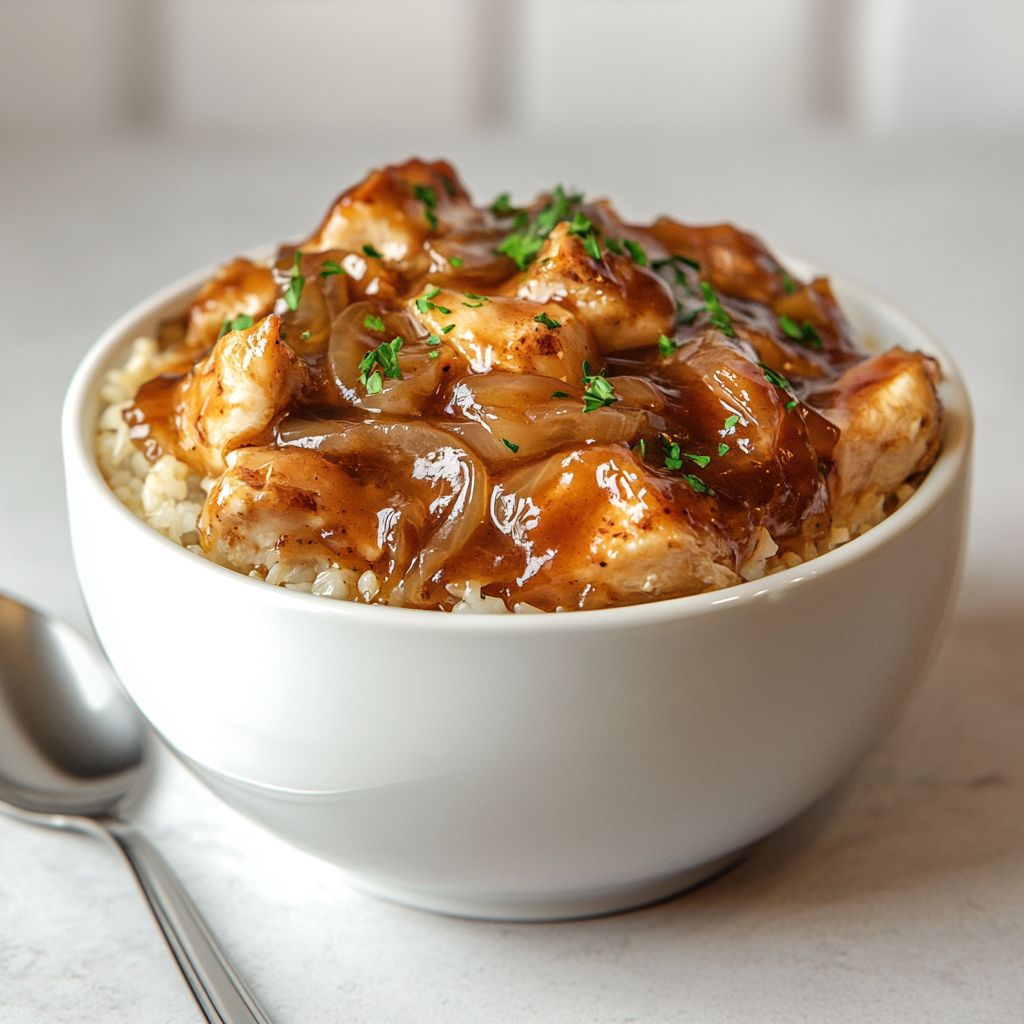
This One Pot French Onion Chicken Rice is a comforting, savory one-pot meal built on deeply caramelized onions, browned chicken, and fluffy rice that cook in their own flavorful stock.
Tip: Brown the chicken in batches and pat it dry first to develop a rich fond rather than steaming. Season lightly before searing; thighs stay juicy, but if you use chicken breasts, reduce cooking time to prevent dryness.
Caramelize the onions slowly in olive oil and a tablespoon of butter until deeply amber, about 25–30 minutes. Salt lightly during caramelization to draw out moisture, and deglaze with wine or stock to lift the fond.
After onions are ready, add minced garlic and cook just until fragrant, then stir in the rinsed long-grain rice and warmed chicken stock. Keep the rice in a single even layer and avoid over-stirring to maintain fluffy grains; if using parboiled or medium-grain rice, adjust liquid and simmer time accordingly.
Wine adds brightness; if you skip it, substitute with an extra 1/2 cup stock or a splash of lemon juice with a pinch of sugar to mimic acidity.
Finish with thyme (dried or fresh) and a bay leaf for aroma; remove the bay leaf before serving. Taste and adjust salt at the end, since stock contributes salt.
Optional finishing touches: 1/2 cup grated Gruyere cheese for a bubbly crust (grate fresh for best melt) and a sprinkle of fresh parsley for color. For a dairy-free version, omit butter and cheese or substitute with a neutral oil; you can also add 1/4 teaspoon smoked paprika for a subtle smoky note.
Serving suggestions and storage: this dish reheats well and can be stored in the fridge for 3–4 days or frozen for longer storage. If using as a gluten-free option, ensure the stock and any wine are gluten-free. Pair with a crisp green salad or steamed greens to add brightness and texture to the meal.
Tips
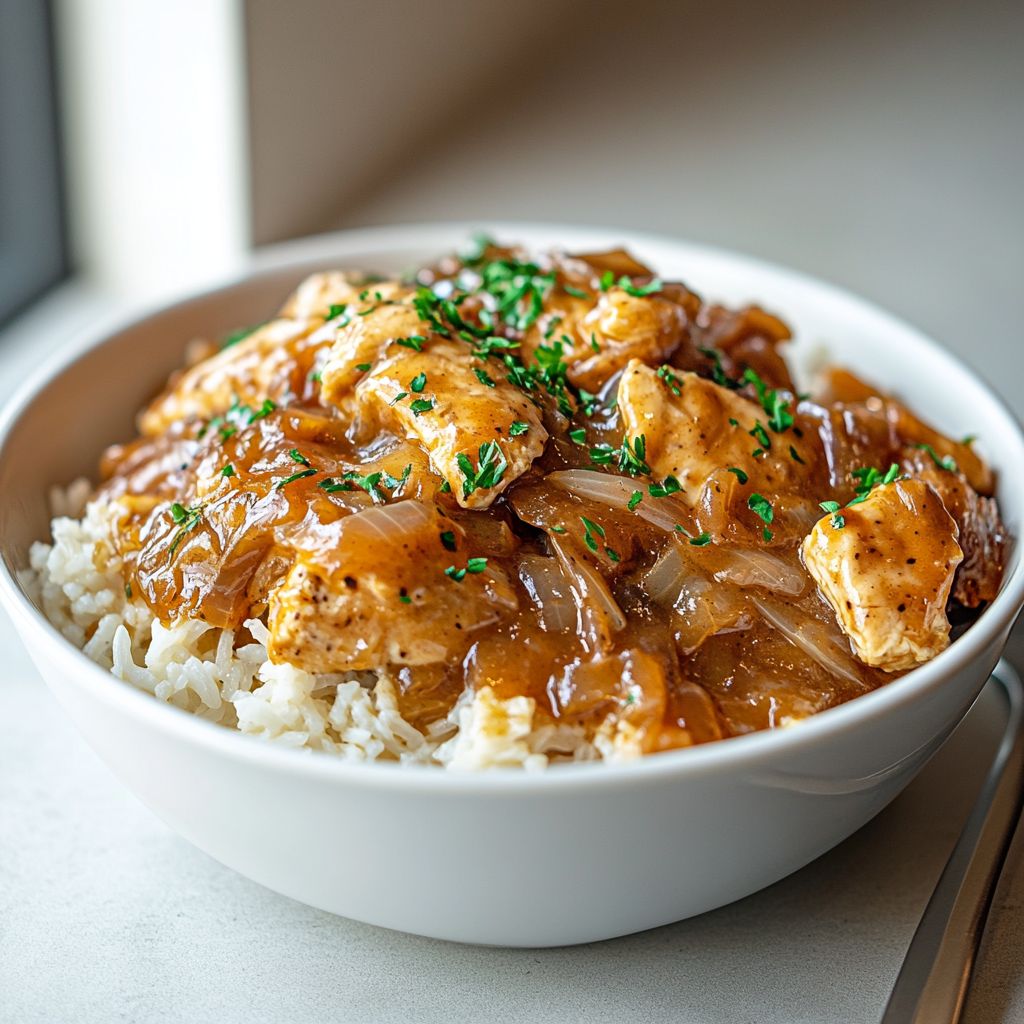
Tips for Perfect One Pot French Onion Chicken Rice
- Brown the chicken in batches, not all at once. Overcrowding the pot traps steam, which steers the meat toward steaming rather than browning. Let the pieces sit without moving for a minute or two on each side to develop a rich fond before flipping.
- Caramelize the onions slowly for deep sweetness. Use a wide, heavy pot and cook them on low to medium heat, stirring occasionally until they are deeply amber (about 25–30 minutes). Salt lightly as they cook to help draw out moisture and enhance flavor.
- Deglaze properly to lift every bit of fond. After browning the chicken and onions, splash in the dry white wine (or a splash of stock if not using alcohol) and scrape up the browned bits from the bottom. Let it reduce by about half to concentrate the flavors before adding stock.
- Garlic timing matters. Add minced garlic after the onions have softened to prevent scorching. If you prefer a milder garlic note, you can crush garlic and remove it before serving, or add a whole clove to flavor the oil and remove later.
- Warm stock to keep the simmer steady. Heating the chicken stock before adding reduces temperature drops that slow cooking and helps the rice cook evenly.
- Measure and pace your seasonings. Salt in layers: start with a modest amount and taste near the end since the stock and cheese (if used) will add saltiness. Stock is often salted, so adjust accordingly.
- Choose your rice wisely. Rinse long-grain white rice until the water runs clear to remove surface starch and promote fluffy grains. Avoid stirring too aggressively once the rice is cooking to prevent a mushy texture.
- If you skip the wine, add an extra 1/2 cup stock or a splash of lemon juice with a pinch of sugar to mimic acidity and balance the dish.
- Herbs and aromatics timing. Add dried thyme early so it can infuse the dish; if using fresh thyme, strip the leaves and sprinkle evenly. Remove the bay leaf before serving to avoid a sharp edge.
- Finish with optional Gruyère for a French onion soup vibe. Grate fresh Gruyère and sprinkle on top after cooking, then cover briefly to melt, or give it a quick broil for a golden crust. Freshly grated cheese melts best; avoid pre-shredded varieties that can melt unevenly.
- Garnish and color. A handful of chopped fresh parsley added at the end gives bright color and aroma. If you’re not serving immediately, hold the parsley to scatter just before plating to keep its vibrancy.
- Optional smoky depth. A 1/4 teaspoon of smoked paprika whisked in with the stock adds a subtle smoky warmth that complements the caramelized onions. Start small and taste as you go.
- Adjust for dairy-free or lighter profiles. Omit the butter or substitute with a neutral oil. If using cheese, offer it on the side or use a dairy-free cheese that melts well to keep the dish accessible for dairy-free diners.
- Texture and rest. After the rice finishes cooking, let the pot rest off the heat for 5–10 minutes with the lid on to let the flavors meld and the rice finish absorbing vapors evenly.
- Make-ahead and storage. The dish improves as flavors meld; you can caramelize the onions a day ahead. Refrigerate leftovers in an airtight container for up to 3–4 days, and reheat gently with a splash of stock if needed to loosen the rice.
FAQ
What is One Pot French Onion Chicken Rice?
A creamy, comforting one-pot dish where chicken, rice, and caramelized onions are simmered together in flavorful stock until tender. Everything cooks in a single pot for easy cleanup.
What ingredients do I need?
Typical ingredients (adjust to taste):
- 1 lb (450 g) chicken thighs or breasts, cut into bite-sized pieces
- 2 medium onions, thinly sliced
- 2 cloves garlic, minced
- 1 cup long-grain white rice
- 2 cups chicken stock or broth
- 1–2 tablespoons butter or olive oil
- Salt and pepper to taste
- Optional: 1 teaspoon dried thyme
- Optional: 2–4 tablespoons cream cheese or sour cream for extra creaminess
- Optional: ¼ cup grated cheese (Gruyère, cheddar, or mozzarella)
What equipment do I need?
A large, heavy-bottomed pot or Dutch oven with a lid. You’ll also want a wooden spoon or spatula for stirring.
How do I make it? (step-by-step)
- Heat butter or oil in the pot over medium heat. Add onions and cook, stirring occasionally, until deeply caramelized (about 8–10 minutes).
- Pushing the onions to the side, add chicken pieces and brown on all sides, about 5–6 minutes.
- Stir in garlic and cook for 30 seconds until fragrant.
- Add rice, then pour in 2 cups chicken stock. Season with salt, pepper, and thyme if using.
- Bring to a simmer, then cover and reduce heat to low. Cook for 18–20 minutes, or until the rice is tender and liquid is absorbed.
- Remove from heat and let rest, covered, for 5 minutes. Stir in cream cheese or sour cream if desired, and sprinkle in cheese if using. Adjust seasoning to taste.
- Garnish with chopped parsley or other herbs and serve.
What type of rice works best?
Long-grain white rice is ideal for a predictable texture and cook-time. Parboiled rice also works well. Avoid relying on quick-cooking rice, which can become mushy in this method. If you only have another type of rice, be prepared to adjust liquid and time accordingly.
Can I use brown rice or other grains?
Yes, but with adjustments. Brown rice needs more liquid and a longer cook time (roughly 40–45 minutes) and may result in a chewier texture. You may want to start with 1 cup brown rice and 2 1/2–3 cups stock, then monitor doneness. Other grains (like quinoa) will alter cooking time and texture significantly.
Can I adapt this recipe for dairy-free or gluten-free diets?
Yes. For dairy-free: use olive oil or a dairy-free butter substitute and omit cream cheese/sour cream or replace with a dairy-free alternative. For gluten-free: ensure your chicken stock/broth is gluten-free; the recipe as written is naturally gluten-free besides any optional dairy additions. If you omit cream cheese, it remains dairy-free and gluten-free.
How long does it take to cook?
Active cooking time is about 20–25 minutes (caramelizing onions, browning chicken, and combining ingredients), with 18–20 minutes of simmering. Total time, including prep and resting, is roughly 40–45 minutes.
How should I store leftovers and reheat?
Let cool completely, then store in an airtight container in the refrigerator for up to 3–4 days. For longer storage, freeze (best within 1–2 months). Reheat on the stove with a splash of stock or water to loosen, or microwave in 1–2 minute bursts, stirring in between until heated through.
What variations or add-ins can I try?
Try any of the following to customize:\n- Add vegetables like peas, mushrooms, bell peppers, or spinach after browning the onions. \n- Add fresh herbs (thyme, parsley) or a pinch of rosemary.\n- Finish with lemon zest for brightness.\n- Stir in extra cheese or a dollop of cream for extra creaminess.\n- Top with crispy pancetta or cooked bacon for added richness.