
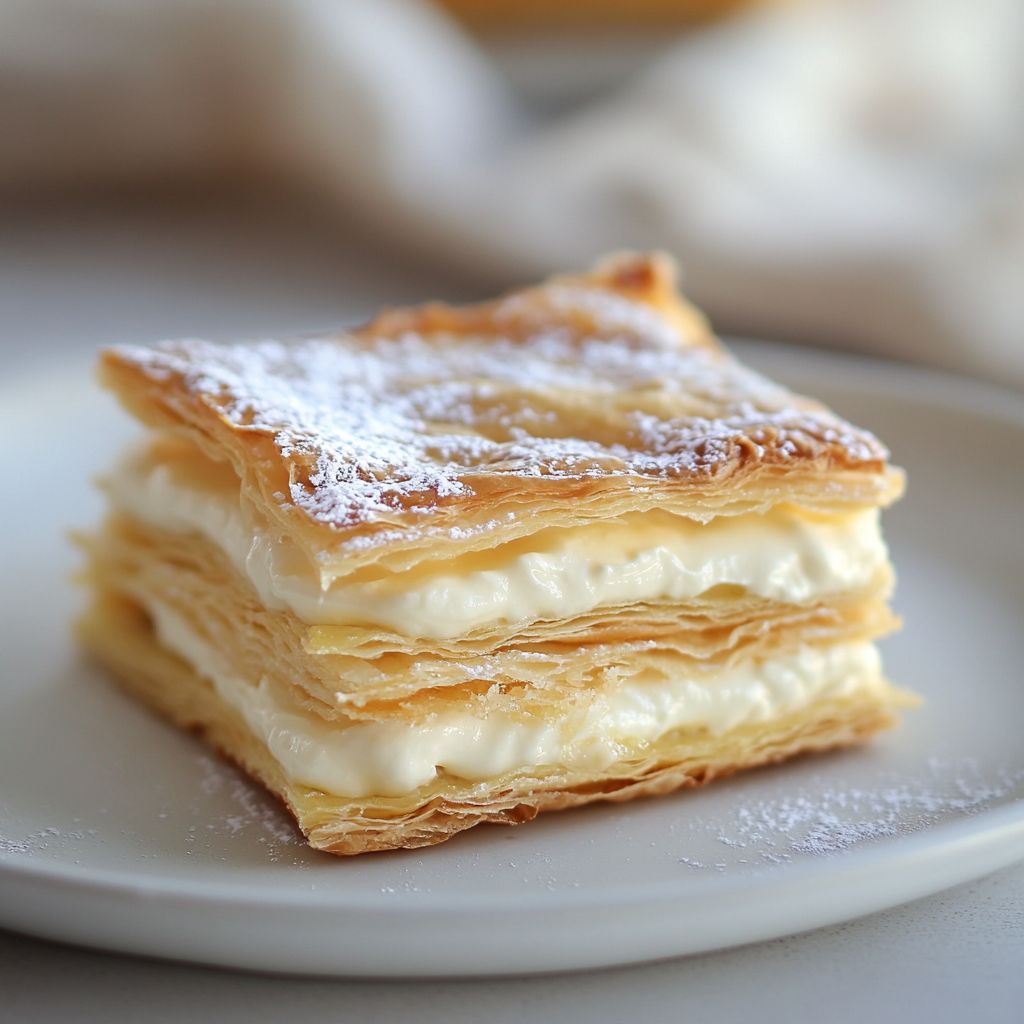
Introduction / Hook
Imagine a delicate tower that melts on your tongue, each crisp, paper-thin layer of pastry giving way to a silken cloud of vanilla cream. A whisper of sweetness coats the palate, while a glossy crown of glaze catches the light like a miniature jewel, inviting your eyes to feast before your tongue takes its turn. Mille feuille—the thousand leaves—lives up to its name with an elegance that feels almost ceremonial, as if you’re unwrapping a tiny edible bouquet of texture, aroma, and memory. This is not just a dessert; it is a sensorial ceremony that turns any moment into a celebration. The first bite promises a crisp snap, the second dissolves into lush cream, and with each subsequent bite you discover new nuances—hints of vanilla, a kiss of butter, a whisper of citrus zest in the cream, and a faint caramel glow from the glaze. The experience is both intimate and grand, simple in its components yet sophisticated in its execution, designed for those who savor the artistry of pastry in a way that feels timeless and yet approachable.
There is something irresistibly tactile about Mille Feuille. It speaks to the hands that roll the dough, the patience that waits as layers rise and stack, and the heart that shares a slice with someone you love. It is a dessert that invites conversation: “Do you like the crackle when you bite through the top layer?” “Would you like the pastry more layered or more creamy in the middle?” The questions themselves become part of the ritual, as communal as tea or coffee on a quiet afternoon. And yet, beneath its refined appearance lies a friendly soul: a dessert that can be perfected with a few mindful techniques and a few high-quality ingredients, but also forgiving enough to adapt to what you have on hand. Mille Feuille is a culinary invitation to slow down, to savor, and to celebrate craft in its most approachable form.
The Story Behind the Dish
The Mille Feuille is a cornerstone of classic French patisserie, a pastry that embodies the French reverence for technique, balance, and elegance. Its name—thousand leaves—captures the essence of the dish: countless, nearly imperceptible layers of puff pastry stacked with a lush filling, and finished with a polished glaze or a dusting of sugar that glows with refinement. The pastry layers themselves, delicate and crisp, reveal the hand of the baker in every bite, their lamination technique a quiet testament to patience and precision. While the exact moment of its invention remains shrouded in pastry lore, the Mille Feuille has been a beloved fixture in Parisian patisseries since at least the 19th century, with regional varieties and adaptations blossoming across France and beyond.
The origin of the dish is often tied to the long, ritualized craft of puff pastry, a marvel of lamination that folds butter into dough dozens of times, creating thousands of ultra-thin sheets that puff into a heavenly crunch when baked. In many histories, the Mille Feuille evolved from earlier mille-feuilles or napolitains that featured similar concepts—layers of pastry with creams and toppings—adapted to emphasize elegance and proportion. In some accounts, the “Napoléon” moniker is used in certain markets for a Mille Feuille, especially in more traditional Parisian patisseries, weaving a subtle thread of history with cultural memory. The pastry has traveled with explorers, artists, and families, turning into a canvas for regional flavors: vanilla creams that whisper of Tahitian beans, citrus zests brightening the middle, candied fruits, or even chocolate and coffee variations that honor global palates while preserving the essential architecture of the dessert.
Beyond Europe, Mille Feuille has found a home in many kitchens as a canvas for storytelling. Home bakers tend to adapt the recipe to seasonal fruits, local dairy, and personal preferences, while pastry chefs push the boundaries with intricate glazes, complementary textures, and modern pastry techniques. The dish thus becomes less a rigid formula and more a tradition—one that invites you to respect the layers, honor the cream, and finish with polish. The history is as much about technique as it is about taste: the crack of the pastry, the velvet smoothness of the cream, the gleaming glaze that makes the dessert sing on the plate. When you prepare Mille Feuille, you’re participating in a lineage of pastry artistry, a dialogue between centuries of bakers who have passed down the craft through practice, patience, and shared meals.
Why You’ll Love This Recipe
There are several compelling reasons Mille Feuille remains a beloved choice for both bakers and guests. Embracing this dessert is like inviting a classic conversation to the table—familiar enough to comfort, yet full of opportunities to personalize. Here are the reasons this recipe finds a spot on many tables again and again:
- Timeless elegance, with approachable technique: The concept is simple—layers of puff pastry with a creamy filling—but the result feels extraordinarily refined. Master the lamination a little and you’ll impress with minimal fuss.
- Textural harmony: The interplay of crisp pastry and velvety cream creates a symphony of textures that keeps each bite dynamic, never dull. The top glaze adds a final gloss that makes the whole plate glow.
- Versatility and adaptability: The dessert can be tailored to your palate or occasion—vanilla-forward pastry cream for classicists, citrus or almond notes for a twist, or even a chocolate kiss for chocoholics. The base structure remains recognizably Mille Feuille, no matter how you switch the character.
- Make-ahead friendly: With careful handling, components can be prepared ahead and brought together when you’re ready to serve. This makes it a smart choice for parties, birthdays, or holiday gatherings.
- Show-stopping presentation with minimal effort: The vertical stacking and glossy finish on the top layer offer dramatic impact on the plate, making it perfect for celebrating milestones or special dinners without requiring flamboyant技巧.
- Comforting yet refined: It straddles the line between homey pastry and dessert-showpiece, offering warmth and familiarity alongside a polished, restaurant-worthy finish.
- Skill-building opportunity: Working with puff pastry teaches you control in rolling, folding, chilling, and timing—skills that translate into many other pâtisserie projects.
Whether you’re baking for a quiet weekend with loved ones or planning to dazzle guests at a formal dinner, Mille Feuille offers a balanced, rewarding experience. It invites you to slow down and savor not only the flavors but the process—the way layers accumulate, the patience required for perfect lamination, and the joy of presenting a dessert that feels greater than the sum of its parts.
Flavor Profile & Texture
The Mille Feuille is a study in contrast and cohesion. Its flavor profile centers on buttery, lightly crisp pastry that holds its shape yet yields to a creamy, smooth filling. The pastry cream—often a vanilla bean-forward custard—brings a comforting sweetness, a gentle aroma of vanilla, and a lush mouthfeel that lingers pleasantly. The top glaze, whether a delicate fondant, a clear sugar glaze, or a subtle fruit glaze, adds a sheen and a hint of sweetness that ties the layers together visually and gastronomically. When well executed, each bite unveils a progression: a hair-thin crack of pastry, a rush of cream, a cool sweetness, and a finish that persists with a clean, finish-worthy aftertaste.
Key sensory notes you’ll likely notice include:
- Butter and pastry aroma: The dough exhales a warm, toasty scent of butter that becomes more pronounced as the sheets bake to a pale gold.
- Silky vanilla: The custard’s hallmark is a velvety vanilla profile. Real vanilla beans or high-quality extract lend creamy depth and a lingering perfume that whispers of orchards and creamy desserts from grand patisseries.
- Subtle citrus or almond accents (optional): A touch of lemon zest or orange zest can brighten the cream, while a hint of almond paste or extract adds a delicate, almost marzipan-like character that pairs beautifully with the pastry’s richness.
- Glossy finish: The glaze on top catches the light, while a fine dusting of powdered sugar or a whisper of cocoa can introduce a second flavor layer that plays nicely against the sweet cream.
- Texture gradient: First bite yields a crisp snap; the middle reveals pillowy cream; the finish leaves a soft, slightly caramelized aftertaste from the pastry’s edges and the glaze’s edge.
texture-wise, the ideal Mille Feuille balances crisp pastry layers with a creamy, airy filling, and a glaze that is not too thick or cloying. Too much glaze can overwhelm the delicate pastry, while too little can leave the dessert feeling dry. The best versions achieve a quiet luxury: pastry that shatters at the touch, cream that glides across the tongue, and a finish that invites another bite without being overwhelming.
Occasions & Pairings
Mille Feuille shines across a spectrum of settings, from intimate dinners to grand celebrations. Its refined appearance makes it a natural centerpiece for holiday menus, milestone birthdays, anniversaries, and festive weekend lunches. It can also be a glamorous yet approachable dessert for a dinner party where guests arrive hungry but your kitchen is buzzing with other dishes. If you’re serving it as a finale, allow for a moment of pause—the dessert deserves to be admired before it’s devoured.
Pairings enhance the experience without stealing the show from the pastry itself. Consider these options:
- Beverages: A bright sparkling wine, a semi-sweet Champagne, or a late-harvest dessert wine (like Sauternes) can echo the pastry’s sweetness while cleansing the palate between bites. For non-alcoholic pairings, a vanilla-infused tea, a light chamomile, or an almond milk latte can complement the flavors without overwhelming them.
- Fruit companions: Fresh berries (strawberries, raspberries, or a berry compote) or a light citrus segment can provide a fresh counterpoint that brightens the cream’s richness. A few raspberries tucked between the layers in a plated version also add color and a tart note that sings against the vanilla.
- Side dishes: A simple, lightly dressed green salad with citrus vinaigrette offers a clean contrast and helps balance a meal featuring Mille Feuille as the final course. For more indulgent occasions, a small portion of dark chocolate or a coffee mousse can heighten the dessert’s chocolatey or roasted notes if you experiment with variations.
- Seasonal twists: In summer, incorporate fresh stone fruit slices between layers for a juicy burst; in autumn, a hint of cinnamon or cardamom in the cream can evoke cozy, comforting flavors; in winter, a coffee-kavored glaze can complement the cold air and festive meals.
Tips, Variations & Substitutions
While the Mille Feuille’s essence remains the same, there are many avenues to customize it according to dietary needs, ingredient availability, or personal taste. Here are practical ideas to experiment with while preserving the spirit of the dish:
- Glaze variations: Opt for a classic white fondant glaze for a pristine, traditional look. If you prefer a glossier finish, a thin sugar glaze made with a touch of lemon juice can add brightness. Chocolate glaze is a dramatic alternative, especially when paired with a coffee or vanilla cream. For a fruit-forward finish, brush a light fruit glaze (raspberry, passion fruit, or apricot) across the top for a glossy, tangy finish.
- Make-ahead architecture: You can bake and chill the puff pastry sheets in advance, and prepare the pastry cream a day ahead. Store each component separately, then assemble shortly before serving. This helps you manage a busy schedule without sacrificing the crispness of the pastry.
- Vegan and dairy-free options: Use dairy-free puff pastry (check labels for butter content) and a dairy-free pastry cream made from almond milk or coconut cream with a cornstarch-thickened base. Vanilla bean paste or extract remains central for the depth that the dish requires. A light almond or cashew cream can offer a similar mouthfeel when properly set and chilled.
- Gluten-free adaptation: Choose a certified gluten-free puff pastry or make a gluten-free lamination using alternate flours that hold together well. The texture might shift slightly, but with careful rolling and chilling, you can achieve a delicate crispness that mirrors the traditional experience.
- Flavor twists: Introduce citrus zest (lemon, orange, or blood orange) into the pastry cream for a bright lift. A touch of liqueur (Grand Marnier, Kirsch, or rum) can deepen the aroma if you enjoy a more complex profile. For chocolate lovers, a thin layer of white or dark chocolate between pastry sheets creates a delicious contrast with the vanilla cream.
- Regional variations: In some regions, the top layer is glazed with a light almond glaze or a fondant tinted with subtle color to reflect seasonal palettes. A pistachio paste layered with the cream offers a nutty variation that remains faithful to the multi-layer concept.
Storage & Make-Ahead Ideas
To preserve texture and taste, treat Mille Feuille with care when storing and assembling. Here are practical guidelines to maintain quality:
- Component storage: Keep baked puff pastry sheets in a cool, dry place in an airtight container. Pastry cream should be refrigerated in a covered container. The top glaze should be added just before serving to avoid softening the pastry’s surface.
- Make-ahead strategy: Bake and cool the pastry sheets in advance, then freeze them flatted between parchment sheets. Thaw at room temperature before assembling. Prepare the pastry cream a day ahead and chill thoroughly. Assemble the Mille Feuille a few hours before serving to ensure the layers set, but avoid assembling too far ahead, as moisture can soften the pastry.
- Leftovers: Leftover slices can be stored in the refrigerator for up to 1–2 days, ideally covered to prevent the pastry from picking up fridge odors. For best texture, reassemble just before serving or refresh the pastry sheets in a 350°F (175°C) oven for a few minutes to restore crispness, then proceed with re-glazing and cream if needed.
- Freezing tips: Whole Mille Feuille is best served fresh, but you can freeze pre-baked pastry sheets and cream separately. When thawing, gently reassemble and apply a fresh glaze for a polished finish. Avoid freezing the assembled structure, as the pastry texture will degrade.
Fun Facts & Trivia (Optional)
Beyond its refined presentation, Mille Feuille carries a few delightful tidbits that pastry lovers often enjoy sharing:
- Thousand leaves, many names: While Mille Feuille translates literally to “thousand leaves,” in different regions you may see it listed as Napoléon, mille-feuille, or vanilla cream layers—each name hinting at a slightly different emphasis on texture or presentation.
- Lamination magic: The hallmark of good Mille Feuille is the lamination technique—folding and rolling dough to create ultra-thin sheets that puff into delicate layers. The artistry lies in achieving consistent thickness and even spacing between layers, a task that rewards patience and practice.
- A pastry legend’s tension: The dessert sits at an intersection of tradition and innovation. While many chefs honor classic lamination, others push the boundaries with new fillings, glazes, or layer configurations, proving that heritage can gracefully coexist with experimentation.
- Visual feast: The top glaze isn’t merely decorative; it protects the creamy interior, seals in moisture, and gives the final plated dessert an alluring sheen that makes it a focal point on the dessert cart or table.
- Across the globe: The Mille Feuille has inspired countless adaptations worldwide, from custard mille-feuilles in Spain to chocolate-and-cream riffs in Japan. Each region adds its own accent while honoring the structure’s elegant core.
In the end, Mille Feuille is more than a dessert; it is a crafted experience that invites you to appreciate the layering of skill, patience, and taste. It celebrates versatility—whether you stick to the classical route with vanilla cream and a white glaze or breathe new life into the concept with seasonal fruits, bold flavors, or modern techniques. No matter how you choose to present it, Mille Feuille remains a testament to the enduring appeal of pastry art: precise, indulgent, and deeply satisfying to the senses.
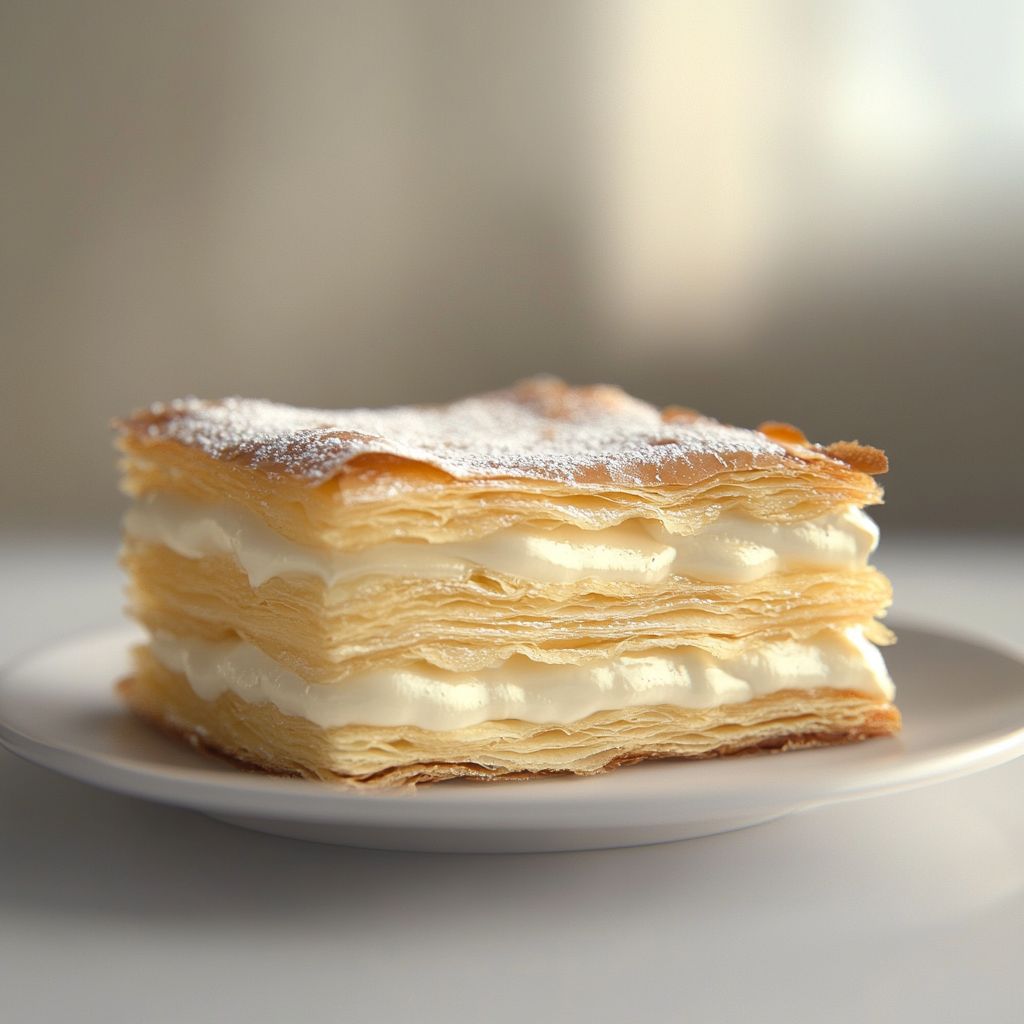
Ingredients
Mille Feuille
Puff Pastry
– 3 sheets puff pastry (store-bought, thawed)
→ Mille-feuille relies on ultra-thin, flaky layers created by laminated puff pastry. Use three sheets cut to the same rectangle size as your final pastry blocks. Keep the sheets cold and work quickly to prevent the butter from melting before baking. Prick the dough with a fork before baking (docking) to control puffing; bake until evenly golden and crisp. Allow to cool completely before assembly to maintain crisp layers.
– Egg wash (1 large egg, beaten with 1 tablespoon water)
→ The egg wash gives a glossy, golden finish on baked puff pastry and helps the layers detach cleanly. Brush lightly on the top surfaces only to avoid soggy edges. If the sheets puff unevenly, you can gently press down the center after a short bake to level, but ensure they are completely cool before assembling.
Pastry Cream
– Whole milk (2 cups)
→ The base liquid for crème pâtissière. Heat gently until steaming (not boiling) and temper with the yolks to create a smooth, silky custard. Full-fat milk yields a richer texture; reduce fat for a lighter version, but expect a thinner result. Do not boil once the yolks are tempered.
– Egg yolks (4 large)
→ Provide the custard’s body and creaminess. Whisk with sugar to create a pale, thick ribbon, then slowly temper with hot milk to prevent scrambling. Strain if any lumps form for an ultra-smooth finish.
– Granulated sugar (1/2 cup)
→ Sweetens and helps achieve a smooth custard texture when beaten with the yolks. For the smoothest result, use superfine sugar so it dissolves quickly during mixing. Fully dissolve before tempering the yolks to avoid gritty custard.
– Cornstarch (1/4 cup)
→ Primary thickener that gives the pastry cream its firm set when cold. Make a slurry with a small amount of cold milk before adding to the hot mixture to prevent lumps. Cook until the mixture just comes to a boil and thickens, then remove from heat.
– Pinch of salt
→ Enhances vanilla and overall flavor, balancing sweetness. A small amount improves depth; skip if you are avoiding salt altogether.
– Unsalted butter (2 tablespoons)
→ Enriches the custard and adds a velvety sheen. Stir in off the heat, in small pieces, until melted and smooth. For an extra glossy finish, press plastic wrap directly on the surface to prevent a skin from forming while it cools.
– Vanilla extract (1 teaspoon)
→ Classic crème pâtissière flavor. Use pure vanilla extract or vanilla bean paste for maximum aroma. If using vanilla bean, infuse the milk with the scraped seeds and pod during heating, then strain before tempering the yolks.
Top Finishes
– Powdered sugar (for dusting)
→ Finishing touch that adds a delicate sweetness and a clean, professional look to the sliced mille-feuille. Sift the sugar lightly over the top after the pastry is fully assembled and chilled to avoid clumping and to keep the layers crisp. Avoid heavy dusting that could mask the clean edges of the pastry.
– Fondant glaze (optional)
→ Traditional smooth, glossy top finish for a classic mille-feuille. Make a pourable fondant by whisking 1 cup confectioners’ sugar with 1–2 tablespoons water and a touch of lemon juice if desired. Adjust thickness with more sugar or water as needed. Apply to a completely cooled pastry and allow to set before slicing.
– Chocolate glaze (optional)
→ A rich, dramatic finish alternative to fondant. Melt 100 g dark chocolate with 1–2 tablespoons unsalted butter (and 1 teaspoon corn syrup if you want extra shine). Drizzle or spread in an even, thin layer over the top and let set at room temperature. For a mirror shine, keep glaze slightly warm when applying and ensure the pastry is cold; tempering the chocolate slightly can improve gloss and texture.
Instructions
- Thaw three puff pastry sheets completely and trim them to uniform rectangle shapes that match your final pastry blocks; keep the sheets cold during trimming to preserve the laminated butter layers and ensure even, crisp layers after baking.
→ Uniform rectangles ensure the final blocks stack neatly and slicing yields clean, professional portions; cold sheets prevent butter from smearing during handling. - Dock and prepare the sheets for baking by placing them on parchment-lined baking sheets and pricking the surface with a fork at 1/2-inch intervals to control puffing; this guides steam and yields a flat, crisp base rather than irregular domes.
→ Docking maintains even thickness and flat tops, which is essential for a visually pristine mille-feuille and easy stacking later. - Preheat your oven to 400°F (200°C) and brush the top surfaces of the chilled pastry with a light egg wash before baking to promote a glossy, golden finish; bake until evenly golden and crisp, about 12 to 15 minutes, rotating halfway for uniform browning.
→ The high heat rapidly sets the lamination, producing crisp layers; rotating ensures equal color development and prevents scorching on one side. - Cool the baked puff pastry sheets completely on a wire rack until they reach room temperature; this stabilizes the layers and prevents moisture from the cream softening the pastry during assembly.
→ Complete cooling preserves crisp edges and allows clean slicing later without sogginess. - Prepare the pastry cream by heating whole milk just to steaming; while warming, whisk egg yolks with granulated sugar until pale and thick, then whisk in cornstarch and a pinch of salt to form a smooth paste; this builds a sturdy custard base.
→ Whisking yolks with sugar creates volume and body, while cornstarch thickens without curdling, setting up a stable filling. - Make a cold slurry by dissolving a small amount of cold milk with the cornstarch, then whisk it into the hot milk in a steady, thin stream; cook while whisking until the mixture just comes to a boil and thickens, then remove from heat to avoid scorching.
→ The slurry prevents lumps and ensures a glossy, fully thickened custard that coats the back of a spoon. - Off the heat, whisk in 2 tablespoons unsalted butter pieces until melted and smooth, then add vanilla extract and a pinch of salt; strain the pastry cream into a clean bowl and press plastic wrap directly on the surface to prevent a skin from forming; refrigerate until fully cold and very thick.
→ Butter enriches the texture and gloss of the crème pâtissière; straining removes any lumps and sealing the surface prevents skin formation during chilling. - Trim the cooled puff pastry sheets again if necessary to ensure identical dimensions, then align them precisely on a flat work surface so the edges are square and even; this creates a neat, professional base for the layers when assembled.
→ Precise trimming and alignment guarantee uniform slices and a tidy finish. - Spread a thin, even layer of pastry cream on the bottom sheet with an offset spatula, leaving a small border to prevent overflow; avoid overfilling to keep the layers crisp and to allow clean slicing later.
→ A restrained layer prevents cream from seeping into the edges, preserving the distinct lamination and presentation. - Top with the second puff pastry sheet and gently press to seat it, then spread a second, even layer of pastry cream over this sheet; align edges carefully before placing the final sheet on top to complete the triple-layer structure.
→ Proper layering maintains the classic mille-feuille proportions and ensures visible, defined cream between each pastry layer. - Trim the outer edges to create a perfectly rectangular mille-feuille, wrap loosely, and refrigerate the assembled stack for 1–2 hours or until the layers are firm and the cream is set; this makes slicing clean and helps the layers hold their shape.
→ Chilling solidifies the structure so cuts reveal distinct layers and the pastry stays crisp rather than collapsing. - Slice the chilled stack into evenly sized rectangles with a sharp serrated knife, wiping the blade after each cut to prevent dragging cream and to maintain crisp, clean edges; use a gentle sawing motion to avoid squashing the layers.
→ Clean cuts showcase the lamination and cream between each layer for a professional presentation. - Dust the top surface of the slices with a light veil of powdered sugar for a refined finish and subtle sweetness; sift just enough to coat without hiding the precise edges of the pastry.
→ Powdered sugar adds a delicate, aesthetic contrast and helps balance the richness of the filling. - Optionally apply fondant glaze by whisking 1 cup confectioners’ sugar with 1–2 tablespoons water and a touch of lemon juice to a pourable consistency; pour or brush a thin, even coat over the top, then allow to set at room temperature before serving.
→ Fondant provides a classic, glossy finish that complements the crisp layers and smooth pastry cream. - Alternatively, prepare a chocolate glaze by melting 100 g dark chocolate with 1–2 tablespoons unsalted butter (and a teaspoon of corn syrup for extra shine), then drizzle or spread a thin, even layer across the top and let it set at room temperature for a glossy, dramatic finish.
→ Chocolate glaze offers a rich, sophisticated contrast to the light pastry and creamy filling, with a satisfying snap once set.
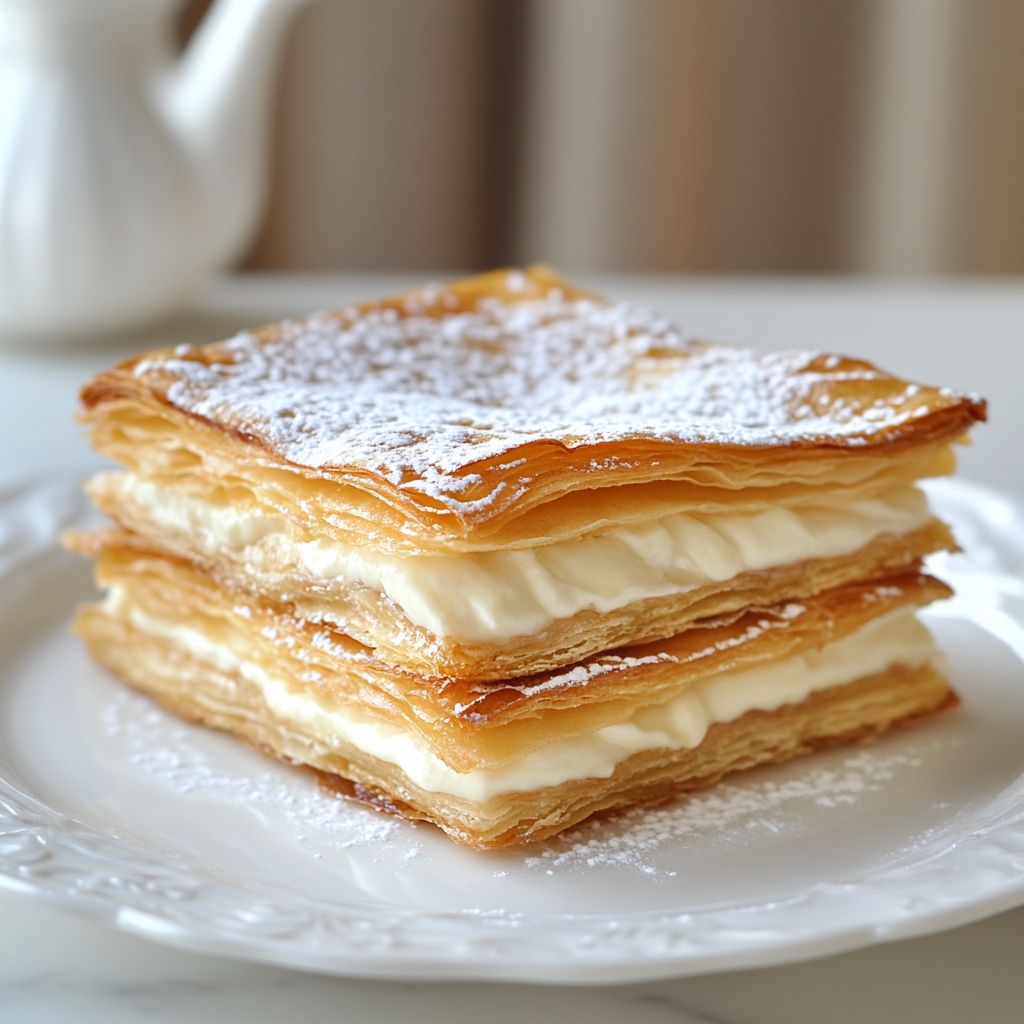
Notes
These mille-feuille are classic French pastries built from ultra-thin puff pastry sheets layered with a silky pastry cream. To achieve crisp, flaky layers, keep the dough cold and work quickly; cut all sheets to the same rectangle size as your final pastry blocks and dock (prick) before baking to control puffing. Bake until evenly golden and crisp, then cool completely before assembly to preserve the layers.
- Puff pastry handling: Use three sheets cut to the same rectangle size as your final blocks. Keep everything cold; docking helps control puffing; bake until golden and crisp; cool completely before assembly to maintain crisp layers.
- Egg wash: The egg wash gives a glossy finish and helps the layers detach cleanly. Brush lightly on the top surfaces only to avoid soggy edges; if sheets puff unevenly, gently press the center after a short bake and ensure they are completely cool before assembling.
- Pastry cream: Heat the milk just until steaming; whisk yolks with sugar and cornstarch, then temper with hot milk. Return to the heat and cook until the mixture just boils and thickens; strain for smoothness; off the heat, whisk in butter and vanilla. Chill until cold and set.
- Assembly: Place one rectangle on a serving board, spread a thin layer of pastry cream, add the second rectangle, repeat, and finish with the third. Chill to set, then slice with a sharp knife, wiping the blade between cuts for clean edges.
- Finishes: Dust with powdered sugar for a classic look, or apply fondant glaze or a chocolate glaze for a richer finish. Ensure glazes are set before slicing to keep layers crisp.
- Make-ahead and storage: The assembled mille-feuille can be refrigerated for a day, but crispness may soften. Keep covered to prevent moisture; for best texture, assemble and chill shortly before serving.
- Variations and serving tips: For aroma, infuse the milk with vanilla pod seeds; add a touch of citrus zest to pastry cream; garnish with fresh berries or a light dusting of cocoa or edible petals. Use a sharp knife and wipe the blade after each slice for perfect presentation.
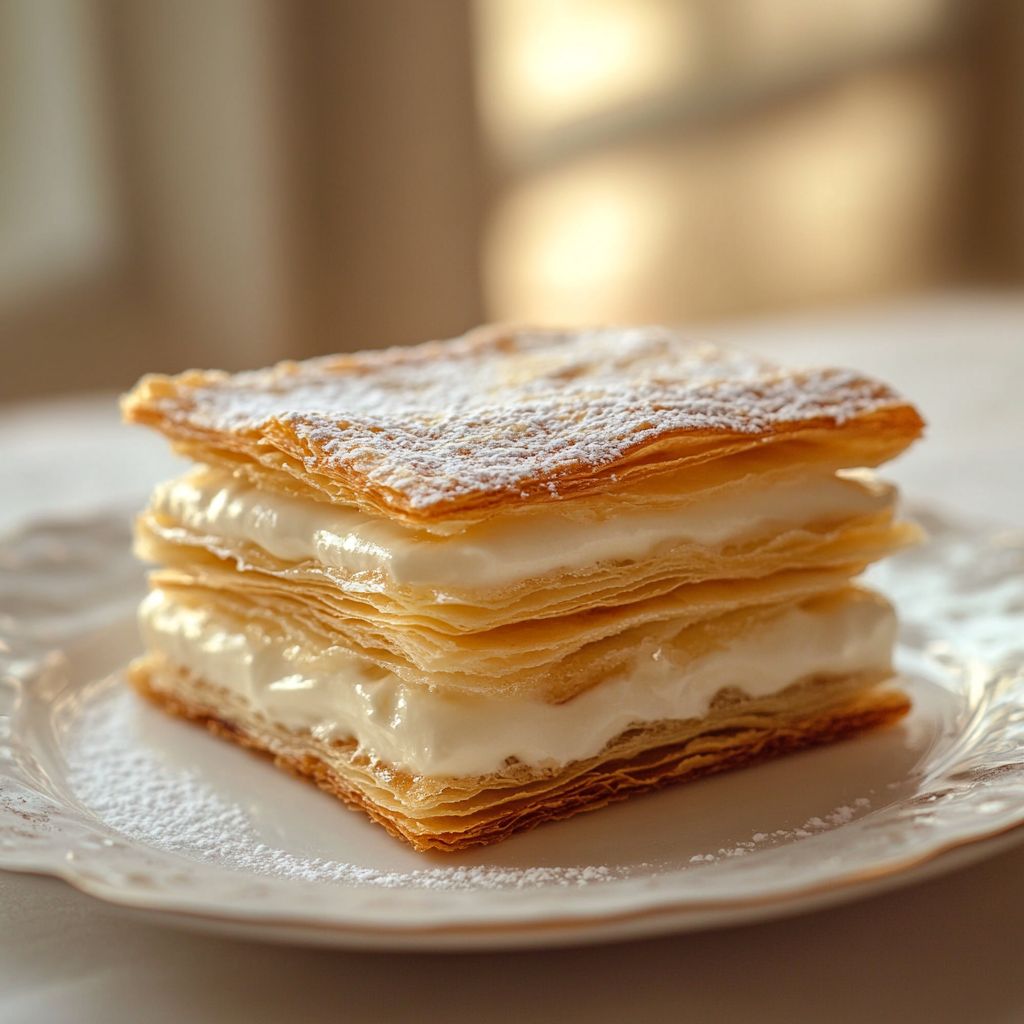
Tips
- Puff Pastry handling tips:
– Keep the three puff pastry sheets as cold as possible before assembling. If they feel soft, refrigerate for 10–15 minutes or briefly return to the freezer for a quick chill.
– Work quickly when cutting and layering to prevent butter from melting into the dough and affecting the lamination. Use a sharp knife or a pastry ruler for clean, even cuts that match the final block size.
– Dock the dough (prick with a fork) before baking to control puffing and prevent large air pockets. Bake until evenly golden and crisp; if any sheet puffs unevenly, gently press down the center after a short initial bake and return to the oven until fully cooled.
– Bake on parchment or a silicone mat and cool completely on a rack to maintain crisp, separate layers. Stacking warm sheets can trap steam and make them soggy.
– For extra neat edges, trim any uneven sides after baking so all three layers align perfectly in the final mille-feuille blocks. - Pastry Cream tips:
– Heat the milk gently to steaming (do not boil) and temper the yolks gradually to avoid scrambling. A classic method is to whisk yolks with sugar, then ladle hot milk in a thin stream while whisking constantly.
– Cook the custard until it just thickens and reaches a gentle boil, then remove from heat immediately. Overcooking can cause a grainy texture.
– Strain the pastry cream through a fine sieve to catch any lumps for ultra-smooth filling.
– Off the heat, whisk in butter in small pieces until melted and glossy. If you want a sheen, press plastic wrap directly on the surface to prevent a skin from forming as it cools.
– For vanilla intensity, infuse the milk with vanilla seeds and pod during heating, then strain before tempering the yolks. If using extract, add it after cooking. - Assembly and chilling tips:
– Ensure all components are completely cooled before assembly to keep layers crisp and prevent the custard from becoming runny.
– Trim the pastry sheets to uniform rectangles to create clean, even layers when stacked.
– Spread pastry cream evenly with a spatula, keeping thickness consistent but not overfilled to avoid squashing the layers.
– Alternate the pastry sheets to maintain the three-layer structure, and chill the assembled blocks thoroughly (at least 1–2 hours, preferably longer) so the layers set and slices cleanly.
– Slice with a sharp, warmed knife or a hot blade for neat, straight edges without dragging the cream. - Finishes and presentation tips:
– Dust with a light veil of powdered sugar just before serving to maintain crispness of the top layer.
– If using fondant, ensure the pastry is completely cooled; apply in a thin, even layer and let set before slicing for a glossy finish.
– For a chocolate glaze, tempering the glaze slightly helps achieve a glossy, mirror-like look and prevents dull spots. Apply to a cool pastry and let set at room temperature.
– For best visual appeal, refrigerate the assembled mille-feuille after final assembly and before slicing to help the cream firm and the layers stay crisp. - Tips for variations and troubleshooting:
– If the pastry seems soggy at the edges, bake the sheets a little longer or finish the baking on a wire rack to maximize air circulation.
– To reduce richness, you can use a lighter milk or a small amount of cornstarch in the custard, but be mindful it may affect texture.
– For a fruit-laden version, layer fresh berries or a thin fruit purée between pastry layers, but keep fruit away from the outer glaze to avoid sogginess.
– If the blocks crack during slicing, chill longer and ensure the knife is hot; clean the knife between slices for cleaner cuts.
FAQ
What is mille-feuille?
Mille‑feuille, also known as Napoleon, is a classic French pastry built from alternating sheets of flaky puff pastry and creamy filling, typically crème pâtissière (vanilla pastry cream). It is usually finished with a glaze or fondant and decorative stripes on top.
What are the main components of a traditional mille-feuille?
The traditional version uses three parts: puff pastry sheets (usually two or three layers), pastry cream (crème pâtissière) as the filling, and a glaze on top (often fondant or a light icing). Some renditions add chocolate or berry glazes for variation.
Can I make puff pastry from scratch for mille-feuille?
You can, but it requires time and technique to laminate butter into dough through multiple folds. Most home cooks use store-bought puff pastry for reliability and speed. If making from scratch, roll out, chill between folds, and bake until deeply crisp and golden.
How is the pastry cream (crème pâtissière) prepared?
Whisk together eggs, sugar, and a bit of cornstarch or flour. Heat milk with a vanilla pod or vanilla paste, then temper the hot milk into the eggs, return to the stove, and cook until thick and smooth. Cool completely and cover with plastic wrap to prevent a skin from forming.
How do you assemble mille-feuille to stay crisp?
Bake the puff pastry until very crisp and cool it completely. Spread a layer of cooled pastry cream on one sheet, top with another puff pastry sheet, and repeat. Chill the assembled pastry and apply the top glaze just before serving to help maintain crispness.
Can I use store-bought puff pastry?
Yes. Choose all-butter puff pastry if possible. Thaw as directed, roll to the desired thickness, and bake on parchment-lined sheets until puffed and golden. Let the sheets cool fully before filling to avoid soggy layers.
What are some popular variations of mille-feuille?
Common variations include vanilla pastry cream with almond frangipane, chocolate pastry cream, pistachio cream, or fruit fillings like berries. Toppings may be white fondant with chocolate stripes, a glossy chocolate glaze, or a simple powdered sugar dusting. You can also add a fruit layer between the pastry sheets for a lighter version.
How long does mille-feuille keep and how should I store it?
Best enjoyed fresh the same day. If needed, refrigerate covered for up to 1–2 days, but the pastry may lose crispness over time. Keep assembled mille-feuille refrigerated; if storing unfilled pastry sheets, keep them in a cool, dry place and assemble just before serving.
How should I plate and serve mille-feuille?
Slice with a sharp knife or dental floss for clean cuts. Serve chilled or lightly cooled, with a dusting of powdered sugar or fresh berries on the side. For an elegant presentation, drizzle a small amount of glaze or chocolate in a decorative pattern on top before slicing.