Introduction / Hook
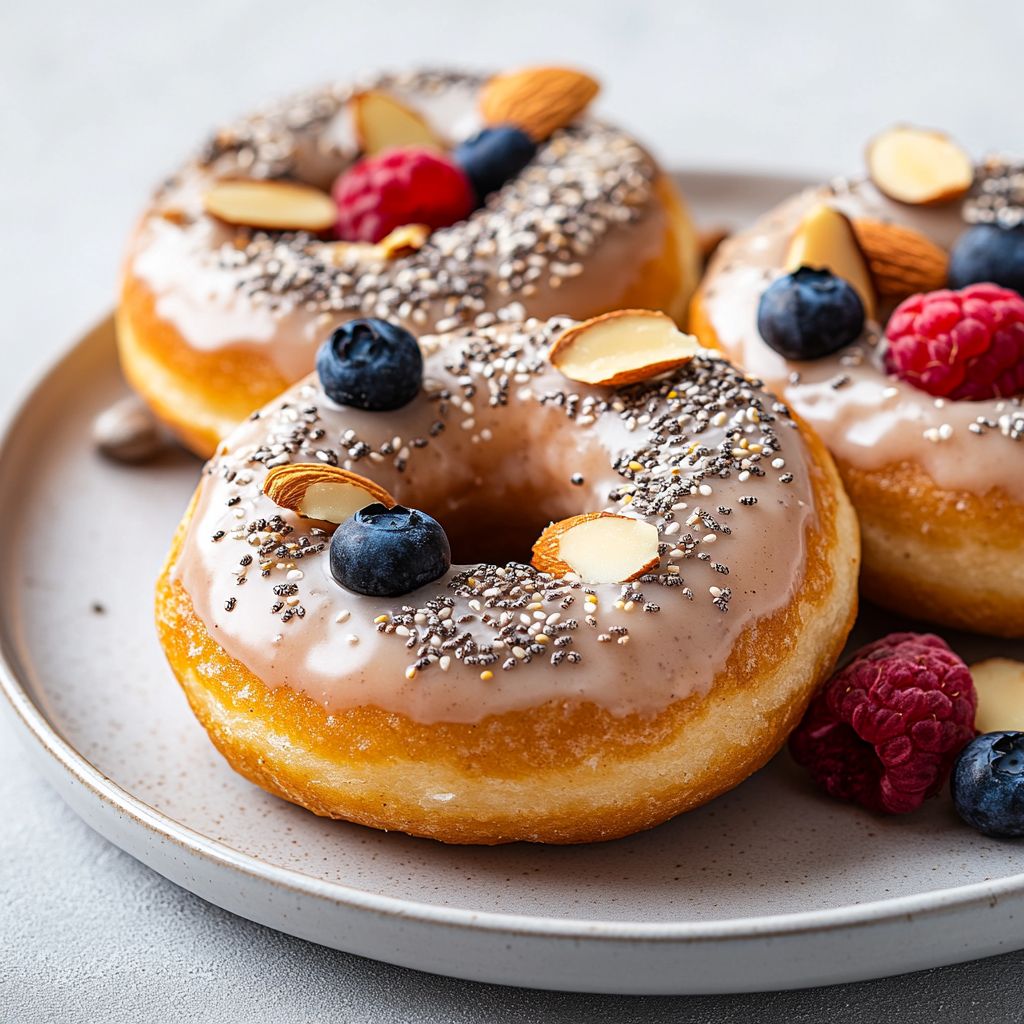
Imagine waking up to the soft hum of your kitchen, the first light of dawn warming the counter, and the scent of something comforting and unexpectedly wholesome drifting through the air. Healthy donuts—not the guilt-laden kind you might associate with office vending machines, but a bright, satisfying twist on a beloved treat—are here to redefine your morning ritual. These donuts are a scent-filled promise: a golden crust that gives way to a tender crumb, a whisper of sweetness that doesn’t overpower, and a texture that feels indulgent yet nourished by thoughtful ingredients. The magic lies in balance. They’re baked, not fried, built with whole grains or nutrient-rich bases, and sweetened with natural, pantry-friendly ingredients that let the flavor shine through without weight or heaviness lingering on the palate. It’s donuts, reimagined for real life—snug enough for a weekday breakfast, generous enough for a weekend brunch, and flexible enough to adapt to your dietary preferences without losing their charm.
From the moment you bite into the first ring, you’ll notice how the exterior holds a delicate crust, a thin sheen from a light glaze, and an aroma that mingles vanilla, a hint of citrus, and a touch of warmth from cinnamon or nutmeg. There’s a subtle, comforting sweetness that feels like home, but the finish is clean and bright—a texture that stays with you, rather than weighing you down as you charge into your day. These donuts prove that morning desserts can be a smart choice: satisfying and nourishing at once, with room for customization that makes each batch feel like a personal signature.
The Story Behind the Dish
The donut as we know it has a rich, almost wandering history. Its earliest cousins appeared in various cultures as fried dough rings or disks—simple, rustic, and deeply comforting. A version with a hole in the middle gained prominence in the 19th century, a practical invention attributed to American seafaring lore and a clever baker’s experiment with a doughnut that could cook more evenly. The ring shape, now iconic, became a symbol of everyday joy: something you could grab on the go, something that felt festive without requiring a special occasion. Yet for many, traditional donuts carried the heavy indulgence of fried batter and sugary glazes. That tension between comfort and health inspired many modern kitchens to rethink the concept from the ground up.
In this healthy reinterpretation, the donut sheds some of its heavier associations and embraces ingredients that support energy, mood, and everyday vitality. The spirit of the original—cuddly textures, a sprinkle of sweetness, and a moment of treat-evasion in a busy schedule—remains, but the execution honors contemporary nutrition without sacrificing flavor or joy. The result is a donut that feels familiar enough to coax a smile from the most nostalgic palate, yet modern enough to feel like a smart choice for anyone watching their intake, dietary restrictions, or simply their cravings after a long day. The backstory here is less about ancient origins and more about a culinary evolution: a classic transformed to fit a gentler approach to eating, without compromising the sense of celebration that donuts inherently carry.
In many households, this evolution is less about a dramatic makeover and more about a practical philosophy: use whole-grain flours, rely on natural sweetness, lean on dairy or dairy-free alternatives you already stock, and bake until the center is tender and the surface gleams with a delicate glaze. The story behind healthy donuts is one of balance and invitation—an invitation to enjoy something special without guilt, to share with friends and family, and to build a little ritual around the ordinary mornings that can turn them into something memorable.
Why You’ll Love This Recipe
Healthy donuts strike a chord for a wide range of eaters, and here are the reasons you’re likely to fall for them as hard as you fall for the scent of vanilla wafting from the oven:
- Quick and approachable: the batter comes together in one bowl, with minimal fuss and no complicated techniques, making it ideal for a busy morning or a weekend baking session.
- Health-forward without compromising satisfaction: the base relies on whole grains, gentle natural sweeteners, and optional add-ins that boost fiber, protein, or healthy fats, so each bite feels comforting rather than indulgent in a way that leaves you sluggish.
- Versatile and adaptable: the same core concept supports myriad variations—gluten-free, dairy-free, vegan, or protein-boosted versions—so you can tailor the donuts to your diet or your pantry without losing the essence of the treat.
- Kid-friendly and crowd-pleasing: their familiar donut shape and approachable sweetness work beautifully for family breakfasts, school snacks, or weekend brunch with friends.
- Great for meal-prep and make-ahead moments: bake a batch on a Sunday, store, and reheat for quick weekday breakfasts or after-school treats.
- Beautifully pairable: a light glaze or a dusting of cinnamon creates a glossy finish that’s pretty enough for a small celebration yet simple enough for everyday joy.
- Economical and pantry-smart: you can often rotate in pantry staples like oats, almond flour, or yogurt, maximizing what you already have on hand while still delivering a dessert-worthy experience.
Beyond the practical benefits, these donuts celebrate the small rituals that make mornings special: the sizzle of batter meeting the warm oven, the glossy glaze catching the light, the first bite that signals a gentle start to a day that deserves a little celebration. They are not just a recipe; they’re an invitation to slow down, savor something well-made, and share a touch of sweetness with the people you love.
Flavor Profile & Texture
Healthy donuts bring together a balanced spectrum of flavors that feel both comforting and bright. The base often carries a mild sweetness that comes from natural sources—think ripe fruit reduction, a touch of real maple syrup, or a whisper of honey—so each bite carries warmth without cloying sugar. The flavor is underlined by vanilla, cinnamon, or citrus zest, which contribute aromatic top notes that wake up the palate. Some variations lean into faint cocoa or coffee tones, offering a subtle depth that turns breakfast into a morning dessert in the best possible way.
The texture is where the magic happens. Expect a tender crumb that’s柔 soft and moist, but with a gentle structure that holds its shape to the very last bite. This is not a heavy, dense cake donut; it’s a delicate, cake-like crumb that feels wholesome. The exterior has a light crust—crisp enough to provide a pleasing snap—but not so hard that it feels dry. When glazed, the surface achieves a glossy sheen and a slight snap as the glaze sets, creating a pleasing contrast with the soft interior. If you opt for a simple dusting of powdered sugar or a drizzle of yogurt-based glaze, you’ll still experience a pleasing contrast between the outer veil and the inner texture. For a gluten-free or higher-protein version, the texture might lean a touch more compact or crumbly, but the overall mouthfeel remains tender, airy, and satisfying. Texture and flavor work in harmony: the donut’s gentle sweetness is elegantly offset by a hint of tang from yogurt in the batter or a splash of citrus in the glaze, resulting in a balanced confection that tastes indulgent but not heavy.
From a sensory perspective, you’ll notice a bouquet of aromas: vanilla bean or vanilla extract blending with warm spice, a whisper of citrus that lifts the finish, and a faint roast from the toasted grains if you’re using a lightly toasted batter base. When you bite in, the first moment is the exterior crispness and glaze snap, followed by the soft, cloud-like interior that yields to a satisfying chew. The finish lingers with a gentle sweetness and a clean aftertaste that invites the next bite rather than pushing you away. The overall experience is a playful, comforting treat that can hold its own as a breakfast offering or as an afternoon snack with coffee or tea, never feeling too heavy for the time of day.
Occasions & Pairings
These donuts shine across a spectrum of occasions, from quiet weekday mornings to joyful weekend gatherings. Their approachable sweetness and flexible format make them a reliable centerpiece for many moments:
- Weekday mornings: pair with a cup of coffee, a glass of milk, or a creamy yogurt for a balanced, nourishing start.
- Brunch spreads: arrange a platter with a variety of donut flavors—spiced, cocoa, lemon-zest, and nutty-honey—alongside fresh fruit, granola, and a few savory sides.
- Family weekend treats: bake together as a bonding activity, letting kids decorate with simple toppings like chopped nuts, seeds, or a drizzle of fruit glaze.
- Office or classroom snack time: transportable and easy to share, these donuts satisfy a crowd without requiring heavy prep during the day.
- Holiday mornings: adapt with festive citrus zest or warm spices that echo seasonal flavors while staying lighter than typical holiday sweets.
Pairing suggestions can elevate the overall experience. For a comforting pairing, serve with a robust coffee, a chai latte, or a cold glass of almond milk. Fresh fruit slices or a dollop of yogurt glazed with a touch of vanilla can complement the donut’s sweetness without overpowering it. If you want a show-stopping presentation, a simple drizzle of a fruit-based glaze (such as strawberry or blueberry) can add color and brightness, turning an everyday donut into something that feels celebratory. For special occasions, you can garnish with toasted nuts, a pinch of sea salt, or a dusting of cocoa powder to introduce new dimensions of flavor and texture, all while keeping the healthier spirit intact.
Tips, Variations & Substitutions
One of the greatest strengths of Healthy Donuts is their adaptability. Below are a host of ideas to customize the recipe to fit your dietary needs, flavor preferences, or ingredient availability. Use these tips as a starting point to craft your own signature batch.
Base ideas
Choose a solid, wholesome foundation that aligns with your goals:
- Whole grain base: use whole wheat flour, spelt flour, or a hearty oat-based flour for a chewy, satisfying crumb.
- Nut-flour enhancements: almond flour or a mix of almond and coconut flours can add tenderness and a subtle nutty character.
- Oats as a backbone: rolled oats ground into a flour or oat flour provides a gentle texture and fiber boost.
- Yogurt or yogurt-alternative: a dairy-based yogurt or a plant-based yogurt adds moisture and a touch of tang that brightens flavors.
Dietary adaptations
Make it work for various diets without compromising the vibe of the donuts:
- Gluten-free: substitute with a gluten-free flour blend designed for baking, and consider adding a bit more binding to maintain structure (such as a small amount of ground flaxseed or chia).\n
- Vegan: replace eggs with flax eggs or mashed banana, and use a plant-based yogurt or applesauce in place of dairy if your base calls for it.
- Dairy-free: choose nondairy yogurt and plant-based milk; ensure any glaze or topping uses dairy-free options.
- Sugar-conscious: sweeten with mashed dates, applesauce, or a touch of maple syrup; keep the glaze light with powdered sugar alternatives or yogurt-based frostings.
Flavor twists
Here are easy ways to vary the flavor profile without overhauling the recipe:
- Citrus twist: orange or lemon zest adds brightness that pairs beautifully with a vanilla base.
- Spice route: cinnamon, nutmeg, or cardamom introduce warmth; a pinch of ancho chili or pink peppercorn can add a playful zing.
- Chocolate option: cocoa powder in the batter or a dusting of cocoa on top creates a gentle chocolate note that remains light.
- Fruit-forward: folding in mashed berry puree or finely grated apple can introduce moisture and a natural sweetness.
Make it your own
Don’t be afraid to mix and match toppings and fillings—fruit compotes, yogurt glazes, or a light maple glaze are all welcome partners. If you’re baking for kids, consider a “decorate-your-donut” station with mini toppings like chopped nuts, shredded coconut, sesame seeds, or a few crushed freeze-dried fruits for color and texture. For adults, a drizzle of espresso glaze or a dusting of flaky sea salt can elevate the experience and add a touch more sophistication while keeping the donut approachable and delicious.
Storage & Make-Ahead Ideas
These donuts are particularly friendly to make-ahead planning, which makes them ideal for busy weeks, weekend meal-prep, or gift-giving. Here are practical tips to keep them fresh, fluffy, and flavorful:
- Storage: store baked donuts in an airtight container at room temperature for up to 2–3 days. For longer storage, refrigerate for 4–5 days; note that refrigeration can dry the crumb slightly, so a quick reheat can restore softness.
- Freezing: once cooled, layer donuts separated by parchment in a freezer-safe bag or container. They freeze well for up to 2–3 months. Thaw at room temperature or reheat directly from frozen in a 350°F (175°C) oven for a few minutes until warmed through.
- Reheating: to revive texture, reheat in a 350°F (175°C) oven for 5–7 minutes or in an air fryer for 2–3 minutes. A light glaze or a spritz of milk during reheating can help restore moisture and shine to the glaze.
- Make-ahead tips: you can prepare the dry mix in advance or portion the wet and dry components separately for a quick morning bake. If you’re making ahead, consider adding leavening closer to bake time to keep the crumb light and avoid overly dense results.
Fun Facts & Trivia (Optional)
Did you know that the donut’s rise to fame is as much about practicality as pleasure? The classic ring shape is not only charming but efficient—it allows heat to penetrate more evenly, reducing the chance of undercooked centers while keeping the exterior pleasantly crisp. The glaze, often the final kiss on the donut, has its own lore: a simple glaze can be a surface-level sweetness, while a more elaborate glaze can act as a textural contrast and a flavor bridge between the donut and the beverage you’re pairing it with. Donuts have inspired countless cultural iterations around the world, from jam-filled delights to chocolate-dipped specialties, each reflecting regional tastes and culinary ingenuity. And in the modern era, the healthier donuts movement reflects a broader shift toward mindful indulgence—proof that comfort food can be crafted with care and intention, honoring both flavor and wellness.
In this revival, the healthy donut becomes more than a treat—it’s a statement about approach to food in a busy life. It invites experimentation, offers flexibility, and encourages sharing. The result is a soft, aromatic bite that feels like a small luxury—without the heaviness that often accompanies a sweet snack. The history, the science of texture, and the joy of flavors converge in a single, perfect bite that makes mornings feel a little brighter and afternoons a touch sweeter.
Ingredients
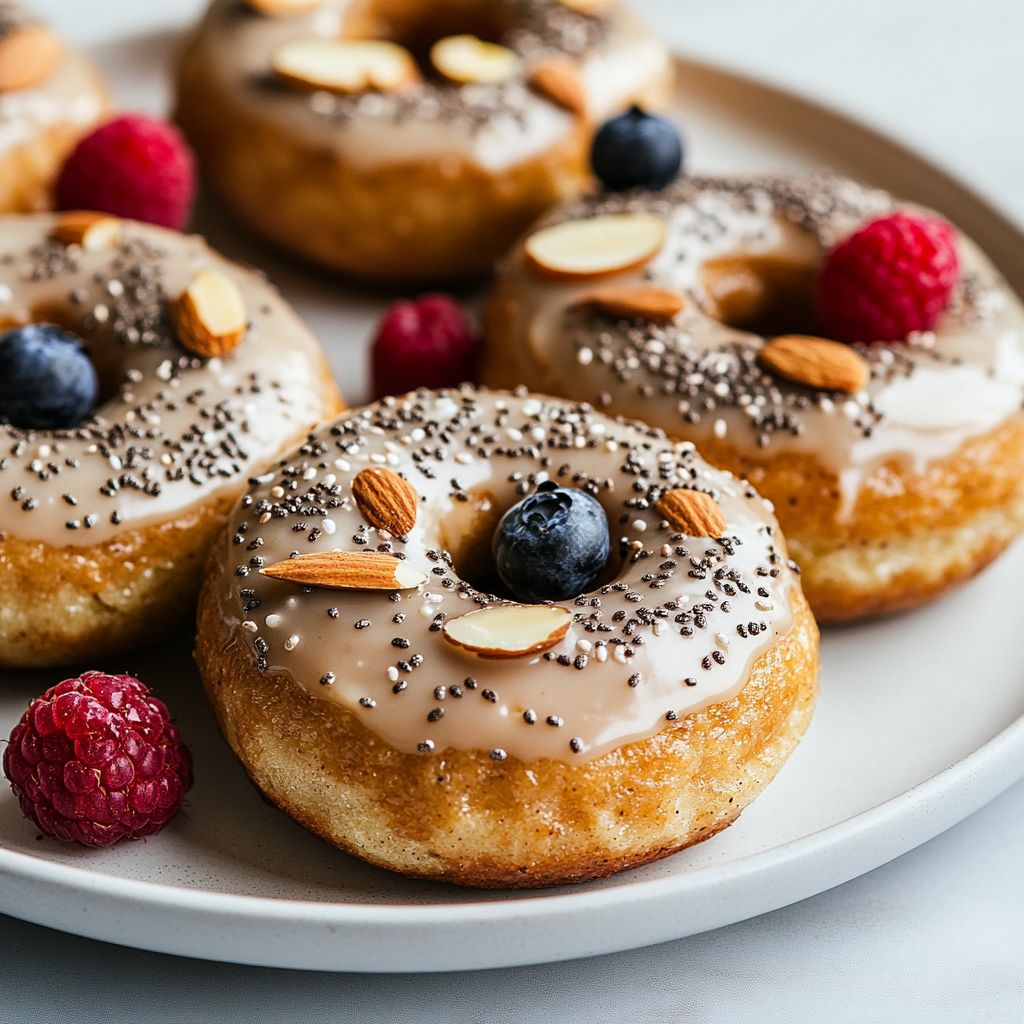
Healthy Donuts
Donut Base
- 1 1/2 cups whole wheat flour (or gluten-free 1:1 flour blend)
→ The base provides structure and tenderness to the donuts. If using a gluten-free blend, ensure it contains xanthan gum or add about 1/4 teaspoon to improve binding and crumb. Sift the flour with other dry ingredients to distribute evenly and avoid dense pockets; avoid overmixing once wet and dry are combined to keep the donuts light. - 1/2 cup rolled oats (certified gluten-free)
→ Adds fiber, moisture retention, and a mildly chewy texture. For a finer crumb, pulse the oats in a blender or food processor until they resemble a rough flour. If you prefer extra chew, leave them whole; they’ll create a heartier bite in every bite. Gluten-free oats are essential if you are avoiding gluten. - 1/2 cup unsweetened applesauce
→ Serves as a natural binder and moisture provider, helping to reduce added fats. Use unsweetened applesauce to maintain control of sweetness and moisture. Stir it in with the wet ingredients until smooth; it should evenly distribute without clumps. - 2 large eggs (or 2 flax eggs for vegan)
→ Eggs contribute binding, lift, and moisture for a soft crumb. If using flax eggs, mix 2 tablespoons ground flaxseed with 6 tablespoons water per egg and let sit 5–10 minutes until gelled; use in place of eggs. Let eggs come to room temperature for easier incorporation and a more uniform batter. - 1/4 cup plain yogurt (or dairy-free yogurt)
→ Adds moistness, tenderness, and a touch of acidity that helps with leavening and crumb structure. If using dairy-free yogurt, choose a plain, unsweetened variety with live cultures. If the yogurt is very thick, whisk and slightly thin with a splash of milk to reach a pourable batter consistency. - 1/2 cup milk (dairy or plant-based)
→ Hydrates the dry ingredients and helps achieve a smooth, pourable batter. Use at room temperature to prevent curdling and ensure even mixing. If the batter seems too thick, add a tablespoon at a time until the correct consistency is reached. - 1/3 cup pure maple syrup (or honey)
→ Provides natural sweetness and contributes to a soft crumb and moisture. Maple syrup gives a milder sweetness and cleaner finish; honey is slightly stronger and richer. Adjust slightly if your flour blend already contains sweeteners or if your fruit components add sweetness. - 1 teaspoon baking powder
→ Leavens the batter to create light, airy donuts. Ensure your powder is fresh for maximum rise; whisk it with the dry ingredients to distribute evenly and prevent dense pockets. Do not overmix after adding dry to wet, as this can deflate the batter. - 1/2 teaspoon baking soda
→ Works with acidic components (yogurt, applesauce, maple syrup) to boost leavening and browning. Ensure acidic balance is present; if not, you can reduce it slightly or omit, but the rise will be less impressive. Helps achieve a tender crumb with a slight rise. - 1/4 teaspoon salt
→ Enhances flavor and helps balance sweetness while contributing to crumb and browning. Do not omit; salt widens flavor and keeps the donut from tasting flat. If using salted butter in place of oil, adjust salt accordingly. - 1 teaspoon ground cinnamon
→ Adds warmth and depth that pairs well with apples, vanilla, and yogurt. Freshly ground cinnamon yields stronger aroma; you can supplement with a pinch of nutmeg or allspice for a more complex spice profile. If you’re not fond of cinnamon, try 1/2 teaspoon pumpkin pie spice instead. - 1/2 teaspoon vanilla extract
→ Provides aromatic sweetness and rounds the flavors. Use pure vanilla extract for best flavor; avoid imitation vanilla if possible. If you have vanilla bean paste, you can substitute with 1/2–1 teaspoon for a richer profile.
Optional Add-ins
- 1/3 cup dark chocolate chips (optional)
→ Creates pockets of melted chocolate that feel indulgent while still staying inside a healthier donut. Fold in at the end to prevent sinking. Use dairy-free chips if you’re keeping the recipe vegan. - 1/4 cup chopped walnuts or pecans (optional)
→ Adds crunchy texture and a toasty, nutty note. Toast the nuts lightly in a dry skillet for 1–2 minutes before chopping to maximize flavor. Distribute evenly to avoid clumping or sinking to the bottom. - 1/4 cup fresh blueberries (optional)
→ Offers bright bursts of fruity sweetness. Toss berries in a teaspoon of flour to prevent sinking and fold in gently to keep them intact during baking.
Glaze and Toppings (optional)
- 1/2 cup powdered sugar
→ Forms a delicate glaze when whisked with liquids. Adjust thickness by adding more milk a teaspoon at a time. For a richer glaze, substitute with half-and-half or dairy milk and a touch of vanilla. - 2–3 tablespoons milk (dairy or plant-based)
→ Adjusts glaze consistency; start with 2 tablespoons and add more as needed to reach a pourable glaze that coats evenly without running off the donuts. Use a milk that complements the base flavors (almond or oat milk for vegan, dairy milk for richer glaze). - 1/2 teaspoon vanilla extract
→ Enhances glaze flavor and pairs with the cinnamon and maple. If avoiding vanilla, you can substitute with a light almond extract (use 1/8 teaspoon) for a subtle difference, but keep it restrained to avoid overpowering the glaze. - 2 tablespoons shredded coconut (optional)
→ Adds a tropical note and texture. Lightly toast the coconut before sprinkling to deepen aroma and help it adhere to the glaze while it’s still wet. Use within 24 hours for best texture. - 2 tablespoons finely chopped almonds or pistachios (optional)
→ Provides a final crunch and visual appeal. Toast briefly to heighten flavor, then sprinkle on top after glazing for best adhesion and crunch. If nut allergies are a concern, substitute with sesame seeds or pumpkin seeds.
Instructions
- Preheat your oven to 350°F (175°C) and prepare a donut pan by greasing the cavities thoroughly with nonstick spray or a light coating of melted neutral oil; line with parchment if you prefer, ensuring every ridge is covered so the batter does not stick and the donuts release cleanly after baking.
→ A well-greased, evenly prepared pan prevents sticking, which preserves the donut shape and makes cooling and removal effortless. - If you are making the vegan version, prepare flax eggs by whisking 2 tablespoons ground flaxseed with 6 tablespoons water per egg and letting the mixture sit 5–10 minutes until gelled; this substitutes for eggs and helps bind the batter with a chewy crumb.
→ Flax eggs mimic the binding and moisture of eggs without dairy; letting the mixture gel ensures even distribution and prevents crumbly donuts. - If you want a finer crumb, pulse the rolled oats in a blender or food processor until they resemble a rough flour; otherwise leave them intact for a heartier bite and more texture inside the donuts.
→ Ground oats integrate more smoothly with the flour, creating a lighter crumb, while whole oats add chew and structure; choose based on texture preference. - Sift together the dry ingredients: whole wheat flour, ground oats (if processed), baking powder, baking soda, salt, and ground cinnamon to distribute leavening and spices evenly and prevent dense pockets in the batter.
→ Sifting eliminates lumps, ensures uniform rise, and blends spices evenly for consistent flavor in every donut. - Whisk the wet ingredients in a separate bowl: eggs (or flax eggs if vegan), unsweetened applesauce, plain yogurt, milk, pure maple syrup, and vanilla extract until the mixture is smooth and cohesive; allow ingredients to come to room temperature for easier emulsification.
→ Room-temperature liquids combine more readily, promoting even hydration of dry ingredients and a uniform crumb structure during baking. - Pour the wet mixture into the dry ingredients in two additions, folding gently with a spatula after each addition until just combined; stop as soon as there are no visible dry streaks to preserve a tender crumb.
→ Overmixing activates gluten (when using wheat flour) or overworks the batter, leading to dense donuts; gentle incorporation maintains softness and rise. - If using fresh blueberries, toss them in 1 teaspoon of flour to coat lightly and prevent sinking; fold in gently to keep berries intact and evenly dispersed.
→ Coating berries with flour reduces their tendency to sink to the bottom and helps distribute bursts of fruity sweetness throughout the donuts. - Fold in optional add-ins such as dark chocolate chips or chopped nuts, distributing evenly without overworking the batter; if using nuts, pre-toast them 1–2 minutes in a dry skillet to heighten aroma and flavor.
→ Toasting enhances nut flavor and keeps them from becoming bland; even distribution prevents clumps and ensures bites of crunch in every donut. - Spoon or pipe the batter into the prepared donut cavities to about two-thirds full; tap the pan gently on the counter to release any trapped air and level the batter for uniform donuts.
→ Filling to two-thirds yields domed tops and proper rise, while tapping eliminates air pockets that can cause uneven baking. - Bake in the preheated oven for 12–15 minutes, rotating the pan halfway if your oven feeds heat unevenly; test doneness with a clean toothpick inserted into the center of a donut—it should come out with a few moist crumbs, not wet batter.
→ Even heat distribution and proper doneness ensure a light, tender crumb without underbaked centers or dry edges. - Let the donuts rest in the pan for 5 minutes after removing from the oven, then transfer to a wire rack to cool completely; this prevents steam from softening the glaze and helps set the structure.
→ A brief rest allows the donuts to finish setting while the steam escapes, preserving shape and preventing gummy bottoms. - Prepare the glaze if desired by whisking 1/2 cup powdered sugar with 2–3 tablespoons milk and 1/2 teaspoon vanilla until smooth and pourable; adjust by adding milk a teaspoon at a time to reach a coating consistency that stays on the donuts without dripping off.
→ A balanced glaze enhances sweetness and adds a glossy finish; correct thickness ensures even coverage without pooling. - Glaze the cooled donuts by dipping each one or drizzling the glaze over the tops while they are still slightly warm or at room temperature, allowing the glaze to set; this results in a smooth, tack-free surface once hardened.
→ Applying glaze at the right temperature helps it adhere and set quickly, producing a professional-looking finish with minimal smearing. - Optionally sprinkle toppings such as shredded coconut or finely chopped almonds or pistachios onto the glaze while it is still tacky for clean adhesion and added texture.
→ Toppings provide a visual appeal and an extra layer of aroma and crunch; apply promptly so they stick while the glaze is fresh. - Store any leftover donuts in an airtight container at room temperature for up to 3 days or freeze for longer storage; thaw at room temperature and refresh with a quick reheat if desired.
→ Proper storage maintains moisture and texture; freezing preserves the donuts for extended periods without significant quality loss.
Notes
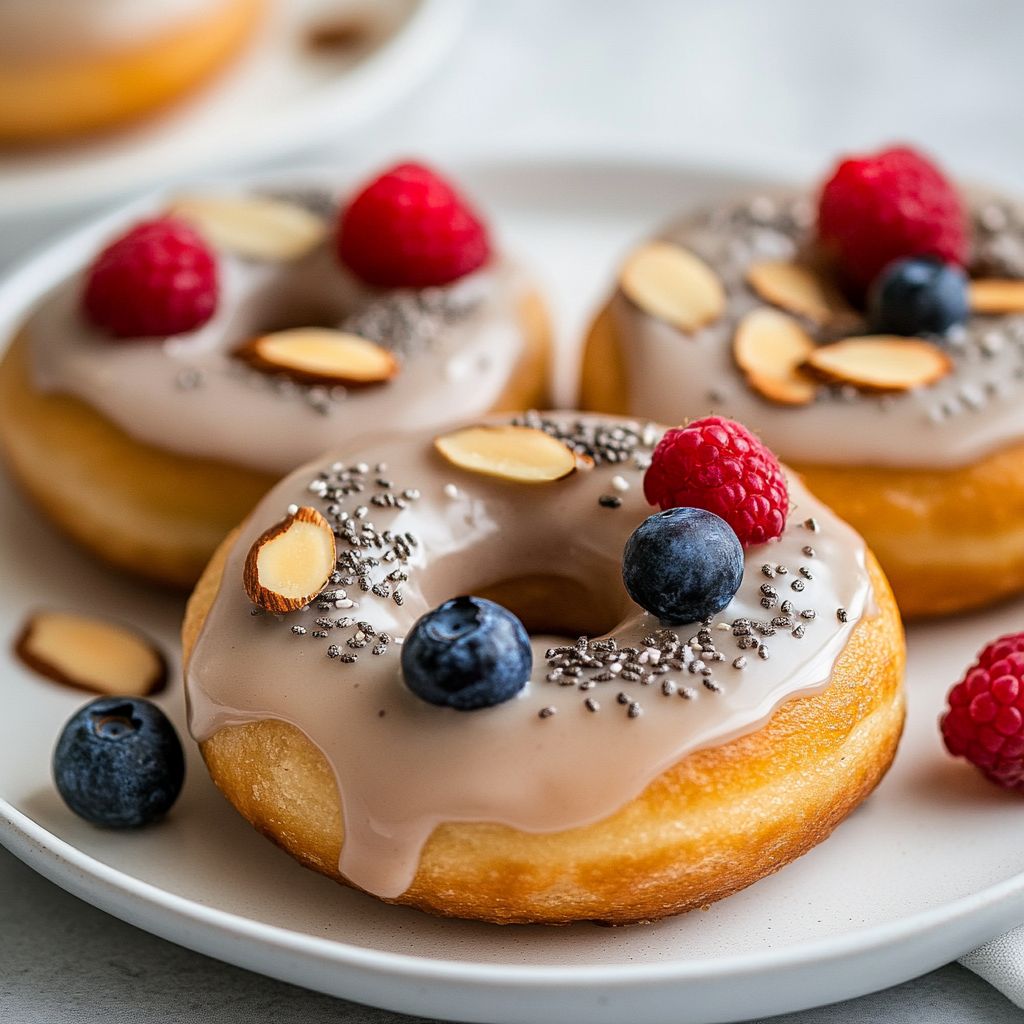
These healthy donuts are a wholesome treat built on a versatile base that can be made gluten-free with a certified gluten-free flour blend and gluten-free oats. They are naturally sweetened with applesauce and a touch of pure maple syrup, plus yogurt for moisture and tang. You can customize them by adding your favorite mix-ins such as dark chocolate chips, toasted nuts, or fresh berries. They freeze well and make a great grab-and-go snack. For an extra boost, serve with a dollop of yogurt or a light drizzle of maple glaze. Always ensure your oats and baking powder are certified gluten-free if you have gluten intolerance, and use room-temperature wet ingredients for easier mixing. To keep the donuts tender, avoid overmixing once the dry and wet ingredients are combined.
Tips
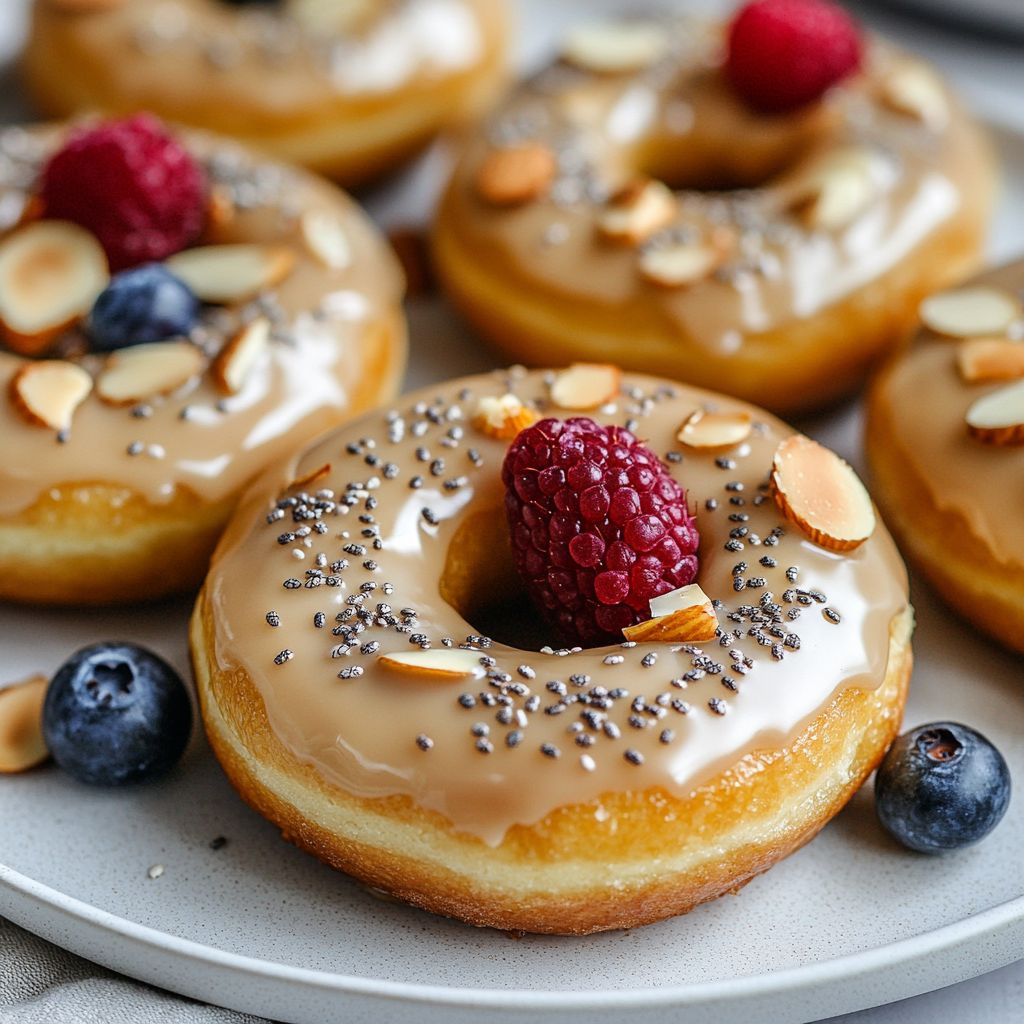
Tips for Best Results
- Batter mixing and consistency: Mix wet and dry ingredients separately, then combine just until there are no streaks of dry flour. Overmixing can develop gluten (if using wheat flour) and make the donuts dense. Let the batter rest for 5 minutes after mixing to hydrate the dry ingredients and improve tenderness. If the batter seems too thick, add a splash more milk, one tablespoon at a time, until you reach a pourable consistency.
- Gluten-free options and binders: If you’re using a gluten-free 1:1 flour blend that doesn’t already contain a binder, add about 1/4 teaspoon xanthan gum per batch to improve binding and crumb structure. Always sift the dry ingredients (flour, baking powder, baking soda, salt, and cinnamon) to distribute evenly and avoid dense pockets. Avoid overmixing once the wet and dry ingredients meet.
- Oats handling: Rolled oats add fiber and moisture. For a finer crumb, pulse them in a processor until they resemble coarse flour; for more chew, leave them whole. If you’re avoiding gluten, use certified gluten-free oats. They help retain moisture during baking.
- Moisture from applesauce and yogurt: Unsweetened applesauce acts as a natural binder and moisture source, reducing added fats. If your yogurt is very thick, whisk it and thin with a small amount of milk to reach a pourable batter. If using dairy-free yogurt, choose an unsweetened plain variety with live cultures.
- Eggs or flax eggs (vegan option): Eggs provide binding, lift, and moisture. For vegan substitutions, use 2 flax eggs per batch (2 tablespoons ground flaxseed + 6 tablespoons water per egg; let gel 5–10 minutes). Bring eggs to room temperature for easier incorporation and a more uniform batter.
- Milk temperature and type: Use milk at room temperature to prevent curdling and ensure even mixing. If the batter seems thick, add milk a tablespoon at a time. The choice of dairy or plant-based milk will influence flavor; oat or almond milk works well with the cinnamon note.
- Oven and pan prep: Preheat the oven and lightly grease or oil a donut pan to help release the donuts. Fill cavities about 2/3 to 3/4 full to allow for a gentle rise. Bake until a toothpick inserted comes out clean or with a few moist crumbs; rotate the pan halfway for even browning. Remove donuts from the pan promptly to prevent sticking and soggy bottoms.
- Add-ins strategy: Fold in add-ins (chocolate chips, nuts, berries) at the end to prevent sinking. For blueberries, toss them in a teaspoon of flour to reduce sinking and fold gently to keep them intact. Toast nuts lightly for 1–2 minutes to intensify flavor before adding.
- Glaze and toppings timing: Glaze while donuts are still warm so the glaze adheres better. Whisk 1/2 cup powdered sugar with 2–3 tablespoons milk and 1/2 teaspoon vanilla; adjust thickness with more milk in small increments. For richer or dairy-free options, use dairy milk or plant-based milk accordingly. Toasted coconut and chopped nuts should be added after glazing while the glaze is tacky to help them cling.
- Glaze consistency troubleshooting: If the glaze is too thick, add milk a teaspoon at a time; if too thin, whisk in a bit more powdered sugar. For a shinier glaze, whisk until smooth and let it sit a minute to thicken slightly before dipping the donuts.
- Flavor boosters and substitutions: The recipe already uses cinnamon and vanilla for warmth. If you’d like a deeper aroma, you can add a pinch of nutmeg or allspice, or substitute with 1/4 teaspoon pumpkin pie spice. If avoiding vanilla, you can use a small amount (1/8 teaspoon) of almond extract for a subtle alternative, but keep it restrained to avoid overpowering the glaze.
- Storage and freshness: Donuts are best eaten fresh but will keep in an airtight container at room temperature for 1–2 days. Refrigerate if using dairy products to extend freshness, up to 5 days. Freeze baked donuts for longer storage; reheat briefly in the microwave or a warm oven and glaze after reheating for best texture. Glazed toppings stay crisper if added after reheating.
FAQ
What makes these Healthy Donuts healthy?
They’re baked instead of fried, made with wholesome ingredients like oats or whole wheat flour, mashed fruit for natural sweetness, and yogurt for moisture and protein. They minimize refined sugar by using maple syrup or honey and rely on spices and fruit flavors for taste.
Are these donuts baked or fried?
They are baked in the oven. Typical bake: 350°F (175°C) for about 12–15 minutes, or until a toothpick inserted in the center comes out clean. Let them cool before glazing or topping.
What ingredients do I need?
Base ingredients (adjust for dietary needs):
- 1 cup oat flour (or whole wheat flour)
- 1/2 cup mashed ripe banana
- 1/3 cup Greek yogurt (or dairy-free yogurt)
- 1/4 cup unsweetened almond milk
- 1/4 cup honey or maple syrup
- 1 large egg or flax egg (1 tablespoon ground flaxseed + 3 tablespoons water)
- 1 teaspoon baking powder
- 1/2 teaspoon cinnamon
- Pinch of salt
Can I make these gluten-free?
Yes. Use certified gluten-free oat flour or a gluten-free all-purpose flour blend. Ensure the baking powder is gluten-free and that any add-ins (like oats) are labeled gluten-free to avoid cross-contact.
Can I make them vegan?
Absolutely. Replace the egg with a flax egg (1 tablespoon ground flaxseed mixed with 3 tablespoons water, rested 5 minutes), use dairy-free yogurt, and your favorite plant-based milk. You can also add vegan chocolate chips for extra flavor.
What flavors can I add?
Get creative with these ideas:
- Blueberries, chopped nuts, or crushed almonds
- Vanilla extract or orange zest for brightness
- Cocoa powder or melted dark chocolate swirl
- Pumpkin purée and pumpkin spice for a fall twist
- Stir-in peanut butter or almond butter in the batter or as a glaze
How should I store leftovers and can I freeze them?
Let donuts cool completely, then store in an airtight container at room temperature for 2–3 days. For longer storage, freeze in a single layer on a tray, then transfer to a freezer-safe bag or container for up to 3 months. Reheat in the microwave or oven before enjoying.
Can I make these sugar-free or low-sugar?
You can reduce sugar by relying on ripe bananas and optional natural sweeteners like maple syrup in small amounts. For a lower-sugar option, use extra banana and skip honey, or substitute with a sugar substitute like stevia or erythritol kept to small amounts. Note that very low-sugar batches may be less tender, so you might adjust moisture with mashed fruit or yogurt.
How can I decorate or glaze these donuts?
Try a light glaze made from powdered sugar and a splash of milk or plant-based milk, or a yogurt glaze using yogurt, vanilla, and a touch of maple syrup. For lower sugar, drizzle with a thin layer of peanut butter or a chocolate drizzle made with cocoa powder and a little maple syrup.
What is the approximate nutrition per donut?
Nutrition varies by ingredients and size, but a typical baked healthy donut (about 1 medium donut) may have roughly 140–180 calories, 4–7 grams fat, 20–25 grams carbohydrates, and 6–8 grams protein, with fiber from oats and fruit. Opt for dairy-free substitutions to adjust macronutrients as needed.