
Introduction / Hook
Imagine a breakfast that feels like a warm embrace: a bagel with a glossy, resonant crust that gives way to a tender, chewy interior. Steam rises as you slice through, releasing a soft perfume of toasty grains and a faint tang that hints at the dairy that makes them uniquely moist. This is the magic of cottage cheese bagels—bagels that marry traditional bakery chew with the light, creamy moisture of cottage cheese, creating a bite that is at once hearty and comforting.
These bagels are more than just a breakfast staple; they’re a small revolution for anyone who loves a bagel that stays soft longer, carries flavor with a gentle tang, and feels satisfyingly filling without being heavy. In every bite you’ll hear the story of a recipe that celebrates texture—chewy, elastic crumb balanced by a delicate crumb structure—while embracing the modern desire for protein-rich, pantry-friendly foods. They toast beautifully, split open with a soft sigh, and hold toppings without collapsing into sogginess. If you crave a morning ritual that feels both cozy and a little indulgent, cottage cheese bagels deliver that welcoming, nostalgic aroma with a contemporary twist.
Beyond the senses, these bagels offer a practical elegance: they’re versatile enough for leisurely weekend brunches, quick weekday breakfasts, or a comforting lunch with a smear of cream cheese and your favorite savory toppers. They invite creativity—savory herbs, sesame seeds, or poppy seeds catching a light roast; a hint of garlic or onion tucked into the dough; or a splash of olive oil brushed on the hot crust for an extra kiss of richness. They’re a reminder that a simple bake can be both indulgent and nourishing, a treat you can feel good about sharing with family and friends.
The Story Behind the Dish
Bagels have a storied past that travels from Eastern European bakeries to bustling American breakfast tables. The chewy rings, boiled to set their starches before they’re baked to a glossy brown, became a symbol of communal mornings in many urban neighborhoods. The version you’re reading today is a nod to that tradition, but with a modern, dairy-forward twist: cottage cheese plays a starring role in the dough, infusing moisture and a gentle tang that complements the classic bagel’s reserve.
The idea isn’t entirely new—home cooks have long experimented with dairy additions to bread dough to achieve a more tender crumb and a richer mouthfeel. Cottage cheese, with its curds and whey, brings a light, milky brightness that can feel almost magical when folded into a dough that needs to stretch and rise. In many kitchens, this kind of adaptation grows from a simple instinct: you want a bread that isn’t dense, that carries a little extra protein, and that stays fresh longer than the usual bagel. The resulting bagels honor the old-world technique of boiling and baking, while embracing a modern pantry staple that makes the dough feel more forgiving and moist. The end product is a bridge—between the timeless charm of a bagel and the bright, contemporary appeal of a dairy-forward loaf.
Personal anecdotes often pop up in conversations about these bagels. A home cook might tell you that a batch changed their weekend mornings: the first bite carried a cloud of warmth that reminded them of Sundays at their grandmother’s table, yet the texture felt refreshingly contemporary, sturdy enough for a hearty topping but tender enough to bite through with ease. Another friend might share how these bagels became a weekday hero, soft enough to toast lightly and still taste like a special treat, making breakfast feel like a little celebration even on busy days. The story is not just about a recipe; it’s about the comfort of a familiar shape reimagined with a gentle, dairy-driven brightness.
Why You’ll Love This Recipe
- Protein-rich and comforting: cottage cheese brings a nourishing boost without sacrificing the familiar chew and structure of a classic bagel.
- Moist, tender crumb: the dairy component helps create a softer interior that stays moist longer than traditional bagels.
- Versatile and forgiving: adaptable to a range of flavorings, toppings, and pairings, from classic schmears to inventive toppings.
- Great for make-ahead planning: you can prepare a batch, freeze or refrigerate, and toast to reawaken the aroma and texture.
- Family-friendly and crowd-pleasing: a bake that appeals to kids and adults alike, perfect for weekend breakfasts or casual gatherings.
- Simple pantry-friendly concept: you can tailor the flavor profile using what you have on hand, without losing the core texture that makes these special.
Flavor Profile & Texture
The first thing you notice when you bite into a cottage cheese bagel is the contrast—the crust offers a subtle snap and a deep, toasty aroma, while the crumb inside stays wonderfully soft and springy. The dairy element lends a mild tang and a gentle sweetness that pairs beautifully with a touch of malt, honey, or a simple savory smear. The texture is what truly defines these bagels: an outer crust that resists tearing, a hollow-sounding crack when you slice into it, and a ropey, elastic center that breathes as you bite.
In flavor terms, think of a balanced profile where the dairy notes don’t overpower the grains but rather lift them. There’s a quiet richness that comes with cottage cheese, a slight brightness from the natural acidity of cultured dairy, and a toasty warmth from the baking process. The resulting taste is versatile—savory enough to pair with smoked fish or tangy cream cheese, yet gentle enough to work with fruits and sweeter toppings if you’re in the mood for a brunch-with-dessert vibe. The aroma is inviting: a warm, bakery-like scent that wraps around you as the bagels emerge from the oven, a smell that says, “morning is here, and it’s going to be good.”
Texture-wise, the interior is pleasantly airy and resilient. It’s not a bread that collapses when you tear into it; instead, it offers a springy bite that returns with a bit of give. The crust, while glossy and crisp from the boil, softens ever so slightly as it cools, preserving that characteristic chew that defines a well-made bagel. The combination of moisture from the dairy and the starch’s natural structure creates a bagel that remains enjoyable from the moment you slice it to the last bite later in the day.
Occasions & Pairings
These cottage cheese bagels shine in a range of settings, from casual weekday mornings to leisurely weekend gatherings. Their flexibility makes them a practical choice for meal planning, school lunches, or a brunch spread that invites guests to experiment with toppings.
- Weekday breakfast: toast lightly and top with herbed cream cheese, tomato slices, and a sprinkle of salt and pepper for a quick, satisfying start to the day.
- Brunch centerpiece: serve with a trio of toppings—savory smoked salmon with capers, a bright herb-spread, and a sweet fruit compote—to create a balanced tasting station.
- Lunch-friendly option: slice and fill with eggs, avocado, crisp lettuce, or your favorite lean protein for a portable lunch that travels well.
- Special occasions: pair with sparkling beverages, a light salad course, or a cheese board to offer a twist on the classic bagel-and-smear combo.
Flavor partners are vast. Cream cheese remains a classic companion, but you can go in many directions: a tangy chive and feta blend, a smoky hummus spread, roasted peppers, or a creamy avocado mash. For savory lovers, a smear of garlicky herb cream cheese or a dollop of tangy yogurt-based sauce can complement the dough’s delicate tang. If you’re leaning into a sweeter angle, a touch of honey or berry preserves on a lightly toasted bagel can be a surprisingly harmonious contrast to the subtle dairy notes.
Tips, Variations & Substitutions
The beauty of cottage cheese bagels lies in their adaptability. Here are ideas to tailor the texture, flavor, and dietary needs without straying from the core concept.
- Texture tweaks: for an extra-chewy bite, use bread- or high-gluten-style dough base and allow for a longer, cooler rising period. The extra time helps develop the gluten network for a more pronounced chew while preserving moisture from the dairy.
- Flavor twists: fold in finely chopped fresh herbs, mild garlic powder, or finely grated onion in the dough for aromatic notes. Top with sesame seeds, poppy seeds, or a mix of seeds for added fragrance and crunch.
- Whole grain warmth: substitute a portion of the base grain with whole wheat or spelt for a nuttier flavor and a heartier texture, while keeping the soft crumb thanks to the cottage cheese’s moisture.
- Gluten-free option: for gluten-free lovers, use a 1:1 gluten-free flour blend designed for yeast breads, and add a small amount of binding agent (such as xanthan gum) as recommended by your GF flour blend’s guidance. Be prepared for a slightly different rise and texture, but the dairy moisture will still help keep the crumb appealing.
- Vegan-friendly approach: for those avoiding dairy, substitute with a plant-based yogurt or yogurt alternative and a plant-based cheese that melts well. Add a touch of a mild acidic element (like lemon juice) to mimic the brightness cottage cheese would normally contribute, and consider a flax egg or other vegan binder if needed for structure. Note that the flavor and texture will shift slightly, but a careful balance can yield a satisfying result.
- Herb and spice variations: experiment with dill, chives, or tarragon for a fresh, garden-inspired aroma; a pinch of smoked paprika or cumin can give a subtle smokiness that works wonderfully with eggs or avocado toppings.
- Sweet edge: for a brunch twist, consider a light cinnamon-sugar finish on the crust and a dollop of ricotta or cream cheese with fruit preserves as a topping—this playful contrast can be delightful for a weekend treat.
A few practical notes: keep the dough hydrated enough to stay supple—if you’re experimenting with gluten-free or alternative flours, you may need to adjust moisture levels to prevent a dry crumb. Let doughs rest if they feel tight; warmth can help a dough relax and rise better, but a cool overnight rest can deepen flavor and improve texture. Finally, when shaping, aim for evenly sized portions so all bagels bake at the same rate, producing uniform texture and crust.
Storage & Make-Ahead Ideas
One of the joys of bagels is their versatility for make-ahead planning. Once baked and completely cooled, store them in an airtight container or zip-top bag at room temperature for a couple of days. If you’re preparing ahead, you can freeze individual bagels; wrap them well to prevent freezer burn, and freeze for up to a few months. When you’re ready to enjoy, simply rewarm them in a toaster, oven, or skillet to revive the crust’s gloss and restore some of that comforting snap.
A smart approach is to portion your bagels into singles or halves before freezing. This makes it easy to grab just what you need for a quick breakfast or lunch. For week-ahead planning, you can also freeze partially baked bagels for a faster finish—this preserves moisture and gives you a fresh-baked experience in a fraction of the time.
If you’re refrigerating leftovers, allow the bagels to cool fully, then place them in an airtight container. Reheat slowly to prevent drying out; a light toast or warm oven reawakens their soft interior and crusty exterior. For a crisper crust after toasting, brush a touch of water on the surface just before the final warm-up to help steam and heat evenly.
Fun Facts & Trivia
- The technique of boiling bagels before baking is what gives them their characteristic chewy texture. The boiling starches set, creating a tight, glossy crust that holds up to toppings and spreads.
- Bagels have a storied history in Jewish immigrant communities in North America, where they became a staple for early morning breakfasts in bustling markets and delis before becoming a worldwide icon.
- Cottage cheese, a versatile dairy product, has a long-standing place in savory and sweet dishes. Its mild tang and creamy texture make it a natural ally for bread and doughs that crave moisture without heaviness.
- All-in-one idea: the cottage cheese bagel is an example of how a single pantry staple can redefine a classic—proof that tradition and innovation can happily coexist in the same kitchen.
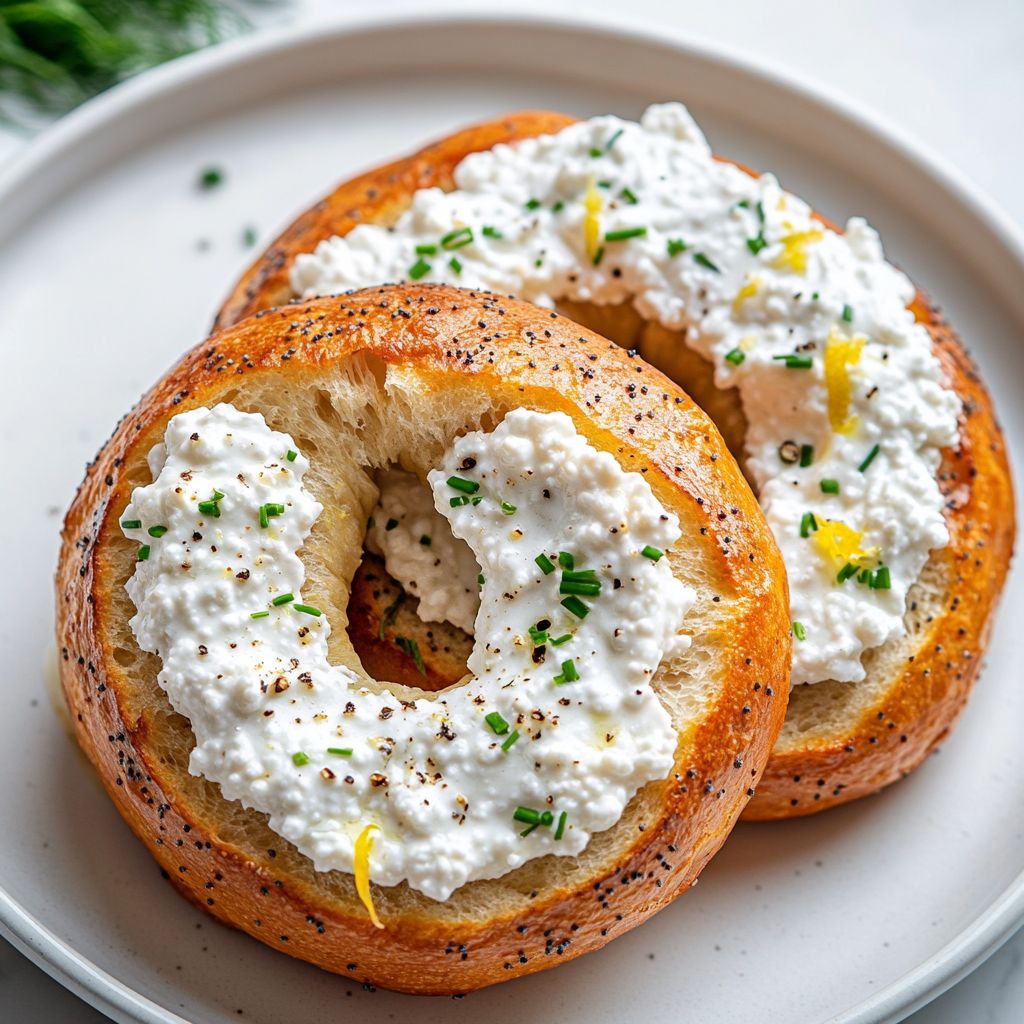
Ingredients
Bagel Dough
-
– 2 1/2 cups bread flour (plus extra for kneading)
→ Chewy bagel texture relies on high-gluten flour; bread flour provides the protein needed to form a strong gluten network. Start with 2 1/2 cups and add a tablespoon or two more if the dough feels dry or stiff. Dust the counter lightly with flour to prevent sticking during kneading, but avoid adding too much flour to keep the dough hydrated.
– 1 cup well-drained cottage cheese, pureed until very smooth
→ Cottage cheese provides moisture and a slight tang while adding protein; blending into a smooth puree eliminates lumps and ensures even distribution through the dough. Drain well if there is excess whey; too much liquid will weaken the dough structure. If you prefer a heavier cheese flavor, use full-fat cottage cheese.
– 2 large eggs, divided: 1 for dough, 1 for egg wash (see notes)
→ Eggs enrich the dough, contributing tenderness and structure. Use one egg folded into the dough to bind and moisture the crumb; reserve the second egg for an optional glossy egg wash if you want a shiny crust. Bring eggs to room temperature for easier mixing and to avoid crusty spots in the dough.
– 1 teaspoon instant yeast
→ Instant yeast is convenient and speeds up rise because it can be mixed directly with dry ingredients. If you only have active dry yeast, use 2 1/4 teaspoons and proof in 1/4 cup warm water with a pinch of sugar for 5–10 minutes before adding to the dough.
– 2 teaspoons granulated sugar
→ Sugar feeds the yeast and helps browning while baking; it also balances the tang from cottage cheese. If you prefer a savory profile, you can reduce to 1 teaspoon or replace with honey or maple syrup, adjusting the liquid slightly to maintain dough hydration.
– 1 teaspoon salt
→ Salt strengthens gluten and enhances flavor; distribute evenly in the dry ingredients for consistent seasoning. If your cottage cheese is salted, you may want to reduce this to 1/2 teaspoon.
– 1 tablespoon olive oil (optional)
→ Oil improves dough softness and extensibility, helping with shaping and preventing sticking. If omitted, you may need a touch more water and flour during kneading; the crust may be slightly crisper but still tasty.
– 1/4 to 1/3 cup warm water (as needed)
→ The cottage cheese influences hydration; start with 1/4 cup and add a little at a time until the dough comes together into a smooth, slightly tacky ball. Use warm water if the dough seems sluggish to come together, but avoid hot water that could kill the yeast.
Boiling & Finish
-
– 2 quarts water for boiling
→ Boiling the shaped dough before baking creates the signature chewy crust by gelatinizing surface starches. Keep at a gentle simmer, not a rolling boil, to prevent bagels from deforming. The boil time is usually 1–2 minutes per side; adjust based on thickness and color desired.
– 1 tablespoon barley malt syrup or 1 teaspoon sugar (for boil)
→ Malt syrup gives characteristic bagel color and shine; if you don’t have malt syrup, a touch of sugar in the boil promotes browning. You can skip if you want a more neutral crust, but the color might be lighter.
– 1 tablespoon cornmeal or semolina for dusting (optional)
→ Dusting the boiling surface or the baking sheet helps prevent sticking and adds subtle texture. Not essential, but helpful for release and crust texture.
Egg Wash & Toppings
-
– 1 large egg for egg wash, beaten with 1 tablespoon water (optional)
→ The egg wash gives bagels a glossy, golden crust when brushed on after boiling and before baking. Ensure the surface is dry before applying wash to avoid pooling. If you’re vegan, skip the wash or use a plant-based alternative.
– 1 tablespoon sesame seeds
→ Adds a nutty aroma and crunch; press seeds into the surface after applying the wash so they adhere well. Toast seeds lightly beforehand to deepen flavor if desired.
– 1 tablespoon poppy seeds
→ Classic appearance and a mild, nutty note. Use sparingly to maintain balance with the cheese base; press onto the surface after washing for best adhesion.
– 1 tablespoon Everything bagel seasoning (optional)
→ A ready-made mix of sesame, poppy seeds, dried garlic, dried onion, and salt; adds bold savory flavor. Apply lightly so it complements rather than overpowers the cheese flavor. Check salt content to avoid over-salting.
– 1 teaspoon dried onion flakes (optional)
→ Adds savory aroma; rehydrate briefly in a pinch of warm water before applying to help them stick and release their flavor.
– 1 teaspoon dried garlic flakes (optional)
→ Provides a warm, savory note; rehydrate slightly before applying for better adhesion and aroma. Use sparingly to avoid overpowering the dough.
Instructions
- Measure and whisk the dry ingredients: 2 1/2 cups bread flour, 1 teaspoon instant yeast, 2 teaspoons granulated sugar, and 1 teaspoon salt in a large mixing bowl until evenly distributed and free of clumps.
→ Even dispersion of salt and sugar ensures uniform fermentation and flavor; whisking minimizes dry pockets that could hinder gluten development. - Puree cottage cheese until very smooth: in a blender or food processor, blend 1 cup well-drained cottage cheese until completely smooth; if needed, press through a fine sieve to remove any remaining lumps, then drain any extra whey until the puree resembles thick yogurt.
→ A smooth puree distributes moisture evenly and prevents pinpoint pockets of moisture that can weaken the dough’s structure. - Beat one large egg and whisk it into the cottage cheese puree; add 1 tablespoon olive oil (if using) and begin adding warm water 1/4 cup at a time until the mixture is thick but pourable.
→ The egg provides moisture and helps bind the crumb; warming ensures better emulsification and a tender crumb. Add water gradually to avoid a overly wet dough. - Combine the wet mixture with the dry ingredients and mix until a shaggy dough forms; use a spatula or stand mixer on low speed to prevent flour dust from escaping; scrape down as needed.
→ This initial combination coats flour with moisture and begins gluten development without tearing the dough. - Turn the dough out onto a lightly floured surface and knead for 8 to 10 minutes until the dough is smooth, elastic, and just slightly tacky; perform the windowpane test by stretching a small piece between your fingers until it becomes translucent without tearing.
→ Kneading develops the gluten network that gives bagels their chew; the windowpane test confirms sufficient gluten strength for a sturdy crust and interior. - Oil a clean bowl, place the kneaded dough inside, cover with plastic wrap or a damp towel, and let it rise in a warm spot until doubled in size, about 60 to 90 minutes; avoid drafts and ensure the surface remains moist enough to prevent a skin from forming.
→ Environmental control yields consistent rise and prevents a crusty surface that would impede expansion during boiling and baking. - Gently punch the dough down to release gas, transfer to a lightly floured surface, and divide into 8 equal portions; if you prefer uniform sizing, weigh each piece to about 110 grams.
→ Even portions ensure uniform bagel size for even cooking and predictable yield. - Shape each portion into a tight ball, then use your thumb or a smooth cupped hand to poke a hole in the center and gently stretch to form a ring about 1 1/2 to 2 inches in diameter; pinch the seam to seal completely to prevent the hole from closing during boiling.
→ A well-sealed center ring prevents loss of the bagel’s shape and ensures a classic bagel hole that remains visible after boiling and baking. - Place shaped bagels on a parchment-lined baking sheet dusted with a little cornmeal or semolina, cover loosely, and allow a second proof 20 to 30 minutes; they should puff slightly but not double.
→ The second proof gives surface tension and helps bagels retain their chewy crust after boiling. - Meanwhile, preheat a wide pot of water to a gentle simmer over medium heat and add 1 tablespoon barley malt syrup or 1 teaspoon sugar to the water; this creates the characteristic bagel crust color and flavor.
→ Malt syrup or sugar in the boil helps with browning and gives that desirable chewy exterior; do not skip if you want traditional color. - Once the bagels are ready to boil, slide them into the simmering water a few at a time using a slotted spoon, boil for 1 to 2 minutes per side, turning halfway; keep the water at a gentle simmer to avoid deforming the rings.
→ Boiling gelatinizes surface starches, creating the crusty chew that defines bagels; time affects crust thickness. - Carefully lift bagels out of the water with a slotted spoon and drain on a clean towel for about 30 seconds, then transfer to the prepared sheet; you can re-briefly dry the tops if they’re too wet to improve adhesion of toppings.
→ Removing surface moisture prevents toppings from sliding off and helps the bagel surface crisp during baking. - Brush the tops with the second egg mixed with 1 tablespoon water to form an even, glossy surface, then apply toppings: sesame seeds, poppy seeds, or Everything bagel seasoning; lightly press toppings to help them adhere while the egg wash is still tacky. Optional: rehydrate dried onion or garlic flakes briefly in a drop of warm water before applying.
→ The egg wash promotes a shiny finish and gives toppings something to cling to; pressing ensures even coverage and flavor distribution. - Preheat the oven to 425°F (218°C) and bake the bagels on the sheet for 15 to 20 minutes, rotating the sheet halfway for even browning, until the crust is deeply golden and the interior sounds hollow when tapped.
→ A high initial heat helps set the crust quickly for chew and a uniform crumb; rotation ensures even color and texture across all bagels. - Transfer the bagels to a wire rack and let cool at least 15 to 20 minutes before slicing to allow the crumb to finish setting, which improves chew and prevents crumbles.
→ Cooling unlocks moisture and stabilizes the structure; slicing too soon yields gummy crumbs. - Store leftovers, if any, in an airtight container at room temperature for up to 2 days or freeze once cooled, then reheat in a toaster or under a hot oven to restore crust crispness.
→ Proper storage preserves texture and flavor; freezing slows staling and toasting revives the chew.
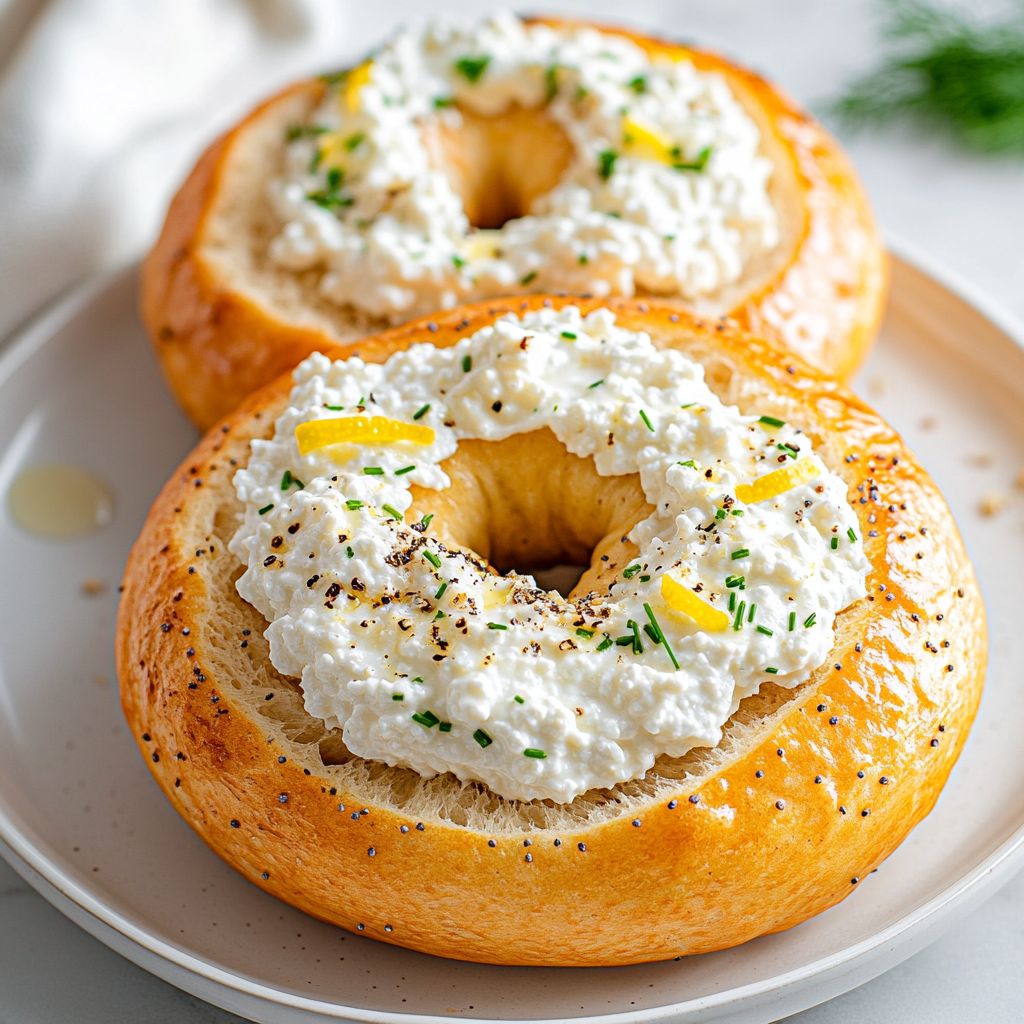
Notes
These cottage cheese bagels are tender and chewy with a mild tang from the smooth cottage cheese blended into the dough. Purée the cottage cheese until completely smooth and drain well to keep the dough from getting too loose; too much liquid will weaken structure. Start with 2 1/2 cups bread flour for a strong gluten network and only add more by the tablespoon if the dough feels dry or stiff. One egg folded into the dough helps bind moisture and tenderness, while the second egg is reserved for a glossy wash if you want a shiny crust. If the dough seems slow to come together, warm the water slightly and mix in gradually, aiming for a smooth, slightly tacky ball for easy shaping.
For a classic bagel finish, boil the shaped rounds in 2 quarts of gently simmering water with a tablespoon of barley malt syrup or a teaspoon of sugar to promote browning; 1–2 minutes per side gives a chewy, fully set crust. After boiling, brush with the optional egg wash for a glossy surface and press on toppings such as sesame seeds, poppy seeds, or Everything bagel seasoning; press firmly so they cling through baking. A light dusting of cornmeal or semolina on the counter or baking sheet aids release and adds a subtle crunch to the bottom crust. If you’re including onion or garlic flakes, rehydrate them briefly before applying so they stick and release aroma.
To store and customize, cool completely before freezing; bagels can be frozen once baked or shaped and par-boiled for faster weeknight baking. Rewarm from frozen in a toaster or oven. Fresh bagels last 2–3 days at room temperature in a loosely closed bag; freeze for longer storage. For variations, stir in chopped herbs or minced roasted garlic into the dough, reduce or increase sugar to taste, or swap the olive oil for extra water if you prefer a crisper crust. Always check your cottage cheese’s salt level; if it’s salty, reduce the added salt in the dough to keep the flavor balanced.

Tips
Hydration and dough texture
Because cottage cheese adds moisture, start with the 1/4 cup warm water and add more in small increments until the dough comes together as a smooth, slightly tacky ball. If the dough feels dry or stiff, drizzle in a little more water or a splash of olive oil to improve extensibility. Kneading should develop a strong gluten network; use the windowpane test (stretch a small piece until it becomes translucent) to gauge readiness.
Mixing and kneading technique
Whether by hand or with a stand mixer, mix until the dough is cohesive and elastic, not crumbly. If using a mixer, knead on medium speed for 6–8 minutes. If by hand, give the dough 10–12 minutes of steady kneading, dusting lightly with flour only as needed to prevent sticking.
Yeast and fermentation tips
Instant yeast is convenient, but if you only have active dry yeast, proof it in warm water (about 105–110°F/40–43°C) with a pinch of sugar for 5–10 minutes before adding to the dough. For richer flavor, consider a brief cold fermentation: after the first rise, refrigerate the dough 8–12 hours, then bring to room temperature before shaping.
Handling cottage cheese
Puree the cottage cheese until completely smooth to avoid lumps that can create uneven crumb. If the cottage cheese brand is very watery, drain excess whey well; too much liquid weakens dough structure. For a lighter texture, use a part-skim cottage cheese; for a richer crumb, full-fat works well.
Shaping the bagels
Divide the dough evenly and roll each piece into a tight ball before poking a hole with your finger to form a ring. Gently stretch the hole to about 1–2 inches in diameter to prevent shrinking during boiling and baking. If the dough resists shaping, let it rest 10–15 minutes covered; this relaxes the gluten and makes shaping easier.
Boiling the bagels
Keep the boil at a gentle simmer and boil each bagel 1–2 minutes per side for a chewy crust. Do not overcrowd the pot. After boiling, lift the bagels with a slotted spoon and let excess water drain briefly on a rack or parchment before applying toppings and baking.
Toppings and adhesion
Apply toppings after boiling and while the surface is still damp from the brief drain, but before the bagels go into the oven. If using an egg wash, brush lightly to avoid pooling. For seeds, press gently to help them adhere; to maximize flavor, toast sesame or poppy seeds briefly in a dry skillet before use.
Egg wash and crust color
The egg wash provides a glossy, golden crust; if you prefer a lighter finish, skip the wash or use just the egg white for a shinier surface. Bring the egg to room temperature to ensure an even wash and to prevent streaking on the crust.
Baking temperature and time guidance
Preheat the oven to 425°F (220°C). Bake the bagels until deep golden brown, typically 12–15 minutes, rotating halfway for even color. If you’re using a convection oven, you may shorten bake time slightly and monitor closely to prevent over-browning.
Flavor variations and substitutions
For a milder cheese flavor, use part-skim cottage cheese; for a richer crumb, use full-fat cottage cheese. If you want a savory punch, add a pinch of garlic or onion powder to the dough or try Everything bagel seasoning as a topping. You can also experiment with honey or maple syrup in the dough for a subtle sweetness balanced by the tang of cottage cheese.
Make-ahead, storage, and freezing
Bagels can be baked ahead and frozen once cooled. Cool completely, wrap tightly, and freeze for up to 1 month. Reheat directly from frozen in a 350°F (175°C) oven for 8–10 minutes or toast to restore crust crispness. For best texture, store leftovers in an airtight container for 1–2 days at room temperature.
FAQ
Cottage Cheese Bagels – FAQ
What are cottage cheese bagels?
They are soft, chewy bagels enriched with cottage cheese. The cheese adds moisture, tenderness, and extra protein, giving a slightly creamy crumb and a subtle tang.
Do these bagels require yeast?
Yes. Yeast helps the dough rise and creates the characteristic chewy texture. Use active dry yeast or instant yeast; if using instant, you can reduce rising times accordingly.
What ingredients are in cottage cheese bagels?
Common ingredients include flour (all-purpose or bread flour), cottage cheese (well-drained or blended into the dough), water, yeast, salt, and sometimes a bit of sugar or honey. Optional additions include eggs for richness or a splash of milk for extra tenderness.
Should I blend or drain the cottage cheese?
For a smooth dough, blend the cottage cheese until silky. If you prefer a chunkier crumb, mash it or stir in small curds. If the cottage cheese is very wet, drain some of the liquid to avoid a sticky dough.
How do I shape and boil cottage cheese bagels?
Shape dough into round portions and poke a hole in the center to form a ring. Boil in gently simmering water (optionally with a little sugar or malt) for 1–2 minutes per side to set the crust, then bake until golden.
What toppings work well?
Popular toppings include sesame seeds, poppy seeds, everything bagel seasoning, minced onion or garlic, or plain. Add toppings immediately after boiling and press them lightly to help adhesion before baking.
Can I freeze the dough or baked bagels?
You can freeze shaped, unbaked dough rounds after the final rise, or freeze fully baked and cooled bagels. Wrap tightly and store in the freezer. Reheat by baking or toasting from frozen, or thaw first.
How long does it take to make cottage cheese bagels?
Active steps typically take about 1.5–2 hours, including mixing, kneading, rising, shaping, boiling, and baking. Total time, with rising, is usually around 2–3 hours depending on your dough and kitchen temperature.
Can I make them healthier or lower in carbs?
To adjust nutrition, try using a portion of whole wheat or a mix of whole wheat and white flour, which adds fiber and flavor. Reducing cheese slightly and adding extra protein like flax or chia can change texture, so you may need to adjust hydration. For lower-carb options, substituting part of the flour with almond or coconut flour will require changes to the liquid and rising times.
How do I store leftover bagels?
Store cooled bagels at room temperature in an airtight container for 2–3 days. For longer storage, freeze. Reheat by toasting or warming in a 350°F (175°C) oven for a few minutes.
Can I make dairy-free or vegan version?
For a dairy-free or vegan version, substitute the cottage cheese with a plant-based alternative such as blended silken tofu with a little non-dairy yogurt or a dairy-free ricotta substitute. Expect some differences in texture and moisture; you may need to adjust flour and liquid amounts accordingly. Lactose-free cottage cheese can be used if preferred.