Introduction / Hook
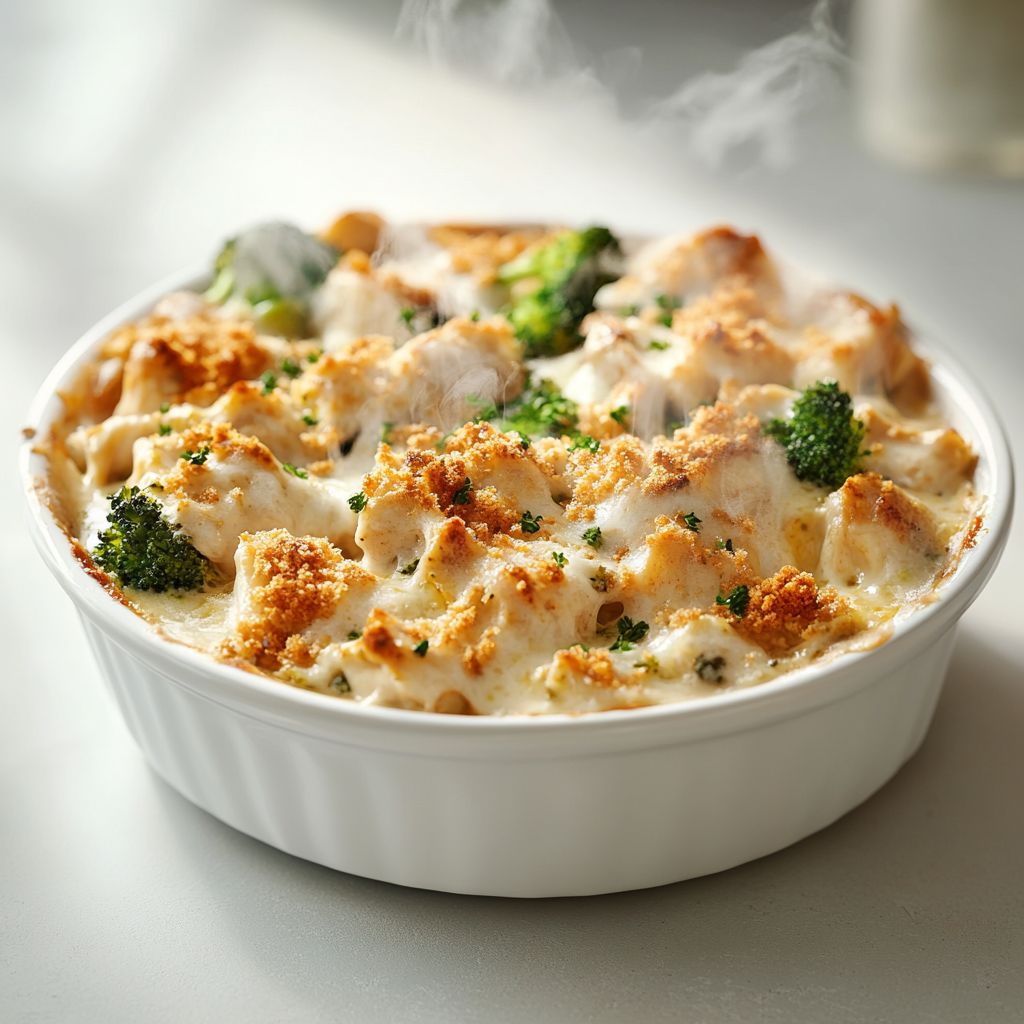
There’s a dish that evokes kitchen-table nostalgia with every bubbling bubble and golden edge: Chicken Divan Casserole. Imagine a steaming, velvet-soft blanket of creamy sauce embracing tender chicken shards, nestled with florets of emerald broccoli, all crowned by a crisp, butter-kissed crust that crunches like a welcome-home sigh. The aroma will coax even the busiest schedules to pause, the way a familiar comfort song can stop time for a moment. This isn’t just dinner; it’s a memory you can recreate with minimal fuss and maximum warmth. The beauty of Chicken Divan lies in its balance—savory richness that feels indulgent, yet bright with the fresh, green contrast of broccoli and a light, uplifting finish from lemon or herbs. It’s the kind of dish you crave on a busy weeknight and want to tuck away for a cozy weekend at home with family or friends. Every slice promises a little celebration in the form of a casserole, a dish that invites seconds, and perhaps even a story or two to share around the table.
As the oven door opens and the steam rises in wavy ribbons, you’ll notice how the dish transforms the simple ingredients into something that feels special. The scent—creamy, toasty, with a hint of cheese and a whisper of garlic—fills the room and creates an instant sense of occasion. Yet, at its heart, Chicken Divan Casserole is approachable, forgiving, and endlessly adaptable. It’s the kind of recipe that rewards a keeping-it-simple mindset: use what you have, lean on pantry staples, and let the natural flavors of chicken, broccoli, and a smooth sauce do the heavy lifting. The result is a comforting, family-friendly dish that’s as perfect for weeknights as it is for a casual dinner with friends, and it has a timeless appeal that tends to become a favorite in households across generations.
The Story Behind the Dish
Chicken Divan’s charm comes not just from its creamy allure, but from a story that echoes the mid-20th century spirit of American home cooking. In a era when families gathered around the table to savor simple, satisfying meals after long days, casseroles became the language of togetherness. The name “Divan” itself evokes a certain elegance—think of a comfortable seating area in a grand hotel where travelers would linger over conversations, coffee, and a shared sense of hospitality. It’s not an accident that a dish like this feels both refined and practical: a casserole that can be assembled ahead, baked to perfection in a single dish, and served with minimal fuss to a crowd or a small dinner party. The origins aren’t tied to one exact kitchen or city; rather, Chicken Divan is a product of American culinary imagination—twisted into a familiar shape by countless home cooks who wanted to elevate a simple weeknight supper without sacrificing convenience or comfort.
Traditionally, the pairing of chicken with broccoli in a creamy base reflects pantry-friendly thinking of the time: use leftover roast chicken or quickly poached chicken, fold in a velvety sauce that often relied on dairy and stock, and finish with a topping that would brown beautifully in the oven. The broccoli brings a green, fresh counterpoint to the richness, creating a dish that feels balanced and complete on a single plate. Over the years, cooks have added their own touches: a hint of nutmeg in the sauce, a dusting of paprika for warmth, or a scattering of toasted breadcrumbs or cheese on top for that irresistible crackly crown. The result is a timeless classic that resonates with many generations because it answers a universal desire: to eat well, together, without spending hours in the kitchen.
In many kitchens today, Chicken Divan is a bridge between vintage charm and modern practicality. It embraces the idea that comfort food can be refined yet accessible, elegant yet easy. It’s a dish that travels well in memory and in the dish itself: you can recreate the sense of a comforting family meal, adapt it to different dietary needs, and experiment with flavors while keeping the essence intact. The story of Chicken Divan is, in many ways, a love letter to home cooking—an invitation to gather, to savor, and to create new memories around a dish that already feels like a familiar favorite.
Why You’ll Love This Recipe
- Comforting, crowd-pleasing flavor that feels like a warm hug on a plate.
- Versatile and forgiving; it accommodates a range of ingredients and a variety of dietary needs.
- Perfect balance between tender chicken, crisp-tender broccoli, and a luscious, creamy sauce.
- Make-ahead friendly: assemble, refrigerate, and bake later for effortless entertaining.
- One-dish convenience with a satisfying, golden topping that adds texture and color.
- Great for weeknights, Sunday dinners, potlucks, or feeding a crowd without stress.
- Leftovers reheat beautifully, tasting almost as good as the first slice.
- A classic dish that invites personalization—swap vegetables, adjust seasonings, or add a final flourish.
Flavor Profile & Texture
From the first bite, Chicken Divan Casserole delivers a textural and flavor journey that feels thoughtfully layered. The sauce is creamy and rich, a gentle, velvety coating that clings to each bite without feeling heavy. Depending on your preparation, this sauce can lean toward a light, dairy-forward finish with a hint of butter and a kiss of stock, or toward a more decadent, indulgent mood with cheese melted throughout. The broccoli provides a bright, fresh bite and a delicate, grassy note that cleanly cuts through the richness, preventing the dish from tipping too far into heaviness. When baked to a delicate amber on top, the breadcrumbs or cheese create a crisp, toasty crust that offers a satisfying contrast to the tender interior—an irresistible combination of soft and crisp in every mouthful.
The chicken itself is the backbone of the dish: succulent, white-meated, and easy to portion. If you’re using leftovers, the texture can become wonderfully resilient, taking on the sauce’s silkiness while still maintaining some bite. If you’re starting from scratch with fresh chicken, you can achieve a similarly tender result by gentle poaching or light sautéing before it meets the sauce. The overall flavor profile is subtly seasoned, with notes that allow broccoli’s vegetal brightness and any added aromatics to shine through. A whisper of garlic, a touch of lemon zest, or a light dusting of nutmeg can elevate the dish without overpowering its classic roots. The result is a comforting, balanced dish that makes every spoonful feel deliberate and comforting at once.
Occasions & Pairings
Chicken Divan Casserole is wonderfully versatile when it comes to occasions. It shines on weeknights when you want something satisfying but not fussy, and it scales up easily for family gatherings, potlucks, or a casual dinner party. Its universal appeal makes it a safe choice for mixed-age crowds, and its make-ahead potential is a boon for hosts who want to plan ahead without sacrificing warmth on the day of the gathering.
Pairing ideas to complement the dish:
- Side dishes: a light green salad with a bright vinaigrette to cut the richness; a simple lemon herbed rice or wild rice for texture; crusty bread or a warm baguette to sop up sauce.
- Drinks: a crisp white wine such as Sauvignon Blanc or a Chardonnay with a touch of oak; sparkling water with a wedge of lemon for non-alcoholic options; a light beer with a clean finish for casual meals.
- Desserts: a citrusy mousse or a tangy fruit tart to balance the creaminess; a light yogurt-based dessert to echo freshness.
- Seasonal twists: in winter, a hint of roasted garlic can deepen the savoriness; in spring, fresh herbs like dill or tarragon add a fragrant lift; in autumn, a touch of thyme pairs beautifully with roasted notes.
For holiday gatherings or weekend dinners with friends, this casserole makes an impression without requiring you to be tied to the stove for hours. It’s a dish that sparks conversations—about how you prefer to season it, what vegetables you love with it, and how you like to finish it off with a crisp topping. The simplicity of the dish invites personalization, ensuring that no two versions are exactly the same, while the core comfort remains a unifying thread.
Tips, Variations & Substitutions
Make it lighter or dairy-free
Swap in lighter dairy or non-dairy substitutes to suit dietary needs. Use a milk alternative with a touch of olive oil or a vegan cream alternative, and choose a non-dairy cheese or omit cheese altogether for a softer finish. You can mimic the silkiness with a combination of non-dairy cream and broth, or opt for a lighter béchamel made with a splash of olive oil and a gluten-free flour blend.
Gluten-free options
For a gluten-free version, ensure that any thickeners or toppings are gluten-free. Use gluten-free breadcrumbs or swap to a toasted almond or breadcrumb topping made from gluten-free grains. If you’re using condensed soups or packaged sauces, check the label for gluten-containing ingredients and substitute with gluten-free alternatives.
Flavor twists
Introduce subtle twists to suit your pantry or mood. A pinch of curry powder can give a gentle warmth that echoes classic curry-tinted versions of the dish. Fresh lemon zest brightens the sauce, while a handful of chopped fresh herbs like parsley, dill, or tarragon adds a fragrant finish. A small amount of grated Parmesan or Gruyère can deepen the savoriness, or you can leave cheese out entirely for a lighter finish.
Vegetable variations
Broccoli is traditional, but you can mix in other vegetables for texture and color. Cauliflower florets, sliced carrots, or frozen peas add pops of sweetness and color. If you’re using frozen vegetables, thaw and pat dry to minimize extra moisture in the sauce. A mix of vegetables can transform the dish into a seasonal showcase without sacrificing its essence.
Protein options
While chicken is iconic, you can experiment with turkey, rotisserie chicken for convenience, or even a plant-based protein for a vegetarian-friendly rendition. If using plant-based proteins, adjust the sauce to ensure it carries the same creaminess and savoriness, and consider adding a little extra flavor through mushrooms or vegan cheese substitutes.
Make-ahead strategies
Assemble the casserole a day ahead, cover tightly, and refrigerate. When you’re ready to bake, increase the baking time slightly to ensure the center heats through. If you’re using a two-casserole approach for a large crowd, you can freeze one for later by assembling and freezing before baking; just bake from frozen, adding extra time as needed.
Storage & Make-Ahead Ideas
This dish lends itself to advance preparation and practical storage. You can assemble the casserole, cover it well, and refrigerate for up to 24 hours before baking. If you want to freeze it, assemble up to the point of baking, wrap tightly, and freeze for up to 2–3 months. Thaw overnight in the refrigerator before baking, then bake with a little extra time to ensure the center is hot and the topping turns golden.
Leftovers store well in the refrigerator for about 3–4 days in an airtight container. Reheat gently in the oven to preserve the creamy texture and to keep the topping crisp at the edges, rather than microwaving, which can make the topping soggy. If you’re reheating in the oven, cover the dish with foil for the first part of reheating to prevent over-browning, then uncover to finish crisping the top.
Tips for maximum flavor on reheat: a light sprinkle of fresh herbs or a squeeze of lemon can refresh the dish, and a quick broil at the end can restore a crackly top if it has softened during storage.
Fun Facts & Trivia (Optional)
- Chicken Divan is a quintessential example of mid-20th-century American home cooking that blends practicality with a touch of elegance, often reflecting how households made the most of pantry staples.
- The name “Divan” evokes a sense of refinement and worldly charm, linking the dish to the idea of a comfortable, inviting space where guests are welcomed to linger and share a meal.
- Variations of the dish proliferated across home kitchens, with cooks adding ingredients like curry powder, nutmeg, or cheddar to tailor the flavor to family preferences or regional tastes.
- While many modern versions rely on a cream-based sauce, some contemporary interpretations experiment with lighter or dairy-free sauces, showing how a classic can evolve while preserving its comforting core.
- In the grand tradition of casseroles, Chicken Divan lends itself to storytelling: it’s the dish that often gets passed down as a comforting memory, reshaped by each generation to fit new tastes and dietary needs.
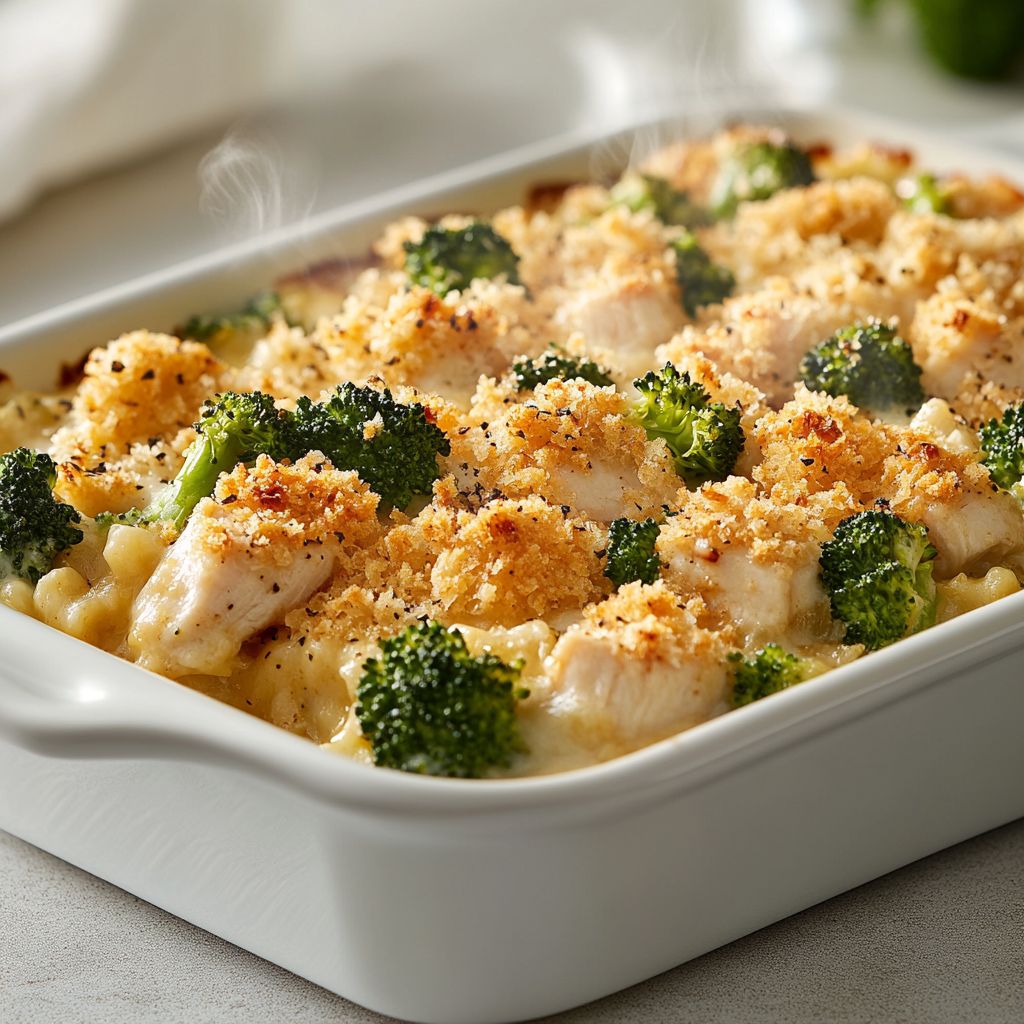
Ingredients
Chicken Divan Casserole
- 2 cups cooked chicken breast, diced
→ Use cooked chicken to save time and to maximize flavor. Dice into bite-sized pieces so they distribute evenly in the casserole. Leftover rotisserie chicken works well; ensure it is cooled before mixing to avoid drawing moisture during baking. - 4 cups broccoli florets, lightly steamed until just tender
→ Classic Divan pairs broccoli with chicken. Steam until bright green and crisp-tender so the broccoli keeps some bite after baking. Drain well to prevent watery sauce and soggy layers.
Creamy Sauce
- 1 can condensed cream of chicken soup (10.5 oz)
→ This provides the creamy binding for the casserole; choose regular-fat version for best flavor and texture. If you prefer a lighter dish, whisk in a splash of milk to reach your desired sauce consistency. - 1/2 cup mayonnaise
→ Adds richness and a smooth base to the sauce. Use full-fat for best mouthfeel; if avoiding eggs, you can substitute an equal amount of plain Greek yogurt with a bit of sour cream. - 1/2 cup sour cream
→ Contributes tang and extra creaminess; use full-fat for deeper flavor and a creamier texture. For a lighter version, use fat-free sour cream but expect a slightly thinner sauce. - 1 tablespoon fresh lemon juice
→ Brightens the overall flavor, cutting through the richness of the mayo and cheese. Use freshly squeezed lemon juice for the best aroma; omit if you want a milder profile. - 1 cup shredded sharp cheddar cheese, divided
→ Adds cheesiness to the sauce and a bubbling crust on top. Shred cheddar just before using (avoid pre-shredded if possible) and split between sauce and topping (usually half stirred into the sauce, half reserved for topping). - 1/2 teaspoon garlic powder
→ Subtle savory note that pairs well with cheddar; adjust to taste. If you prefer a stronger garlic flavor, increase to 3/4 teaspoon or sauté a small minced garlic clove briefly in the sauce base. - 1/4 teaspoon onion powder
→ Adds depth without visible onion; optional if you want a cleaner cheesy flavor. You can omit if you’re sensitive to onion powder. - 1/2 teaspoon salt
→ Seasoning base; adjust amount depending on the saltiness of the soup and cheese. Taste the sauce and adjust before baking. - 1/4 teaspoon black pepper
→ Adds a touch of heat and balance; grind fresh for best aroma; adjust to taste.
Topping
- 1/2 cup breadcrumbs (panko recommended)
→ Creates a crisp, golden crust on the surface. Panko offers the best crunch; mix with a little melted butter or olive oil to help browning. - 2 tablespoons melted butter
→ Used to moisten and toast the breadcrumbs for a rich, crunchy topping. If dairy-free, substitute with olive oil or a dairy-free spread.
Optional Add-ins
- 1/2 cup sliced mushrooms, optional
→ Adds earthy flavor and moisture. Sauté the mushrooms in a teaspoon of butter (or olive oil) until the water has evaporated before adding to the casserole to avoid extra liquid. - 1/4 teaspoon paprika, optional
→ Provides color and a gentle warmth to the sauce or crumb topping. Sprinkle into the sauce or over the top before baking to tint the crust slightly. - 1/4 cup chopped fresh parsley, optional
→ Finishes with color and a hint of brightness. Mix into the sauce at the end or sprinkle on the finished dish as a fresh garnish.
Instructions
- Preheat your oven to 350°F (175°C) and lightly grease a 9×13-inch baking dish or casserole pan.
→ A hot, greased pan prevents sticking and ensures clean, even slices when the casserole is baked and served. - Dice the cooked chicken breast into bite-sized pieces (about 1/2-inch cubes) if it is not already pre-diced, so every forkful contains poultry and the pieces distribute evenly.
→ Uniform dice ensures even cooking and helps the sauce cling to each piece rather than sliding off in clumps. - Lightly steam the broccoli florets until they are bright green and just tender, then drain thoroughly and pat dry to remove excess moisture.
→ Steaming preserves color and snap, while thorough drainage prevents watery sauce and soggy layers. - Whisk the sauce base: in a medium bowl, whisk together the condensed cream of chicken soup, mayonnaise, sour cream, lemon juice, garlic powder, onion powder, salt, and pepper until smooth and cohesive.
→ This creates a silky binding for the vegetables and chicken; well-emulsified sauce coats without separation, and the spices balance richness. - Stir in half of the shredded cheddar cheese into the sauce until it melts and is evenly distributed, reserving the remaining cheddar for topping.
→ Melting into the sauce thickens it slightly and infuses the dish with cheesy flavor while the reserved cheese forms a bubbling crust on top. - In a large bowl, fold the diced chicken and broccoli into the sauce, along with any optional add-ins such as sautéed mushrooms, a pinch of paprika, or chopped parsley, until everything is evenly coated without mashing the broccoli florets.
→ Gentle folding ensures even distribution of texture and flavor and keeps broccoli florets intact for texture contrast. - Spread the coated mixture into the prepared baking dish in a single, even layer.
→ An even bed ensures uniform baking and consistent portion sizes; avoiding mounds prevents undercooked centers. - Sprinkle the remaining cheddar cheese evenly over the surface to begin forming a cheesy crust as the dish bakes.
→ Top cheese melts into a bubbly crust that adds color, flavor, and a pleasing texture contrast with the creamy interior. - In a small bowl, combine the breadcrumbs with the melted butter (and a pinch of salt, if desired) until the crumbs are evenly moistened and crumbly.
→ Butter-coated breadcrumbs toast and color beautifully, creating a crisp topping that contrasts with the creamy filling. - Distribute the breadcrumb topping evenly over the casserole so every portion develops a crisp crown.
→ A consistent topping bakes to an even, crunchy crown rather than pooling in spots that would stay pale or soggy. - Bake the casserole in the preheated oven for 25 to 30 minutes, or until the sauce is bubbling at the edges and the cheese has fully melted; if the topping browns too quickly, tent with foil for the last 5 to 10 minutes.
→ Bubbling indicates thorough heating; foil prevents excessive browning and preserves moisture in the interior. - Optionally, for a deeper crust, switch to a brief 1- to 2-minute broil at the end, watching closely to prevent scorching, until the crumb topping is deeply golden.
→ Quick broiling intensifies color and crunch without overcooking the creamy interior. - Remove the dish from the oven and let it rest for 5 to 10 minutes before serving to allow the sauce to re-set and the slices to firm up for clean portions.
→ Resting lets the casserole thicken slightly so it slices neatly and the flavors meld without runny sauce. - Garnish with chopped fresh parsley if desired, then portion and serve hot, ideally with a light salad or grain side to balance richness.
→ Parsley adds a fresh color and a hint of brightness that complements the dish’s creamy depth.
Notes
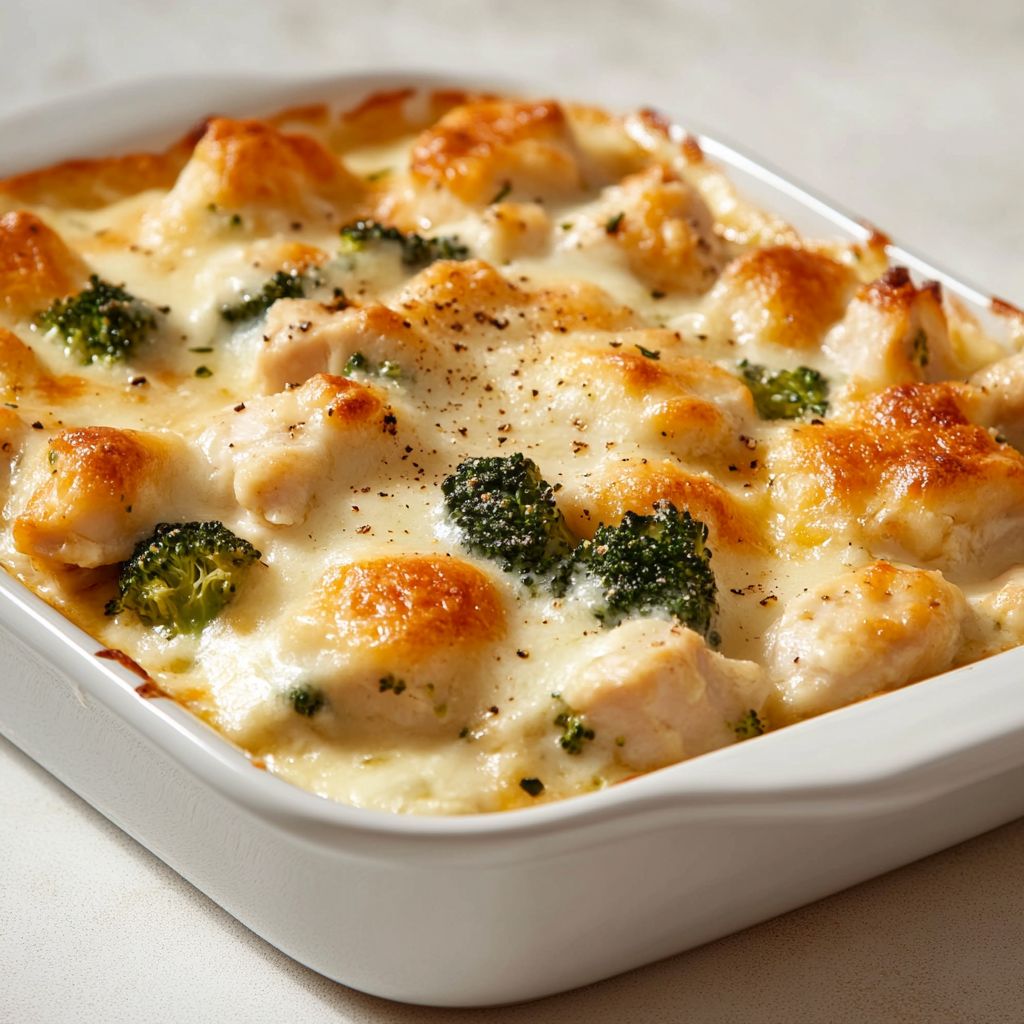
These Chicken Divan Casserole notes guide you to a creamy, comforting bake with broccoli and savory chicken. Use cooked chicken to save time and maximize flavor—leftovers such as rotisserie chicken work beautifully; dice into bite-sized pieces to distribute evenly. Lightly steam the broccoli just until tender-crisp and drain well to avoid watery sauce. For the creamy sauce, whisk together condensed cream of chicken soup with mayonnaise and sour cream, then fold in fresh lemon juice, half of the cheddar, garlic powder, onion powder, salt, and pepper, tasting and adjusting before assembling. Stir the sauce with the chicken and broccoli or spread a portion of it to coat the veggies, then spoon into a casserole dish and top with the remaining sauce and the remaining cheddar for a glossy, bubbling crust. The topping is a crisp crumb layer: mix breadcrumbs (panko for extra crunch) with melted butter or olive oil and sprinkle over the casserole; bake until the top is golden and the sauce is bubbling, about 25–30 minutes at 350°F (175°C). Optional add-ins like sliced mushrooms or a sprinkle of paprika can add depth and color, while a final scattering of chopped fresh parsley brightens the finished dish. Let the casserole rest 5–10 minutes before serving to let the sauce set, and refrigerate leftovers promptly; this dish re-heats well in the oven or microwave. If you prefer a lighter version, you can substitute part or all of the sour cream with plain yogurt and use a lighter mayo, but plan for a slightly thinner sauce.
Tips
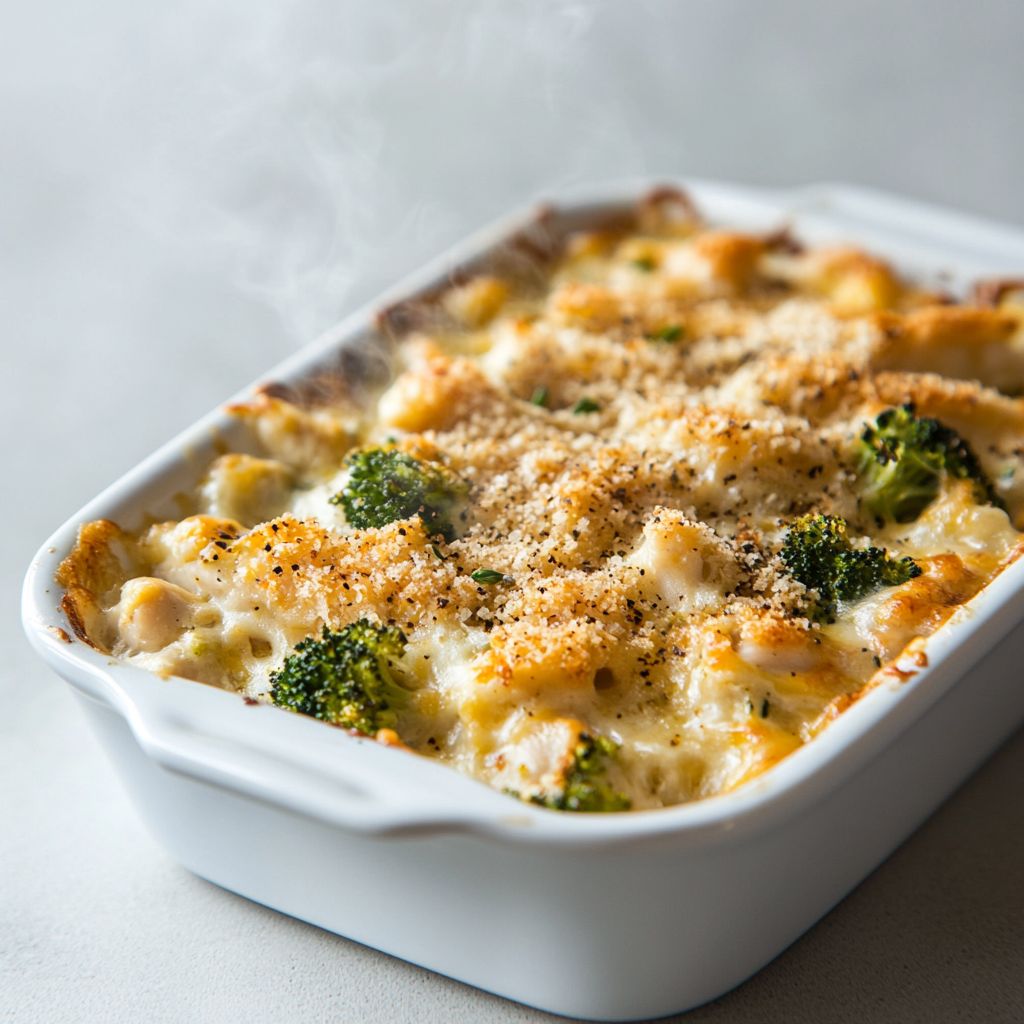
Pro Tips for Chicken Divan Casserole
- Keep chicken pieces uniform: Dice the cooked chicken into even bite-sized pieces so they distribute evenly. If using leftovers like rotisserie chicken, let it cool completely before mixing to avoid extra moisture.
- Broccoli texture matters: Lightly steam the broccoli just until tender and vibrant green. Drain thoroughly and pat dry to prevent extra moisture from making the casserole watery.
- Sauce harmony: Whisk the condensed soup with the mayonnaise and sour cream until smooth before folding in lemon juice and cheese. A smooth base helps the sauce emulsify with the cheddar as it bakes, giving you a creamy, cohesive result.
- Cheese handling: Use freshly shredded sharp cheddar whenever possible. Reserve about half for the topping and fold the rest into the sauce for a cheesier center. Pre-shredded cheese can melt unevenly and clump.
- Flavor boosters: If you want a stronger garlic note, sauté a minced garlic clove in a teaspoon of butter for about 30 seconds before adding to the sauce, or increase garlic powder to 3/4 teaspoon. Fresh lemon juice should be freshly squeezed for the brightest flavor.
- Season gradually: The soups and cheese provide salt, so start with 1/2 teaspoon salt and 1/4 teaspoon pepper. Taste the sauce before baking and adjust to your preference.
Cheese and Sauce Craft
- Prevention of separation: Heat the sauce gently and remove from heat before adding cheese; stir until melted and smooth to avoid gritty textures.
- Lighter options: For a lighter version, whisk in a splash of milk to adjust thickness, or substitute part of the sour cream with plain Greek yogurt. You can also use light mayo, but expect a slightly thinner sauce.
Topping and Browning
- Crunchy topping: Use panko for the crispiest crust. Toss breadcrumbs with 2 tablespoons melted butter and a touch of olive oil to improve browning. A light sprinkle of paprika can add color and warmth.
- Even browning: Bake at 350–375°F (175–190°C) until the casserole is bubbling and the top is golden. If the top browns too quickly, loosely tent with foil to finish cooking through the center without scorching the crust.
Make-Ahead, Storage, and Variations
- Make ahead: Assemble the casserole up to 24 hours in advance, cover, and refrigerate. Bake 30–40 minutes from chilled, adding a few extra minutes if needed until hot and bubbly.
- Gluten-free option: Use gluten-free condensed cream of chicken soup. Ensure all add-ins are gluten-free as well.
- Optional add-ins: Sautéed mushrooms (moisture evaporated) add depth; paprika adds color and a gentle warmth; chopped fresh parsley brightens the finish—stir in parsley at the end or sprinkle on top as a garnish.
- Storage for leftovers: Refrigerate in an airtight container for 3–4 days. Reheat gently in the oven or microwave, covered, to preserve moisture and texture.
FAQ
Chicken Divan Casserole – FAQ
What is Chicken Divan Casserole?
Chicken Divan Casserole is a comforting baked dish featuring tender chicken, broccoli, and a creamy sauce, typically topped with cheese and breadcrumbs. It’s often assembled in a casserole dish and baked until bubbly and golden.
What ingredients are typically used?
A typical version includes:
- Cooked chicken (diced or shredded)
- Steamed broccoli florets
- Creamy sauce (such as a combination of mayonnaise or sour cream with a creamy soup or bechamel)
- Cheese (shredded cheddar and/or parmesan)
- Breadcrumbs or crushed crackers for topping
- Butter or a light drizzle to help the topping brown
Variations may use cooked rice or noodles, and different cheeses or seasonings.
How do I make Chicken Divan Casserole?
Basic steps:
- Steam or lightly blanch the broccoli until just tender.
- Mix the creamy sauce (mayonnaise or sour cream with a light cream soup or bechamel) and season to taste.
- Combine the chicken, broccoli, and sauce in a baking dish.
- Top with shredded cheese and breadcrumbs; dot with butter if using breadcrumbs.
- Bake in a preheated oven at 350°F (175°C) for about 25–30 minutes, until bubbly and the top is golden.
Can I use rotisserie chicken?
Yes. Rotisserie chicken is a convenient option. Shred or dice the meat and use it in place of cooked chicken breasts or thighs.
Can I freeze or make this ahead?
Yes:
- Assembled but unbaked casseroles can be frozen for up to 2–3 months. Thaw in the fridge before baking, then bake as directed, adding a few extra minutes if needed.
- Leftovers can be refrigerated for 3–4 days and reheated in the oven (or microwave) until hot.
Is there a gluten-free version?
Absolutely. Use gluten-free cream soup or a homemade bechamel, and replace breadcrumbs with gluten-free breadcrumbs or omit them. Check all pantry items to ensure there’s no hidden gluten.
What are good variations or add-ins?
Try:
- Adding sliced mushrooms, bell peppers, or sun-dried tomatoes
- Using a different cheese blend (Swiss, Gruyère, or mozzarella)
- Stirring in a splash of lemon juice or Dijon mustard for brightness
- Using a lighter sauce with Greek yogurt or low-fat mayo
Keep the broccoli visible for color and texture balance.
What should I serve with Chicken Divan Casserole?
Good accompaniments include:
- Steamed white or brown rice
- Buttered noodles or mashed potatoes
- A simple green salad or steamed vegetables
How many servings does this yield?
Most standard casseroles yield about 6 servings, depending on the dish size and portion thickness. You can adjust the recipe to fit a larger or smaller bake if needed.
How should I store leftovers?
Store cooled leftovers in an airtight container in the refrigerator for 3–4 days. Reheat in the oven at 350°F (175°C) until hot, or microwave in short intervals until warmed through. If frozen, thaw before reheating.