
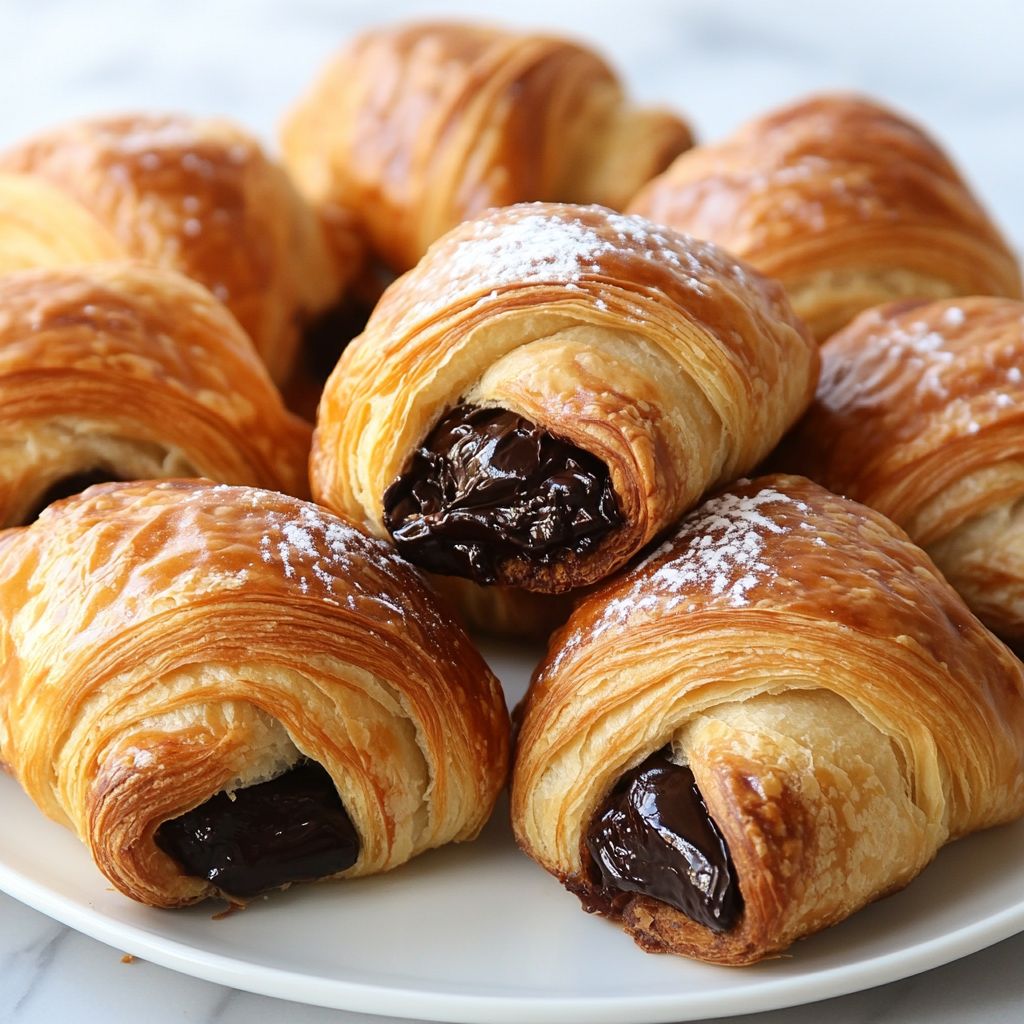
Introduction to Pure Indulgence: Baked Chocolate Croissants
Imagine the enchanting aroma of melted chocolate mingling with the enticing scent of freshly baked buttery pastry, wafting through your kitchen. That’s the irresistible allure of Baked Chocolate Croissants, a concoction that combines the soul-soothing richness of dark chocolate with the unparalleled flakiness of golden-brown croissant pastry. These delectable treats promise to transport you straight to a Parisian boulangerie, where culinary art meets the heavenly realm of chocolate bliss. Whether you’re a seasoned baker or a passionate novice, the joy of crafting and savoring these homemade delights is an experience like no other. Get ready to indulge your senses, satisfy your cravings, and create something truly memorable with these exquisite Baked Chocolate Croissants.
The Story Behind the Dish
The birth of chocolate croissants, or “pains au chocolat” as they’re affectionately known in France, can be traced back to the 19th century. This classic pastry has deep roots in the rich tapestry of French culinary arts, known for its elegant simplicity and decadent tastes. The croissant itself, with its layered buttery profile, became a breakfast staple across Europe as the art of baking perfected it over centuries. When dark chocolate found its luxurious way into their hearts, a beloved pastry was born, combining the simplicity of baking with the indulgence of fine chocolate. The Baked Chocolate Croissant has since become synonymous with leisurely mornings and cherished family gatherings.
Incorporating chocolate into the croissant was more than just a stroke of genius—it was an evolution of European confectionery traditions that embraced the abundance of cocoa brought in from the New World. Today, this classic remains a symbol of chic, yet it warmly invites innovate spins and personal tweaks, ensuring its place in the modern culinary playbook.
Why You’ll Love This Recipe
- Effortlessly Elegant: Despite their sophisticated appearance, Baked Chocolate Croissants require minimal ingredients yet deliver maximum satisfaction.
- Family-Friendly Fun: This recipe is perfect for a weekend baking project with loved ones. Involve the family, and make baking an engaging and rewarding experience.
- Versatile Delight: Enjoy them for breakfast, as a snack, or as a delightful dessert.
- Customizable Creations: Though originally featuring dark chocolate, feel free to experiment with a variety of fillings—create a different twist every time you bake.
Flavor Profile & Texture
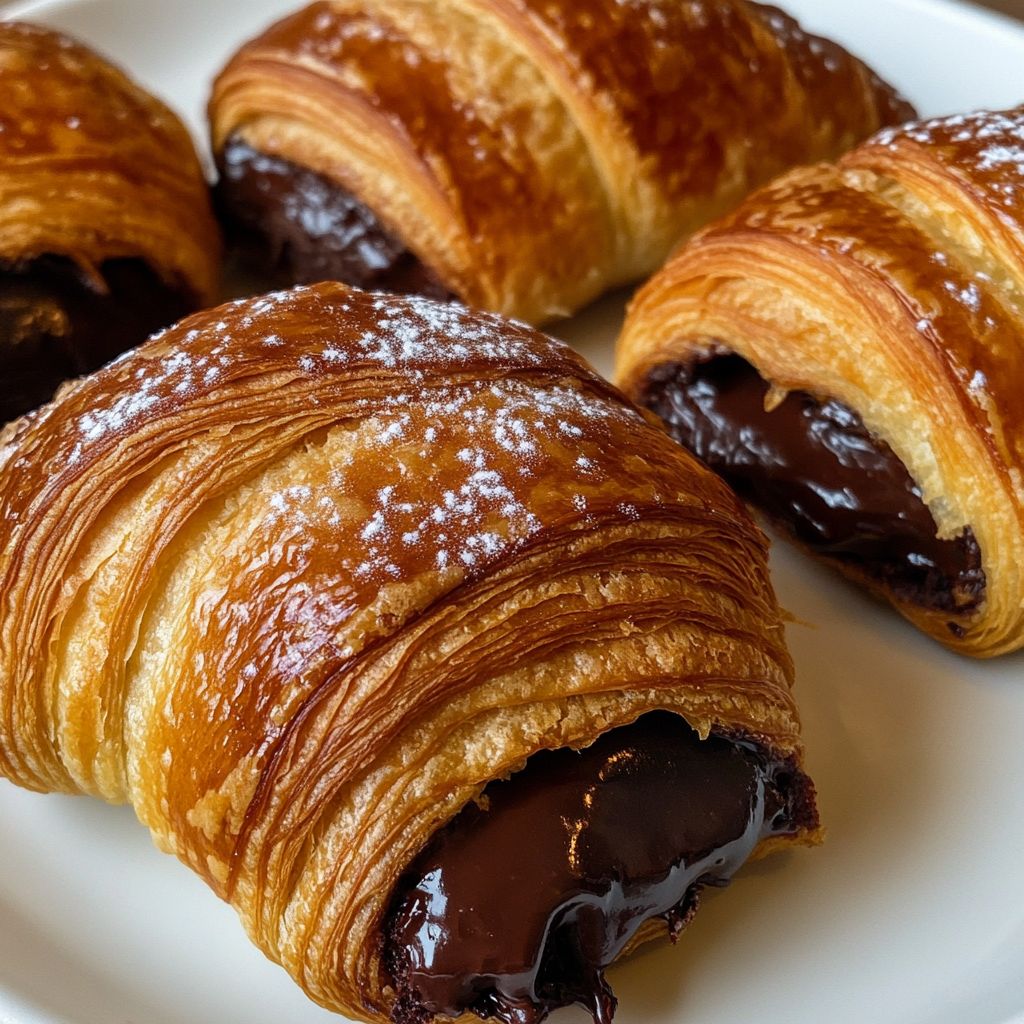
Baked Chocolate Croissants are a testament to the magical union of diverse yet complementary flavors and textures. The pastry itself is tender yet flaky, with a delicate exterior that gives way to layers of buttery bliss. Inside, the rich, molten chocolate provides a satisfying, indulgent contrast, lending an irresistible depth that matches perfectly with the lightness of the pastry. The contrast between the slightly crispy crust and the tender interior, combined with the creamy chocolate core, creates a sensory experience that’s as joyful to discover as it is to savor.
Occasions & Pairings
Baked Chocolate Croissants make a fabulous addition to any occasion, transforming ordinary moments into treasured memories:
- Breakfast or Brunch: Start the day with a touch of luxury, pairing your croissants with a steaming cup of coffee or tea.
- Celebrations & Gatherings: Make your brunches or tea parties feel extra special with these perfectly baked indulgences.
- Dessert Course: Serve as a sophisticated dessert, perhaps with a dollop of whipped cream or a scoop of vanilla ice cream.
Tips, Variations & Substitutions
The classic nature of Baked Chocolate Croissants offers the perfect canvas for innovation and personalization. Here are a few ideas to consider:
- Flavor Variations: Swap the dark chocolate with milk or white chocolate for a milder sweetness. Consider adding a hint of orange zest or a sprinkle of sea salt to enhance the chocolate’s depth.
- Dietary Alternatives: Use gluten-free pastry dough or dairy-free chocolate to tailor the recipe to dietary needs without compromising on taste.
- Regional Twists: Incorporate fruit preserves like raspberry or apricot for a fruity twist, or explore nut butters such as almond or hazelnut spread.
Storage & Make-Ahead Ideas
Baked Chocolate Croissants are just as delightful when enjoyed fresh from the oven or saved for later. Here’s how to make the most of leftover pastries:
- Storing: Keep them in an airtight container at room temperature for up to two days or refrigerate them for longer shelf life.
- Reheating: For a freshly baked experience, reheat the croissants in an oven preheated to 180°C (350°F) for about 5-10 minutes.
- Freezing: Prepare the croissants and freeze them unbaked; simply bake from frozen with an additional few minutes in the oven.
With these storage tips, you’ll have delightful Baked Chocolate Croissants ready whenever the craving strikes, making any morning a special occasion.
Fun Facts & Trivia
Did you know that the croissant’s shape is steeped in history? Legend has it that its crescent shape was inspired by the Turkish flags, celebrating the defeat of the Ottoman Empire at the Siege of Vienna in 1683. True or not, the croissant’s iconic shape is timeless and instantly recognizable worldwide.
Another interesting tidbit: the worldwide proliferation of croissants is credited partly to the initiatives of Austrian baker August Zang, who introduced French-style bakeries to Paris in the 1800s. His Viennese bakery offered rich, buttery pastries that quickly became popular, setting the stage for the development of the beautifully layered pastries we enjoy today.
Finally, did you know that in France, regulations govern the specific proportions of ingredients and methods used to make ‘true’ croissants, ensuring consistency in quality and taste? This dedication to authenticity is just another reason why biting into a Baked Chocolate Croissant is a guaranteed irresistible pleasure.
In closing, Baked Chocolate Croissants are more than just a sweet treat; they are a fusion of cultures and history, wrapped up in layers of buttery pastry and luxurious chocolate. Let this recipe be your passport to creating comfort, indulgence, and a taste of French culinary craftsmanship right in your own kitchen.
Ingredients
- Croissant Dough
- 4 cups all-purpose flour
→ All-purpose flour provides the structure for the croissant. It should be measured precisely for the best texture. Consider using a kitchen scale for accuracy, and be mindful not to pack the flour into the measuring cup. - 1 teaspoon salt
→ Salt enhances the flavor of the dough and strengthens the gluten structure. It can be added directly to the flour before the other ingredients to ensure even distribution. Use fine sea salt for the best results. - 1/4 cup granulated sugar
→ Sugar adds sweetness and helps to create a rich flavor in the dough. It can be adjusted based on personal preference and provides a slight fermentation benefit during the dough’s rise. - 2 1/4 teaspoons instant yeast
→ Instant yeast acts as the leavening agent that helps the dough rise and develop a light texture. Be sure to verify the yeast is fresh for optimal results. It can be mixed directly with the dry ingredients. - 1 cup whole milk (warm)
→ Warm milk activates the yeast and helps with the dough’s fermentation. Make sure the milk is not too hot to avoid killing the yeast; it should be lukewarm, around 100°F (38°C). - 1/4 cup unsalted butter (melted)
→ Butter adds richness and flavor to the dough. It should be melted and allowed to cool slightly before being added to the mixture. This will prevent the heat from affecting the yeast.
- 4 cups all-purpose flour
- Butter Layer
- 1 cup unsalted butter (cold)
→ This butter will be rolled into the dough to create flaky layers in the croissant. It should be very cold and firm for optimal lamination. Cut it into cubes and shape it into a rectangle to make this process easier.
- 1 cup unsalted butter (cold)
- Chocolate Filling
- 1 cup dark chocolate chips (or chopped chocolate)
→ Dark chocolate provides a rich, indulgent filling for the croissants, adding to the dessert’s sweetness and flavor. Choose high-quality chocolate with at least 60% cocoa solids for the best taste. Allow it to come to room temperature before using. - 1 tablespoon cocoa powder
→ Cocoa powder enhances the chocolate flavor and adds depth to the filling. Ensure it is sifted before mixing to avoid clumping. It can also help to balance the sweetness of the chocolate chips.
- 1 cup dark chocolate chips (or chopped chocolate)
- Egg Wash
- 1 large egg
→ An egg wash provides a beautiful glossy finish to the croissants when baked. Whisk it lightly before brushing to ensure even coverage. You can also mix in a tablespoon of water or milk for a less intense sheen.
- 1 large egg
Instructions
- In a large mixing bowl, combine 4 cups of all-purpose flour, 1 teaspoon of salt, and 1/4 cup of granulated sugar.
→ This combination forms the base of your croissant dough. Make sure to whisk the dry ingredients together thoroughly to ensure an even distribution of salt and sugar, which are essential for flavor and fermentation. - Add 2 1/4 teaspoons of instant yeast to the dry mixture.
→ Instant yeast does not require proofing, making it easy to mix directly into the dry ingredients. Ensure the yeast is fresh, as expired yeast can lead to poor rising and texture. - Warm 1 cup of whole milk to about 100°F (38°C) and pour it into the flour mixture.
→ Properly warming the milk is crucial because it activates the yeast, aiding in the fermentation process. Use a thermometer to check the temperature, ensuring it is not too hot, which can kill the yeast. - Add 1/4 cup of melted unsalted butter to the milk and flour mixture.
→ The butter adds flavor and richness while also improving the dough’s texture. Allow the melted butter to cool slightly before adding it to prevent scalding the yeast. - Mix the ingredients together with a wooden spoon or your hands until a shaggy dough forms.
→ The goal is to combine everything until no dry flour remains visible. Avoid over-mixing at this stage to keep the dough tender, as gluten develops when mixed too much. - Knead the dough on a lightly floured surface for about 10 minutes until it becomes smooth and elastic.
→ Kneading develops gluten, which gives the croissants their structure and chewiness. If the dough is too sticky, sprinkle a little more flour while kneading, but avoid adding too much to keep the dough tender. - Shape the dough into a ball and place it in a lightly greased bowl, covering it with a damp cloth. Let it rise in a warm place until doubled in size, about 1 to 2 hours.
→ This first rise is essential for developing flavor. Keeping the dough covered prevents it from drying out. You can create a warm environment by placing the bowl in an turned-off oven with the light on. - While the dough is rising, prepare the butter layer by cutting 1 cup of cold unsalted butter into cubes.
→ Using cold butter is crucial as it will be rolled into the dough to create flaky layers. Ensure the butter remains firm, as softened butter will lead to a greasy dough. - Shape the cold butter into a rectangle (about 6×8 inches) using a rolling pin between two sheets of parchment paper.
→ This rectangle needs to fit well in the dough for folding. The parchment paper helps prevent sticking and makes it easier to roll out the butter evenly. - Once the dough has doubled, turn it out onto a lightly floured surface and roll it into a large rectangle about 12×20 inches.
→ Use even pressure and roll from the center outward to maintain an even thickness. Make sure the corners are sharp and the edges are straight to ensure uniform folding. - Place the prepared cold butter rectangle in the center of the rolled-out dough and fold the dough over the butter, sealing the edges to encase the butter completely.
→ This process ensures that the butter is trapped within the dough, which is essential for creating the flaky layers characteristic of croissants. - Gently roll out the dough into a long rectangle about 12×24 inches.
→ Use light pressure to avoid squeezing the butter out. Keep flour available to dust the surface as needed to prevent sticking. - Fold the dough into thirds (like a letter) and wrap it in plastic wrap. Chill in the refrigerator for 30 minutes.
→ Chilling allows the butter to firm up and makes the dough easier to roll out for subsequent turns. It’s also important for developing the layers. - Repeat the rolling and folding process two more times, chilling between each turn, for a total of three turns.
→ Each turn increases the layers of butter and dough, which is what gives the croissants their flakiness and structure. Ensure that the dough remains cool during this process. - For the chocolate filling, in a bowl, mix 1 cup of dark chocolate chips with 1 tablespoon of sifted cocoa powder.
→ Sifting the cocoa powder avoids clumps and ensures that it integrates smoothly with the chocolate. This mix flavors the filling, giving it a rich chocolate taste. - Roll out the finished dough into a large rectangle about 1/4 inch thick. Cut the dough into triangles (about 4 inches wide at the base and 8 inches tall).
→ Sharp cuts are essential for clean edges; this helps in rolling the croissants without them losing shape. Make sure each triangle is uniform for even baking. - Place a tablespoon of the chocolate filling at the base of each triangle and roll them up from the base towards the point.
→ Tightly rolling the croissant ensures that the chocolate filling stays inside during baking while helping the croissant achieve its signature crescent shape. - Place the rolled croissants on a baking sheet lined with parchment paper, spacing them about 2 inches apart.
→ This spacing allows for expansion while baking without the croissants touching. Keeping them on parchment prevents sticking and simplifies clean-up. - Whisk 1 large egg in a small bowl to create the egg wash, then brush it lightly over each croissant.
→ An egg wash gives the croissants a beautiful golden-brown color and delicious glossy finish. Be gentle to avoid deflating the dough. - Cover the baking sheet loosely with plastic wrap and let the croissants rise again in a warm area until puffy, about 1 hour.
→ This second rise allows for further development of flavor and ensures the croissants are light and airy. Avoid drafts, as they may affect the rising process. - Preheat your oven to 375°F (190°C) while the croissants are rising.
→ An adequately preheated oven is crucial for achieving the right texture and color. Ensure your oven is hot before placing the croissants inside. - Bake the croissants in the preheated oven for 15-20 minutes or until they are golden brown and puffed.
→ Keep an eye on them as baking times can vary. They should have a beautiful, deep golden color, indicating they are perfectly baked and flaky. - Remove the croissants from the oven and allow them to cool on a wire rack for about 10 minutes.
→ Cooling on a wire rack prevents moisture from collecting underneath, which can make the bottoms soggy. This final step is vital for leaving the croissants crisp. - Serve the baked chocolate croissants warm or at room temperature, enjoying their flaky layers and rich chocolate filling.
→ Allowing them to cool slightly enhances the flavor profile, making every bite satisfying and indulgent. Enjoy with coffee, tea, or as a sweet treat on their own.
Notes
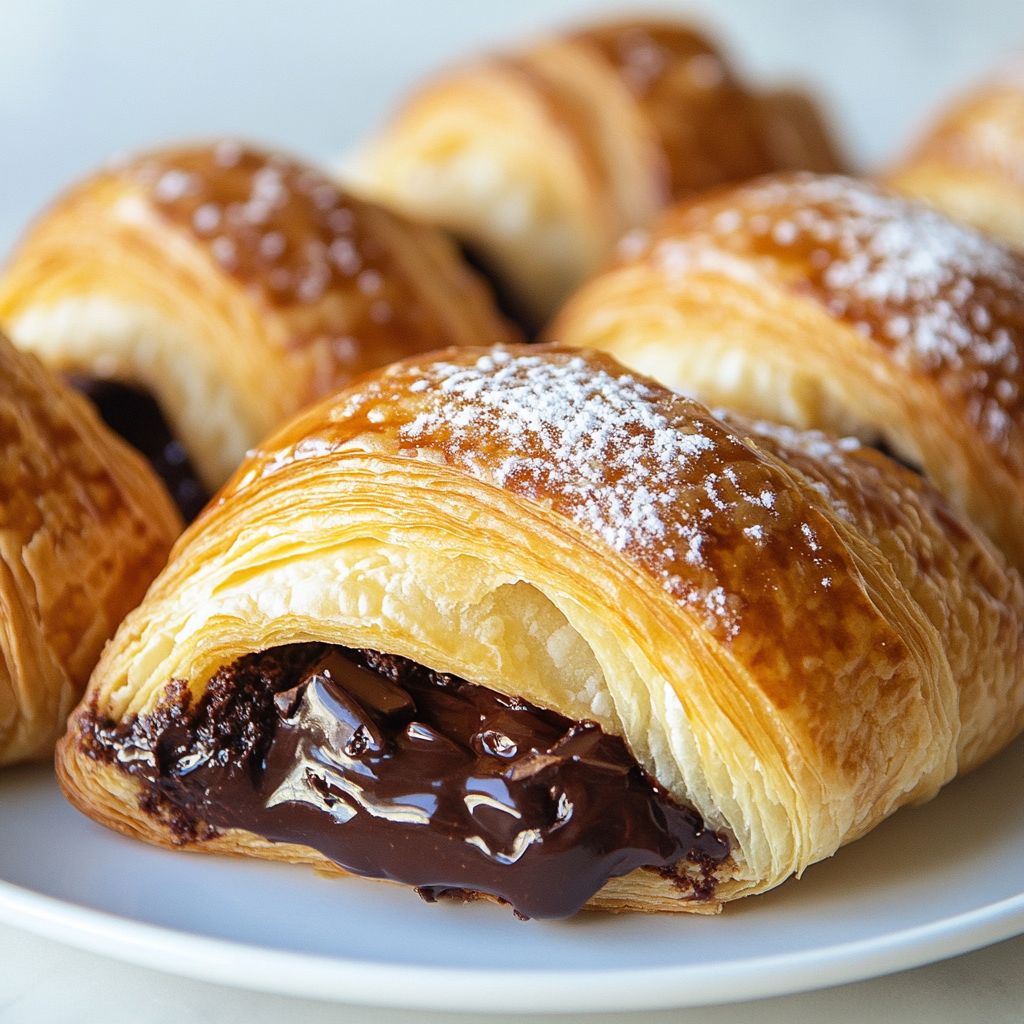
These baked chocolate croissants are a delightful treat that combines flaky, buttery pastry with rich chocolate filling. The dough is made from scratch, allowing you to truly appreciate the flavors and textures of freshly baked croissants. For the best results, ensure all ingredients are at the proper temperature, especially the cold butter for lamination, which is crucial for creating those signature layers. You can experiment with different types of chocolate for a customized flavor—a mix of dark and milk chocolate can provide a unique taste profile. Once baked, serve these croissants warm for the ultimate indulgence; they pair wonderfully with a cup of coffee or tea. If you have leftovers, they can be stored in an airtight container for a couple of days, or you can freeze them for longer storage. Reheat them in the oven for a few minutes to restore their flaky texture before serving.
Tips
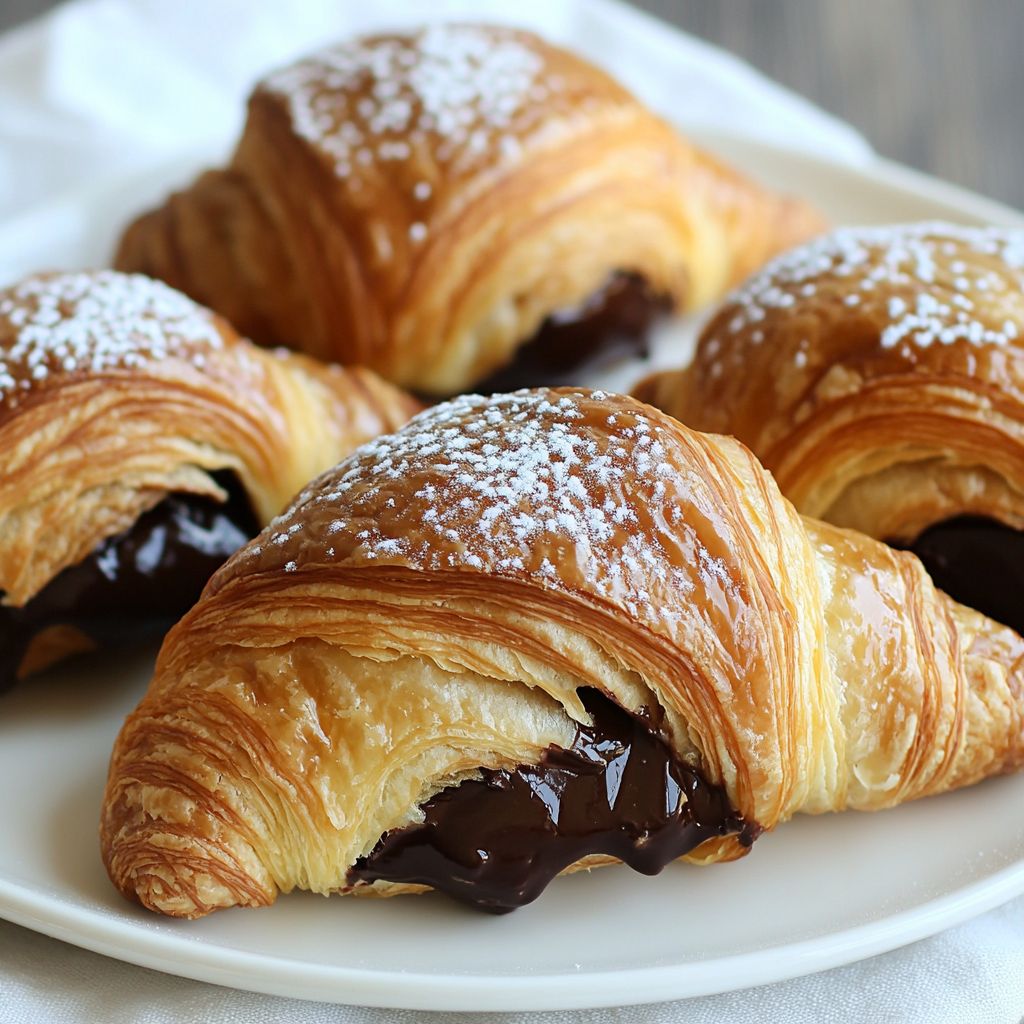
Tips for Making Baked Chocolate Croissants
- Preparing the Dough: When mixing the dough, ensure you do not over-knead it; this can lead to tough croissants. Knead until just combined and smooth.
- Creating Layers: Lamination is key to flaky croissants. After placing the cold butter between the layers of dough, use a rolling pin to gently roll it out, keeping the butter cold throughout the process. If the butter becomes too soft, refrigerate the dough for a few minutes before continuing.
- Shaping the Croissants: For a more uniform shape, roll the dough into a rectangle and cut out triangles. Make sure to stretch the triangle slightly while rolling it into a croissant shape to create more layering and a better rise.
- Proofing: Allow the shaped croissants to rest until doubled in size, usually 1-2 hours. Keep them in a warm, draft-free area. This step is critical as it helps develop flavor and ensure a light texture.
- Baking: Preheat your oven to the correct temperature and ensure it is fully heated before baking. This ensures the croissants puff up nicely. Consider using a baking stone for the best results, as it helps with even heat distribution.
- Storage: If you have leftover croissants, store them in an airtight container at room temperature for a day or two, or freeze them for longer storage. Reheat in the oven to bring back their crispiness.
- Experimentation: Feel free to experiment with the filling! Try adding nuts, fruits, or different types of chocolate to personalize your croissants to your taste.
FAQ
What ingredients are needed to make baked chocolate croissants?
You will need puff pastry, chocolate (dark, milk, or semi-sweet), butter, sugar, egg (for egg wash), and optional powdered sugar for dusting.
Can I use store-bought puff pastry?
Yes, store-bought puff pastry is perfect for making chocolate croissants as it saves time and effort without sacrificing taste.
How long does it take to bake chocolate croissants?
Typically, it takes about 15-20 minutes to bake chocolate croissants at 400°F (200°C) until they are golden brown and puffed.
Can I fill the croissants with other types of chocolate?
Absolutely! You can use different types of chocolate such as Nutella, white chocolate, or even flavored chocolate for a unique twist.
How can I make sure my croissants are flaky?
To achieve a flaky texture, ensure that your puff pastry is kept cold and handle it minimally to retain the layers of butter and dough.
Can I freeze baked chocolate croissants?
Yes, baked chocolate croissants can be frozen. Make sure to cool them completely, wrap them tightly, and store in an airtight container before freezing.
What is the best way to reheat frozen croissants?
The best way to reheat frozen croissants is to let them thaw in the fridge overnight and then heat them in a preheated oven at 350°F (175°C) for about 10-15 minutes.
How can I enhance the flavor of my chocolate croissants?
You can enhance the flavor by adding a pinch of sea salt, a sprinkle of cinnamon, or incorporating a flavored chocolate, such as orange or raspberry.