
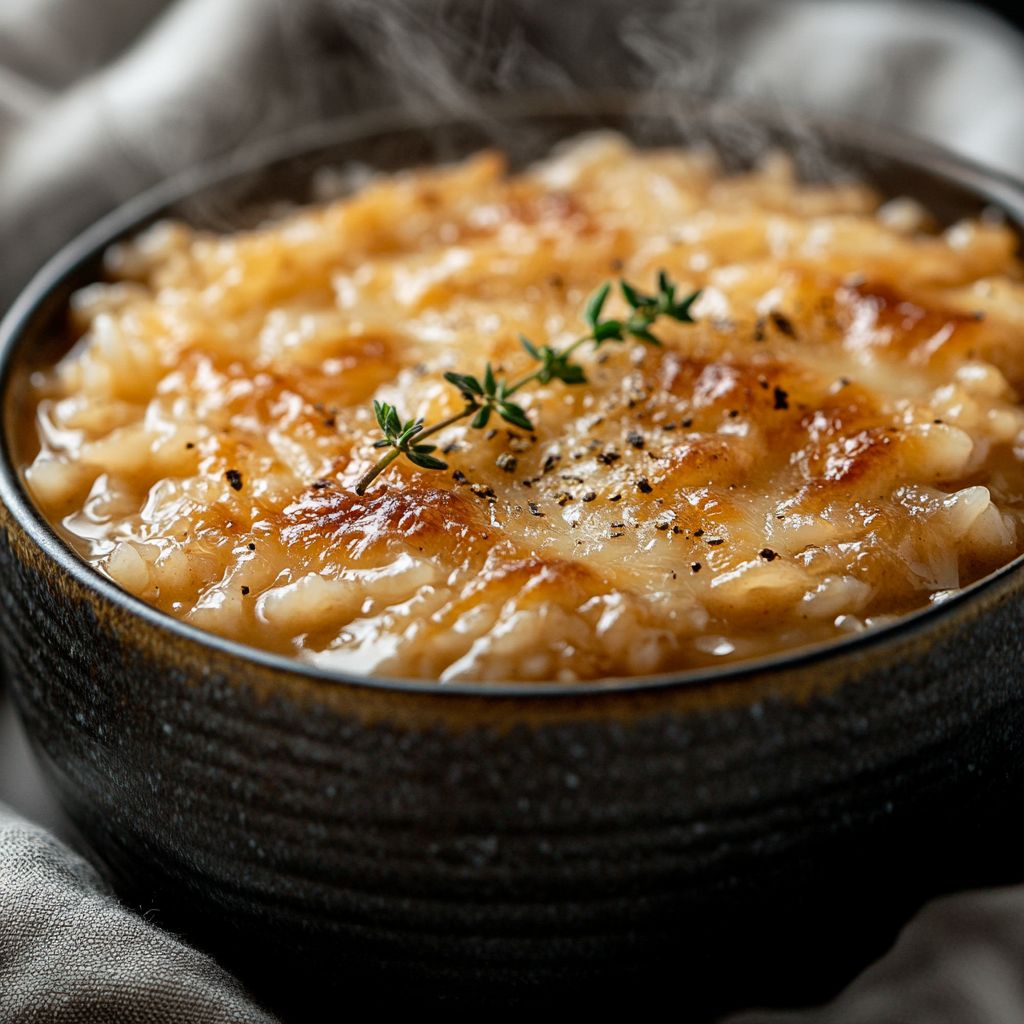
Introduction: A Delectable Twist on a French Classic
Imagine a dish that marries the deep, savory richness of French onion soup with the comforting, hearty embrace of rice. This is precisely what you get with French Onion Soup Rice—a culinary masterpiece that transforms traditional flavors into something extraordinary. With its enticing aroma and beautifully layered flavors, this dish promises to captivate your senses from the very first bite. Whether you’re a fan of classic French cuisine or simply in search of a deliciously warming meal for a cozy night in, French Onion Soup Rice is an indulgence you won’t want to miss.
The Story Behind the Dish
French onion soup has a storied history dating back to the 18th century. Originating from the humble kitchens of France, this beloved soup was once considered a poor man’s meal due to its simple ingredients: onions, beef broth, and often a slice of stale bread. Over time, French onion soup gained popularity and became celebrated for its comforting qualities, eventually earning a spot on menus in high-end restaurants worldwide.
Taking inspiration from this classic, French Onion Soup Rice was born. This innovative dish maintains the soul-warming essence of traditional French onion soup while adding a twist with the inclusion of rice, creating an entrée that’s robust enough to be served as a stand-alone meal. By blending these elements, the dish provides a contemporary homage to its predecessor while delighting palates with familiar yet fresh flavors.
Why You’ll Love This Recipe
- Rich and Savory Flavors: The dish embodies all the savory goodness of French onion soup with a unique twist, making it perfect for both classic food lovers and those looking for something new.
- Comforting and Filling: With rice taking the spotlight, this dish is both satisfying and a well-balanced meal.
- Versatile and Adaptable: Ideal for lunch, dinner, or a potluck dish, it suits various occasions and settings.
- Simple Ingredients: Using pantry staples, you’ll achieve incredible depth of flavor without the need for complicated culinary skills.
- Family-Friendly: This dish appeals to all ages, from kids to adults—making it a go-to meal for family dinners.
Flavor Profile & Texture
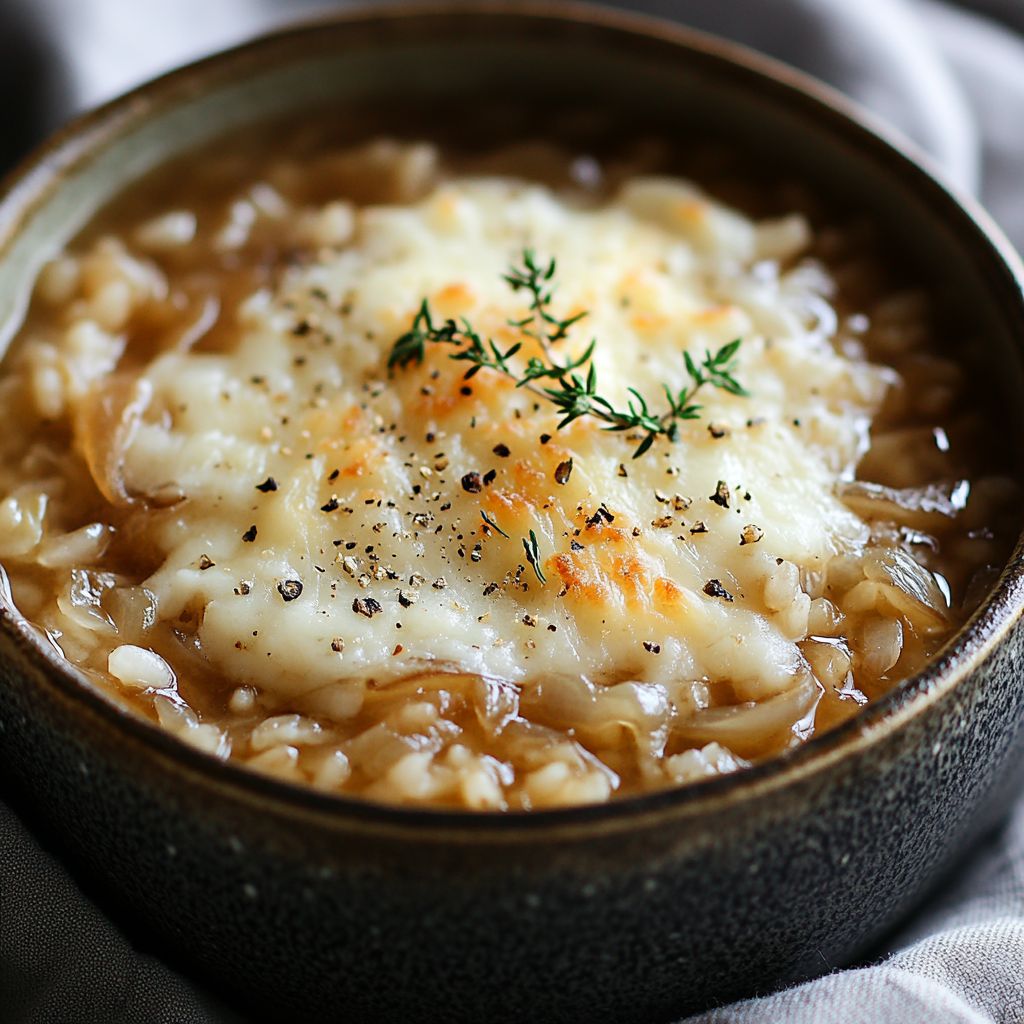
The beauty of French Onion Soup Rice lies in its multifaceted flavor profile and texture. The experience starts with the initial aromatic wave of sweet, caramelized onions, hinted with a subtle smokiness from the broth. This is enriched by the nuttiness of Gruyère or Swiss cheese, known for its creamy texture and slightly salty taste, melting beautifully to create a gooey layer of flavor that envelopes the rice.
Texture-wise, the dish is a medley of contrasting components: tender grains of rice interspersed with softly cooked onions, all draped in a layer of melted cheese that lends a creamy finish to each bite. It’s this symphony of flavors and textures that make French Onion Soup Rice a truly unforgettable culinary experience.
Occasions & Pairings
French Onion Soup Rice is an incredibly versatile dish, making it suitable for an array of occasions. From a casual family dinner on a chilly evening to a sophisticated addition to a holiday feast, it adapts seamlessly to any setting.
Pair it with a crisp green salad dressed in a light vinaigrette to complement the richness of the dish. Alternatively, a side of roasted seasonal vegetables can add color and further nutritional value to your meal. For drink pairings, consider a full-bodied red wine such as Cabernet Sauvignon or a refreshing sparkling water with a hint of citrus for a delightful balance.
Tips, Variations & Substitutions
Customize Your Creation
- Add Protein: For an even heartier meal, add cooked chicken breast or sautéed mushrooms to the mix.
- Go Gluten-Free: Substitute traditional rice for a gluten-free variety such as quinoa or wild rice.
- Cheese Varieties: Experiment with different cheeses like Gouda, Provolone, or even a mild Cheddar for unique nuances in flavor.
- Dietary Alternatives: For a vegan version, swap out cheese with your favorite plant-based alternative and use vegetable broth instead of beef broth.
Storage & Make-Ahead Ideas
French Onion Soup Rice is perfect for meal prepping or making ahead for busy weeknights. After preparing, allow it to cool to room temperature before storing it in an airtight container. It will keep well in the refrigerator for up to four days.
Reheat on the stovetop over low heat, adding a splash of broth or water to maintain moisture. Alternatively, you can freeze portions for up to two months. When frozen, defrost in the refrigerator overnight before reheating.
Fun Facts & Trivia
Did you know that French onion soup was reportedly a favorite of King Louis XV of France? Legend has it that the dish was created when the king returned from hunting to find only onions, butter, and champagne in his lodge’s kitchen. With these ingredients, the first version of this soup was assembled, setting the stage for the dish’s evolution over centuries.
In terms of modern dining, French Onion Soup is often a staple at French bistros around the globe, making French Onion Soup Rice a delightful derivative that continues to honor and celebrate this rich culinary heritage.
Whether you’re a fan of French cuisine or just someone who appreciates the comforting fit of rice in any meal, French Onion Soup Rice offers an experience that is both familiar and beautifully elevated. Dive in and savor the flavors steeped in tradition yet brimming with innovation.

Ingredients
- Rice Base
- 1 cup long-grain white rice
→ Long-grain white rice provides the foundation for the dish, absorbing flavors while maintaining a light, fluffy texture. Rinse the rice under cold water before cooking to remove excess starch, which can make the final dish gummy. - 2 cups vegetable broth
→ Vegetable broth adds a deep, savory flavor to the rice, enhancing the overall taste of the dish. Use low-sodium broth to control the salt level. If homemade, ensure it’s well-seasoned and flavorful for the best results.
- 1 cup long-grain white rice
- Onion Mixture
- 3 large yellow onions (sliced)
→ Yellow onions are perfect for caramelizing, providing a rich sweetness that forms the base of the soup. Slice them thinly to ensure even cooking and optimal caramelization. Aim for uniform slices for consistent flavor and texture. - 3 tablespoons butter
→ Butter enriches the onion mixture, aiding in caramelization while adding a creamy mouthfeel. Use unsalted butter for more control over the seasoning. Allow it to melt completely over low heat before adding the onions. - 1 tablespoon olive oil
→ Olive oil helps prevent the butter from burning while adding a fruity depth to the dish. Use a good quality extra virgin olive oil for the best flavor. Drizzle it in with the butter before adding the onions to ensure a smooth combination. - 1 teaspoon sugar
→ Sugar helps speed up the caramelization process, enhancing the sweetness of the onions. Use a light brown or granulated sugar for a subtle depth. Add it toward the end of cooking to encourage more browning without burning the onions. - 1 teaspoon salt
→ Salt draws out moisture from the onions and enhances their natural sweetness. Add it at the beginning of cooking to help the onions soften and distribute flavors evenly. Adjust the amount based on personal preference and broth saltiness. - 1 tablespoon balsamic vinegar
→ Balsamic vinegar adds acidity and depth, balancing the sweetness of the caramelized onions. Use high-quality balsamic for a richer flavor. Add it at the end of cooking to prevent evaporation of the nuanced flavors.
- 3 large yellow onions (sliced)
- Herbs and Seasoning
- 1 teaspoon dried thyme
→ Dried thyme complements the dish with earthy notes that accentuate the caramelized onions. Crush the dried thyme between your palms before adding to release its essential oils and increase flavor. Add it early in the cooking process to allow the flavors to meld. - 1 bay leaf
→ A bay leaf adds depth and a subtler herbal note to the bubbling flavors of the soup. Use a whole leaf and remove it before serving, as it can be tough and inedible. Add it alongside the broth to infuse the flavor during simmering.
- 1 teaspoon dried thyme
- Final Touches
- 1 cup grated Gruyère cheese
→ Gruyère cheese is essential for topping the soup with a gooey, rich crust. Grate your cheese fresh for a meltier texture. When broiling, spread it evenly and adjust the amount based on personal cheesiness preference. - Fresh parsley (for garnish)
→ Fresh parsley adds a pop of color and brightness that contrasts the rich flavors of the soup. Chop finely and sprinkle over the top just before serving for a fresh flourish. Look for bright green leaves to ensure freshness.
- 1 cup grated Gruyère cheese
Instructions
- Rinse the long-grain white rice in cold water before cooking.
→ This step removes excess starch that can lead to a gummy texture in the finished dish. Rinsing enhances the rice’s ability to remain fluffy after cooking, ensuring that it absorbs flavors beautifully. - In a medium saucepan, combine 1 cup of rinsed rice with 2 cups of vegetable broth.
→ The vegetable broth will infuse the rice with a rich, savory flavor. Bring the mixture to a boil over medium-high heat, which helps the rice cook evenly and absorb the broth’s essence. - Once boiling, reduce heat to low, cover, and simmer for 15-20 minutes, or until the rice is tender and the liquid is absorbed.
→ Cooking the rice with the lid on traps steam, which is essential for even cooking. Check for doneness by gently fluffing with a fork; if all liquid is absorbed and rice is tender, it’s ready. - While the rice is cooking, prepare the onion mixture. Heat a large skillet over medium heat.
→ Preheating the skillet allows the butter to melt evenly and helps create a suitable environment for caramelizing the onions without burning them. - Add 3 tablespoons of butter and 1 tablespoon of olive oil to the skillet and let them melt.
→ Combining butter with olive oil prevents burning, while the butter provides flavor and richness. Ensure the mixture is bubbly before adding the onions to enhance caramelization. - Add the 3 sliced yellow onions to the skillet and stir to coat them evenly in the butter and oil mixture.
→ Even coating helps each onion slice caramelize uniformly, releasing their natural sugars and resulting in a sweet, rich flavor. Stir occasionally to avoid sticking. - Sprinkle 1 teaspoon salt over the onions and stir gently.
→ Salt draws out moisture from the onions, aiding in the caramelization process. It also enhances the onions’ natural sweetness. Add it at the beginning for better distribution. - Cook the onions over medium heat, stirring occasionally, for about 20-25 minutes until they are deeply golden brown and caramelized.
→ Patience is key here; slow cooking allows the sugars in the onions to caramelize properly. Adjust heat if the onions begin to brown too quickly, ensuring they cook evenly. - Once the onions are caramelized, sprinkle 1 teaspoon of sugar and add 1 teaspoon of dried thyme.
→ The sugar speeds up caramelization and brings out additional sweetness. Crushing the thyme releases its oils, amplifying its flavor. Add these when the onions are nearly done for maximum effect. - Stir in 1 tablespoon of balsamic vinegar, allowing it to combine with the onions and reduce slightly.
→ Balsamic vinegar adds a touch of acidity that balances the sweetness of the taramelized onions. Adding it at the end preserves its complex flavor profile. - Add 1 bay leaf to the skillet and pour in the cooked rice, merging it from the saucepan into the onion mixture.
→ The bay leaf infuses gentle herbal notes as the flavors meld. Stir thoroughly to ensure even distribution of rice and onions, allowing the dish to resemble a cohesive mixture. - Add additional vegetable broth as needed for moisture, stirring until the mixture is well combined and heated through.
→ If the rice seems too dry, adding broth helps achieve the desired risotto-like consistency, making the dish an inviting, creamy texture. - Preheat your broiler while preparing the final touches, ensuring it’s ready for the cheese topping.
→ A broiler creates high, direct heat that will melt and brown the cheese, providing a delicious contrast to the rich soup. - Spoon the rice and onion mixture into oven-safe bowls or directly into a large serving dish.
→ Use even portions, allowing the flavors to meld beautifully. Individual bowls lend themselves well to serving, giving each person their own portion of cheesy goodness. - Generously sprinkle 1 cup of grated Gruyère cheese over the top of the rice mixture.
→ Grated Gruyère melts beautifully, forming a golden crust; therefore, spreading it evenly ensures consistent cheesiness and an inviting presentation. - Place the bowls or dish under the broiler for 2-5 minutes, watching closely until the cheese is bubbly and golden brown.
→ Broiling can quickly turn the cheese from perfectly melted to burnt, so stay attentive. Rotate the dish if your broiler heats unevenly to achieve even browning. - Remove the dish from the oven and let it cool for a minute.
→ Cooling slightly allows the cheese to set, making it easier to serve without losing the melted integrity of the topping. - Garnish with freshly chopped parsley just before serving.
→ The bright green color and fresh flavor of parsley elevate the dish visually and palate-wise, providing a delightful contrast to the rich, comforting flavors of the soup. - Serve piping hot and enjoy the rich, comforting flavors of your French Onion Soup Rice.
→ Take a moment to appreciate the aromas and textures before diving in; it’s the perfect warming, hearty meal.
Notes
These French Onion Soup Rice bowls offer a delicious and hearty meal, combining the rich flavors of caramelized onions and the comfort of rice. The caramelization of the onions is key, so take your time to develop their sweetness and depth. The use of both butter and olive oil ensures a beautifully balanced flavor profile, while the addition of balsamic vinegar and thyme enhances the complexity of the dish. For the best texture, ensure your rice is fluffed after cooking. Top with freshly grated Gruyère cheese for an authentic French touch and pop it under the broiler until golden and bubbly. Serve hot, garnished with fresh parsley for a delightful presentation. Consider adding crusty bread on the side for an extra heartiness, perfect for a cozy dinner.

Tips
Cooking Tips for French Onion Soup Rice
- Rinsing Your Rice: Always rinse your long-grain rice under cold water until the water runs clear. This helps remove excess starch, preventing the rice from becoming gummy and allowing it to cook up light and fluffy.
- Caramelizing Onions: Be patient when caramelizing the onions. Low and slow cooking is key; it might take 25-30 minutes to achieve that perfect caramel color and rich flavor. Stir occasionally to prevent sticking and burning.
- Browning your Butter: Ensure your butter is melted and bubbly before adding onions, which avoids burning. Cooking the onions in a combination of butter and olive oil gives you the best flavor while protecting the milk solids in the butter.
- Timing the Sugar: Adding sugar early can lead to burnt onions. Instead, add it towards the end of the onion cooking process to enhance sweetness without discoloring the onions too much.
- Seasoning Wisely: Adjust your added salt based on the broth’s saltiness. Start with less, especially if using store-bought broth, and add more as needed. Taste frequently throughout cooking to achieve your desired flavor balance.
- Using Balsamic Vinegar: Add balsamic vinegar after the onions have caramelized to retain its complex flavors. Don’t let it cook for too long, as it can turn bitter if overcooked.
- Infusing with Herbs: For the best infusion of thyme flavor, crush the dried thyme between your fingers before adding it to release its oils. This enhances your soup’s overall flavor profile right from the start.
- Handling the Bay Leaf: Remember to remove the bay leaf before serving the soup. While it adds great depth of flavor while cooking, it is not meant to be eaten.
- Preparing the Cheese: For a beautiful cheesy crust, ensure the Gruyère cheese is grated finely and spread evenly across the top before broiling. Keep an eye on it while broiling to avoid burning, as cheese can go from perfectly melted to charred in seconds.
- Garnishing: A sprinkle of freshly chopped parsley adds a vibrant pop of color and freshness that contrast nicely with the rich, savory flavors of the soup. Always chop it just before using to keep it looking bright and appealing.
FAQ
What is French Onion Soup Rice?
French Onion Soup Rice is a delicious fusion dish that combines the rich flavors of traditional French onion soup with rice. It typically features caramelized onions, beef or vegetable broth, and is often topped with melted cheese.
How do I make the caramelized onions for this dish?
To caramelize onions, slice them thinly and cook them slowly in butter or oil over low heat, stirring occasionally until they become golden brown and sweet. This process usually takes about 30-45 minutes.
Can I use a different type of cheese besides Gruyère?
Yes, you can use other types of cheese such as Swiss, mozzarella, or provolone. However, Gruyère is traditional for its nutty flavor and great melting quality.
What type of rice works best for French Onion Soup Rice?
Long-grain rice, such as basmati or jasmine, works well for this dish as it remains fluffy. Additionally, risotto rice like Arborio can also be used for a creamier texture.
Is this recipe suitable for vegetarians?
Yes, French Onion Soup Rice can be made vegetarian by using vegetable broth instead of beef broth and ensuring that the cheese used is rennet-free.
How long does it take to prepare French Onion Soup Rice?
The total preparation and cooking time is typically around 1 to 1.5 hours, which includes about 30-45 minutes for caramelizing the onions.
Can I make French Onion Soup Rice ahead of time?
Yes, you can prepare the dish ahead of time. Store it in an airtight container in the refrigerator and reheat it gently. However, for the best taste and texture, it’s recommended to add cheese just before serving.
What can I serve with French Onion Soup Rice?
French Onion Soup Rice pairs well with a simple mixed green salad, crusty bread, or even as a side to grilled meats or roasted vegetables for a complete meal.