
Introduction: The Allure of the Spinach and Feta Croissant
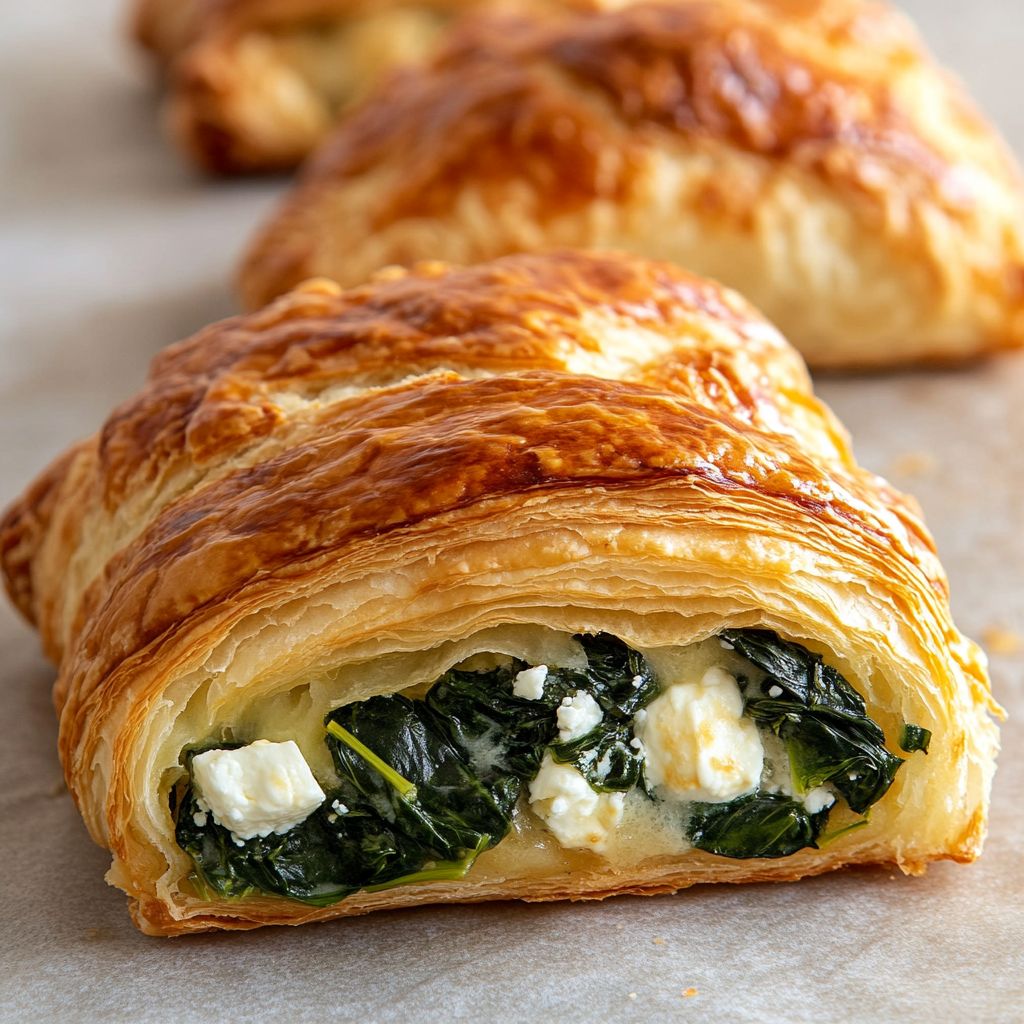
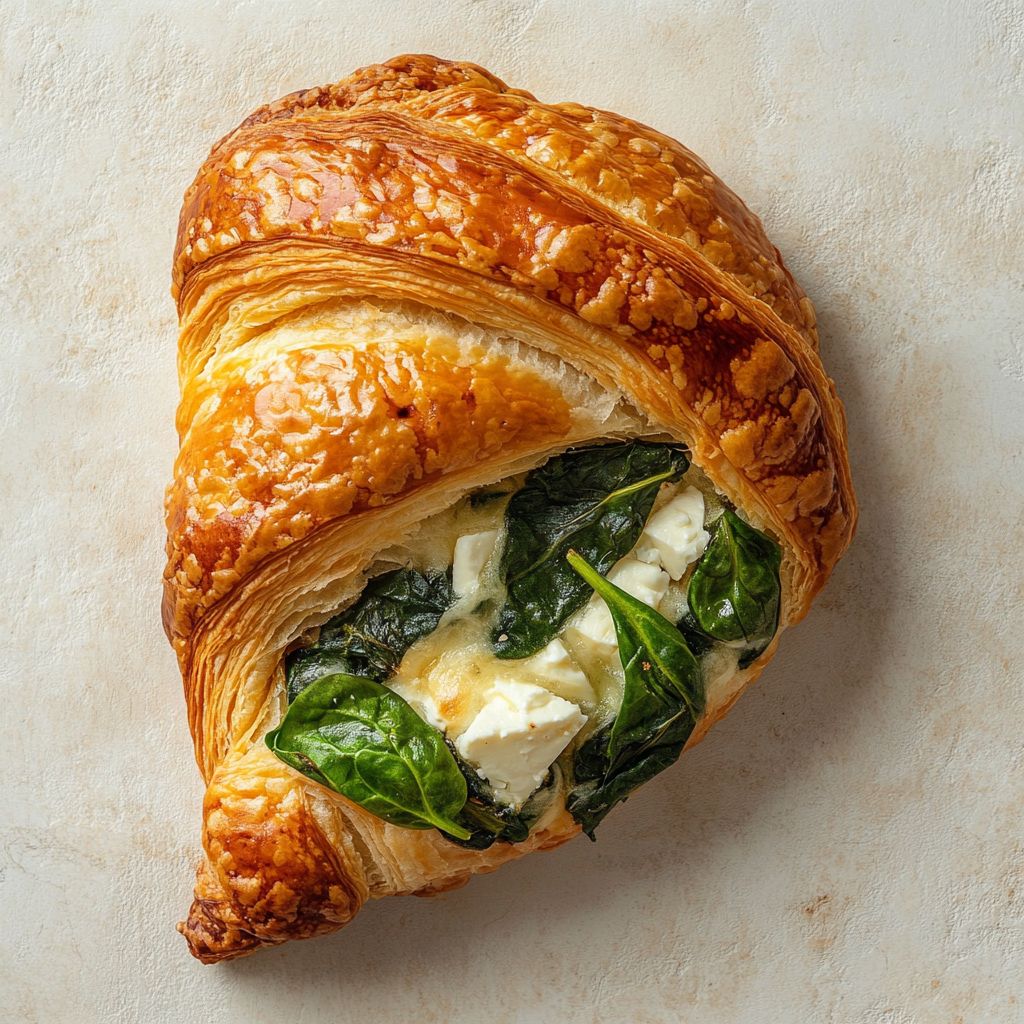
Imagine biting into a flaky, buttery croissant that crumbles delicately at your touch, unveiling a savory filling of wilted spinach creamed together with tangy feta cheese. The contrast of crisp pastry and creamy filling creates a delightful texture that dances on your palate. This Spinach and Feta Croissant is not just any pastry—it’s a journey of flavors and aromas that transport you to a quaint European café. Whether enjoyed as a breakfast indulgence or a satisfying snack, its harmonious blend of ingredients makes each bite a memorable culinary experience. Embark on this gastronomic adventure and rediscover the simple joys of a perfectly crafted croissant.
The Story Behind the Dish: A Culinary Crossroad
The Spinach and Feta Croissant is a beautiful fusion of French and Mediterranean culinary traditions. The croissant, with its French origins, is a symbol of baking sophistication. Its history dates back to the early 19th century and has become synonymous with elegance and craft. On the other hand, the Mediterranean flavors of spinach and feta bring memories of vibrant Greek landscapes and blue seas.
Originally, the combination of spinach and feta cheese is a staple in Greek cuisine, often found in the popular pie known as Spanakopita. By marrying these two beloved elements—French pastry craftsmanship and Greek filling traditions—we create something entirely new yet warmly familiar. This culinary crossroad represents the globalization of food, where best-loved regional dishes come together to create a universally beloved snack.
Why You’ll Love This Recipe
- Delectable Flavor Fusion: Enjoy the marriage of buttery French croissant pastry with rich Mediterranean fillings.
- Perfect Anytime Treat: Whether served for breakfast, brunch, or as a party appetizer, these croissants are versatile and sure to satisfy.
- Wholesome Ingredients: With fresh spinach and high-quality feta cheese, this recipe brings healthy greens and proteins into the delicious package.
- Simple Yet Sophisticated: Easy enough for novice bakers yet impressive for entertaining guests.
- Vegetarian Delight: A crowd-pleaser that caters to vegetarian preferences without compromising on flavor.
Flavor Profile & Texture: A Symphony of Delights
The Spinach and Feta Croissant is a masterclass in texture and flavor. The croissant itself offers a light, flaky crust that shatters pleasingly with each bite, revealing a soft, layered interior. Within this decadent shell lies a filling that is both hearty and creamy. The spinach provides an earthy, slightly sweet backdrop that perfectly complements the brininess of the feta cheese.
The feta cheese stands out, offering its tangy, salty notes which cut through the richness of the pastry, providing a balanced taste that is both nuanced and satisfying. The moisture from the filling keeps the interior luscious and prevents the croissant from becoming dry. Each mouthful is an orchestrated balance of contrast—richness and acidity, flakiness and creaminess.
Occasions & Pairings: When and How to Serve
This croissant is quite the chameleon of dishes, suitable for myriad occasions. Serve it as a luxurious start to a weekday morning or as a lavish treat at brunch gatherings. It makes an excellent partner to a cup of rich, aromatic coffee or a glass of freshly squeezed orange juice, enhancing its flavors with each accompanying sip.
On more casual occasions, pair it with a crisp green salad laced with cucumbers, tomatoes, and olives for a Mediterranian twist. As for beverages, consider matching it with a light Chardonnay or an effervescent champagne to complement its buttery nature.
Tips, Variations & Substitutions: Personalizing Your Croissant
- Customizable Fillings: Add sun-dried tomatoes, black olives, or even sautéed mushrooms for an additional burst of flavor.
- Making Vegan-Friendly: Use vegan butter for the pastry and replace feta with plant-based alternatives to suit vegan diets.
- Gluten-Free Option: Substitute traditional croissant dough with a gluten-free pastry dough. Store-bought options can expedite this process.
- Spice It Up: Introduce some heat by adding red pepper flakes or finely chopped jalapeños into the filling.
Storage & Make-Ahead Ideas: Savvy Preparations
The beauty of the Spinach and Feta Croissant lies not only in its immediate pleasure but in its adaptability for make-ahead preparations. You can construct the croissants up to the baking stage and freeze them for up to a month; when you need them, bake them fresh, straight from the freezer.
Store leftover croissants in an airtight container at room temperature for up to two days. To reheat, simply pop them in an oven at 350°F (175°C) for a few minutes until they regain their crispy exterior.
For reheating, consider using the oven instead of the microwave, which could alter the crisp texture of the croissant. Should you wish to simplify a busy morning, you can prepare the filling a day in advance, allowing for swift assembly.
Fun Facts & Trivia: Delving Deeper into Culinary Lore
Did you know that the croissant didn’t originate in France? Its roots lie in Vienna, Austria, from where it traveled to France and evolved into the buttery delight we cherish today. The crescent shape is symbolic, named after the shape of the Islamic crescent moon—crafted to celebrate victory by Christian Europe over the occupation forces in the Battle of Vienna.
Meanwhile, feta cheese has a history that stretches back over 8,000 years and is often considered one of the oldest cheeses in the world. Originating in Greece, it holds a venerable place in Mediterranean cuisine.
These facts enhance the understanding of our Spinach and Feta Croissant, celebrating not just its delightful taste, but also its rich historical roots.
Ingredients
- Croissant Dough
-
4 cups all-purpose flour
→ All-purpose flour provides the structure needed for the croissant dough. It creates a gluten network that allows the croissant to rise and become flaky. For best results, measure using the spoon-and-level method to avoid compacting the flour. -
1 teaspoon salt
→ Salt enhances flavor and strengthens the gluten structure in the dough. It also controls yeast fermentation, helping to regulate the rising of the dough for optimal lift and texture. Be sure to mix it evenly with the flour before incorporating other ingredients. -
1 tablespoon granulated sugar
→ Sugar provides a touch of sweetness and helps in browning the croissant during baking. It also contributes to yeast activation, which is essential for fermentation. Use white granulated sugar for this purpose to achieve the best results. -
1 cup unsalted butter (cold)
→ Cold unsalted butter is essential for achieving the flaky layers of the croissant. It should be cut into small cubes and incorporated into the dough using a technique called lamination, where layers of dough and butter are folded together. Using unsalted butter allows you to control the saltiness of your pastry. -
1 cup whole milk (warm)
→ Warm whole milk activates the yeast and helps to hydrate the flour. Make sure it is warm, not hot, to avoid killing the yeast. The creaminess of whole milk also adds richness to the dough, resulting in a more indulgent croissant. -
2 teaspoons active dry yeast
→ Active dry yeast is the leavening agent that allows the dough to rise. It should be sprinkled over the warm milk to activate before mixing it into the dough. Make sure to check the expiration date for best results, as expired yeast may not rise properly.
-
4 cups all-purpose flour
- Filling
-
2 cups fresh spinach (chopped)
→ Fresh spinach adds a vibrant color and nutritional value to the filling. It should be rinsed, and any tough stems removed before chopping it coarsely. Sautéing the spinach for a few minutes until wilted will enhance its flavor and reduce moisture content before mixing. -
1 cup crumbled feta cheese
→ Feta cheese contributes a salty, tangy flavor that complements the earthiness of spinach. Use quality feta for better taste and texture. Crumble it into small pieces to ensure even distribution throughout the filling. -
1/4 teaspoon black pepper
→ Black pepper serves to enhance the flavors of the spinach and feta. Use freshly ground black pepper for the best flavor. Adjust the amount according to your taste preference, being careful not to overpower the other ingredients. -
1/4 teaspoon nutmeg (optional)
→ Nutmeg adds a warm, aromatic flavor that pairs beautifully with spinach and cheese. Use freshly grated nutmeg if available, as it has a more potent flavor compared to pre-ground. Add sparingly, as it can easily overpower the dish. -
1 tablespoon olive oil (for sautéing)
→ Olive oil is used for sautéing the spinach, adding richness and flavor to the filling. Choose a high-quality extra virgin olive oil for the best taste. Heat it in a pan over medium heat before adding the spinach to wilt it down.
-
2 cups fresh spinach (chopped)
Instructions
- Prepare your croissant dough by combining flour, salt, and sugar in a large mixing bowl.
→ This step establishes the base for your croissant dough. Use a whisk or a fork to mix these dry ingredients thoroughly before adding any liquid. This helps ensure the salt and sugar are evenly distributed, leading to a consistent dough. - Add the active dry yeast to the warm milk in a separate bowl and let it sit for 5-10 minutes until it becomes frothy.
→ Activating the yeast is crucial for proper fermentation. The frothy appearance indicates the yeast is alive and ready to create carbon dioxide, which will result in a light and airy croissant. Ensure the milk is warm to the touch (around 100°F or 37°C) but not boiling. - Combine the frothy yeast mixture with the dry ingredients and mix until a dough begins to form.
→ Gentle mixing at this stage helps incorporate the liquid into the flour without overworking the gluten. You can use a spatula or your hands for this, continuing until there are no dry pockets remaining. - Incorporate the cold, cubed unsalted butter into the dough by cutting it in with a pastry cutter or your fingers, aiming for a rough texture with pea-sized pieces of butter remaining.
→ This lamination process creates layers in the croissant, essential for achieving the flaky texture. Be careful not to overmix, as you still want chunks of butter that will melt during baking, creating steam and lift. - Knead the dough gently on a floured surface for about 5 minutes until smooth, then form it into a ball and place it in a greased bowl.
→ Kneading strengthens the dough’s gluten structure, making it elastic. After kneading, ensure the dough is smooth and elastic before covering it with plastic wrap to allow for proper rising. - Cover the bowl with a damp cloth and let it rise in a warm place until it doubles in size, about 1-2 hours.
→ This step allows the yeast to ferment and produce gas, causing the dough to expand. A warm, draft-free area, like an oven turned off but slightly warmed, is ideal for this process. - While the dough rises, sauté the chopped spinach in olive oil over medium heat for 2-3 minutes until wilted and all moisture has evaporated.
→ Sautéing the spinach concentrates its flavor and fat content, making it a savory filling. Ensure it’s not watery by cooking it until all moisture evaporates, as excess moisture can lead to soggy croissants. - Once cooled, combine the sautéed spinach with crumbled feta, black pepper, and nutmeg (if using) in a mixing bowl.
→ Mixing the filling thoroughly ensures even distribution of flavors. This balance of spinach and feta creates the characteristic taste profile of the croissant. Adjust seasoning to your preference. - Roll out the risen dough on a lightly floured surface into a large rectangle, about 1/4 inch thick.
→ A uniform thickness ensures even baking, allowing all layers to achieve the desired flakiness. Use a rolling pin and apply even pressure while rolling out to avoid tearing the dough. - Cut the dough into triangles by slicing the rectangle into long strips and then diagonally across, creating the triangle shapes for the croissants.
→ Cutting triangles provides the shape needed to roll up the croissants properly. Ensure your triangles are roughly equal in size for uniform baking. - Place a spoonful of the spinach-feta filling at the base of each triangle and roll tightly towards the point, forming a crescent shape.
→ Rolling from the base towards the top triangle tip ensures a tight croissant that maintains its shape. Avoid overstuffing to prevent spillage during baking. - Arrange the rolled croissants on a baking sheet lined with parchment paper, allowing space between each for expansion during baking.
→ Proper spacing is crucial as croissants rise significantly in the oven and require room to spread out. Ensure that they don’t touch to maintain a good texture. - Cover the croissants with a cloth and let them rise again for 30-45 minutes until slightly puffed.
→ This secondary rising creates more air pockets and enhances the croissant’s flakiness. Be patient; this step is essential for achieving the right texture. - Preheat your oven to 375°F (190°C) during the last 10 minutes of the second rise.
→ Preheating ensures that the croissants start baking in a consistently hot environment, which is necessary for proper puffing and browning. - Before baking, brush the tops of the croissants with a beaten egg for a glossy finish.
→ An egg wash enhances the color and shine of the croissants, giving them an appealing appearance. Use a pastry brush for an even application. - Bake the croissants in the preheated oven for 15-20 minutes or until golden brown and flaky.
→ Baking at the right temperature allows the butter to melt and create steam, which is essential for the flakiness of the croissant. Keep an eye on the croissants in the last few minutes of baking for a perfect golden hue. - Remove the croissants from the oven and allow them to cool on a wire rack for a few minutes before serving.
→ Cooling on a wire rack prevents condensation from forming beneath the croissants, which can make them soggy. Enjoy the croissants warm or at room temperature for the best flavor!

Notes
For the filling, sautéing the spinach in olive oil not only enhances its flavor but also reduces moisture, which is crucial to prevent sogginess in the croissants. Crumbling the feta cheese ensures that it distributes evenly throughout, adding a creamy texture that pairs wonderfully with the spinach. You can customize the filling by adding herbs or spices according to your preference, but be mindful of balancing flavors; a pinch of nutmeg can add warmth to the dish without overwhelming it.
Once baked, these croissants are at their best when served warm. They can also be made ahead and stored in the freezer, making them a convenient option for busy mornings. Reheat them in the oven for a few minutes to restore that fresh-baked quality. Enjoy with a side salad for a light lunch or on their own for a delightful snack.
Tips
Tips for Preparing Spinach and Feta Croissant
- Measuring Ingredients: Accurate measurement of ingredients, especially flour and butter, is crucial for the success of your croissant. Use a kitchen scale for precise measurements if possible.
- Laminating the Dough: When incorporating cold butter into your croissant dough, make sure to keep everything cold. If the butter begins to soften, return the dough to the refrigerator for a while to prevent it from blending into the dough instead of creating layers.
- Resting the Dough: After mixing the dough, allow it to rest in the refrigerator for at least 2 hours or overnight. This helps to relax the gluten, making it easier to roll out and shape the croissants.
- Sautéing Spinach: To avoid excess moisture in your filling, sauté the chopped spinach just until wilted and then let it cool before mixing it with feta. This prevents soggy pastries.
- Flavoring Wisely: Adjust the seasonings to your personal taste but remember that feta cheese is already salty. Start with small amounts of salt or pepper and add to taste.
- Shaping Croissants: When rolling out the dough, make sure to create a triangle shape. This will help in achieving the classic croissant shape as you roll it from base to tip.
- Baking Temperature: Preheat your oven properly before placing the croissants inside. A hot oven (around 400°F or 200°C) will help them puff up quickly and develop that signature flaky outer layer.
- Egg Wash: For a golden, shiny finish, brush the croissants with a beaten egg before baking. You can add a splash of milk to the egg for a richer color.
- Cooling: Allow the baked croissants to cool on a wire rack to prevent them from becoming soggy. Enjoy them warm or at room temperature!
FAQ
What ingredients do I need to make spinach and feta croissants?
You will need puff pastry, fresh spinach, feta cheese, garlic, onion, salt, pepper, and an egg for egg wash.
Can I use frozen spinach instead of fresh?
Yes, you can use frozen spinach. Make sure to thaw and drain it well to remove excess moisture.
How do I prevent the croissants from becoming soggy?
Make sure to drain any excess liquid from the spinach mixture, and avoid overfilling the croissants.
Can I add other ingredients to the filling?
Yes! You can add ingredients like cream cheese, onions, or herbs like dill or parsley to enhance the flavor.
How long do I bake the spinach and feta croissants?
Bake them in a preheated oven at 400°F (200°C) for about 20-25 minutes or until they are golden brown.
How can I store leftover croissants?
Store them in an airtight container in the refrigerator for up to 3 days. You can also freeze them for longer storage.
Can I make the filling in advance?
Yes, you can prepare the filling ahead of time and store it in the refrigerator for up to 24 hours before using it.
What can I serve with spinach and feta croissants?
They pair well with a simple salad or a bowl of soup for a complete meal.