
Introduction
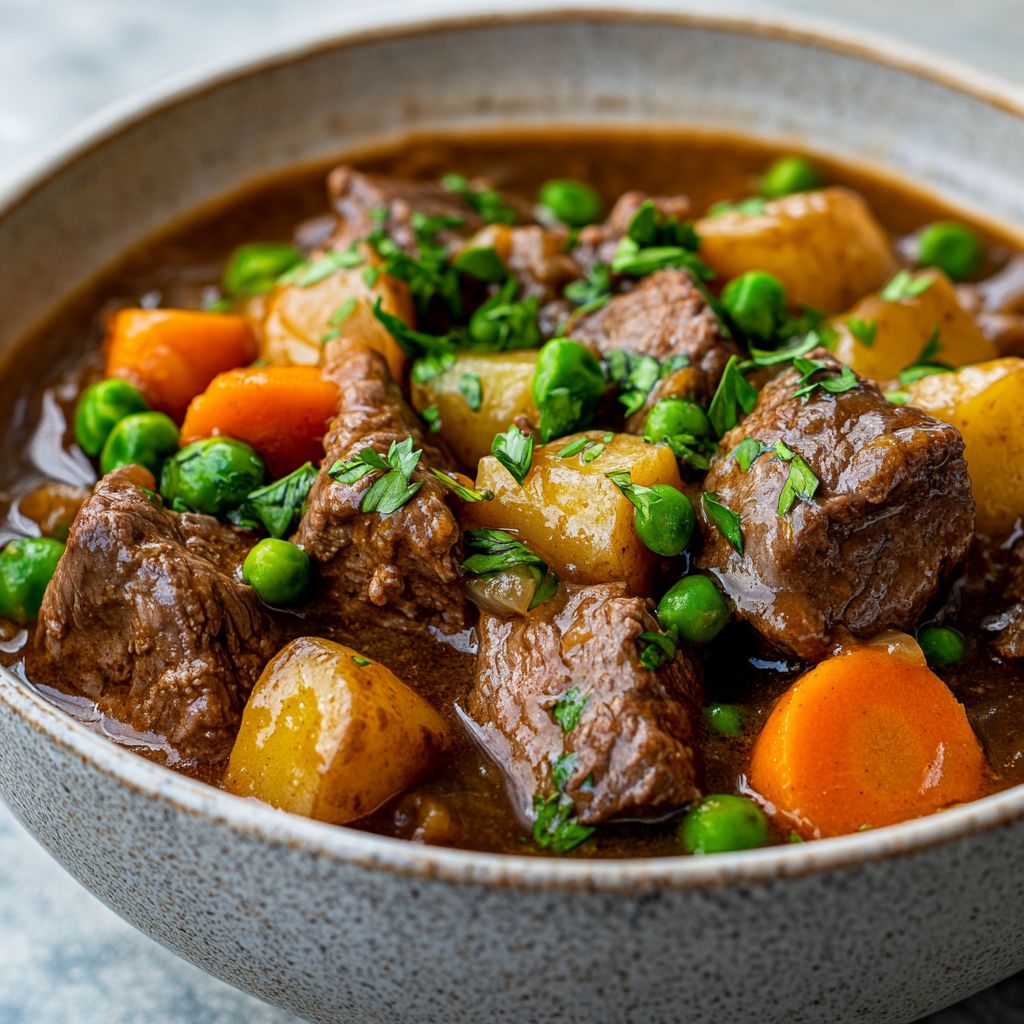
Imagine curling up on a chilly evening with a steaming bowl of comfort. The rich aroma of tender beef, slow-cooked to perfection with an array of vibrant vegetables, envelopes your senses. This, dear reader, is what awaits you with our “Slow-Cooked Beef Stew with Veggies” recipe. Each spoonful warms not just the body but the soul, offering a medley of flavors that dance together in perfect harmony. Whether you’re a seasoned cook or a kitchen novice, this recipe promises to delight your taste buds and bring a touch of culinary magic to your table. Prepare to embark on a mouthwatering journey that will leave you yearning for seconds.
The Story Behind the Dish
Beef stew is a dish with roots that run deep in various cultures across the globe. From the coziest cottages in Ireland to bustling dinner tables in the heart of America, beef stew has been a staple comfort food for generations. Its origins can be traced back to the hearty, one-pot meals of the medieval period, where cooking low and slow over a fire was the essence of daily sustenance.
Our rendition garners inspiration from a myriad of cultural influences, combining the traditional methods of stewing meat with innovative twists that touch upon Mediterranean and Old World styles. This recipe is an homage to these time-tested techniques, updated to cater to modern tastes while preserving the authenticity of a rustic dish that feels both familiar and excitingly new.
Why You’ll Love This Recipe
- Effortless Cooking: Simply prepare, set, and forget with minimal hands-on time.
- Deep, Rich Flavors: The slow-cooking process allows the ingredients to meld beautifully.
- Nutritious and Filling: Packed with protein and vegetables, it’s a wholesome meal in one pot.
- Adaptable: Perfect for personal twists and dietary adjustments.
- Time-Honored Comfort: A soul-soothing dish, perfect for gathering loved ones around the table.
Flavor Profile & Texture
In this stew, every ingredient plays its part to deliver a symphony of flavors. The beef, cooked to tender goodness, forms the hearty backbone of the stew, providing richness and depth. As it slow cooks, the fat gently renders down, infusing the stew with a luscious, satisfying unctuousness. The vegetables – earthy carrots, sweet onions, and robust potatoes – absorb these savory juices, offering a natural sweetness and slight bite to each mouthful.
The broth, a canvas of beef stock peppered with herbs and spices, ties everything together. Earthy undertones from bay leaves, a hint of heat from cracked black pepper, and aromatic notes from garlic create layers of complexity that transform simple ingredients into culinary excellence. The texture is a delightful blend of melt-in-the-mouth meats, fork-tender vegetables, and a thick, velvety broth that coats your spoon.
Occasions & Pairings
This beef stew shines brightest on cold winter nights when a warm meal is most cherished. It makes an equally fantastic centerpiece for casual family gatherings or a quiet weekend dinner. Celebrate autumn’s arrival with a cozy mug of hot apple cider alongside or welcome spring with a crisp green salad on the side, perfectly lightening the meal.
Wine lovers might enjoy pairing this dish with a bold red wine like Cabernet Sauvignon or Merlot, whose tannins complement the stew’s hearty flavors. For dessert, consider something light and refreshing such as a lemon sorbet or a simple fruit compote to cleanse the palate.
Tips, Variations & Substitutions
The beauty of a classic beef stew is how adaptable it is to taste preferences and dietary needs. Prefer your stew with a bit of spice? Add a dash of red pepper flakes or a swirl of sriracha for a kick. Need a gluten-free alternative? Substitute any thickening agents with cornstarch or arrowroot powder.
For a different twist, consider swapping beef for lamb, bringing a distinctly robust flavor to the stew. Vegetarians can join in the joy by replacing the beef with hearty mushrooms and lentils, crafting a dish that’s equally comforting and satisfying. Fresh herbs like thyme or rosemary can offer additional layers of aroma and flavor, allowing the stew to evolve as seasons change.
Storage & Make-Ahead Ideas
Slow-cooked dishes like this stew often taste even better the next day as flavors continue to develop. Store leftovers in airtight containers in the refrigerator, where it will keep for up to four days. For longer storage, freeze the stew in individual portions, which are perfect for quick weekday meals. Allow the stew to cool completely before storing to maintain the best texture and flavor.
Reheat gently on the stovetop or microwave, stirring occasionally, to ensure even heating. If you’re planning ahead, prepare the stew the day before serving for maximum flavor infusion. Let it cool, then store in the fridge overnight. This not only enhances taste but also makes serving up a hearty meal on a busy day a breeze.
Fun Facts & Trivia
Did you know that beef stew has been a fixture in both literature and film, symbolizing home and hearth? From appearances in Charles Dickens’s novels to Hollywood blockbusters, it signals comfort and reliability, portraying the essence of nourishment as much for the soul as for the body.
Another fun tidbit: variations of beef stew exist across the globe, from the spicy Goulash of Hungary to the tomato-based Pörkölt found in Eastern Europe. Each of these has its own unique flavor profile, showcasing how a simple dish can transcend borders and adapt to diverse cultural palates.
Embark on a culinary voyage with our Slow-Cooked Beef Stew with Veggies, a dish that not only satisfies hunger but brings a sense of connectivity to traditions and taste. Whether cooked for tonight’s dinner or as a make-ahead lunch, it promises a delicious escape to a world where food is both comforting tradition and innovative art.
Ingredients
- Beef Stew Base
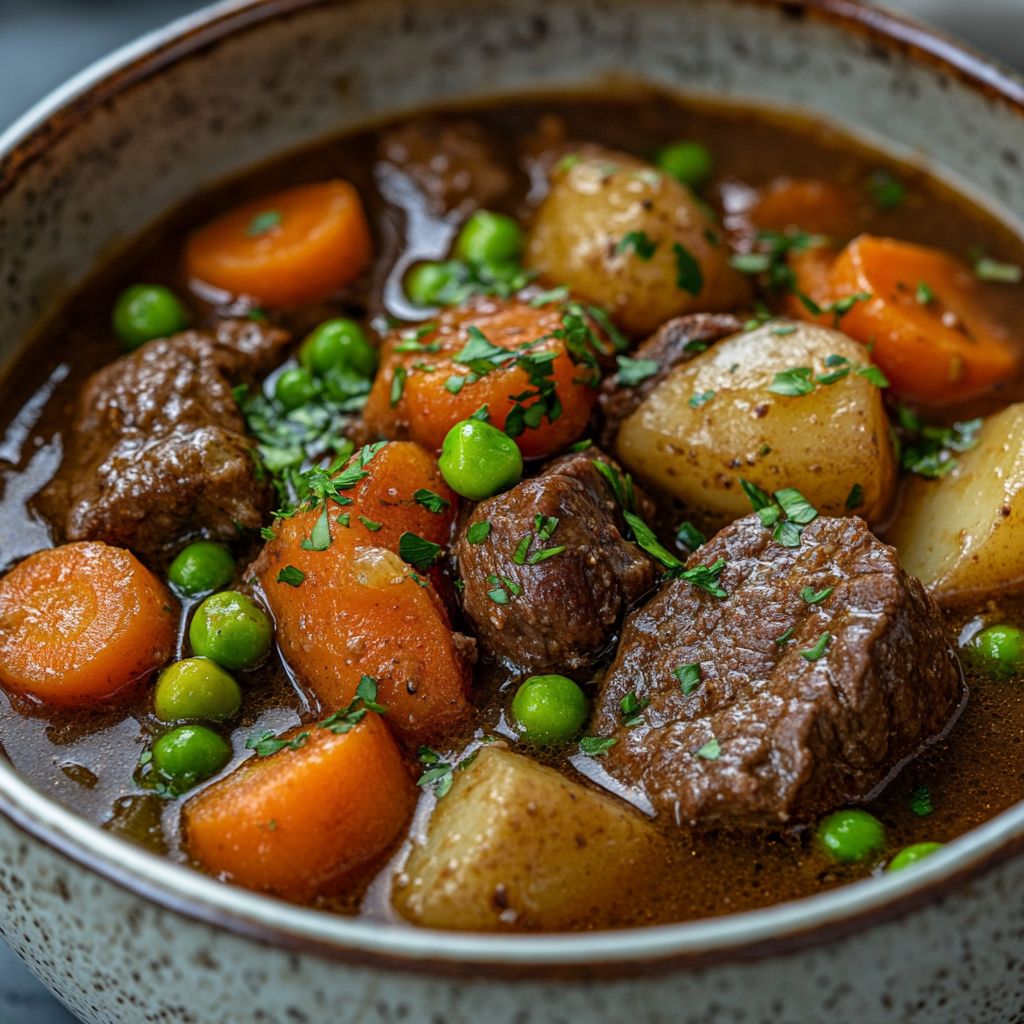
- 2 pounds beef chuck (cut into 1-inch cubes)
→ Beef chuck is ideal for slow cooking due to its marbling and connective tissue, which break down during the long cooking process, making the meat tender and flavorful. Cut the beef into uniform cubes to ensure even cooking and to maximize surface area for browning. - 4 cups beef broth (low-sodium)
→ Low-sodium beef broth provides a flavorful liquid for simmering, allowing you to control the saltiness of your stew. Using broth instead of water adds depth and richness to the dish. For the best results, choose a high-quality broth or stock that’s rich in flavor. - 1 tablespoon tomato paste
→ Tomato paste enhances the stew’s flavor with its concentrated tomatoes, adding sweetness and umami. Stir it into the mixture early on to briefly cook it and develop a deeper flavor before adding the broth. - 3 cloves garlic (minced)
→ Minced garlic infuses the stew with aromatic flavors. It should be added towards the beginning of the cooking process, allowing it to mellow and blend into the dish without becoming bitter. Fresh garlic provides the best taste; avoid pre-minced varieties. - 2 tablespoons olive oil
→ Olive oil is used to brown the beef, creating a rich, caramelized exterior that adds depth to the stew’s flavor. Heat the oil in the pot before adding the meat, ensuring that it sizzles upon contact for a good sear.
- 2 pounds beef chuck (cut into 1-inch cubes)
- Vegetable Medley
- 3 medium carrots (sliced)
→ Carrots add natural sweetness and a slight crunch to the stew. Slice them into even pieces to ensure they cook uniformly and maintain their texture in the stew. Opt for vibrant, firm carrots for the best flavor and texture. - 2 celery stalks (diced)
→ Diced celery provides a slight crunch and aromatic flavor to the stew. Cut the celery into small, uniform pieces so it cooks evenly and integrates well into the dish. Choose fresh celery with firm stalks and crisp leaves for maximum flavor. - 1 medium onion (chopped)
→ Onions add sweetness and depth, serving as the base flavor for the stew. Chop the onion finely to ensure it cooks down and melds with the other flavors. Use a yellow or sweet onion for a milder flavor. - 3 medium potatoes (cubed)
→ Potatoes provide heartiness and a creamy texture as they cook down and absorb the stew’s flavors. Cube them into similar sizes to ensure they cook evenly throughout. Choose waxy potatoes for a firmer texture or russets for a creamier finish. - 1 cup frozen peas (optional)
→ Frozen peas add a pop of color and sweetness to the stew. They should be added during the last 10-15 minutes of cooking to maintain their vibrant color and texture, as they only need to be heated through.
- 3 medium carrots (sliced)
- Seasoning
- 2 bay leaves
→ Bay leaves impart a subtle, herbal flavor to the stew. They are added whole and removed before serving, as they are not edible. Ensure to check for their removal post-cooking to avoid chewing on them. - 1 teaspoon dried thyme
→ Dried thyme adds a warm, earthy flavor that complements the beef. It should be added at the beginning of the cooking process to allow its flavor to develop fully. Opt for high-quality dried herbs, as they infuse more flavor into the dish. - Salt and pepper to taste
→ Salt enhances all the flavors in the stew, while freshly cracked black pepper adds a hint of spice. Season the stew towards the end of cooking to avoid over-salting and adjust based on personal preference.
- 2 bay leaves
Instructions
- Prepare your ingredients by cutting the beef chuck into 1-inch cubes.
→ Choose a sharp knife for clean cuts, and remove any excess fat from the beef if desired. Uniform cubes ensure that each piece cooks evenly, resulting in a tender and flavorful stew. - Heat 2 tablespoons of olive oil in a large, heavy-bottomed pot or Dutch oven over medium-high heat.
→ This step is crucial for achieving a well-browned exterior on the beef, which enhances the overall flavor. The oil should shimmer but not smoke; if it smokes, lower the heat slightly. - Once the oil is hot, add the beef cubes in a single layer without crowding the pot.
→ Crowding the pot can lead to steaming instead of browning. Brown the beef for about 3-4 minutes per side until a rich, golden-brown crust forms. Use tongs to turn the meat for even browning. - Remove the browned beef from the pot and set it aside on a plate.
→ Use a slotted spoon to drain off excess oil, if necessary, while transferring the meat. This prevents the stew from being greasy and helps maintain individual flavors. - Add the chopped onion to the same pot and sauté for 2-3 minutes until translucent.
→ Stir frequently to avoid burning, and scrape any browned bits stuck to the bottom of the pot, known as fond; this adds depth to the stew’s flavor. - Incorporate the minced garlic and 1 tablespoon of tomato paste, stirring constantly for about 1 minute.
→ Cooking the tomato paste caramelizes its sugars, enhancing the flavor’s complexity. The garlic should become fragrant but not browned, as overcooked garlic can turn bitter. - Return the beef to the pot along with 4 cups of low-sodium beef broth.
→ The broth is essential for developing a rich, savory base. Stir well to combine all ingredients, ensuring any remaining fond is incorporated into the liquid. - Add 2 bay leaves and 1 teaspoon of dried thyme to the pot.
→ These herbs will infuse their flavors into the stew as it cooks. Position the bay leaves whole so they can be easily removed later; they are not edible. - Bring the stew to a gentle boil, then reduce the heat to low.
→ A gentle boil helps to seal in flavors, but a rapid boil can make the meat tough. Lowering the heat will allow the stew to simmer for tenderization. - Cover the pot and let the stew simmer for about 1.5 to 2 hours, stirring occasionally.
→ This slow cooking process allows the collagen in the beef to break down, yielding a tender texture. If the stew seems too thick, add additional broth or water to maintain the desired consistency. - While the stew is simmering, prepare the carrots, celery, and potatoes by slicing and dicing them into uniform pieces.
→ Uniform cuts ensure even cooking and texture throughout the stew. The vegetables should be approximately the same size to avoid some being overcooked while others remain firm. - After 1.5 to 2 hours, add the sliced carrots, diced celery, and cubed potatoes to the pot.
→ Adding vegetables at this stage allows them to cook through without becoming mushy, balancing the tenderness of the beef with a satisfying bite. - Cover and continue to simmer for another 30-45 minutes, or until the vegetables are tender.
→ This step allows the flavors to meld and the vegetables to absorb the stew’s essence while ensuring they remain vibrant and slightly crunchy. - If using, stir in 1 cup of frozen peas in the last 10-15 minutes of cooking.
→ Adding peas late in the cooking process preserves their bright green color and sweetness, adding a fresh contrast to the rich stew. - Once the vegetables are tender, remove the bay leaves and taste the stew.
→ This is your opportunity to adjust the seasoning; add salt and freshly cracked black pepper to enhance the flavors according to your preference. - Serve the stew hot, ideally over a bed of creamy mashed potatoes or with crusty bread on the side.
→ Serving recommendations enhance the experience; the stew will warm you while the sides can soak up the rich broth, creating a satisfying meal.
Notes
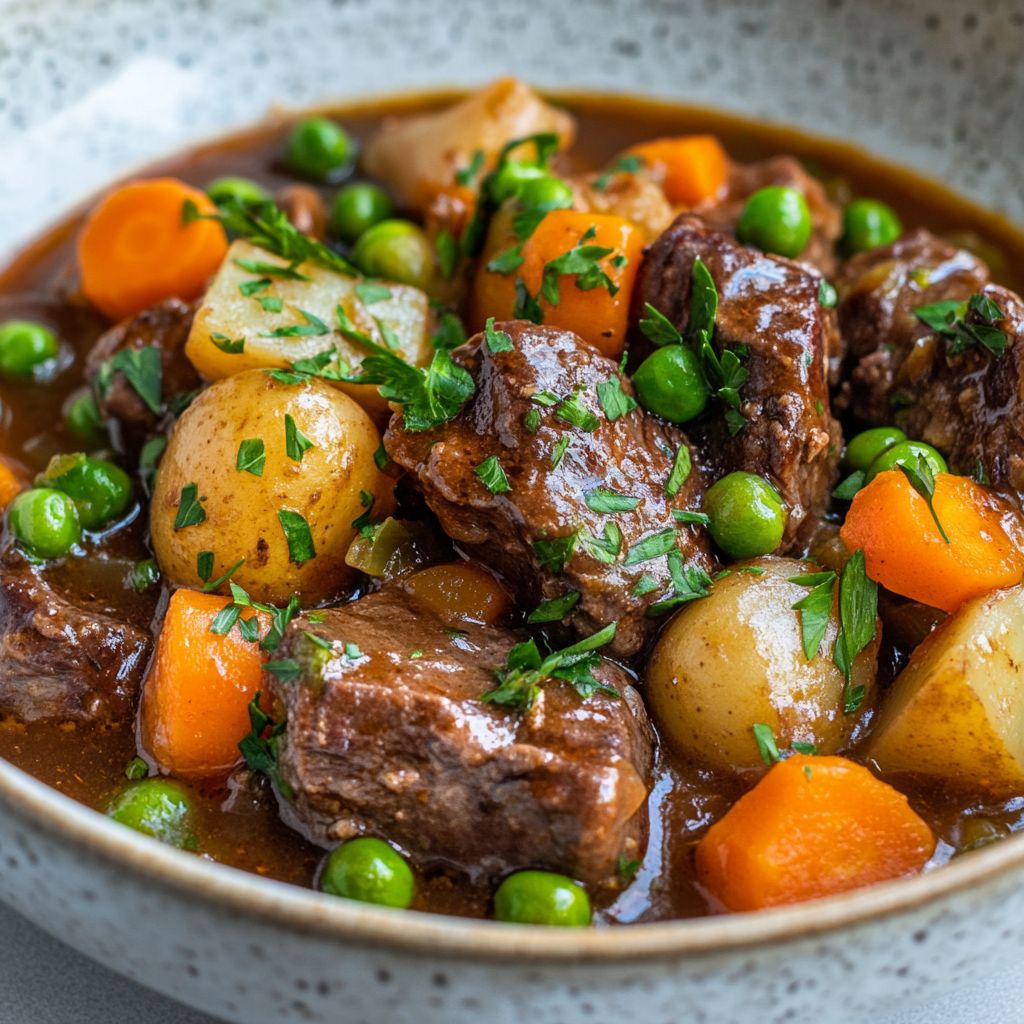
When preparing the vegetables, feel free to get creative! You can substitute or add vegetables like parsnips, turnips, or mushrooms according to your taste. Just ensure that any additions are cut to similar sizes for consistent cooking.
This stew is a great make-ahead meal; the flavors deepen and improve as it sits. Allow it to cool completely before storing it in an airtight container in the refrigerator for up to 3 days. It also freezes well, so you can enjoy it later on those busy days when you want a quick, warming meal.
Serve your beef stew with crusty bread or over a bed of rice for a complete meal. For added freshness, sprinkle some freshly chopped parsley before serving. Remember to adjust the seasoning just before serving to taste, ensuring it’s just right.
Tips
Cooking Tips for Slow-Cooked Beef Stew with Veggies
- Browning the Beef: Always take the time to properly brown the beef cubes in batches. If you overcrowd the pot, the meat will steam instead of sear, which prevents the development of a rich flavor base.
- Layering Flavors: Start by sautéing your onions, garlic, and celery in the pot before adding the beef. This builds a flavorful foundation that permeates the entire stew.
- Slow Cooking: Allow your stew to cook on low for several hours (ideally 6-8 hours) to give the flavors time to meld together beautifully. The longer, the better when it comes to tenderness and depth of flavor.
- Thickening the Stew: If you prefer a thicker stew, you can mix a tablespoon of cornstarch with cold water and stir it into the stew during the last hour of cooking, or mash some of the potatoes in the pot to naturally thicken the broth.
- Vegetable Timing: Add heartier vegetables like potatoes and carrots first, while more delicate veggies like peas should be added at the end of cooking so they retain their color and freshness.
- Taste Testing: Always taste the stew toward the end of cooking to adjust the seasoning. Every broth can have a different level of saltiness, so it’s essential to season to your liking at the very end.
- Storage Tips: Store leftover stew in airtight containers in the fridge for up to 3-4 days. It can also be frozen for up to 3 months – just be sure to let it cool completely before freezing.
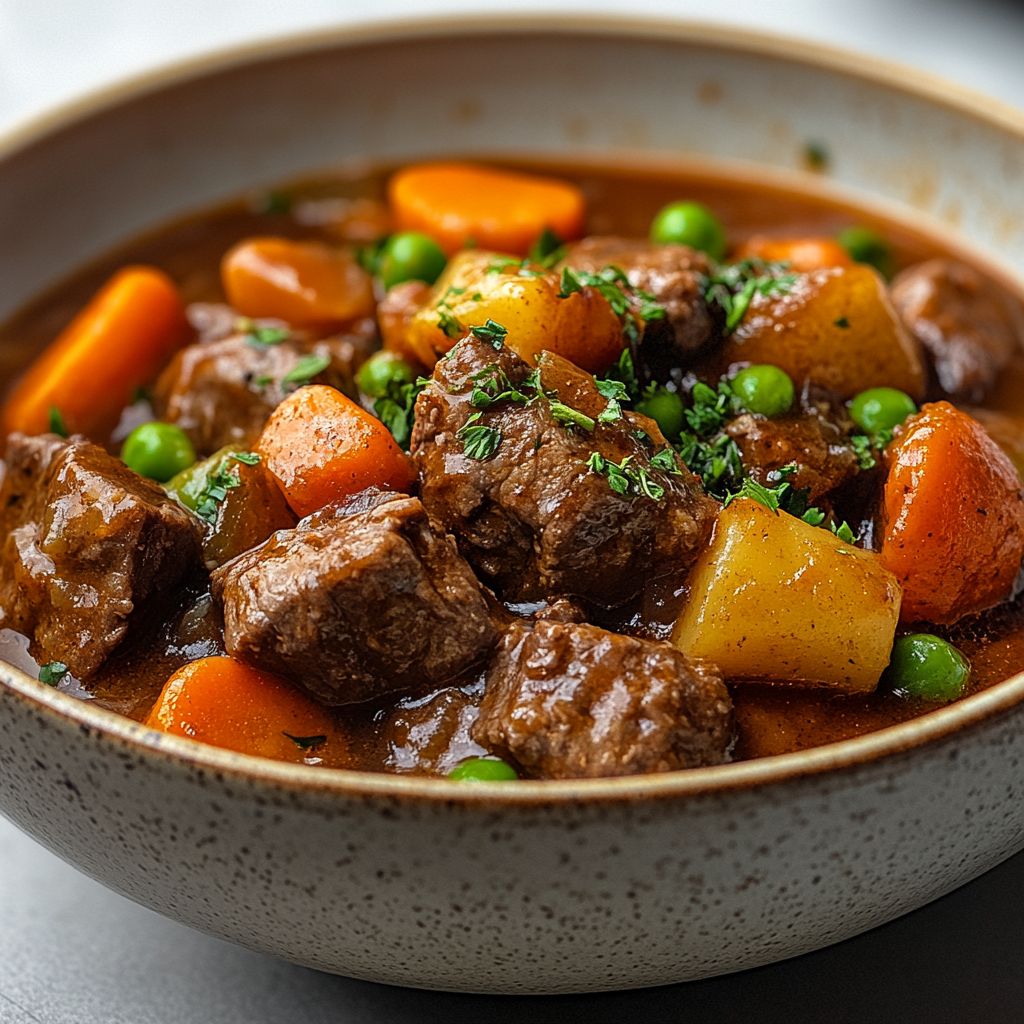
- Serving Suggestions: Serve your stew with crusty bread or over a bed of rice for an extra comforting meal. Garnish with fresh herbs like parsley for an added touch of freshness.
FAQ
What ingredients do I need for Slow-Cooked Beef Stew with Veggies?
You will need beef chuck, carrots, potatoes, onions, garlic, beef broth, tomato paste, Worcestershire sauce, and a variety of herbs and spices such as thyme and bay leaves. Optional ingredients include peas and celery.
How long does it take to cook Slow-Cooked Beef Stew?
The stew typically takes about 8 hours on low heat or 4 to 5 hours on high heat in the slow cooker.
Can I use frozen vegetables in this recipe?
Yes, you can use frozen vegetables, but add them during the last 30 minutes of cooking to avoid overcooking.
Can I prepare this stew in advance?
Absolutely! You can prepare the stew a day in advance, let it cool, and store it in the refrigerator. Just reheat it on the stove when ready to serve.
What can I serve with Slow-Cooked Beef Stew?
This stew pairs well with crusty bread, rice, or mashed potatoes. You can also serve it with a side salad for a complete meal.
Is there a way to thicken the stew?
Yes, you can thicken the stew by mixing a tablespoon of cornstarch with cold water and stirring it into the stew in the last 30 minutes of cooking. Alternatively, you can mash a portion of the potatoes in the stew.
Can I substitute beef with another type of meat?
Yes, you can use lamb, pork, or even chicken as a substitute, but cooking times may vary. Make sure to adjust accordingly.
How do I store leftovers of the stew?
Store any leftovers in an airtight container in the refrigerator for up to 3 days. You can also freeze it for up to 3 months.