
Introduction: The Ultimate Comfort Food
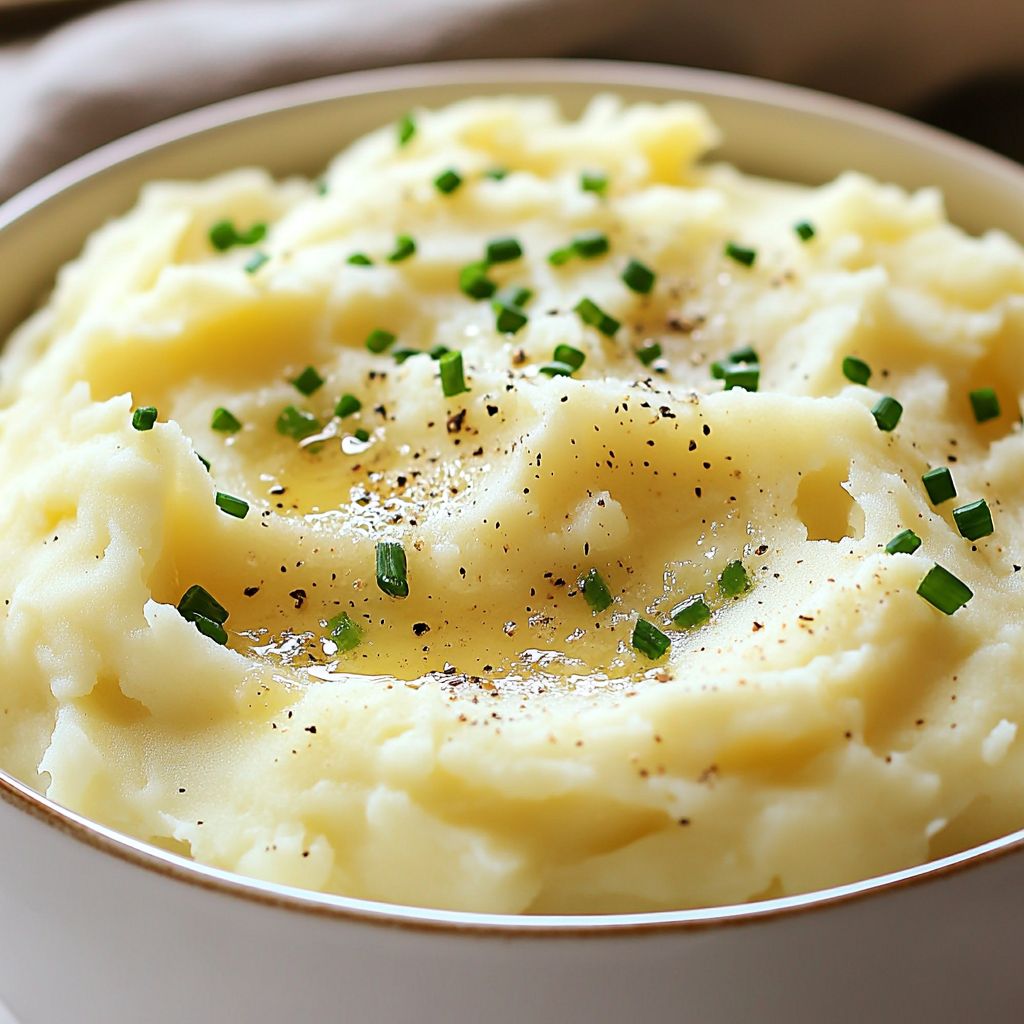
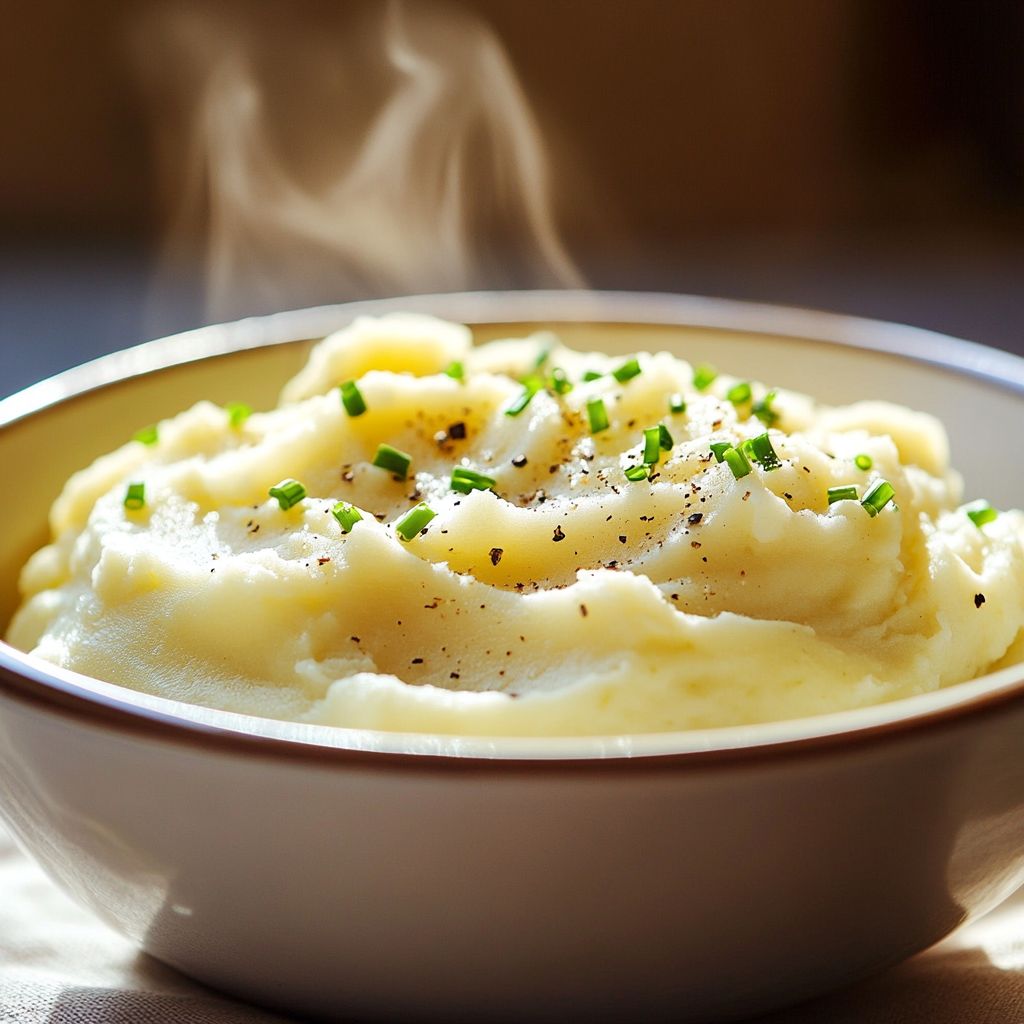
Picture this: a fluffy, velvety mountain of creamy mashed potatoes, steam gently swirling upward, the scent hinting at fresh butter and a touch of garlic. Each spoonful promises a smooth, rich texture that melts in your mouth, delivering warmth and comfort unlike any other dish. Welcome to the world of Classic Creamy Mashed Potatoes—a dish so simple yet so powerfully satisfying, it’s a staple in homes across the globe. Whether you’re cozying up on a chilly evening or hosting a big family gathering, this dish is the epitome of comfort food with an irresistible allure.
The Story Behind the Dish
Mashed potatoes have been at the heart of hearty meals for centuries. Their origins trace back to 1771, when they were first introduced by Frenchman Antoine Parmentier, who popularized the potato as a staple in French cuisine. However, the concept of mashing potatoes may even predate this, with versions found in European cooking as far back as the 17th century, hinting at their longstanding appeal.
This dish has traveled through time, morphing into various forms influenced by different cultures, yet the core remains unchanged—a humble potato, elevated by creamy goodness and simple seasoning. It has always been a companion to main courses, an ideal match for roasted meats and gravies, but it has also stood its ground as a standalone dish admired for its simplicity and flavor.
Why You’ll Love This Recipe
- Simple Ingredients: Wholesome and readily available ingredients make it an easy go-to any day of the week.
- Quick and Easy: Prep and cooking time is minimal, allowing you to whip up a delicious batch in no time.
- Customizable: Adjust the ingredients to suit dietary needs or personal preferences without losing its classic appeal.
- Family-Friendly: Loved by kids and adults alike, making it a perfect choice for family dinners.
- Comforting: Its classic taste brings comfort and nostalgia, often reminding people of home-cooked meals and cherished memories.
Flavor Profile & Texture
The magic of creamy mashed potatoes lies in their delicate balance of flavors and textures. The initial sensation is the creamy, buttery richness that coats your taste buds. There’s a subtle hint of garlic that adds depth without overpowering the potato’s mild earthiness. A touch of cream enhances the silky texture, while the softness of the potatoes provides a pillow-like bite that’s both satisfying and indulgent.
The mesmerizing smoothness is complemented perfectly by a well-seasoned finish, using just enough salt to elevate each flavor while allowing the potatoes to take center stage. It’s this perfect harmony that makes mashed potatoes a favorite for so many.
Occasions & Pairings
Classic Creamy Mashed Potatoes are incredibly versatile, making them suitable for a range of occasions, from holiday banquets to everyday dinners. They’re a staple on Thanksgiving tables, often alongside turkey and gravy, but they’re also a comforting presence at Sunday roasts with lamb or beef.
For a complete meal, consider pairing them with:
- Roasted Chicken: A classic combination that highlights the creamy and savory notes.
- Grilled Steak: The perfect match for savory juices and a touch of char.
- Vegetable Stews: A vegetarian’s delight when served with a rich, flavorful stew.
- Wine Pairings: Try a Chardonnay or a light, fruity Pinot Noir to complement the buttery smoothness.
- Desserts: Follow up your meal with a light, refreshing lemon sorbet to cleanse the palate.
Tips, Variations & Substitutions
While the classic recipe is beloved for a reason, there’s always room for creativity:
- Garlic Infusion: For garlic lovers, consider roasting a whole bulb and mashing the soft cloves into the potatoes.
- Dairy-Free Alternative: Substitute with almond milk and vegan butter for a dairy-free version.
- Italian Twist: Add Parmesan cheese and a sprinkle of fresh rosemary for a Tuscan-inspired variation.
- Herb Lover’s Mix: Incorporate fresh chives or dill to introduce a fresh, herby aroma.
- Texture Contrast: Fold in crispy bacon bits or fried shallots for an unexpected crunch.
Storage & Make-Ahead Ideas
Mashed potatoes are as practical as they are tasty, and they store surprisingly well:
- Refrigeration: Once cooled, store in an airtight container in the refrigerator for up to three days.
- Freezing: Spoon portions into freezer-safe bags or containers, and store for up to a month. Thaw overnight in the fridge before reheating.
- Reheating: On the stove, reheat over low heat, stirring frequently. Add a splash of milk or cream to bring back the creamy consistency.
- Make-Ahead: Prepare and refrigerate. On the day of serving, reheat and freshen up with additional butter or cream.
Fun Facts & Trivia
Did you know that during the 1800s, mashed potatoes were hailed as the dish that saved French soldiers from starvation? Antoine Parmentier, who championed the potato, served it in various forms to highlight its nutritional value. Today, Ireland celebrates National Mashed Potato Day on October 21, honoring one of the world’s favorite side dishes.
Additionally, mashed potatoes have made their way into pop culture, famously featuring in the movie “Close Encounters of the Third Kind,” where they’re used to craft an iconic mountain model—a testament to their enduring popularity and versatile appeal.
In conclusion, Classic Creamy Mashed Potatoes are more than just a side dish; they are a cherished culinary tradition that offers warmth, nostalgia, and endless possibilities for adaptation. Whether you’re a seasoned chef or a home cook, there’s a unique satisfaction in crafting the perfect batch of mashed potatoes, and with this guide, you’re well on your way to creating memories and meals that will be savored and remembered.
Ingredients
- Potatoes
→ The base of the dish, providing the necessary starch and texture for creamy mashed potatoes. Yukon Gold or Russet potatoes are preferred for their buttery flavor and smooth consistency. Peel them before boiling to ensure a uniform texture, and cut them into even chunks to promote even cooking. - Butter
→ Adds richness and a velvety mouthfeel to the mashed potatoes. Use unsalted butter for better control over the saltiness of the dish. Allow the butter to come to room temperature before mixing it in to ensure smooth incorporation without clumps. - Heavy Cream or Milk
→ Provides creaminess and a softer consistency. Heavy cream yields the richest flavor, but whole milk can be used for a lighter version. Warm the cream or milk before adding it to the potatoes to prevent cooling them down and to help achieve a smoother texture. - Salt
→ Essential for enhancing the flavor of the potatoes. Use fine sea salt or kosher salt to ensure even distribution throughout the mashed potatoes. Season the water used for boiling the potatoes generously to impart flavor during cooking. - Black Pepper
→ Adds a hint of warmth and depth to the dish. Freshly cracked black pepper is recommended for the best flavor. Adjust the amount based on personal preference; start with a small amount and increase gradually. - Garlic (optional)
→ Infuses the mashed potatoes with a fragrant, savory flavor. Roast or sauté the garlic before adding it for a milder, sweeter taste. If using raw garlic, mince it finely and add it to the potatoes while mashing to fully release its flavor. - Chives or Parsley (optional)
→ Fresh herbs can brighten the flavors and add a pop of color to your mashed potatoes. Finely chop the herbs and fold them in just before serving to maintain their vibrant color and fresh taste.
Instructions
- Peel the potatoes using a vegetable peeler, making sure to remove all the skin.
→ This prevents any tough, fibrous texture from ruining the smoothness of your mashed potatoes. Ensure you peel them evenly, removing any eyes or blemishes, to keep the flavor consistent. - Cut the peeled potatoes into uniform chunks, approximately 1 to 2 inches in size.
→ Chopping the potatoes into even pieces ensures they cook at the same rate, which is vital for achieving an even texture. Uneven sizes can lead to some pieces being undercooked while others are overcooked. - Place the potato chunks in a large pot and fill with cold water, covering the potatoes by at least an inch.
→ Starting with cold water allows for gradual cooking. This prevents the outsides from cooking too quickly, ensuring the centers become tender and creamy without falling apart. - Add a generous amount of salt to the water to season the potatoes as they cook.
→ Well-seasoned water infuses the potatoes with flavor, resulting in a more delicious mash. Aim for about 1-2 tablespoons of salt per quart of water. - Bring the pot to a boil over medium-high heat, then reduce the heat slightly to maintain a gentle boil.
→ A vigorous boil can cause the potatoes to break down too much, leading to a watery mash. Cooking at a steady, moderate boil helps them cook evenly and achieve the desired texture. - Cook the potatoes for about 15-20 minutes, or until they are fork-tender.
→ Test doneness by piercing a potato chunk with a fork; it should slide in easily. Overcooking can lead to waterlogged potatoes, while undercooking will result in lumps. - Once cooked, drain the potatoes in a colander and allow them to steam for a minute to release excess moisture.
→ This step prevents watery mashed potatoes by allowing steam to escape, concentrating their flavor and texture. Make sure to let them sit briefly but do not let them sit for too long, as they should still be warm. - Return the drained potatoes to the pot or a large mixing bowl.
→ Using the same pot retains heat, which helps all the ingredients meld together nicely during mashing. - Add the room-temperature butter to the potatoes, breaking it into smaller pieces for easier incorporation.
→ Allowing the butter to warm slightly helps it melt quickly and blend into the potatoes smoothly, avoiding any lumps in your mash. - Warm the heavy cream or milk in a small saucepan over low heat until just heated through, then pour it into the potato mixture.
→ Warming the liquid prevents cooling down the potatoes and helps create a silky texture. Cold cream can cause the potatoes to stiffen. - Using a potato masher, mash the potatoes until smooth and creamy, being careful not to overwork them to maintain fluffiness.
→ Mash gently until you see no lumps. Over-mashing can release excess starch, leading to gummy potatoes, so stop when you achieve your desired texture. - Season the mashed potatoes with fine sea salt and freshly cracked black pepper to taste.
→ Taste as you season; this allows you to adjust the saltiness and spice levels according to your preference. Freshly cracked black pepper gives a more intense flavor. - If using, incorporate optional ingredients such as roasted or sautéed garlic for additional flavor, mixing thoroughly to combine.
→ This step enhances the overall flavor of your mashed potatoes without overwhelming them. If using raw garlic, ensure it is minced finely to disperse its flavor evenly. - Fold in finely chopped chives or parsley just before serving for a fresh, herbal pop and beautiful color contrast.
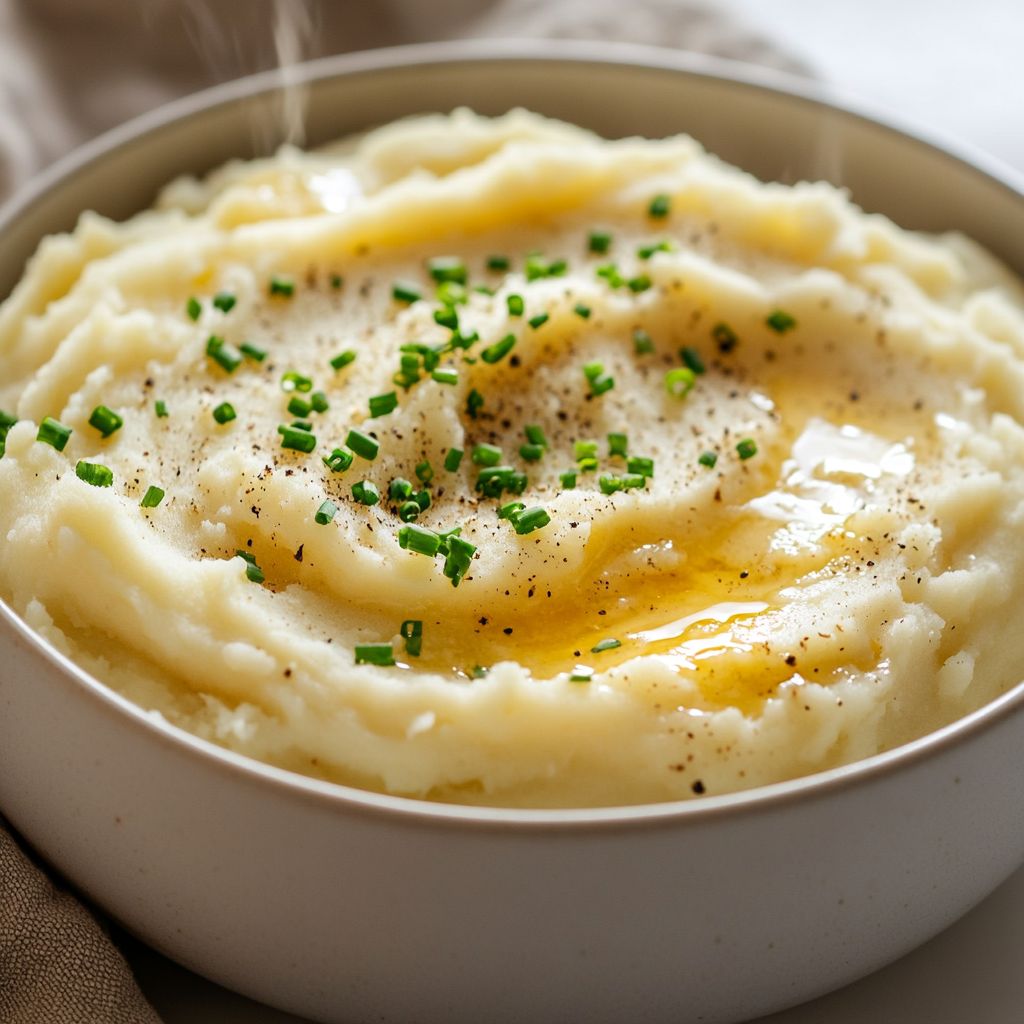
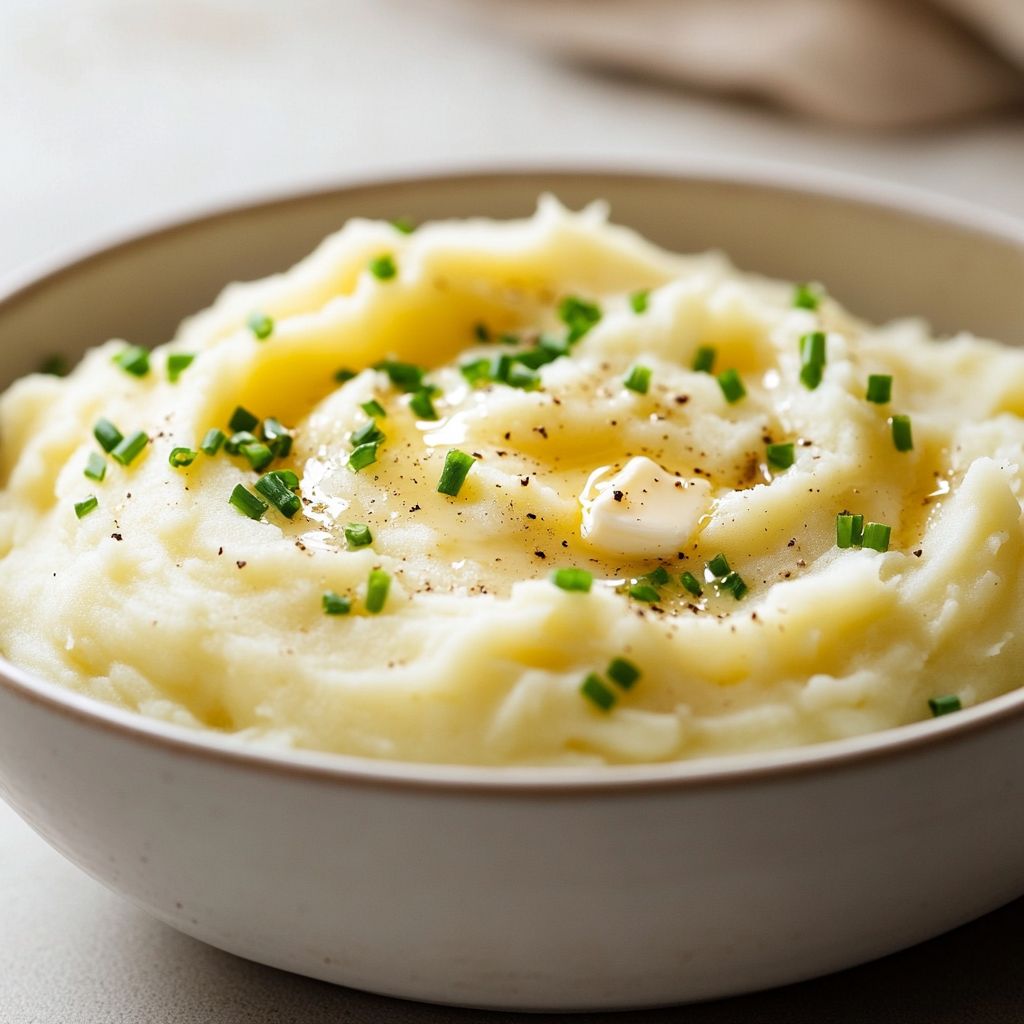
→ Adding herbs at the end prevents them from wilting and losing flavor, making your dish visually appealing and more vibrant in taste. - Transfer the creamy mashed potatoes to a serving bowl and garnish with a pat of butter on top, if desired.
→ The melted butter will create a delicious, glossy finish while adding richness. Serve immediately for the best texture and warmth, as mashed potatoes can become stiff when left to sit.
Notes
These classic creamy mashed potatoes are a comforting side dish that elevates any meal. To achieve the smoothest texture, ensure to choose the right type of potatoes, such as Yukon Gold or Russet, as they provide the best flavor and consistency. Remember to peel and cut the potatoes evenly before boiling for even cooking. After boiling, draining all excess moisture is essential to avoid watery potatoes.
When incorporating butter, using it at room temperature will help avoid clumps and create a uniform mix with the potatoes. For the creaminess factor, warming the heavy cream or milk before adding it is crucial for maintaining the temperature of the potatoes.
Season generously with salt during boiling, as this enhances the overall flavor of the dish. Freshly cracked black pepper should be used for the best taste, and adjust its quantity according to your preference.
If you decide to incorporate garlic, roasting or sautéing it beforehand will offer a sweeter and milder profile. For a burst of freshness, consider adding chopped chives or parsley right before serving. This not only enhances the flavor but also adds a beautiful color contrast to the dish.
For ultimate creaminess, consider using a potato ricer or food mill instead of a traditional masher, as this will help achieve that ultra-smooth consistency. Serve them warm and enjoy the comforting richness these mashed potatoes bring to your table!
Tips
- Choosing the Right Potatoes: Always opt for starchy potatoes like Yukon Gold or Russets for the best texture. They create fluffier mashed potatoes compared to waxy varieties. Make sure to peel and chop them into equal-sized pieces for consistent cooking.
- Boiling Tips: Place the cut potatoes in cold, salted water to start; this helps them cook evenly. Bring the water to a boil and reduce the heat to simmer until the potatoes are fork-tender, usually about 15-20 minutes.
- Draining and Steaming: After boiling, drain the potatoes thoroughly to avoid watery mashed potatoes. Let them sit in the colander for a few minutes to steam off excess moisture.
- Mashing Method: Use a potato masher for a rustic texture or a ricer for ultra-smooth mashed potatoes. Avoid using a food processor, as it can make the potatoes gluey due to overmixing.
- Incorporating Ingredients: When adding butter and warm heavy cream or milk, do so gradually. Start with a bit, mix thoroughly, and then incorporate more to reach your desired consistency without overworking the potatoes.
- Seasoning: Taste your mashed potatoes after each addition of salt and pepper. Season gradually and remember that flavors can intensify as they sit. For the best results, adjust seasoning just before serving.
- Incorporating Garlic: For a hint of garlic, roast it in the oven or sauté it gently in butter until golden before adding to the potatoes. Avoid adding raw garlic directly to keep the flavor mild and smooth.
- Herb Garnish: Add chives or parsley just before serving for freshness. This not only enhances the flavor but also adds a beautiful color contrast to your dish.
- Storage Tips: If you have leftovers, store them in an airtight container in the fridge for up to 3 days. Reheat gently on the stove with a splash of milk or cream to revive creaminess.
- Serving Suggestions: Serve your creamy mashed potatoes as a side dish with a pat of butter on top or pair with gravy, roasted meats, or vegetables for a complete meal.
FAQ
What type of potatoes are best for making creamy mashed potatoes?
For the creamiest mashed potatoes, starchy potatoes like Russets or Yukon Golds are recommended. These types yield a fluffy texture and absorb milk and butter well.
Should I peel the potatoes before boiling them?
Yes, it is generally recommended to peel the potatoes before boiling to achieve a smoother texture. However, some people prefer to leave the skins on for added flavor and nutrition.
What ingredients do I need for classic creamy mashed potatoes?
The basic ingredients include potatoes, butter, milk or cream, salt, and pepper. You can also add garlic, sour cream, or herbs for extra flavor.
How can I make my mashed potatoes extra creamy?
To enhance creaminess, use warm milk or heavy cream and ensure the butter is softened. Avoid over-mixing to prevent them from becoming gummy; a hand masher is ideal.
Can I prepare mashed potatoes in advance?
Yes, you can prepare them in advance. Store the mashed potatoes in an airtight container in the refrigerator. Reheat gently on the stove or in the microwave, adding a little butter or milk to restore creaminess.
Is it okay to freeze mashed potatoes?
Yes, mashed potatoes can be frozen. Make sure they are cool before transferring them to an airtight container. When reheating, add a splash of milk to help restore their creamy texture.
What is the best way to season mashed potatoes?
Season with salt and pepper to taste. You can also enhance the flavor with garlic powder, onion powder, or fresh herbs like chives or parsley.
How do I fix mashed potatoes that are too dry?
If your mashed potatoes are too dry, add in warm milk, cream, or melted butter, a little at a time, until you reach your desired consistency. Stir gently to incorporate the added liquid.