Introduction / Hook
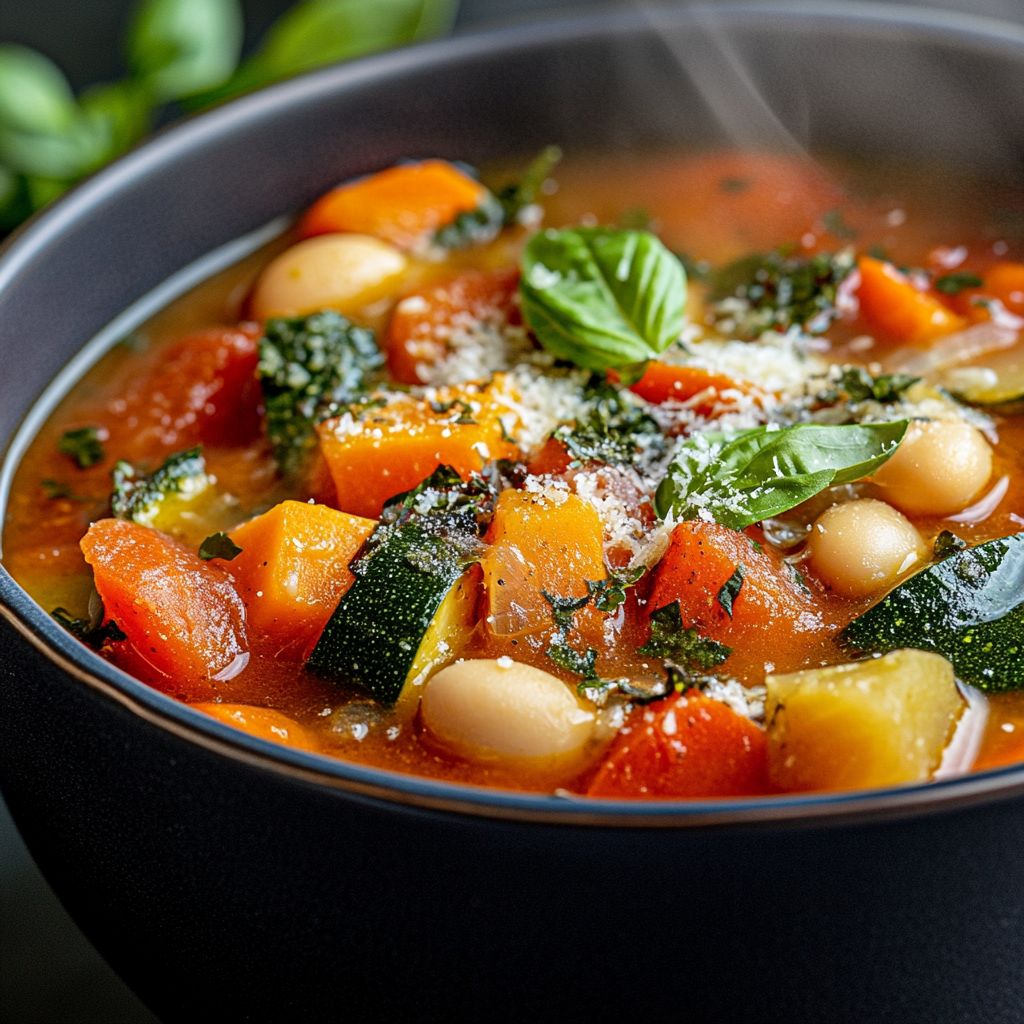
Imagine stepping into a warm, rustic kitchen, where the air is filled with the tantalizing aroma of simmering vegetables and herbs. Welcome to the heart of Tuscany, captured in a bowl of rich and hearty Vegetable and Bean Stew. This dish, with its vibrant medley of seasonal Mediterranean vegetables and nourishing beans, envelops the senses with a comforting warmth, evoking images of sunlit farms and rolling Italian countryside. Perfect for those cozy evenings when the weather insists you stay in and indulge in a culinary hug, this stew is not just a meal; it’s an experience, a journey to one of Italy’s most enchanting regions, all from the comfort of your home.
The Story Behind the Dish
Tuscany, a region known for its lush landscapes and rich culinary tradition, is the birthplace of this humble yet luxurious stew. The Tuscan Vegetable and Bean Stew is a testament to the Italian philosophy of cucina povera, which translates to “poor kitchen.” This concept emphasizes simplicity and the use of fresh, readily available ingredients. Historically, it was a dish that made the most of what was at hand, turning modest ingredients into gastronomic treasures.
Rooted in the heart of rural Italy, this stew was a staple for farmers and their families. Vegetables plucked fresh from the garden and beans harvested from small patches of land were slow-cooked to perfection over open flames. Over time, the dish has transcended its humble origins to become a celebrated delicacy, admired for its simple yet profound flavors. It’s a testament to how resourcefulness and a love for local produce can create something truly extraordinary.
Why You’ll Love This Recipe
- Robust Flavor: The combination of fresh vegetables and aromatic herbs creates a rich, satisfying taste that is both hearty and refreshing.
- Nutrient-Dense: Packed with beans and a variety of vegetables, this stew is a powerhouse of nutrients, perfect for those looking to maintain a balanced diet.
- Easy to Prepare: With straightforward steps that honor the slow cooking process, this recipe lets you enjoy authentic Italian flavors without convoluted preparation methods.
- Versatile: Ideal as a main course, it can be adapted to suit various occasions, from casual family dinners to more formal gatherings.
- Vegan-Friendly: Naturally plant-based, this stew caters to vegans and vegetarians without compromising on taste or satisfaction.
Flavor Profile & Texture
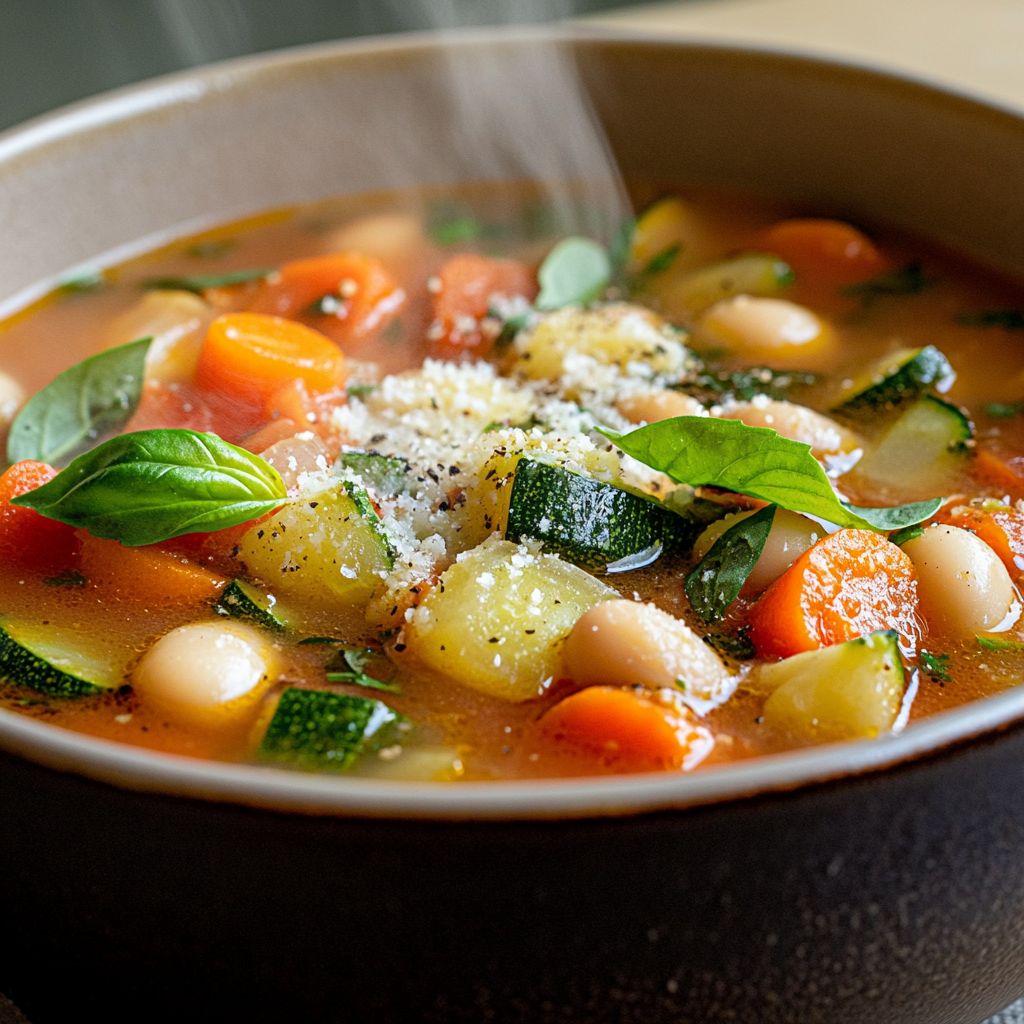
The Tuscan Vegetable and Bean Stew presents a rich tapestry of flavors that are delicately balanced to captivate the palate. You’ll savor the sweetness of ripe tomatoes mingling with the earthiness of beans and the subtle bite of onions and garlic. The fresh herbs, be it rosemary, thyme, or basil, infuse their aromatic essence into every bite, providing a fragrant melody that sings of the Italian countryside.
In terms of texture, this stew is a symphony of contrasts. You’ll experience the tender softness of slowly simmered carrots and zucchini against the creamy consistency of cannellini beans. A hint of crispness from fresh kale or spinach adds a delightful variance, making every spoonful a complete yet varied experience.
Occasions & Pairings
This Tuscan stew is a versatile dish, perfect for numerous occasions. On a chilly winter evening, it warms you to the core, while in summer, its lightness and vibrancy match the season’s spirit. It’s a fantastic choice for weeknight dinners, as it can be made in advance, and its flavors only improve over time, making it an ideal candidate for meal prepping.
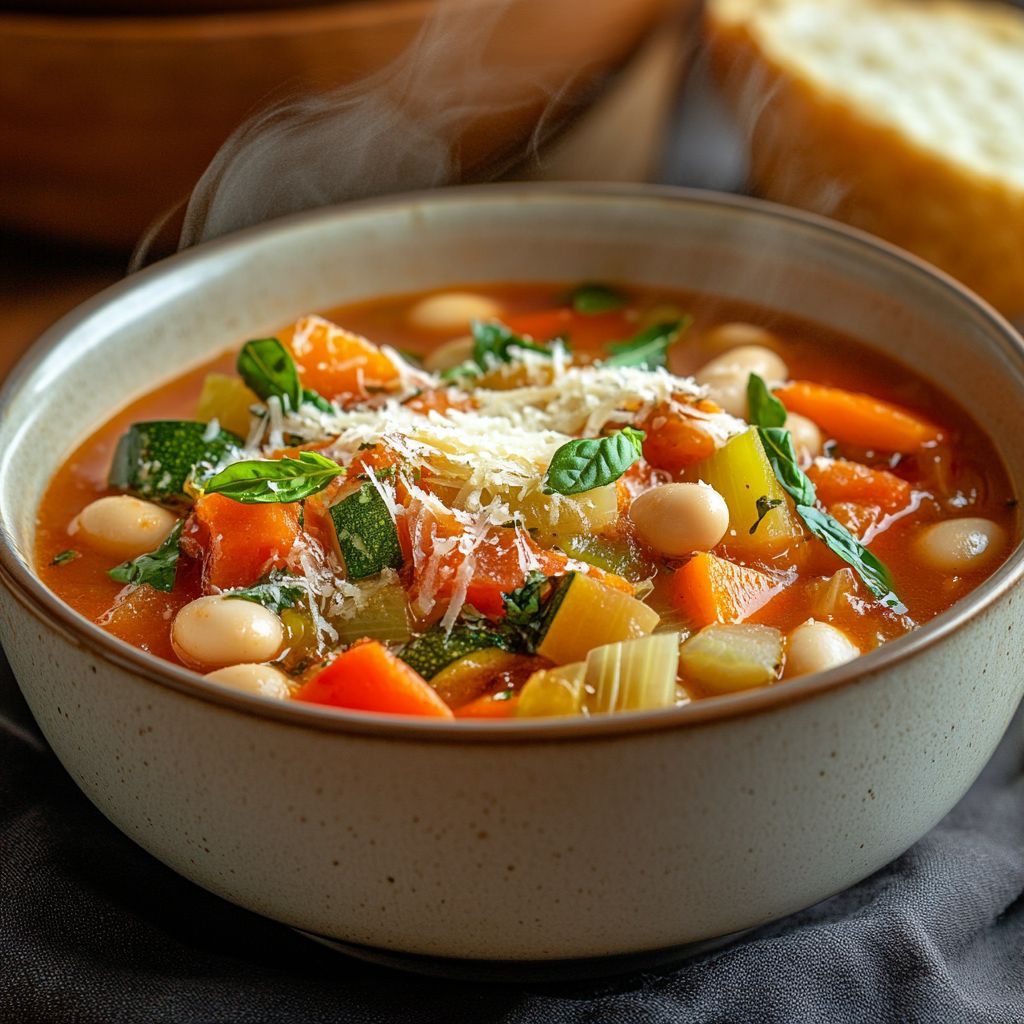
When it comes to pairing, a crusty loaf of sourdough or a fragrant rosemary focaccia complements it beautifully. For drinks, a medium-bodied Chianti or a crisp glass of white Vernaccia di San Gimignano amplifies the meal’s Tuscan roots. To finish, consider an almond biscotti or a simple fruit salad for a refreshing finale.
Tips, Variations & Substitutions
One of the joys of this stew is its adaptability, accommodating any number of variations and substitutions:
- Protein Boost: For those wanting extra protein, add a serving of grilled chicken or Italian sausage.
- Skipping Beans: If beans aren’t to your taste, add potatoes or root vegetables to retain the stew’s heartiness.
- Veggie Variations: Feel free to include other vegetables like squash, sweet potatoes, or bell peppers based on seasonal availability or preference.
- Dietary Alternatives: To make it gluten-free, ensure your stock and any bread pairings are certified gluten-free.
- Herb Flexibility: If fresh herbs aren’t accessible, use dried ones which are more concentrated in flavor. Adjust quantities accordingly.
Storage & Make-Ahead Ideas
This stew excels as a make-ahead dish. Prepare a large batch and refrigerate it; the flavors will deepen and meld together, becoming even more satisfying after a day or two. Stored in an airtight container, it will keep in the refrigerator for up to five days.
If you plan to freeze it, allow the stew to cool completely. Portion it into airtight containers or heavy-duty freezer bags, leaving some space for expansion, and it will stay fresh for up to three months. To reheat, simply thaw overnight in the fridge and warm gently on the stove.
Fun Facts & Trivia
Did you know that bean stews similar to this Tuscan classic have been enjoyed since Roman times? Ancient Romans valued beans not just for their nutrition but also for their sustainability, as they enrich the soil with nitrogen, promoting better crop yields. In a country rich in culinary heritage, the humble bean stew stands as a historical emblem of Italian cuisine’s emphasis on integrating nature’s best offerings into daily life.
Moreover, the Tuscan approach to this dish, often referred to as “Ribollita” when prepared with leftover bread, echoes the region’s resourcefulness. Originally a way to use up stale bread and old vegetables, ribollita means “reboiled,” showcasing a tradition of not letting anything go to waste, beautifully aligning with today’s sustainable practices.
Ingredients
- Vegetables
- 2 tablespoons olive oil
→ Olive oil serves as the primary cooking fat, adding richness and depth of flavor to the stew. Use high-quality extra virgin olive oil for the best taste. Heat the oil in a large pot before adding the vegetables to ensure they sauté evenly. - 1 onion (diced)
→ The onion adds sweetness and aroma to the stew. Dice it finely to ensure it cooks down completely and blends into the base of the dish. Cooking it until translucent will enhance its flavor and provide a savory foundation. - 2 carrots (sliced)
→ Carrots bring natural sweetness and a slight crunch to the stew. Slice them into uniform pieces so they cook evenly, and add them after the onion to allow them to soften and release their flavors before adding more ingredients. - 2 celery stalks (sliced)
→ Celery adds a fresh, crisp texture and subtle flavor to the stew. Slice the stalks so they match the thickness of the carrots, ensuring even cooking. This vegetable also contributes to the aromatic base of the dish along with the onions and carrots. - 1 bell pepper (diced)
→ The bell pepper introduces a sweet and slightly tangy flavor along with vibrant color. Remove the seeds and core before dicing; a red, yellow, or orange pepper works best for sweetness, while a green pepper provides a slightly bitter contrast. - 2 zucchinis (diced)
→ Zucchinis add a tender, mild flavor and a nice texture to the stew. Dice them into bite-sized pieces and consider adding them toward the end of cooking to prevent them from becoming overly soft and mushy. - 2 cups chopped kale or spinach
→ Kale or spinach provides a nutrient boost and adds a vibrant green color. Remove tough stems from kale, and chop the leaves into smaller pieces. Add them to the stew near the end of cooking to retain their color and nutritional value.
- 2 tablespoons olive oil
- Legumes
- 1 can (15 oz) cannellini beans (drained and rinsed)
→ Cannellini beans are creamy and provide a hearty, protein-rich component to the stew. Drain and rinse them before adding to the pot to remove excess salt and preservatives. They help thicken the stew and add substance. - 1 can (15 oz) diced tomatoes (with juice)
→ Diced tomatoes add acidity, depth, and color to the stew. Use fire-roasted tomatoes for a smoky flavor. The juice contributes to the stew’s liquid base, while the chunks add texture and visual appeal.
- 1 can (15 oz) cannellini beans (drained and rinsed)
- Seasoning
- 2 cloves garlic (minced)
→ Garlic enhances the overall flavor profile with its aromatic qualities. Mince the cloves finely to ensure they distribute evenly throughout the stew, and add them after the vegetables have softened to prevent burning. - 1 teaspoon dried oregano
→ Dried oregano brings a classic Italian flavor that complements the stew’s profile. Add it with the garlic to let its oils release fully, which intensifies its aromatic qualities during cooking. - 1 teaspoon dried thyme
→ thyme adds an earthy and slightly floral note to the stew. Like oregano, it should be added at the same time as the garlic to maximize its flavor. Use fresh thyme if available, but increase the quantity. - Salt and pepper to taste
→ Salt enhances all the flavors within the stew while black pepper adds warmth and depth. Start with a small amount and taste as you go, adjusting to achieve the desired flavor balance.
- 2 cloves garlic (minced)
- Liquid
- 4 cups vegetable broth
→ Vegetable broth serves as the base liquid, providing flavor and depth to the stew. A homemade broth is preferable for freshness, but store-bought is convenient. Adjust the quantity depending on how thick or soupy you prefer your stew. - 1 tablespoon balsamic vinegar
→ Balsamic vinegar adds acidity and a slight sweetness, enhancing the overall flavor profile of the stew. Stir it in towards the end of cooking to brighten and deepen the flavors without losing its powerful character.
- 4 cups vegetable broth
Instructions
- Heat a large pot over medium heat and add 2 tablespoons of olive oil.
→ This initial step helps create a flavorful base for your stew. The olive oil will warm up, allowing you to sauté the vegetables effectively, which brings out their natural sugars and flavors. - Add 1 finely diced onion to the pot and sauté until it becomes translucent, about 5-7 minutes.
→ Cooking the onion until it’s translucent softens its flavor and enhances sweetness, creating a delicious aromatic foundation for your stew. Stir occasionally to ensure it doesn’t burn. - Incorporate 2 sliced carrots and 2 sliced celery stalks into the pot. Stir well to combine and cook for an additional 5 minutes.
→ The carrots and celery add complementary flavors and textures. Slicing them uniformly allows even cooking, ensuring that all vegetables contribute to a balanced flavor in the stew. - Add 1 diced bell pepper, stirring it into the mixture and cooking for another 3-4 minutes until it softens.
→ The bell pepper not only adds sweetness and color but also blends seamlessly with the other vegetables. This step allows the pepper to soften and release its juices, enriching the overall flavor of the stew. - Next, add 2 diced zucchinis and stir the pot, allowing them to cook for about 5 minutes.
→ Zucchini cooks relatively quickly, and adding it at this stage keeps it from becoming too mushy. It should maintain some texture to contribute to the stew’s mouthfeel. - Introduce 2 cups of chopped kale or spinach and stir it into the pot, cooking briefly until it wilts, about 2-3 minutes.
→ Adding the greens at the end of cooking helps retain their vibrant color and nutritional value. Wilting them quickly ensures they mix well without losing their structure. - Include 2 cloves of minced garlic and cook for about 1 minute until fragrant.
→ Garlic adds depth and richness to the stew. Cooking it too long can cause bitterness, so it’s essential to add it after the other vegetables have softened. - Stir in 1 teaspoon of dried oregano and 1 teaspoon of dried thyme, allowing them to cook for a minute to release their oils.
→ Adding dried herbs at this point enhances their aromatic qualities. This step maximizes the flavors as the herbs cook alongside the garlic, creating a fragrant base for the stew. - Pour in 4 cups of vegetable broth along with 1 can of diced tomatoes (with juice) and stir well to combine all ingredients.
→ The vegetable broth is the primary liquid that gives the stew its body. Adding diced tomatoes brings acidity, depth, and sweetness that balances the other flavors. - Incorporate 1 can of drained and rinsed cannellini beans, stirring them gently into the mixture.
→ Cannellini beans add a creamy texture and protein, making the stew heartier. Rinsing them before use removes excess sodium, enhancing the overall flavor of the dish. - Bring the stew to a simmer and reduce the heat to low. Cover the pot and let it cook for 30-40 minutes, stirring occasionally.
→ Simmering allows the flavors to meld and develop, while stirring ensures nothing sticks to the bottom of the pot. This process infuses the broth with the fragrant essences of the vegetables and herbs. - Season the stew with salt and pepper to taste, adjusting as necessary to enhance all the flavors.
→ Taste testing is crucial; season gradually, as this step captures the essence of the dish. Proper seasoning enhances the natural flavors and ensures the stew is balanced. - Once the stew has reached your desired thickness, stir in 1 tablespoon of balsamic vinegar and cook for an additional 5 minutes.
→ Adding balsamic vinegar brightens the flavors and introduces a hint of sweetness. This finishing touch elevates the stew’s overall profile, making it more complex and inviting. - Serve the Tuscan vegetable and bean stew hot, garnished with additional freshly chopped herbs if desired.
→ Serving the stew hot ensures its flavors are fully appreciated, and garnishing adds a fresh touch that enhances its visual appeal and aromatic qualities.
Notes
These hearty Tuscan vegetable and bean stew are perfect for any time of year and are packed with flavor and nutrition. The combination of fresh vegetables, protein-rich beans, and aromatic herbs creates a deliciously satisfying dish that can be enjoyed on its own or with crusty bread for dipping. Feel free to customize your stew by adding seasonal vegetables or your favorite legumes. If you prefer a spicier kick, consider adding a pinch of red pepper flakes or a dash of hot sauce. This stew also keeps well in the refrigerator for several days and tastes even better the next day as the flavors continue to meld. It can be frozen for later use, making it a convenient meal prep option. To serve, top it with a sprinkle of grated Parmesan cheese or a dollop of fresh pesto for added richness and flavor. Enjoy this comforting, wholesome dish knowing it’s both nutritious and satisfying!

Tips
- Choose Fresh Ingredients: Using seasonal and fresh vegetables will significantly enhance the flavor and texture of your stew. Visit your local farmer’s market for the best produce options.
- Prep Ahead: To save time, chop all your vegetables and gather your ingredients before starting to cook. This “mise en place” method ensures a smoother cooking experience.
- Layer Flavors: Sauté onions, garlic, and spices at the beginning to develop a deep flavor base. This step is crucial for bringing out the full potential of the ingredients.
- Cooking Time: Allow the stew to simmer for at least 30 minutes, but feel free to extend it to an hour or more. The longer it cooks, the more the flavors meld together. Just make sure to add the more delicate ingredients like zucchini and kale towards the end to maintain their texture and nutrients.
- Adjust Thickness: If you prefer a thicker stew, let it simmer uncovered for longer for some of the liquid to evaporate. Conversely, if it’s too thick, add a bit more vegetable broth to reach your desired consistency.
- Flavor Adjustment: Always taste your stew before serving. Adjust seasoning with salt, pepper, or a splash more vinegar to fine-tune the flavor to your liking just before serving.
- Add Heat: If you crave a little spice, consider adding red pepper flakes or a dash of hot sauce when you add the garlic. It will give the stew a nice kick!
- Garnish for Presentation: Top your stew with freshly chopped herbs like parsley or basil just before serving to add color and a fresh flavor burst.
- Storage: This stew stores well in the refrigerator for up to 4 days. It also freezes beautifully for an easy meal later on. Just remember to cool it completely before transferring it to an airtight container for freezing.
FAQ
What ingredients are typically used in Tuscan Vegetable and Bean Stew?
Tuscan Vegetable and Bean Stew generally includes a variety of vegetables such as carrots, zucchini, and kale, along with canned or dried beans like cannellini or kidney beans, tomatoes, garlic, and herbs like rosemary and thyme.
Can I use different types of beans in this stew?
Yes, you can substitute different types of beans based on your preference or availability. Great northern beans, pinto beans, or black beans can also work well in this stew.
Is this stew vegan or vegetarian?
Tuscan Vegetable and Bean Stew is naturally vegan and vegetarian as it is made primarily from vegetables and beans, without any animal products.
How long does it take to prepare and cook the stew?
The total time to prepare and cook Tuscan Vegetable and Bean Stew is typically around 45 minutes, including chopping vegetables and simmering the stew.
Can I make this stew in advance and reheat it later?
Absolutely! Tuscan Vegetable and Bean Stew can be made in advance and stored in the refrigerator. It often tastes even better the next day as the flavors meld together. Reheat it on the stove or in the microwave.
What can I serve with Tuscan Vegetable and Bean Stew?
This stew pairs wonderfully with crusty bread, a side salad, or over a bed of rice or quinoa for a more filling meal.
How can I make this stew spicier?
To add some heat to your Tuscan Vegetable and Bean Stew, you can include ingredients like crushed red pepper flakes, diced jalapeños, or a dash of hot sauce while cooking.
Can I freeze Tuscan Vegetable and Bean Stew?
Yes, you can freeze Tuscan Vegetable and Bean Stew. Allow it to cool completely, then store it in an airtight container for up to 3 months. Thaw it in the refrigerator before reheating.