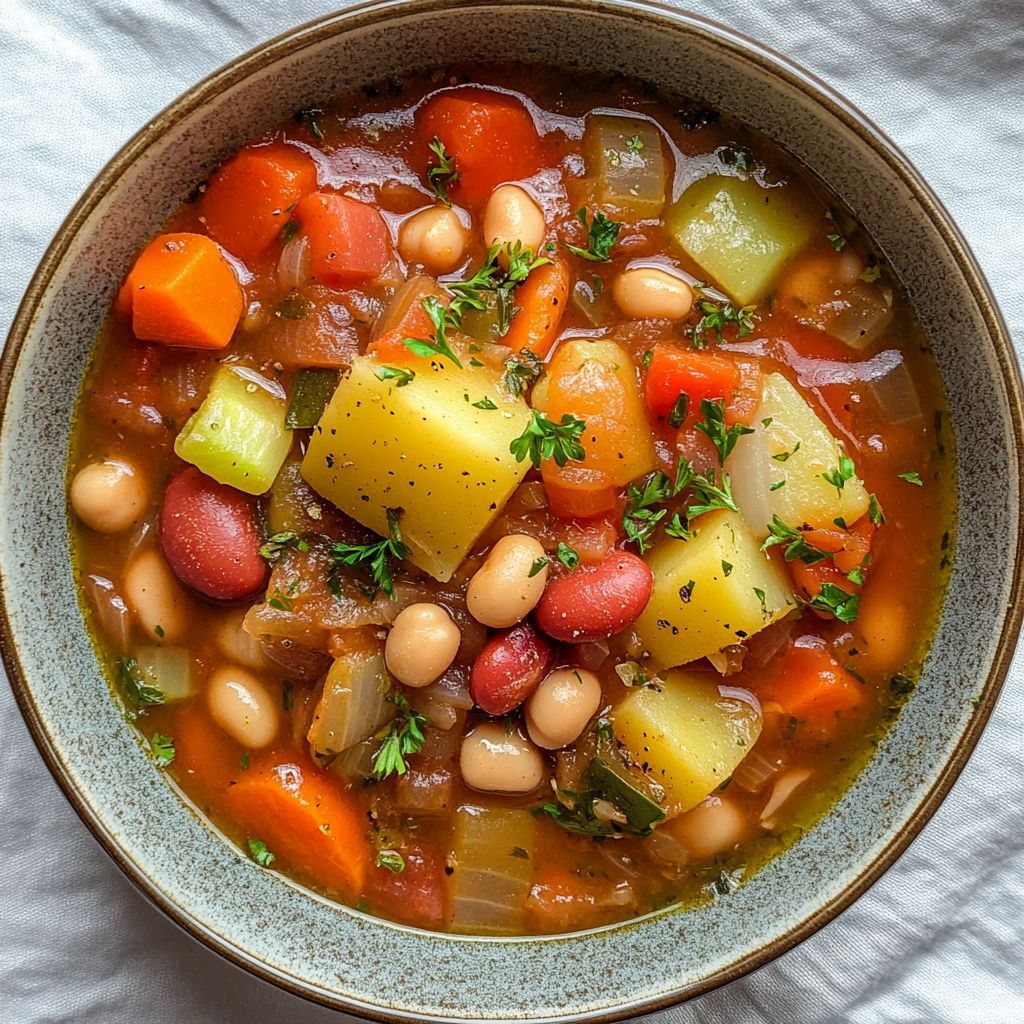
Introduction to Hearty Vegetable and Bean Stew
Imagine the warm, inviting aroma of simmering herbs and spices filling your kitchen, enticing your senses as you anticipate the comfort that awaits. Our Hearty Vegetable and Bean Stew is more than just a meal; it’s a culinary embrace, offering solace and satisfaction with every spoonful. This recipe takes you on a flavorful journey, showcasing the simple yet profound power of combining nature’s bounty into a nourishing and flavorful stew. Perfect for chilly evenings or when you need a wholesome touch, this stew is a symphony of earthy vegetables and protein-rich beans, with a luscious broth that ties every component together into delightful harmony.
The Story Behind the Dish
The origins of vegetable and bean stews can be traced back centuries, rooted in the culinary traditions of cultures around the world. From French ratatouille to Italian minestrone, the theme of combining seasonal vegetables with legumes has been a staple across continents. This approach capitalizes not only on the abundance of fresh ingredients but also on the art of making do with what one has on hand. Historically, these stews were meals of necessity, created from the desire to nourish large families with simple, accessible produce. Our Hearty Vegetable and Bean Stew follows in this tradition, honoring the rustic elegance and practicality of these time-tested recipes while adding its own flair to create something truly special.
In many cultures, such stews are shared during family gatherings and celebrations, symbolizing unity and warmth. This recipe carries those sentiments forward, inviting you to partake in a tradition that spans continents and generations. By cooking this stew, you become part of a living tapestry that celebrates the richness of plant-based foods and their ability to bring people together.
Why You’ll Love This Recipe
- Nutrient-rich: Packed with an array of vegetables and beans, this stew is a powerhouse of vitamins, minerals, and fiber.
- Easy to make: With straightforward instructions and common ingredients, you can whip up this delightful dish with minimal fuss.
- Customizable: The ingredients can be swapped out to suit your preferences or what you have in your pantry, making it incredibly versatile.
- Vegan friendly: Naturally plant-based, this stew caters to a wide variety of dietary preferences and restrictions.
- Comforting and satisfying: With its rich flavors and warm textures, it’s perfect for cozy nights in.
Flavor Profile & Texture
The allure of this stew lies in its expertly layered flavors and pleasing textures. At its heart, the stew boasts a robust and aromatic herb-infused broth, which acts as the perfect canvas for the medley of ingredients. Every bite delivers a burst of flavors; the savory notes from carrots and celery, the subtle sweetness of bell peppers, and the deep, hearty undertones of tomatoes create a delightful balance.
Beans introduce a creamy texture that complements the slight crunch of al dente vegetables. The stew’s consistency is substantial yet fluid, providing a comforting experience that warms you from the inside out. Each spoonful is a testament to the beauty of humble ingredients transformed through slow, attentive cooking.
Occasions & Pairings
This hearty stew makes an ideal dish for various occasions, from casual weeknight dinners to festive family gatherings. Its versatility means it can be a standalone entrée or part of a larger meal spread. Here are some suggestions for when to enjoy it and what to pair it with:
- Cold Winter Nights: Serve alongside crusty bread or warm cornbread to soak up the rich broth.
- Holiday Meals: Incorporate into your holiday menu as a comforting starter or a vegan main course option.
- Weeknight Suppers: Pair with a fresh green salad or roasted vegetables for a light yet fulfilling dinner.
- Serving with Wine: A medium-bodied red wine like Merlot or Zinfandel complements the stew’s robust flavors beautifully.
- For Lunch or Picnics: Enjoy it chilled or at room temperature, which allows the flavors to meld even further.
Tips, Variations & Substitutions
One of the joys of making a stew like this is its adaptability. You can tweak it to fit dietary needs or personal tastes. Consider the following tips and variations:
- Vegetable Variations: Enhance the stew with seasonal vegetables like squash or zucchini for a fresh twist.
- Bean Substitutions: Swap out cannellini beans for chickpeas or kidney beans for a different texture and flavor profile.
- Herb Additions: Add a bay leaf during simmering for a more complex taste, or finish with fresh basil for a fragrant touch.
- Spice Adjustments: Give the stew a bit of heat with the addition of red pepper flakes or smoked paprika.
- Thickening Options: For a thicker consistency, blend a portion of the stew and stir it back into the pot, or add a spoonful of tomato paste.
- Gluten-Free and Vegan Alternatives: Ensure all spice blends and broth bases are gluten-free and vegan-certified.
Storage & Make-Ahead Ideas
Proper storage and planning are vital for enjoying your stew beyond its initial serving. Here are some useful tips to ensure you get the most out of this delicious dish:
- Storage: Transfer leftovers to an airtight container and refrigerate for up to five days.
- Freezing: This stew freezes beautifully! Portion it into freezer-safe bags or containers. It can be frozen for up to three months. Thaw overnight in the refrigerator before reheating.
- Reheating: Gently reheat on the stovetop over medium heat, stirring occasionally, until warmed through. You can also use a microwave for individual portions.
- Make-Ahead: Prepare this stew a day in advance, as the flavors will deepen while resting, offering an even richer taste when you serve it.
Fun Facts & Trivia
Did you know that beans, a central ingredient in this stew, have been cultivated for over 7,000 years? They were essential to the diets of ancient civilizations, valued for their resilience and nutritional content. Moreover, their cultivation significantly contributes to soil health, thanks to their nitrogen-fixing properties, making them an eco-friendly crop choice.
In the language of flowers, carrots symbolize roots and foundational strength, which aligns with their role in this dish. Each portion of this stew is not just a meal but a connection to the earth and the cycles of nature that enable these ingredients to flourish.
So, roll up your sleeves and treat yourself and your loved ones to a bowl of this Hearty Vegetable and Bean Stew—where history, flavor, and nourishment unite in every bite.
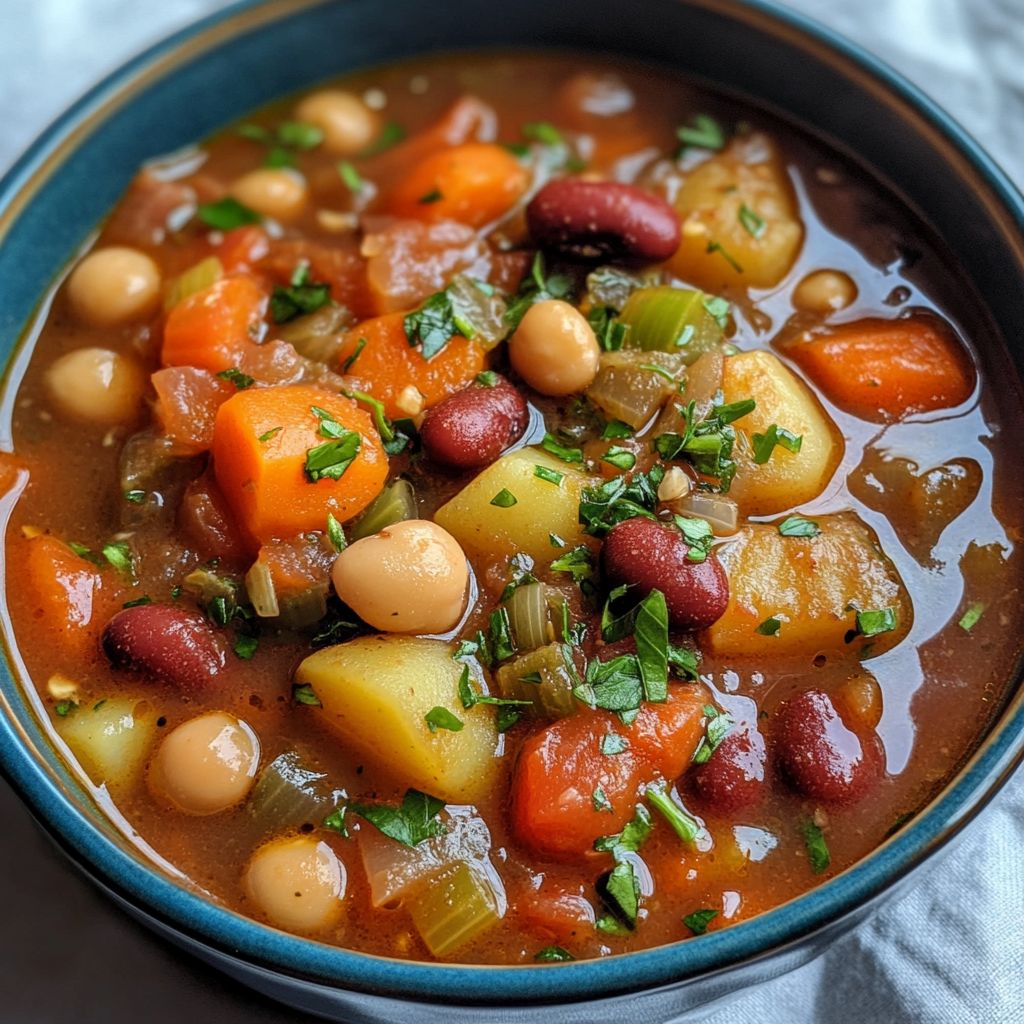
Ingredients
- Vegetable Base
- 2 tablespoons olive oil
→ Olive oil serves as the foundation for sautéing the vegetables, adding richness and depth to the stew. Use extra virgin olive oil for its robust flavor. Heat the oil over medium heat before adding the vegetables to enhance their natural sweetness. - 1 large onion (diced)
→ Onions add sweetness and a savory depth to the stew. Dice them into small, uniform pieces to ensure they cook evenly. Sauté the onions until they become translucent; this process unlocks their flavors and enhances the overall taste of the dish. - 2 cloves garlic (minced)
→ Garlic provides a fragrant aroma and depth of flavor. Mince the garlic finely to release its oils and ensure it blends well with the other ingredients. Add garlic to the pot once the onions are softened to prevent burning and bitterness. - 2 medium carrots (sliced)
→ Carrots add natural sweetness and a vibrant color to the stew. Slice them into even rounds for consistent cooking. Using fresh, firm carrots ensures that they retain their texture and flavor, adding heartiness to the stew. - 2 stalks celery (sliced)
→ Celery contributes crunch and a fresh flavor to the stew. Slice the stalks thinly for even cooking. Fresh celery with bright green color and firm texture will give the best results, infusing the stew with aromatic qualities. - 1 bell pepper (diced)
→ Bell peppers add a sweet crunch and vibrant color. Dice the pepper into small pieces so they cook quickly and integrate with the other vegetables. Choose a ripe pepper with smooth skin for the best flavor and texture. - 1 zucchini (sliced)
→ Zucchini brings moisture and a subtle flavor to the stew. Slice it evenly to ensure quick cooking. Choose medium-sized zucchini that are firm to the touch; avoid those that are overly soft or blemished. - 1 can (14.5 oz) diced tomatoes (with juices)
→ Diced tomatoes add acidity, moisture, and a rich flavor base for the stew. Use canned tomatoes packed in juice for a more robust flavor. To keep the stew fresh, consider using low-sodium tomatoes to control salt levels.
- 2 tablespoons olive oil
- Legumes
- 1 can (15 oz) kidney beans (drained and rinsed)
→ Kidney beans provide protein, fiber, and heartiness to the stew. Make sure to drain and rinse the beans to remove excess sodium and retain their flavor. Using canned beans saves time, but if using dried beans, soak and cook them beforehand. - 1 can (15 oz) black beans (drained and rinsed)
→ Black beans add texture and additional protein to the stew. Similar to kidney beans, drain and rinse them before adding to the pot for optimal taste. This step also helps remove any canning liquid that can dilute flavor.
- 1 can (15 oz) kidney beans (drained and rinsed)
- Liquids and Seasonings
- 4 cups vegetable broth
→ Vegetable broth serves as the primary liquid for the stew, infusing it with flavor. Use low-sodium broth to control salt levels in the dish. If homemade broth is available, it can enhance the overall freshness and taste. - 1 teaspoon dried thyme
→ Dried thyme adds an earthy, herbal flavor that complements the vegetables. Simply sprinkle it into the broth; the heat will help release its aromatic qualities, enriching the stew as it simmers. - 1 teaspoon ground cumin
→ Ground cumin brings warmth and complexity to the dish. Add it to the stew early in the cooking process, allowing its flavors to meld with the other ingredients. Avoid using too much, as it can become overpowering. - Salt and black pepper (to taste)
→ Salt enhances the overall flavor of the stew, while black pepper adds a hint of heat. Start with a small amount of each and adjust towards the end of cooking to ensure seasoning is balanced.
- 4 cups vegetable broth
- Finishing Touches
- 1 tablespoon fresh parsley (chopped)
→ Chopped fresh parsley adds a bright, fresh flavor to finish off the stew. Stir it in just before serving to maintain its vibrant color and taste. Choose vibrant green parsley for the best quality.
- 1 tablespoon fresh parsley (chopped)
Instructions
- Heat 2 tablespoons of olive oil in a large pot over medium heat.
→ Olive oil serves as the foundation for sautéing the vegetables, adding richness and depth to the stew. Heating the oil allows it to reach the right temperature, which ensures even cooking and enhances the natural sweetness of the vegetables you will add next. - Add 1 large diced onion to the pot and sauté for 5-7 minutes.
→ Onions add sweetness and a savory depth to the stew. Be sure to dice them into small, uniform pieces so they cook evenly. Sauté until they turn translucent; this process unlocks their flavors and enhances the overall taste of the dish. - Stir in 2 minced garlic cloves and cook for an additional minute.
→ Garlic provides a fragrant aroma and depth of flavor. Mince the garlic finely to release its oils and prevent burning. Adding it after the onions are softened helps avoid bitterness, ensuring your stew has a beautiful depth of flavor. - Add 2 sliced medium carrots and 2 sliced stalks of celery to the pot.
→ Carrots contribute natural sweetness and vibrant color, while celery adds crunch and a fresh flavor. Slice the vegetables into even pieces for uniform cooking. Use fresh, firm carrots and celery for the best texture and taste. - Incorporate 1 diced bell pepper and 1 sliced zucchini into the mixture.
→ Bell peppers add sweetness and vibrant color, while zucchini brings moisture and subtle flavor. Dice the bell pepper and slice the zucchini evenly to ensure they cook at similar rates. Choosing ripe vegetables enhances the stew’s overall flavor. - Pour in 1 can (14.5 oz) diced tomatoes with their juices.
→ Diced tomatoes add acidity, moisture, and a rich flavor base for the stew. Use tomatoes packed in juice for robust flavor; this will help create a thick, hearty texture in your stew and balance the flavors of the other vegetables. - Add 1 can (15 oz) drained and rinsed kidney beans, followed by 1 can (15 oz) drained and rinsed black beans.
→ Kidney and black beans provide protein, fiber, and heartiness to the stew. It’s important to drain and rinse them to remove excess sodium and any undesired flavors from the canning liquid. If using dried beans, ensure they are cooked and softened before adding. - Pour in 4 cups of vegetable broth.
→ Vegetable broth serves as the primary liquid for the stew, infusing it with flavor. Using low-sodium broth allows you to control the salt content. Homemade broth enhances freshness and the overall taste of the stew. - Sprinkle in 1 teaspoon of dried thyme and 1 teaspoon of ground cumin.
→ Dried thyme adds an earthy aroma, while cumin introduces warmth and complexity. Adding these spices at this stage allows their flavors to meld with the other ingredients as they cook, creating a well-rounded flavor profile. - Season the stew with salt and black pepper to taste.
→ Salt enhances the overall flavor of the stew, and black pepper adds a hint of heat. Start with a small amount of each; it is easier to adjust seasoning towards the end rather than risk overpowering the dish. - Bring the stew to a gentle boil, then reduce the heat to low and let it simmer for 30 minutes.
→ Simmering allows the flavors to meld and develop fully. Keep it covered partially to prevent excessive evaporation while allowing some steam to escape. Stir occasionally to ensure nothing sticks to the bottom of the pot. - Taste the stew before serving and adjust seasoning if necessary.
→ Tasting the stew ensures all flavors are balanced. You may find it needs a pinch more salt, pepper, or spice, so adjust accordingly. This step is crucial for achieving the perfect flavor. - Stir in 1 tablespoon of chopped fresh parsley just before serving.
→ Fresh parsley adds a bright, fresh flavor and a pop of color to the finished dish. Stir it in just before serving to maintain its vibrant color and enhance the stew’s presentation. - Serve the hearty vegetable and bean stew hot, ideally with crusty bread or over rice.
→ Serving it hot allows the flavors to shine, and pairing it with crusty bread can add texture, making for a wholesome meal. Enjoy your nutritious and hearty stew!
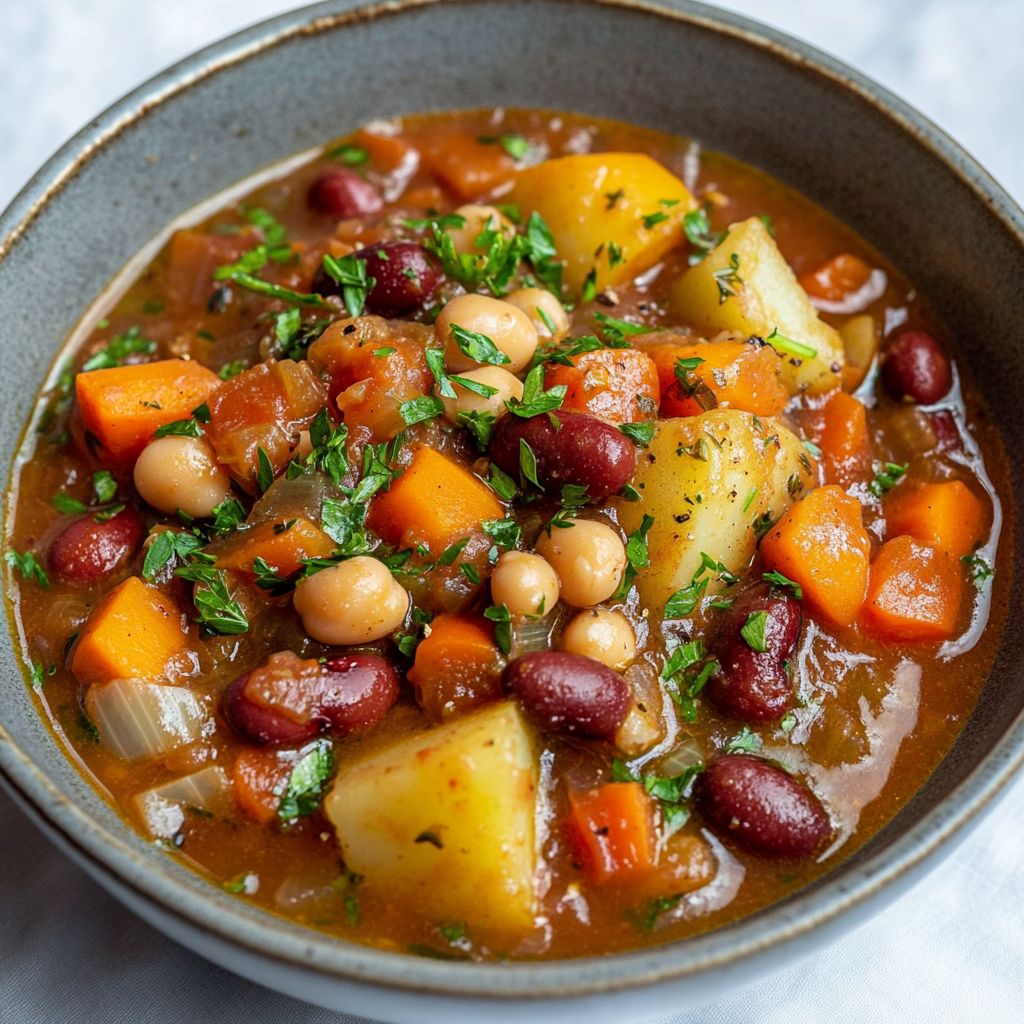
Notes
- Start by preparing all the ingredients: Dice the onion, mince the garlic, slice the carrots, celery, bell pepper, and zucchini. Drain and rinse the beans. Having everything prepped will streamline your cooking process.
- In a large pot, heat the olive oil over medium heat. Once hot, add the diced onion and sauté until it becomes translucent, about 5-7 minutes. This will create a fragrant base for your stew.
- Add the minced garlic to the pot only after the onions are soft; sauté for about 1 minute until fragrant but not browned. This prevents any bitter flavors from burnt garlic.
- Next, add the sliced carrots, celery, and bell pepper to the pot. Stir occasionally, cooking them until they start to soften, about 5 minutes.
- Add the sliced zucchini to the pot along with the canned diced tomatoes (with their juices). Stir everything together, allowing the flavors to mix.
- Pour in the vegetable broth and bring the mixture to a boil. Once boiling, reduce the heat to a simmer.
- While the stew simmers, add the rinsed kidney and black beans, along with the dried thyme and ground cumin. Stir well to ensure all ingredients are integrated and coated in the flavorful broth.
- Season the stew with salt and black pepper according to your taste preferences. It is better to start with smaller amounts and adjust as needed later.
- Let the stew simmer for at least 20-30 minutes, stirring occasionally, allowing the flavors to meld and the vegetables to become tender. This is where the magic happens!
- Once done, taste and adjust seasoning if necessary. Serve hot, garnished with fresh chopped parsley for a pop of color and freshness.
- This hearty vegetable and bean stew can be enjoyed on its own or served with crusty bread or over rice for a more filling meal. It’s perfect for leftovers; the flavors deepen as it sits, making it even more delicious the next day.
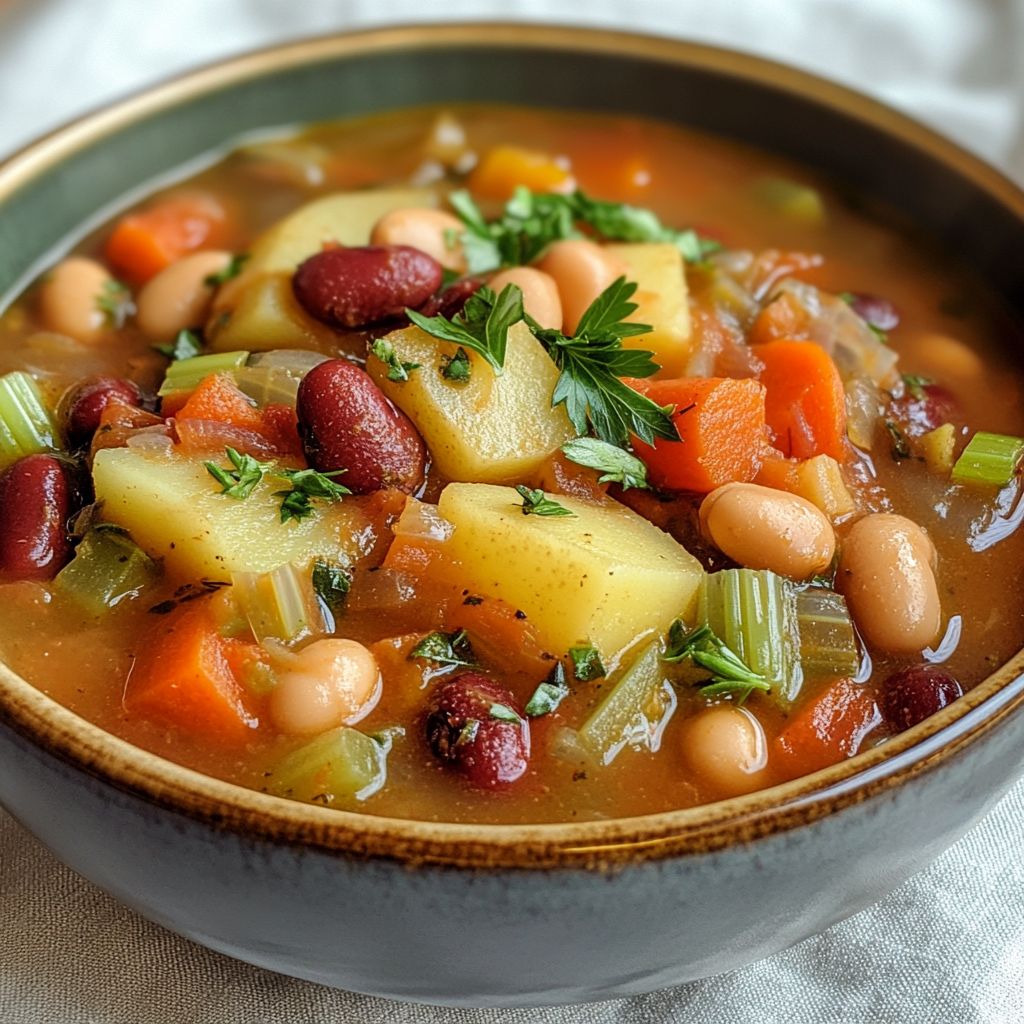
Tips
Cooking Tips for Hearty Vegetable and Bean Stew
- Prepping Your Vegetables: For optimal flavor, prepare all your vegetables before starting to cook. This ensures that you can sauté them quickly and at the right time, maintaining their textures and flavors.
- Sautéing Technique: When sautéing your onion, garlic, and other vegetables, keep the heat at medium. This prevents burning while allowing the vegetables to become tender and release their natural sugars, enhancing sweetness.
- Layering Flavors: Consider adding the vegetables in stages based on their cooking times. Start with the onion and garlic, then add the carrots and celery, and finally the bell pepper and zucchini, which require less time to cook.
- Season Gradually: When seasoning your stew, add spices and herbs gradually. Start with cumin and thyme, then taste as the stew cooks. This helps to build layers of flavor without overpowering the dish.
- Consistency Check: If your stew appears too thick, add more vegetable broth a little at a time. Conversely, if it’s too thin, let it simmer uncovered to allow some liquid to evaporate.
- Beans Choice: If using dried beans instead of canned, remember to soak them overnight and cook them until tender before adding them to the stew. This will ensure even cooking and prevent them from becoming mushy.
- Fresh Herbs: Fresh herbs like parsley should be added at the end of cooking to preserve their flavor and vibrant color. You can also consider adding other herbs such as basil or cilantro for a different taste profile.
- Flavor Enhancements: For added depth, consider adding a splash of balsamic vinegar or a squeeze of lemon juice just before serving. These can brighten the flavors and add a nice finishing touch.
- Serving Suggestions: Serve the stew hot with crusty bread or over a bed of rice for a complete meal. This can also help soak up the delicious broth.
- Make-Ahead Option: This stew tastes even better the next day! Feel free to prepare it in advance and reheat it gently, allowing the flavors to meld together beautifully.
FAQ
What ingredients are needed for the Hearty Vegetable and Bean Stew?
The main ingredients include assorted vegetables (like carrots, potatoes, and bell peppers), various beans (such as kidney beans and chickpeas), vegetable broth, tomatoes, garlic, and herbs like thyme and bay leaf.
How long does it take to prepare the Hearty Vegetable and Bean Stew?
The preparation time is approximately 15 to 20 minutes, while the cooking time ranges from 30 to 40 minutes, making a total time of about 1 hour.
Can I use canned beans for the stew?
Yes, canned beans are a great option as they save time. Just be sure to rinse them well to reduce sodium content before adding them to the stew.
Is this stew suitable for vegans?
Absolutely! The Hearty Vegetable and Bean Stew is entirely plant-based, making it a perfect choice for vegans and vegetarians.
Can I add meat to the Hearty Vegetable and Bean Stew?
Yes, if you prefer a meaty version, you can add cooked meat such as chicken or beef. Adjust the cooking time accordingly to ensure the meat is thoroughly heated.
What can I serve with the Hearty Vegetable and Bean Stew?
This stew pairs wonderfully with crusty bread, rice, or quinoa. It can also be served alongside a fresh salad for a complete meal.
Can leftovers be stored in the fridge?
Yes, the stew can be stored in an airtight container in the refrigerator for up to 3-4 days. It also freezes well for longer storage.
What variations can I make to the Hearty Vegetable and Bean Stew?
Feel free to mix and match vegetables based on your preference or seasonal availability. You can also experiment with different herbs and spices to customize the flavor.