Introduction / Hook
A Burst of Sunshine: Winter Citrus Salad
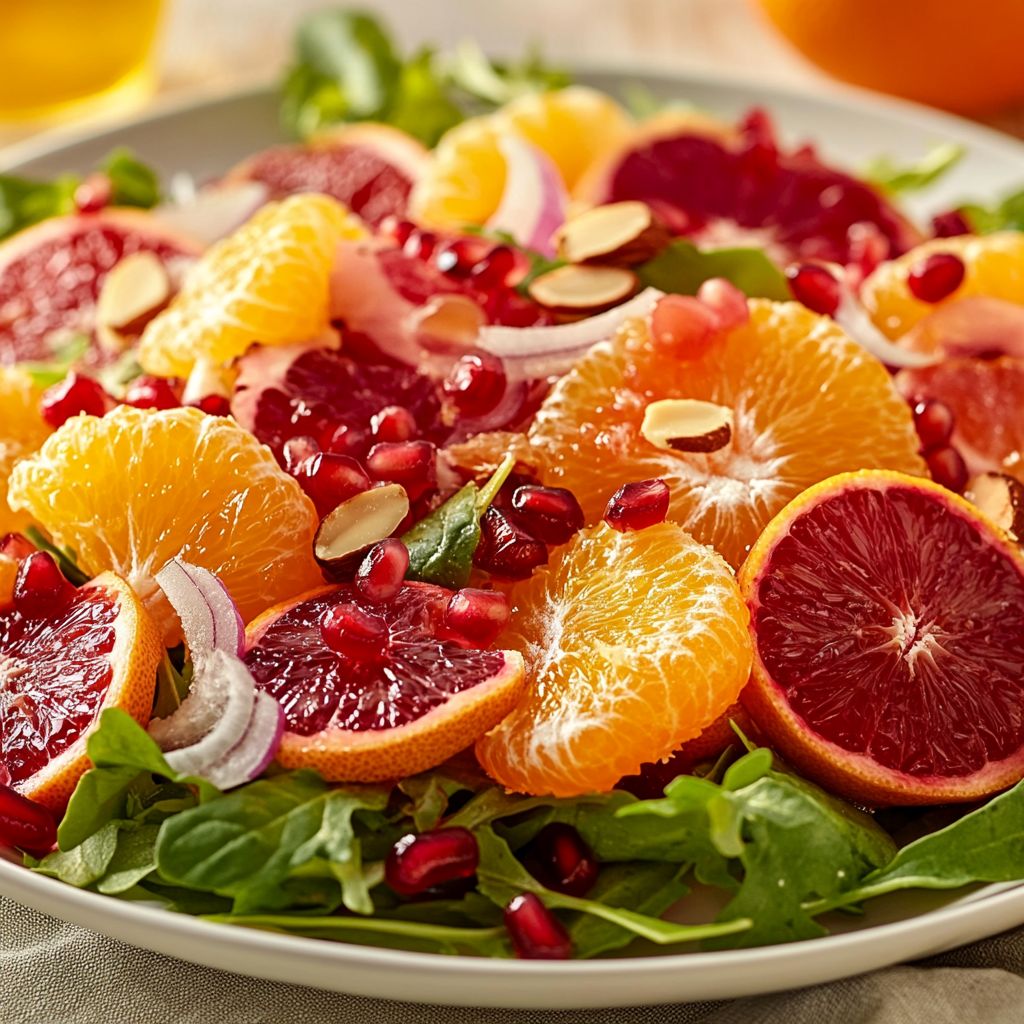
Imagine a crisp, colorful blend of nature’s most vibrant offerings, bursting with flavor and refreshing zest. Introducing the Winter Citrus Salad — a dish that’s as visually striking as it is delightful to your palate. With each bite, you experience an awakening of taste and texture, from the sharp, tangy depth of grapefruit and oranges to the delicate crunch of fresh greens and the nutty finish of toasted almonds. This salad isn’t just a side dish; it’s an invigorating exploration of contrasting ingredients thoughtfully combined to brighten even the chilliest winter day. Whether you’re hosting a gathering or seeking comfort from the seasonal slump, this Winter Citrus Salad is your perfect partner, a genuine ray of sunshine on a cold afternoon.
The Story Behind the Dish
The Winter Citrus Salad boasts a history as flavorful as its ingredients. Citrus fruits have long been cultivated in regions around the Mediterranean, where the warm climates allow for vibrant growth even during the cooler months. In parts of Italy, Spain, and North Africa, citrus trees laden with fruit become symbols of resilience and abundance against winter’s harsh grip. The salad itself finds its roots in seasonal eating, a practice cherished by cultures that value using what’s fresh and available at different times of the year. Historically, this meant a reliance on citrus fruits in winter, bringing brightness and essential vitamins to the table during times when other fresh produce was scarce.
Over the centuries, this practice evolved, blending Mediterranean influences with modern culinary trends to create variations like the Winter Citrus Salad. Today, this dish is cherished not only for its health benefits and taste but also for its cultural richness, representing a marriage of tradition and modernity. With each preparation, it tells stories of warmth, nourishment, and a celebration of seasonal bounty.
Why You’ll Love This Recipe
- Bright and Refreshing: Every bite offers a symphony of flavors, from the piquant citrus to the soothing greens.
- Health Boost: Packed with Vitamin C, fiber, and antioxidants, it’s a wholesome addition to any meal.
- Visual Appeal: The vibrant hues of citrus slices are not only attractive but also uplifting during dreary winter days.
- Simplicity Meets Sophistication: Easy to prepare yet elegant enough for special occasions.
- Versatile: Can be adapted with various toppings or served alongside numerous entrees.
Flavor Profile & Texture
The Winter Citrus Salad is a testament to the saying that contrasts create harmony. Dominated by the zesty, juicy citrus fruits, the flavor profile is energetic and awakening. Oranges deliver sweetness with a hint of acidity, while pink grapefruit offers a sharper, more textured citrus note. Combined, they create a vibrant top note that’s softened and rounded out by the mellow bitterness of fresh greens like arugula or spinach.
The texture is another dimension altogether. Each forkful is an intriguing play of contrasts: the smooth, juicy burst of citrus meat combines with the delicate crackle of sliced almonds or seeds. A possible drizzle of honey or a light vinaigrette introduces a silky texture, enveloping the ingredients in a subtle, sweet tang. With every mouthful, the salad transports you to a sun-dappled orchard, even in the heart of winter.
Occasions & Pairings
This salad is as versatile as it is delicious. It’s the perfect starter for a holiday meal, bringing brightness and an open palette to a festive menu. It’s equally at home on a casual weeknight dinner table or as part of a weekend brunch spread.
As for pairings, consider serving it alongside roasted meats, particularly poultry or pork, where its crisp texture and zesty notes can cut through richness. For a lighter meal, enjoy it with toasted rustic bread and a selection of cheeses. When it comes to beverages, a chilled glass of crisp white wine, prosecco, or a citrus-infused iced tea complements the salad wonderfully.
Tips, Variations & Substitutions
The beauty of the Winter Citrus Salad lies in its flexibility. Here are some ideas to customize it to your liking:
- Change Your Greens: Swap out arugula for spinach or mixed salad greens for a varied texture and taste.
- Nuts and Seeds: Toasted almonds elevate this salad, but pistachios or sunflower seeds also work excellently.
- Dress It Up: Try a creamy avocado or yogurt-based dressing for a more luxuriant feel.
- Diversify Citrus: Add blood oranges or even segments of clementines for a sweeter note.
- Dietary Needs: For a vegan option, ensure the dressing is plant-based, and for a nut-free salad, simply exclude the almonds or use seeds instead.
Storage & Make-Ahead Ideas
The Winter Citrus Salad is best enjoyed fresh to preserve the integrity of its crisp ingredients. However, you can prepare it a few hours in advance if you’re planning a get-together. Simply store the citrus slices and greens separately, assembling them just before serving to prevent wilting.
If storing leftovers, keep the salad in an airtight container in the refrigerator for up to two days. Be sure to remove the peel from citrus segments, as this prevents any bitter flavors from developing. Avoid adding dressing until you’re ready to eat, as this ensures the greens remain fresh and not soggy.
For those who like to plan ahead, consider cutting the citrus slices the night before and storing them chilled, so everything comes together quickly when it’s time to serve.
Fun Facts & Trivia
Did you know that citrus fruits were once considered luxury items? In the 15th Century, sailors carried them on long voyages to prevent scurvy, a disease caused by a lack of Vitamin C. Today, while readily available, they remain a cherished symbol of good health and prosperity.
Another interesting tidbit: beyond their nutritional prowess, citrus fruits also played a role in art and symbolism, often depicted in paintings as signs of wealth and opulence.
The Winter Citrus Salad is more than a dish; it’s a bridge to a rich tapestry of history and tradition, inviting everyone to enjoy a slice of the sun, even in the depths of winter.
Ingredients
- Mixed Greens
→ A combination of baby spinach, arugula, and mesclun greens forms the base of the salad, providing a fresh, crisp texture and vibrant color. Rinse the greens thoroughly and spin dry to avoid adding excess water to the salad. Choose organic greens when possible for the best flavor and to avoid pesticides. - 2 oranges (peeled and segmented)
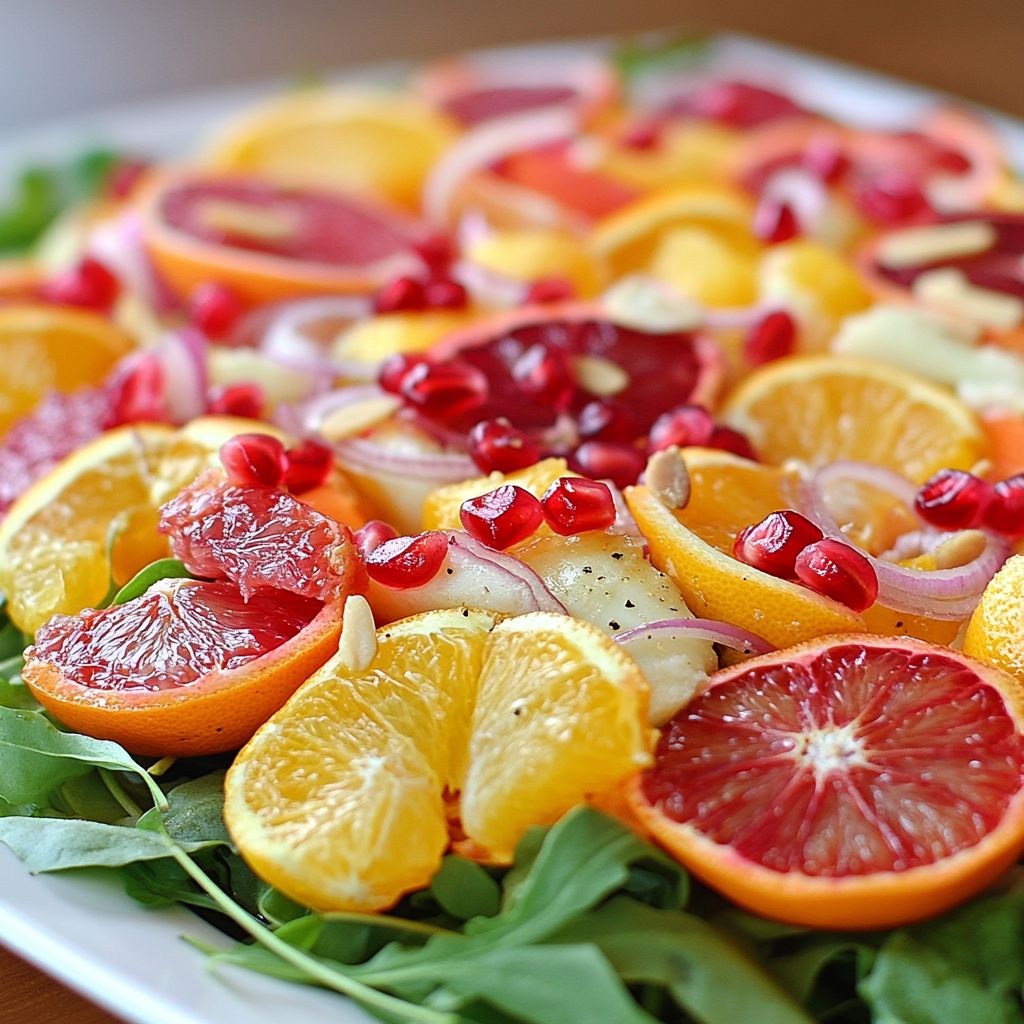
→ Oranges add a burst of sweetness and juiciness to the salad, balancing the bitterness of the greens. Peel the oranges completely and segment them to remove any membranes for a clean, easy-to-eat addition. Choose juicy, ripe oranges for optimal flavor, and consider using a mix of blood oranges and navel oranges for added color. - 1 grapefruit (peeled and segmented)
→ Grapefruit introduces a tart, zesty contrast that enhances the salad’s flavor profile. Similar to the oranges, ensure to fully peel and segment the grapefruit, discarding any bitter pith. Use ruby red grapefruit for a sweeter taste, and be careful while slicing to retain the juice. - 1 small fennel bulb (thinly sliced)
→ Fennel adds a unique anise flavor and a crunchy texture to the salad. Trim the fennel bulb and slice it thinly using a mandoline for uniform pieces. Include fronds for garnish to enhance both visual appeal and flavor. Fennel can be somewhat strong, so adjust the quantity to taste. - 1/4 cup pomegranate seeds
→ Pomegranate seeds provide a pop of color and a sweet, tart flavor, as well as a delightful crunch. Use fresh pomegranate seeds for the best taste, and consider gently pressing the pomegranate to loosen the seeds before removing them. If using a whole pomegranate, cut it in half and tap the back with a wooden spoon to release the seeds easily. - 1/4 cup sliced almonds (toasted)
→ Toasted almonds offer a nutty flavor and additional crunch, complementing the other textures in the salad. Toast the almonds in a dry skillet over medium heat, stirring frequently, until golden brown and fragrant. This step enhances their flavor and makes them extra crunchy. Be careful not to burn them, as they can char quickly.
- Dressing
→ A light citrus vinaigrette perfectly complements the fresh ingredients in this salad. - 1/4 cup extra virgin olive oil
→ Olive oil provides a rich, silky base for the dressing and melds all the flavors together. Use high-quality extra virgin olive oil for the best taste. It should be at room temperature to ensure it emulsifies well with the vinegar. - 1 tablespoon honey or maple syrup
→ Honey or maple syrup adds a touch of natural sweetness to balance the acidity of the citrus. If using honey, consider warming it slightly to make it easier to whisk into the dressing. Maple syrup is a great vegan alternative and adds a different flavor profile. - 2 tablespoons apple cider vinegar
→ Apple cider vinegar provides tanginess that enhances the salad’s overall flavor. Use good quality, unfiltered apple cider vinegar for the best taste. Adjust the amount to your palate; some may prefer a zestier dressing. - Salt and pepper to taste
→ Seasoning with salt and fresh ground pepper will elevate the flavors of the salad. Start with a small pinch of salt and a few cracks of pepper, then adjust as needed according to your taste preferences.
Instructions
- Prepare your ingredients by ensuring everything is fresh and clean.
→ This includes rinsing the mixed greens, oranges, grapefruit, fennel, and almonds. Handling fresh ingredients ensures a better taste and presentation in the final dish. - Rinse the mixed greens thoroughly under cold water and spin dry using a salad spinner.
→ This step removes any dirt or pesticides left on the greens and helps maintain their crispness by preventing excess water from diluting the salad dressing. - Peel the oranges using a sharp knife, ensuring to remove all the white pith.
→ The pith can be bitter, so be thorough in your peeling; this will allow for sweet and juicier segments that enhance the overall flavor of the salad. - Segment the oranges by cutting between the membranes with a knife to release the individual sections.
→ This technique not only makes the segments easy to eat but also visually appealing and clean in presentation. - Peel the grapefruit and segment it in the same manner as the oranges.
→ This adds a burst of tartness to the salad and balances the sweetness from the oranges, creating a well-rounded flavor profile. - Trim the fennel bulb by removing the stalks and cutting off the bottom root section.
→ This ensures that only the tender, edible parts of the bulb are used in the salad, enhancing its texture and flavor. - Thinly slice the fennel using a sharp knife or a mandoline for uniform slices.
→ Even slices offer a consistent crunch throughout the salad and allow for an even distribution of flavor and texture. - Prepare the pomegranate seeds by either using fresh seeds or tapping a halved pomegranate on the back to release the seeds.
→ Fresh seeds provide better flavor and texture; this technique minimizes mess and maximizes seed release, allowing you to add a pop of color to the salad. - Toast the sliced almonds in a dry skillet over medium heat, stirring frequently until they turn golden brown.
→ Toasting enhances the natural oils, flavors, and crunchiness of the nuts; keep an eye on them to prevent burning, as they can get charred quickly. - In a medium bowl, prepare the dressing by combining the extra virgin olive oil, honey (or maple syrup), and apple cider vinegar.
→ Whisking these ingredients together creates an emulsion that will coat your salad evenly, providing a balance of flavors in every bite. - Adjust the sweetness of the dressing by adding honey or maple syrup to taste, and then season with salt and pepper.
→ Tasting the dressing before adding it to the salad ensures it meets your flavor preference; always start with less salt and pepper, and adjust as needed. - In a large salad bowl, combine the mixed greens, orange segments, grapefruit segments, sliced fennel, pomegranate seeds, and toasted almonds.
→ Gently toss them together to ensure even distribution of ingredients without crushing the delicate greens or fruit. - Drizzle the prepared dressing over the salad just before serving, and toss lightly to coat.
→ This prevents the greens from wilting, helping maintain their freshness and crunch while ensuring every ingredient is flavored adequately. - Serve immediately on chilled plates to enhance the freshness of the salad.
→ Chilled serving dishes keep the salad crisp longer and provide a refreshing experience with each bite.
Notes
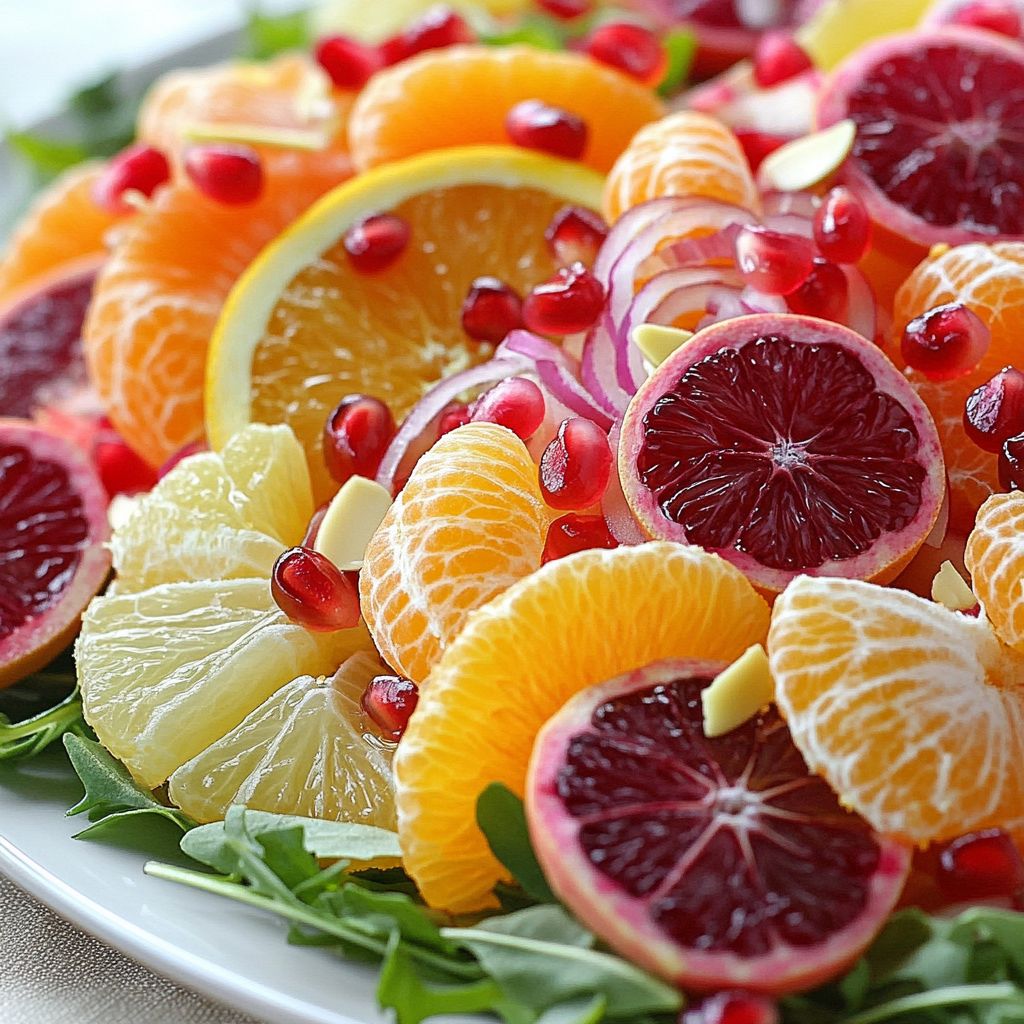
This Winter Citrus Salad is a refreshing and vibrant dish that combines the brightness of seasonal fruits with the crispness of mixed greens. The use of both oranges and grapefruit introduces a delightful mix of sweetness and tartness, while the fennel adds a unique anise flavor and crunchy texture that beautifully contrasts the softness of the fruits. The addition of pomegranate seeds and toasted almonds not only offers a pop of color but also a satisfying crunch.
When preparing this salad, your choice of mixed greens is essential for achieving a well-balanced base. Ensure they are washed and dried properly to keep the salad crisp and fresh. For the citrus fruits, using a variety will enhance both flavor and visual appeal; consider mixing different types of oranges and grapefruits for diverse tastes and colors.
As for the dressing, a light citrus vinaigrette made with high-quality extra virgin olive oil, apple cider vinegar, and a touch of sweetness from honey or maple syrup perfectly accents the fresh ingredients. Make sure to taste and adjust seasoning with salt and pepper for the best flavor. Whisking the ingredients together until well combined ensures a smooth and well-emulsified dressing.
This salad is not only beautiful but also nutritious, making it an excellent option for holiday gatherings or as a refreshing side at any meal. You can make it ahead of time by preparing the ingredients separately and assembling it just before serving to keep everything fresh and crisp. Enjoy this delightful Winter Citrus Salad as a standout dish that captures the essence of the season!
Tips
Tips for Preparing Winter Citrus Salad
- Greens Preparation: Ensure you wash the mixed greens thoroughly, and using a salad spinner is ideal to remove excess moisture. Wet greens can dilute the dressing and make the salad soggy.
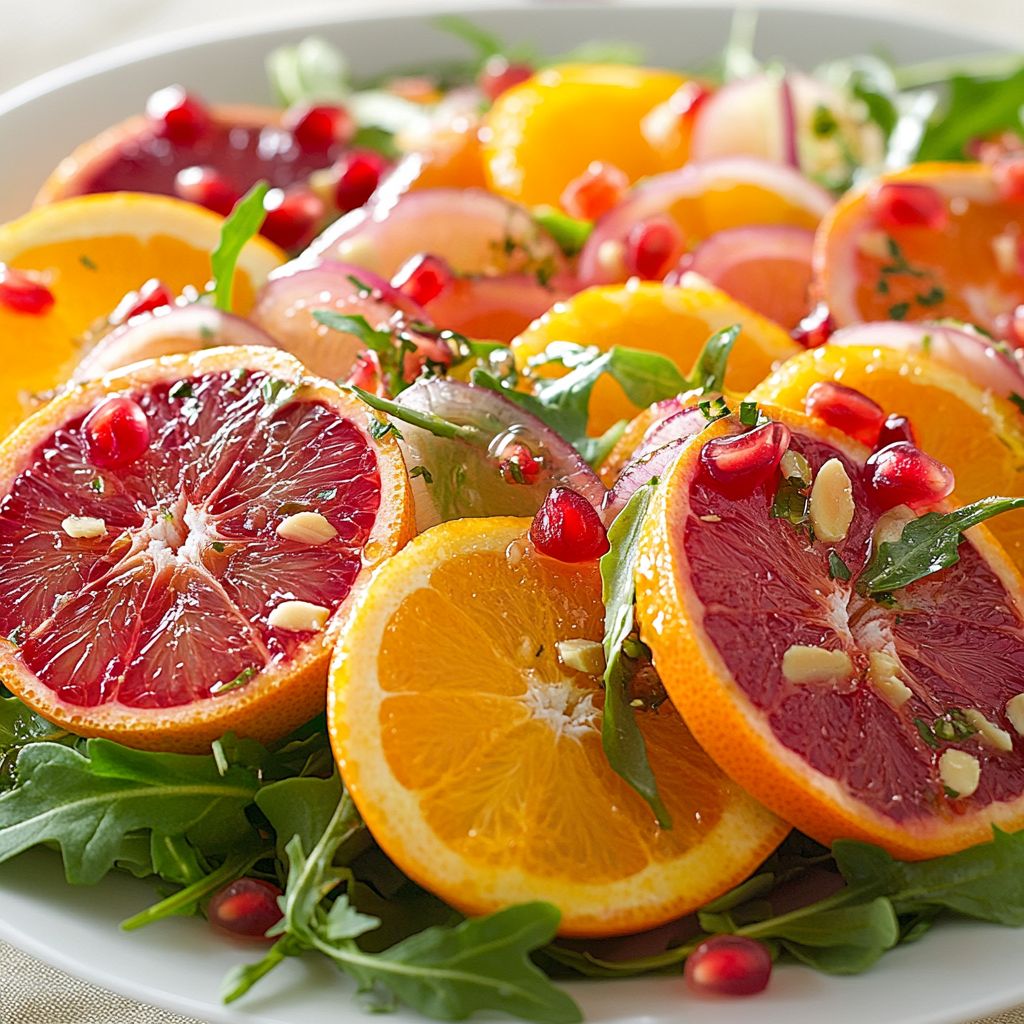
- Optimal Citrus Segmentation: To easily peel and segment oranges and grapefruit, use a sharp knife and cut off the top and bottom ends first. Then, slice down the sides to remove the peel and pith. For segmenting, carefully cut between the membranes for clean sections.
- Fennel Slicing Techniques: When slicing the fennel, a mandoline creates perfectly uniform slices, which enhances the salad’s presentation. If you don’t have a mandoline, a sharp knife will work as well; just try to keep the slices as thin as possible.
- Pomegranate Preparation: If you’re using a whole pomegranate, cut it in half horizontally to easily remove the seeds. Hold it over a bowl and tap the back with a wooden spoon, letting the seeds fall into the bowl, minimizing mess and maximizing yield.
- Toasting Almonds: Toasting sliced almonds enhances their flavor significantly. Keep an eye on them as they can burn quickly; stir them frequently for even toasting. Once they’re golden and fragrant, transfer them immediately to a plate to prevent further cooking.
- Dressing Emulsification: When making the dressing, start by whisking the vinegar and honey (or maple syrup) together before gradually adding the olive oil. Whisking continuously helps to emulsify the mixture, resulting in a smooth dressing.
- Adjusting Flavor: Taste the dressing before adding it to your salad. You might like a bit more acidity or sweetness depending on personal preference. Don’t be afraid to adjust the vinegar or honey to find the perfect balance.
- Serving Suggestions: This salad is best served immediately after dressing to ensure the greens remain crisp. If you’re preparing it in advance, consider storing the dressing separately and tossing just before serving.
FAQ
What ingredients are needed for a Winter Citrus Salad?
The main ingredients for a Winter Citrus Salad typically include various citrus fruits like oranges, grapefruits, and tangerines, along with leafy greens, avocado, nuts, and a light vinaigrette dressing.
How do I prepare the citrus fruits for the salad?
To prepare the citrus fruits, peel them and remove the pith. Segment the fruits using a knife to cut between the membranes, allowing the juicy segments to separate easily.
Can I use any type of greens for this salad?
Yes, you can use a variety of greens such as arugula, spinach, or mixed salad greens. Choose the type of greens based on your personal preference and availability.
What nuts are best for adding crunch to the Winter Citrus Salad?
Good choices for nuts include toasted almonds, walnuts, or pistachios. These add a nice crunch and complimentary flavor to the citrus fruits.
Is there a recommended dressing for this salad?
A simple vinaigrette made with olive oil, lemon juice, honey, salt, and pepper works well. You can also experiment with flavored oils or balsamic vinegar for added depth.
Can I make this salad ahead of time?
It’s best to assemble the salad shortly before serving to keep the greens fresh and prevent them from wilting. However, you can prepare the citrus fruits and dressing in advance.
Is Winter Citrus Salad suitable for a gluten-free diet?
Yes, Winter Citrus Salad is naturally gluten-free. Just be sure to check any store-bought dressings or toppings to ensure they do not contain gluten.
What can I add to make this salad heartier?
To make the salad heartier, you can add protein sources such as grilled chicken, shrimp, chickpeas, or quinoa. These additions will make it a complete meal.