There’s something undeniably enchanting about the simple pleasure of Classic French Toast, a delightful breakfast dish that transforms humble slices of bread into a golden, custardy extravaganza. Imagine a sunny morning where the aroma of vanilla, cinnamon, and butter wafts through your kitchen, gently beckoning everyone to gather around the table. With its crisp exterior and soft, pillowy interior, French toast isn’t just a meal; it’s an experience embroidered with warmth, nostalgia, and perhaps a bit of indulgence. Whether enjoyed with a drizzle of maple syrup, a dusting of powdered sugar, or topped with fresh fruits, each bite of this classic dish is an invitation to savor life’s sweeter moments.
Originating from the ancient practice of soaking bread in a mixture of eggs and milk, history suggests that French toast can be traced back to the Roman Empire, where this method was used to avoid waste and make stale bread more palatable. Over centuries, regional variations emerged, with each culture adding its unique twist to this beloved breakfast staple. Adapted across borders, French toast has grown in popularity and now graces breakfast tables worldwide, often customized with diverse flavors and toppings that reflect local tastes.
What sets Classic French Toast apart from its myriad variations is its simplicity and timeless appeal. Start with thick slices of day-old bread—brioche, challah, or even a crusty French baguette are fantastic choices—each slice yielding a slightly different texture and flavor profile. As the bread soaks in the rich custard made from eggs, milk, and a whisper of sugar, it becomes wonderfully saturated, ensuring that every mouthful is packed with flavor and richness.
The key to achieving the perfect French toast lies in balancing the custard mixture and ensuring your cooking method is just right. The use of whole eggs provides richness and structure, while adding a splash of milk or cream introduces a luxurious creaminess that epitomizes comfort food. In contrast, a pinch of salt enhances the overall flavor, while vanilla extract introduces a hint of aromatic sweetness that elevates the palate. Cinnamon, too, plays a crucial role, imparting a warm, inviting scent reminiscent of home-baked desserts that lingers in the air.
The art of cooking French toast cannot be underestimated. Utilizing a non-stick skillet or griddle ensures that you achieve that coveted golden-brown crust without the fear of sticking. Allow the bread to cook undisturbed for a few moments so that it develops a beautiful caramelization—a professional touch that gives restaurant-style results right in your own kitchen. Don’t rush the process; let patience be your ally as the bread caramelizes to perfection, nearly begging for toppings that can be as modest or extravagant as your creativity allows.
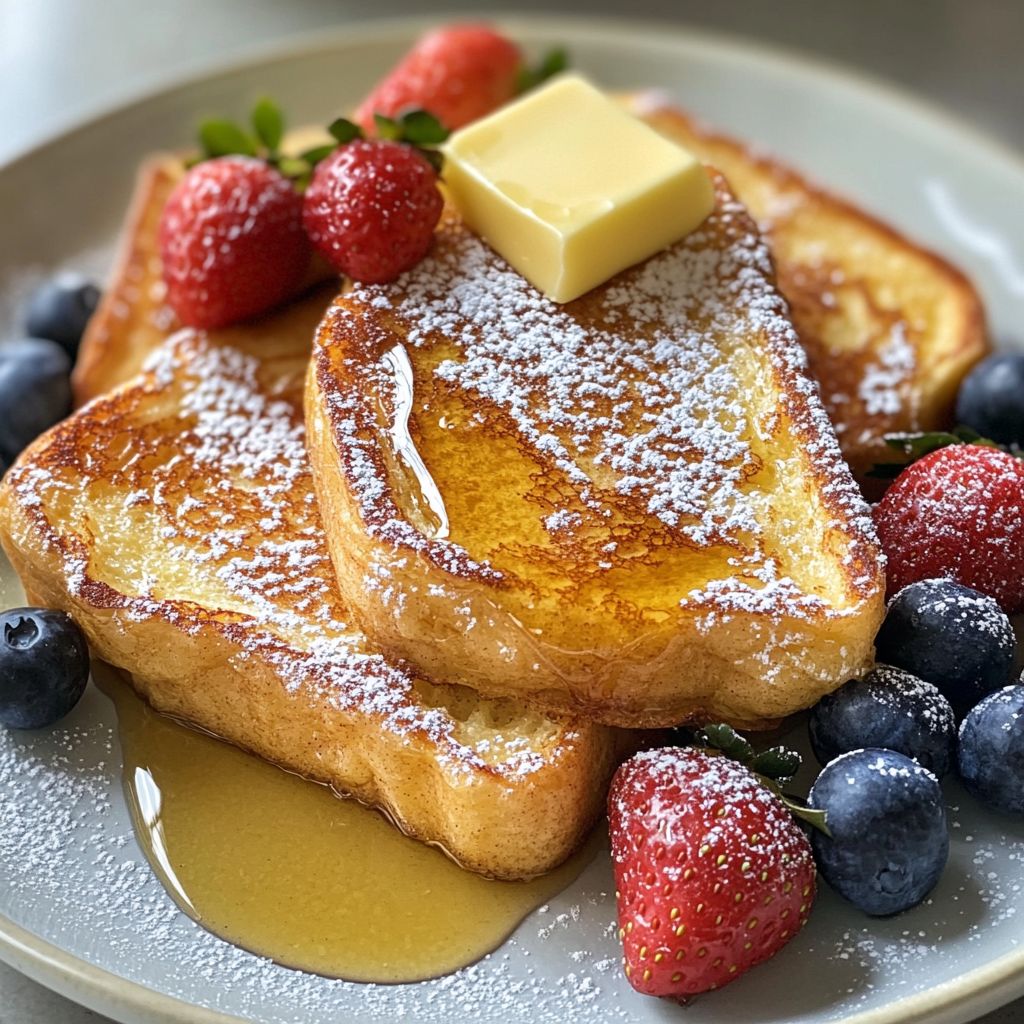
As the cooking process unfolds, think about how you will adorn your French toast. Classic accompaniments include a drizzle of pure maple syrup that perfectly complements the fluffy texture and rich flavors, cascading down each slice like warm hugs on a chilly morning. But the adventures need not stop there! Fresh seasonal fruits—like sautéed bananas, berries, peaches, or even a sprinkle of nuts—can elevate the dish considerably, adding both vibrancy and nutrition to your breakfast. Or opt for a dollop of whipped cream, a scoop of Greek yogurt, or even a splash of flavored compote to make your French toast even more celebratory.
The beauty of Classic French Toast lies in its versatility. It’s a dish that adapts beautifully to crowds, waiting to be dressed up for a holiday brunch or simplified for a quiet weekday meal. You can also create delightful variations by experimenting with different flavorings in your custard, adding a zesty hint of citrus zest or unique spices like nutmeg to give a twist to the traditional recipe. Want to get extra adventurous? Stuff the toast with sweetened cream cheese or Nutella for a decadent treat that resembles a breakfast dessert.
Moreover, the appeal of French toast stretches beyond mere taste and textural delight; it carries with it an essence of love and togetherness. From lazy family Sundays to celebratory brunches with friends, making French toast often heralds the arrival of good times and shared memories. It’s a dish made better when shared, a comforting plate that invites laughter and conversation to the table—turning the act of enjoying food into a heartfelt experience.
For those who might be health-conscious or looking for alternatives to indulge in this breakfast classic, fear not. French toast can easily be tailored to accommodate dietary preferences. For a lighter version, consider using whole-grain bread, alternative milks such as almond or oat, and fewer eggs. Moreover, toppings can be made healthier by incorporating yogurt, honey, or seeds into the equation, ensuring that you belong to the delicious world of French toast while also maintaining a balanced approach to your breakfast habits.
And let’s not forget about the creative presentation of the classic dish. Serving French toast layered with toppings can create a vibrant explosion of colors and textures on your breakfast plate. Imagine a stack adorned with luscious berries, sprinkled with toasted coconut, and crowned with a dusting of powdered sugar—an Instagram-worthy dish that will have friends and family clamoring for the recipe. Engaging the senses through visual appeal turns this classic into an art form that’s truly appealing.
So, whether you’re standing at your kitchen counter, whisk in hand, or planning a spring brunch with friends, know that the act of making Classic French Toast is more than just another breakfast dishing. It’s about creating warmth, connections, and most importantly, delicious moments that nourish both body and soul. Transform those simple ingredients into something magical that resonates with everyone at the table and creates cherished memories one slice at a time. After all, what better way to reconnect with loved ones than through shared meals filled with joy, laughter, and incredible flavors? So roll up those sleeves and get ready to dive into a culinary adventure that will fill your home with love, one delightful toast at a time!
Ingredients
- Bread
- 4 slices thick-cut bread preferably brioche or challah
- Egg Mixture
- 2 large eggs
- 1/2 cup milk whole or dairy-free
- 1 tsp vanilla extract
- 1/2 tsp ground cinnamon
- 1/4 tsp salt
- For Cooking
- 2 tbsp unsalted butter or cooking oil
- Optional Toppings
- Maple syrup
- Powdered sugar
- Fresh fruit such as berries or bananas</li
Instructions
- Start by whisking together the eggs, milk, vanilla extract, ground cinnamon, and salt in a mixing bowl until well combined.
- Preheat a skillet or griddle over medium heat and add the unsalted butter or cooking oil, allowing it to melt and coat the surface evenly.
- While the skillet heats up, take each slice of thick-cut bread and dip it into the egg mixture, ensuring both sides are well coated but not soaked.
- Once the skillet is hot, carefully place the coated bread slices onto the skillet in a single layer.
- Cook for about 3-4 minutes on each side, or until golden brown and slightly crisp. Avoid overcrowding the skillet; you can cook in batches if necessary.
- Once cooked, transfer the French toast to a serving plate and repeat with any remaining bread slices.
- Serve warm, topped with your choice of maple syrup, powdered sugar, and fresh fruit such as berries or bananas.
Notes
These classic French toast slices are a quick and delightful breakfast option, perfect for a leisurely weekend morning or a special treat during the week. Using thick-cut brioche or challah bread gives the toast a rich and buttery flavor, while the egg mixture enhances the overall texture and taste. Feel free to customize your French toast with various toppings such as maple syrup, powdered sugar, or fresh fruit for additional freshness and sweetness. If you prefer a dairy-free option, substitute the milk with a plant-based alternative. For a more indulgent touch, you can also add a sprinkle of nutmeg or even a splash of orange zest into the egg mixture. Don’t forget to serve them hot for the best experience!
Faq
What ingredients do I need to make Classic French Toast?
To make Classic French Toast, you will need bread (preferably thick slices like brioche or challah), eggs, milk, vanilla extract, cinnamon, and a pinch of salt. Optional toppings include maple syrup, powdered sugar, and fresh fruits.
Can I use any type of bread for French Toast?
While you can technically use any type of bread, it is best to use thicker slices of bread such as brioche, challah, or sourdough for the best texture and flavor.
How do I achieve the perfect custard mixture?
The perfect custard mixture usually consists of one egg for every 1/4 cup of milk. You can add vanilla extract and cinnamon to enhance the flavor. Make sure to whisk the mixture until well combined.
Can I make French Toast ahead of time?
Yes, you can prepare the custard mixture ahead of time and store it in the refrigerator for up to 24 hours. You can also cook the French Toast in advance and reheat it in a toaster oven or pan.
What is the best way to cook French Toast?
Cook French Toast on medium-low heat in a non-stick skillet or griddle. This allows the bread to cook through without burning the outside. Use a bit of butter or oil to prevent sticking.
How do I know when French Toast is done cooking?
French Toast is done when it is golden brown on both sides and the custard has set in the center. You can gently press the bread to check for firmness.
What toppings pair well with Classic French Toast?
Classic toppings include maple syrup, powdered sugar, fresh fruits (such as berries or sliced bananas), whipped cream, or a sprinkle of cinnamon.
Is there a gluten-free version of French Toast?
Yes, you can use gluten-free bread in place of regular bread to make a gluten-free version of Classic French Toast. Ensure that the other ingredients used (like milk and spices) are also gluten-free.